There Be Owls!

For the fifth consecutive year, we have an Eastern Screech-OwlMegascops asio, couple who courted and are raising a family in the nest box and soon, beyond.

I’ve spied Mama Owl in the box for some weeks now

P1030761.new

and most days, Daddy Owl perches in a nearby Mountain Laurel, Sophora secundiflora.

P1030604.new

For the last few days, Mama perched on a branch slightly above the nest house, keeping a watchful eye on me,

P1030598.new

and this cheeky fellow.

P1030597.new

P1030551.new

P1030575.new

Based on observance of past years, the owlets have grown too large for Mom to stay in the next box full-time, so she’s left the box, but stays very close.  While I haven’t seen any shy, fuzzy grey heads popping up in the hole or flashes of feathers as they move about, I should soon.  I suspect that within then next 10 days, the owlets will leave the nest box, hang out in the tree for a few days learning to fly, hunt and do other owl stuff.

It’s thrilling to observe these beautiful and compelling birds.

P1030241

Wildflower Wednesday, April 2014

Celebrating all things wild…well just all things wild and flowery, here are some of my wild ones this beautiful April in Austin, Texas.

The luscious Yellow or Hinckley ColumbineAquilegia chrysantha var. hinckleyana, is still showing off after a month of blooms.

P1030444.new

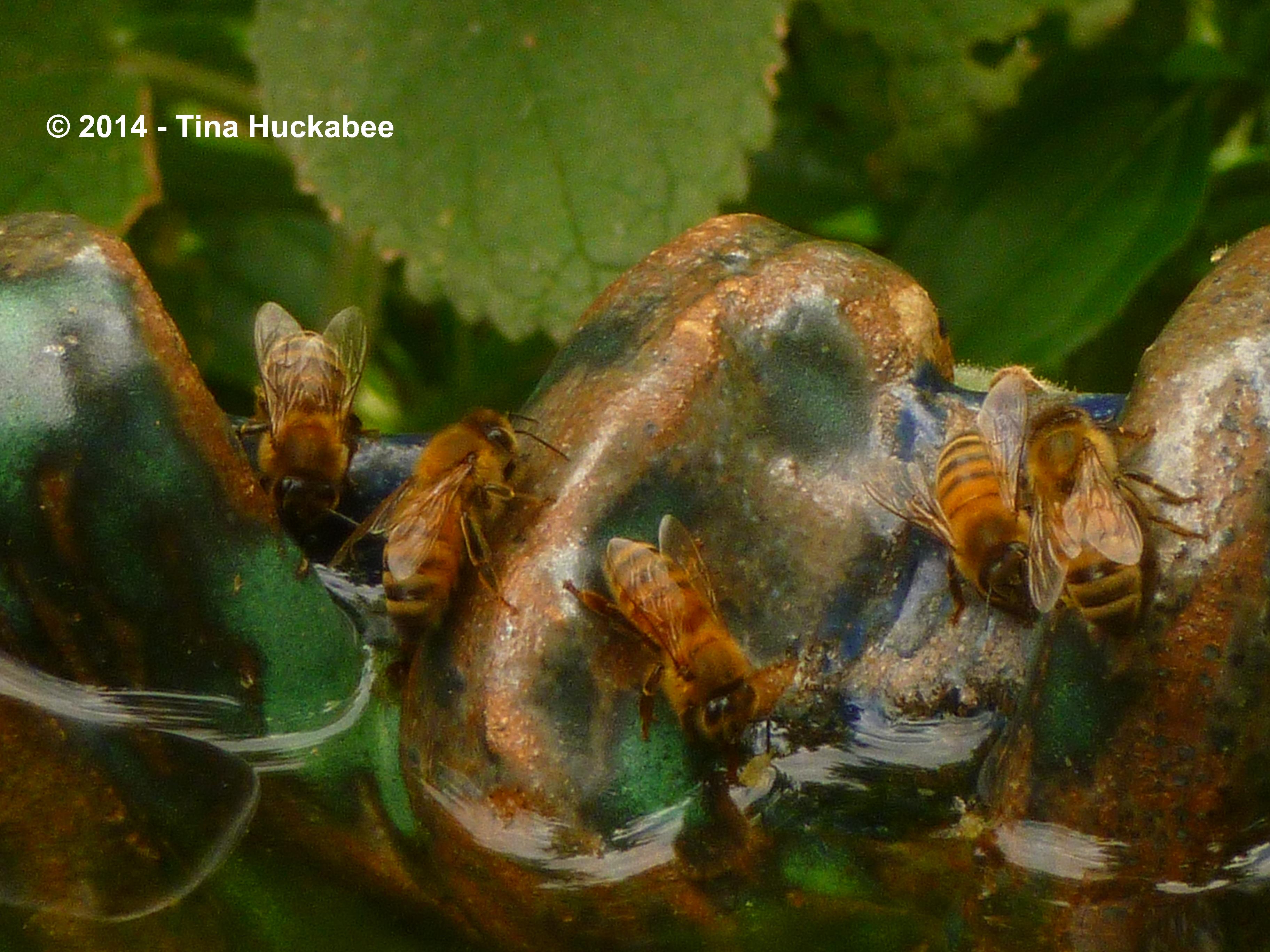
A favorite of my honeybees is the Coral Honeysuckle, Lonicera sempervirens.

P1030547.new


Though this year, I haven’t spied any hummingbirds sipping nectar from those tubular blooms.

The Lyreleaf Sage, Salvia lyrata, sports a color I can’t quite capture with my camera–a rich blue-purple.  This tidy little Texas native blooms for about a month, then sets interesting seed heads for the summer.

P1030559_cropped_3090x3366..new

P1030561_cropped_3138x3042..new

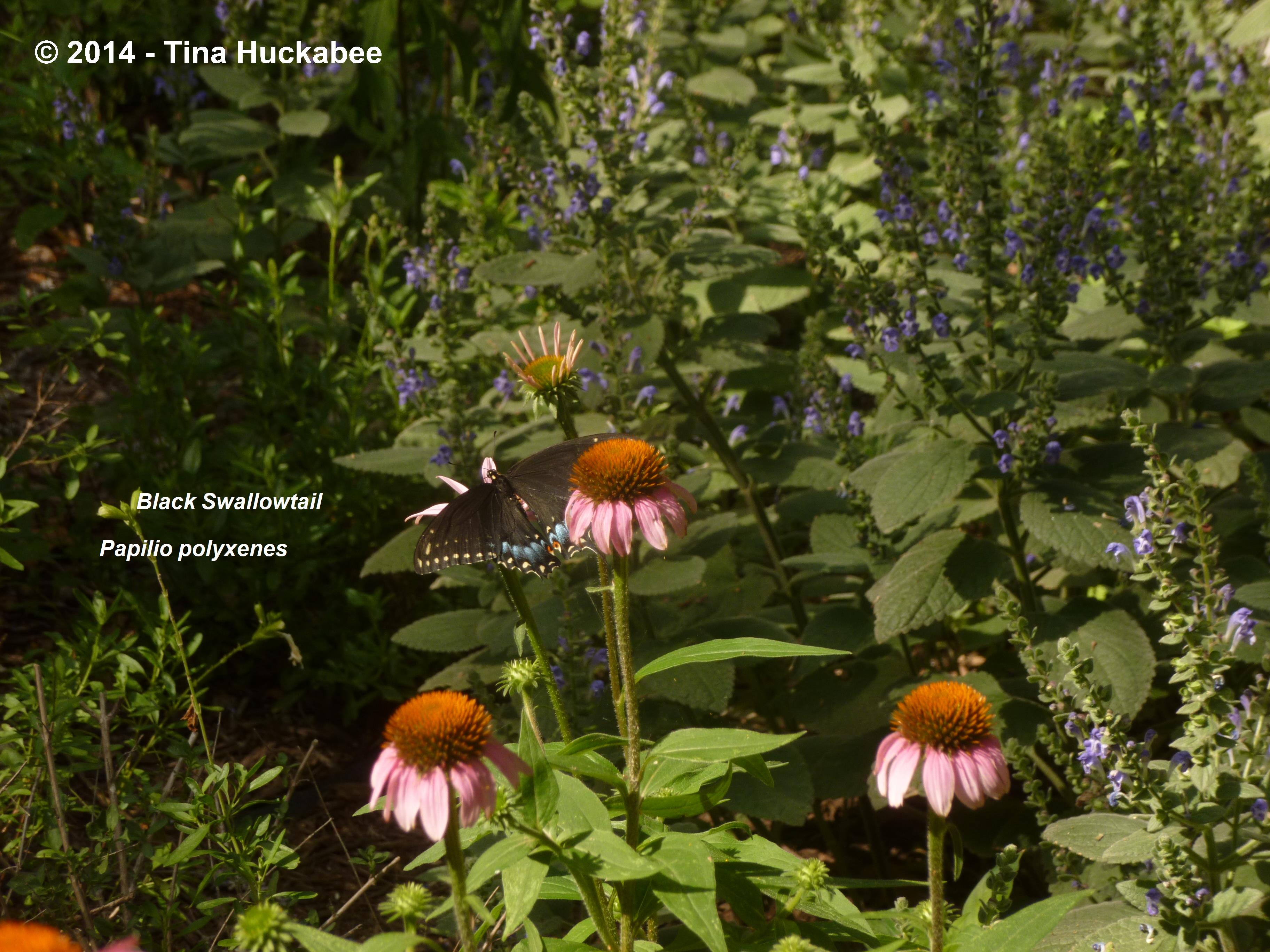
The sunny blooming Engelmann’s or Cutleaf Daisy, Engelmannia peristenia, is so bright that it almost overpowers its native companions– the deep pink Hill Country Penstemon    Penstemon triflorus, to its left and the ‘Henry Duelberg’ Sage, Salvia farinacea, on its right.

P1030565.new

P1030566.new

I love that combination and look forward to it every spring.

P1030570.new

Thanks to Gail at clay and limestone for hosting this wildflower party every month!

The Green Tower

On a trip to Oregon last fall, my good friend, Dr. Linda Hardison who is the director of the Oregon Flora Project took us to visit Oregon State University’s Oak Creek Center for Urban Horticulture.

20130926_153550.new

A wonderful place to visit and with so many interesting things to see, one of the more impressive was The Green Tower.

20130926_145045.new

20130926_145100.new20130926_145034.new

The G.T. is a vertical gardening tower, primarily for vegetable and herb gardening. In viewing this magnificent monstrosity, I realized that it could be the answer to my veggie dilemma back home in Austin.  I have only a few spots on my property that receive full sun, year round.  My real gardening love is native plants and wildlife gardening, so that type of gardening is my priority.  But I do love fresh veggies, so if I can limit the square footage of veggie gardening space, yet still produce veggies year round in that smaller space, gardening vertically is my answer.

In designing our own Green Tower, my husband and I used the basic information from the OCCUH website. (See photo above.)  Unfortunately, that  YouTube video is no longer available, but you can view this one: http://www.youtube.com/watch?v=RYvFfQByK4U   The video was helpful in a general, rather than specific way–we redesigned our tower because we don’t need one as large as is demonstrated.  Still, the idea is innovative and it was an excellent start to our Green Tower adventure.

We reconfigured size dimensions, appropriate for the amount of vegetables/herbs that we want to produce.  OSU’s Green Tower is a bit larger  and wider than our 4.5′ tall and 4’x3′ footprint tower.  The Husband bought, cut and wired together metal rebar pieces. We then hired a welder to weld together the frame.

20131109_144326.new

We dug the frame into the ground for additional stability, making sure the G.T. was level.

20131109_150119.new

20131109_150521.new

20131109_150540.new

We wrapped landscape fabric and wired it to the frame.

20131109_153755_cropped_1784x1513..new

20131109_160053.new

To tighten the wire, we used pliers.

20131109_160420.new

The extra ends of the wire are clipped, then turned inward, so that the ends won’t scratch working hands.  I still get scratched and poked, so attention to those sharp ends is advised.

20131109_163806.new

We did the same with chicken wire–wrapped it around the frame and wired it through the landscape fabric and to the frame. Because the frame is larger at its base (4’X3′) than at its top ( 3’X3′). some folding of the landscape fabric and crimping of the chicken wire is necessary to fit well around the frame.

20131109_172807.new

Inside the G.T. we placed a tube for aeration  and watering.

P1020908.new

Before completing the G.T., we moved it to a different spot on our property.  I  finished wrapping the landscape fabric and chicken wire–more crimping and folding and not advisable to do a windy day!

P1020907_cropped_2746x2788..new

P1020909.new

P1020910.new

P1020911.new

P1020912.new

The supervisor in the background approves!

I didn’t have enough of my own soil and compost to completely fill the G.T., so I purchased Hill Country Garden Mix from The Natural Gardener.  We shoveled in 1 cubic yard of soil mixture in the tower, but as the soil settles, will probably need more. I’ll add my own compost to the top, as needed.   As we added soil, I placed a 10 foot soaker hose roughly in the middle of the tower, then added more soil, filling  to the top of the tower.  Once done, I cut through the fabric and wire so that I can attach a hose to the soaker for watering,

P1020964.new

and placed another 10 foot soaker hose at the top of the tower.

Planting on the top of the tower is obvious.

P1030025.new

To plant along the side, the first step is to cut through the chicken wire with very sharp scissors or better yet, wire cutters.

P1030027.new

Pull the wire away, then slice through the landscape fabric.  I’ve learned that it’s best to make the cut at what will be the bottom of the opening, to minimize soil escaping.

P1030028.new

I  remove some soil, then plant a four-inch sized veggie.  I haven’t found it necessary to tie together the wire to keep the plants in place as the OSU video suggests, though it’s a good idea.

P1030032_cropped_2511x3019..new

I deposit excess soil on the top of the G.T when I plant along the sides.  There has been some leakage of soil, especially in those first couple of weeks, but not as much as I expected.  I planted the usual spring/summer veggies:  tomatoes,  peppers, zucchini, yellow squash,  cucumber, basil, mint and cantaloupe.  I planted green beans on the top and they’ve germinated on schedule. I planted some of the beans along the sides, but none of those germinated.  I think one valuable use of the G. T. will be for seed germination at its top, then transplanting developing seedlings along the sides.

Watering is tricky because some parts of the soil in the tower don’t  receive enough water, though most of the plants haven’t had any issues with drying out. I suspect gaps in the soil are the culprit and once the G.T. soil settles, irrigation will be even.  I’ve only watered three times since planting in late March. Since then, we’ve received enough rainfall to water the tower thoroughly.   I used the aeration tube for the last soaking and it worked well, though there is water leakage from the bottom of the tower–that’s a problem I’d like to correct as don’t like wasting water.  Watering slowly should help and we’re considering placing a tube with holes straight down the middle if irrigation problems continue into summer. I want to get through one vegetable growing season before adding that and any more soil.

P1030033_cropped_2940x3166..new

P1030138.new

P1030295_cropped_3765x2959..new

My Green Tower doesn’t look like OSU’s Green Tower. This is Texas, not Oregon and contrary to popular belief, not everything is bigger and better in Texas. (Believe me, as a Texan, it hurts to say that.)  Currently I don’t have much planted, though what I’ve planted doesn’t take up as much square footage in the tower as it would in a traditional ground garden.  I could definitely plant more.  I haven’t utilized the sides as expected in vertical gardening either, which defeats the purpose, of course.  I probably will add some zinnias or other drought tolerant annuals to pretty up the G. T. as we move into summer.

Yeah, flowers.  I can’t get away from that it seems.

Weeding isn’t an issue and I’m pleased that as the soil is settling, I’m not watering, though that will change with summer heat and drought.  I think the G. T.  will be especially valuable to me in the fall and winter, since the cool season plants can be started at the top by seed, then transplanted throughout the tower.

Not including the $18 I’ve spent on plants, The Green Tower cost about $400– including materials and soil and hiring the welder and a handyman to help move the soil.  I felt like that was pricy for an experiment (and it might be, time will tell), until a neighbor told me that she’d paid her lawn company $800 last month for winter clean up and first spring mowing.  Wow!! Are lawn services that expensive?  (I suspect that cost was an outlier, but I know  people who pay $50-100 a month for lawn service.)

Get rid of your lawns!  Plant perennials and natives and vegetables–in  vertical gardens or otherwise.

P1030296.new

More adventures to come as The Green Tower grows!