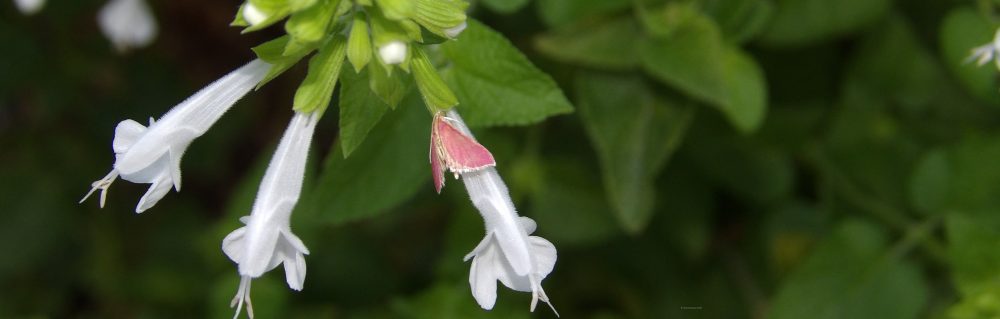
It’s been an odd and distracted month for me and one where events out of my control took time away from following the plentiful goings-on of wildlife in the garden. I won’t bore you with the details, but sometimes life really does get in the way of watching wildlife, photographing wildlife, and the blogging about it all. Sheesh!
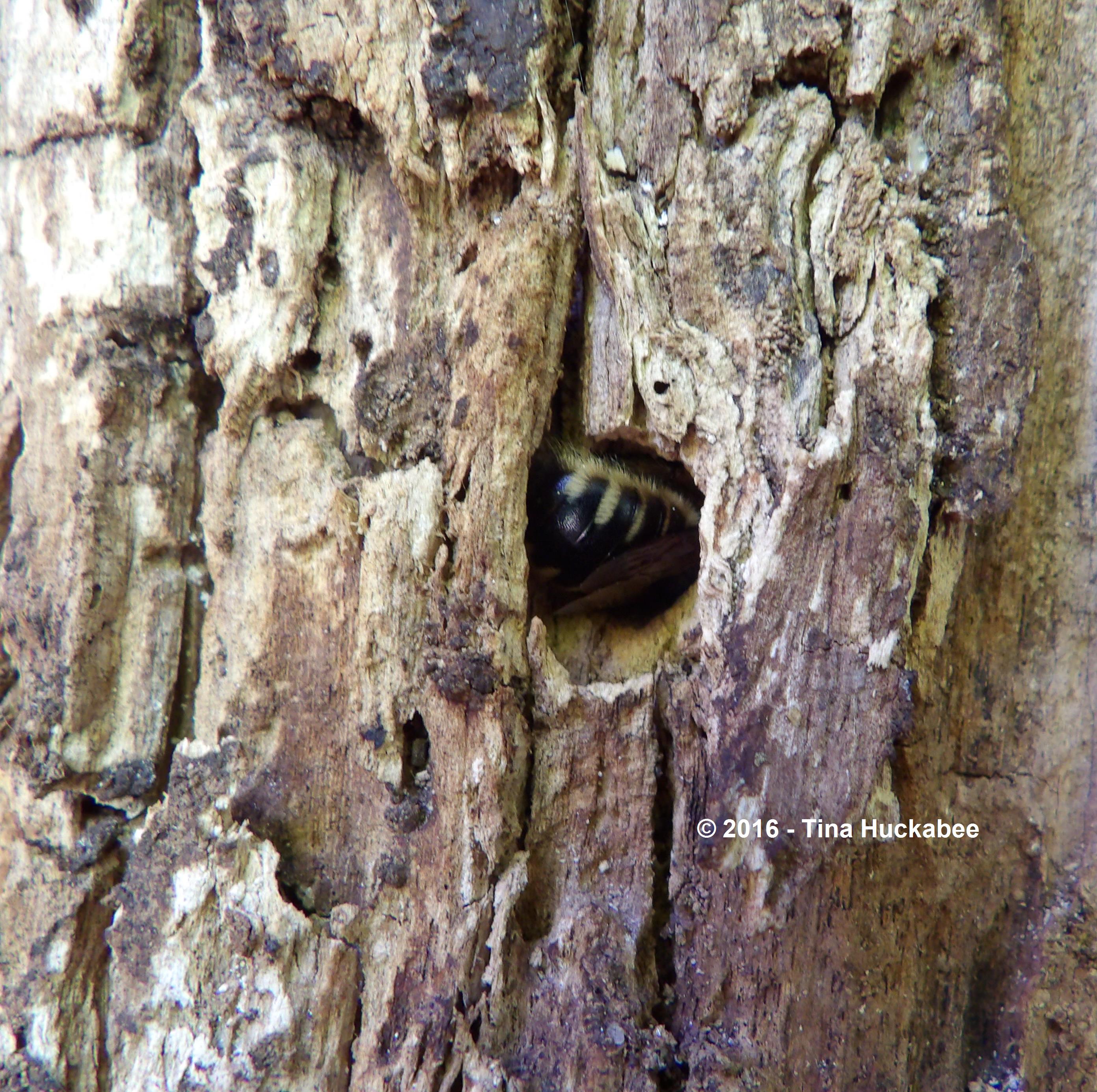
Ah well. My various difficulties didn’t deter the nesting activities of a Horsefly-like Carpenter Bee, Xylocopa tabaniformis, as she packed in material to nourish her young in a decaying log.
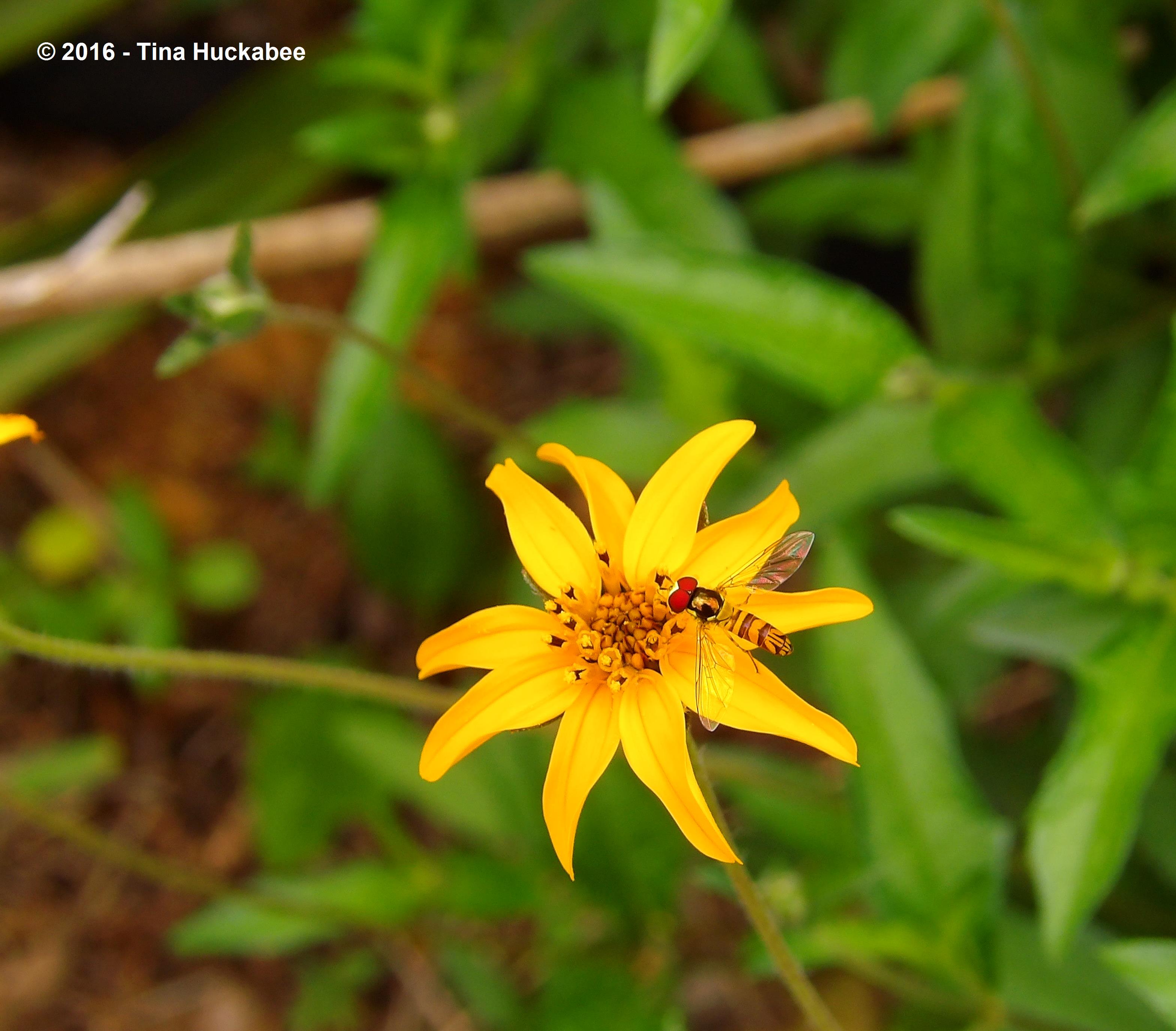
Nor did the big problems of the world (or the relatively small problems of mine) prevent this Syrphid, or Hover fly from pollinating a Zexmenia, Wedelia acapulcensis var. hispida.
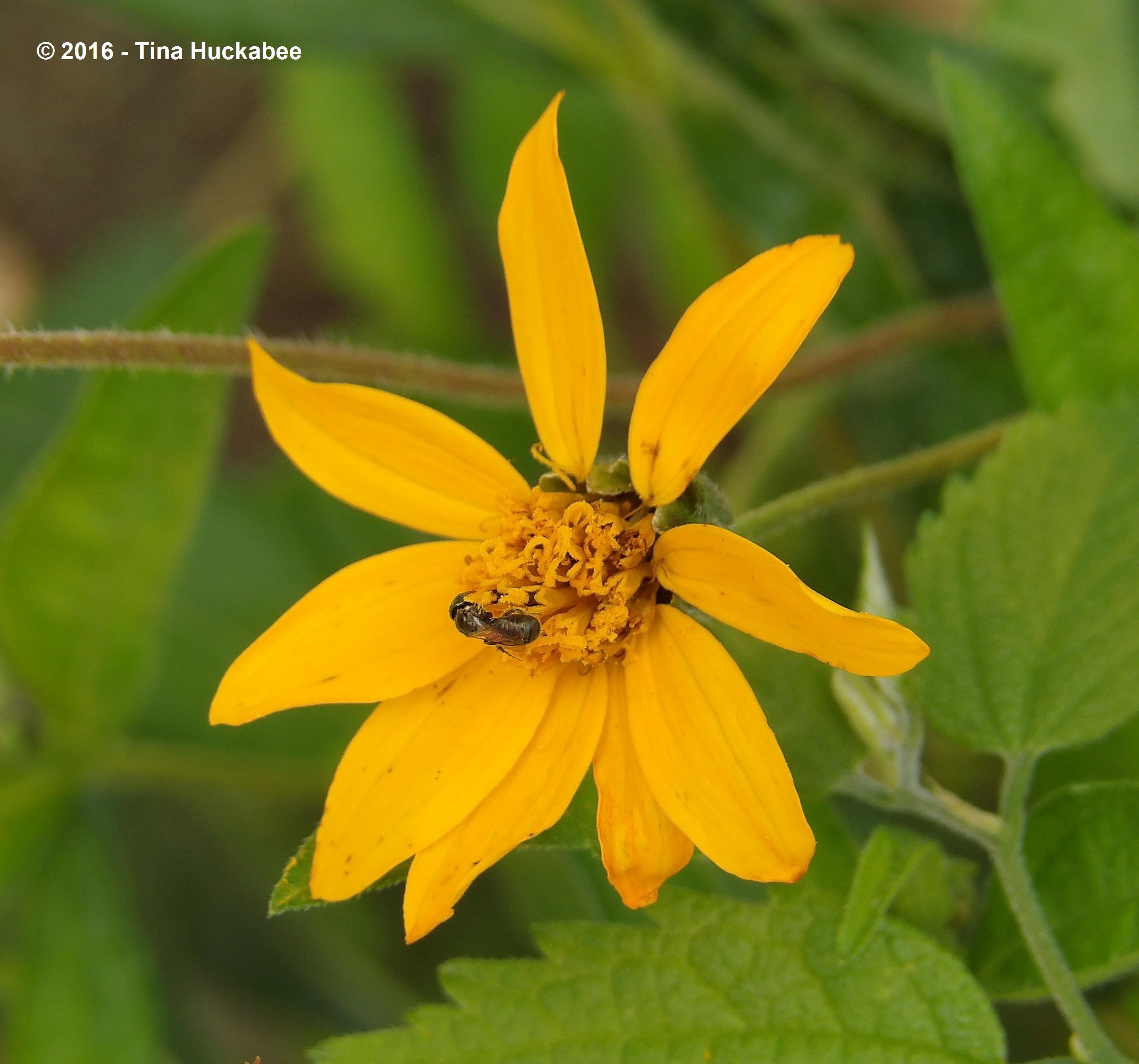
On a different Zexmenia flower, a Small carpenter bee, Ceratina, sp., went about her business, too.
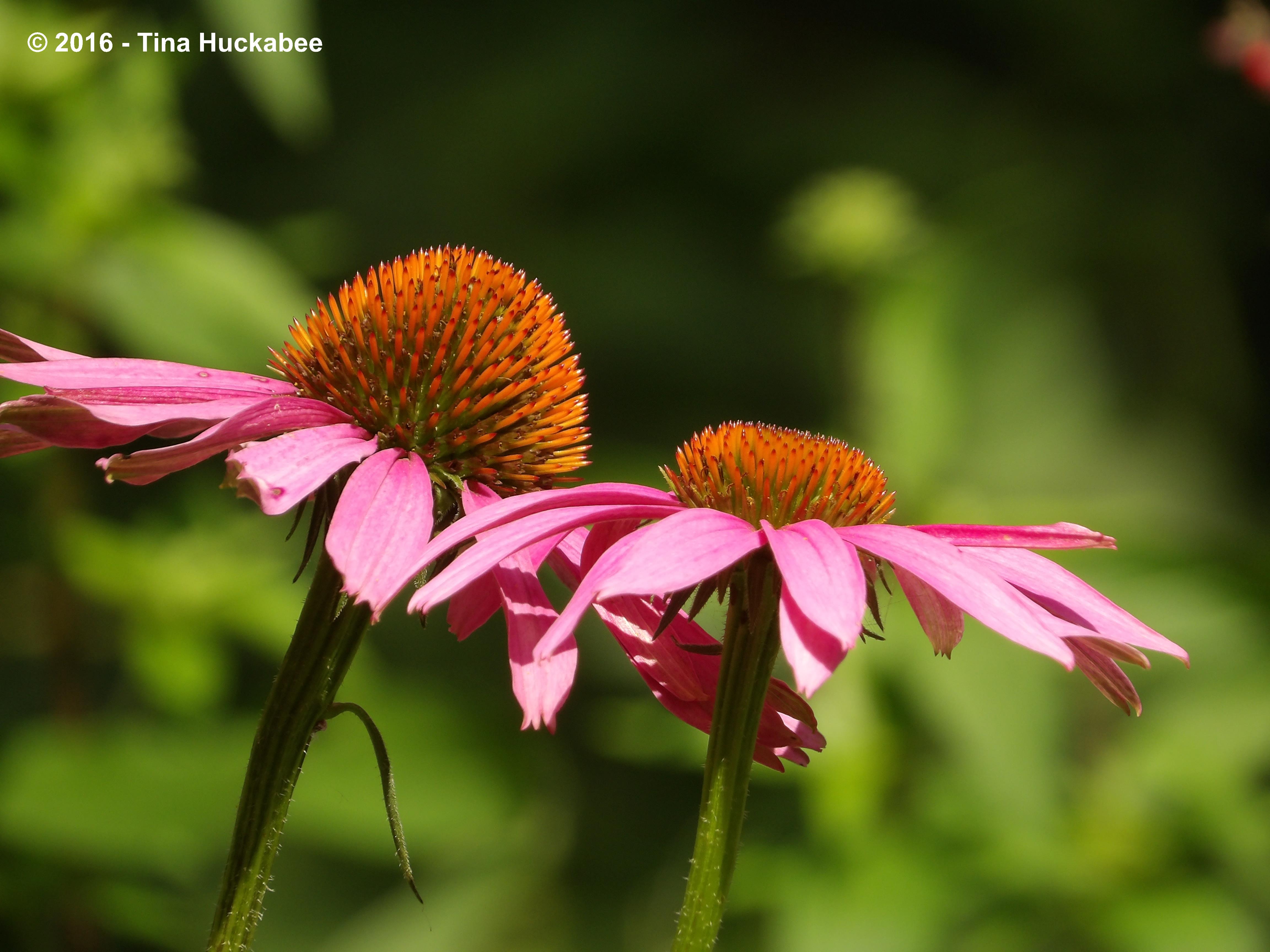
Other native pollinators, like this Sweat bee, Augochloropsis metallica, worked a Purple Coneflower, Echinacea purpurea,
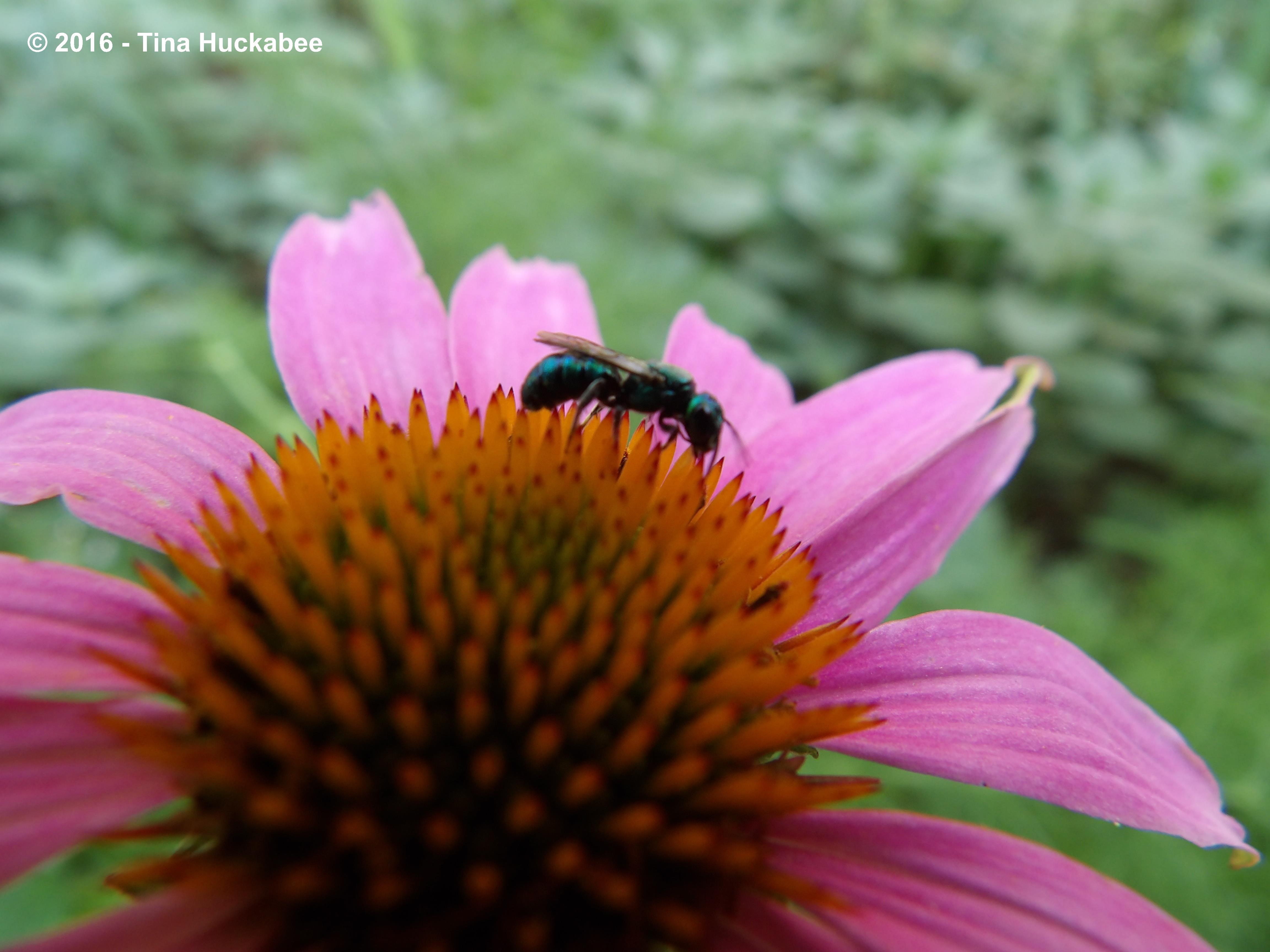
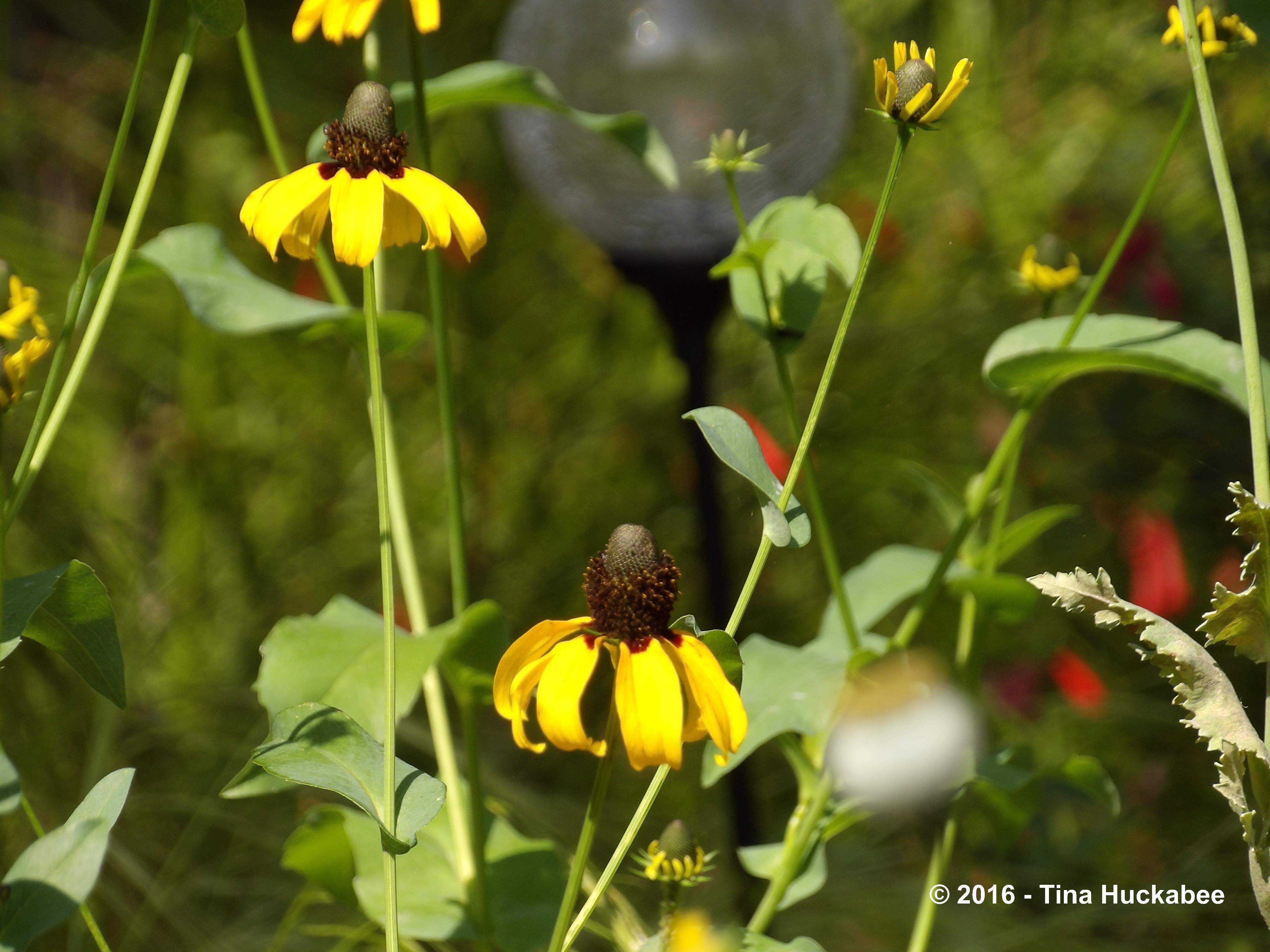
…while a Mason bee, Osmia subfasciata, favored a Blackeyed Susan, Rudbeckia hirta var. pulcherrima.


After pollination, this little bee is covered in pollen grains.
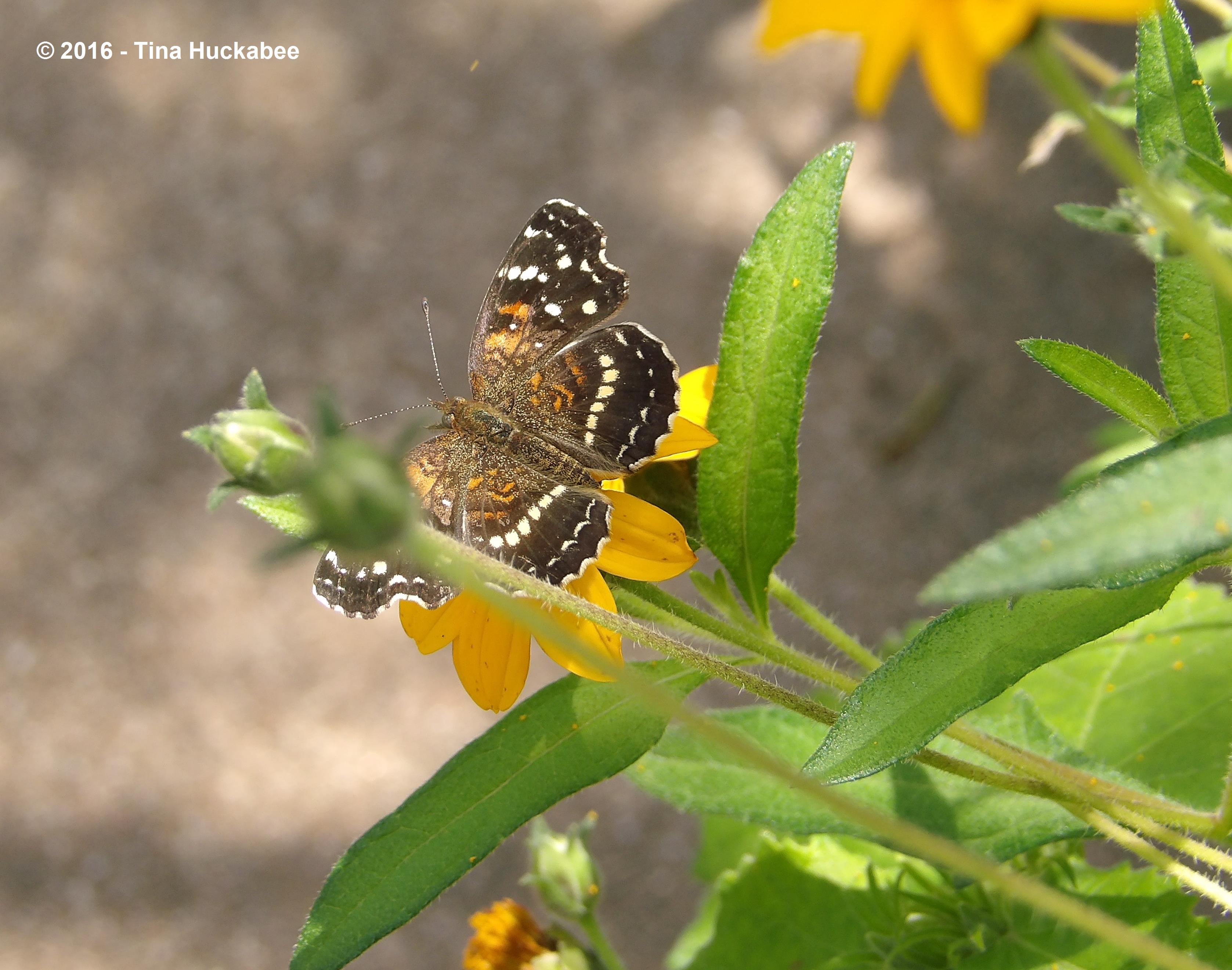
April has seen plenty of butterfly action, as well. Texas Crescents, Anthanassa texana, are flitting all over the garden, enjoying the bounty of flowers like the Zexmenia.
Hmmm.

It seems that Zexmenia is a good plant for pollinators.
I don’t have a single photo of the few Monarch butterflies, Danaus plexippus who’ve wafted through my garden, but I do have photos of their offspring.

I love the book-ending mode of these two monarch cats.
Those few winged visitors managed to lay eggs and the 5 Monarchs caterpillars that hatched devoured my Tropical Milkweed, Asclepias curassavica plants. The cats completely obliterated the foliage, but I transferred 2 cats to a neighbor with milkweed-a-plenty to offer the voracious larvae.
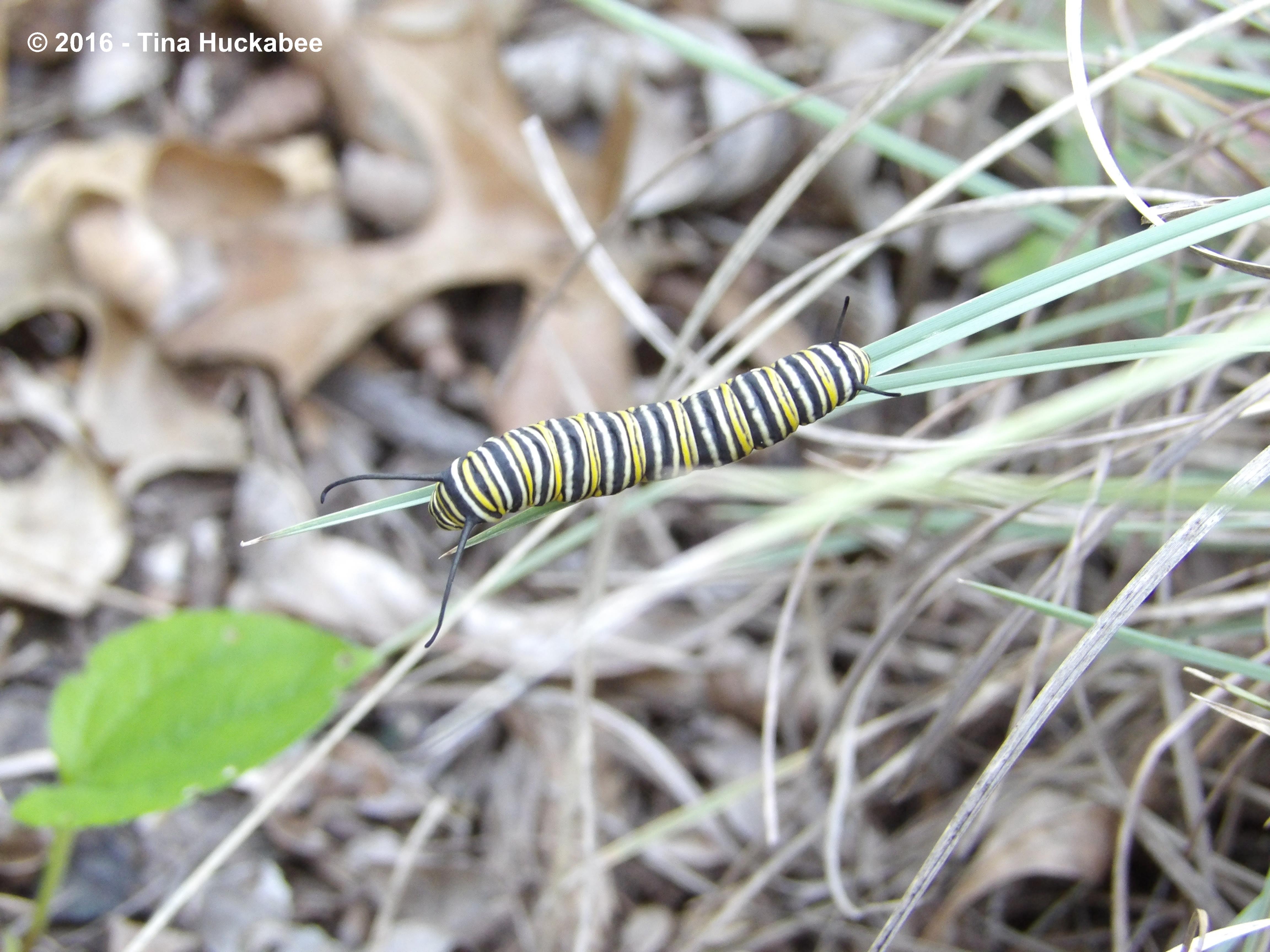
This caterpillar lost his way and ended up on the strand of a Lindheimer’s muhly (Muhlenbergia lindheimeri).

Peeking over the edge, wondering where all the milkweed is, this cat landed on the underside of a culinary sage leaf.
I didn’t catch this Grey Hairstreak, Strymon melinus, nectaring on anything, but she did pose for me, opening and closing her wings coquettishly,
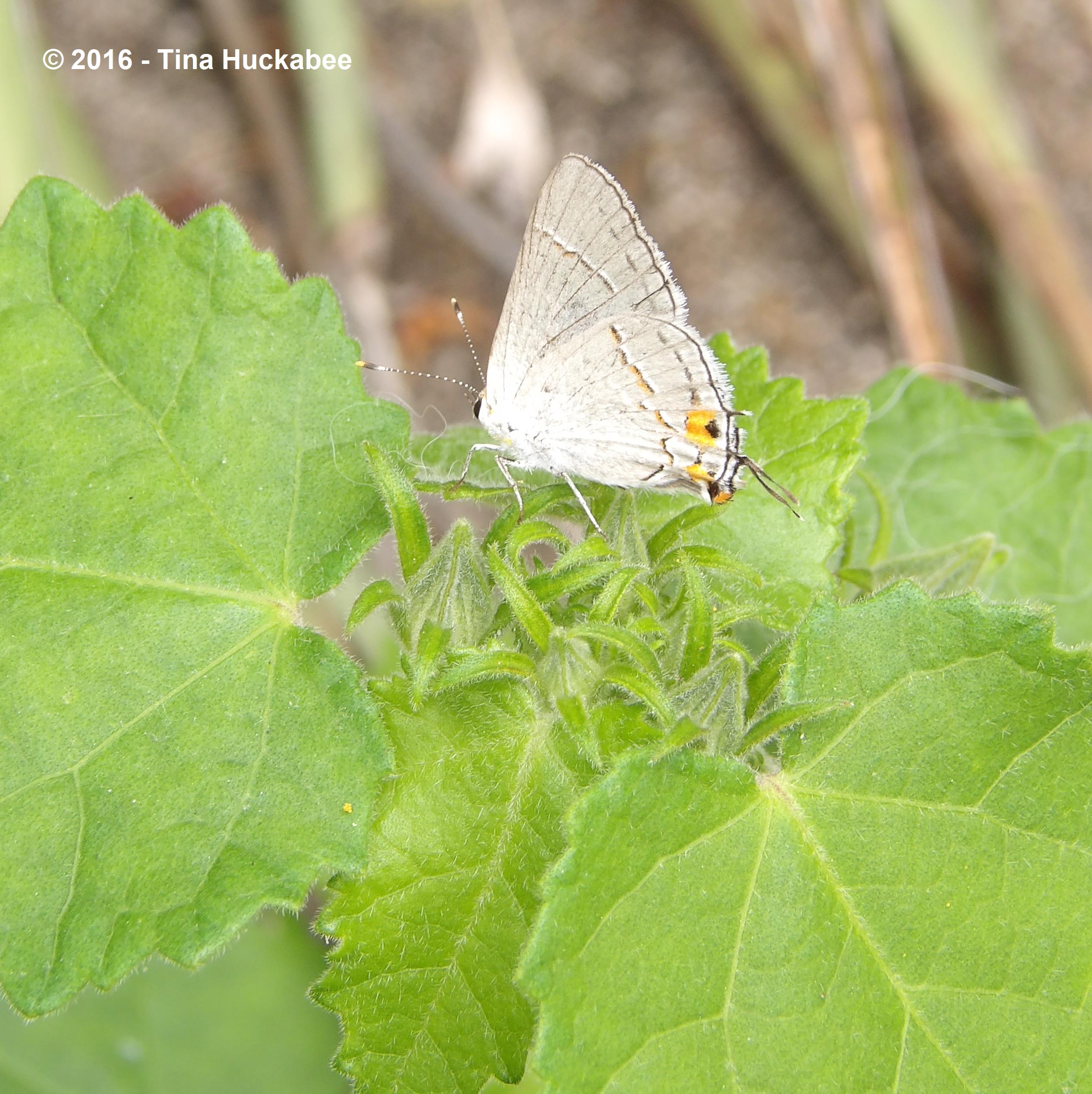


…while she lounged on Rock Rose, Pavonia lasiopetala foliage.
I’ve allowed rogue Passion Vine, Passiflora incarnata to pop up here-n-there in my gardens because it’s the host plant for this pretty pollinator, the Gulf Fritillary, Agraulis vanillae. Whether in its adult form,
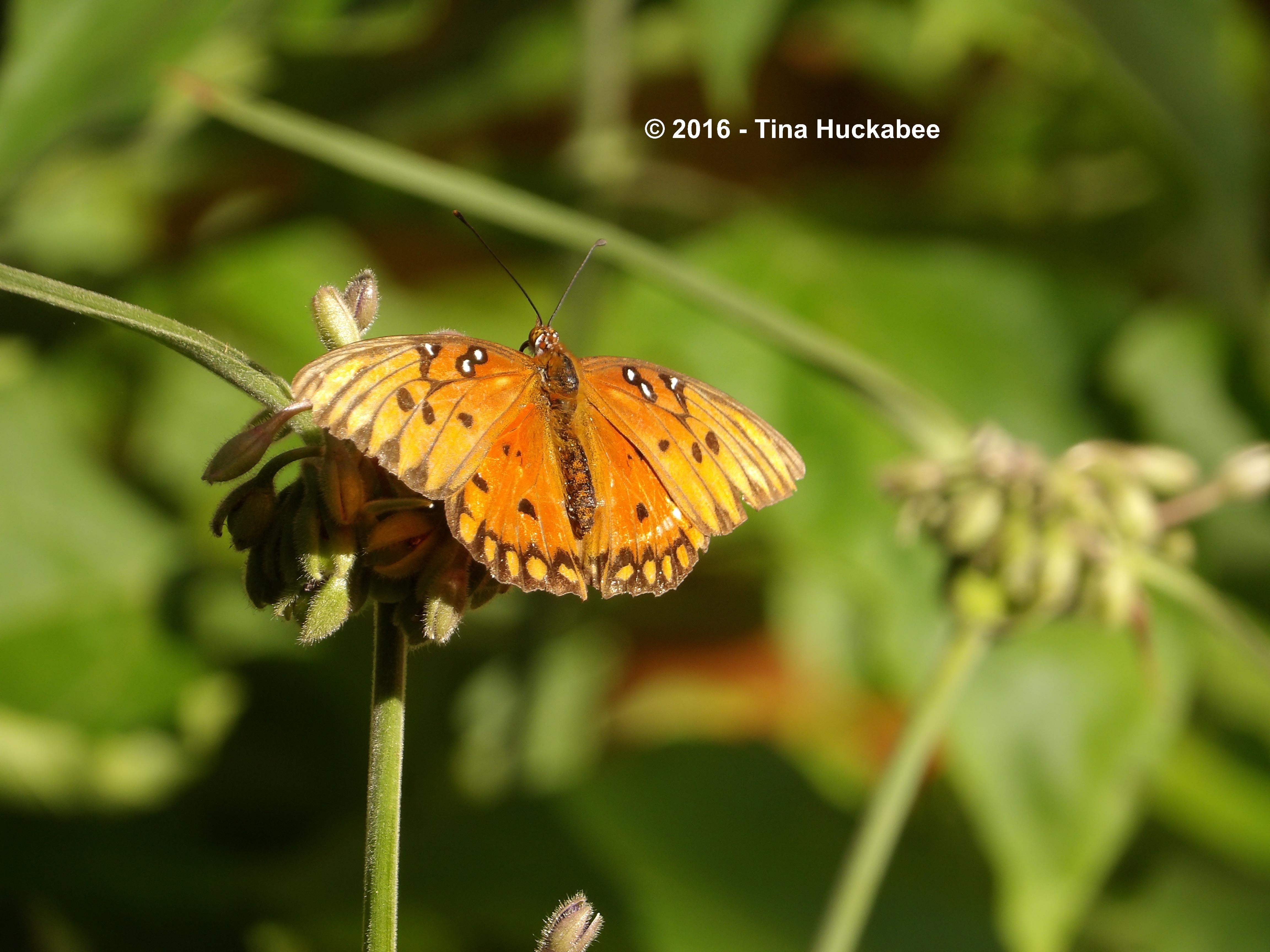
…or its larval form,

… it’s a beautiful winged jewel and a great pollinator partner.
And yes, there were birds this month and plenty of them! The Red-bellied Woodpecker, Melanerpes carolinus, remains a consistent, if not daily, visitor.


I’m not sure where this guy nests, though I’ll bet he has a family holed away somewhere nearby , because he’s always on the lookout for a full bird feeder. There are plenty of older trees in my neighborhood, which, thankfully, the owners have kept rather than removing. In many those trees are definite woodpecker holes and if the Starlings haven’t bullied the Woodpeckers away, one of those holes is where this handsome guy and his family reside.
I never was able to capture a clear photo of this sweet little thing, but I found the coloring and markings elegant.
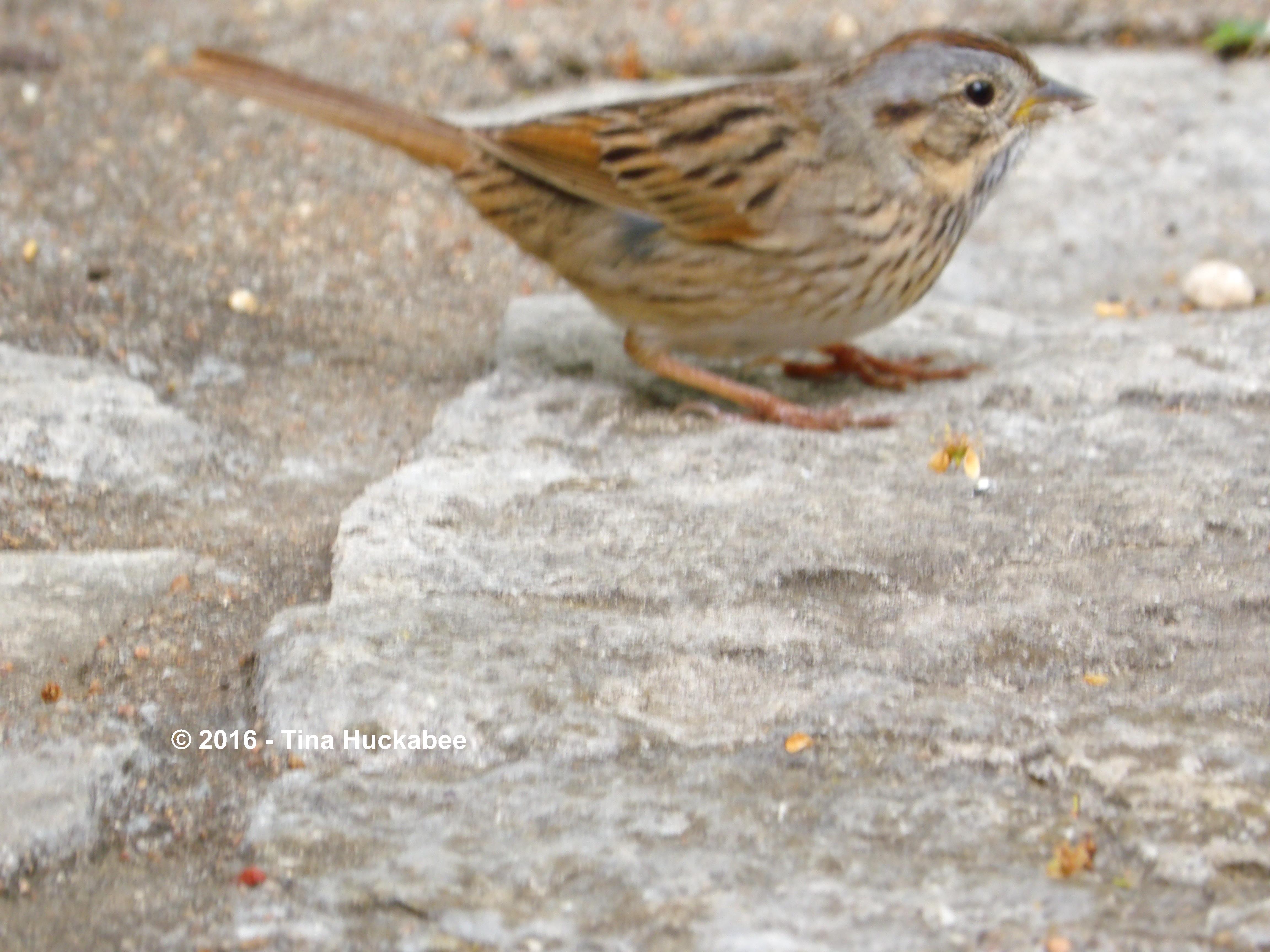
He’s a Lincoln’s Sparrow, Melospiza lincolnii, and one of those birds that I noticed… because I’m noticing birds. This species winters here in Central Texas, breeding far north into Canada during summer. I don’t recall seeing any during winter, but he bopped along the ground hunting and pecking for seeds this past month.
A fairly common visitor is the Red-winged Blackbird, Agelaius phoeniceus.
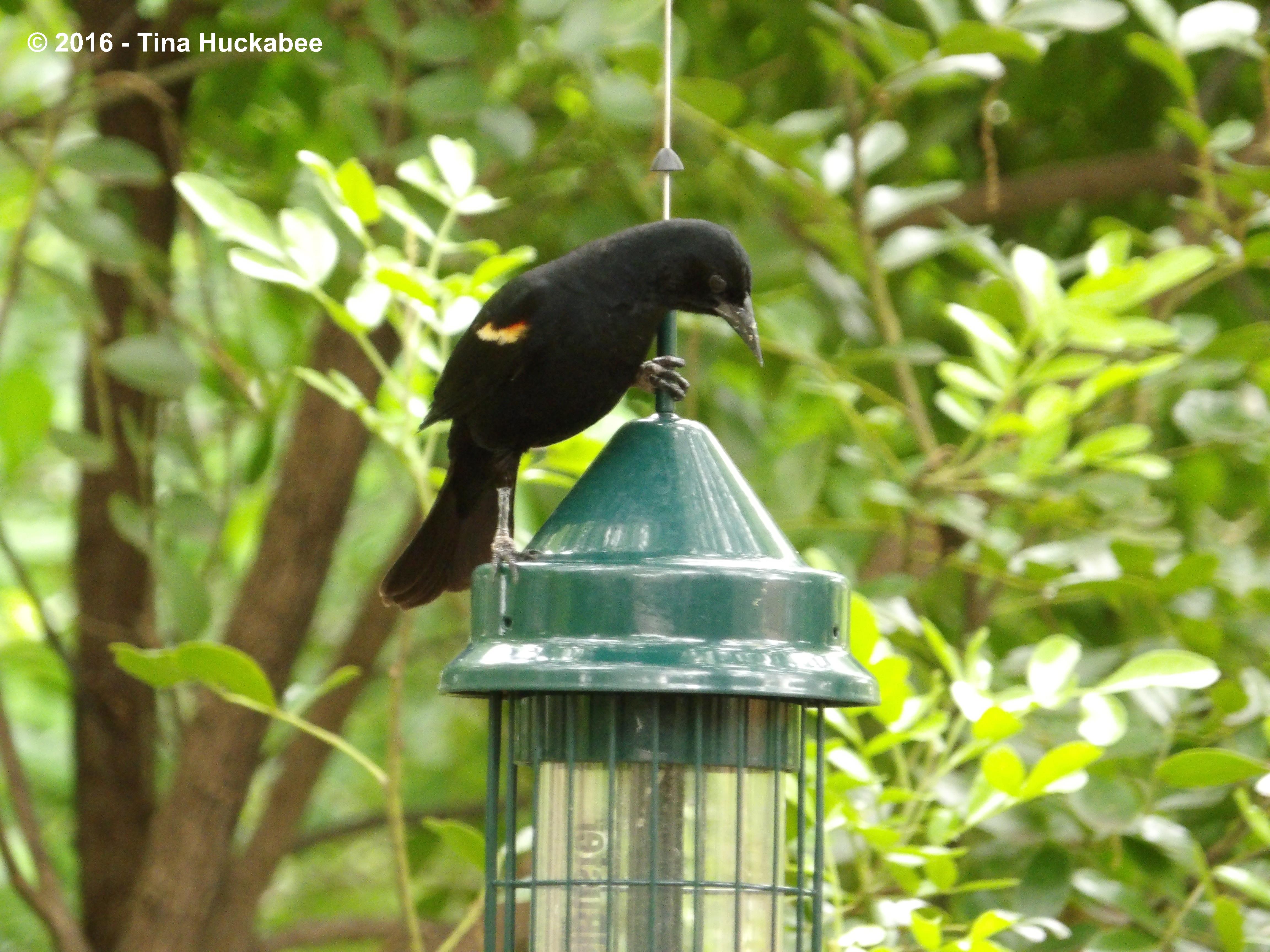
I’ve only see a few individuals this year.
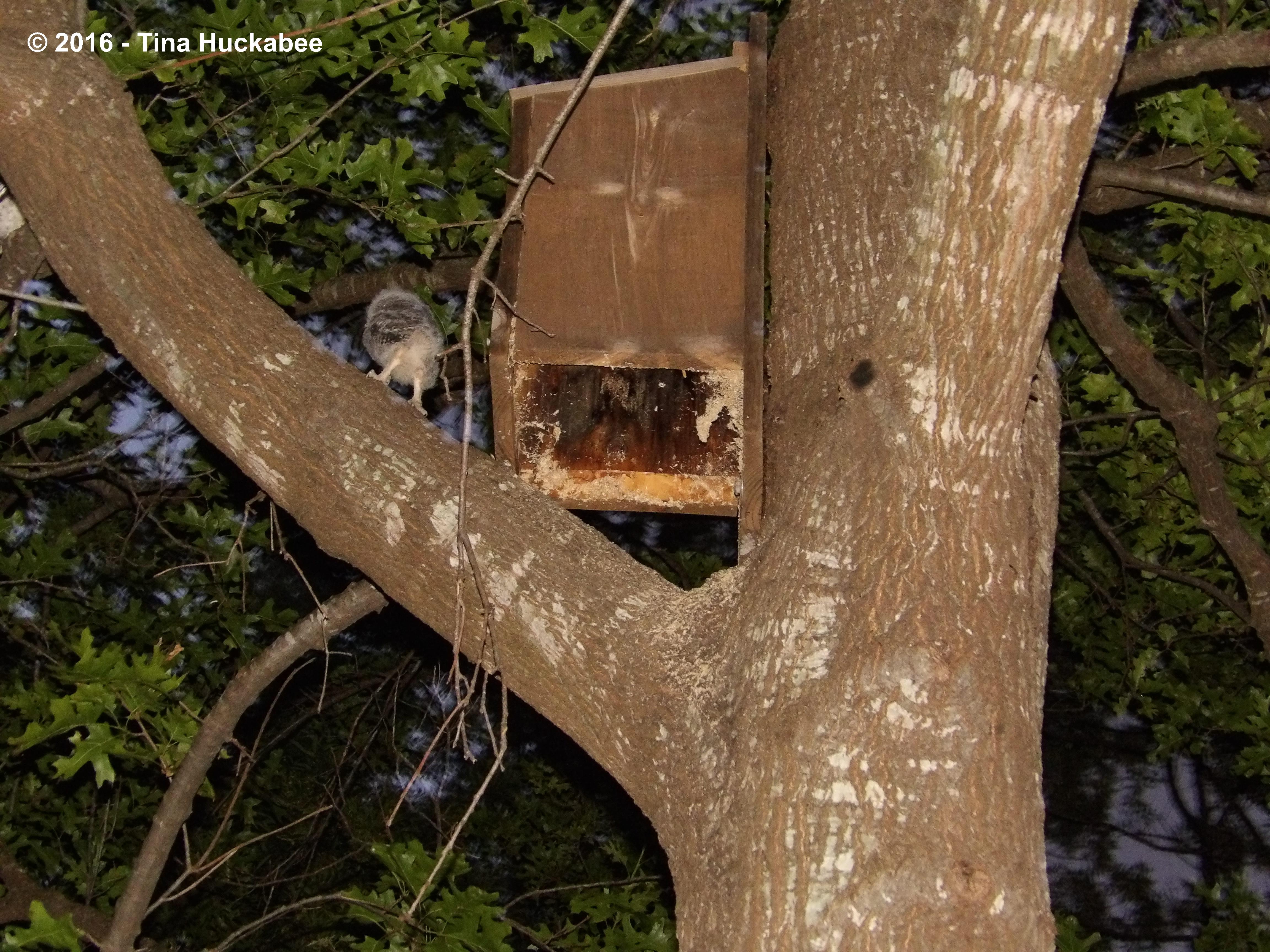
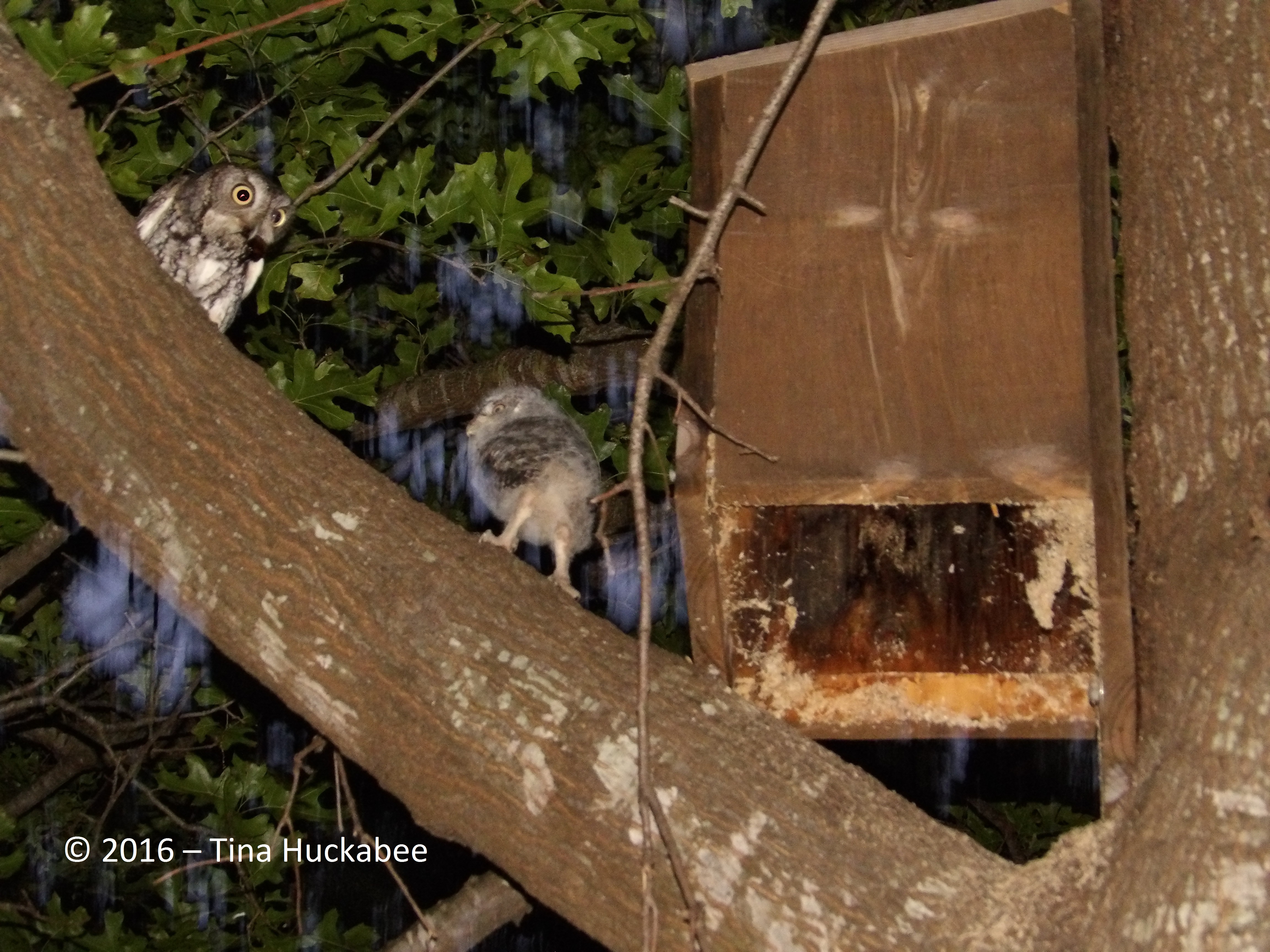
Aside from “my” Eastern Screech Owls–which I wrote about here and here, I’m most excited about sightings of a pair of Painted Buntings, Passerina ciris in my garden.
The mature male Painted Bunting is a showstopper bird of the New World.


This guy knows he’s totally a gorgeous dude.
I love the description on The Cornell Lab of Ornithology’s All About Birds page on Painted Buntings, specifically regarding the males’ coloring: With their vivid fusion of blue, green, yellow, and red, male Painted Buntings seem to have flown straight out of a child’s coloring book.

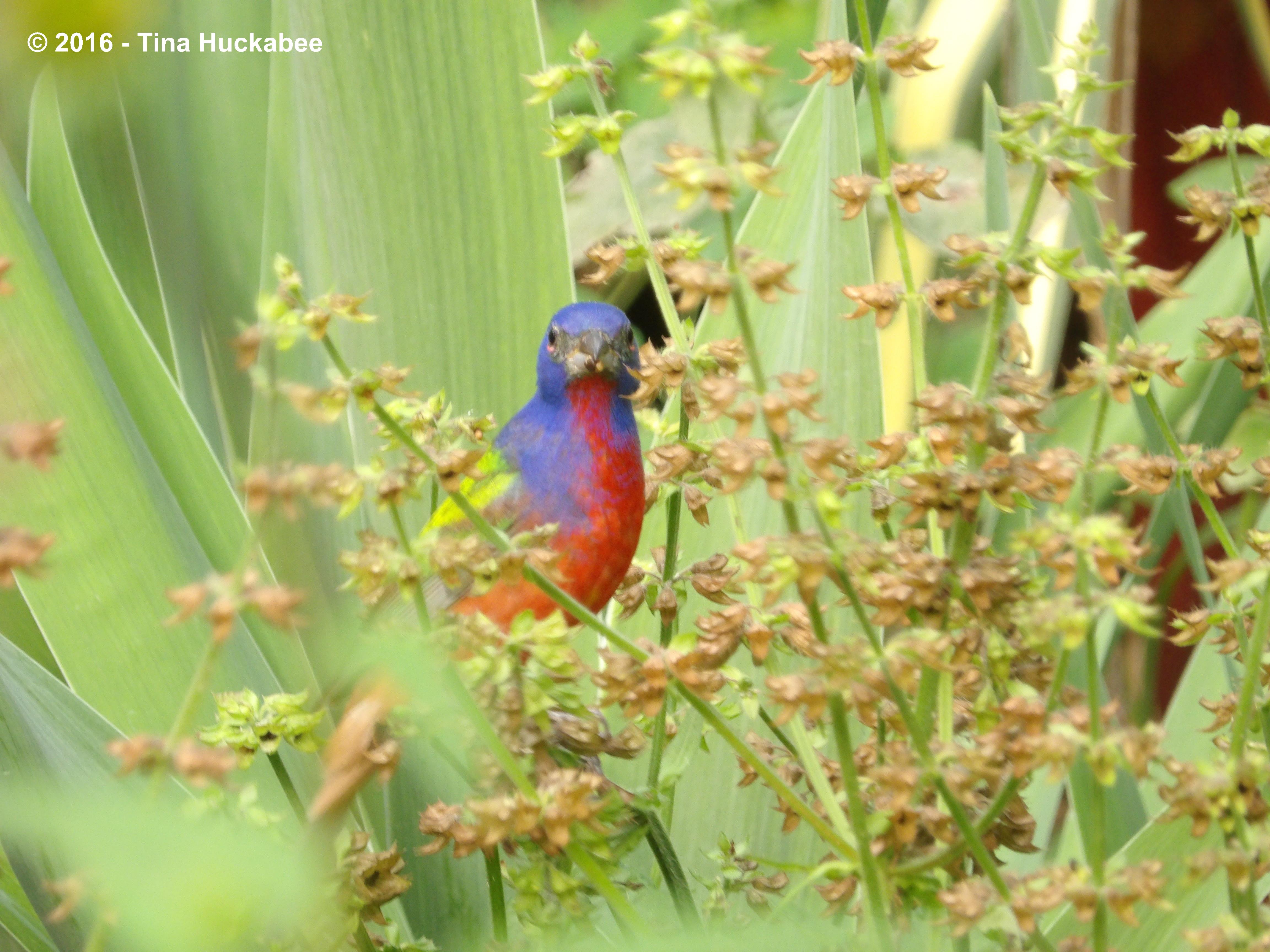
Yeah, that’s about right. One can’t miss this splash of feathered color as he flutters from one seed-bearing plant to another. I’ve noticed that both the male and the female in my garden favor the seeds of the native-to-Texas Lyre-leaf Sage, Salvia lyrata.


Buddy, you’re really good-looking, but you might want to wipe your chin….
The female is not as flashy as her mate, but certainly fetching in her green and yellow swag.

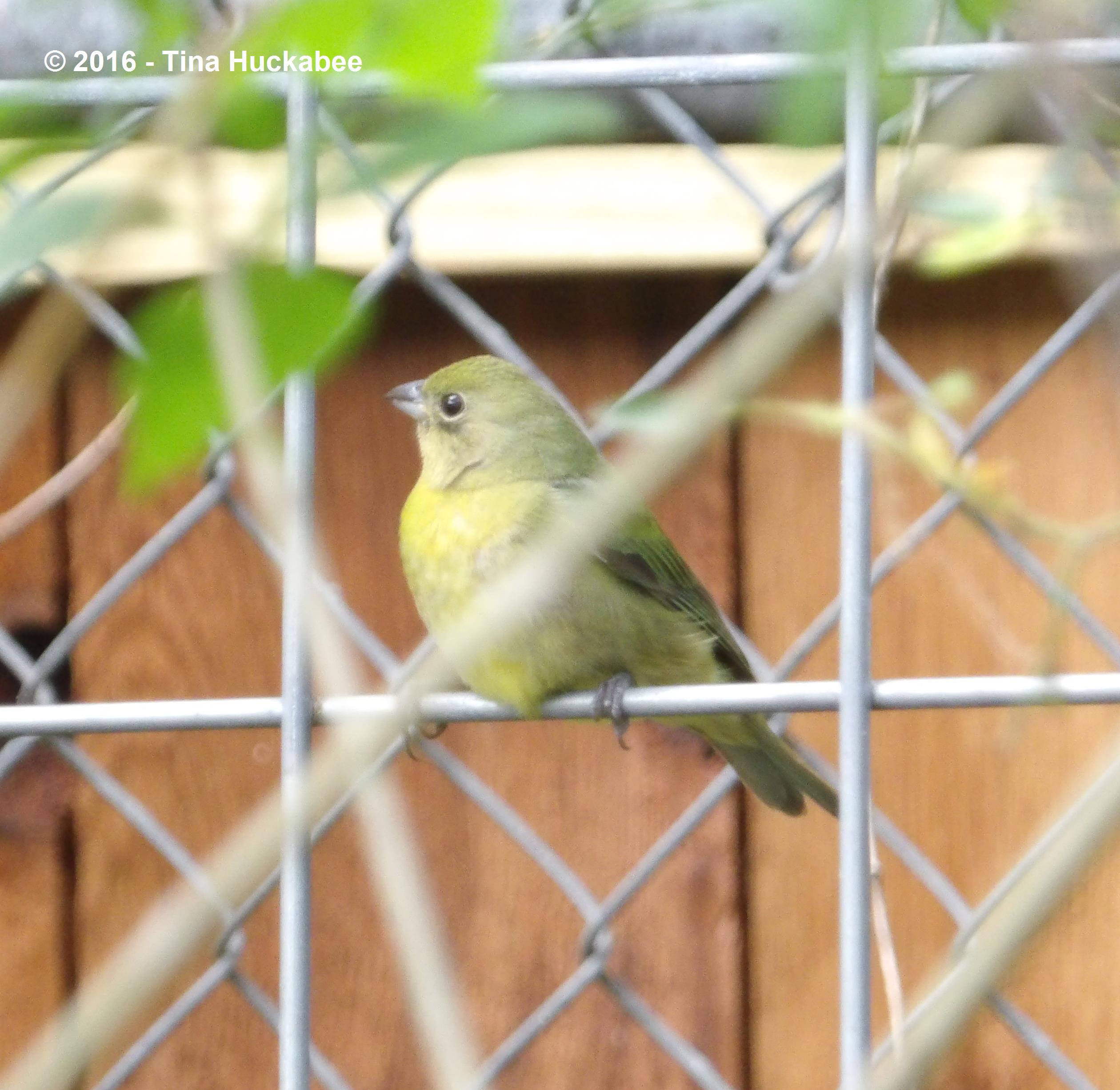
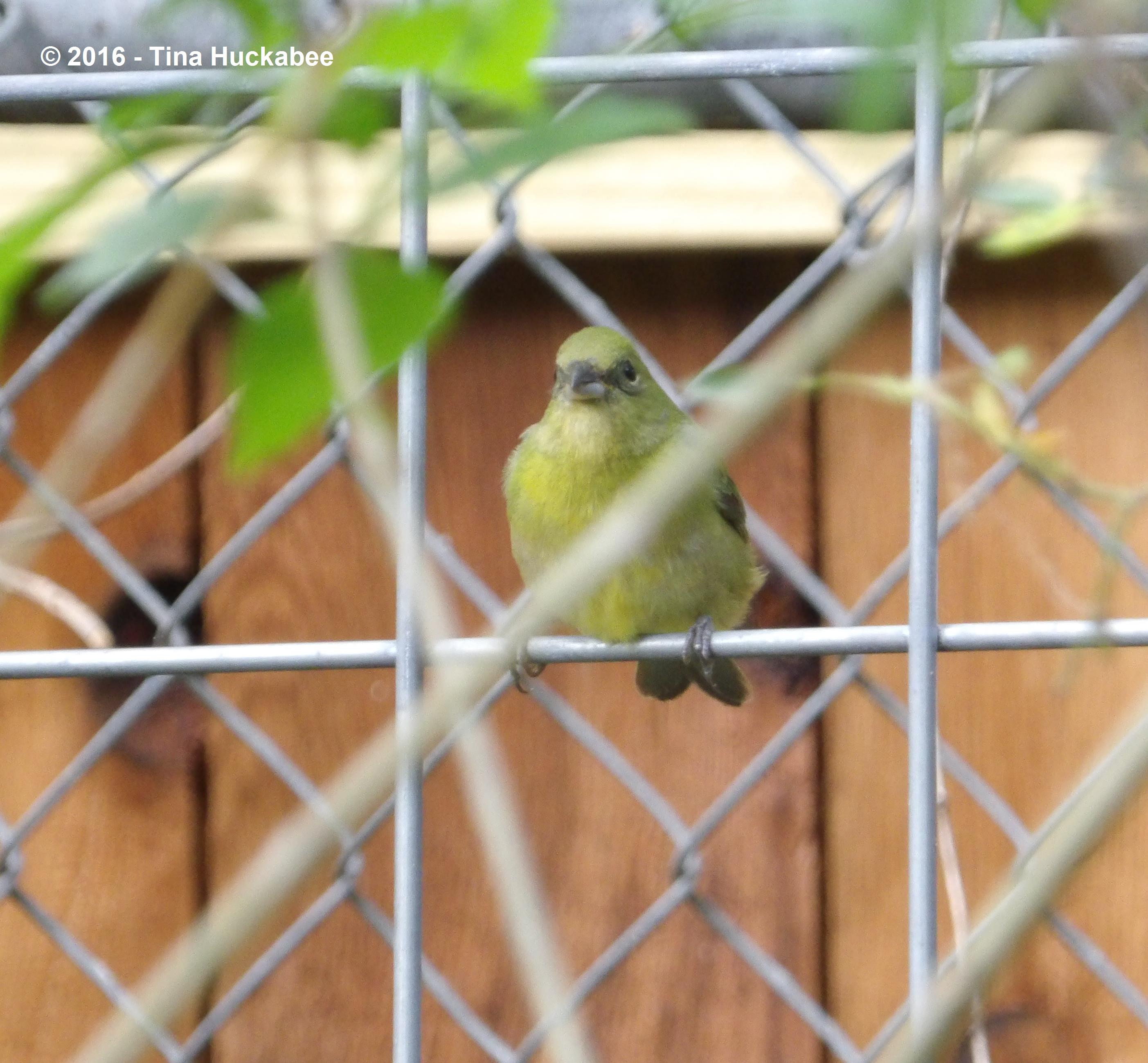
Long ago there were a couple of consecutive years during spring migrations when small flocks of these gorgeous passerine birds visited my garden, each time for a few days. They nibbled on the seeds of a cool season non-native grass that sometimes appeared when I grew mostly grass, rather than a real garden. I’m glad that I can now offer them something nutritious, native, and not-grass on their migratory pathway.
One of a nesting pair of Carolina Wrens,Thryothorus ludovicianus, posed for me the other evening as I was watching for owlets.

These charmers are a favorite bird of mine. They seem playful and cheeky as they hop around the ground and pop through the shrubs, snatching up insects for themselves and their babies. Carolina wrens have the loudest songs and calls–and for such a wee bird! They are my usual wake-up call, singing just outside my bedroom window. Loudly. The couple in my garden have a nest somewhere nearby and are always singing and chittering. After I took the above shot, this wren gleefully (or so it seemed to me) shook out his feathers.

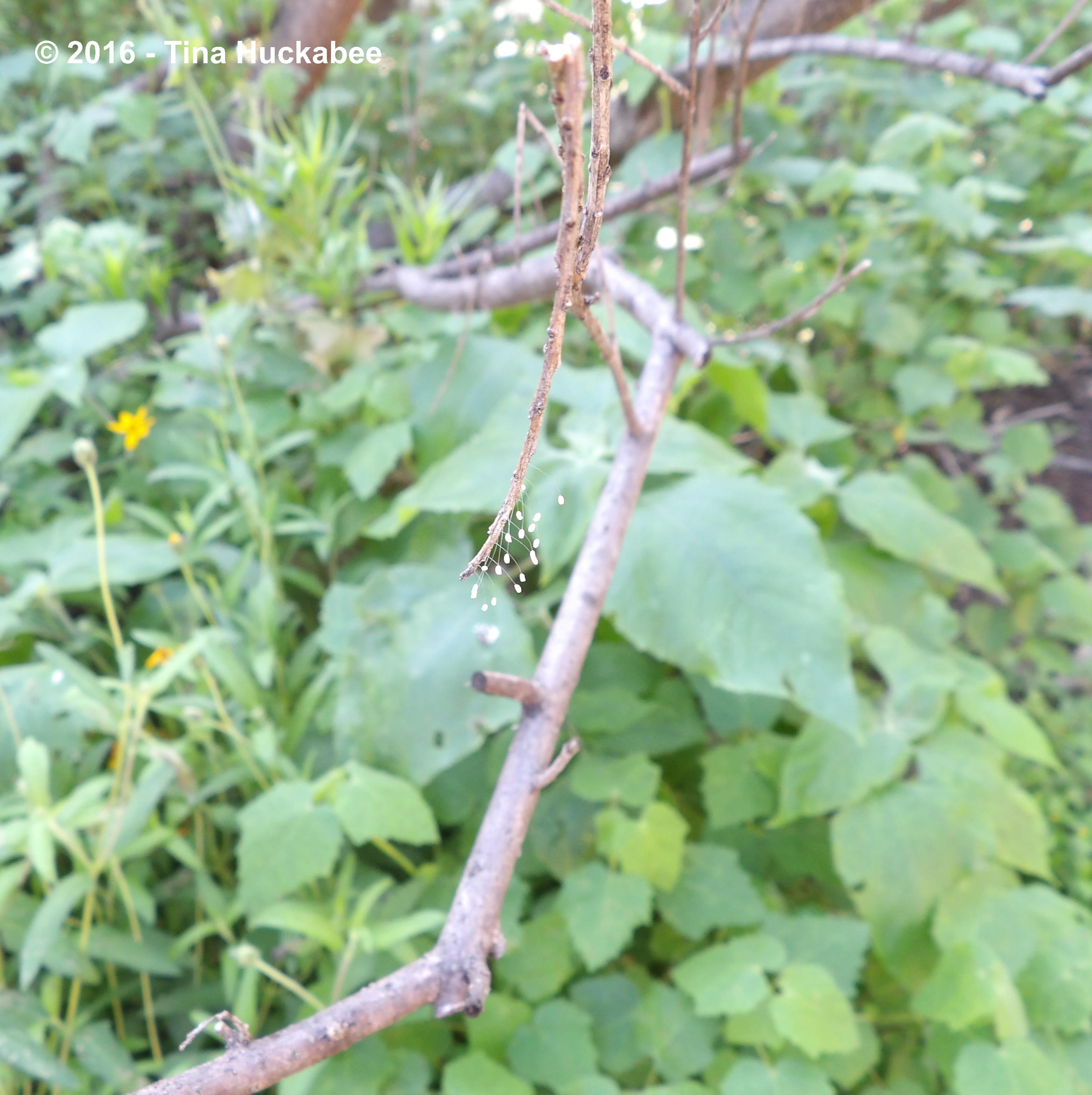
And maybe next month, I’ll know what these are….
Did wildlife visit your garden this past month? Please post for May Wildlife Wednesday Share the rare or mundane, funny or fascinating, beneficial or harmful critters you encounter. When you comment on my post, please remember to leave a link to your Wildlife Wednesday post so readers can enjoy a variety of garden wildlife observations.



 My Gardener Says...