May Flowers

May flowers–it’s such a cliché–but one that I’m going to embrace on this balmy May bloom day. The pinks in my garden seem to be front and center at the moment. Dusty  pink blooms of this Red yucca,  Hesperaloe parviflora, pop against a backdrop of Soft-leaf yucca foliage.

IMGP7879.new

While the blooms adorning a different Red yucca bloom stalk flash a bit of yellow–just enough to keep things interesting.

IMGP7891.new

With abundant rain, the Rock rosePavonia lasiopetala, is flushed full of foliage growth, but the few first blooms are opening up,

IMGP7889.new

…and many more will follow during the long growing season.  In truth, this is a plant that is floriferous in moderate drought; lots of rain produces lots of leaves, but fewer blooms. No matter, our summers are reliably dry and the multitudes of Barbie-pink blooms will turn heads as they open early in the morning, close by mid-day,  throughout the long summer.

IMGP7880.new

The pollinators and the gardener will enjoy the on-n-off bloom cycles of this hardy, small shrub well into October.

Purple coneflower,  Echinacea purpurea (which look pink to me) are in full spring show.
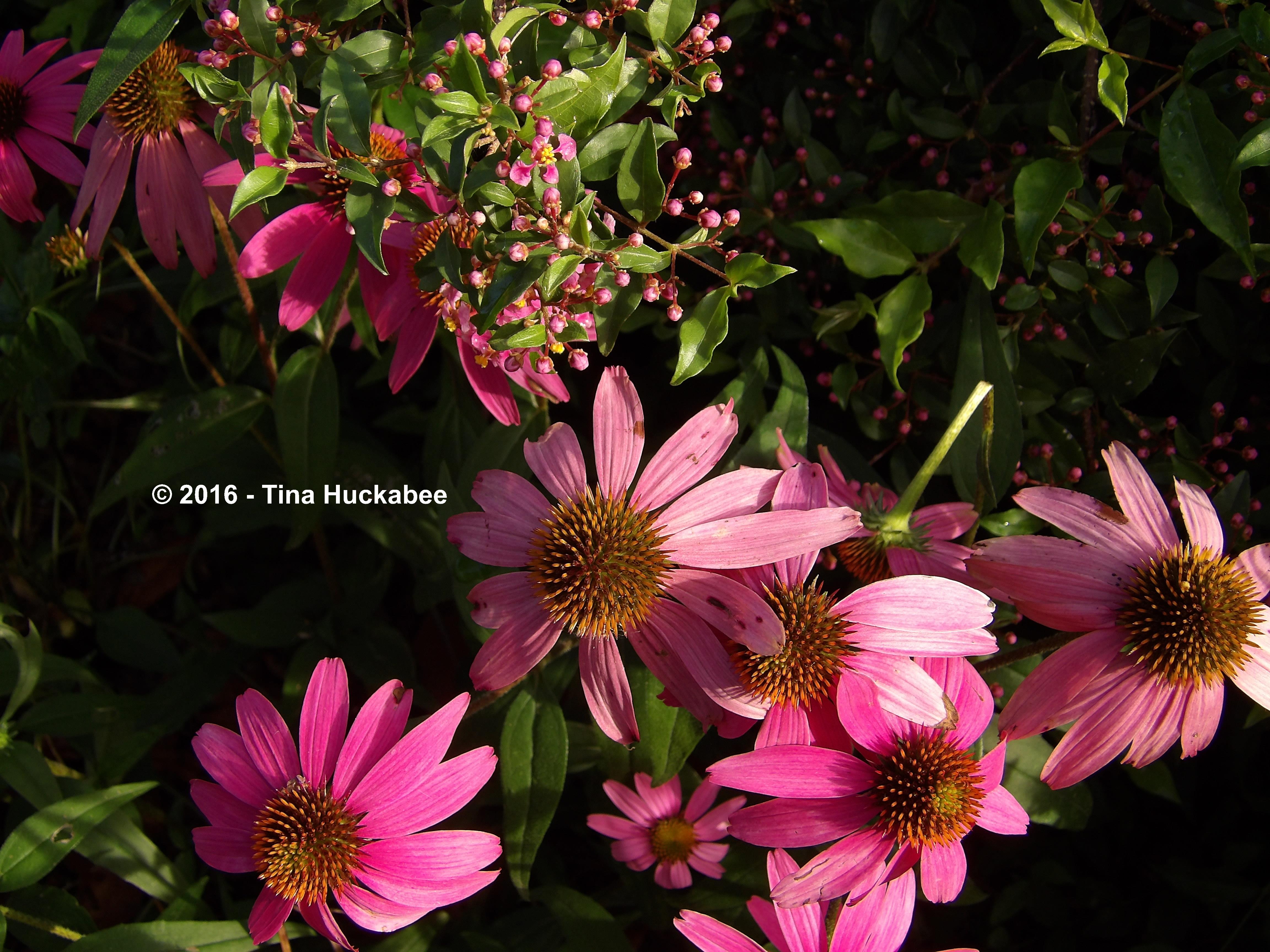
IMGP7888.new

And the large shrub, Barbados Cherry,  Malpighia glabra, is blasting the garden with its clustered version of the pink and yellow combo.
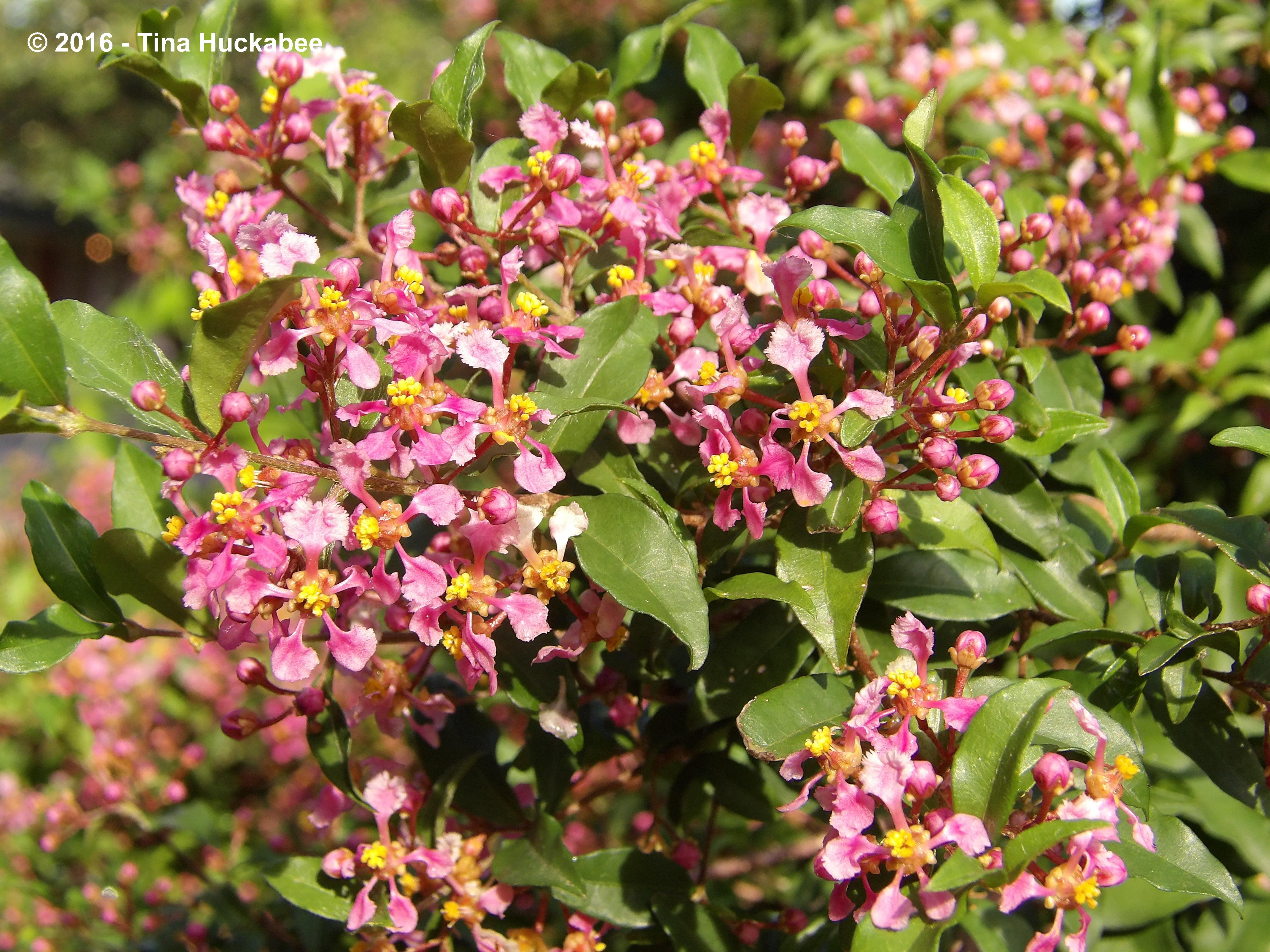
IMGP7887.new

Additionally,  the Barbados Cherry blooms fill the air with a lovely fragrance.   You can’t smell the blooms while reading this post, but the fragrance is special–a May garden delight.

Barbados Cherry and Purple coneflower are pink pals in the garden.
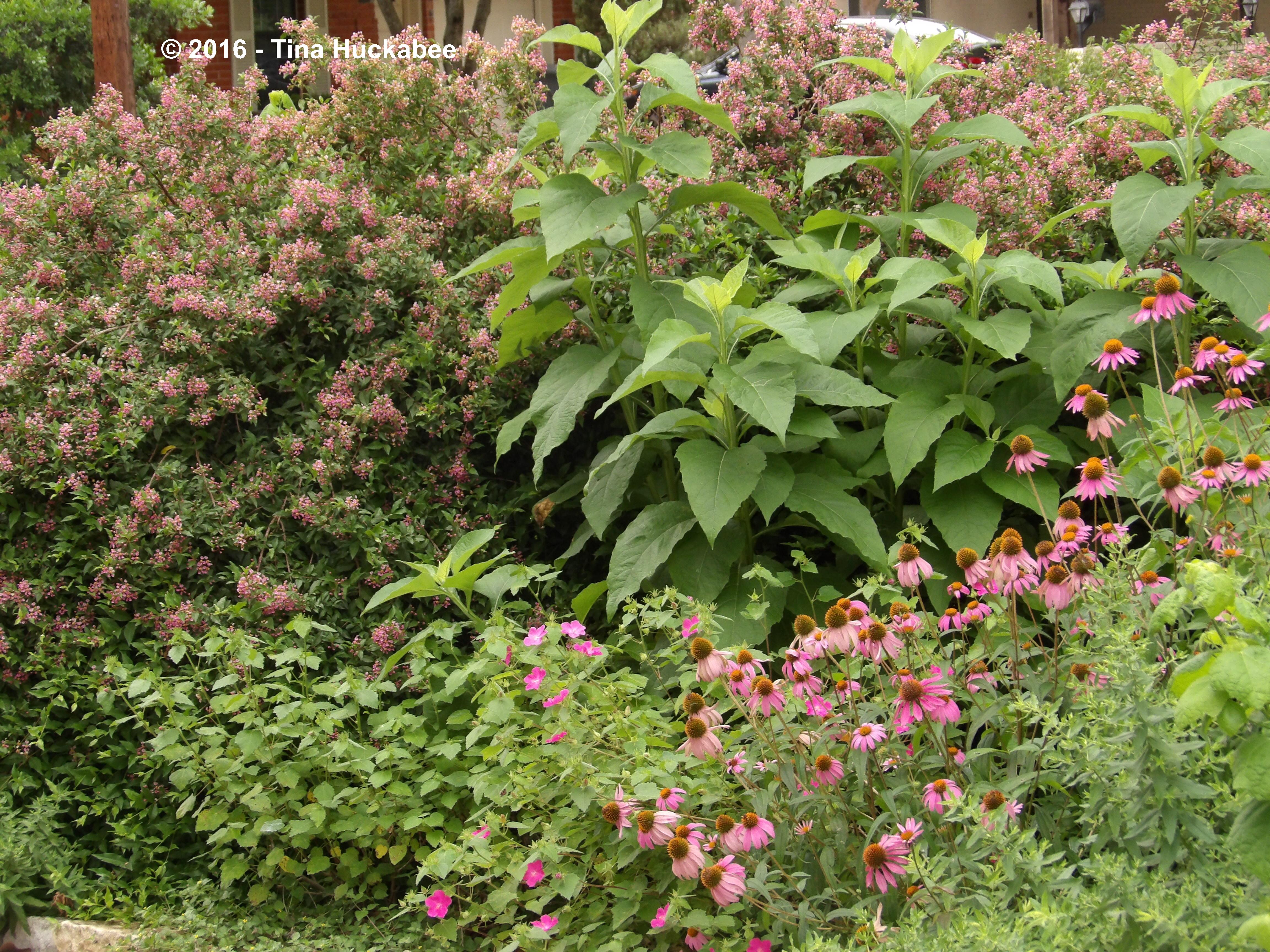
IMGP7917.new

Pink does not rule all of my garden though.  The yellow (Aquilegia chrysantha) and yellow-red (Aquilegia canadensis) Columbines are on their way out, having bloomed since late February.  However, they’re still producing for the pollinators, with some energy set aside for future seed production.

IMGP7884.new

Columbines soldier on as spring wanes and the temperatures warm. A cool season plant here in zone 8b, I miss Columbines when they’re done, but always enjoy their fairy-like, shooting-star charm in the cool spring garden.

Heartleaf Skullcap,  Scutellaria ovata, is filling the back garden with drifts of grey and blue.

IMGP7864.new

IMGP7896.new

While Majestic SageSalvia guaranitica, is truly grand in the royal blue it wears.
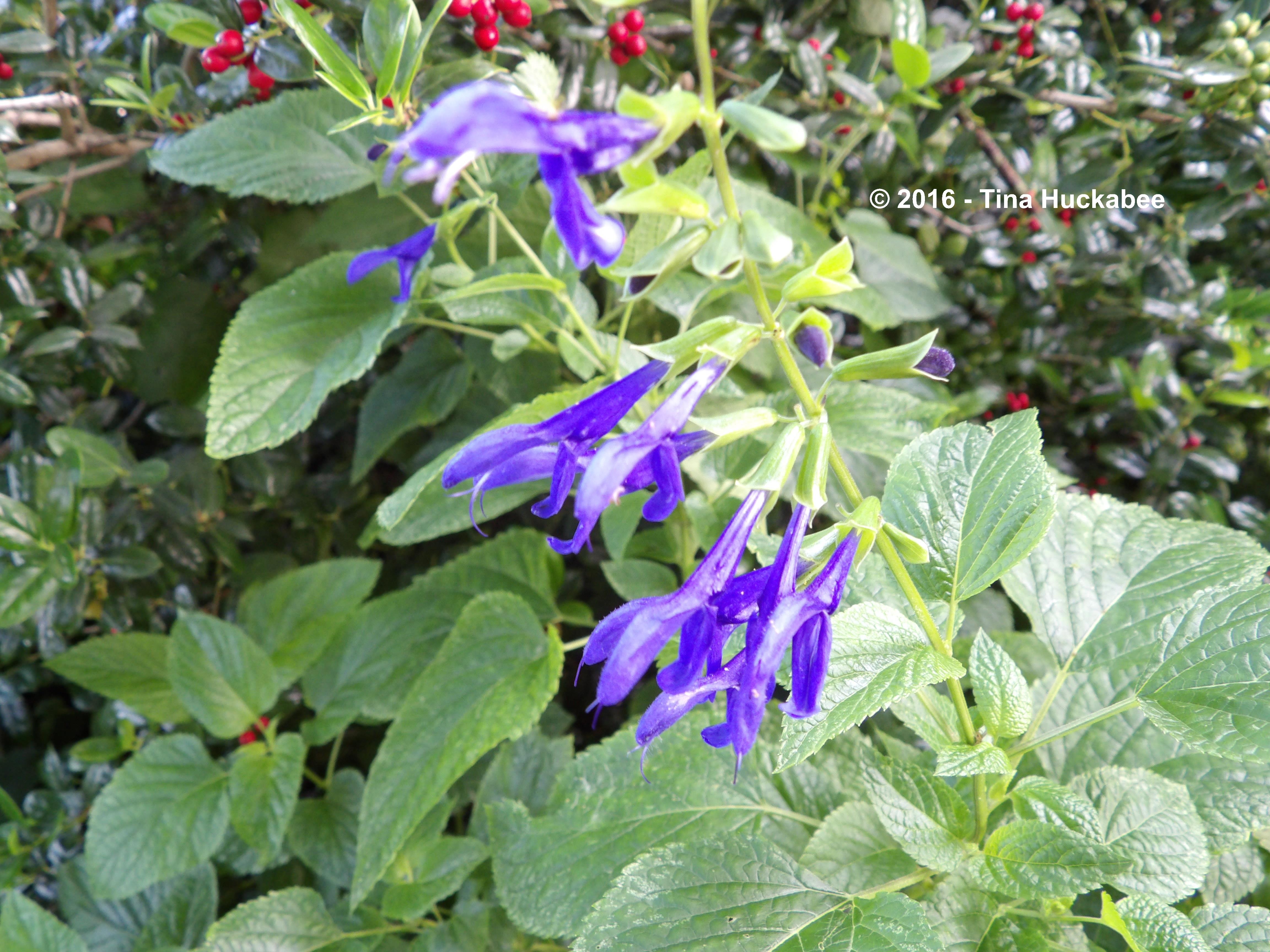
IMGP7885.new

Finally, the creamy blooms of Twistleaf yuccaYucca rupicola, have made their once-per-year appearance in the front garden.  Poised atop the tall (5 foot) stalk, they beckon to native and honeybees to sip and gather from their floral bounty.

IMGP7881.new

Once the blooms are done, I’ll trim the stalk–maybe drying it for further use as a stake for some wayward plant later in the year.   The foliage is handsome, year-round, lending structure and evergreen sturdiness to the garden.

IMGP7882_cropped_4000x3272..new

Somehow, I managed to choose photos of all these blooms with not a single pollinator in sight.  Pollinators are in the garden and in abundance–nectaring and pollinating, even if I didn’t capture that particular beauty in this round of photos!

Fortunate to live where May blooms are plentiful,  I thank Carol at May Dreams Garden for hosting this monthly bloom frenzy known as Garden Bloggers’ Bloom Day.  Join in, share your garden pretties, then click over to her lovely blog to see and learn about blooms from many places.

Leafed Out in Full

Spring has sprung, rain has fallen, temperatures have climbed and here in Austin, Texas, we’re mostly through our beautiful and glorious spring weather and headed into the lovely–though admittedly somewhat less pleasant–summer season.    Summers in Texas are hot and humid and that’s one reason why Texans have historically liked trees; trees provide respite from the sun and cool our souls.  The American Sycamore,  Platanus occidentalis is a tree that the Native Americans and later, European and American pioneers, scouted for when they wanted to find water and shade in Texas.

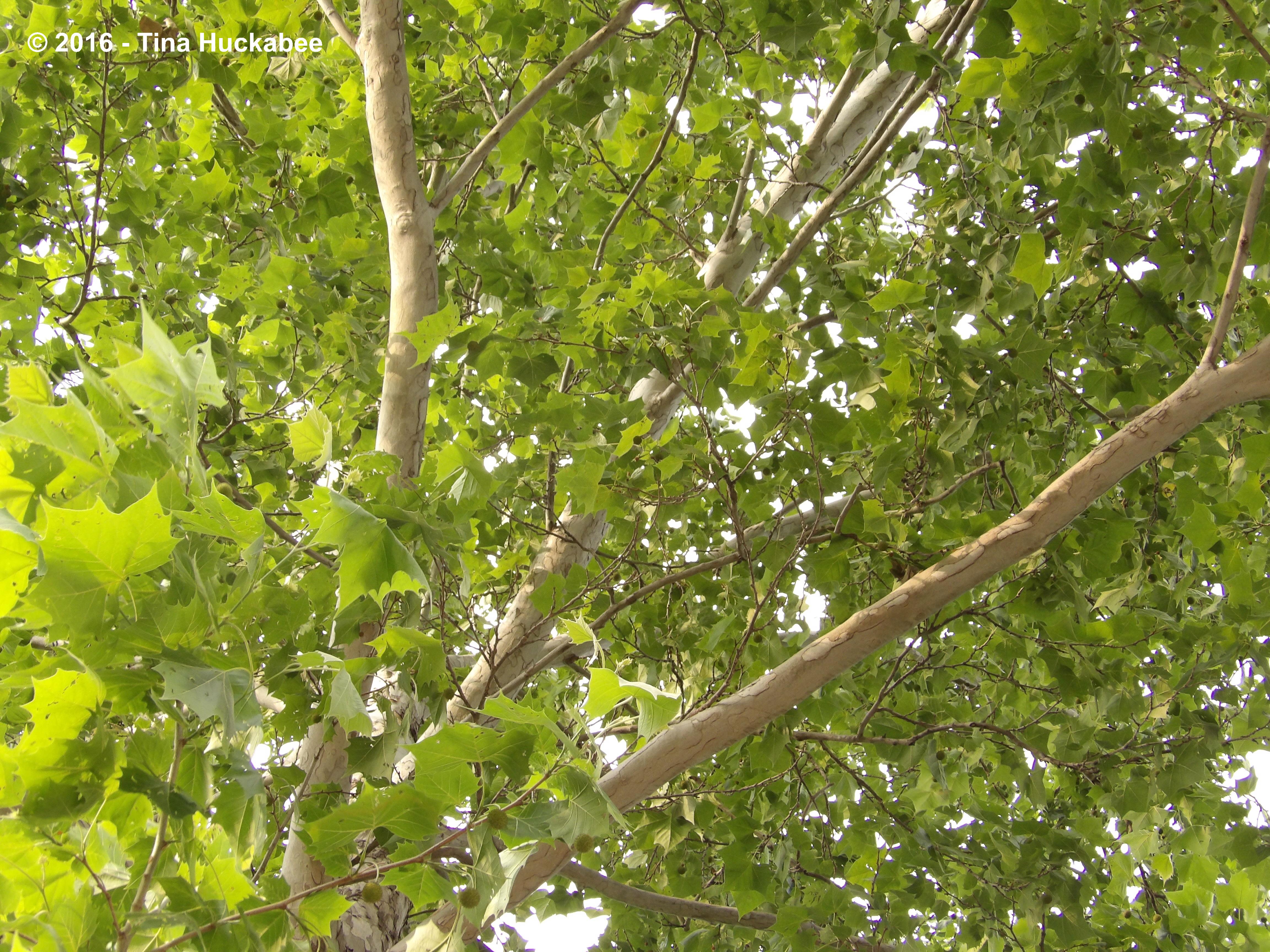
Stately and tall, the American Sycamore is springtime resplendent in its lush, green foliage, all leafed out and ready to provide protection for critters–large and small, furred and feathered, two-legged and four-legged.

IMGP7907.new

IMGP7913.new

The limbs are graceful as they reach into and support the canopy.

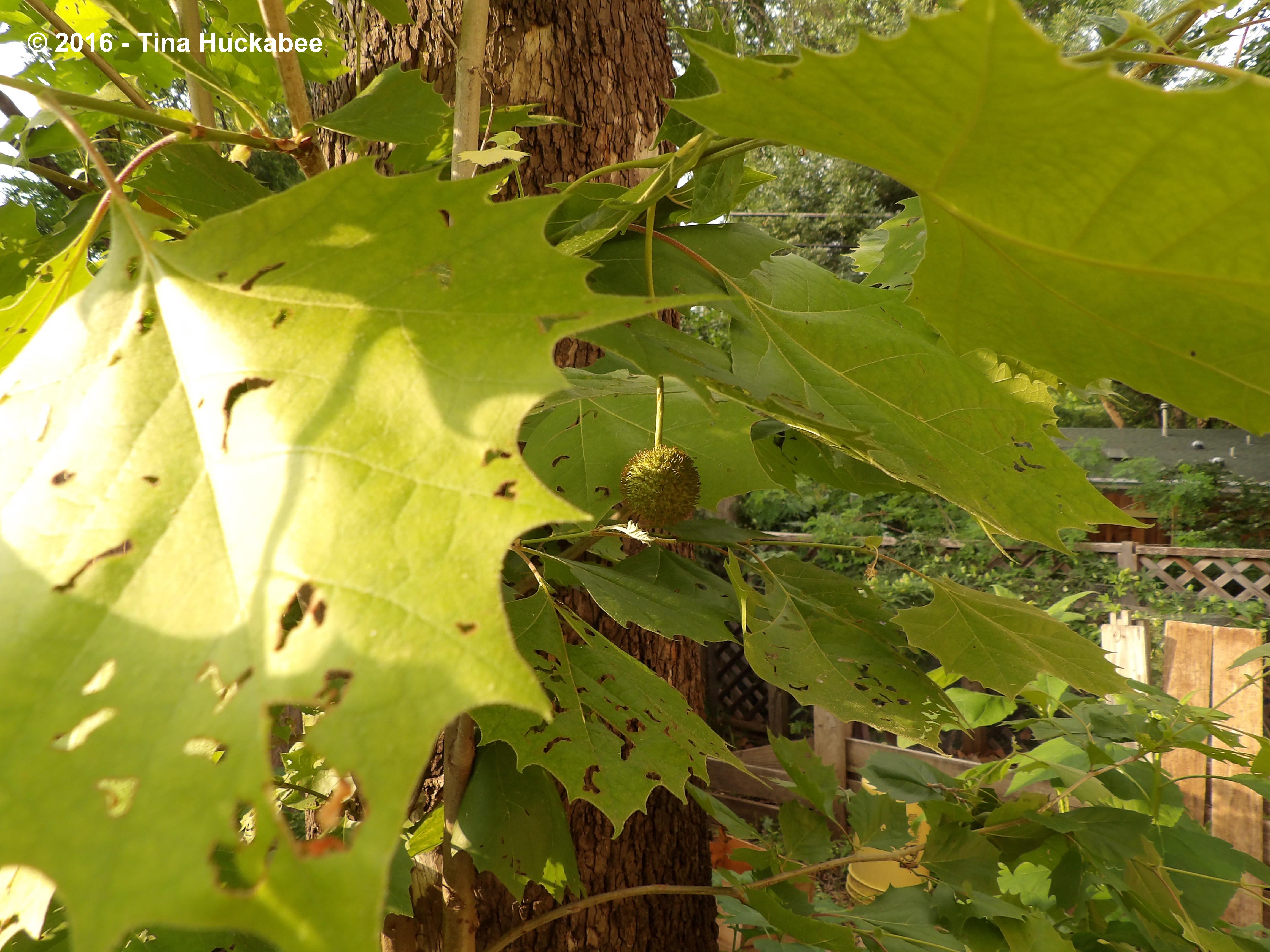
This month, the leaves have been munched upon and are a bit holey.

IMGP7905.new

IMGP7906.new

I’m not sure exactly who’s been eating the leafy greens, though I know I’ve seen this sort of damage in previous years on the Sycamore’s leaves.

IMGP7909.new

The mature leaves have some damage, but there are new leaves, too.

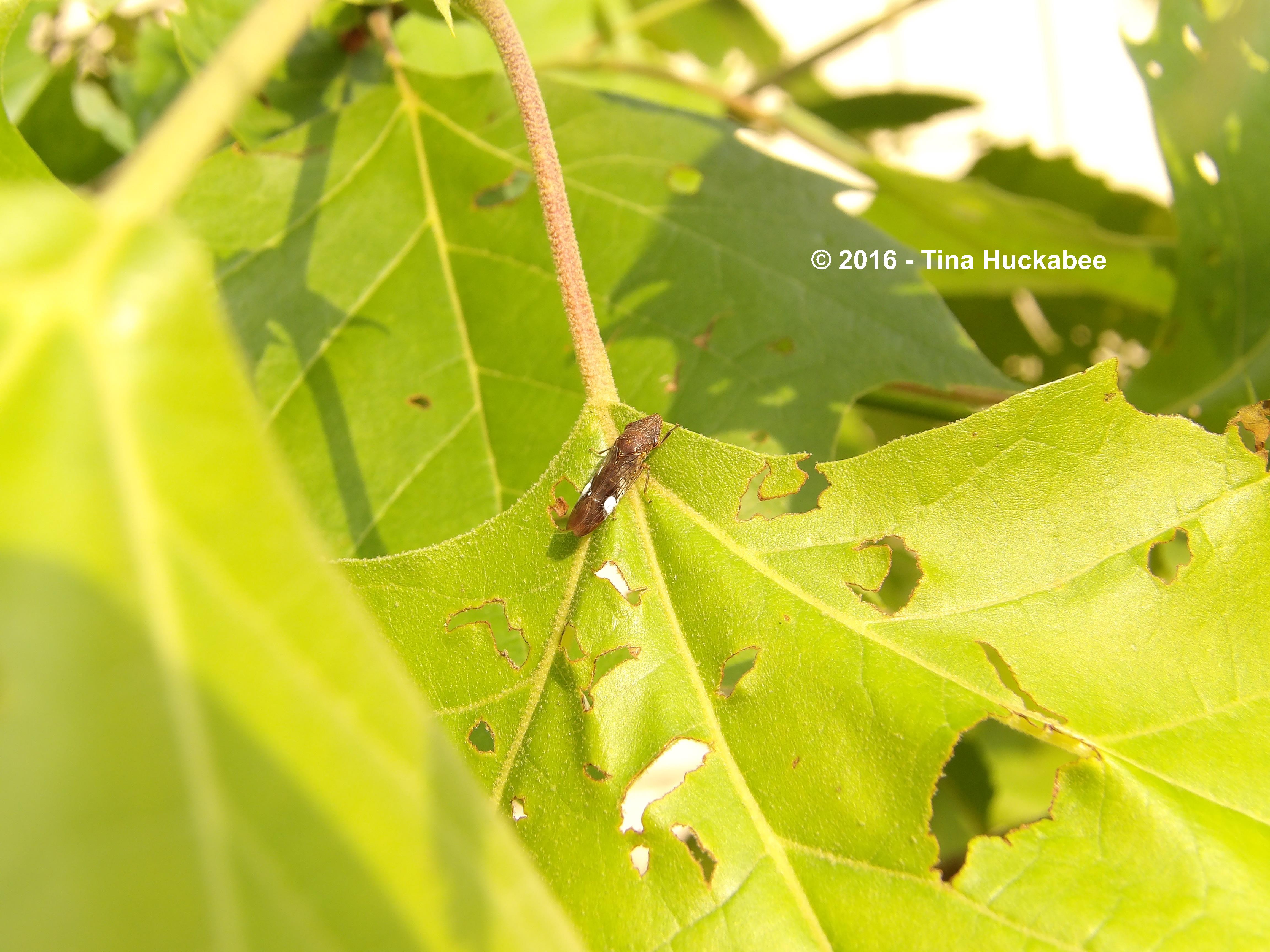
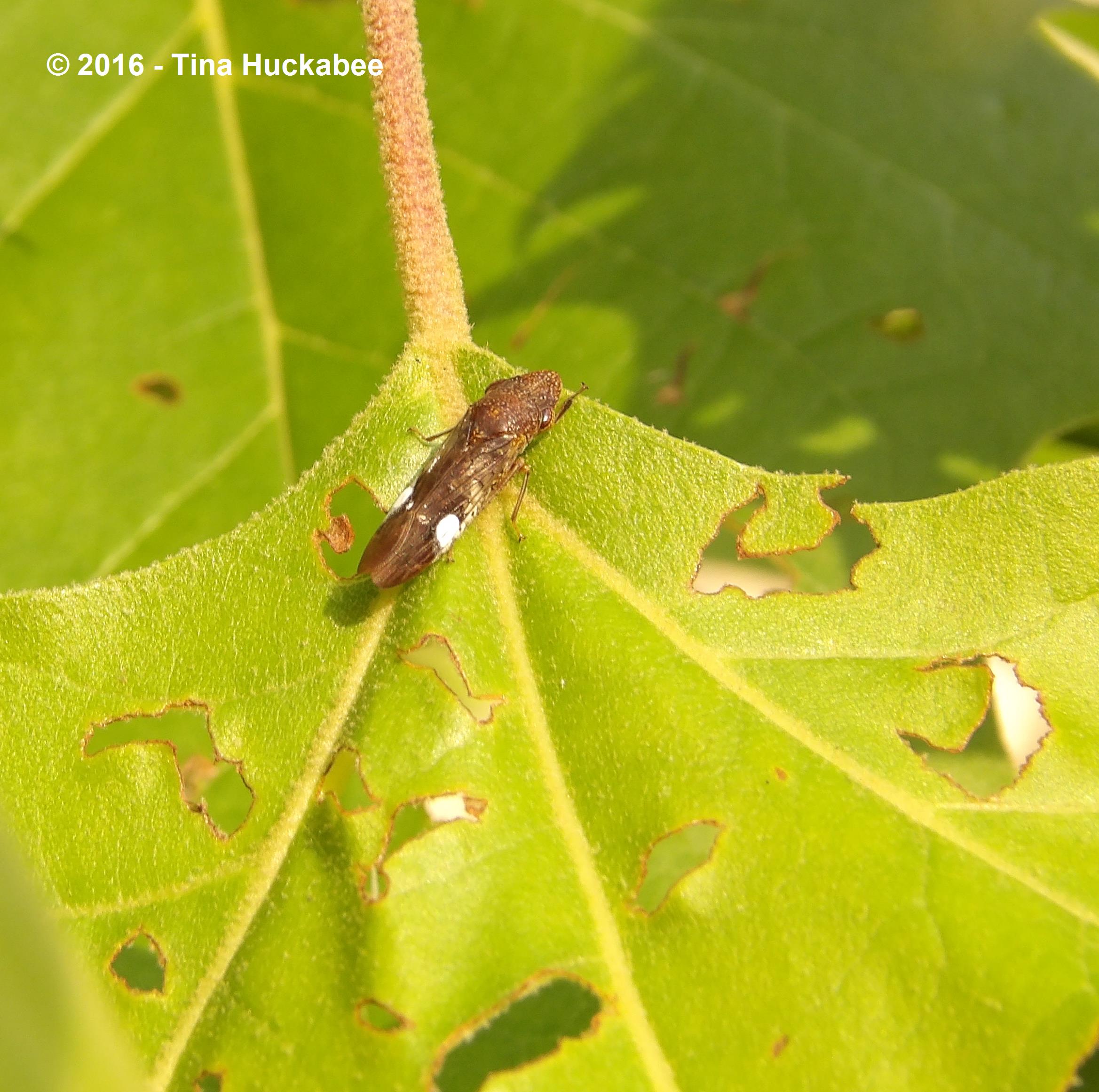
I did see this fella, a Glassy Winged SharpshooterHomalodisca vitripennis,  on one of the leaves.

IMGP7911.new

Now, I’m not suggesting that this particular one is responsible for all the holes, but apparently, the Sharpshooter undergoes several molts in its trip toward adulthood and it had to eat something, so I think the leaves are a good bet.  Since I caught the Sharpshooter near the holes, he gets the blame for making the holes.

The Glassy Winged Sharpshooter is a type of leafhopper insect, of which there are a bunch who munch on shrub and tree foliage here in Central Texas.  I’m not one to fret about a few holes in leaves–everyone has to eat and one function of foliage is to feed insects.  The Glassy Winged is common here in Central Texas and according to literature, they do little long-term or serious damage to trees and shrubs.

This one–the one I referred to earlier as a “fella” and “he”–is actually a female.  The white patches on her wings are call egg brochosomes.

IMGP7912_cropped_2337x2322..new

Most leafhopper species have brochosomes, which produce a sticky substance used to coat their bodies for waterproofing.  Additionally, the female stores and then uses the substance she holds in the brochosomes to cover her eggs once she lays them.

Also, if you stand under the Sycamore (and my oak trees, too) right now, you might feel a few “drops” from the trees, sort of like rain drops, but with a clear, blue sky above. No, the drops aren’t rogue precipitation, but, more than likely, are leafhopper excrement.

Well, that’s nice.  Just don’t host your next picnic underneath a tree with “drops” coming out of it.

The Sycamore in May is in full leaf, foliage, and life.

IMGP7910.new

Not all the leaves have been insect damaged.

It will be a harbinger of safety, food, and protection for many and for months to come.

Thanking Pat of The Squirrelbasket for graciously hosting this fun meme about trees. Check out her blog for interesting information about trees from all over the world.


Owlets, Owlets, Everywhere!

Owlets keep us on our toes.  I missed documenting the appearance of owlet #3 (Frankie? Franky?) on Monday (5/2) evening at the nest box hole, though I saw him/her poking out his/her head briefly when I arrived home in late afternoon.  I intended to take photos, but due to blogger incompetence or distraction by something shiny, no captures of the newest neighborhood raptor ensued.

I figured Mama and Daddy Owl would successfully usher Baby Owlet into their world of dark, trees, foliage, and mice during the night.

At about 6:30 Tuesday morning–the alarm was up, but we weren’t–there was insistent doorbell ringing and a frantic neighbor who’d been awakened by scuffling noise at her bedroom window and a little owlet staring at her in her jammies.  (The neighbor was in her jammies, not the owlet.) Pre-coffee, my husband and I grabbed necessary items–clothes, camera, gloves–and met with the neighbor in her back yard to commence the Great Owlet Rescue.

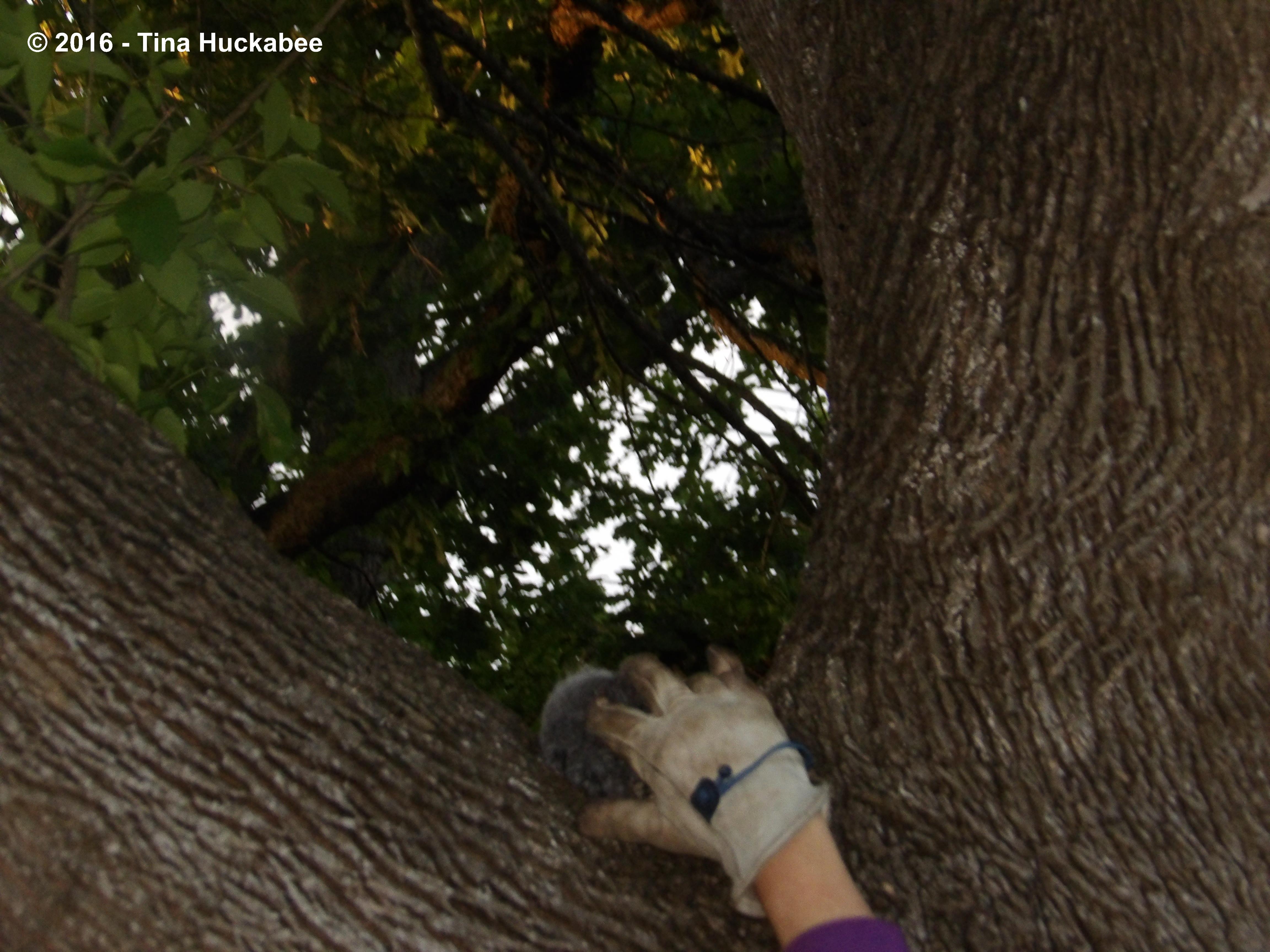
A darling, but not happy owlet–Frankie(y)(?)–was sitting on the grass.  Mama was nearby, watching with steely eyes, as I gently picked Baby up and placed the forlorn fuzzball in a low crook of a large ash tree.

IMGP7826.new

IMGP7823.new

IMGP7824.new

IMGP7828.new

Daddy Owl flew within about 12 inches of my unprotected and early morning face and glared at me as I verbally assured him that I only wanted the best for Baby Frankie(y).

I don’t think he was assured at all.

Baby Frankie(y) sat, confused and bummed, in the tree for a brief period.

IMGP7831.new

Very brief.  Baby fluttered to the ground almost immediately and three inept humans tried several more times to keep the owlet in the tree, admonishing Baby Owl to “stay!”.  That command doesn’t quite work as well with Eastern Screech owlets as it does with dogs.

Actually, “stay” doesn’t work very well with my dog, either.

IMGP7834.new

IMGP7832.new

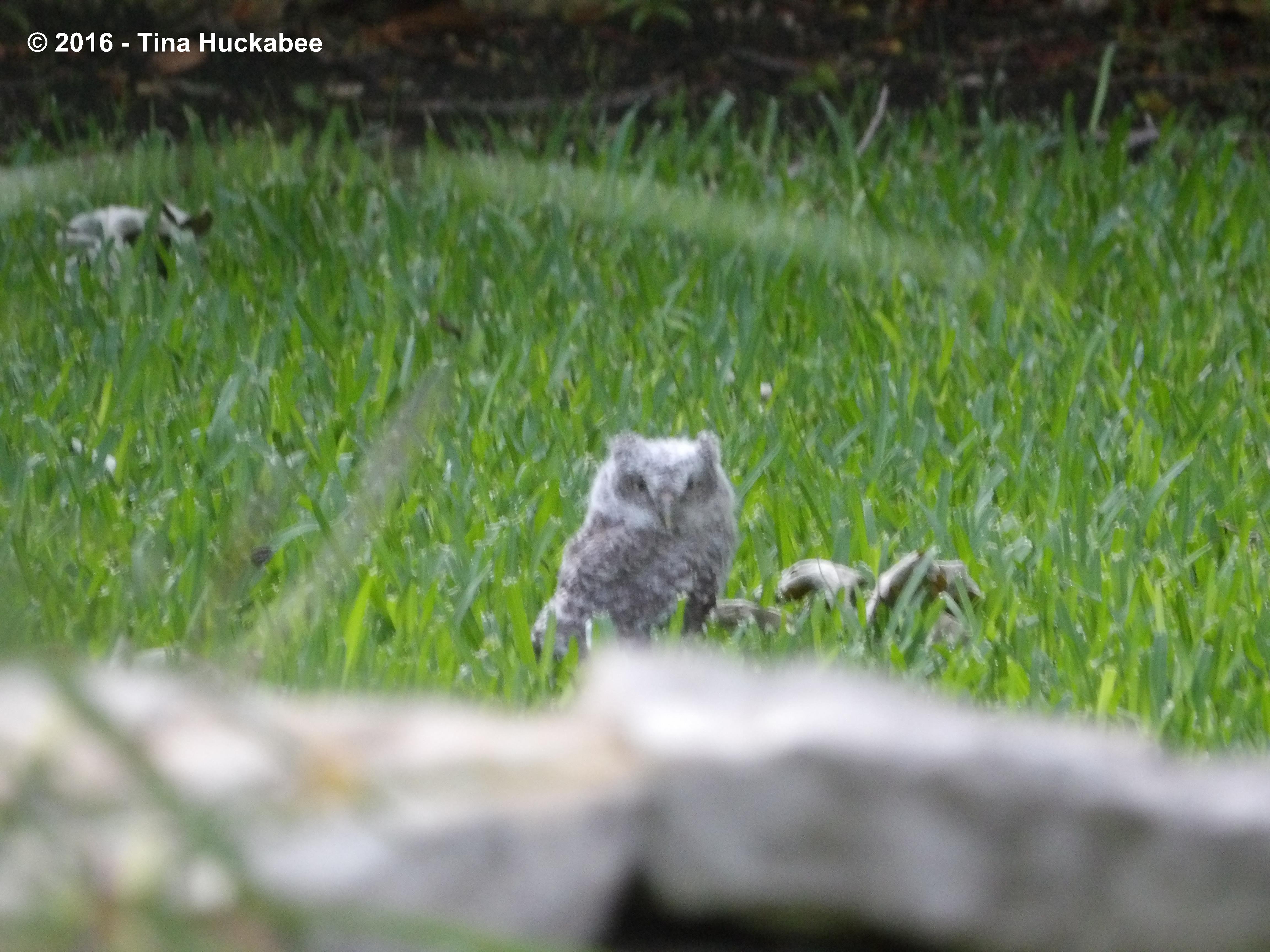
Within a couple of minutes, the owlet flew from the safely of the tree to the middle of the large back yard, just beyond the pond,

IMGP7840.new

…and we decided to let Mama and Daddy take care of Baby Frankie(y). There was no real fear of cats or dogs bothering the owlet and we thought it was best to let Mom and Dad take matters into their own hands.  Er, wings.

Let me remind you, dear readers, that all this avian drama happened PRE-COFFEE! Yes, no caffeine was involved and I would very much appreciate a virtual pat-on-the-back for my rather lame attempts of wildlife rescue prior to my morning fix.

Thank you.

So, basic math suggests that with 5 eggs laid and 3 owlets out of the nest box, there is a theoretical possibility that there are two owlets left to fledge.

Indeed.

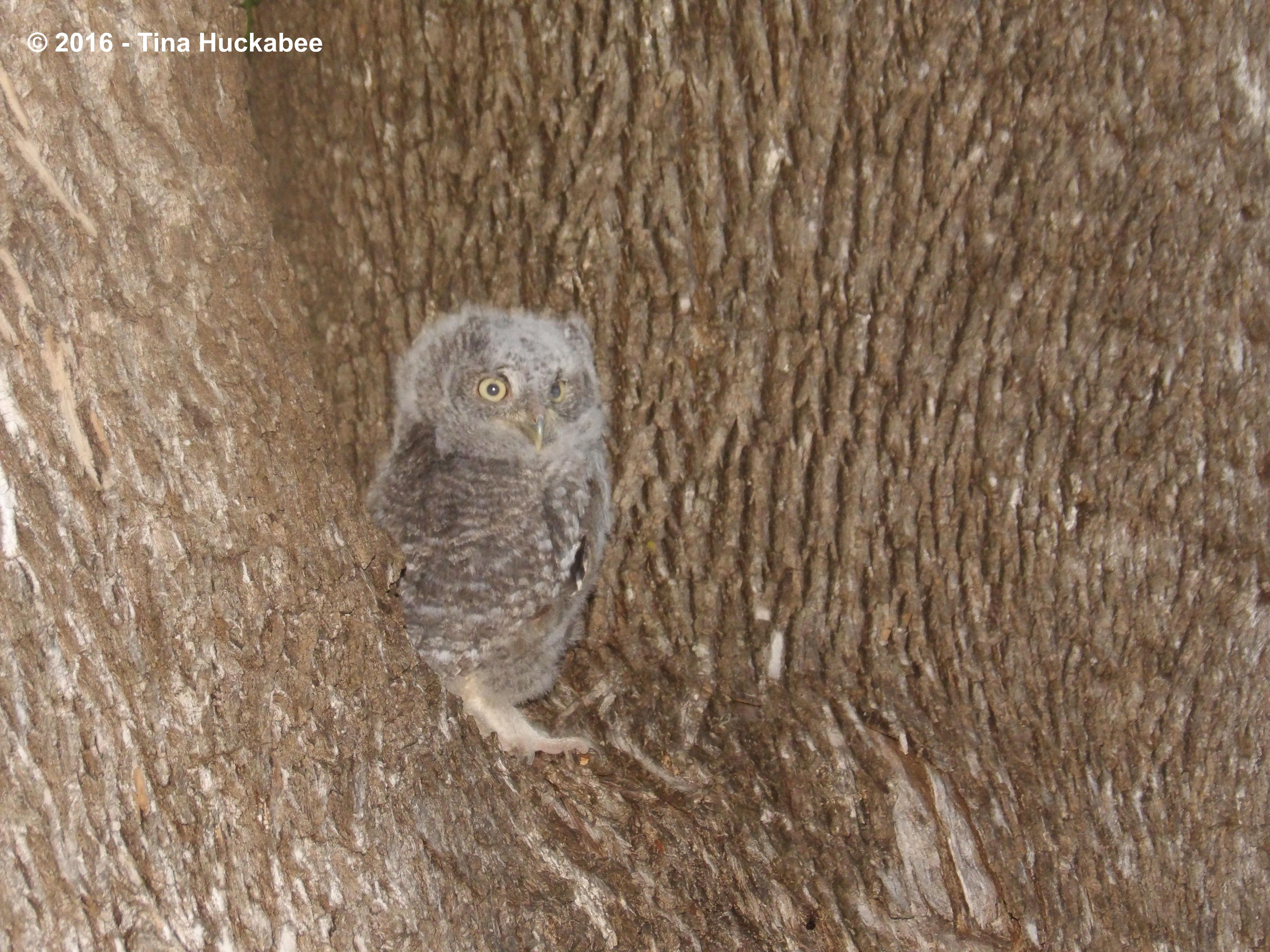
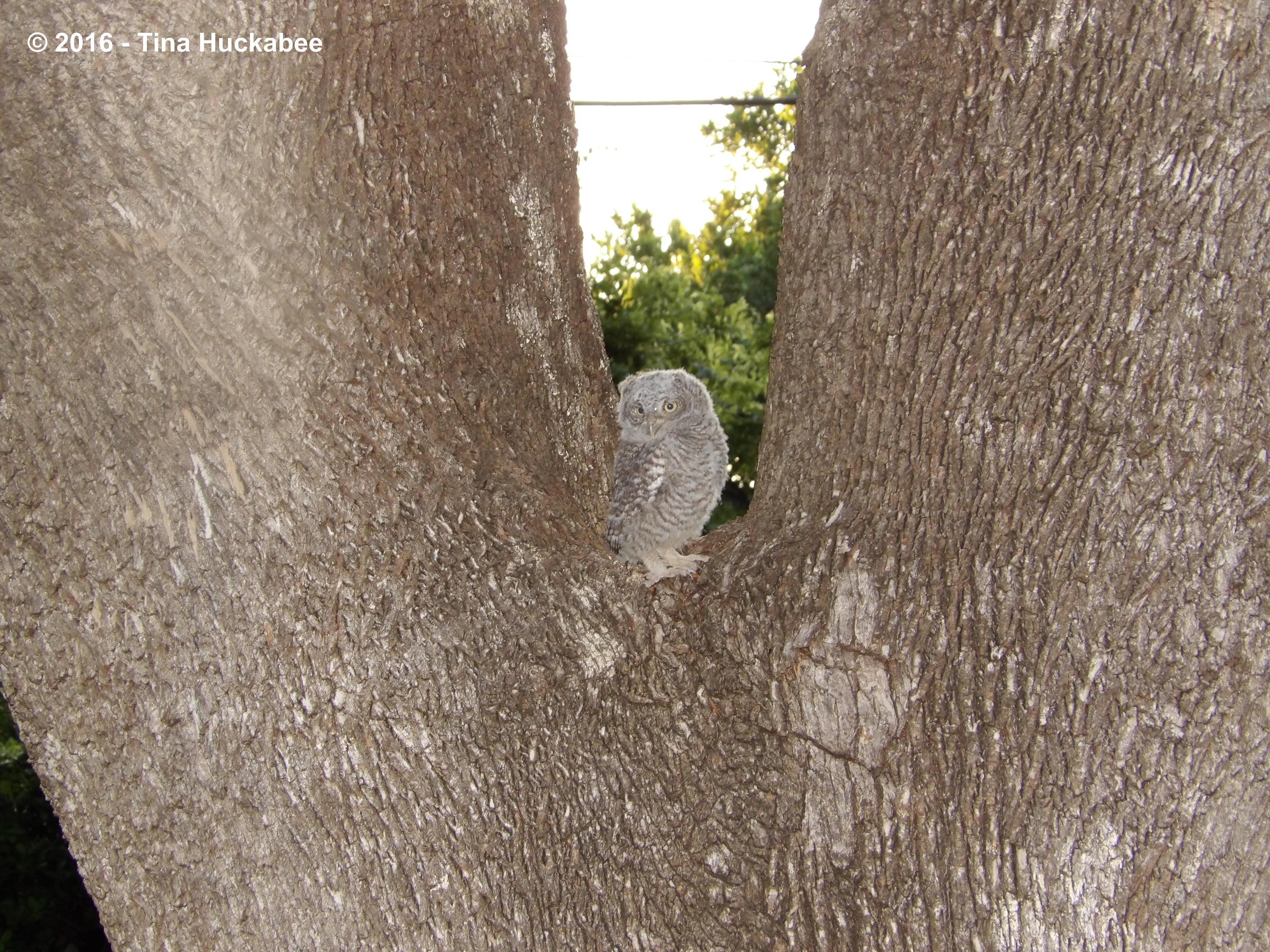
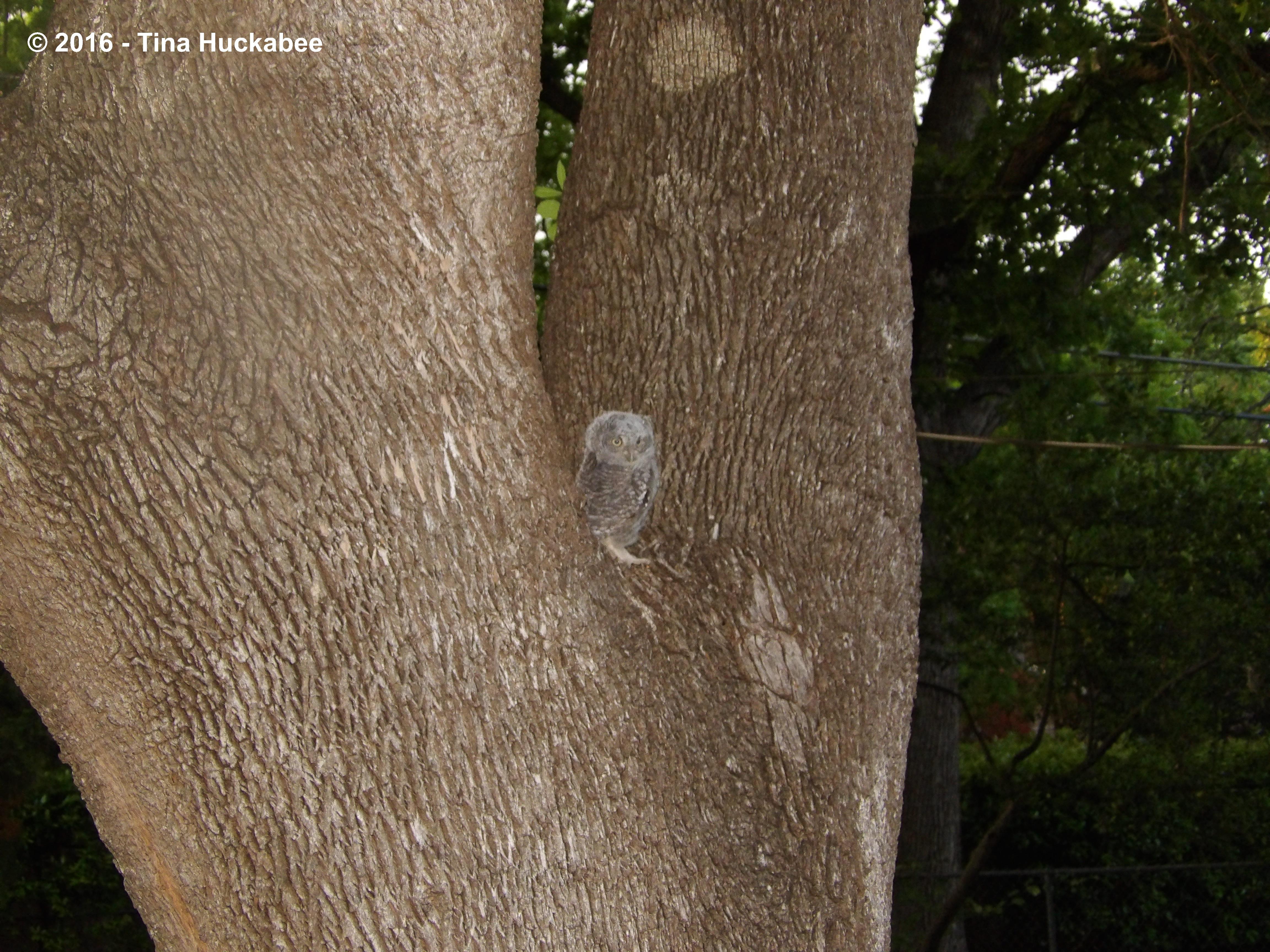
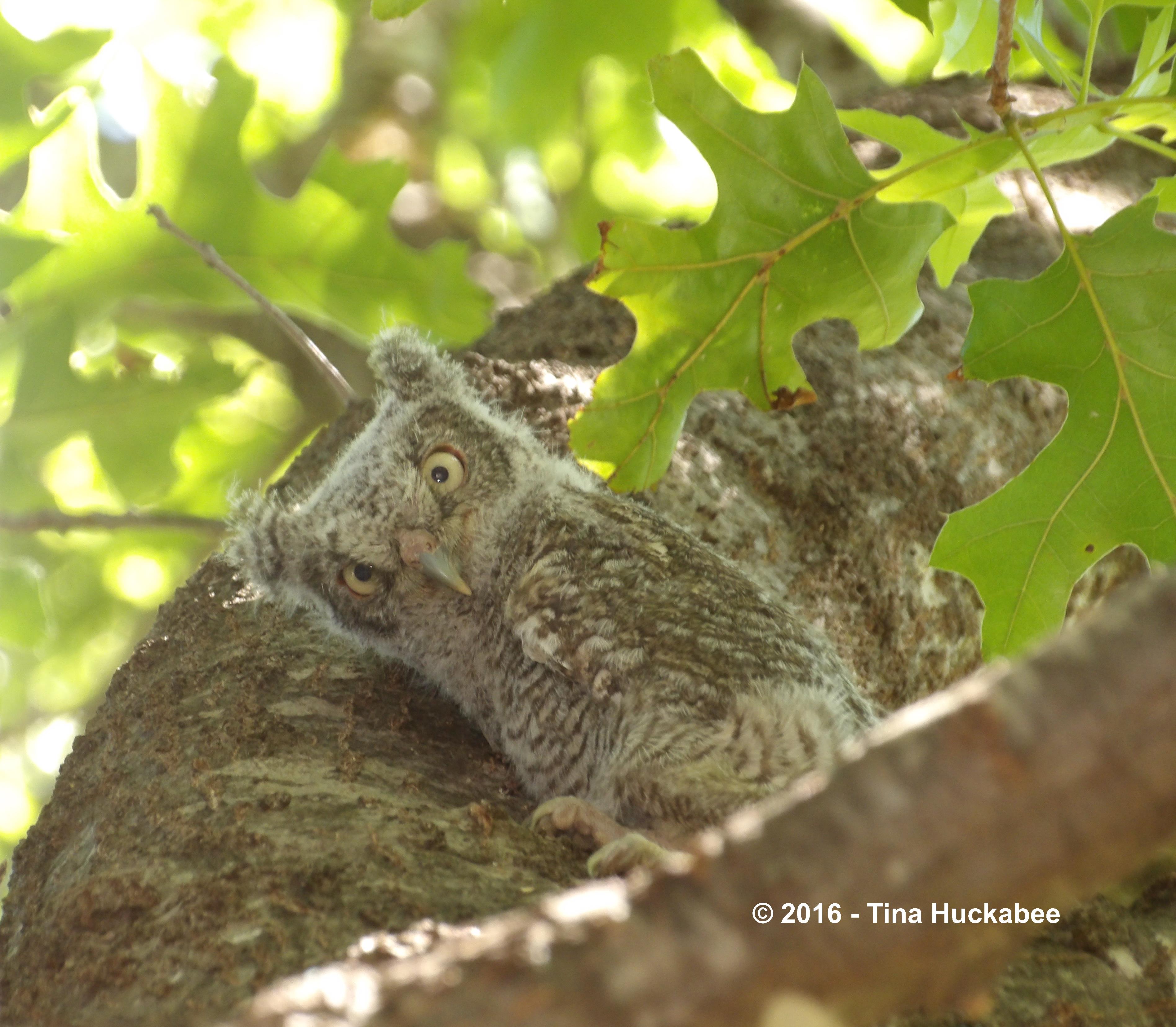
Mid-day Tuesday, this little cutey was clinging to dear life on an oak tree branch after its daring daytime escape from the nest box.

IMGP7847_cropped_3793x3314..new

This is owlet #4, named Fritz.  Though, she could be a girl owlet–I don’t know, they all look alike to me.

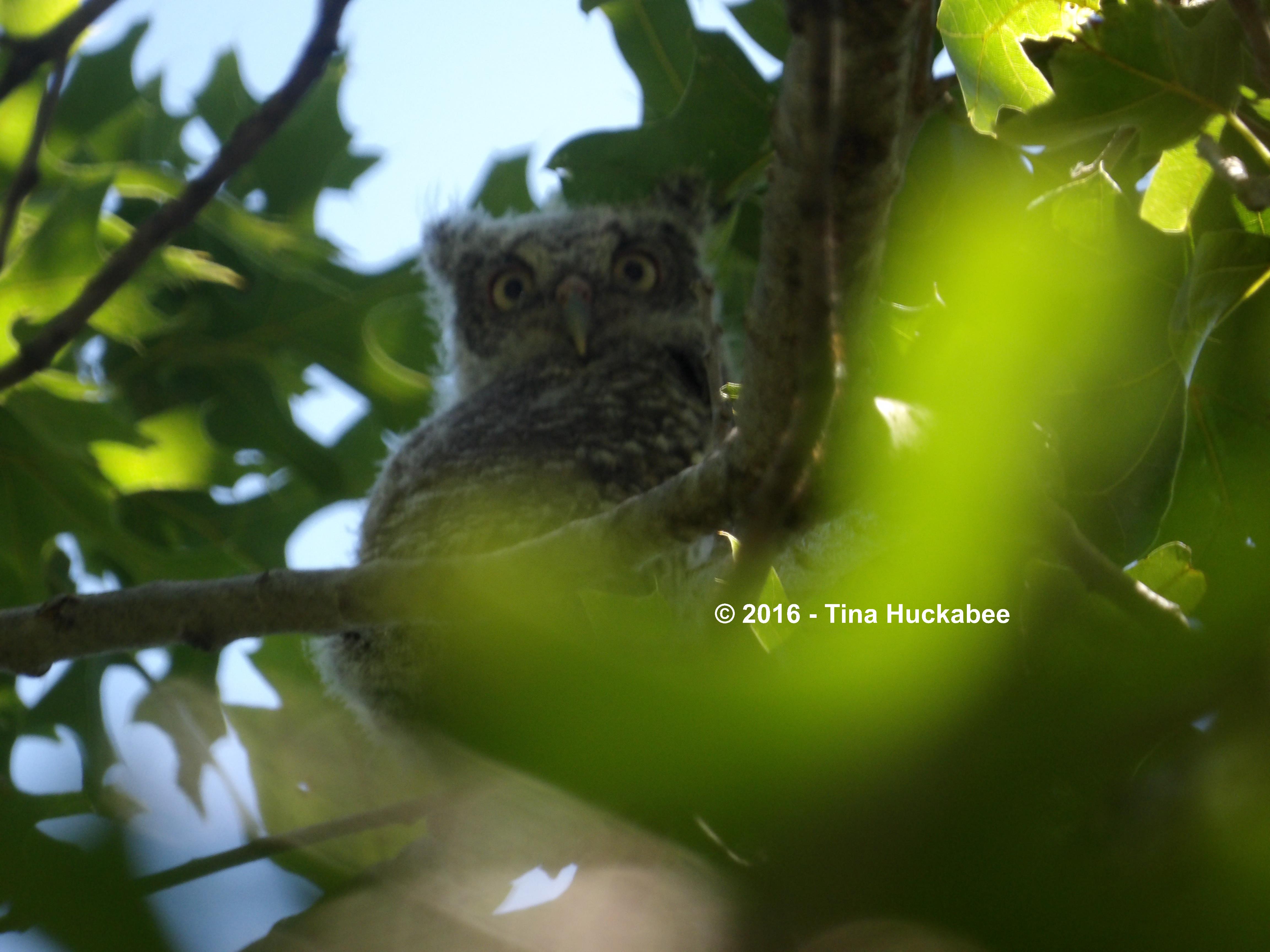
Left to her own devises, Fritz managed to make her way near the top of the oak tree, where I could barely see her amongst the spring greenery.

IMGP7856.new

The only reason I knew where to look for her is that the little song birds–Carolina chickadees and wrens and Cardinals–were fussing-up-a-storm about something at the top of the tree and my bet was that it was a an owlet who was the offending creature.  I was right.  But Fritz  was undeterred by the noisy little bird-pests and determined to stay in her leafy spot for the duration of daylight hours.

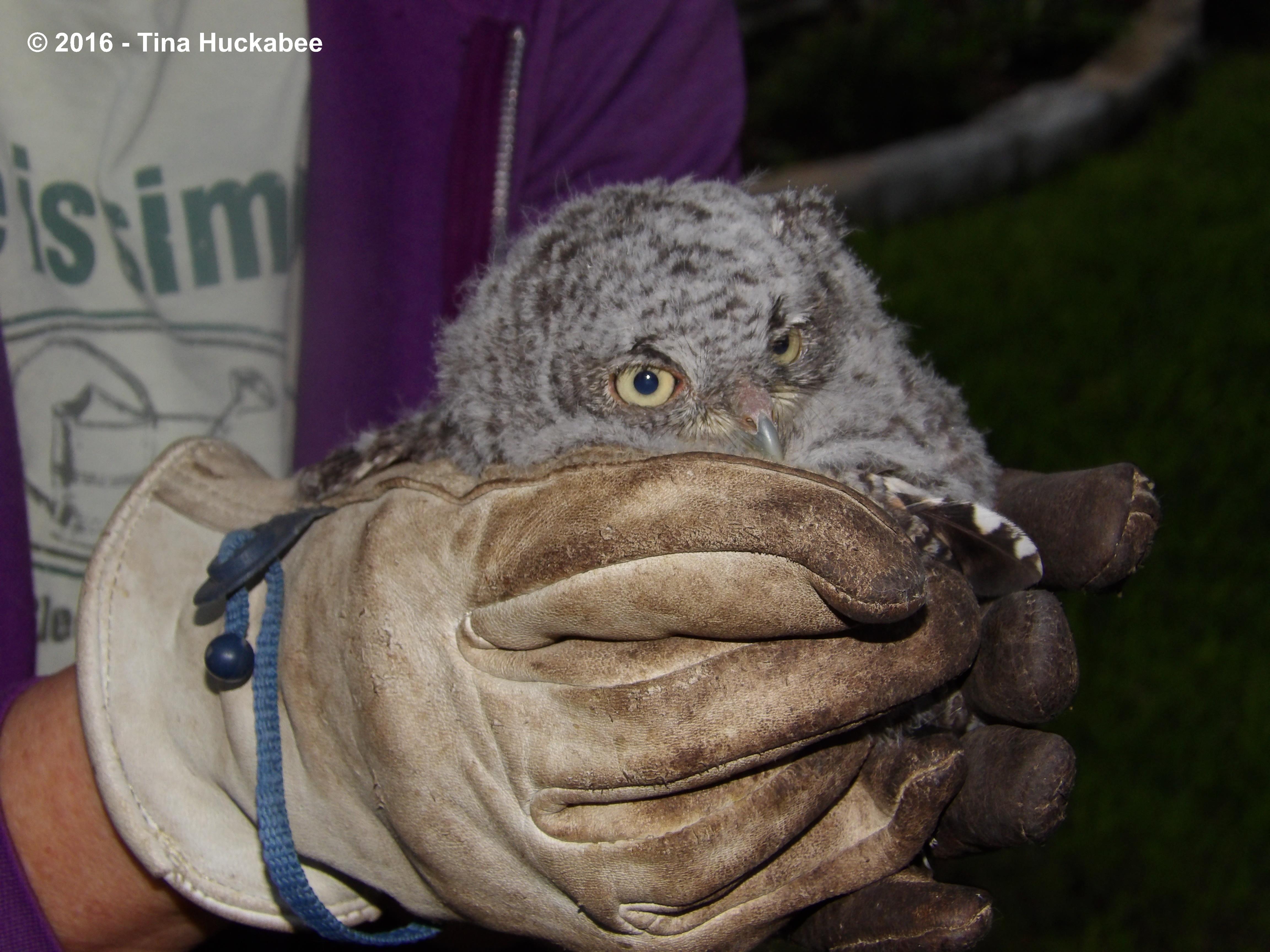
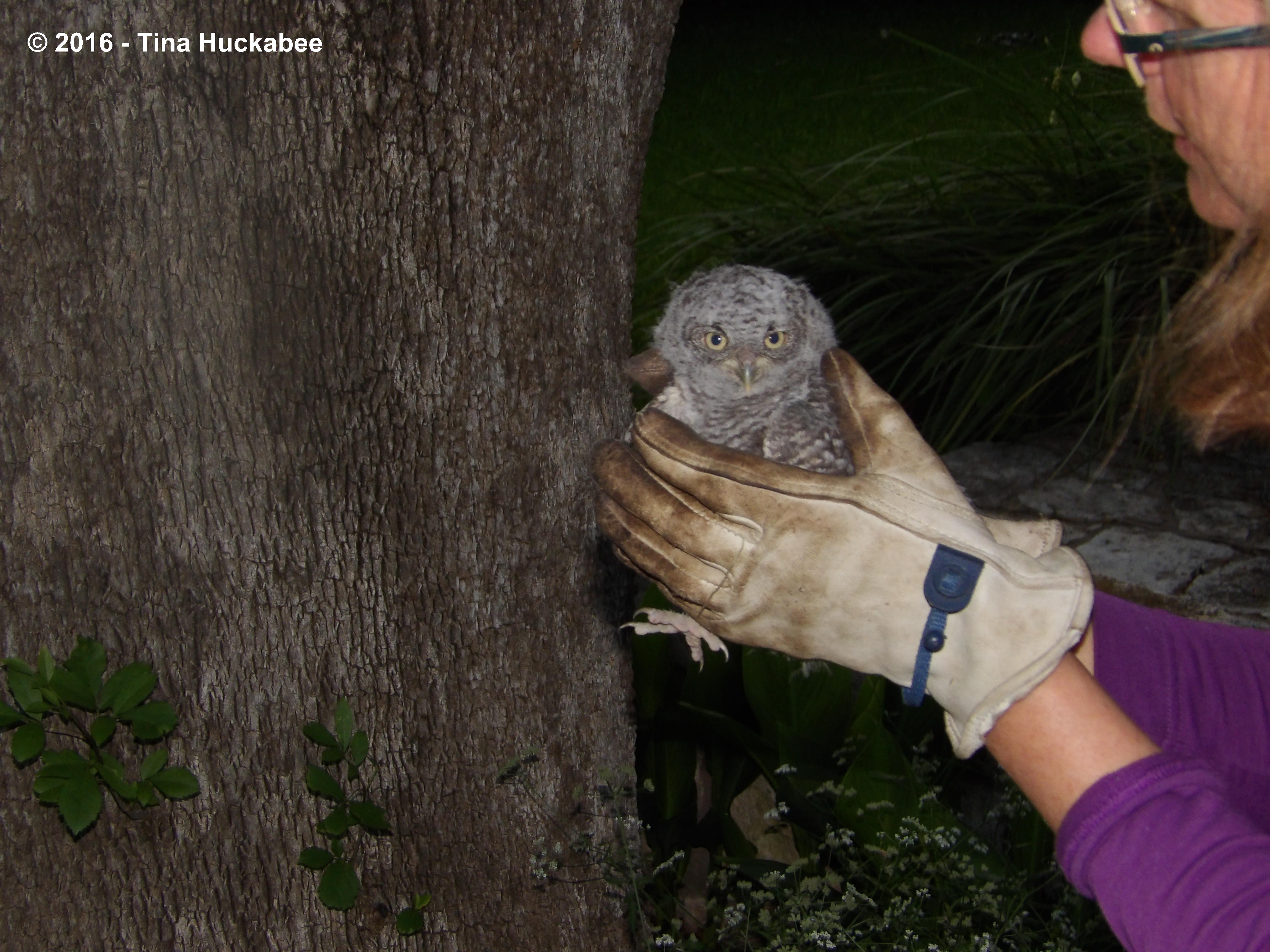
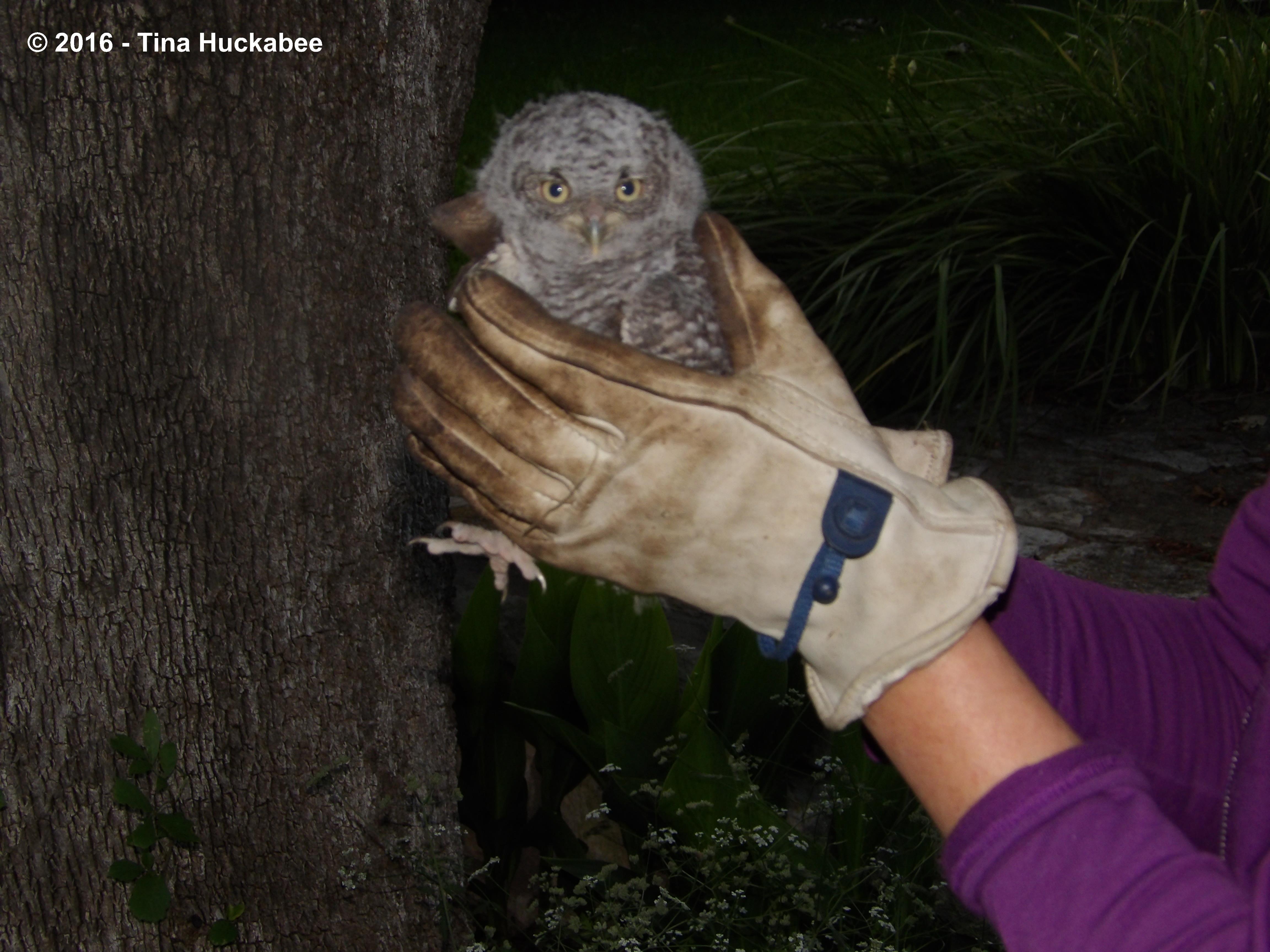
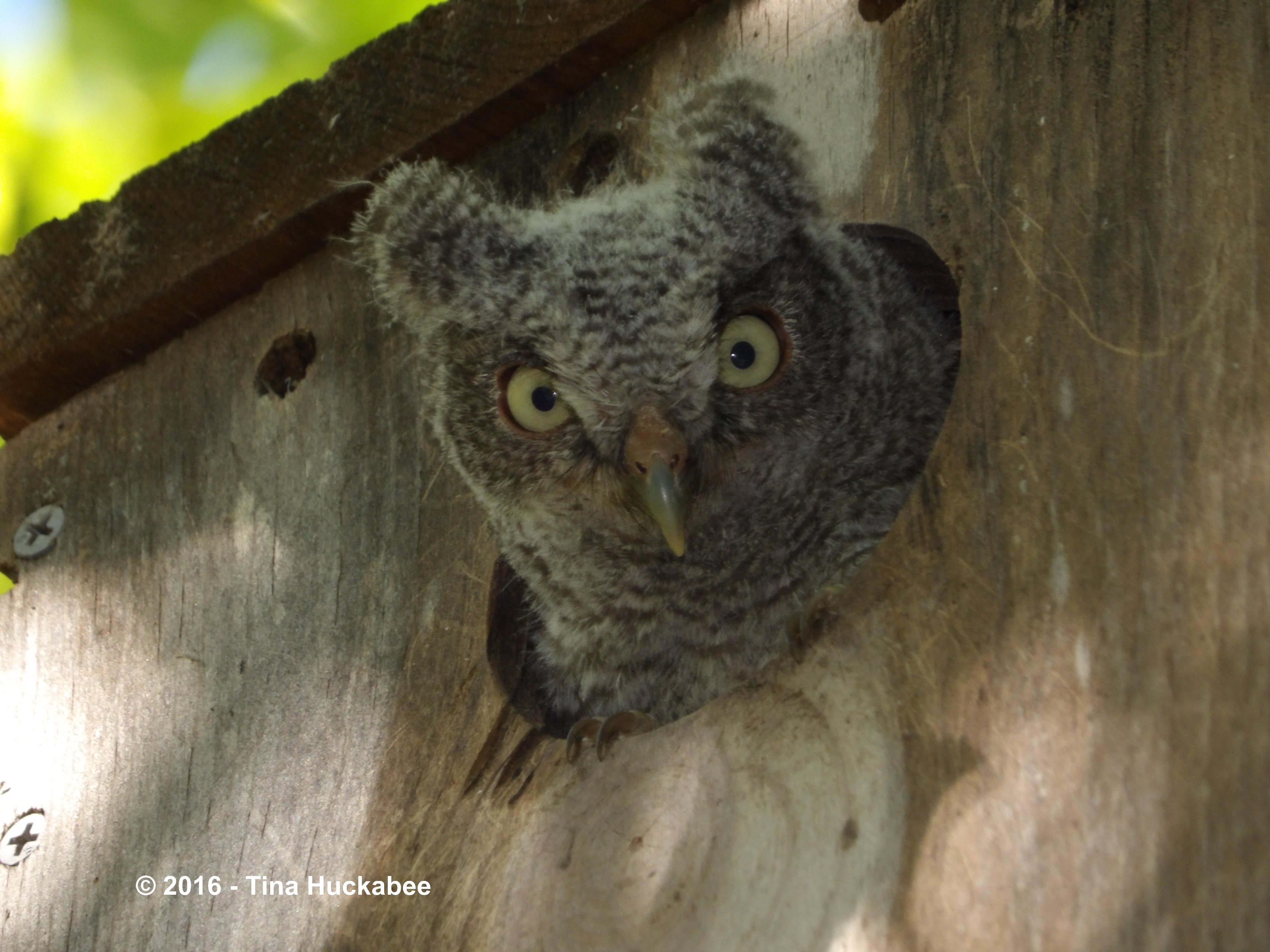
In the mean time, a fifth fuzz face was peeking out of the owls’ nest box–owlet #5, who I think I’ll call Jo–because I can.  As of Wednesday, Jo was still in the nest box, but I’m fairly sure that a plan of action to get out of there was in the works.  At about 9 pm Wednesday night, I stepped outside for a possible owlet look-see and in the sitting area underneath the oak tree was a little grey bit of fluff looking disgruntled.   I picked “Jo” up and place her/him in the Mountain Laurel just as Mama flew by me in warning.  I backed off immediately and moved to another part of the garden.  Mama watched for a bit and so did I, but I decided it was time to vamoose and to give the parents privacy to teach Jo to fly–if only well enough to stay in the trees for the night.

I thought the grey fluff on Wednesday night  was baby #5– Jo– but alas, Jo is still in the nest box as of Thursday afternoon.  Maybe it was Fritz?  Maybe Fritz never left the oak tree?  Who the heck knows? I’m sure that Mama and Dad Owl know who’s in and who’s out–and really, that’s all that matters.

Good luck to you all, little owlets: Jo–and Fuzzy, Frizzy, Frankie(y), and Fritz–may you  fly well and catch plenty of mice, rats, and other assorted yummies.

IMGP7872.new

The excellent Eastern Screech parents raised 5 chicks to fledgling age–an impressive feat, I’d say. I’ve read that the predation rate for Eastern Screech Owl chicks is about 70%–that’s high–and it suggests that with well-learned flying and hunting skills, coupled with some good luck, 2, perhaps 3 of these babies will survive to adulthood.

I always miss the owls–adults and offspring–when the babies leave the nest box.   The intimacy of observing them daily, or almost daily, will cease and I’ll grieve a little bit for my loss, while celebrating their success of a family raised.  I never know which of the babies survives, but I’m sure to see some of them (and their parents) in the coming months, here or there, when I’m outside after sundown. In the next 10 weeks, the babies will be learning the skills they’ll need to improve their chances of survival and eventually, the parents will let them make their way, on their own, in the neighborhood and beyond.  By mid-summer, the owls will melt into the rhythm of the hot Texas summer days and nights and they’ll seemingly disappear. But I know they’ll be around, hunting late at night and resting during the day in the relative safety of lush and leafed out trees.

Later in the year, during some evening in late November or December, I’ll hear the gentle and melodic trill of a male Eastern Screech Owl for the first time in months as he’s looking for a mate, or letting his mate know that he’s found a nice spot in which to raise a family.