
Meet Woody and Buzz.

You know Woody and Buzz, don’t you? Woody and Buzz from Toy Story, the first of the full-length Pixar films which debuted in 1995. We’re continuing the trend of using cartoon character names for our newest beehives, which began with our older and original two hives, Scar and Mufasa, named after characters in The Lion King. Mufasa the Hive died in December due to an infestation of varroa mites, but Scar is buzzing along just fine.

In fact, we took three (heavy!) combs of honey from Scar this past weekend.
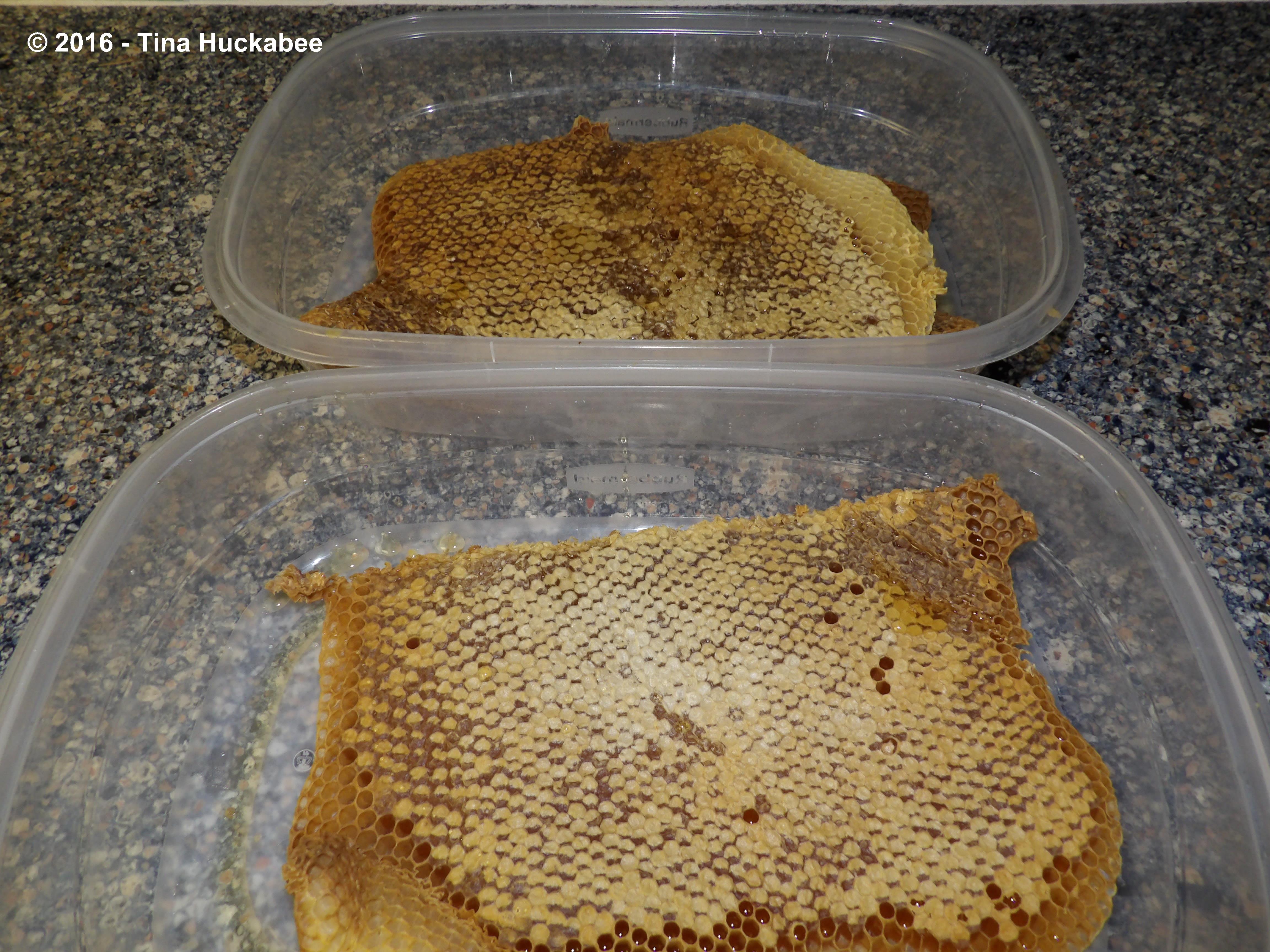
Whoop!! Spring honey!
Buzz and Woody are Langstroth hives. I’ve written about our travails with Scar and Mufasa–both Warre hives–and we’ve been planning two new Langstroth hives for quite a while. Langstroth hives are considerably easier to work with and we finally hived these babies a month ago. We were planning to hive them in April, but a serious bicycle accident two days before the hiving waylaid Bee Daddy for a time and it was only recently that we finished final touches on the hives and then picked up our new bee-gals.

I now understand why Langstroth hives are the industry standard–they’re SO much easier to work with than the Warre hives.
All the preparations are the same, of course: donning the hot bee suit,

…readying the beekeepers’ paraphernalia,

…and firing up the smoker.

But the actual hiving with those lovely frames,

…which fit together with ease, coupled with the larger boxes that they’re placed in, make this beekeeper’s life much easier.
Warre hives Scar and Mufasa were great learning tools and truthfully, we were fairly successful with them–we’ve had darling honeybees and their queens made other darling honeybees and the whole bunch-a-bees made oodles of gooey, delicious honey. But the cramped conditions of the smaller hives, along with top bars rather than frames, made things tricky these past two years as we kept tabs on our bees or when we pulled honey out of the hives. So we did what others before us have done and transitioned to Langstroth hives.
While Bee Daddy was in the garage with his beloved power tool companions, fitting the Langstroth brood box like such a puzzle,

…I was arranging our bee “yard” for the new ladies.

Meanwhile, the Buzz and Woody bee gals were sitting on the living room floor, stuck in their cages, no doubt annoyed and tapping their tiny toes, anxiously awaiting their new homes.
Putting together the hives, we start with a plinth which has a screened bottom board, which will make it easier to check for the dreaded varroa mites.
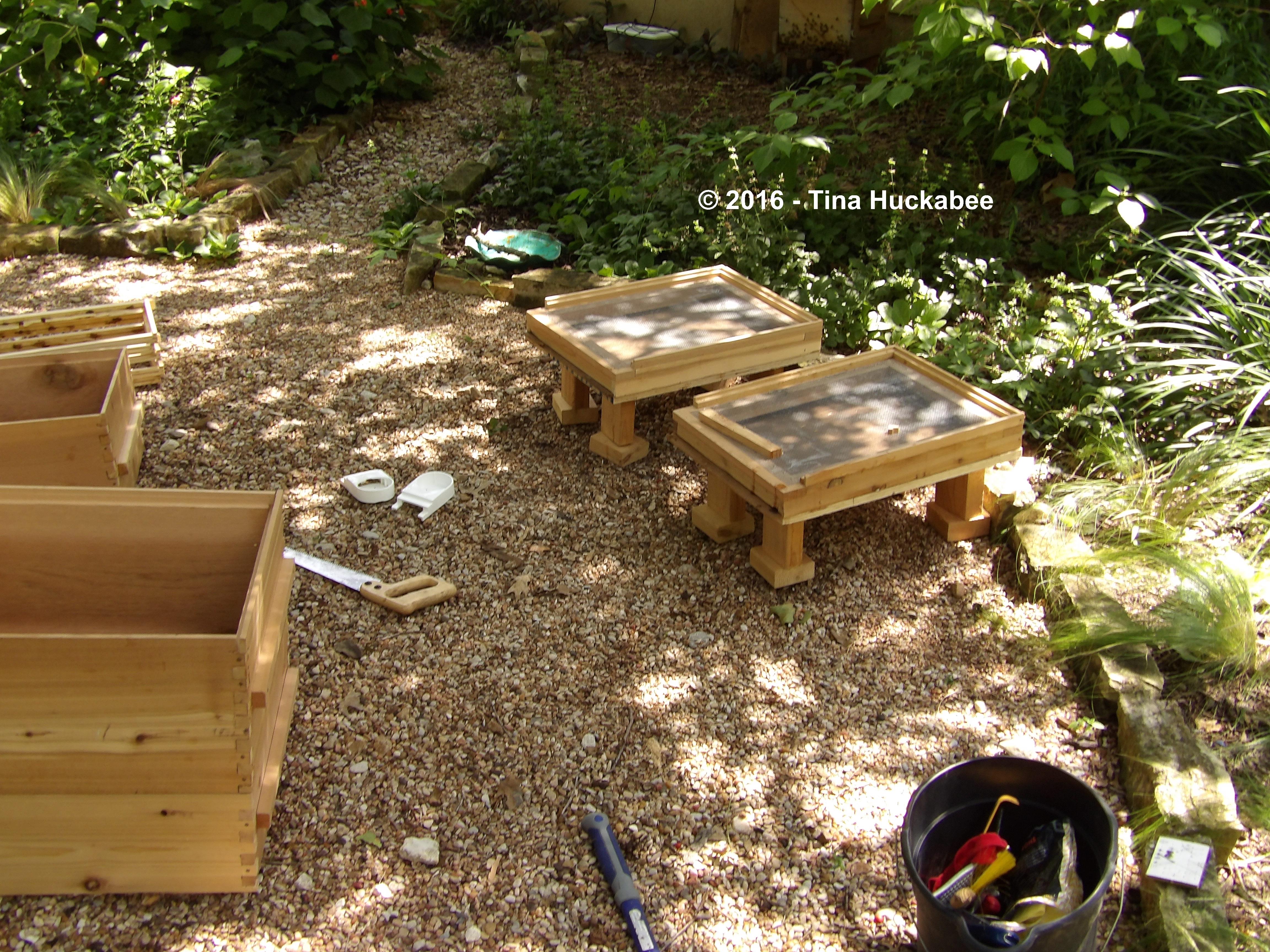
I set each brood box atop each plinth.

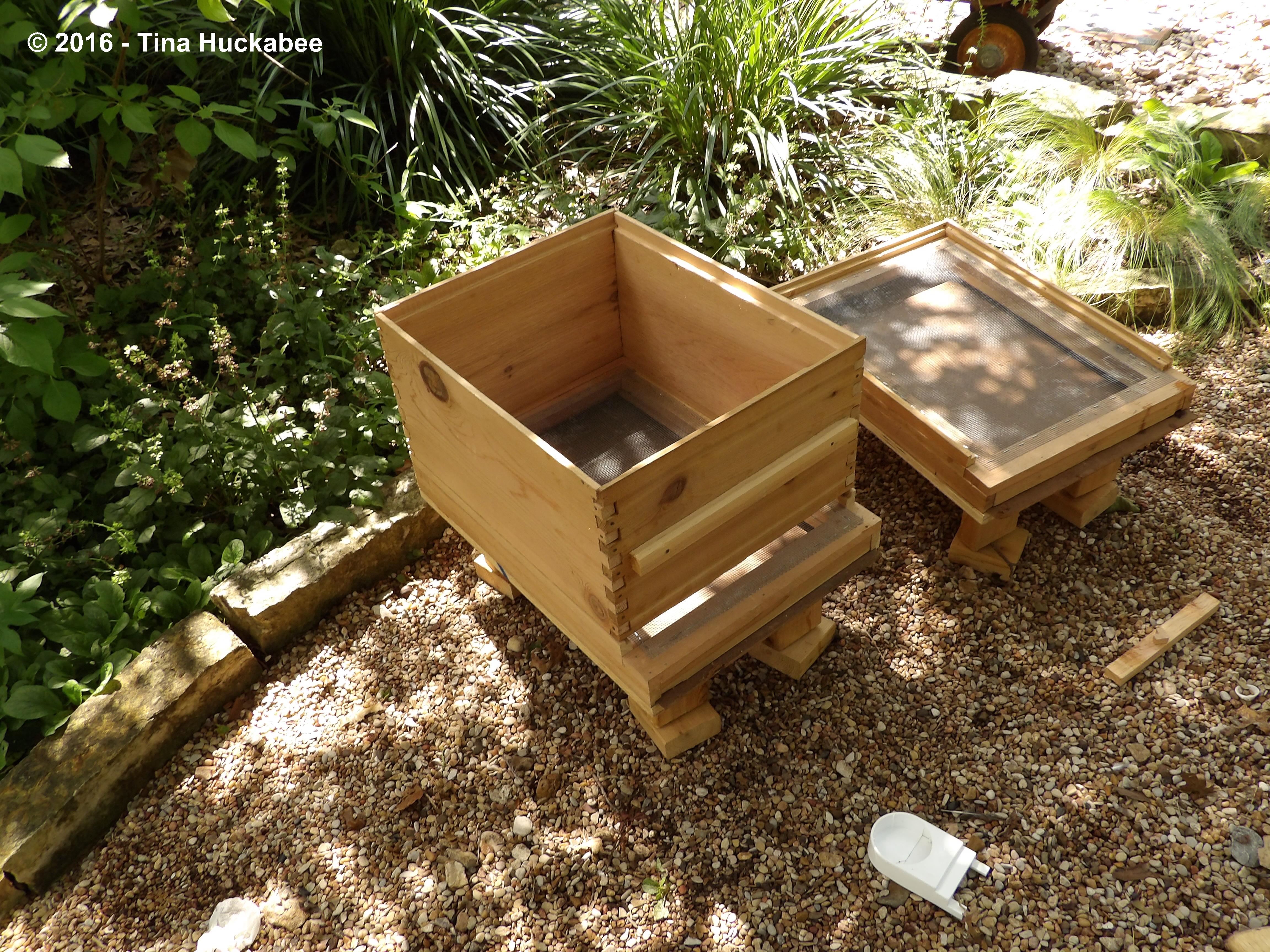

Per instructions, we placed four brood frames (where the worker bees build their honeycomb and make honey, and the queen lays eggs) on one side in each box.


We added the outside boardman feeders already filled with sugar-water syrup at a 1:1 ratio. Most beekeepers use trough feeders located inside the boxes, but we’ve used the boardmans and prefer not to open the hives each time we add fresh sugar-water.
Time to hive!! We pull up the embedded cans containing their syrup in the traveling cages,
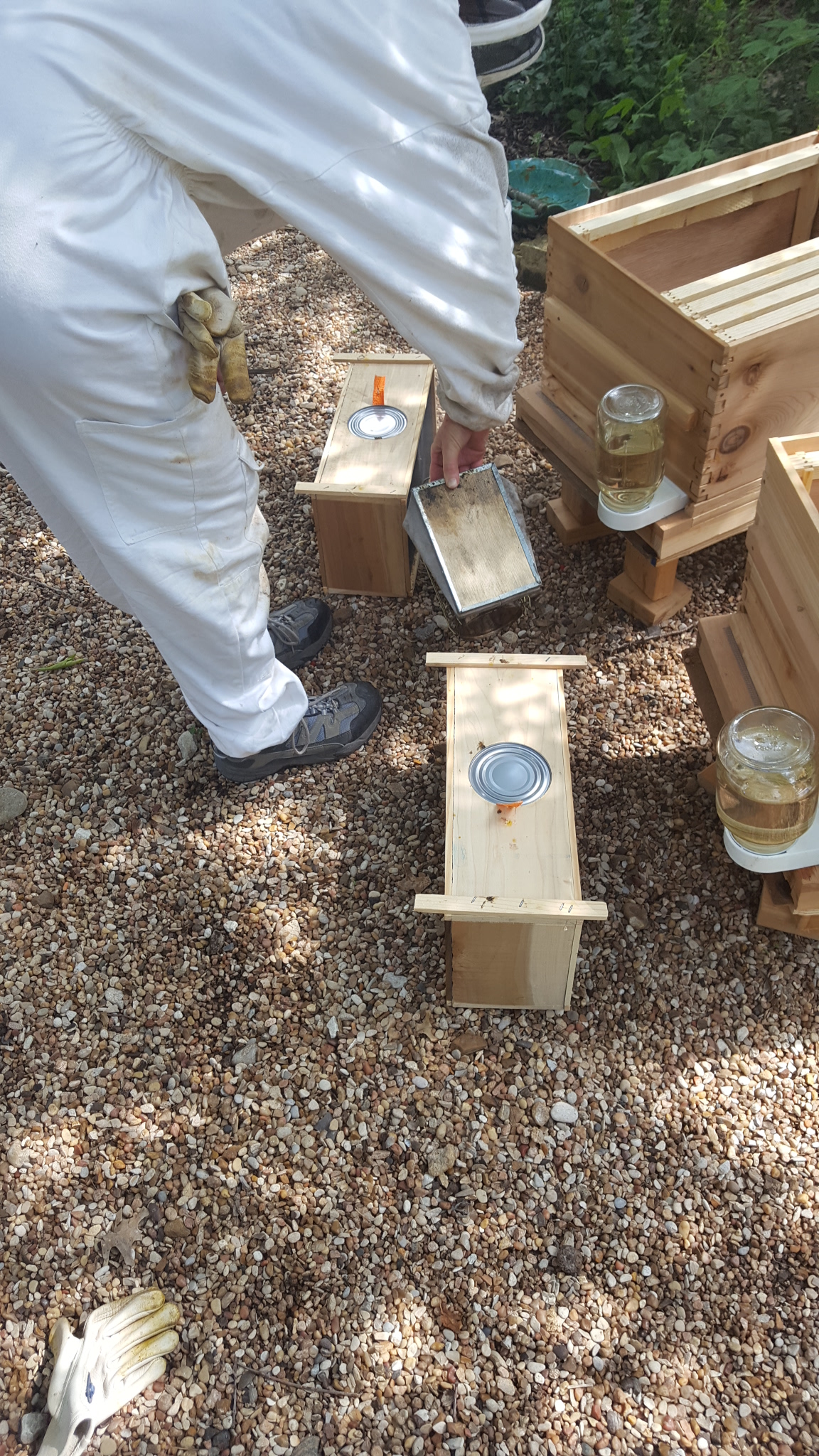
…which also holds the queens’ cages, attached with the orange tabs.
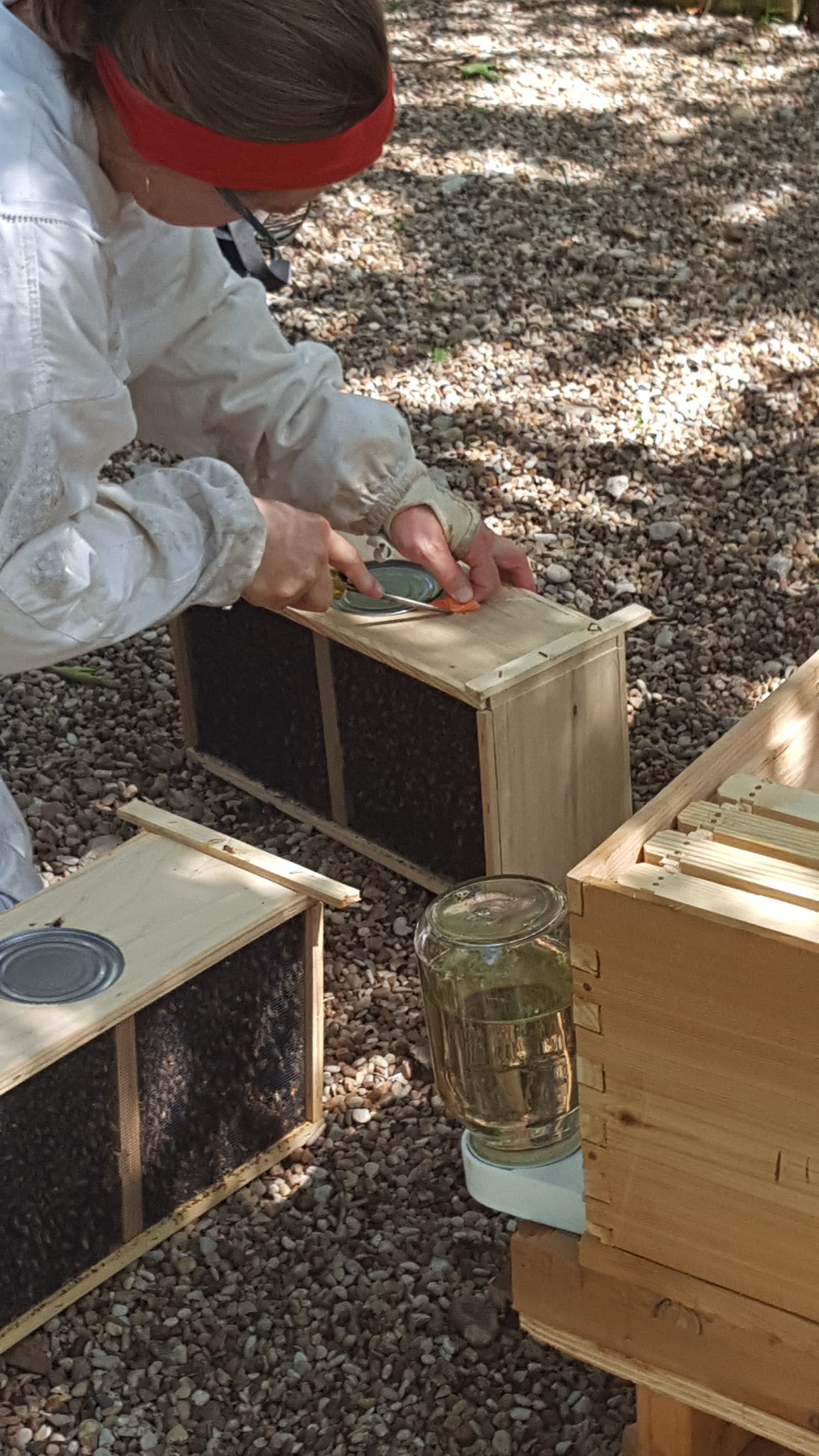


Queens from commercial apiaries usually arrive in their own separate cages from the workers. Our bees come from BeeWeaver Apiaries, located here in Texas.

At one end of the queen cage is sugar fondant to feed the queen until she’s safely hived. The beekeeper pokes a hole in the fondant just prior to placing the cage in the hive so that the queen doesn’t work too hard eating through the fondant on her way to her subjects.
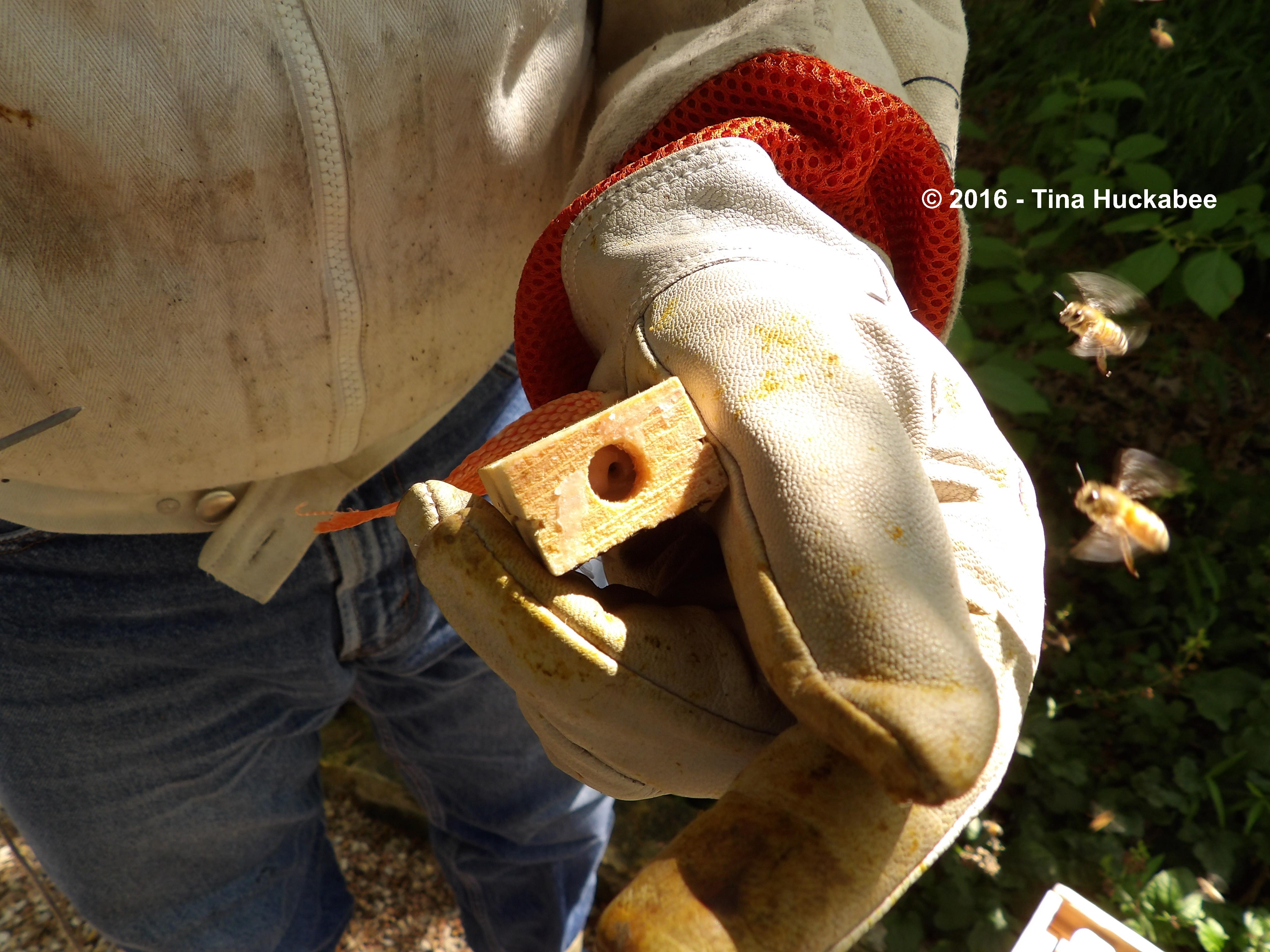
The orange tabs attached to the queen cages allow us to thumb-tack each cage onto one of the frames in each box.

It usually takes a few days for the queen to eat through the fondant and join her girl gang. By the time the queen enters the hive, her pheromones are dispersed throughout the hive and all the worker bees love her so and will follow her to the ends of the earth.
Once the frames are in, the queen cage attached, we pour some bees onto the queen cage. Then the entire traveling cage, with the rest of the ready-to-work workers, is situated cozily in the remaining open area of the box! The worker bees will exit the traveling box and begin their work in the hive: building comb, taking care of the queen, foraging, taking out dead bees, whatever is required of each.
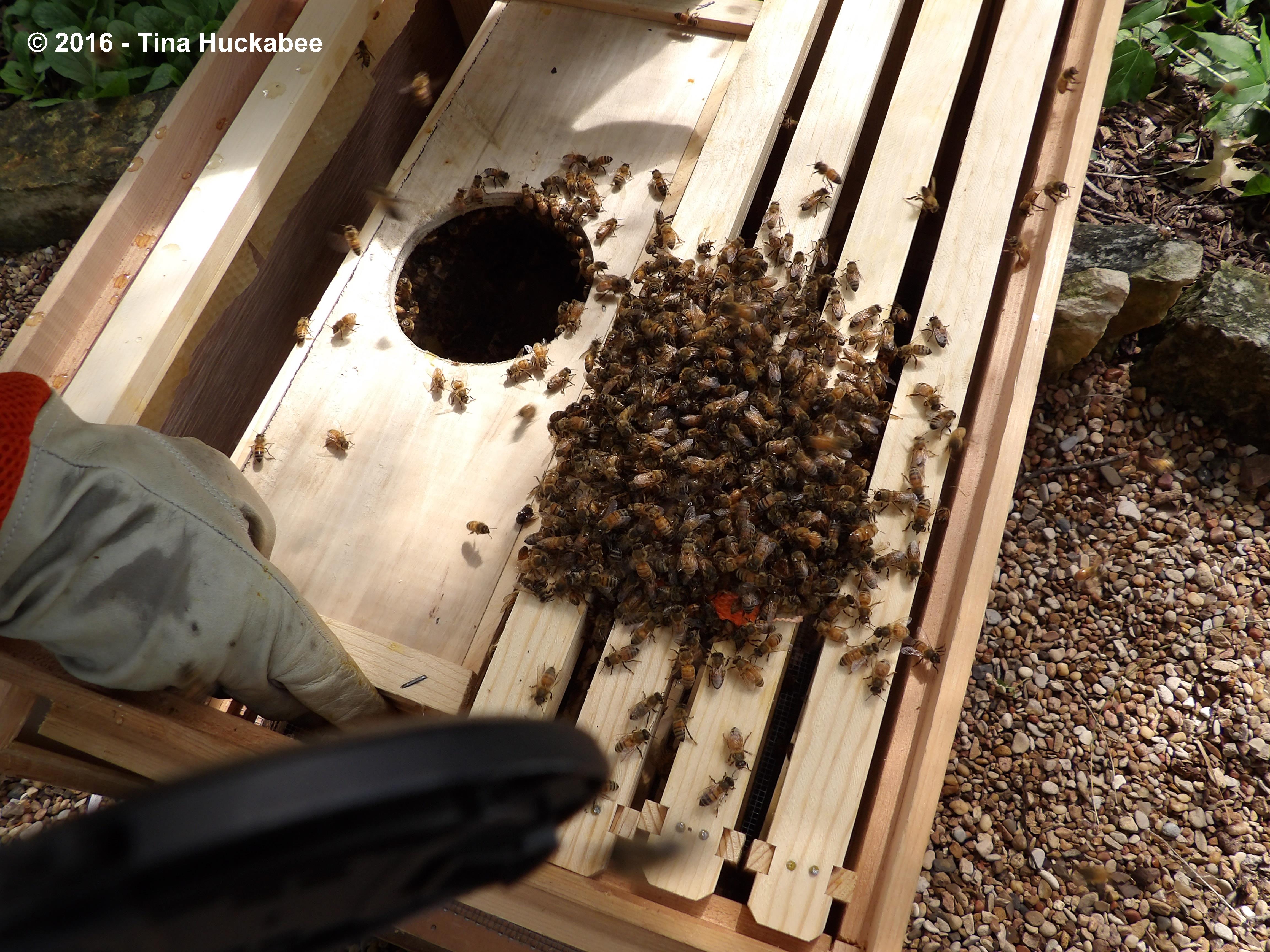
Wow, that was easy!
We placed the lids on top,
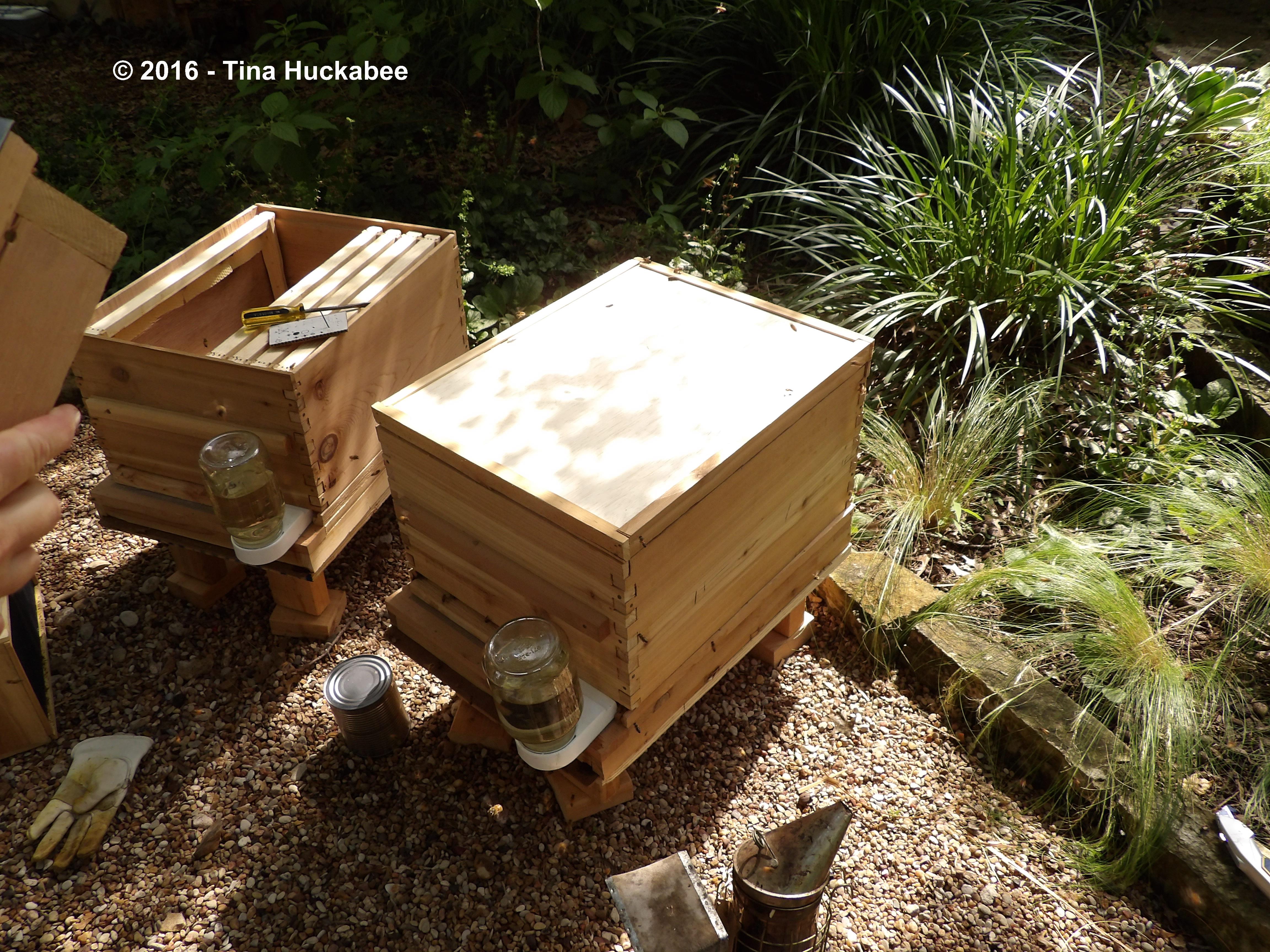

…and added the roofs. Bee Mama sat for a well-earned break!

Interestingly, later that afternoon, I was watching the hives and Buzz became buzzy–and loud. Bees vomited out of the hive. I left to fetch Bee Daddy so he could observe the mass exodus as well and when we returned, who was crawling around on the ground but Ms. Queen Buzz. Honeybees were swarming all over the area. We captured Ms. Queen in a glass and gently (you REALLY don’t want to squish your queen!) placed her toward the back of the hive. All the bees followed her directly into hive. If only humans could follow directions so well. I suspect that initially we may have place her too close to the hive opening and she managed to find the door to the great outdoors–which is not good for a bee hive.
That was exciting.
Since then, all seems well with both hives–they’re actively foraging and sipping syrup to augment their diet.

We’ve checked the hives twice since hiving and both queens are doing their job and laying eggs: there are larvae of different ages and even adult bees emerging.
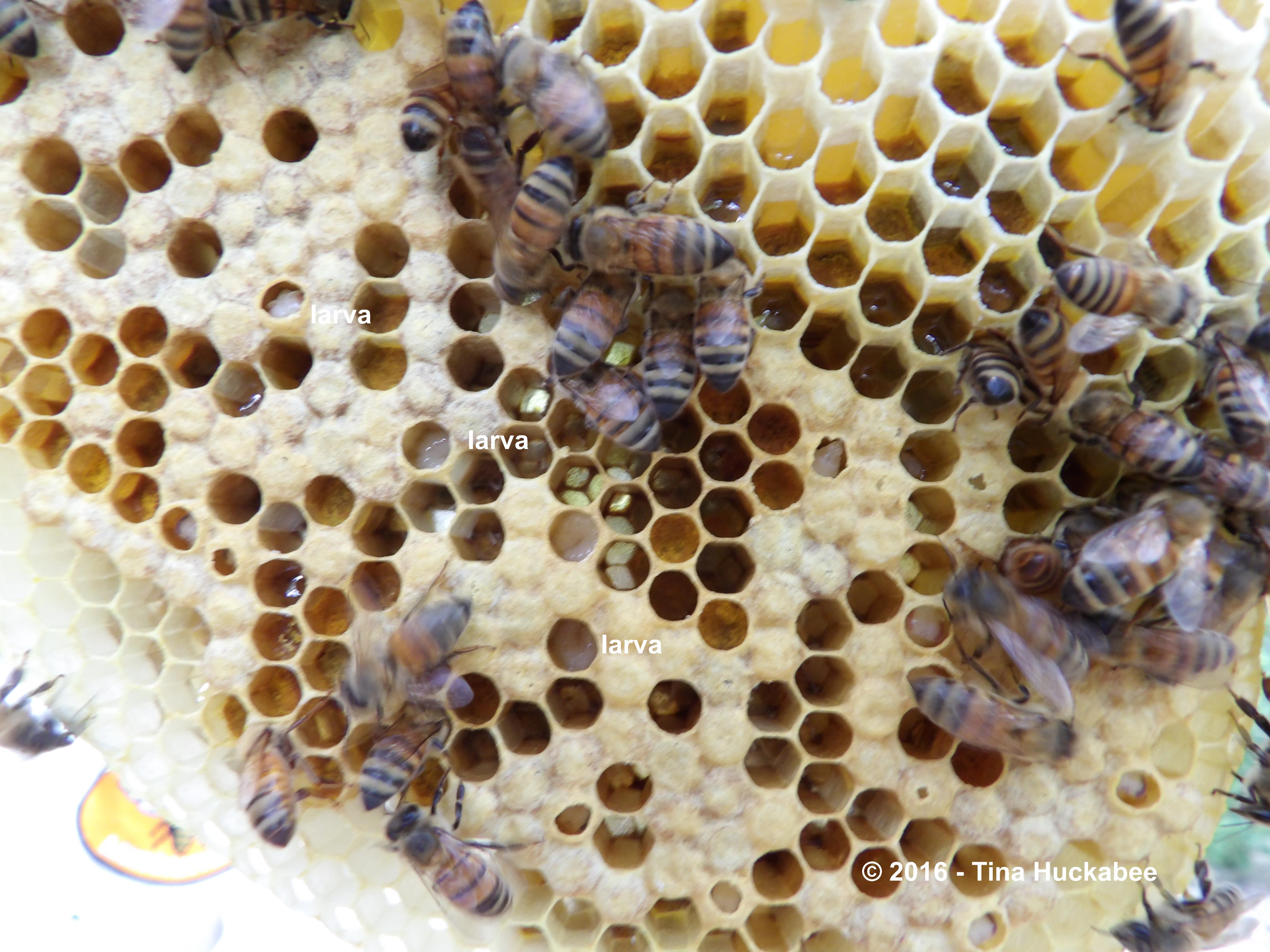

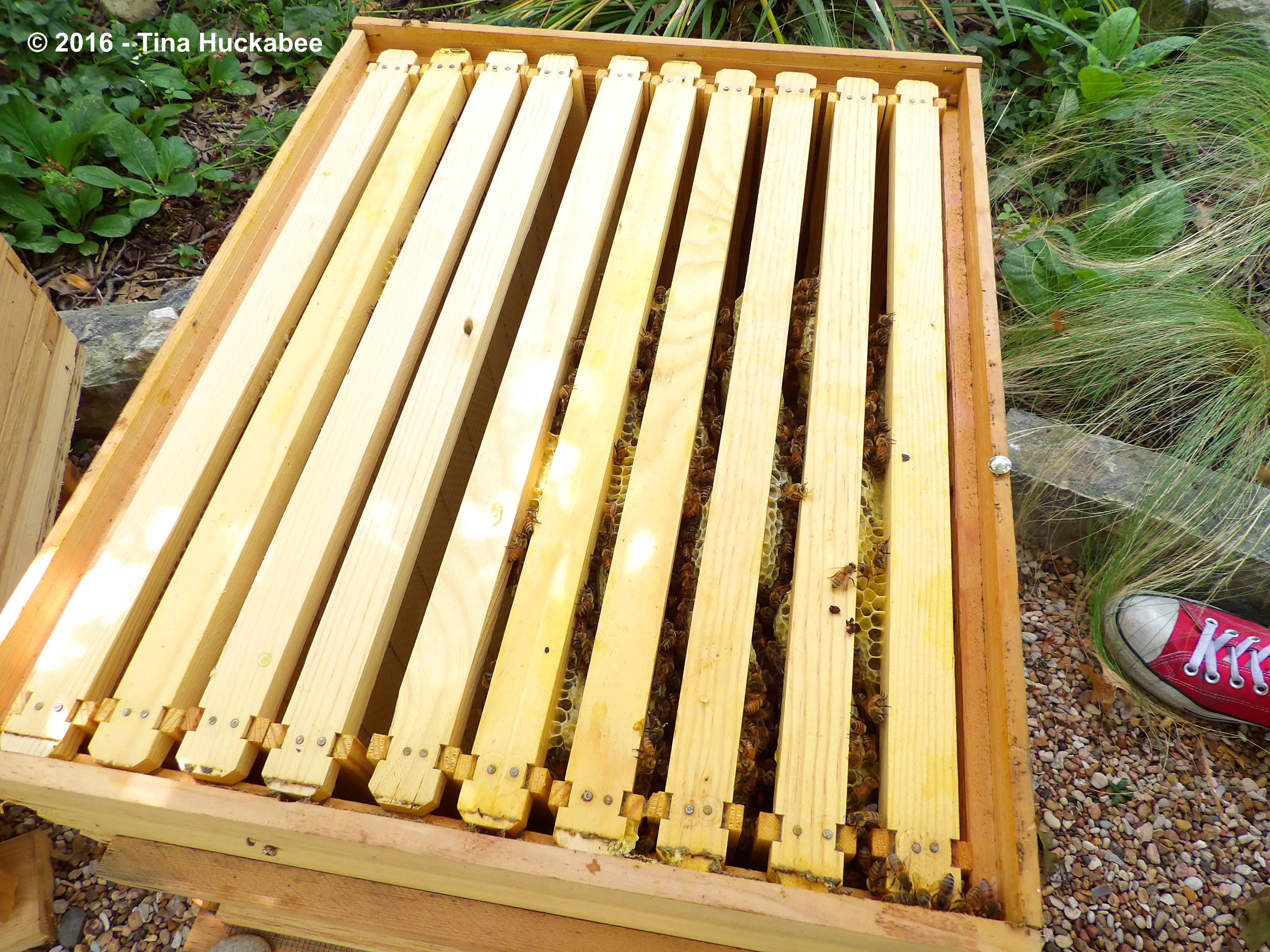
Bees know how to stay on task! We removed the traveling boxes and queen cages from the brood boxes a few days after hiving and added the remainder of the frames. There are still only four frames with any significant amount of comb, but there was more comb at the second check than the first–good progress. I’m still feeding the bees, though they’re drinking less from the feeders with each passing week.
Buzz and Woody are the gentlest bees we’ve ever hosted. I think we could work them without smoke, they’re such laid back ladies.
Laid back,


…but busy.














 My Gardener Says...