Bee Mama Missive: Doing Just Fine

How are your honeybees, Ms. Bee Mama?  Why, thank you for asking!  Scar, Buzz, and Woody are doing just fine, thank you very much.

imgp9788-new

I haven’t reported much on my three hives recently, but all are buzzing along: the  forager bees are reaping the bounties of the garden,
imgp9807_cropped_3202x2502-new

imgp9745_cropped_2889x2281-new

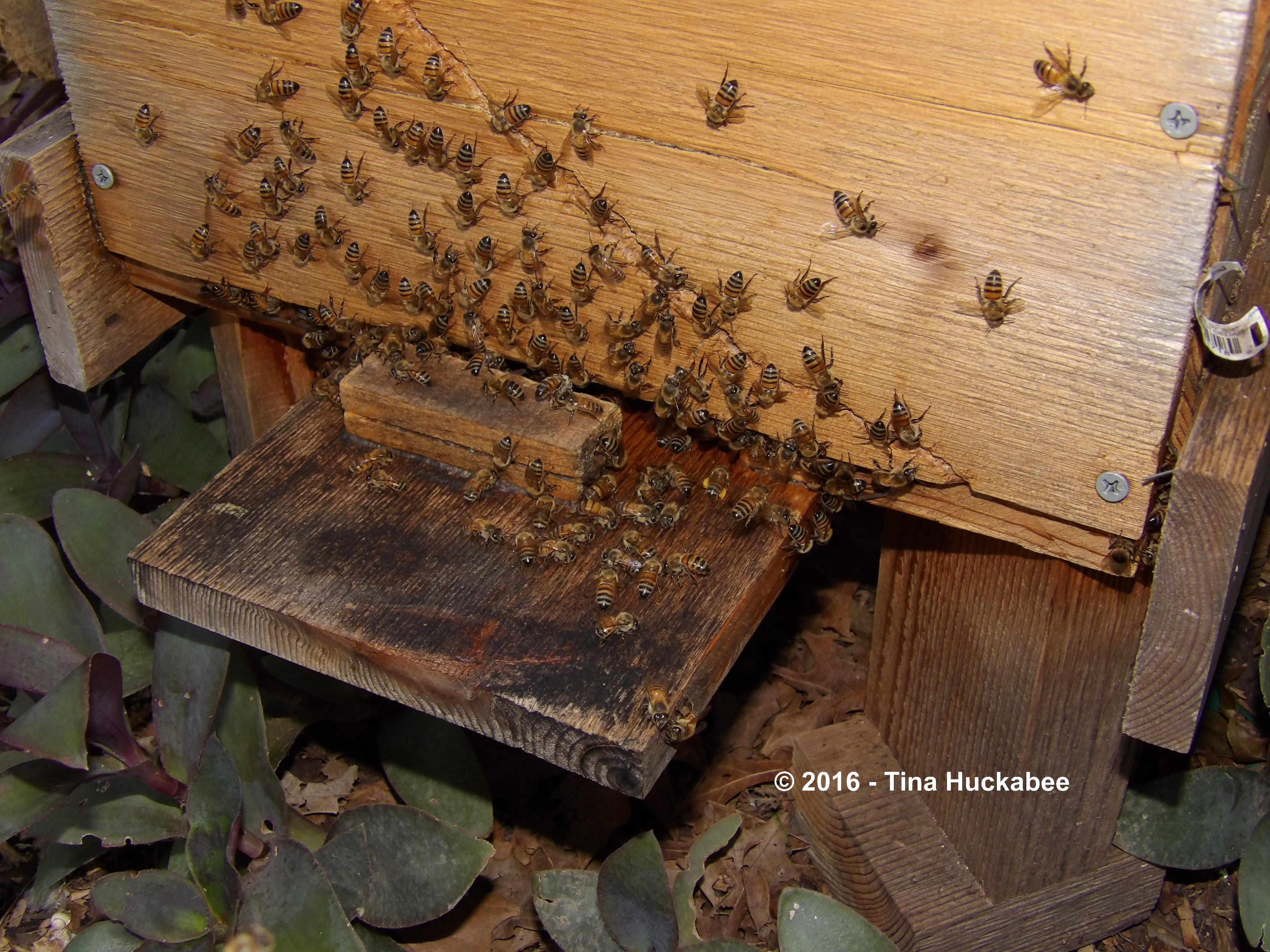
…the other bees are tending to their chores,
imgp9789-new

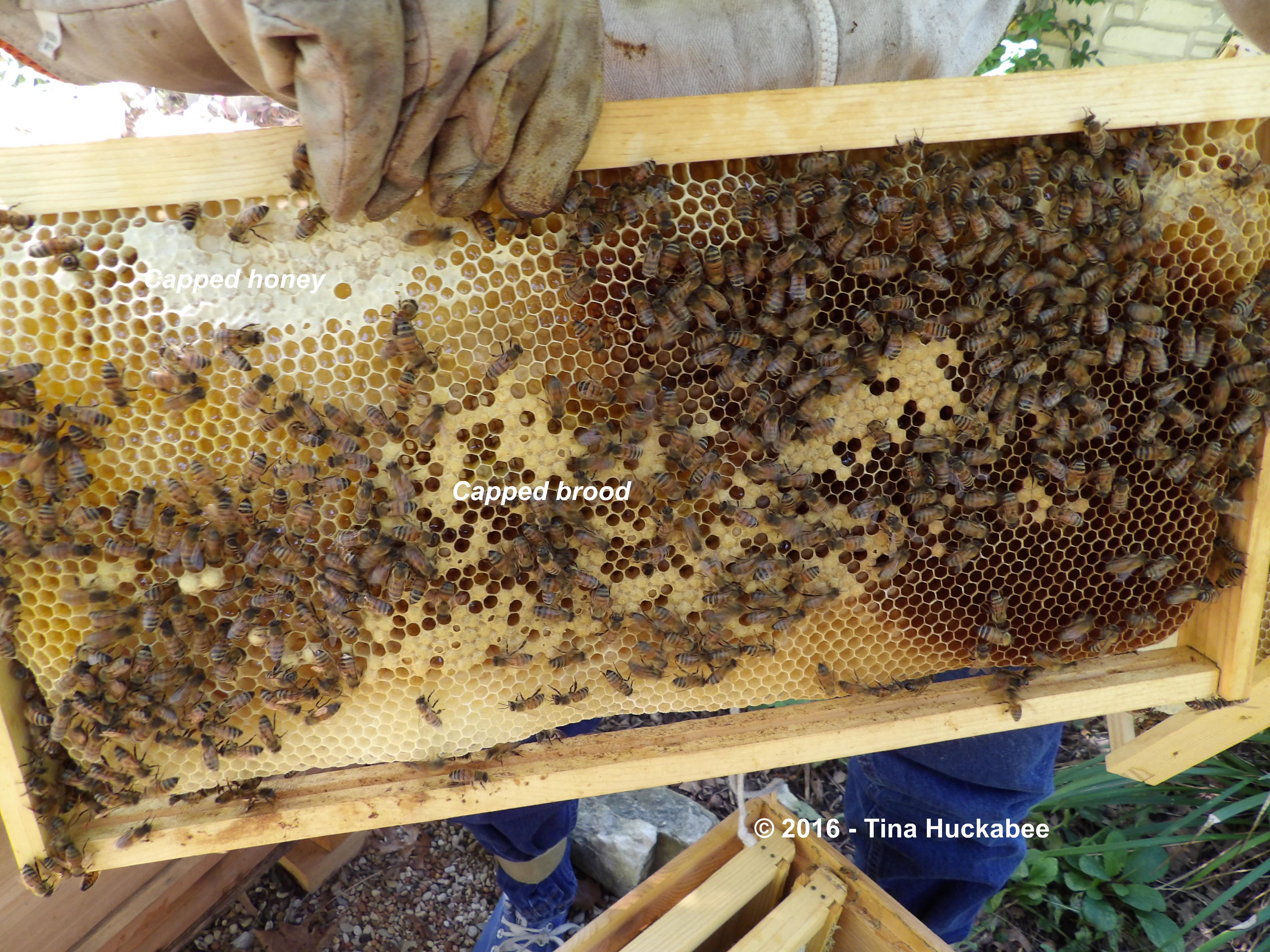
…and their queens are laying eggs and keeping up their part of the operation.

imgp9770-new

It has been an interesting summer with our hives, having hived Buzz and Woody in early June, a little late in the season.   Both of these new Langstroth hives are progressing nicely and are certainly easier to work with than Scar’s Warre hive.  However, in early August on a hot and humid Sunday, I noticed that Woody’s queen had escaped her hive and was crawling along the ground, with bee attendants closely following.   Workers swarmed out of the hive to find their queen when she left, and then back in again when  we caught her and delivered her into the hive.  This happened several times that day and after the last great escape, we installed a queen excluder at the bottom of the box.  A queen excluder is a meshed, usually metal, sometimes plastic, grate that is placed between bee boxes so that the queen can’t move into a new box.

Bee keepers use queen excluders when they want a box that’s purely honey and comb, but no brood.  The queen is larger than the worker bees, and the excluder is designed so that she can’t crawl through it, but the workers can.

imgp9752-new

imgp9753-new

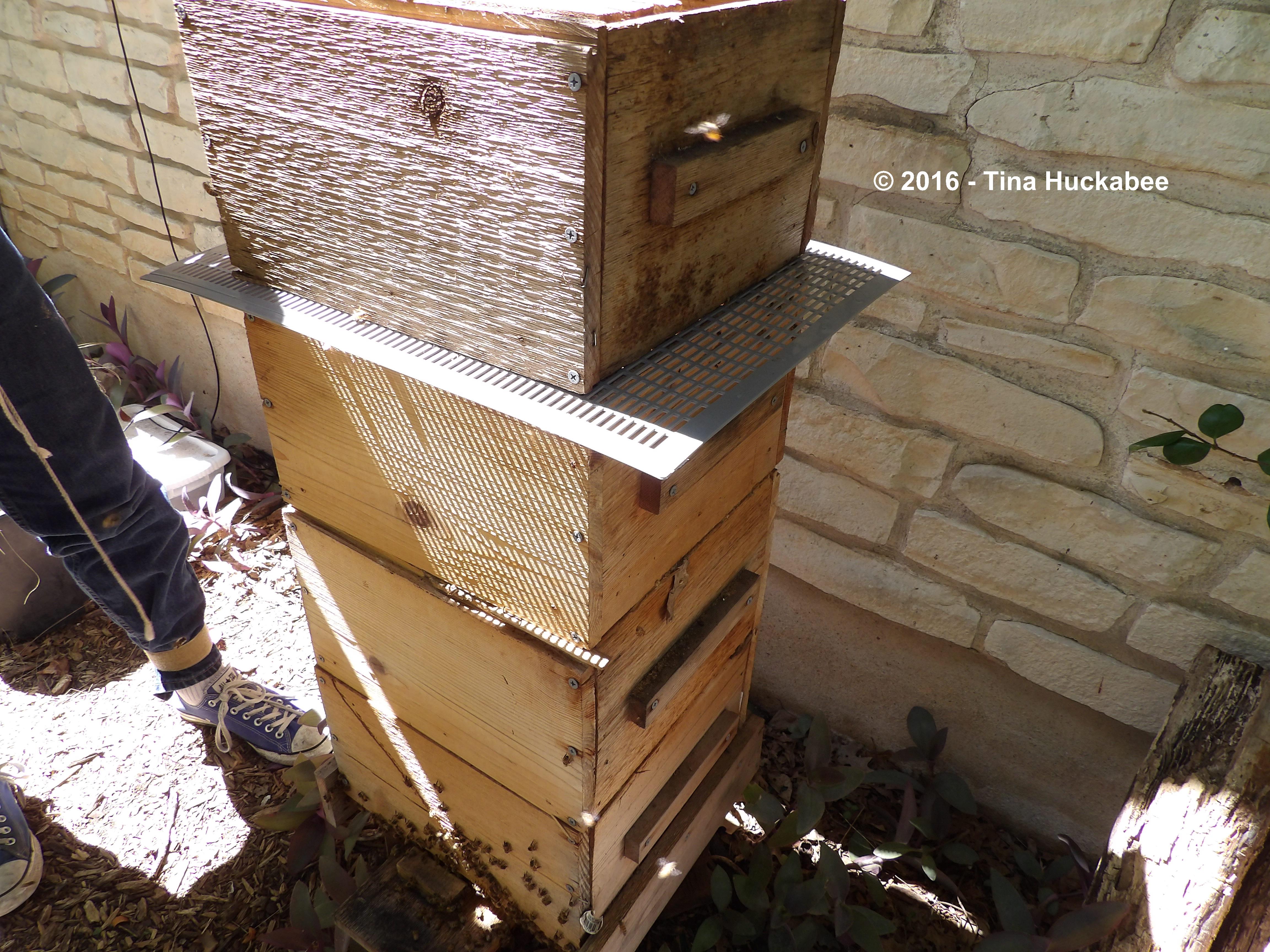
Scar, the Warre hive, utilizes bars rather than frames. We placed the bars in the fourth box, and it on top of the queen excluder.


In this photo you can see a Langstroth excluder placed between the third box and a new, fourth box of Scar’s Warre hive.

imgp9749-new

Scar is thriving and all three bottom boxes have brood, so we’ve decided to let the workers build comb and make honey for winter, but not allow the queen to lay eggs in that fourth box.  You’ll notice that the excluder doesn’t fit Scar’s Warre hive–it’s too big.
imgp9755-new

That’s one good example of why we switched to Langstroth hives–all beekeeping paraphernalia is geared toward Langstroth hive beekeeping and none toward Warre hive keeping. Moving away from the Warre hive beekeeping and building and using Langstroth hives lands us firmly in the 21st century.

Back to Woody.  After the repeated queen escapes that fateful Sunday, I glanced out  my bedroom window the next evening and to my great surprise, saw a swarm of bees. The swarm congregated along the underside of a wooden structure, placed near the three hives, but supporting a shallow water pump/pan mechanism which was supposed to attract hummingbirds.  (As an aside, the hummer water feature was an abject failure–at least as far as the hummers are concerned. The honeybees were enthralled, though. ) I’ve read how to capture a swarm, but never needing that particular knowledge or skill set, I wasn’t quite what sure the swarm-capturing steps were.   It was near to sundown and Bee Daddy wasn’t home to confer with in person, so I called and had him Google “catching a swarm” while I donned the bee suite, mixed some sugar-water, and gathered my tools. After a quick phone tutorial, I caught my first swarm!!

A honeybee swarm is the method by which honeybees hives reproduce.  A swarm includes a queen and many (as many as half) of the workers of a hive, and they seek and find a new home.  Many folks are freaked out by swarms, because they view them as scary, but in reality, swarming is when honeybees are at their gentlest and most docile: they have no home, nor brood, nor food stores to protect–they’re just hanging out with their queen, chillin’.

I lightly spritzed the cluster of bees with sugar-water mixture and brushed the clumps of bees into an unused bee box.  I placed a lid on the box and left the box next to where the swarm congregated so that any stragglers left outside could find their way to their new home.  I said a cheery night-night to the newly housed bees.

In addition to swarmed bees, Woody had few bees in it, so it makes sense that it was actually Woody’s bees who swarmed and not some rogue group from somewhere else.  I don’t know to this day whether the swarm was Woody’s workers and the old queen (who was unnaturally crawling around on the ground) or if the bees made a new queen–which honeybees will do if the queen is weak, sick, or dead.  I never saw any queen cells in the hive (they look different from regular capped brood cells), but it’s always possible that we missed one.  I don’t think it was the old queen who led the swarm, because she waddled away, with one or two attendants and I didn’t see her again.  Regardless, early the next morning, we transferred the swarm to the empty Woody hive.

I placed 4 bars for comb-building in the hive and dumped the cluster of bees in the area left open.  We closed Woody and Bee Daddy and I whooped! and congratulated ourselves on a well-housed swarm.

Except, we messed up.

We should have reopened Woody within 24-48 hours and placed more bars, or better yet, frames with foundation, to fill the entire box, but…we didn’t.  We totally forgot that honeybees build downward and will do so, from whatever surface is handy. Two weeks later, during a regular hive check, we realized that Woody’s bees were happy and healthy, had built gorgeous comb, had a great queen laying eggs, and diligent workers making honey. But there was a glitch:  Woody’s bees had built the comb (with honey and larvae) on the underneath of the lid, NOT along the 4 original bars where WE would have preferred them build.

imgp9777-new

This lid belongs to Buzz, but Woody’s swarm built their comb hanging from the underneath of its lid.

Ooops!  We forgot to make our wishes known and didn’t send out the memo about where we wanted the ladies to build comb.    If we’d reopened shortly after hiving and added the rest of the frames, the busy bees would have built on the frames, not the lid. This wasn’t the bees who screwed-up–it’s squarely on us.  The humans.

A decision of one of two choices was at hand:  we leave their (to our minds) miss-placed comb and never extract honey or conduct hive checks in a reasonable way, or we scrape off the comb and fill the box with full foundation frames.  The second choice would mean that they would have to start over.  Again.

Poor honeybees, having such incompetent, fumbling bee keepers.

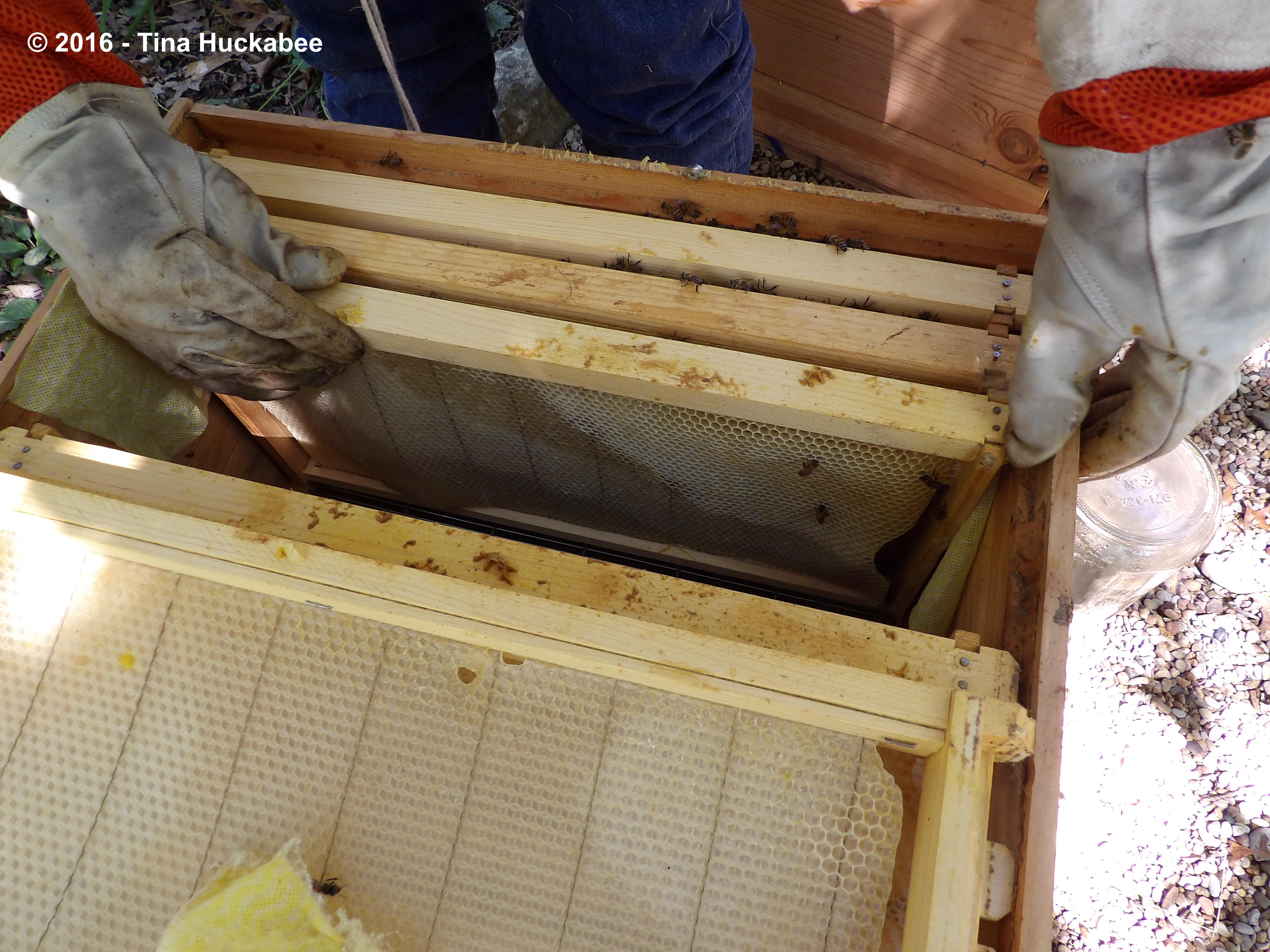
We scraped the comb off the lid, added new frames to fill the entire box, then left that comb on top of the frames, because bees will re-use everything, except wax, to build new comb.

Part of our move to Langstroth hives is that  instead of using simple bars for the bees to build their comb from (like those in Scar) we’re now using full frames, with foundation. Foundation is honeycomb which is fortified with wire and fitted into the frames, so that the bees can build their own comb more quickly directly on the foundation.
imgp9774-new

You know, 21st century bee keeping technology.

imgp9771-new

Woody has two beautifully combed-out frames.

As of early September, in Woody there are only two full combed-out frames with honey and larvae, and another partly built out.  All seems well, though: the queen is laying eggs, brood is developing, and the foragers are foraging. All of that bee drama has meant that Woody is behind in her development.   Woody is a small–and therefore, vulnerable–hive as we head into autumn and winter.  I’ll continue feeding Woody (and Buzz, too) for the foreseeable future to help them along.

Buzz is flourishing with 7 of 10 frames completely combed out.  There’s lots of brood and some honey stores–in short, an active and healthy hive.

imgp9775-new

The “clean” wood is currently un-used by the bees.

imgp9783-new

imgp9782-new

imgp9768-new

imgp9780-new


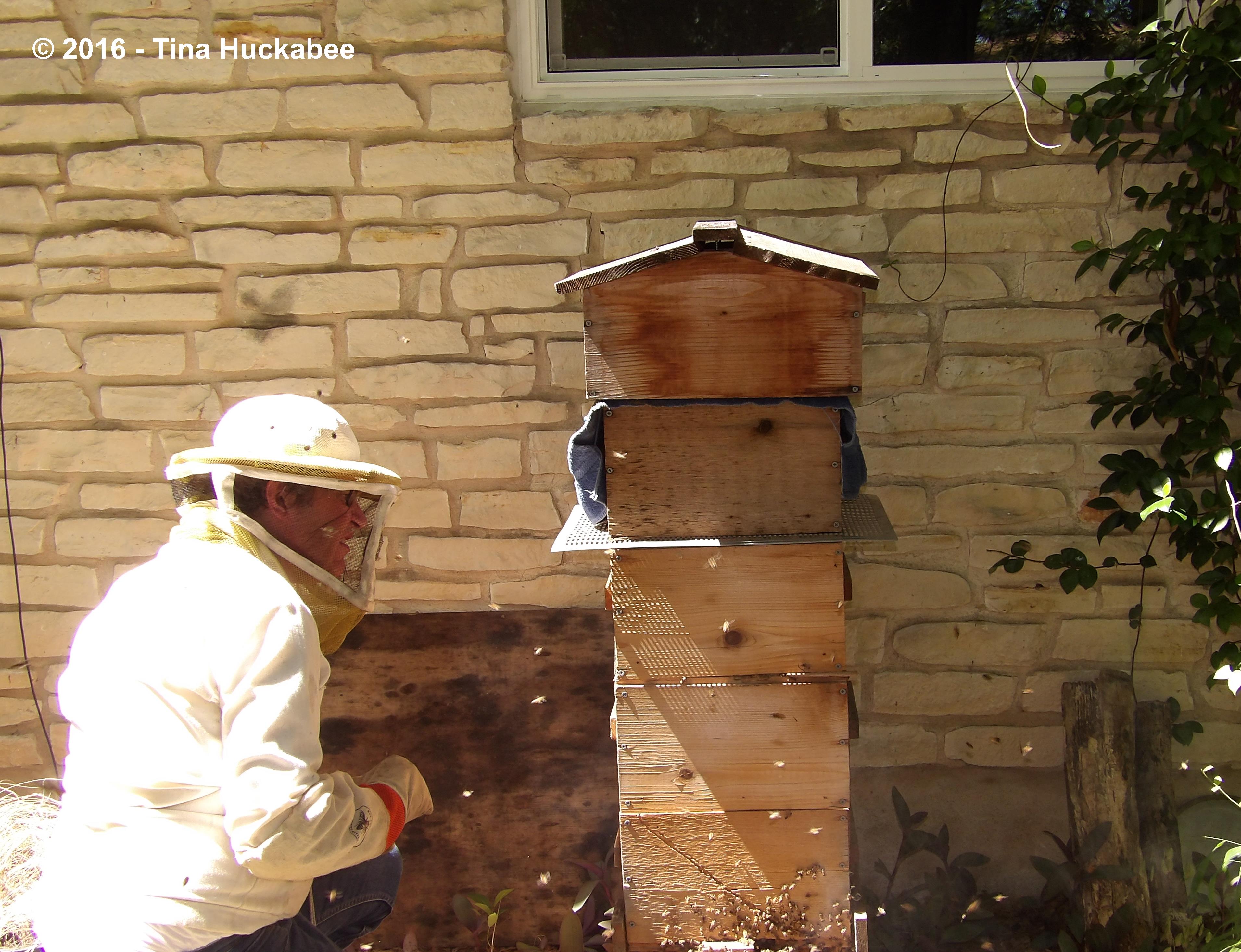
Scar the Warre hive is strong,  as is evidenced by our need for a fourth box.
imgp9766_cropped_3821x2932-new

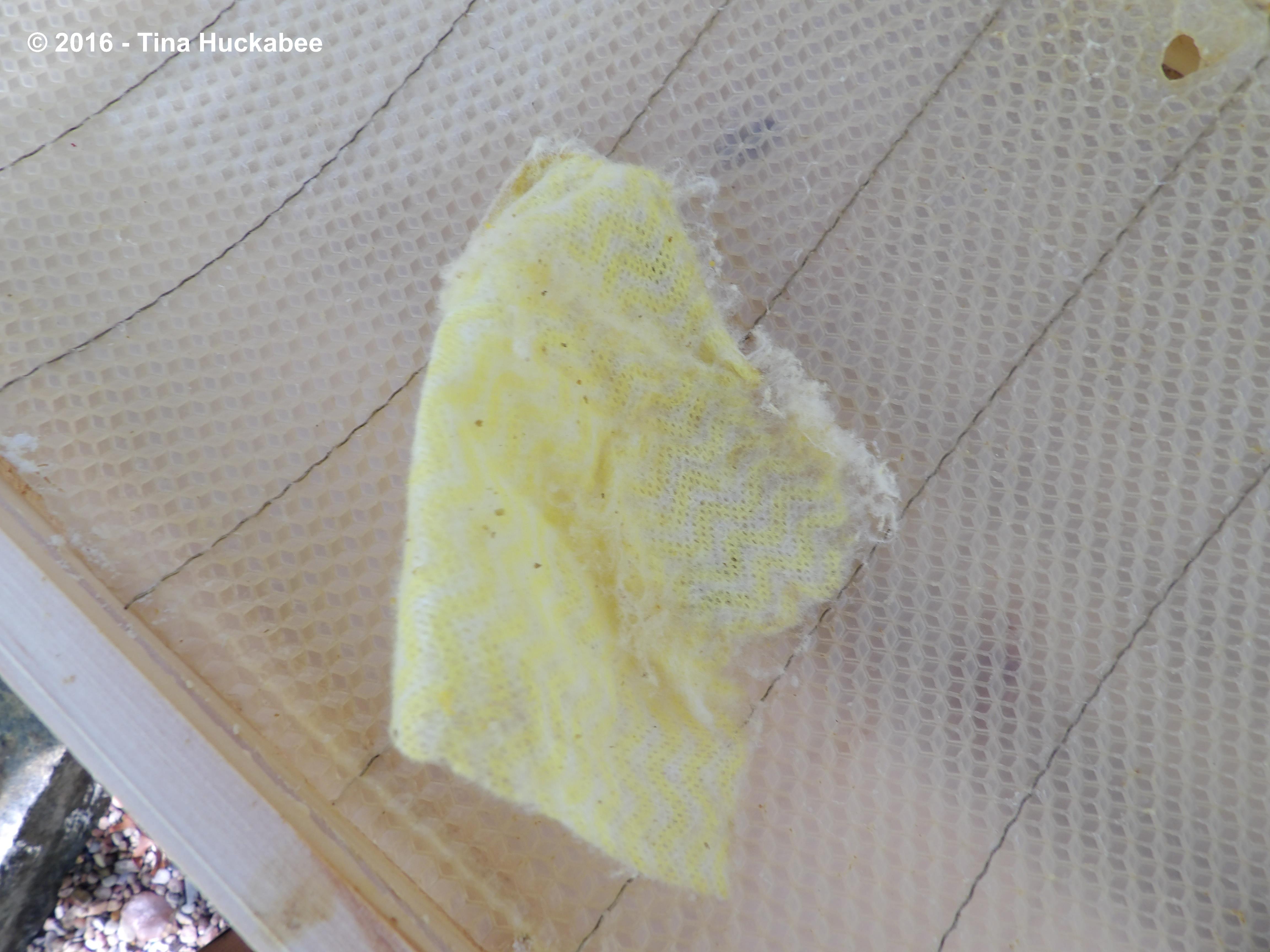
My biggest concern with Scar is that it still hosts those nasty demons–small hive beetles. We add fresh Beetle Bee Gone cloths, which is a non-chemical beetle control, each time we check the hives in the hopes that the cloths will ensnare the beetles and keep the population controlled.

imgp9761-new

The bees chew the cloths, which makes them (the cloths, not the bees) fuzzy, and the beetles get caught in the fuzz.  If there’s any justice in this world, they die a miserable death.
imgp9773-new

A partially used Beetle Bee Gone cloth on a frame with foundation.

The method is working in the two Langstroth hives–which have few beetles, many caught in the cloths.  Unfortunately, Scar is still  plagued by beetles crawling rampant, as it has been all summer.  We’ll keep tabs on Scar, but it’s a robust hive and the beetle population should decline with cooler weather.


There’s never a dull moment with honeybees.

imgp9818-new

Buzz

imgp9760-new

Scar

imgp9820_cropped_4028x3190-new

Woody


I’m glad to know them.

imgp9801_cropped_2442x2496-new

Flexible Foliage

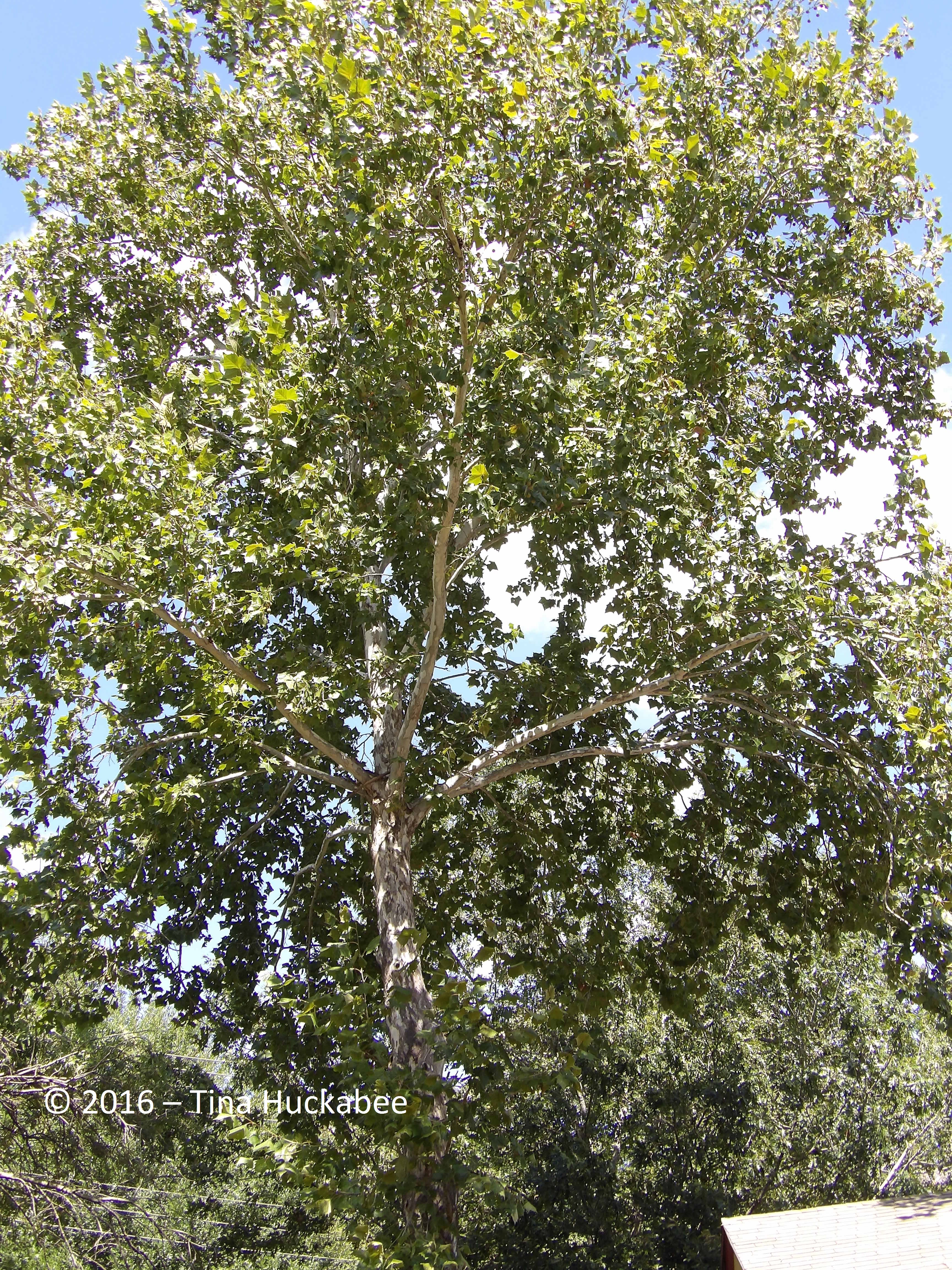
Leaves on my American sycamore, Platanus occidentalis, are useful indeed.  They provide beauty in waving flags of luscious green,

RICOH IMAGING

…and cooling shade for the trunk and anything (or anyone) else beneath the canopy.

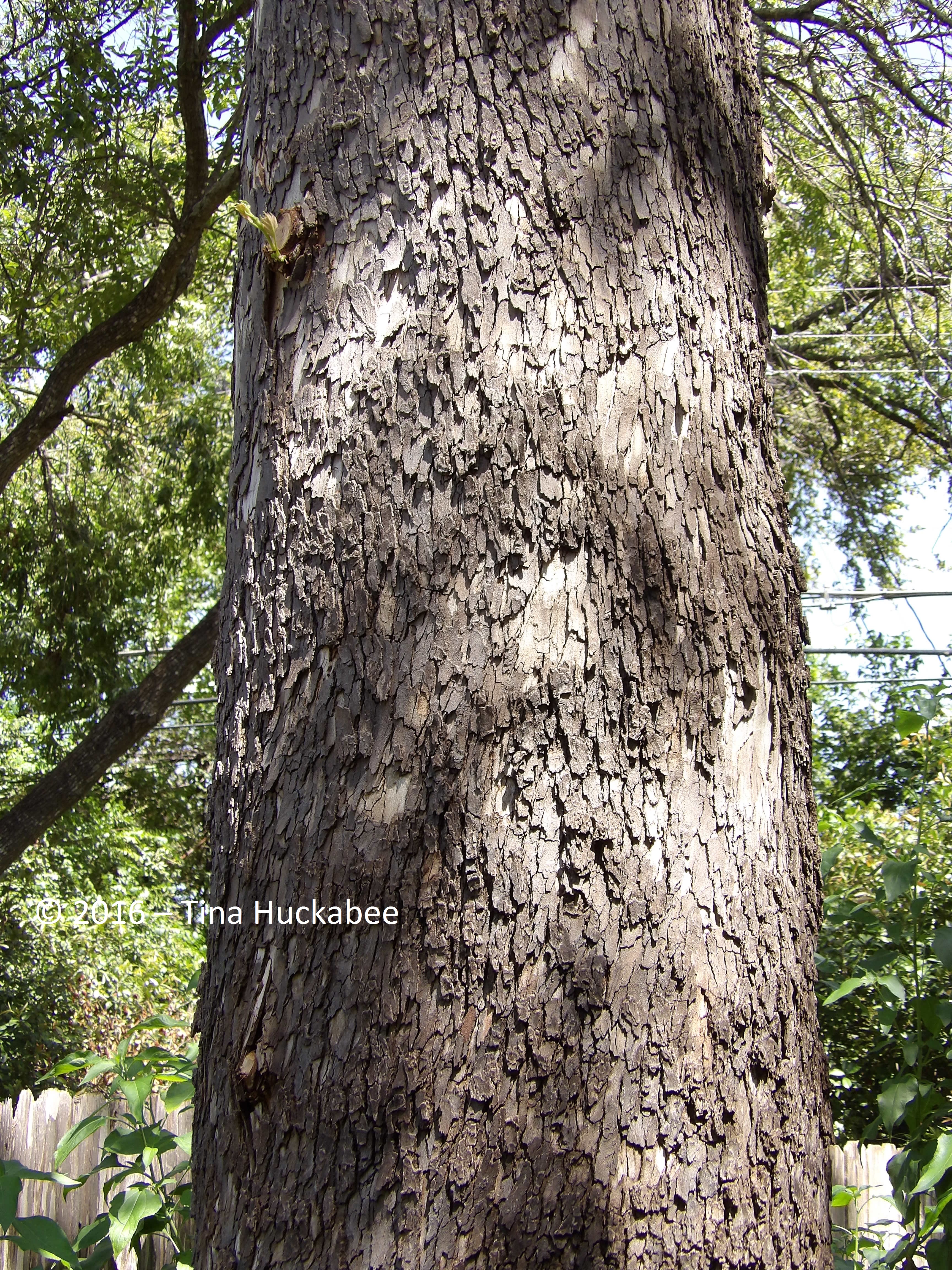
The sycamore tree  exfoliates beautifully, revealing creamy white new bark.


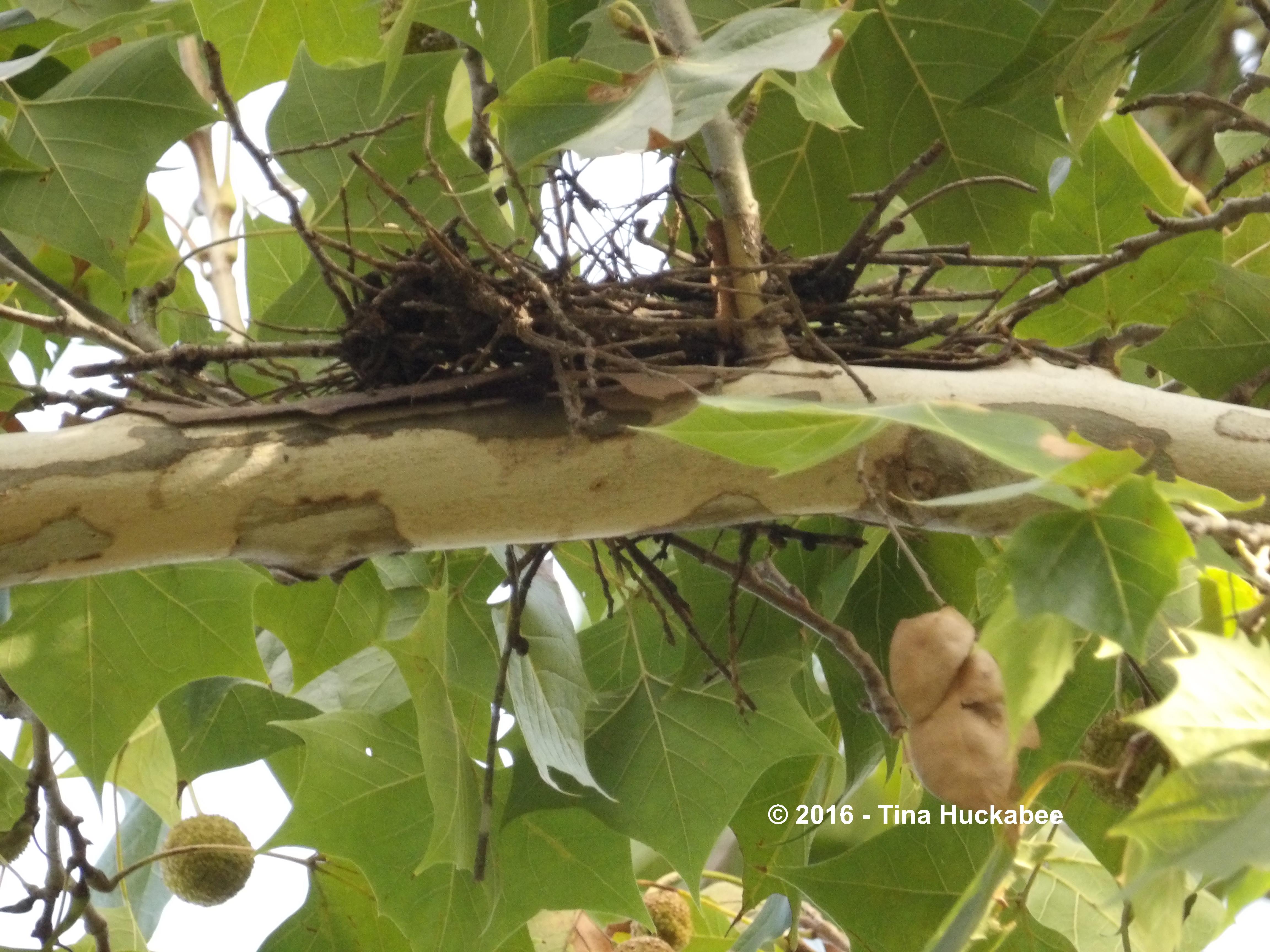
Sycamore foliage also provides shelter for a bird home and a nursery for bird babies.

imgp9643_cropped_3852x3396-new

Only recently have I spotted this nest in the sycamore.  I was standing in a part of my property where I don’t usually hang out, when I saw a nest structure nestled in the lower part of the tree. There are no birds there now, no doubt their having fledged earlier this summer. I’m not sure how I missed seeing it before now, but going forward,  better tree observance is in order.

imgp9642-new

Handsome, peeling limbs serve as strong foundational support for the nest.

I suspect it was a Blue Jay, Cyanocitta cristata, nest because I know that they were active in the tree earlier in the summer–they’re wonderfully gregarious birds and even if I don’t see them, I hear them.  Plus, in perusing photos of nests, Blue Jays appear to favor building with larger sticks, which I guess makes sense because they are large-ish birds.
Dropped sycamore leaves are also versatile on terra firma.  Dead, downed, and brown leaves provide cover along the soil and pathways,

imgp9638-new

…though that can be annoying when they drift to the gardens or patio and cluster, becoming garden “detritus.” Because of the wet year, there wasn’t as much shedding of sycamore foliage as is typical, but some dropped.

imgp9636-new

I find the large, thick leaves graceful and lovely ON the tree, but awkward and messy on the ground and in the garden.

On occasion I’ve used a leaf as a tool to pick up and remove an insect that I’m squeamish about, or  to remove fresh goo (use your own imagination on that one) from lawn furniture surface or a  birdbath.  Never though have I utilized a Sycamore leaf to feed a bee–until about two weeks ago.  I watched an American bumblebeeBombus pensylvanicus, cruise along the ground in my back garden one morning.  I suspect that it was near the end of its life, because it wasn’t flying and bees fly when they’re healthy and productive, but not when they’re dying.  At some point, I thought that some sugar-water might be in order to nourish and reinvigorate the bee.  Per my knowledge of feeding honeybees, I mixed a tiny amount of white sugar with water, (30% sugar to 70% water).  I found a sturdy Sycamore leaf which had a slightly convex shape and poured the liquid in. Placed in the path of the bumble bee, it eventually found the leafed treat and enjoyed a snack.

imgp9444_cropped_3497x2973-new

imgp9440-new

He/she sipped and slurped for several minutes.

imgp9439_cropped_3811x2890-new

imgp9437-new

It vacated the sugar-water leaf for a time, but returned for more of the sweet stuff.

Eventually, the bumble left  for unknown parts–I didn’t see it again.  Ants moved in for the remaining sugary drink, and by later in the day the leaf was back to playing the role of a brown and crispy leaf, or, garden detritus–take your pick.

My American sycamore has retained most of its leaves this year and is full-foliage as we enter into fall.

imgp9698-new

I’m glad there was at least one leaf that could be put to use for the wayward, and perhaps hungry or thirsty, American bumblebee.

imgp9438_cropped_2838x2894-new

A few days late for Tree Following, I’m thanking Pat of The Squirrelbasket for graciously hosting this fun and interesting meme about trees. Check out her blog to learn about trees from all over the world.


September Song: Wildlife Wednesday, September 2016

Peeps, chirps, squeaks and squawks.  

The late summer garden is active with the  residents and visitors who define our gardens as living, diverse communities.  It’s the first Wednesday of the month–happy September!–and time to appreciate the wildlife which benefit from and contribute to the beauty and value of garden space.  Autumn is just around the corner and for those in the Northern Hemisphere, that means cooler, shorter days and longer, colder nights.  Here in Central Texas, summer is still in full swing.  It’s not been quite as hot as during full-on summer and it was also a wet August and we don’t get to say that very often.  We’ll still have warm days for quite a while, but our nights will begin cooling off soon.  I hope.

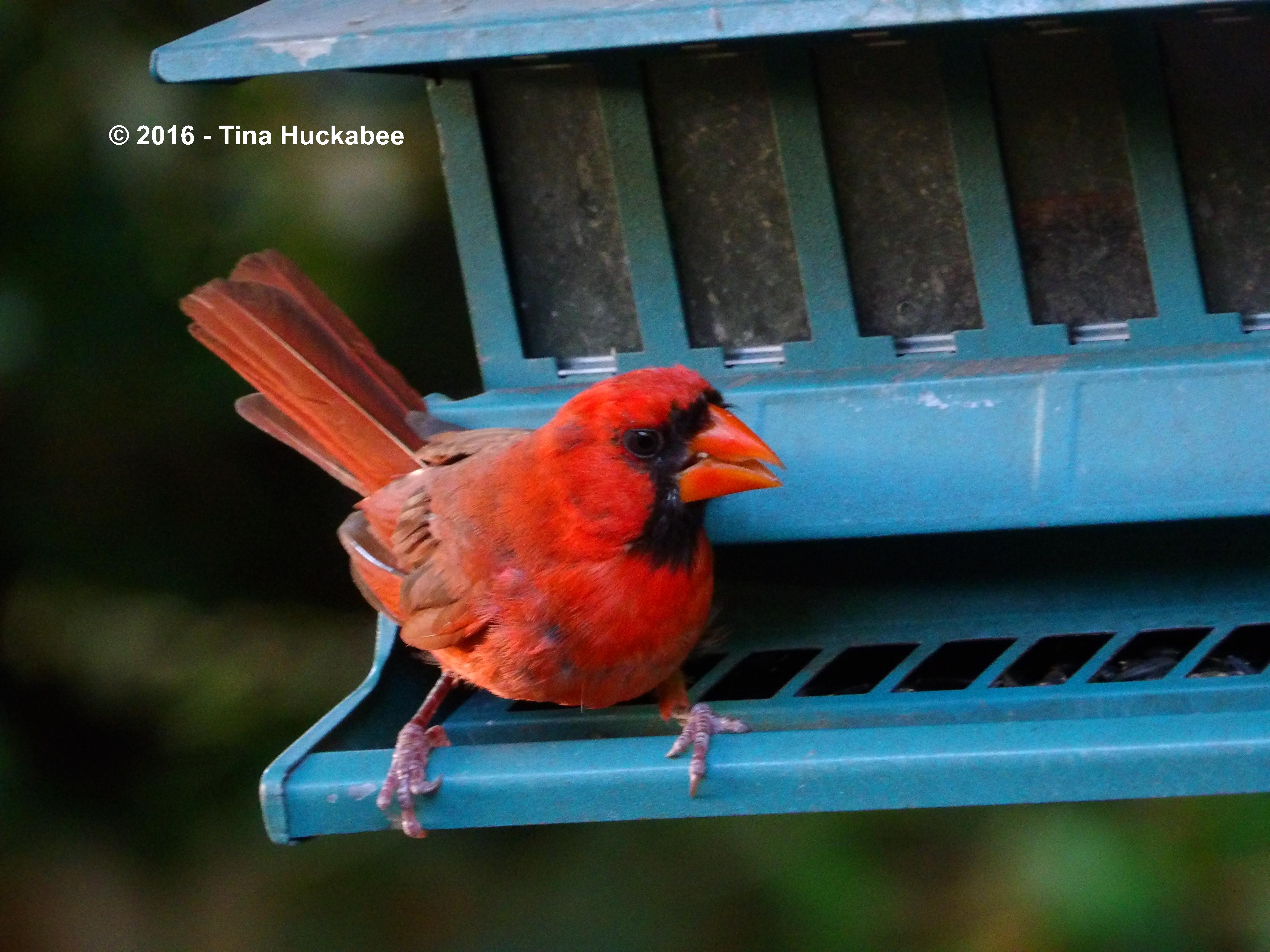
During the rainy days, birds and pollinators were scarce, no doubt dodging raindrops and lying low.  But once the rain ended and the sun reappeared, the Northern Cardinal, Cardinalis cardinalis, family, including dad,

IMGP9141.new

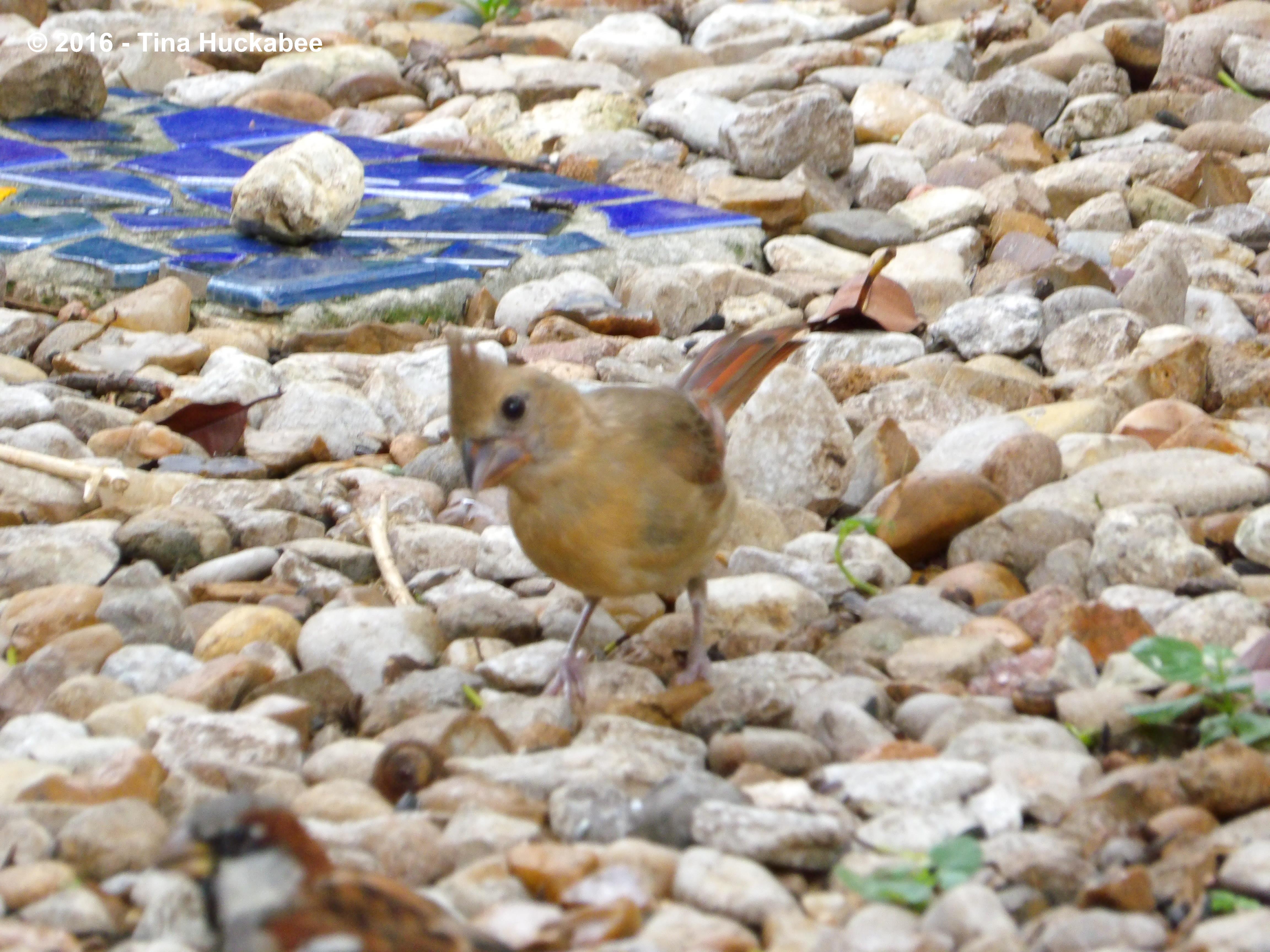
…daughter,

IMGP9378.new

…son,

IMGP9272_cropped_3102x2498..new

…all enjoyed noshing at the human-provided seed bar.  Interesting, I’ve seen an adult female Cardinal feeding at the seeds of the spent sunflower blooms, but rarely this summer, has she been at the feeder.  No doubt she’s enjoying some “me” time away from the Man and the Kids.

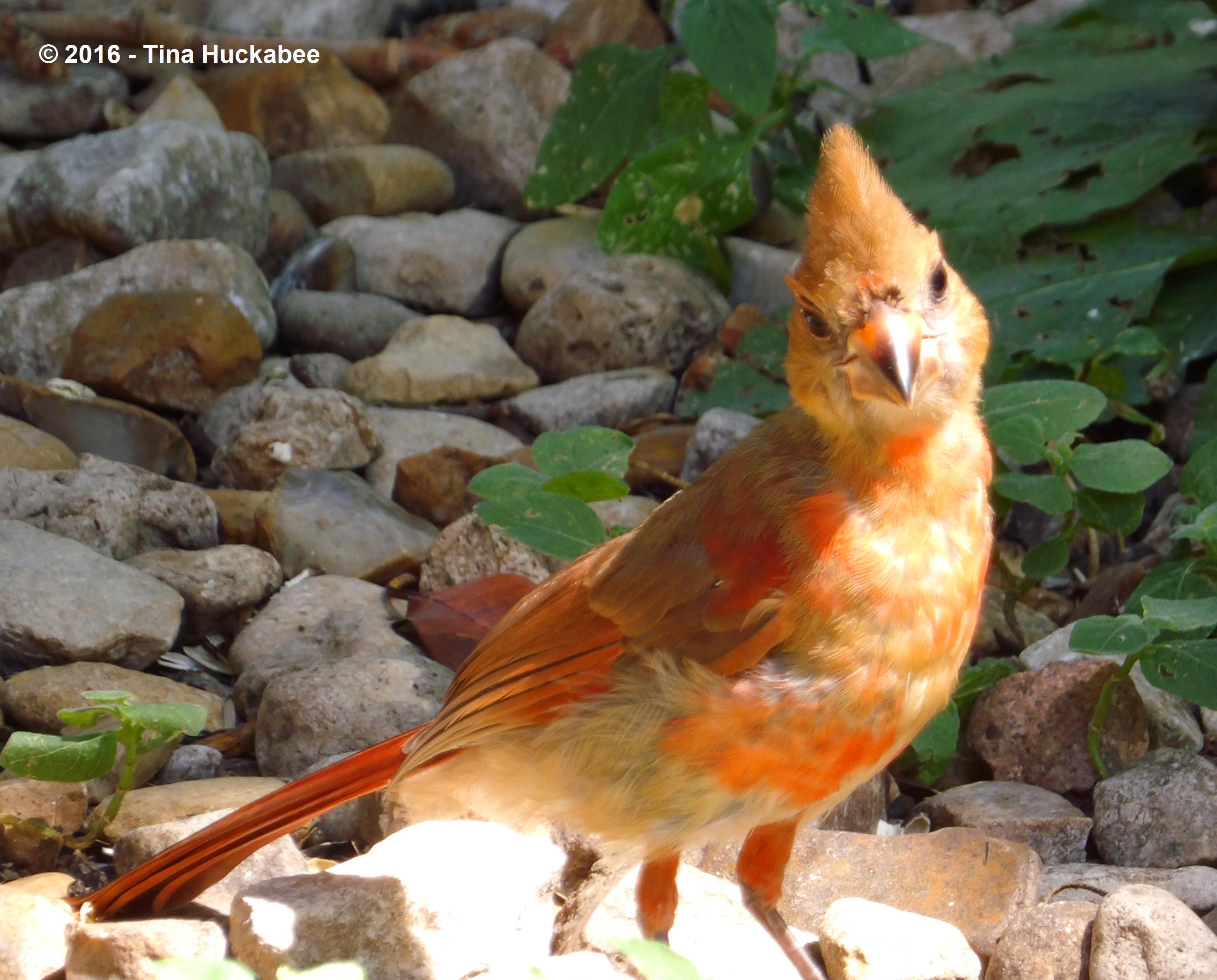
It’s been a fun summer watching the fledglings,

IMGP9371_cropped_2917x3120..new

…as they learn the seed-ropes and become regular visitors to the  garden. Soon they’ll look just like other grown-up Cardinals, but observing their transformation to adulthood was interesting.

I’ve spotted Lesser GoldfinchesSpinus psaltria, working the branches of a White mistflower,  Ageratina havanensis.

IMGP9230.new

Two adult males, working side-by-side in the shrub.

IMGP9240_cropped_3273x2875..new

An adult female a few branches over.

I  assume that they were snacking on insects, as the mistflower doesn’t bloom its beautiful white flowers until late September and won’t be ready for seed pickings until sometime in October or November.    Goldfinches also visit the sunflower stalks.

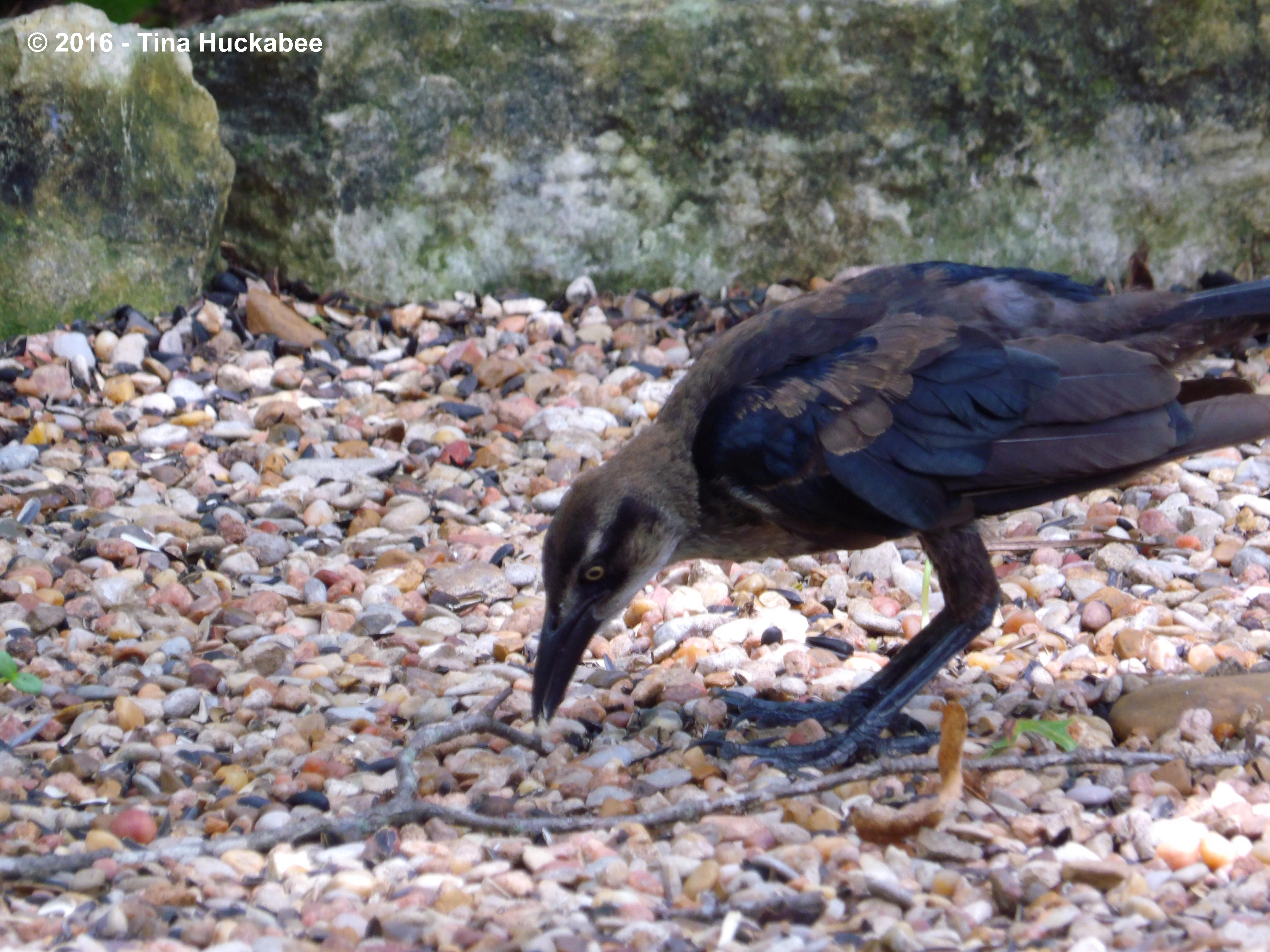
This juvenile male Great-tailed Grackle, Quiscalus mexicanus, is getting his colors too, in his sedate black and brown, though he looks a splotchy at the moment.

IMGP9359.new

I guess birds go through their “awkward stage” just like people.

A male House Finch, Haemorhous mexicanus, was shy of the camera,

IMGP9174_cropped_3176x2591..new

And then, not so shy.

IMGP9180_cropped_2941x2411..new

I like House Finches; they’re common bird companions in my garden.  Chatty and gregarious, they’re regular visitors to the feeders, but also enjoy many of my native plants once seeds develop.

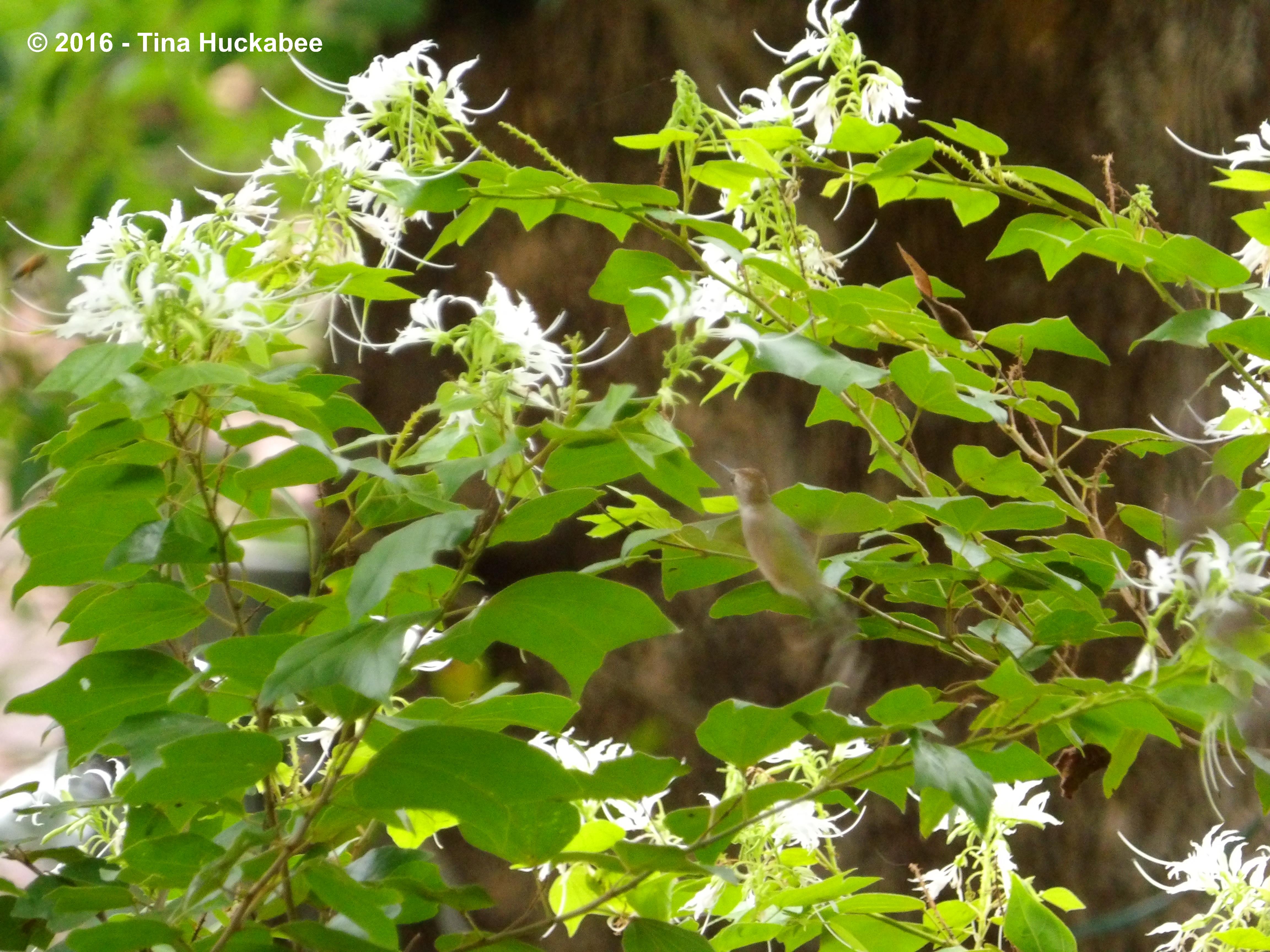
I’ve observed plenty of hummingbird action, but only have this one, lame and blurry shot of a (probably) female or hatch-year male Black-chinned, Archilochus alexandri.

IMGP9382.new

Hummer enjoying nectar from flowers of Mexican orchid tree (Bauhinia mexicana).

Hummingbirds are migrating south now–I hope to see more zooming through the garden. Common gardening wisdom always suggests that they like red flowers–and they do–but I also see them at all other colored blooms too.

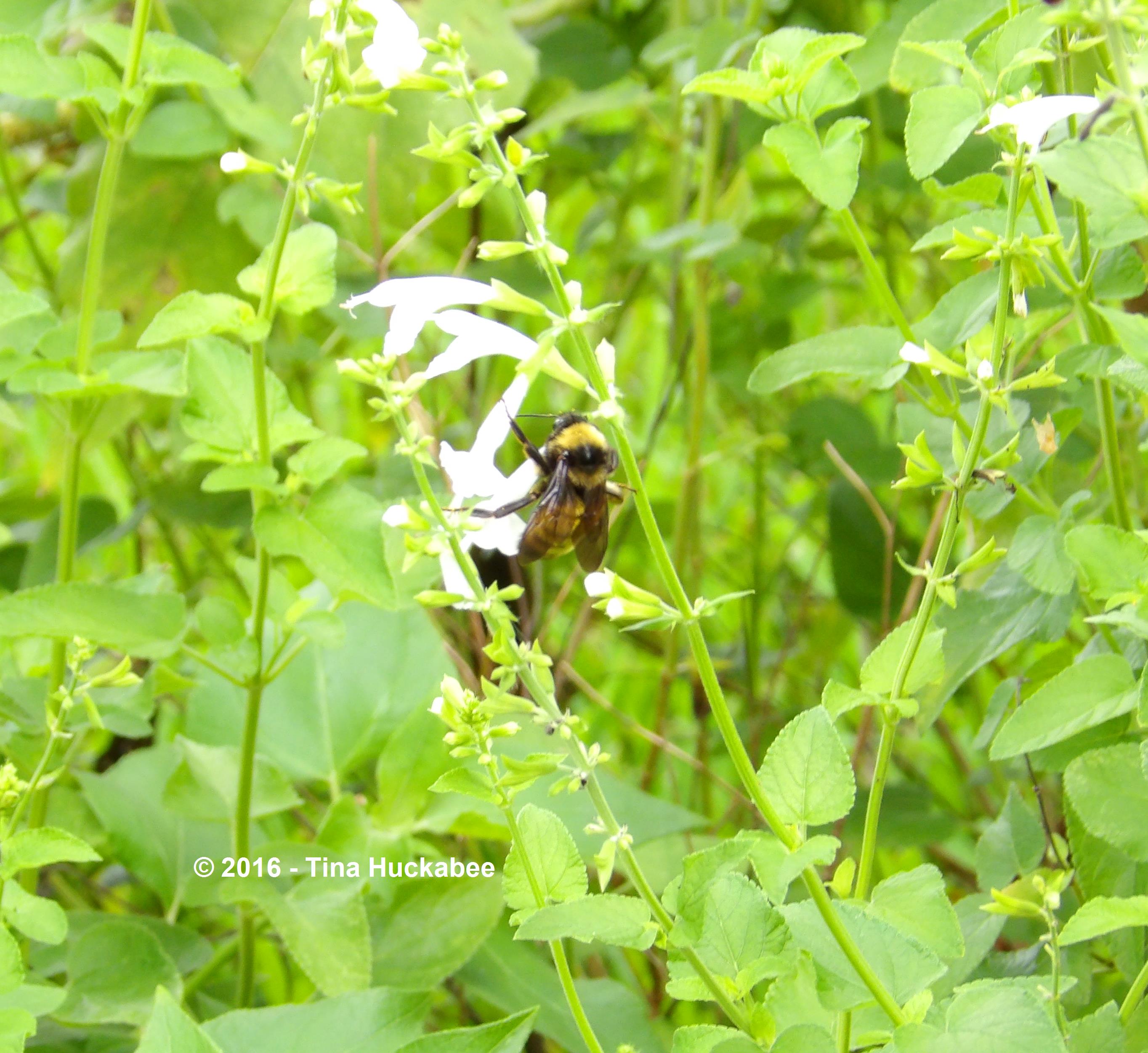
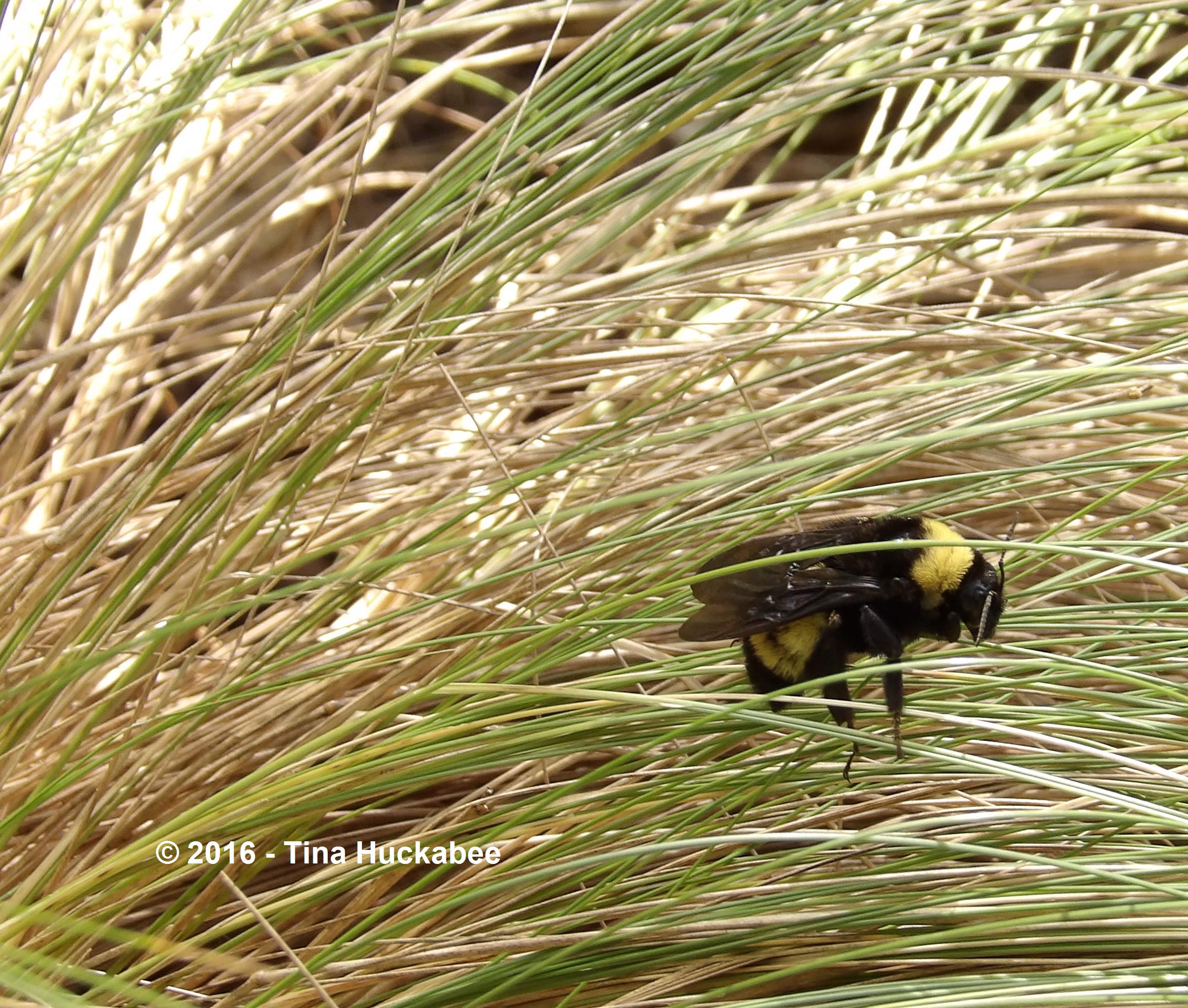
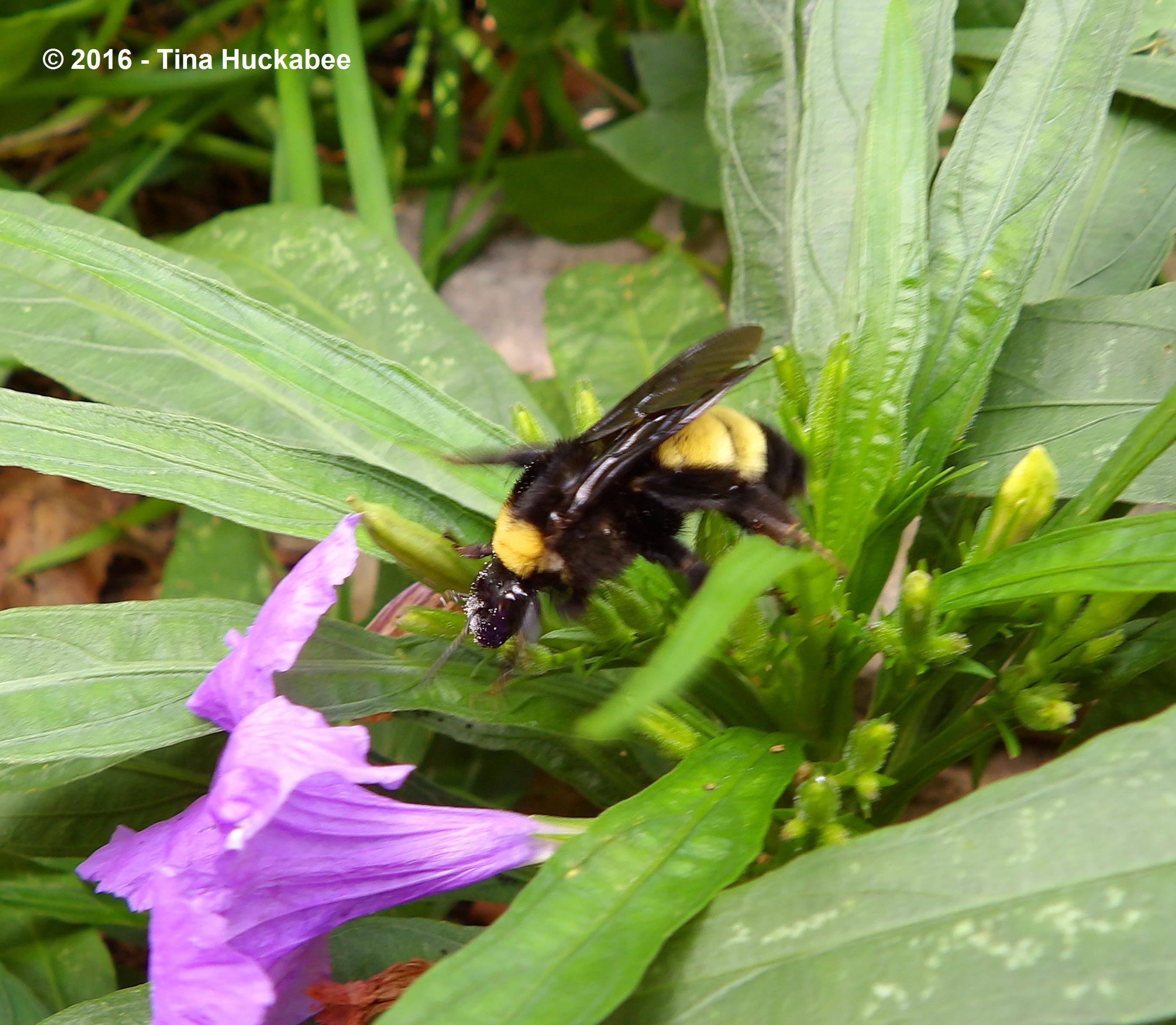
No peeping or squawking, but with wings a’buzzing is this bumblebee.  I’ve seen her, or maybe several “hers” in the past month, but failed in getting a decent capture. This busy bee is working a Tropical sage, Salvia coccinea, a favorite with several bee species.

IMGP9329_cropped_2728x2503..new

A week or so ago, I spent time observing this downed American bumblebee, Bombus pensylvanicus.

IMGP9415_cropped_2465x2092..new

I watched him or her for several hours, on and off.  It could be a cast off male or a dying female.  My honeybees will crawl around the ground when they’ve reached the end of their days, and I guess that might be what’s going on with this one. I appreciated the intimate view,  even letting the lovely critter crawl along my hand.

IMGP9433_cropped_2733x2382..new

Mr./Ms. Bombus is a big, big bee, indeed!

IMGP9429.newIMGP9430.new

It seemed interested in pollen and later in the day, I saw another working some blooms.     Is there a nest nearby? I really hope so. Bumble bees are ground nesters and prefer bare soil in which to raise their young.   While I’ve counted 12 species of native bees in my gardens this year (the bumble makes 13), I hadn’t seen a bumble bee in my garden for many years.  I count myself a lucky gardener to have bumbles in the garden again and I certainly hope they continue visiting.

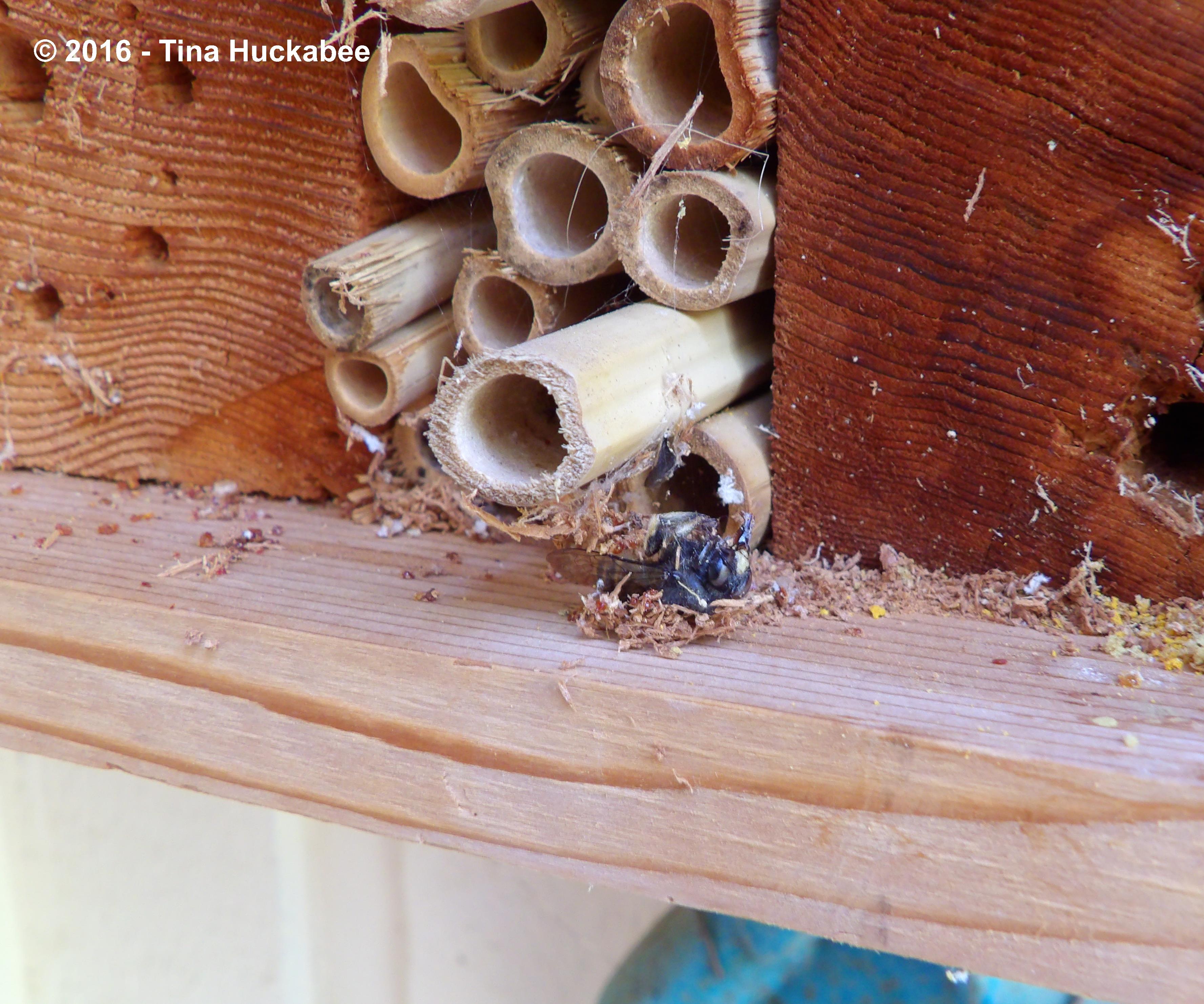
I was sorry to see two different dead Horsefly-like carpenter bees, Xylocopa tabaniformis on the ledge of one of my native bee houses.

IMGP9313_cropped_3554x2964..new

There are still plenty of carpenter bees in the garden and I suspect it was simply the end for these two.  This species of bee seems to have a long season of life: mating, drilling holes in wood for their offspring, laying eggs, nectaring and pollen-gathering, they live busy lives well lived.

While these carpenter bees probably died a natural death, that’s not true for the millions of honeybees and untold multiple millions of wild bees, butterflies, moths, dragonflies and other pollinators and insects that were recently killed by aerial spraying in South Carolina.  In a poorly executed attempt at controlling mosquitoes which might carry the Zika virus, county officials in Dorchester County have laid waste to an entire 15 square mile area.  The collateral damage to the natural balance of insects, prey, and predator to that local environment is unknown and probably devastating, certainly in the short-term.  It could take a long time for the area to recover.  In our fear of the Zika virus–which is frightening–many have resorted to dangerous and inappropriately implemented chemical controls based on ignorance, short-sightedness, and a desire for a quick fix to a complicated problem.
I don’t live in a particularly gardening-centric neighborhood.  There are far too many homes whose “landscaping” only includes sterile turf and a few foundation plants.  I am grateful, however, that in my entire neighborhood, only two homeowners have chosen to hire mosquito “control” companies to spray their yards, whereas I see (and smell) other neighborhoods where there is more of this activity.  Since the Zika scare, these companies have proliferated here in Austin (where there have been no reports of Zika), as well as in other parts the South.  There is little regulation of these businesses here in Texas, though I can’t speak to regulations in other states.   Mosquito control companies are required to pay for licenses and I  assume that their employees must undergo some sort of training, but no one is supervising choice of chemicals, whether spraying occurs on windy days, or whether spraying occurs in creeks–which is illegal, but I know through neighborhood discussion forums (like Nextdoor) that it happens.   While the spraying of an individual property certainly doesn’t have the catastrophic effects that aerial spaying does on the macro scale, it is naive and foolish to assume that it doesn’t have a negative impact on the micro/local environment.  Pesticides sprayed for adult mosquitoes don’t discriminate–they’ll kill all insects and also critically impact other species which feed on insects.  A scorched earth policy of pesticide management only leads to new and difficult problems and is detrimental to a healthy, diverse ecosystem.

Like so many environmental issues, urban mosquito problems are really a people problem. Most biting mosquitoes in urban areas breed in containers of water and the dirtier, the better.  In my own situation, I have one particular neighbor who refuses to regularly change out her birdbaths or properly maintain any other items which might hold water. And yes, I’ve discussed this issue with her for YEARS–to no avail.  Her response to me has been oh, the mosquitoes don’t bother me. With time and patience, I’ve solved that particular problem, but there are plenty of folks around who won’t maintain pools properly, or who drape tarps over “stuff” which then holds water after rain, or who don’t clean out their roof gutters, or who leave water in plant containers, buckets and the like and all of those scenarios (and more) are rife for mosquito development.   Preventing mosquitoes from developing into the flying, biting adult stage by eliminating standing water is the real solution for this problem and one that should be at the forefront of any measures against Zika, as well as other mosquito borne diseases.
If everyone in a neighborhood would routinely refresh and/or dump the standing water sources on their property at least once/week, mosquito development would certainly slow and probably end in many cases.  For water fountains, water tanks, holes in trees, and other places where water isn’t easily dumped, there is an excellent biological control product, Bacillus thuringiensis israelensis, (BT or BTI), which is a larvicide and therefore, toxic only to the larval stage of an insect.   Commercially, this control can be found in products like Mosquito Dunks and Mosquito Bits and are commonly found at home improvement stores or plant nurseries.  Dunks are solid doughnut-shaped tablets (10/package) which are crumbled into stagnant water.  One doughnut covers several hundred square feet of water surface.  The pieces distribute the bacterium which paralyzes the digestive system of the mosquito larvae–they die and never develop into adults. I buy a package of Mosquito Dunks at the beginning of “mosquito season” (April or May) and distribute bits of dunks in a variety of places, roughly once-per-month, through November.  It costs me about $10.

For more information about where mosquitoes are typically found in Austin (and I’m sure this information could be extrapolated for most cities), as well as common sense remedies for the problem, check out this excellent article published by the City of Austin on research done on urban mosquitoes.

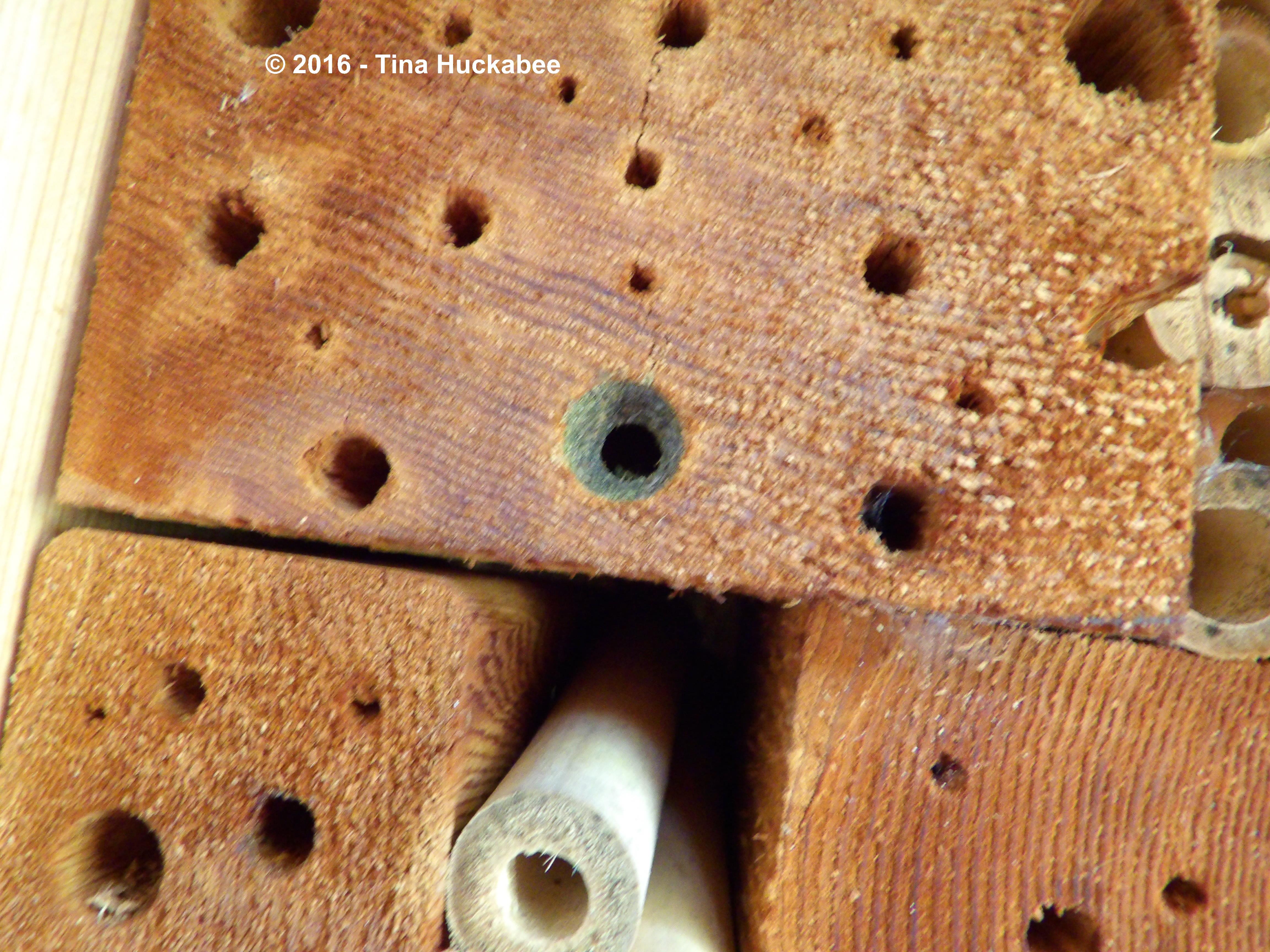
On a brighter note, the emerged adult of a leaf-cutter bee exited its green nursery recently.

IMGP9319.new

I believe it was in May or June that I watched mama building the nest.

It’s not Wildlife Wednesday without a photo of a Neon SkimmerLibellula croceipennis,      this one posing prettily on the Ruby Red Runner plant in the pond,

IMGP9396.new

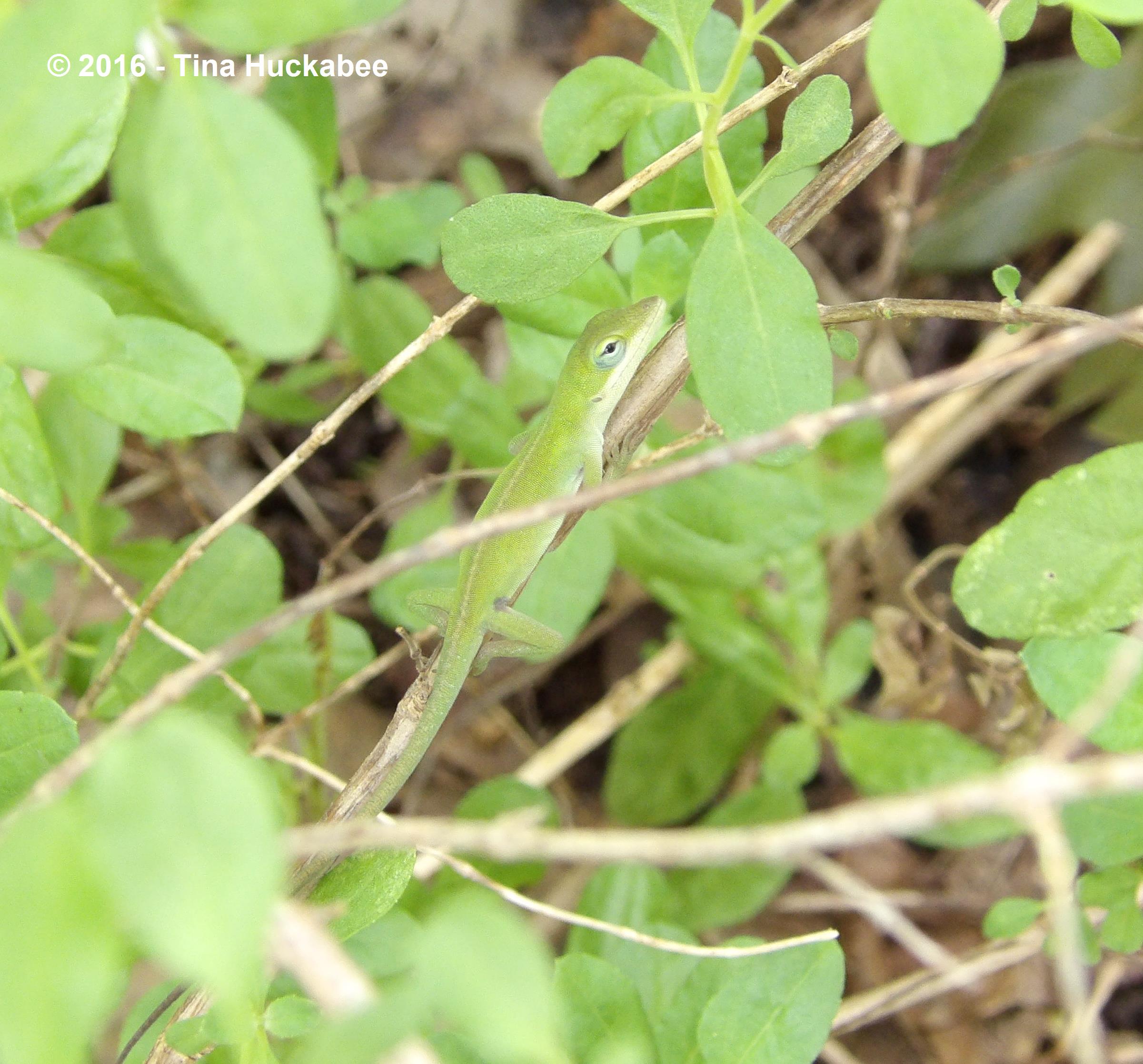
…or a Green Anole, Anolis carolinensis.

IMGP9452_cropped_2401x2235..new This little one is a baby–only about three inches from the tip of its green nose to the end of its equally green tail. I’ve seen several recently and they’re just about the cutest things in the garden at the moment.

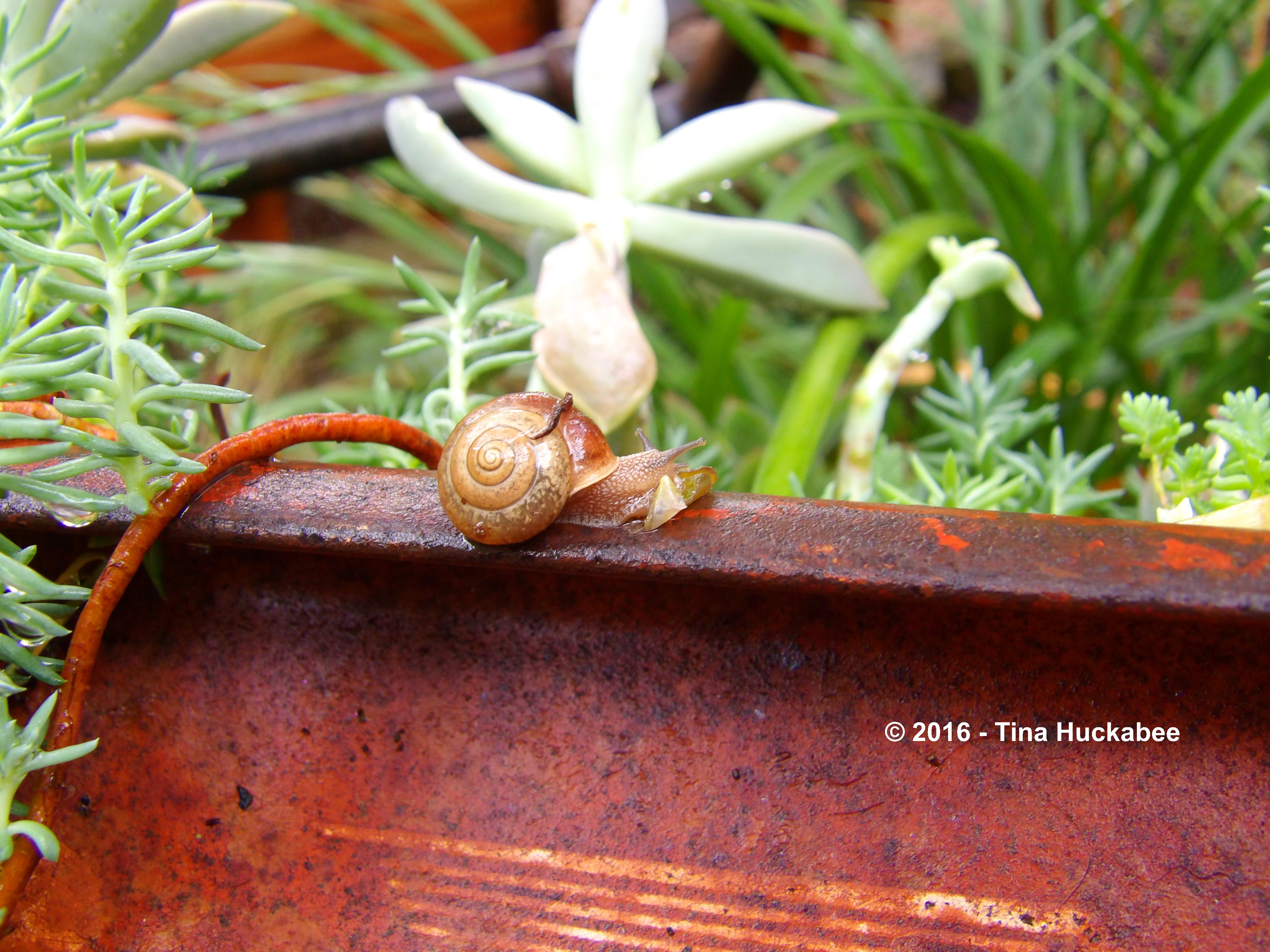
Heavy rain encouraged a few snails to emerge and explore, like this one:

IMGP9328.new

I’ve never incurred much garden damage from snails, but they are the bane of many-a-gardener.

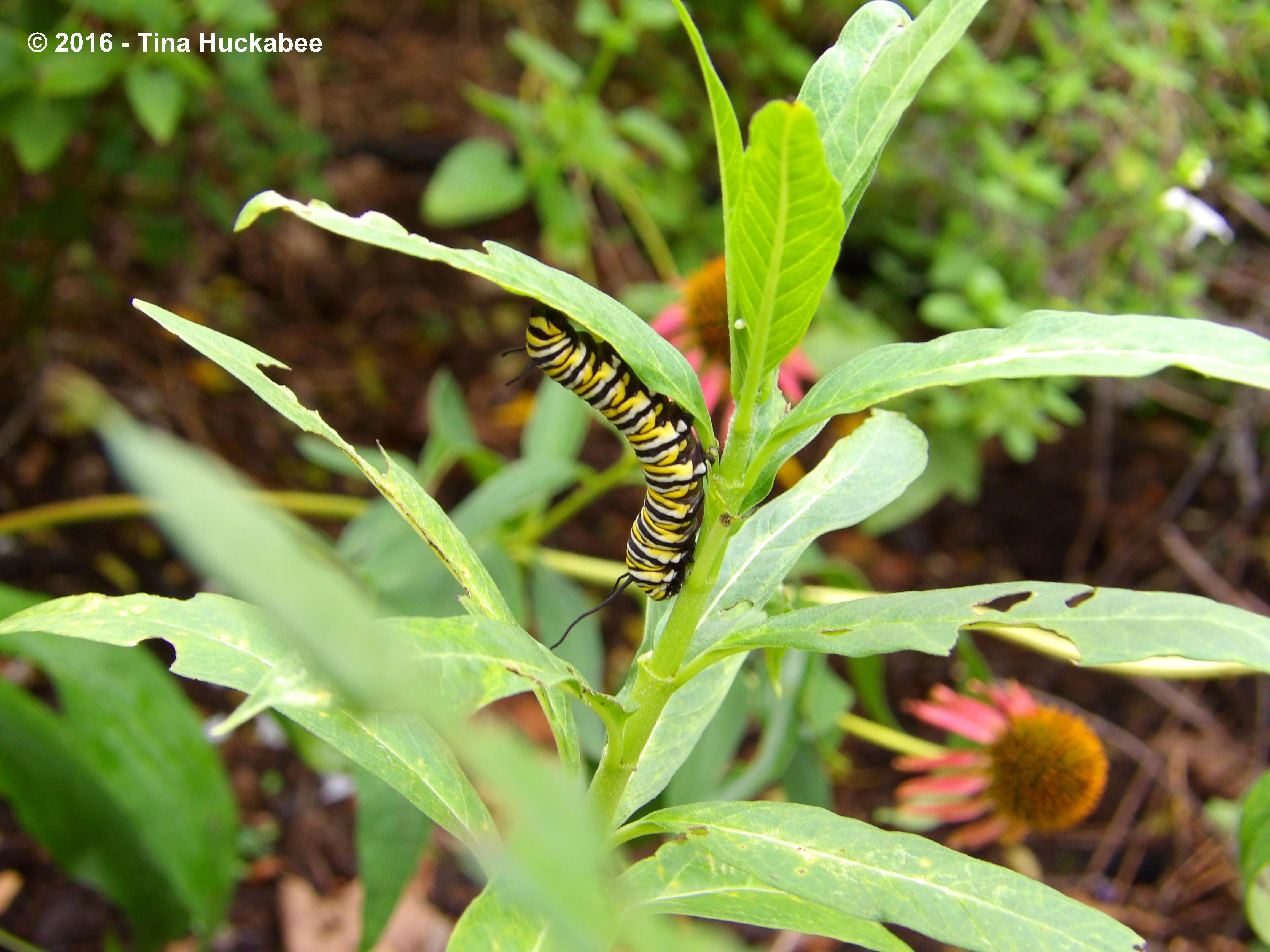
A Monarch butterfly, Danaus plexippus, caterpillar feasted on some milkweed and that’s odd for this time of year.

IMGP9400.new

I haven’t found the chrysalis, but I’ll keep looking. Observing the emergence of an adult butterfly is must-see for anyone interested in wildlife gardening.  The Monarch migration from Canada southward to Mexico has begun and I’ve seen a couple of individuals in the garden this past week, though it seems too early. The routes of the migrating insects converge through Texas, so usually there are plenty to appreciate throughout September and into October. Sadly, their numbers are down again after rebounding last year. Fingers-crossed for a nectar-plentiful migration to Mexico, a safe winter’s roosting, freedom from killing pesticides, and NO LATE SPRING ICE STORMS!!

Several Clouded Skippers, Lerema accius, have cruised and worked blooms in the past month, though these are common throughout the growing season.  A subtly colored little thing, I welcome the less-ballyhooed butterflies in my garden.

IMGP9445_cropped_2456x2277..new

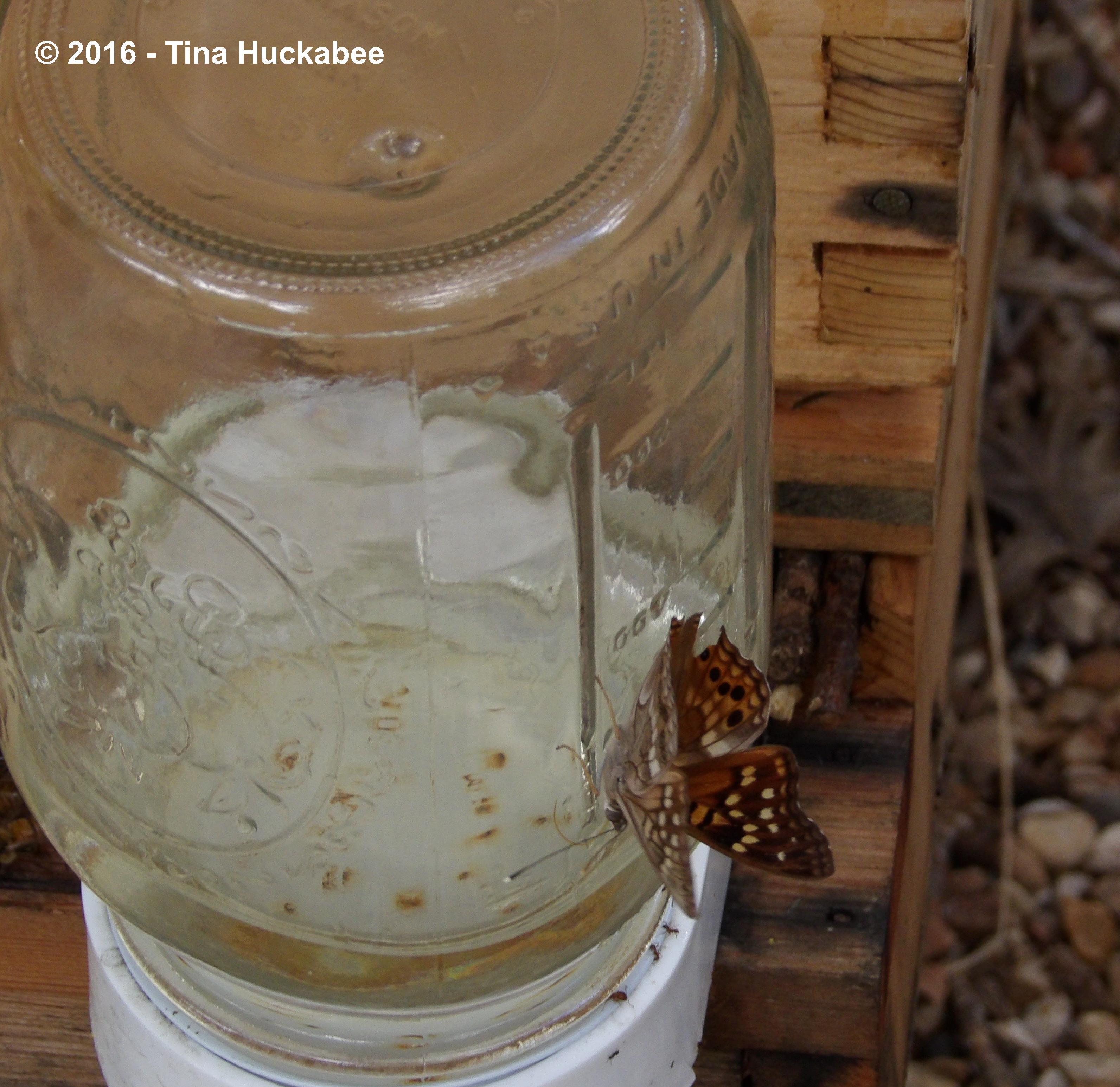
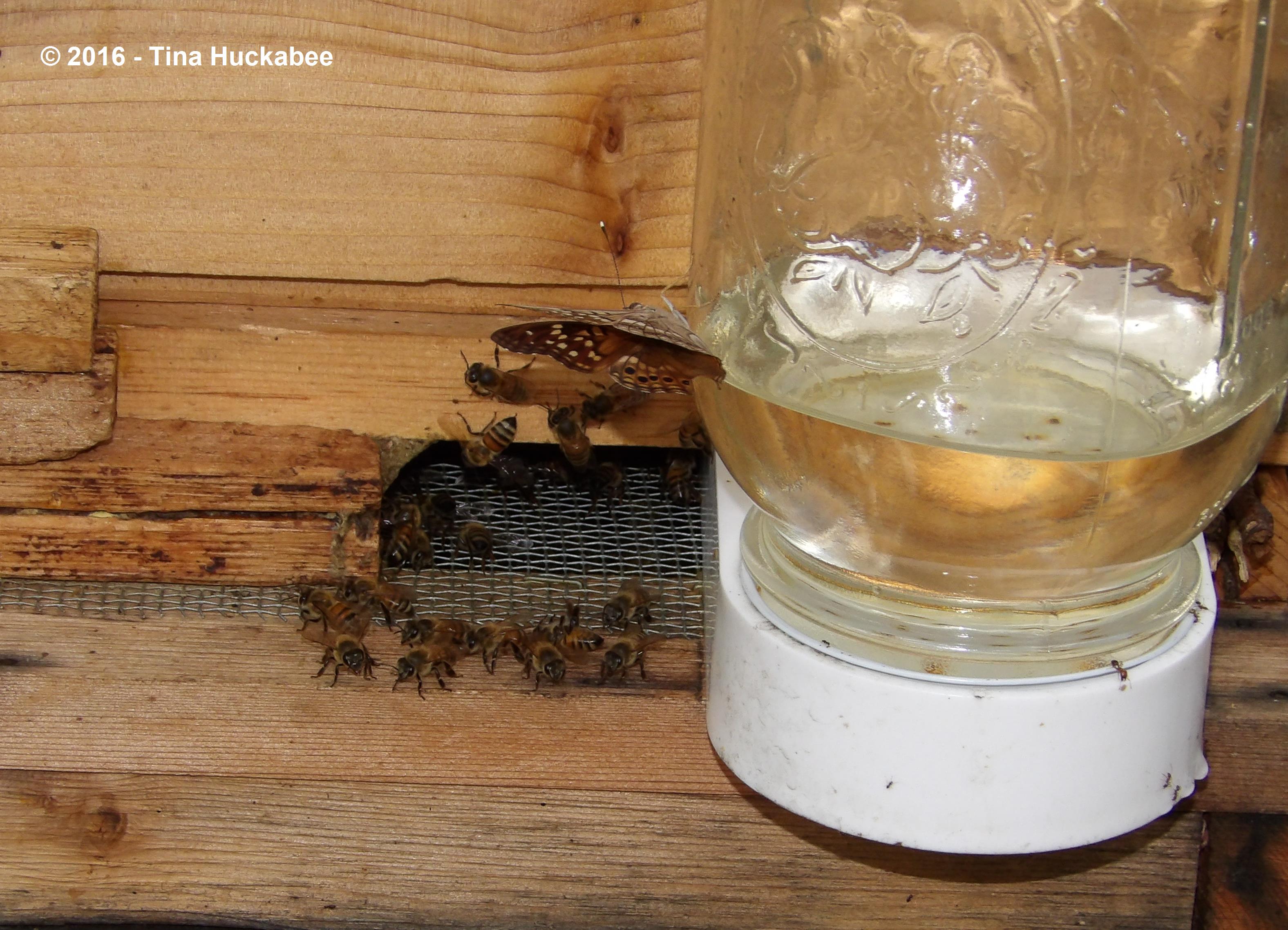
Finally, this Tawny Emperor, Asterocampa clyton, wanted in on the honeybees’ sugar-water action.

IMGP9454_cropped_3185x3091..new

IMGP9455_cropped_2976x2502..newIMGP9456_cropped_3152x2277..new

But with the hovering human in close proximity, it decided that maybe a far-away bloom was a better bet.   I’ve never seen other insects (except ants, of course) show any interest in the bottles of the sweet stuff.  Maybe the butterfly simply thought that it was a groovy place to land and doff its antennae at the bees to say a cheery “howdy-do!”

Singing or not, did wildlife visit your garden this past month? Please post for September Wildlife Wednesday. Share the rare or mundane, funny or fascinating, beneficial or harmful critters you encounter. When you comment on my post, please remember to leave a link to your Wildlife Wednesday post so readers can enjoy a variety of garden wildlife observations.