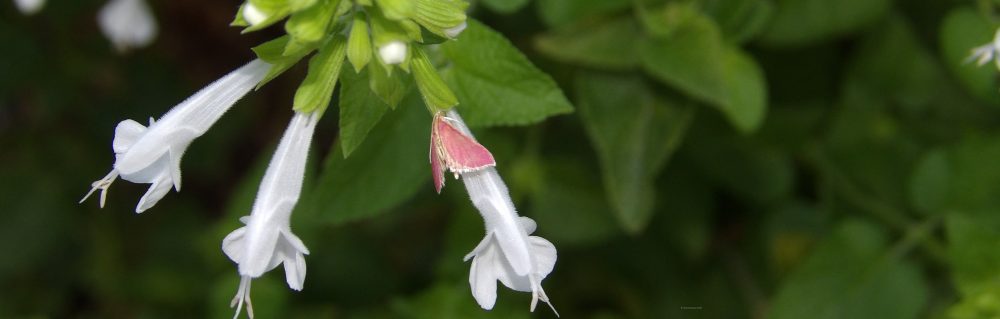
Texas Native Plant Week

The third week of October is Texas Native Plant Week.  School children and their teachers, native plant organizations, and individual gardeners are encouraged to learn about and then plant natives in eagerly awaiting gardens.  Aside from their beauty, native plants are a snap to grow with our capricious Texas weather patterns and difficult soils.  Native plants also provide sustenance and protection for endemic and migrating wildlife; diversity in all forms improves when gardeners go native in their landscapes.  Throughout the year and in every part of Texas, native plants are a key driver for conservation of our unique natural landscapes.

If you don’t live in Texas, celebrate the native plants of your region by growing natives in your garden and encouraging neighborhood and school groups to do the same.

Below are but a few of the native plants that I grow in my garden.  Many are passalong plants, shared with me by keen and generous gardeners.  Some are plants that I started from seeds, testing my gardener’s patience as I’m always excited to see how something fares as it grows and matures.  A couple of these plants appeared–unplanned, but very welcomed–by serendipitous acts of birds or the wind.  Many of these plants were purchased at Austin’s awesome locally owned nurseries.  All of these plants grow with little effort and less water than what a typical lawn demands. Ease of endeavor notwithstanding, my garden is alive with pollinator and bird activity, which is how a garden should exist.

No matter where you live and even if some of your plants’ ancestors hail from far away places, make room in your plot of the Earth for native plants.  You’ll help heal the world substantially, by conserving water and natural habitat, and by increasing local diversity of plants and wildlife.

Native plants are beautiful and belong where you live and garden.

Spring:

Pipevine Swallowtail on a Giant spiderwort (Tradescantia gigantea)

Southern Pink Moth on a Lyreleaf sage (Salvia lyrata).

Yellow columbine (Aquilegia chrysantha)

Honeybee working a Gulf coast penstemon (Penstemon tenuis).
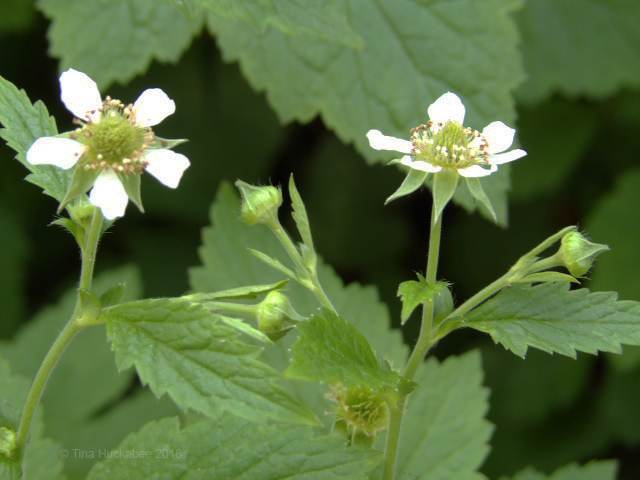
White avens (Geum canadense)


Late spring, early summer:
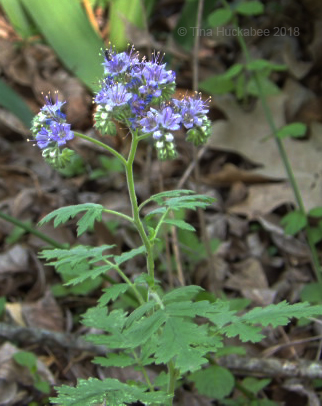
Blue curls (Phacelia congesta)

Red yucca (Hesperaloe parviflora)

Purple coneflower (Echinacea purpurea)


Summer:
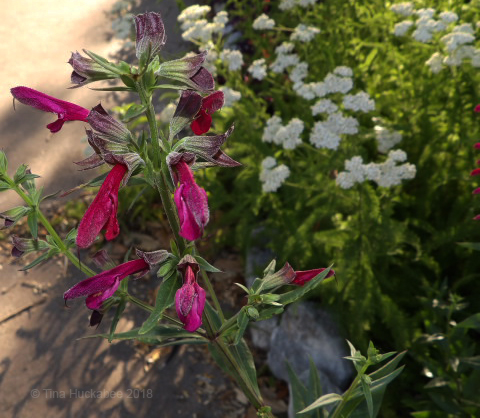
Big red sage (Salvia pentstemonoides) and Yarrow (Achillea millefolium)

Big red sage, bog plant Pickerelweed (Pontederia cordata), with  non-native waterlily, ‘Colorado’.
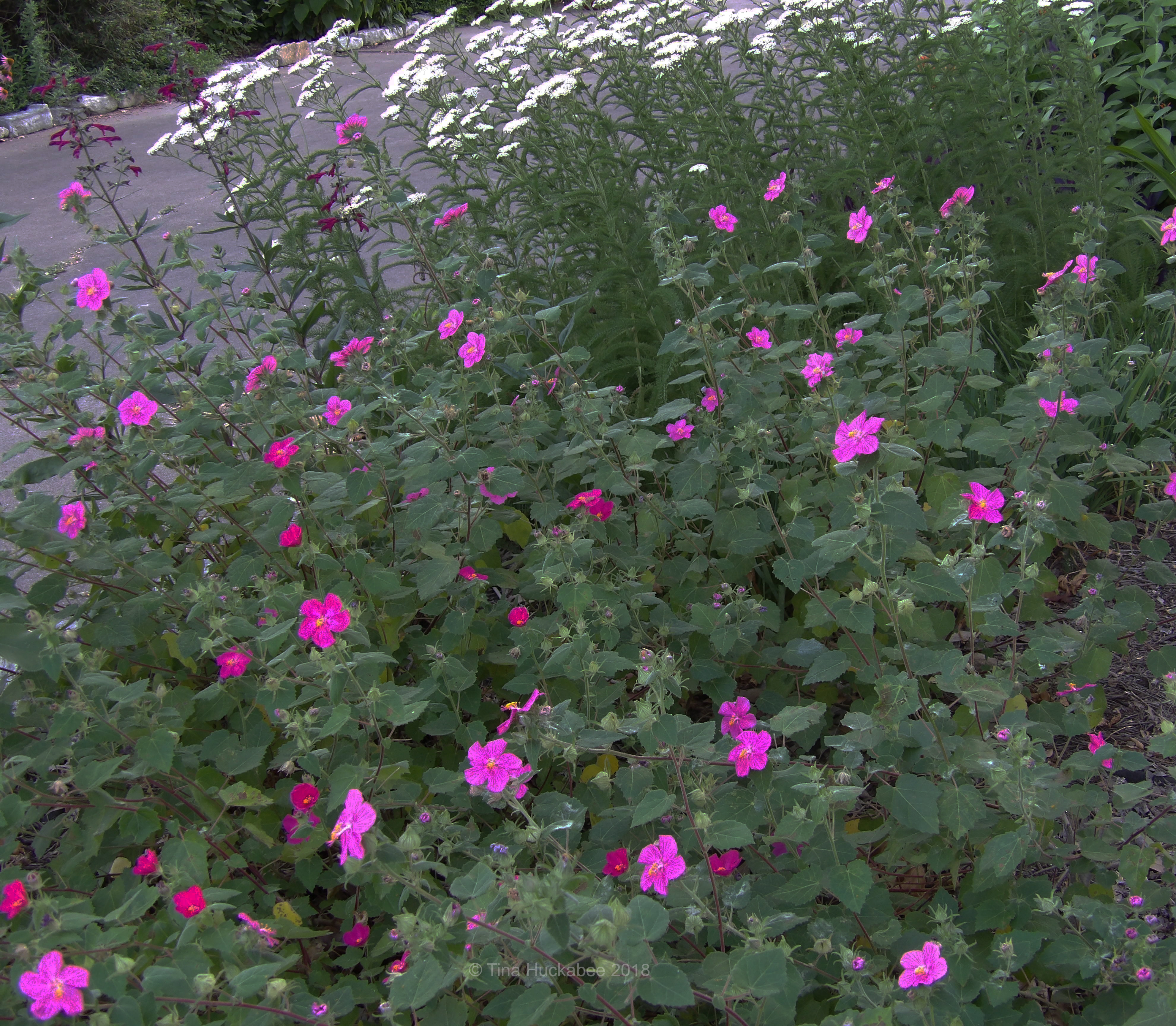
Rock rose (Pavonia lasiopetala) and Yarrow
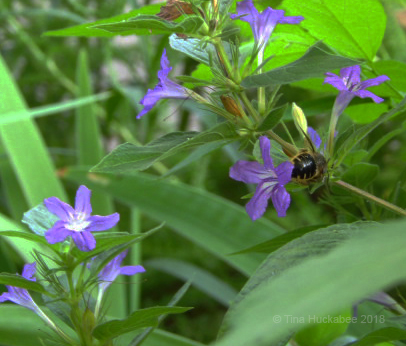
Drummond’s ruellia (Ruellia drummondiana) with attendant Carpenter bee.

Henry Duelberg sage (Salvia farenacia) and nectaring Eufala skipper.

White tropical sage (Salvia coccinea)

Red tropical sage (Salvia coccinea)

Pigeonberry (Rivina humilis) bloom spikes


Autumn:

Fruits of Pigeonberry
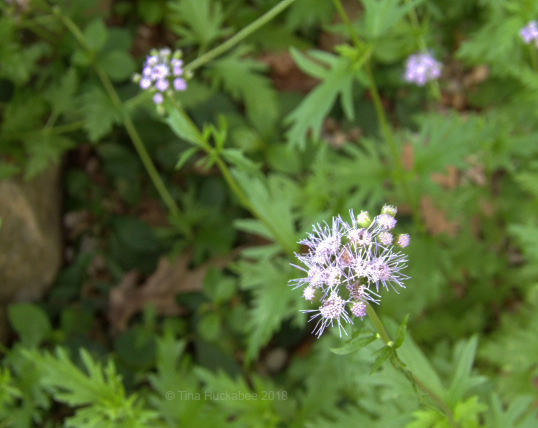
Gregg’s mistflower (Conoclinium greggii)

Texas craglily (Echeandia texensis)

Lindheimer’s muhly (Muhlenbergia lindheimeri)

Inland sea oats (Chasmanthium latifolium)
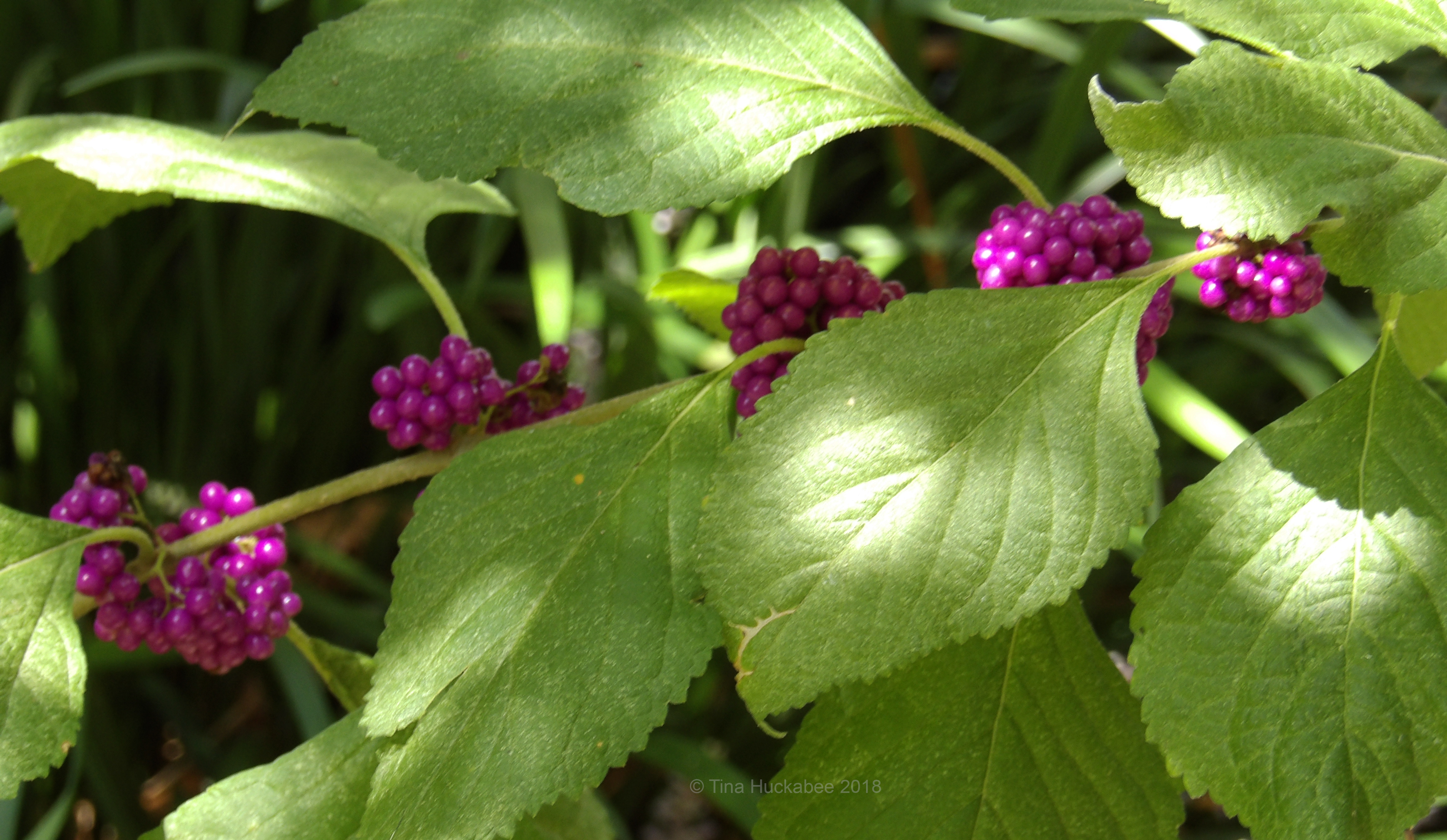
American beautyberry (Callicarpa americana)

Foliage of Texas red oak (Quercus texana).


Winter:

Possumhaw holly (Ilex decidua)

Ice formations in the stems of Frostweed (Verbesina virginica).

Seed heads of Frostweed, with bare stems of Red oak tree to the left, and Retama (Parkinsonia aculeata) to the right.

The Anchor of Change: Wildlife Wednesday, October 2018

One thing that Central Texas gardeners can count on during September into October is the termination of the long hot of summer with a very welcomed re-introduction of our second spring.  Compensating for our brutal summers is the reliable flush of new growth, open, exuberant blooming, and gifts of rain–sometimes too much–to gardens and the critters who rely on those gardens.

Typically, we enjoy our first cool fronts at this time, and while the cool is fleeting, it certainly takes the hot edge off of our days and nights.  You’d think wildlife would be appreciative of any small portion of relief, but this past month hasn’t necessarily been packed with wildlife happenings, at least that’s so in my garden.  Nevertheless, here are some offerings for Wildlife Wednesday.

Blooming perennials, reawakened with softening temperatures and gulps of water from the sky, have given pollinators of all stripes, scales, and feathers plenty in their search for pollen and nectar.  This honeybee worked the flowerets of Garlic chives, Allium tuberosum.  The same bee worked the neighboring bloom of Rock rose, Pavonia lasiopetala.   As well, tiny native bees also partake of both kinds of blooms.


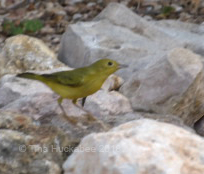
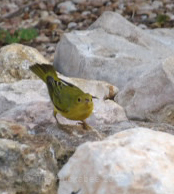
Typically, September sees the beginning of autumn migration from northern parts of North America to Mexico, Central America, and South America. Early in September, a pair of Yellow warblersSetophaga petechia, spent several days visiting my pond.  I couldn’t get a shot of them together, or a lone shot of the female, but the male sat still long enough for a couple of quick shots.

Each warbler hopped around the limestone rock which borders the pond, with nervous flutters into the oak trees.  I never actually saw any bathing in the bog, or splashing the the waterfall, but both birds were clearly interested in the water feature.

I see this species each spring as they head northward, but don’t recall ever witnessing an autumn visit before.  That said, I haven’t observed any other migratory birds through my garden this past month, which is odd. The autumn migration season spreads out over a longer period and isn’t as intense as the spring migration, but I’m surprised that I haven’t seen other passers-through at my pond or in the garden.  I hope the migrants are finding enough in rural areas to forgo urban gardens.


My pond toads, Gulf coast toadBufo valliceps, are croaking their way to the end of their breeding season.  I’ve seen itty bitty, baby toads in the garden, but this grown fella was willing to pose for me at sunup one morning.


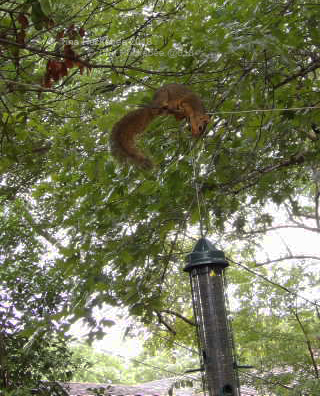
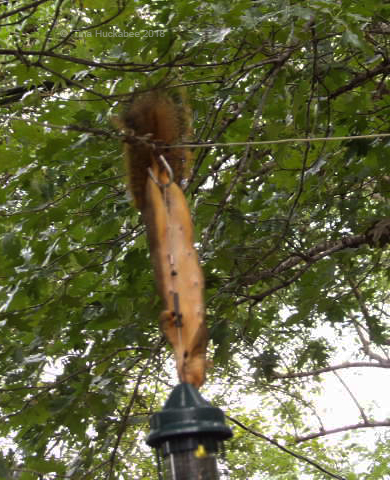
The neighborhood squirrels are up to their usual antics, like the actions of this female Eastern Fox squirrel, Sciurus niger, who was bound and determined to have the birds’ seeds for lunch.

Balancing.

Vertical tight-rope manuevers.

The big stretch.

Success! Who knew that noshing on the ground is easier?


Finally, in a nod to the end-of-October scare, is this gorgeous spider who’s been hanging out at my back patio.  I’ve identified her as a Spotted orbweaverNeoscona crucifera.

I don’t find her scary and in fact, I think she’s quite beautiful.  She’s also large; her abdomen is about an inch in diameter–a big girl!  I’ve only seen her at night and she’s shy, so she scuttles up her web into the ceiling of the patio cover when she notices me.  I was fortunate to catch this shot of her.  I wonder if she was drowsy with digestion?

What’s winging or singing in your garden during this predictable season of change?  Please post about your wildlife happenings and remember to leave a link when you comment here.  Happy wildlife gardening!

Asher

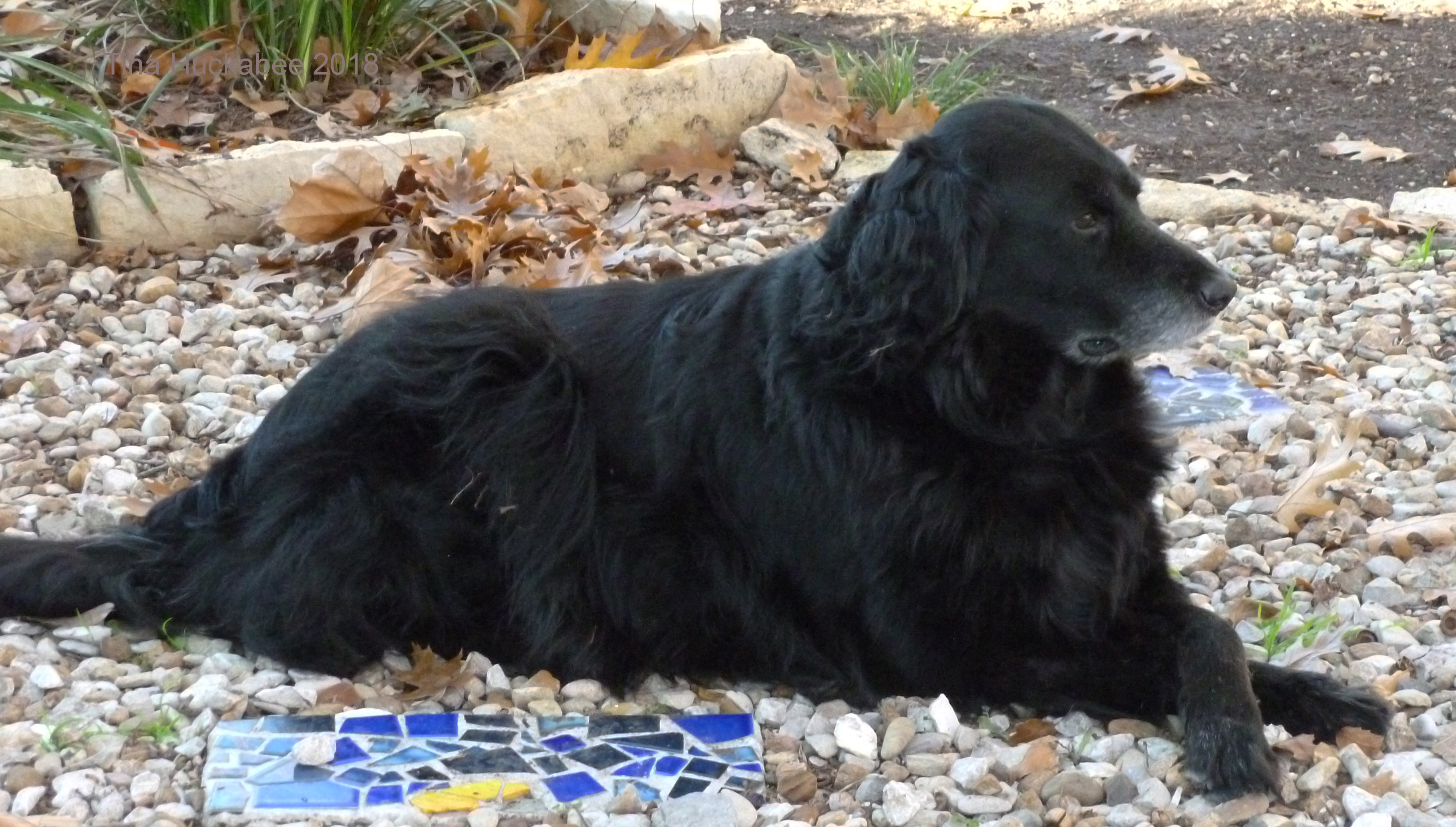
I rarely post about personal issues, but last week, my very elderly dog, Asher, died.  He lived a good dog life; he was 17 years old, with 16 of those years as a part of our family.  Asher’s been old for a long time.  At the beginning of summer 2017, I thought he wouldn’t survive the summer.  Not only did he survive, but he lived to see autumn, winter, and spring, and lumbered through this summer.  Asher had a strong–and big–heart, but he’d been declining and required a great deal of care.  We were privileged to provide that care, but on Friday two weeks ago, he could no longer stand and his appetite waned.

He crumbled.  Asher weakened beyond our ability help and it was time to ease his end.

Asher was a favorite in the neighborhood.  On his last day, a steady stream of neighbors stopped by to say goodbye and to pet his soft head.  Since his death, texts, emails, phone calls have delivered condolences.

His life was worthy not only because of who he was–gentle natured and pure in ability to love, and as a younger dog, goofy in demeanor, but also because of his role as an important tether in our family.  My daughter and I found him in 2002 when we were volunteers at our local shelter, where, every Sunday, we walked and played with abandoned dogs.  Shoshana  loved animals and science, and wanted to become a veterinarian.

Shoshana died in 2006, suddenly and of natural causes, leaving our family forever altered.

We survived: parents who buried a child and the younger brother who grew up alone.

But, we had Asher.  Asher was a balm for our broken hearts.  A sensitive soul, he seemingly understood our pain, sitting quietly to keep us company when need be.  Or, when the mood struck, ready to play and unleash his silly side–and silly was a big part of Asher.

Always, he lightened our load.  He’s the last of our pets who knew Shoshana and experienced our intact family.

The vet and vet tech came to our house.  Both young women were kind and compassionate.  They listened to us, and talked to and petted Asher.

His death was peaceful.

I roll my eyes at references to crossing over the rainbow bridge and I detest bad pet poetry, but I like this Irving Townsend quote:

We who choose to surround ourselves with lives even more temporary than our own, live within a fragile circle; easily and often breached.  Unable to accept its awful gaps, we would still live no other way.  We cherish memory as the only certain immortality, never fully understanding the necessary plan. 


Asher.  His name is Hebrew for “happy” and our lovely–and deeply loved–friend was aptly named, both in who he was, and what he gifted.