April is typically portrayed as a month full of pink, lavender, and yellow. This pastel pulchritude reflects traditional concepts of new and fresh, infant and innocent. My garden currently provides this zeitgeist of spring hue, but what grabs my attention in mid-April are the vibrant hots in the garden.
I’m seeing red.
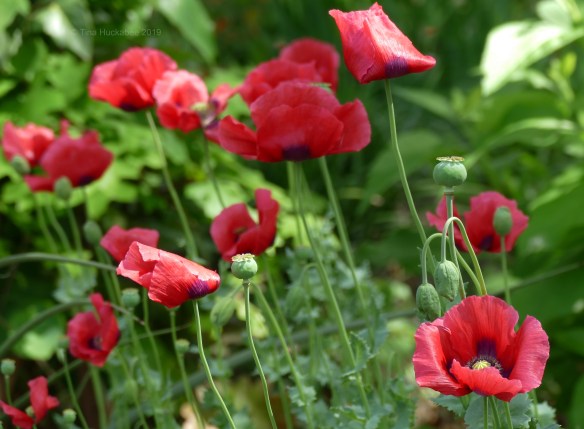
Many years ago, a German friend gifted to me a handful of poppy seeds. Since then, these harbingers of spring and symbols of remembrance pop for a month or so, usually March to April.
The blooms keep honeybees busy,

…and sway in gentle breezes.
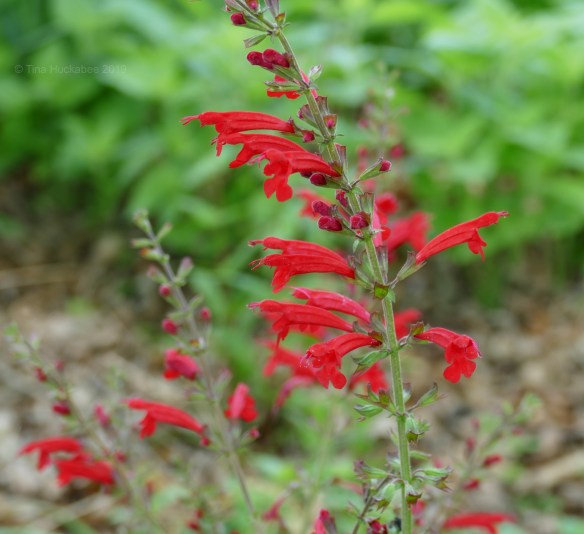
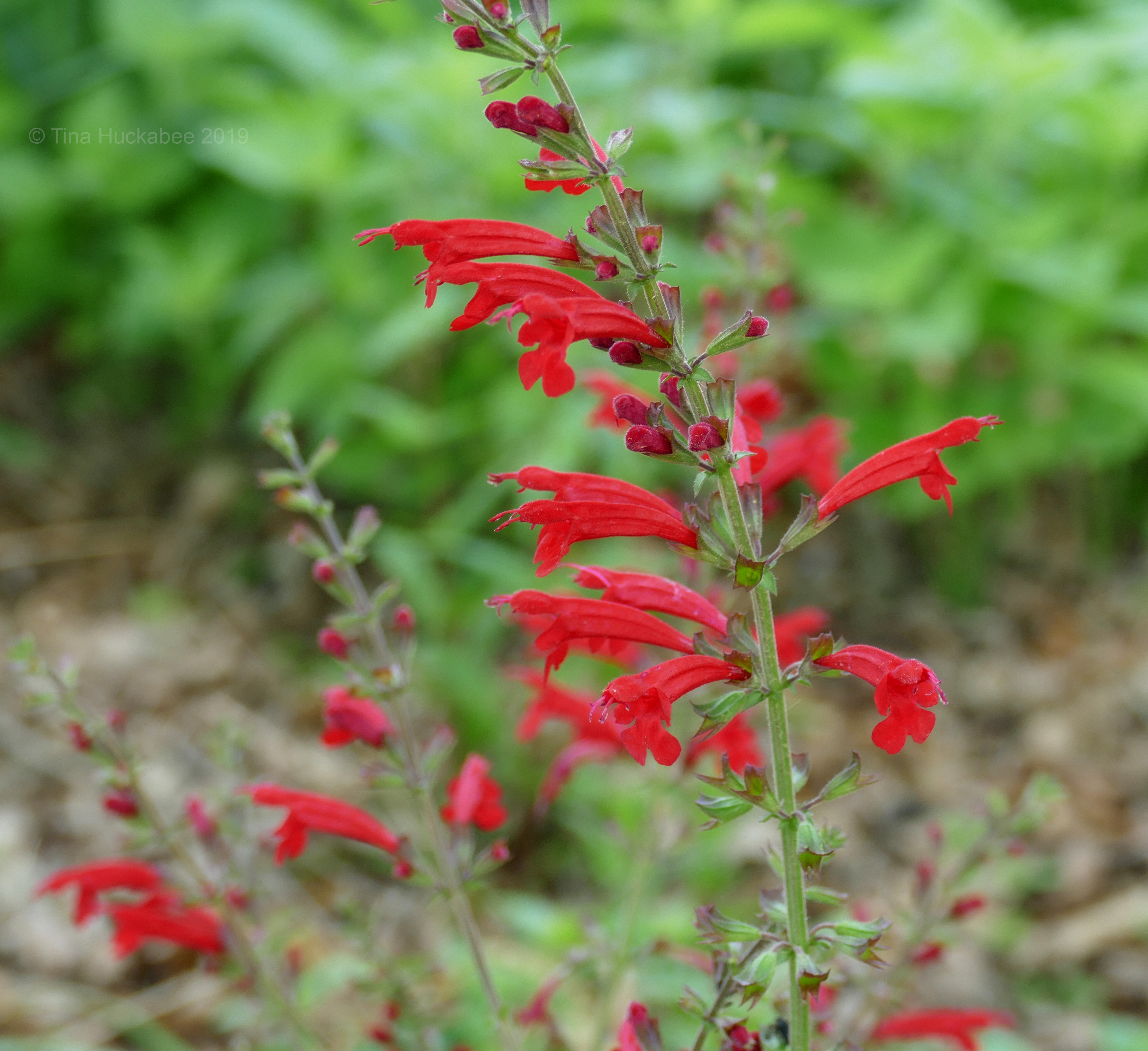
As the poppies are showing off in sunny spots, a native Texas woodland perennial, the Cedar sage, Salvia roemeriana, also rocks its red. Cedar sage are happier nearer to the ground and they bloom in shady parts of the garden.
There’s some vertical hot rocket red, too. Climbing up a fence, is Coral honeysuckle vine, Lonicera sempervirens, decorated with clusters of tubular crimson, with a flair of yellow. Native green metallic bees and my honeybees vie for nectar-slurping positions. If there are hummingbirds who’ve already arrived from Mexico and Central America, they’ll also buzz for these yummy blooms. But so far this spring, it’s just the insects that I’ve seen at the honeysuckle blooms.

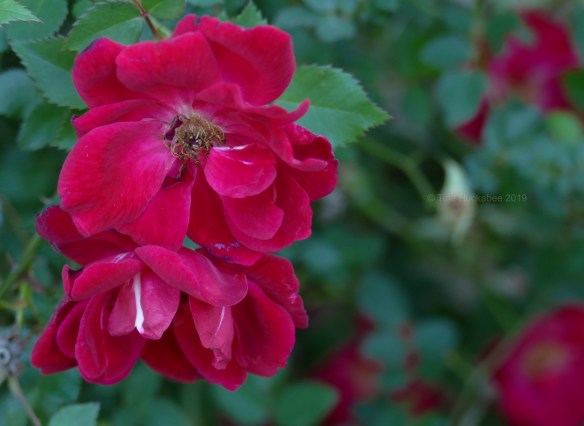
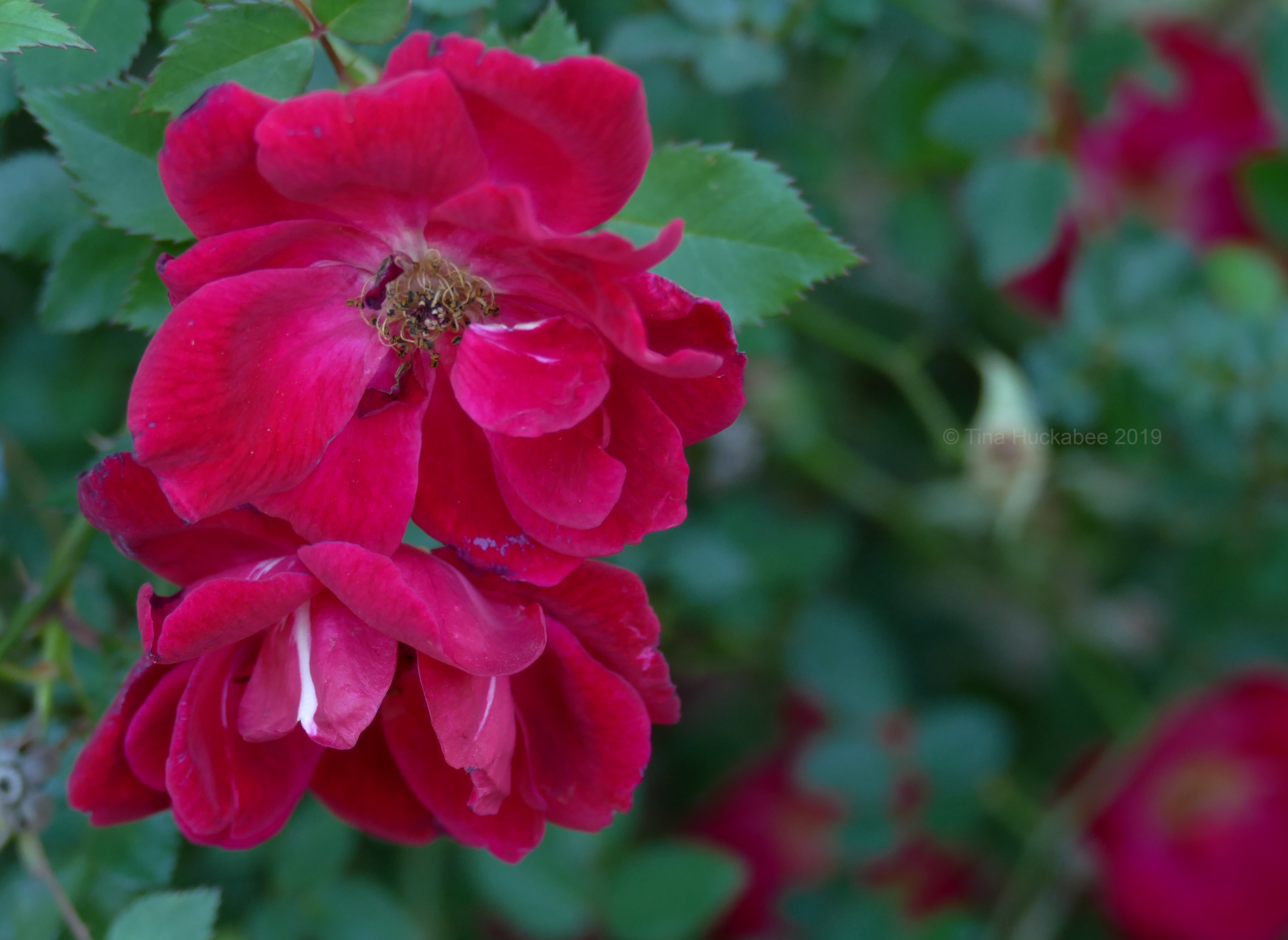
April love is like a red, red rose–or, as it happens, many Martha Gonzales roses. The two shrubs–side-by-side buddies–sparkle with red petals, rich with deep green foliage. They welcome walkers to my garden.

Fragrant blooms, each with a dash of bright white, are dramatic foils to the more delicate spring blooms.
Okay, it’s a cheat, but this Texas Beargrass, Nolina texana, sits blooming in a red pot. The bloom stalk is akin to the April pale pinks, but the pot is hot.

Soft and pastel, or loud and hot–blooms are boss and you can see more beautiful blooms by checking out May Dreams Gardens and her Garden Bloggers’ Bloom Day.
Happy April blooms!





 My Gardener Says...