May Flowers

May flowers–it’s such a cliché–but one that I’m going to embrace on this balmy May bloom day. The pinks in my garden seem to be front and center at the moment. Dusty  pink blooms of this Red yucca,  Hesperaloe parviflora, pop against a backdrop of Soft-leaf yucca foliage.

IMGP7879.new

While the blooms adorning a different Red yucca bloom stalk flash a bit of yellow–just enough to keep things interesting.

IMGP7891.new

With abundant rain, the Rock rosePavonia lasiopetala, is flushed full of foliage growth, but the few first blooms are opening up,

IMGP7889.new

…and many more will follow during the long growing season.  In truth, this is a plant that is floriferous in moderate drought; lots of rain produces lots of leaves, but fewer blooms. No matter, our summers are reliably dry and the multitudes of Barbie-pink blooms will turn heads as they open early in the morning, close by mid-day,  throughout the long summer.

IMGP7880.new

The pollinators and the gardener will enjoy the on-n-off bloom cycles of this hardy, small shrub well into October.

Purple coneflower,  Echinacea purpurea (which look pink to me) are in full spring show.
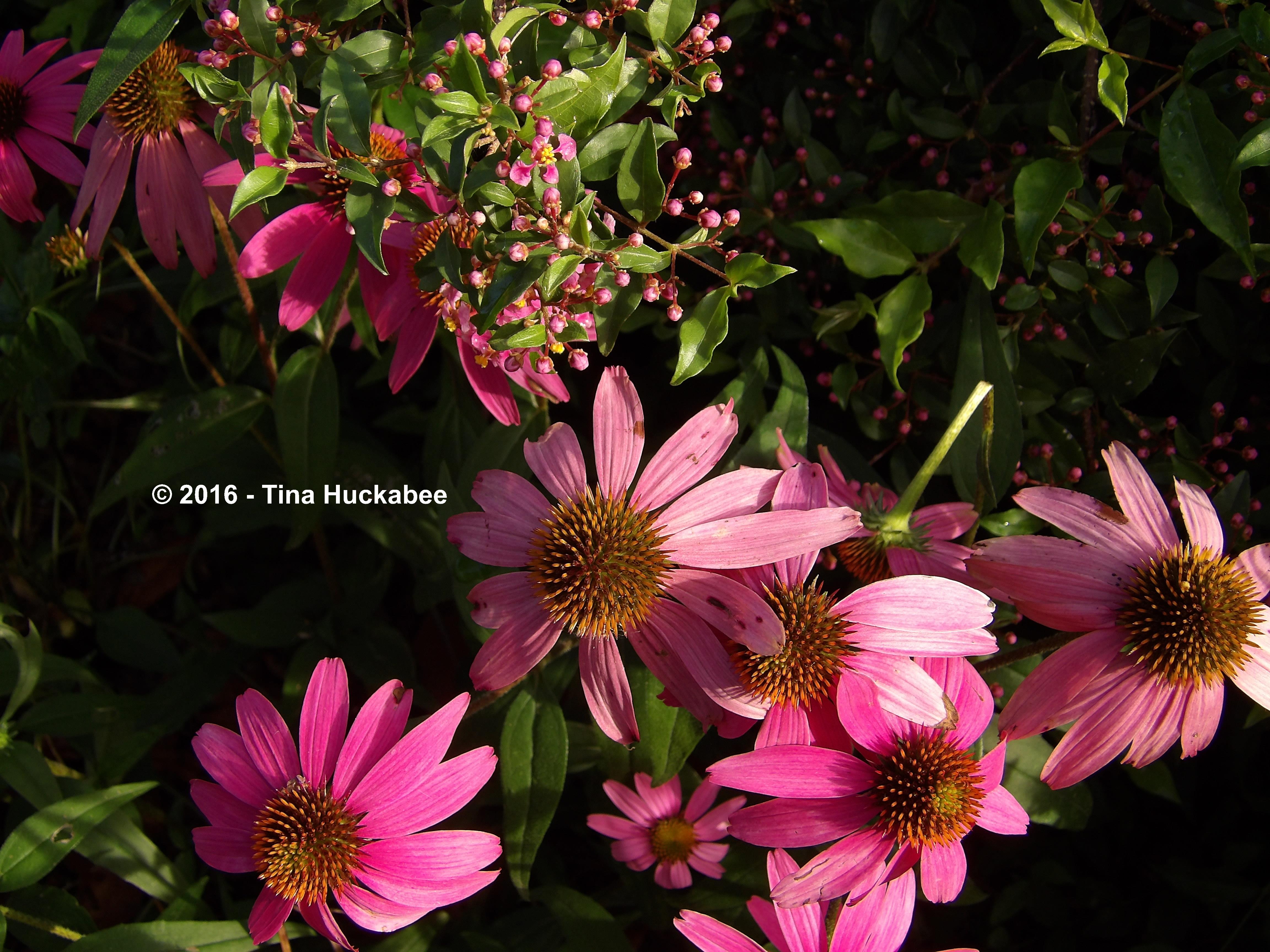
IMGP7888.new

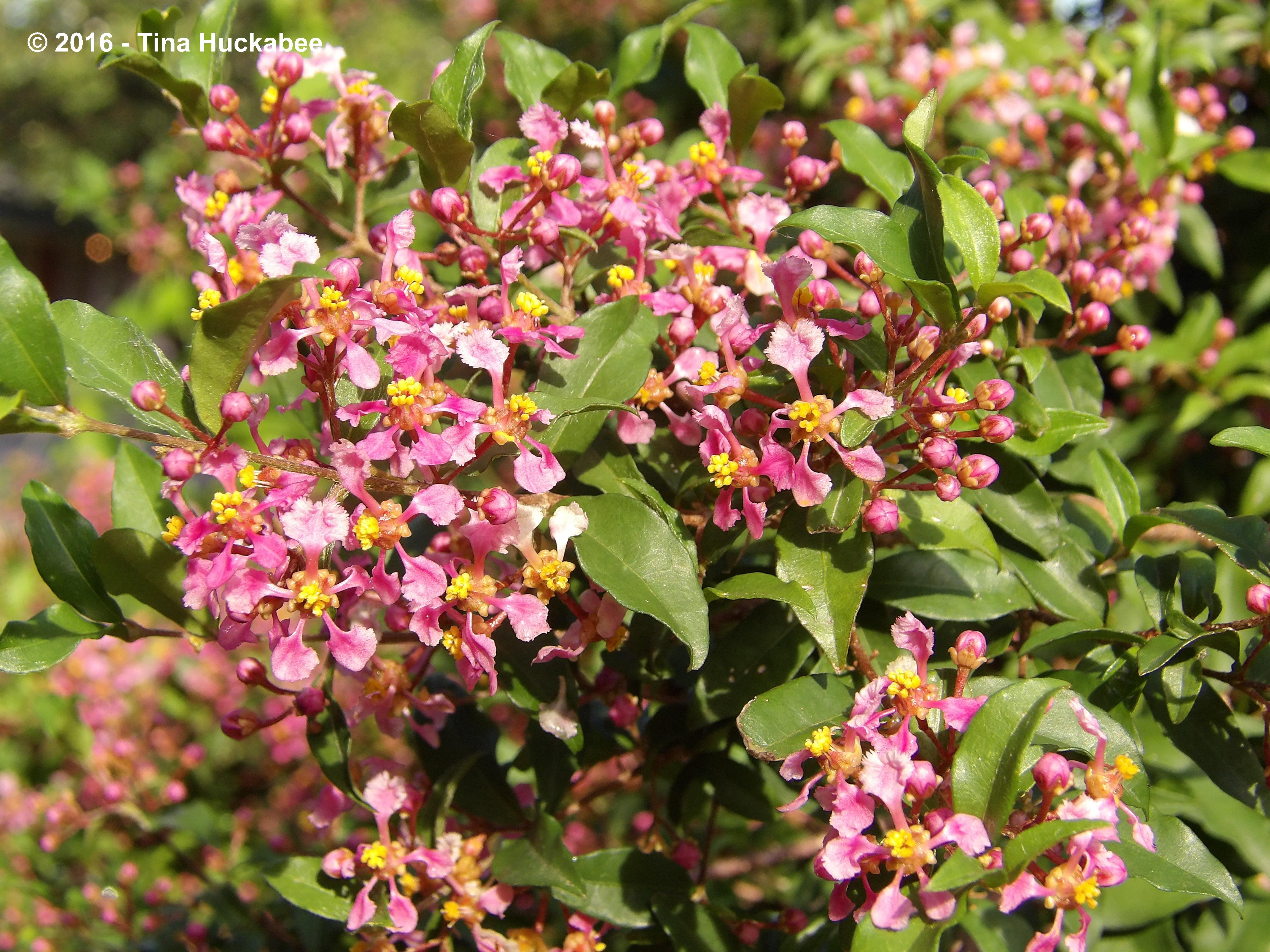
And the large shrub, Barbados Cherry,  Malpighia glabra, is blasting the garden with its clustered version of the pink and yellow combo.
IMGP7887.new

Additionally,  the Barbados Cherry blooms fill the air with a lovely fragrance.   You can’t smell the blooms while reading this post, but the fragrance is special–a May garden delight.

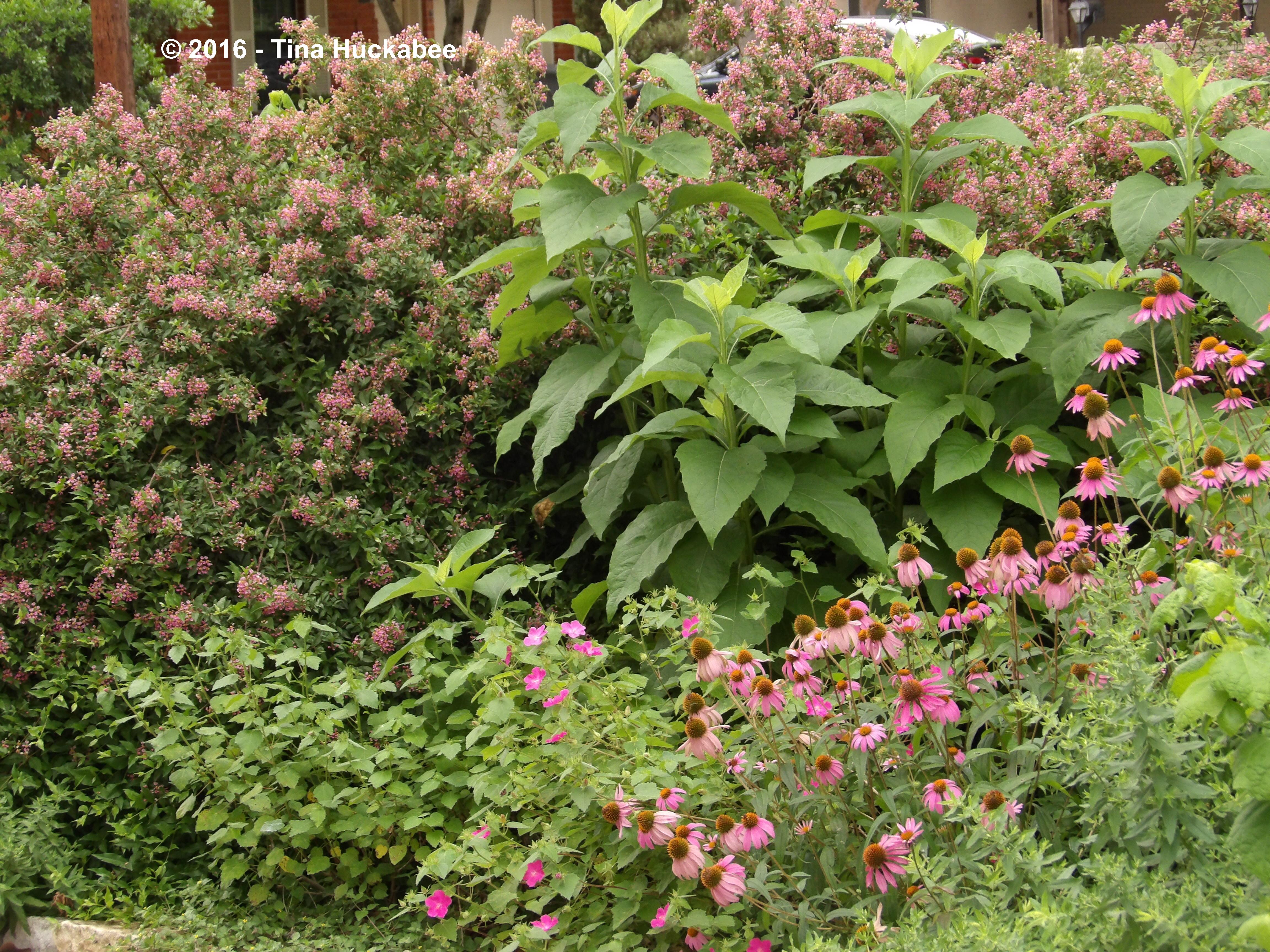
Barbados Cherry and Purple coneflower are pink pals in the garden.
IMGP7917.new

Pink does not rule all of my garden though.  The yellow (Aquilegia chrysantha) and yellow-red (Aquilegia canadensis) Columbines are on their way out, having bloomed since late February.  However, they’re still producing for the pollinators, with some energy set aside for future seed production.

IMGP7884.new

Columbines soldier on as spring wanes and the temperatures warm. A cool season plant here in zone 8b, I miss Columbines when they’re done, but always enjoy their fairy-like, shooting-star charm in the cool spring garden.

Heartleaf Skullcap,  Scutellaria ovata, is filling the back garden with drifts of grey and blue.

IMGP7864.new

IMGP7896.new

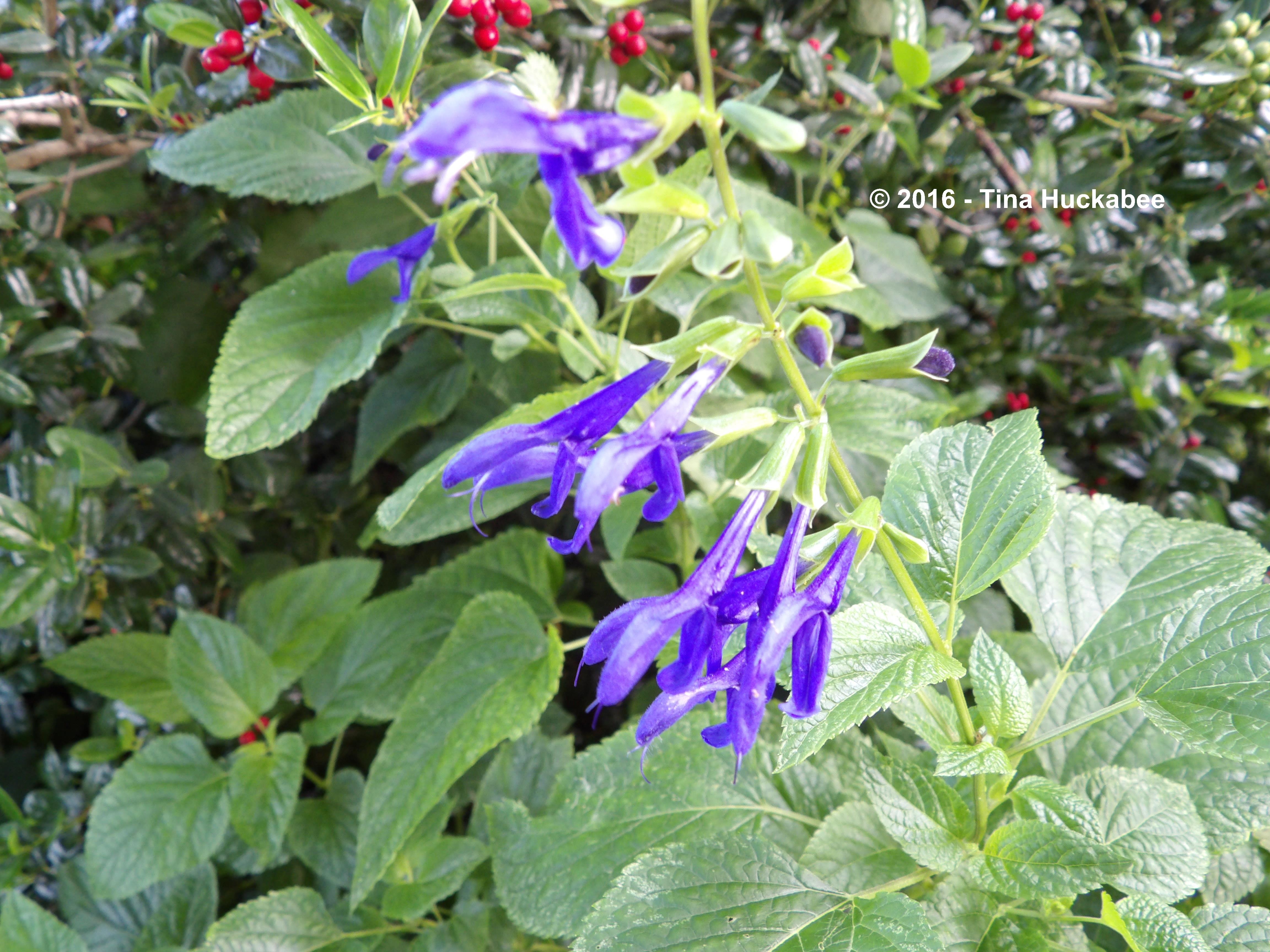
While Majestic SageSalvia guaranitica, is truly grand in the royal blue it wears.
IMGP7885.new

Finally, the creamy blooms of Twistleaf yuccaYucca rupicola, have made their once-per-year appearance in the front garden.  Poised atop the tall (5 foot) stalk, they beckon to native and honeybees to sip and gather from their floral bounty.

IMGP7881.new

Once the blooms are done, I’ll trim the stalk–maybe drying it for further use as a stake for some wayward plant later in the year.   The foliage is handsome, year-round, lending structure and evergreen sturdiness to the garden.

IMGP7882_cropped_4000x3272..new

Somehow, I managed to choose photos of all these blooms with not a single pollinator in sight.  Pollinators are in the garden and in abundance–nectaring and pollinating, even if I didn’t capture that particular beauty in this round of photos!

Fortunate to live where May blooms are plentiful,  I thank Carol at May Dreams Garden for hosting this monthly bloom frenzy known as Garden Bloggers’ Bloom Day.  Join in, share your garden pretties, then click over to her lovely blog to see and learn about blooms from many places.

Strings of Pearls

The toads were late to the garden party this spring but they’ve finally arrived and are croaking, mating, laying eggs–and filling their niche in the garden environment.
IMGP7518.new
I always think of the gelatinous strings of toad eggs as amphibian strings of pearls–and hopefully that mental image doesn’t put anyone off of wearing the real things. The Gulf Coast Toad or Coastal Plain Toad , Ollotis nebulifer (Bufo valliceps), is the likely species that laid these eggs-in-goo and soon there will be more toads for the croaking, mating, and egg laying. No doubt, some of the toads will make yummy meals for the resident Eastern Screech Owl, Megascops asio, parents and their 5 offspring.

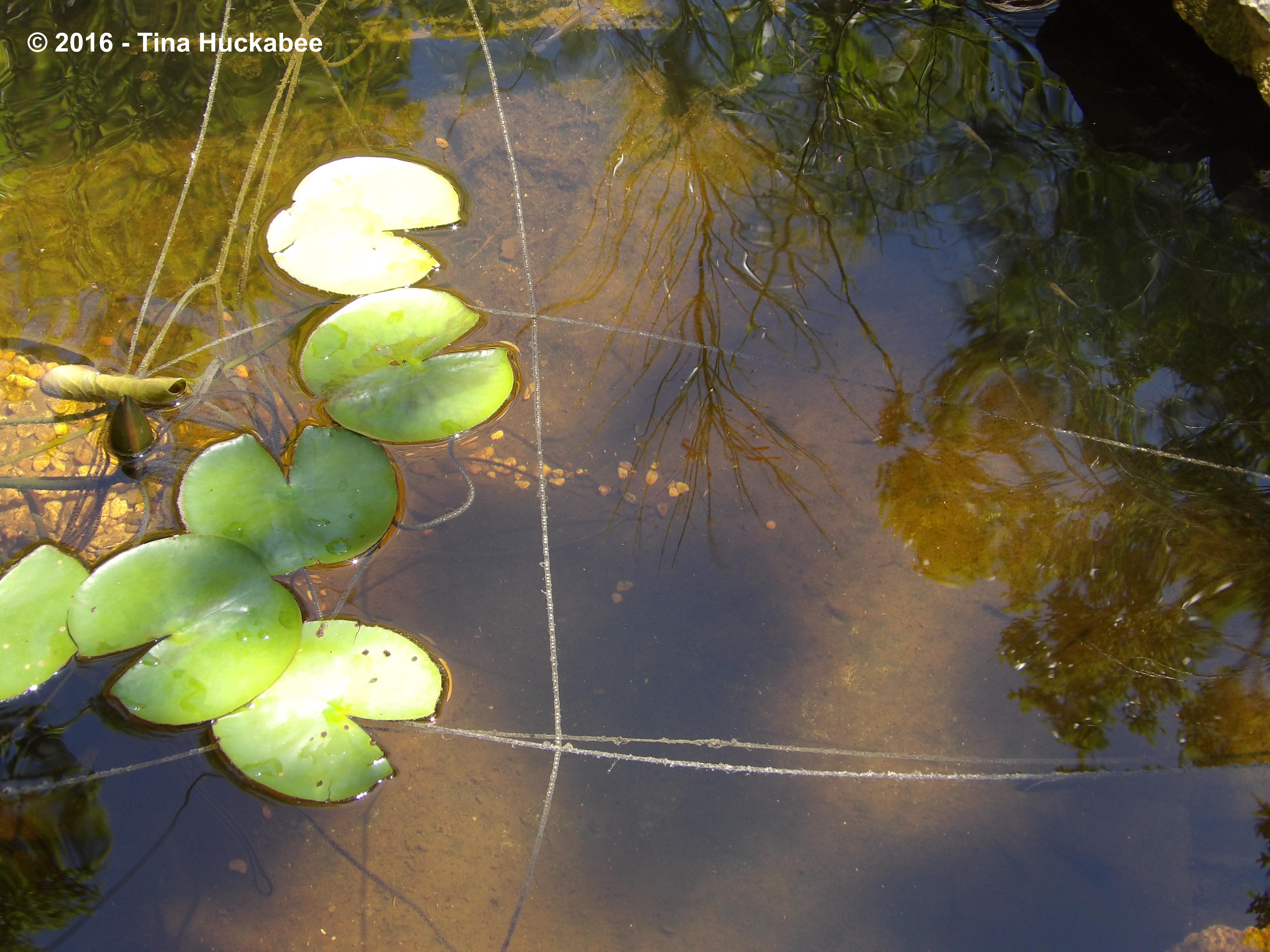
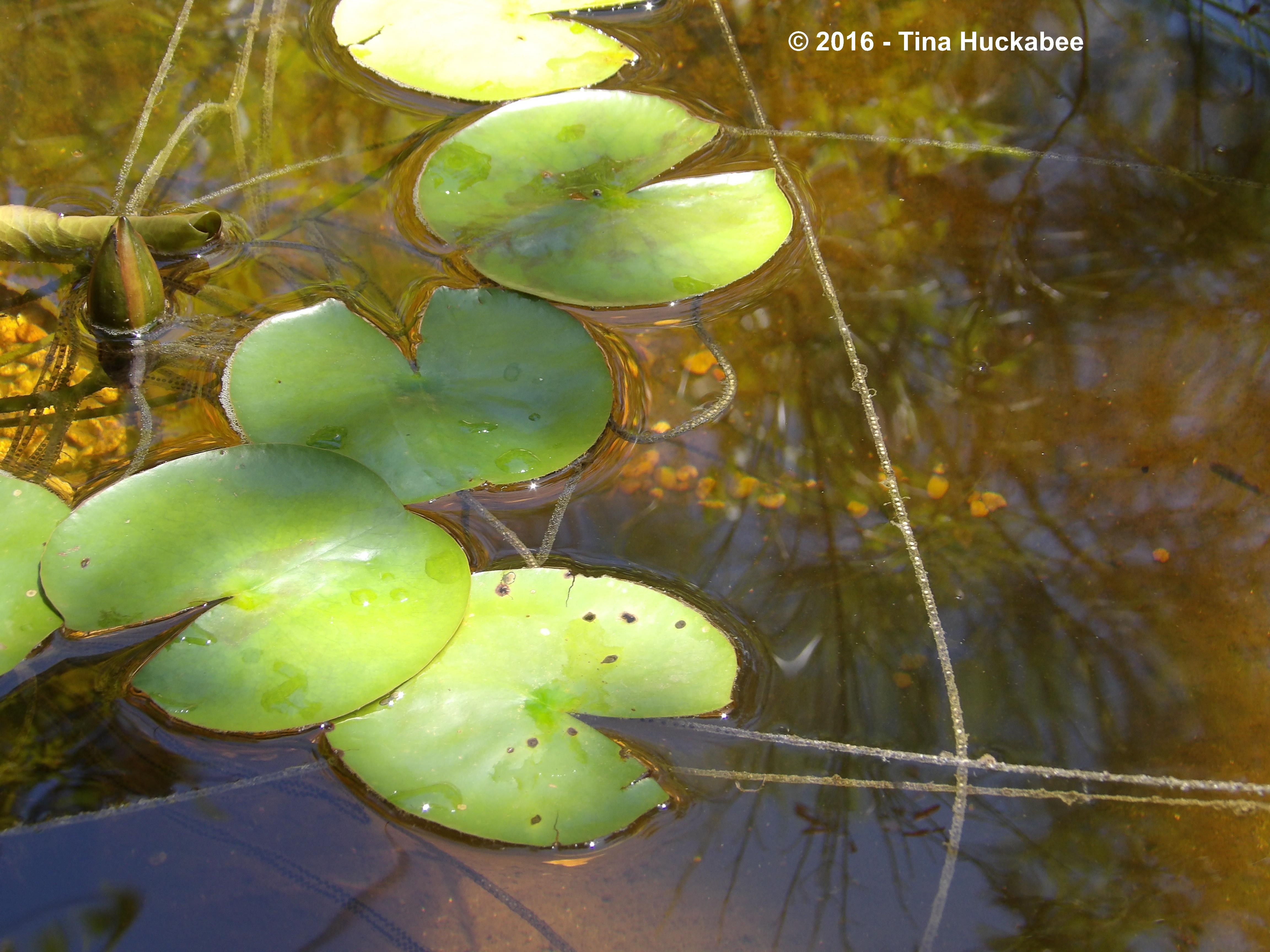
Along with toad eggs and fish, the pond hosts some handsome and varied foliage. I separated the ‘Colorado’ and ‘Claude Ikins’ waterlilies last month; both have since bloomed and very soon, will put on a rapid growth of lily pads, enough to cover about 75% of the pond surface by early summer.
IMGP7516.new
The pads serve as landing strips for bees and dragon/damsel flies, and occasionally butterflies. More importantly, the pads keep the water temperature even during the summer months, as well as cover and protect the fish as they swim underneath the pads.
IMGP7517.new
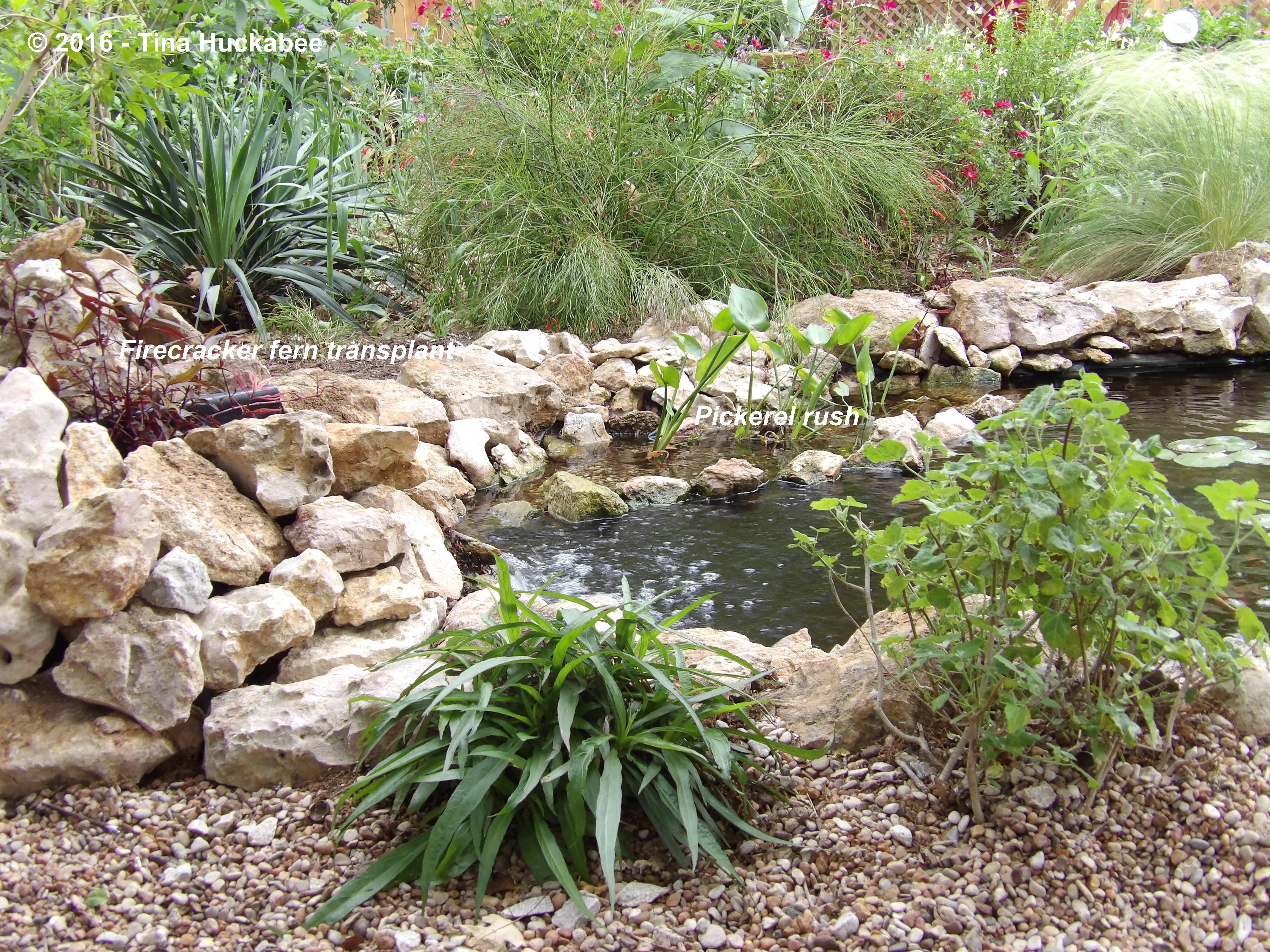
I also separated the Texas native Pickerel Rush, Pontederia cordata which grows in the bog.
IMGP7352.new
IMGP7349.new
The open, moving water has given the birds, especially the little warblers and finches, a fun place to bathe. Every year, I promise myself that I’ll keep this assertively growing plant from filling in the bog–and every year I fail in achieving that goal. So this year is THE year: I’ll save some space in the bog for the birds to bathe–I’ll consciously weed out the Pickerel rush, even if it’s a weekly chore, so the birds can bathe in moving water.

Says me!

Another lovely and important pond foliage plant requiring yearly separation is the Ruby Red Runner, an Alternanthera hybrid that grows in the waterfall feature. Like the Pickerel rush, Ruby Red Runner serves as a biological filter for the pond.
IMGP7525.new
Ruby Red Runner grows vigorously, sprawling all over the edges of the pond as the weather warms and the days lengthen.

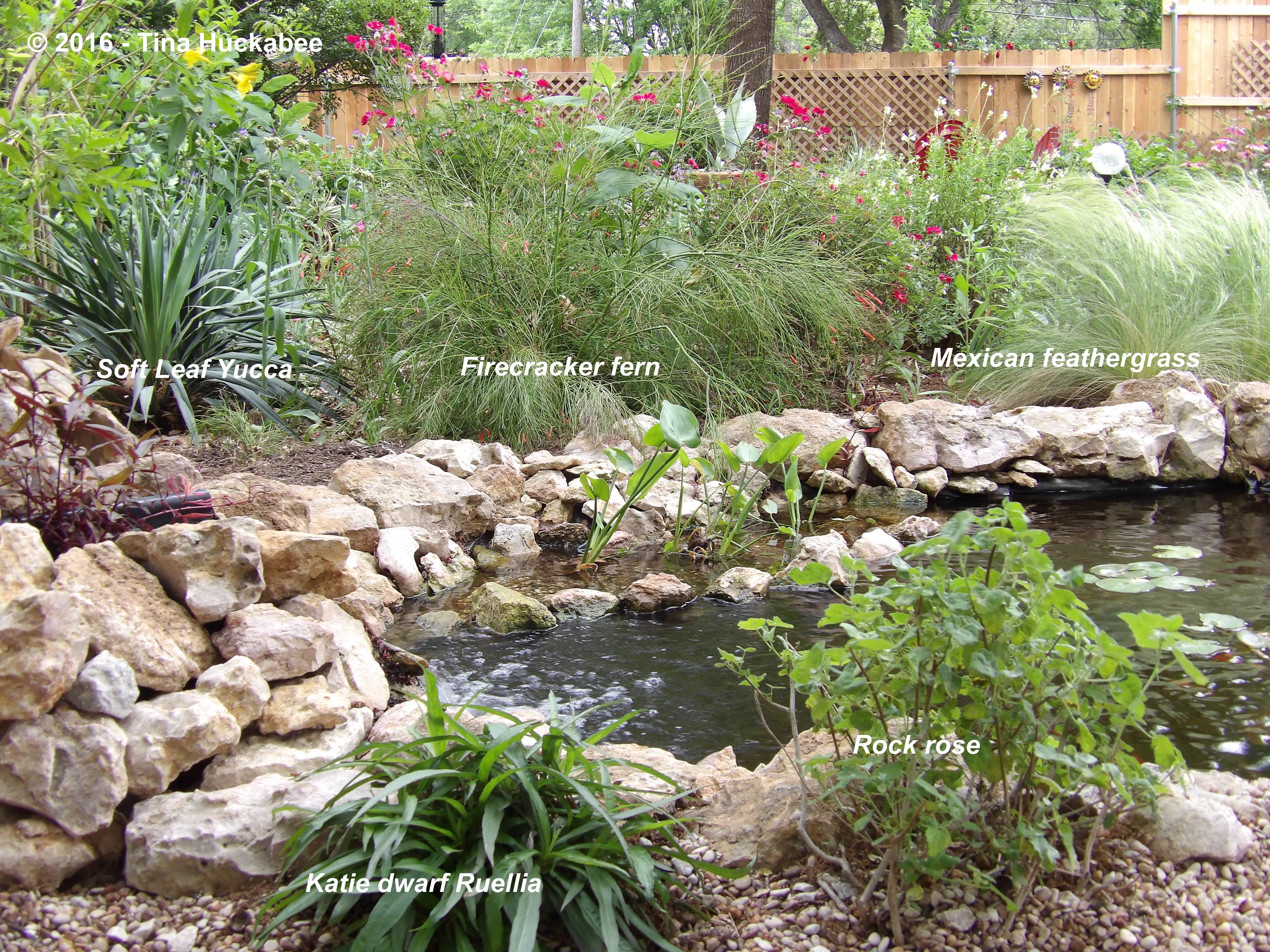
Taking in a wider view, I’m happy with the perennials which frame the pond.
IMGP7179.new
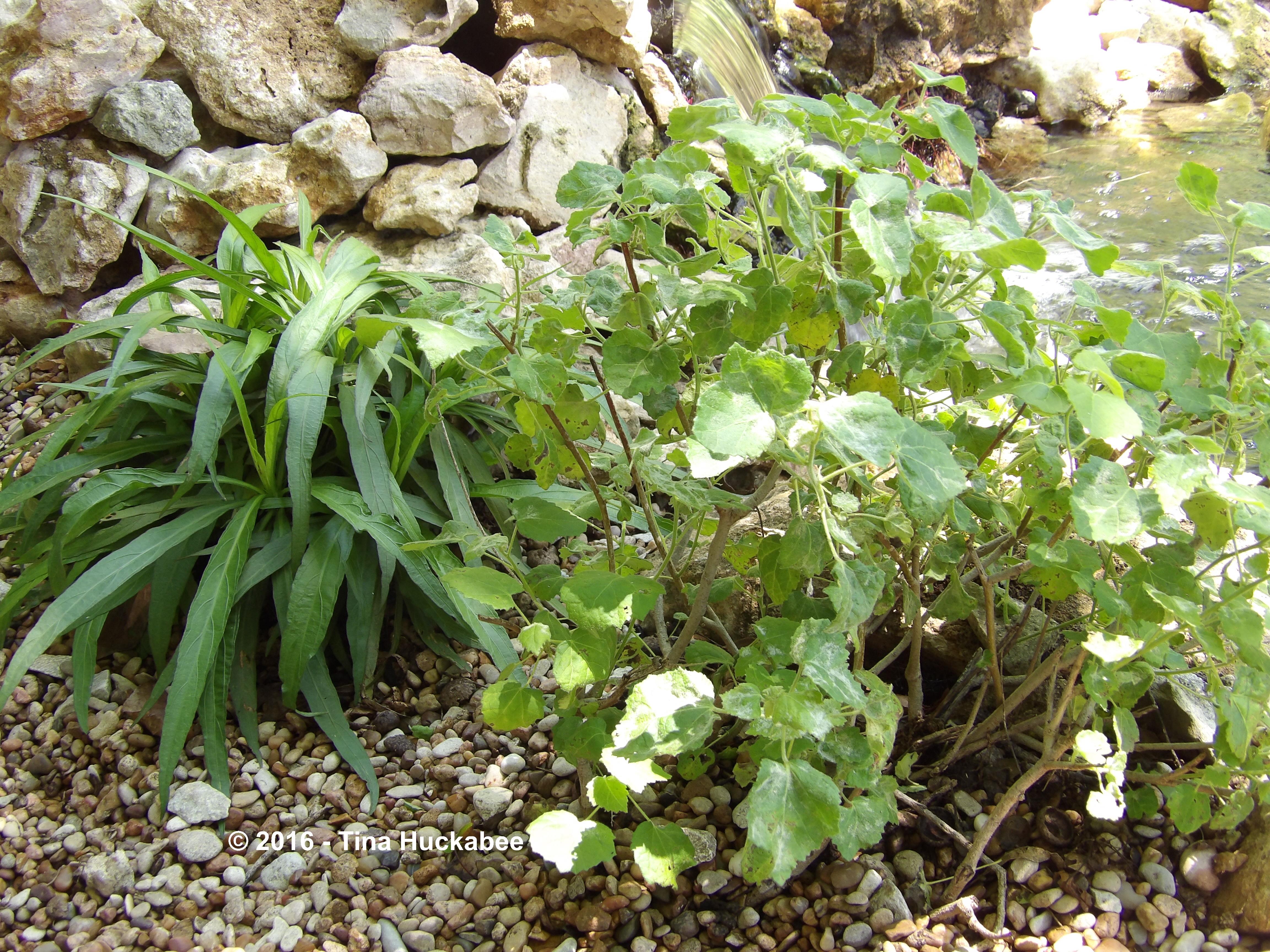
Across the pond from the perennial garden, is a pea gravel sitting area and pathway. A Katie dwarf Ruellia, Ruellia brittoniana ‘Katie’, and a Rock rose, Pavonia lasiopetala, volunteered themselves for this spot and fit well beside the pond.

IMGP7524.new

These two neighbors sport opposite leaf types: ‘Katie’ is lance-like and deciduous and Rock rose is oval, scalloped, and semi-evergreen.


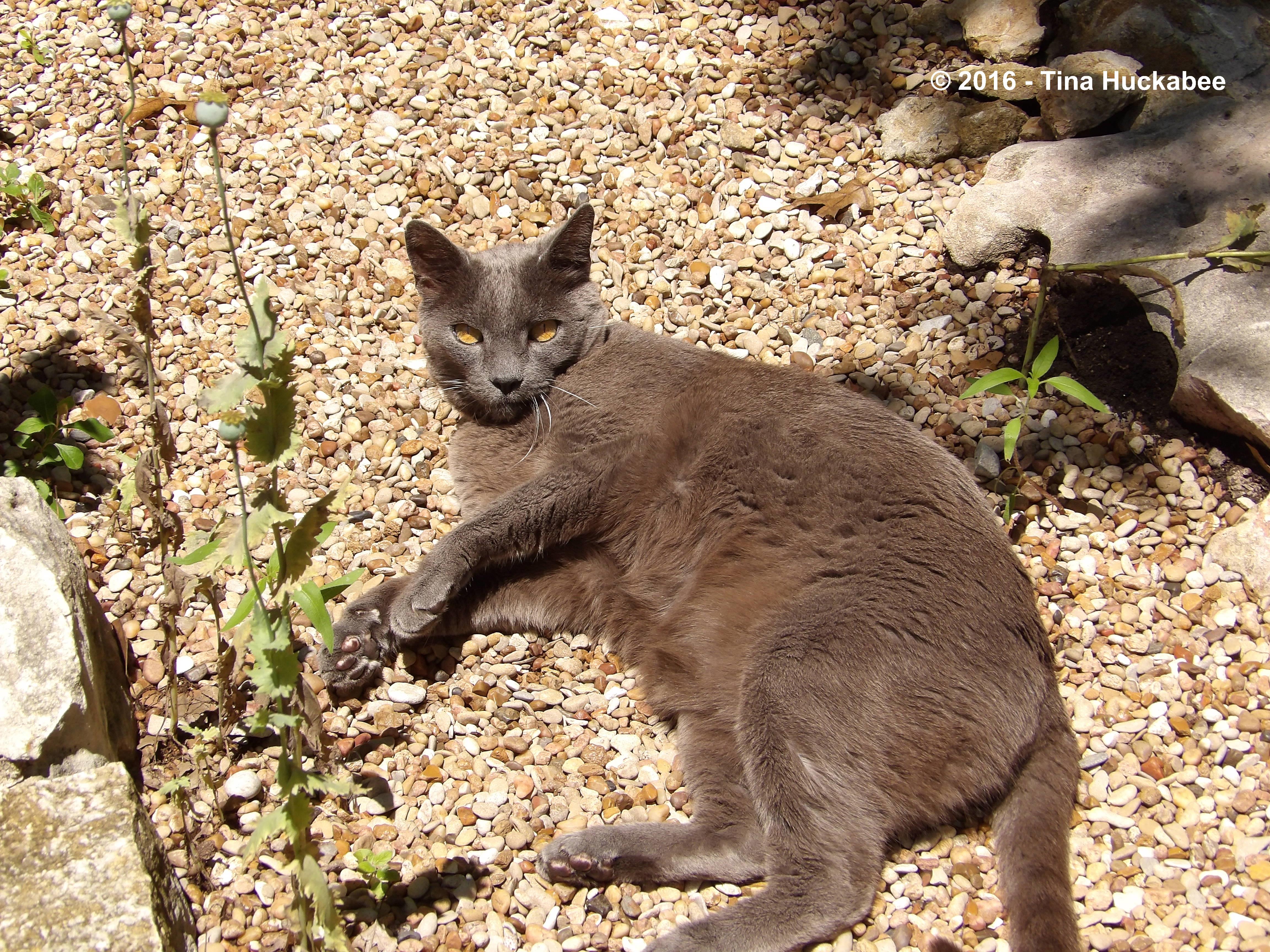
Nuri the Cat is comfy as he lies on the warmth of the pea gravel. Lazy cat.
IMGP7532.new

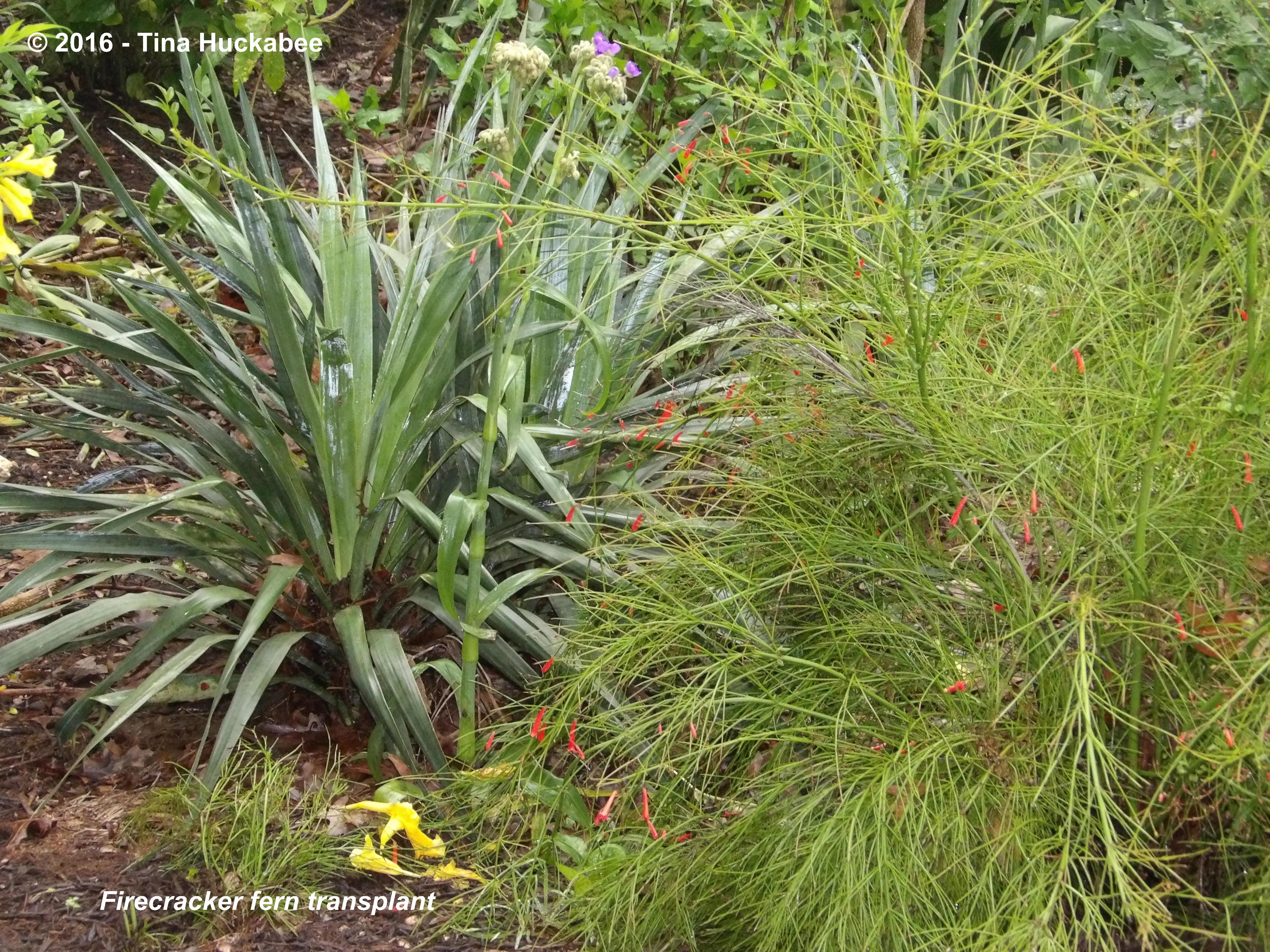
The evergreen Soft Leaf Yucca, Yucca recurvifolia, is a pup from the original, now-deceased mother plant. Just in front of the yucca, I recently transplanted some Firecracker fern, Russelia equisetiformis, that rooted out from the mother plant, to its right in the photo.
IMGP7355.new

It’ll be a couple of years before the transplanted Firecracker fern reaches maturity, but I think these two arching perennials paired side–by-side will be a nice addition to the garden and the pond.

IMGP7180.new.new
The mature Firecracker fern bloomed all winter during our non-winter winter, but is in a resting cycle now. The blooms of this plant are show-stoppers, but the foliage is also special: cheery, spring-green coloring pairs with graceful, arching stems and slender, elegant foliage.

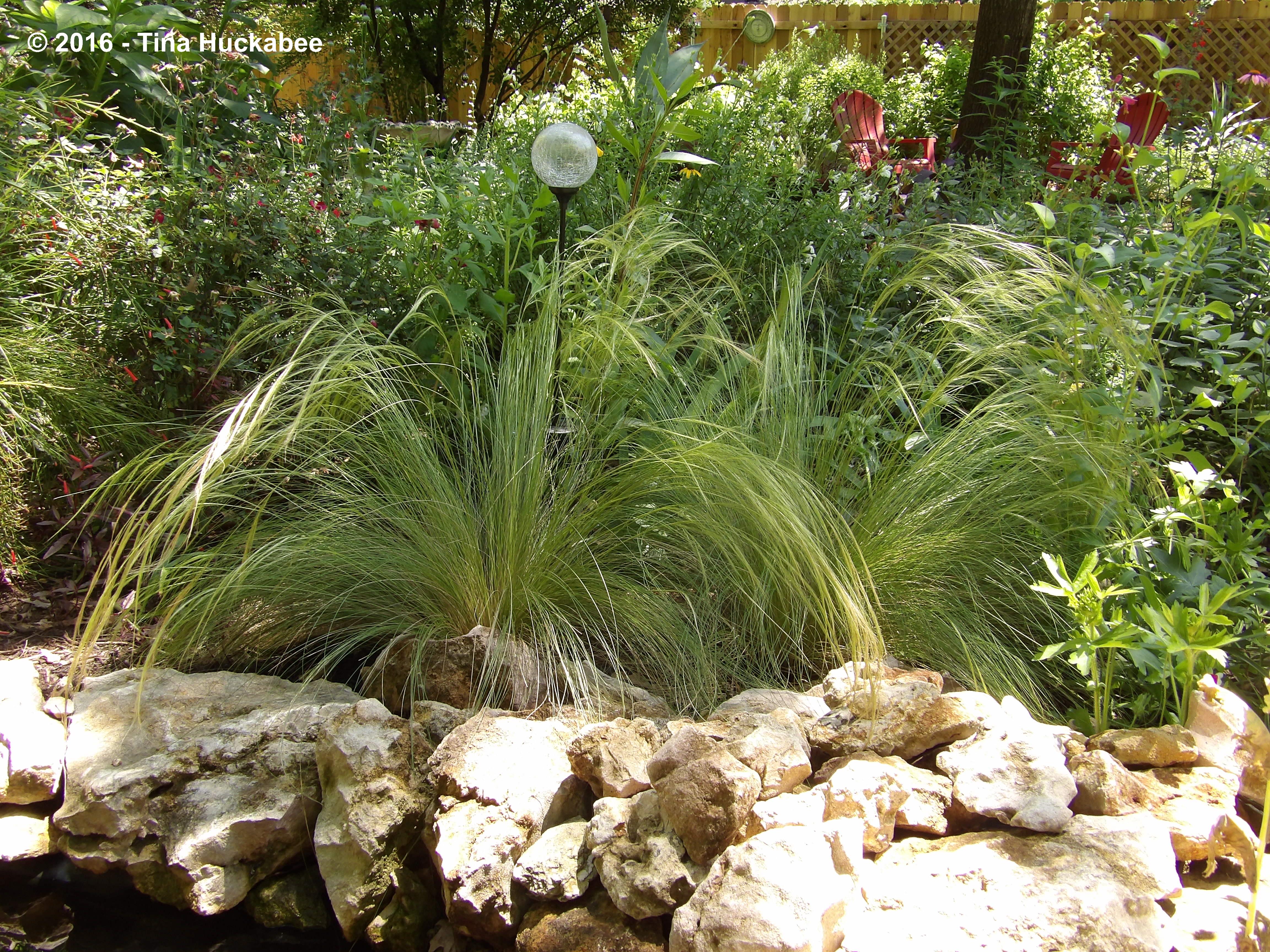
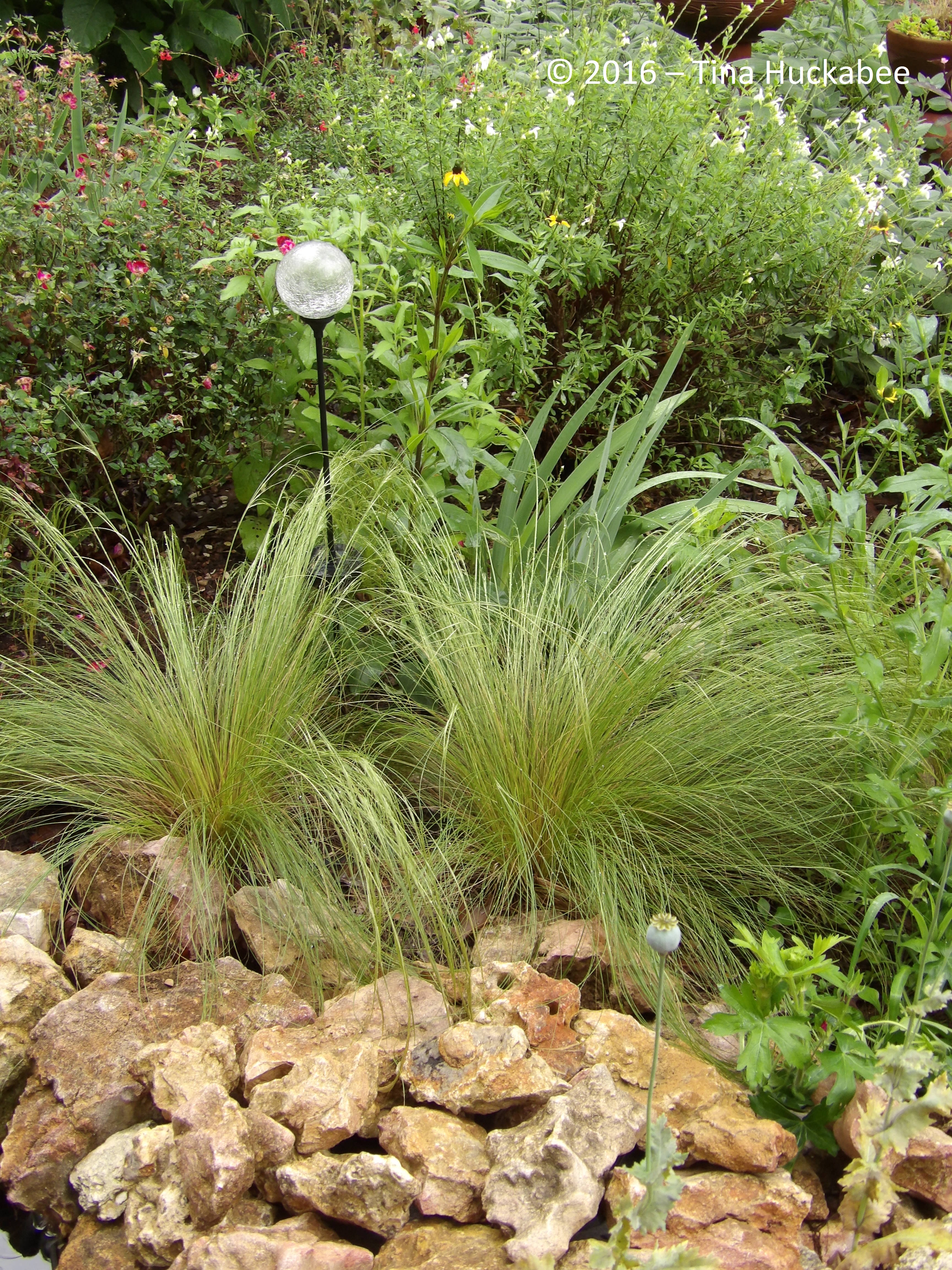
Mexican feathergrass, Nassella tenuisima–soft and silvery all year–is stunning in spring glory.
IMGP7519.new

Behind the Mexican feathergrass, from left to right, is Martha Gonzalez rose, white blooming Autumn Sage (Salvia greggii), Iris, and Blackeyed Susan (Rudbeckia hirta var. pulcherrima)

IMGP7360.new


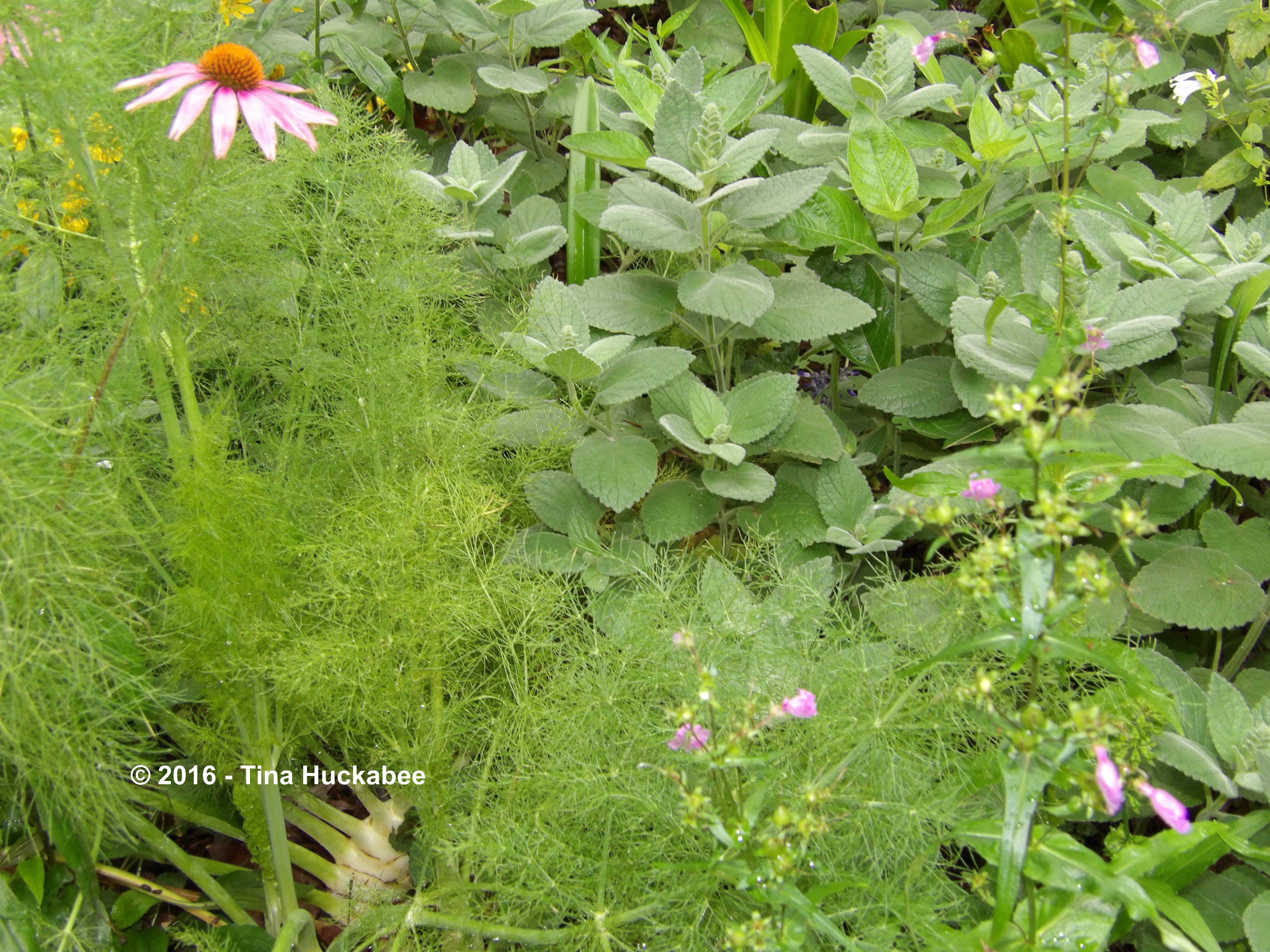
In the perennial bed bordering a different curve of the pond, a feathery, bright green fennel (planted for butterfly larvae), combines with grey-green Heartleaf skullcapScutellaria ovata. I guess it’s true that opposites attract.

IMGP7347.new

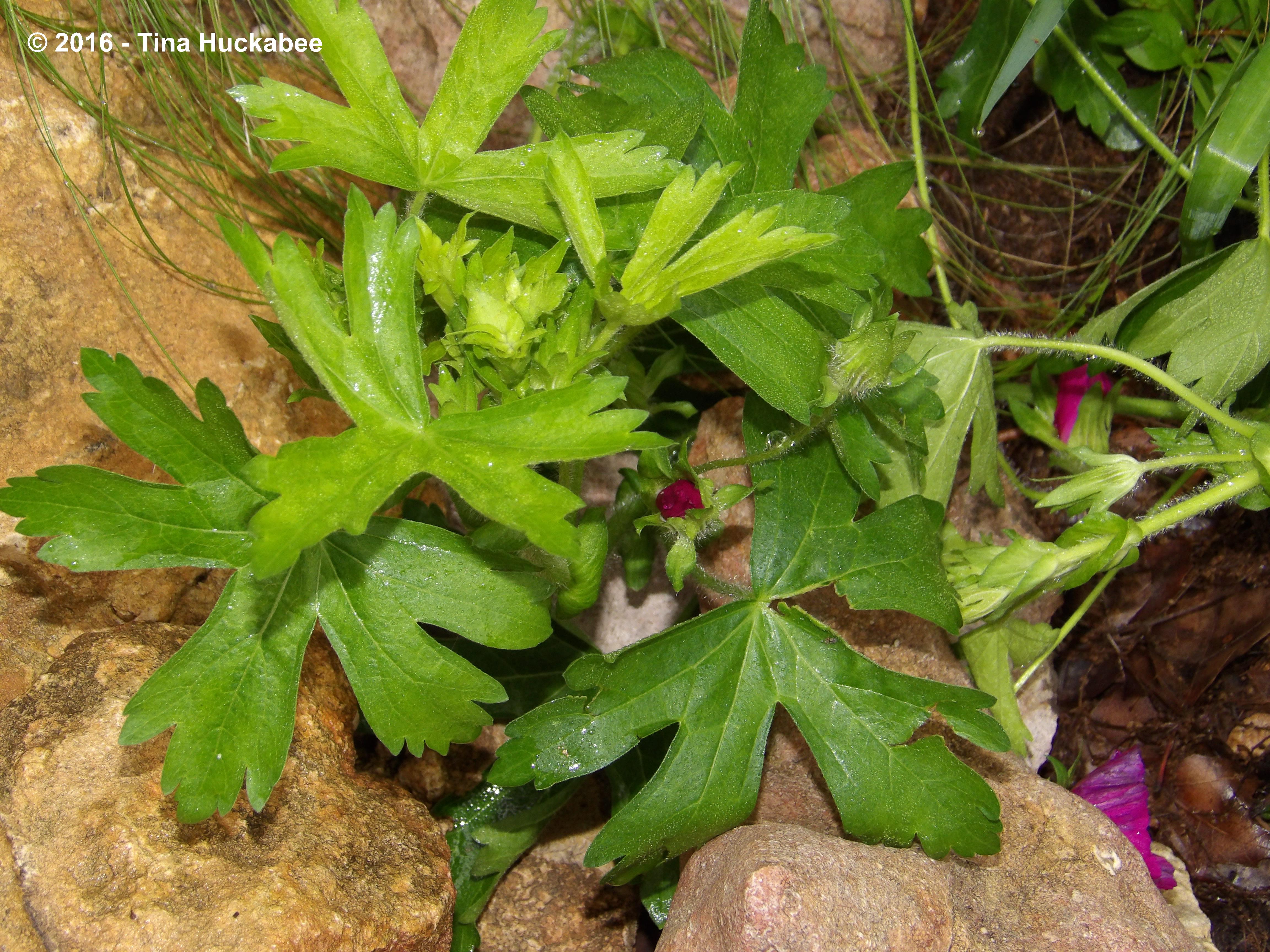
Nearby, Winecup, Callirhoe involucrata, clamors over the limestone rocks bordering the pond.
IMGP7359.new
Individual leaves of Winecup are lobed and hairy. Winecup grows as a ground-cover and spreads about 3 feet wide during the bloom season, which is beginning.
IMGP7528.new

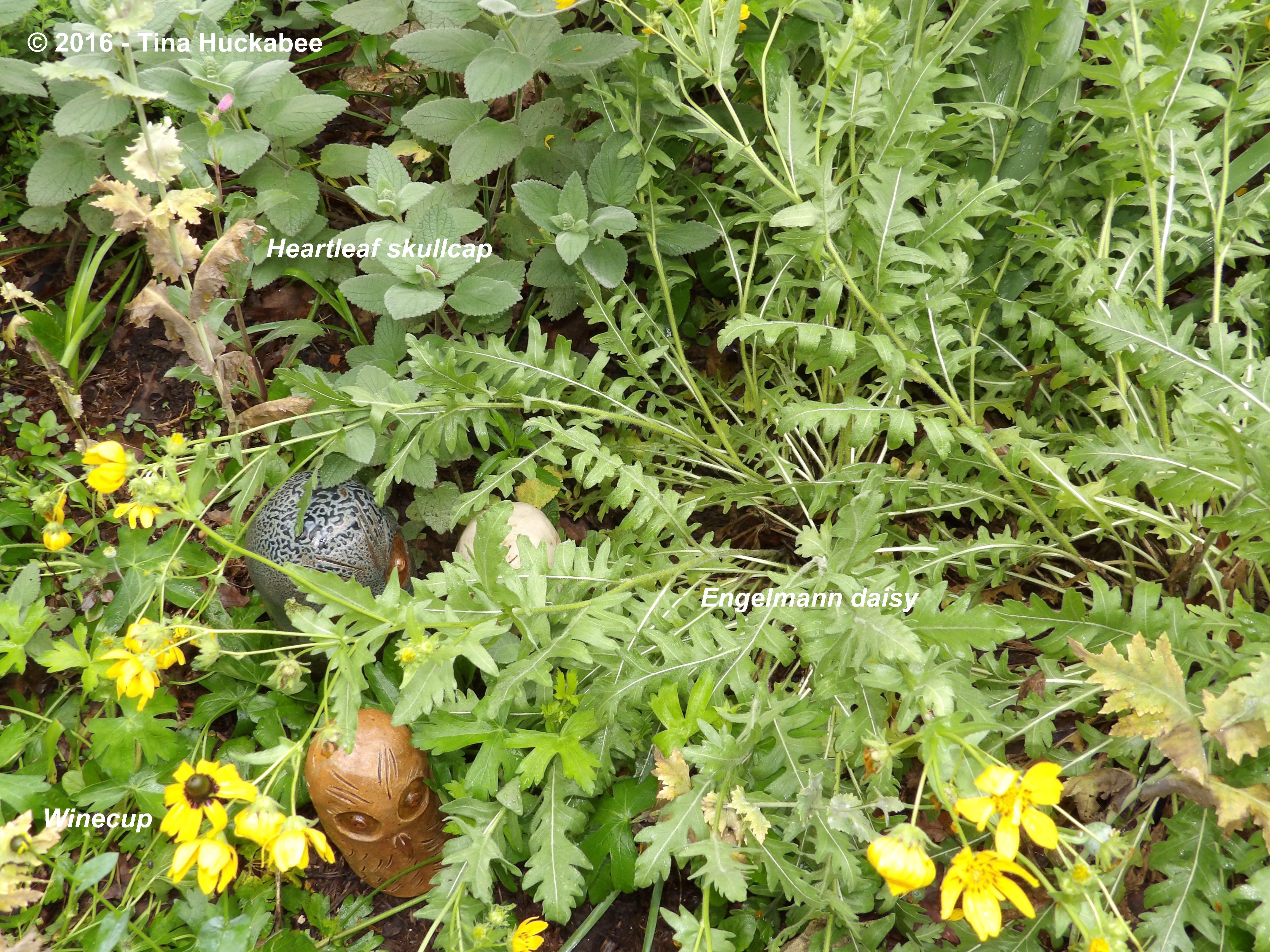
Engelmann Daisy, Engelmannia peristenia, bursts with flowers next to more Heartleaf skullcap.

IMGP7362.new

The two flowering yellows are Blackeyed Susan ( left) and Engelmann daisy (right).

Like the Winecup, the foliage of the Engelmann daisy is deeply lobed–another common name for this spring/summer daisy is Cutleaf daisy. Engelmann daisy is an excellent pollinator plant, the blooms attracting a large variety of native bees, flies, and butterflies.

Celebrating foliage in the April garden, many thanks to Christina and her lovely Creating my own garden of the Hesperides. Check out her Garden Bloggers’ Foliage Day for a look at foliage in many gardens, from many places.

Texas Native Plant Week–Rock Rose, Pavonia lasiopetala

In keeping with my native plants manifesto which you can read about here, I’m celebrating Texas Native Plant Week by profiling some of the native plants in my own gardens.  The information reflects what I’ve learned from the transformation of my traditional maintenance-heavy “yard” to a no-lawn, water-wise garden, featuring beautiful Texas native plants– which were the drivers and are the stars of that metamorphosis.

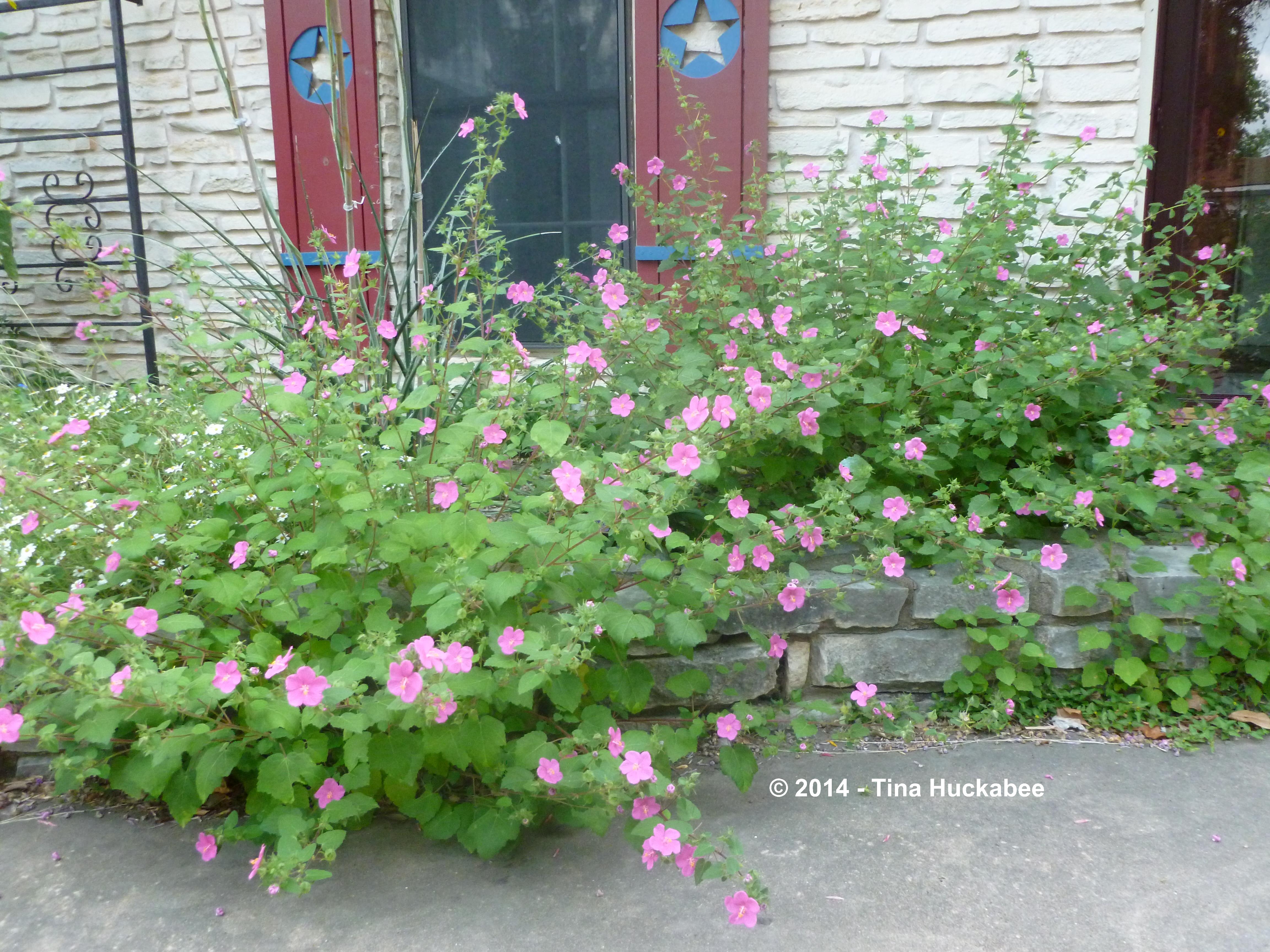
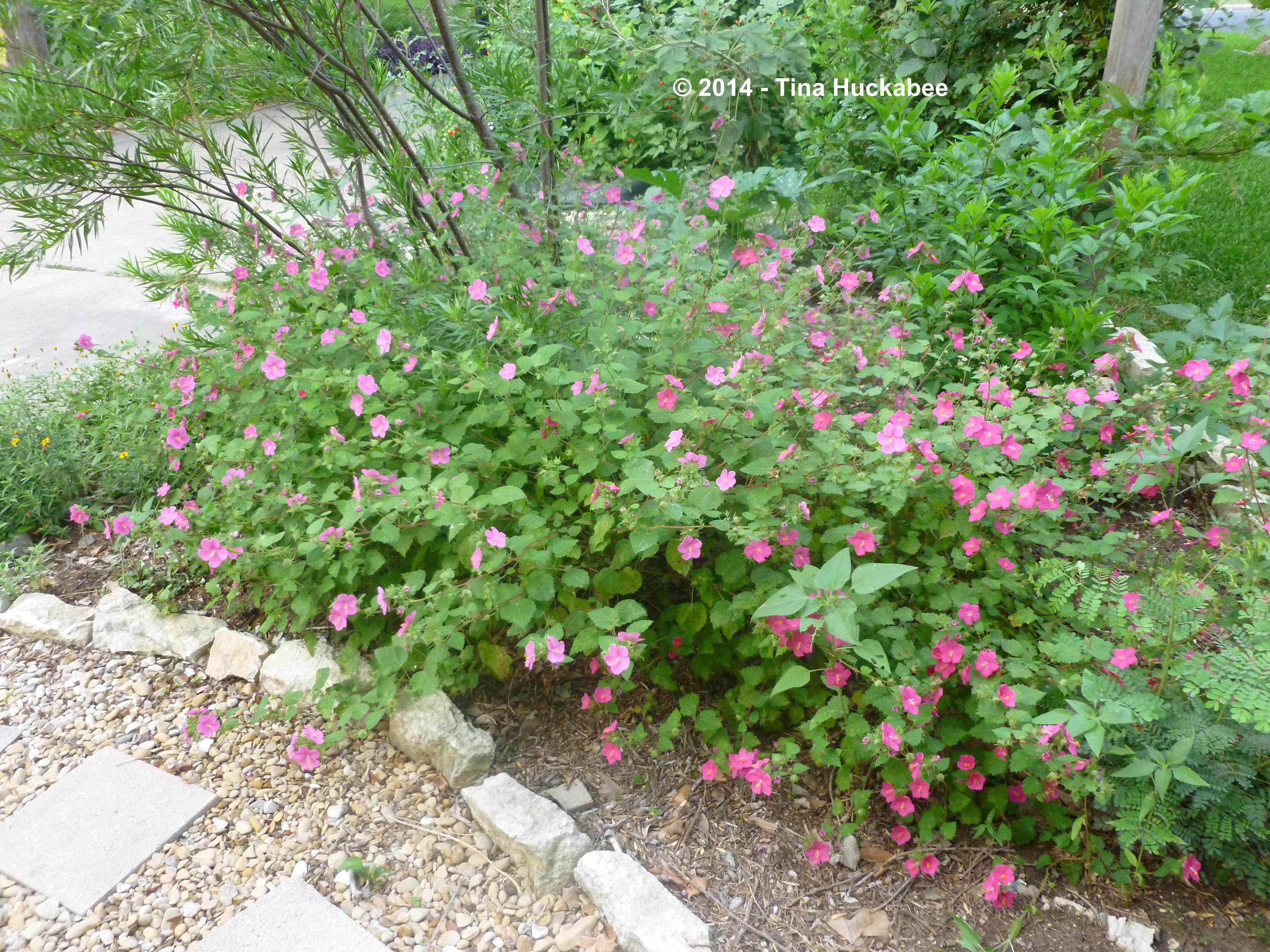
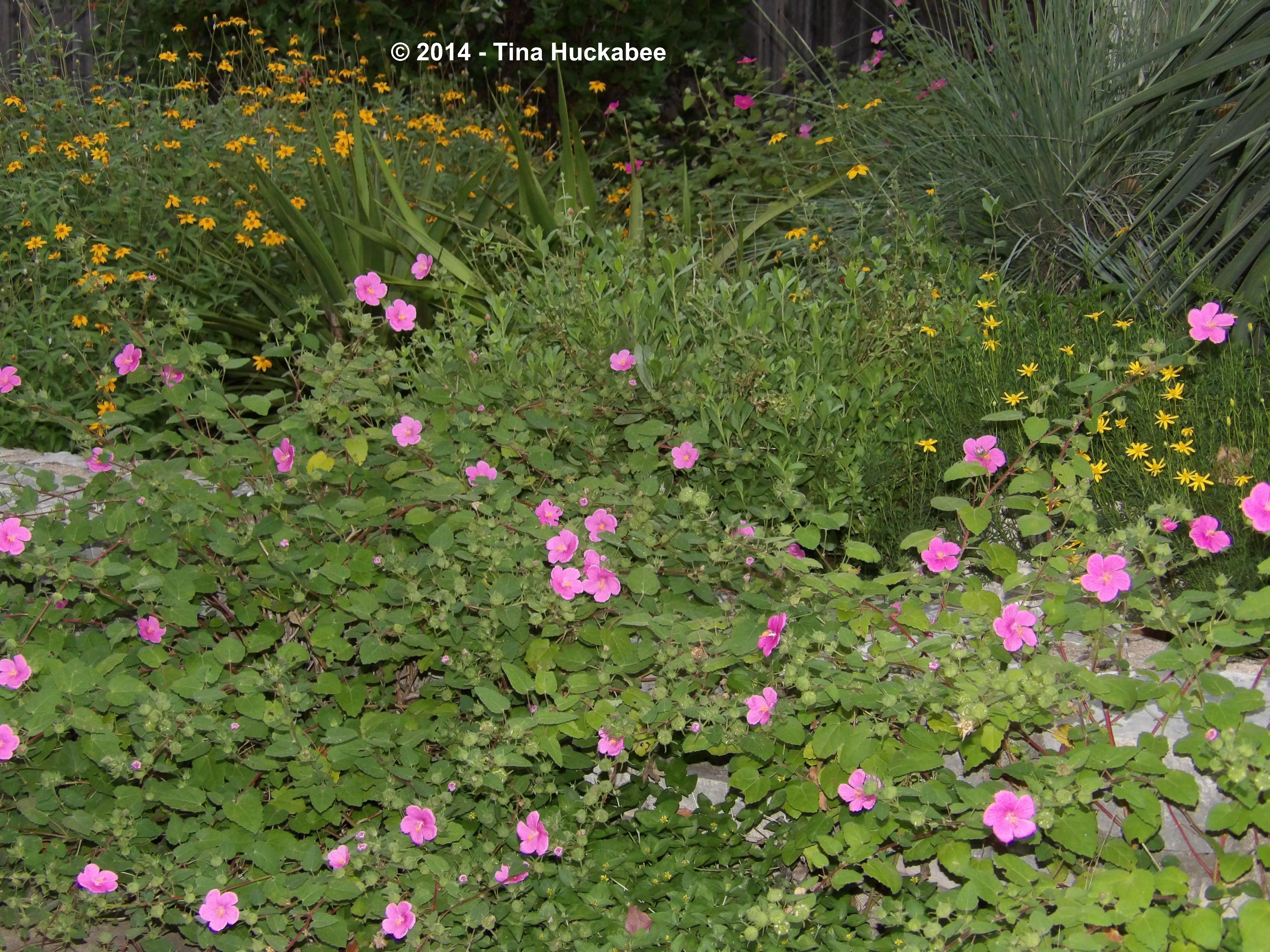
I grow lots of Rock RosePavonia lasiopetala, in my gardens.

IMGP1783.new

I say “grow”–Rock Rose grows itself and mostly, I let it.20120609_1.newThis small “evergreen” perennial  blooms late spring, throughout summer, and into fall and is a Texas tough plant.  Rock Rose flourishes in a variety of light situations, from shade, to dappled shade,

IMGP1422.new

to full sun, though it blossoms more in full sun.

IMGP1288.new

The pretty-in-pink flowers open early in the mornings and close for business by 3 or 4pm during the heat of summer.  The closing of those blooms is the plant’s response to heat and is a natural conservation measure.

IMGP1290_cropped_4299x2935..new

As cooler autumn months arrive, the blossoms will stay open until sundown.

IMGP1441.new

IMGP1450.new

Rock Rose will seed out–really seed out, so if you don’t like that, it may not be the plant for you. I simply yank up the seedlings I don’t want and give them away, compost them, or transplant them.

IMGP1933.new

Rock Rose is one of those plants that I pop in difficult situations where I’m having problems figuring out what would work; it’s a staple plant in my gardens–good in so many situations.

IMGP1426.new

Rock Rose flowers on new wood, so after bloom cycles (which start in May) you can “deadhead” or prune the stems (6-8 inches) and the plant will flush out with new growth to start the next bloom cycle.  If you object to pruning, you can let Rock Rose continue to grow and it will bloom, but slightly less because it’s placing its energy toward seed production.  If left unpruned, the branches arch over, heavy with seeds and blooms.  Rock Rose is evergreen, though not a lush evergreen–green leaves remain on the shrub during winter; the plant is more woody than green.

When I prune my Rock Rose plants, I tidy and shape them a bit,

20120609_5.new

IMGP1452.new

…but Rock Rose is loveliest in its casual form, meaning that this is a perennial you don’t want to shape too much–let Rock Rose, be Rock Rose.

IMGP1936_cropped_4050x2802..new

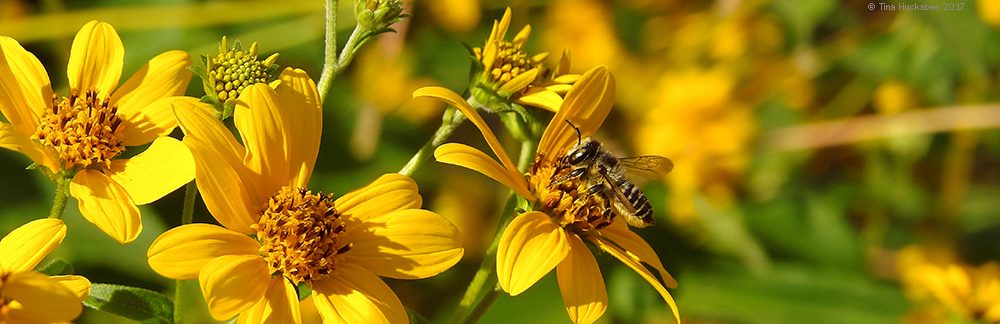
Rock Rose attracts bees, butterflies, and hummingbirds but isn’t a specific host plant to any particular critter.  It is moderately deer resistant and very drought resistant. Native to Central to South Texas,  I wouldn’t guarantee winter hardiness in the northern parts of Texas. It probably acts as an annual.

Don’t worry if it croaks during the winter though, I’m sure it will seed out.

IMGP1894.new