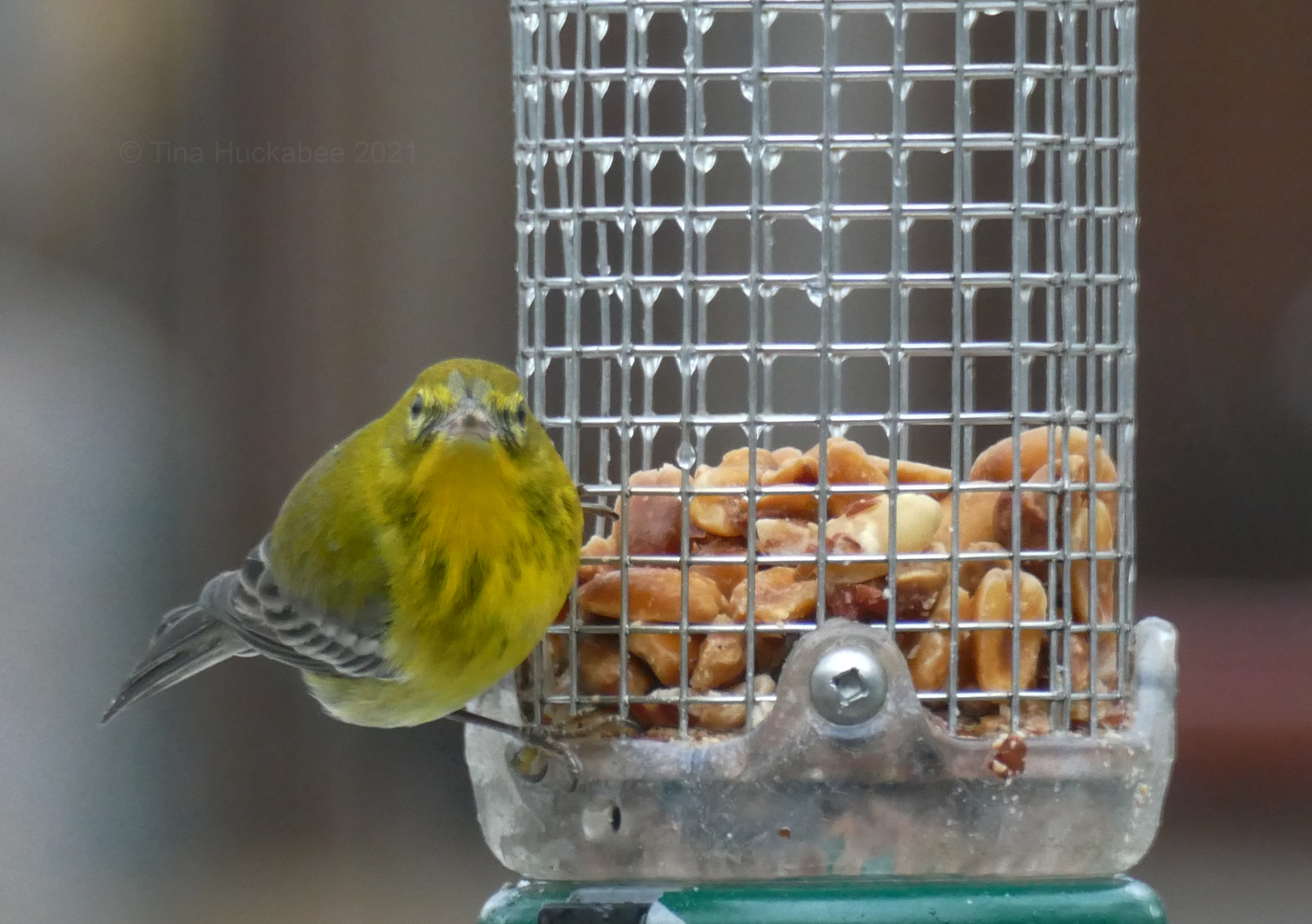
As I looked out my windows on Snowy Sunday several weeks ago, I spied a visitor at the peanut feeder who wasn’t the usual yellow of an Orange-crowned Warbler, Leiothlypis celata. The new-to-me bird sported a brighter shade of yellow and belly streaking, reminiscent of the Orange-crown. The Pine Warbler is a lifer bird for me! Meet Mr. Pine Warbler, Setophaga pinus.
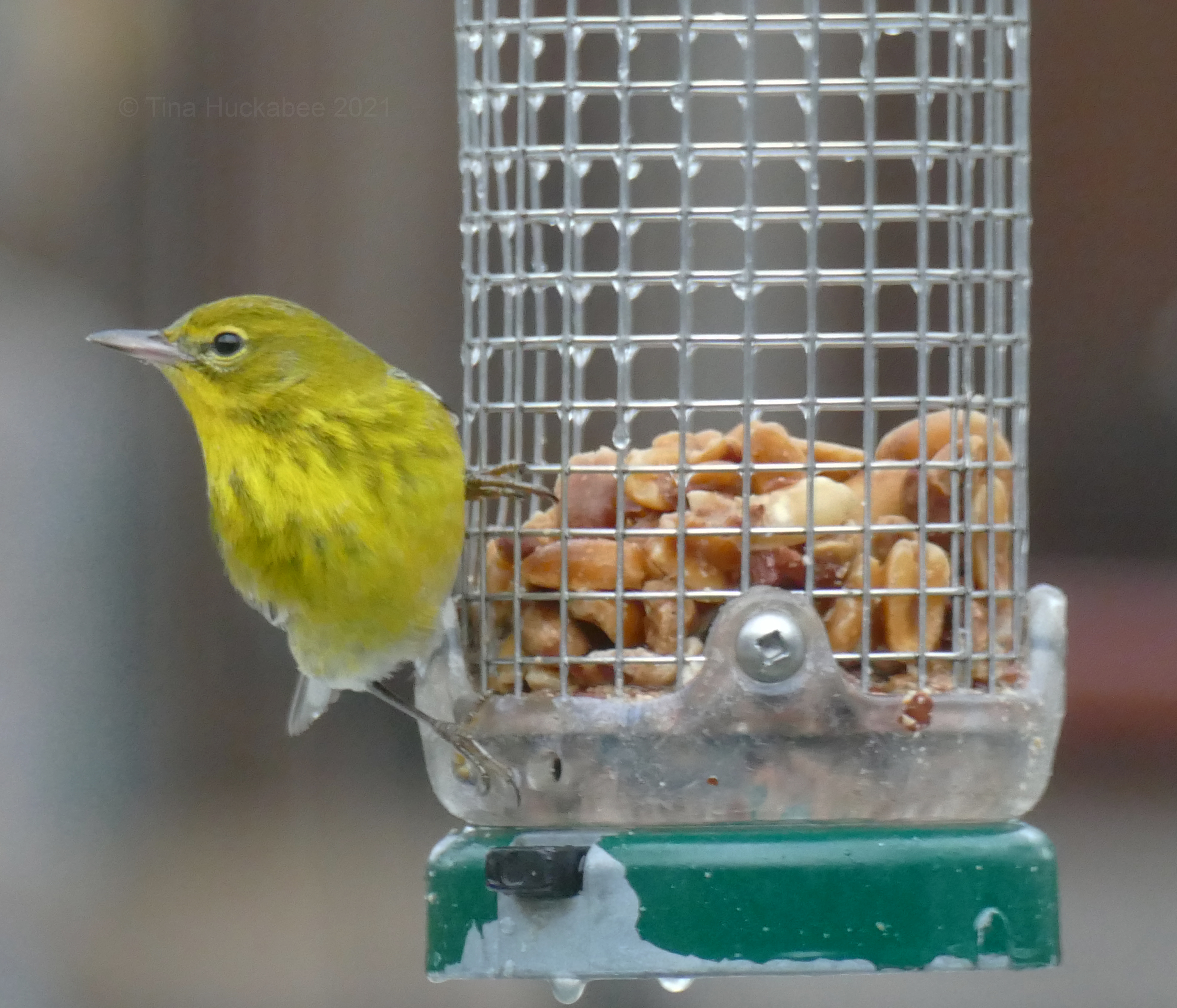
Pine Warblers spend their winters mostly in east and north Texas (as well as along the southeastern part of the US), but are rare birds here in Central Texas. Throughout their range, Pine Warblers prefer to hang out in pine trees which are found readily East Texas. While I haven’t seen the Pine Warbler at all this past week, for about ten days, he frequented the peanut, suet, and sunflower seed feeders.
According to Cornell’s site, Pine Warblers exhibit different digestive traits, depending upon their usual food sources. Those who eat mostly seeds have larger gizzards (where the hard-coated food is crushed) and require a longer time for digestion and those who primarily feed on fruit tend to develop longer intestines and digest more quickly. I’m guessing this handsome male is of the first variety, rather than second, because of his interest in what my feeders supply.
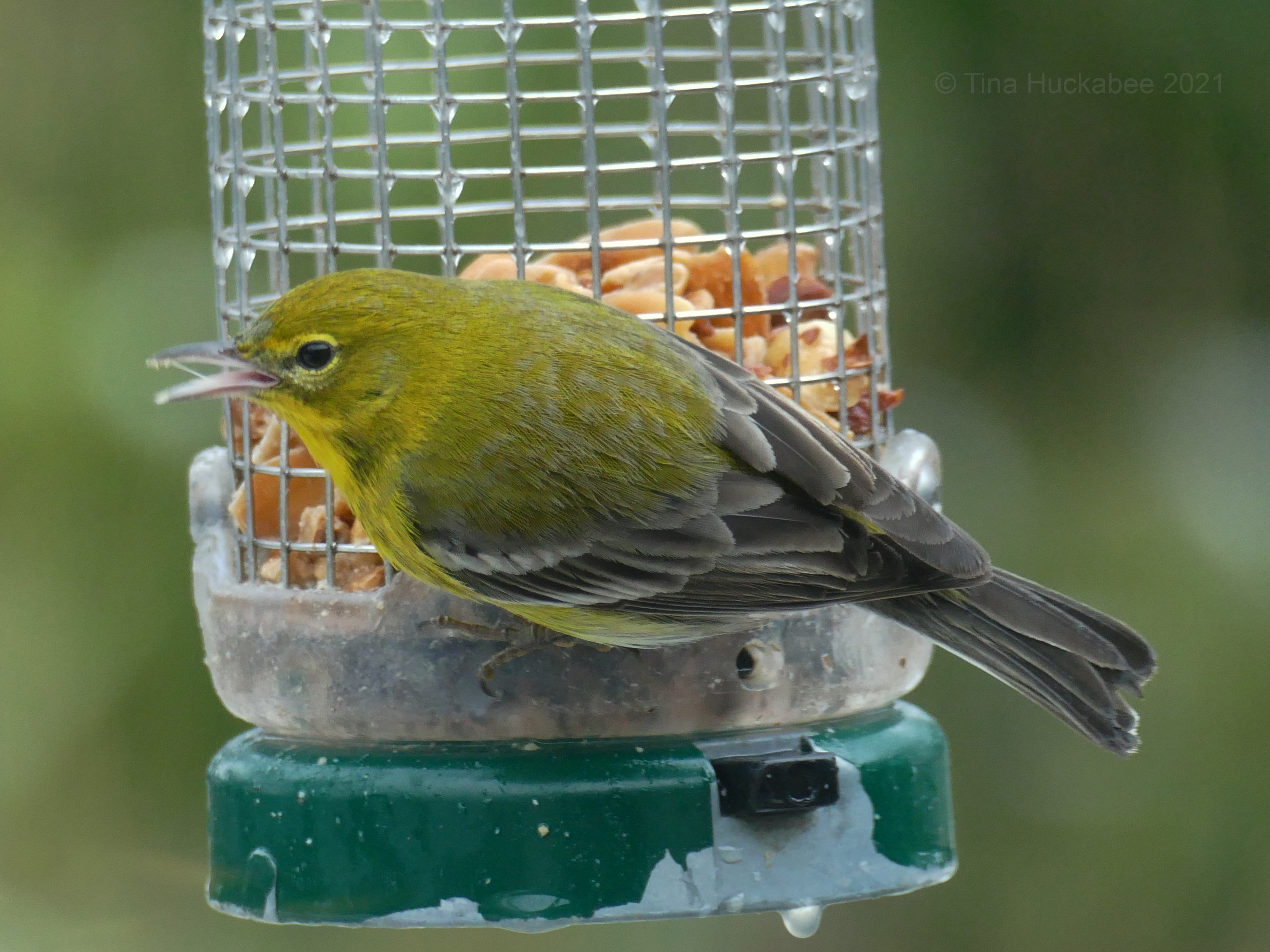
Until recently, I’d never seen a Pine Warbler in flesh and feathers, but I recognized him immediately. I’ve seen plenty of Pine Warbler photos posted on social media by bird-crazy Texans who live north and east of where I live. Reading birders’ posts and studying their often stunning photos has been a great learning tool for my backyard birding interest.
Are you charmed by this stare-n-glare face ? I am, even if he doesn’t look too pleased with the photographer.
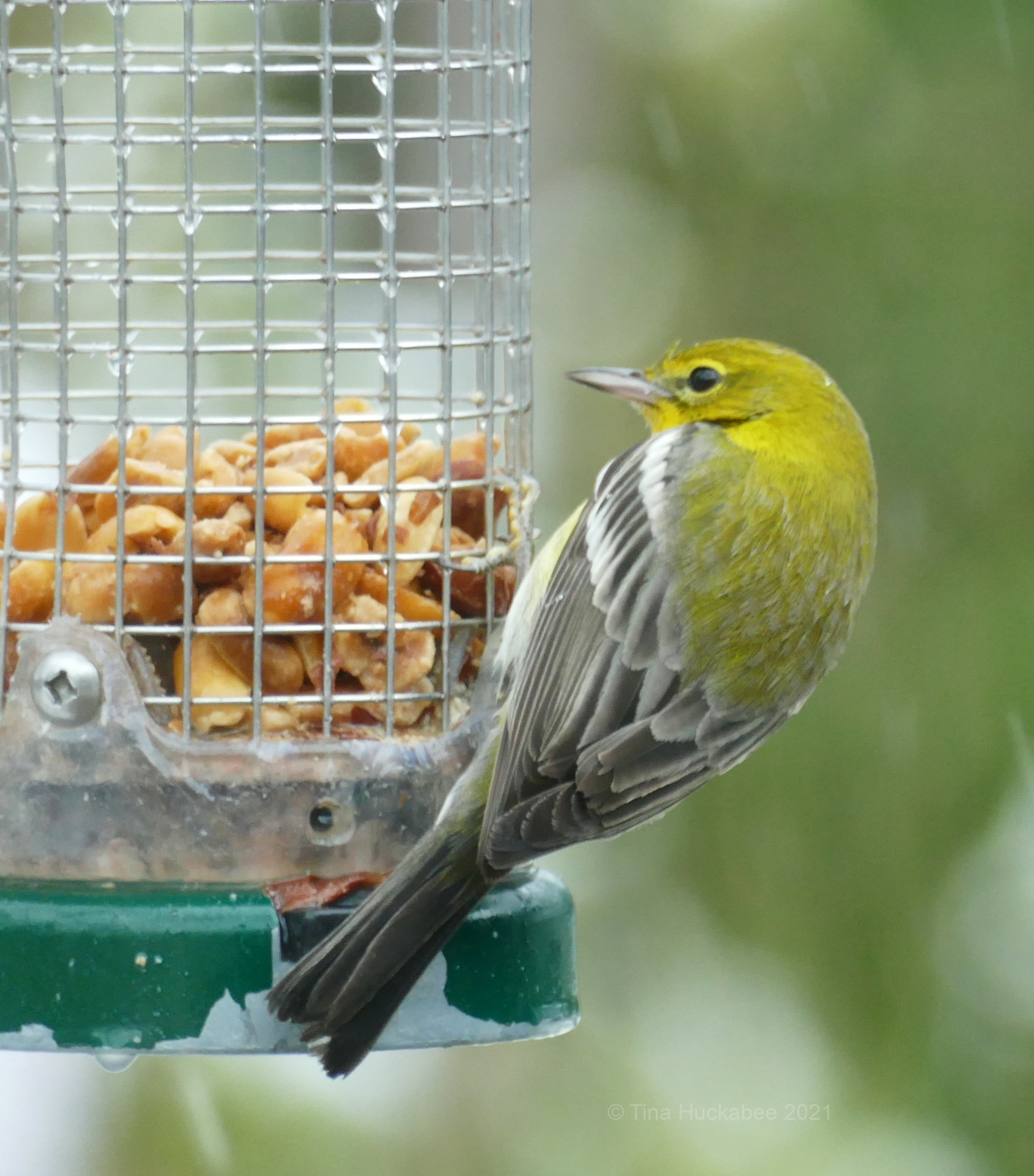
What a good-lookin’ guy! Cheery plumage, streaked with grey on the belly, echoes grey coloring on the back and wings, and is highlighted by winsome white wing bars. He’s a well-dressed bird.
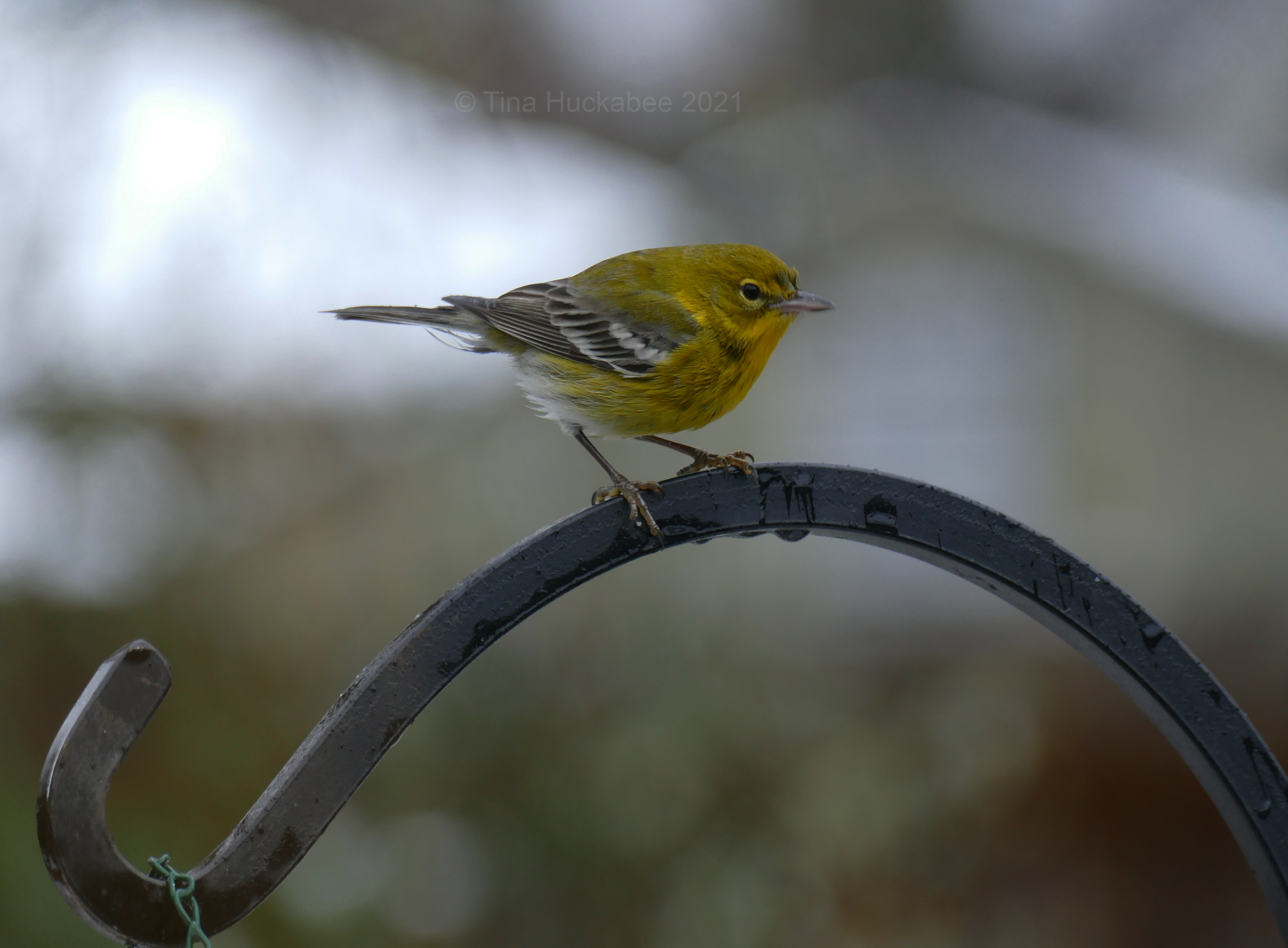
Pine Warblers are related to Yellow-rumped Warblers (‘Butter butts’) and, like previously mentioned, at a quick glance, look similar to Orange-crowned Warblers; both species winter in my garden every year. Maybe in the future, the Butter Butts and Orange-crowns will put out a good word to wintering Pines and encourage more of these sweet warblers to wing their way to my garden.
 My Gardener Says...