Milkweed Flats

Milkweed flats.

No, it’s not a charming name for some geographical feature out here in the Wild West. Instead, it’s a possible remedy, though by no means a complete solution, for the imperiled  migrating North American Monarch butterfly.  Monarchwatch.org is an education, conservation and research organization benefitting the Monarch butterfly.  One of their newer projects is a “milkweed market” where they’re supplying flats of native milkweed plugs, specific to region, for sale to interested gardeners and citizen scientists.

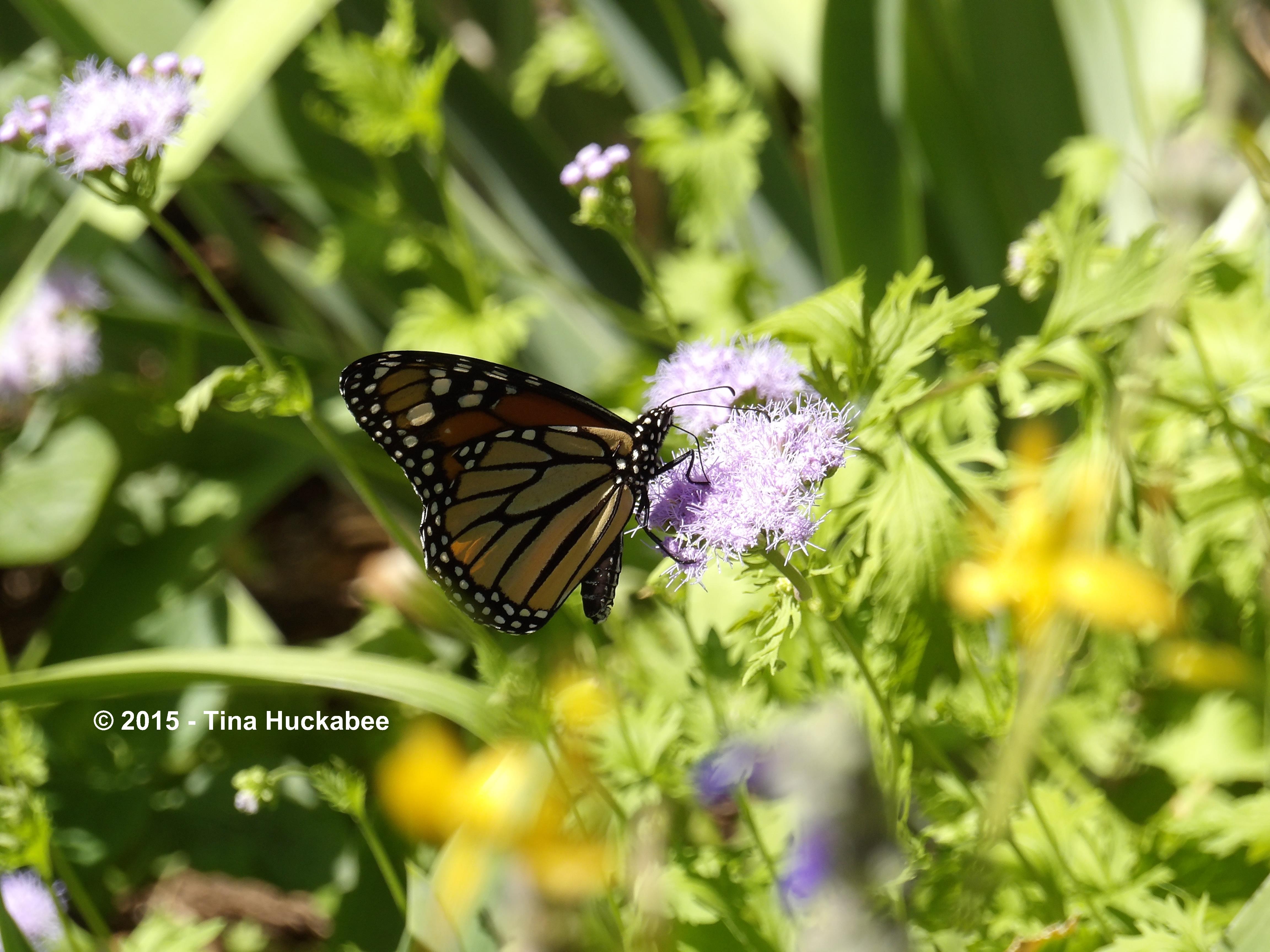
The Monarch requires the milkweed, Asclepias, species for its survival.  The females lay their eggs on the milkweed plant, the larvae eat at that plant (and that plant ONLY).  The larvae form into the chrysalides, hatch into adults, and the cycle continues with the next breeding generation.  Adult Monarchs can feed from a variety of nectar sources, though they typically prefer native plants and wildflowers.  The larvae?  Those green/black/yellow cats only have jaws for milkweed.  All this eating, morphing, flying, and breeding occurs during the remarkable 2000-3000 mile yearly migration: winter in Mexico, flying through Texas in spring, then upwards through the mid-West to Canada in the summer, back again through Texas in autumn, finally to their mountain habitat in Mexico for winter.

The availability of native milkweed is in severe decline because of habitat destruction throughout the United States and Mexico, the use of Monsanto produced Roundup for the Roundup-resistant genetically modified seeds in the mid-West, (which has destroyed huge areas of not only native milkweed, but other flowering annuals and perennials), ongoing drought in Texas, as well as other changes in weather patterns. With declining milkweed, comes declining Monarch population.  Adding to those difficulties, “milkweed” is not a monolithic plant; its various species are endemic to particular areas and not easily propagated.

If I can beg further patience, I’ll get to the milkweed flats….

The most common milkweed species found in American plant nurseries is the Tropical Milkweed, Asclepias curassavica,  and is not native to the continental U.S.  I’ve never read why it’s the most commonly sold, I just assume it’s easiest to propagate and sell because it thrives in a wide range of situations.  Commercial nurseries are in the business to make money, so they’re most likely to sell a plant with a wide distribution, rather than plants that are regional, with more local appeal.  Native milkweed plants are just not readily available at most commercial nurseries. Though I should add that seeds are available for those who have the space and time to germinate and grow their own plants.

Tropical Milkweed, in certain areas of the southern U.S., pose an additional problem for migrating Monarchs (as if they don’t already have enough challenges!).  Most milkweed species die back during winter, re-emerging in spring to coincide with the Monarch migration northward.   Tropical Milkweed doesn’t die back in the South and can harbor disease which spreads to Monarchs when they lay their eggs for the larvae.  Tropical Milkweed is not the problem, per se, but milkweed that doesn’t die back in winter, is–or at least, the preliminary and ongoing research suggests that overwintering milkweed increases the manifestation and spread of OE, short for Ophryocystis elektroscirrha. OE is a protozoan parasite that cripples and kills Monarchs.  The current suggestion is that gardeners prune their Tropical Milkweed for winter, 2 inches above the ground, to limit the possibility of disease spread.  While OE is a problem, further study is required and scientists who study Monarchs concur that widespread herbicide use and habitat destruction play a more significant role in declining populations of these remarkable insects than any problems Tropical Milkweed might cause.

Monarch scientists and enthusiasts encourage planting milkweed specifically native to each eco-region of the U.S.

And that brings us to milkweed flats.

Monarchwatch.org is selling flats of 32 native-to-region milkweed plugs.  Each flat sells for $63-$69 (including shipping).  Click here for the milkweed market link for more information on their process of seed collection, ordering information and links to milkweed photos and descriptions.

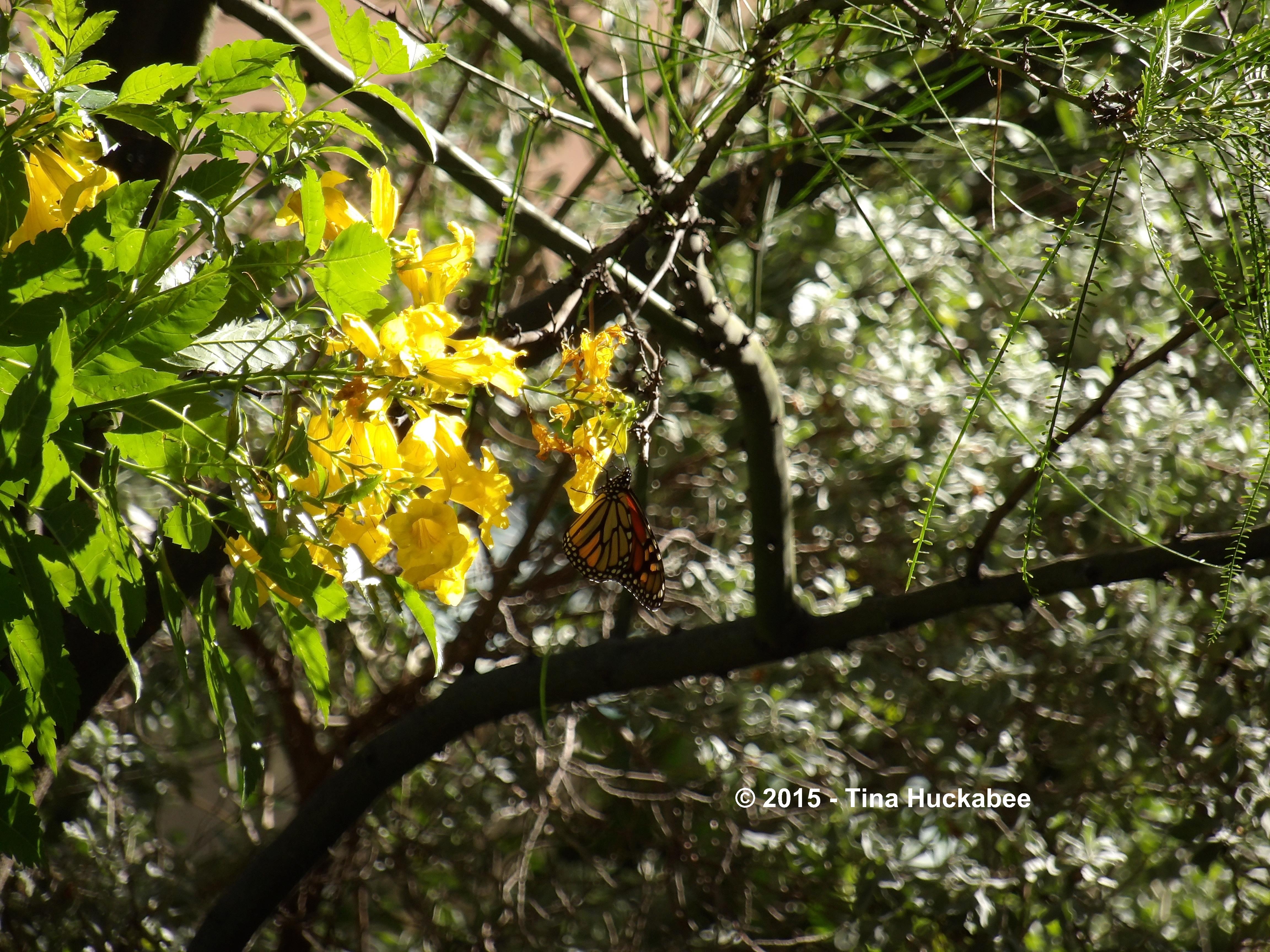
Because the flats are a bit pricey and milkweed grows best in full sun and I don’t have lots of sun or gardening room for 32 milkweed plants (wish I did…), I’ve joined with two gardening friends in ordering one flat of native-to-where-we-live milkweed.  I still have six Tropical Milkweed specimens that I planted in 2014–it’s a valuable plant and I wouldn’t deny the migrating Monarchs nectar and larval food, but once my native milkweed plugs arrive and are planted, I’ll also have native milkweed in my garden available for their dining and brooding pleasures.

Wouldn’t it be cool if gardeners from the Rio Grande Valley all the way up to the Great Lakes purchased and shared flats of milkweed plugs?  Wouldn’t it be groovy to plant for the Monarchs, a solid path of nectar sources and nurseries, along their whole migration route?

Please support these efforts to help Monarchs.  Checkout the milkweed market of monarchwatch.org and consider planting native milkweed for Monarchs.  Encourage your local nurseries to supply native milkweed plants. Look at Native American Seed or Wildseed Farm, as additional seed sources.

IMGP1726.new

It’s all about the Monarch and its future.
IMGP1755.new

For more information, click on these links:

Q & A: Grad Student Dara Satterfield on Tropical Milkweed and Monarch Butterflies

http://texasbutterflyranch.com/2014/11/24/nytimes-commercial-butterfly-breeders-raise-awareness-of-oe-to-help-monarch

http://switchboard.nrdc.org/blogs/sfallon/keep_calm_and_plant_milkweed.html
Texas Butterfly Ranch

IMGP2005.new

Danaus Perplexus

Oops.

Sometimes, excitement over a particular project gets the better of me.  You know how it is: a thing happens and you assume about that thing, to realize later that oops, your assumption was, well, a bit off-base.

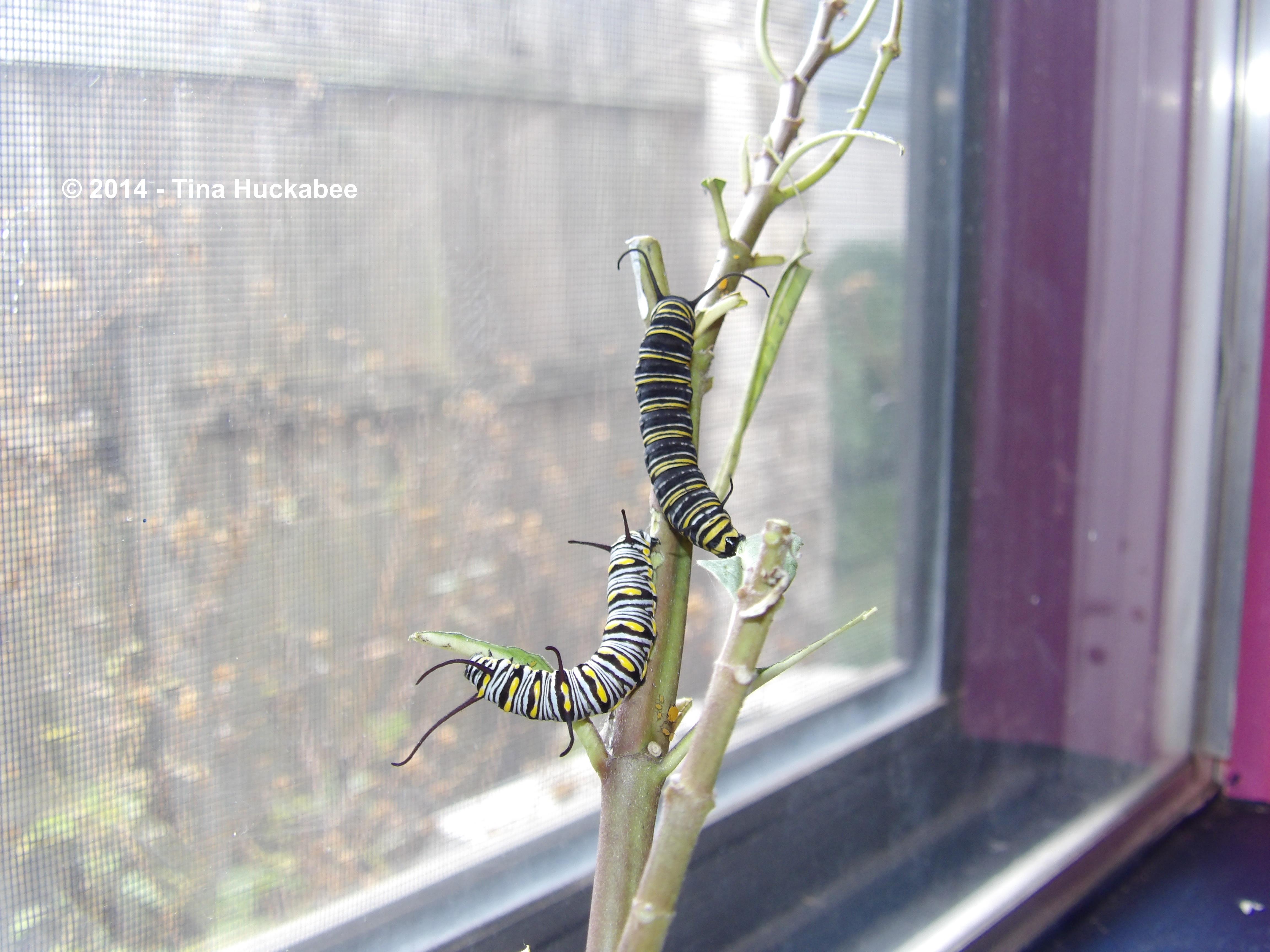
So it is with my Monarch musings of recent posts.  Specifically, the adventures of snipping some milkweed with attached caterpillars prior to a predicted freeze and settling them into my son’s vacated room for their metamorphosing process.  Turns out, most of the caterpillars are Queen butterflies, Danaus gilippus, and not Monarch butterflies, Danaus plexippus.

It’s an easy mistake to make as they are both members of the same butterfly sub-family, Danainae.  They look similar, in both larval and adult stage, feed on the same host plant (milkweed) and share similar life-cycle events.  Interestingly, I’ve never had problems telling the two species apart in the adult butterfly stage, though many people do.  The adult Monarch is about a third larger, flies higher and with a different flight pattern, and sports “stripes,”

IMGP1158.new

IMGP1165.new

…rather than “dots.”

IMGP1729.new

But I haven’t had all that much experience in viewing the larval stage.  That’s the thing about insects–they do their insect thing(s) and we humans don’t pay much attention unless those insect things are really obvious–you know, like flying around and landing on flowers.  It’s hard for us to miss that.

In my defense, I assumed that the ‘pillars were Monarchs because I’d seen a Monarch female lay eggs on the milkweed.  Additionally, I haven’t had as many Queens visit my gardens year, though they’re usually very common.  In retrospect, I remember observing a Queen at about the same time the Monarchs were migrating through, but don’t recall any egg-laying behaviors.

Not in my favor is the fact that I usually check and double-check my identifications because I’m not particularly confident in my wildlife critter knowledge.  When I observe a wild creature in my gardens, I usually check local sources first, like Austin Bug Collection, and then double-check the identification with a more comprehensive site like the excellent BugGuide.net, Cornell Lab of Ornithology, or Butterflies and Moths of North America.  Often I research further, comparing my photos and observations with varying sites–to avoid obvious mistakes.

In this case, I recognized that the one caterpillar that is a Monarch was different–I just didn’t follow-up on my visual observations.  I noticed he was larger, with slightly different color patterns, and that he only had two tentacle pairs–a pair of antennae near the head and a tentacle pair further down the abdomen.  The “other” cats had three sets: one set of antennae and two sets of tentacles.  You can clearly see the difference in this photo.

IMGP2778.new


I just didn’t pay close enough attention, nor did I intellectually process my observations. This kind of critter identification faux pas is one motivation behind hosting the Wildlife Wednesday garden blogging meme–to better my own citizen scientist abilities.

Well, this Monarch nannying was a big FAIL with that goal.  Bummer.  I’m not a scientist. 

In some ways, I’m glad that what I am nannying are Queens. Granted, Queens aren’t  as cool and sexy and important as the beleaguered Monarchs.  But, whatever hatches has a greater chance of normal survival–Queens can live year-round in South Texas and Austin is at the northern range of that year-round habitat.   If the caterpillars were Monarchs, the chances of a successful very late migration and overwinter survival in Mexico would be slim. Not impossible, but unlikely.  That these are Queens means that at the very least, they’ll hang around, nectar, and live out their life.

All that said, Mr. Nine Lives, aka Monarch larva, is not going to make it.  He’s currently curled up on the windowsill.  No photo here–let’s preserve some dignity. I don’t know why he’s dying.  It might be that I wasn’t careful when I handled him, that I didn’t wash my hands and transferred germs which caused illness, or that his thunk on the wooden floor and/or his dip in the water where the milkweed cuttings reside, did him in. I think the other chrysalides are progressing normally though.  I’ll report again on…whatever happens.

Despite my identification mistake and my limitations as a scientist (which are profound), I value and marvel at the beauty and miracle of the metamorphosis process. I’m grateful to witness this natural phenomenon.

Thanks to Michelle at Rambling Woods for setting me straight and teaching me something new!

The Monarch And The Bee

On a sunny October afternoon, the Frostweed, Verbesina virginica, is in full bloom mode.

IMGP0994.new

IMGP1076.new

A stately native perennial to Texas and other places as well, Frostweed attracts  those who pollinate for a living. This Monarch butterfly, Danaus plexippus, no doubt on his way to Mexico, rests on the Frostweed,

IMGP1136.new

RICOH IMAGING

IMGP1144.new

…while sipping nectar to re-fuel for the rest of his long trip.  He’s only the third or fourth Monarch to visit my gardens.  I hope there will be more.

One of my hived honeybees graciously shares her food bar space with the migrating Monarch.

IMGP1159.new

There are plenty of life-giving, yummy nectar and pollen rich blossoms this time of year. In beekeeper-speak, Central Texas is experiencing nectar flow, meaning lots of honey is being produced because there are so many flowers in full, autumn flush.

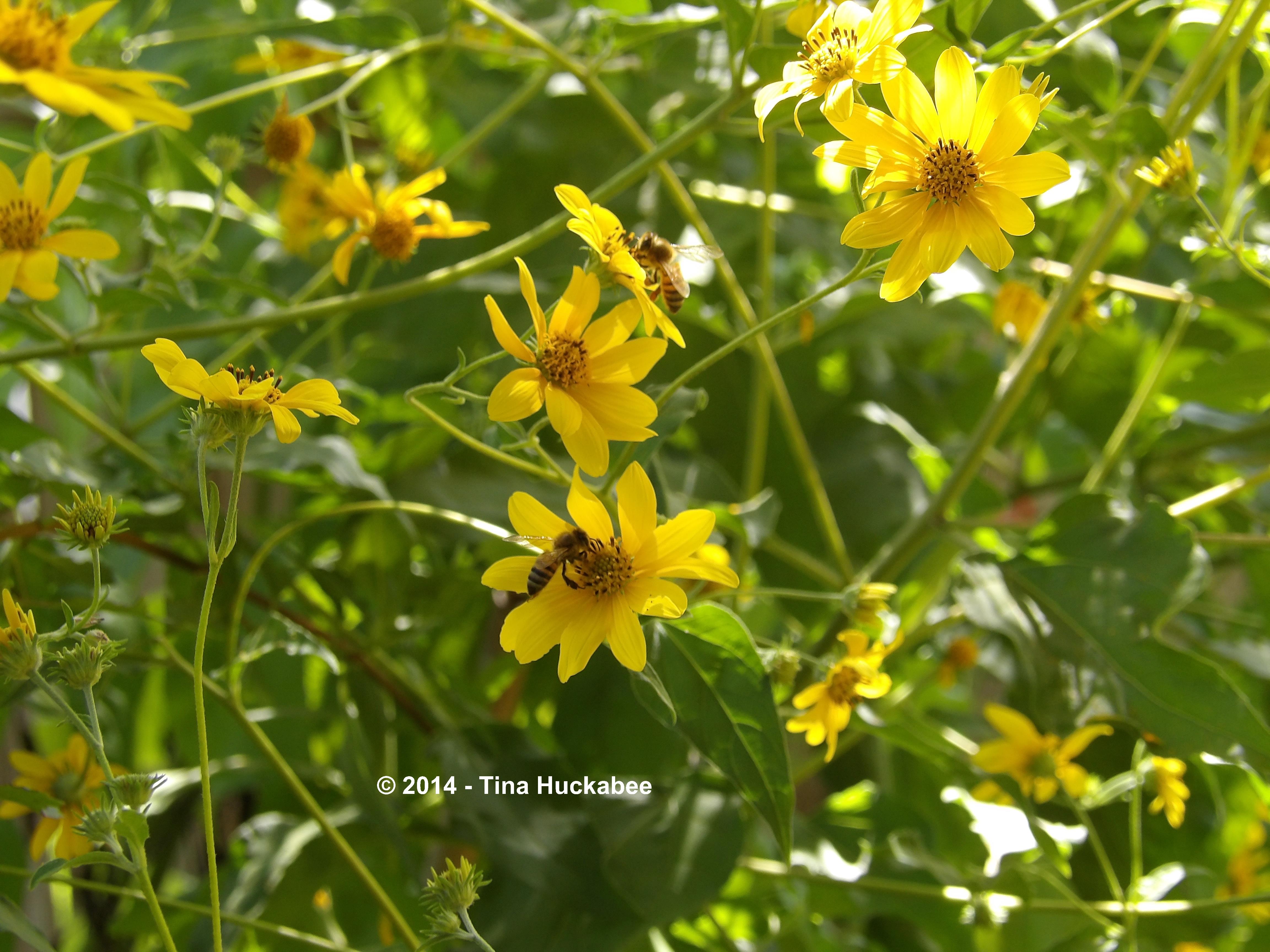
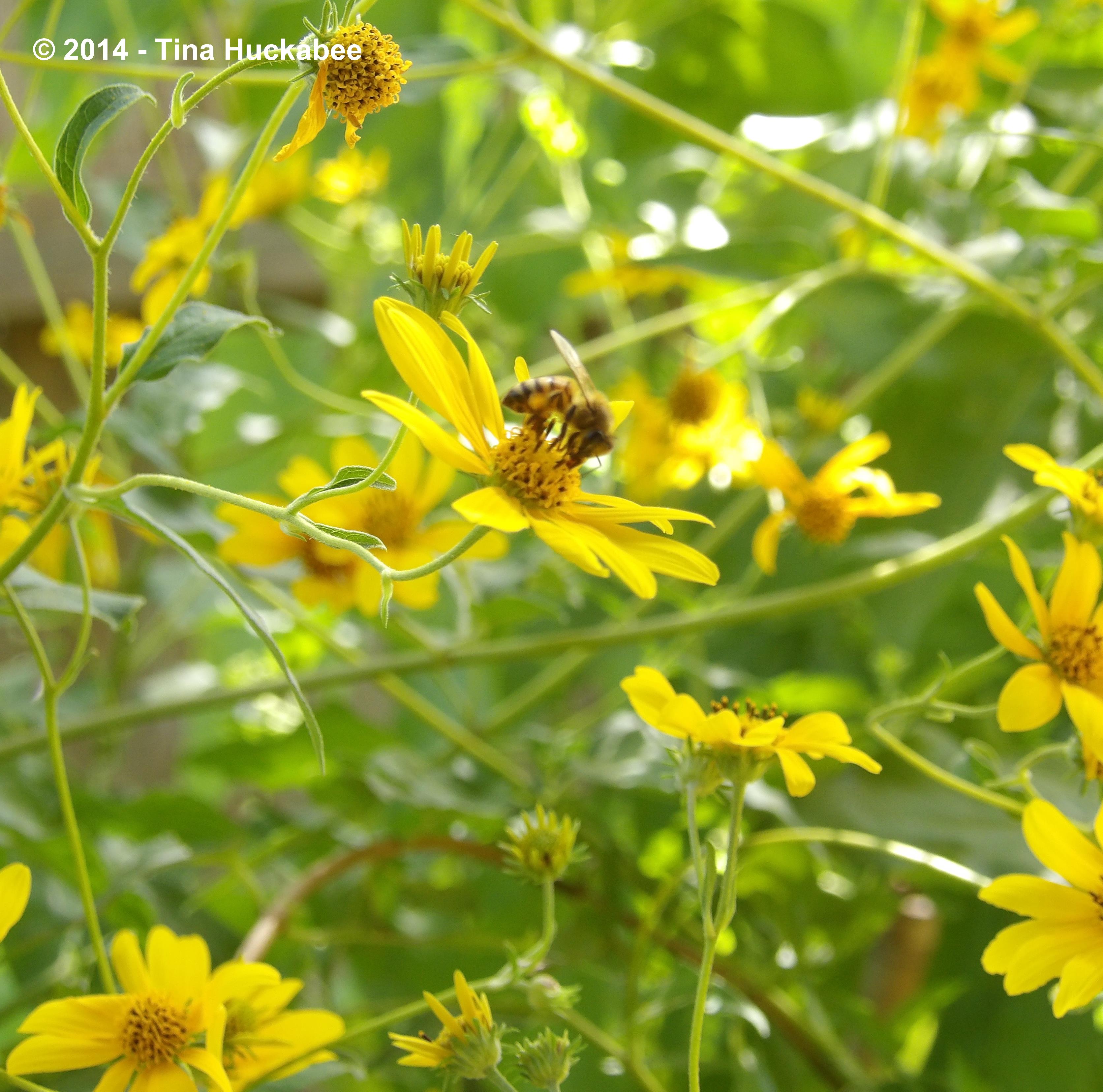
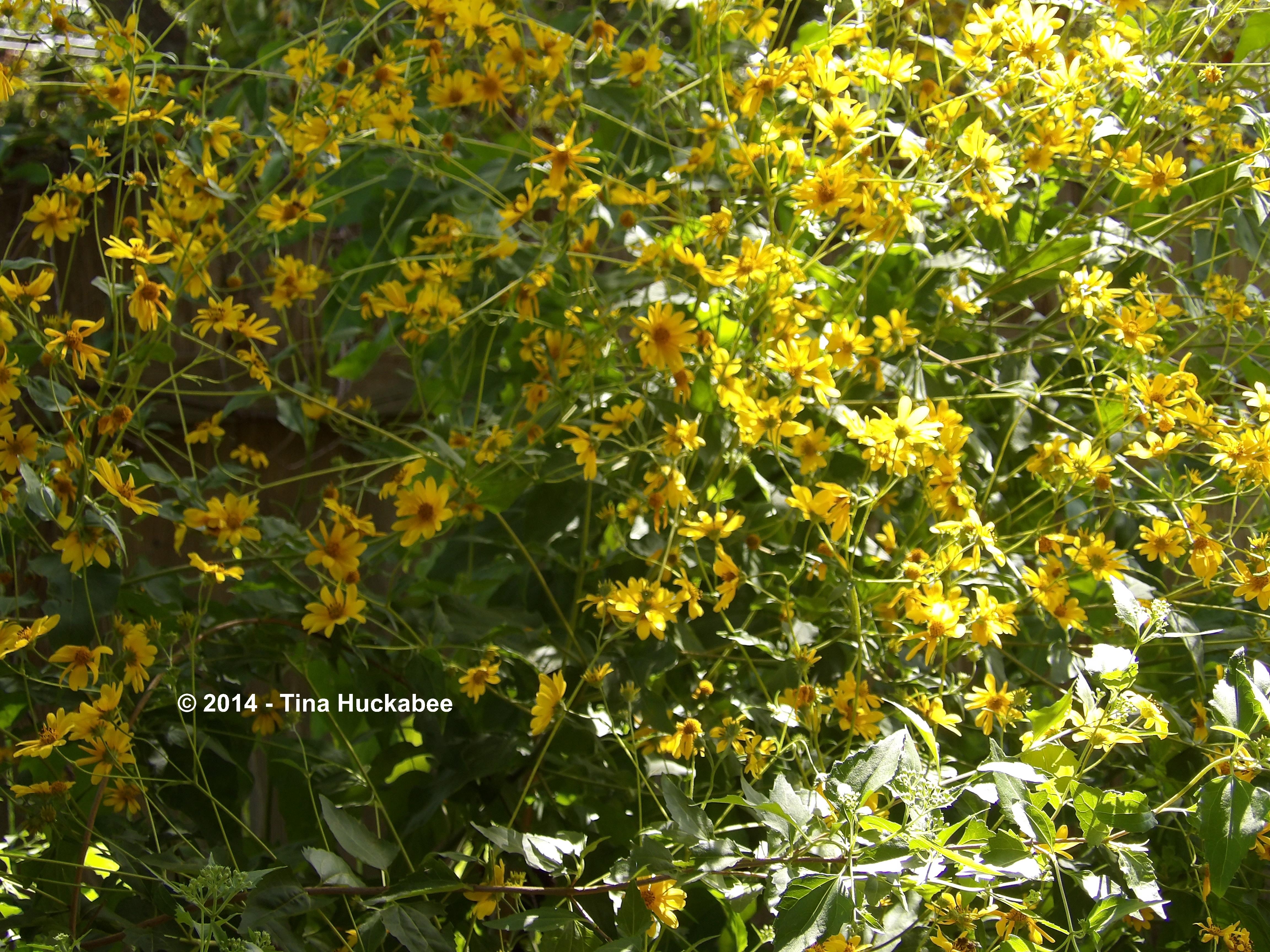
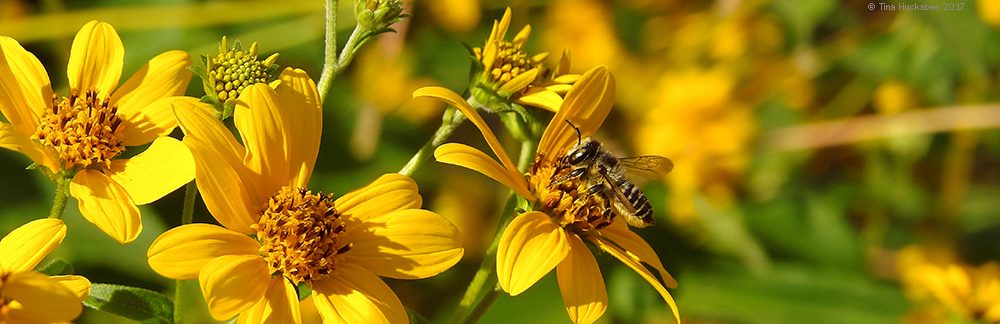
In concert with the blooming Frostweed, GoldeneyeViguiera dentata, is another native perennial at its height in flowering.

IMGP1187.new

IMGP1232.new

IMGP1237.new

My forager honeybees don’t travel far to find what they need for their hive,

IMGP1240.new

IMGP1238_cropped_3345x3313..new

…while Goldeneye conjures rays of sunshine in the garden.  Oh happy autumn blooms!

IMGP1233.new