Game On, Spring

As February races toward its conclusion, this Austin garden is ready for spring.  I started pruning in late December, after the first of the freezes lay waste to the herbaceous  perennials in my gardens.  I’ve been pruning since.  Seven garbage cans full of garden detritus every week, for almost two months.

Plants like Turk’s Cap (Malavaviscus arboreus var. drummondii) are whacked.

P1020746.new

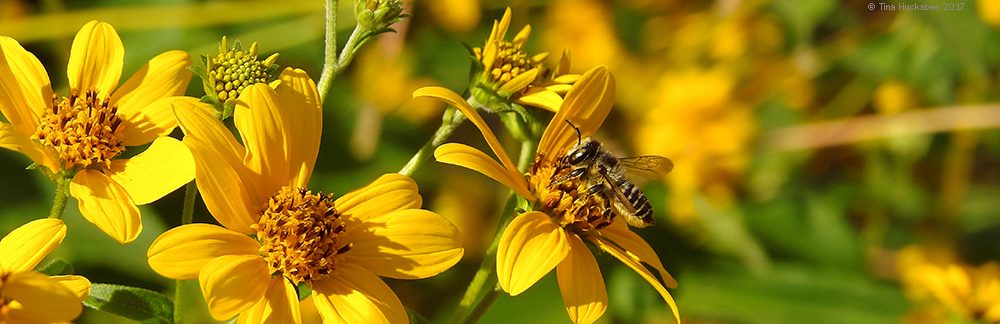
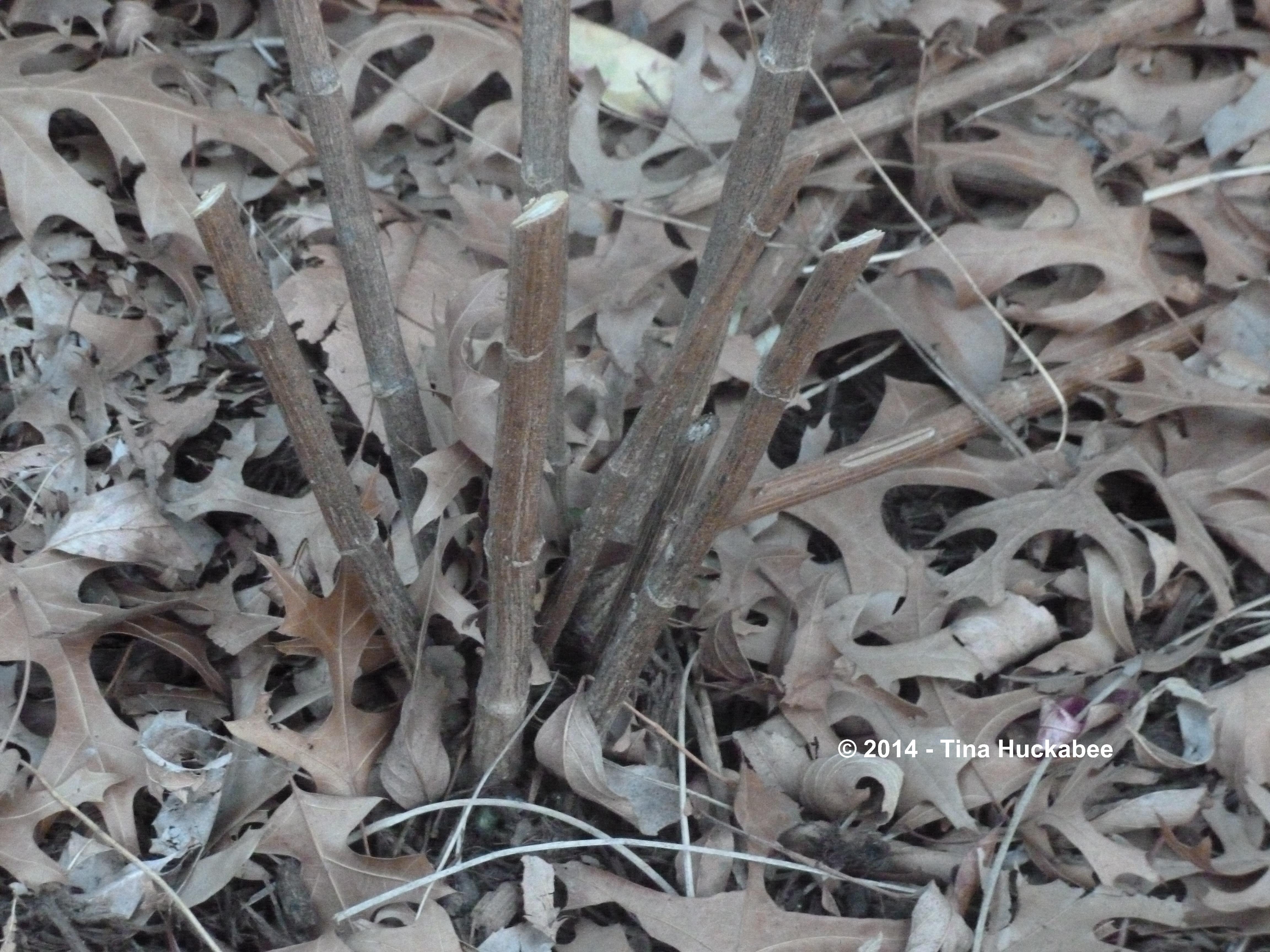
The luscious, sunny-blooming Goldeneye (Viguiera dentata)? Nary but sticks protruding from the ground.
P1020761.new

The Martha Gonzales Roses are reduced to a fifth of their full size.

P1020755.new

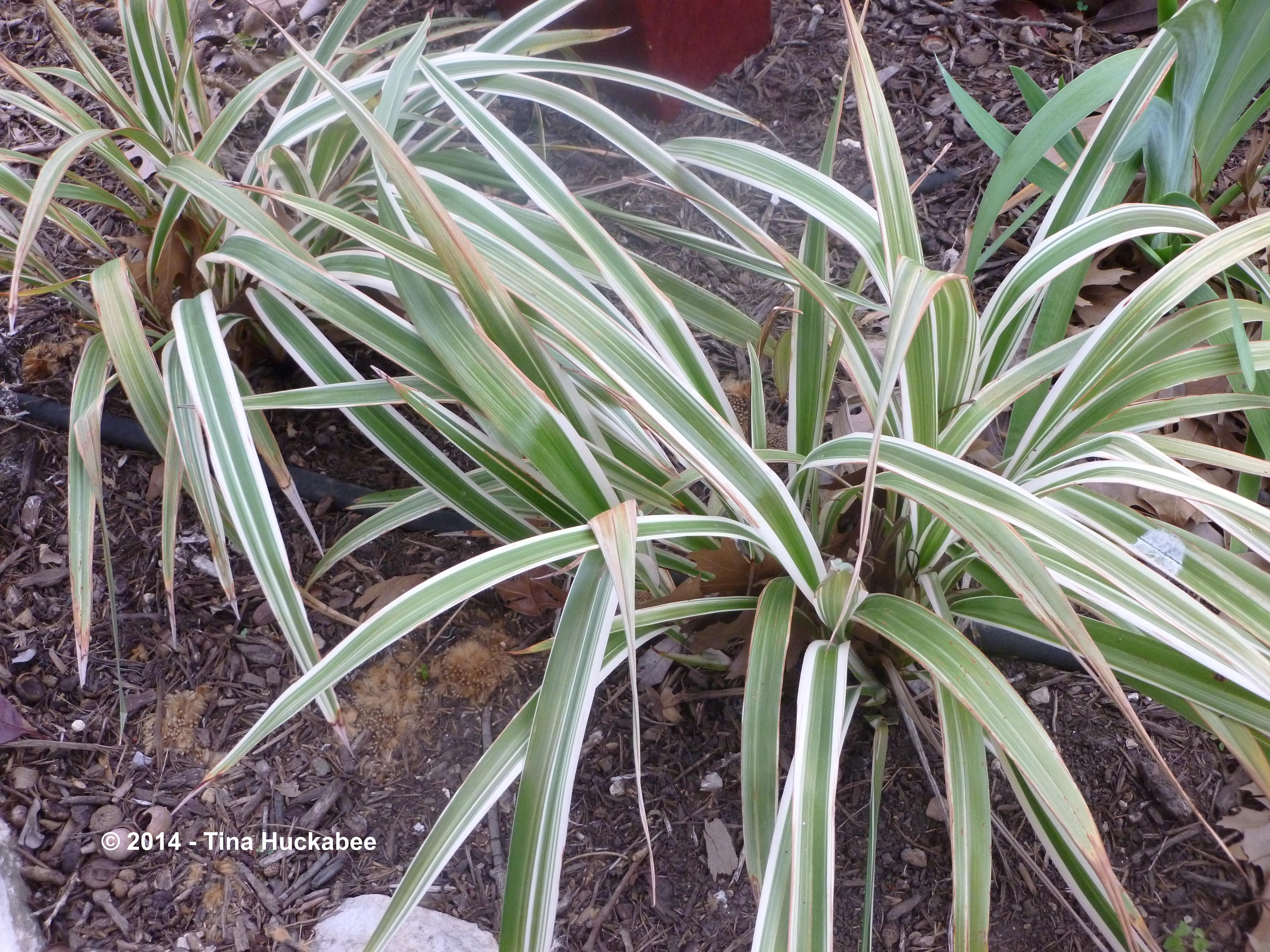
Some Variegated Flax Lily (Dianella tasmanica),
P1020668.new

fared better than others in my gardens.

P1020669.new

All I pruned from the Flax Lily were the freeze damaged straps.  It’s the one plant (I have four groups of them) that I dutifully covered with each freeze forecast into the 20s.

And the  Autumn Sage (Salvia greggii) and other evergreen native shrubby plants are pruned into tidy balls,
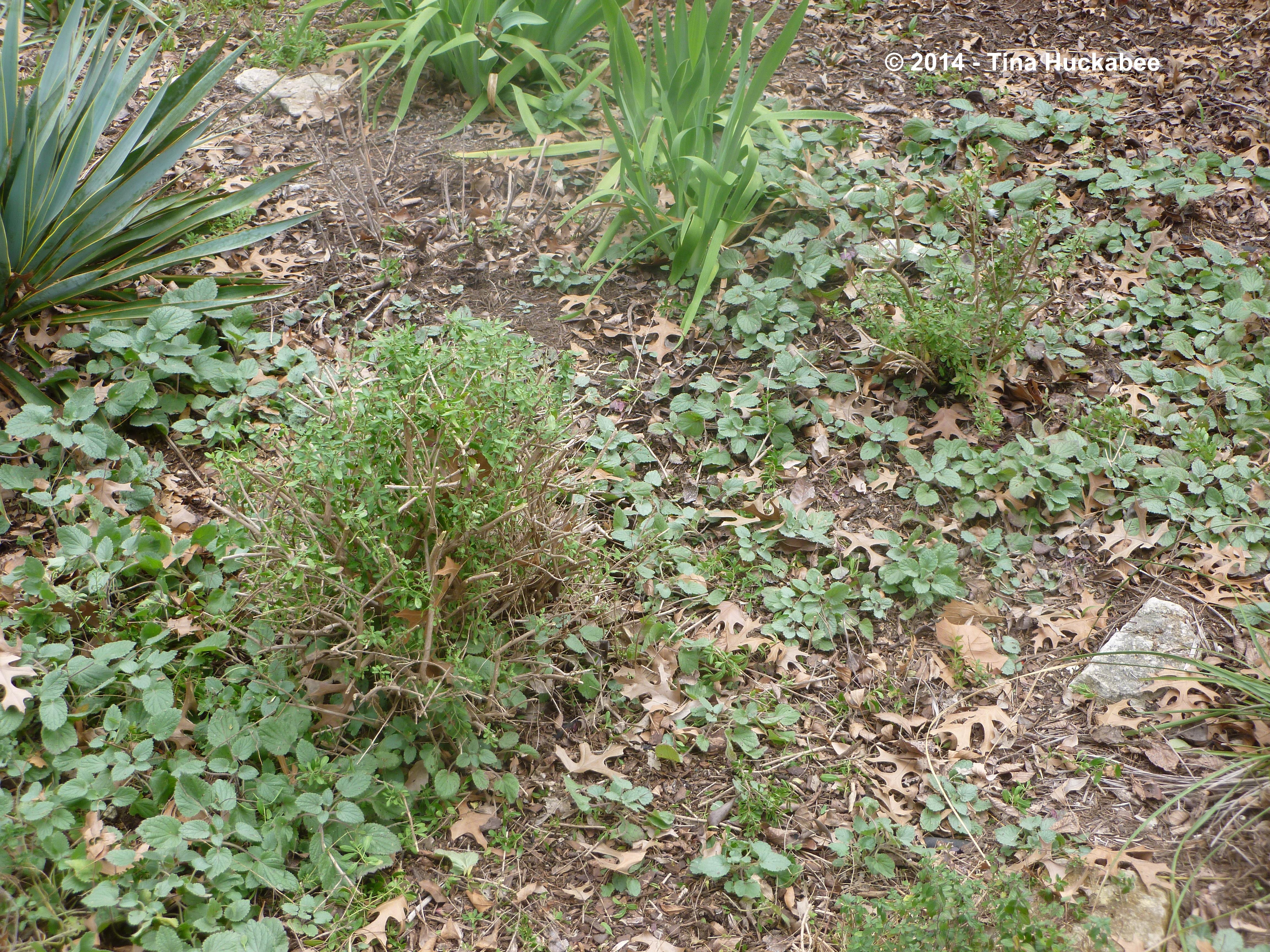
P1020708.new

or spindly bits of green perched on woody stems, waiting for the just right  light and breath of warm spring air to burst into new growth.
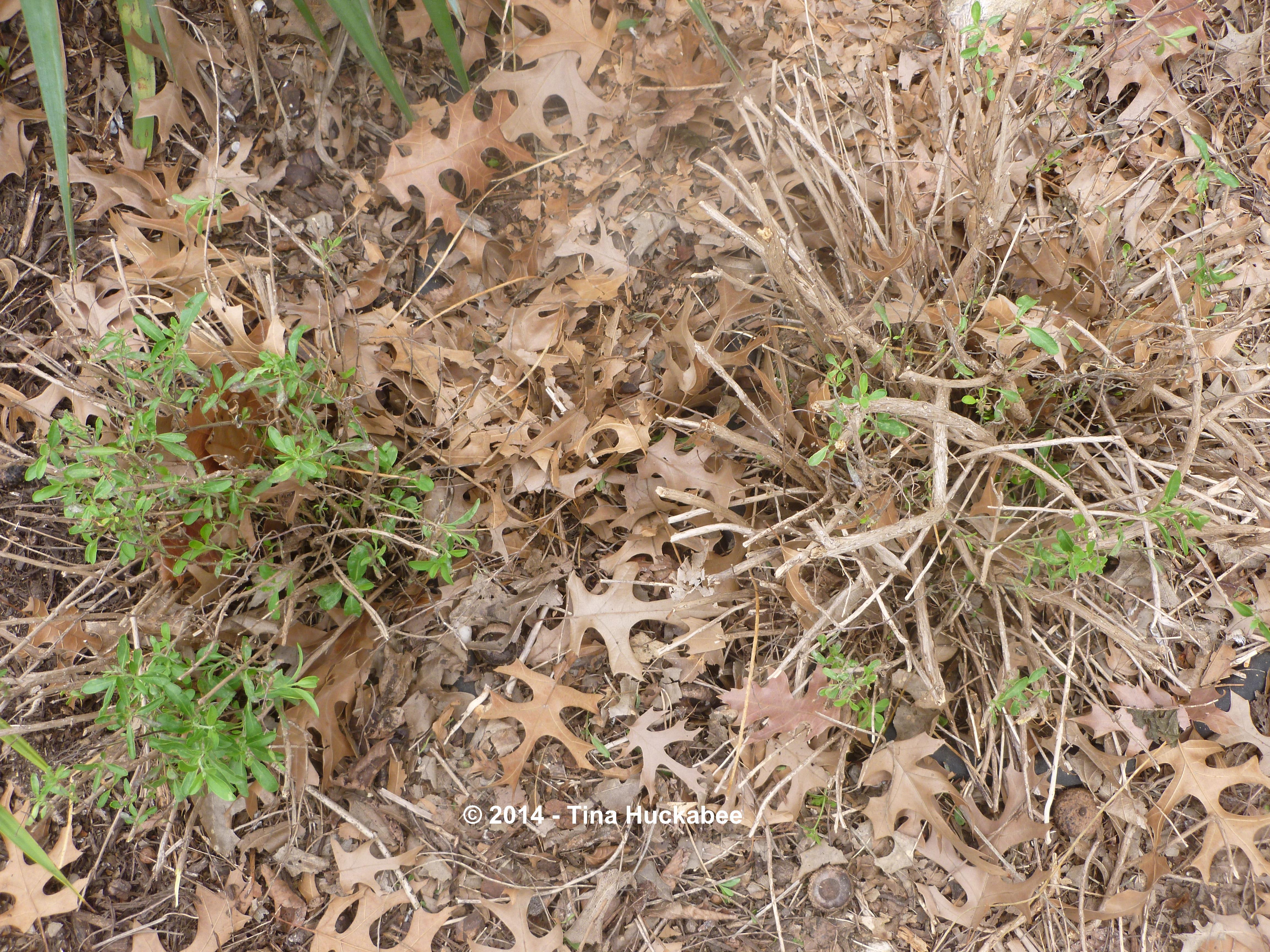
P1020711.new

I still have more to prune, but I’m almost finished for the year.

I didn’t lose any established plants this winter and that gratifies me and validates my garden choices.  I choose natives or hardy non-natives, with the occasional splurge for the newest, cheap thrill plant that everyone (okay, just gardeners) is talking about.

I always think of the winter landscape as barren, but it isn’t, even in this winter which was colder than any of the past 19 years.   With most of the flowering perennials in my front garden temporarily gone, I’m reminded how nice my ignored-most-of-the-year evergreens are during their winter concert on this sunny February day.

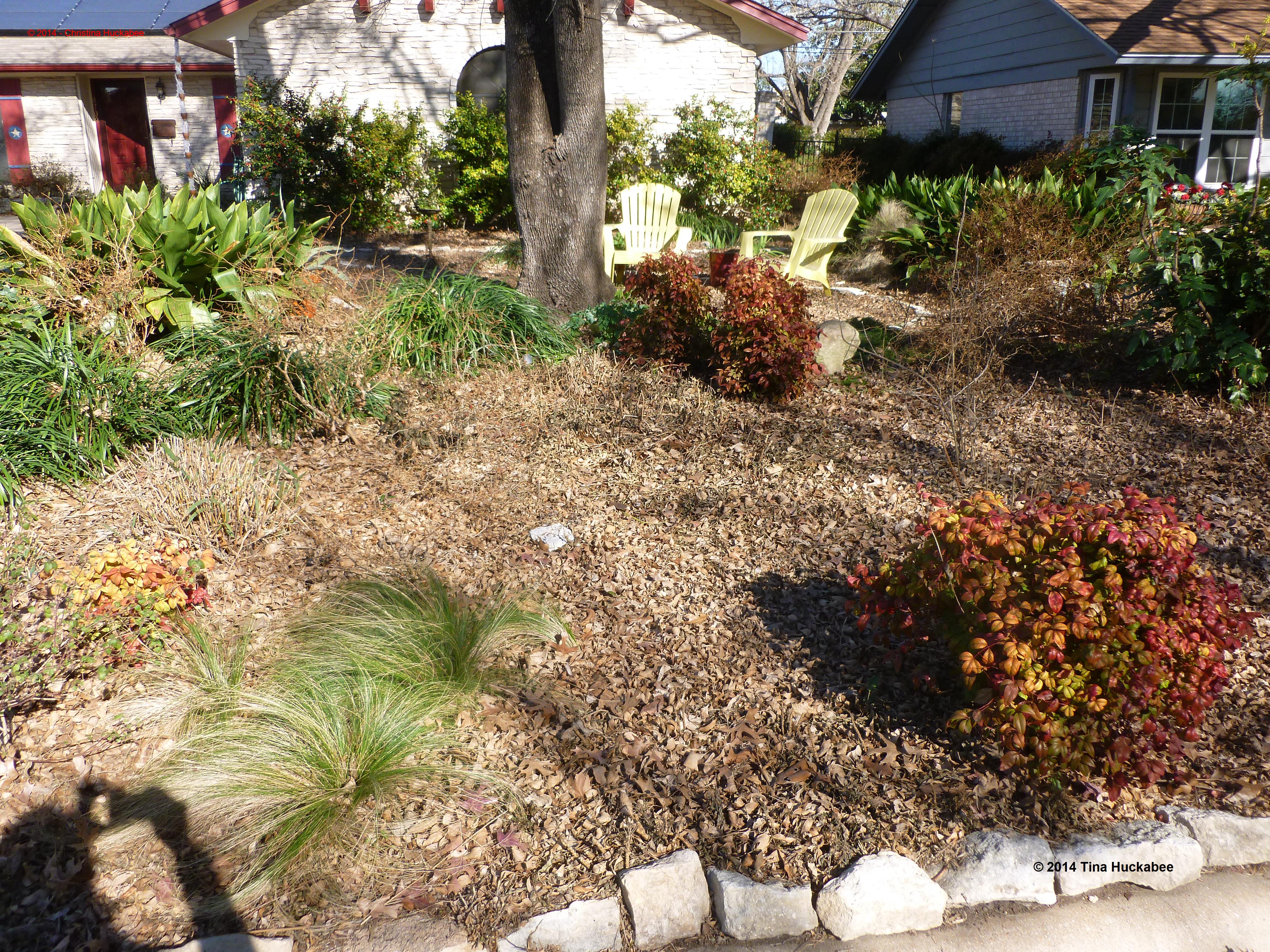
P1020562.newP1020564.new

And in my back garden, I like the clearly defined garden and pathways.  The iris and yucca straps dominate,

P1020784.newP1020787.newP1020788.new

while the Heartleaf Skullcap (Scutellaria ovata ssp. bracteata) insinuates its soft green carpet anywhere allowed.

P1020786.new

I have a clean pond, which will make pond maintenance easier for the rest of the year and appeals to my aesthetic sense.  I don’t think the fish care whether I clean the pond or not.
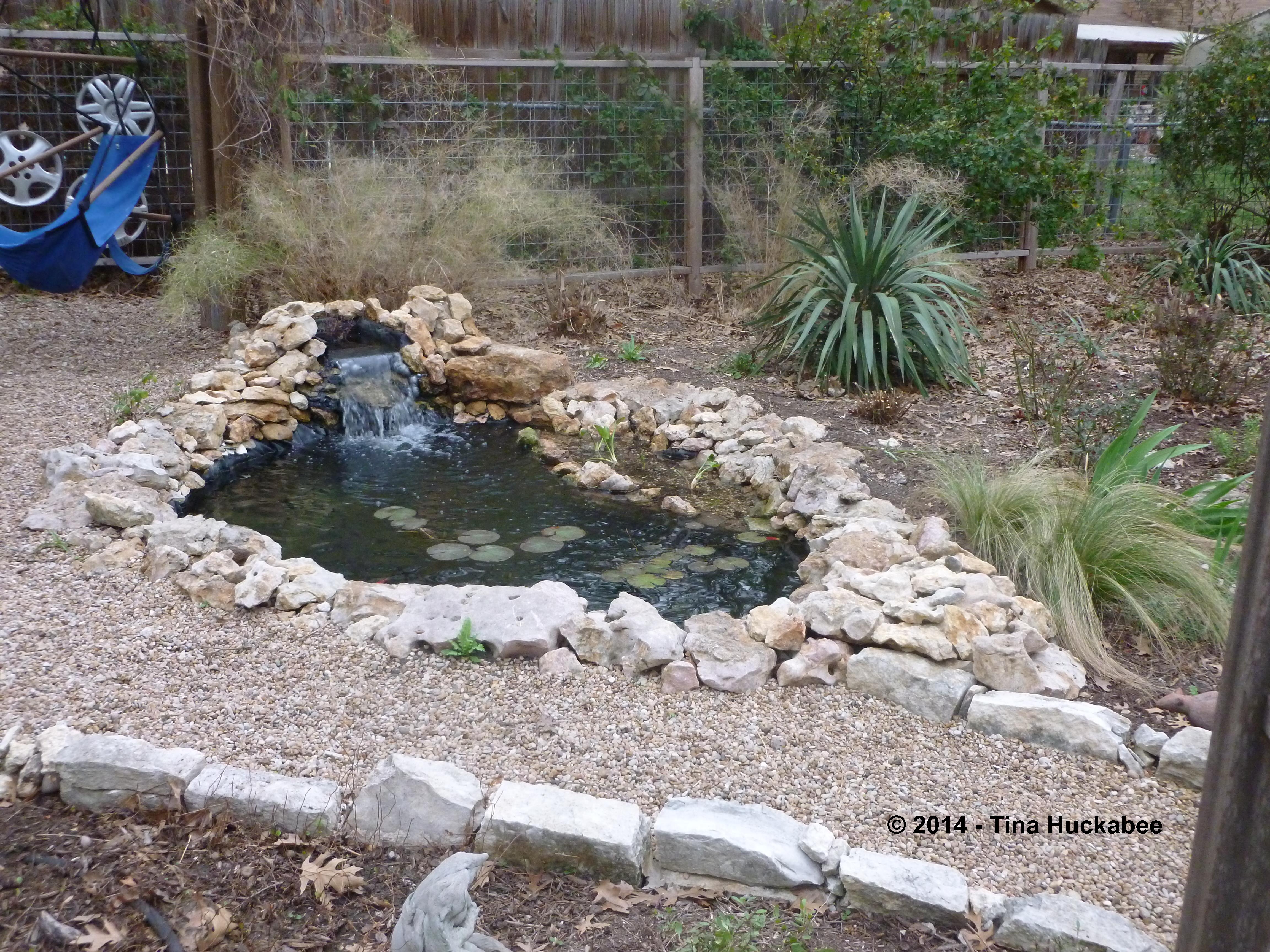
P1020789.new

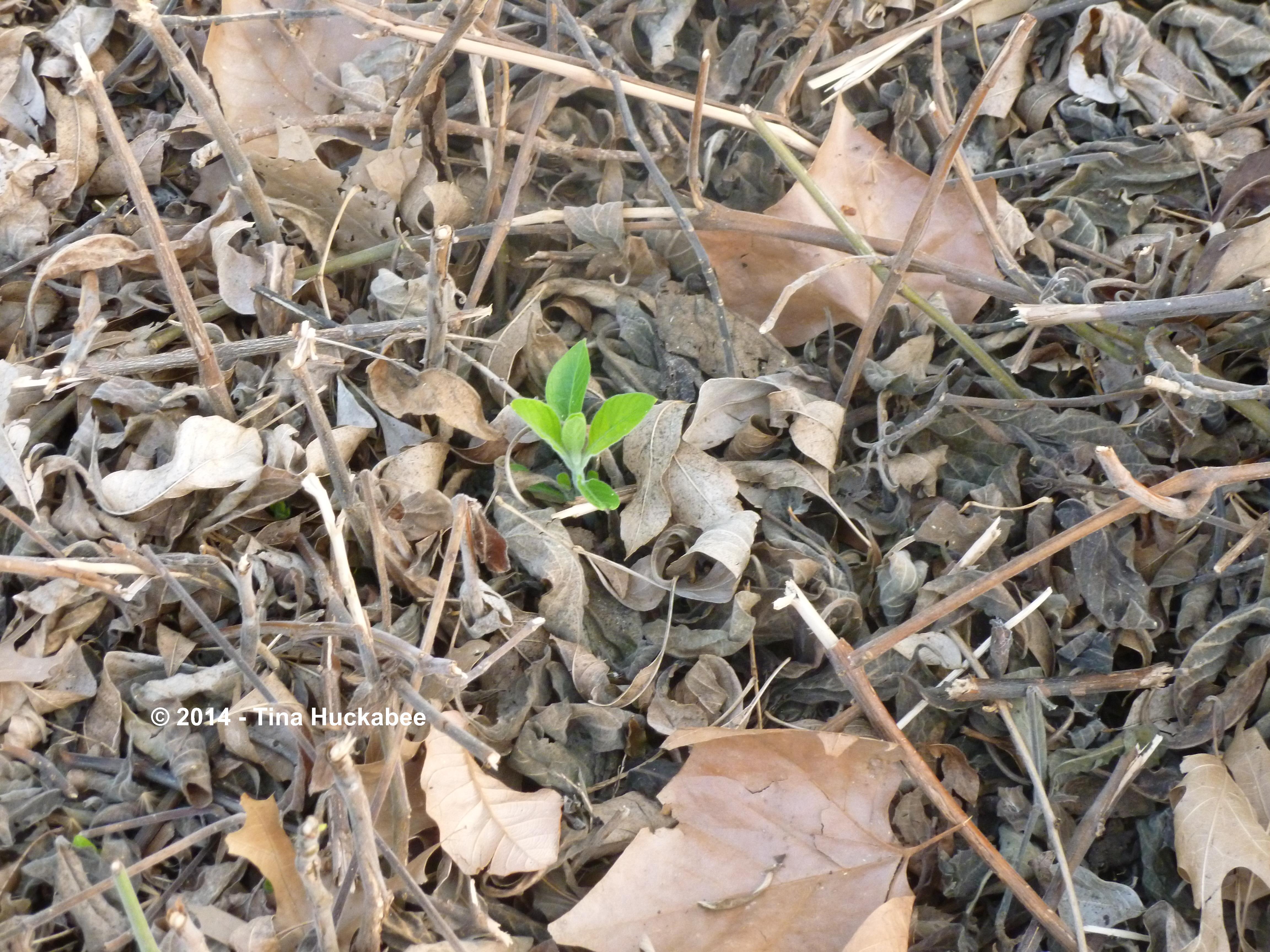
Spring is almost here.  The Mexican Honeysuckle (Justicia spicigera) is pruned to the ground
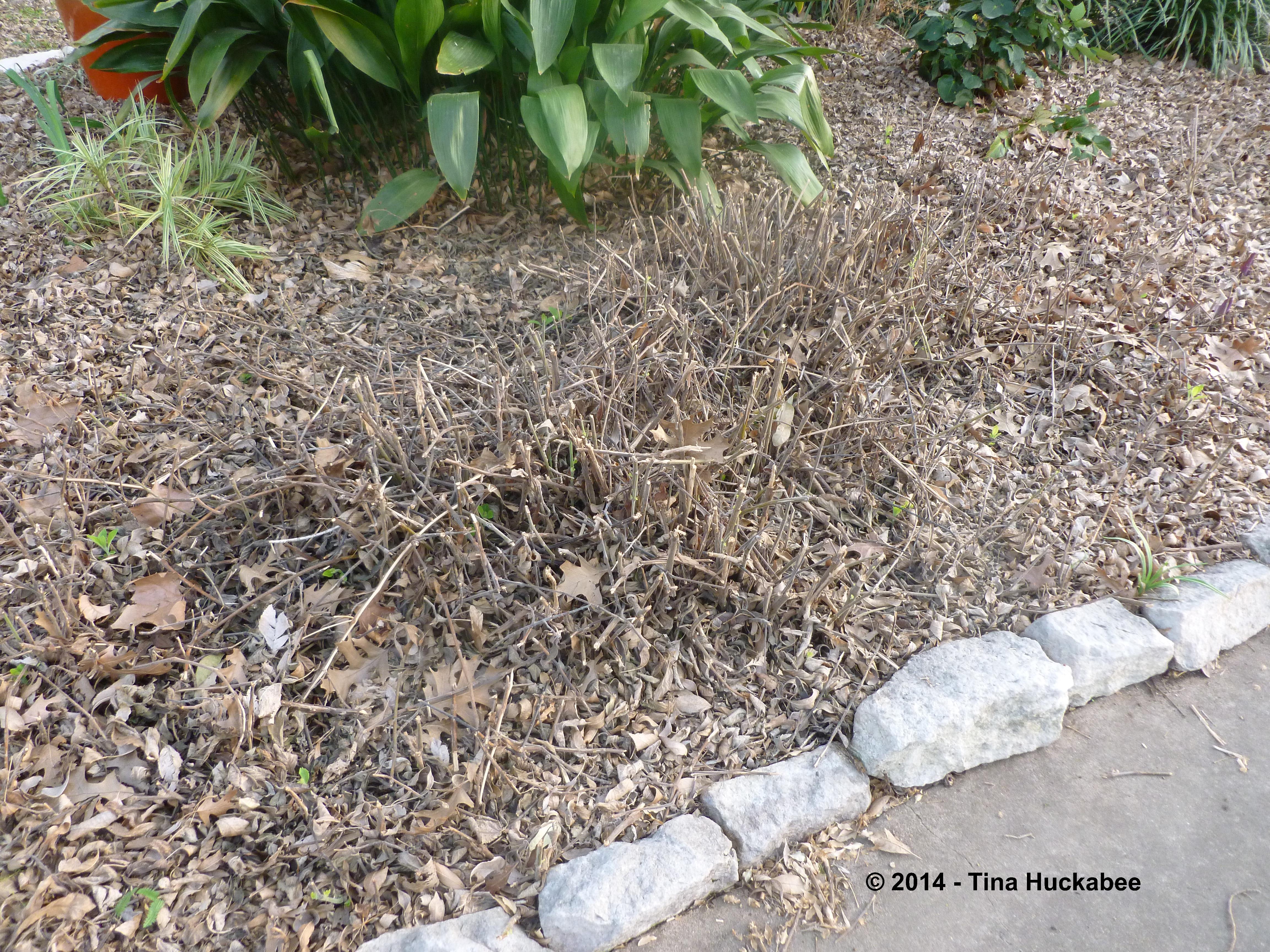
P1020790.new

but life begins anew.

P1020791.new

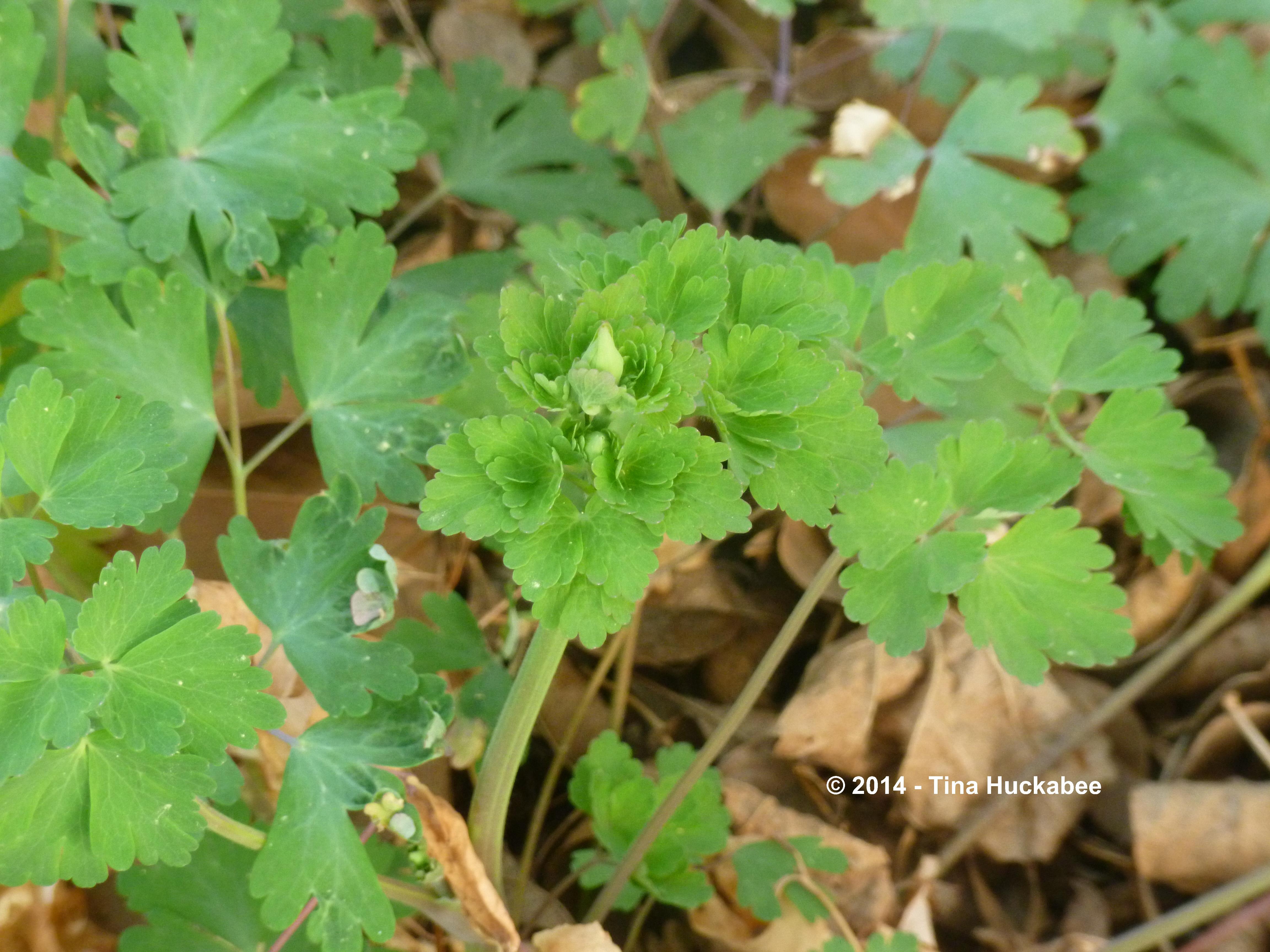
The Columbines (Aquilegia chrysantha var. hinckleyana) are lush,

P1020793.new

their first buds emerging.

P1020794.new

Bring it on, Spring.

Mexican Honeysuckle–Spring Show-Off

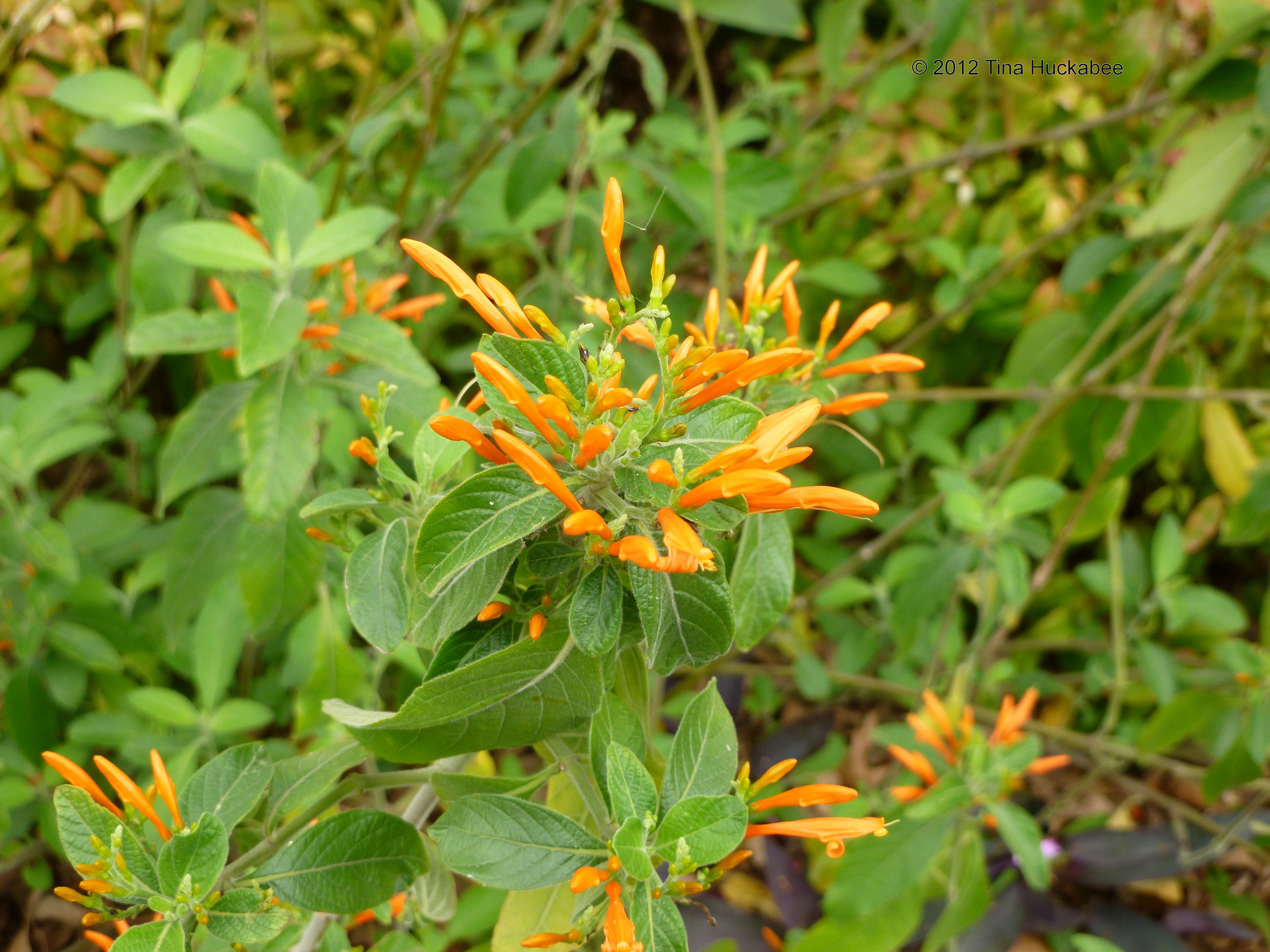
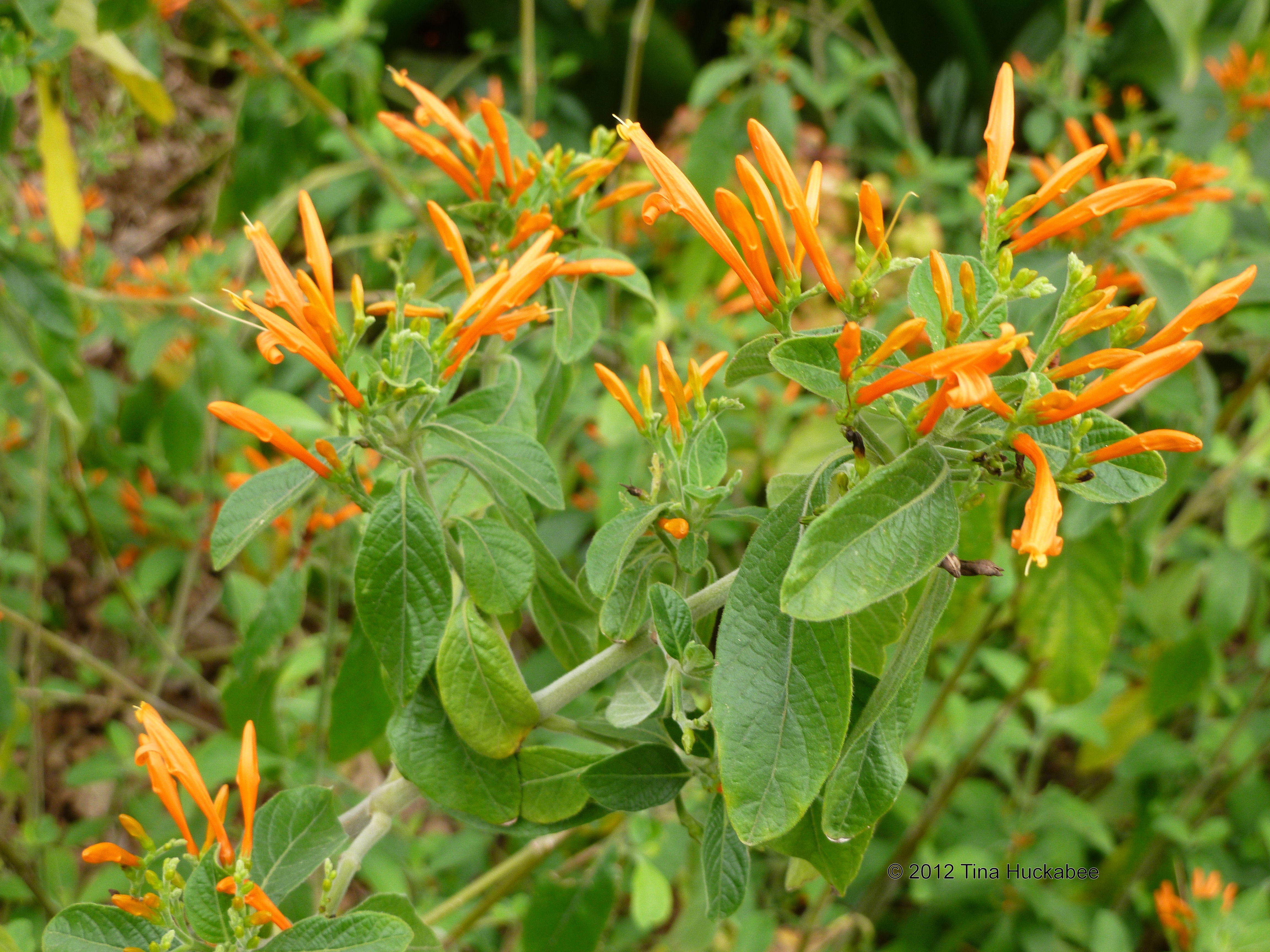
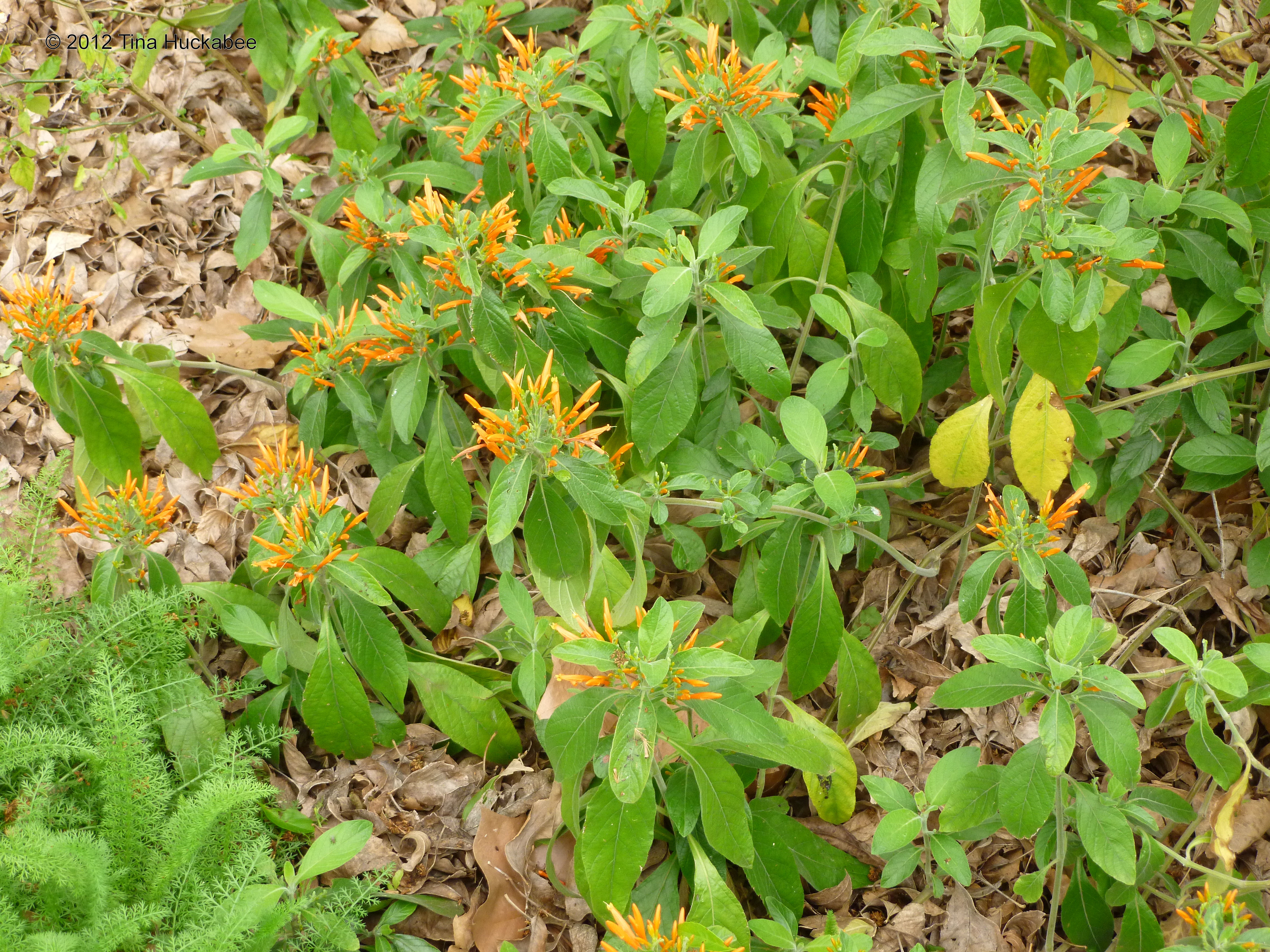
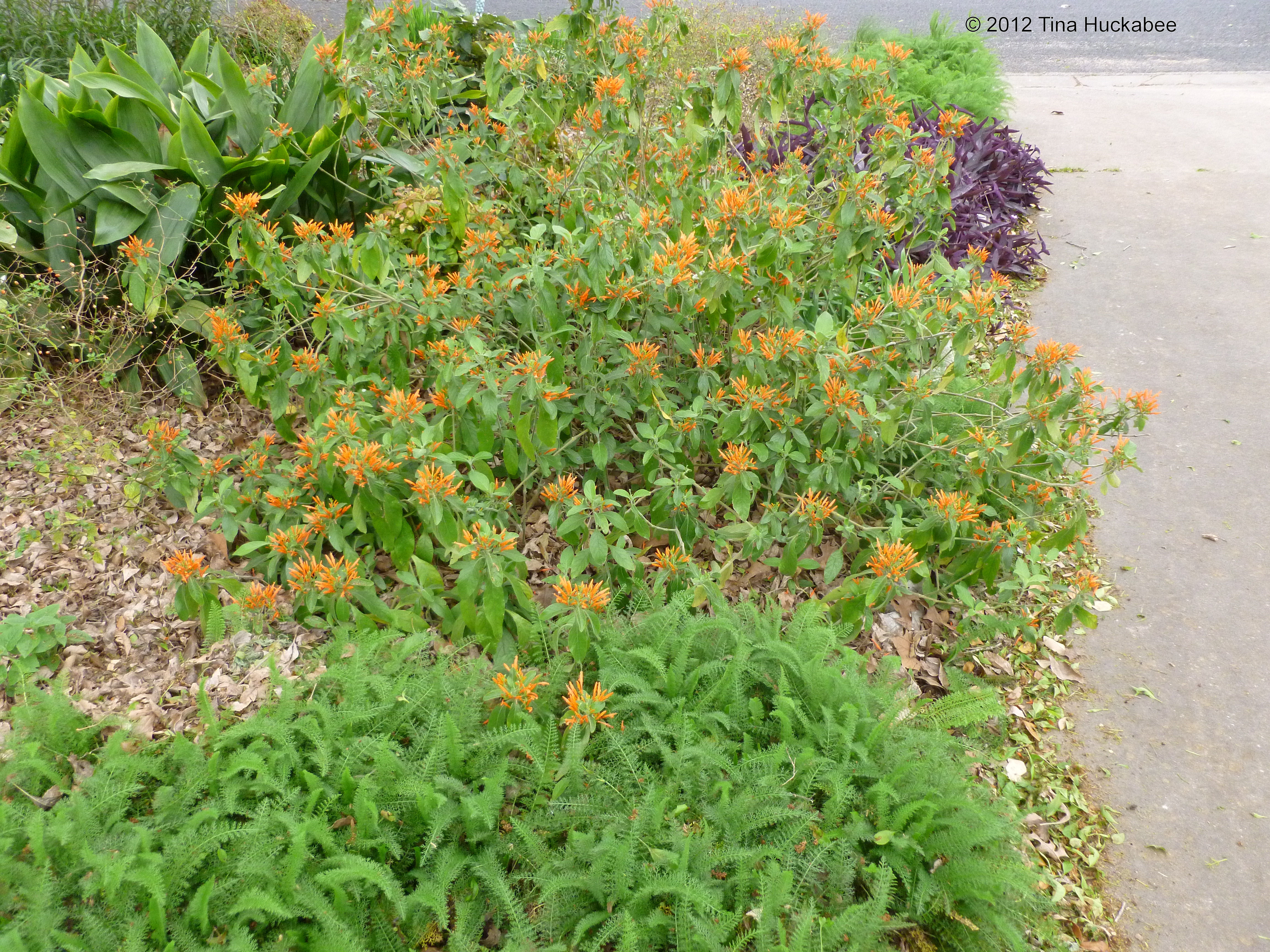
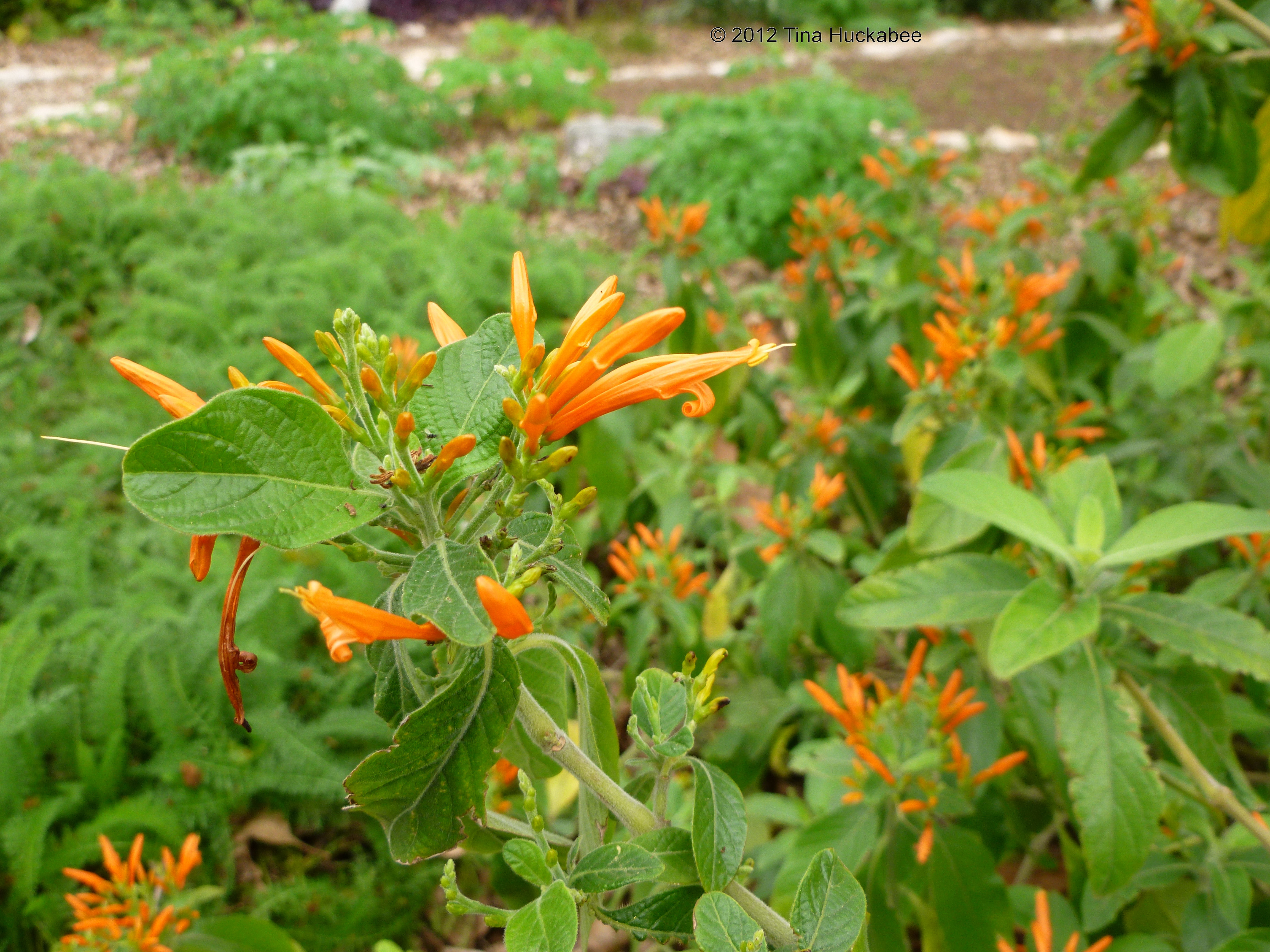
All around Austin these past few weeks,  Mexican Honeysuckle (Justicia spicigera) is strutting its stuff.  Sporting showy clusters of orange flowers, it’s quite a head-turner.

Gardeners grow it here in Austin and it’s a common plant in many parts of the southern United States. Native to Mexico and all the way south to Columbia, it’s naturalized in parts of South Texas.  I remember seeing it in Corpus Christi growing up, although I don’t think my parents grew it in their gardens.  It’s related to the Shrimp plant (Justicia brandegeana), which is also a common South to Central Texas perennial.

Most years, if there’s a deep enough freeze, this fabulous herbaceous perennial dies to the ground and returns from its roots once temperatures warm. Then in mid to late summer,  it begins its bloom cycle.  It will bloom, sporadically, until it succumbs to the next significant freeze. During this mild winter (in Austin) in which there was no  hard freeze (mid-twenties or lower), these gorgeous plants didn’t die to their roots.  Mine suffered slight freeze damage on some of the foliage, but that was all.

My Mexican Honeysuckle began its 2011 bloom cycle last August/September, rested a little during the “winter” months and then started blooming again about six weeks ago. They show no inclination to cease showing off as they brandish their clusters of tubular, orange flowers with abandon.

Mexican Honeysuckle is drought tolerant, but I usually water it once every two weeks during the summer.  During our Summer from Hell of 2011, it didn’t bloom, but it always looked good and I don’t remember it wilting often.  I’ve had no problems with insects or disease –it’s a very easy plant to grow and maintain in the garden.  It’s not too fussy about soil type and it does well in a dappled shade situation.

I saw two Mexican Honeysuckle plants recently on the Hike and Bike trail around Lady Bird Lake in Austin.  They were planted on a terraced hill, with no irrigation (that I could see) in the dappled shade of large trees.  They were blooming profusely!   I probably wouldn’t put this plant in full, blasting Texas sun, because there are better choices and because Mexican Honeysuckle works nicely in a part-shade environment.  It’s reportedly a hummingbird plant and that makes sense given the shape and color of the bloom.  I’ve never seen any hummingbirds feeding at the blooms, though.  And it may well be that the pollinators native to this plant aren’t normally in this geographic area.

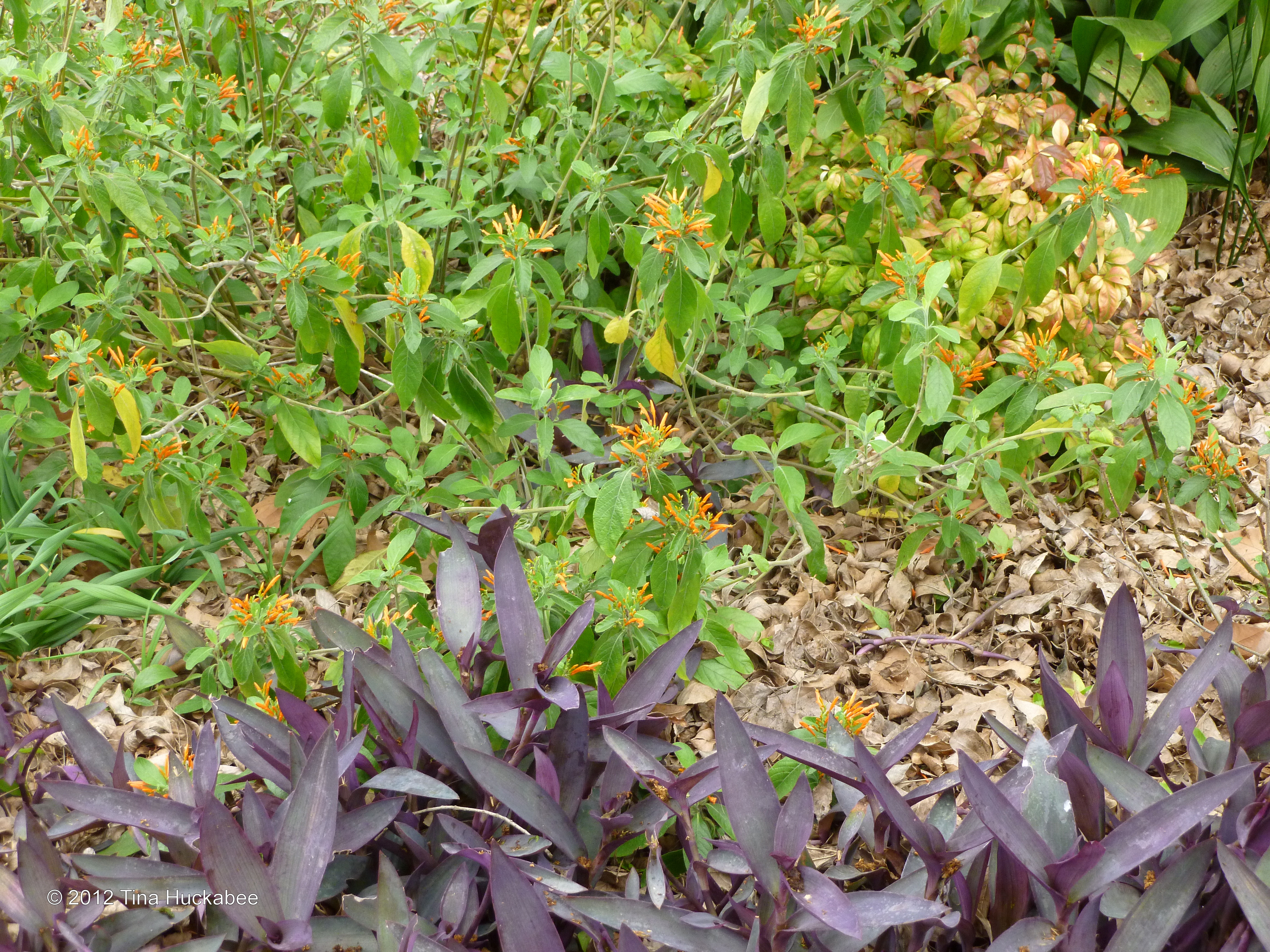
In my garden, it’s paired with Purple Heart (Setcreasea pallida) and with Yarrow (Achillea spp.)

I also have it planted with the ‘Nana’ Nandina–you can see how both plants share similar orange/yellow  coloring.  When Mexican Honeysuckle freezes to the ground, it gives the ‘Nana’ a chance to shine.  This year, the ‘Nana’ is peeking around to the right of the Mexican Honeysuckle and isn’t getting much attention.

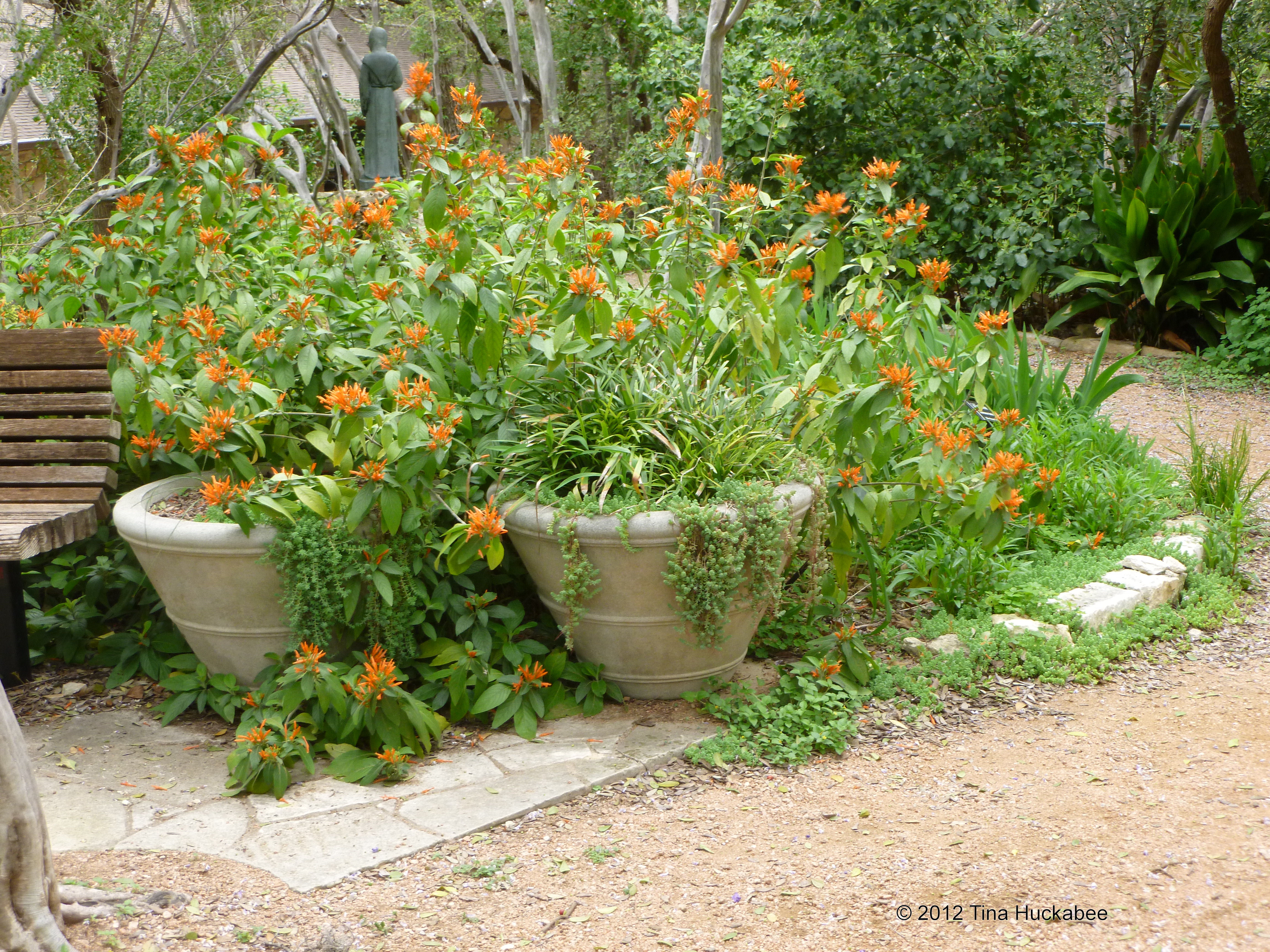
This one, in the Green Garden at Zilker Botanical Gardens,

receives some direct late morning sun, but is in dappled light for most of the day and  gets water once a week in the summer.  It has the same rangy growth that mine at home has.  I like that.  It adds a softness and casualness that is very appealing.  Mexican Honeysuckle can be pruned back, as needed, and I imagine that I’ll have to tidy both this one and mine at home during the course of this growing season.

Be patient  if you’ve planted Mexican Honeysuckle recently.  It can take a year or so before it demonstrates what a great addition to the garden it is.  Just give it a little room and let it go.  Enjoy!