Martha and the Old Gay Hill

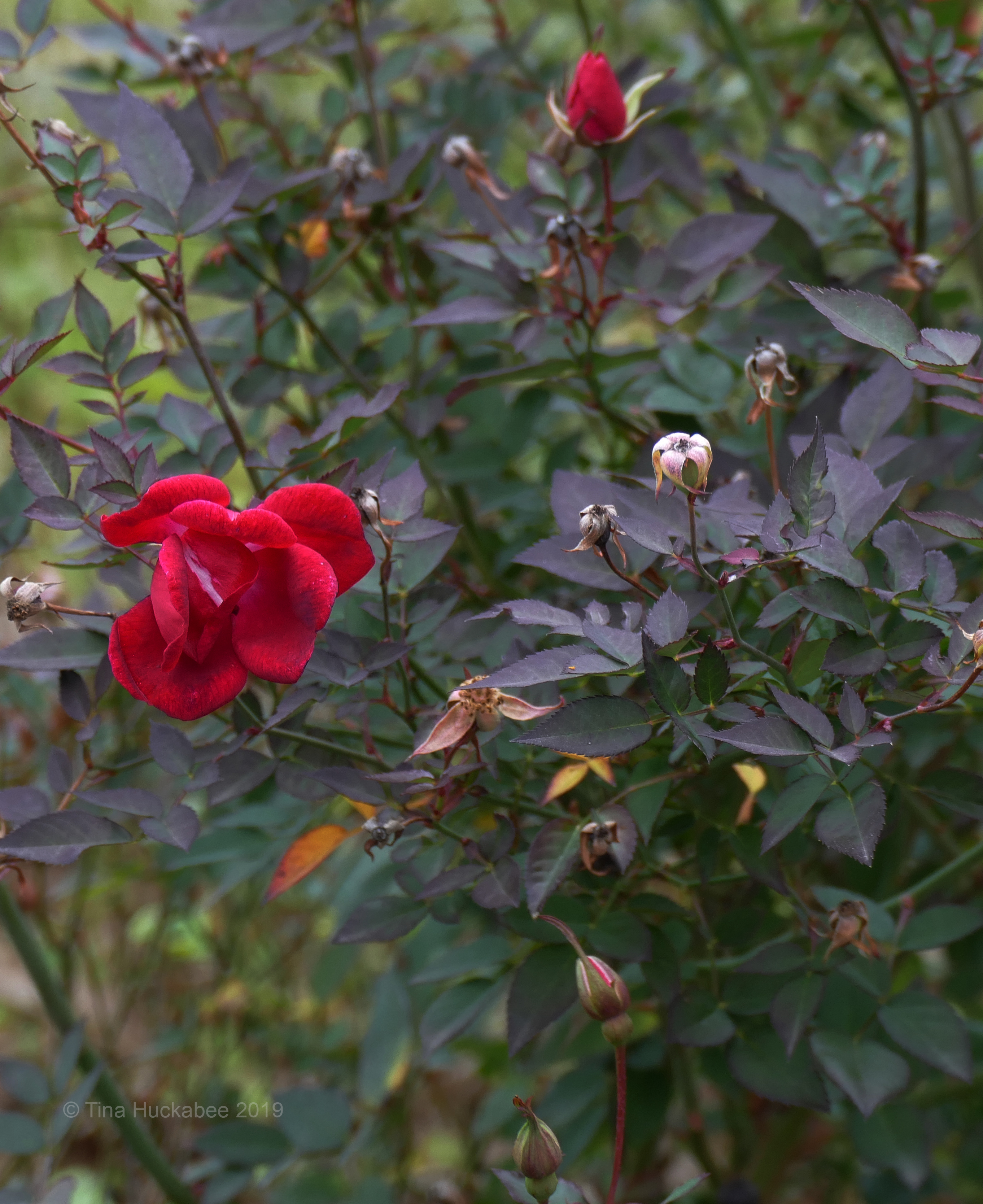
I’m guessing that the title captured your attention?  As well it should, because  Martha Gonzales rose and Old Gay Hill China rose are both rose shrubs worth noticing and growing, and both are stellar performers during a (so far) mild, drippy winter here in Central Texas.

I’m not a huge rose fan.  I like them just fine; I sniff the blooms and enjoy the results.  I think they’re pretty, when they’re pretty.  In general though, I prefer other plants in my gardens like grasses, perennials, and wildflowers. But I do like Martha and Old Gay Hill.  Both are antique roses, meaning that folks brought them to the New World, probably before the late 1800s, and planted them in small towns and on family farms. Due to hardy Rosa genetics, the roses flourished without much care and here in Texas, that’s the ONLY kind of rose that you want!

I accidentally purchased my Old Gay Hill rose shrubs some years ago.  I’d read about the rose, but was hankering for a Martha Gonzales, which the nursery didn’t have in stock at the particular point in time that I was hot to buy. But I had money to burn and energy to spare, so the Old Gay Hills came home with me.  I’ve never regretted that trip home as the roses have provided bursts of color, couple with an evergreen presence, excepting during the deep heat of summers and post-freezes of winters.

I’m charmed by the bride-of-Frankenstein stripes of white that each rose displays amid shouts of scarlet petals.

The shrub boasts good size (mine are currently nearly 4 feet tall), with handsome green foliage and pops of red.  This winter, Old Gay Hill has bloomed steadily.

New foliage is bronzy, held aloft by maroon-tinged stems, topped with sweet buds which open to generous, fragrant blooms.  Mature leaves are green, with a border of bronze.

The Old Gay Hill was discovered in Washington County, Texas, near a town called Gay Hill.  It’s listed as a “native” rose in the link above, but many rose species were brought to Texas by European immigrants during the 1800s.  Like most immigrants to North America, the rose varieties settled in, accepted their new home–heat, drought, and everything else–and did what immigrants always do:  they made Texas a better, more beautiful place.


Apparently, I like red roses.  Unsatisfied with growing only Old Gay Hill, I eventually planted the desired Martha Gonzales roses.  The Marthas grow a smaller bloom, but rival Old Gay Hill’s in brilliance and beauty.  The petite roses are deeply fragrant, a delight to the nose. In my experience, the Marthas are better over-all bloomers than the Old Gay Hills, but they’re also located in sunnier spots.  The shrubs are foliage-dense, though haven’t grown particularly tall for me. I’ve seen Marthas grow quite large in both height and width, some in my own neighborhood.  Those are the ones growing with ample, year-round sun.
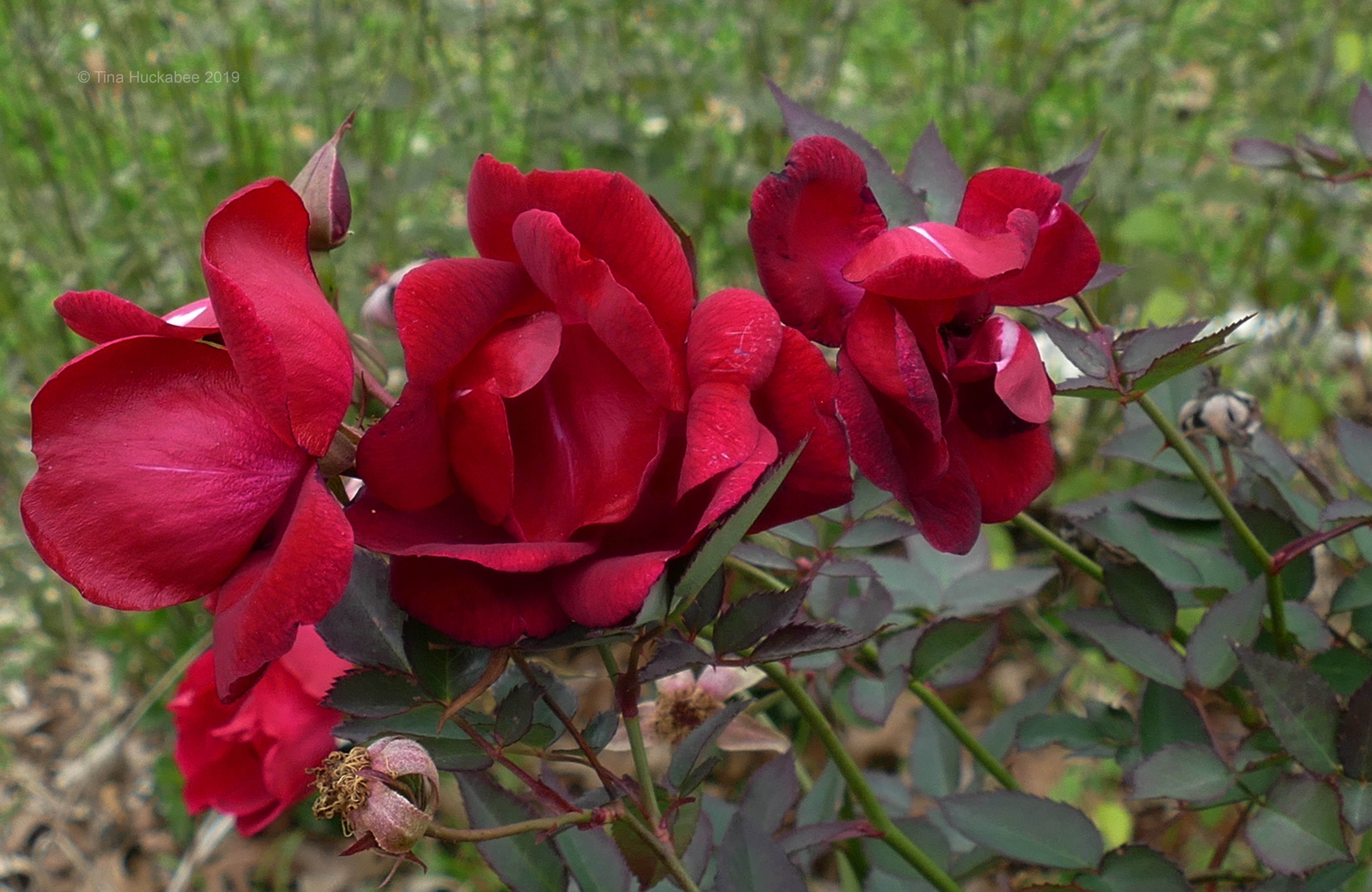
I’m especially fond of the foliage on this rose shrub.  The leaves are deep green, flushed with a tinge of burgundy, each leaf edged in wine red.   Though smaller than the green leaves of Old Gay Hill, Martha’s leaves are richly colored.  The pairing of carmine blooms with the vivid leaves is stunning.

The Martha Gonzales was discovered in 1984 in the Navasota, Texas garden of–you guessed it–Martha Gonzales!
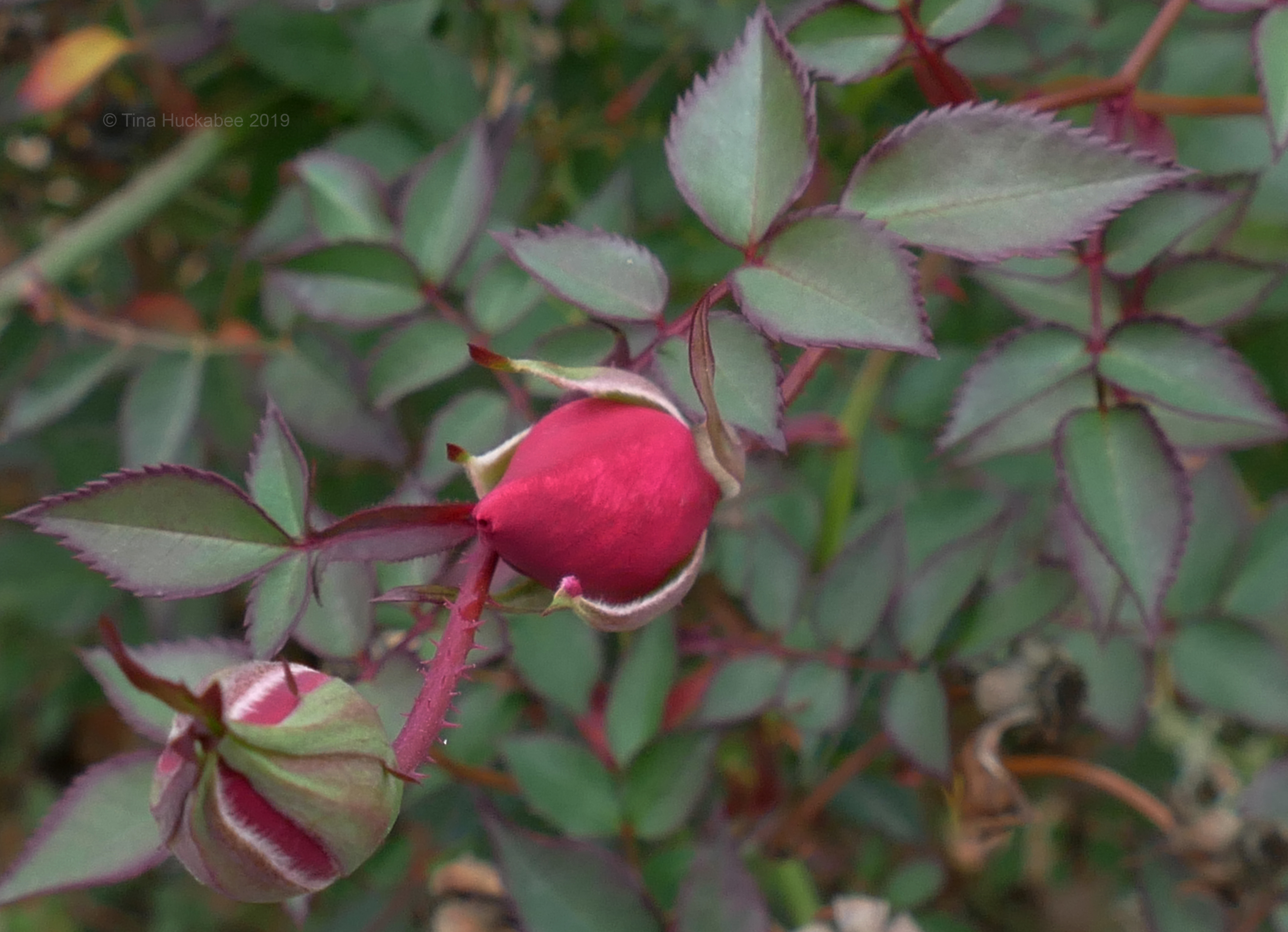
Both rose varieties are disease free, nearly thornless, and are frequented by many of the pollinators who visit my garden, though right now, there’s not much pollinator action, excepting honeybees on warmer days.  During this mild winter, my roses have been stalwart bloomers and I’m enjoying the flowering.  A hard freeze is predicted in the few next days which may end the the show the immediate future.  If that happens, I have only to wait until  March or April for the crimson tide to return.

Winter red blooms are chasing away the winter blues for me.  Do you have winter blooms cheering your garden?


Bloom Love

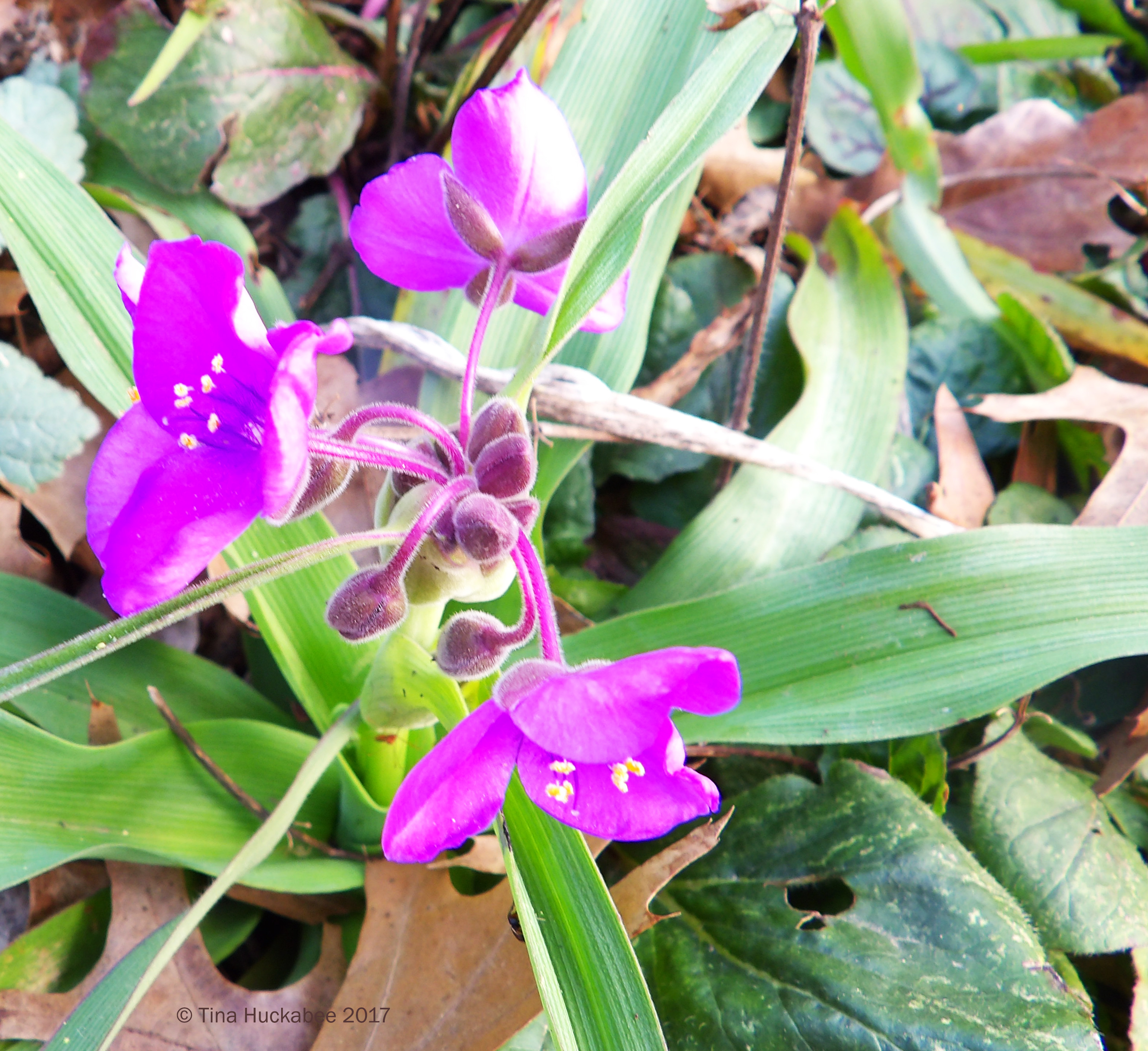
Oh this is happy day of love: for our partners, children, friends and communities and it’s also a perfect day to love those first blooms in the garden.  In my awakening garden, only a few are showing their well-loved faces and providing for hungry pollinators.   Included in these earliest blooms are flowers of Giant spiderwort, Tradescantia gigantea.

RICOH IMAGING


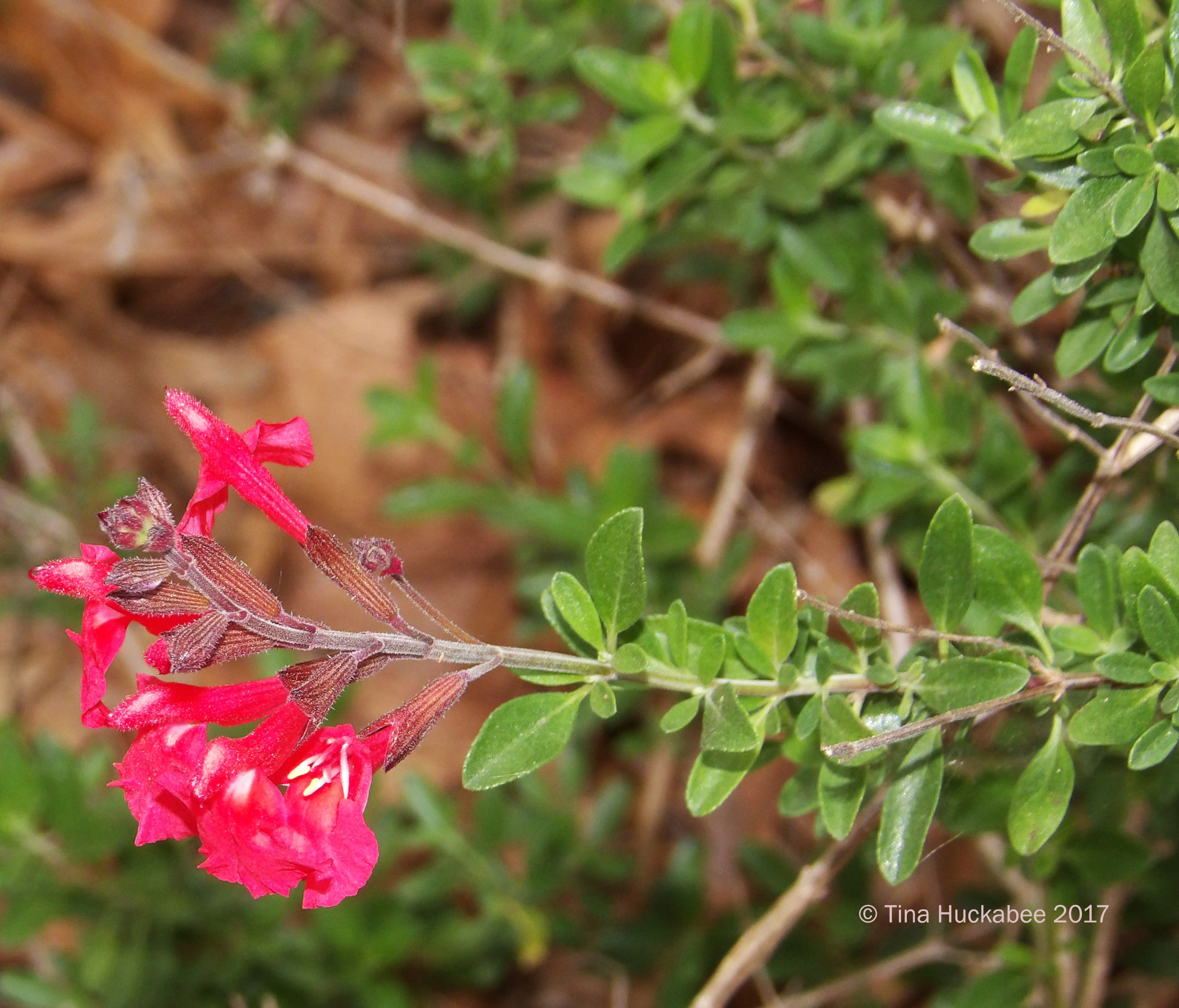
The first of many-to-come blooms of Autumn sageSalvia greggii,  are presenting in a salmon-colored package.

RICOH IMAGING

It was in this set of blooms that I spied one of the early native bees, a Blue Orchard bee,  busily gathering nectar and pollen.


Reliable winter bloomers are the charmers adorning the Potato vineSolanum laxum.

RICOH IMAGING

This little cluster decorates the residential area of a non-occupied wren house.  I’m eagerly awaiting a wren couple settling in, loving and raising some chicks, and enjoying their flowers.


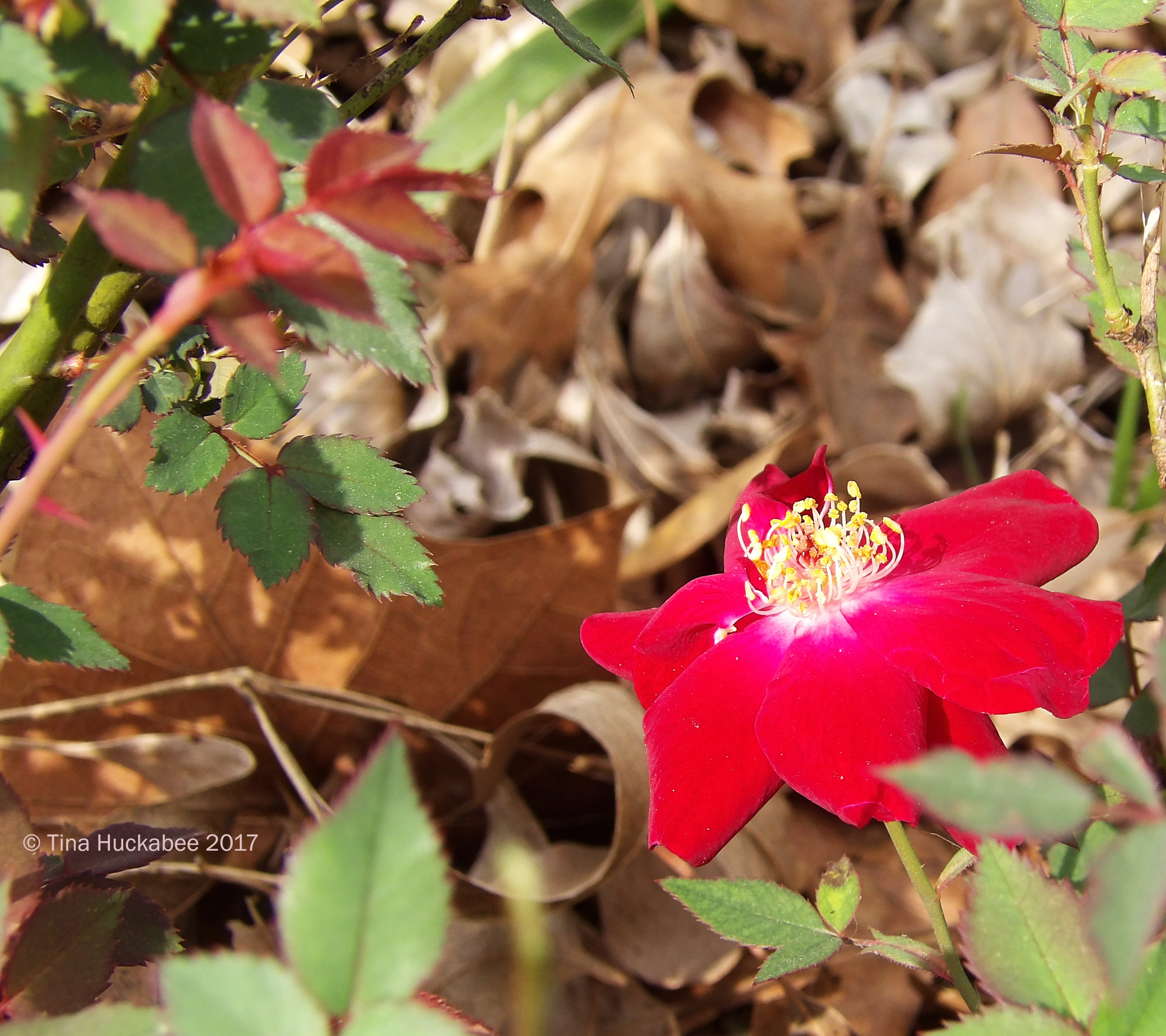
With apologies to Robert Burns and his June-blooming red, red rose, my two red rose shrubs each sport a couple of blooms which have opened for pollinator business and gardener love this February.  The Old Gay Hill rose,

RICOH IMAGING

…and the Martha Gonzales rose,  are gearing up for their spring performances.

RICOH IMAGING

These two roses look similar at first glance but Martha is a smaller shrub decorated with petite, deep red blooms and the Old Gay Hill rose showcases larger blooms with a more brilliant hue.  Both are water-wise perennials and stalwart bloomers.  I look forward to the blast of crimson they lend my garden later in spring.

It’s early days for bloom love in the Northern Hemisphere.  This day and everyday, should be a day of love and kindness in the garden–and everywhere.

For a look at more loved and lovely blooms, check out Carol’s May Dreams Gardens celebrating all things blooming from many places this February.

Bloom Day, October 2014

Summer has been reluctant to release its toasty grip on us in Texas, but the cool of autumn has mostly arrived. We’ve enjoyed a couple of refreshing cold fronts, dropping our temperatures into the ’50’s, with highs in the 70’s and ’80’s. The lingering warmth of September and early October didn’t damper blooms in my gardens, though. Joining Carol at May Dreams Gardens, I’m celebrating blooming stuff on this 15th of October.

There is no shortage of blooming native Texas plants in my gardens. Let’s take a tour, shall we?

Barbados Cherry, Malpighia glabra, has blossomed its dainty, pink clusters for a month or so now.

IMGP0216_cropped_3829x2521..new

Soon, cherry red fruits will replace blooms, feeding a whole different crop of critters. Barbados Cherry is lovely in tandem with Turk’s CapMalvaviscus arboreus.

IMGP0218.new

A cultivar of the native red Turk’s Cap, the Pam’s Pink Turk’s CapMalvaviscus ‘Pam Puryear’, blooms as heartily as the red,

IMGP0235_cropped_3548x3355..new

…but with softer pink swirls perched atop the long branches.   In my gardens, the Pam’s Pink is planted with FrostweedVerbesina virginica,

IMGP1283.new

….and it’s a successful pairing.   Frostweed is an excellent wildlife plant.   Attracting butterflies, like this migrating Monarch,

IMGP1166.new

IMGP1149.new

…and bees,

IMGP1077.new

…and this guy, a Tachinid fly,

IMGP1072.new

…who you can see again on Wildlife Wednesday, a fun little wildlife gardening meme I host.  The next Wildlife Wednesday is November 5th.  Frostweed a stalwart native perennial; it’s drought hardy and works well in either shade or sun.

IMGP1031_cropped_3429x3208..new

The GoldeneyeViguiera dentata, is photogenic in the fall garden.

IMGP1236.new

Another perennial which attracts its share of pollinators,

IMGP1241.new

…these pretty yellow flowers evoke glorious autumn sunshine.

IMGP1008_cropped_4129x3078..new

IMGP1342.new

They work and play well with other natives in my gardens,

IMGP1185.new

…like the Rock RosePavonia lasiopetala and Barbados Cherry. And who doesn’t love the tried and true combination of yellow and blue?

IMGP1277_cropped_3129x3382..new

This Goldeneye’s companion is the non-native Blue Anise Sage, Salvia guaranitica.  

The roses in my gardens are awake again after the heat of summer. I grow only water–wise antique or cultivar roses in my gardens.  If a rose can’t shrug off the heat and dry of the Texas summer, it’s out!  The Martha Gonzales Rose is one such beast.

IMGP1208.new

Named after a Navasota, Texas gardener, Martha Gonzales,

IMGP1204.new

…this rose is beautiful, fragrant, and tough. Martha grows in USDA zones 7a to 10b so it it’s appropriate in a wide range of situations.  If you only grow one rose, make it the Martha!

The Belinda’s Dream Rose, which is appropriate for USDA zones 5a to 10b,

IMGP1612.new

is the quintessential elegant pink rose. Fragrant and downright luscious, Belinda isn’t quite as hardy as the Martha, but still performs well for me.  Belinda gets a little peeky in summer, but picks up again with rain and softer temperatures.  Caldwell Pink Rose,

IMGP0975.new

looks dainty, but it’s no wilting beauty.  This poor thing, I’ve moved it four times–I think I’ve finally found its forever home.

IMGP1014.new

A migrating Monarch finds this Old Gay Hill Rose delightful,

IMGP1724.new

…and so do I.  Similar to the Martha Gonzales, the shrub is larger and the petals slightly (but only slightly) more pink than the Martha’s fire engine red petals.

I’m not a grow-only-native purest and host a number of non-native perennials in my gardens, like these Four O’Clocks, Mirabilis jalapa.  Considered a staple of the Southern garden, these are new to my gardens and were gifted to me by a gardening friend, TexasDeb at austin agrodolce.

IMGP1180.new

IMGP0856.new

IMGP0858_cropped_3419x3414..new

These lovely trumpets open late in the day, bloom all night, and close in the morning. Four O’clocks are fragrant and are such lovelies–I’m tickled to make room for them in my gardens.

Jewels of OparTalinum paniculatum, are another new-to-my-gardens perennial from TexasDeb.  Jewels are also an old-fashioned flower of the Southern garden.

IMGP1369.new

IMGP1380.new

I love the teesny flowers, the “jewels” seeds, and chartreuse foliage. Both Four O’Clocks and Jewels of Opar are potentially invasive, so I’ll keep them in check–ripping out uninvited extras who crash my garden party!

It’s now that my Coral Vine, Antigonon leptopus, shines,

IMGP1413.new

IMGP1415.new

…or is that a sparkle?  Whatever it is, the bees love this bloomer.

After each rain, the Almond Verbena, Aloysia virgata, flowers and its fragrance graces my garden.  Shown here in partnership with Turk’s Cap blooms, the Almond Verbena is favored by honeybees.

IMGP0918.new

My Almond Verbena is the anchor plant in a group of native shrubs and perennials.

IMGP0910.new

It fits quite well, I think.

Quoting another garden blogging buddy, Debra of Under the Pecan Trees,  we enjoy a “second spring” in Texas–a  lush blooming autumn gift, after the heat, when all, including gardeners, perk up anew.

What’s blooming in your gardens this October Bloom Day?  Check out May Dreams Gardens for blooms from everywhere.