The Monarch And The Bee

On a sunny October afternoon, the Frostweed, Verbesina virginica, is in full bloom mode.

IMGP0994.new

IMGP1076.new

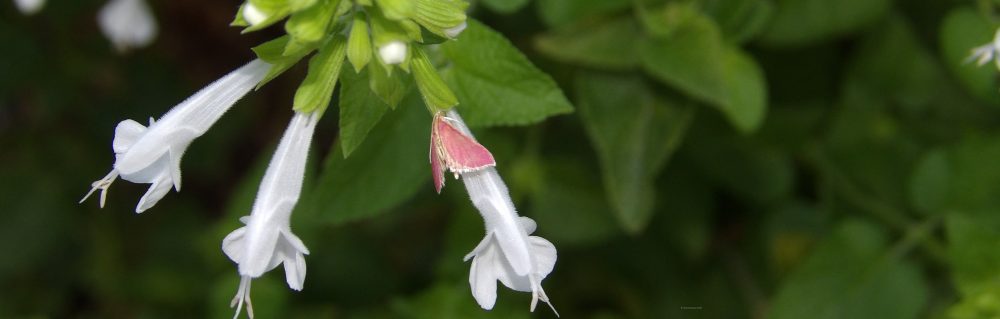
A stately native perennial to Texas and other places as well, Frostweed attracts  those who pollinate for a living. This Monarch butterfly, Danaus plexippus, no doubt on his way to Mexico, rests on the Frostweed,

IMGP1136.new

RICOH IMAGING

IMGP1144.new

…while sipping nectar to re-fuel for the rest of his long trip.  He’s only the third or fourth Monarch to visit my gardens.  I hope there will be more.

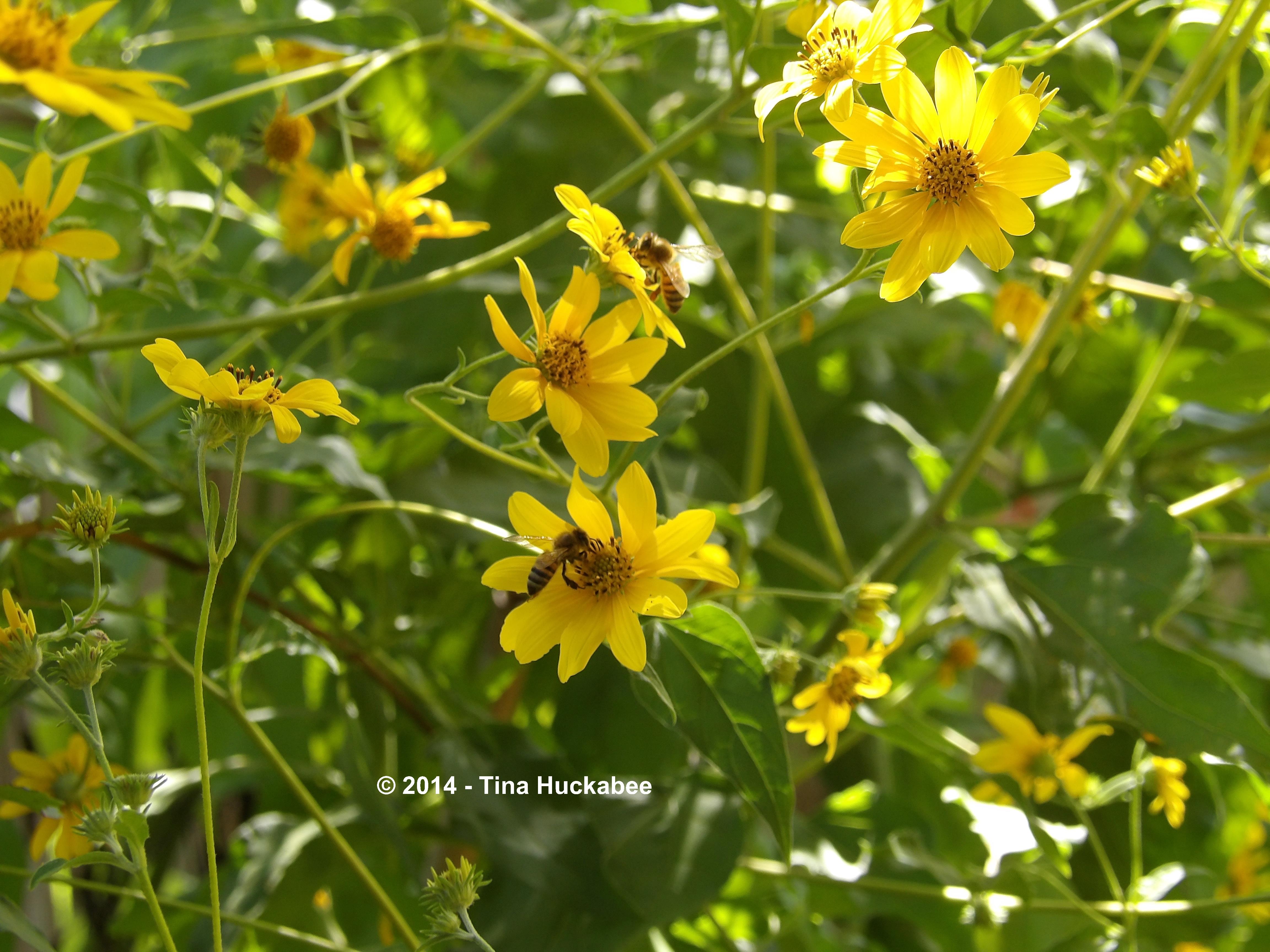
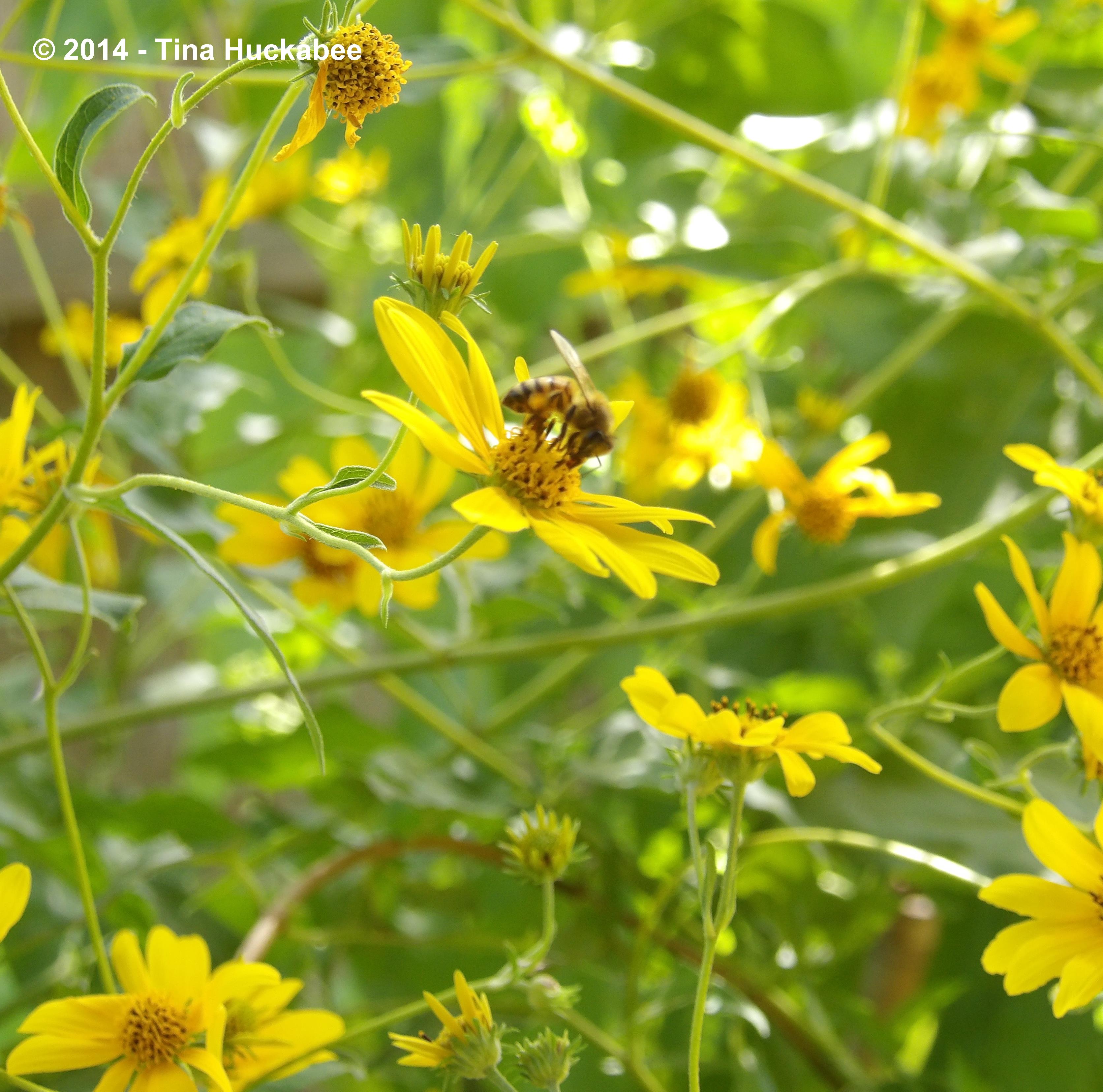
One of my hived honeybees graciously shares her food bar space with the migrating Monarch.

IMGP1159.new

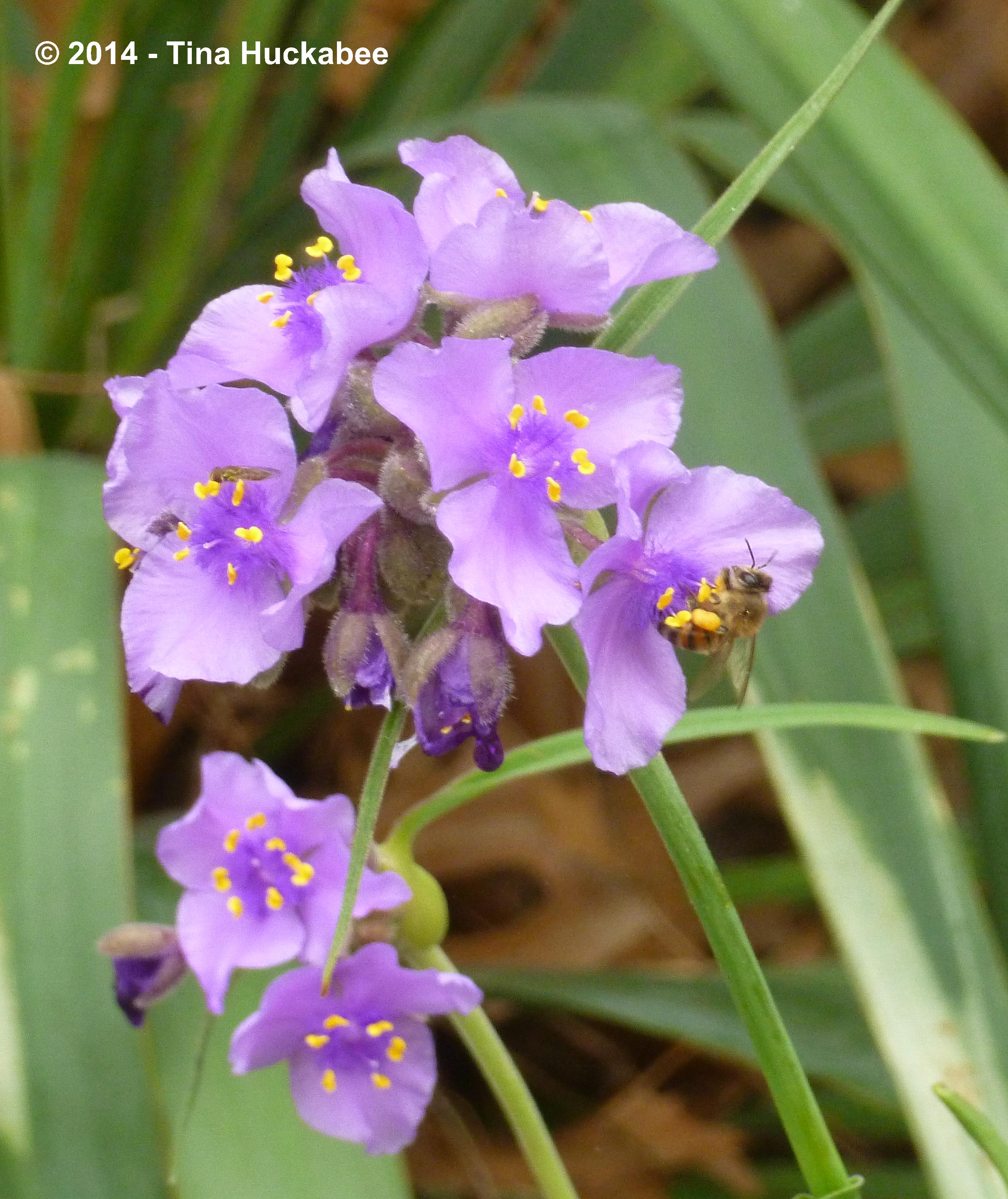
There are plenty of life-giving, yummy nectar and pollen rich blossoms this time of year. In beekeeper-speak, Central Texas is experiencing nectar flow, meaning lots of honey is being produced because there are so many flowers in full, autumn flush.

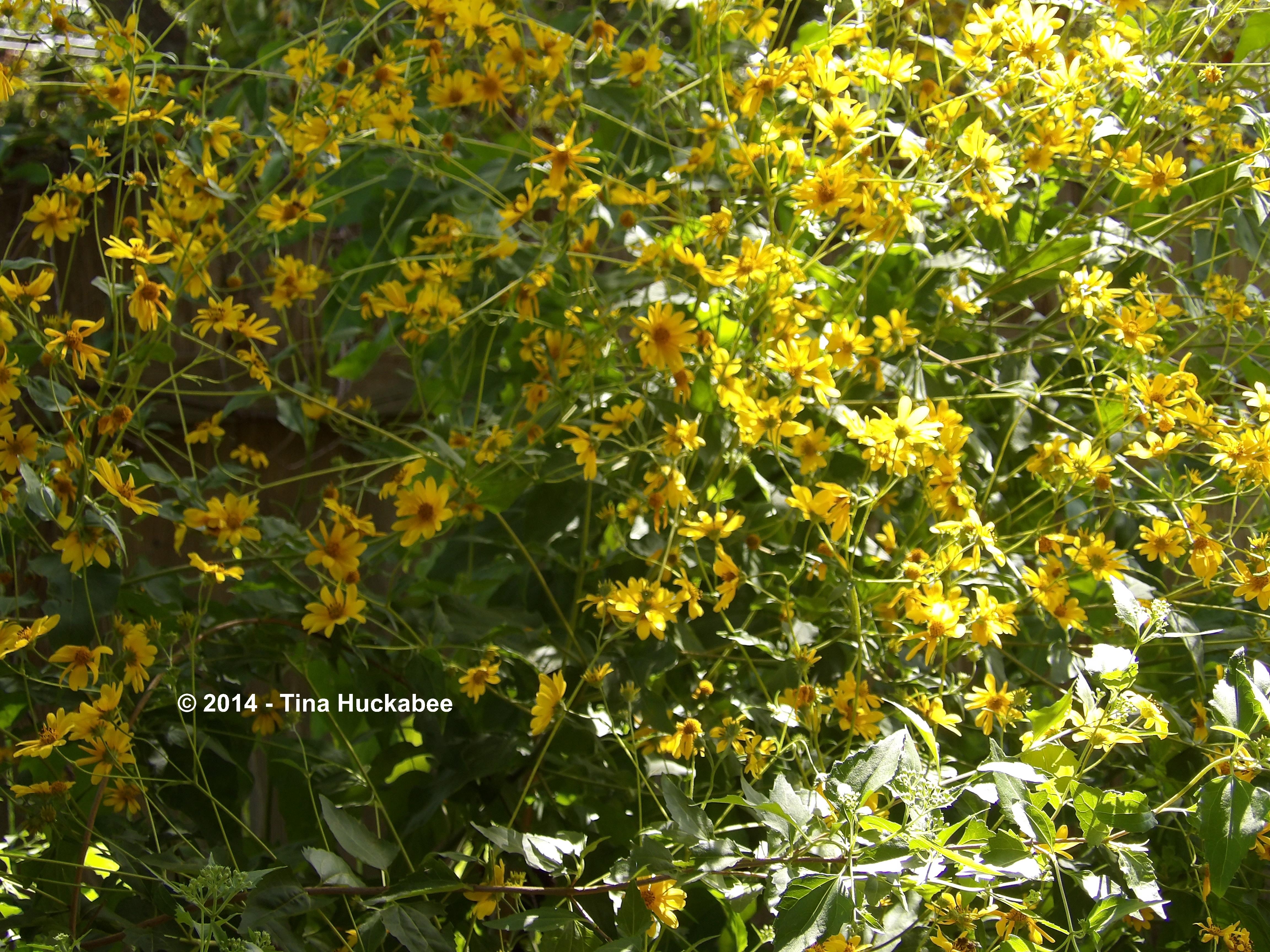
In concert with the blooming Frostweed, GoldeneyeViguiera dentata, is another native perennial at its height in flowering.

IMGP1187.new

IMGP1232.new

IMGP1237.new

My forager honeybees don’t travel far to find what they need for their hive,

IMGP1240.new

IMGP1238_cropped_3345x3313..new

…while Goldeneye conjures rays of sunshine in the garden.  Oh happy autumn blooms!

IMGP1233.new


Bee Mama Missive: Adding To The House!

As a family grows, sometimes the house needs additional space. Though it seems like I’ve tried my darndest to kill my hives Scar and Mufasa, they’re buzzing along just fine, thank you very much.

Recently I’ve felt like Bee Daddy and I are the Laurel and Hardy of beekeeping–just one blunder upon another.  After our bee drama of rolling (aka: killing) our queens, then not recognizing that we needed new queens, then finally realizing that we needed to re-queen and working weeks to see that process through, both Scar and Mufasa are re-queened and thriving.

I think.

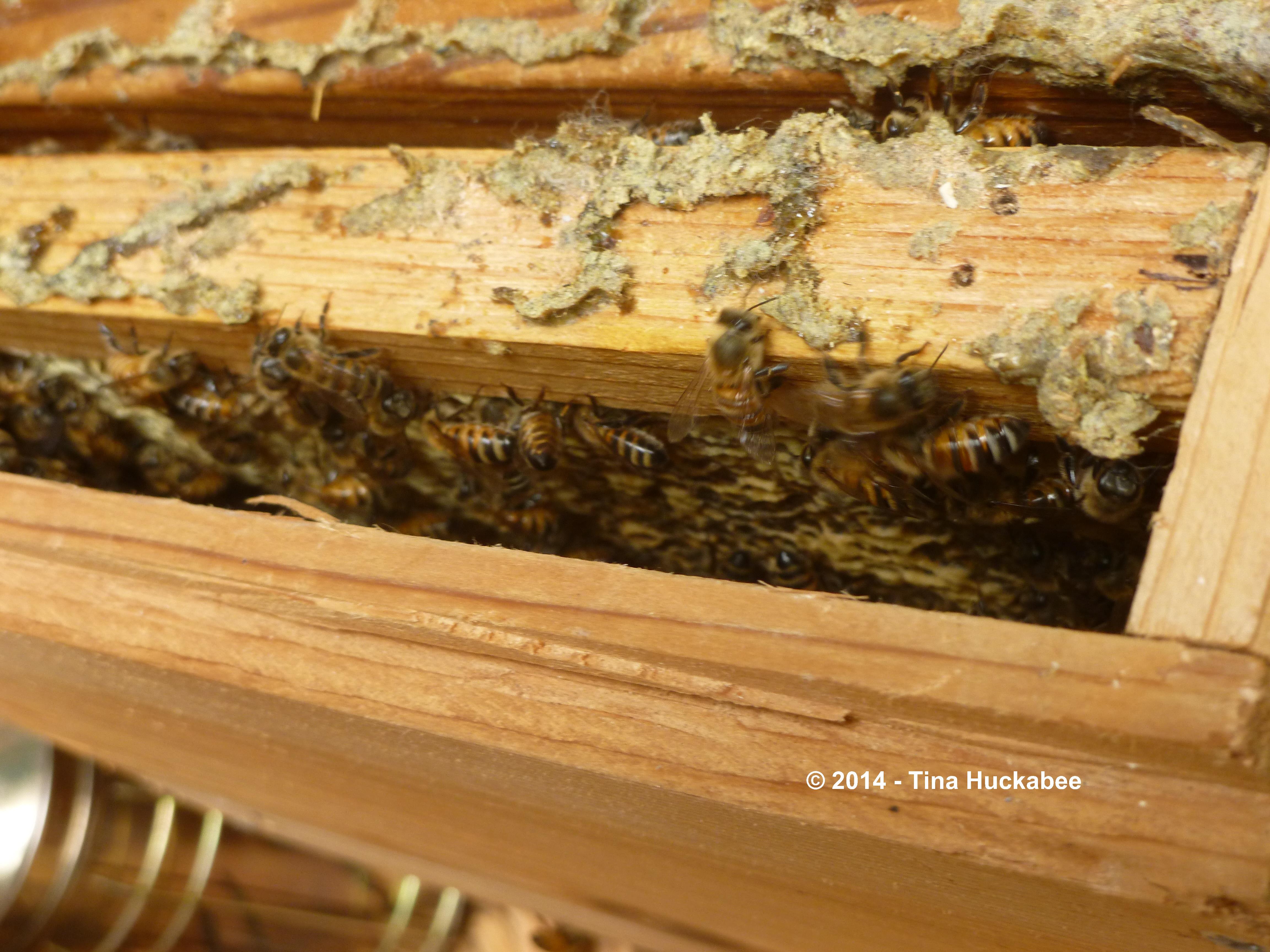
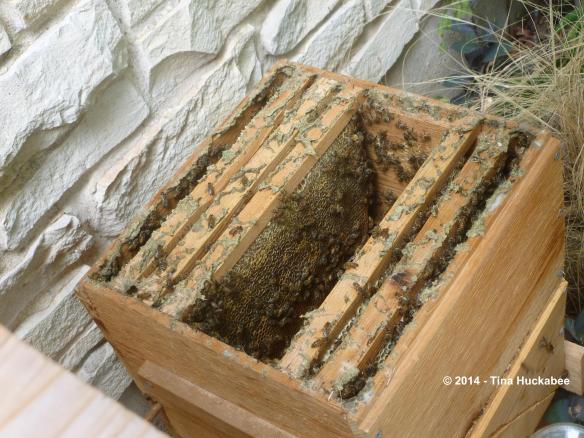
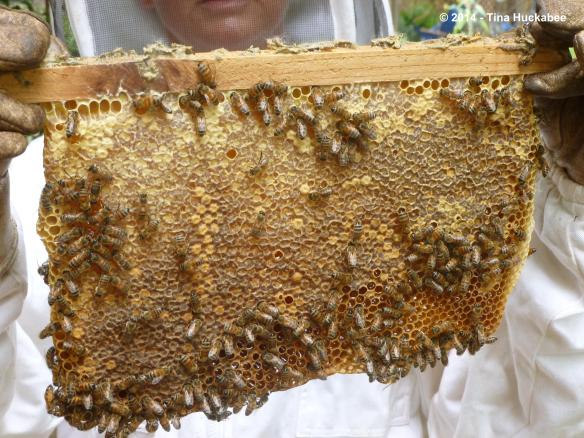
Scar is the more advanced hive–he didn’t go long without a queen and his population didn’t decline much, if at all.  In Scar’s top box, each bar has fully drawn comb,
P1060789.new

…meaning that the bees have made full comb and that comb has capped and uncapped honey.  It’s remarkable how heavy all that sweet honey is.
P1060787.new

The gals will need the honey stores for winter, so we will not harvest it.  The last time we checked the bottom box, there was also fully drawn comb, but with capped and uncapped brood in cozy little incubators for the next generation of worker bees.  Worker bees change careers throughout their lives, driven primarily by the needs of the hives and their pheromones.   But workers don’t live long, so the queen lays eggs constantly for on-going repopulation of the hive.

Scar appears active and healthy.  However, the last two times I’ve opened both hives, I’ve seen several  Small Hive BeetlesAethina tumida–the nasty nemesis of the honeybee.  Oh, good grief, what now?!!

The Small Hive Beetle is an invasive species that damages comb as well as honey and pollen stores.  There are chemical solutions for the hive beetle, but those chemicals can also hurt honeybees.  Duh.  There are other less toxic products as well, but I found the beetles at the low point of my angst about my hives–Queens or no queens? Oh-no-I’m-killing-my-hives! I wasn’t sure it was worth doing anything for the hives. Beetles attack hives which are vulnerable–like those tended by rookie beekeepers.

Ahem.

I didn’t feel like I had much to lose, so I commenced a squishing campaign to eradicate them whenever I saw the little creeps.  Well, actually, squishing those few visible beetles isn’t going to annihilate an infestation, or even make much of a dent, but it makes this beekeeper feel like she’s taking care of her bees. For whatever it’s worth (and the beetles could still rear their rather unattractive little selves), I haven’t seen any of those devils since my hives were successfully re-queened.  I’m also feeding the bees, which will help them maintain strength through their endeavors, our mistakes and the dearth of blooms that is August in Austin.  The only thing beekeepers should feed bees is the bees own honey (if there’s a surplus) or a 1:1 or 1:2 ratio of sugar-to-water.

Fingers crossed that we can avoid a Small Hive Beetle catastrophe.

In opening my hives in these last few weeks and acknowledging that Scar is progressing well, I thought: if I don’t totally screw them over with my incompetence, it might be time to add another box to Scar.  Mufasa is also doing well, but doesn’t have fully drawn comb, nor full honey in the top box.  Mufasa has some work ahead before needing a third floor addition.

But Scar?  Verily bursting out of his seams!  Or boxes.
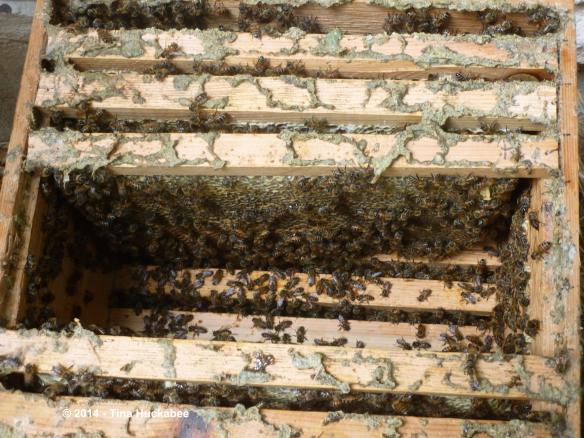
P1060791.new

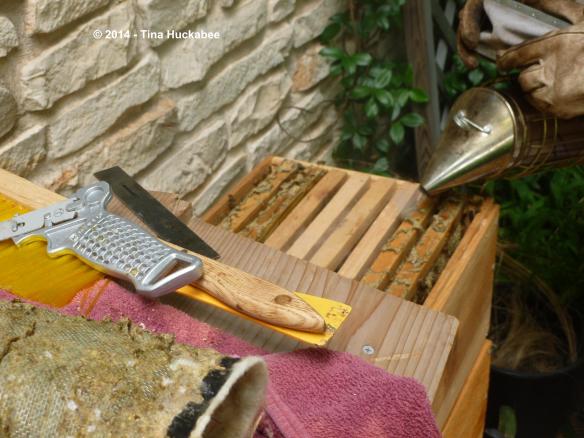
So, I added some wax to eight unused bars to give the girls a place to start,
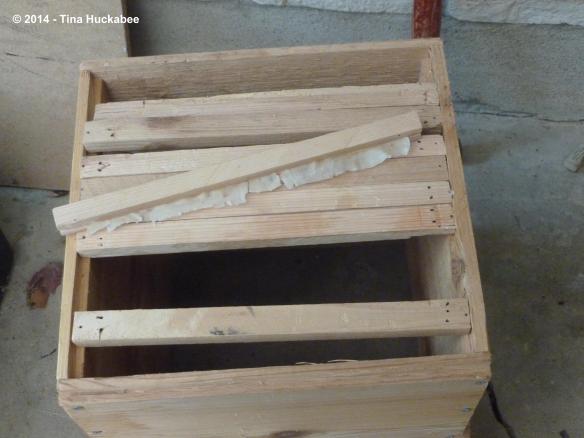
P1060783.new

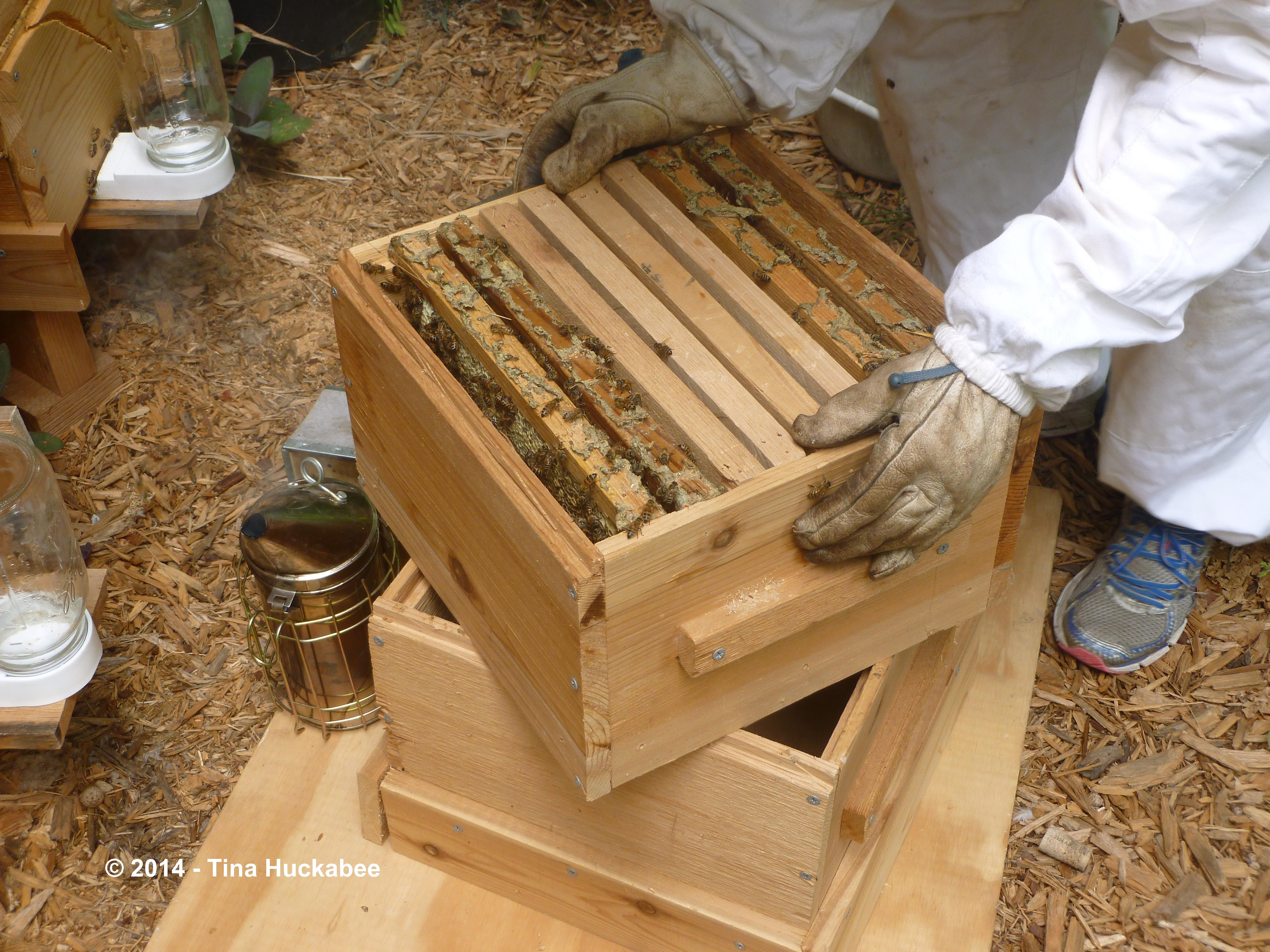
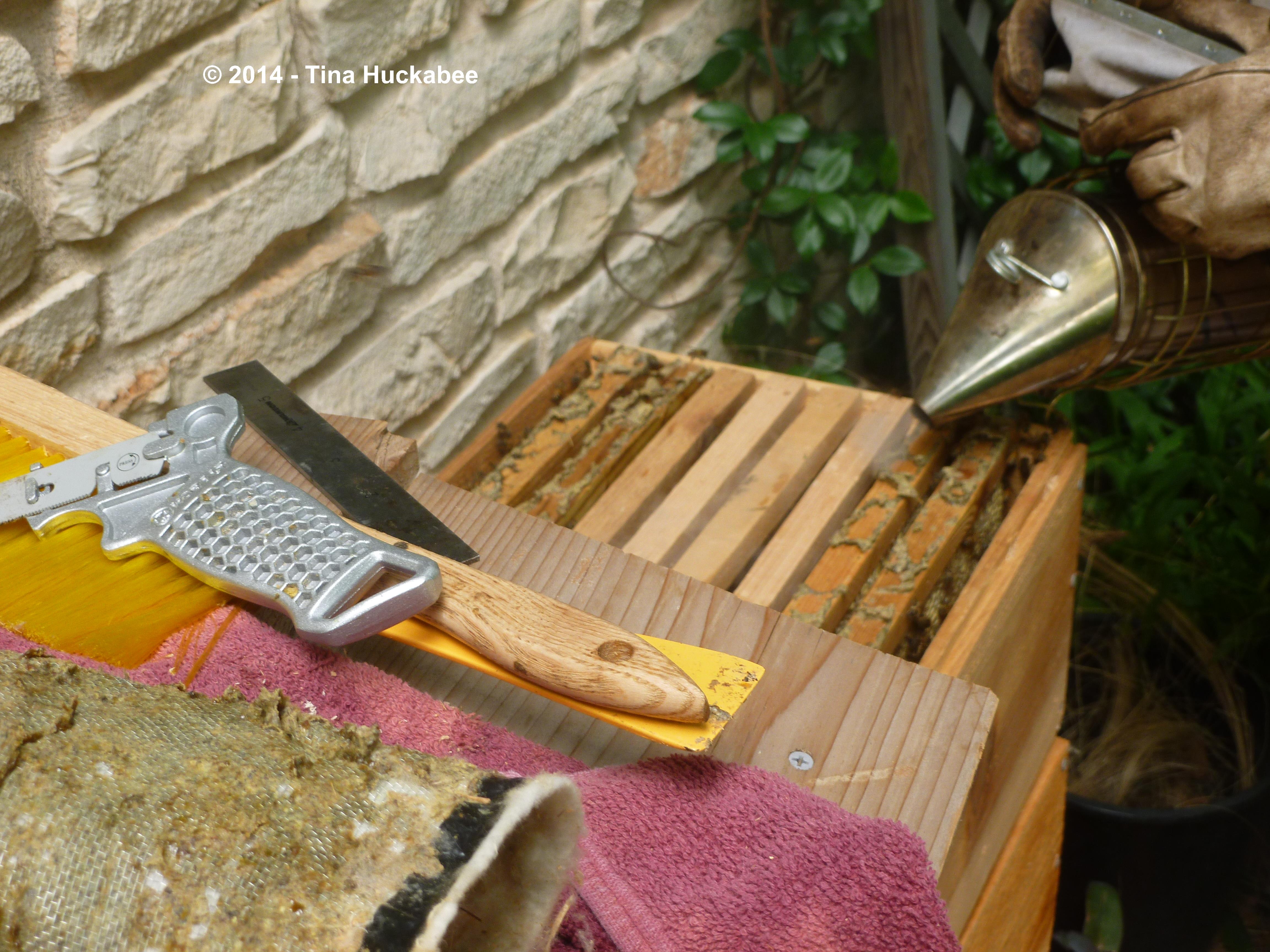
…and we opened up Scar, ready for the opportunity to expand the digs.   Scar’s bees are busy, active and yeah, they still sting–even when smoked.  She got me right on the thumb. I put gloves on after that.  Some people never learn.

So much wax, comb, honey and bee activity!
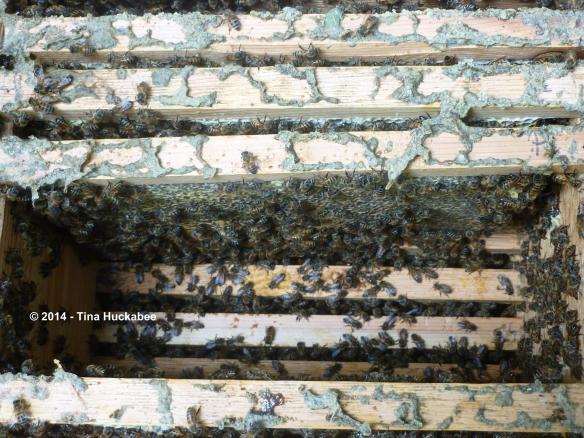
P1060793.new

P1060803.new

I pulled out four bars with full comb and placed  them into the third (new) box,
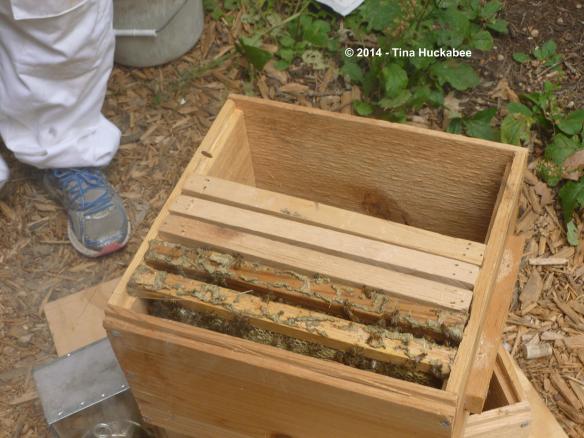
P1060790.new

P1060798.new

…and placed four new (empty) bars to the second (now, middle) box.
P1060810.new

I evenly spaced the bars in the hives.  The bars must be three-eighths of an inch from one another for the bees to safely crawl around in the hive. This is known as bee space.  I’m so OCD that when checking my hives, if I have to move the bars and I usually do for one reason or another, I measure each space.  Thoroughly, I would say.  Obsessively, others would say.

P1060800.newa

My family loves me in spite of that particular personality quirk.  Trait.

Lastly, I assured that the hives were set evenly on the ground–no tilt allowed or the bees might build cross-comb and that could become a whole thing, which you can read about here.

P1060809.new

I popped on the tops, while Bee Daddy cleaned up and put out the smoker.  I stood back and smiled at my hives.

P1060813.new

Scar and Mufasa.

Nice little hives with nice little bees who make delicious honey and pollinate…everything,

P1030166_cropped_2848x3387..new

…and their crazy beekeeper lady.

P1060786.new


Bee Mama Missive: Honey!

My bees make incredible honey.  It’s just amazing stuff.

P1050705.new

Because our bees were overcrowded in their hives, we recently removed one bar with drawn comb from each box and those bars were full of capped honey.  The other frames had some brood or were empty, so we didn’t remove those.  Removing the bars with honey lessens the amount of stored honey for the bees during winter, but we have a long growing season here in Austin and there is still time for the bees to replenish their supply, assuming the hive survives. Bees are excellent little foragers and they’ll rapidly make up the loss of honey.

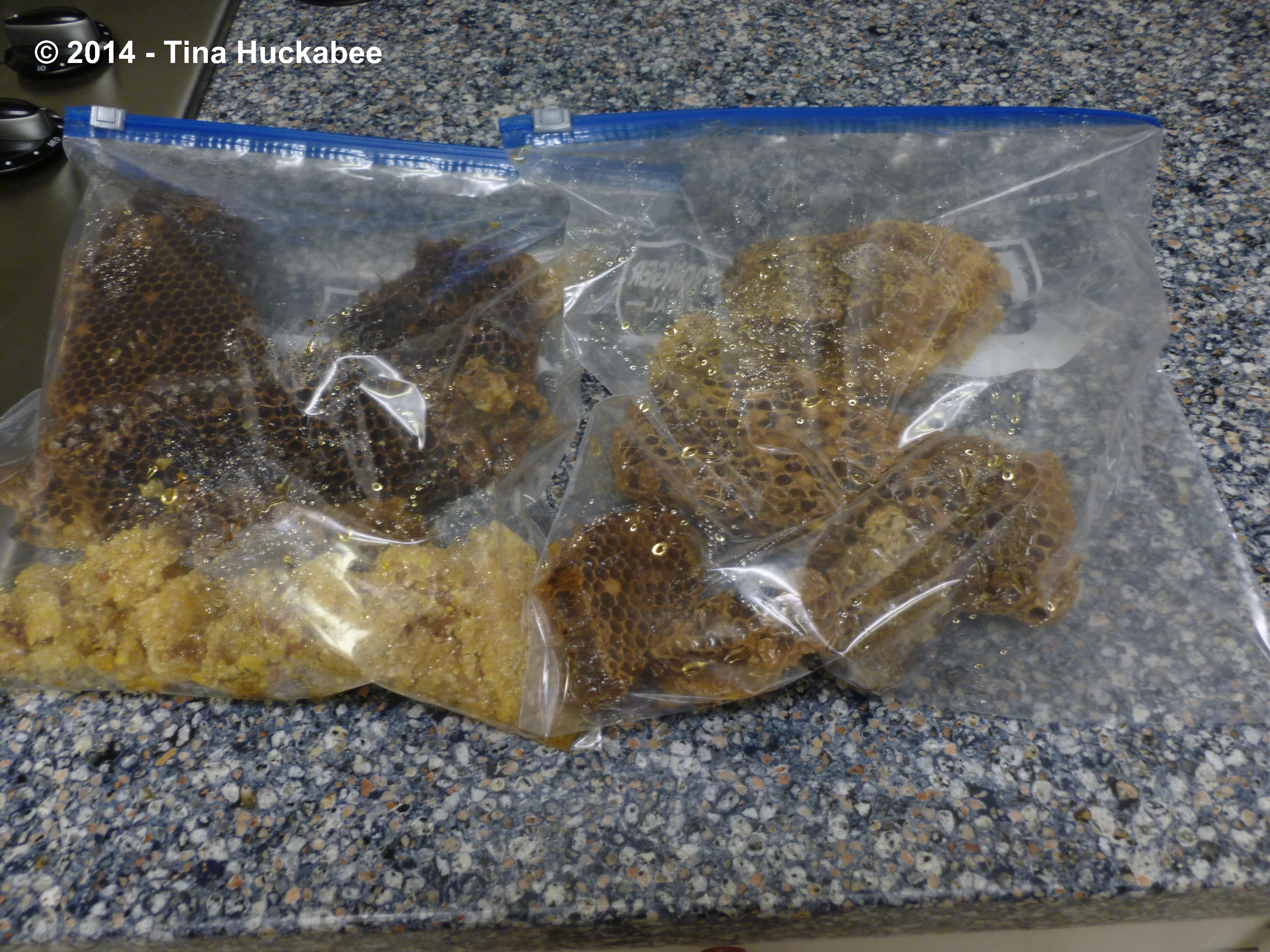
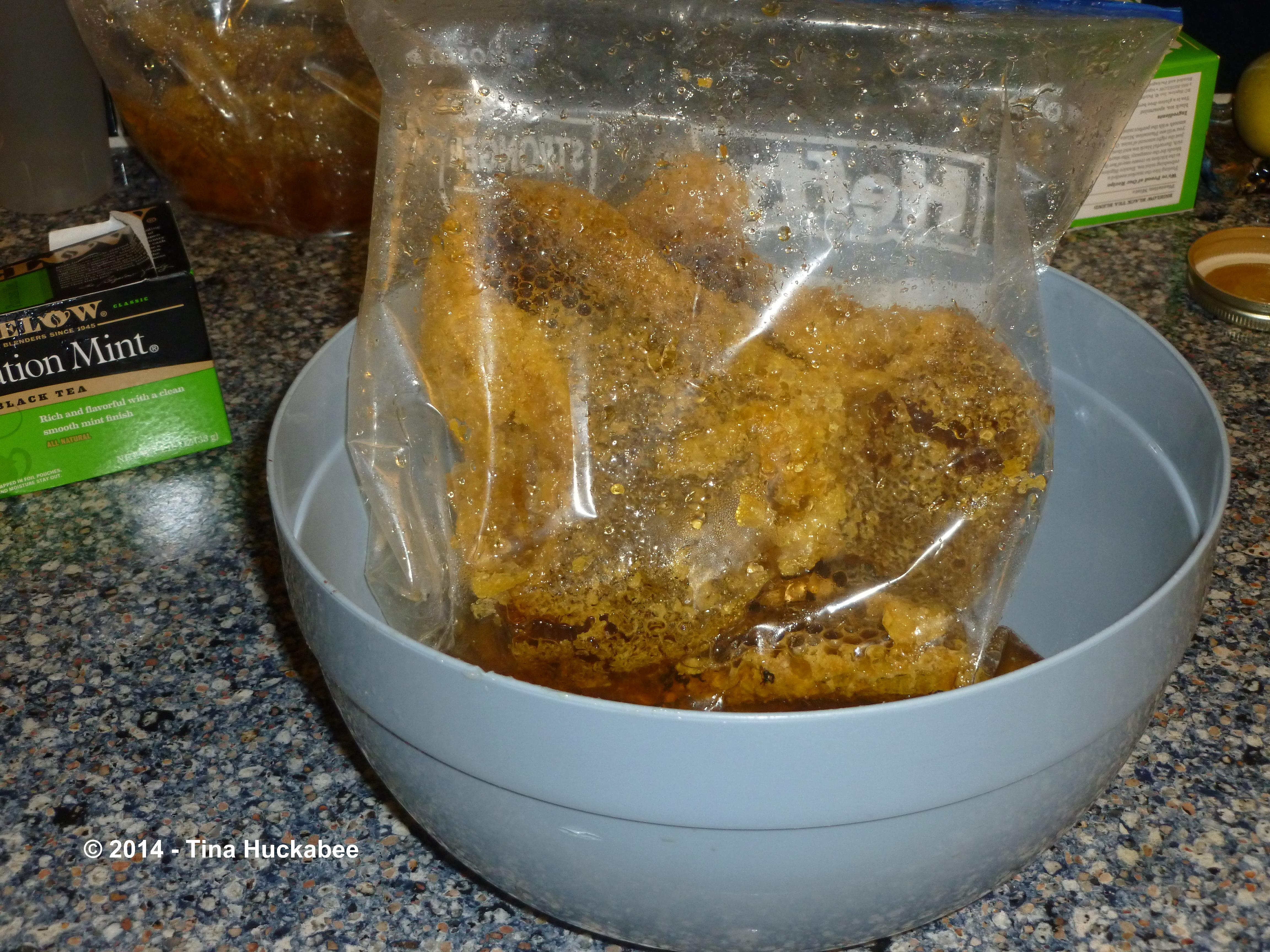
We were totally unprepared for the extraction of honey from our hives.   As we pulled out our chosen combs of honey, I bagged them in airtight plastic gallon bags and placed them into the freezer until I had time to remove the honey from the comb.

P1050701.new

P1050708.new

P1050709.new

I’m not sure there’s a need for expensive equipment to extract honey from a home bee hive.  It’s probably nice to have a professional extractor and if I’m ever serious about honey production, I’d consider investing in one.   But for this relatively small and unplanned job, we kept things low-tech.

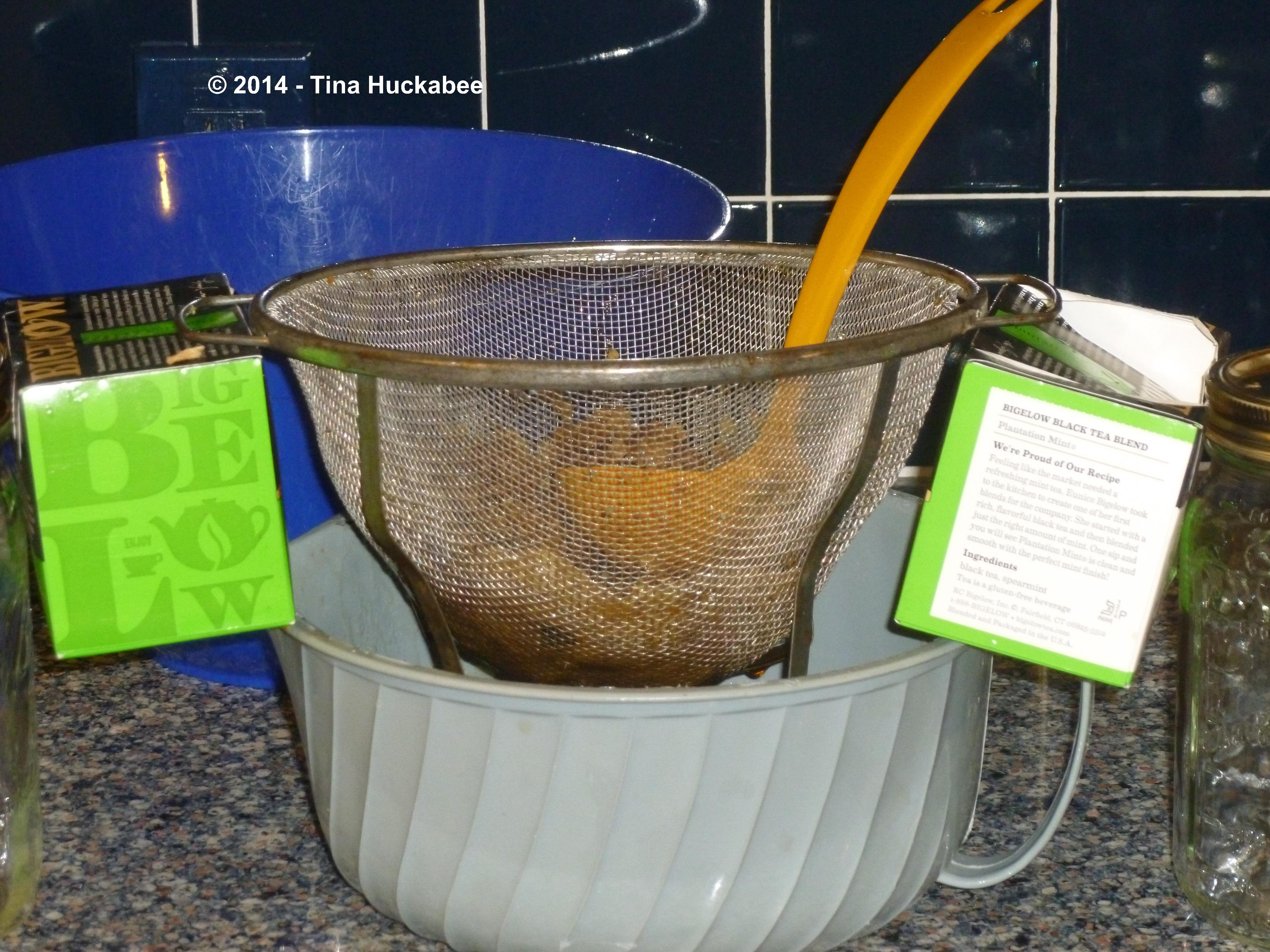
I emptied comb with honey into an old metal colander placed in a bowl.

P1050710.new

P1050711.new

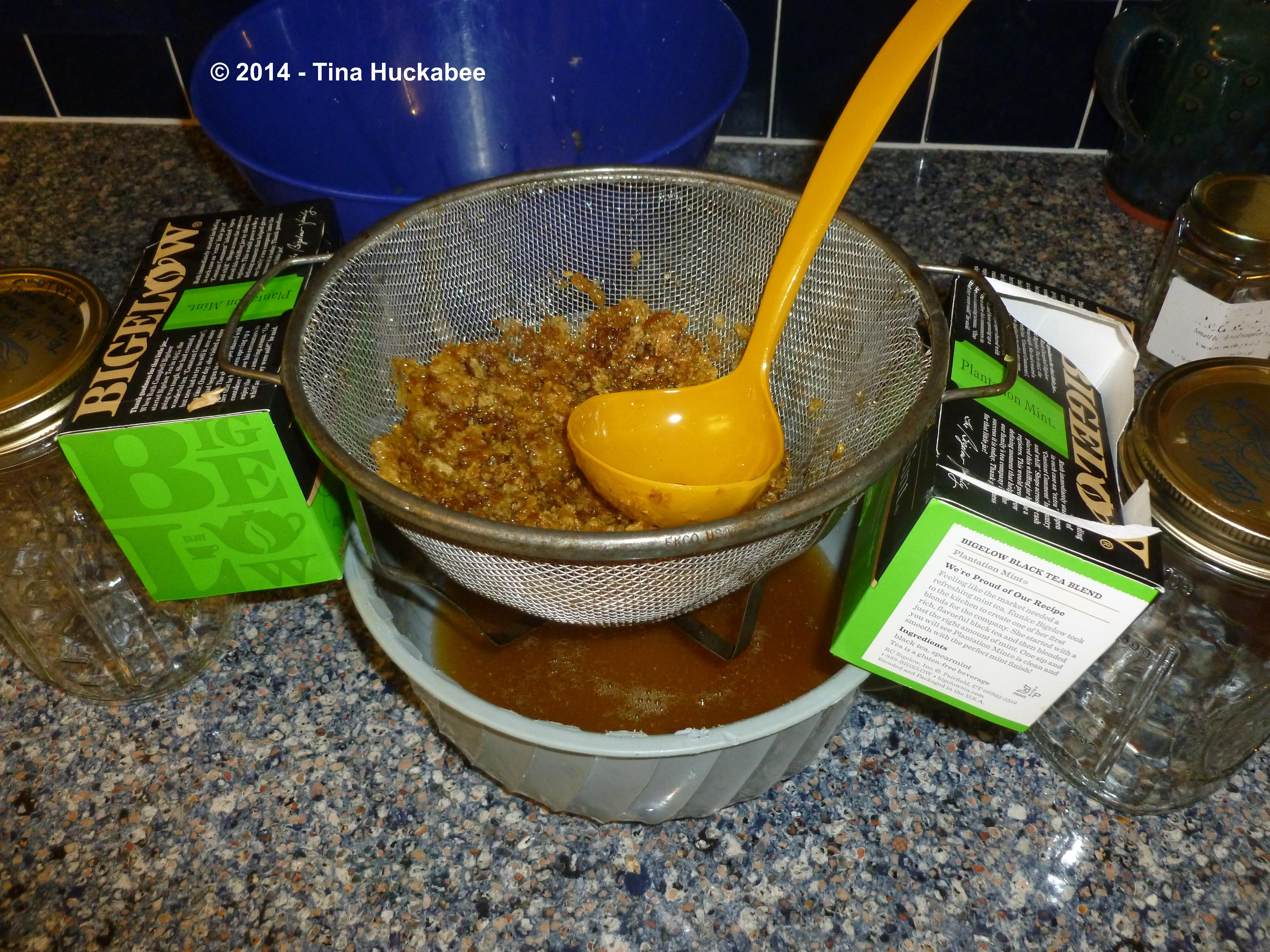
Do you see how the colander is propped up?  Yeah, that’s right–with tea boxes strategically placed on the edges of the bowl, flanked by jars buttressing each side.  Didn’t I say it was a low-tech operation?

I crushed the comb with a heavy, large spoon and let the honey drip slowly into the bowl.  Bees make beautiful comb.  Perfect hexagons, with firm but malleable texture, honeycomb is a truly remarkable product.  I hated to crush the comb, but it there’s no way around squishing it up to get to the honey.

P1050700.new

I didn’t toss out the crushed comb, but stored in the freezer. Sometime in the future,  I’ll melt it down when (if?) I add other boxes to our hives.  We use top bars for the bees to comb-build on and if there is a strip of wax on the bar, like this,

P1030260.new

the bees use it as a guide for their comb-building.

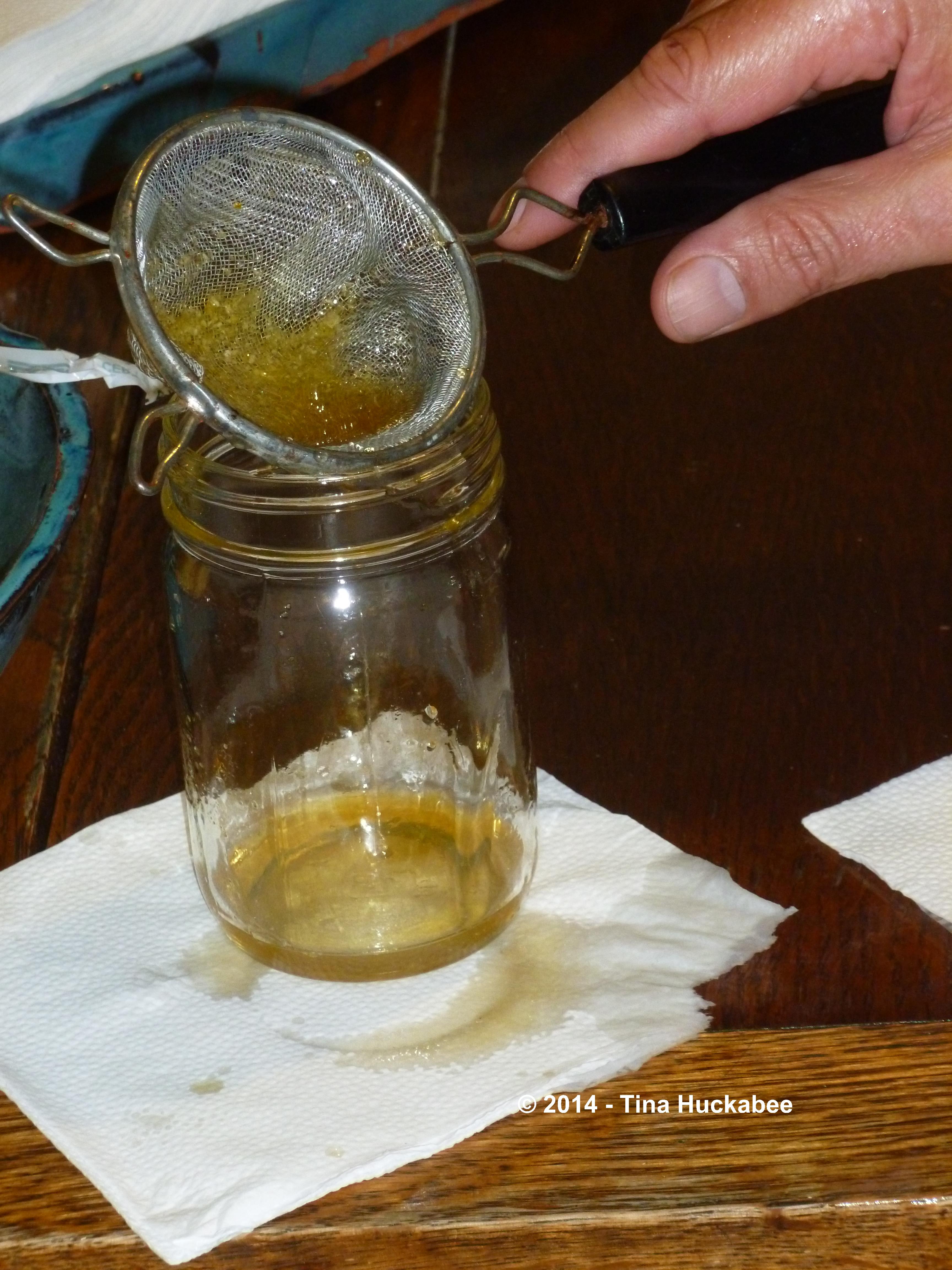
Once most of the honey was out of the comb and into the bowl, Bee Daddy poured the honey into a jar through a tea strainer.  The tea strainer caught  any extraneous materials (primarily wax) left in the honey from the first round with the colander.

P1050706.new

P1050707.new

It’s a messy job.   Sticky honey dripped onto the counters, floors, table–everywhere!  I never quite realized how water-soluble honey is though–it cleans up immediately.  So, while messy, this neat freak (yeah, I am, sorta) didn’t fret too much over the mess.

I washed each jar as we finished.

P1050702.new

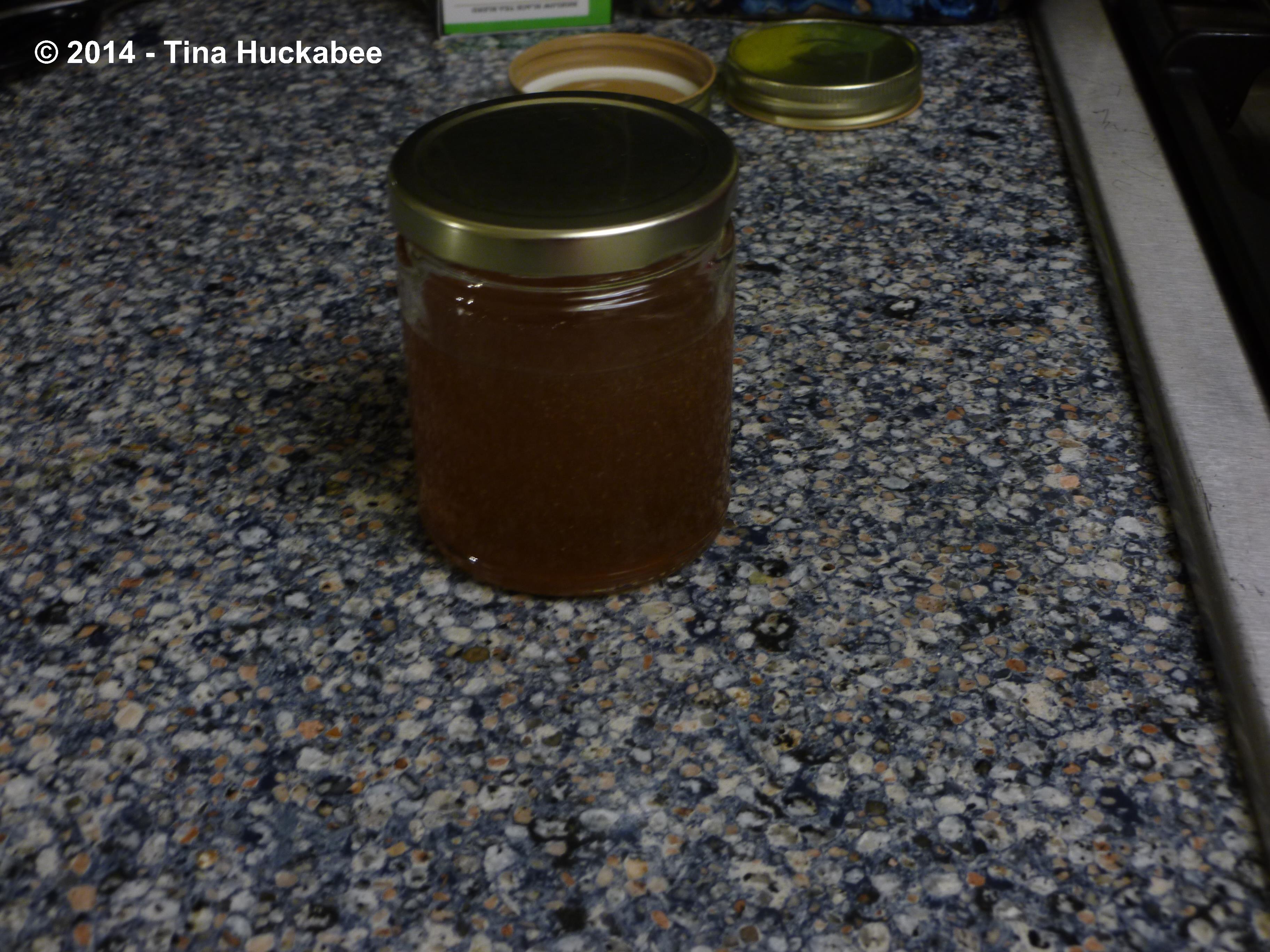
We bottled almost 7 cups of honey!  Wow!  Sweet, locally produced honey.  Our bees fly within a 3 mile radius of our home, so it doesn’t get more local than that.  We’ve shared  honey and will keep some for future use.  Several people who’ve tasted our bees’ honey think it tastes like peaches.  Interesting.  There are peach trees around, but peach pollen/nectar wouldn’t  comprise but a very small percentage of the honey.  Our bees produce honey that tastes better than any store bought honey that I’ve ever tried–that stuff is just not in the same category at all.

P1050703.new

With the deaths of our queens, our bees are struggling a bit.  I appreciate their hard work and am awed by their amazing abilities.  I hope this isn’t our last honey harvest, though I imagine we won’t get honey again for quite a long time.

P1050918.new

Thanks bees!  You’re the best!