I haven’t written about my honeybee hives in a while and thought it was high time I catch you up on their antics. Both Langstroth hives, Woody and Buzz (seen below) are humming along beautifully, though spring saw each as quite cranky. In our first early spring hive check, both hives were full of busy bees with lots of larvae, meaning that the queens were doing their job. By late March, our bees turned mean. Really mean. I couldn’t go near the hives without one of the scouts harassing me, which usually ended in (at least) one sting for me. Dreading the necessary hive checks, we suited up and popped into each hive a couple of times over the course of a few weeks and found that both hives had developed queen cells.
One cause of a hive developing queen cells is that the hive is full of bees, larvae, and honey and too crowded. Another reason that hives might grow queen cells is that the original queen has died or is critically ill and not laying eggs. For a hive to survive and thrive it needs a constant replenishing of eggs, larvae, and adults. Guessing that Buzz and Woody were crowded, we first pulled off Buzz’s queen cells, thinking that was the cause of queen cell development.
We misread the clues. When we checked again two weeks later, the workers had created more queen cells. We realized that the queens in both hives were probably dead, so we let nature take its course. Worker bees can and do make their queens when necessary; after all, honeybees know their stuff. It takes two weeks for a queen to develop in the hive, then she exits for her mating flight, which lasts up to a week. Afterwards, it’s back to the hive for her and the start of her career of egg laying.
Buzz was the hive with the most developed queen cells and so learned our lesson and let Woody do its making-a-queen thing. Within a month, both hives were calm and happy with their respective new queens and back to their gentle selves. Honeybees are aggressive when they’ve lost their queen, but gentle when they’re queen right, meaning that they’re living with a healthy, active queen.
Both hives have two kinds of boxes, brood and dadant. The deeper boxes are primarily for brood, but also contain some honey. The dadant (shallower) boxes are only for comb and honey. If you look closely at the hives in the photo, you’ll notice double wood pieces between the top brood box and adjacent dadant box. That’s where the queen excluder fits into the hive structure. The exluder is a metal mesh in a wooden frame in which the mesh is large enough for worker bees to climb through–and up into–other parts of the hive to continue honeycomb making, but too small for queens to get through, so their egg laying is limited to the brood boxes.
What can I say? Queens are fat bottomed girls. Thanks, Queen.
Honey creation is what honeybees are driven to do, whether or not the queen is in the box. Excluders allow the worker bees to make honey in the upper boxes while the queen is unable to crawl in and lay eggs on the comb. With a box of pure honeycomb, beekeepers are then able to take honey without damaging larvae or possibly injuring or killing a queen, which is a win for everyone.
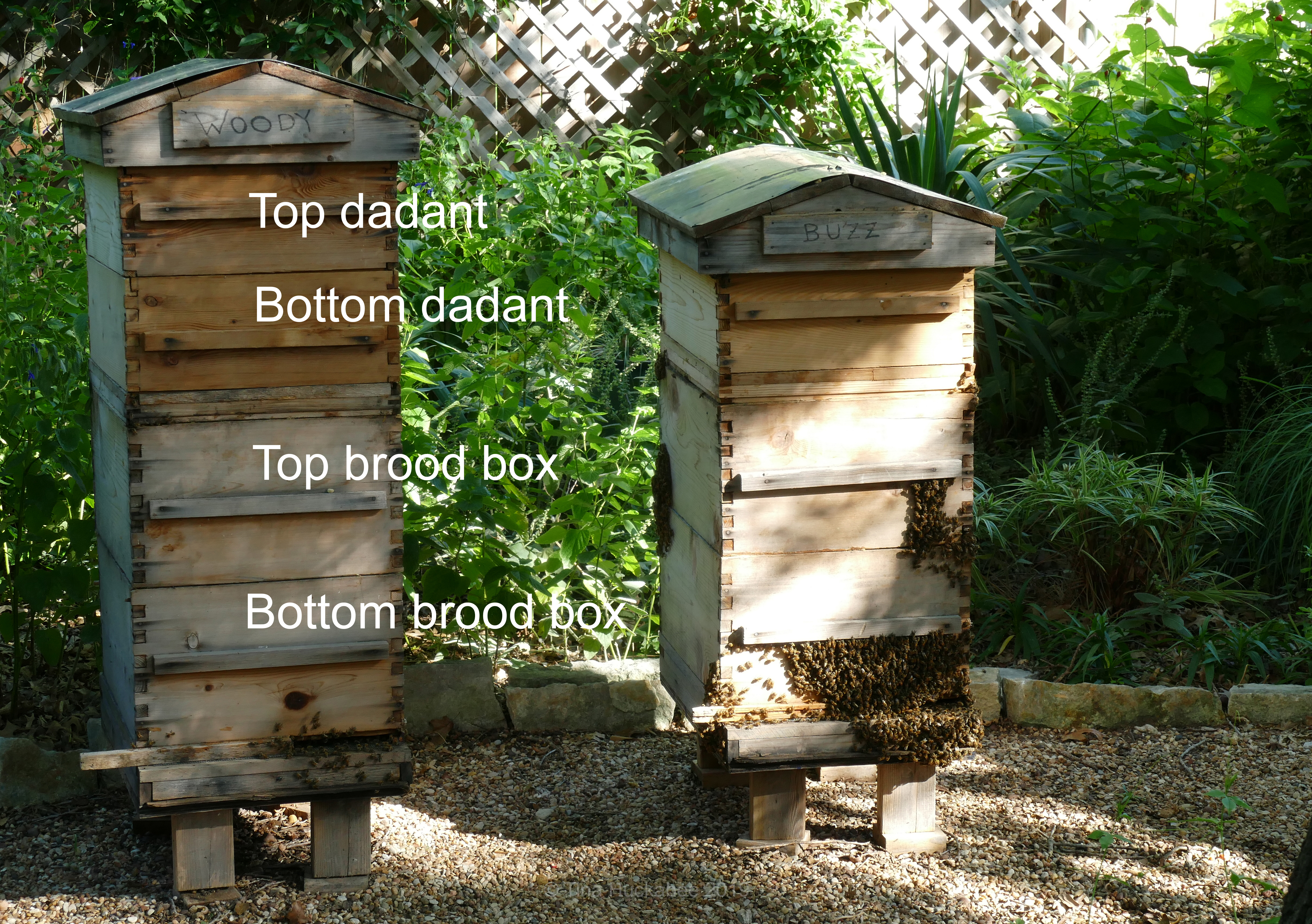
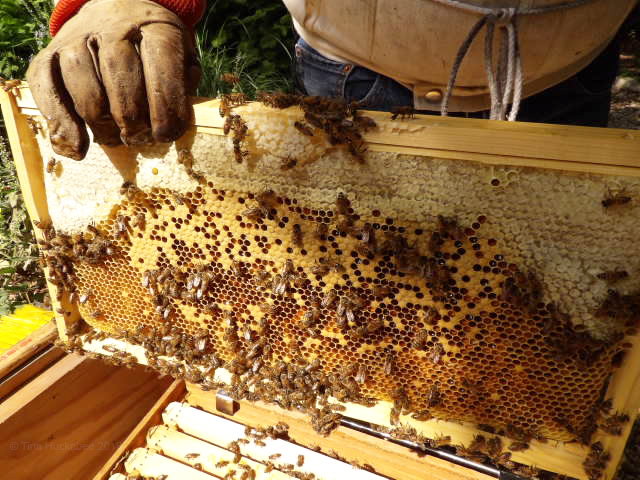
In Woody, the bees have combed out the frames of the bottom dadant and made honey in several frames. The top dadant also has comb, but with no honey; we probably added that box too soon, though no harm done. In Buzz, its lone dadant is nearly full of honey and we’ll add another dadant soon. I expect to extract honey from dadants of both hives by fall and that will give us a chance to finally use our honey extractor purchased some months ago.

Buzz’s one dadant is full of honey; we’ll add another soon.
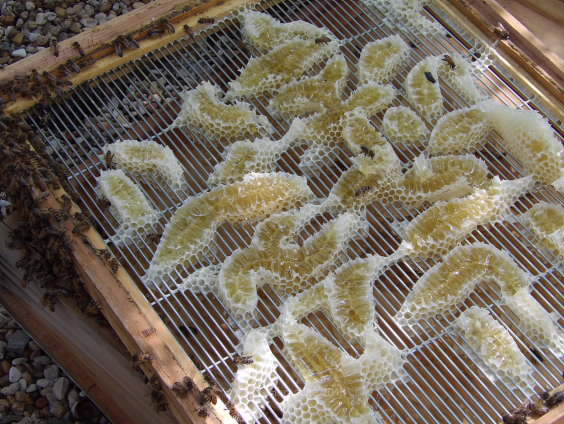
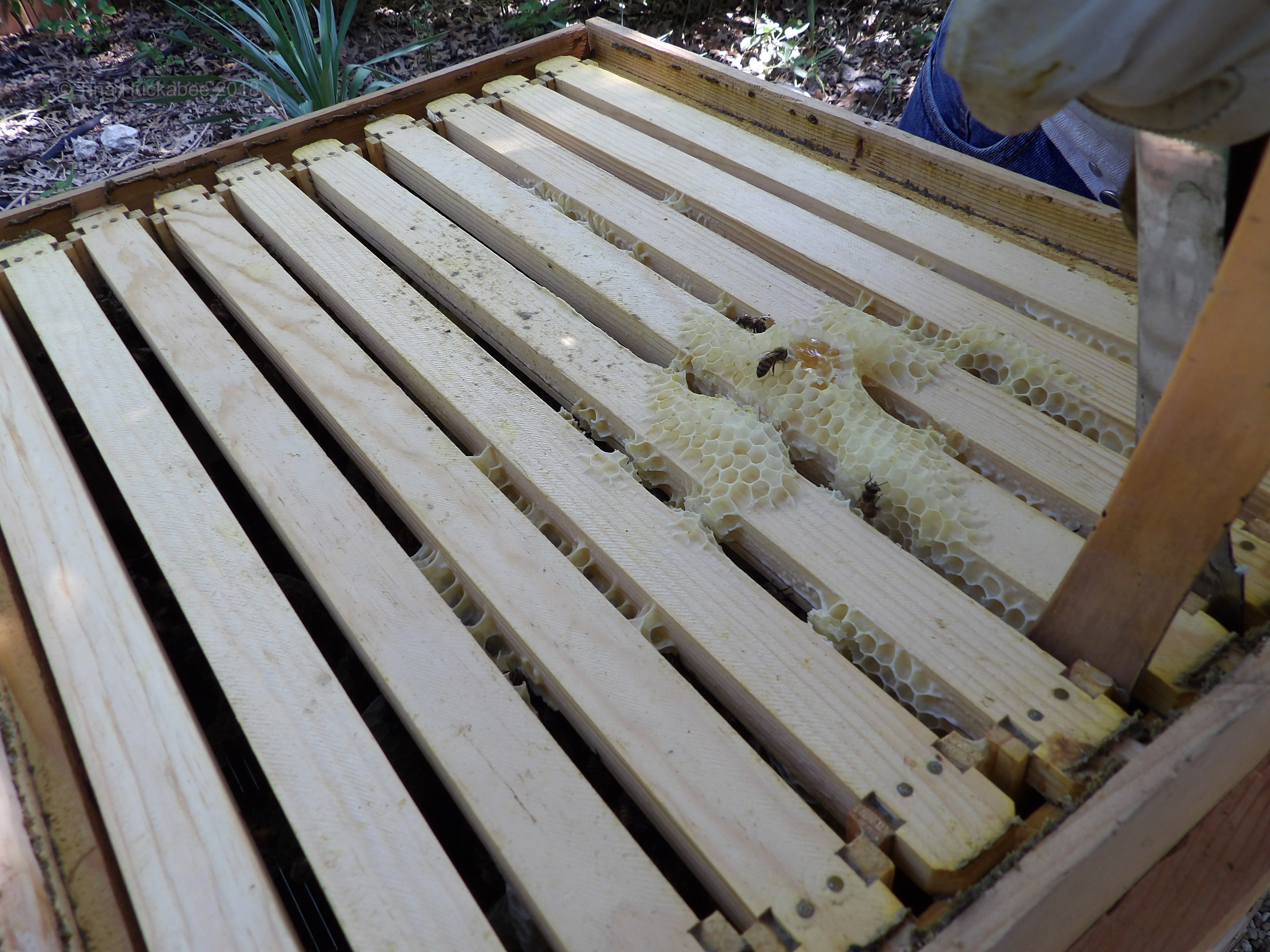
But we won’t have to wait until fall for new honey–we extracted some from our original Warre hive, Scar. Scar’s top box was jam-packed with thick comb and gooey honey, so we cut chunks of the sweet stuff off of six of the eight top bars. Removing honey from a Warre hive is a messy job which spills plenty of honey into the hive and displaces bees. For about 48 hours, some members this remarkably productive hive stayed outside the hive structure, though I noticed yesterday morning, most were back inside early in the morning.


Because the Warre hives holds top bars and not frames, the honeycomb must be crushed and the “extraction” involves a solid afternoon of work, squashing comb and sieving honey. This past weekend, the result was nearly a gallon of honey!
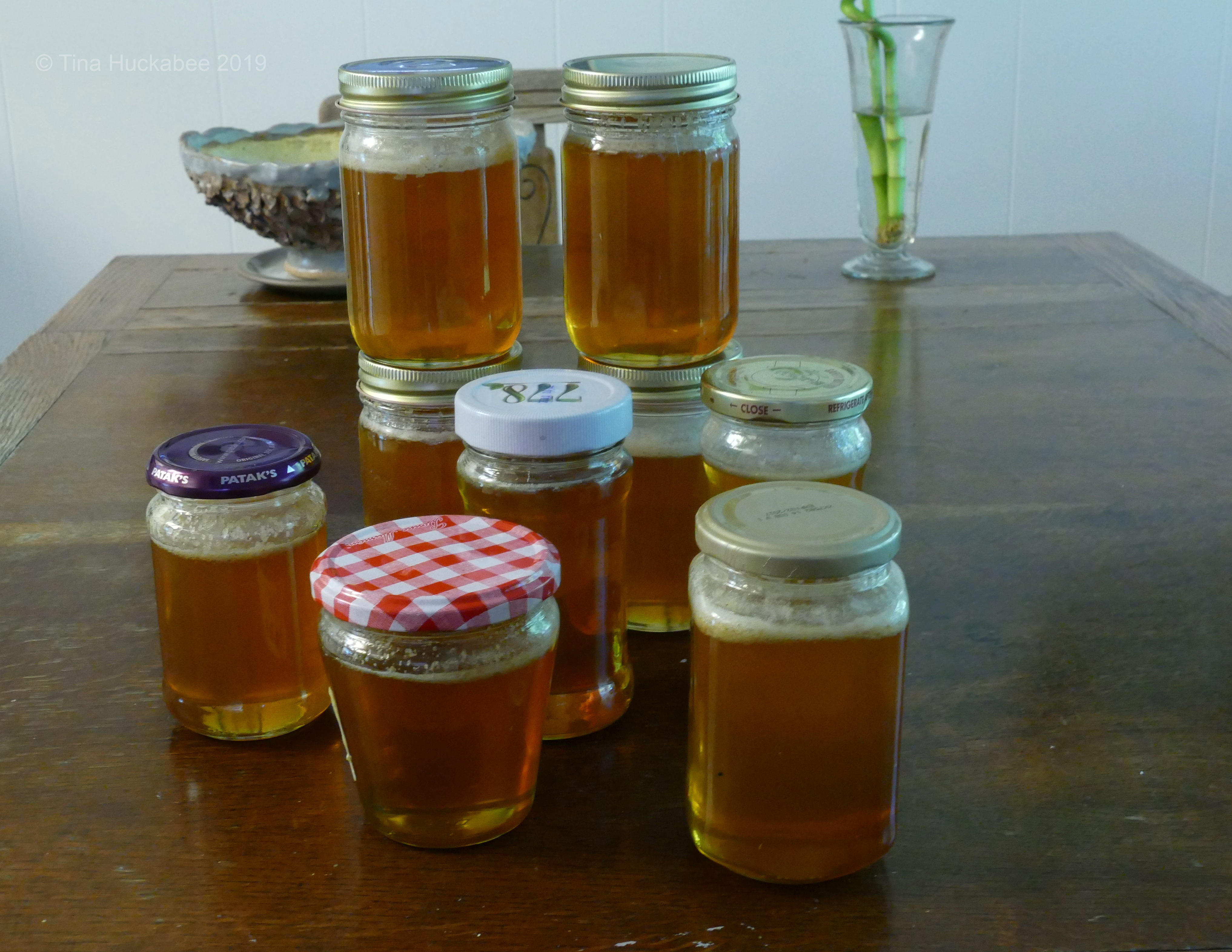
These are 9 of the 11 jars of our newest honey collection.
In our four years of beekeeping, the Warre hives–specifically Scar–have delivered all the honey we’ve ever extracted. While a difficult hive to check, Scar has proved a wonderfully prolific hive and its honey is liquid gold!
This mid-July finds our honeybees nice-n-sweet, ignoring me when I’m in the garden, and making delicious honey.





 My Gardener Says...