
As beekeeping goes, it’s been a banner year for us and our resident stingin’ sisters. The girls are in fine form and their queens are tough and strong, making good bee decisions and producing lots of bee babies for the next generations. I haven’t taken many photos of the hives in the last few months and our last hive check was in October, but it looks like we’ll end 2018 on a good–if sticky–note.
We’ve extracted several gallons of the sweet stuff during 2018.

One of several groups of bottled honey for this year!
These photos were taken in the summer and demonstrate the strength of our hives.
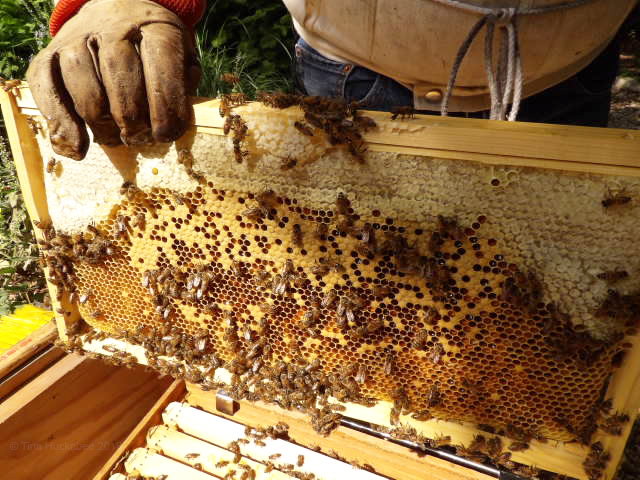
The top part of the frame is capped honey, below are the cells where larvae are nurtured and bees are hard at work for the hive.


The metal contraption at the left of this photo, is a frame holder. When we remove a frame, we can hang it here while we poke around in the hive. It can comfortably hold three frames.
Because the bees had completely filled the large brood boxes in both hives with honey and larvae, we added a shallower box, called a super, on top, and placed a queen excluder in between each top brood box and super. The queen excluder is exactly what it sounds like: a separation piece with mesh bars that are large enough for the workers to crawl through, but too narrow for the robust queen. Workers can traipse through the excluder and into the super to make honeycomb and the queen can’t get through to lay eggs, so she rumbles around in the brood boxes doing her egg-laying thing. The result is that in the super, there’s pure honeycomb, no larvae.
We added the super to ease overcrowding which could lead to swarming–a perfectly natural response to an overcrowded hive–but not one that a beekeeper wants to encourage. We want to keep our bees and we want some of their honey. That’s why we keep’em!
Those silly bees continued to build comb along the queen excluder.
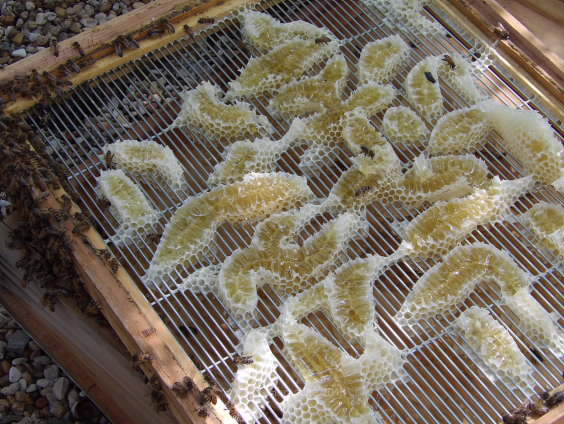
We scraped off the comb-n-honey bits, kept some for ourselves, and left the rest for the bees to enjoy.

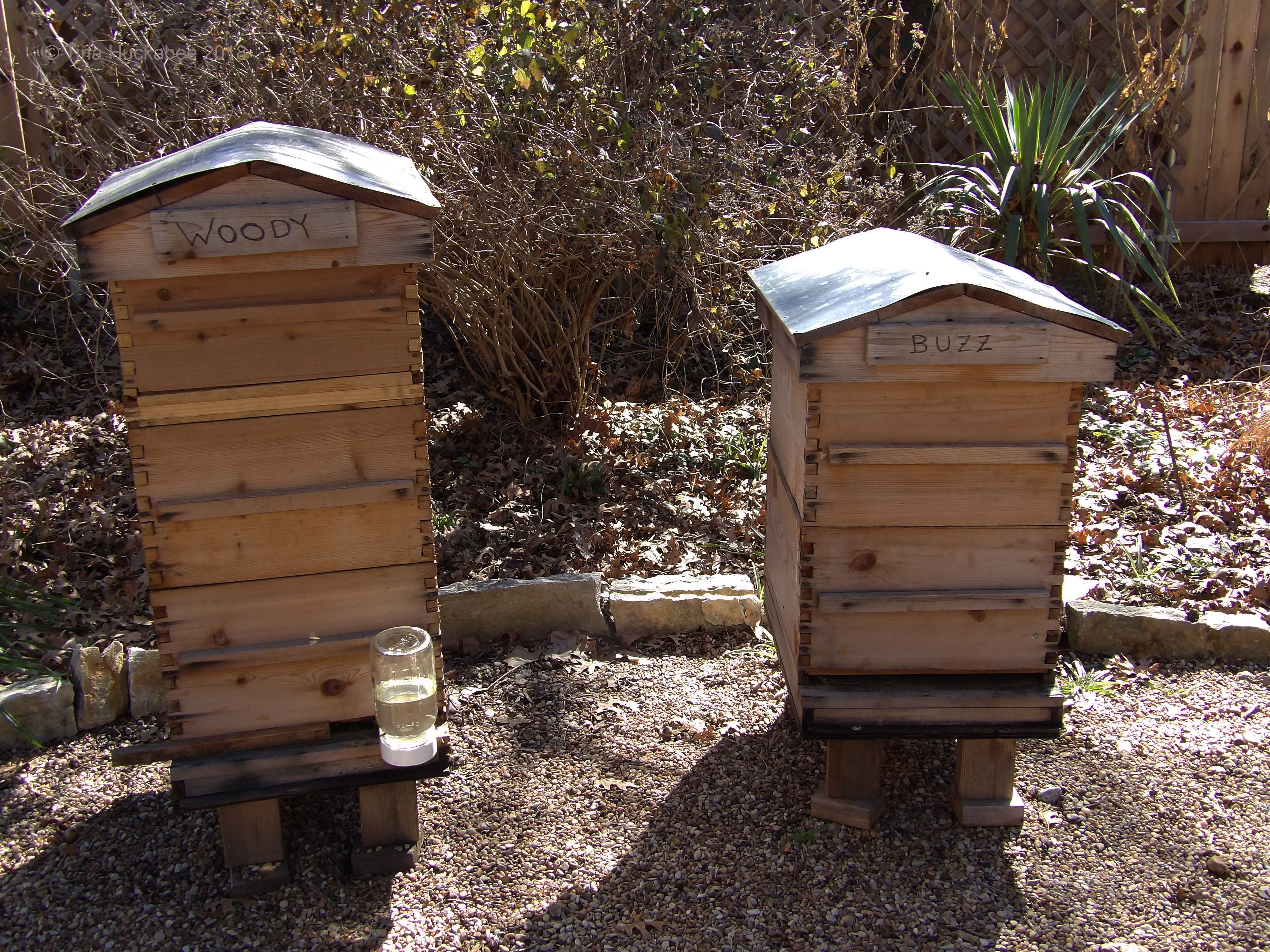
We observed this goofy comb-building during a couple of hive checks and then endured a head-slapping realization. The bees built the wonky comb in the super because we, their keepers, placed top bars, rather than full frames with wax foundation, in the supers. Until our two Langstroth hives, Buzz and Woody, became honey producers (which happened this summer!), our honey extraction has been very low tech endeavor. Our original hive (Scar) utilizes top bars with no foundation and the bees employ a free-form downward build as they make comb. When we’ve taken honey from Scar, we cut the comb from the bar, then crush the comb and let the honey drip into a bowl. I pour that honey through strainers and deposit into bottles. All in all, it’s a relaxed process, albeit a bit hard on my wrist.
Langsthroth hives are best used with full frames and foundation, and are geared for the keeper to extract honey efficiently, while limiting damage to the comb. Our use of top bars in Buzz and Woody was a poor decision. Of course the bees were going to build comb to their needs and not ours–we’re the silly ones, not the bees! Bees couldn’t care less what shape the comb is. They’re just doing what honeybees do–build comb and make honey– while our choice of using the inappropriate-for-Langstroth hives top bar, which resulted in “messy” comb, was our lame and misguided attempt to delay the inevitable: the purchase of a mechanical honey extractor which is how grown-up beekeepers extract honey.
Well, we’ve learned our lesson!
We assembled new frames for the supers for both hives, complete with foundation. The bees are now happy and productive, and gone are the wavy-gravy combs.
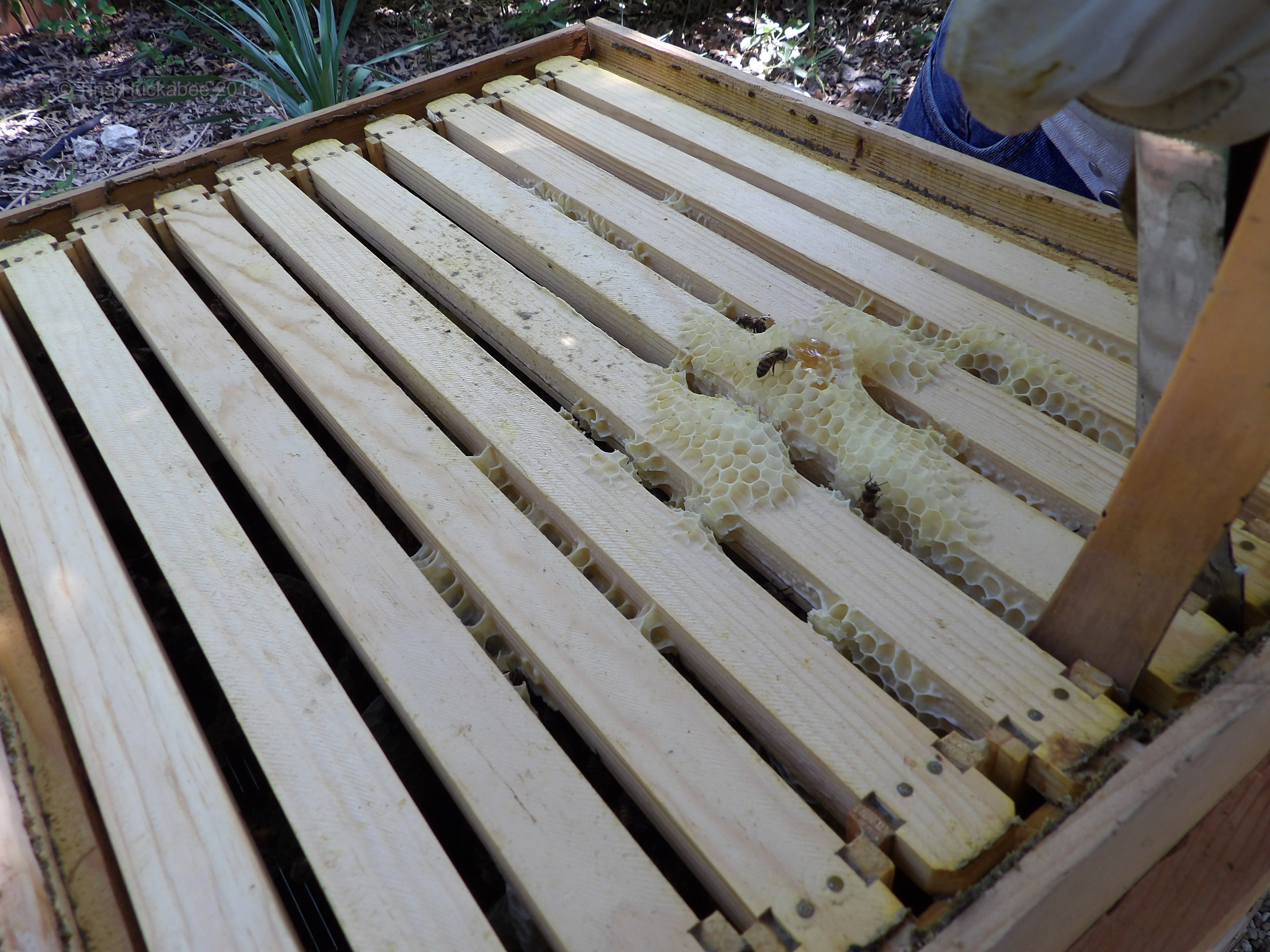
It’s humbling when you’re outsmarted by an insects.
So what’s next for the backyard beekeeping adventure?

Honey extractor with electric, heated comb knife, and strainers.
A brand new, never-been-washed, manual two-framed honey extractor! Don’t worry, we’ll wash it before we use it, but that won’t happen until sometime in late February.
When we last checked, both Buzz and Woody had completely filled each of the second brood boxes and their supers with honeycomb. We’ve left all in the hive for winter so that the girls have plenty of the sweet stuff to slurp throughout the cold, wet days and nights. In late winter, we’ll take some frames out before the queens ramp-up for spring egg-laying and fire-up the extractor. The use of the honey extractor advances us into a new level of beekeeping.
I’d say it’s been a good year for the honeybees and their keepers.
Here’s to sweetness for all!











 My Gardener Says...