I’m a tolerant sort towards insects in the garden. Insects get a bad rap, but many are good guys-n-gals and fulfill important roles in the ecosystem. Other insects are meh–not necessarily anyone’s favorites, but not problematic, either. A very few insects are monsters and no gardener wants to see the beasts messing up their slice of paradise. I’ll squish aphids if they’re covering foliage but I don’t use insecticides at all. When I garden for vegetables (a rare thing these days), I’ll spray water on plants to knock off aphids or other sucking insects, but most of my veggie garden problems come from birds and squirrels; they like their veggies, too, one bite at a time.
Because I prefer native perennials and shrubs, as well as non-native plants who’ve proven their worth in the challenging conditions of Central Texas, I don’t have many malevolent insects wreaking havoc on beloved plants. That is until this spring.
Along with all the other weird things that 2021 has delivered to my garden, it’s finally also experienced damage due to some naughty bugs and the bad germs they carry and spread.
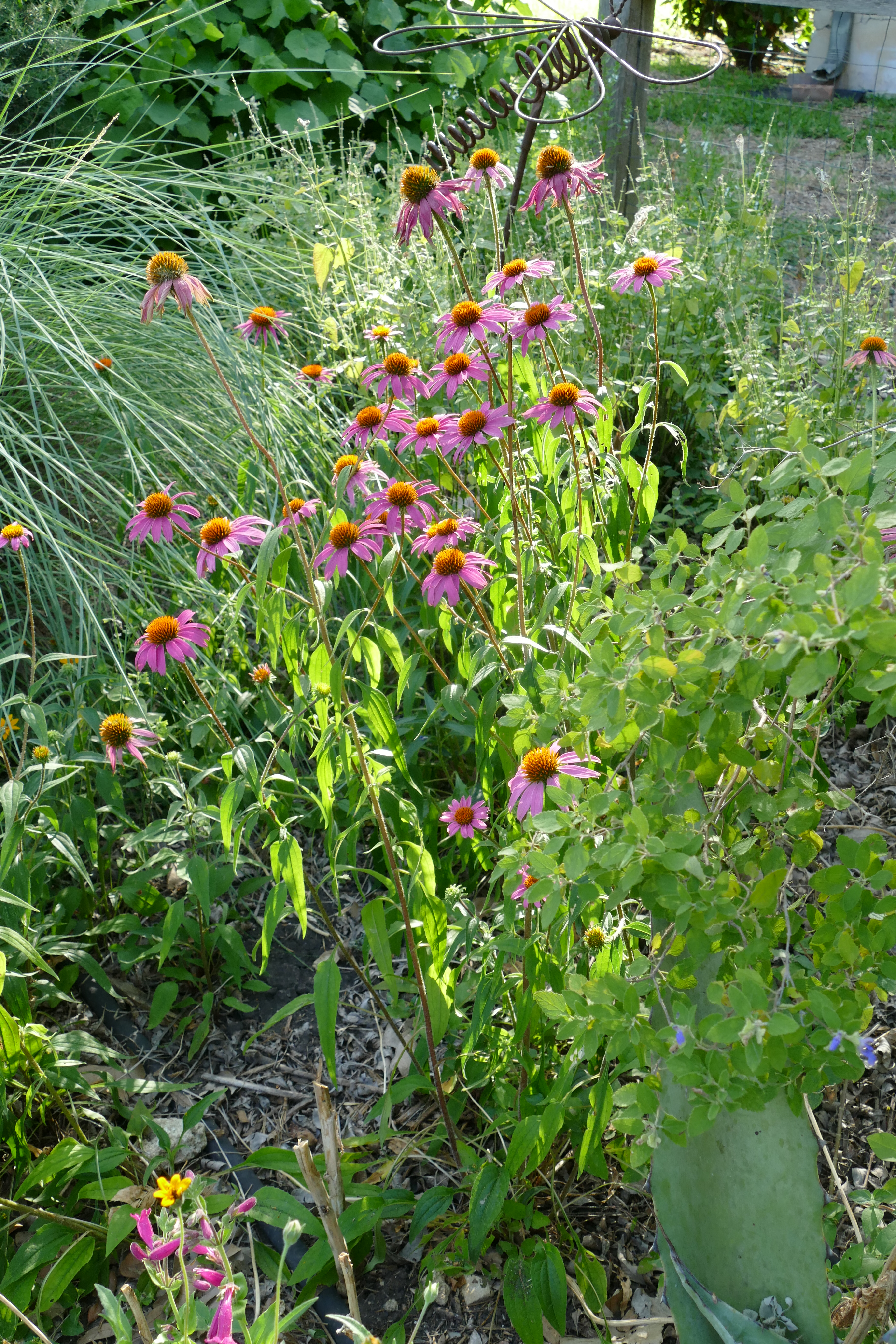
I love Purple Coneflowers, Echinacea purpurea. I don’t grow quite as many as I once did, due to shady conditions because these cheery aster plants are sun lovers! But I still have some and enjoy the beauty they bring to the garden.

Coneflowers are a favorite among the pollinators and frequently have one in attendance.
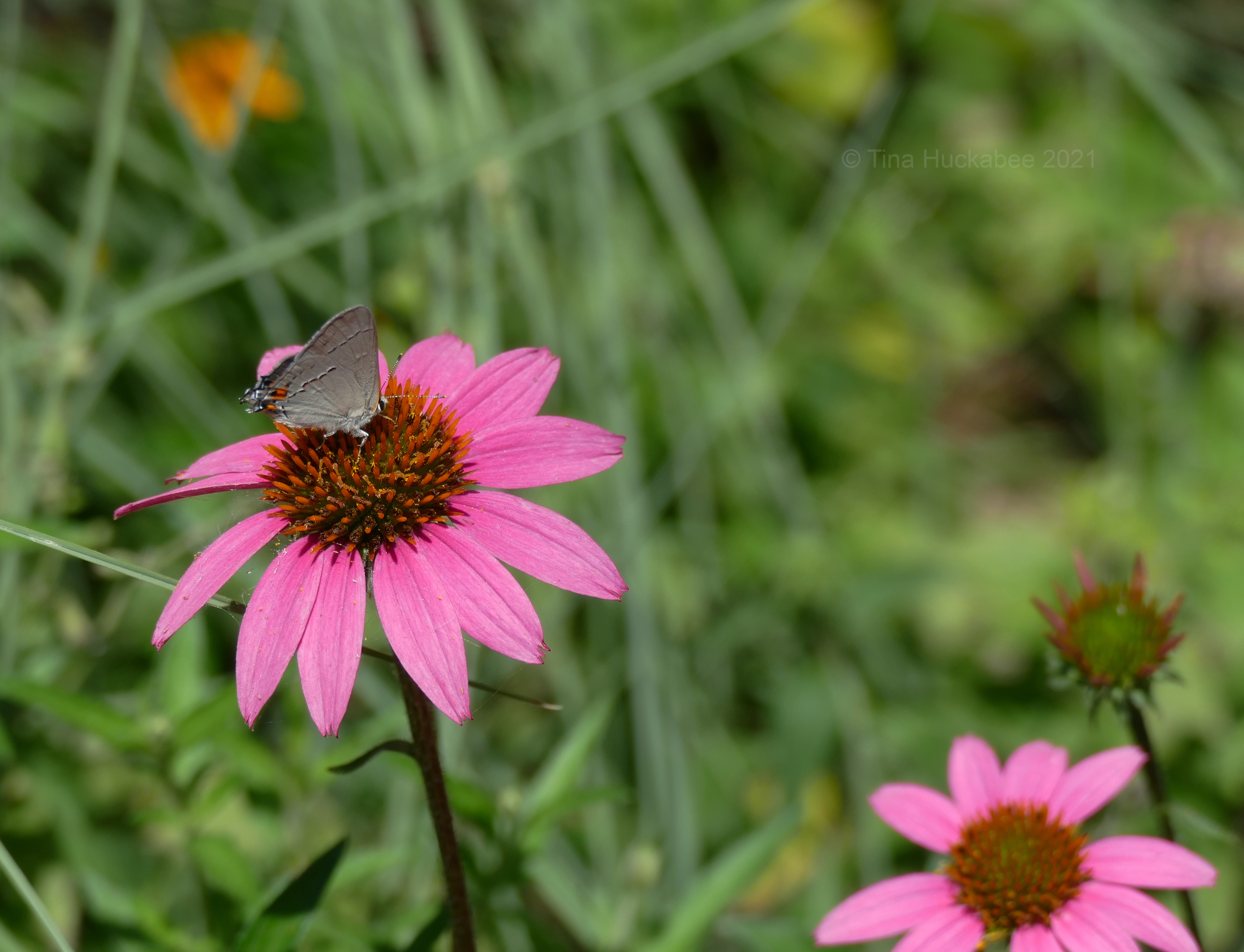
My native coneflowers bloom from April until July, turning crispy and dropping seed during the hot summer months. Once they’re tired and worn out, I prune the plants to their base foliage and await the fall bloom, which is less dramatic, but very welcome.
Recently, I was observing some pollinator action and taking photos of this charming group of coneflowers, when I noticed an oddity.

Some of my coneflower sported leafy green hats!

Other mini-leaves covered the whole of the central globe, hiding the bracts where coneflower seeds develop. Also, the lavender rays were weird, short and misshapen.

As I looked at groups of coneflowers in other parts of the garden, I found more crazy coneflowers. Some had no purple or pink to them, they were all green: green centers, green rays, and a few green, strangely shaped leaves. The diseased plants were all shorter than the healthy coneflowers.

This discovery of individual bizarre coneflowers rang a botanical bell for me, though I’d never seen this kind of growth before in my garden. I recognized (from some reading, sometime in the past) that the deformed coneflowers were victims of a disease process and recalled that it is one brought on by an insect.
As I researched the problem, I came across the term Aster Yellows, and remembered reading other gardeners who’d removed their aster plants (not necessarily coneflowers) because of this disease. Removing the diseased plant is the only recourse and those plants shouldn’t be placed in compost, but disguarded from the garden completely.
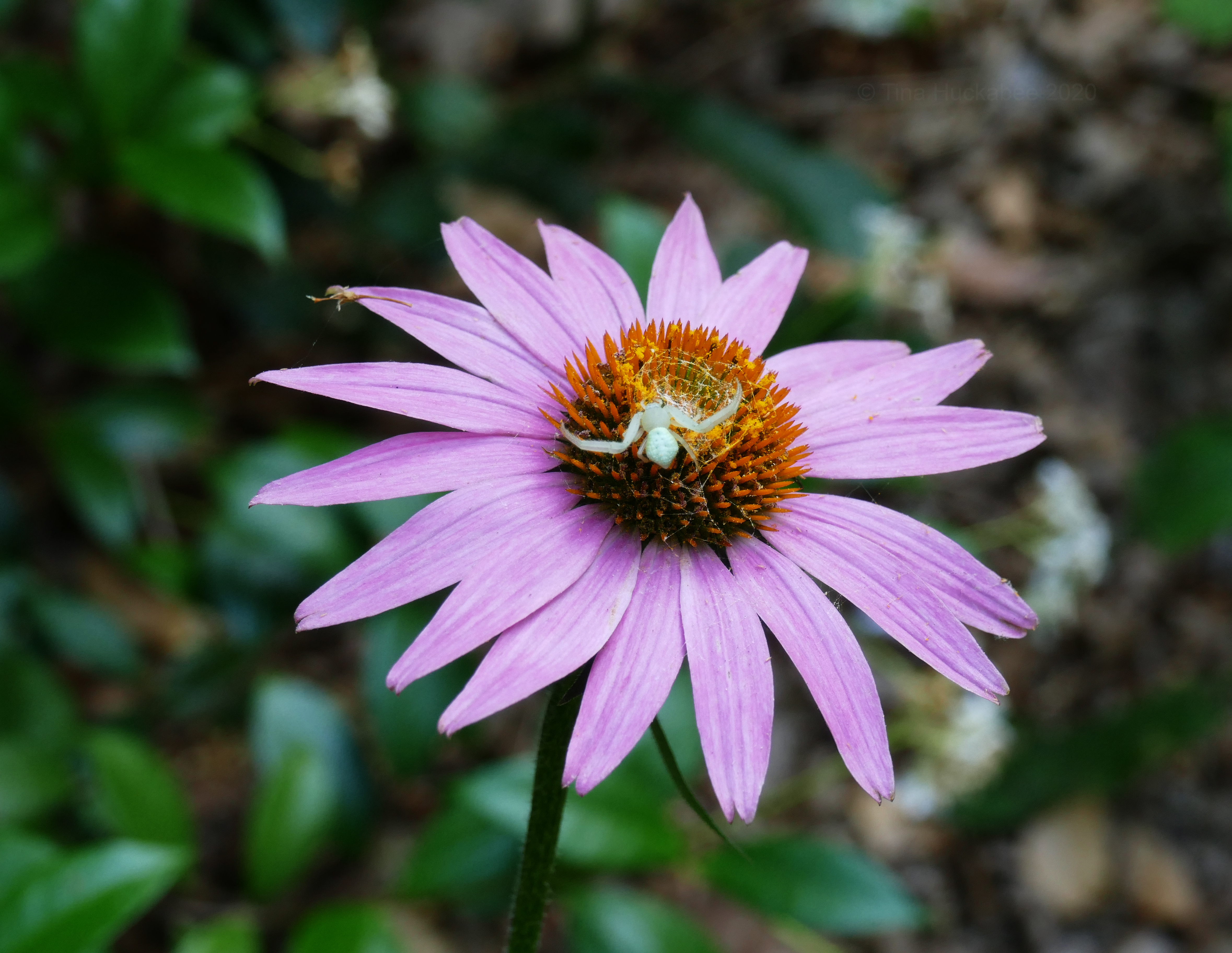
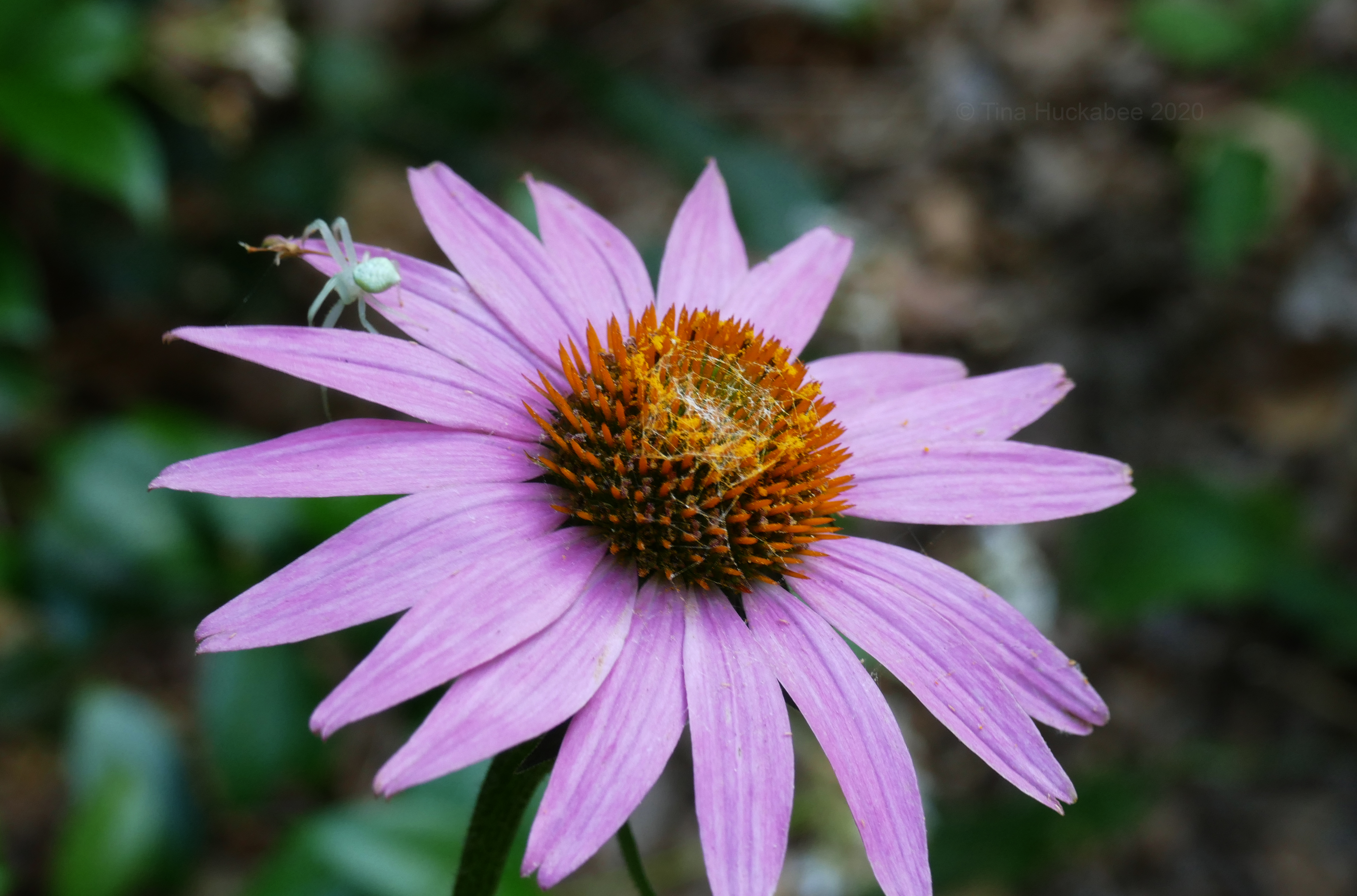
Leafhoppers are common in my garden and I would normally place them in the meh category of insects; they’re around, but don’t present much of a problem. It seems that leafhoppers survived our February snowpocalypse and in early spring, at least a few of those leafhoppers carrying a mycoplasma engaged in some munching on the emerging coneflower plants. The mycoplasma which causes the unusual growth is spread by the leafhoppers feeding on the plants. Fortunately, only a few individual plants were impacted. You can see one in this photo at the base of a gloriously healthy plant.

Coneflowers are in the Asteraceae or Aster family, but many kinds of plants are affected by this mycoplasma disease process. According to Texas A&M Agrilife Extension, Texas Plant Disease Handbook, Aster Yellows impacts 300 different species of plants, from over 40 different families of plants.
I haven’t seen any more obvious problems with my remaining coneflowers (or any other plants), but it’s likely that next spring this issue may appear again. I’ll be quicker at diagnosing and removing the sick plants now that I’m aware that my garden could be hosting the insects and their germs.
Because of the devastating February freeze, a large shade tree died in my front garden and it will be removed in late fall. As well, my Red Oak trees in the back garden have also suffered some freeze damage; less foliage means more sun in my back garden. I’m sorry about the trees–trees are life giving entities–but more sun will mean more coneflowers in the garden. I just hope they’re all healthy next year and will continue to provide for food pollinators and joy for the gardener.






 My Gardener Says...