With a new camera installed and functional, we’ve recently observed our Eastern Screech Owl nest box host a variety of critters, some that we didn’t want to see in the box.
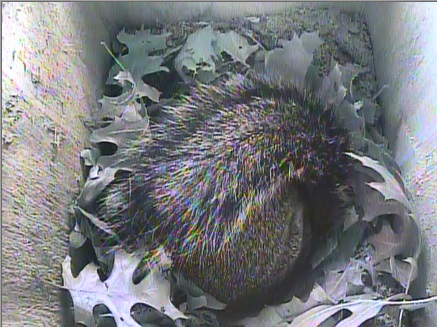
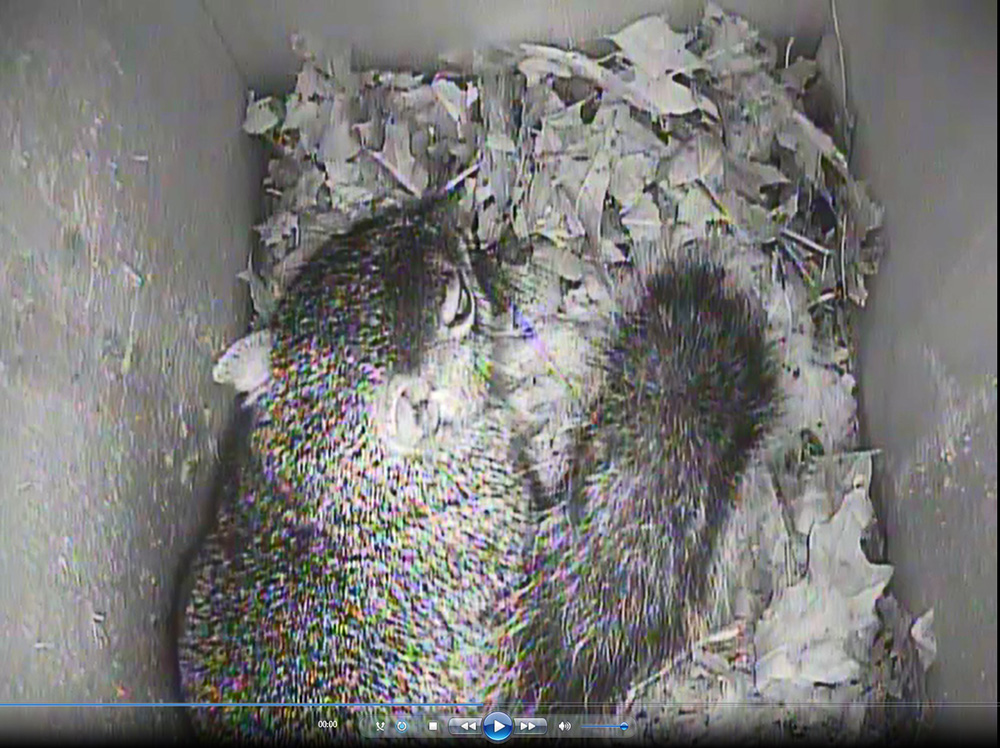
Even with the cuteness of two little rats curled up together, the view of them snoozing away in the nest box did not thrill us. So, after they vacated, we closed the box for a few days.
After we reopened the nest box for business, other rats, or maybe the same ones–they all look alike to me–have come and gone over these past few weeks. Fortunately, none hung around for any length of time.
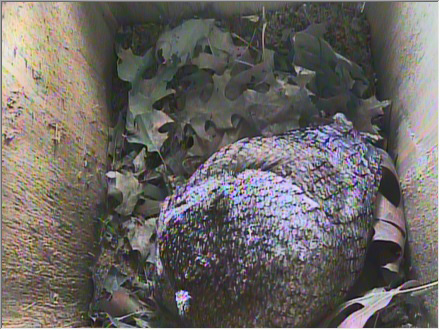
Then, it was the rat relatives who nosed in for some naps,
…and private time away from noisy neighborhood Blue Jays.
For the last week, in the wee early morning hours, just at sunrise, I’ve witnessed an Eastern Screech Owl, Megascops asio swoop to the box for inspection. She’d perch at the entrance hole, sit a bit, then climb in for a look-see. Usually, she flew back to a neighbor’s tree to spend her day. Today, she climbed in and stayed in the box for the day.
I’m not sure she’s thrilled with my oohing and aahing but she didn’t dart back into the box out of fear or annoyance, only lazily turned to look at me, squinting in the cheery afternoon sun. I’m glad she’s not threatened by my presence.
I’m pretty sure this is the same female that we’ve hosted in the box for the last few years. She loves to be outside, perched in trees, even after the sunrise. I call her Uptown Girl. Her mate is Shy Guy and so far, I haven’t seen him. These two have successfully brooded chicks for the past two to three years. Last year, shortly before the eggs were to hatch, the nest box was raided, probably by a fox. After they abandoned our box, I discovered that they’d settled in a neighbor’s tree. I watched for several weeks and was rewarded by watching two fledglings learn to fly successfully under the careful tutelage of their parents. I hope they survived summer and have found their own territory and mates, ready to raise families.
It’s never a sure thing that the owls will stick around, or be safe. A juvenile Great Horned Owl has been in our neighborhood this winter and raccoons and foxes are always a danger to eggs and nestlings. I wish this female and her mate good things in their future.
It appears that our Eastern Screech Owl, Megascops asio, couple are in the family way. About 12 days ago, dad owl moved from his daytime perch in the back neighbor’s ash tree, located at the opposite end of my garden from the nest box, to varying spots that are within 10-20 feet from the nest box. That he is now hanging out so close to the nest box indicates not only eggs, but that they’ve begun to hatch. As well, I haven’t seen any sign of mama, as I’m certain that she’s been busy brooding the eggs and is now caring for hatchlings. She probably leaves the nest box briefly in the evenings (everybody has to pee and poo), but she’s mostly in the box with the chicks. Dad is providing meals for the whole family at this point in time. I haven’t seen a rat in weeks!
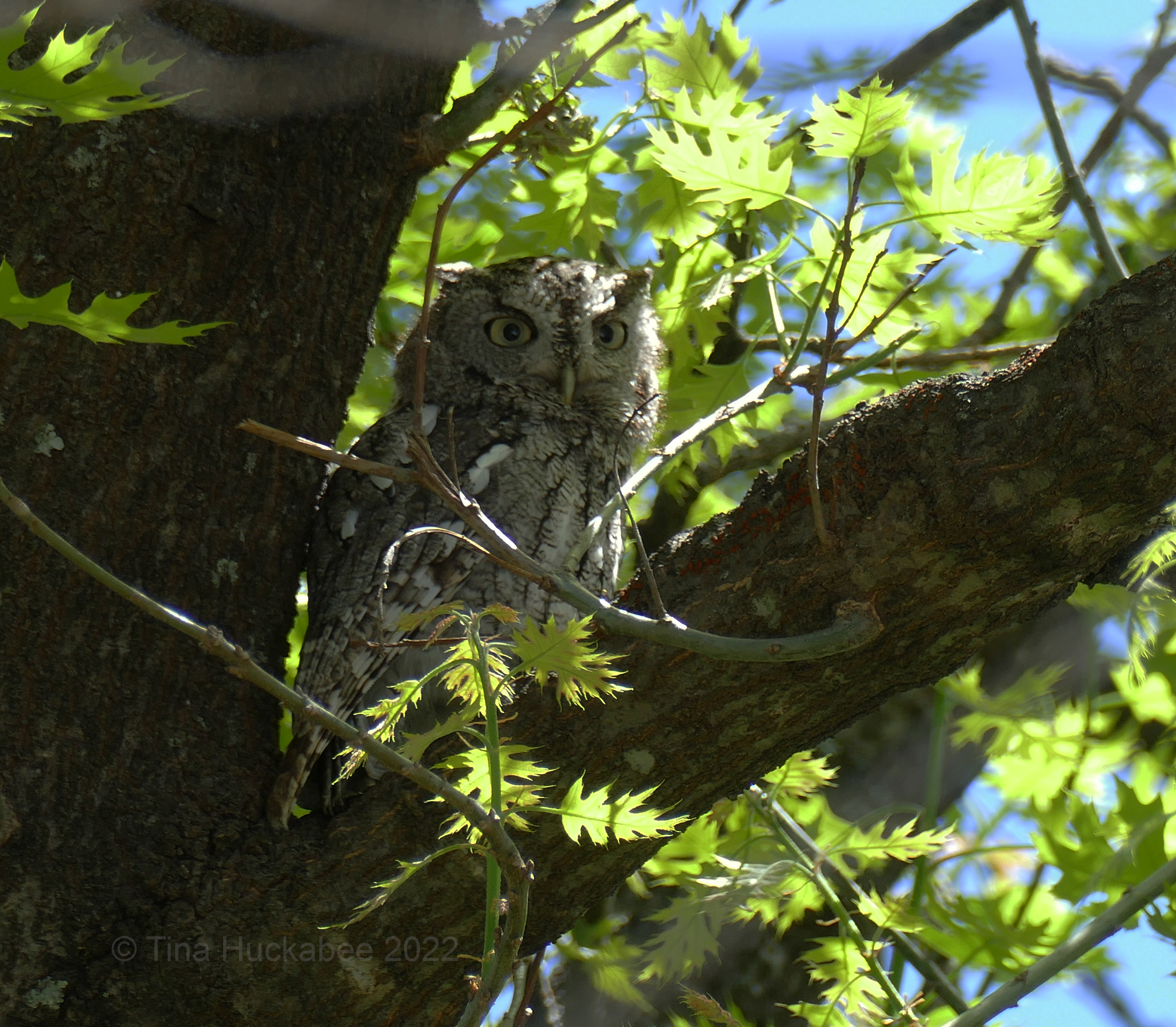
Some days, dad perches in my SIL’s large ash tree (just over the fence line), other days he’s in our Red Oak tree, just a few feet above the nest box. No matter which perch he chooses, he snoozes, but he’s also keenly aware of what goes on in the garden and he keeps a wary eye on our activities.
Hanging out in our Red Oak tree, he stares at me while I snap a photo.
Our poor owls have had a run of bad luck for about 5 years, following years of successful families raised. I’m keeping my fingers crossed for appearances of fuzzy owlets the first week of May. I’m likely to see mama hang out more in the trees soon, too, because those hungry chicks will be getting big and the box will be crowded.
Our camera stopped working last year after the owls abandoned the nest and we didn’t replace it. I regret that we didn’t, as I’d love to observe the chicks’ progress and the parents’ devotion and care. Even so, I like searching for dad each morning as he sits sentry, protecting his family, and I look forward to seeing mama again, and in time, the darling owlets.
Recently, I walked along to path to my beehive, Bo-Peep, to check on the consumption of sugar water after a cold spell. As I was walking back along the same path, realized that I’d stepped in dog poop.
Wait,I don’t have a dog! What I’d stepped in was not the poop of a dog but scat from a fox! I know there are foxes in our neighborhood because I saw a pair not long ago, early in the morning. I’m also fairly sure I know where they live and it’s not far. These neighborhood foxes are most likely Gray Foxes, Urocyon cinereoargenteus. I love the fact that there are foxes in our midst, shy and elusive, but very much a part of the wildlife tapestry and great hunters of rodents. That being said, foxes are omnivores and along with rodents, will eat bird eggs and baby birds, as well as many other things. But in an urban environment, they have a place and are adaptable and comfortable even if we rarely encounter them.
Last year, a pair of mated Eastern Screech Owls, Megascops asio, wooed one another and settled into our nest box, the female laying four eggs. At that time, our owl nest box camera was functional (it has since given up the ghost), but I loved watching mama in the box, shifting and snuggling over the eggs, and dad bringing her treats of rats in the evening. One morning in early March, I logged on, got the inside view and there was nothing in the box–no eggs, no mama owl. I found broken egg shells at the base of the tree and realized that the nest had been raided, I assumed by a raccoon, as they’re very common in our neighborhood. Like foxes, they’re omnivores consume a wide variety food.
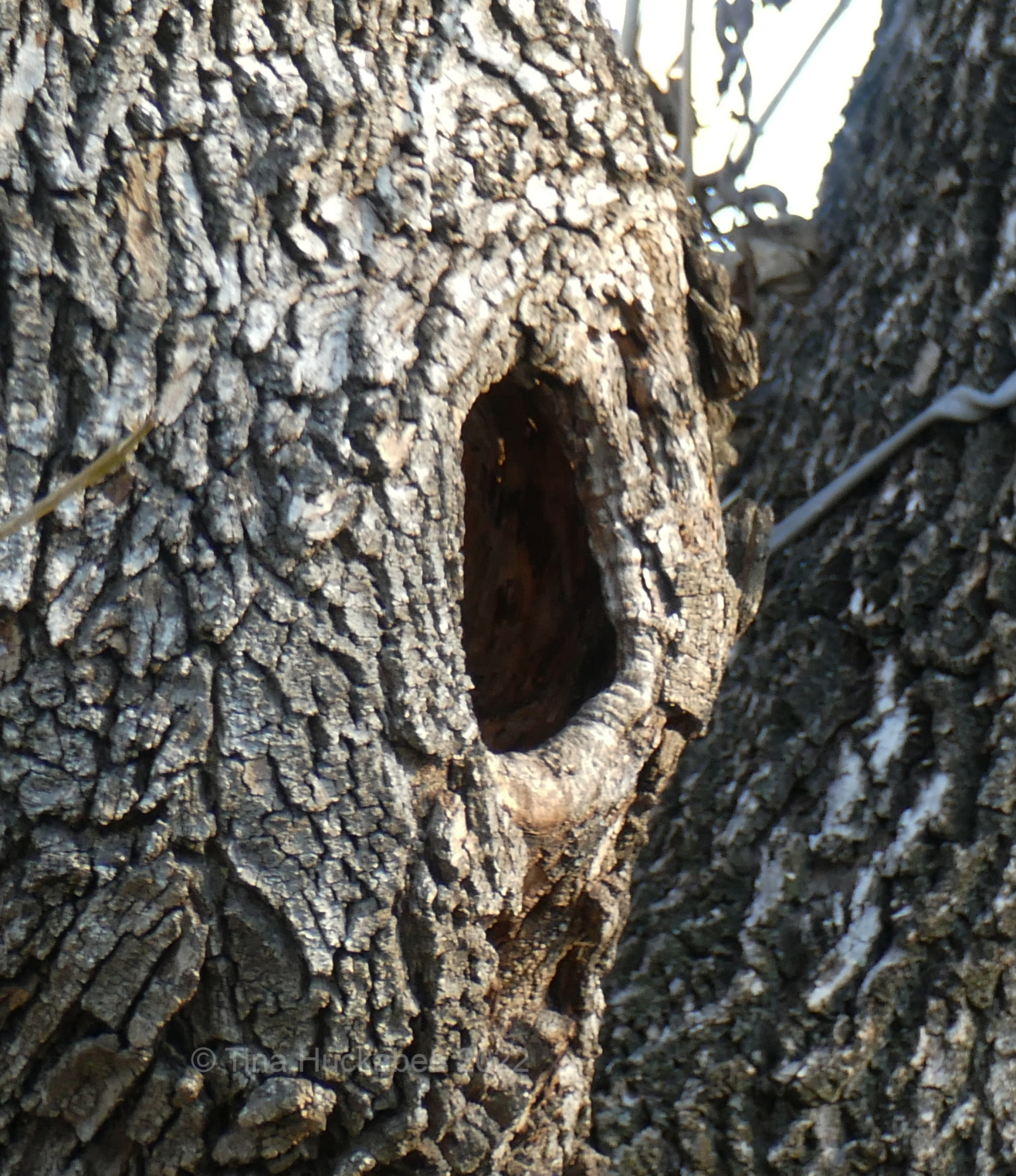
During that nesting time last year, dad would rest in the hole of my back neighbor’s dead Arizona Ash tree. The hole has a clear view of the nest box and isn’t far away. In the last two weeks, I’ve spied an owl (the same male?) in that hole almost every day. The Blue Jays know he’s there–that’s how I found him–following their warning calls as they harass him from time-to-time. Without the help of the caterwauling jays, I would have never known he was there, he’s so well camouflaged.
I know when he’s sleeping inside the hole or perhaps not there at all, when I can see the deep, dark of the hole. These two photos of the same hole were taken on different days.
This morning, at about 7am, I was hanging up the bird feeders and setting out unshelled peanuts along my back fence, when I saw an owl perched in a different, smaller tree–a Crape Myrtle–belonging to the same back neighbor. It was light, just barely, and it’s not typical to see owls out in the open after daybreak. The owl was still and facing my sister-in-law’s back garden. Just then, I heard the call of a Cooper’s Hawk, Accipiter cooperii, and observed two in her large backyard tree One of the hawks was enjoying an early breakfast.
The smaller male perched nearby while the female ate. They were closer together when I initially saw them and the dining hawk definitely bigger, which indicates that she’s the female.
It’s not a great photo, but shows both of these beauties. Did the male bring its prey to the female as a love offering? I mean, it is almost Valentine’s Day!
I was surprised at the early morning catch by the hawks, I usually see them hunting later. I now suspect that the little owl in the myrtle was caught in the open and was remaining still, as the hawks are a clear threat to her.
The Blue Jays arrived for their morning peanuts, discovered the owl in the myrtle and in a flash (that I missed, as I was glancing at the hawks) the owl flew to the nest box, trailing yelling jays after her. Just after that bit of bird drama, I glanced at the tree hole, saw an owl face there and snapped the photo shown the beginning of this post. I now know that there is a pair of nesting Eastern Screech owls in my back garden: dad is in the tree hole, mom is in the box. This pair is quiet and shy–just like last year’s owls. Are the the same pair? Probably, but only they know for sure. And really, isn’t that all that matters?
So why did I start this story with the fox scat? Last March, when the screech owl nest was destroyed, I assumed it was a raccoon that did the deed. For some time now I’ve wondered if, instead of a raccoon being the predator, that it was a fox that snatched the eggs. Foxes climb well, I know they’re around and that they’ve been in the back garden. I didn’t see any raccoons in or around my garden in this past year (though I’m sure there were visits from some) and I’ve spied the foxes several times. Additionally, in the past, but mostly during summer, I’ve seen snakes in the garden and it’s possible it was a snake which raided the box. The truth is that I’ll never know for sure who ended the owl couple’s chance at a family that time and whatever the predator, it has to eat too and likely had offspring to feed. After all, owls are predators and eat plenty of smaller birds.
Now that I’m aware that there are two owls, probably a mated pair and likely the same couple as last year, I hope to be proactive in helping them protect their nest box. There are guards that can make it difficult for predators to reach the nest and I’ll figure out something along that line. If past experience holds true, the owls will have eggs by the end of this month, definitely by March.
As for the Cooper’s Hawks, I will keep an eye out for their nesting digs. They’re big birds and a nest is likely placed in a large, evergreen oak tree.
Nesting season 2022 is underway!
Rest up, Dad. You’ll soon (hopefully!) have other beaks to feed!






 My Gardener Says...