My garden is graced with purple: purple blooms, foliage, and fruits continue with a seasonal tradition of a purple-to-lavender champion performances during the long Central Texas summer. Of course other colors dot the landscape, but plants which rock the purple hue thrive after months of heat, with (typically) little rain, and rule the month of August. It’s purple time!
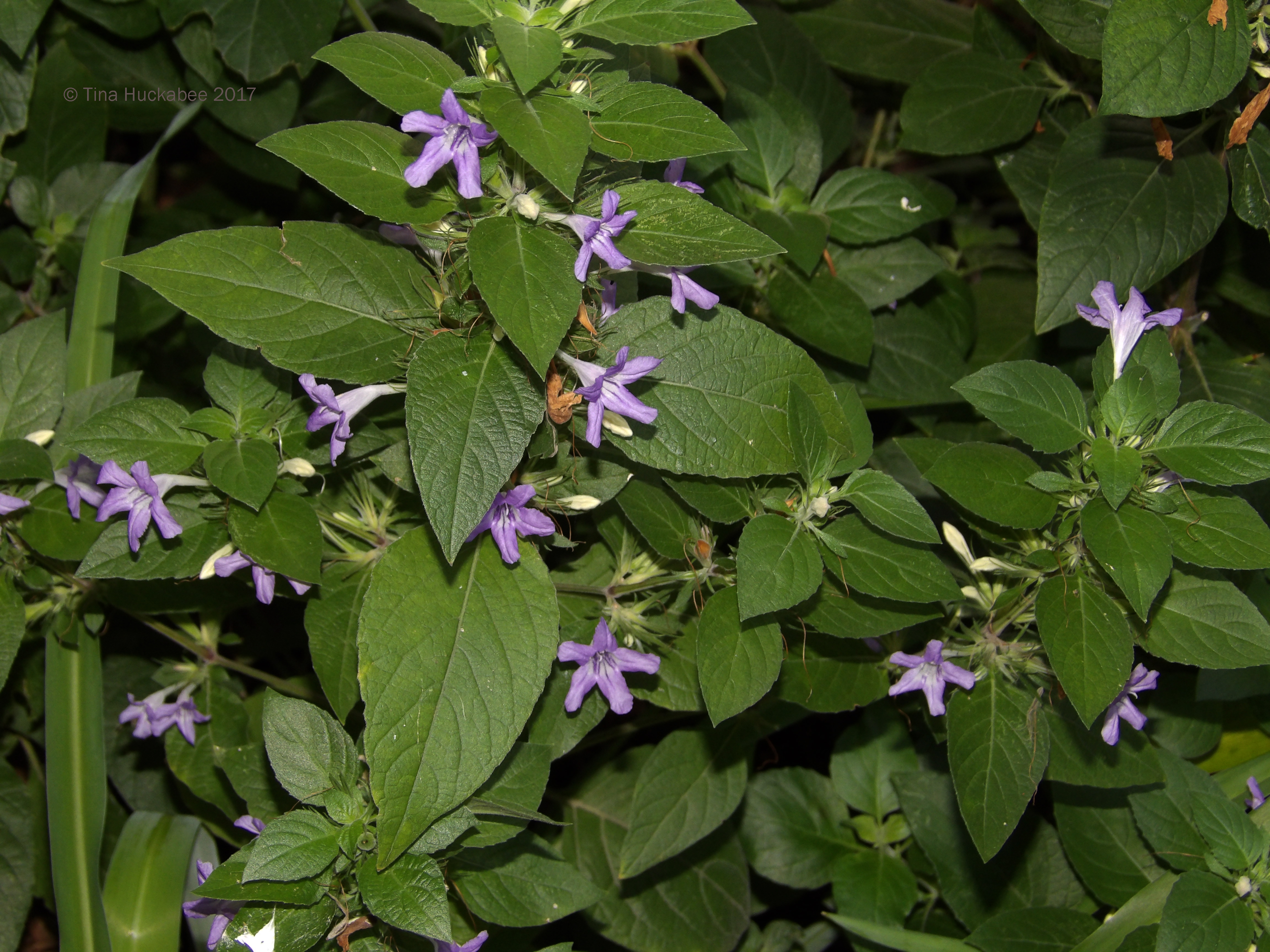
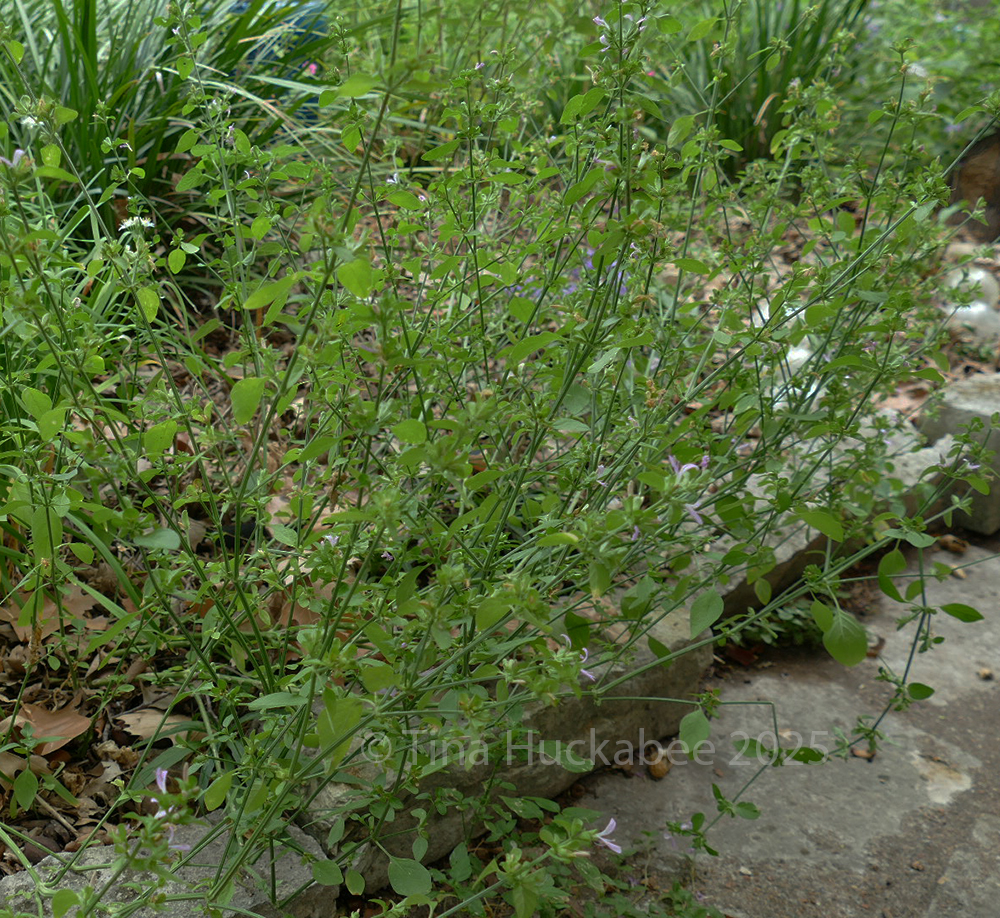
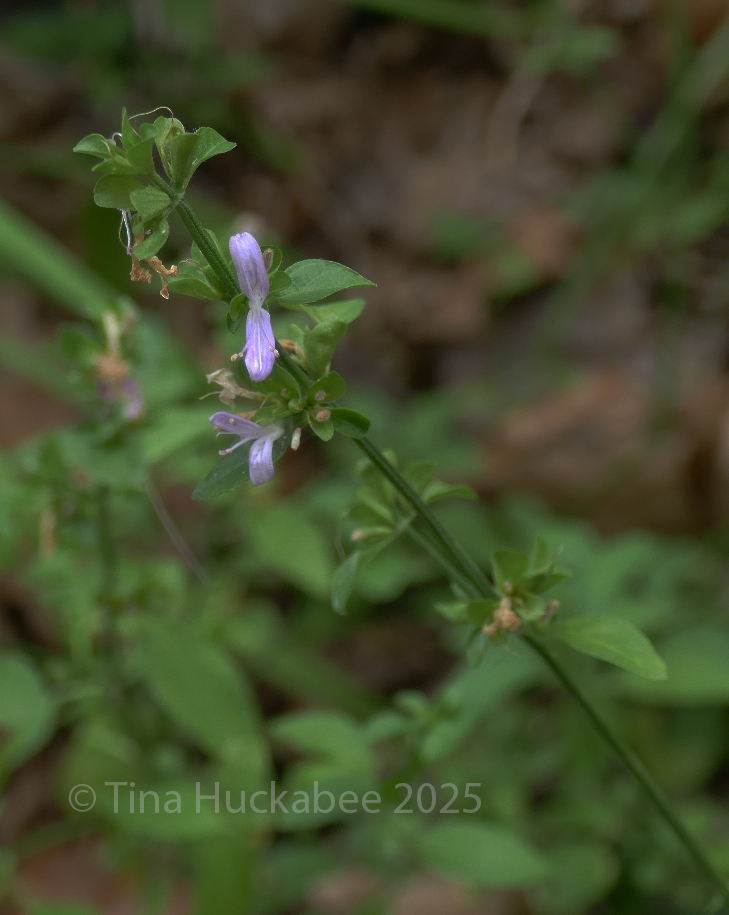
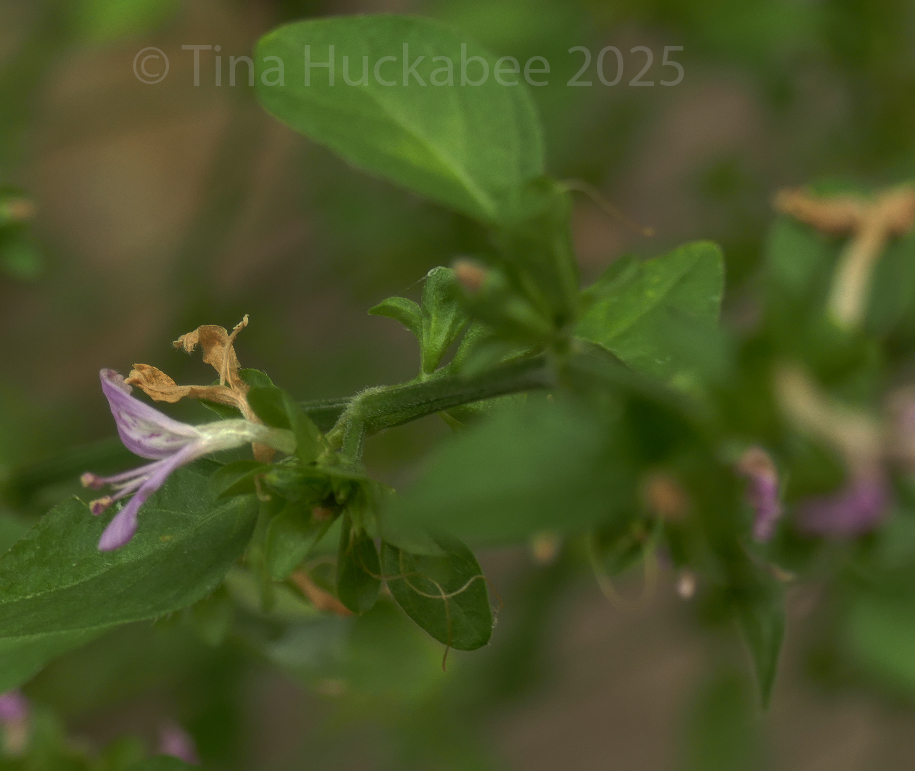
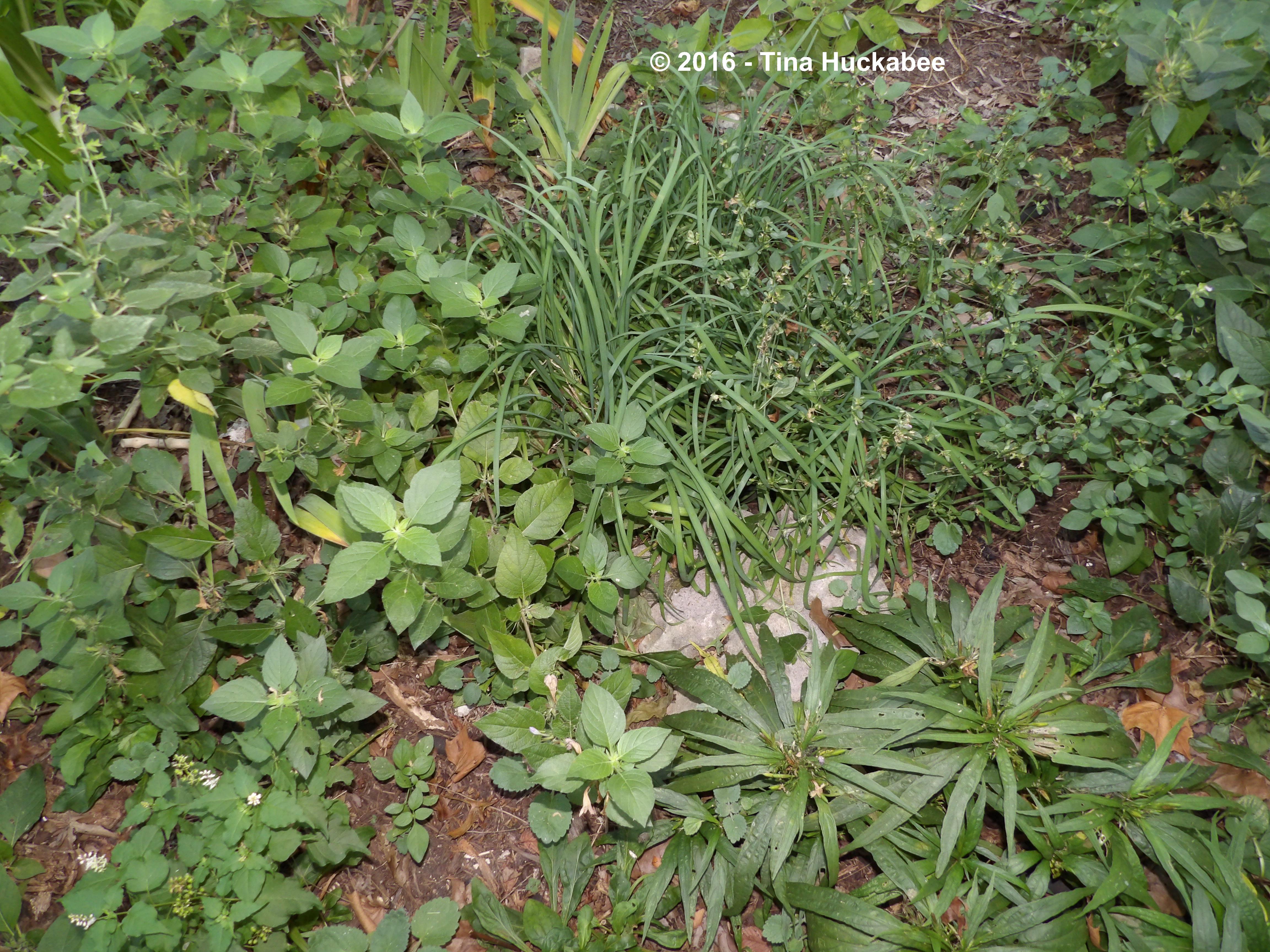
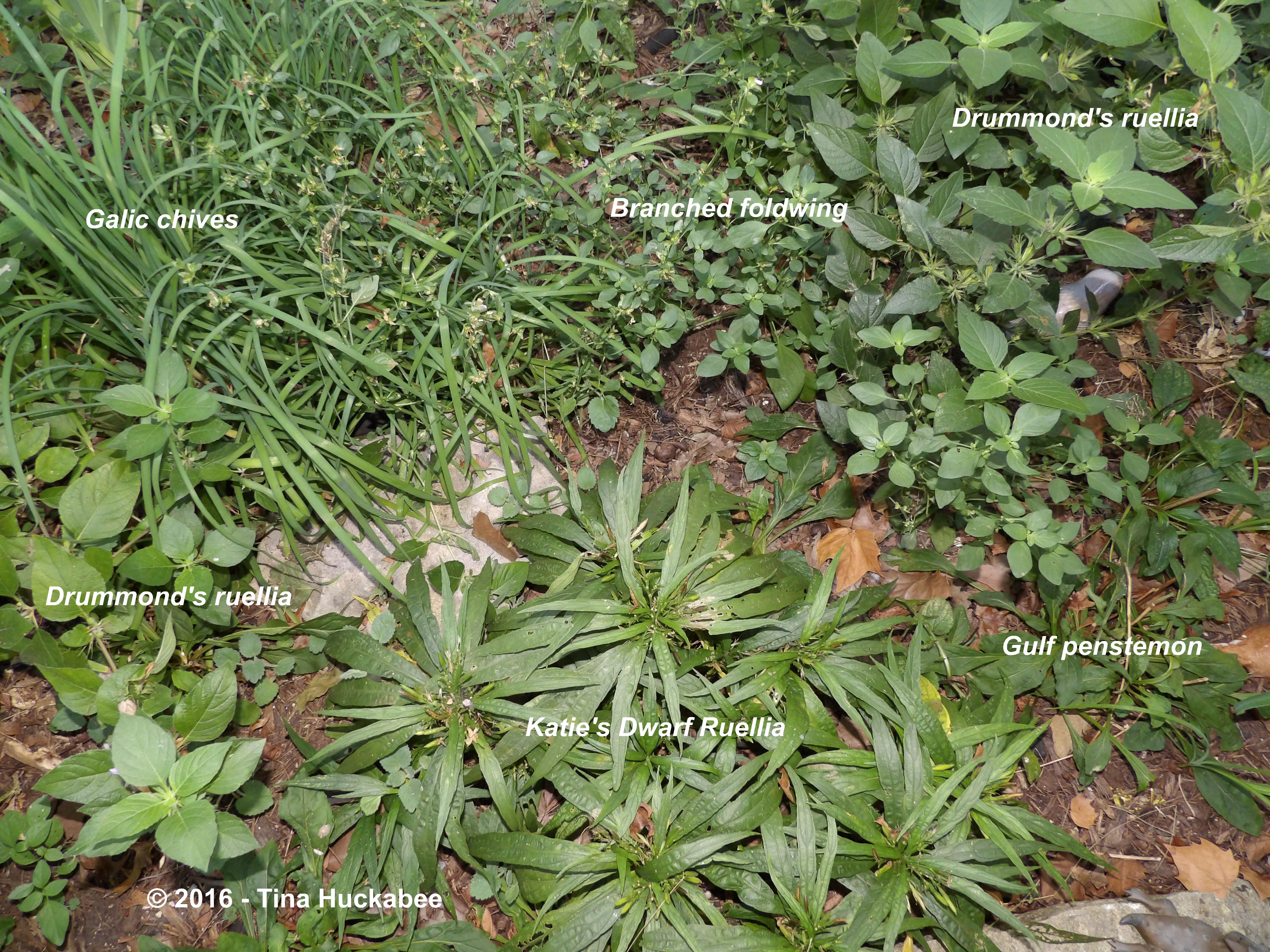
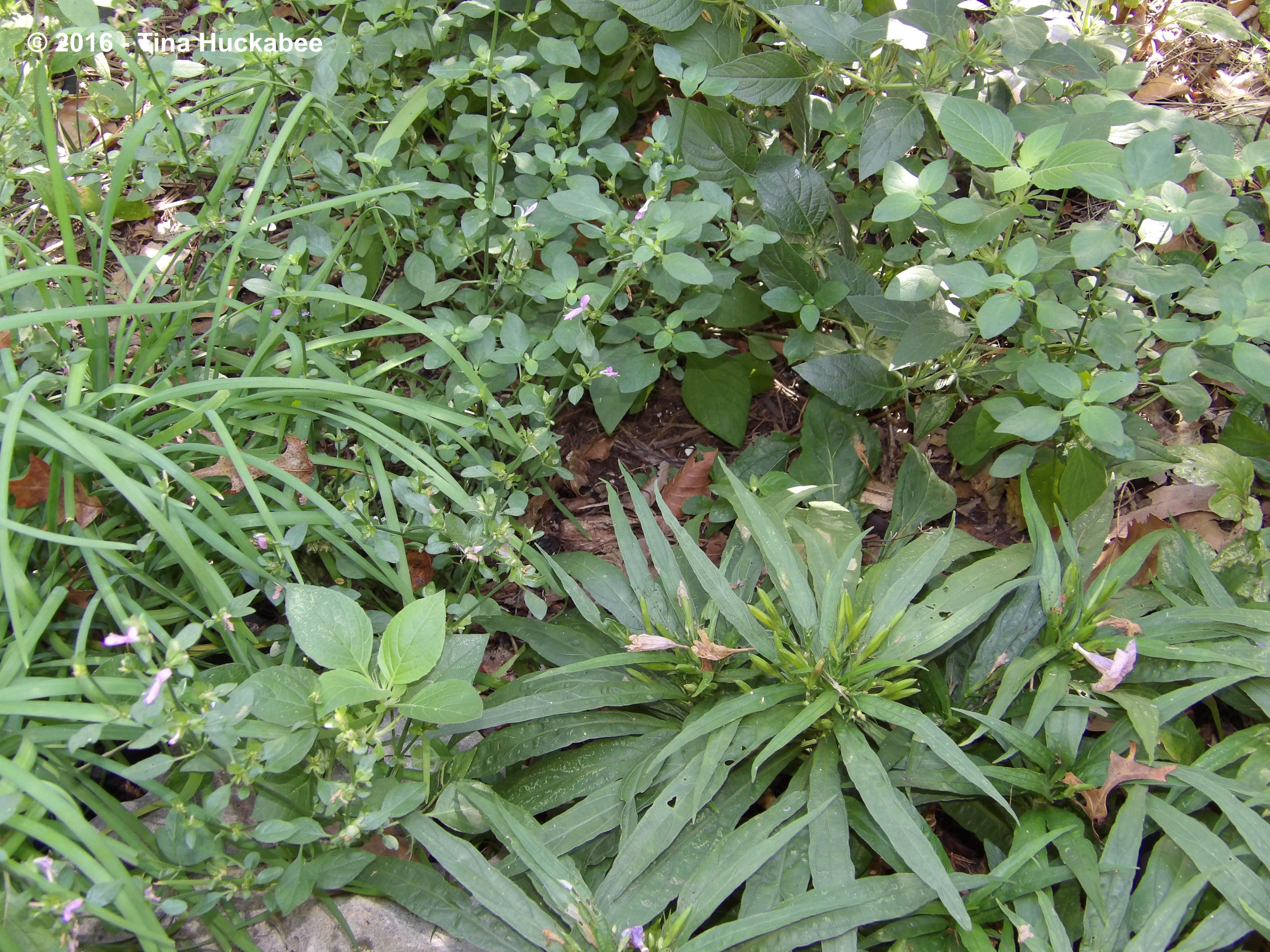
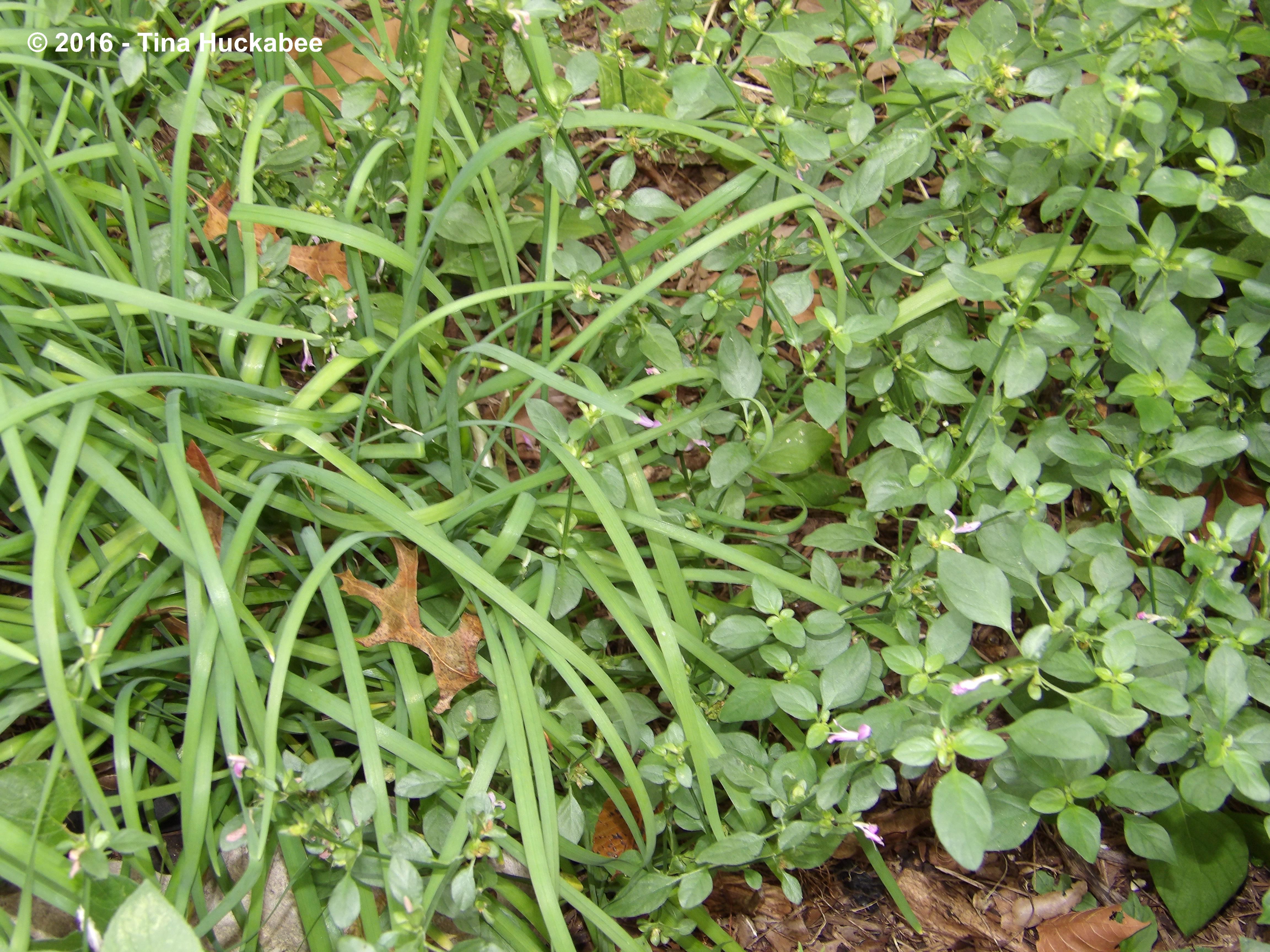
Foliage recovery is in full swing for this Branched foldwing, Dicliptera brachiata, , which appeared unannounced, but welcomed, in my garden a couple of years ago.

Munched stems are recovering their green.
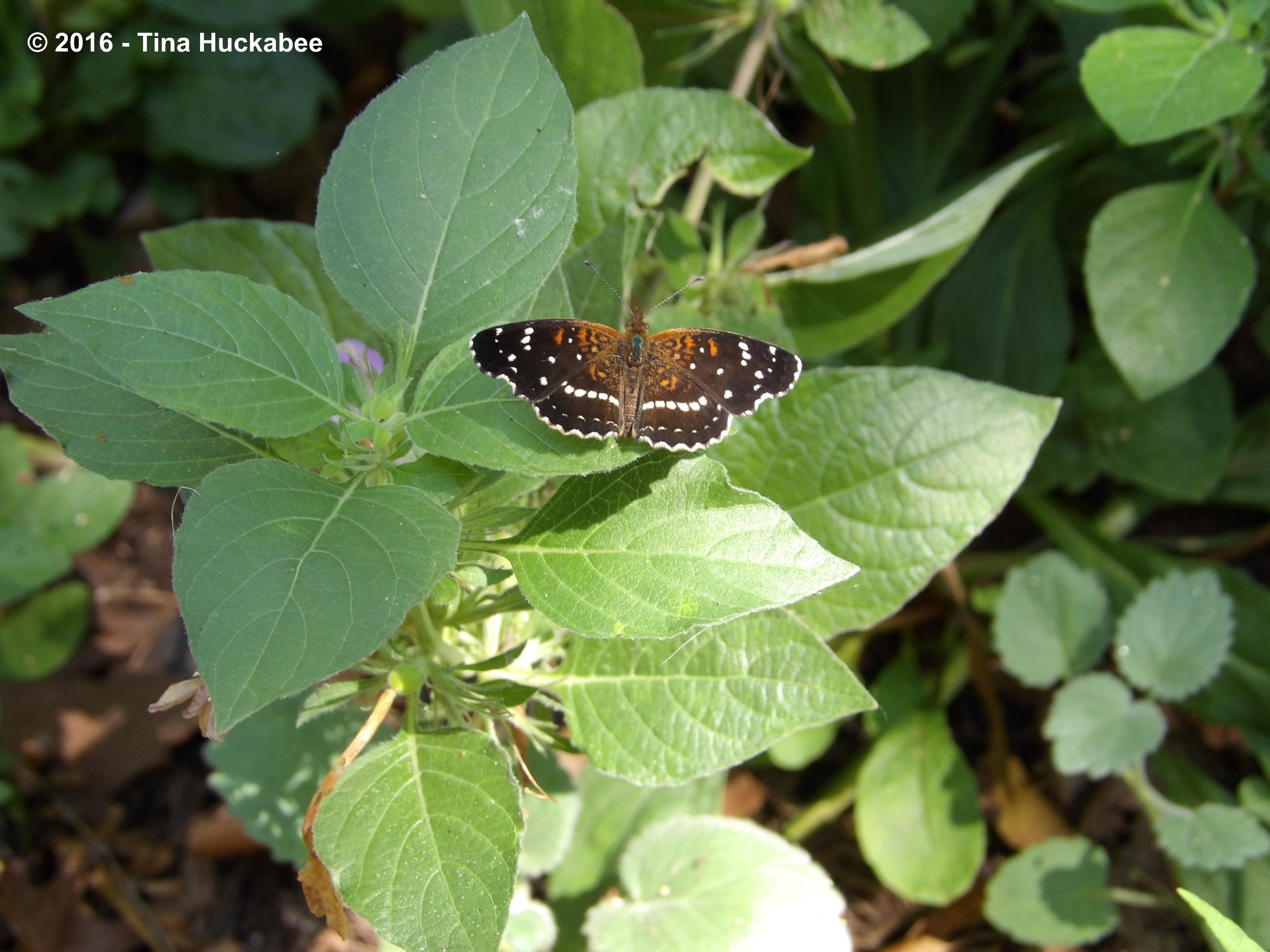
This restrained and unobtrusive little native perennial hosts the Texan Crescent butterfly.

Texan Crescent nectaring in spring on Golden groundsel.
My garden enjoys a nearly year-round population of these pollinators because I grow several of its host plants in the Acanthus family, including the Branched foldwing. The caterpillars do a nibbling number on the foldwing’s leaves, but the plant rebounds with aplomb, leafing out again and again, and setting blooms in late summer.
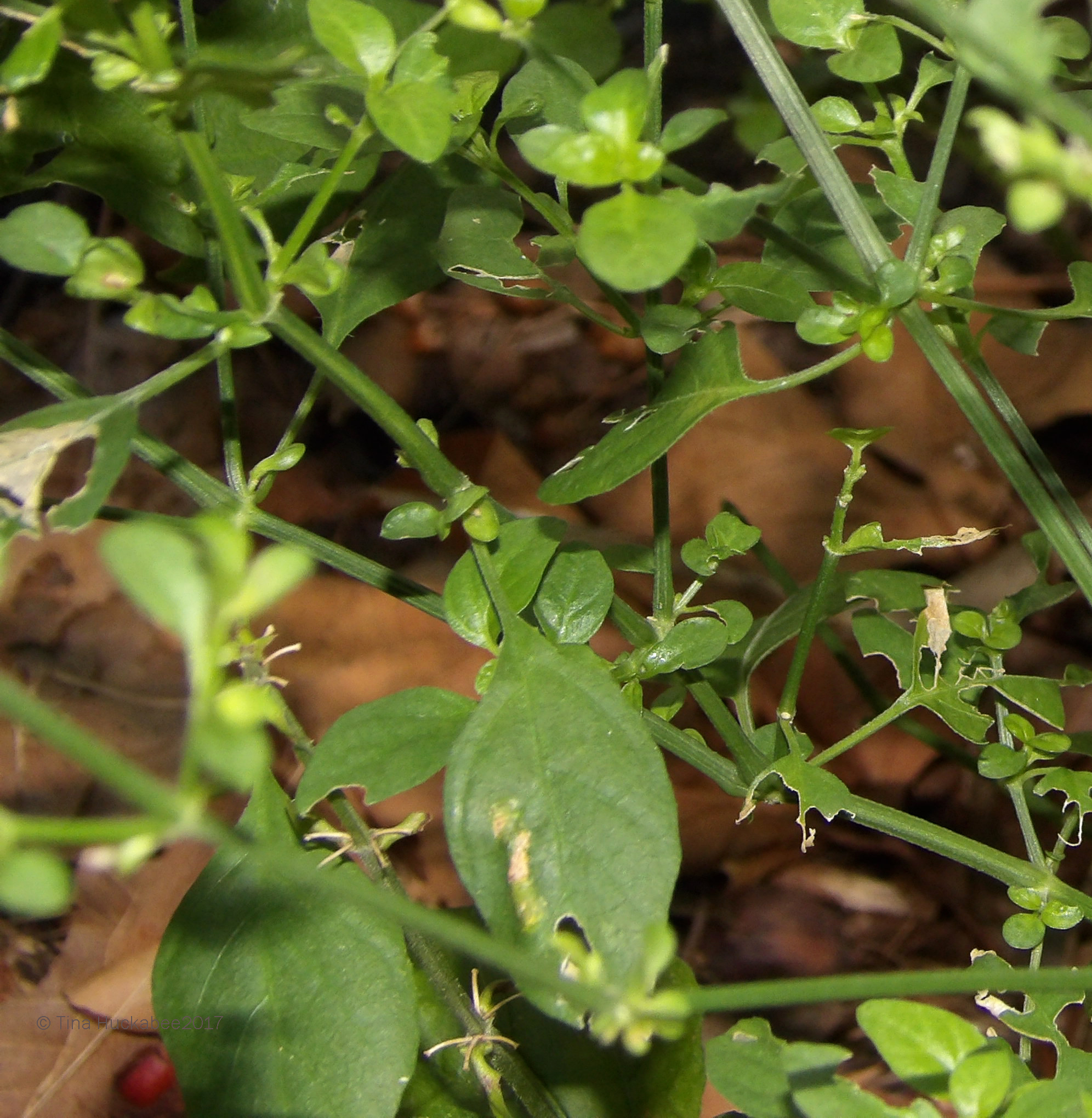
Dainty and unpretentious, the lavender–not really purple–flowers provide for tiny pollinators.

Drummond’s ruellia, Ruellia drummondiana, is another native Texan that loves the heat and demonstrates that affection with daily doses of purple goodness.


Opening early in the morning and closed by late afternoon, the blooms are loved by many-a-buzzing pollinator. I’m rather fond of them myself!

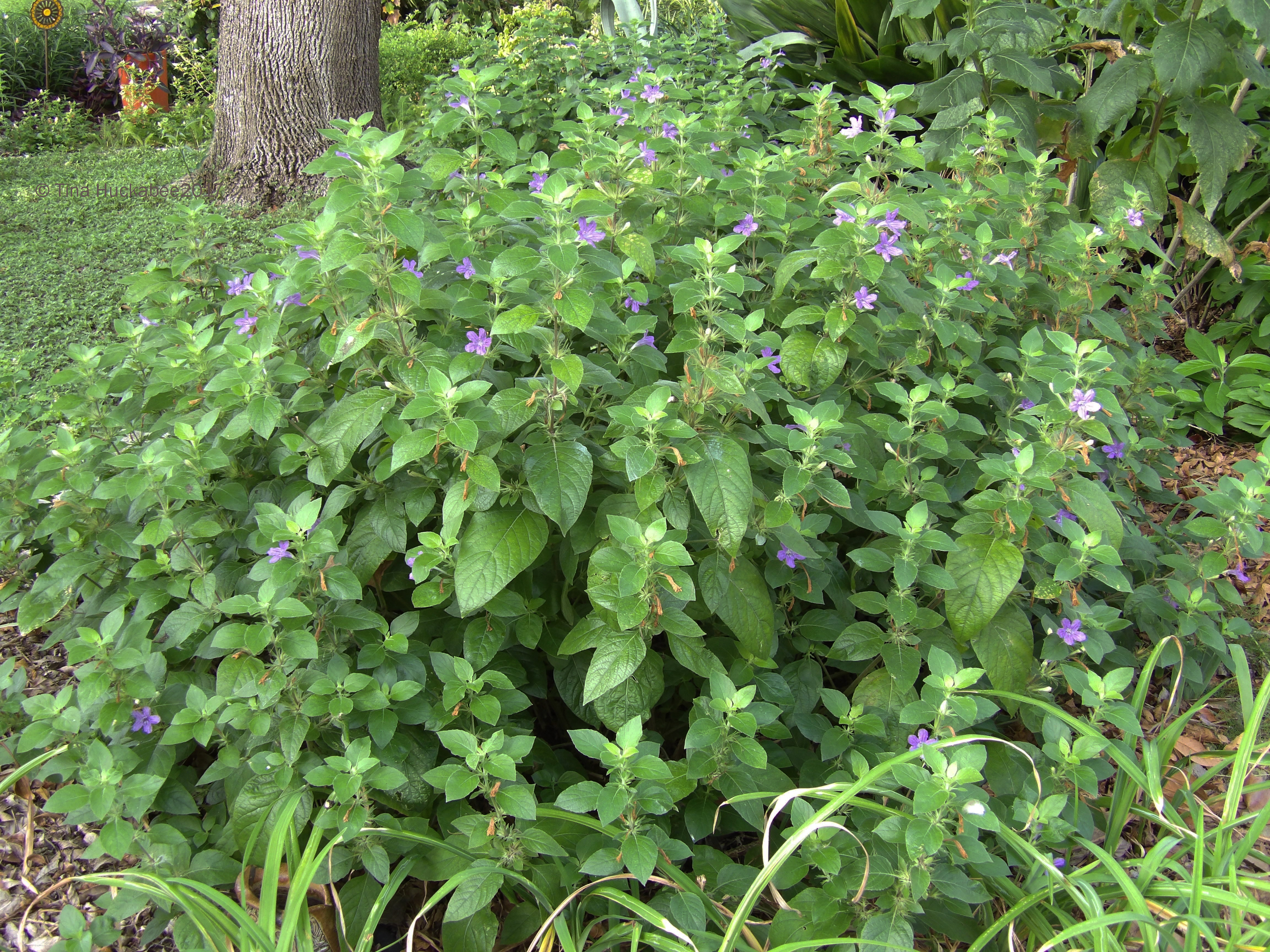
I like the foliage, too. An attractive green-gray, it’s full and lush from spring until the first hard freeze–whenever that happens. I like to mix it with some evergreen plants, so that there’s some winter action while the ruellia plants rest up for summer.

Cast Iron Plant, Iris, and Sparkler Sedge provide some winter green structure alongside the ruellia.
The cultivar, Katie’s Dwarf ruellia, also called Mexican petunia by Texas AgriLife, produces similar blooms as the native ruellias, though larger and more purpley colored. The lance-like foliage structure and ground-cover growth habit allows this plant to front large plants beautifully. Katie’s Dwarfs also fits well into a narrow garden.
A water-wise wonder, I’ve had a couple of these tough Katie’s grow out of rocks; that’s a plant I can get behind!
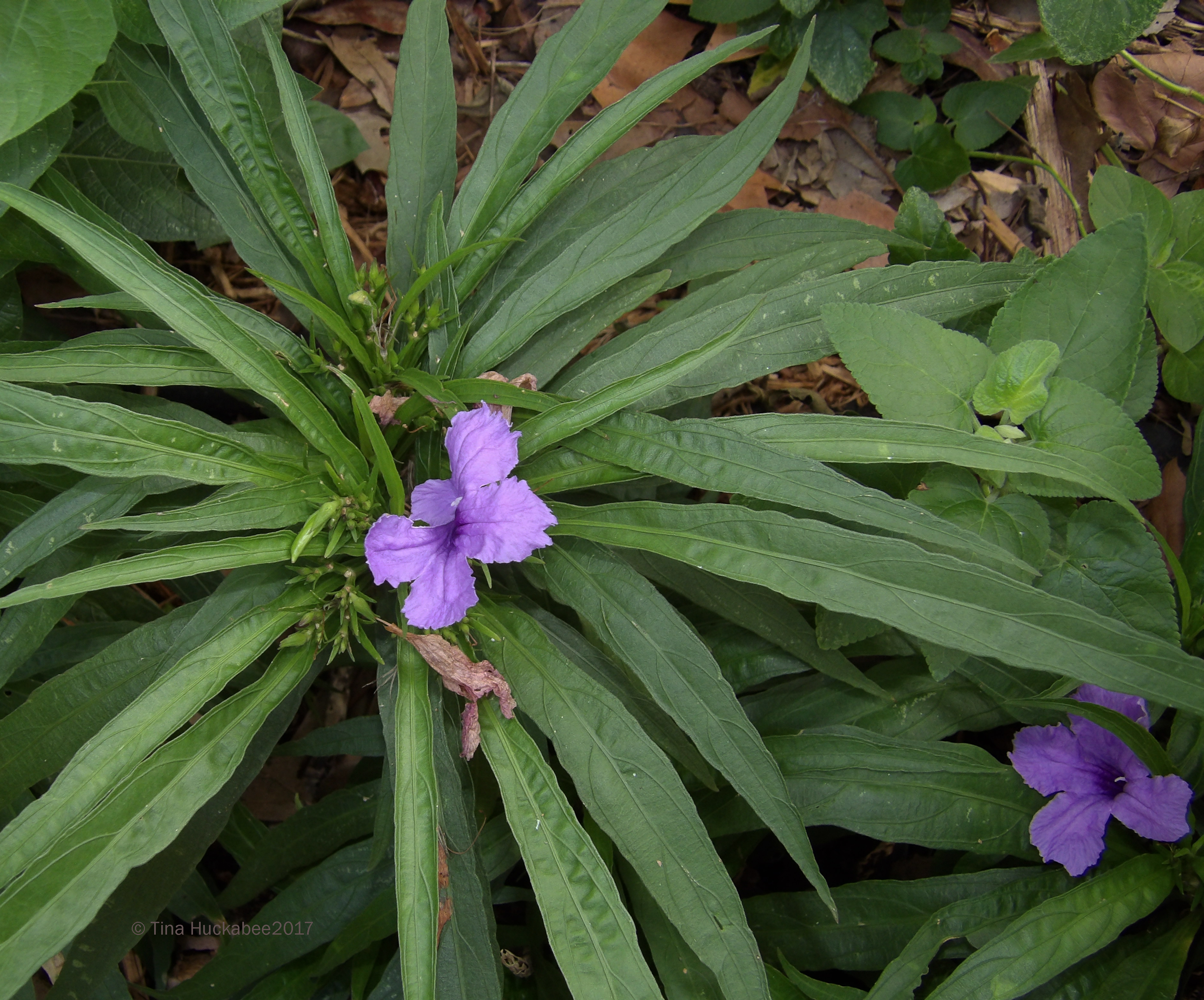
With a bouquet-like demeanor, the Katie’s Dwarf bloom spectacularly in shade, in full sun, and everything in between.
Purple-luscious fruits of the American beautyberry, Callicarpa americana, are nearly ready for the appetites of hungry Mockingbirds and Blue Jays.

Gone are the petite pink blooms which decorate this deciduous shrub in early summer. Instead, the fruits are morphing from green to garish metallic purple, preparing for the birds’ meals.
Beautyberry also has a graceful growing habit, lovely in any garden.
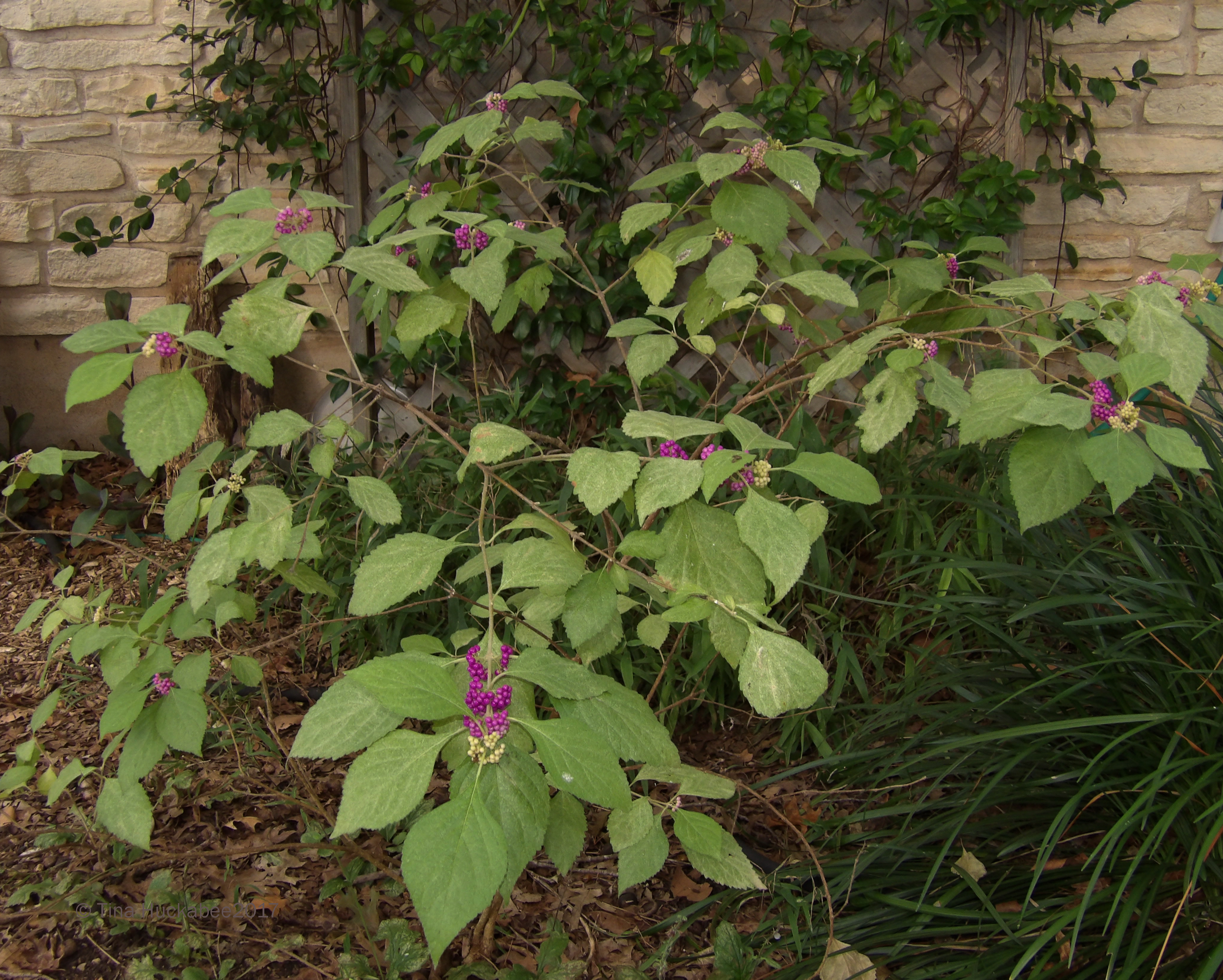
Beautyberry is a win for gardeners and for wildlife–and adds some purple vibe to my August garden.
The refreshing pond isn’t without its purple contribution in the form of a cleansing bog plant, Pickerel rush, Pontederia cordata.
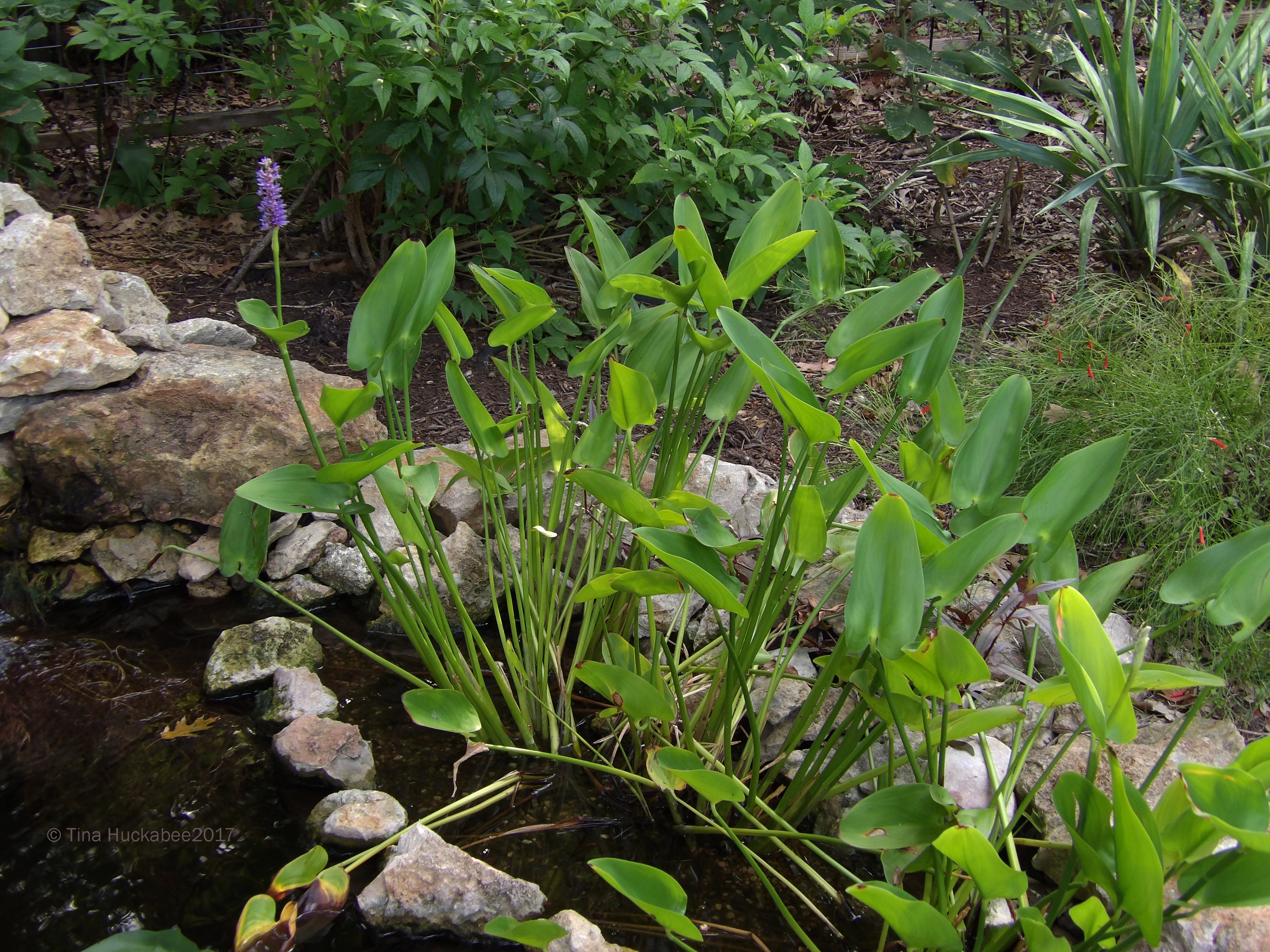
With the ever-increasing shade thrown on my garden, these pretty blooms are less active with each passing summer. I appreciate the foliage, but I miss the massive blooming show that was common 8-10 years ago when we first built the pond. These blooms benefit from plenty of shining summer sun.

Another pond plant, this Ruby Red runner, an Alternanthera hybrid, adds a bit of purple-ish foliage fellowship to the waterfall.
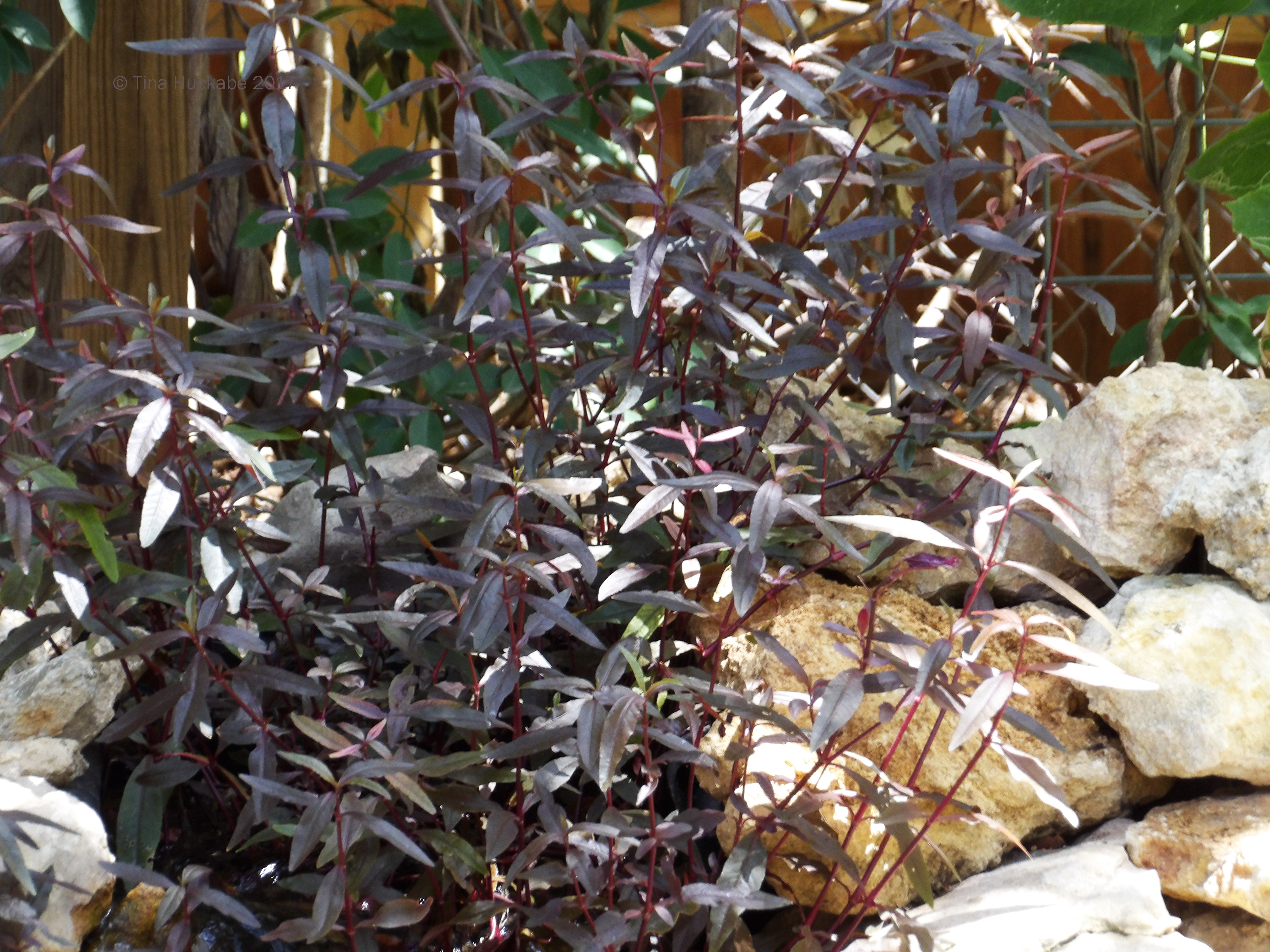
I’m probably stretching the purple with this plant; I suppose it’s really more of a burgundy red, but I’ll lump Ruby Red into the purple camp.
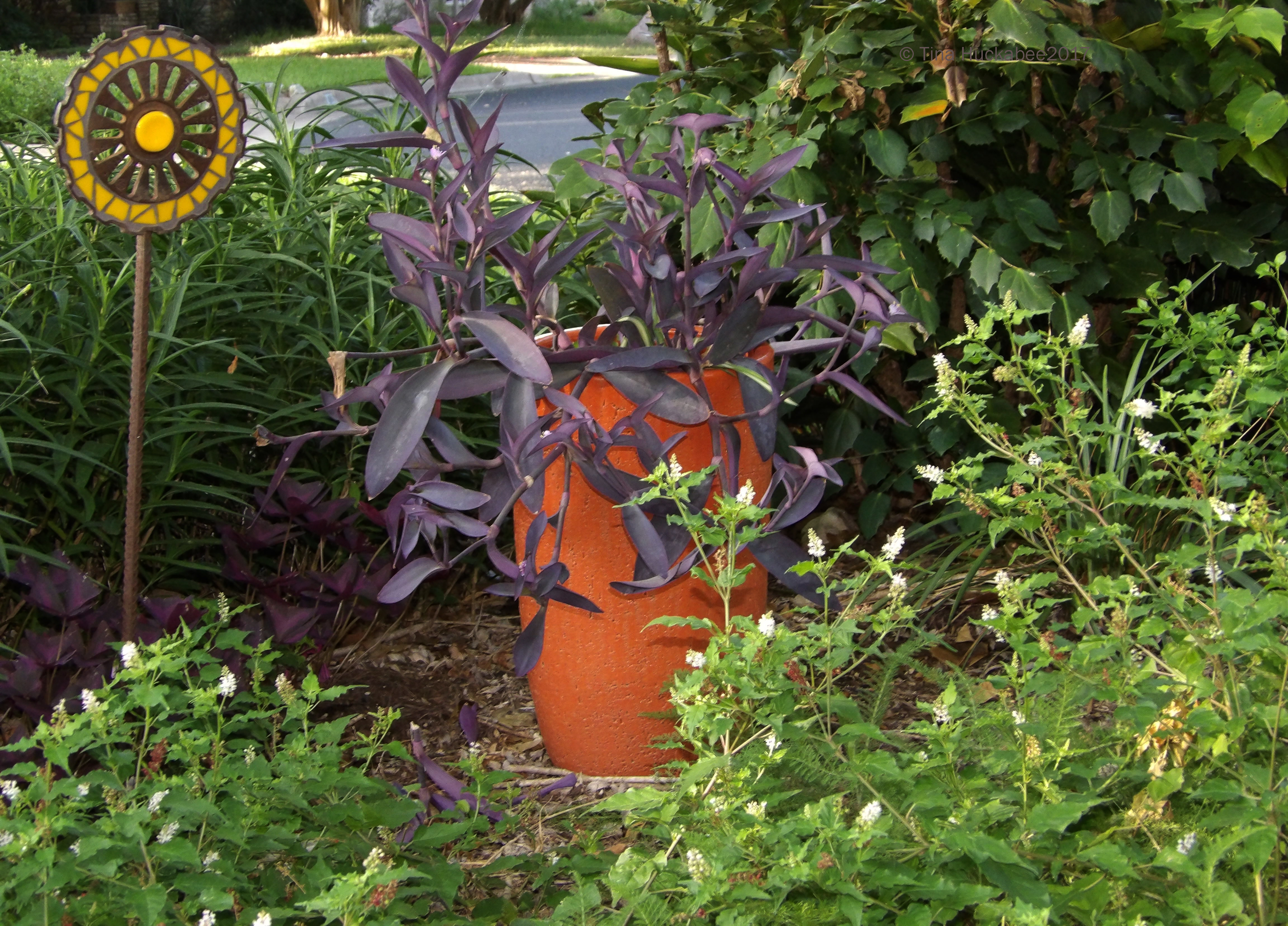
Purple Heart, Setcreasea pallida, is native to Mexico, but naturalized in many parts of Texas. I grew up with this common groundcover; my mother planted it along with her banana plants. No banana plants in my garden, but Purple Heart works in shade or sun as a border groundcover.

As well, I like it cascading over containers. It brings a spot of color to a dark corner of the garden.
Reds, pinks, whites and yellows are biding their time for now, hunkering down against the blast of August heat. Once the days are shorter and the rains more regular, the garden wheel of color will burst forward with a vivid spin. But for the rest of August, I’ll treasure the purples for their late summer donations to garden color.
Pretty purples!
Joining with Garden Bloggers’ Bloom Day to celebrate the blooms of August, please pop over to May Dreams Gardens to enjoy blooms from many gardens.






 My Gardener Says...