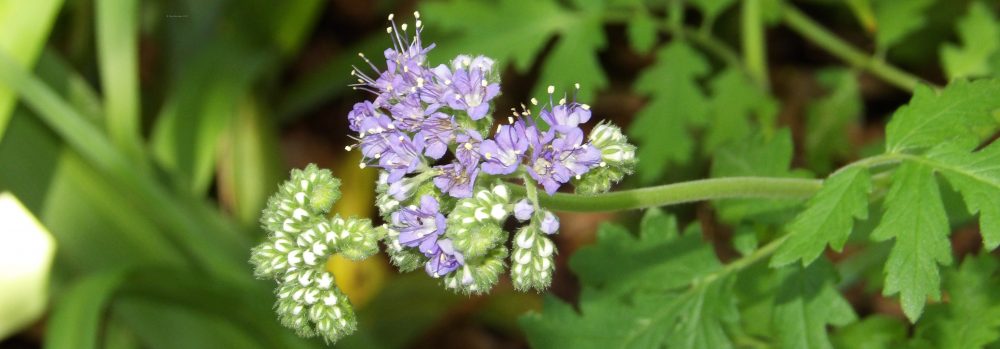
Just to be clear: I like birds. I think they’re beautiful and endlessly fascinating. I’m gobsmacked at their migration and survival abilities, as well as their range of shapes, colors, and life histories. That being said, I’m not sure I’m much of a birder. I don’t drop everything and run to see an unusual bird near my area, much less one that has been spotted far away, requiring travel. I regularly use the Merlin and eBird apps, but I don’t keep a list of my lifetime bird identifications. Instead of being quiet when I see a new bird, I sometime squeal with delight. No real birder would do that.
Also, I refuse to make bird sounds.
I knew this trip to would be, at least to some degree, about birds, and though I connected with a Costa Rican bird expert to guide us, I emphasized that I’m interested in all of it: all flora and all fauna–and Johan didn’t disappoint on that score.
But Johan really is a bird-nerd. He’s knowledgeable and passionate about birds and that enthusiasm proved infectious for me. Though I don’t keep lists, I know that we observed 188 species of birds in our nine-plus days in Costa Rica, including 17 hummingbird species and plenty of rare and gorgeous birds. This post doesn’t have photos of all 188 bird species (I caught that sigh of relief), but instead, only a select few, chosen for clarity and variety, representing each geographical area that we visited.
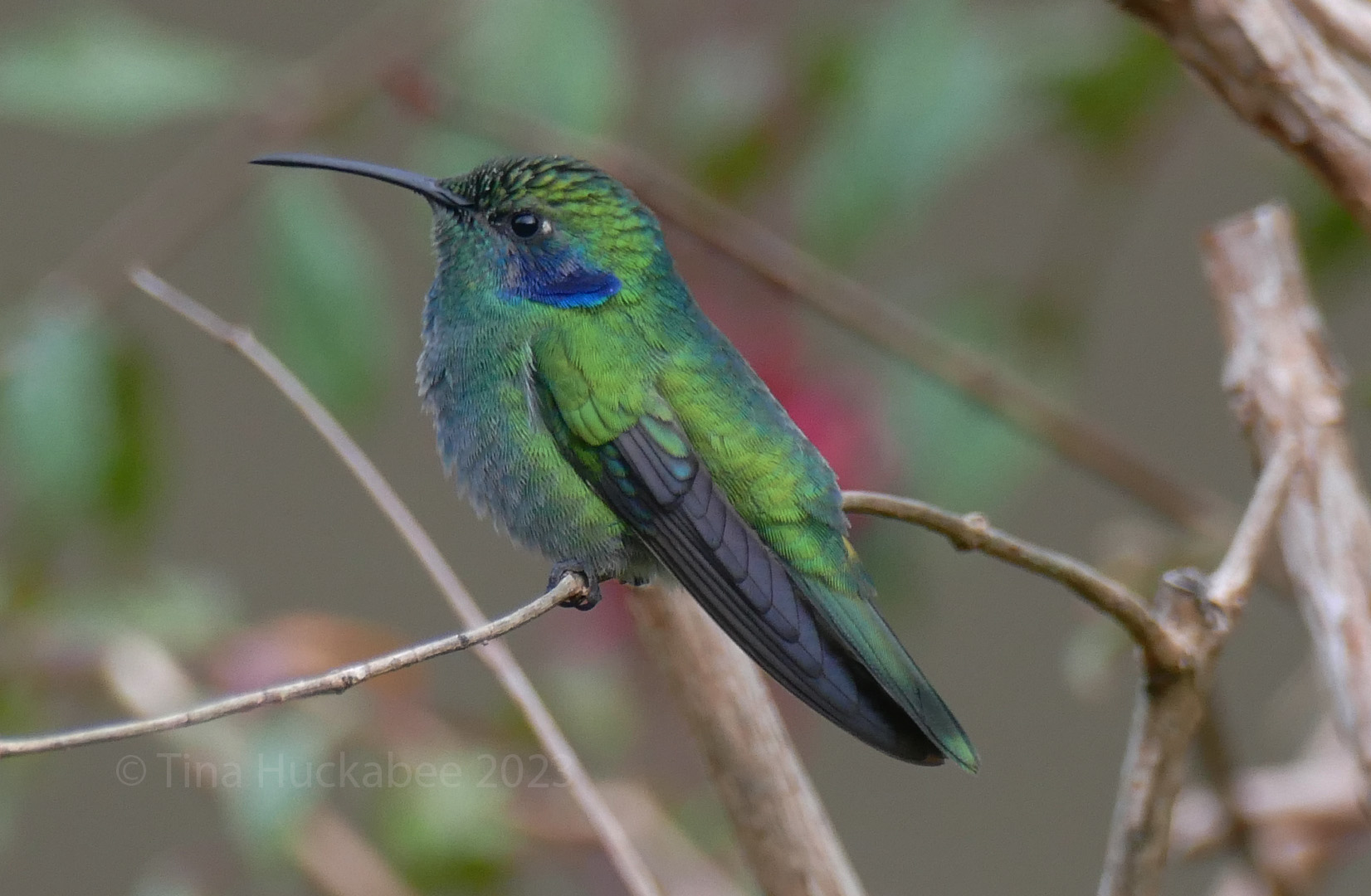
In the Orosi Valley, this Lesser Violetear, Colibri cyanotus, perched prettily on a Mexican Bush Sage, Salvia leucantha.

Another posed at the Paraiso Quetzal lodge gardens in the highlands of the Cerro de la Muerte. This gorgeous little thing ranges throughout the southern part of Central America and along the northern Pacific Coast of South America.
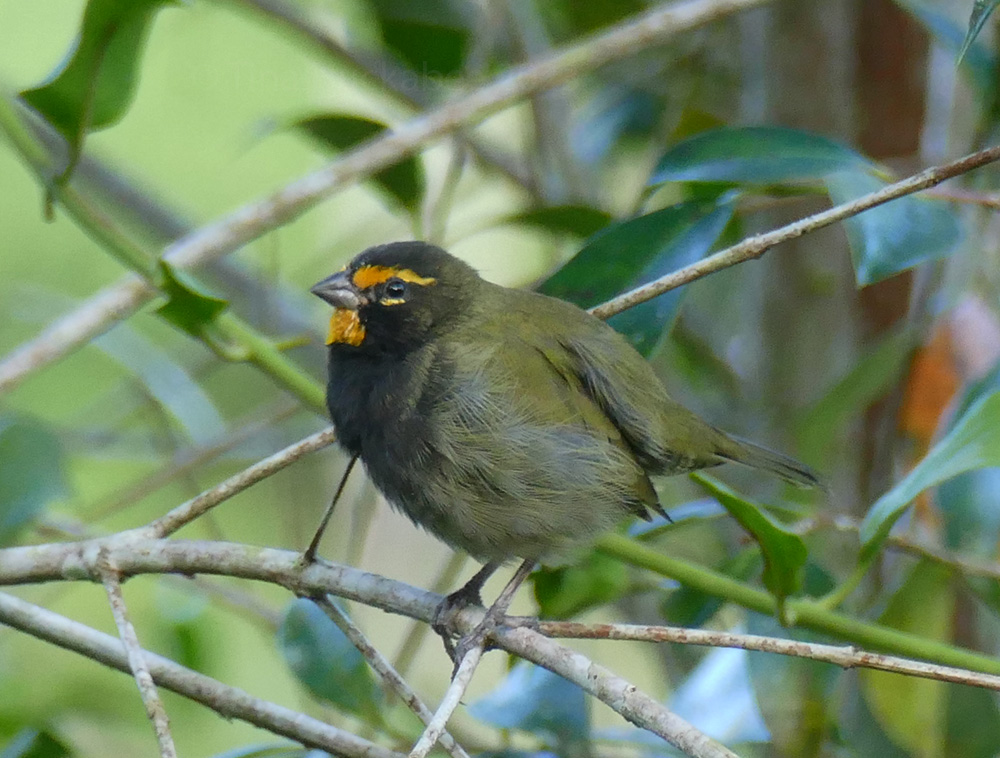
Back in the Orosi Valley, Yellow-faced Grassquits, Tiaris olivaceus, were common, as they are in parts of Mexico and all of Central America.
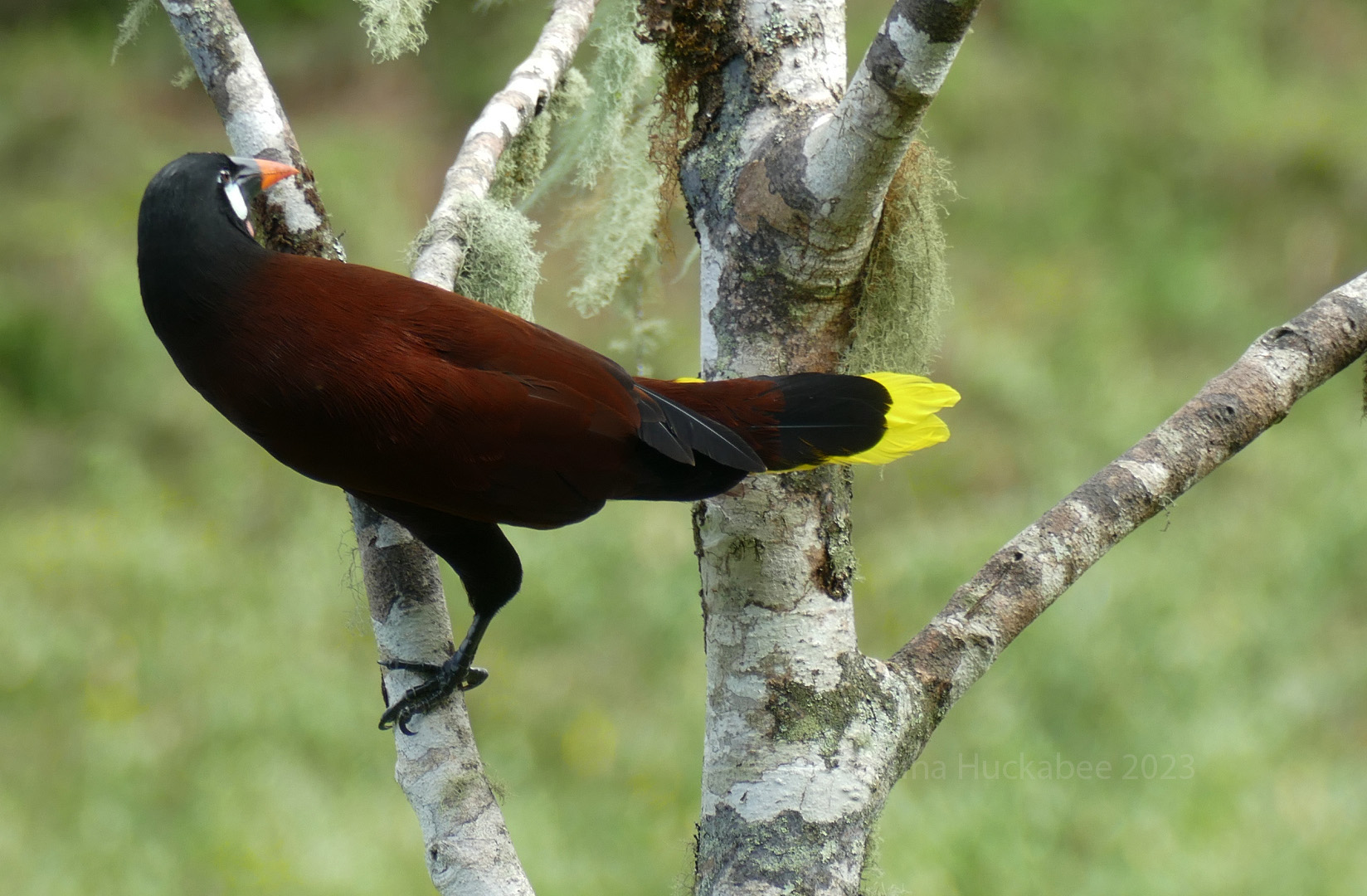
At our hotel, this character, a male Montezuma Oropendola, Psarocolius montezuma, enjoyed banana for breakfast while we humans enjoyed fabulous fruit, coffee and omelettes.
This must be a juvenile Violet-headed Hummingbird, Klais guimeti. It’s cheekily sticking out its tongue and looks annoyed, teenager-like, as I’m taking its photo.
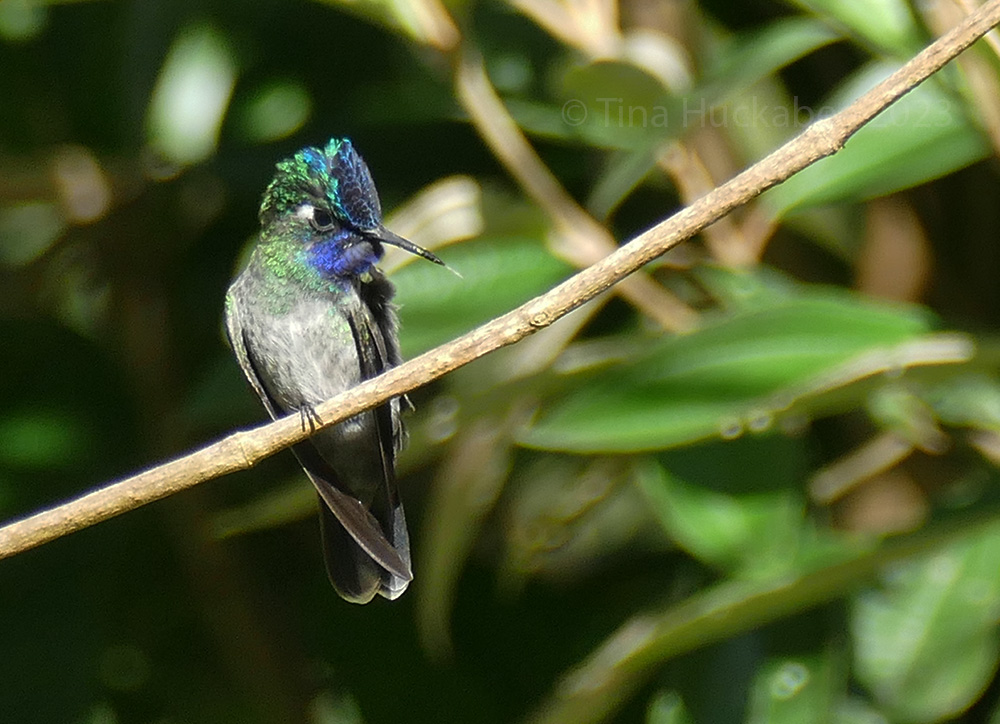
The Talamanca Hummingbird, Eugenes spectabilis, is notable for its size–it’s a big’un! Endemic to Costa Rica, we observed quite a few of these beauties in the highlands.
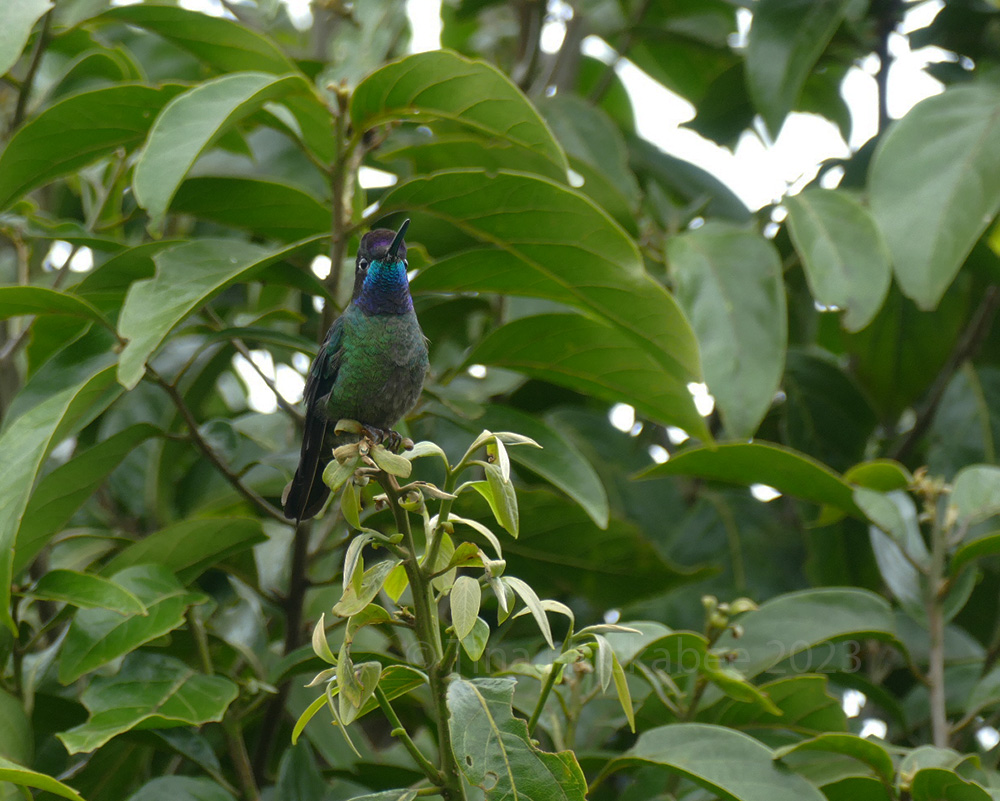
I’m particularly fond of sparrows and this busy little Rufous-collared Sparrow, Zonotrichia capensis, was fun to watch. We observed many of these birds, all nibbling along the ground, flitting between shrubbery.
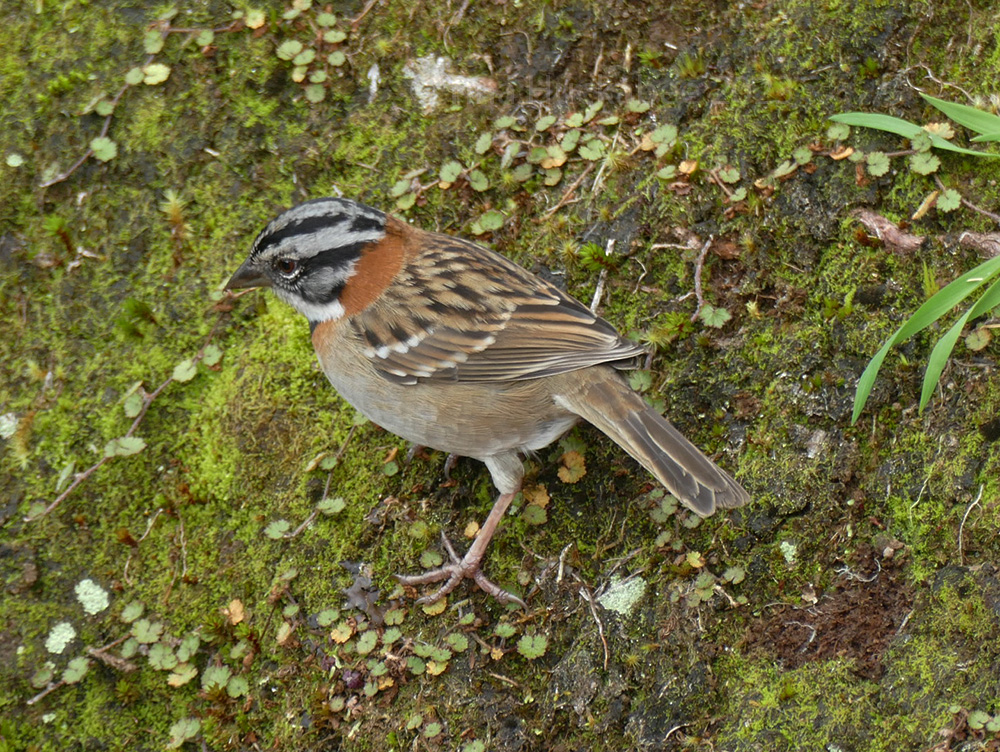
Perhaps not the showiest of birds, the sweet-faced Clay-colored Thrush, Turdus grayi, is Costa Rica’s national bird. These are common and widespread throughout the region; I also notice that eBird reports its range includes South Texas.
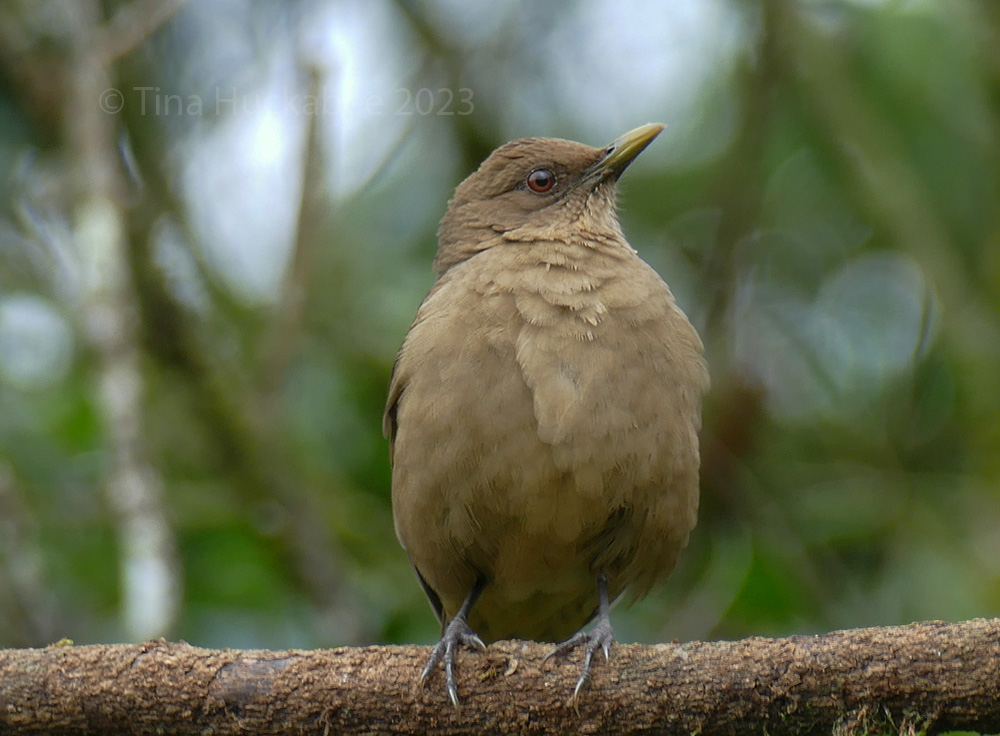
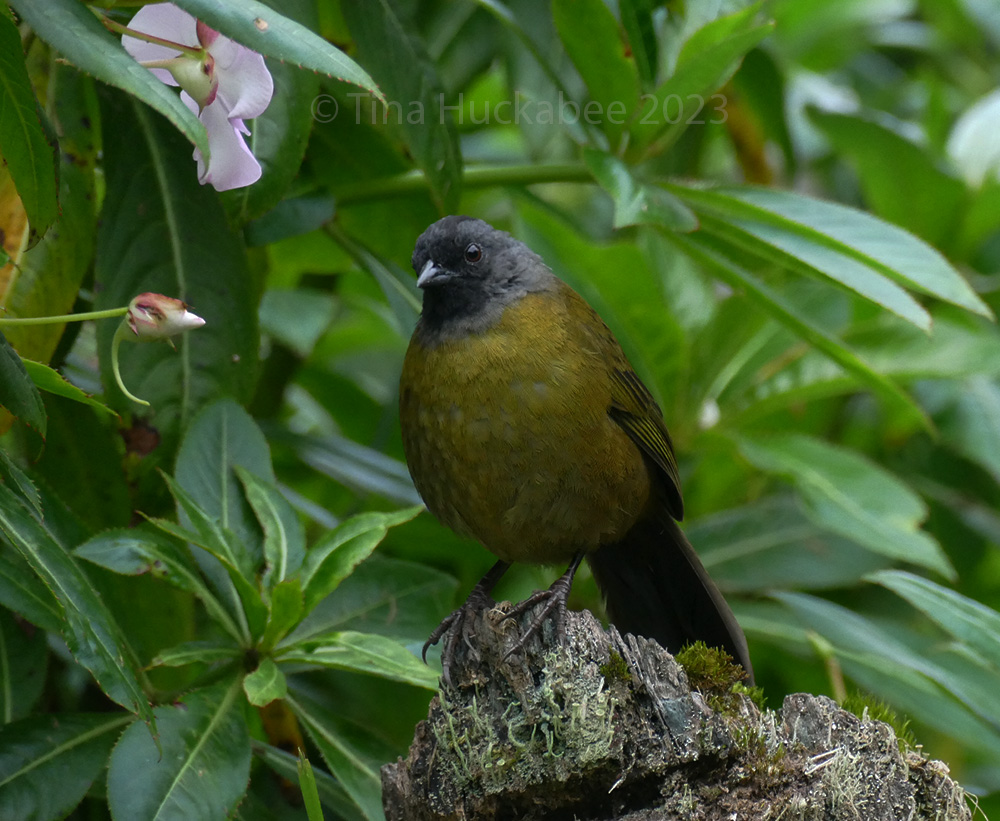
Finches that I’m familiar with are all tiny birds. Not so this Large-footed Finch, Pezopetes capitalis. It really does have quite a large set of feet! We observed these birds in the underbrush and shrubs of the highlands.
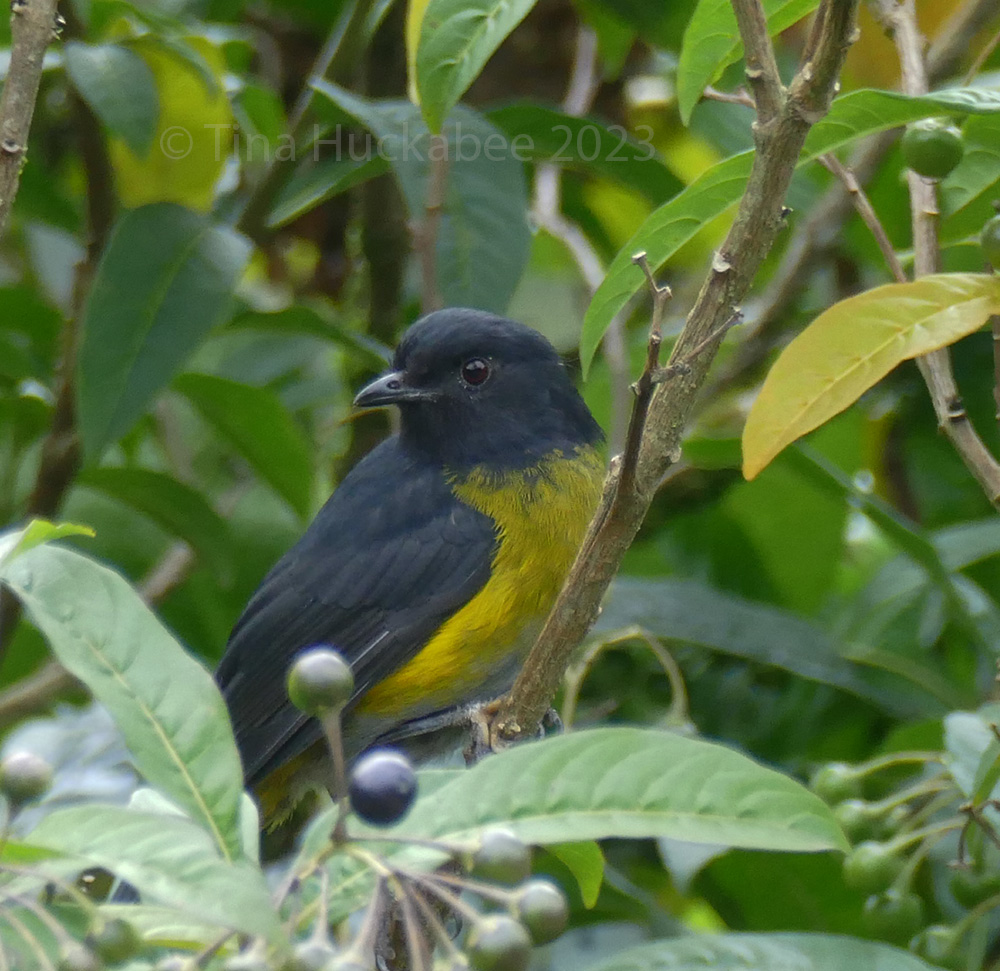
A Black-and-yellow Silky-flycatcher, Phainoptila melanoxantha lives in mountainous areas. eBird describes the bird as “Slow-moving, often sitting still.” That partially explains my success with the photo.
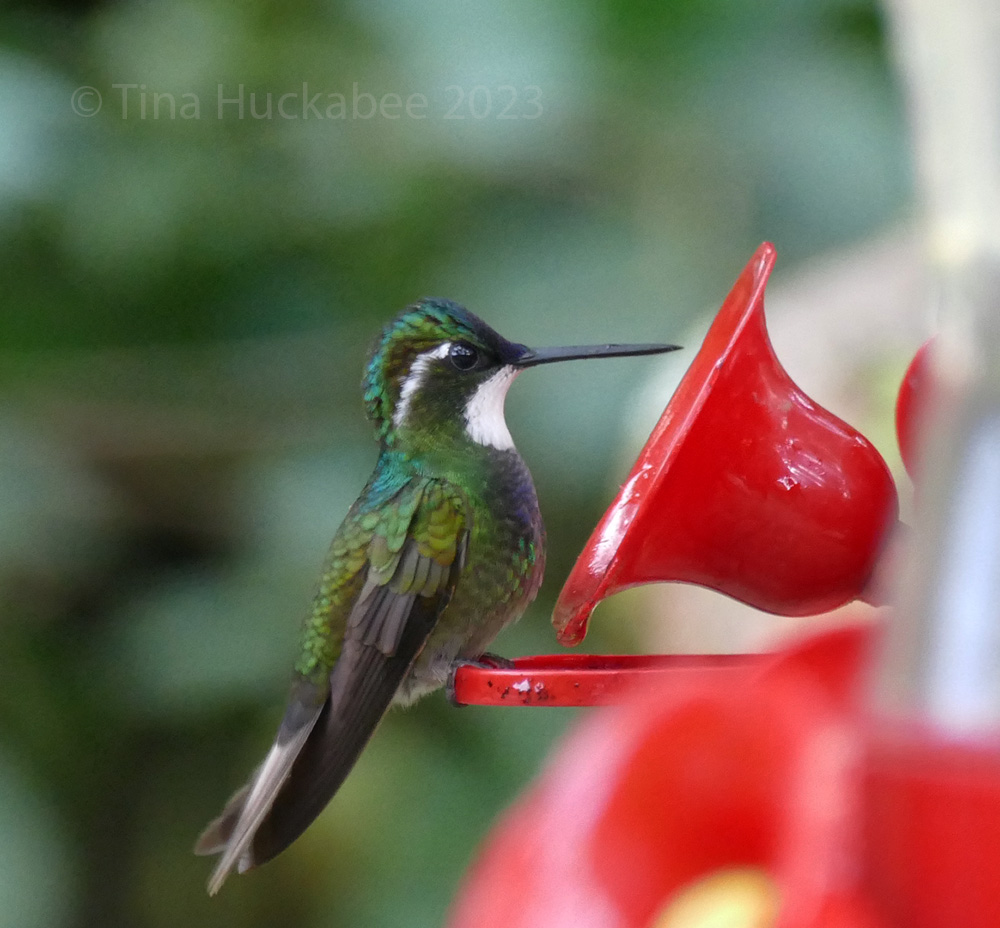
I prefer bird photos in more natural settings, but sometimes (or many times) that just isn’t possible. So it was with capturing this male White-throated Mountain-gem, Lampornis castaneoventris. As stunning as he is, the female sports a tangerine-colored breast, which is an unusual color in the palette of hummers. I saw several females, but could never get a clear photo–the gals were too zippy.
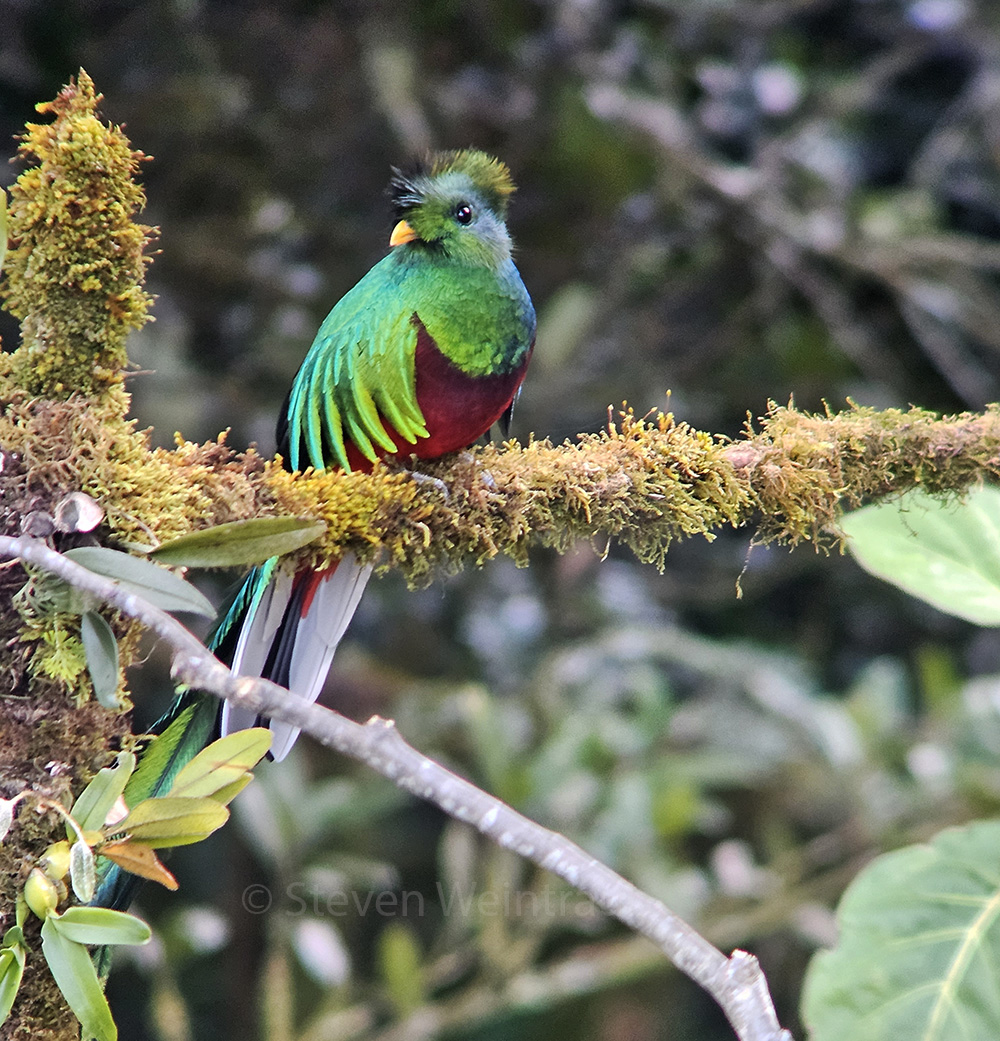
In limited areas of Central America, including a spot on our itinerary, reside the Resplendent Quetzal, Pharomachrus mocinno (costaricensis). I’m not sure what I can add to the photos, except that quetzals really are resplendent. We visited a private preserve where the owner has fruit feeding stations; the birds exit their forest homes to visit and nosh in the early mornings.
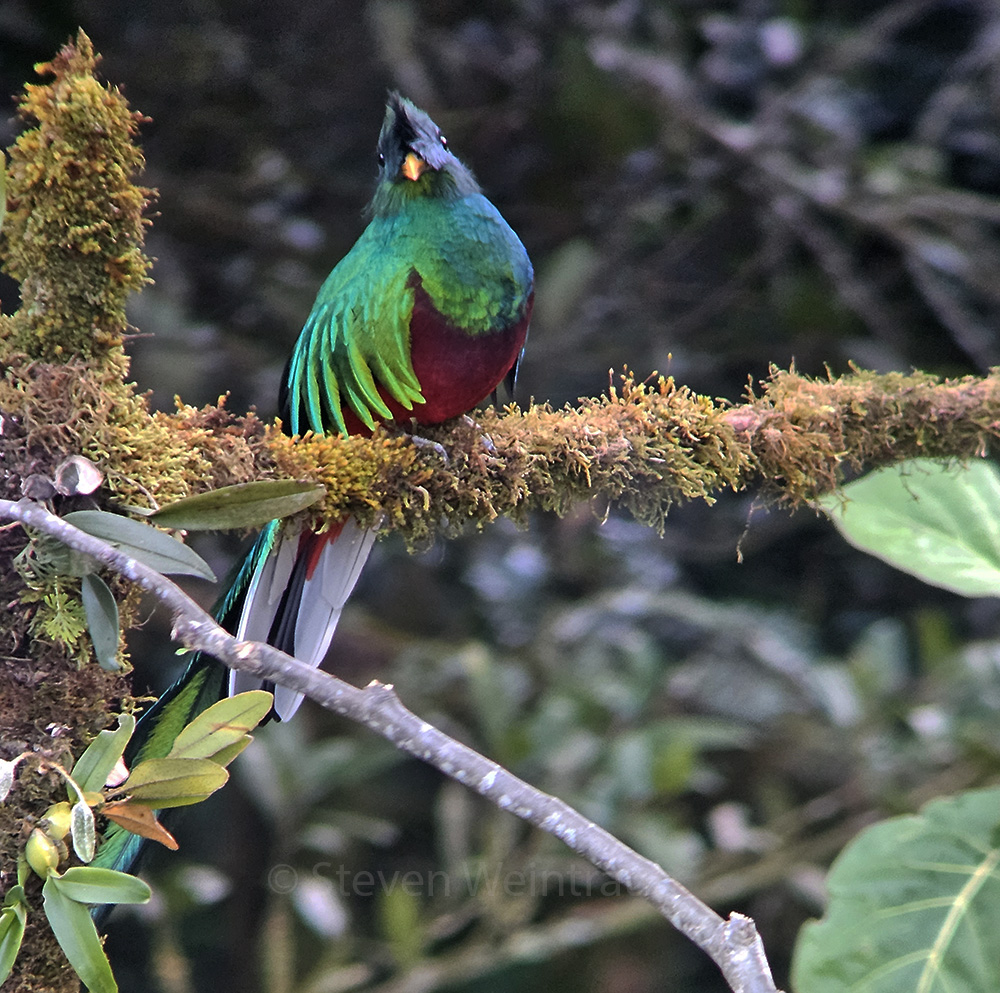
The photos look as if we’re near to the quetzals, but we were not that close; these birds must observed at a distance. Johan carries with him a very cool scope which he sets up and dismantles as needed during birding sessions. My husband’s cell phone has an excellent camera, and paired with the scope (the camera placed at the eye piece of the scope) a fairly clear, seemingly close-up photo emerges and can be taken from a substantial distance.
The quetzals put on a good show; we saw two males and two females. The males chased one another, their long, showy tales undulating in flight as they flew in and out of the forested area.

We were awed by these rare and spectacular birds who live in various mountain areas in Central America. The Resplendent Quetzal is the national bird of Guatemala.
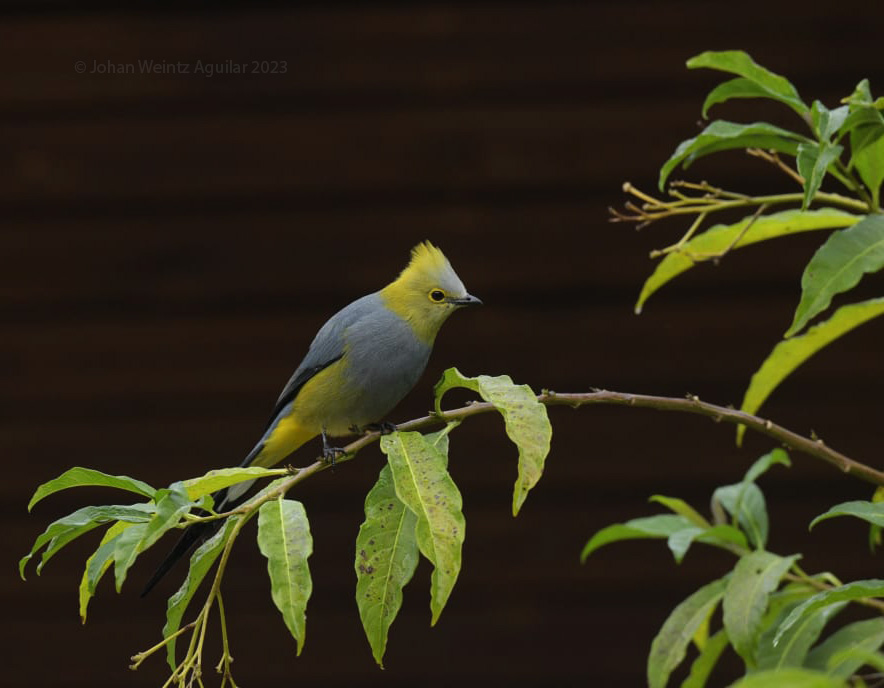
Another stunner in the highlands was this Long-tailed Silky-flycatcher, Ptiliogonys caudatus. Johan and I saw two of these pretties one morning on our way to breakfast, and I’d seen one at a previous stop the day before. He mentioned that there are some who think this is a more beautiful bird than the quetzal. I could get behind that argument!
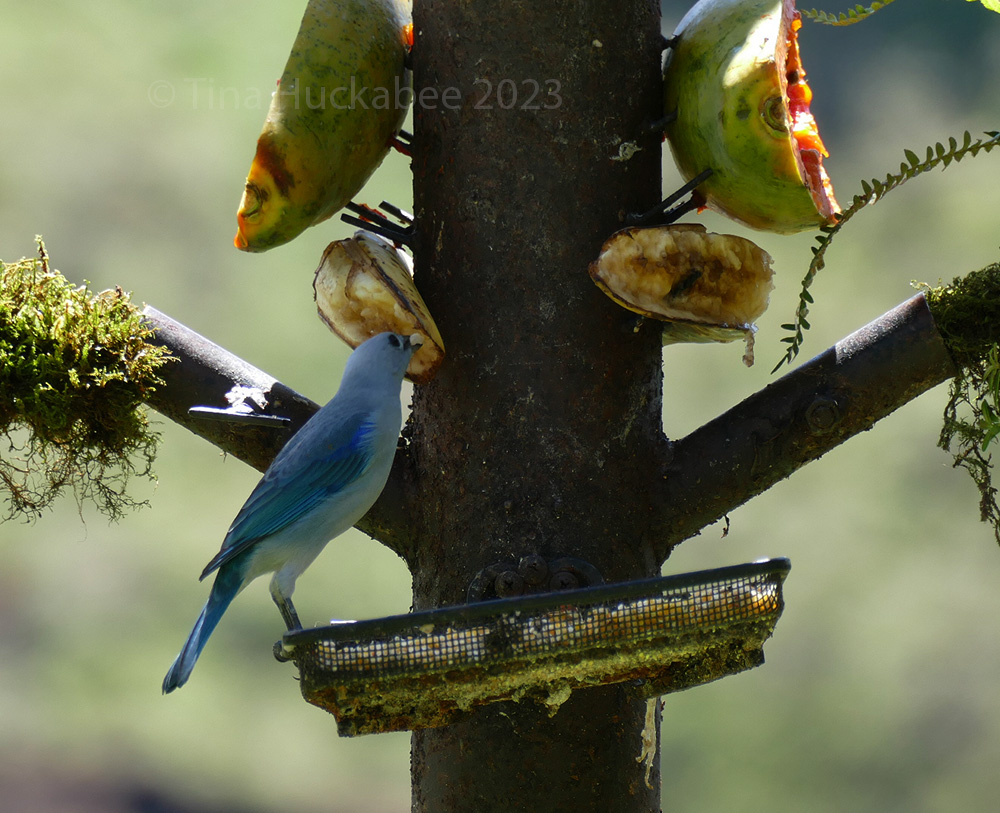
This Blue-gray Tanager, Thraupis episcopus, was one of three we observed and is one of my favorite birds from this trip. Generally, I think tanagers are pretty birds, but this one’s blue, two-toned coloring is birder swoon-worthy.
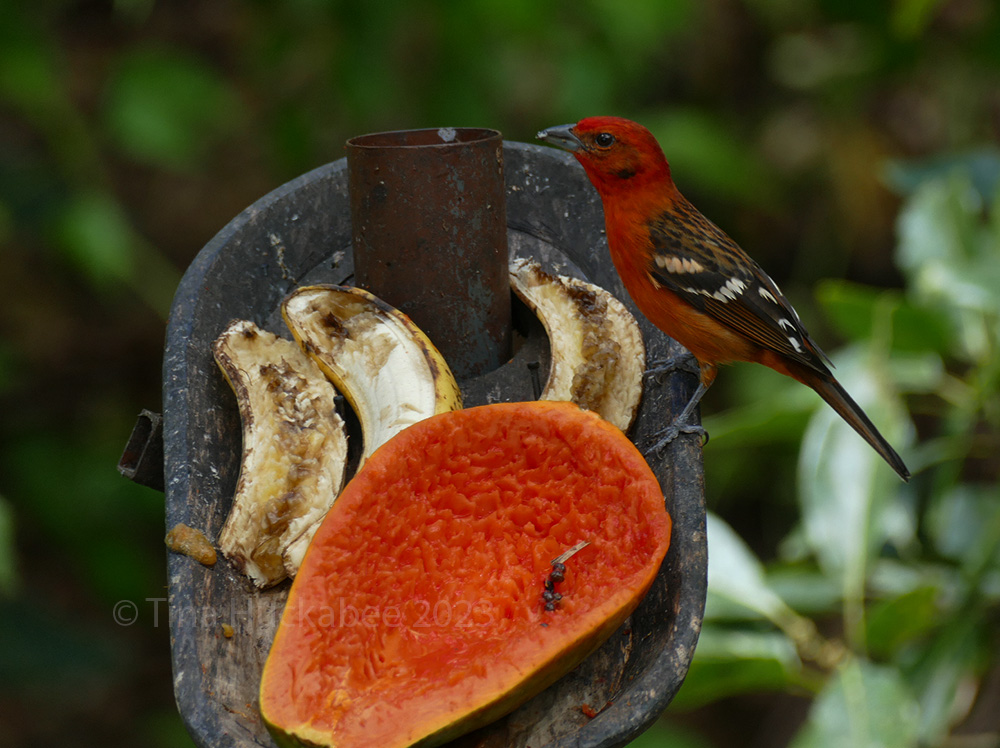
Another lovely tanager is this Flame-colored Tanager, Piranga bidentata. Its coloring is particularly deep; maybe the papaya’s coloring is reflected in the bird’s feathers. Or is it the other way around?
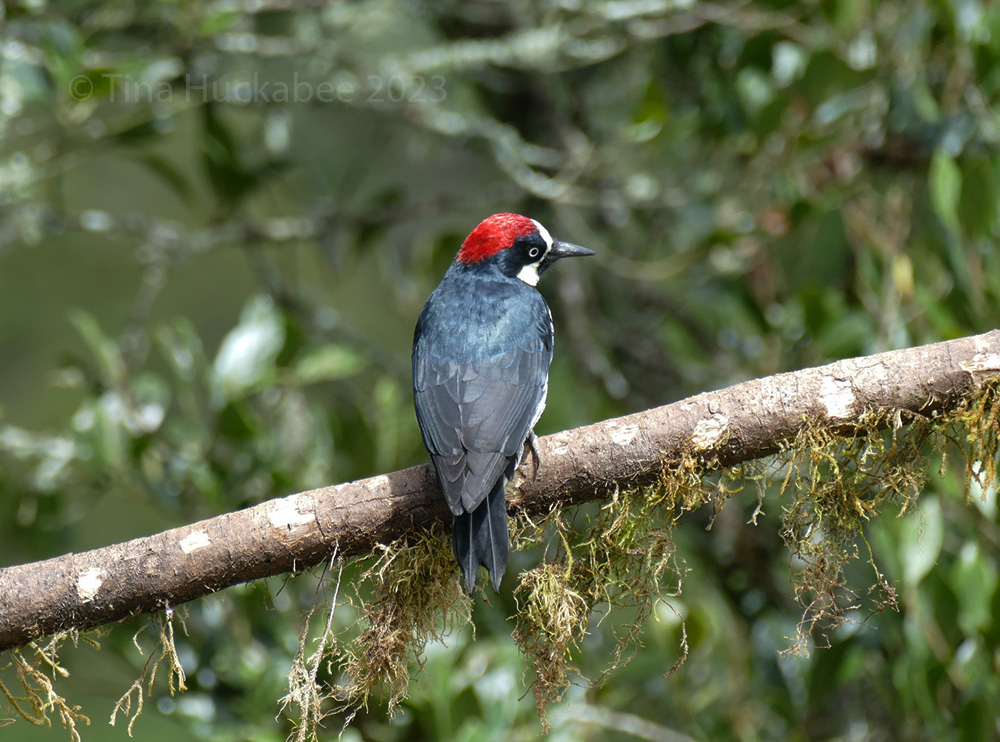
Even though this woodpecker cutey has relatives in Texas and throughout the western part of the US, I had to travel to Costa Rica to see an Acorn Woodpecker, Melanerpes formicivorus. That’s fine, it was well worth the trip!
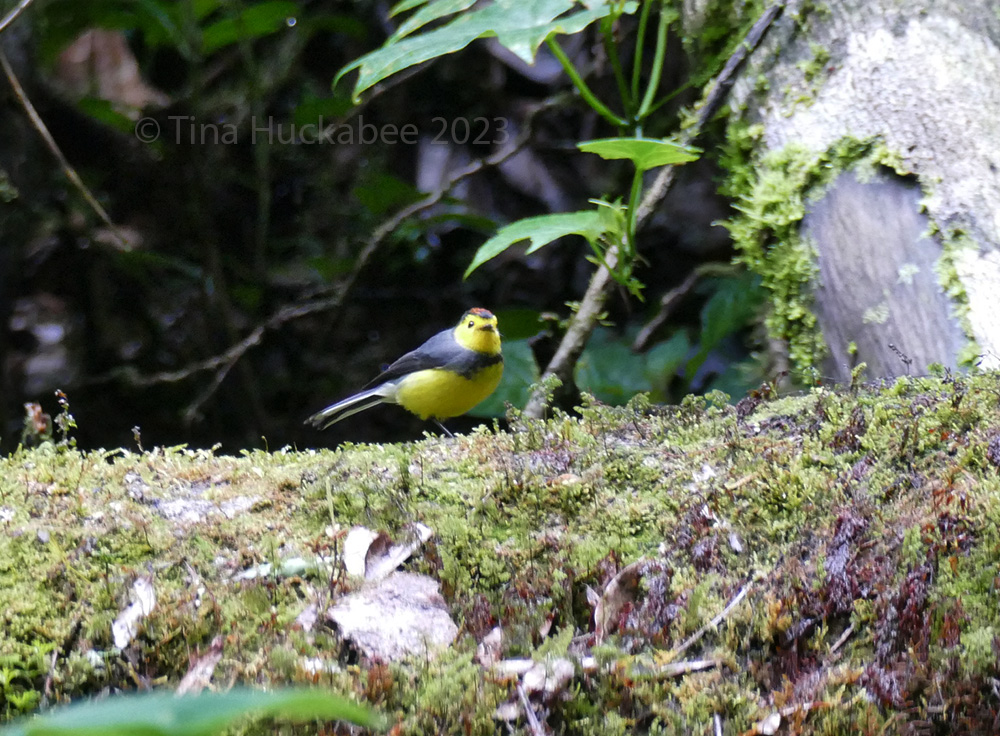
A busy little warbler, a Collared Redstart, Myioborus torquatus, didn’t stay still for long. Foraging along the ground and lower limbs, it was part of a mixed flock of birds that we spotted on a hike.
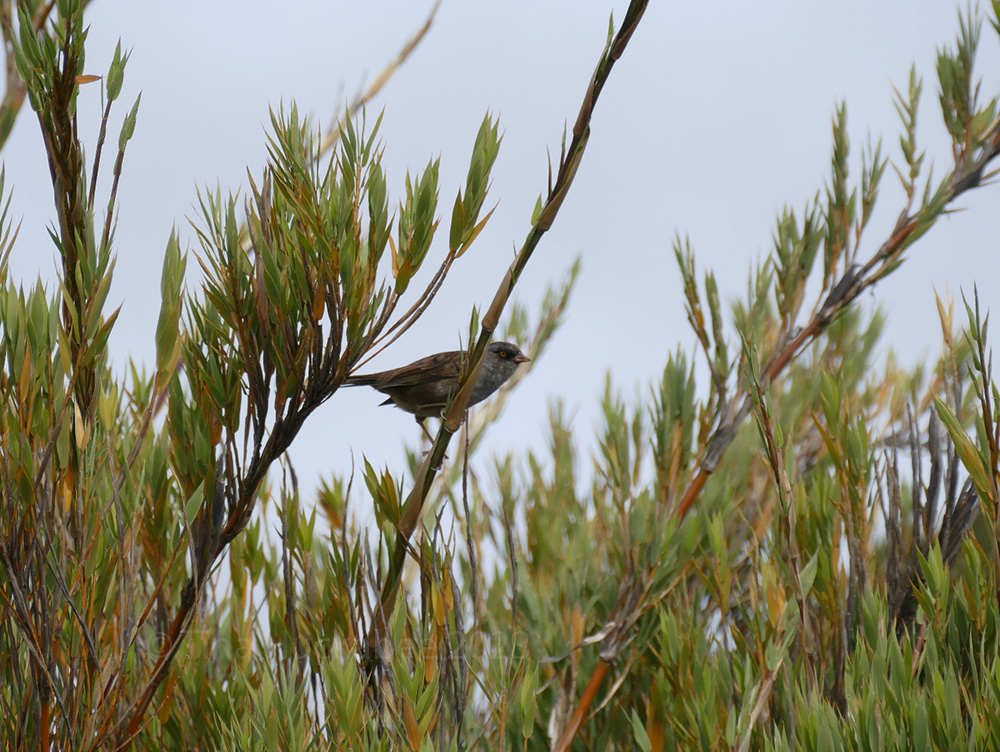
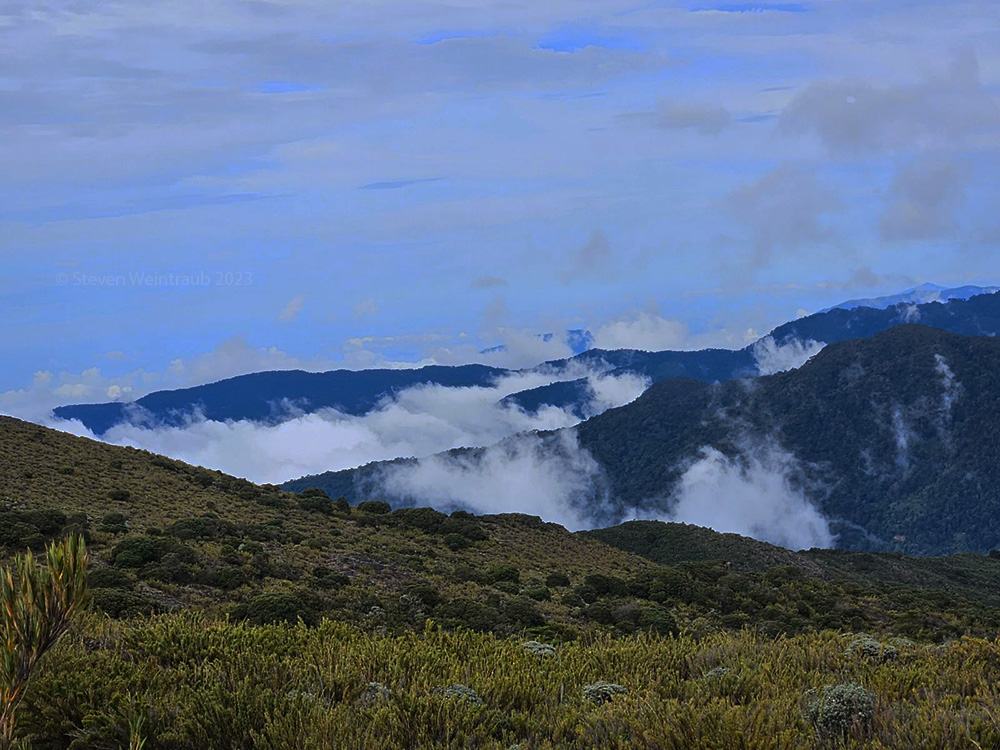
We were fortunate to see this Volcano Junco, Junco vulcani, in the highest altitudes of Costa Rica, the Páramo. The bird lives in limited areas of Costa Rica and western Panama. eBird describes its amber colored eye, surrounded by black feathers, as “demonic,” but I find the look arresting and attractive, not at all demonic! I liked this area; different plants aside, it reminded me of the Texas Hill Country with low growing plants and beautiful rock formations.
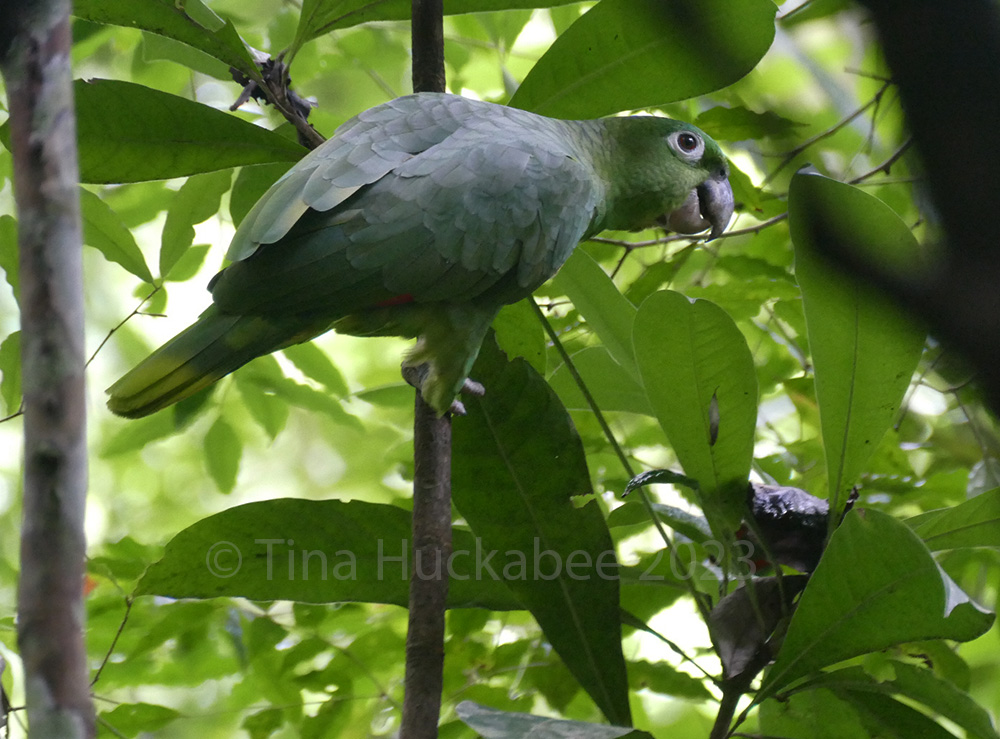
The next area we visited was the Puntarenas Province along the central Pacific Coast. Stereotypical “tropical” birds live in this region, colorful and often chatty, like this Mealy Parrot, Amazona farinosa. This particular parrot is considered “uncommon” and hangs out in the tropical lowlands. The various parrot species we saw were typically flying over in groups, nosily announcing their presence.
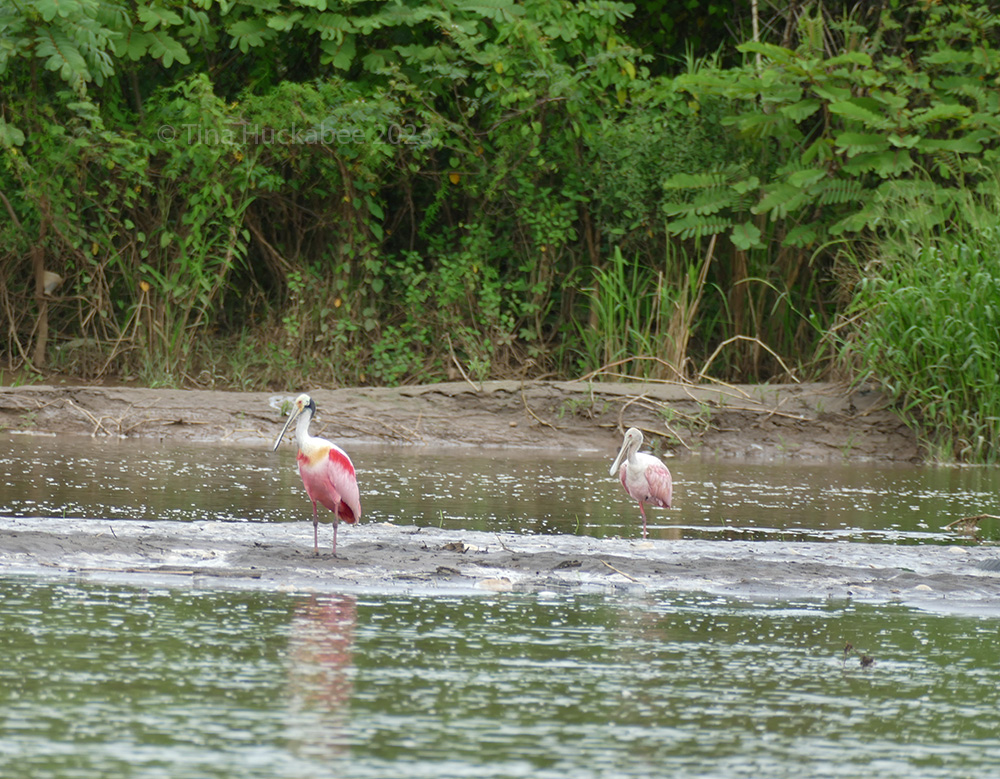
I grew up along the Texas coast and am familiar with the water bird, Roseate Spoonbill, Platalea agaga. They range throughout much of North and South America. These two pinkies decorated the shore of the Tarcoles River.
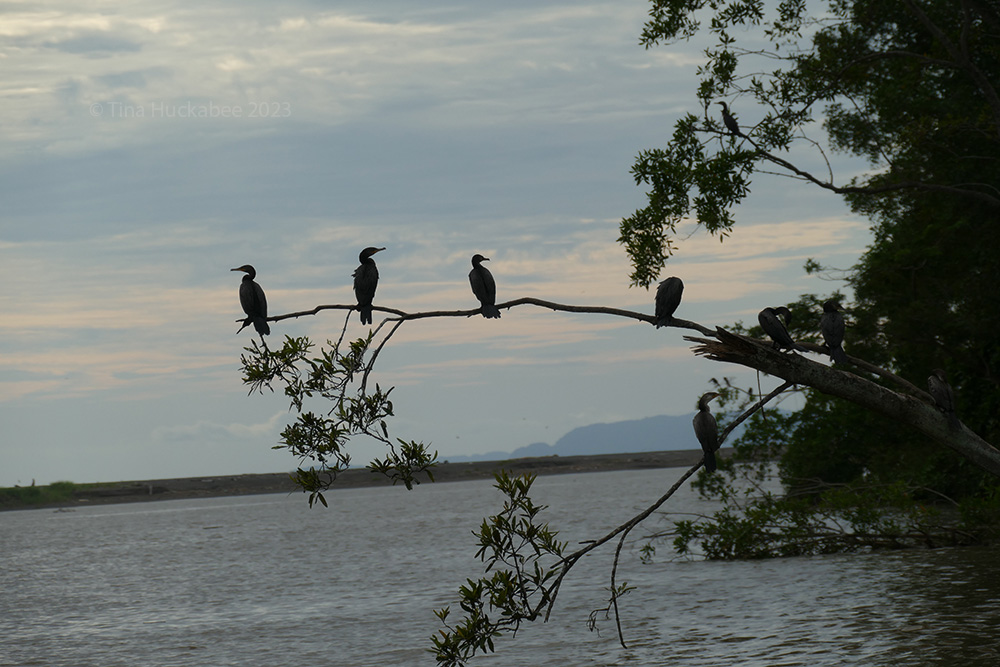
A wetlands version of birds on a wire…
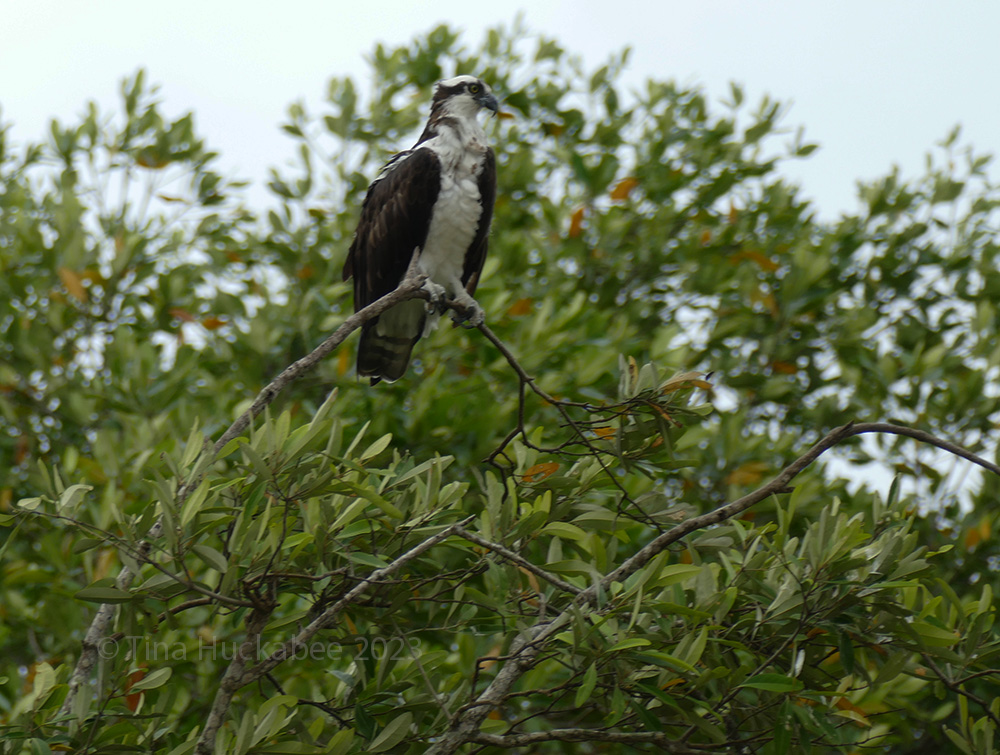
Another common North and South American bird is the Osprey, Pandion haliaetus, but it’s always a treat to see one. This handsome bird was on the hunt, looking for a delicious fish lunch.
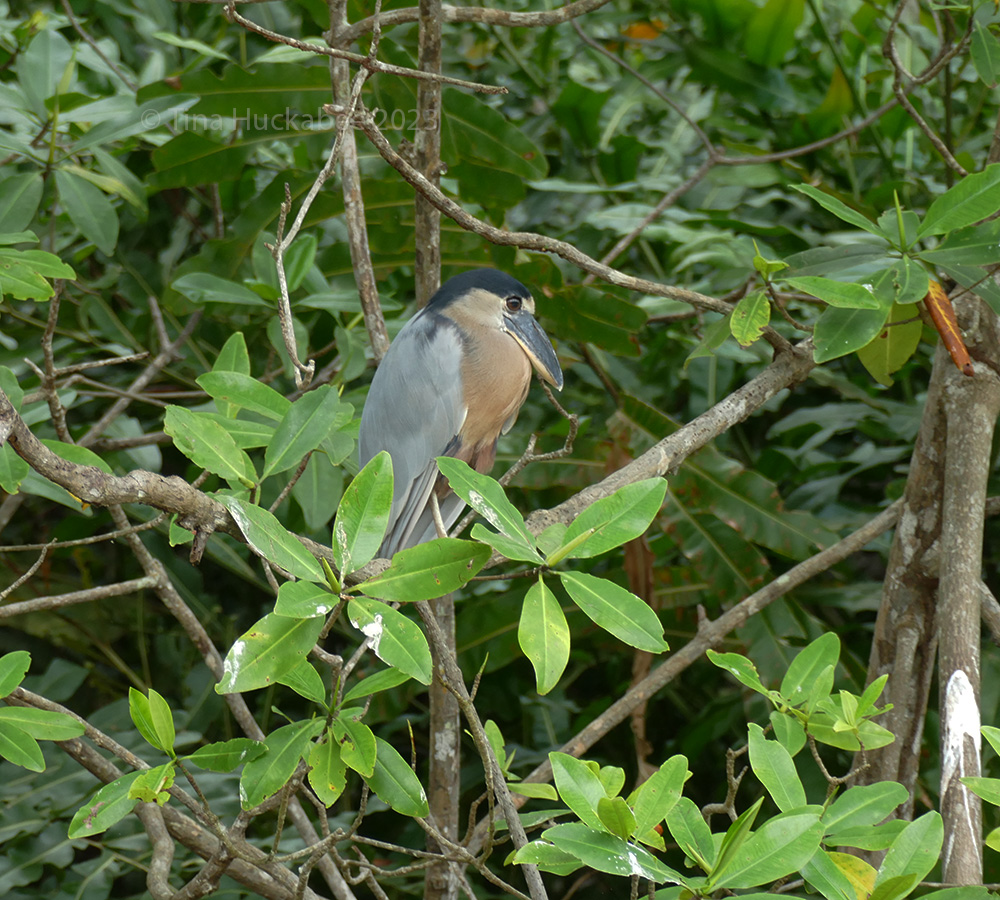
I like the look of this Boat-billed Heron, Cochlearius cochlearius. Its big eyes are enchanting, giving it a coy look, and that bill looks like it could hold a fair amount of fish.
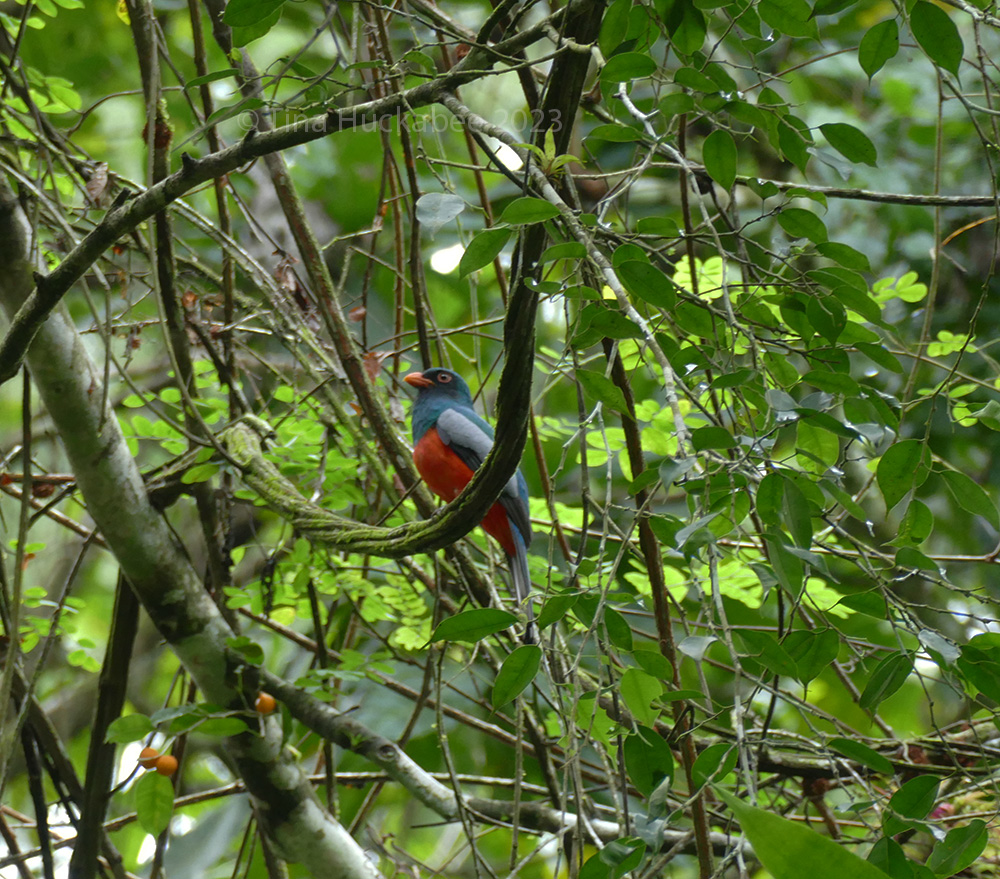
We saw a couple of kinds of trogons, who are related to the quetzals. This colorful Slaty-tailed Trogon, Trogon massena, is a male, the female was deeper in the rainforest. He sat nicely for the photo shoot.
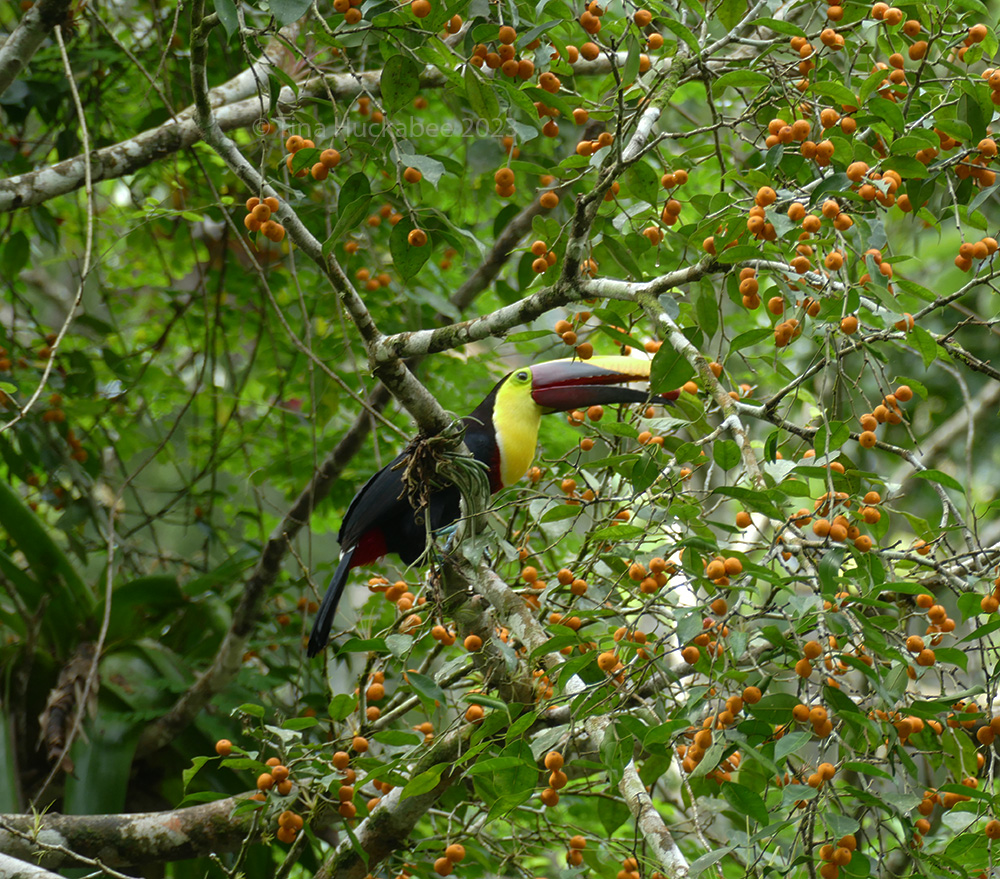
Early in the morning (it was light by about 5am) this Yellow-throated Toucan, Ramphastos ambiguus, enjoyed his breakfast of fruit. The unwieldy beak holding its prize is slightly obscured by a leaf.
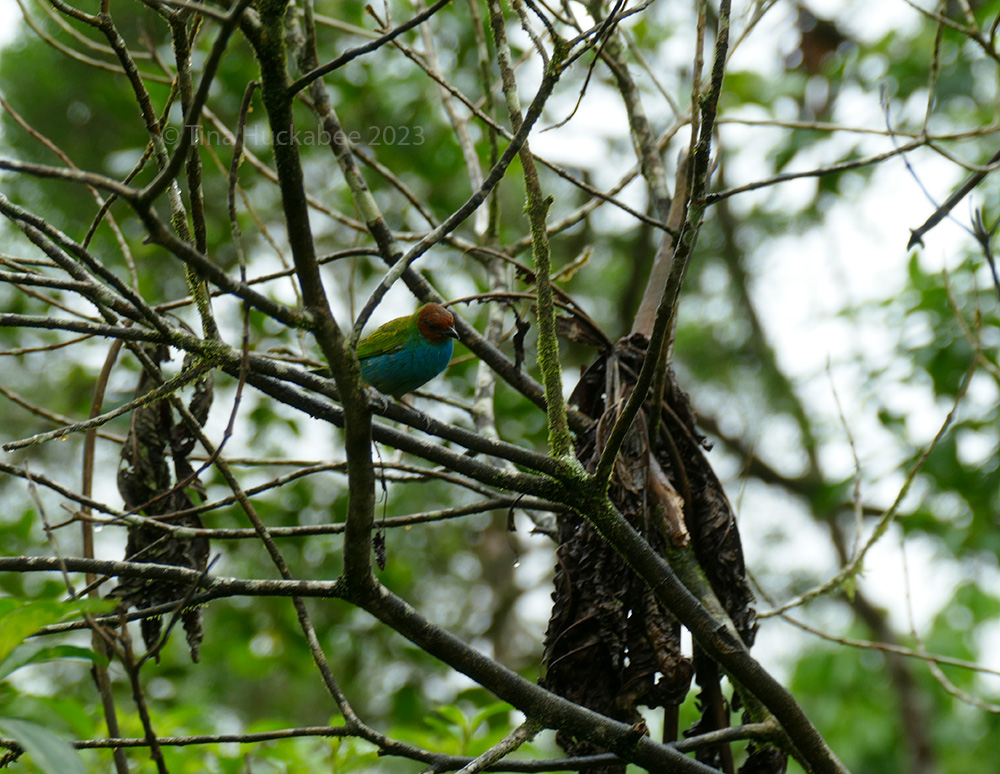
Another lovely tanager, this male Bay-headed Tanager, Tangara gyrola, flitted among lower limbs, searching for juicy fruit.
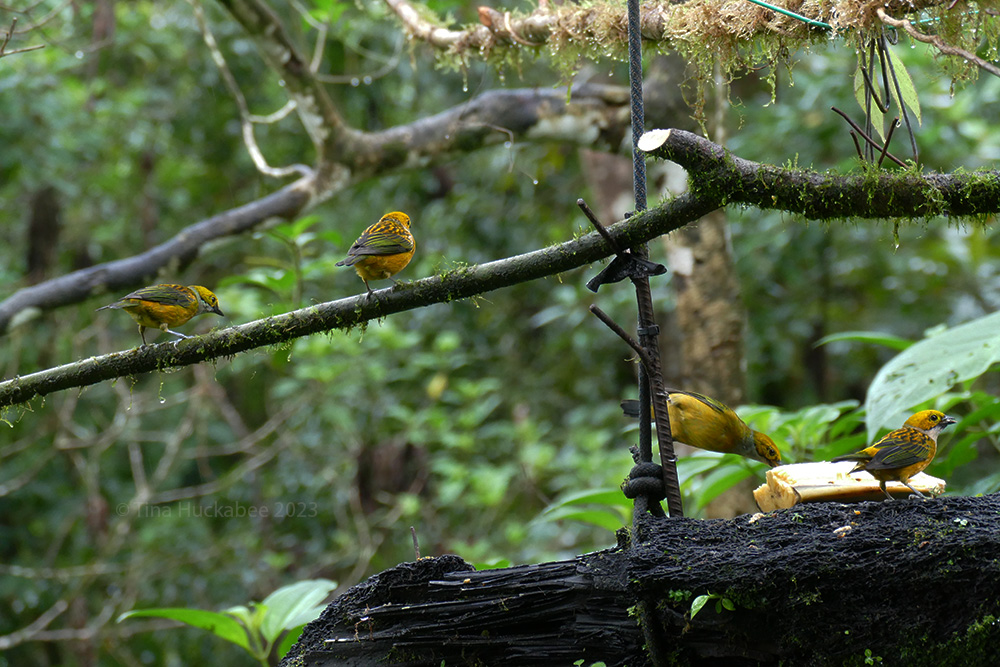
These four Silver-throated Tanagers, Tangara icterocephala, have found the sweet spot for fruit! I’m sure they’re thinking: We love to eat out at the feeding stations! Yum, bananas!
I enjoyed observing the migratory birds, specifically warblers, who I see in my own garden in Texas during spring and autumn. I saw quite a few familiar faces-n-feathers during the trip, like this female (or juvenile male) Chestnut-sided Warbler, Setophaga pensylvanica.
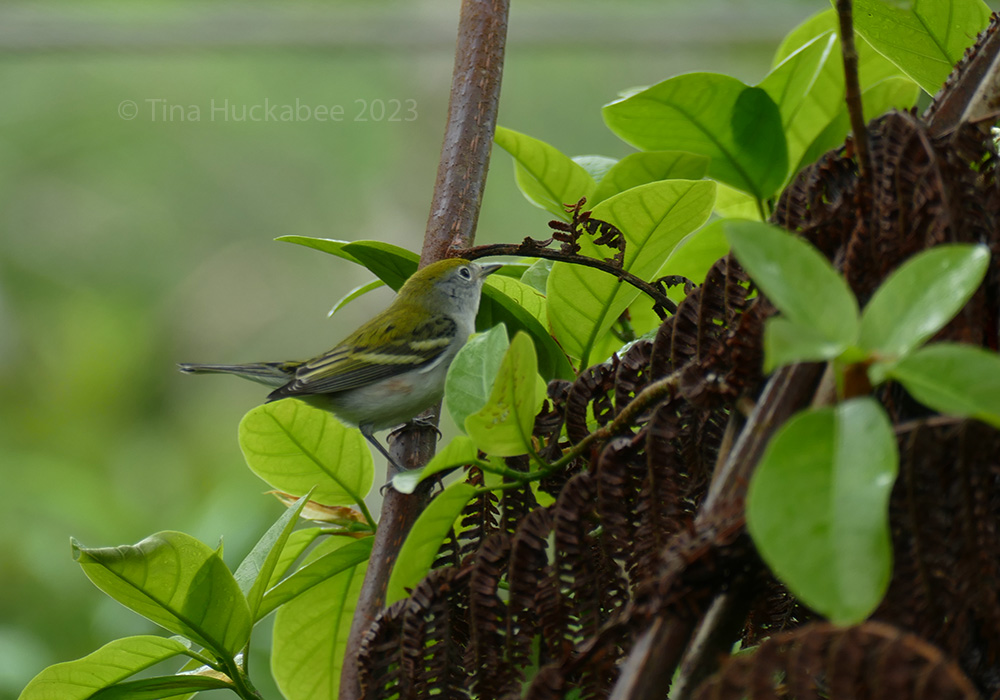
It was affirming to see them, knowing that they successfully made the arduous trip from North America and are safe in their winter homes. I’ll definitely see some of these neo-tropical species at my pond and in my trees in late spring.
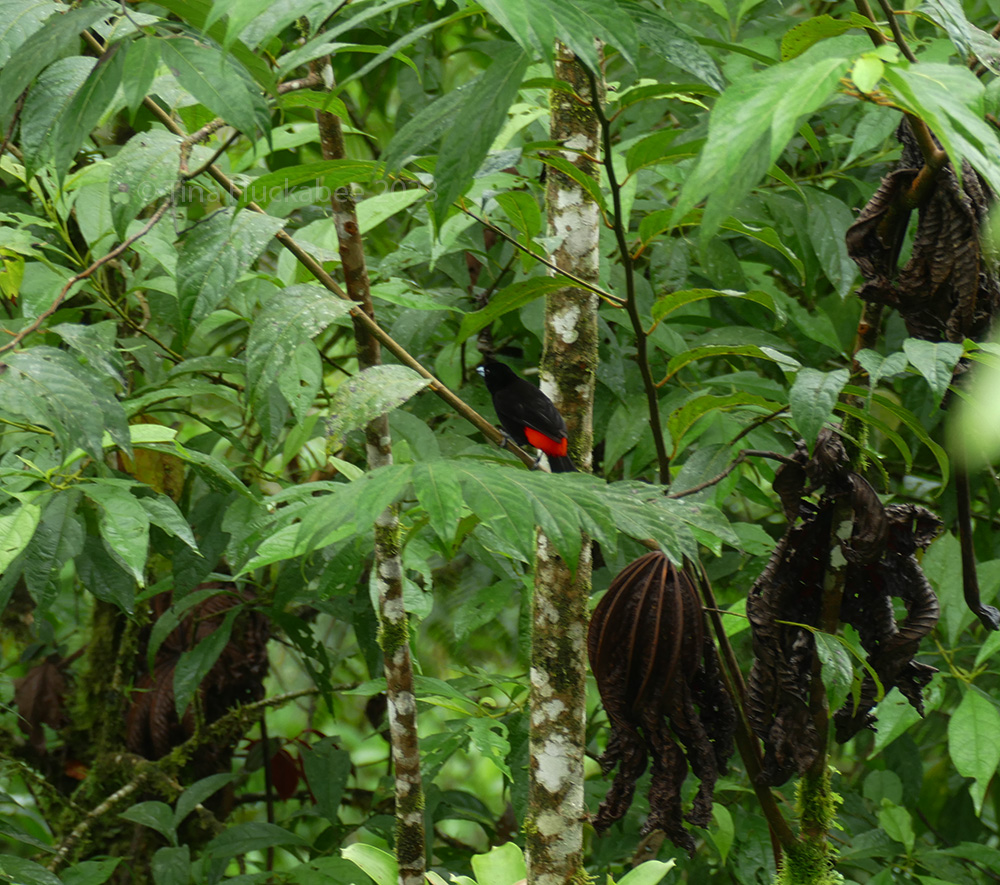
I never managed a solidly clear photo of this head-turner of a bird, the Scarlet-rumped Tanager, Ramphocelus passerinii, even with multiple sightings. Nonetheless, imagine how stunning that deep black and vibrant red are, as the bird moves through the forest.
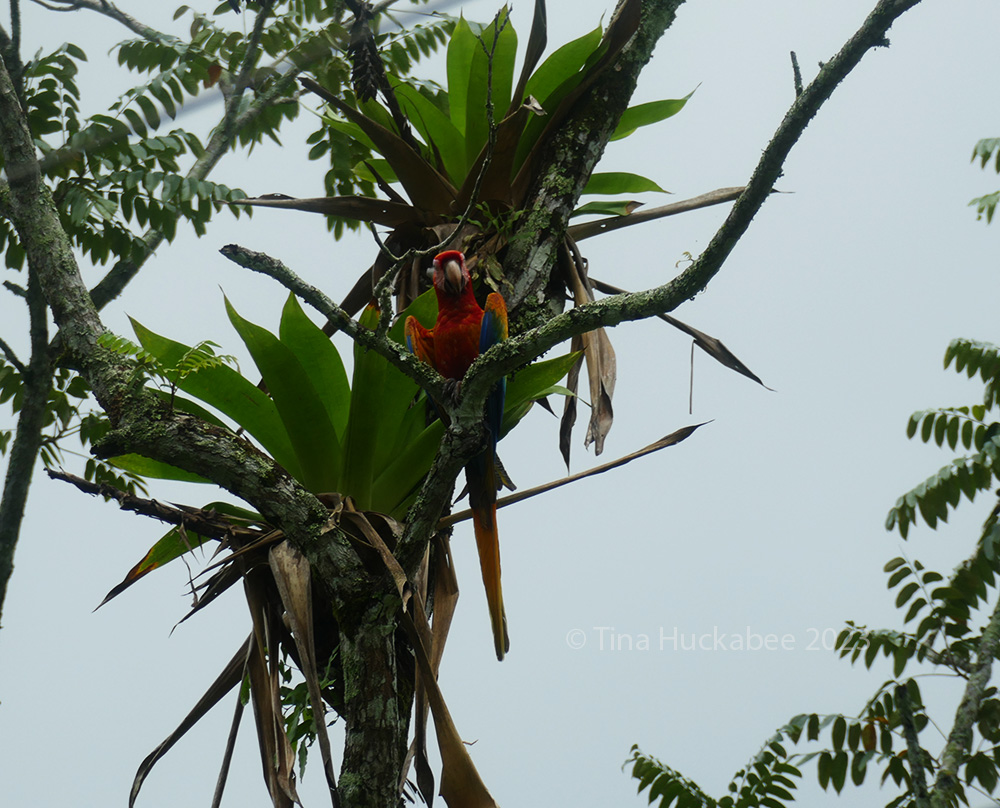
Scarlet Macaw, Ara macao. Raucous and clownish, we saw a couple of groups of them. This one, stared (or was it a glare?) at me. But, it remained still enough for a quick photo and that’s something for these silly birds.
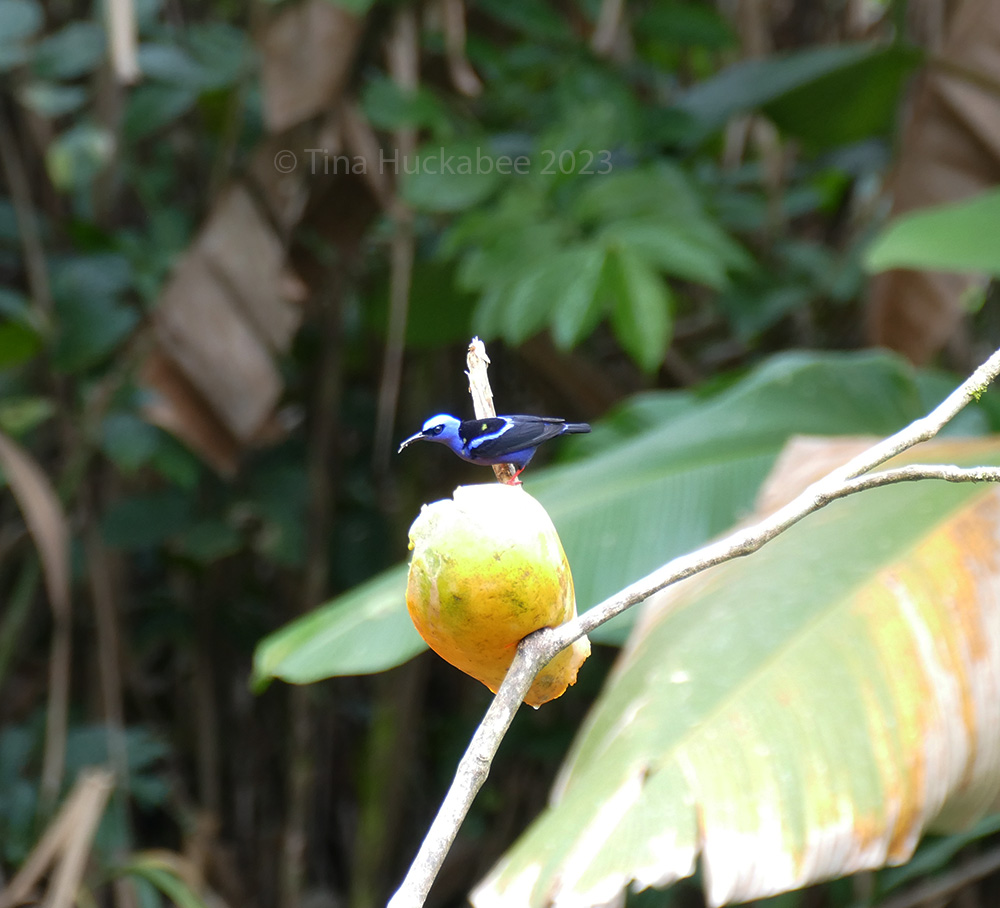
I was excited to see two honeycreeper species as the only ones I’ve ever seen are on nature programs. Only this Red-legged Honeycreeper, Cyanerpes cyaneus, granted me a *sort of* of clear shot, though.
The other honeycreeper, a female Green Honeycreeper, Chlorophanes spiza, was not much more than an emerald smear through my lens; she was too quick and too far away for a good photo. Maybe next trip…
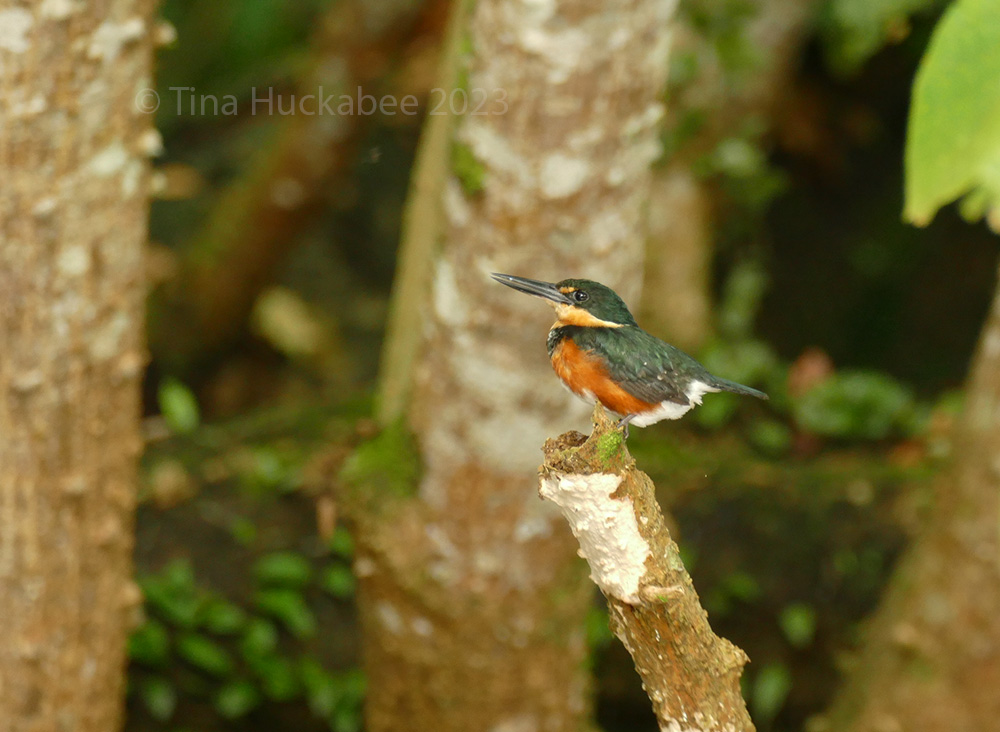
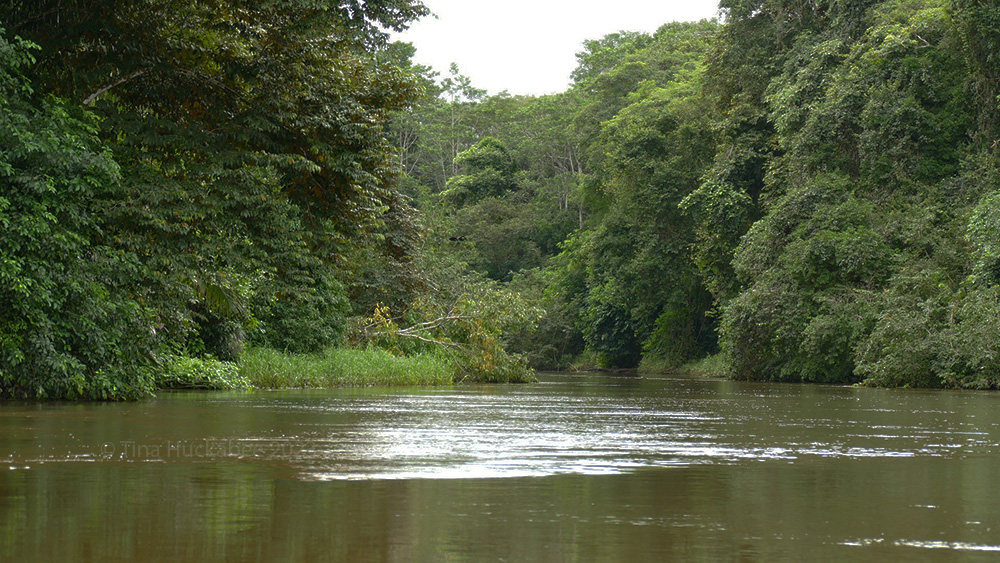
Costa Rica boasts six kingfisher species and we were privileged to observe four of the six during our visit to the Caño Wildlife Refuge in northern part of the country. This one, an American Pygmy Kingfisher, Chloroceryle aenea, was a surprise to Johan–he didn’t expect that we’d see a Pygmy. She truly is a petite bird and was content to perch on the branch, even as our intrepid boat captain maneuvered close-ish to her for our birding shots.
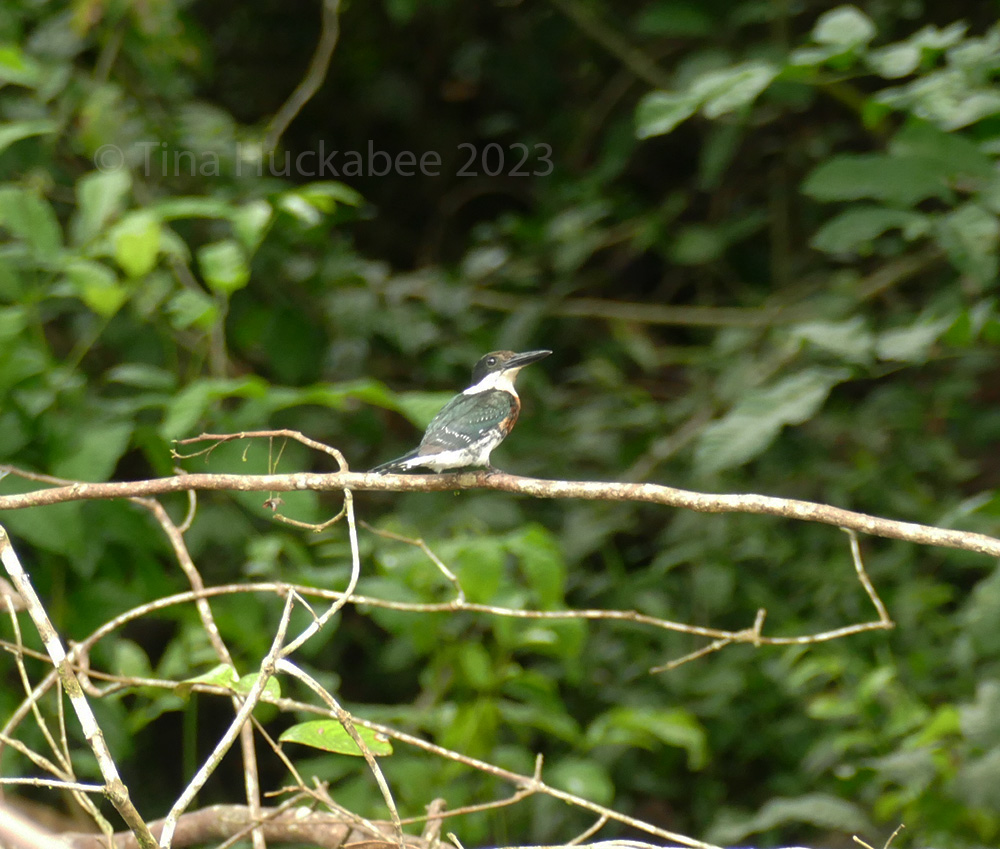
The other kingfisher that sat for a portrait was a Green Kingfisher, Chloroceryle americana.
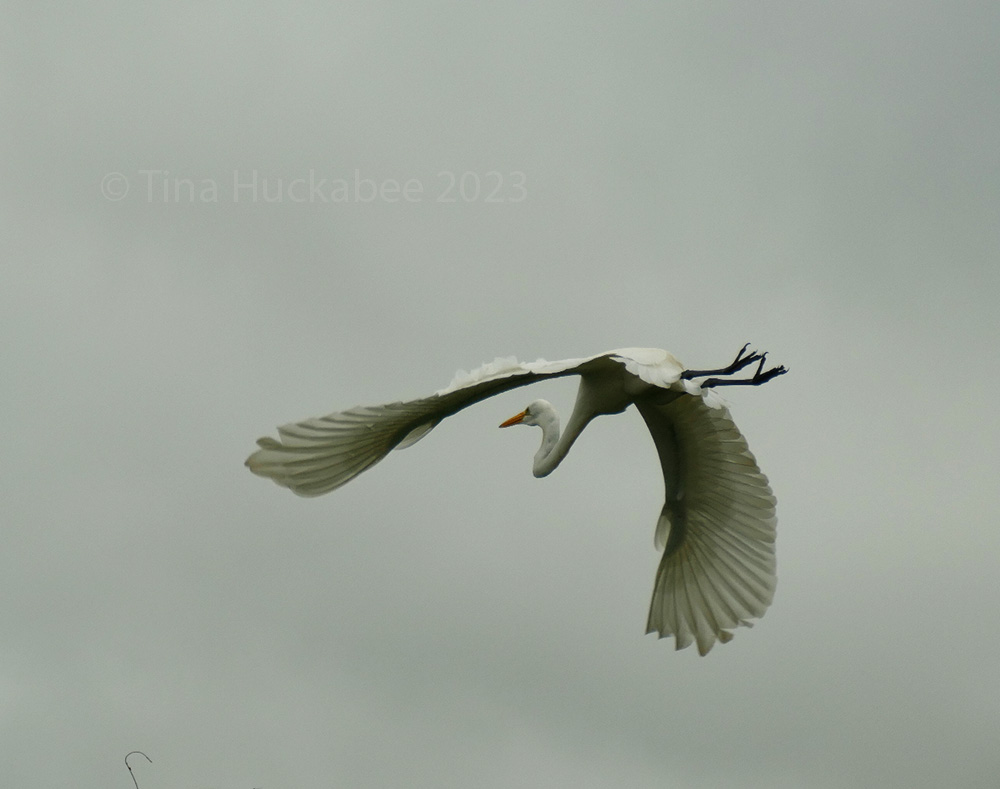
I’m chuffed that my shot of this in-flight Great Egret, Ardea alba, was a success. The sky was pearly-grey, so not the best background. I would have preferred a picturesque blue one instead, but beggars cannot be choosers, so I choose to be satisfied.
This stout bird, a Prong-billed Barbet, Semnornis frantzii, is an interesting looking fella. The light blue bill contrasts with the golden head and breast, but somehow, it all works together. He looks rather proud of himself.

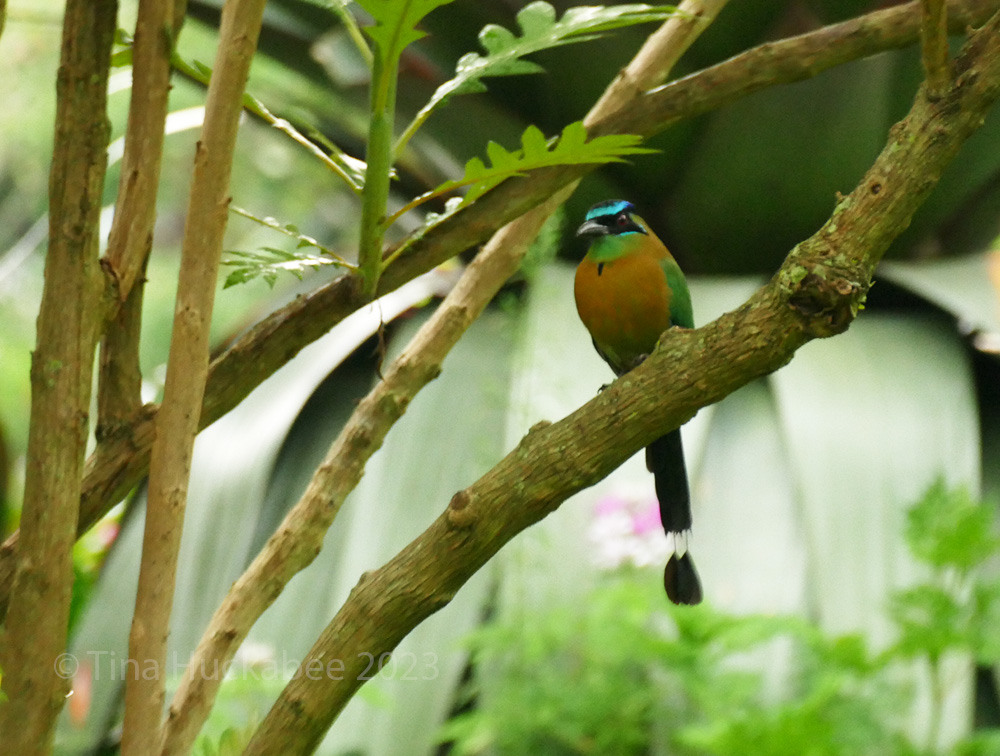
On our last evening in Costa Rica, not too long before dark, we ambled through the stunning gardens of the Bougainvillea Hotel in San Jose. This Turquoise-browed Motmot, Eumomota superciliosa, flitted from shrub to tree, mirroring our walk.
As dark descended over the garden, we also saw two owl species: A Mottled Owl and a Tropical Screech Owl; they completed the list of four owl species we observed. It was a very Costa Rican birdy send-off at the end of our trip.
This short list of birds is but a feather in a very big nest of what we saw and what Costa Rica offers. Obviously, the wildly colored and rare tropical birds were a blast to see, but I was pleased to see birds that live in Texas, but that I’d never before observed, like Great Kiskadees and Prothonotary Warblers.
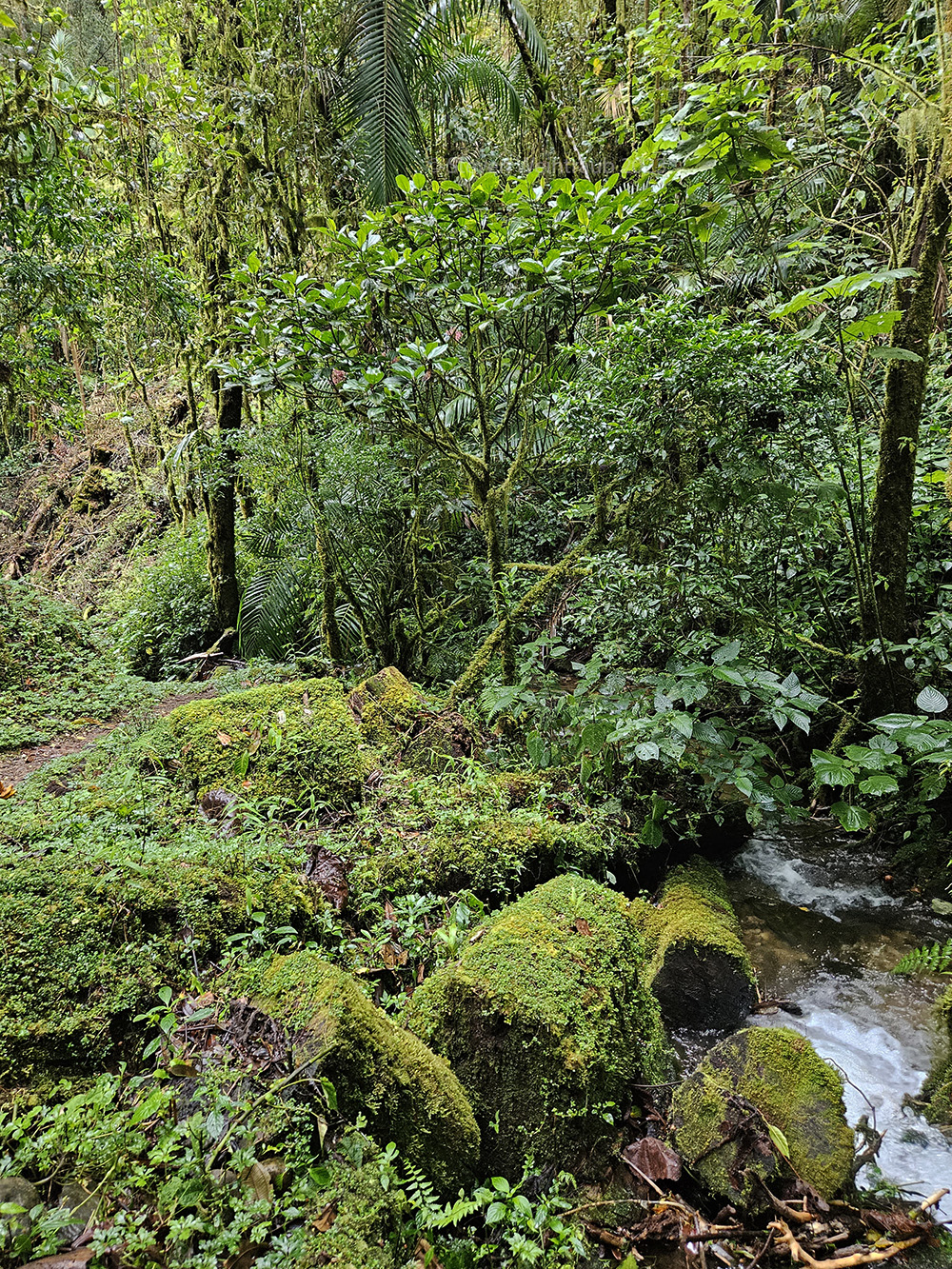
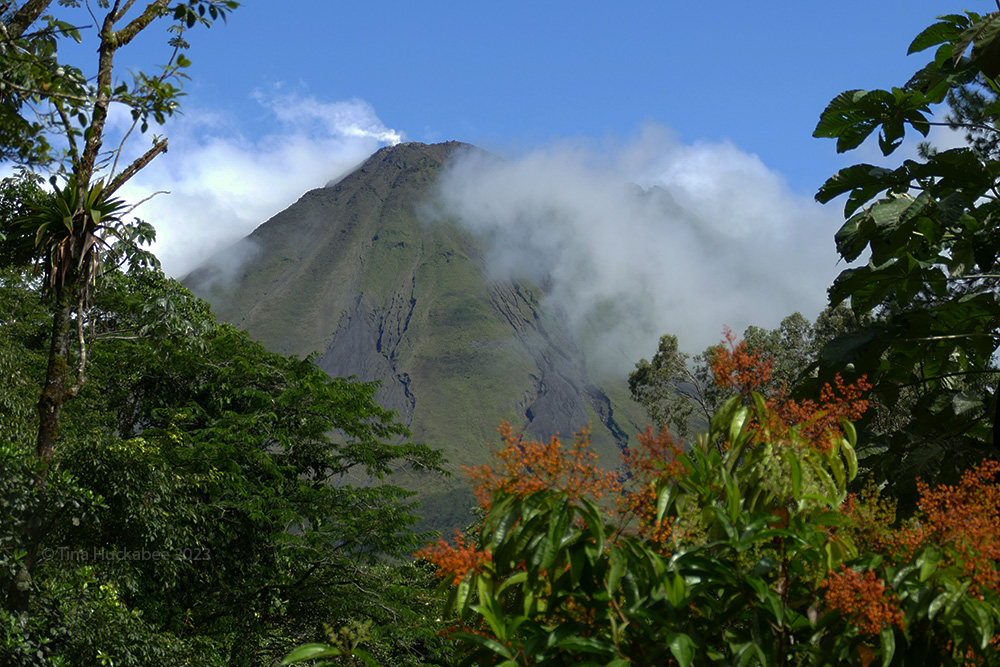
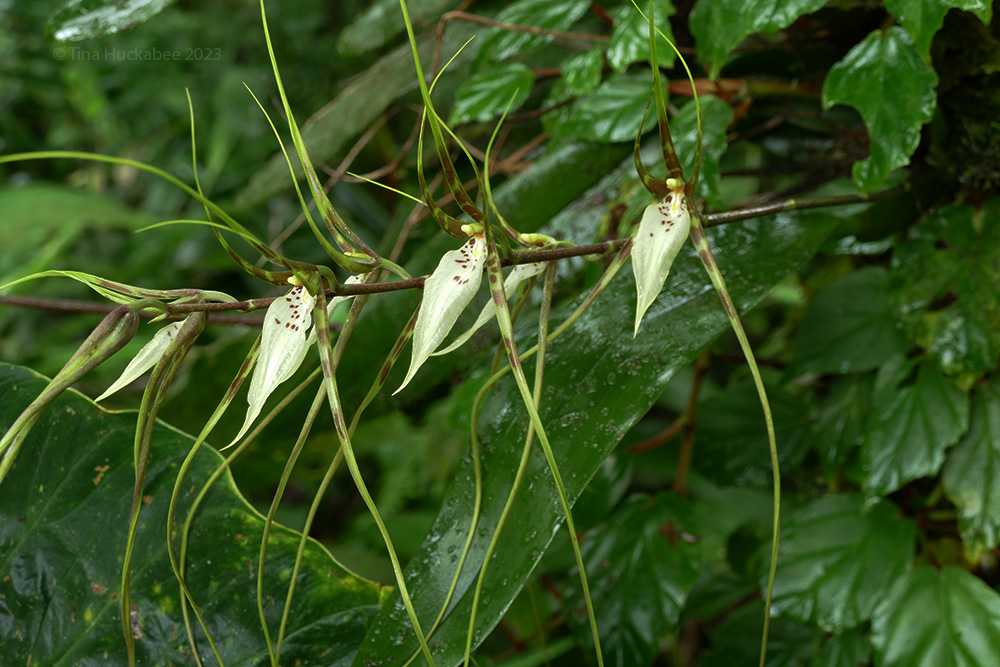
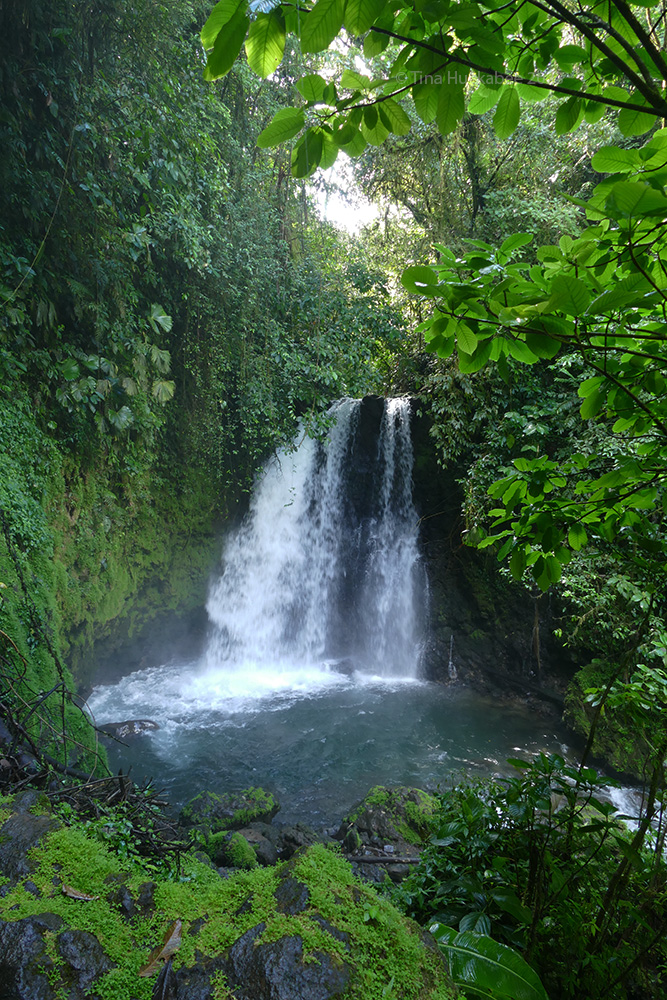
Birding aside, as we traveled, the rich environment is truly inspiring and Costa Ricans’ pride in their beautiful country well deserved.








 My Gardener Says...