I often use Butterflies and Moths of North America (BAMONA) as a resource when identifying butterflies in my garden or learning about what particular butterflies might require by way of food sources, but I’ve never utilized the site’s submission process to ID an unknown butterfly or moth. Instead, I comb through lists of photos from various sites, comparing whatever photo I took with shots from these sites. While not efficient, there’s something gratifying about this process. For me, it’s much like strolling through a bookstore or library, perhaps with one book in mind, but gloriously distracted by volumes just begging to be read. Or, visiting a nursery for a specific plant and lusting after the many I might choose for that one special spot in the garden.
While Butterflies and Moths of North America is a go-to site for me in learning about these insects, I’ve never submitted a photo for identification. Recently though, my enterprising husband did, and we learned about a new (to us) insect in our midst. Ambling around our street to give our sweet, old dog some exercise, we spied a black and fast-flitting insect working a neighbor’s Wooly Butterfly Bush, Buddleja marrubiifolia, (which is a plant I would LOVE to grow, but, alas, don’t quite have the full sun required). The winged thing was swift and jittery in its flight pattern, moving rapidly from bloom to leaf and back to bloom again. It was tough to get a clear photo with The Hub’s cell phone.
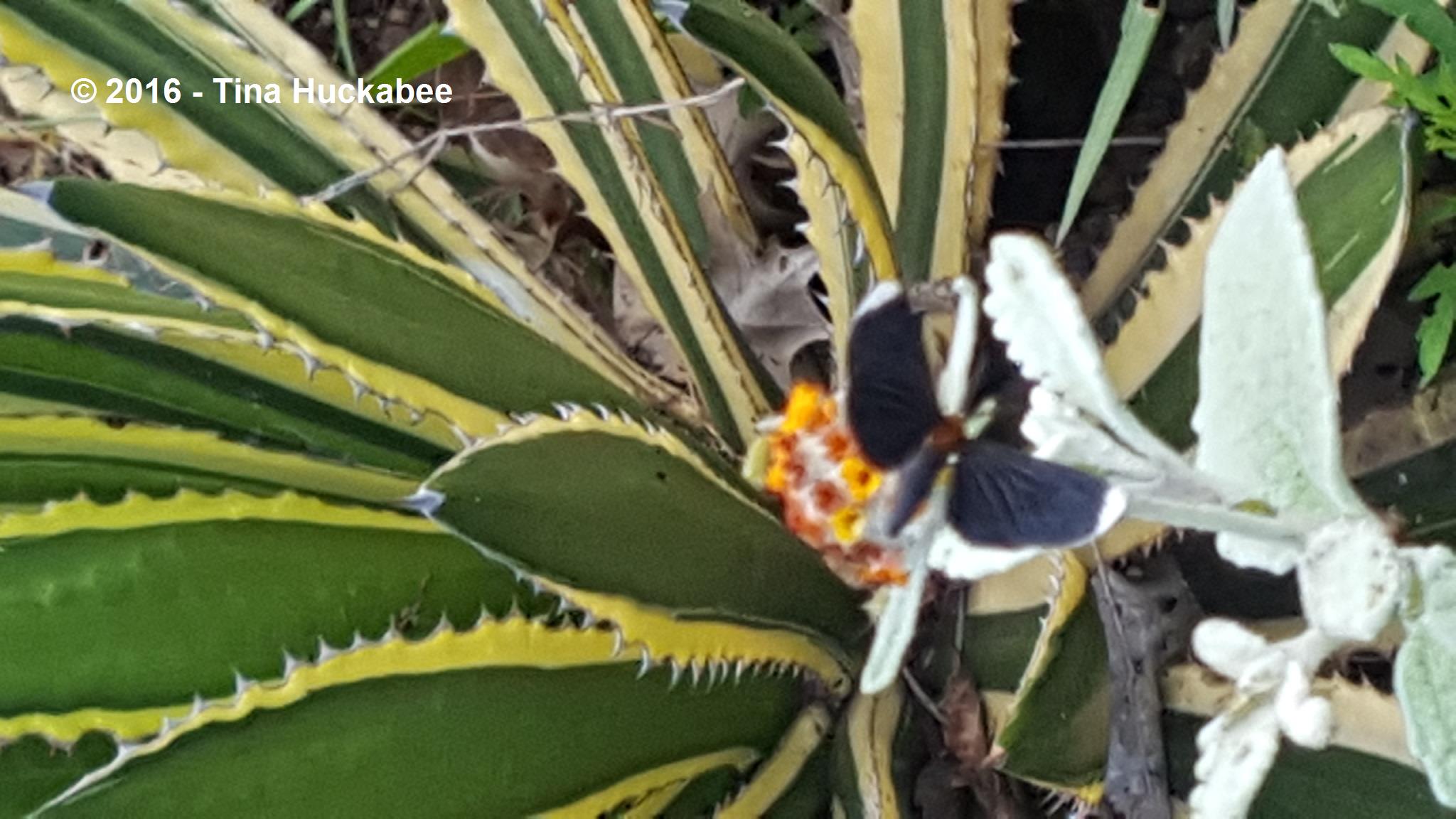
This is not a great shot, but is enough to decipher markings and color.
Once home, The Husband was single-minded in his pursuit of butterfly truth, perusing photos from various sites, eventually landing on the BAMONA site for identifying this mystery critter. He noticed that BAMONA allows for submission of photos for butterfly/moth identification, so he got right to that task. To submit a photo for identification, the site requires a free account, but that’s super easy–Hub signed up for an account and you can too! In the ‘Get Involved’ section of the menu bar, the drop down menu lists ‘Submit a Photo’ and in that section are general instructions for creating a sighting record, with further information about photo downloads to the BAMONA staff. Almost immediately after his submission, The Husband received a confirmation email that his submission was accepted, with assurances that he would get a follow-up email. The next morning, he received that email confirmation of what we observed: our mystery critter was a moth, a White-tipped Black, Melanchroia chephise. The regional coordinator offered a link to BAMONA’s information on this moth, as well as a link to The Hub’s submission, Sighting Record 1108573. Woot! It’s cool to be part of the scientific process!
Not long afterward during an early morning walk with my furry, four-legged friend, I picked up from the street a (probably) dying White-tipped Black.
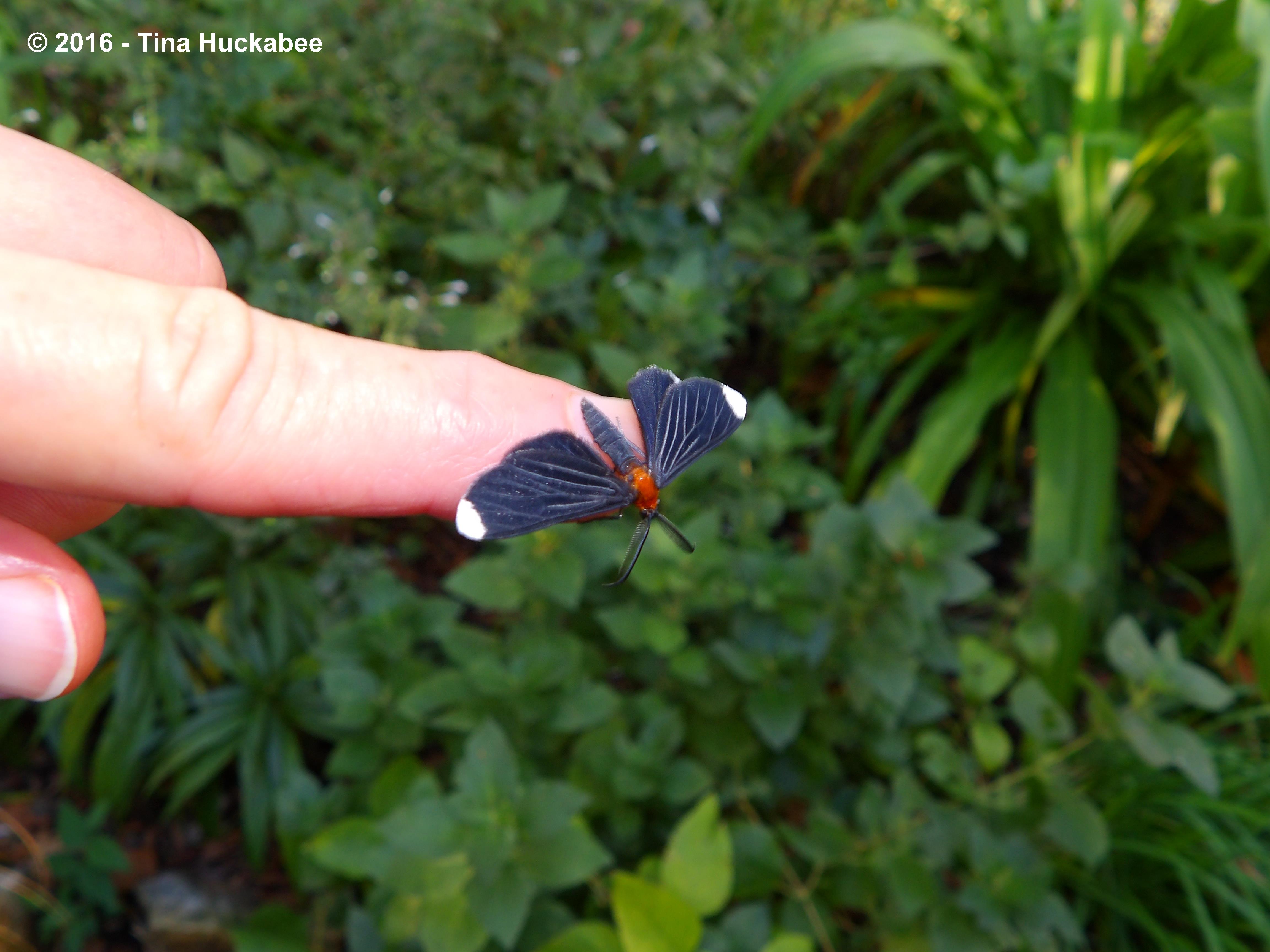
Beautiful!

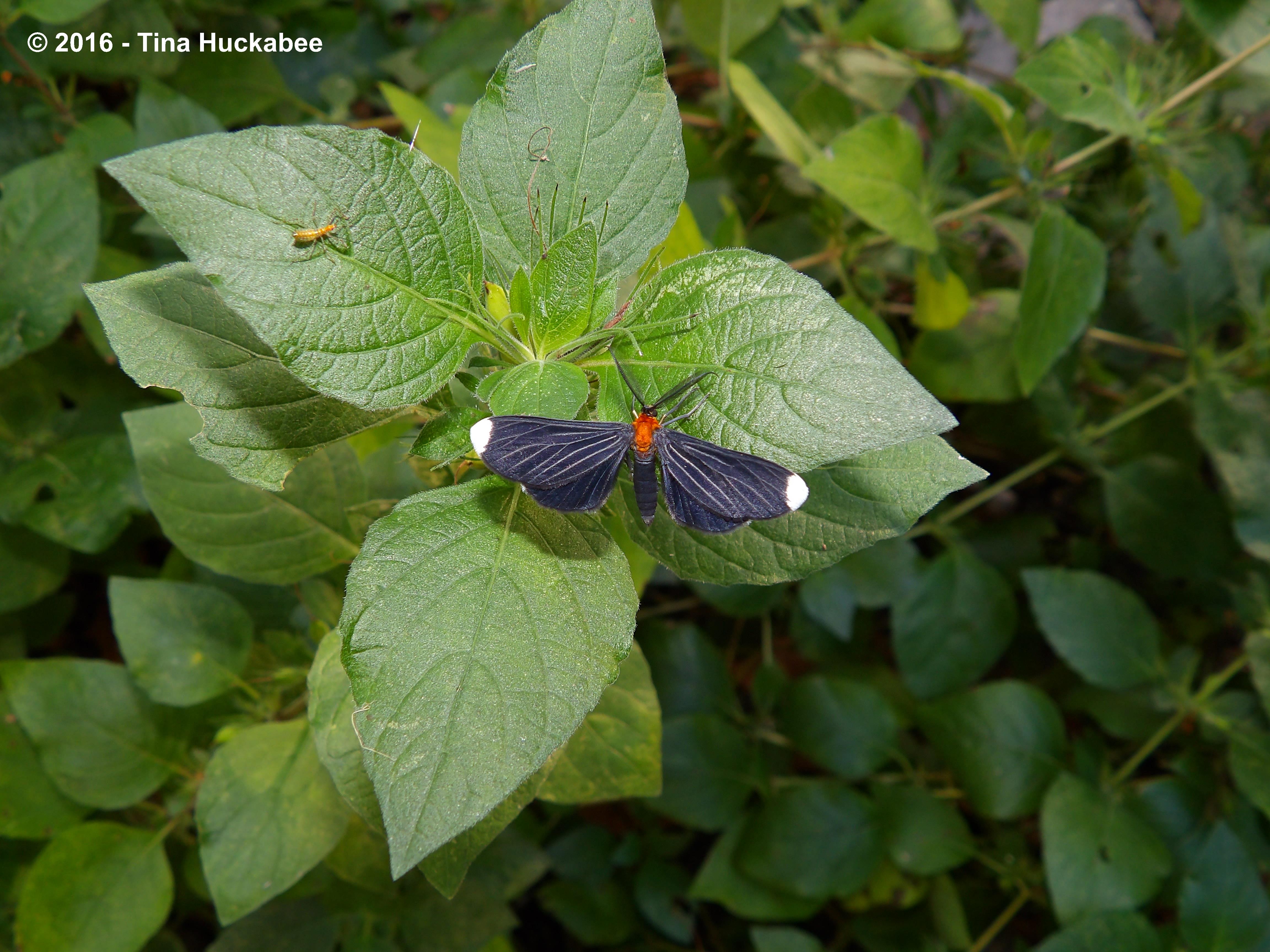
I brought it home and placed it on a Wild ruellia leaf. It remained there for much of that day, but eventually disappeared to unknown parts.
When we first saw this species on the neighbor’s plant, I congratulated myself because I thought that it might be a moth. I’m reasonably familiar with butterflies in this area and didn’t recognize it, but I’m not so familiar with moths, as they’re more elusive and not necessarily out when I’m out.
One moth characteristic is of fuzzy, feathery antennae, rather than the slender antennae typical of butterflies, and you can clearly see that here:

I was pleased that The Hub’s initiative provided a correct identification of this lovely moth. Many scientific organizations encourage and rely on so-called “citizen scientists” as scientific eyes on the ground, helping these organizations ascertain wildlife migration patterns and changing demographics. After all, wildlife biologists and related professionals can’t be everywhere! They welcome avid gardeners and regular folk to assist in research, education and conservation of wildlife and native habitats through controlled observations and recordings. My own volunteer work with Cornell Lab of Ornithology is another example of a scientific educational and research organization which enjoys plenty of citizen input.
Another butterfly resource is the National Butterfly Center, located in Mission, Texas. Part of the North American Butterfly Association, the organization’s mission is research and conservation of butterflies and their required habitats. Along with the other great work this organization does, they sponsor an annual photo contest, the North American Butterfly Photo Contest. (I’ll bet they also include moths, too!) This past week, Julie Shaw of Austin was announced as the winner with her ‘Juniper Hairstreak on Milkweed’ photo. Congratulations, Julie, and wow–what a photo!
Fact-based, non-profit organizations like the three mentioned in this post are always in need of support and volunteers; please consider monetary donations (end of tax year!) to the myriad scientific (and social) organizations whose dedicated professional staff and volunteers work tirelessly to achieve education and/or conservation goals. In post-truth America, where cynical, dangerous assaults on science, nature, and personal freedoms abound, it is increasingly important to counter falsehoods and misrepresentations with facts, reason, funds, and boots-on-the-ground activity.
 My Gardener Says...