Yellow or Mexican Butterfly Vine (Mascagnia macroptera): A Seasonal Look

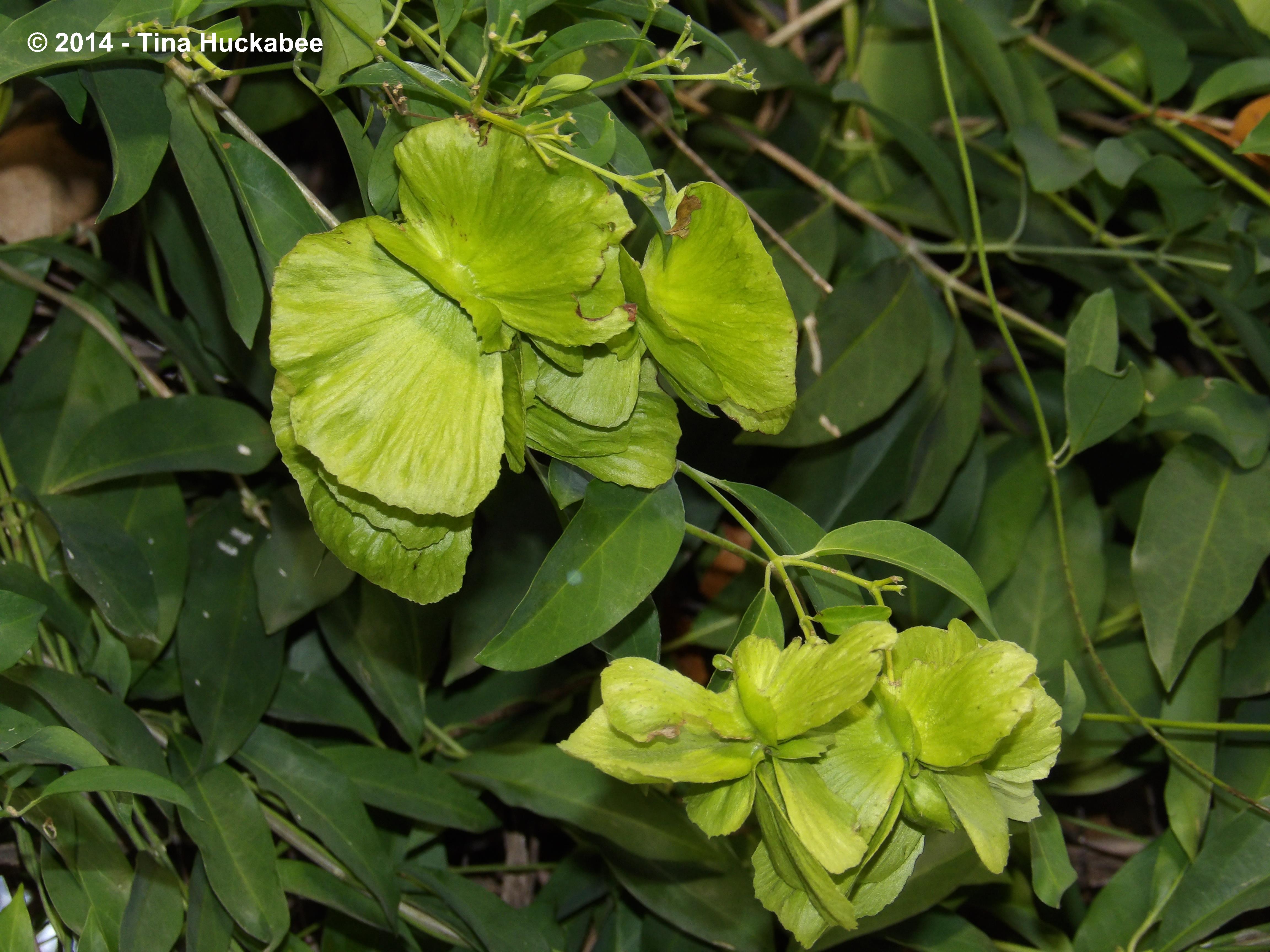
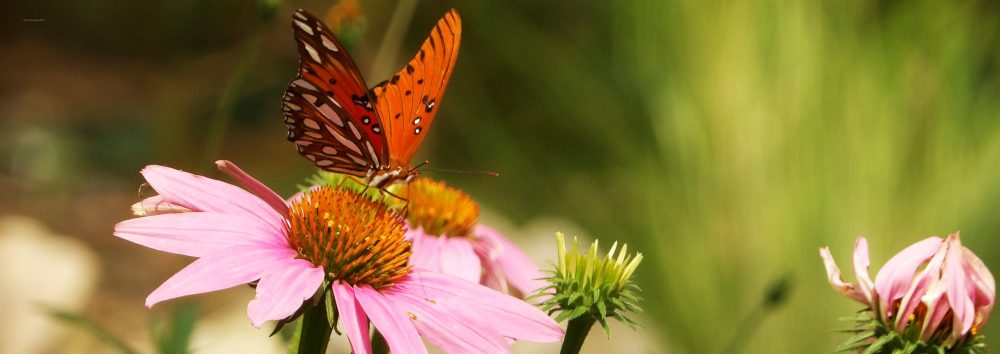
While not the real deal, I welcome these butterfly doppelgangers to my garden:

The chartreuse seedpod is beginning its morph to the mature-seed incarnation.

This golden toast heralds the final seed product.


These two seed pod examples develop on a fabulous vine, the Yellow or Mexican Butterfly vineMascagnia macroptera. 

Butterfly vine is a native to Mexico, but grows southward into Central America.  Several sources I’ve come across mention that the early English naturalist and botanist, Joseph Banks, observed Butterfly vine growing in Brazil.  

I’ve grown my Butterfly vine for at least a decade, maybe longer–I don’t remember exactly when I planted it.  The thick, twisted main trunk confirms that mine isn’t a newby vine.

I first came across Butterfly vine when I was a volunteer gardener at my children’s elementary school about 20 years ago.  One grew at the back of a portable building, with western exposure and no water source readily available.  I recall that it was summer that I found the vine–a Texas summer, folks–and the vine was as fresh as a daisy and blooming its clusters of petite yellow flowers.

Full sun, drought-tolerant, deer resistant, and attractive?  Yep,  that’s a vine for me!

My Butterfly vine grows in an opposite situation, receiving only dappled or diffused light, depending on the season. Yet it thrives with the same great qualities as in full sun, though with fewer blooms most years.  The only maintenance that I employ with this vine is the same one that I do with my hair: tuck away those annoying, wayward tendrils that fall into my face!  I’ve never experienced any negative issues with this vine:  no debilitating diseases, no invasive insects.  

During a hard winter, where there’s at least one multi-day freeze well into the 20s or teens, the vine may be rendered dormant.  The last cold winter like that was in 2014.

The “butterflies” certainly held their own that winter, even when the rest of the vine suffered freeze damage.

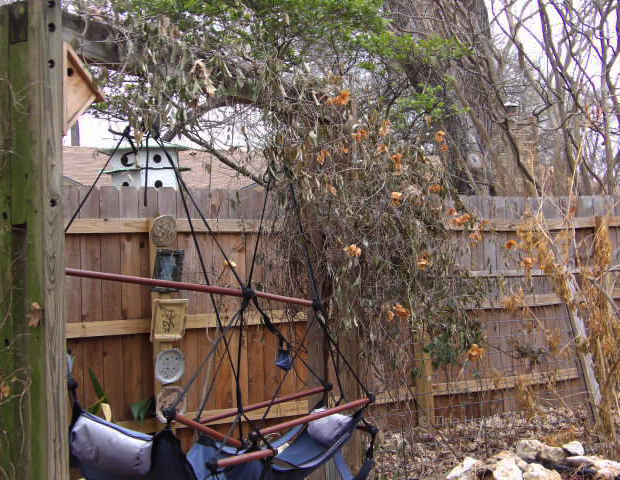
Even with the vine losing its leaves to the hard freeze, the foliage returned vigorously from the roots and along the mature stems once longer days and warmer temperatures arrived.

Last year’s winter was mild, but a late, hard freeze blasted through in March. This is how the vine responded:

The vine lost a good portion–but not all–of its leaves; what was lost, came back quickly.  

In a mild winter like this one of 2019-20,  the vine retains its evergreen habit.
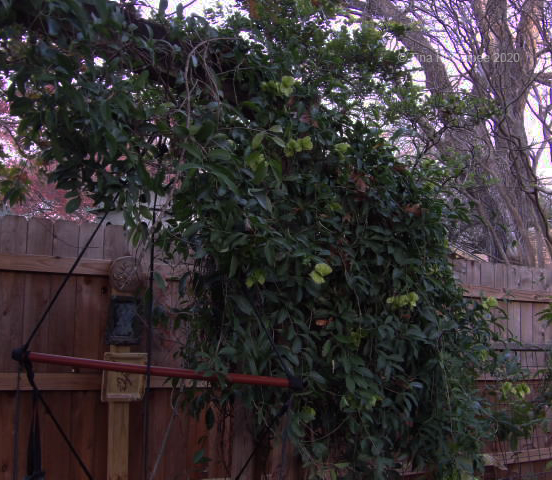
With climate change, I’m guessing that this vine is now mostly an evergreen for my  USDA zone 8B garden.  According to Monrovia, Butterfly vine grows in USDA zones 8-10.  I can imagine that for gardens growing significantly farther north than my own,  the vine is an annual or semi-annual plant.  

The vine flushes out during the wet and cool spring months, preparing for its summer/autumn blooming.

Green-n-growing-n-fresh is Butterfly vine’s contribution to the summer garden.  Typically, the yellow flowers don’t appear until mid-to-late summer, sometimes not until autumn.   In full sun, the flowers appear earlier and are more numerous.  Flowers on my vine are scattered, given the shady conditions that they grow in.
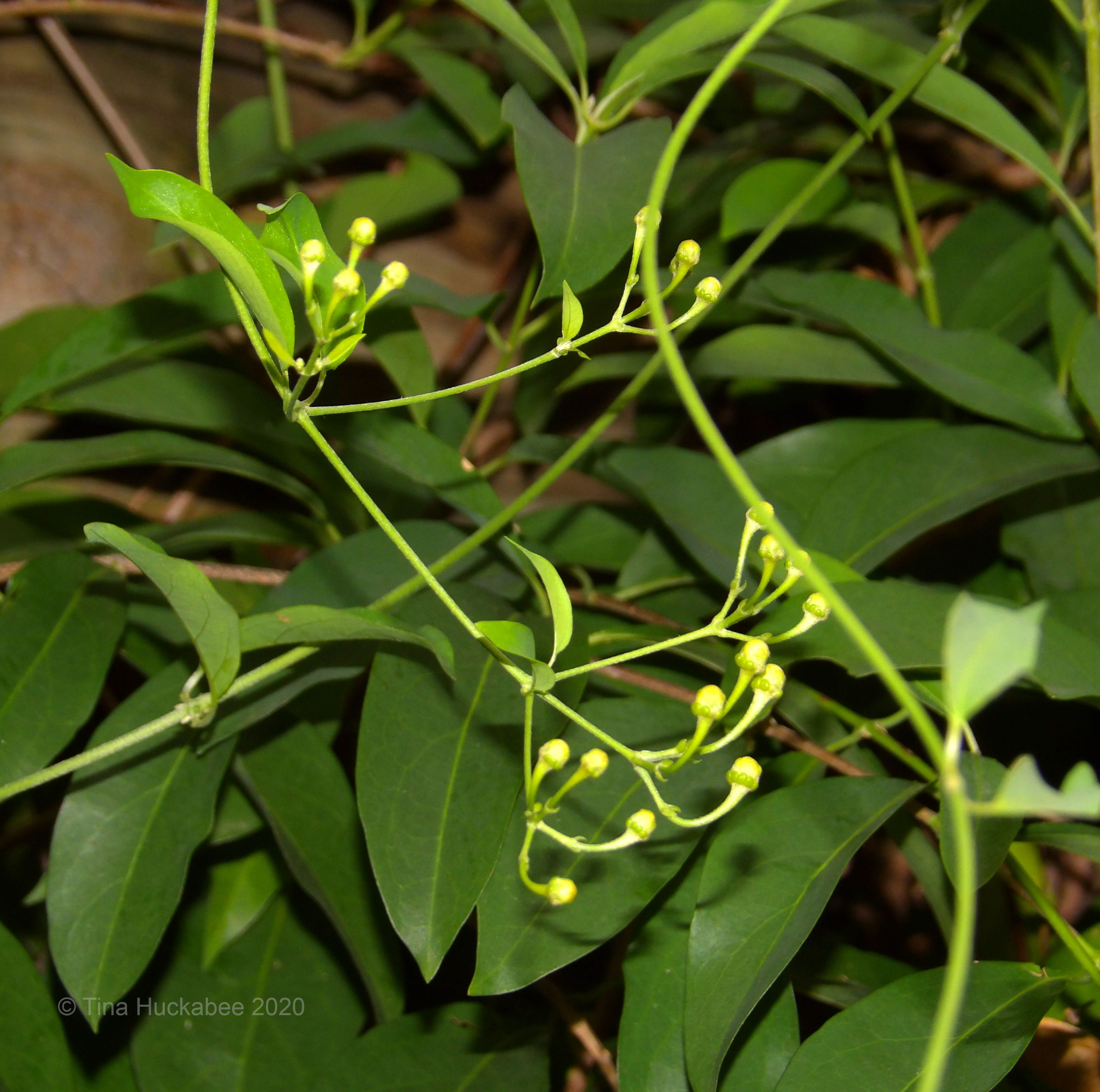
The number of bloom clusters also varies according to rainfall or irrigation.  I don’t water much–just twice per month during summer–but if there’s decent rainfall in late July, August, or September, the vine yellows-up nicely.  The vine weathers drought beautifully; I’ve never seen it wilt, nor does it lose leaves during that time.  But for its yellow beauties to perform, some extra wet stuff is an appreciated must.

Butterflies and honeybees sip the nectar, and I’ve seen lizards and smaller songbirds hide in the lush foliage, so I think Butterfly vine qualifies as a solid wildlife plant. 

Even with minimal rainfall, there are still pops of yellow along the vine. The vine blooms throughout autumn, with blooms eventually morphing into their seed-producing, butterfly selves. 

If you live in USDA zones 8-10 plant this lovely, fast-growing, water-wise vine. Yellow or Mexican Butterfly vine is friendly to a variety of pollinators and provides cover for other wildlife.  It’s not invasive and works well on trellises, fences, and arbors. Most years, you and your wild garden buddies will enjoy its spring and summer glory and its evergreen foliage in winter. In a mild winter, the vine retains its foliage and its butterflies. After a hard freeze, all bets are off.

But with this vine, you might have butterflies year-round!!


Spring:

Summer/Autumn:


Winter:

…or,
 

Foliage Day, December 2014

I’ve profiled foliage from my garden in the past, but I’m going to hang out with the Europeans today by joining with Christina and her beautiful blog,  Creating my own garden of the Hesperides, as she hostesses Garden Bloggers’ Foliage Day for December 2014.

Folks who’ve relocated to Austin, Texas have complained to me (usually in  whiny voices), there’s no fall color here.  That gets my “Texan” up a bit, because we do enjoy autumn color in Central Texas, at home and all around.

IMGP2938.new Lovely fall foliage.

IMGP2940.newThe color evolution happens later than in other parts of the Northern Hemisphere, closer to the actual start date for winter.  Additionally, the turn of foliage is gradual, beginning in November, peaking in late November/early December, and typically finishing by New Year’s Day.  It’s not a dramatic foliage show, loud and boisterous like you’d think something in Texas would be.  Instead, the change is gradual, subtle, and gentle.

IMGP2937.new

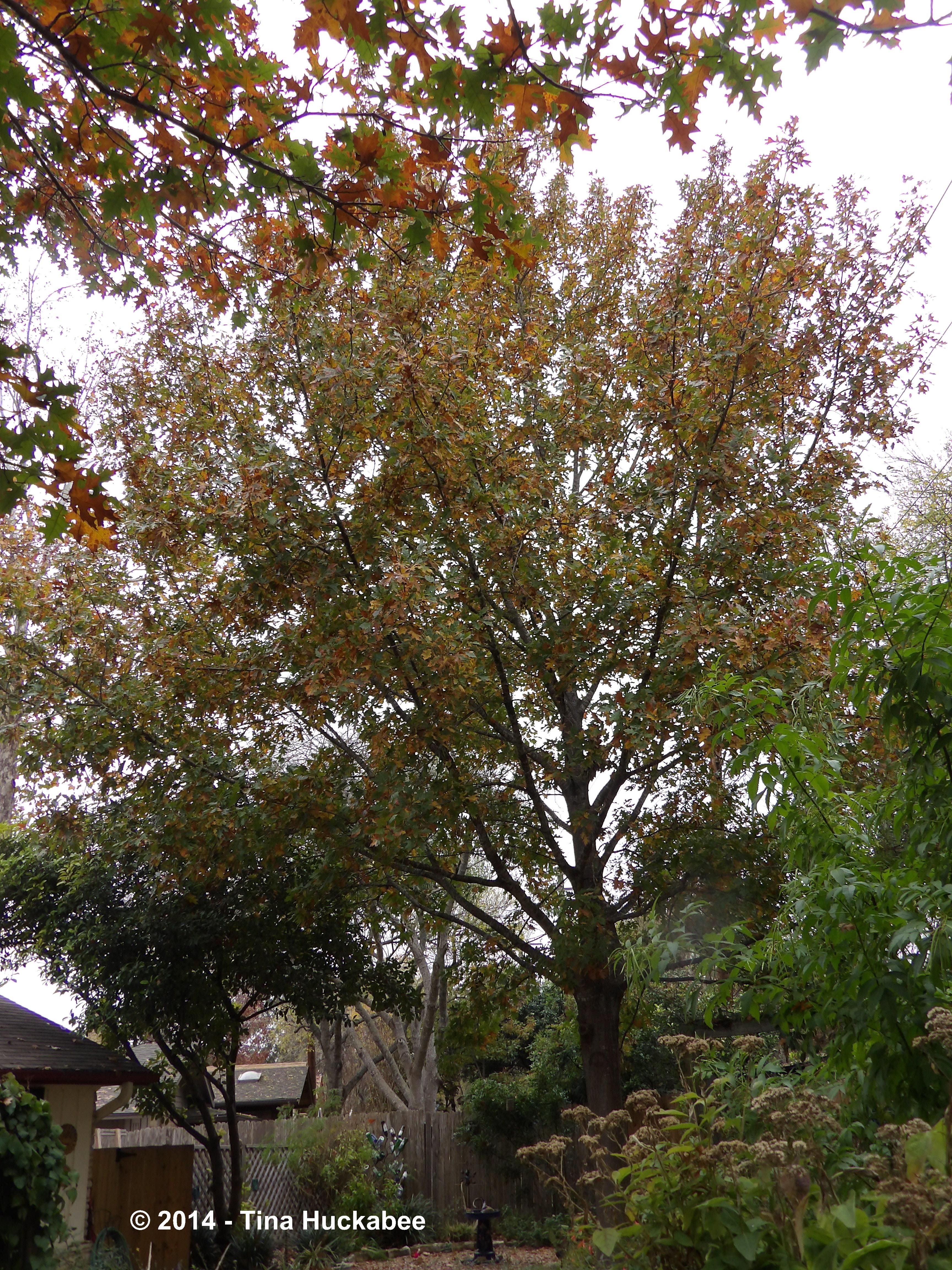
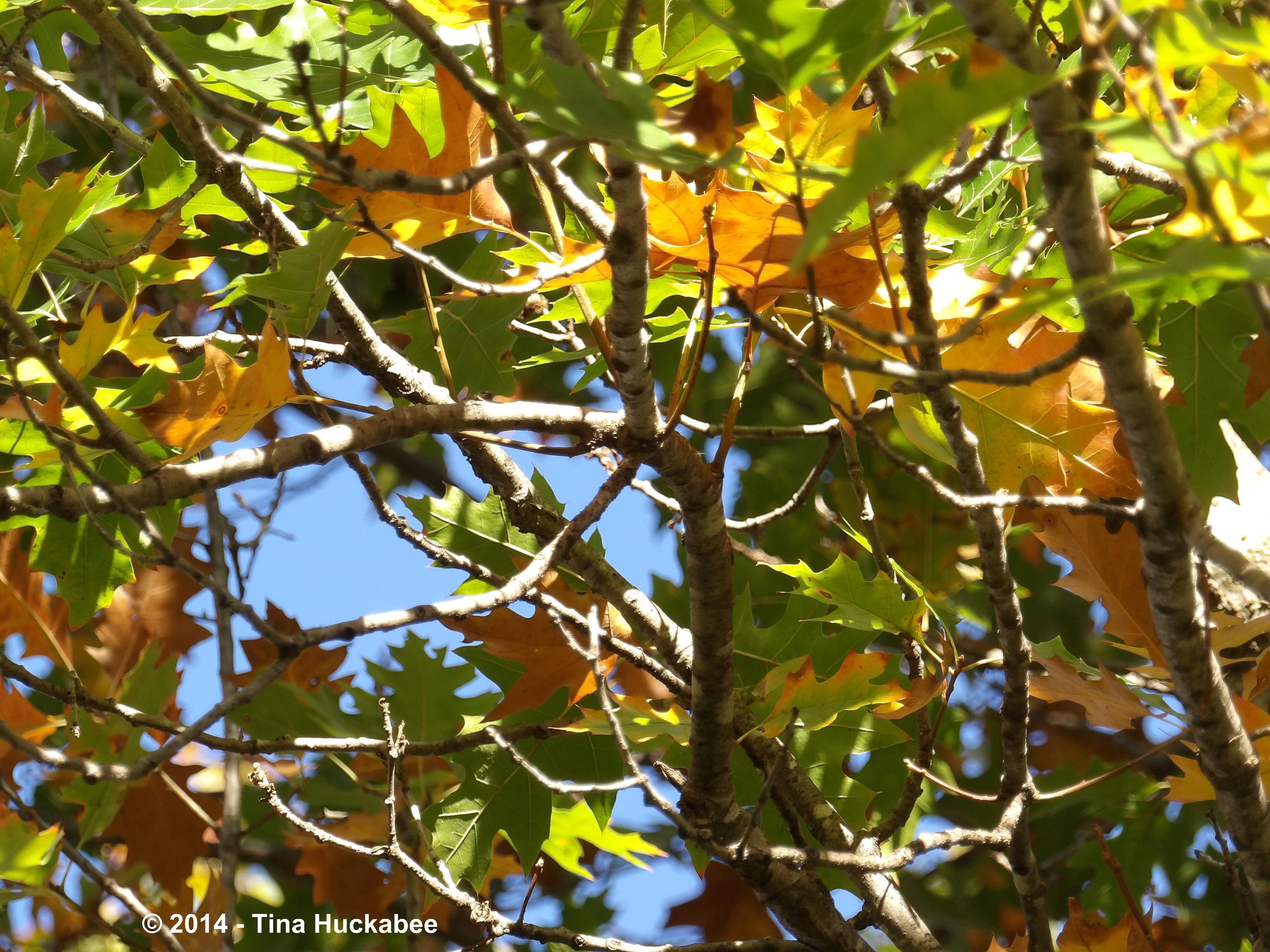
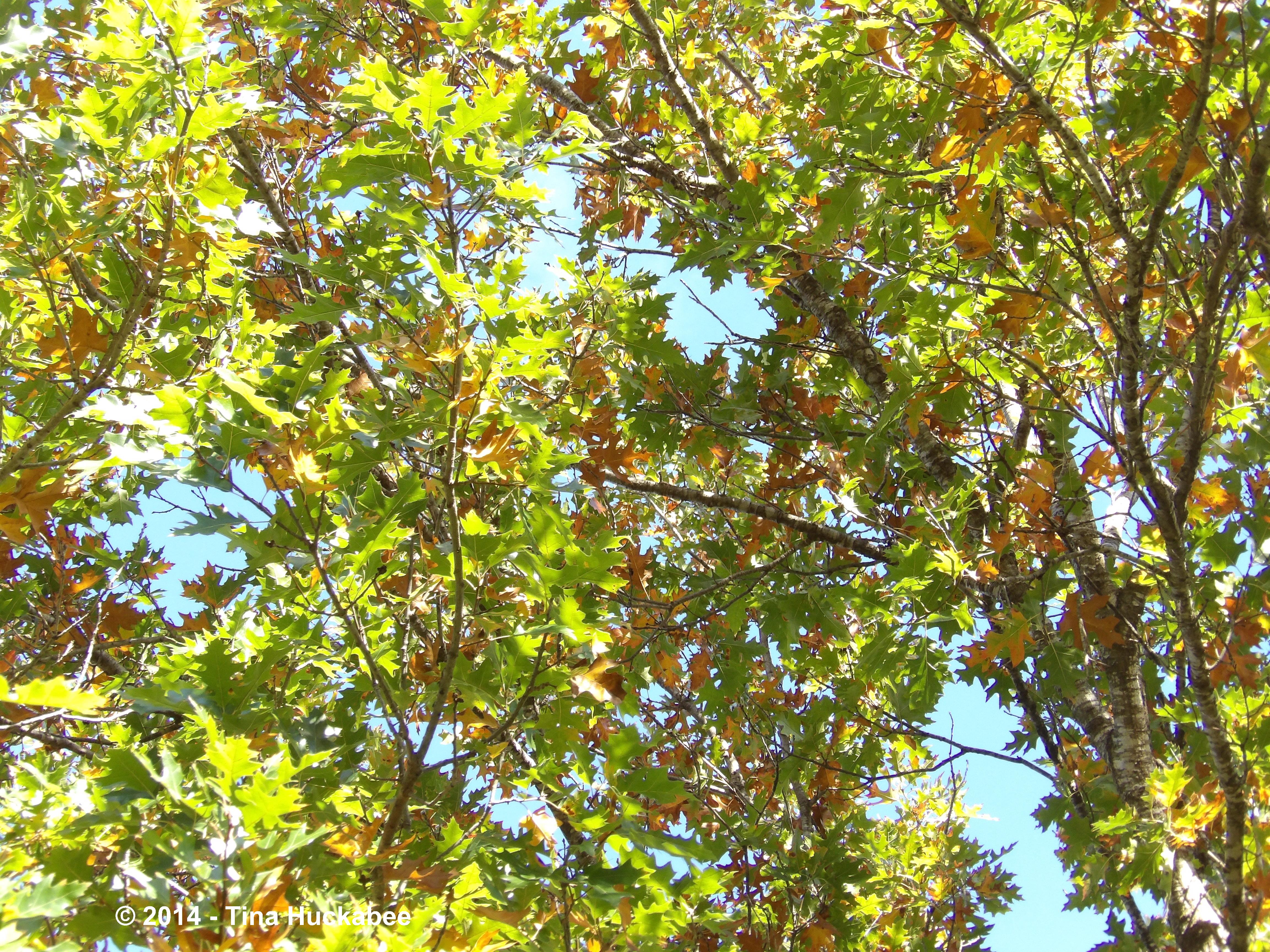
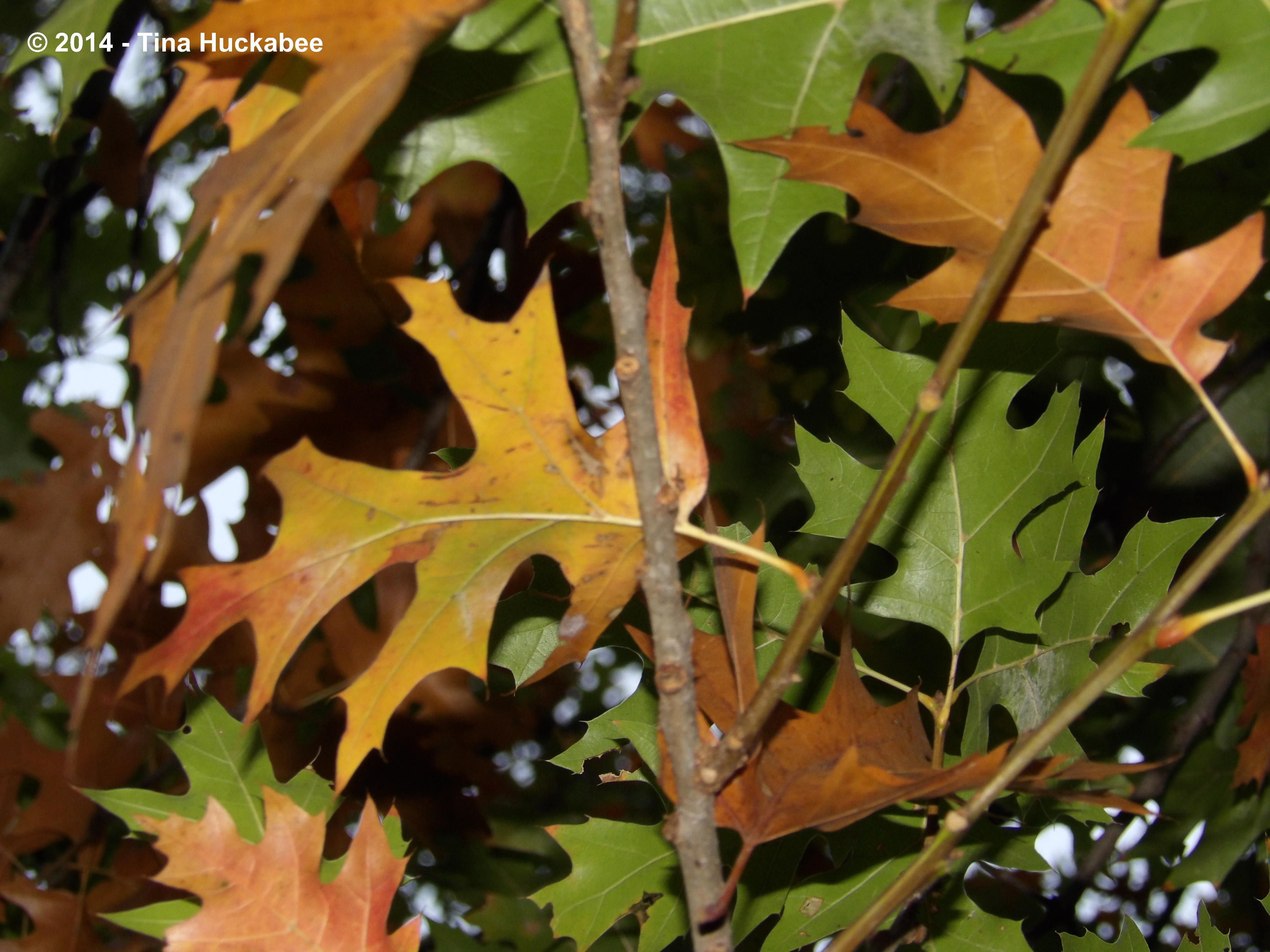
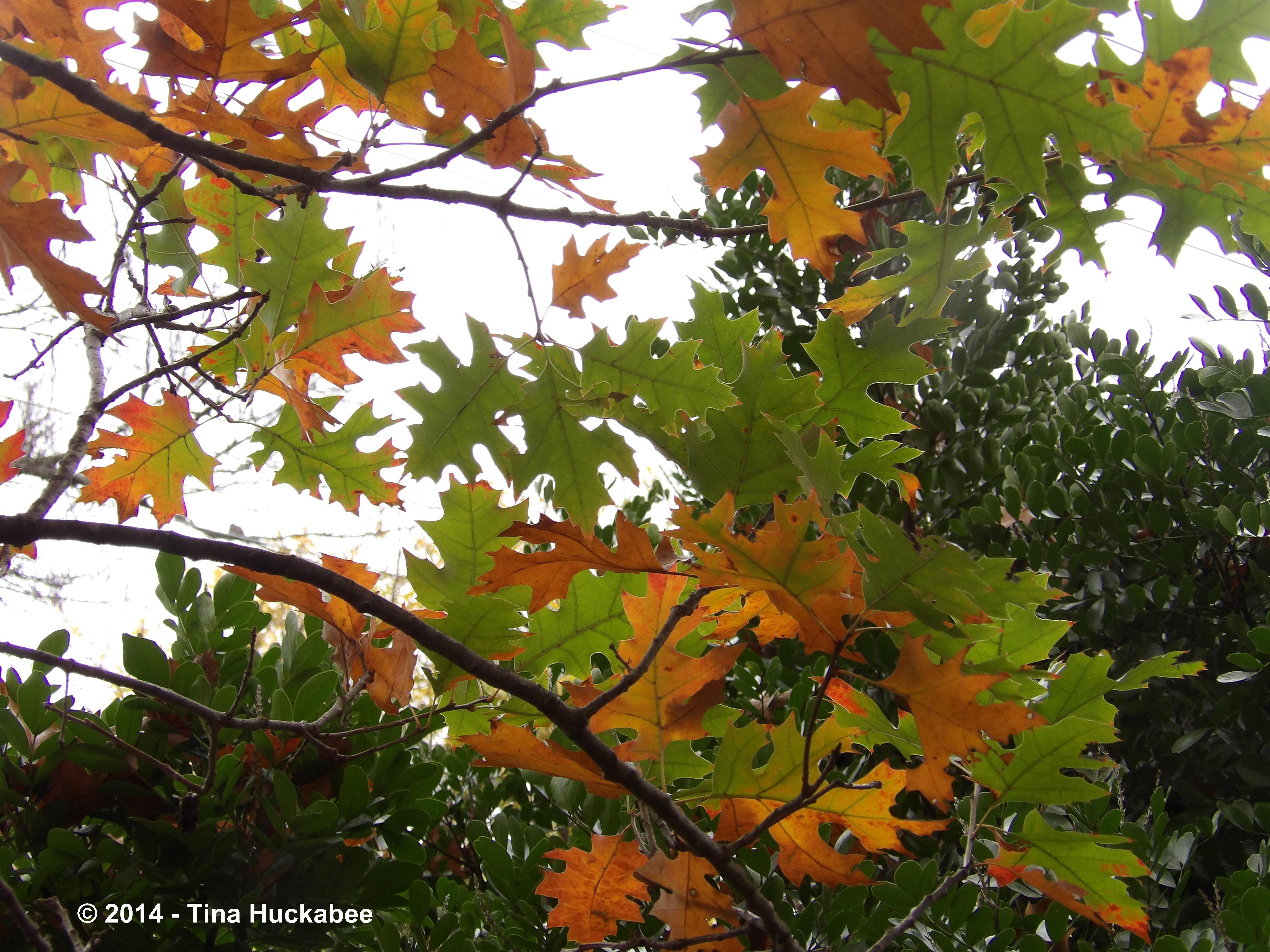
In my gardens, the two Shumard OakQuercus shumardii, trees extend their color change over many weeks.

IMGP3124.new IMGP3191.new

There are several species of oak trees in Texas that are commonly referred to as “Red” oak.  I’m guilty of misnaming the two major arboreal specimens in my back garden as “Red” oaks.  In fact, both are Shumard  Oaks.

IMGP3034.newIMGP3033.new

Gorgeous trees, I appreciate their many attributes: the shade they cast in summer, the cover and food provided for the many birds and other wildlife who visit or make these trees home, and the fall foliage mosaic (albeit in December) that these two trees provide.

IMGP2967.new

IMGP2968.new

IMGP3122.new

IMGP3139.new

IMGP3140.new

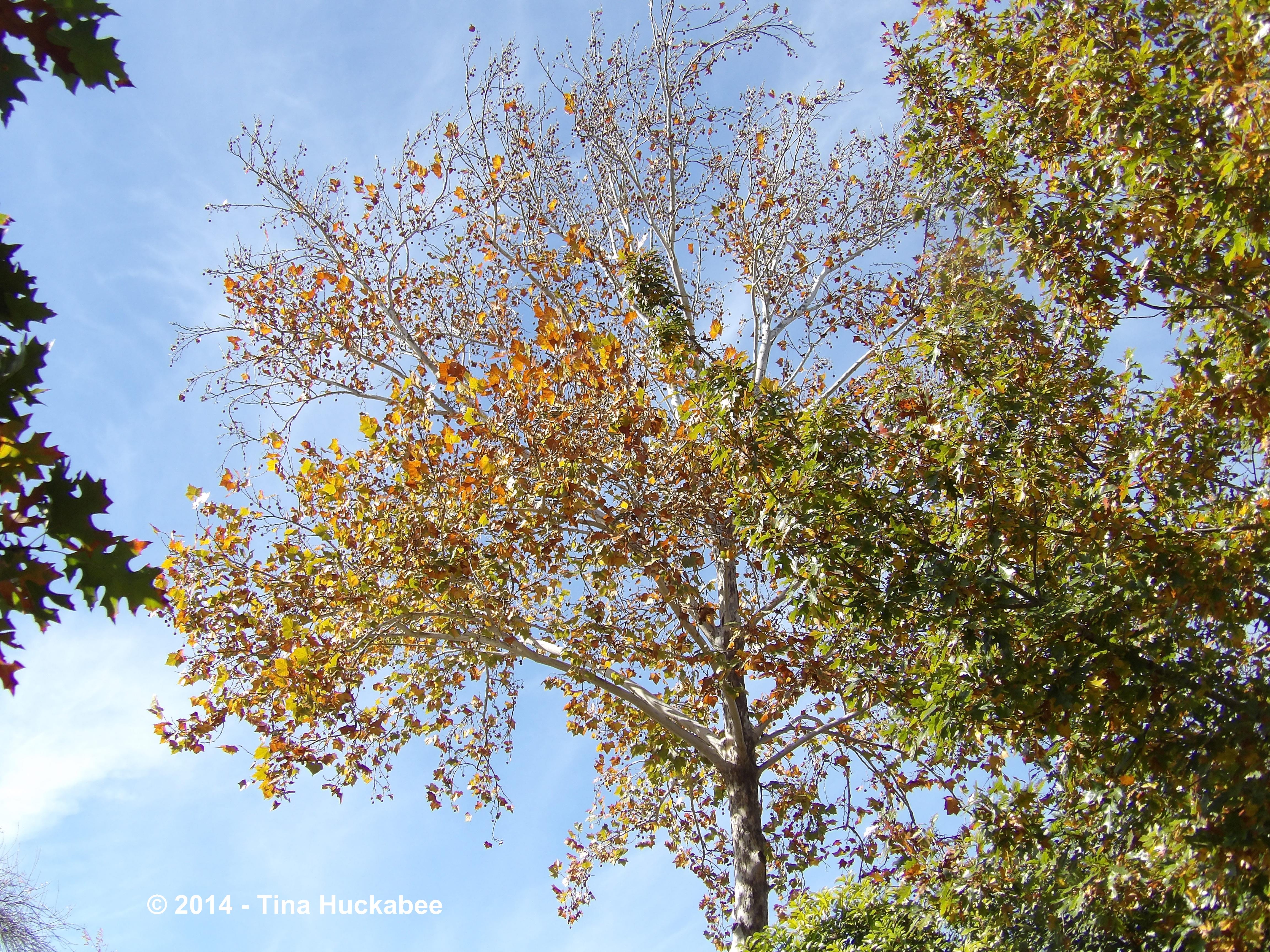
Another tree residing in my realm, though probably not one I would have planted on my own, is the American Sycamore, Plantanus occidentalis.IMGP3153.new

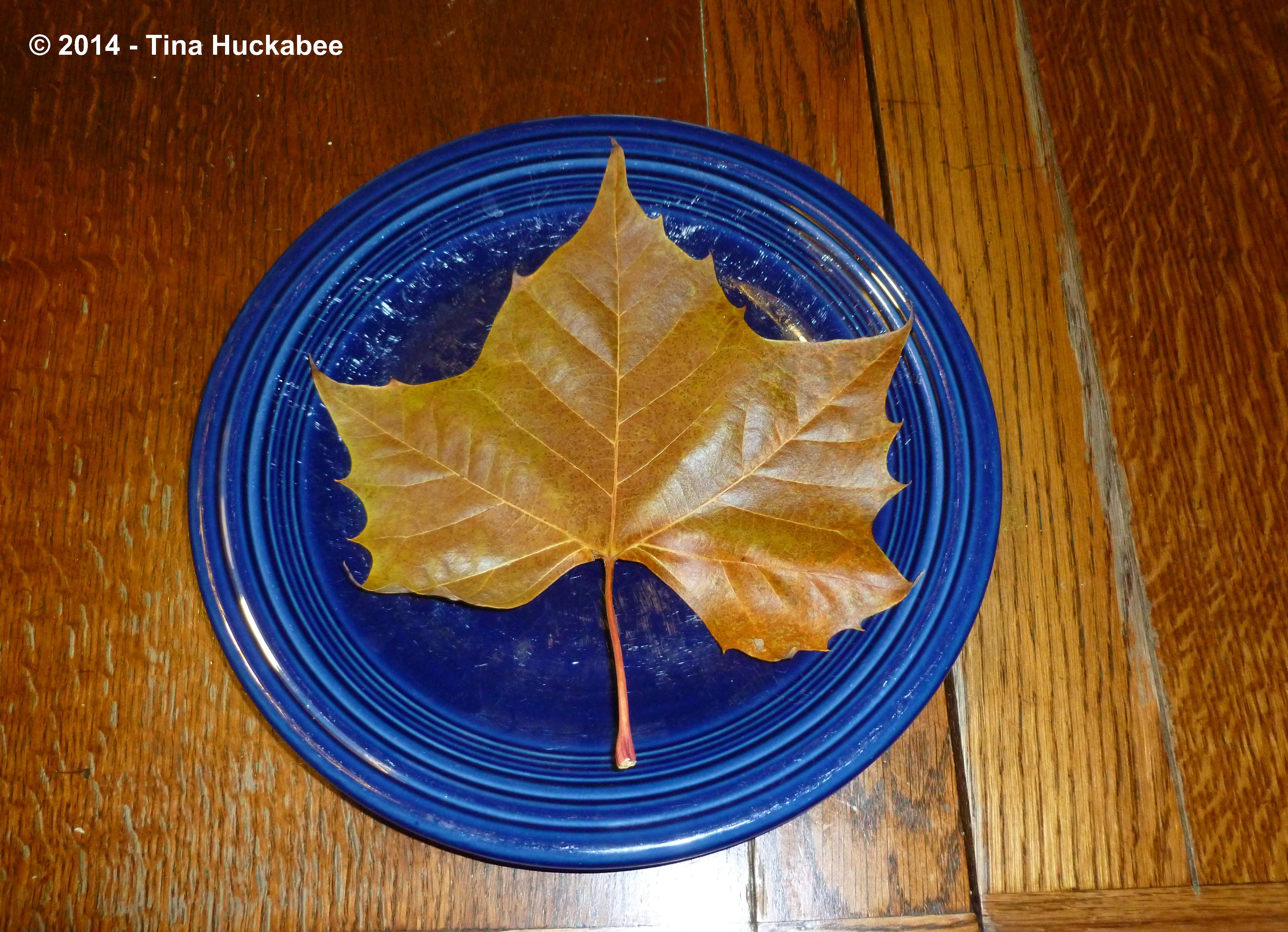
I don’t hate this tree, but it’s a bit water thirsty for Central Texas–it’s naturally found along stream banks and bottomlands which hold moisture from floods, and that’s not where my home resides.  The tree was established when I bought my home and I wouldn’t remove a mature tree, so it’s remained as a major shade source for my gardens. Aside from its struggles during dry periods (drought-stress causes defoliation), the leaves are thick and big.

20111231_7_cropped_4401x3184..new Really big.

Awkward and especially messy in the garden, the leaves don’t break down in any reasonable amount of time. Here you can see a small sampling of Sycamore leaf litter.

IMGP3208.new There are points during late December when all that is visible in certain parts of my gardens are those dinner plate-sized leaves. A garden is not so nice when those huge leaves obscure everything in it!  Sycamore leaves are too large and thick to leave in the garden (for this OCD gardener), or to place, as is, into the compost.  They mat together, forming a barrier against moisture, thus slowing the composting process.

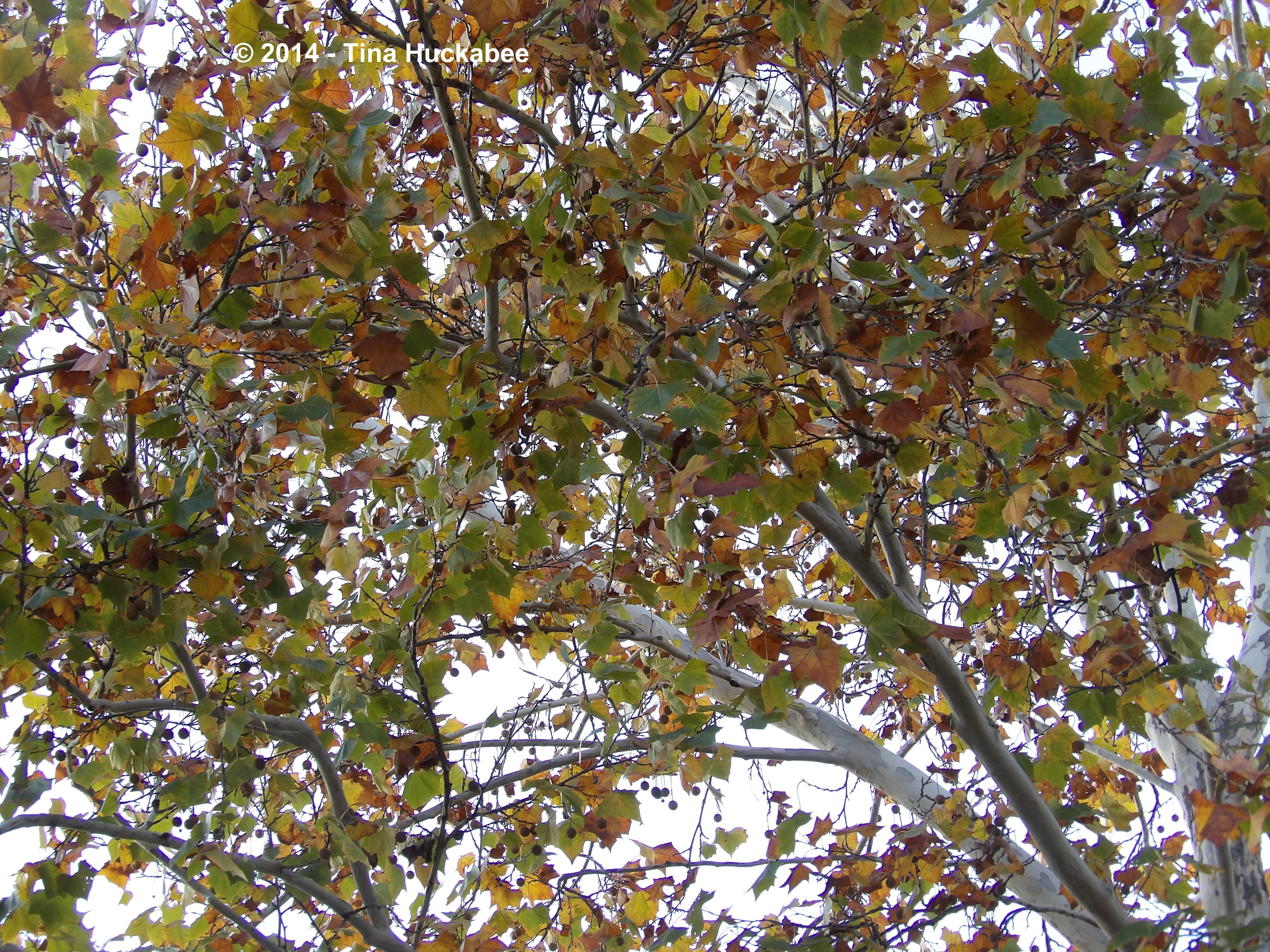
But in the tree, especially during the seasonal change,  Sycamore foliage is quite lovely.

IMGP3043.new IMGP3119.new

IMGP3118.new

Fluttering in the breeze, in an array of colors,

IMGP3155.new

IMGP3044.new…the leaves are resplendent against the blue sky.

Once the leaves drop and I’ve vacuumed and shredded them, dumped them directly into my compost bin and/or onto the gardens as mulch, the spherical seed pods decorate the tree throughout winter.  In spring, the seed balls explode, releasing feathery seeds aloft in the wind.

On the ground, foliage also makes its presence known.  Floating in the bird baths, IMGP3190.new


…accompanying the bee hives,

IMGP3152.new

…and blanketing the gardens and pathways.  Here, the brown oak leaves combine with the stalks of the RetamaParkinsonia aculeata. 

IMGP2969.new

A bit upwards from the ground sit perennials which also sport fabulous foliage this GBFD. The colorful foliage of the Ruby Red Runner, Alternanthera hybrid, which is part of the biological filtering system of my pond, is eye-catching.IMGP3120.new

Tiny floral gomphrena puffs accompany the plum leaves. Ruby Red Runner provides foliage interest nearly year round; a hard freeze will render this plant dormant.

The Butterfly VineMascagnia macroptera, showcases lush green foliage and fascinating chartreuse seed pods which resemble butterflies, thus the common name for this native plant to Mexico and southwards.

IMGP3125.new IMGP3126.new

Currently, none of the seed pods are the rusty-brown they eventually become, but it’s quite a picture when there are differently pigmented “butterflies” resting on the vine.

Firebush, Hamelia patens. speckles after frost damage to its foliage,

IMGP3143.new IMGP3144.new

…but  I like it.  No blooms remain on this heat-loving, native-to-Florida.  Once we have a killing freeze, it will be dormant until late spring.

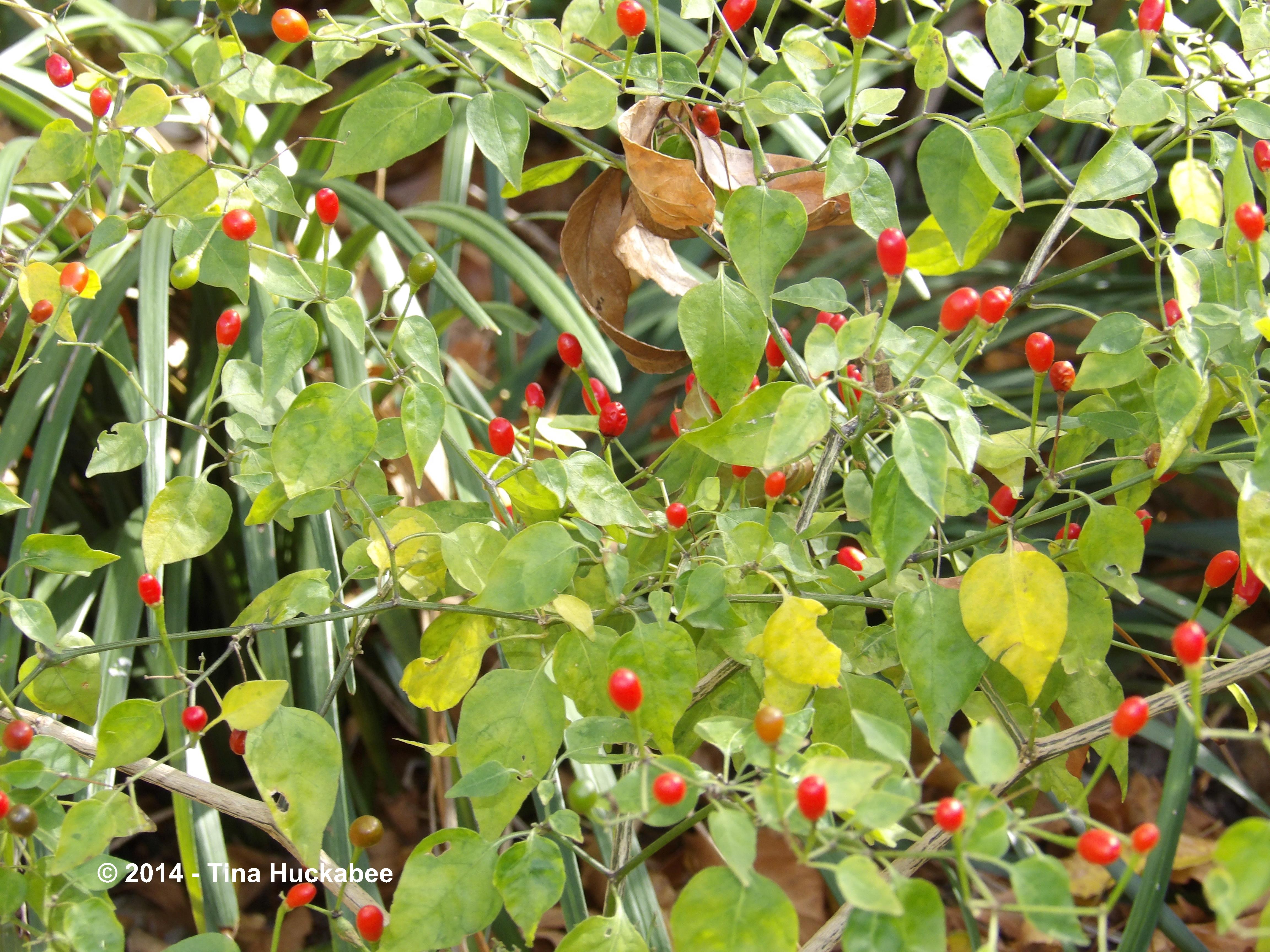
Lastly, the Chile Pequin, Capsicum annuum (var. glabriusculum) adds major hotness to the garden.

IMGP3146.new

Pepper hotness, that is.  A beautiful, shade-tolerant and deciduous (in most winters) shrub, many birds (and my husband) favor these chile peppers, the only truly native chile pepper in Texas.  Here, it’s  accompanied by Yarrow, Achillea millefolium.

IMGP3148.new

Such a lovely plant for this time of year.  Who says we don’t have seasonal foliage color in Texas??

For foliage celebrations from around the world, visit Creating my own garden of the Hesperides for GBFD!

IMGP3183.new