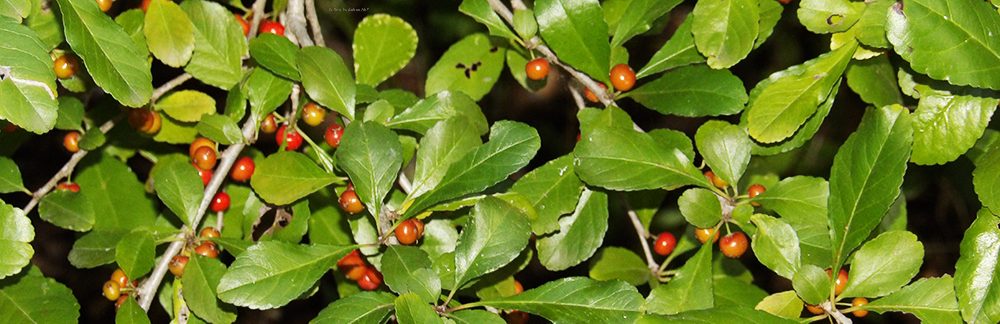
As the days shorten and cool, it’s once again a pleasure to be out-of-doors. In my spare time, I’m re-configuring parts of my garden (when am I NOT re-configuring parts of the garden?), and enjoying the seasonal change from summer to autumn.
In my compost area, I was wrangling rogue fallen leaves and when I peeked into an empty bin, discovered this slithery fella.
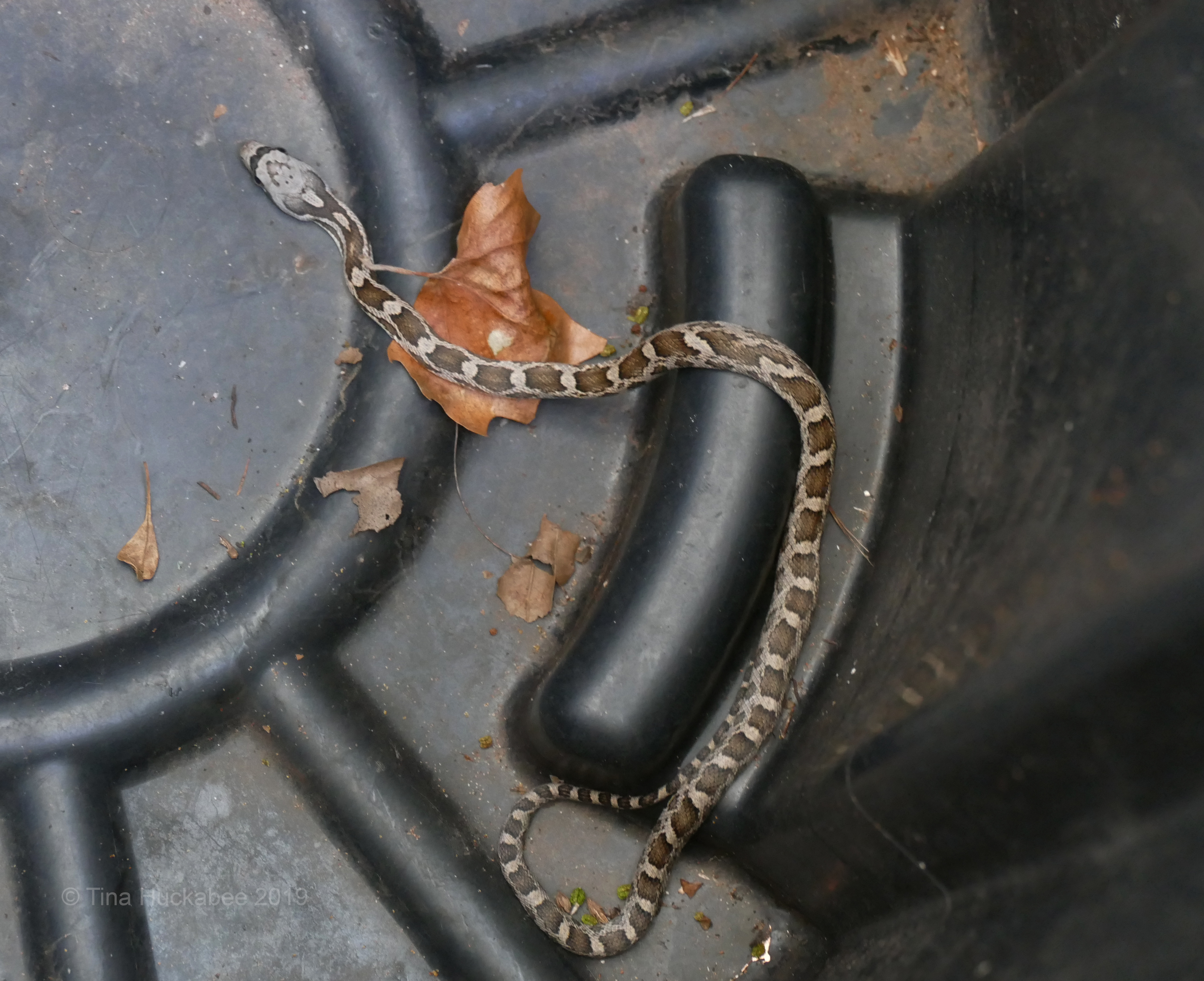
A young Texas Rat Snake, Elaphe obsoleta lindheimeri, I imagine it’s the offspring of a adult snake that I saw in June. Several times, the Blue Jays were yelling at something in the back corner of my garden. I’d investigated, assuming that they were screaming at an owl, but they were looking down at the ground and not up into trees. After several inspections driven by the jays’ caterwauling, I finally I saw a bit of a good sized snake. The snake was mostly nestled under groundcover, but enough was visible showing a circumference several inches, meaning that the snake is most likely 5-6 feet long. I left the snake alone, not out of fear, but because rat snakes are good predators to have in the garden.
The Blue Jays were quiet after that, but a few weeks later I heard the alarm calls of a crowd of Carolina Chickadees, Carolina Wrens, and Black-crested Titmice as they fluttered around my back neighbors’ large elm tree. The little birds were inspecting something in the crotch of large limbs, and only once I grabbed my binoculars could I see that it was several bits of shed snakeskin hung on the bark of the tree. Rat snakes can climb trees, so I was certain the skin was the remains of my snake. I emailed the neighbors and they were excited about the find, but never saw the live snake.
Fast-forward through summer and I suppose eggs were laid and snakes were hatched.
Once I snapped photos of the binned beauty and dragged the Hub out to see our slinky friend, we deposited the little reptile in a different part of my garden. I hope it eats lots of rats and mice, but not the various birds that are around. Alas, birds and their eggs (remember, rat snakes climb!) are part of rat snake diets.
Predators eat.

After checking the honeybee hives recently, I spied this smaller, but no less deadly, predator hanging out near our hive, Scar.
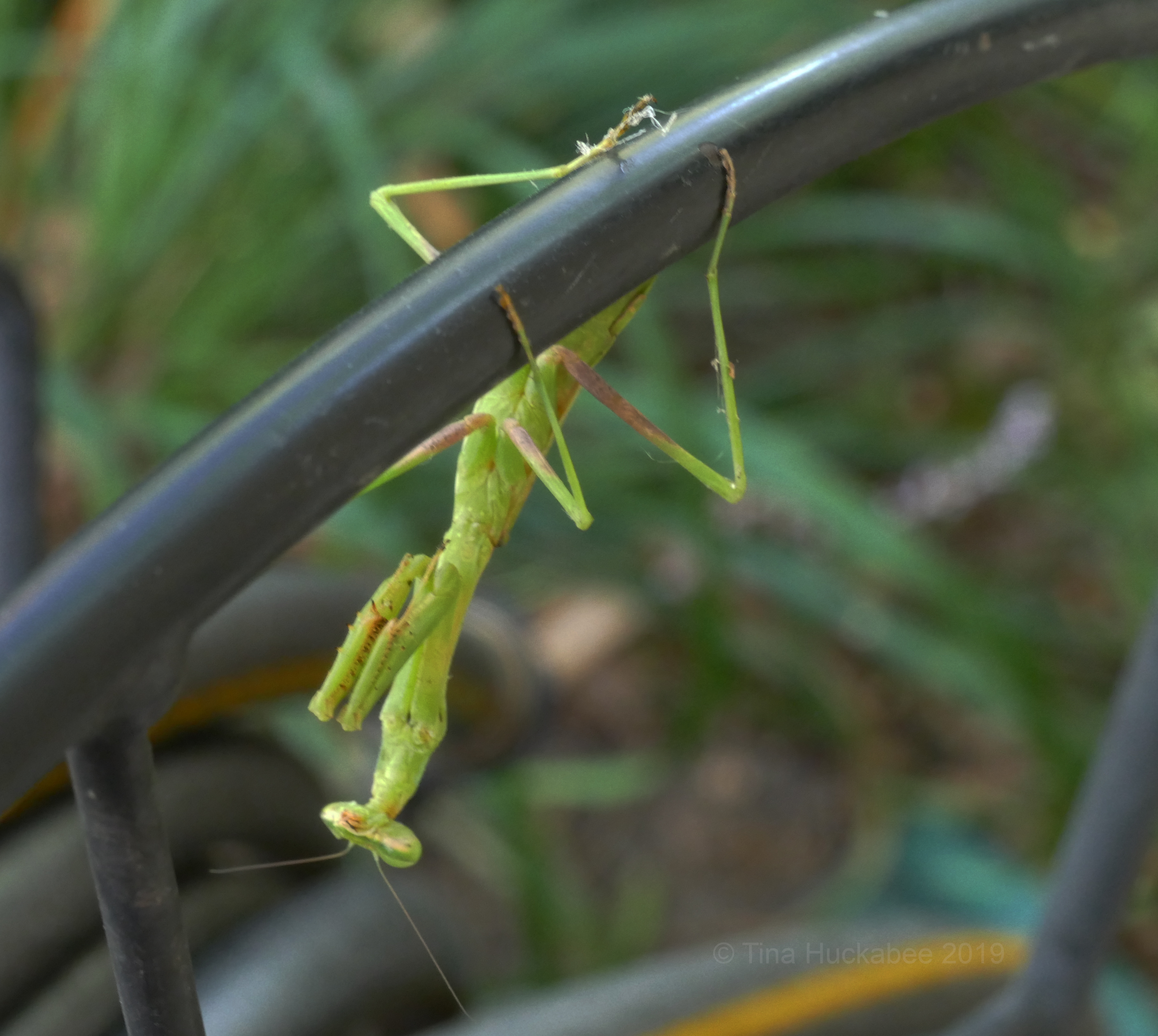
“Arms” held aloft, perhaps this adult Praying mantis, Stagmomantis sp. is praying for me to go away so that it can continue its dinner hunt.

Mantids eat a variety of things, most of which are smaller than themselves, including honeybees. Flies, butterflies and moths, as well as other insects are also on the mantid menu. When I checked the next morning, the mantid was gone from this spot, but is probably nearby.
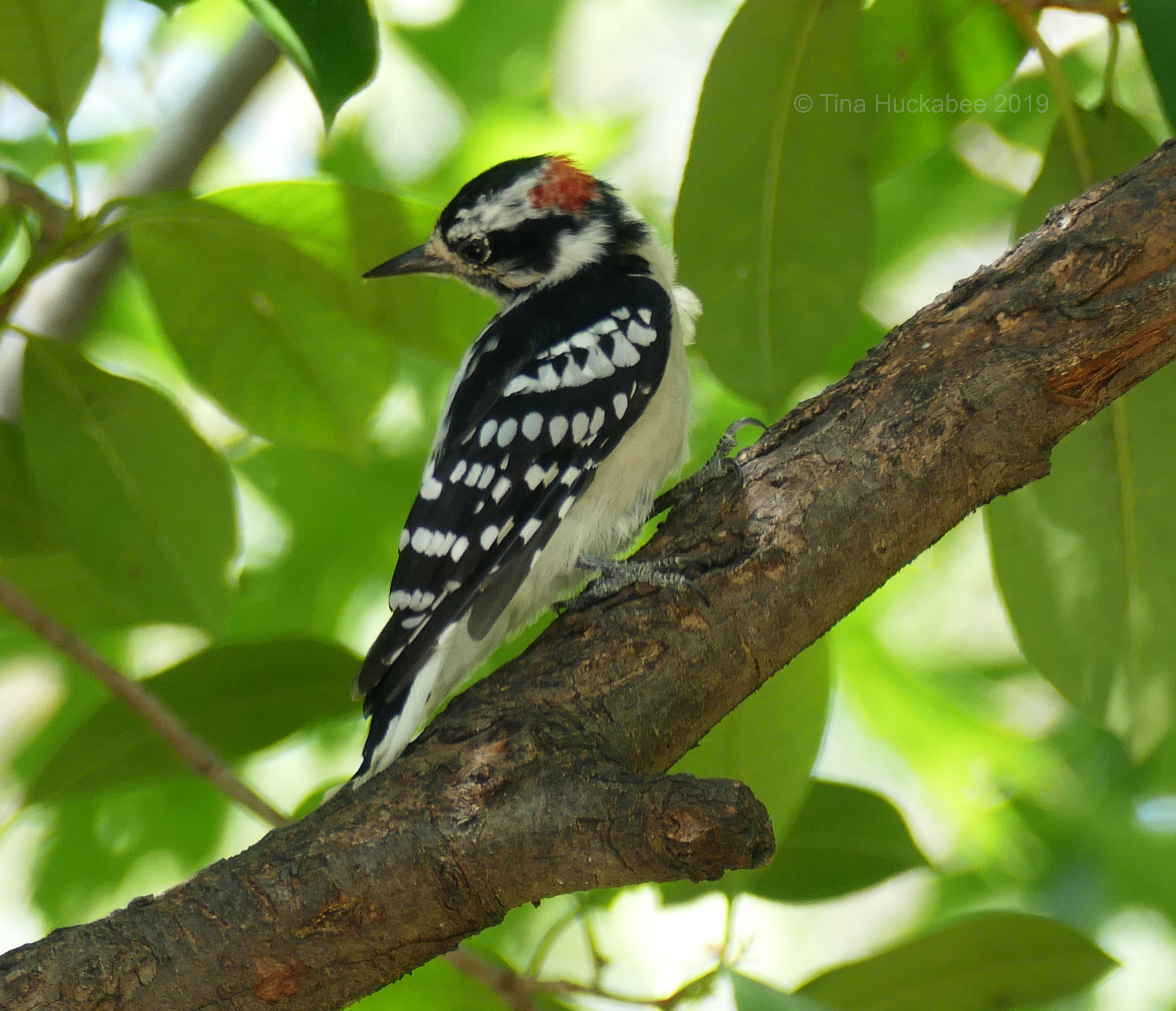
Fall bird migration is underway as they travel from their northern breeding grounds to winter in Mexico, Central and South America. I’ve seen a Nashville Warbler, Leiothlypis ruficapilla, on several occasions, finally catching it still enough for a couple of shots.

Actually, I have no idea if this is the same warbler I’ve spotted several times, or simply another Nashville sojourner, though all the ones I’ve seen have been male. Nashville Warblers breed in Canada, migrating southward through a wide swath of the United States, and wintering in Central America. I’ve seen individuals of this species in my garden before during spring migration, but never during fall.

The only other migratory bird in my garden has been a Yellow Warbler, flitting late one afternoon around the pond. Their flashing sunshine yellow feathers are hard to miss. I also saw a magnificent hawk at my pond, but I had bumbled noisily out the back door and so startled it, causing it to take flight immediately. When will I learn to first look through the glass to check out the surroundings before I open the door and scare everyone away?
There’s never a dull moment in the garden–one just needs decent observation skills and to practice quiet, subtle movements.
I guess I have some work to do.



 My Gardener Says...