Bee Mama Missive: Lumpy And Squishy

Squishy and sticky, actually. But lumpy and squishy are a part of the family lore. When my almost 20 year-old son was very little, he was a picky eater.  He’s not any more, but as a tyke, whenever he wouldn’t eat or even try a new food, his excuse was that it’s lumpy and squishy. So lumpy and squishy became our go-to phrase when we don’t like or want to eat some particular food.

I would suggest that this,
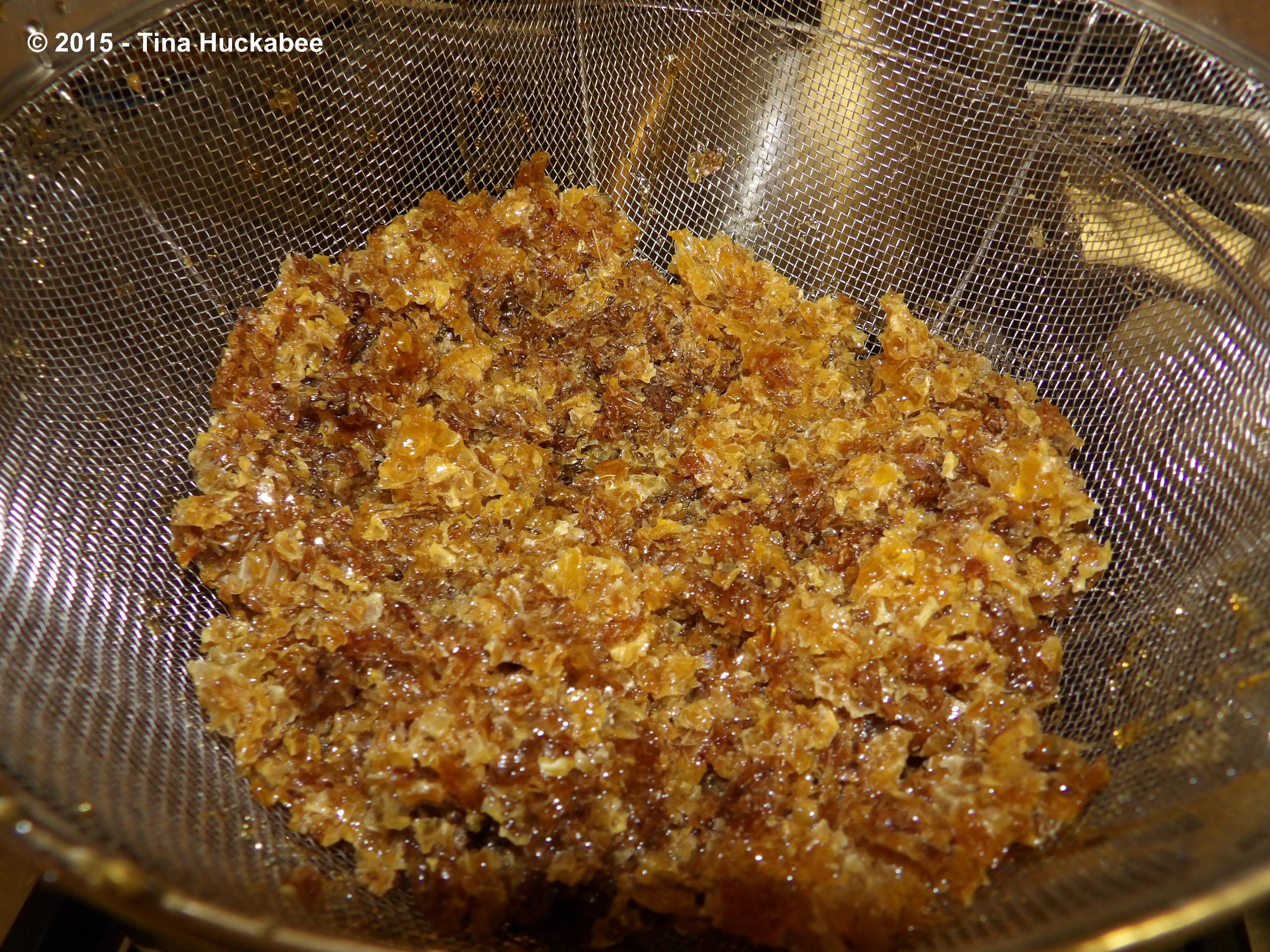
IMGP5417.new …is lumpy and squishy.  But try it?  You betcha!!  This golden glory is what remains of one of the batches of honeycomb that Bee Daddy and I harvested from our honeybee hives recently and that I drained a total of about a gallon and a half of honey from.    I should also add that in addition to being lumpy and squishy, the honey is also sticky and delicious.

Really, really delicious.

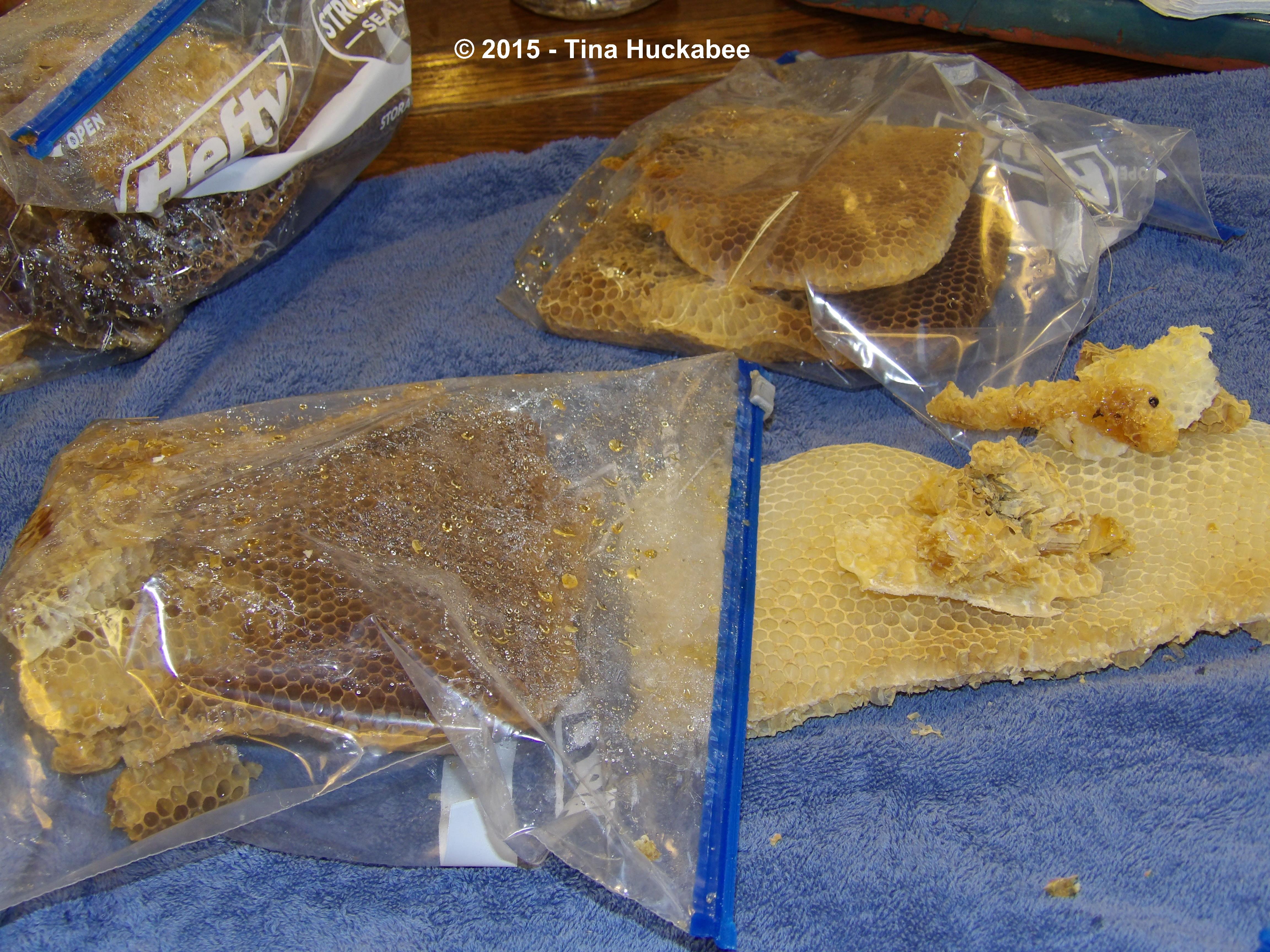
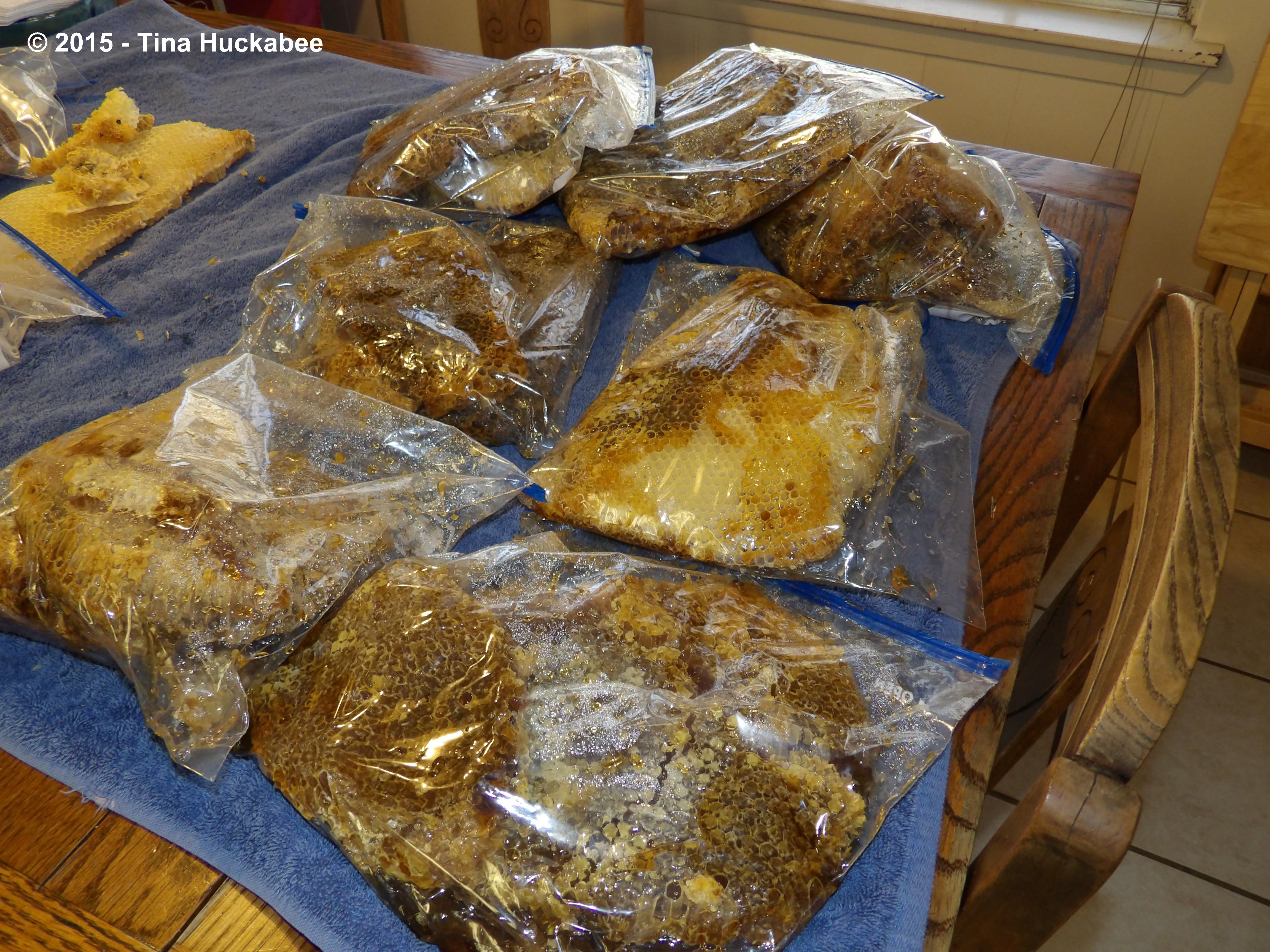
After checking our hives recently, we ended up with bags full-to-bursting with honeycomb which needed squishing in order to extract the precious, yummy honey.
IMGP5370.new

If I was a serious beekeeper whose goal was to reap honey throughout the year, I would have a different type of hive (Langstroth) and invest in a honey extractor.  As it currently stands though, my beekeeping goals are about adding pollinators to my local environment and if we get some gorgeous and sweet benefit from the bees, that’s a-cherry-on top for our efforts.

Honey is the byproduct of honeybees, so here I am with roughly ten bags of honeycomb,

IMGP5368.new IMGP5369.new

…plus some partially filled comb.

IMGP5409.new

IMGP5410.new

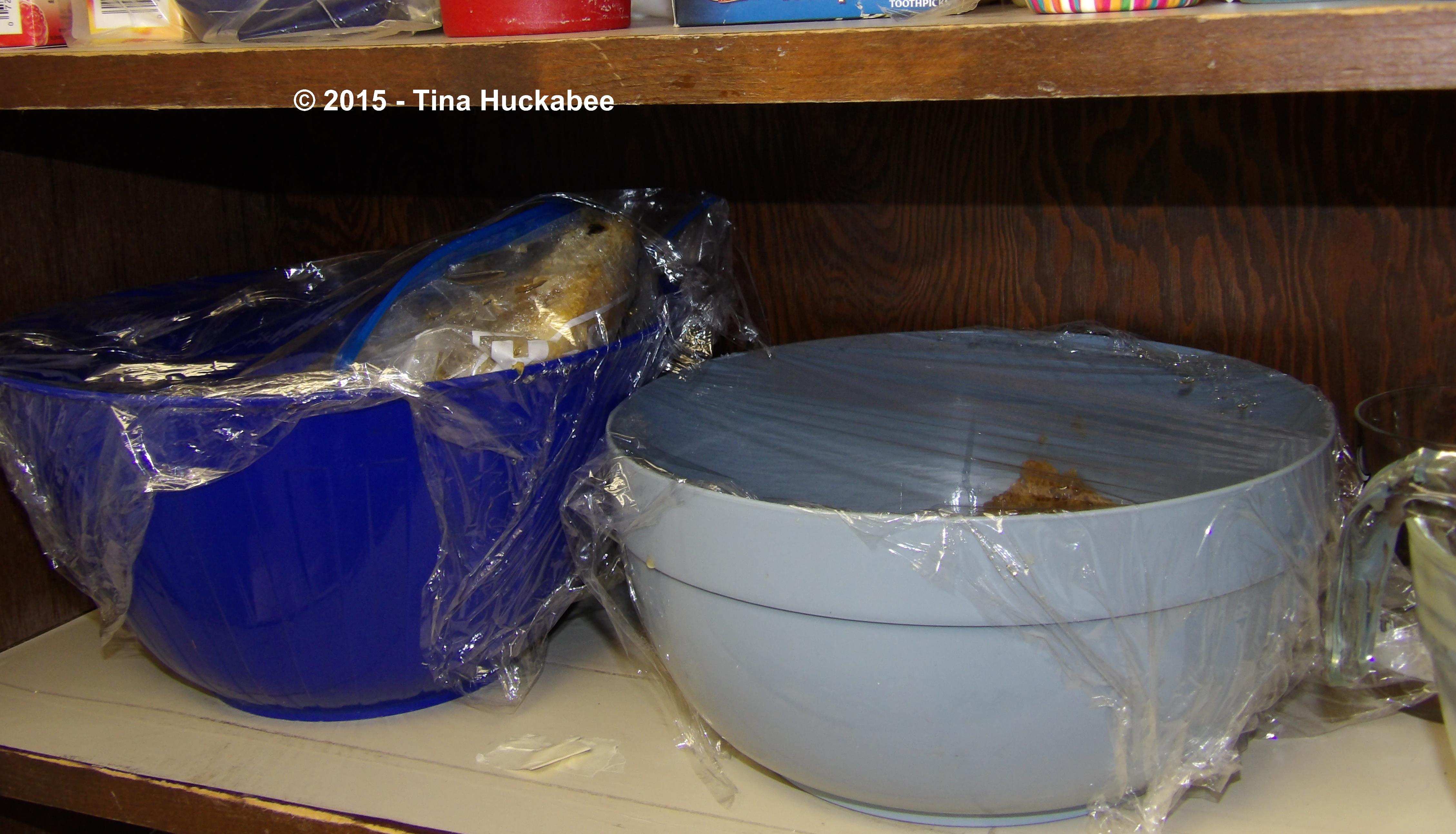
Because the extraction is time-consuming (I’ve done this once before after the smaller spring honey harvest), I knew the work would commence over several days, so the first order of business was to store our ziplocked booty.  I placed the bags in bowls and cookie containers and made room on pantry shelves throughout the kitchen.
IMGP5422_cropped_4515x2585..new

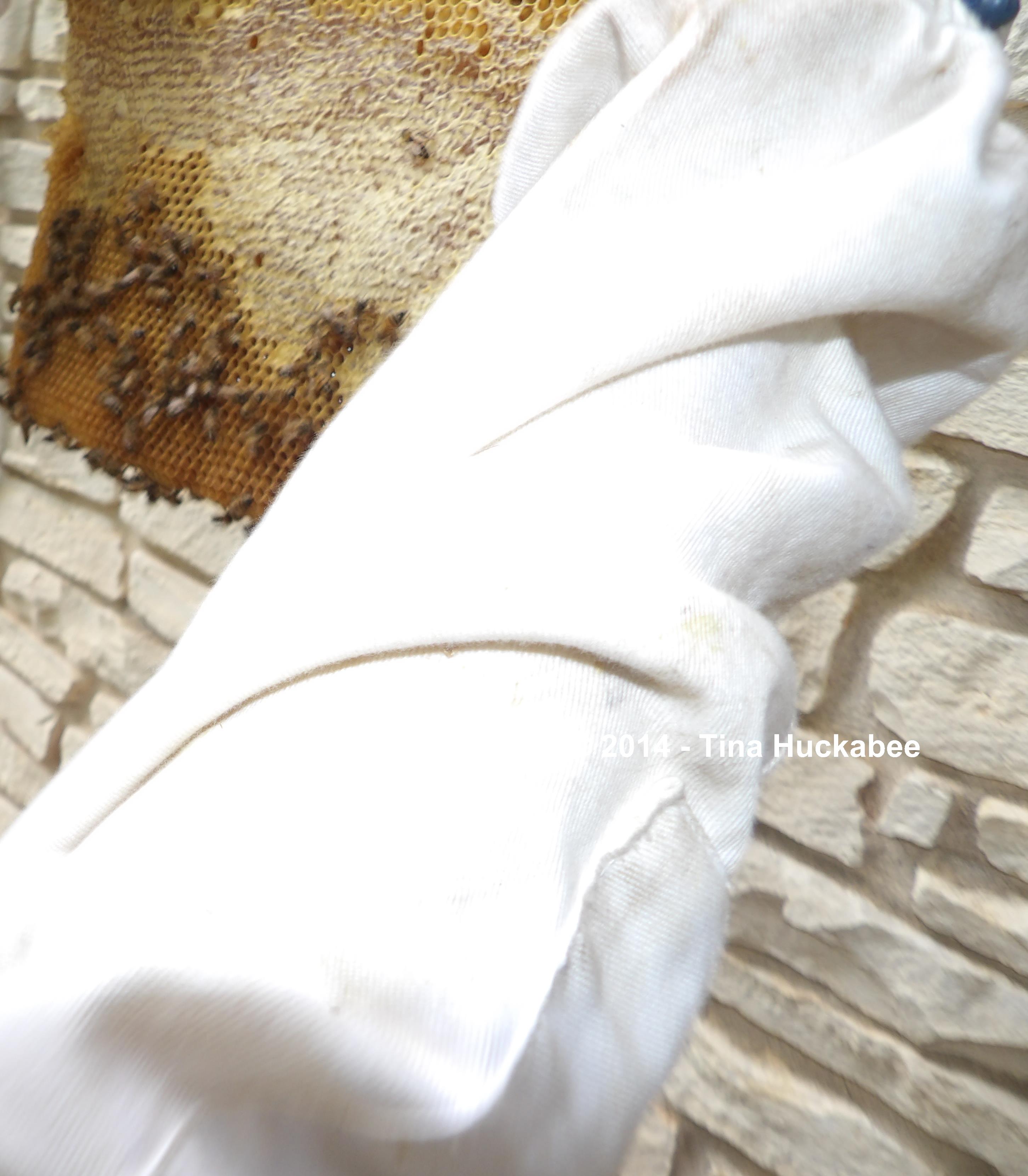
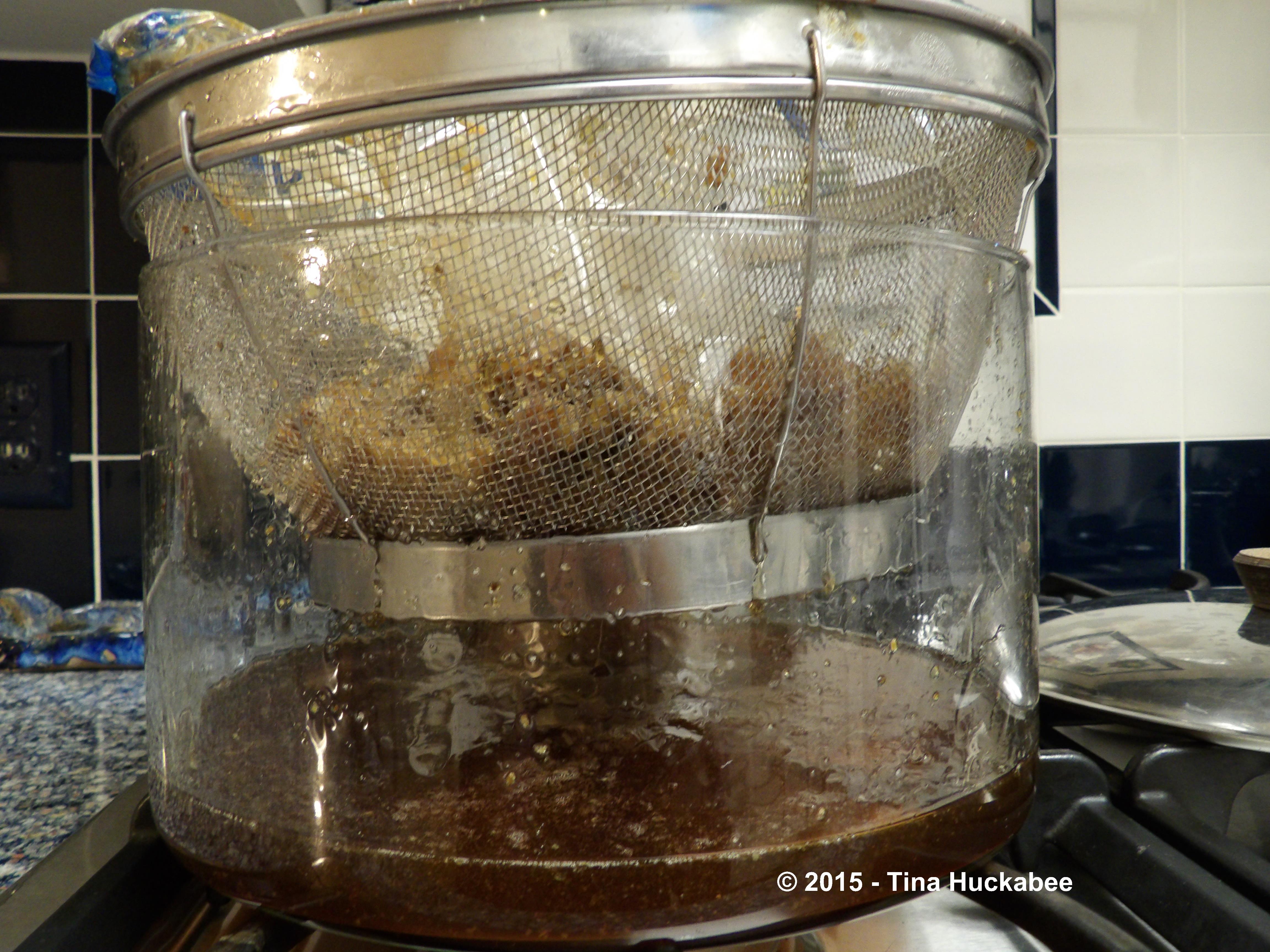
If we had Langstroth hives, the comb would be built in an actual frame that we could place in a spinner to extract the honey. Our Warre hives demand that the comb be cut out in its entirety in order to extract the honey.  The Warre hive is designed with top bars and the bees build their comb downward from the bar.  Once the bar is removed from the hive, the only option is to crush the comb to open up the cells and let the honey drain and drip. Which is what I did, on and off, all last week.

IMGP5419.new

In batches, as I found time, I broke off bits of comb, place those bits in a strainer then proceeded to crush the comb with a solid wooden spoon as my patience and wrist allowed, then let the released honey drip at its pace through the strainer into this large glass bowl.
IMGP5415.new

Sometimes I left it dripping overnight or set it up the dripping mechanics first thing in the morning while I was gone during the day.  Once I was weary of the crushing and there was a reasonable  amount of honey in the bowl, the more beekeeper-intensive and time-consuming part of the process ensued.  I’d warm the honey for a few minutes by setting the bowl in a large dutch oven with about two inches of heated water, then pour honey through two different tea strainers nestled in funnels, which emptied directly into former salsa, preserve, and jelly/jam jars.

IMGP5413.new

The first pouring or two typically went well and fairly quickly, then the strainers would clog up with honey detritus, like bits of wax which survived the first straining round.  I’d wash the tea strainers to clear the netting, situate the strainers back into the funnels, pour more honey through until I’d finished the batch of honey. A bag crushed completed, bottles filled with sweet amber gold, I’d dig into another bag, crush more comb, wait for the draining honey, and commence straining and dripping.

IMGP5414.new

And so it went for several long, sticky days.    It took most of the week in on again/off again honey work to finally achieve 18, 12-14 ounce jars of honey.

IMGP5450.new By the time this photo was taken, we’d already given some away and delved into a jar ourselves.  Yummmm.  Fabulous honey on homemade buttered biscuits, on warm whole wheat toast, and occasionally on a spoon, directly into the mouth….

Yes, I need to be walking and biking more.

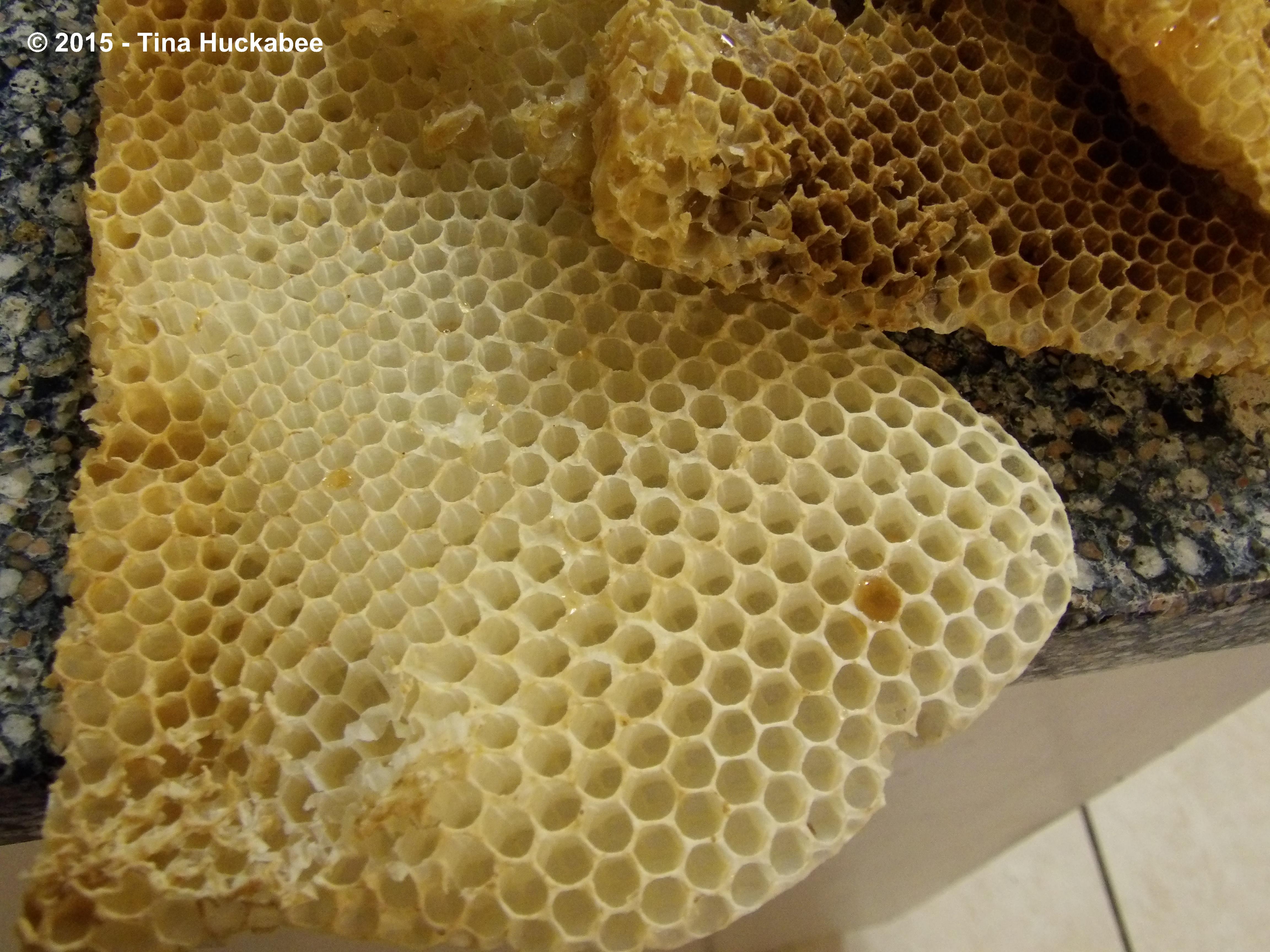
Once most of the honey was extracted and bottled,  with plans for eating and gifting, what to do with the honeycomb?  I’m bothered a bit by the destruction of the comb because it’s so beautiful and so perfect.
IMGP5412.new

It feels wrong to destroy such beauty, but destroy I must if the honey is used by anyone but the bees.

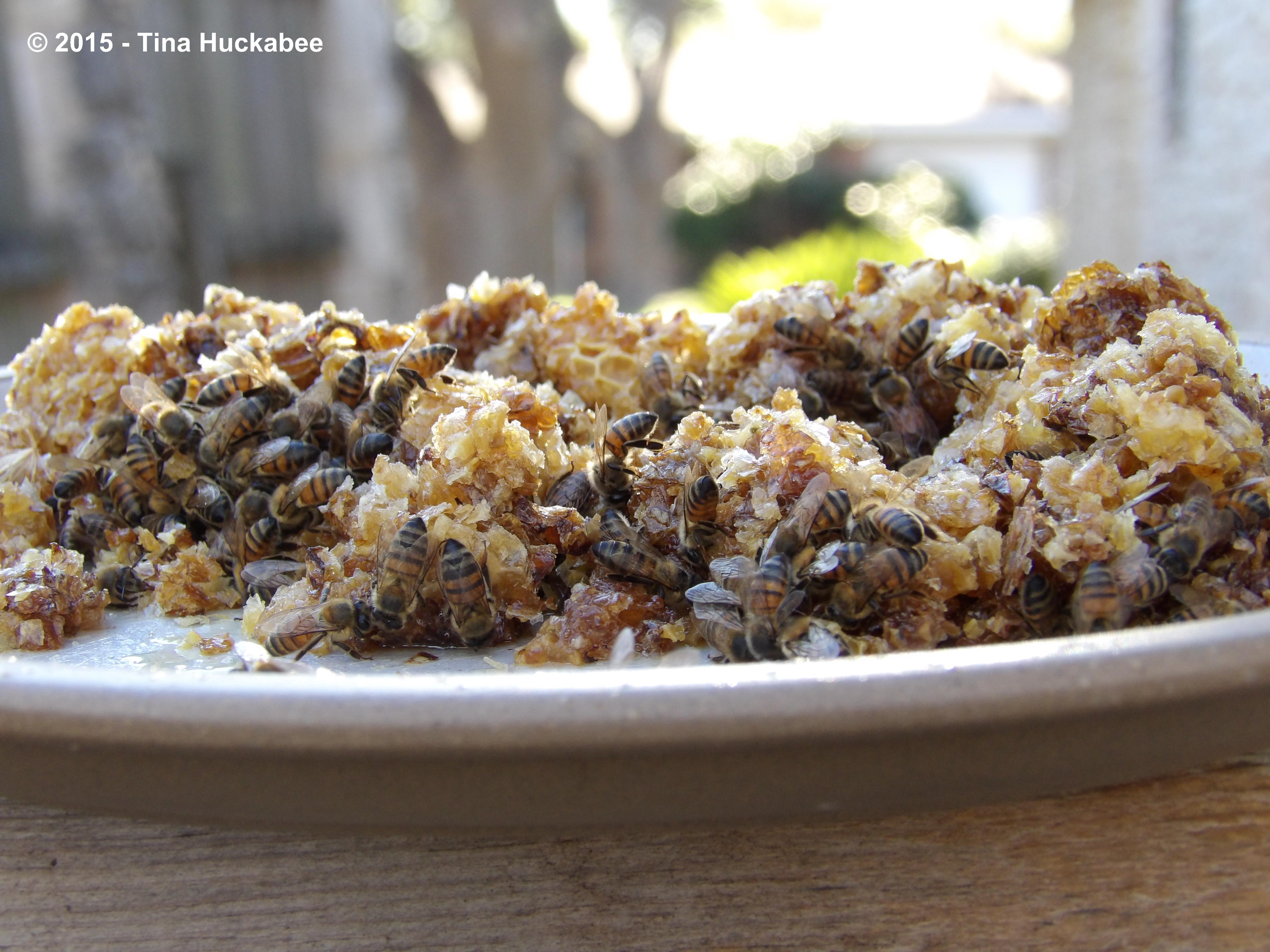
It’s very early spring here with not too much in bloom just yet.  I’d started feeding my bees about a week before we checked the hives because I didn’t realize how much honey was left and I will continue feeding for a week or two more, before spring busts out all over, in full floriferous fashion–to assure the hive has strong start to their brood and growing season.    I decided rather than simply throwing the crushed and abused honeycomb in the compost (which isn’t a horrible idea) I’d set it out for the bees to eat.

And eat they did and still are on balmy days!  Spooned on plates, the crushed comb with plenty of honey still trapped, allowed the bees to engage in binge eating frenzy,
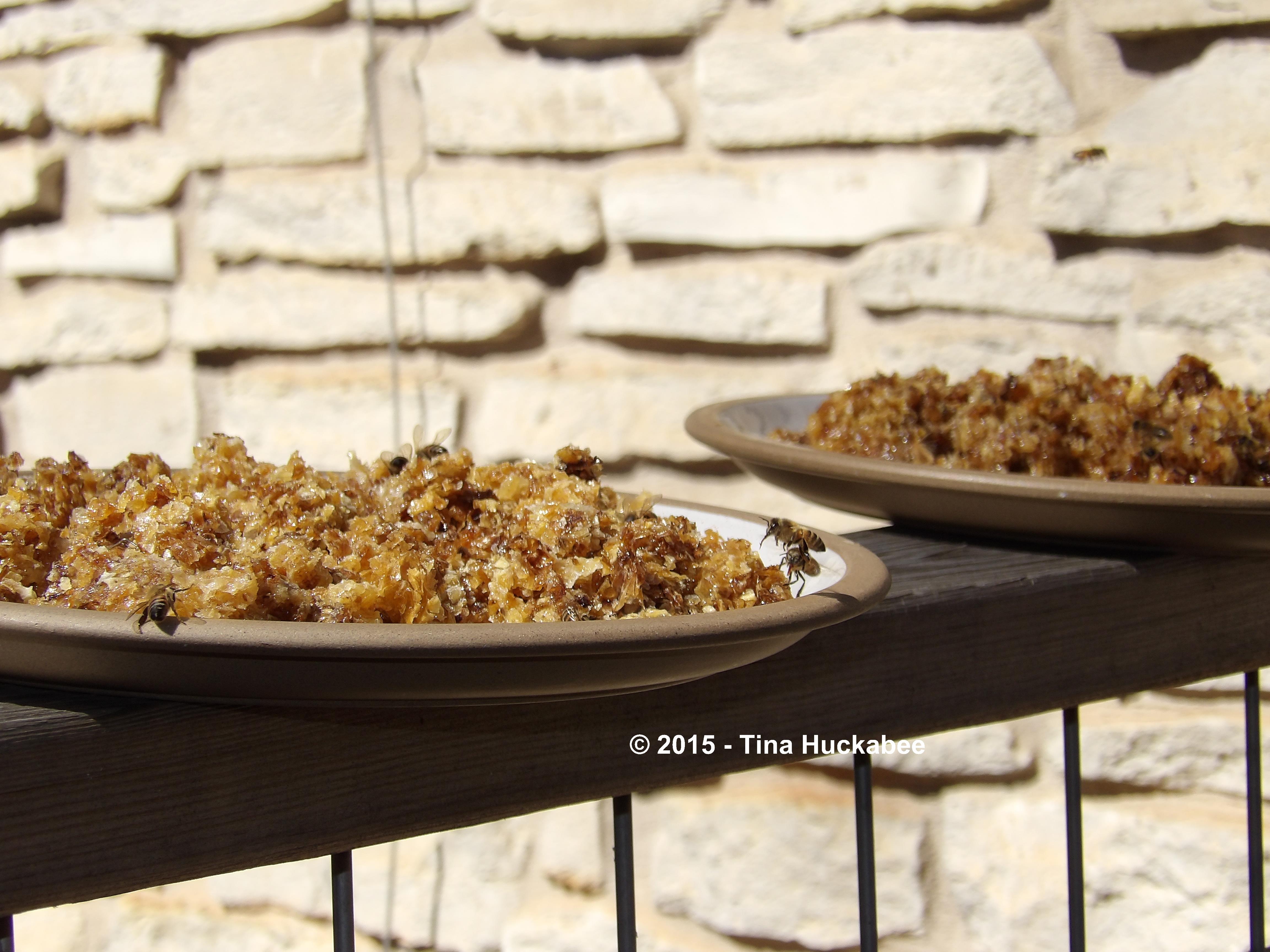
IMGP5434.new

…filling their abdomens with sweet , gooey goodness and returning to their hives with to do what honeybees do.IMGP5439.new

IMGP5440.new

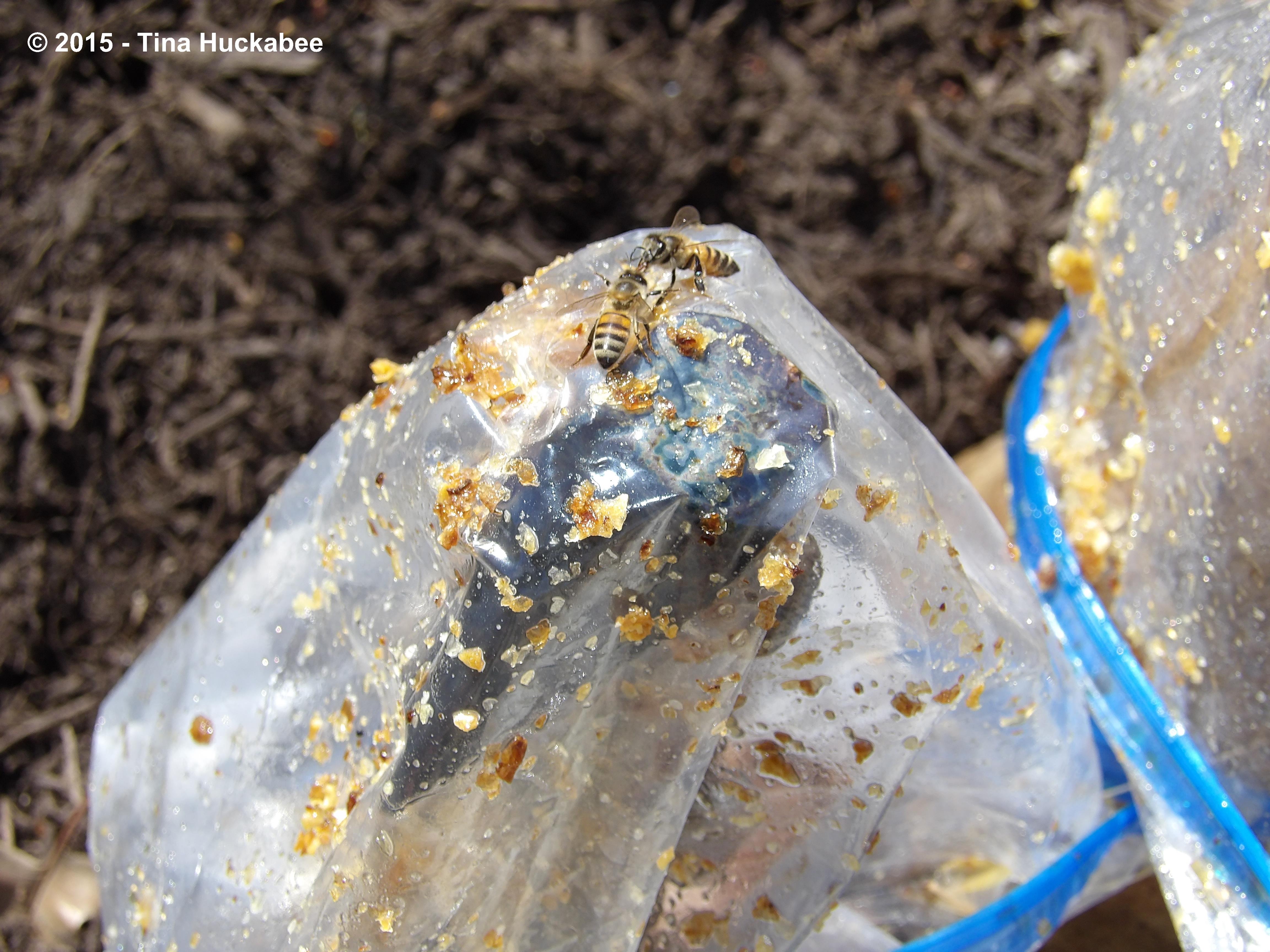
Look at ’em go!  Happy, busy honey-filled bees. I placed the bags we’d used in the gardens over rebar,
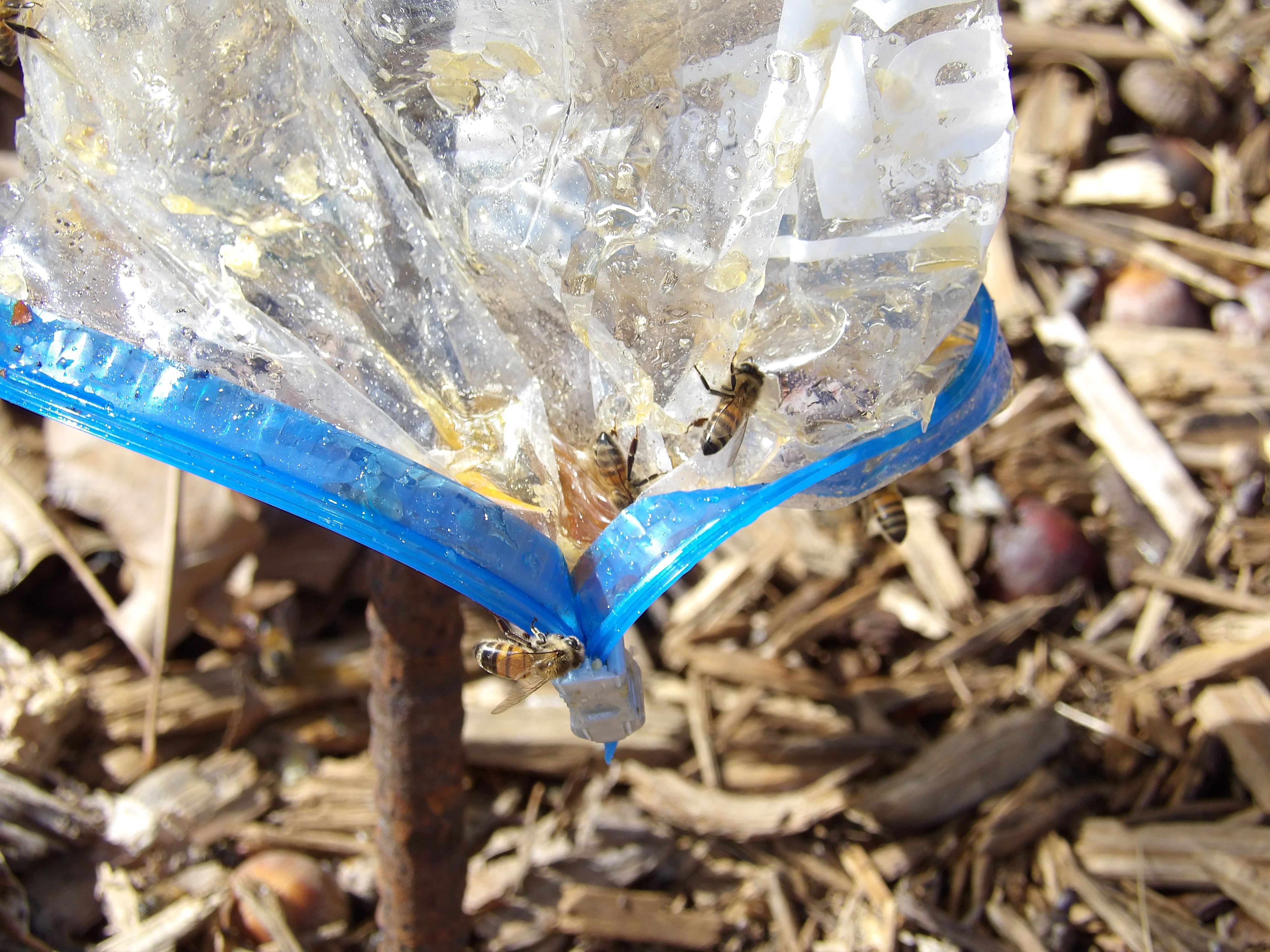
RICOH IMAGING

..and  over ceramic yard art.

IMGP5424.new IMGP5425.new

IMGP5427.new

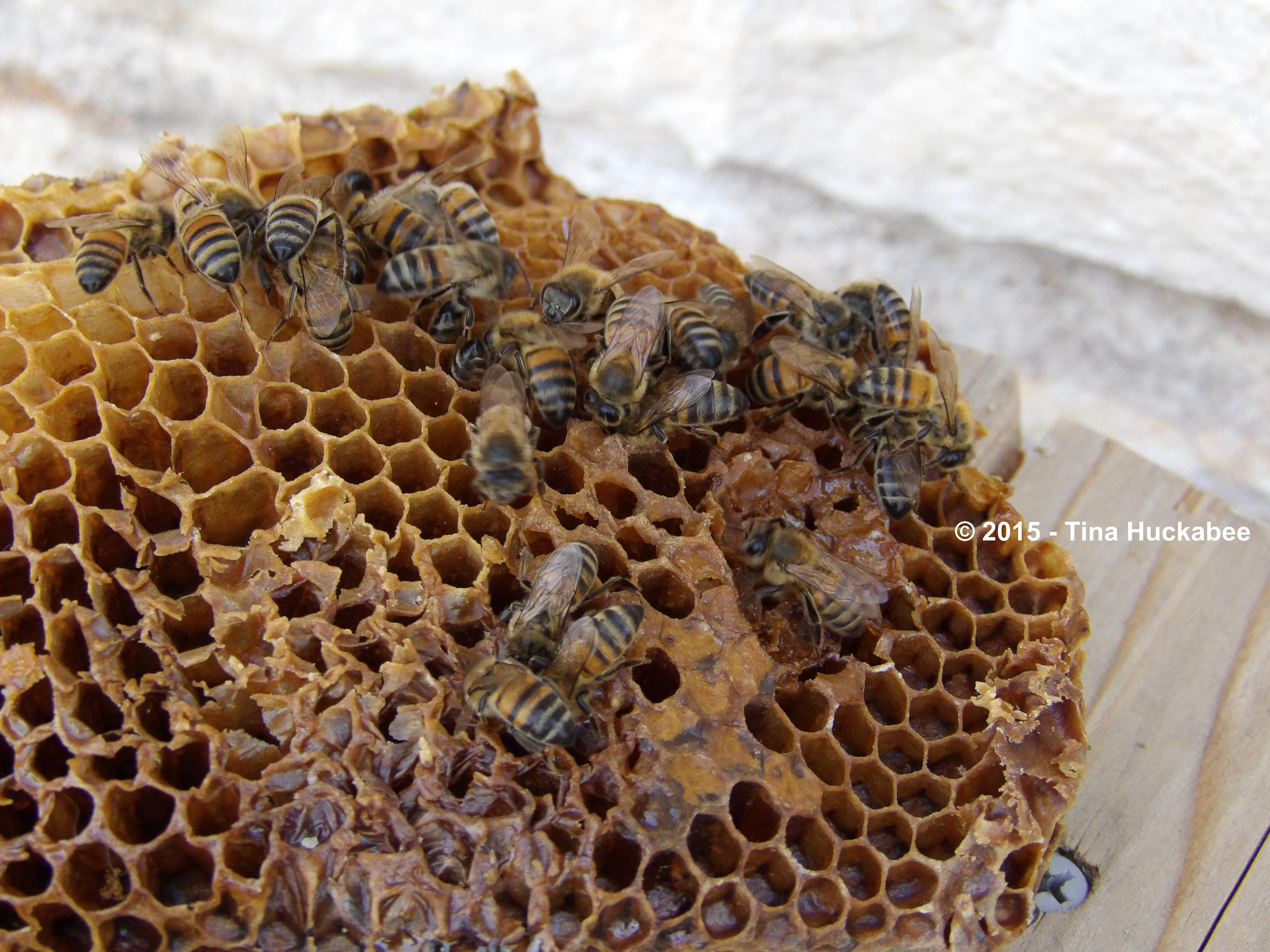
I also deposited the bits of broken comb on top of the hives.

IMGP5444.new IMGP5445.new

Except for some very cold days this week in which they stayed warm and cozy in their hives, the bees have worked that honeycomb for honey and are still doing so, though it’s turned cold again. The only thing a beekeeper should feed her bees is white sugar/water mixture and their own honey.  For now they’re getting their own beautiful honey to enjoy and take to their hive for strength, endurance and because they’re honeybees!  The bees can’t reuse the wax, though they are excellent recyclers in so many other ways.  I’ll leave the comb out, crushed and otherwise, until the bees lose interest in teasing out remaining honey, or eat what honey is there. Once the comb is depleted of its honey, it’ll go to the compost.  Or maybe I’ll put out a call the the Austin area beekeeper bunch and give it away to someone wanting to make candles–or, the like.  No more kitchen comb work for me, at least until the next harvest.

And with all those jars of honey tucked away in my kitchen cabinet, I suddenly have all these friends….

IMGP5442.new

Bee Mama Missive: Honey Flow, Honey!

My honeybees have been busy bees this autumn. They’re all over the fall blooming perennials like Goldeneye, Viguiera dentata,

IMGP1530.new

IMGP1538.new

...and Frostweed, Verbesina virginica.

IMGP0972.new

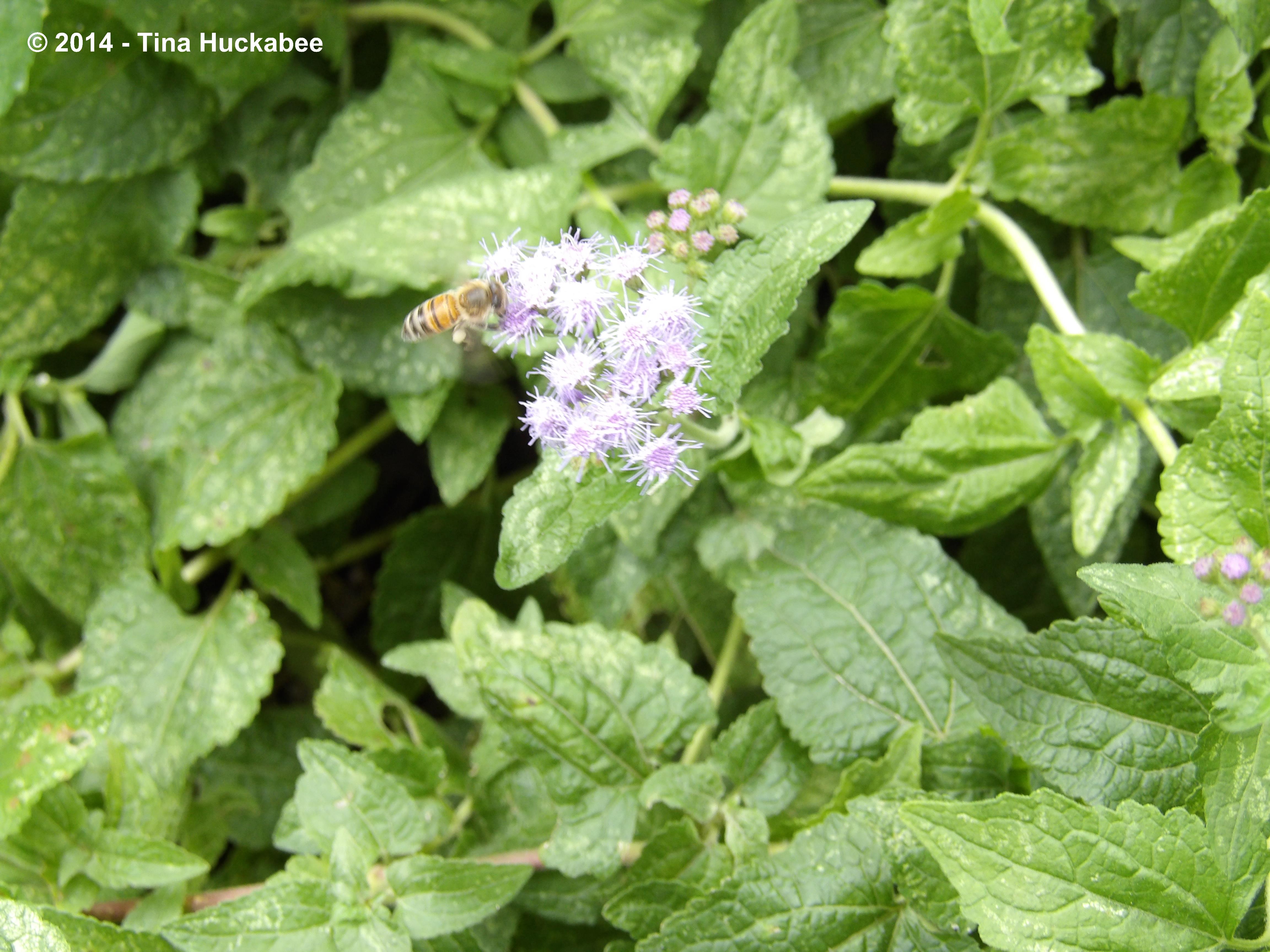
And let’s not forget how much the honeybees (and everyone else, it seems) work the Blue Mistflower, Conoclinium coelestinum.

IMGP1615.new

As well, honeybees adore the blooms of Coral Vine, Antigonon leptopus.

IMGP1413.new

When I walk into the back garden, day or night,  the fragrance of honey drifts from my hives.  Mmmm.  Breathe deep. That honey-strong fragrance indicates that there is a honey flow happening and it’s been going on for a while.  Honey flow occurs when there are blooms galore and plenty of nectar to gather and honey is busily bee-ing made.

Recently, we checked both hives and Scar’s three boxes are full of comb and honey.P1060815.new

IMGP2325.new

IMGP2327.new

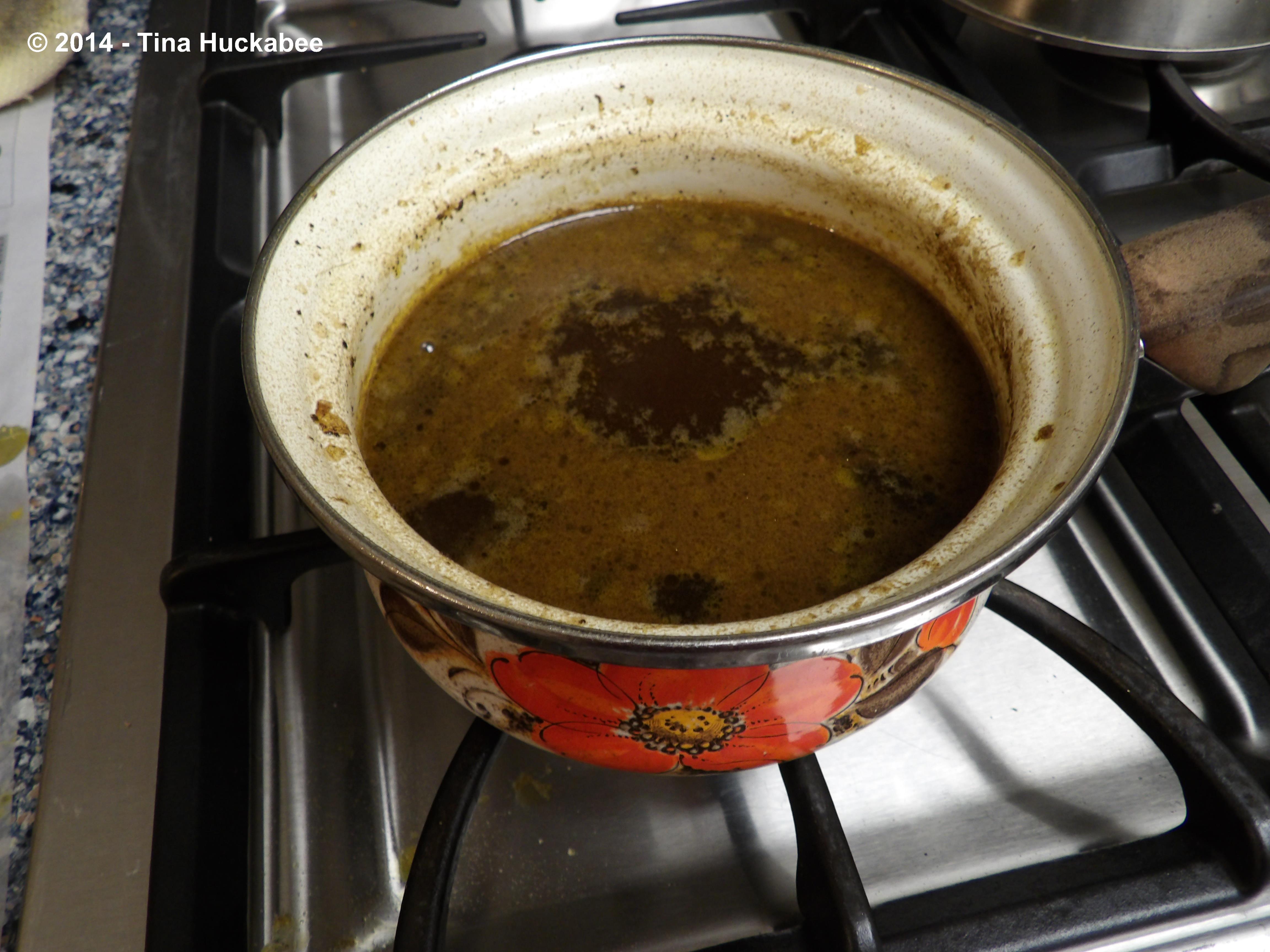
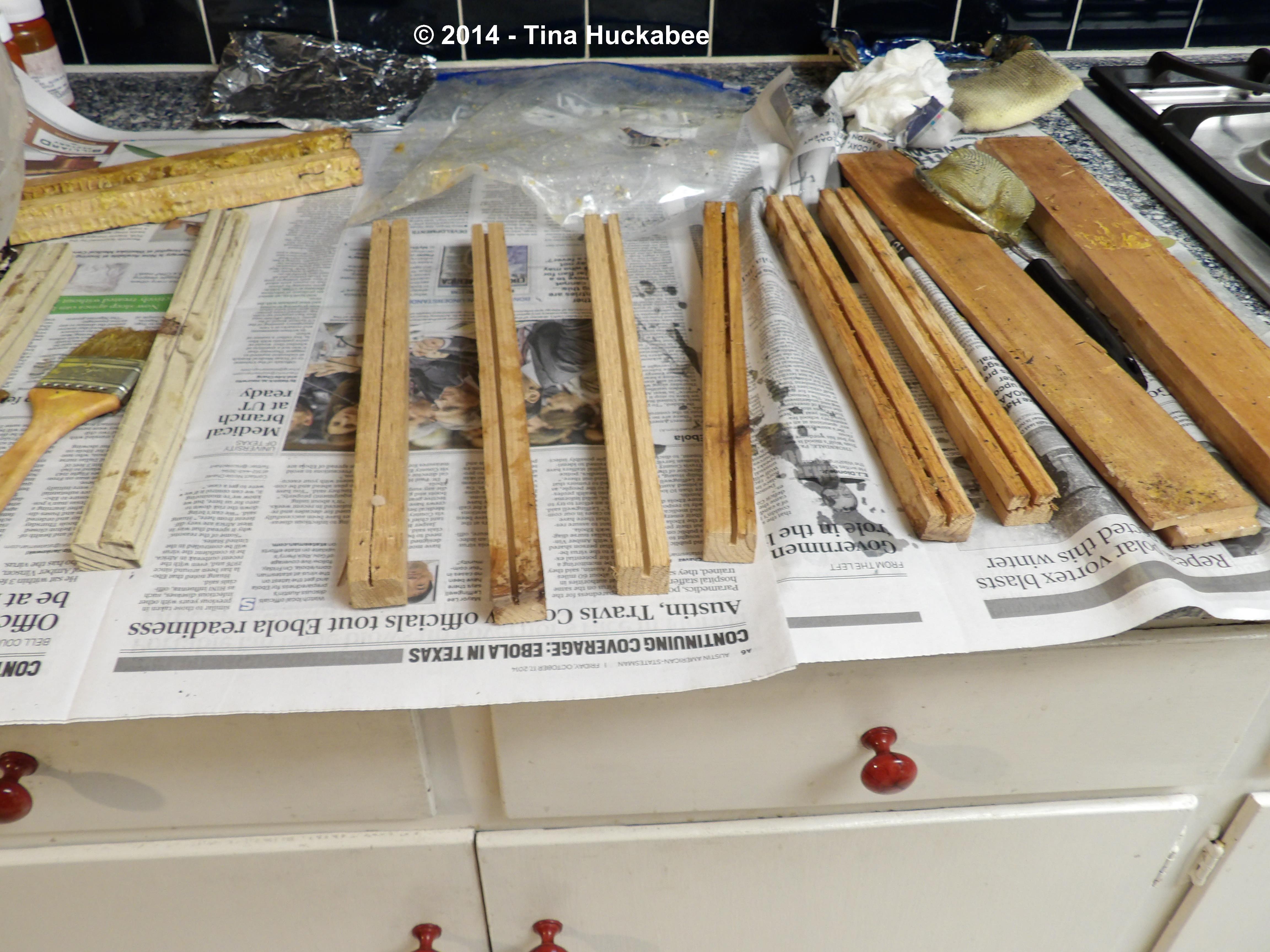
Mufasa has been the weaker of the two hives, but its two boxes were also full of comb and honey and ready for a third box.  So we prepared another set of top bars for Mufasa’s third box. We melted down some frozen comb from the July honey extraction,

IMGP2025.new IMGP2024.new

…to add to the bars. This little track of wax will help the girls start their comb-building.

IMGP2027.new

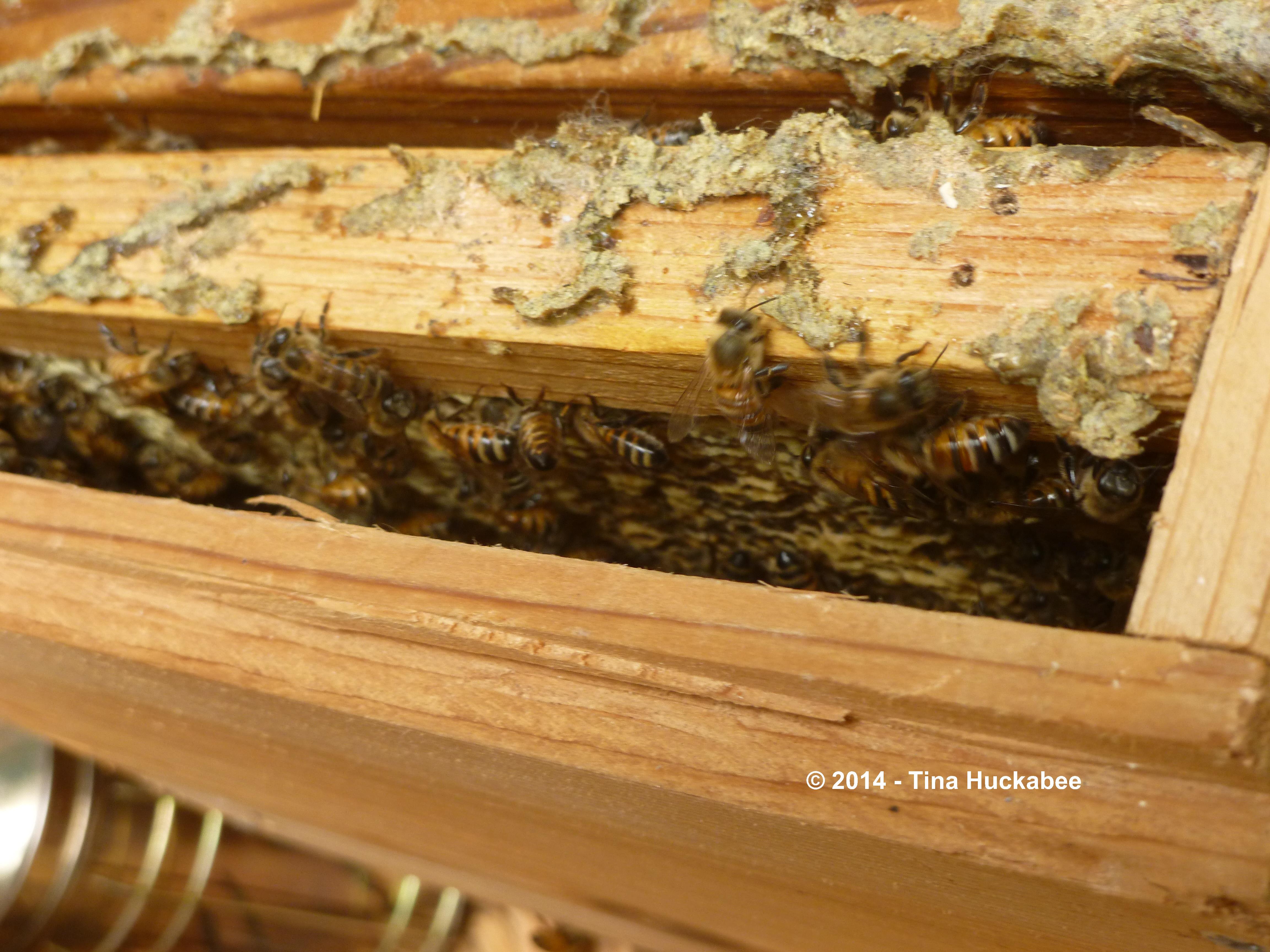
Before adding the third box to Mufasa, we sneaked a peek to assure that all is well. The comb in Mufasa’s second box is heavy with honey and larvae.

IMGP2334_cropped_2903x3322..new

However, If you look closely,IMGP2337.new

…you can see how the comb is undulated–sort of wavy-gravy kinda comb,IMGP2339.new

…not neat, tidy and vertical comb aligned with the bars as it’s supposed to be.

This, dear readers, is an example of poor beekeeping management.  In early September, while checking Mufasa, one of the combs broke off of the bar.  Unfortunately with the Warre type hives that we built, this easily happens.    I made the beekeeper’s executive decision to place the broken comb back into the box, as best I could, rather than removing the comb and the honey.  If it was earlier in the growing season, I would have removed the comb and extracted honey and the bees would simply rebuild–after all, that’s what they do. But the latest broken comb incident occurred late in our growing season and I didn’t want to take honey from the bees.  So, I dropped the comb in, knowing that they wouldn’t repair it as perfectly as it was originally built. Given that our beekeeping  goals are not so much about the production of honey for us, but for the bees themselves, it’s a reasonable decision to make.

Assuming our hives survive winter, my best amateur guess is that there will be honey left over and we’ll extract it then, along with the wonky comb. With our Warre hives, when we take honey, we have to take comb too, as there is no straightforward way to extract the honey without crushing the comb.  It’s simply how the design works. Next spring, the hive will have the whole growing season to rebuild and restock their honey stores.

We added the third floor to Mufasa a couple of weeks ago and when recently checked, the bees completed two bars with comb and honey.   That’s fine and expected; they’ll build more comb over time.

RICOH IMAGING

I’ve continued observing a few Small Hive beetles in both hives, which you can read about here, but not many and not every time I check.   When I opened Mufasa this past week, I saw and killed what looked like two Wax Moth larvae.  Well, I knew they would invade eventually.  I opened both hives and didn’t see any webbing that is indicative of a mass infestation of the Wax Comb moth. Whoop!  But I am popping Mufasa’s top off most days to check–just in case.  In one of the articles I read about the Wax Comb moth, the author suggested that if the beekeeper kills the moth larvae, then drops the dead larvae into the hive, it teaches the bees to kill the larvae as invaders.  I have my doubts about that particular management practice, but that’s what I did–not because I’d read to do that, but because I was grossed out and offended to see the two larvae crawling along Mufasa’s hive.

Bee Mama is protective of her little bees.

We’ll  thoroughly check both hives at least one more time before true winter sets in.   Both hives have plenty of honey stores (fingers crossed) for the winter and we’ll see how they fare.

The bees continue their work.  Foraging,IMGP1082.new

….pollinating,IMGP1620.new

…sipping at their local watering hole,IMGP2443.new

….and being bees.

IMGP1535_cropped_3562x3138..new

Bee Mama Missive: Adding To The House!

As a family grows, sometimes the house needs additional space. Though it seems like I’ve tried my darndest to kill my hives Scar and Mufasa, they’re buzzing along just fine, thank you very much.

Recently I’ve felt like Bee Daddy and I are the Laurel and Hardy of beekeeping–just one blunder upon another.  After our bee drama of rolling (aka: killing) our queens, then not recognizing that we needed new queens, then finally realizing that we needed to re-queen and working weeks to see that process through, both Scar and Mufasa are re-queened and thriving.

I think.

Scar is the more advanced hive–he didn’t go long without a queen and his population didn’t decline much, if at all.  In Scar’s top box, each bar has fully drawn comb,

P1060789.new

…meaning that the bees have made full comb and that comb has capped and uncapped honey.  It’s remarkable how heavy all that sweet honey is.

P1060787.new

The gals will need the honey stores for winter, so we will not harvest it.  The last time we checked the bottom box, there was also fully drawn comb, but with capped and uncapped brood in cozy little incubators for the next generation of worker bees.  Worker bees change careers throughout their lives, driven primarily by the needs of the hives and their pheromones.   But workers don’t live long, so the queen lays eggs constantly for on-going repopulation of the hive.

Scar appears active and healthy.  However, the last two times I’ve opened both hives, I’ve seen several  Small Hive BeetlesAethina tumida–the nasty nemesis of the honeybee.  Oh, good grief, what now?!!

The Small Hive Beetle is an invasive species that damages comb as well as honey and pollen stores.  There are chemical solutions for the hive beetle, but those chemicals can also hurt honeybees.  Duh.  There are other less toxic products as well, but I found the beetles at the low point of my angst about my hives–Queens or no queens? Oh-no-I’m-killing-my-hives! I wasn’t sure it was worth doing anything for the hives. Beetles attack hives which are vulnerable–like those tended by rookie beekeepers.

Ahem.

I didn’t feel like I had much to lose, so I commenced a squishing campaign to eradicate them whenever I saw the little creeps.  Well, actually, squishing those few visible beetles isn’t going to annihilate an infestation, or even make much of a dent, but it makes this beekeeper feel like she’s taking care of her bees. For whatever it’s worth (and the beetles could still rear their rather unattractive little selves), I haven’t seen any of those devils since my hives were successfully re-queened.  I’m also feeding the bees, which will help them maintain strength through their endeavors, our mistakes and the dearth of blooms that is August in Austin.  The only thing beekeepers should feed bees is the bees own honey (if there’s a surplus) or a 1:1 or 1:2 ratio of sugar-to-water.

Fingers crossed that we can avoid a Small Hive Beetle catastrophe.

In opening my hives in these last few weeks and acknowledging that Scar is progressing well, I thought: if I don’t totally screw them over with my incompetence, it might be time to add another box to Scar.  Mufasa is also doing well, but doesn’t have fully drawn comb, nor full honey in the top box.  Mufasa has some work ahead before needing a third floor addition.

But Scar?  Verily bursting out of his seams!  Or boxes.

P1060791.new

So, I added some wax to eight unused bars to give the girls a place to start,

P1060783.new

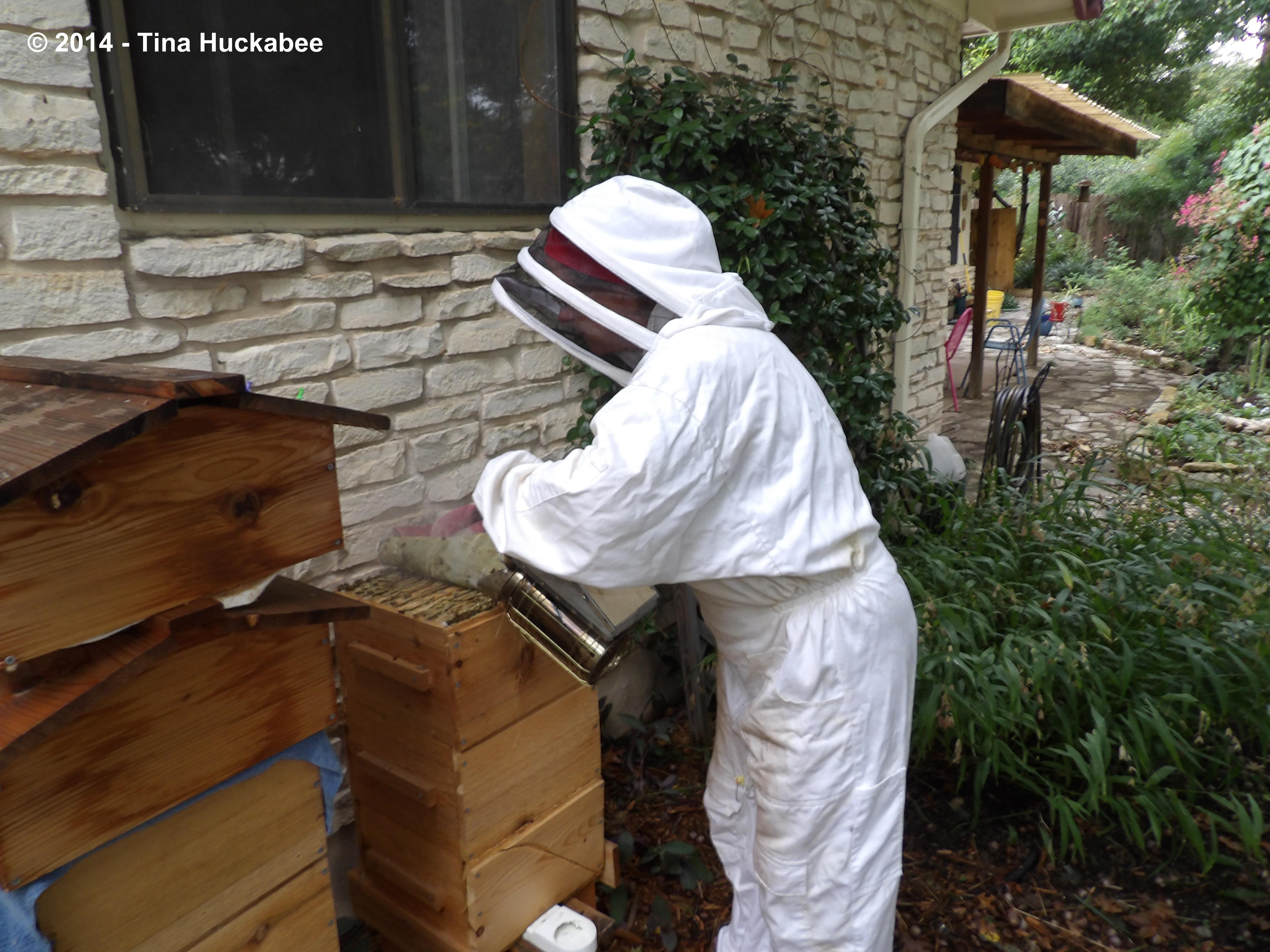
…and we opened up Scar, ready for the opportunity to expand the digs.   Scar’s bees are busy, active and yeah, they still sting–even when smoked.  She got me right on the thumb. I put gloves on after that.  Some people never learn.

So much wax, comb, honey and bee activity!

P1060793.new

P1060803.new

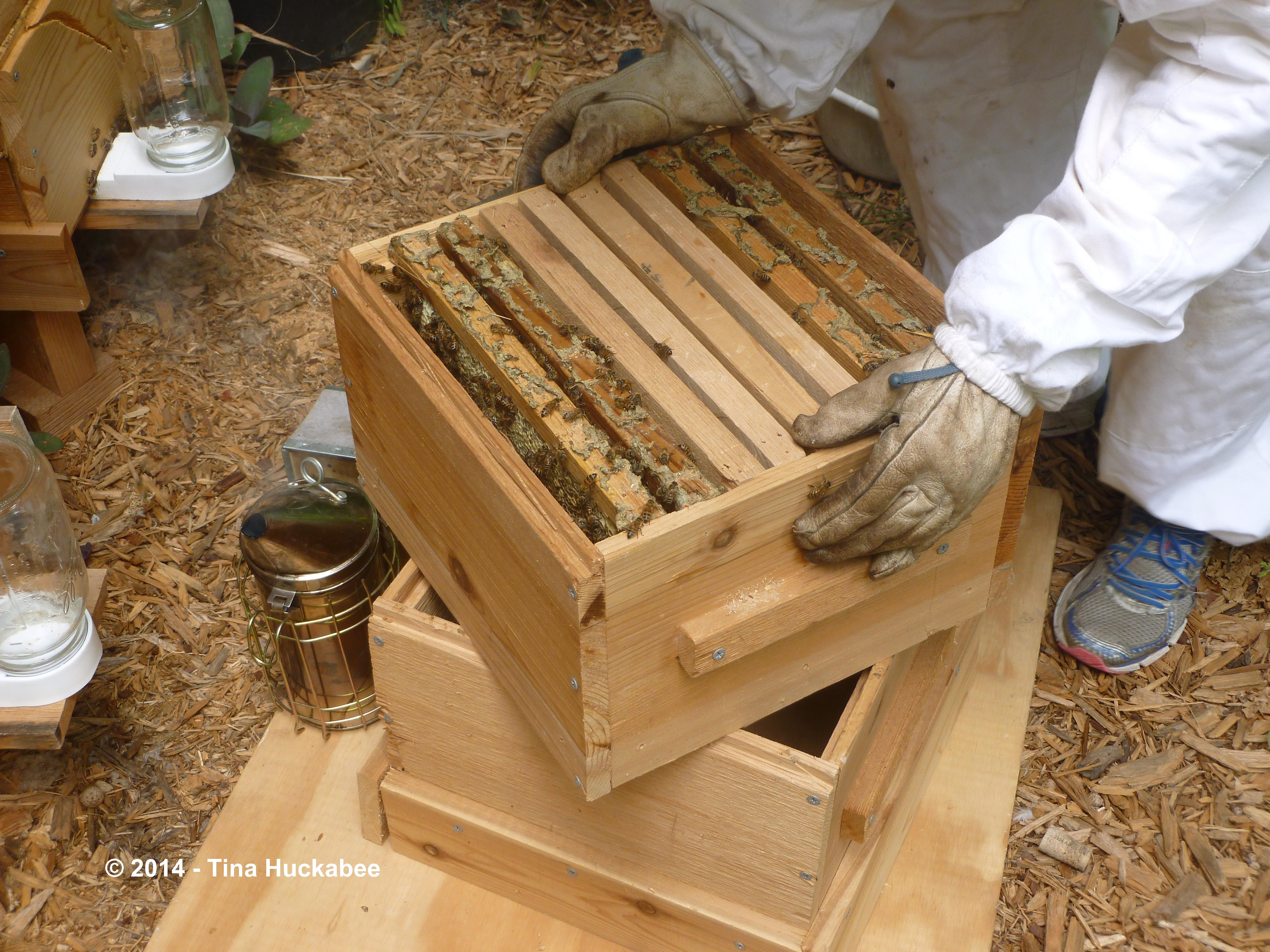
I pulled out four bars with full comb and placed  them into the third (new) box,

P1060790.new

P1060798.new

…and placed four new (empty) bars to the second (now, middle) box.

P1060810.new

I evenly spaced the bars in the hives.  The bars must be three-eighths of an inch from one another for the bees to safely crawl around in the hive. This is known as bee space.  I’m so OCD that when checking my hives, if I have to move the bars and I usually do for one reason or another, I measure each space.  Thoroughly, I would say.  Obsessively, others would say.

P1060800.newa

My family loves me in spite of that particular personality quirk.  Trait.

Lastly, I assured that the hives were set evenly on the ground–no tilt allowed or the bees might build cross-comb and that could become a whole thing, which you can read about here.

P1060809.new

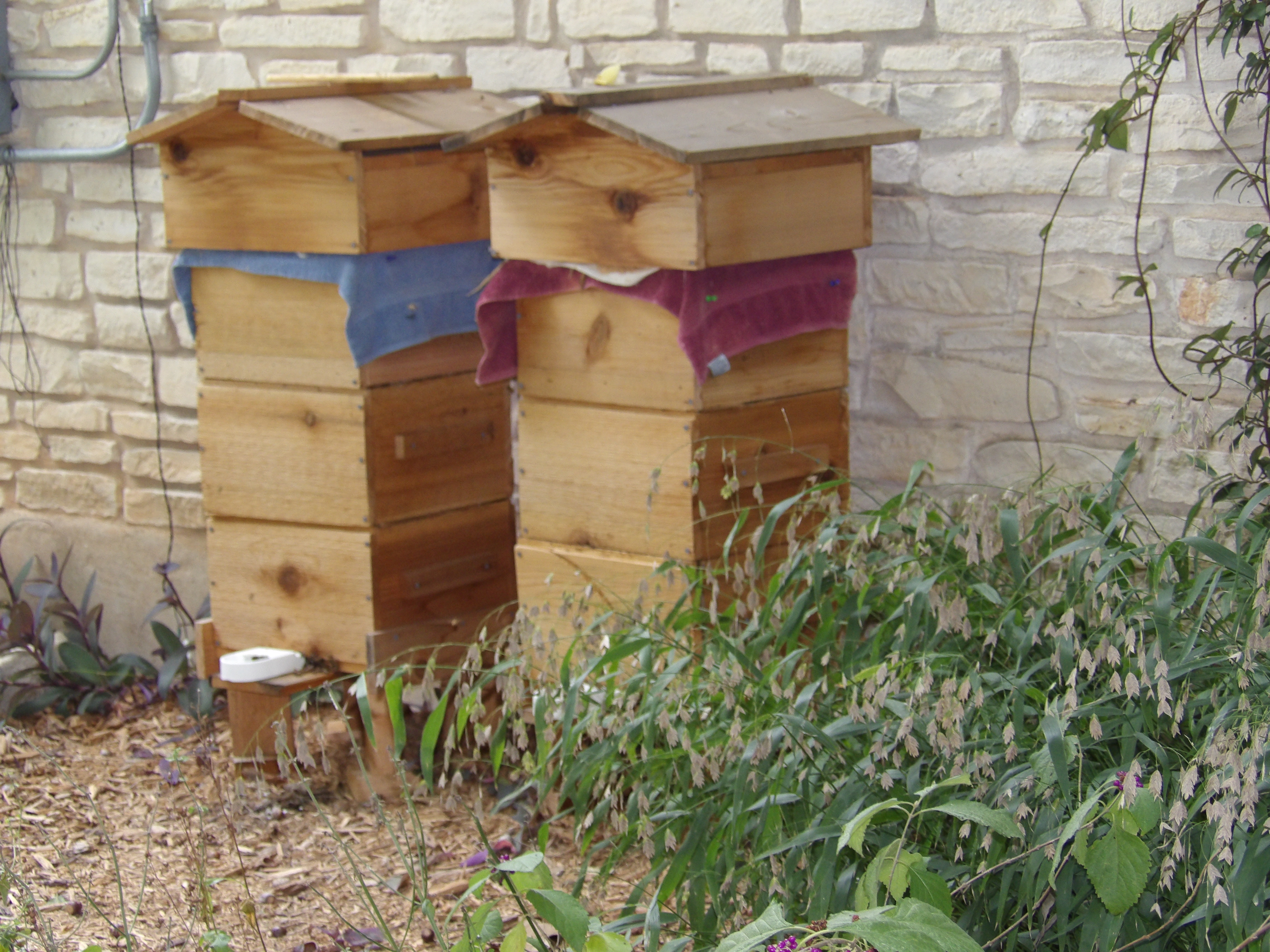
I popped on the tops, while Bee Daddy cleaned up and put out the smoker.  I stood back and smiled at my hives.

P1060813.new

Scar and Mufasa.

Nice little hives with nice little bees who make delicious honey and pollinate…everything,

P1030166_cropped_2848x3387..new

…and their crazy beekeeper lady.

P1060786.new