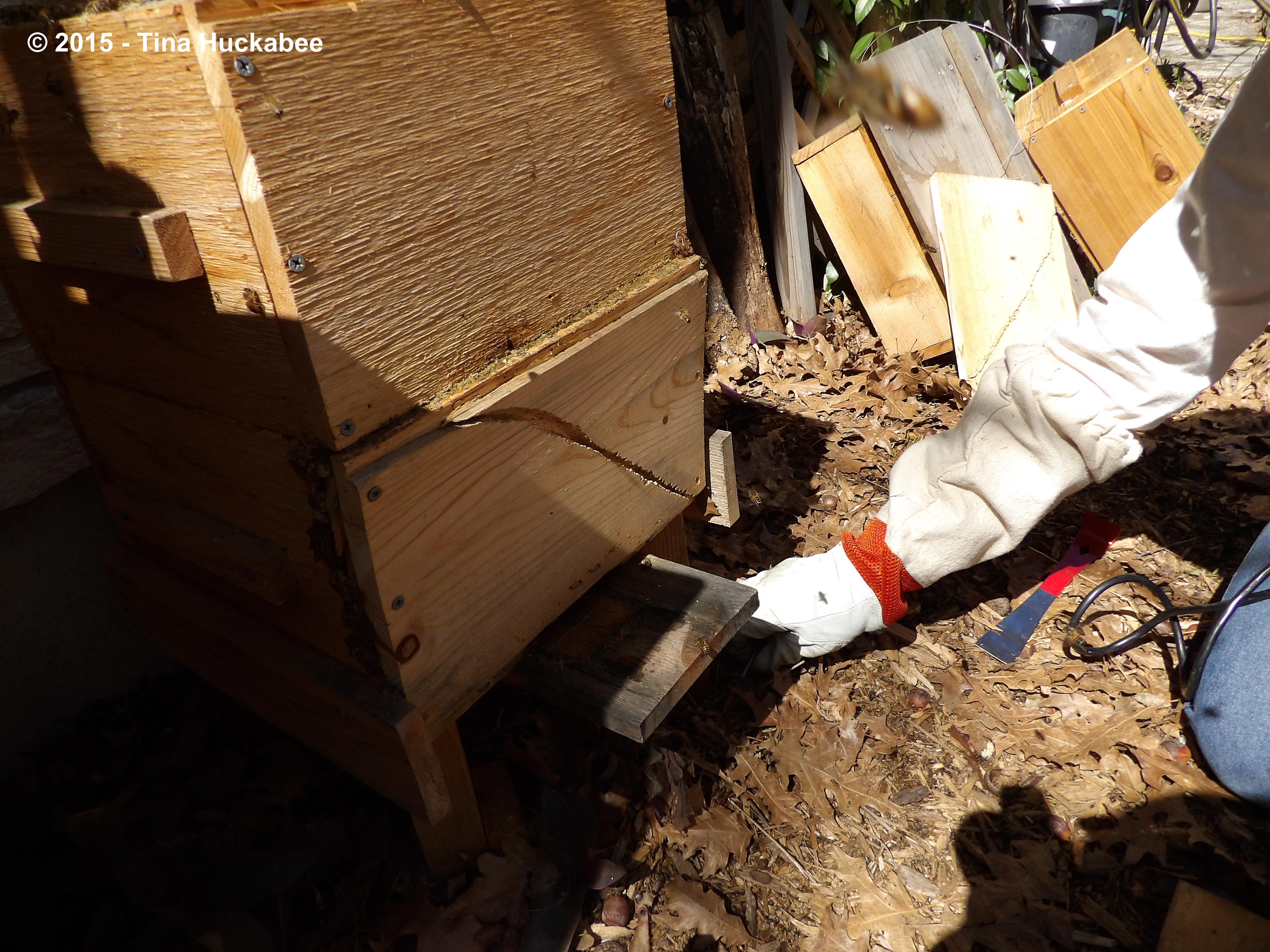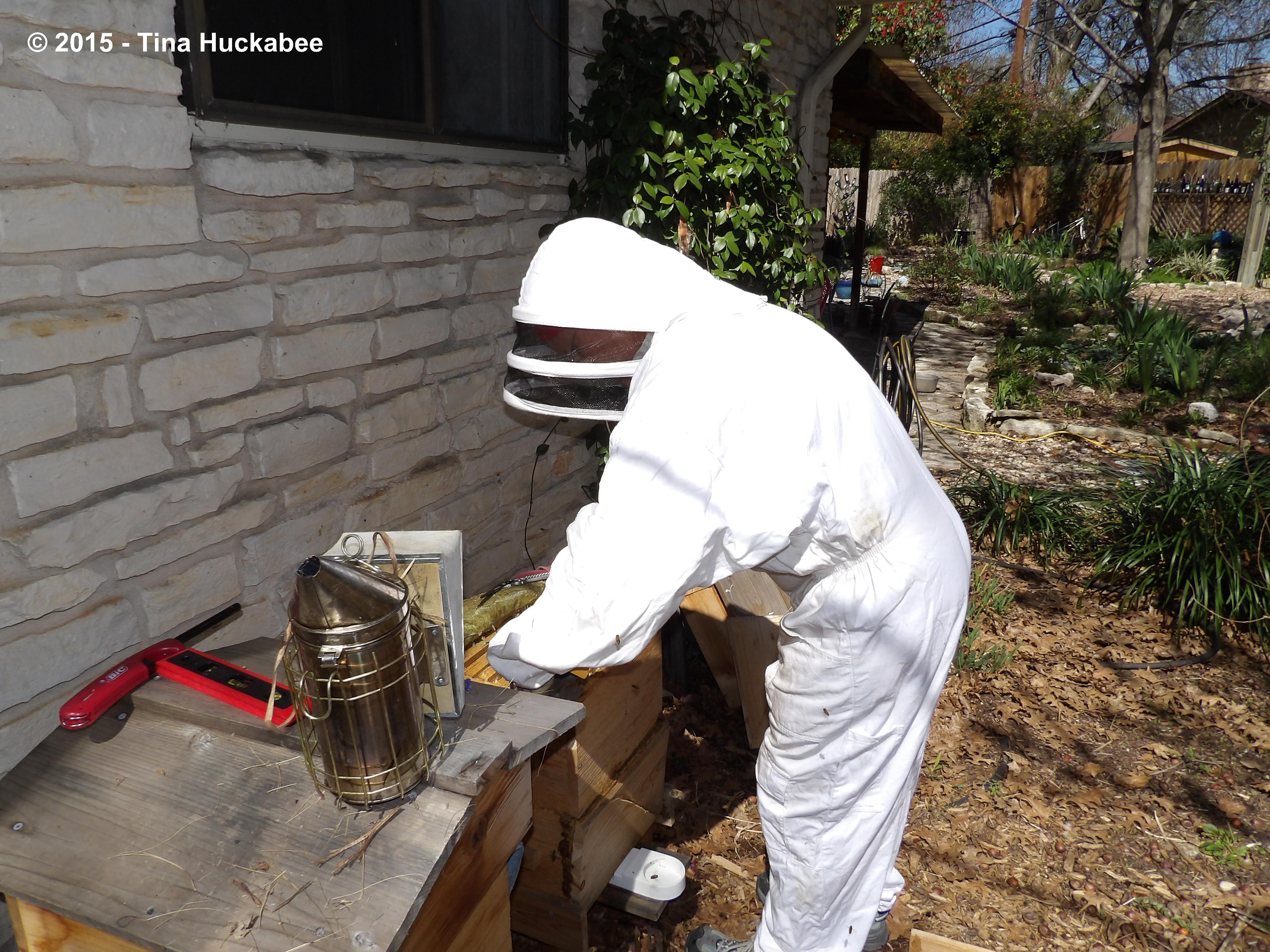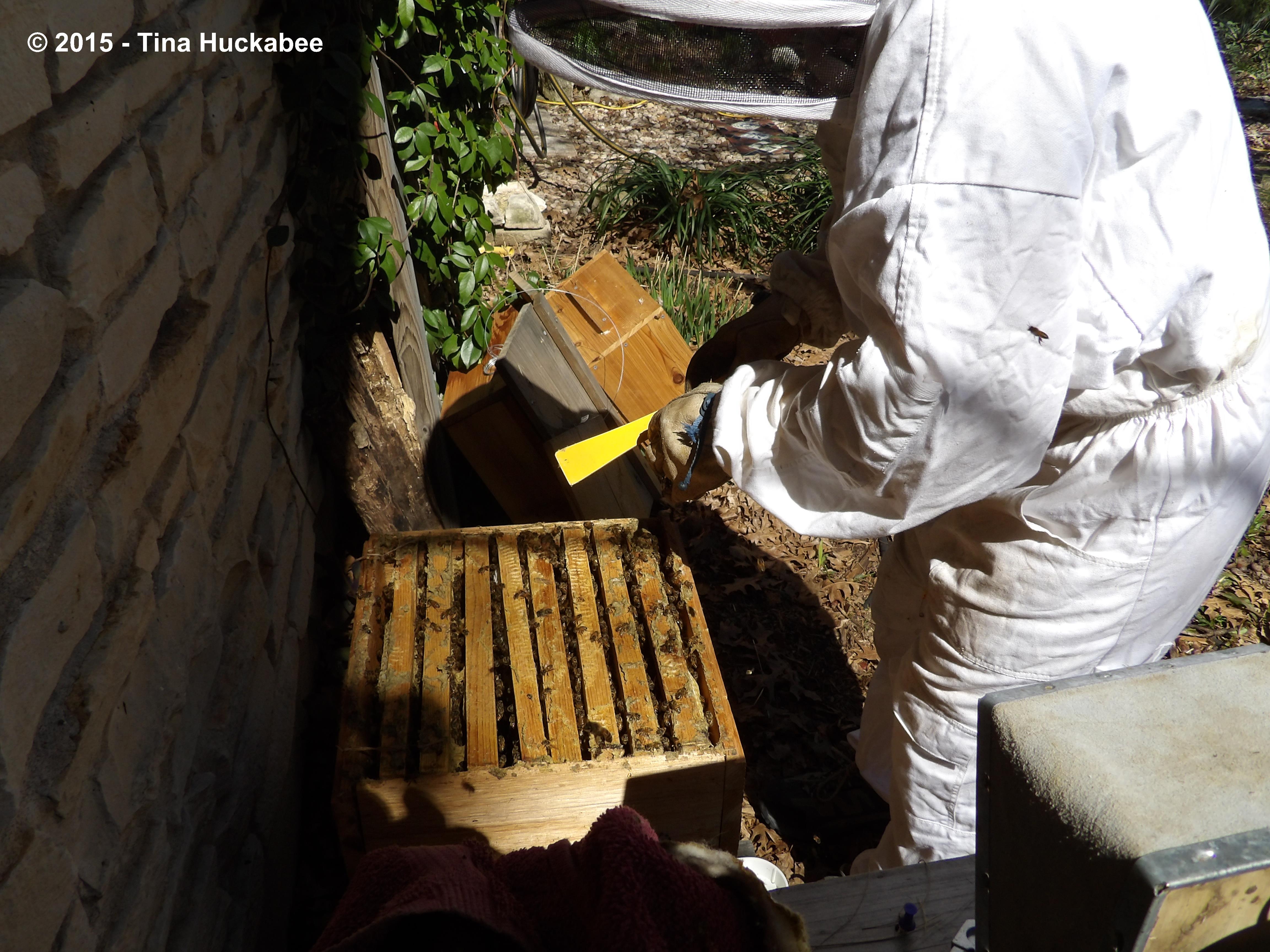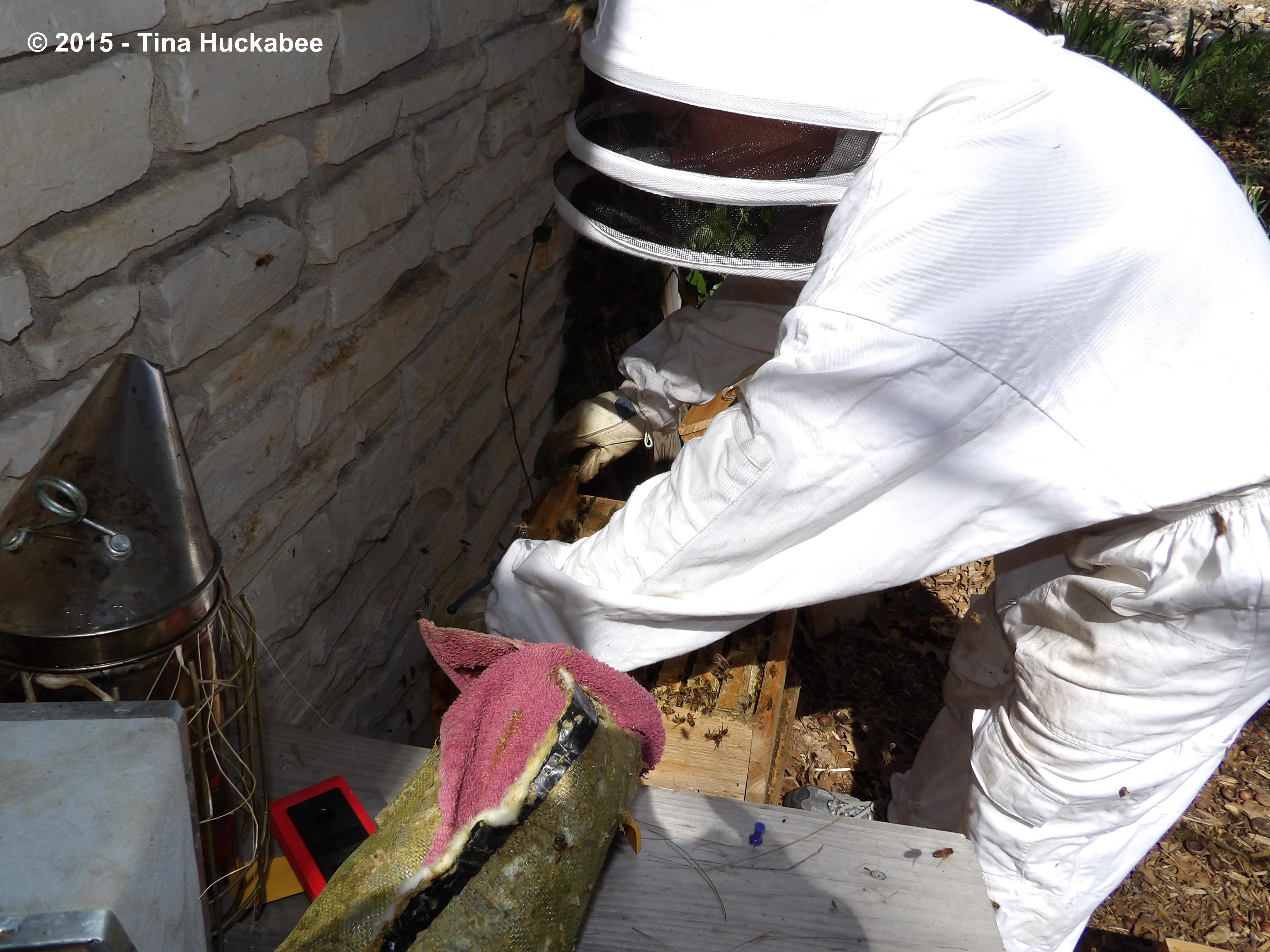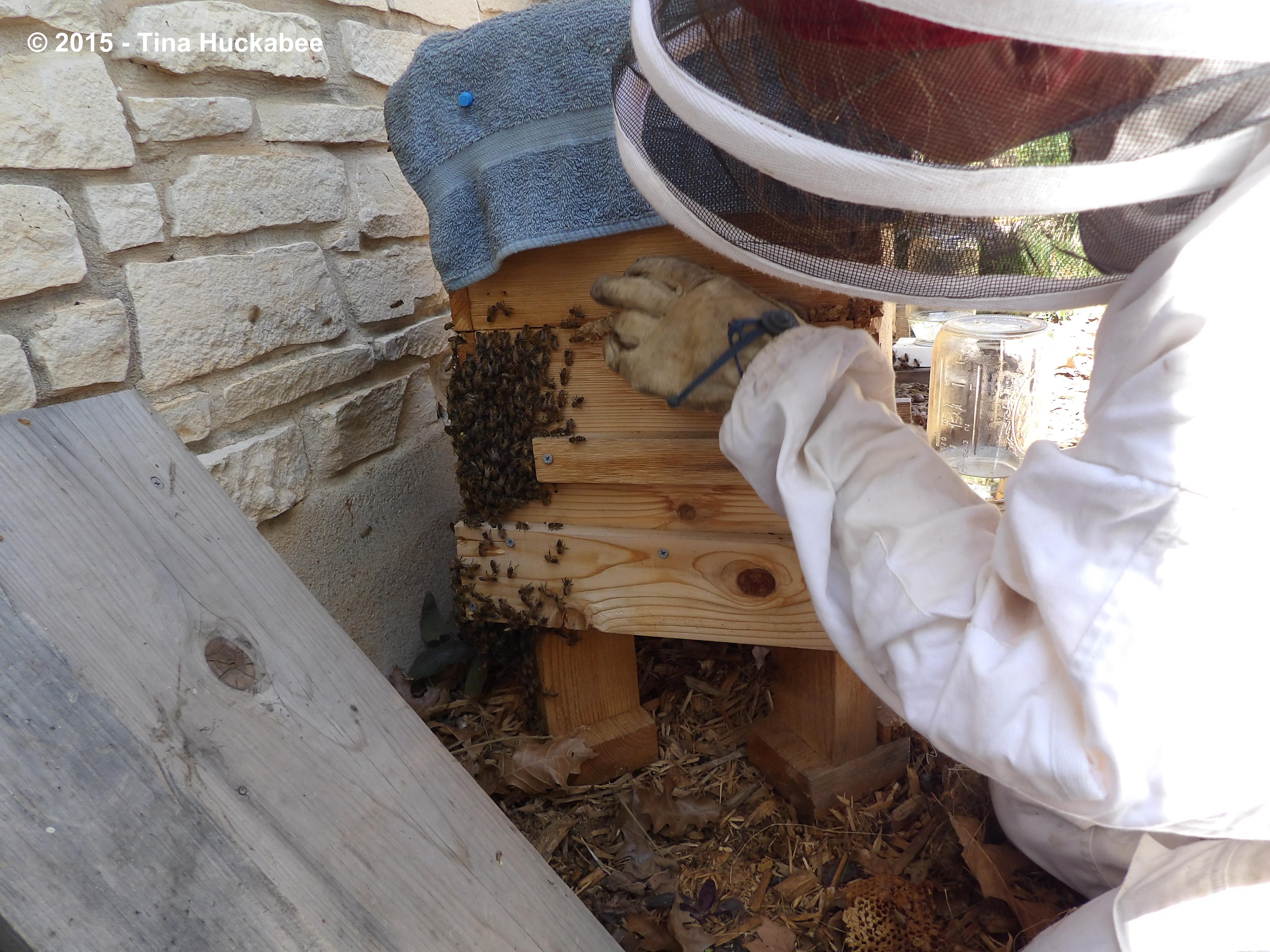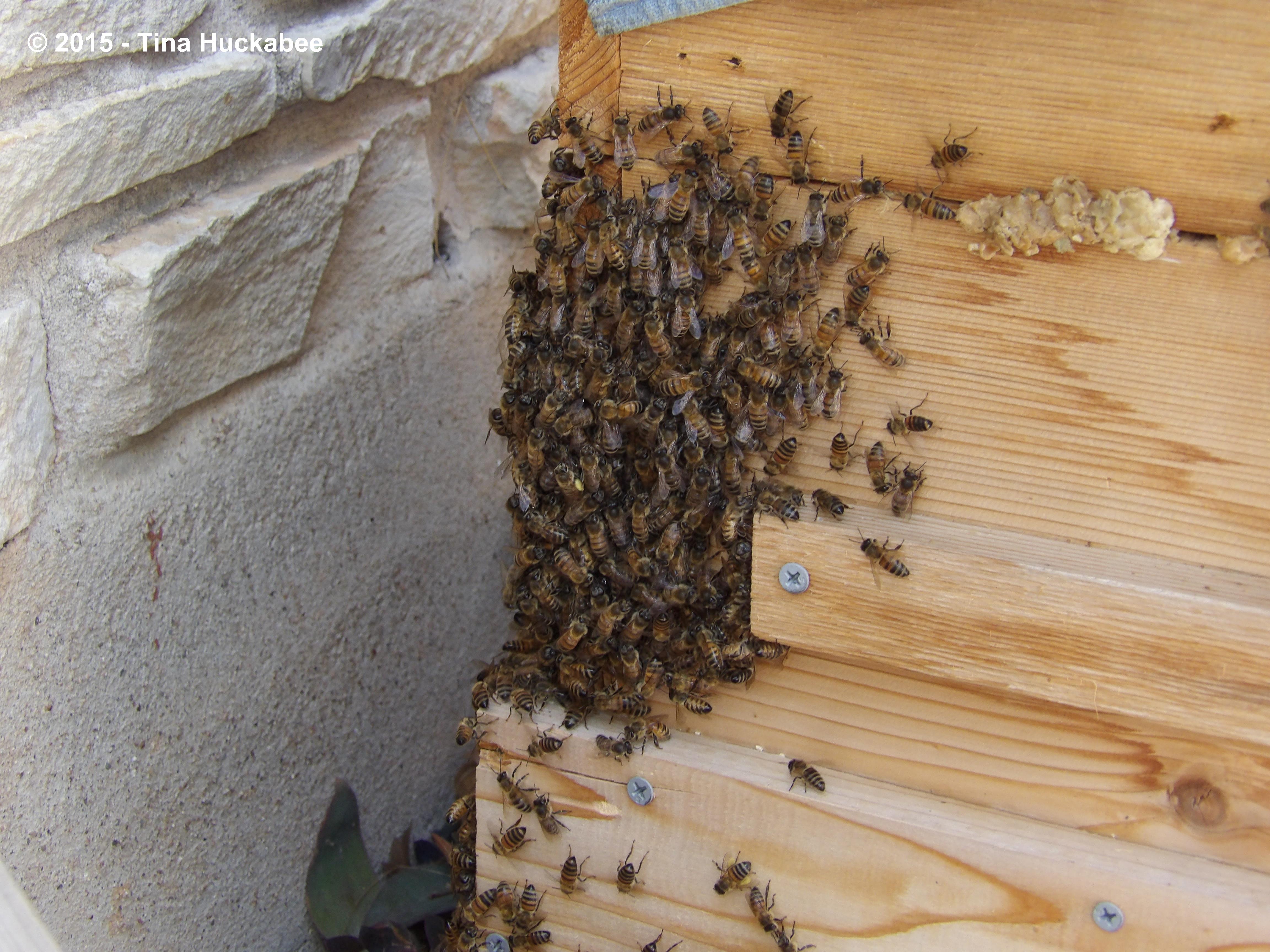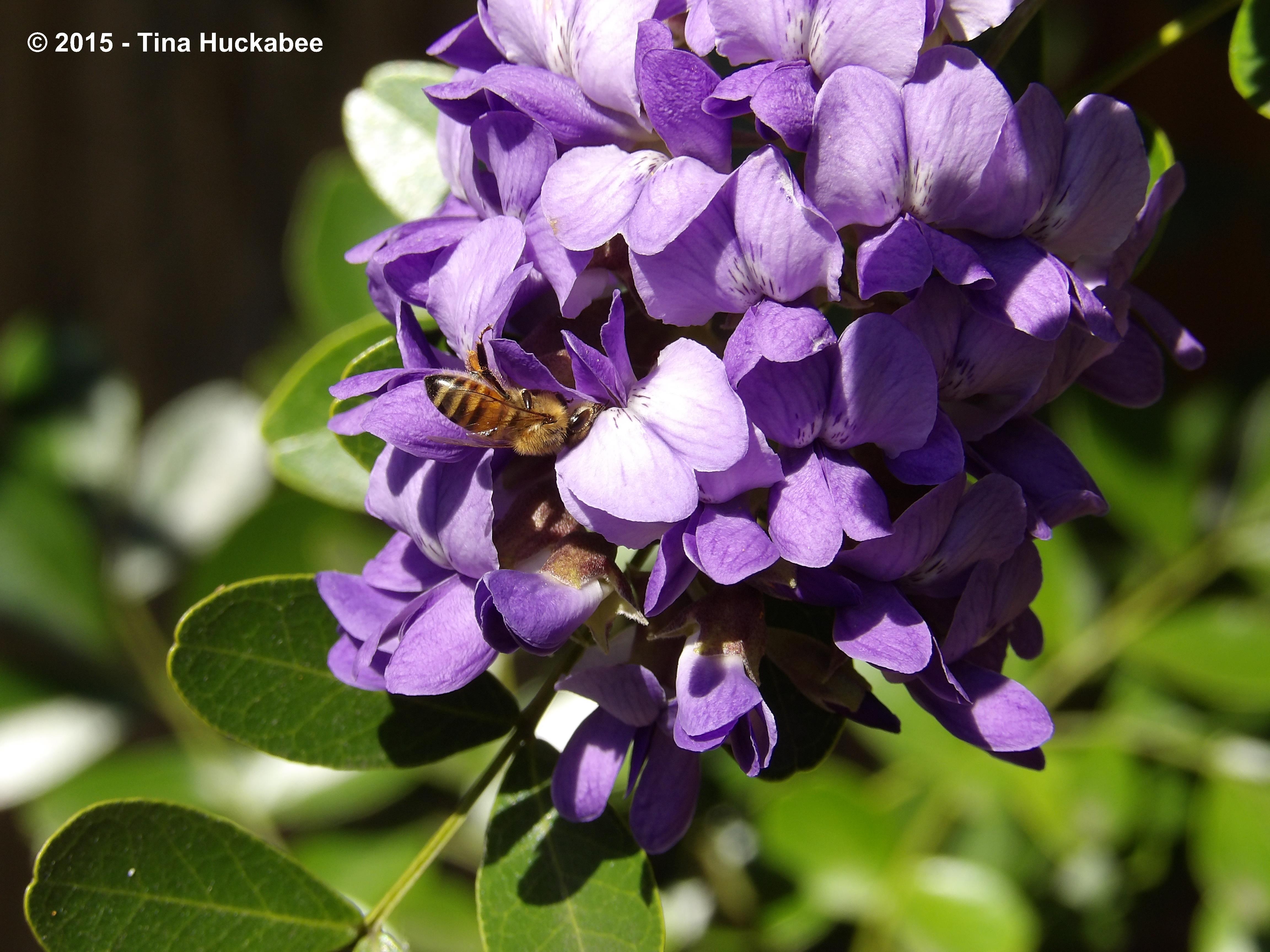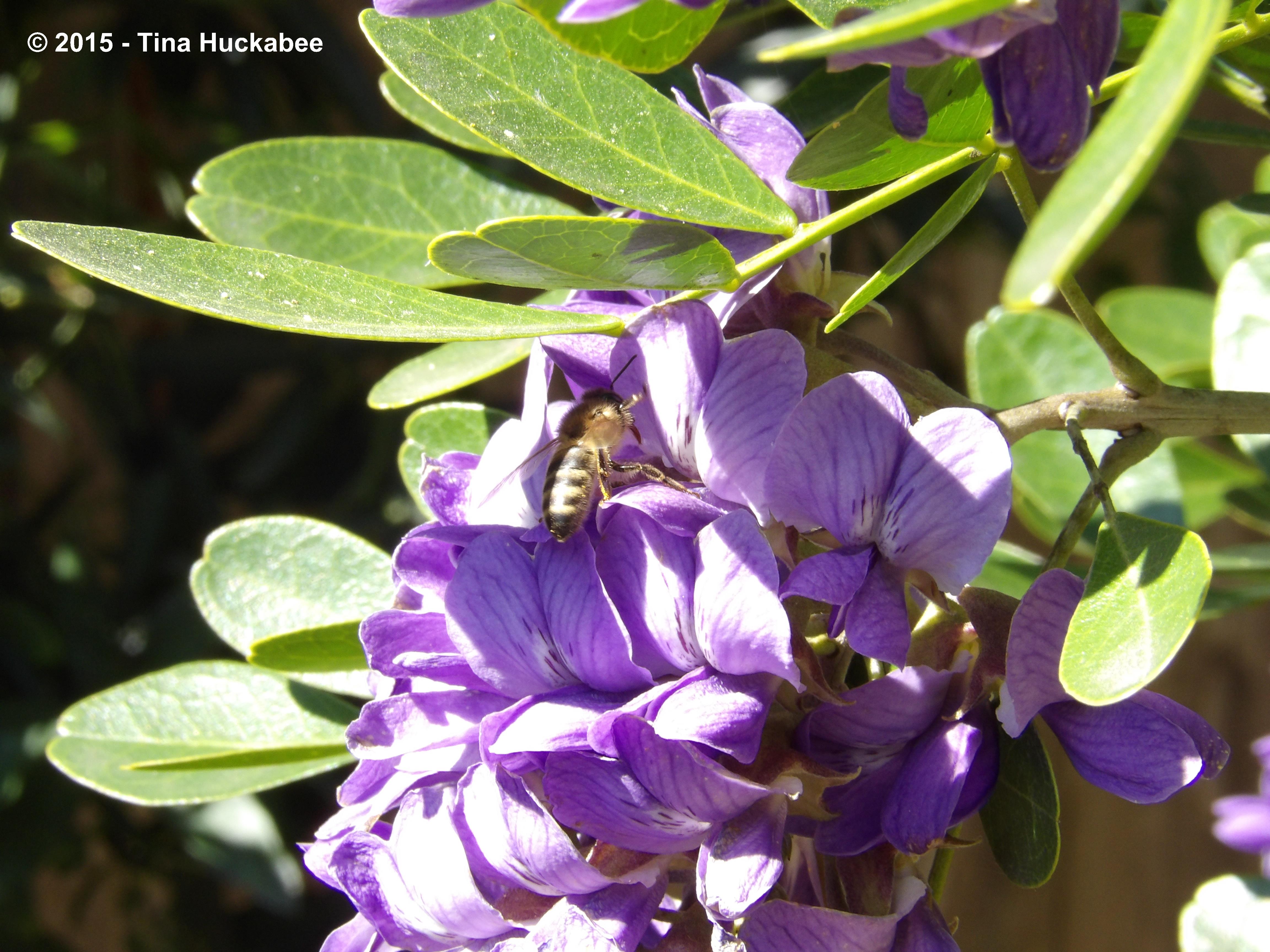
Bee Mama Missive: Mufasa No More

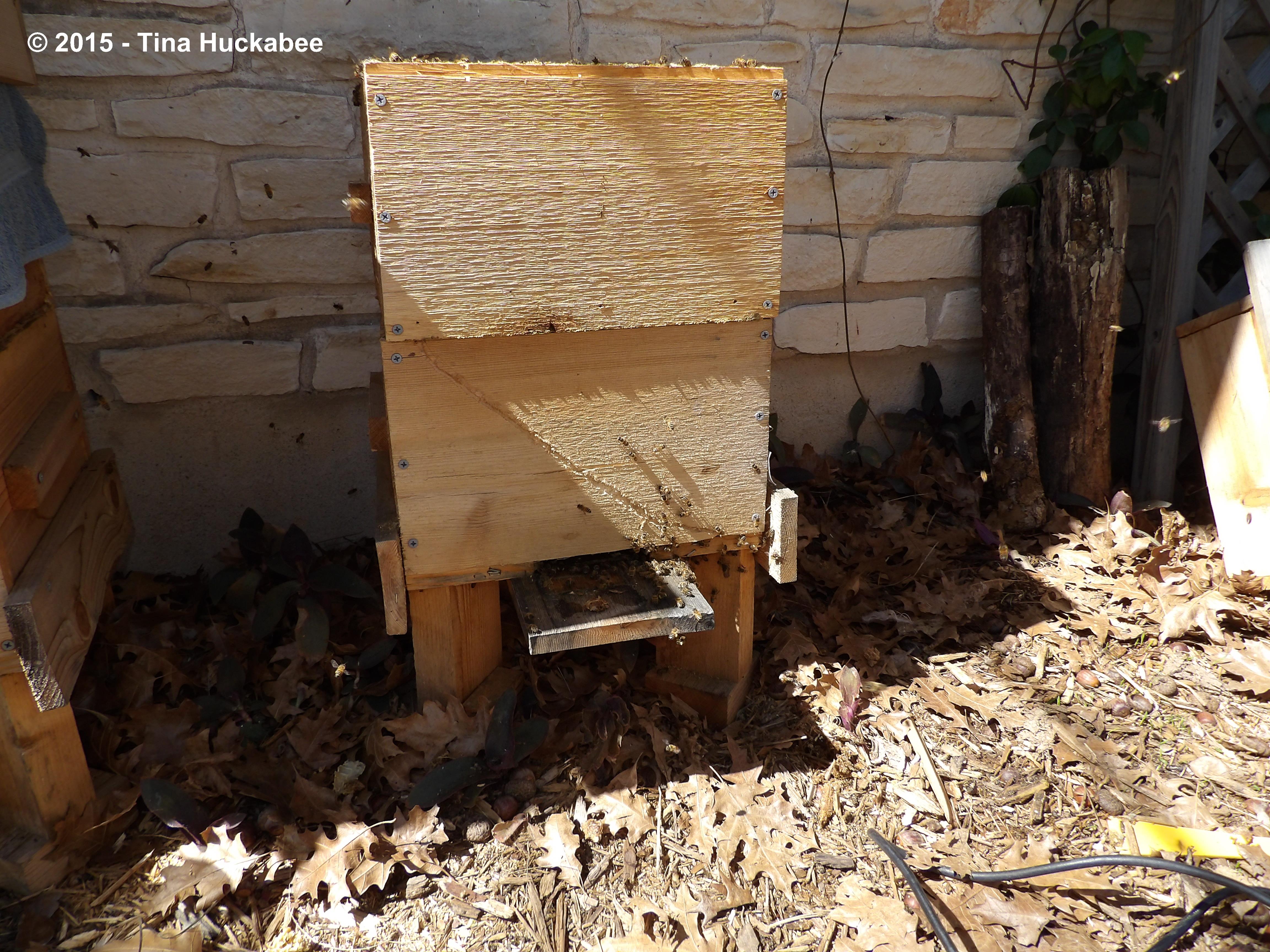
Mufasa, one of the two beehives that Bee Daddy and I have fretted and fussed over, has died, or if not dead,  is mostly on her way out.  Unlike her namesake, she wasn’t pushed off a steep edge by a rival, but sadly succumbed to an all too common infestation of honeybees:  varroa mites.

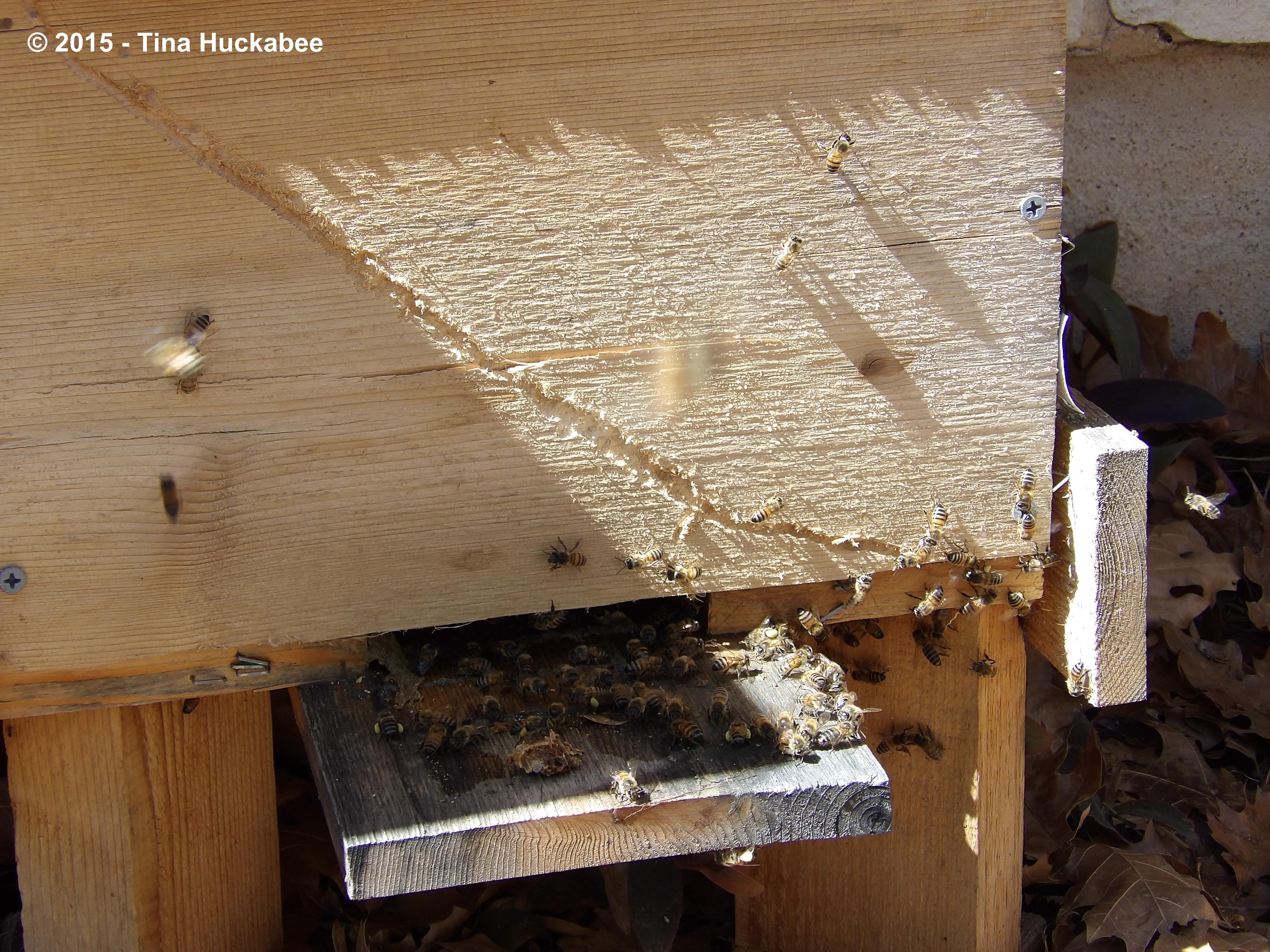
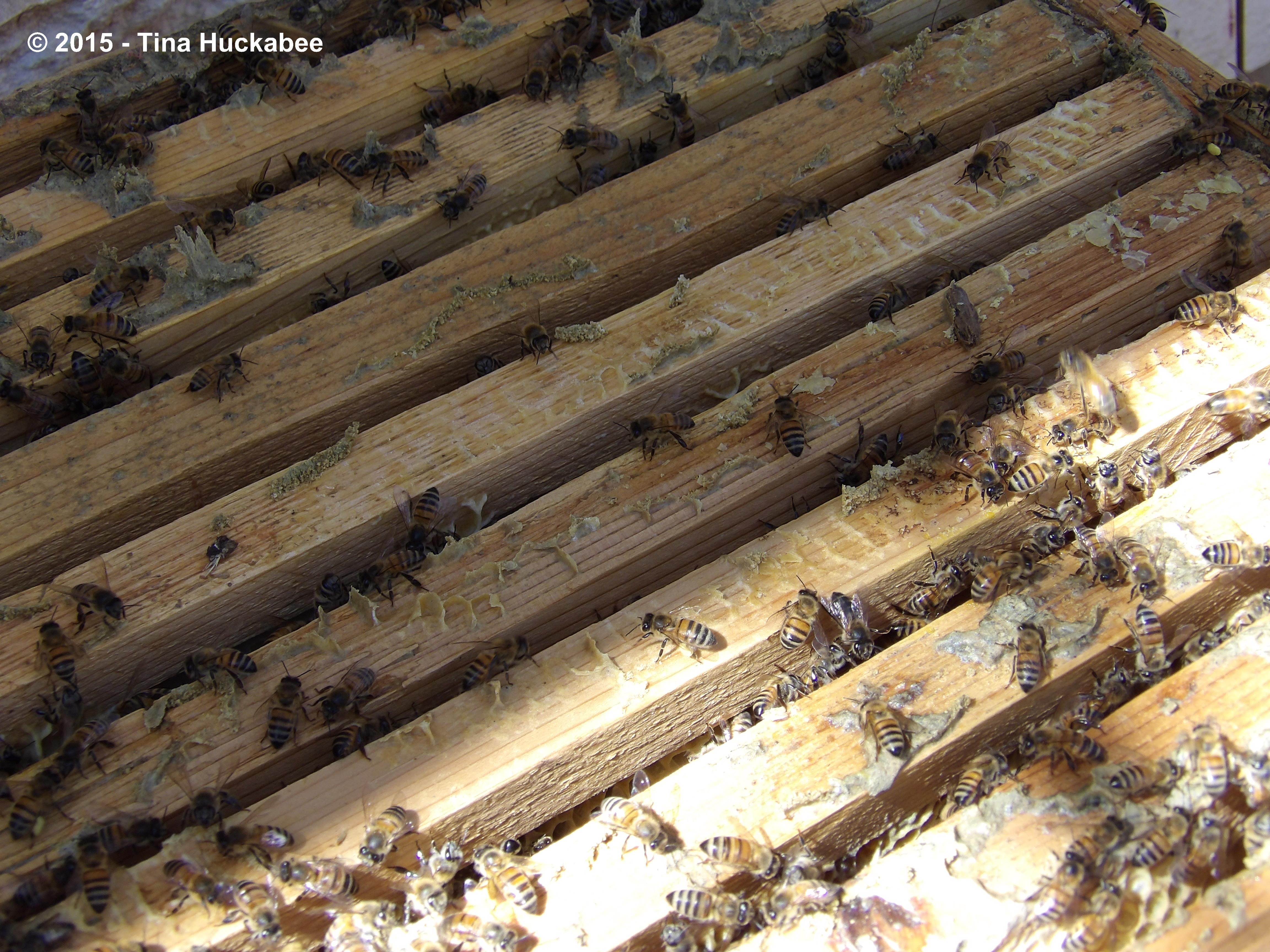
That’s what we think, anyhow.  In December, long after our last hive check of the year before the days grew chilly, I was out and about in the back garden.  I noticed some bees crawling along an open space in the garden a little ways in front of where Scar and Mufasa are situated.  Then I realized that it was more than just a few bees–indeed, there were hundreds of bees crawling along the ground.  I observed this massive and confused exit from the hive for several days, reading what I could about what I was observing.  I contacted a leader of the Austin Area Beekeepers Association and he confirmed what I suspected:  my honeys were abandoning the hive because of sickness from a varroa mite infestation. Varroa mites, Varroa destructor, are probably the greatest single threat to honeybees.  The mites have a complicated life cycle, but essentially they  feed on the blood of adult bees and the brood, causing disease, deformities, and general mayhem in honeybees.  I didn’t witness any deformed wings which is a common visual symptom of disease, but Mufasa’s honeys exited the hive in droves and that’s another sign that the bees are infected and dying.

The honeybee expert I consulted called the  honeybees leaving Mufasa, “walkers.”

Zom-bees.  That can’t be good.

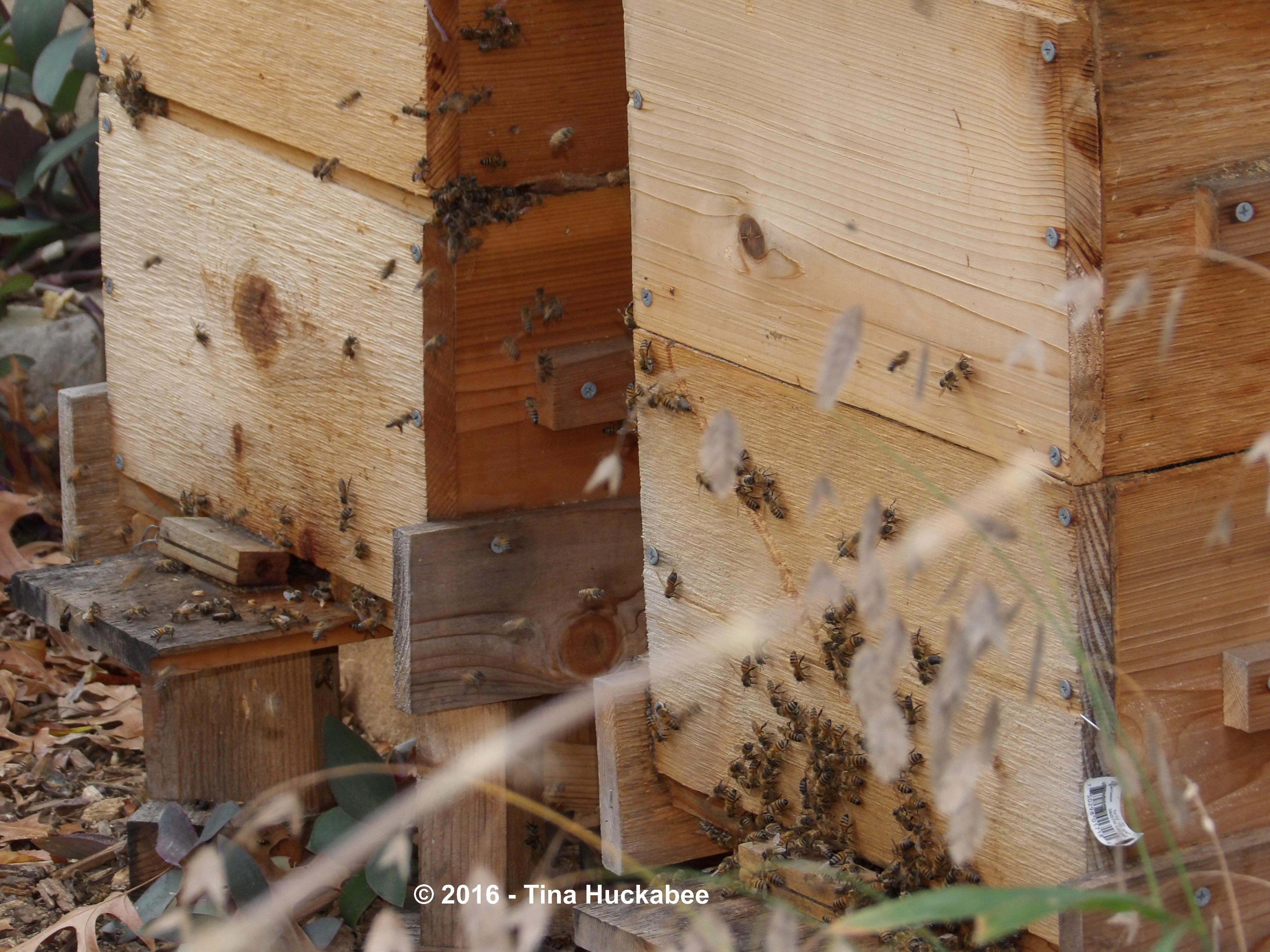
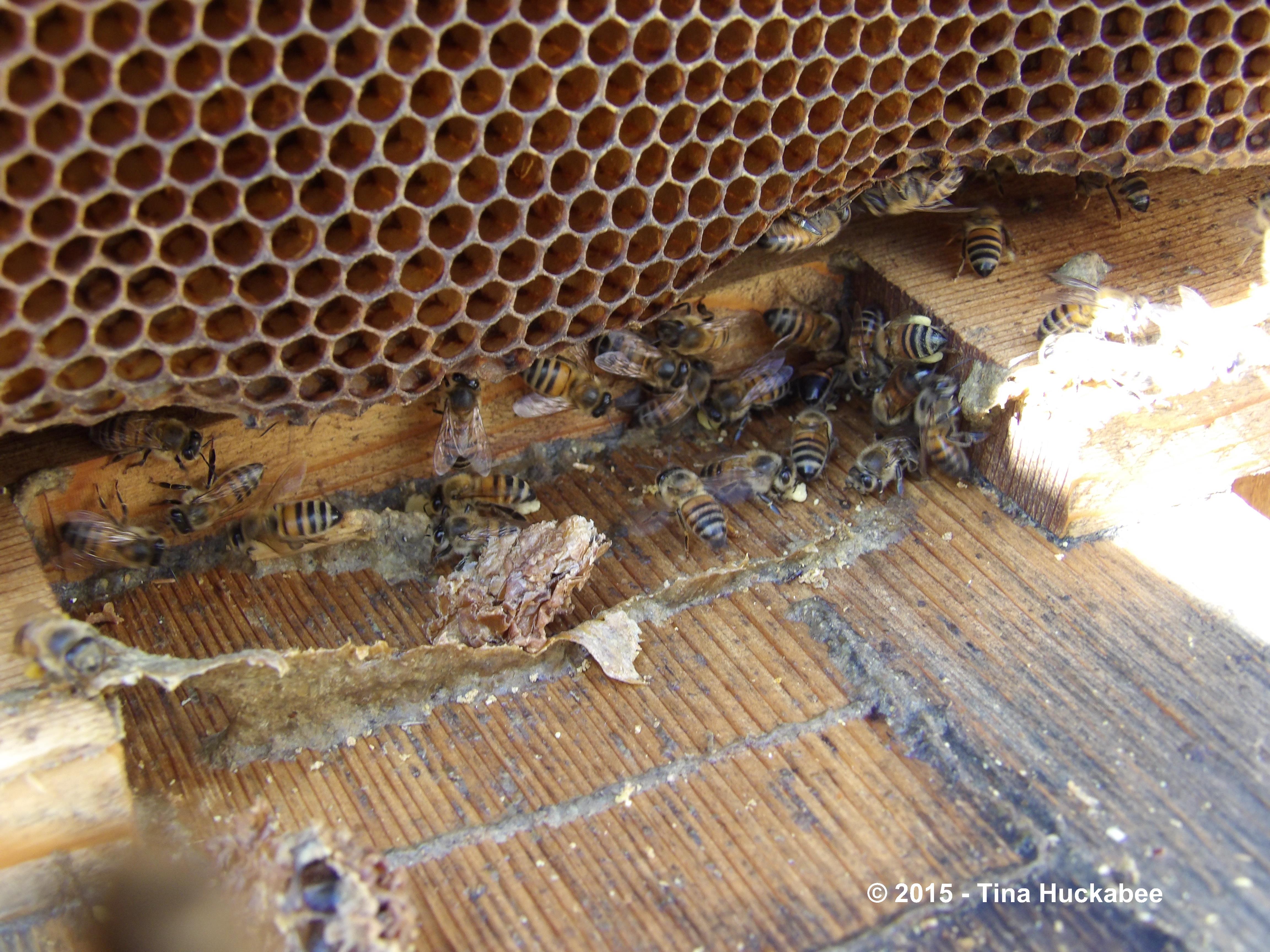
Not only were the bees walking out of the hive, but they were dying in droves.  They died along the landing board,

IMGP3287.new

IMGP3285.new

…and were in piles on the ground around the beehives.

IMGP3288.new

Sob.

My bees are BeeWeaver bees, touted as  varroa resistant through genetic selection of queens resistant to the varroa mites.  Of course varroa resistant doesn’t necessarily mean varroa proof.  BeeWeaver claims that fewer than 5% of their queens will succumb to varroa mites and apparently, Mufasa’s queen landed in that statistical range.

BeeWeaver bees are the descendants of bees who survived the initial onslaught of varroa mites in the late ’80s.  An idea behind their survival is that they’re particularly tidy bees and they rid themselves of varroa when the varroa arrive–and sooner or later, varroa mites will arrive.  Varroa mites are the biggest invasive scourge that North American honeybees and their keepers must deal with.  Bee Daddy and I have been fortunate–this is the first hive we’ve lost in the almost two years since we began this buzzy backyard adventure.

In fact, in early summer of 2014 shortly after we started beekeeping, we removed a couple of frames of comb from one of our new hives and on some of the larvae  I saw several  varroa mites; I just knew that the hive was a goner right then and there. But true to their varroa resistant genetics, the bees rid the hive of the mites and the hive continued successfully,  despite occasional (some might say, constant) beekeeper ineptitude.

Until now.

I think my mistake was in assuming that my bees were immune to an infestation, rather than keeping a keen watch on the goings-on of the hive, year-round, winter included.  I became a complacent bee keeper.

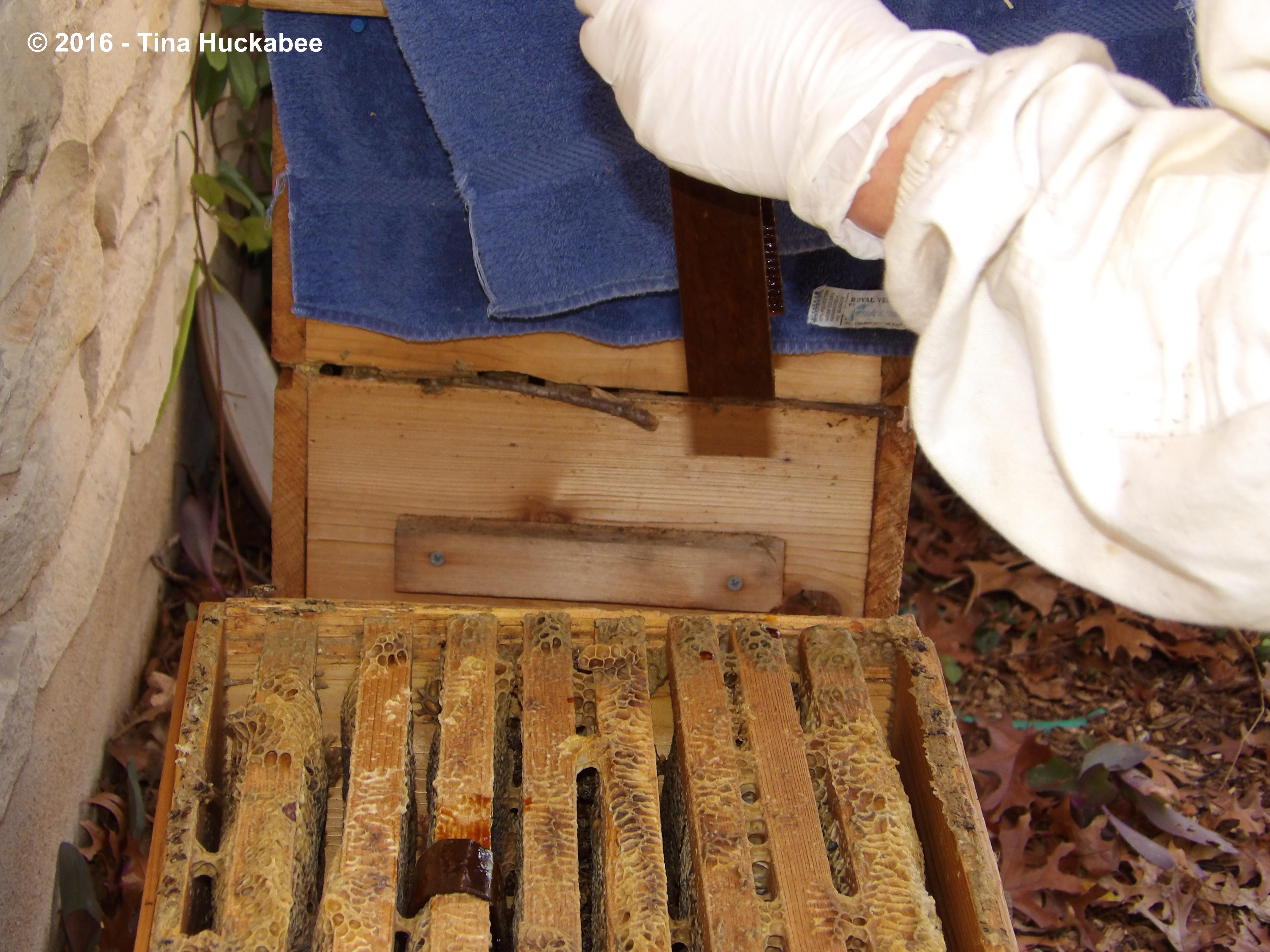
We treated Mufasa with an organic product called HopGuard II, which is made from hops.

IMGP3340.new

Apparently, beer helps all situations.

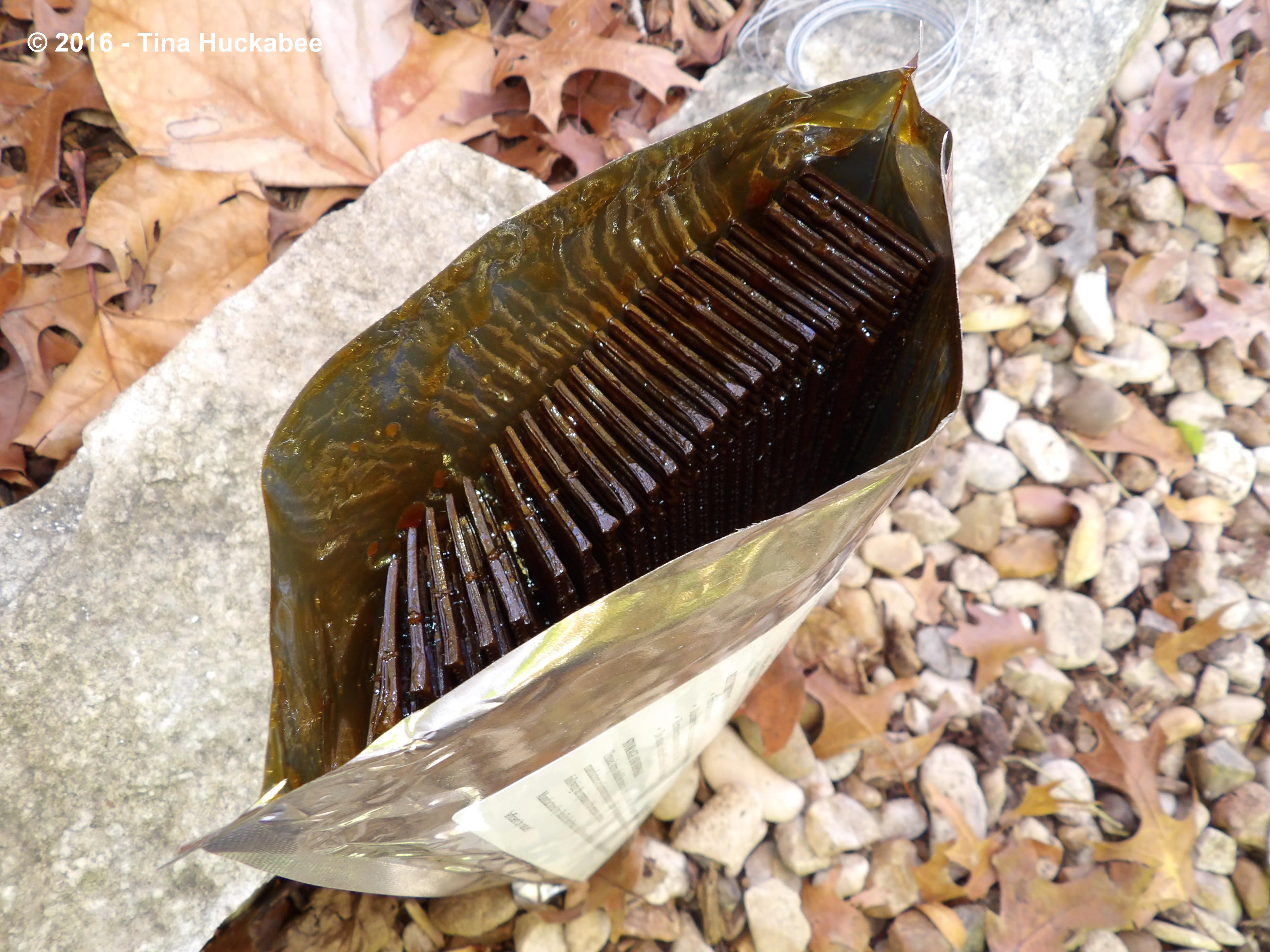
HopGuard comes in a sealed package and contains a series of strips coated with a thick and sticky hops solution.
IMGP3346.new

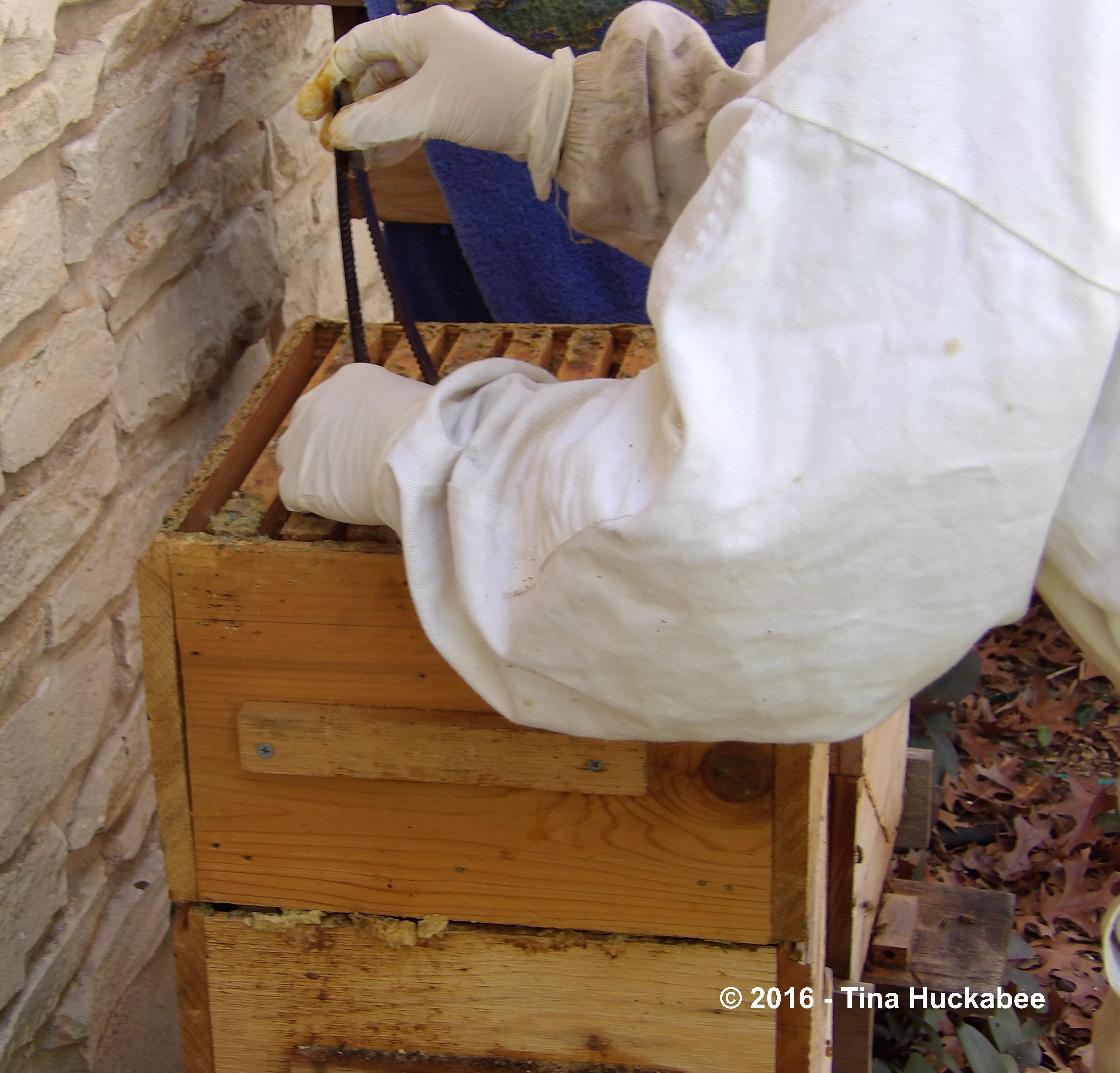
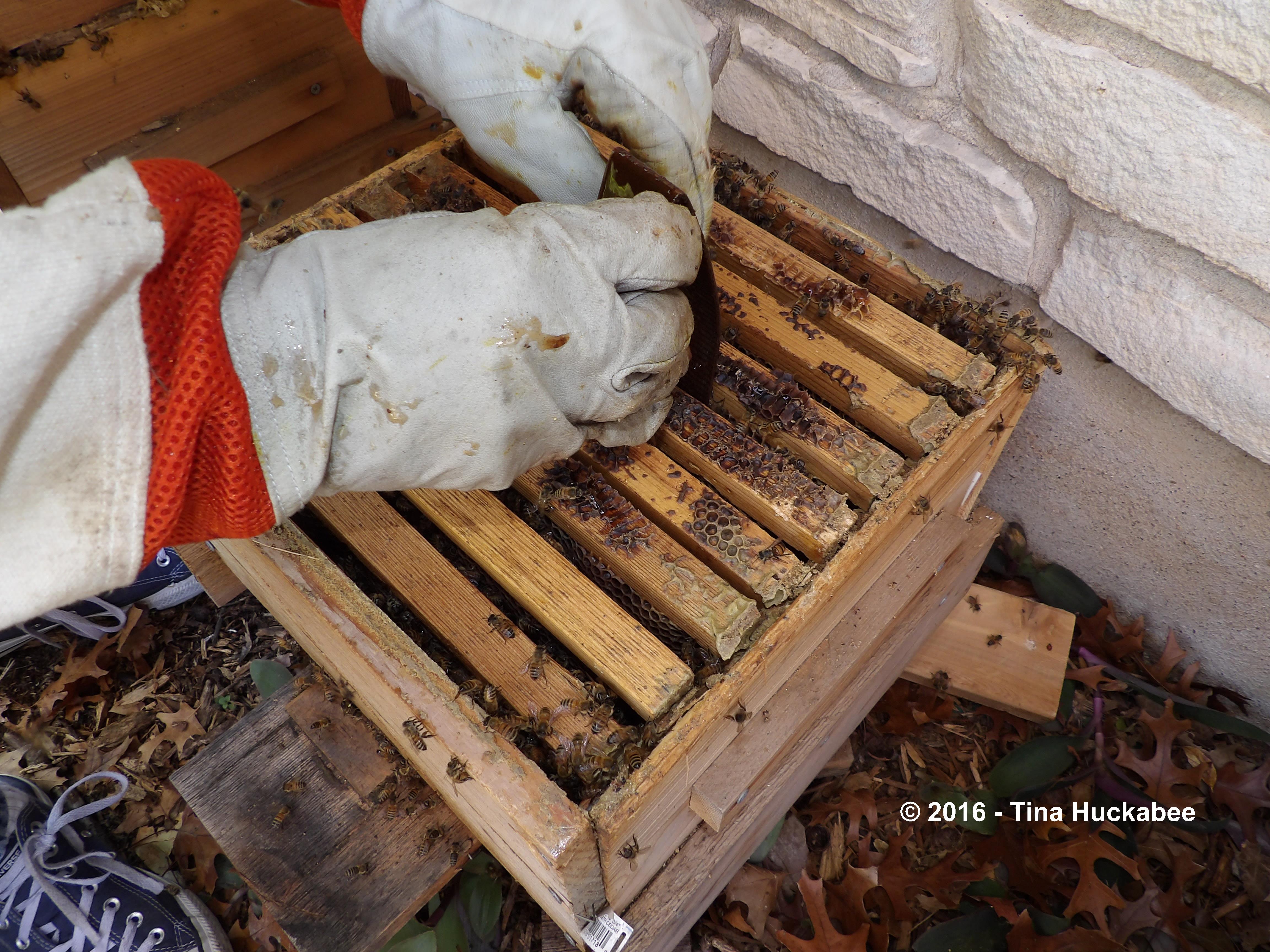
We placed two gooey hops strips in each box of each beehive, each draped over a comb.
IMGP3355_cropped_3419x3276..new

IMGP3351.new

IMGP3353.new

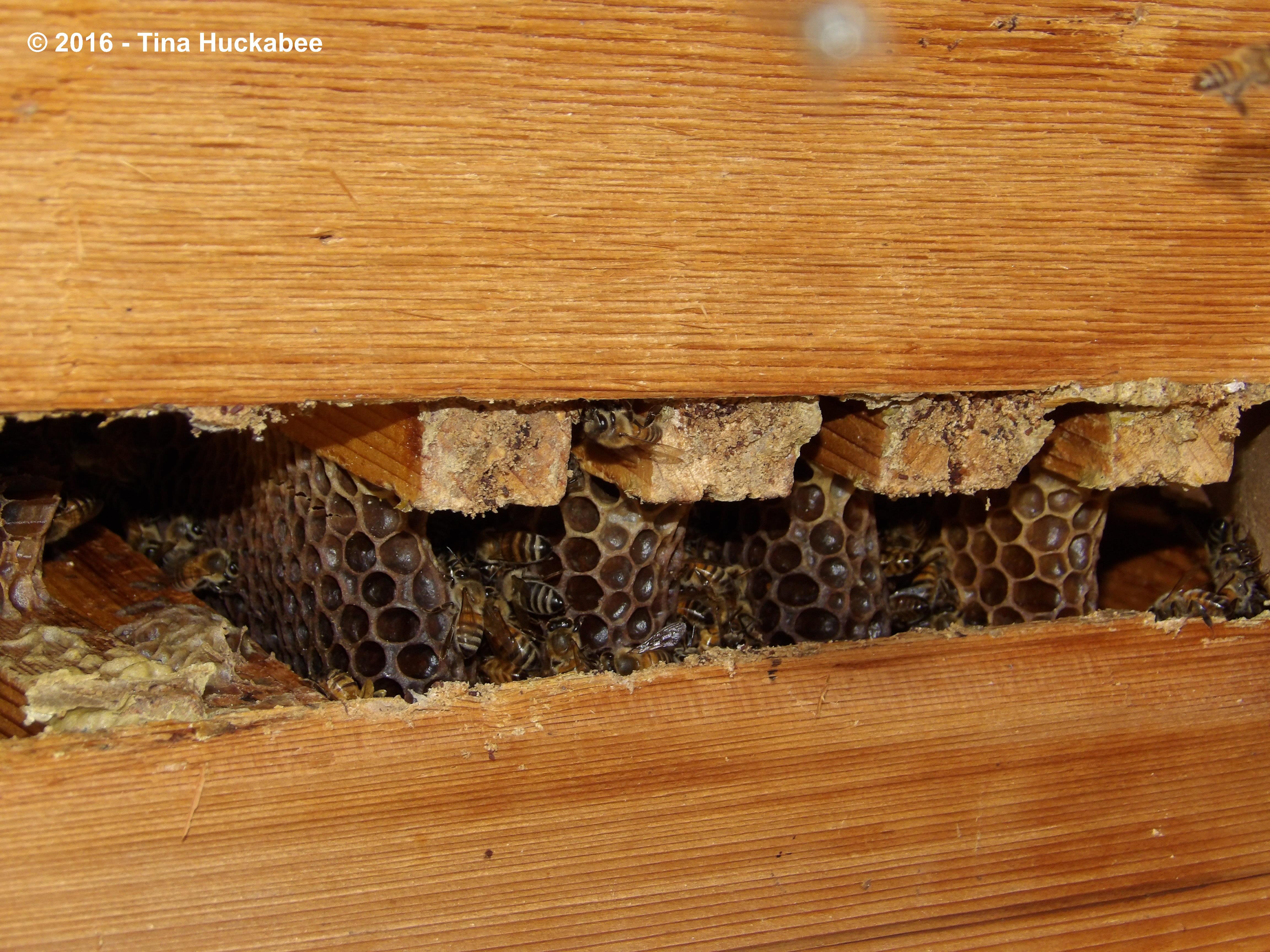
Though not showing any symptoms of infestation, we treated Scar because as Mufasa was dying, she was also robbed of her stores of honey (yes, honeybees do that) and it’s possible the mites could migrate from Mufasa to Scar if we don’t stay ahead of the mite situation.
IMGP3373.new

IMGP3375.new

IMGP3376.new

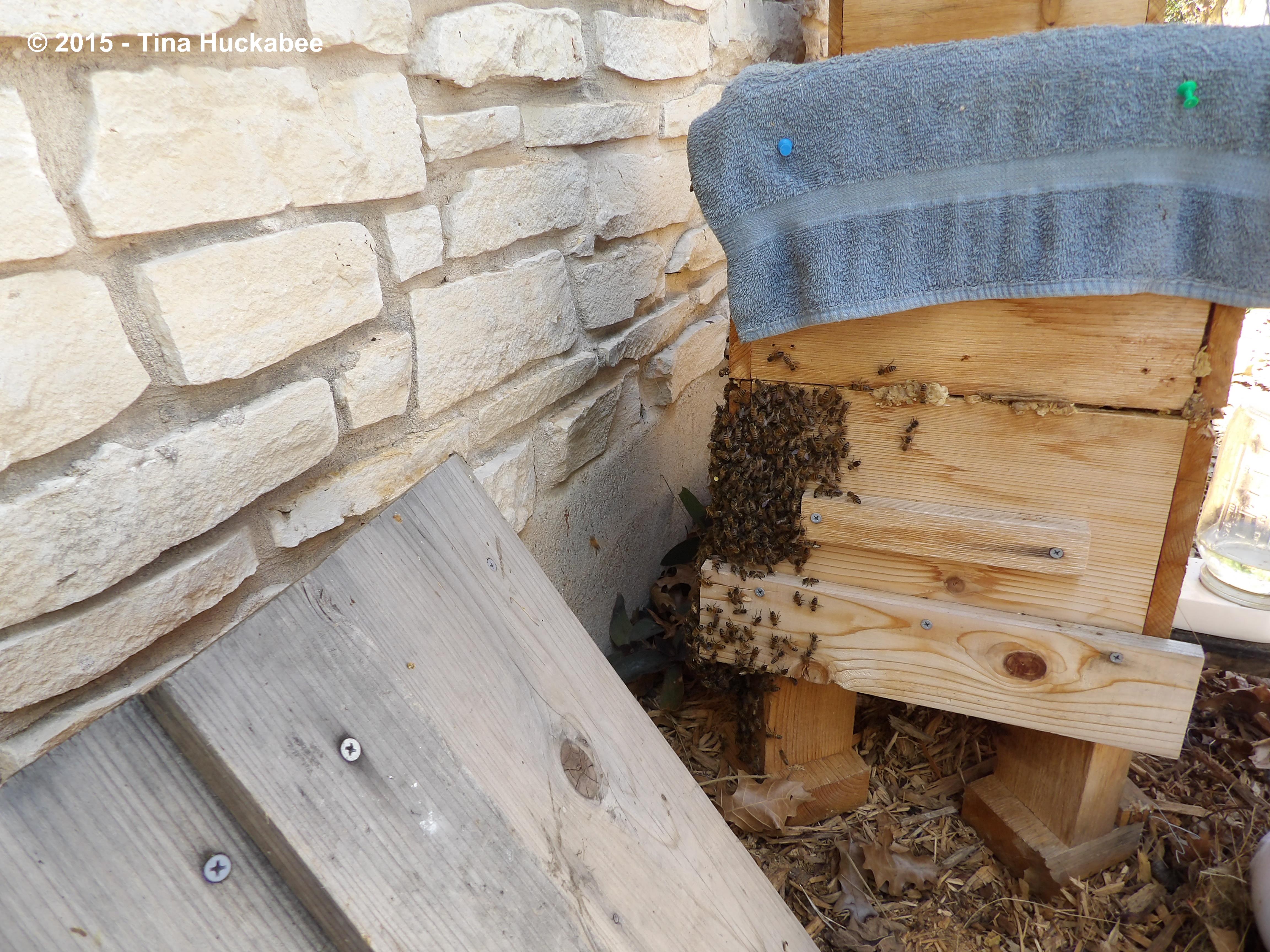
In this picture,

IMGP3514.new

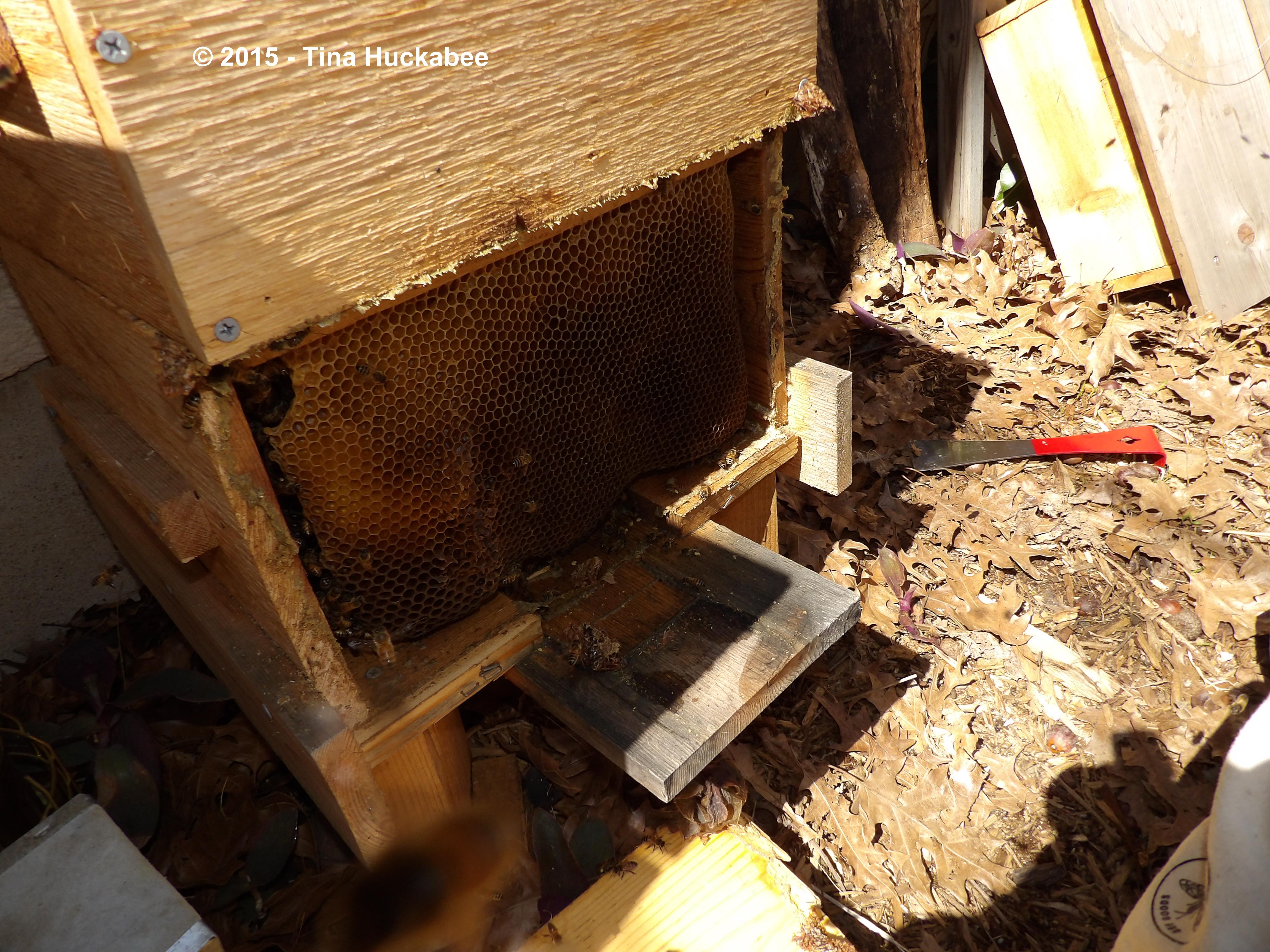
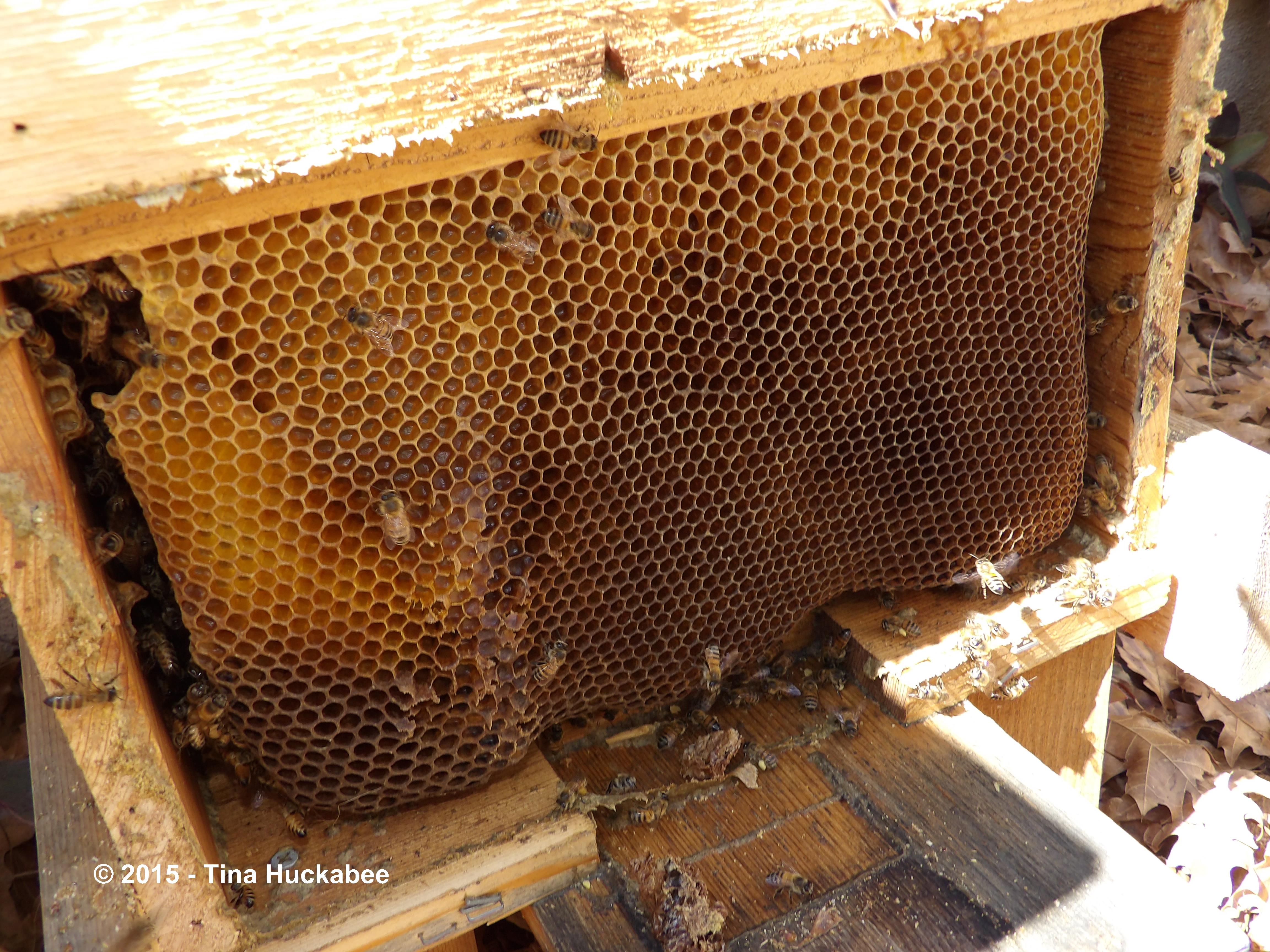
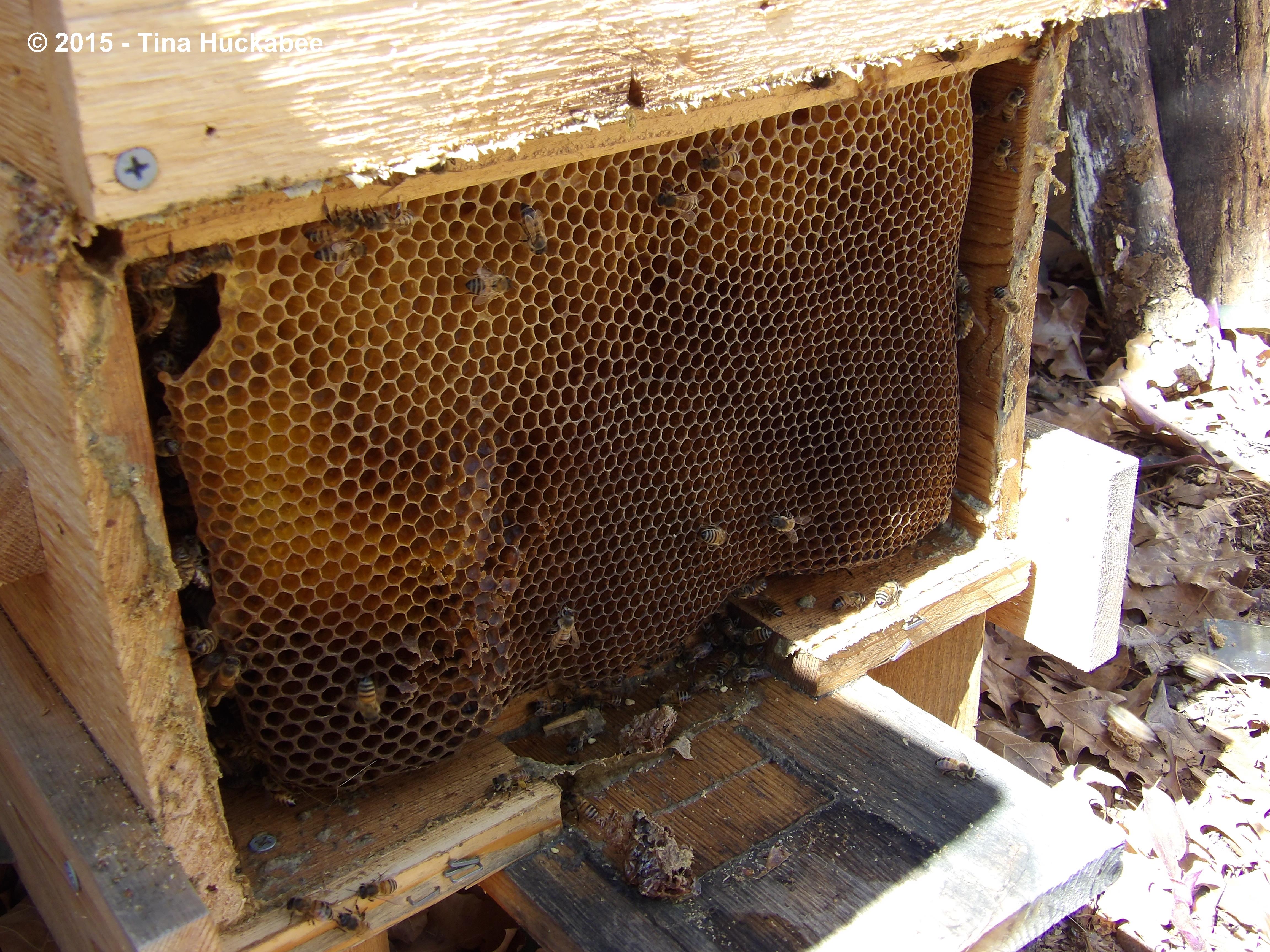
…there are lots of bees buzzing around Mufasa (left in the photo), but this was taken after many (most?) of Mufasa’s bees absconded and died.  I’m guessing that the bees are Scar’s bees, or even bees from another nearby hive, robbing poor Mufasa with abandon.

The HopGuard procedure was simple enough, though it’s messy.  I could smell the grainy fragrance for a day or so afterwards.

For the moment, Scar appears healthy and we’ll treat with HopGuard II again when temperatures are appropriate.  I’m sad about Mufasa’s death, but life is full of loss and one must learn from experience and move forward.  If we’re going to lose a hive, now is not a bad time.  Bee Daddy is busy making two new Langstroth hives and we’ll have two new  honeybee packages (mated queens each with 10,000 workers) delivered in April. With our plans in place to hive new honeybees in more easily managed and efficient hives, we were going to let Scar and Mufasa just…bee,  allowing them to swarm (if they want) or to just hang out to pollinate and nectar as they see fit.  For Scar and Mufasa we would become honeybee havers rather than honeybee keepers.

There is a bit of activity in Mufasa even now, though very little; the difference between Mufasa (left) and Scar (right) is telling.

IMGP3379.new

As of this post, I haven’t opened the hive up fully since treating with the HopGuard, but I did peek in about 10 days after treating and things were very quiet, certainly in the top two boxes–I can’t  see into the bottom box.  There was no buzzing and no concerned guard bee coming to the top to check me out, bum in the air ready to warn the rest of the hive of an invader, so I’m guessing there’s little life left. If this winter continues mild, it’s possible that there might be a bit of Mufasa by springtime, but I’m not hopeful about that.  We’ll just have to wait, be patient, and accept the outcome.

In the days that followed the revelation that we were losing Mufasa, I was out dealing with  leaves in the garden.  I spied a probable drowned honeybee in one of my birdbaths.  I hate to see their floating bodies, so I always fish them out and deposit them in a garden;  a garden  seems like an appropriate resting place for a dead bee.  This little girl vaguely waved a leg at me, so I cradled her in my palm in the hopes that my warm skin might revive her,  all the while depositing rakes and other garden utensils in their appropriate places with my other hand.  Within about 5 minutes, she’d revived, was licking off the offending bird bath water and then, without so much as a by-your-leave, she flew off to  her next pollinating date.

The resilience of that little bee was affirming in the wake of Mufasa’s death.  Her drive to live  and continue her community responsibilities and her acceptance of life in that moment, was touching and a good reminder of the importance of purpose.  It’s been a transformative adventure to learn about honeybees–to work in the garden closely with them and to learn about their remarkable lives.  Becoming a backyard bee keeper has also strengthened my commitment to providing for native bees and all the other pollinators so important to the health of our ecosystem.  I’ve loved and planted native plants, focusing on gardening for wildlife in my personal garden and beyond. By actively encouraging pollinators to live and breathe in my gardens by what I choose to plant–or not–I hope to continue an intentional repair of the world, in my own small space, giving respite and nourishment to wildlife despite occasional losses and setbacks.

Lastly, Bee Weaver shared a lovely and locally produced film by  Dylan Tidmore profiling two Austin beekeepers, Tanya Phillips and Chuck Rayburn–and of course, the real stars of the production: honeybees.

Enjoy…learn…appreciate.
Bee Mama Missive: Bees–They’re What’s For Dinner

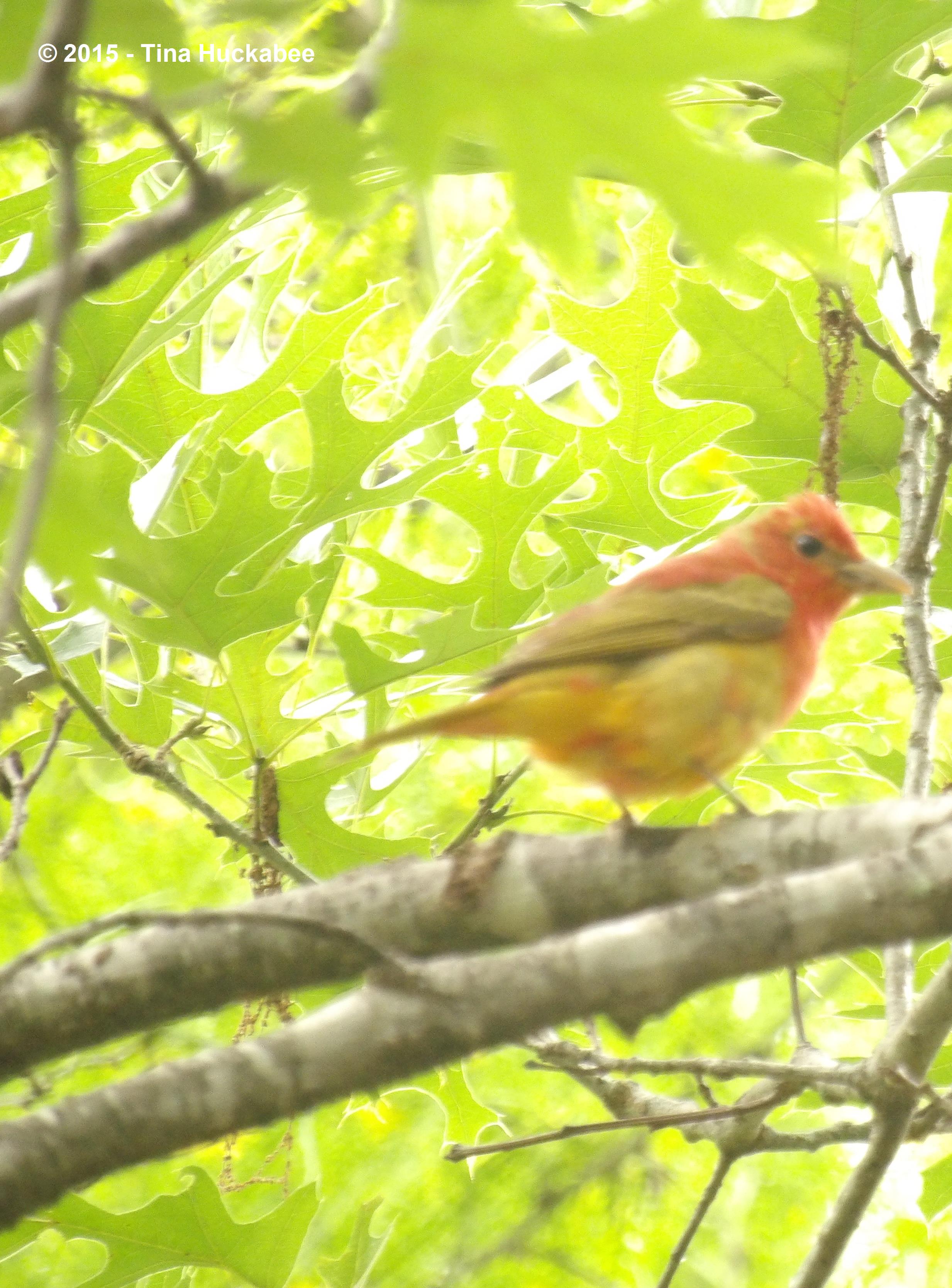
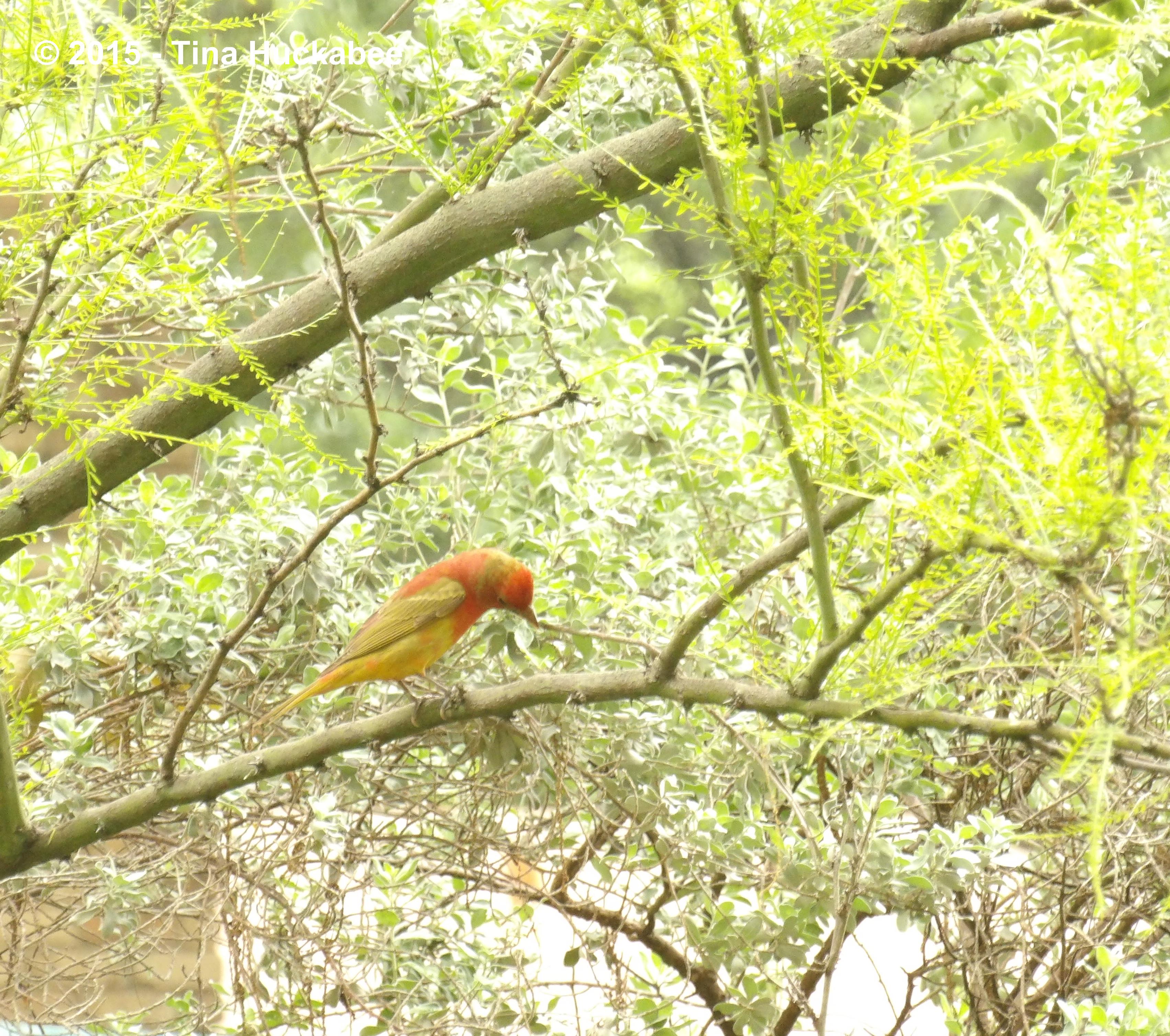
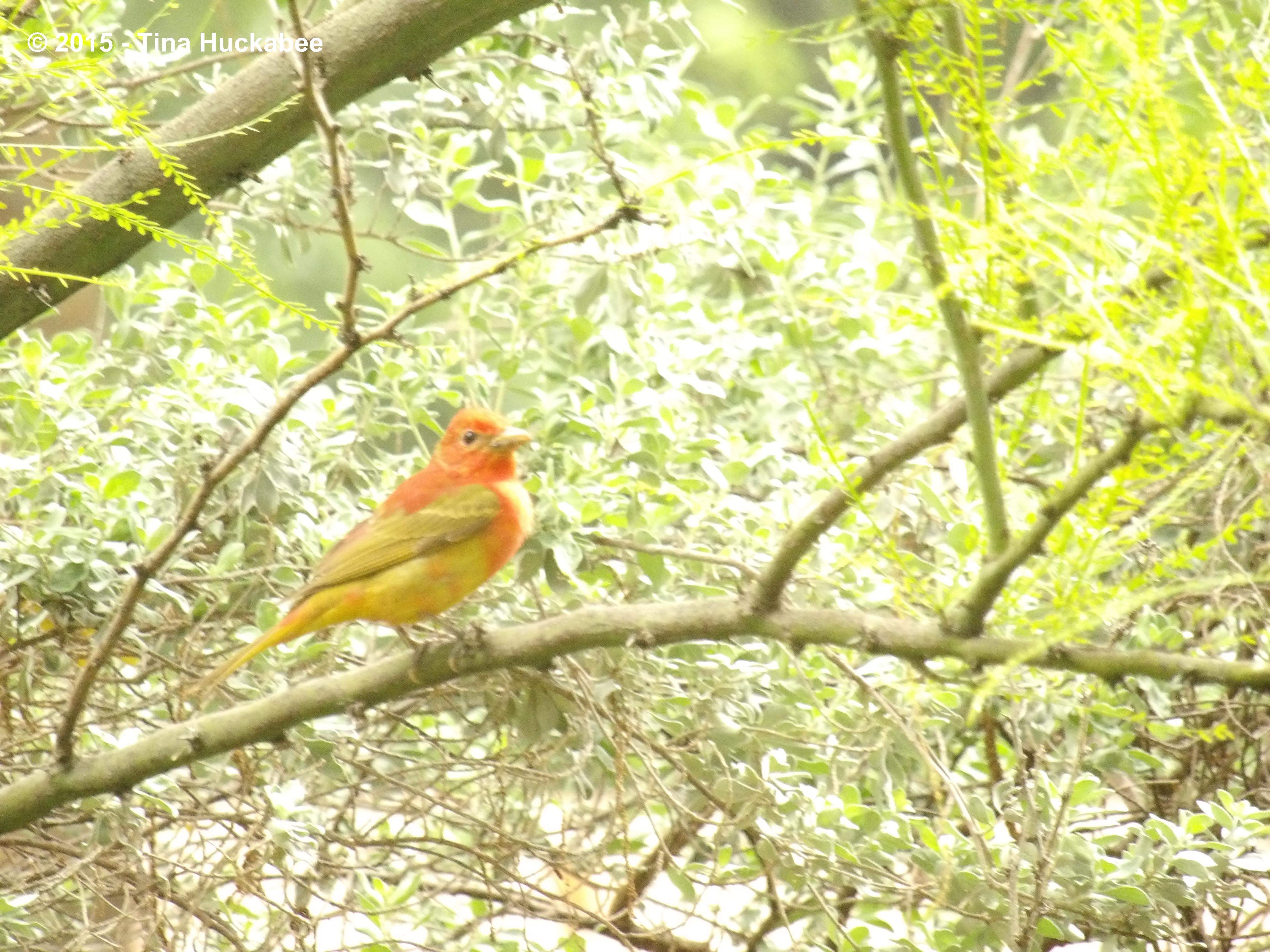
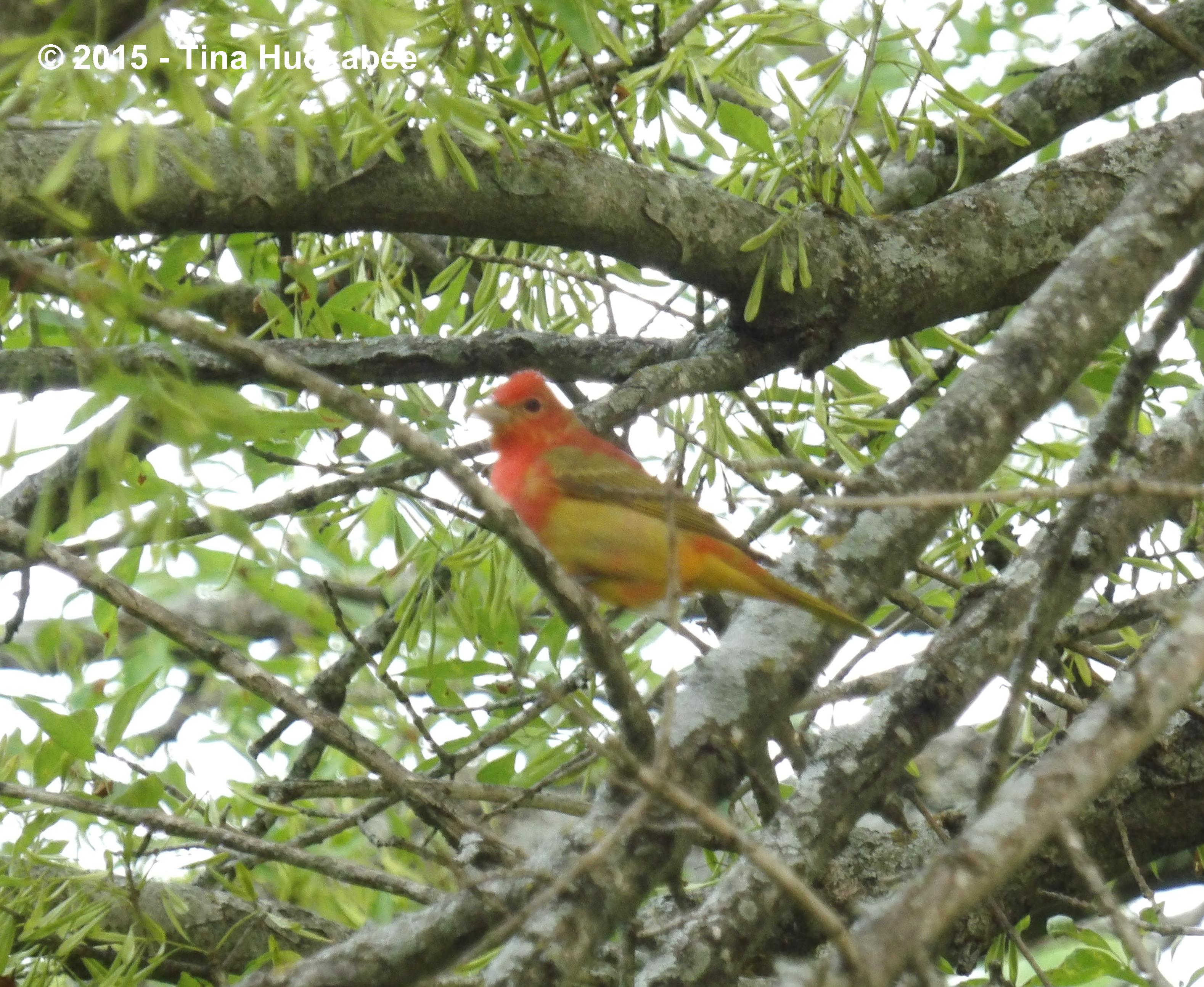
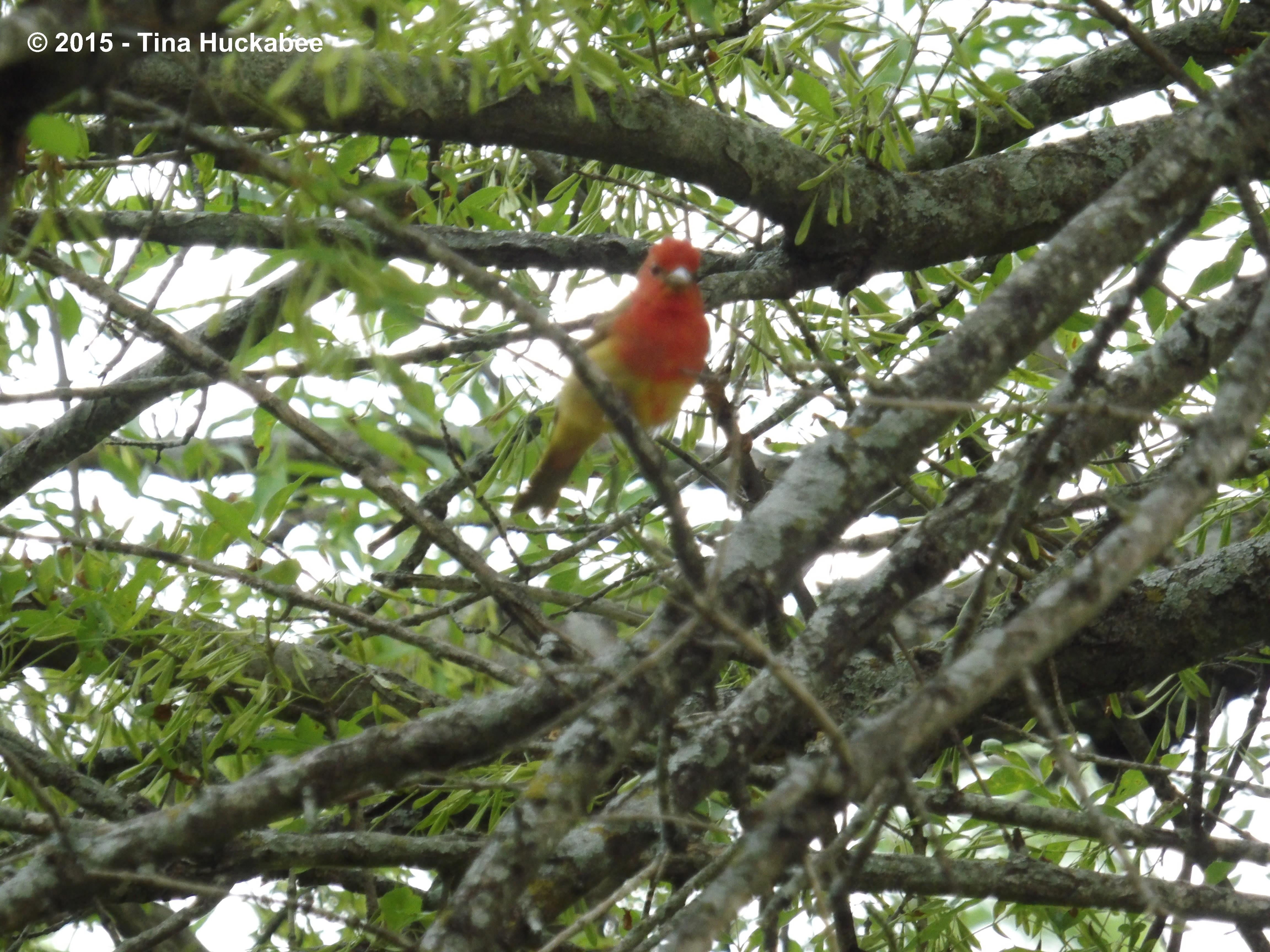
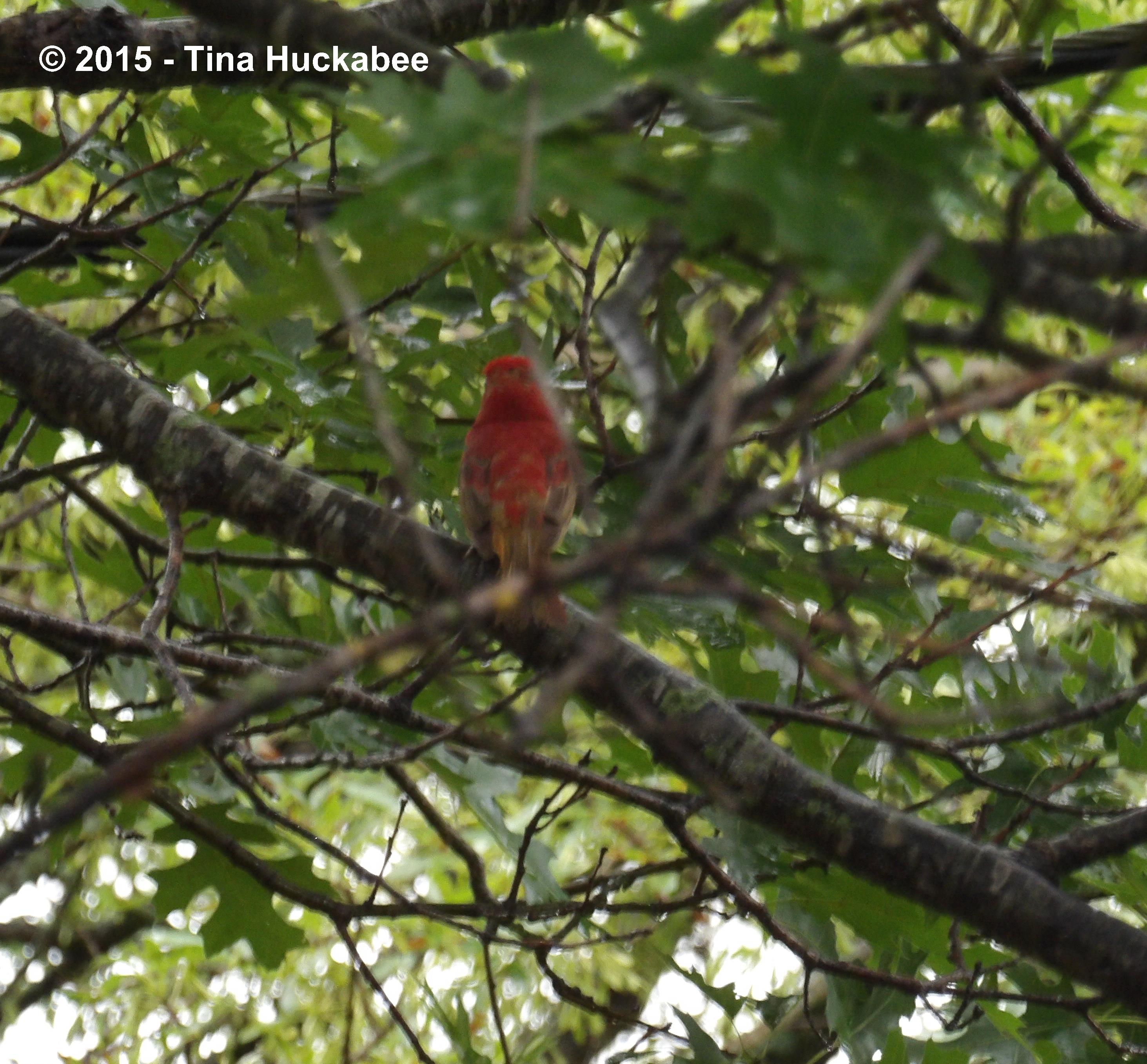
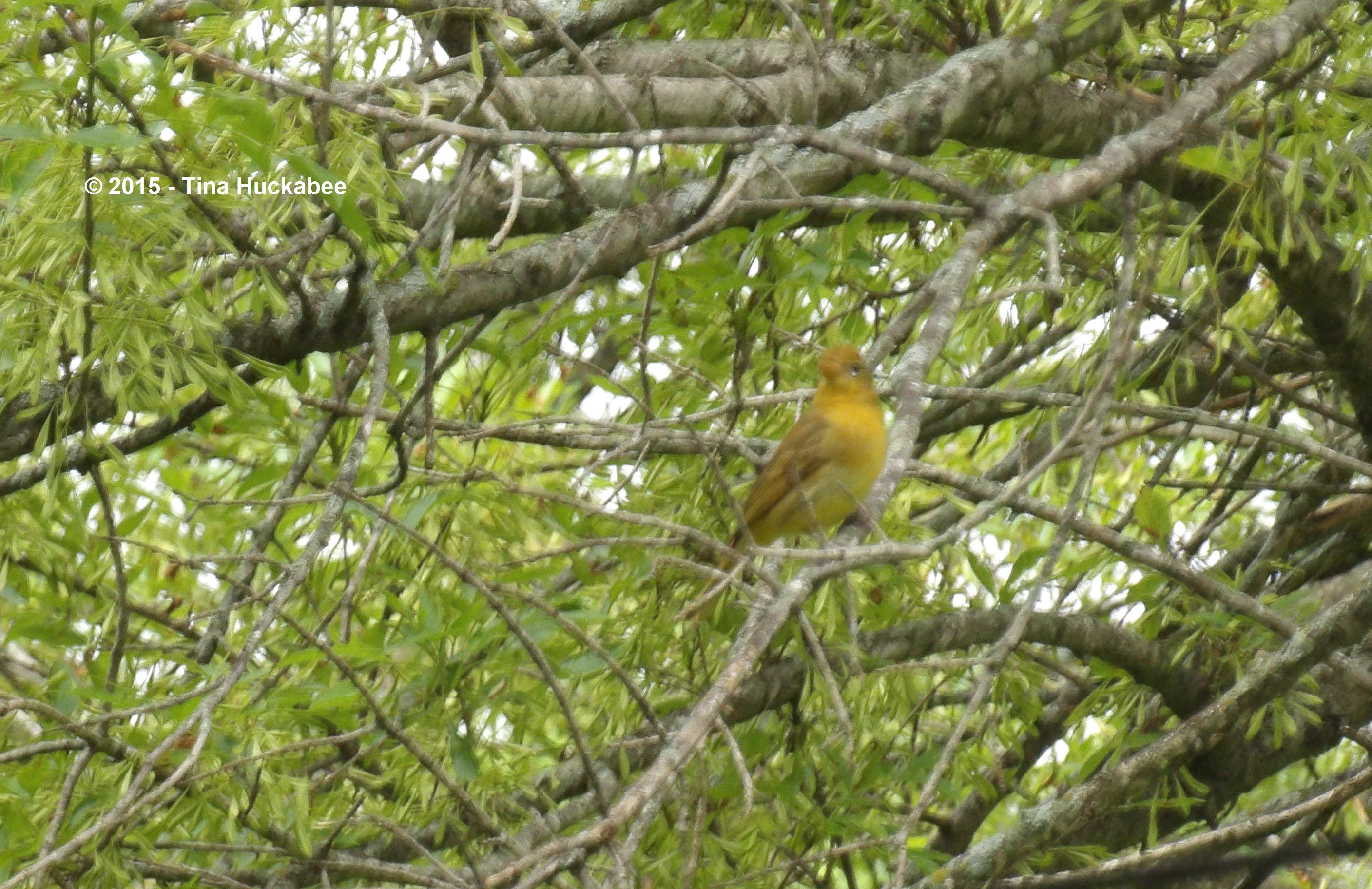
Paraphrasing an advertising tagline from the American beef production industry, I think Bees-they’re what’s for dinner is applicable  to the Summer Tanagers, Piranga rubra,  who are visiting my garden.  In the last month, I’ve observed at least three different Tanagers flitting around my back garden.

IMGP7685.new

IMGP7696_cropped_3728x2576..new

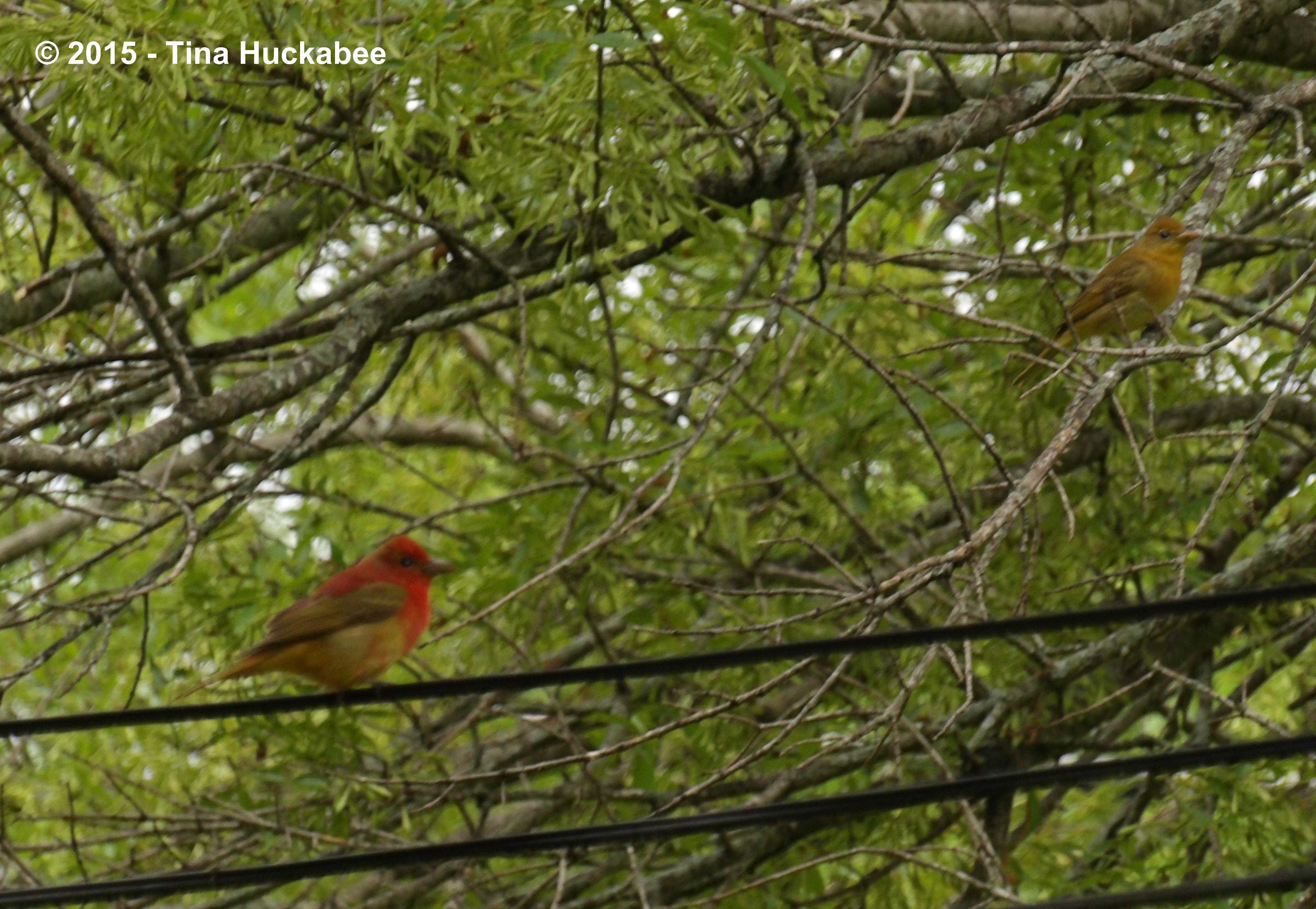
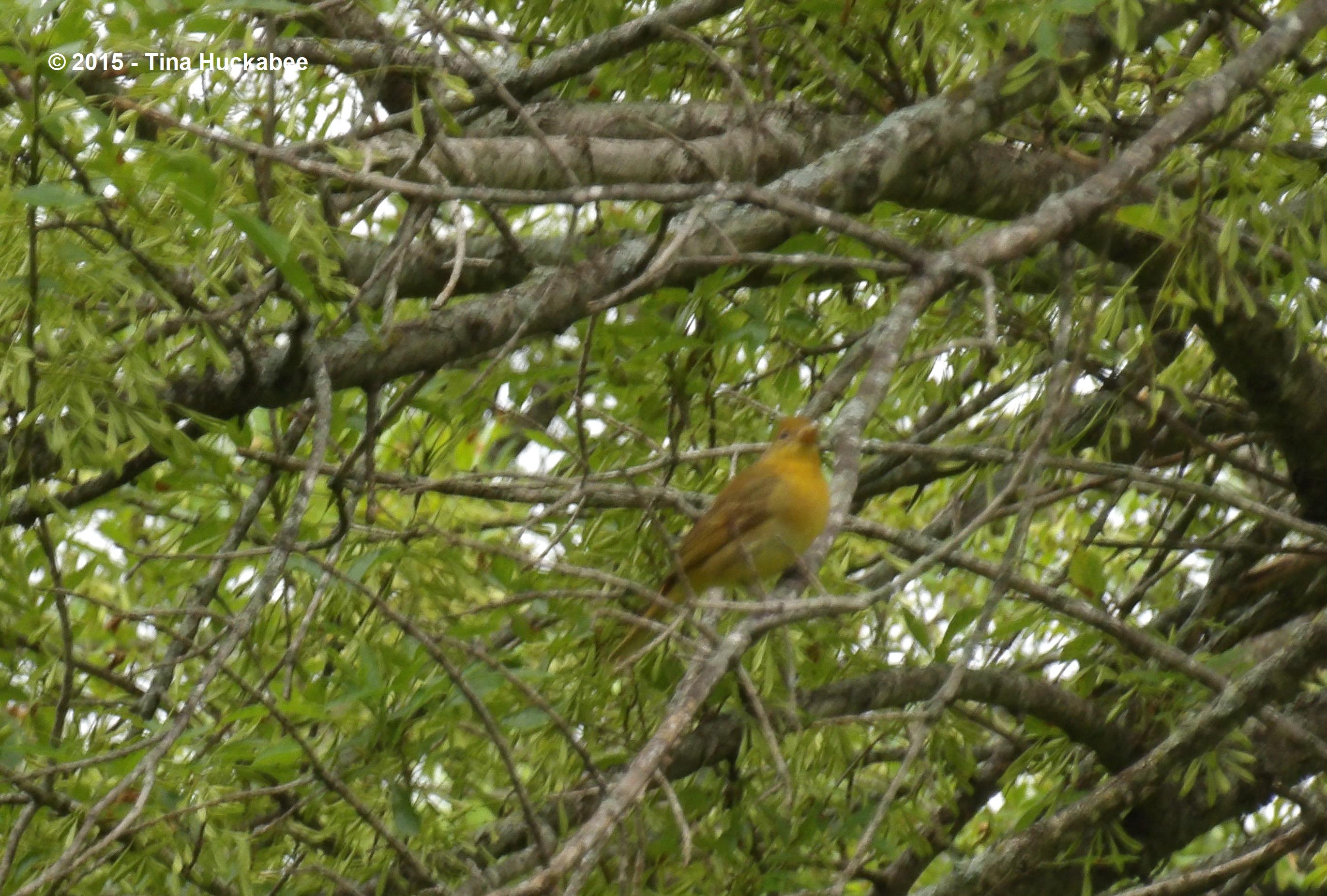
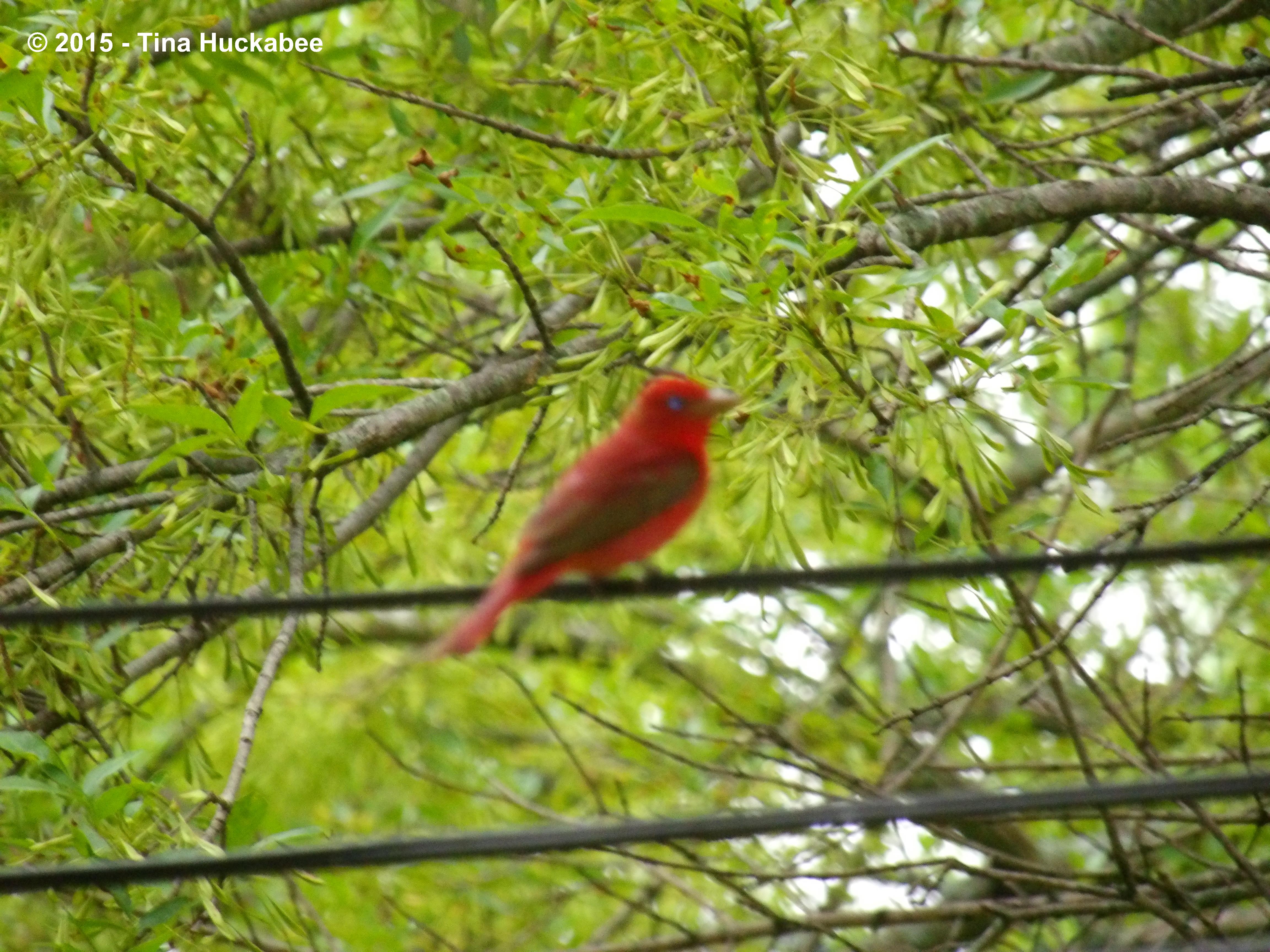
You’ll have to excuse the photos–I’ve yet to take a clear pic of any one of these stunning birds, but the male is pure bright red, the female is yellow, and the red/yellow combination is an immature male.  I have no idea where they’re nesting, but these eye-poppers breed in Central Texas and surrounding areas west, south, and eastward during summer.

When I first saw the birds, all three over the course of a weekend, I was baffled about why they were landing only on the house side of the Shumard Oak tree and nowhere else in the garden. They’d land in the tree, hop from branch to branch, moving constantly. Occasionally one would flit to the Retama tree or, more likely to the electric/cable wires adjacent to the Shumard.  Eventually each bird would fly back to the neighbor’s tree, or beyond, which is the direction they always come from.  I couldn’t figure out what they wanted from that particular spot in the Shumard.  The Husband mentioned off-handedly, “Maybe they eat bees.”

IMGP7697_cropped_2742x1852..new

Really?  The birds and the bees?  One is the hunter and one is the prey?   I checked the Cornell Merlin phone app while I was watching the Tanagers that Sunday afternoon and Summer Tanagers are, in fact, bee and wasp eaters. The Tanagers were landing in the Shumard just above where the honeybee hives are located.

IMGP7714_cropped_2466x3336..new

Who knew?

IMGP7720_cropped_3405x3014..new

Indeed, I’ve watched them fly into the flight path of my honeybees, swooping in, then banking off sharply as if they caught something; I assume the brilliant hunter flew off to an unseen spot to eat.  I’ve witnessed an immature male Tanager flutter just above a Purple Coneflower, where a native bee was hard at work nectaring.  The Tanager hovered briefly, then seemingly decided that maybe honeybees were more easily picked off for a meal and he flew away.

IMGP7723.new

At about the  time that the Tanagers were making daily, or nearly daily, appearances, I also realized that both of our honeybee queens were dead.  I’m not sure what happened to the queens, as they were dutifully laying eggs at the beginning of spring. We might have accidentally rolled them during a hive check (probably) or, they might have simply died or were so weak that the worker bees decided to replace them–that happens.  The previous weeks, as part of my spring beekeeper management, I’d conscientiously destroyed queen cells (that the girls insisted upon making), in order to quell their desire for procreation.  I did such a good job that the ladies were left without their leaders.

Beekeeping is hard.  Especially when the beekeeper doesn’t know what in hell she’s doing.

So I found myself in a bit of a fix: two dead queens, which means two dying hives–and   Summer Tanagers gobbling honeybees on a regular basis.  Even without the hunting birds, the bees are doomed if I don’t requeen both hives, and the Tanagers assure that inevitability sooner, rather than later. What to do?  A quick check on the Beeweaver Apiaries website showed that they were sold out of queen bees until June.

JUNE!!  My hives won’t make it to June.  I emailed  the owner, whom I met last year, explained my predicament and she took pity on me, or more likely, my hapless honeybees.  She immediately ordered two queens sent, via UPS, on an overnight shipment to me.  Beekeepers stick together and help each other.

The queens were to arrive on a Thursday and when they didn’t as expected, I shifted into sleuth mode  to discover where my queens were stranded. UPS claimed that the package was delivered to my address at 9am.  I wasn’t home at that time, but Bee Daddy was and there was no delivery of queens or anything else.   I combed the neighborhood on my bicycle, searching  for a misdelivered queen bee package. I received some odd looks from neighbors when I explained what I was looking for and that proved interesting.  And weird. I won’t go into the details about what I did to find the package of bees, but the queens and their attendants were misdelivered that morning to an address that was one number off of mine and about ten houses away.

Yes, I made a formal complaint to UPS.

The hives were requeened and new bees are hatching as I write–there will be plenty of honeybees for the Tanagers to eat.

IMGP7756_cropped_3157x2589..new

WAIT A MINUTE!  That’s not why I have honeybees! I have honeybees so they can pollinate my gardens and the gardens around the neighborhood.  I have honeybees so that I can enjoy and share their incredible honey.  I DON’T have honeybees so the Summer Tanagers can hunt and eat them.

IMGP7769.new

But hunt and eat they do.  One of my bedroom windows is just above where the hives are located.  One morning recently, I opened the window to a gorgeous male Summer Tanager, perched in the Shumard,  gazing hungrily down at the hives.  He was so intent on snagging a bee for his breakfast that he didn’t notice  my movement at the window.

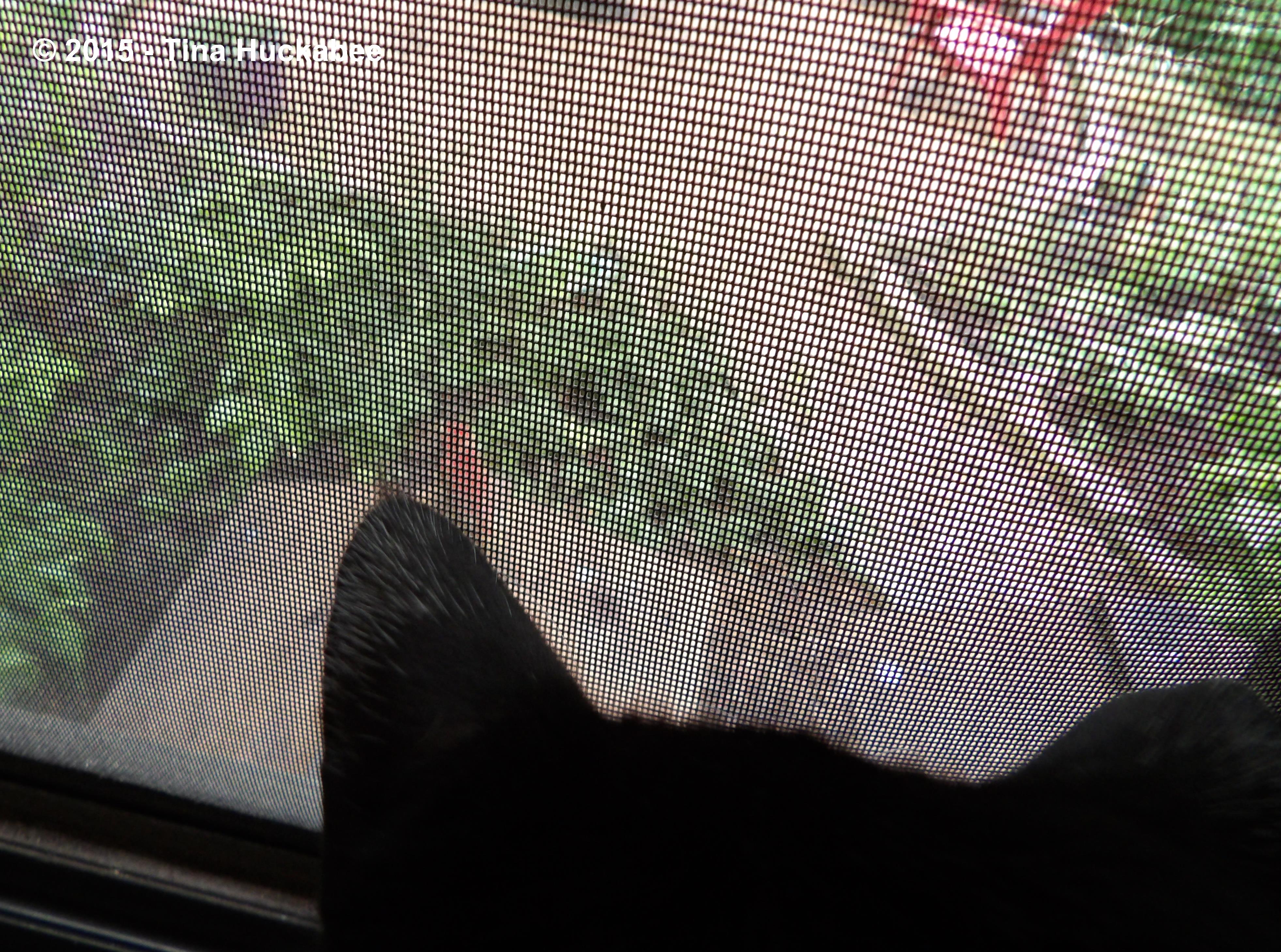
This past Sunday morning, my little Astrud cat was staring at something as she sat on that window sill, as she often does.

IMGP8380_cropped_3926x2917..new

Can you see him through the less-than-pristine screen?  The Tanager is poised on top of Scar (one of my hives).  The beautiful avian scamp flew downward for a second, likely to the entry board of the hive, then flew back to the top with his prize: a honeybee in his beak  for lunch.  He mangled my beloved little bee and deposited her down his gullet–while perched atop the hive.  That takes a certain amount of impertinence.

Additionally,  I have  mixed emotions about witnessing the effrontery.

Do I mind the Tanagers hunting the bees?  No, actually, I don’t.  I do feel a little sad about the hardworking foragers, toward the end of their lives, being snarfed down by the gorgeous feathered fiends.  And having hives readily available is tantamount  to shooting fish in a barrel.  After all, it’s not even like the Tanagers have to hunt that hard. The hives are right there and the bees are coming and going constantly, with no thought to their own personal safety–the health of the hive is what drives them.

Meanwhile, the Tanagers have found a pretty sweet deal.

In targeting my honeybees for the benefit of their tummies, the Tanagers won’t decimate my hives.  Yes, they’ll kill some and if they’re around all summer, many.  But the honeybees are in much more danger from pesticide or herbicide use on a plant they might forage from than they are from the Summer Tanagers. I don’t garden with chemicals, but the bees forage within a three-mile radius–who knows what they take nectar and pollen from? The Tanagers will kill some bees, but they won’t cause either of my hives to collapse because of harmful chemicals. The balance of prey to predator won’t be disturbed–as long as all other factors remain relatively equal.

Ahem.  Good beekeeping practices are part of that equation.

IMGP8382_cropped_2926x2714..new

So I’m welcoming the Tanagers to my garden and consider myself fortunate to observe these fascinating and beautiful birds.  I don’t see them everyday.  In fact, a couple of weeks passed and I didn’t see any Tanagers.  Then, saw one or two for several days–hanging around the beehives, of course.  Besides bees and wasps, Tanagers also eat fruit, though I didn’t see  them at the ripening blackberries.

IMGP7698_cropped_2815x1824..new

Apparently, the Tanagers have plenty to eat.  Truthfully, I rather them dine on the honeybees than the native bees, since the honeybee hives are protected and have a healthy location in which they thrive.  The native bees nest in and around my gardens, but they also nest elsewhere and may not always find such a tolerant and beneficent host.

Beekeeping and wildlife gardening–a tricky balance with those two, but there clear advantages with both endeavors and my garden and the surrounding environment are the winners.

I’m sure the bees are delicious to the Tanagers, but I think I’ll stick to eating honey.

Either way, bon appétit!

Bee Mama Missive: Scar Required Surgery, Recovers Nicely

Since the beginning of its existence as a honeybee hive, Scar has had, well, a scar across its front.

IMGP6035.new

The notable gash is a result of a table saw accident during construction.   The table saw operator was none other than Bee Daddy and he suffered injuries and a resulting scar, as well as some nerve damage on another finger.  Because Bee Daddy enjoys, um, let’s just say a quirky sense of humor, after he healed and we finally completed the hive construction, he opted to use the damaged piece in the final product.   The hive’s name, Scar, hails from that ignominious beginning.

As the hive was two years old before we hived our honeybees a year ago, the wood is now three years old and has been out in the elements for a bit of that time; it’s showing some wear. The hive is made of cedar, which weathers beautifully, but the wood piece in question, a practice piece of sorts, is pine and damage and warped.  It began to pull away from the box above it, potentially exposing the inside of Scar’s hive.  If not for the dutiful and exact work of the bees to seal any openings with propolis and my stuffing the on again/off again emerging crack with comb that we’ve harvested, our little Scar bees wouldn’t have been as cozy and safe in their hive during the last part of winter.

The time came that the comb-patch just wasn’t working anymore–Bee Daddy really needed to construct another piece to replace the disfigured and deformed front with a new, fresh piece of cedar–a honeybee hive facelift, if you will.  About two weeks ago, as part of our monthly hive check, we operated on Scar to replace the contorted front panel.

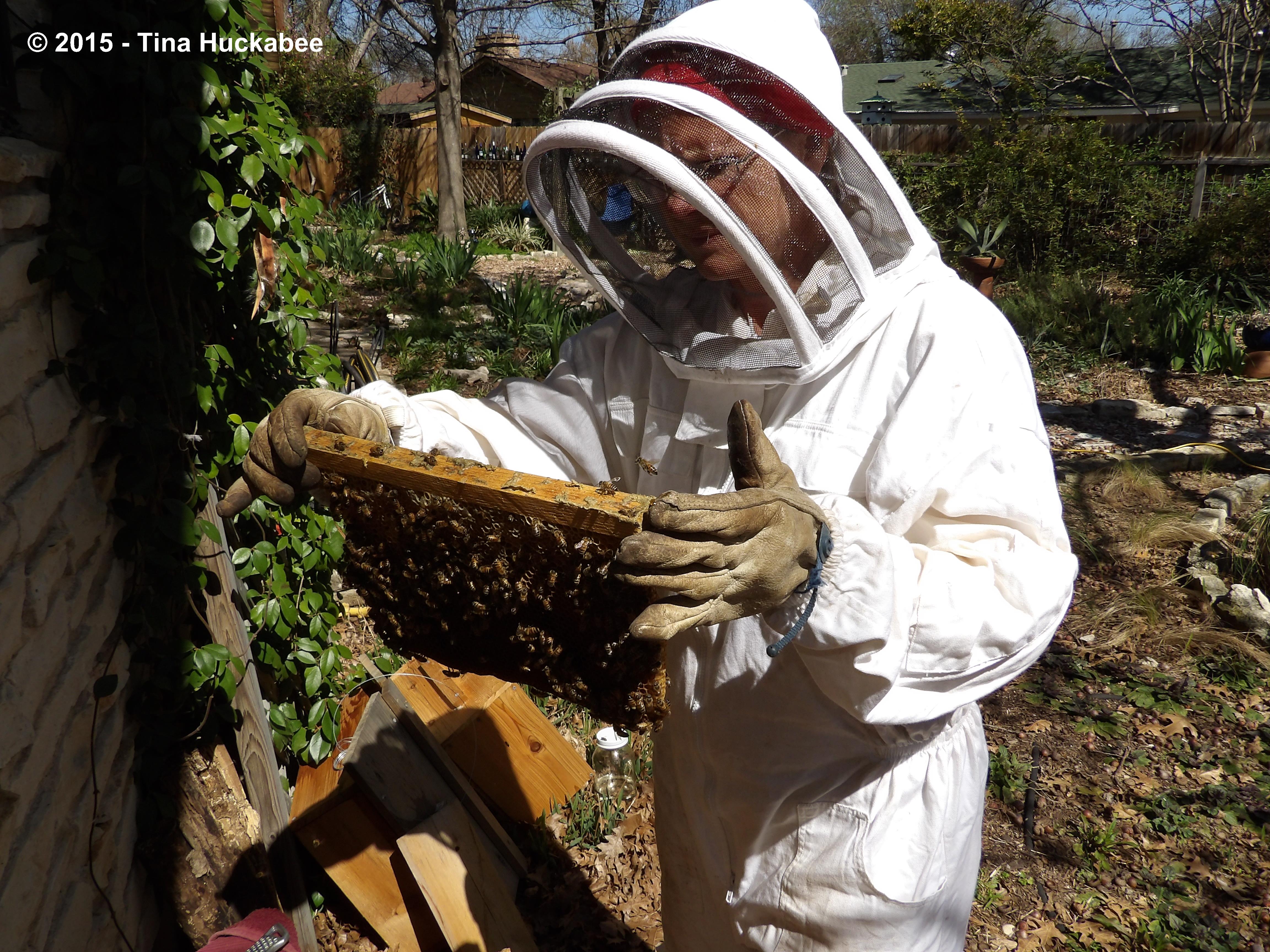
Suited up, smoker fired, bee surgical equipment at hand, we’re ready to go!

IMGP6024.new

IMGP6026.new

IMGP6029.new

Look at those bees and their early spring work.IMGP6025.new

IMGP6028_cropped_3990x2953..new

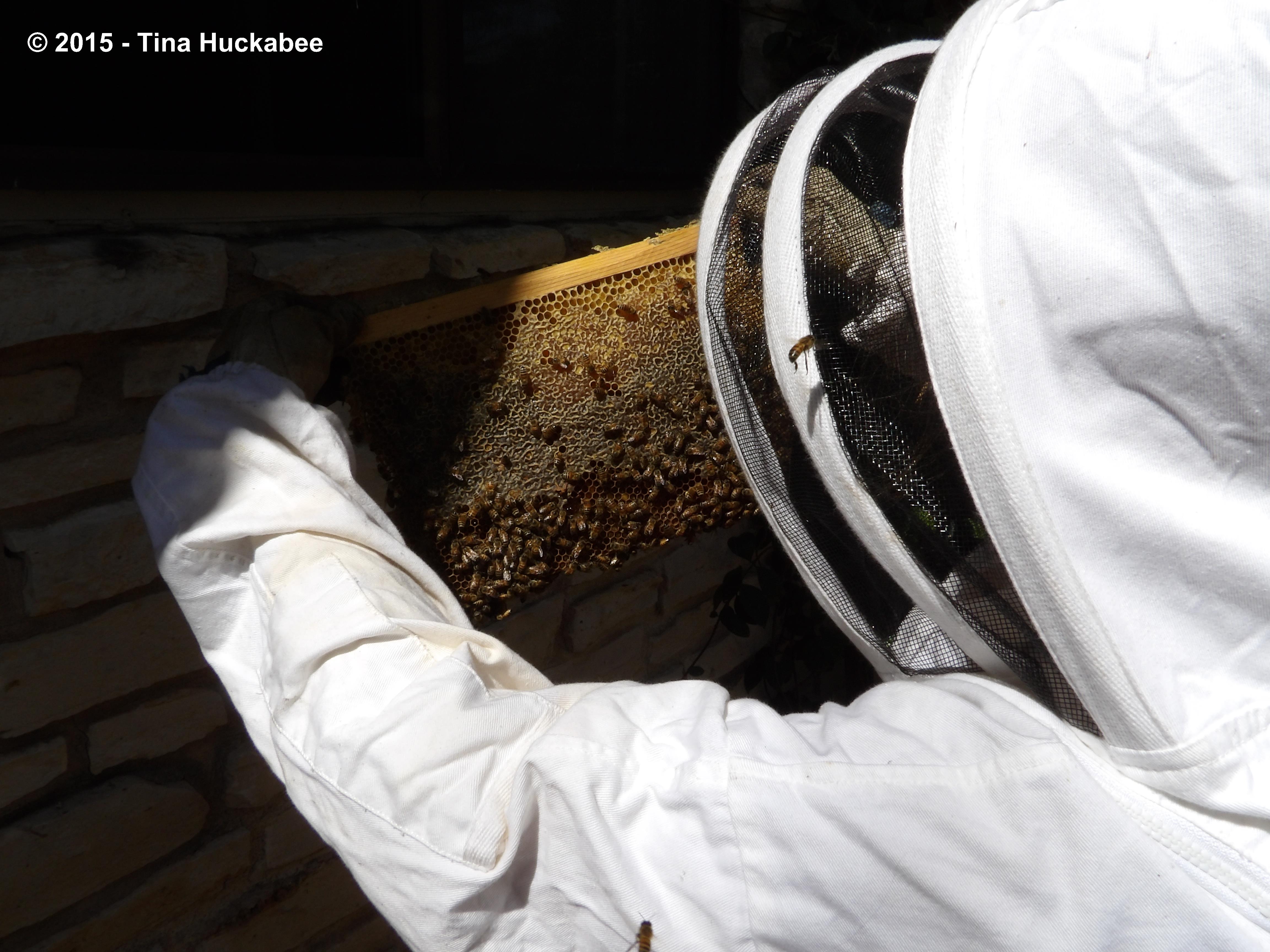
Pollen stores, capped honey,

IMGP6030.new

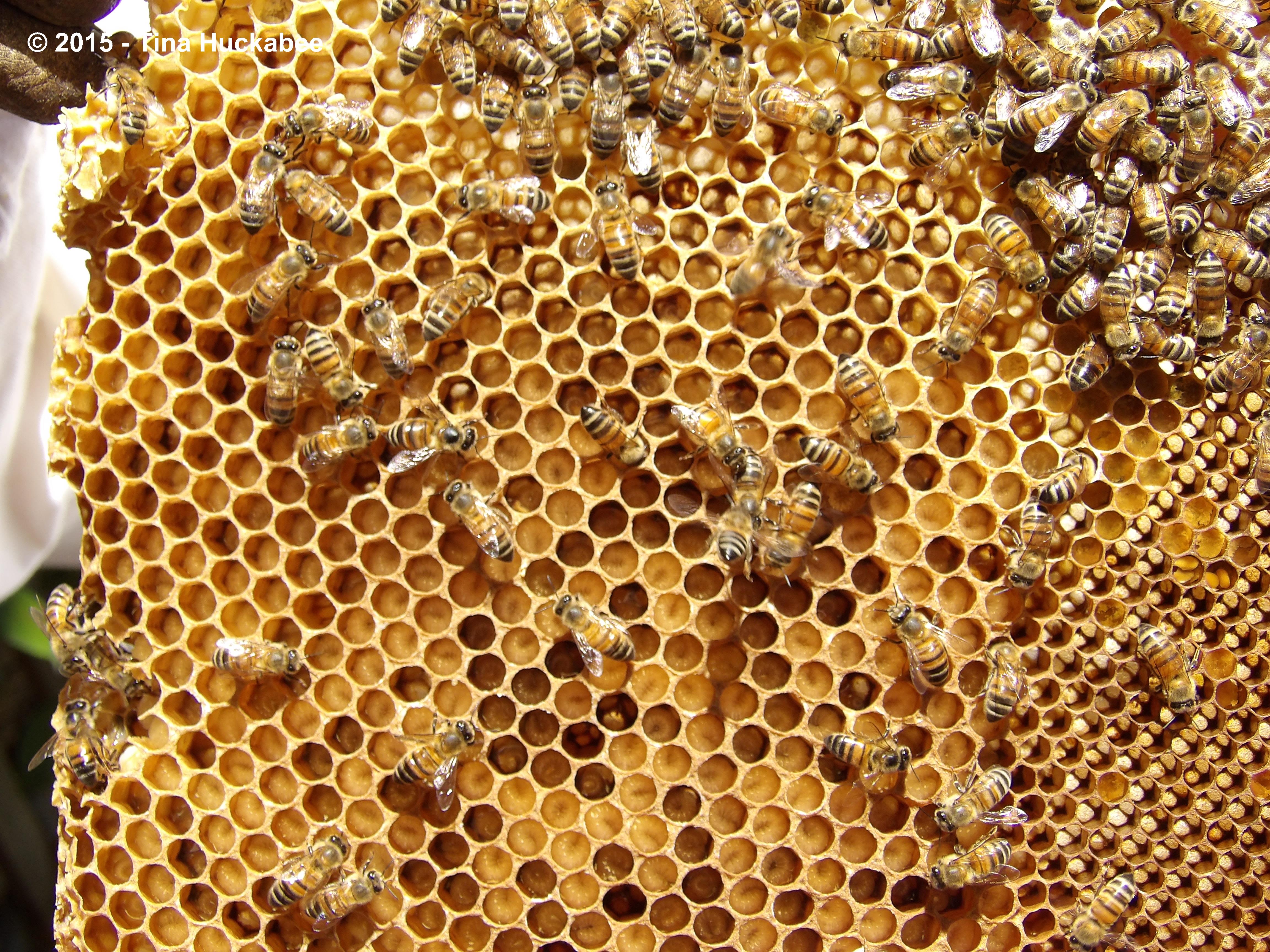
…and lots of brood.

IMGP6032.new

A closer look.

IMGP6033.new

Go Queen Scar!!

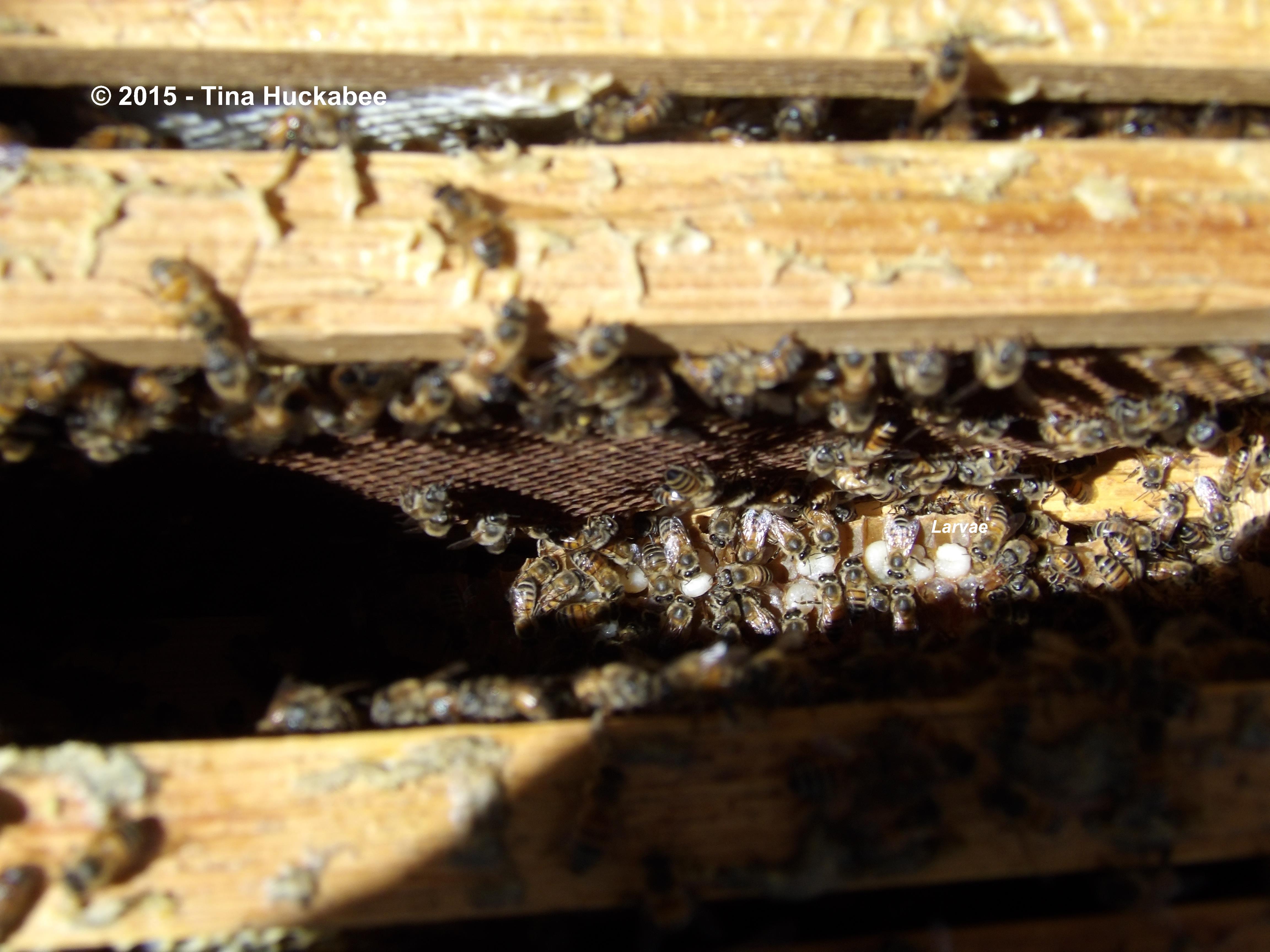
Unfortunately, sometimes as I pull the top-bars up and out for inspection,  the comb breaks.  Here you can see some newly exposed larvae (little white blobs) within a broken comb.IMGP6031.new

These larvae were large and probably capped, which is the last stage of development.  I don’t know if the nurse bees saved those particular larvae.  I always feel badly when I set the bees’ work back, but the Warre hives and top bars make the human part of the beekeeping equation tricky at times.  If the bees can’t re-cap the larvae, the hive consumes the protein and re-uses that material.  It sounds gross to us, but really it’s a remarkable use of their resources–they waste nothing and it’s all for the good of the hive.

As Spock would say:  The needs of the many outweigh the needs of the few. 

Apologies for the geek-out.

Bee Daddy readied the drill and the deconstruction began. I thought the noise of the drill would annoy the girls, but they were well smoked and laid back.  The front came off with no problems.

IMGP6034.new IMGP6036.new

As I imagined this project and the steps required to quickly and efficiently remove one wall and replace with another, somehow in my head, I thought comb would be attached to the front wall.

IMGP6037.new IMGP6039.new

Of course it wasn’t.

IMGP6038.new

The bees build comb and attach to the top bar, occasionally to the right and left sides of the hive, and sometimes, to other comb.  But there was plenty of space between the first honeycomb and the front piece.  The new piece was placed, screws drilled in,

IMGP6042.new

…viola!

IMGP6043.new

Scar’s facelift is a success!  The operation only took a couple of minutes and we popped the top box and roof on and left Scar to calm itself and get back to the business of being honeybees.

I believe I mentioned the odd sense of humor my beekeeping partner has?  He decided that before attaching the new piece of wood to the hive, to recreate a scar in the wood.IMGP6044.new

After all, we don’t want to change the name, do we?

After that drama, we checked Mufasa too,IMGP6045.new

…and all looked good there as well.  Capped honey, capped and uncapped brood– spring is buzzing right along for both hives.  I feel a great sense of relief when we check our bees and all is as it should be. Mufasa’s bees clustered along the back and sides of the hive for a while, but within an hour or so, all returned to the hive, except for the foragers and the guard bees placed in front of the hive.

IMGP6046.new

IMGP6047.new

IMGP6048.new

The honeybees are off to a good start for their second spring.  I suspect that the next time we check Scar, we’ll add another box, as there was so much full comb in the first. And while Mufasa remains the smaller hive, the bees are producing brood, comb and honey.

As more plants enter their blooming time,

IMGP6465.new

IMGP6466.new

IMGP6480.new

…the bounty should continue for our honeybees. Last night, I could smell honey in the air.