In my last post, Still, I profiled a Neon Skimmer resting on the newly emerged bud of my Manfreda undulata, ‘Chocolate Chip’. When I took the photo, the stem was about 12 inches from the base of the plant.
Well, it grew, seemingly reaching for some of the cottony white clouds ubiquitous to the Austin sky.
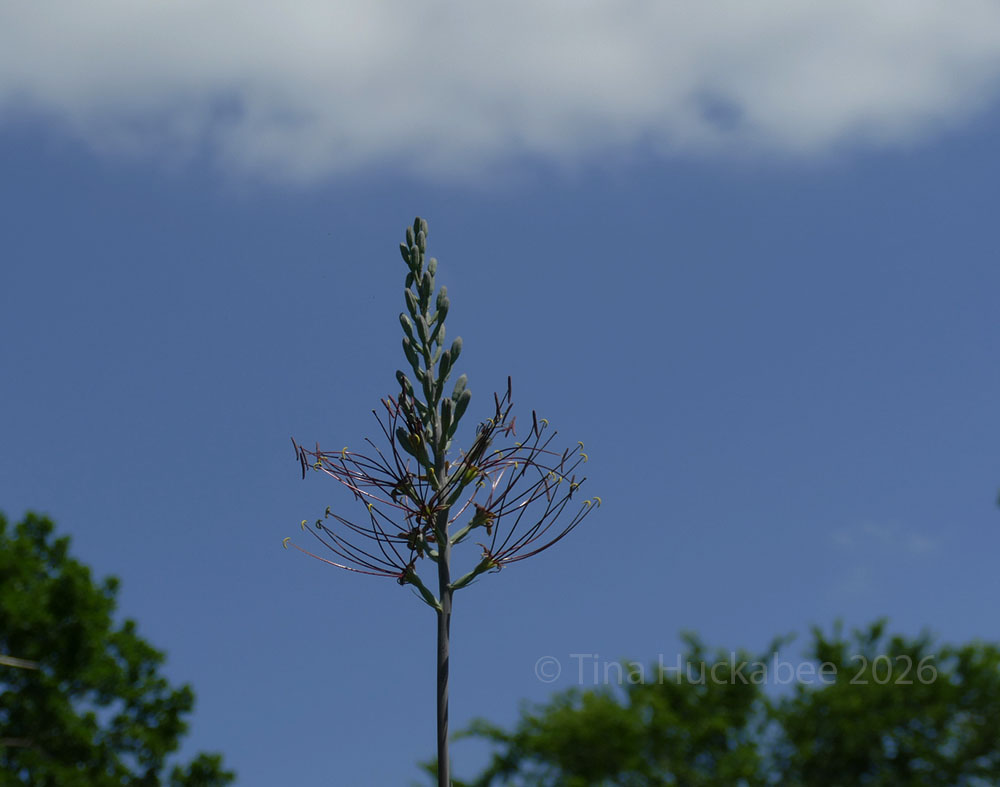
And then it grew some more!
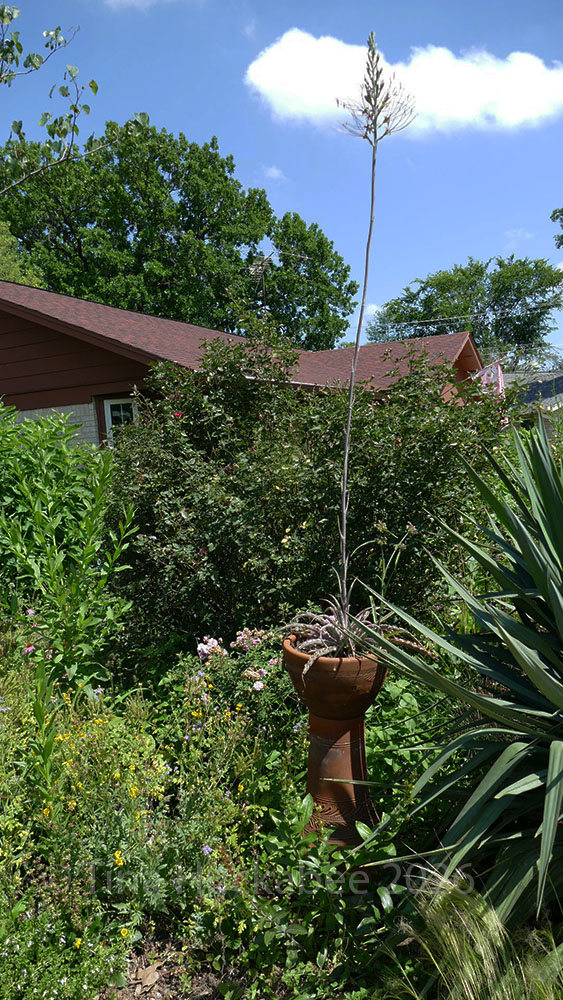
Each late spring, this charming cultivar sends up its bloom stalk at the beginning of May. I don’t know exactly how tall it gets each spring as I’m not about to grab the ladder and measure, but it’s at least 6 feet in height as it opens its small flowers over the course of a week or two.
I planted a native Texas Tuberose, Manfreda maculosa, years ago, but it didn’t fare well in my part-shade garden. I decided to try this cultivar relative when my front garden became fully under the blast of the Texas sun. Additionally, I’ve kept it in a pot, where it seems reasonably happy.
The ‘Chocolate Chip’ part of the name hales from the plentiful dots that fill the succulent’s foliage. Sage green foliage is complemented by eggplant-purple chips dotted generously on wavy leaves. This is a plant that is always interesting to observe.
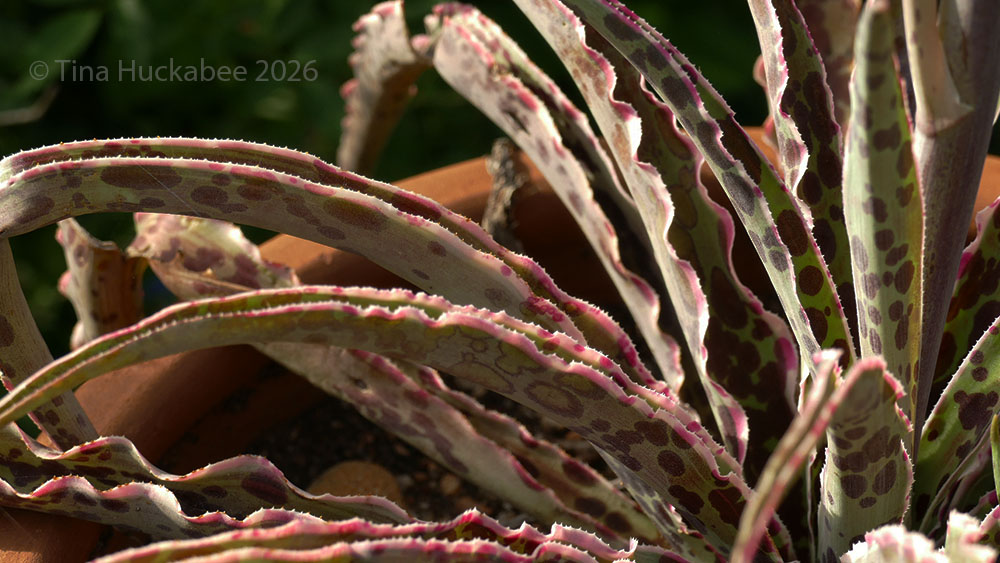
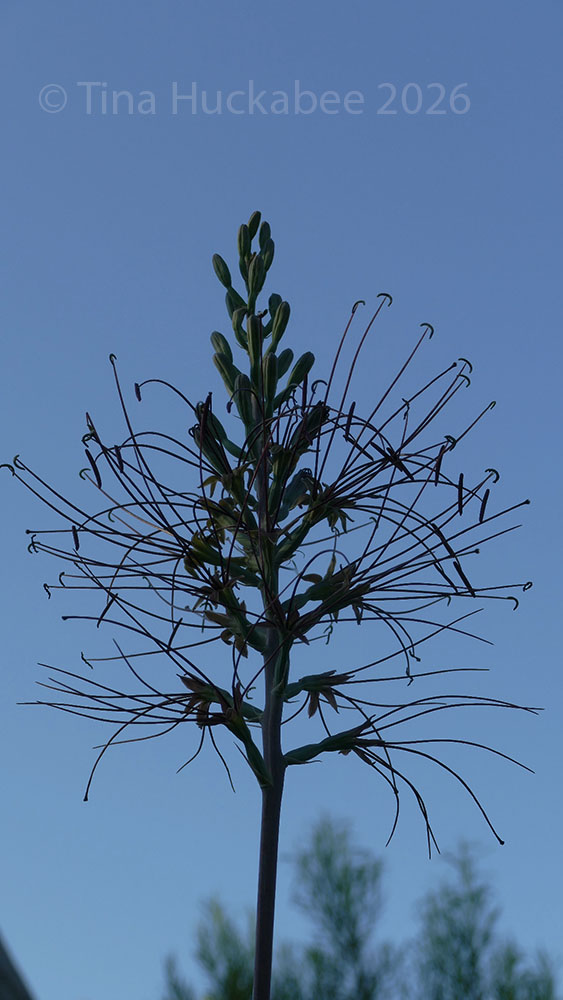
I haven’t yet pruned the stalk, I’ll get around to that in time. The manfreda is an attractive plant year-round, weathering summer’s heat and winter freezes with little care. I douse with water, as needed, in summer, covering the plant when ice threatens during winter. Then I wait–with the skimmers, butterflies, and birds–for the emergence of the bloom stalk, the rapid growth upwards to the sky, and the opening of the flowers against the blue sky.


An attractive plant and flower, boy, it sure grows tall!
LikeLike
Tall and FAST!
LikeLike
This former math teacher can’t resist noting that you can approximate the Manfreda’s height with a little elementary trigonometry. You could even listen to Tchaikovsky’s “Manfred Symphony” as you do so.
LikeLike
I’m not a math person. Math and I don’t get along. I married a math person, he and I get along. That being said, I’m actually pretty good at estimation, but who knows? I might be several feet off of the stalk’s height!
LikeLiked by 1 person
That Manfreda is really tall. I guess it is strong enough to survive wind and storms.
LikeLike
Yeah, it doesn’t waver much, I’ve noticed. Stalwart!
LikeLiked by 1 person
Nice photos! I love the silhouetted bloom.
LikeLike
I like it too, Amy. I took it on a calm, early morning, before the sun was too high.
LikeLike
Oh, this is so delightful, Tina. That’s a lot of growth in a short time! I love those plants that are so happy in their spots that they just grow and grow, and take little care. Your photos are lovely, too.
LikeLike
Yes, it pops up in a hurry! Thanks, it’s been such a nice spring here.
LikeLike
That fast growth rate reminded me of century plants, and made me wonder if this is related to agaves. Sure enough: DNA testing led botanists to move the Manfreda genus into Agave. For example, the well-known Manfreda virginica is now classified as Agave virginica. But, given Manfreda plants’ differences from agaves, like those purple-spotted leaves and their herbaceous nature, a lot of nurseries and institutions still use Manfreda as the horticultural name. What a treat it must be to watch yours develop!
Manfreda seemed so familiar to me, and sure enough: I have a photo of the seed pods of M. virginica sitting in my files waiting to be shown!
LikeLike
I should have mentioned that it’s an Agave, my bad. I like it because it doesn’t spread wide and it’s not a plant that hurts! I’ve seen the native cluster in sections and they’re so pretty together.
I look forward to your M. virginica photos!
LikeLiked by 1 person