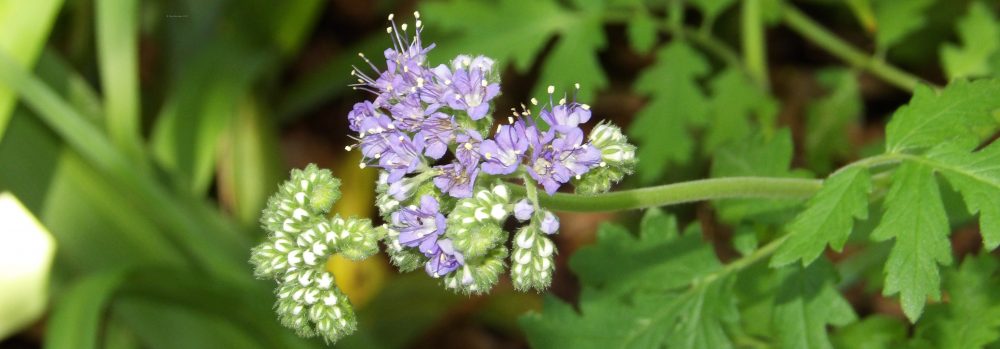
Bee Daddy and I have been honeybee keeping for 10 years, hiving our first bees in April 2014, which you can read about here. As 2024 winds down and another year of beekeeping is under our veil, a review of this year’s bee happenings is in order. I’ve learned much about bees in this last decade; they keep us on our toes with their fascinating and complex biology, each season teaching (or confounding) us with behaviors we haven’t previously seen from them.
Last February, an odd little swarm hung out on our Mountain Laurel tree for about a week. As I recall, the weather was cold and wet and the small swarm just stayed–until they were gone. We’ll never know if they went back to the original hive or if they moved on to find a new home. If they chose the latter, it’s doubtful that the small group survived, but I always hope for the best. In October, I wrote about our hive, Woody, which absconded in June, leaving us with only one very productive hive, Bo Peep.
In spring, with mama Eastern Screech owl in the nest box, but before her eggs hatched, I observed scout honeybees buzzing in and around the box, mama owl vigilant and nervous. I wouldn’t have noticed the bees if we hadn’t installed a camera inside the box, but thankfully, we did! Once I saw the buzzy bees on my computer screen, Bee Daddy and I sprang into action, as we guessed the bees were looking to swarm, owl boxes being a favorite real estate for honeybee swarms. An owl box is a ready-made spot for a bee hive: up in a tree and safe from predators, enclosed (except for one entry, well guarded by the guard bees), and a cozy spot in which to build comb.
We belong to two local beekeeping groups and we sent out a notice requesting advice about the situation. A beekeeper in a nearby neighborhood responded with an offer to lend his swarm trap.
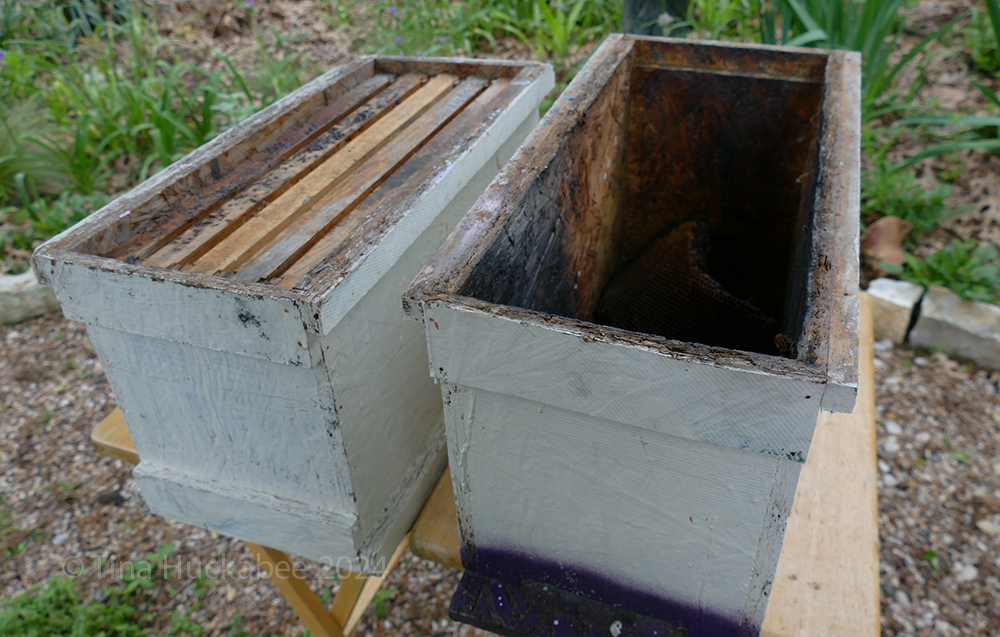
A swarm trap is any type of wooden box with an opening at the bottom of the box, so that the bees have access, but can protect from invaders. Bees like enclosed spaces where they can safely and efficiently build their hive. Professional and hobbyist swarm traps usually have some frames installed, so that the bees get right to their obsessions: making honey!
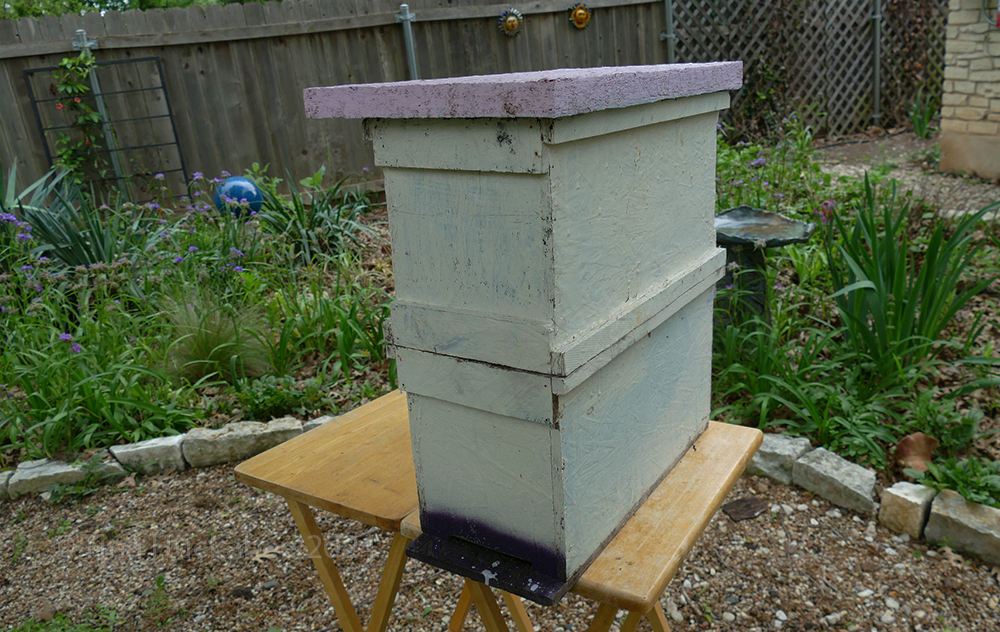
Initially, we set up the swarm trap near (just under) the tree where the owl nest box resides, but decided to move the contraption a little farther away, next to the house.

We set up the swarm trap and dabbed some lemongrass oil around the trap. Bees are attracted to lemon fragrance, so we hoped they’d find the lemony box an appealing place to hive. Additionally, we painted some almond oil, which bees do not like, around the entrance to the owl box, to discourage the bees from further exploration of that potential hiving place. Within hours, a swarm of bees moved into the swarm trap.


The next afternoon, the beekeeper came to close up the swarm trap and deliver the bees to his brother, who owns some land outside of the Austin area, the bees guaranteed a chance at building a healthy hive. Because it wasn’t near sundown (which is the optimal time to close up the trap, as most foraging bees are inside by nightfall), some bees were out doing their thing with flowers. When our wayward–and now homeless–foragers returned, there was no home for them. Just before dark, I noticed lots of bees aimlessly flying in the area where the trap had sat; they were clearly confused, looking for the hive that had been a temporary home. I quickly set up a safe haven for these abandoned bees: a regular bee box with a plywood cover. I dabbed lemon oil on the box and the the bees moved in for the night.

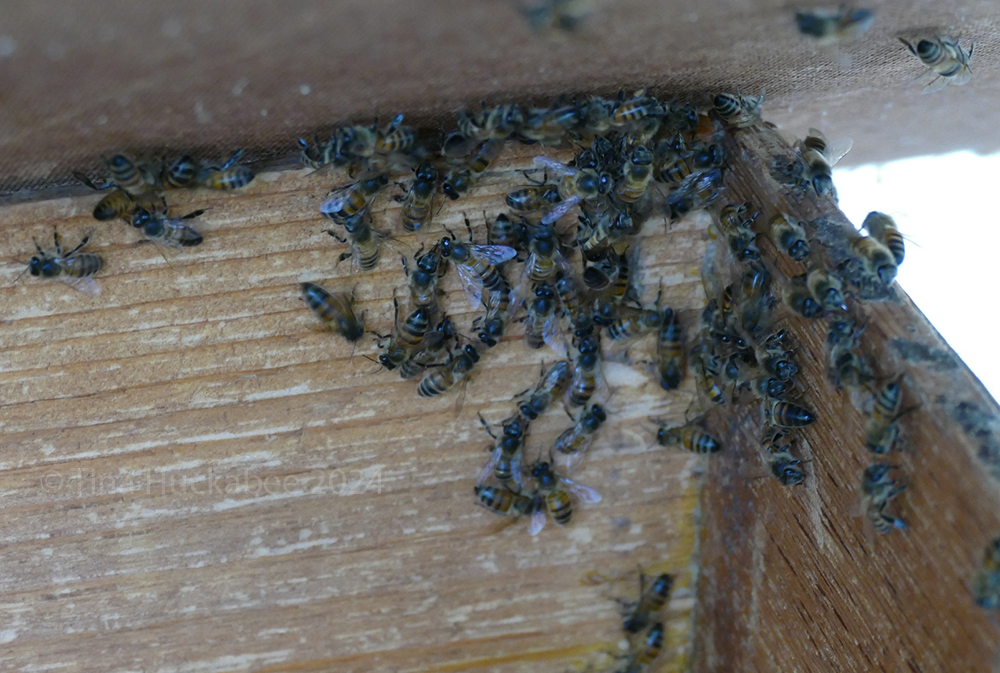
For the next few weeks the little band of bees (maybe 200?) hung out in that box, some foraging during the days, others staying in the box. Over time, the population dwindled, and eventually, the bees all died. Honeybees only live about 6 weeks and though most of their hive mates had left for parts unknown, at least this group had a safe enclosure to spend the rest of their days.
One afternoon in September I noticed bees crowding in the hole of the owl nest box.

Bee Daddy had built a sliding door over the the entry so that critters–like honeybees–couldn’t get into the box during the owls’ off season. At some point last spring, the door broke, life happened and we forgot that the door needed replacing. This vagabond bunch of bees noticed the attractive box and settled in. I watched them for a few weeks, thinking they would move on, but they stayed. We attempted to attract the bees with a makeshift swarm trap, sweetly anointed with lemon oil, but the attractant was ignored. These bees were clearly pleased with their owl box hive. Weeks later, we decided that we had to take the house down and figure out what to do with (what we thought) were a few bees in the owl nest box.
As Bee Daddy was up in the tree (let’s hear if for dangerous home projects!), he suggested there were lots more bees than we had assumed.
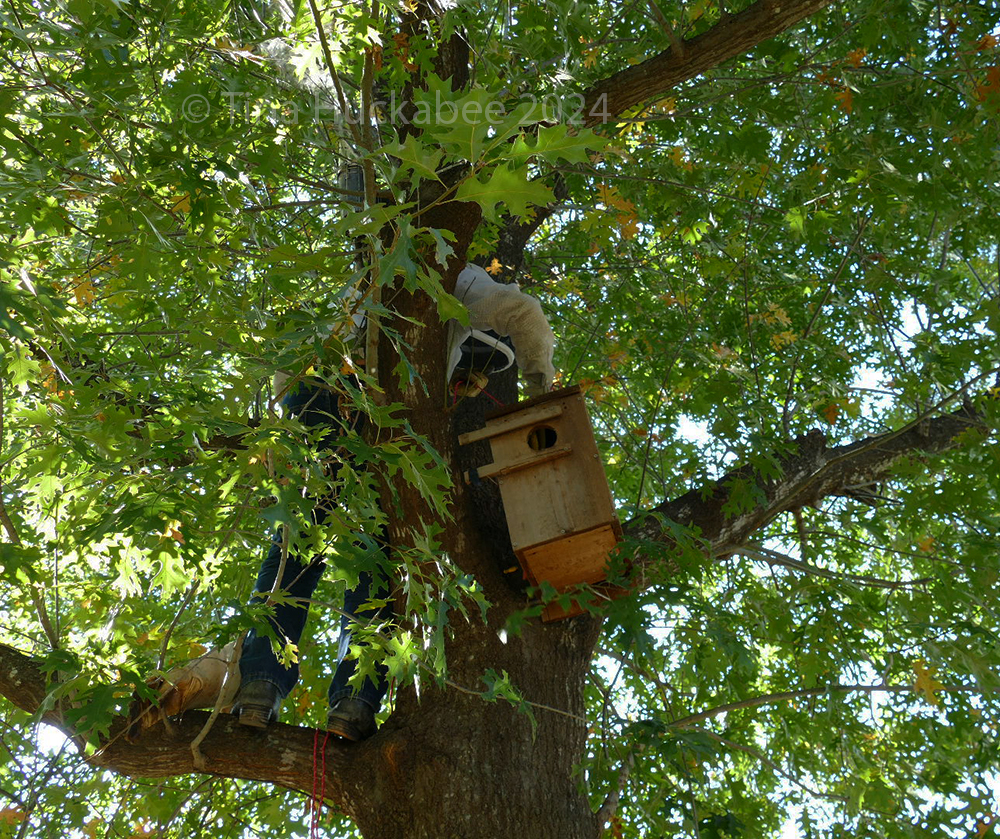
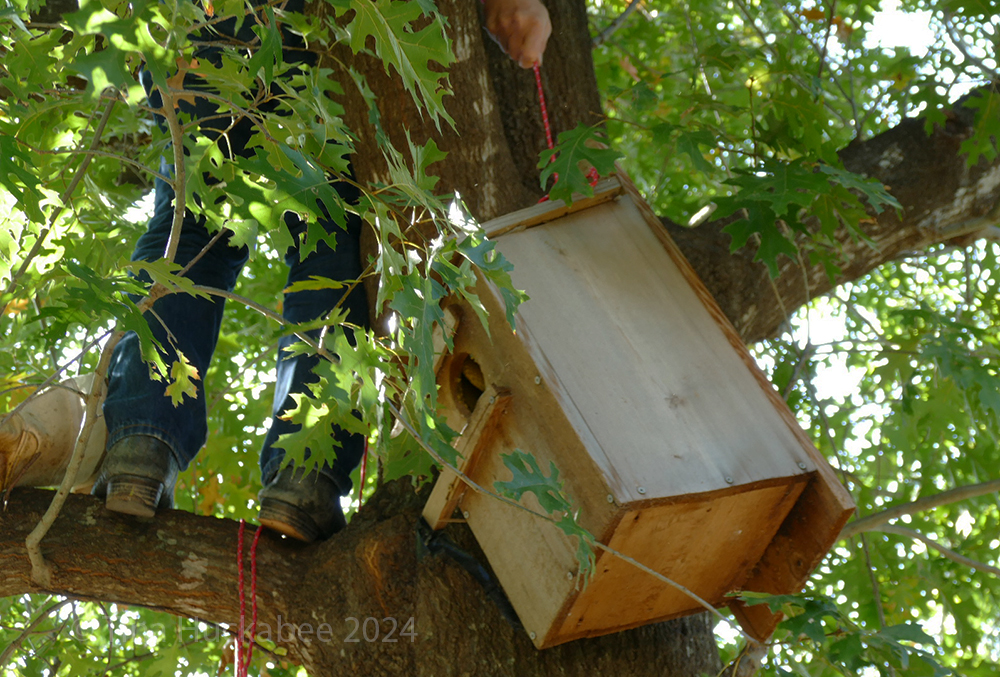
He lowered the nest box and yes, there were lots of bees and some stunningly beautiful comb.

Those darn bees!
We placed the owl/bee box near Bo-Peep, hoping the bees would go home, since they likely came from Bo. Instead, they remained in their newly hived home, so we simply put the roof back on the box and let the bees be.
From the time I first noticed the bees in the nest box to when I saw the last few dead in the box was about 6 weeks. This band of bees was a ‘late swarm’ and realistically, had no chance of surviving winter. There were too few of them to stay warm during the coldest days and there was no queen, so no hope for growth or replacements for aged bees. I’m baffled why they left the safety of a large hive, but honeybees do weird things. I guess that’s really my take-away from beekeeping: honeybees are weird. Beekeeping is three-fourths science and one-fourth art, the art part being about accepting that honeybees have their own agenda and humans play (at best) a limited role in honeybees’ lives.
As we enter 2025 and a second decade of keeping bees, I continue humbled and awed at our bees’ drive and sense of purpose and community. Bo Peep, a lonely sentinel in the back of the garden, still active in this mild winter, is also resting for the upcoming season of growth and honey production.

Will Bo have a new hive neighbor? I’m not sure. I would be content with just one hive, but since hives abscond or decline for a variety of reason, I would have to accept that if Bo disappeared (whatever the causes) we’d be left with only one hive until spring of ’26. I’m not ready for that decision. I am sure Bo’s bees are content to live their lives this winter, safe in their cozy hive when it’s cold and wet, spreading their wings to pollinate and gather nectar during mild days, and waggling to communicate with their sisters.
Honeybees may be weird, but they’re also wonderful and it gladdens my heart to see them in my garden, as they collect pollen and nectar, knowing that they’re fulfilling all of the other responsibilities inside the hive which humans are not granted daily witness.


Bees being bees, Bee Mama smiles.
 My Gardener Says...
I did not realize bees had such a short lifespan. I guess most insect do.
LikeLike
Except for the over-wintering bees, yes, they live a short life, at least from our perspective. 🙂
I hope your 2025 is all you wish for!
LikeLiked by 1 person
A great New Year to you!
LikeLiked by 1 person
Thank you for sharing your fascinating experiences with these amazing critters, Tina. It seems as though there will never be a dull moment when these buzzing insects are around. It must be a great feeling to be Bee Daddy and Bee Mama. I hope 2025 will be a good year for all of you. 🐝🐝🐝
LikeLike
It’s so nice to see them all the time. I also have gobs of native bees, too, and they’re even better pollinators. It’s wonderful to have an alive garden!
Wishing you a peaceful 2025, Tanja!
LikeLike
It’s nice that they share their bounty with you! They certainly are intrepid beings. I appreciate bees’ generosity every day as I take a teaspoon in my tea every morning, blessing the lifework of a dozen bees. Rather humbling!
I received a book for Christmas that you may have heard about: ‘What the Bees See’ by Craig Burrows. Photographs of flowers in ultraviolet light are amazing!
LikeLike
They’re not always willing sharers, though! 🙂 Honey is a remarkable substance: good in tea and also if you have a burn!
Thanks for telling me about that book. I haven’t heard of it, but I’ll check it out!
Wishing you a good 2025, Eliza!
LikeLiked by 1 person
“Honeybees are weird” is not the take-away I’d have expected, but you’re the beekeeper, and you know what you’re talking about. Maybe in the same way we can describe someone as befriended, bejeweled, or bewitched, we can describe you as bebeed.
LikeLike
I really should say that beekeepers are weird, because…we really are!
A happy 2025 to you, Steve!
LikeLike
Ten years, wow! I think we may have been following each other for at least that long. Time goes fast. Every trip to your blog is a joy, and I always learn something new. All the best for the year ahead!
Beth @ PlantPostings.com
LikeLike
Thank you, Beth, I feel the same way when I visit your blog. Yes, we’ve been blogging buddies for a while now! Wishing you a happy 2025!
LikeLike
What a fascinating post. I’ve enjoyed learning more about these bees of yours over the years. What struck me here were those combs; they look remarkably like ears of Iowa corn! And Bee Daddy — is he wearing a shirt monogrammed with his title?
I’ve been noticing dead or dying native bees recently: not many, but right on time. One or two show up on the boats each week. It’s sad, but everything has a life span. I suspect even more are going to depart this mortal coil in a week or so, when that blast of cold makes it down here.
Is that a current photo of the forsythia sage? If so, it’s really holding on. I’m sure the bees appreciate it!
LikeLike
We’ve learned so much over these past ten years and yet, the girls always throw something out to us that is a surprise! They are fascinating critters. Bee Daddy’s jacket is from a honeybee company called ‘Dadant’–it just looks like the beginning of the word, Daddy. Lol!
Yes, in late fall/early winter, it is common to see more dead insects and it always makes me sad. But I assume they lived their full measure and take some comfort in that.
The forsythia bloomed well until our first killing frost, in the upper 20s. It’s a great fall (and winter!) bloomer.
LikeLiked by 1 person
I lecture my neighbors all the time about lawn weed killer that takes all the clover away. One summer before it all died my yard was white with the bloom and very busy. I am not a bee keeper but I know we need them to pollinate everything.
LikeLike
I wish folks would lay off the chemicals in yards/gardens. They’re so unnecessary. They stink and are so rotten for so many things. Thanks for doing your part to educate others, Debra.
LikeLike