May Flowers

May flowers–it’s such a cliché–but one that I’m going to embrace on this balmy May bloom day. The pinks in my garden seem to be front and center at the moment. Dusty  pink blooms of this Red yucca,  Hesperaloe parviflora, pop against a backdrop of Soft-leaf yucca foliage.

IMGP7879.new

While the blooms adorning a different Red yucca bloom stalk flash a bit of yellow–just enough to keep things interesting.

IMGP7891.new

With abundant rain, the Rock rosePavonia lasiopetala, is flushed full of foliage growth, but the few first blooms are opening up,

IMGP7889.new

…and many more will follow during the long growing season.  In truth, this is a plant that is floriferous in moderate drought; lots of rain produces lots of leaves, but fewer blooms. No matter, our summers are reliably dry and the multitudes of Barbie-pink blooms will turn heads as they open early in the morning, close by mid-day,  throughout the long summer.

IMGP7880.new

The pollinators and the gardener will enjoy the on-n-off bloom cycles of this hardy, small shrub well into October.

Purple coneflower,  Echinacea purpurea (which look pink to me) are in full spring show.
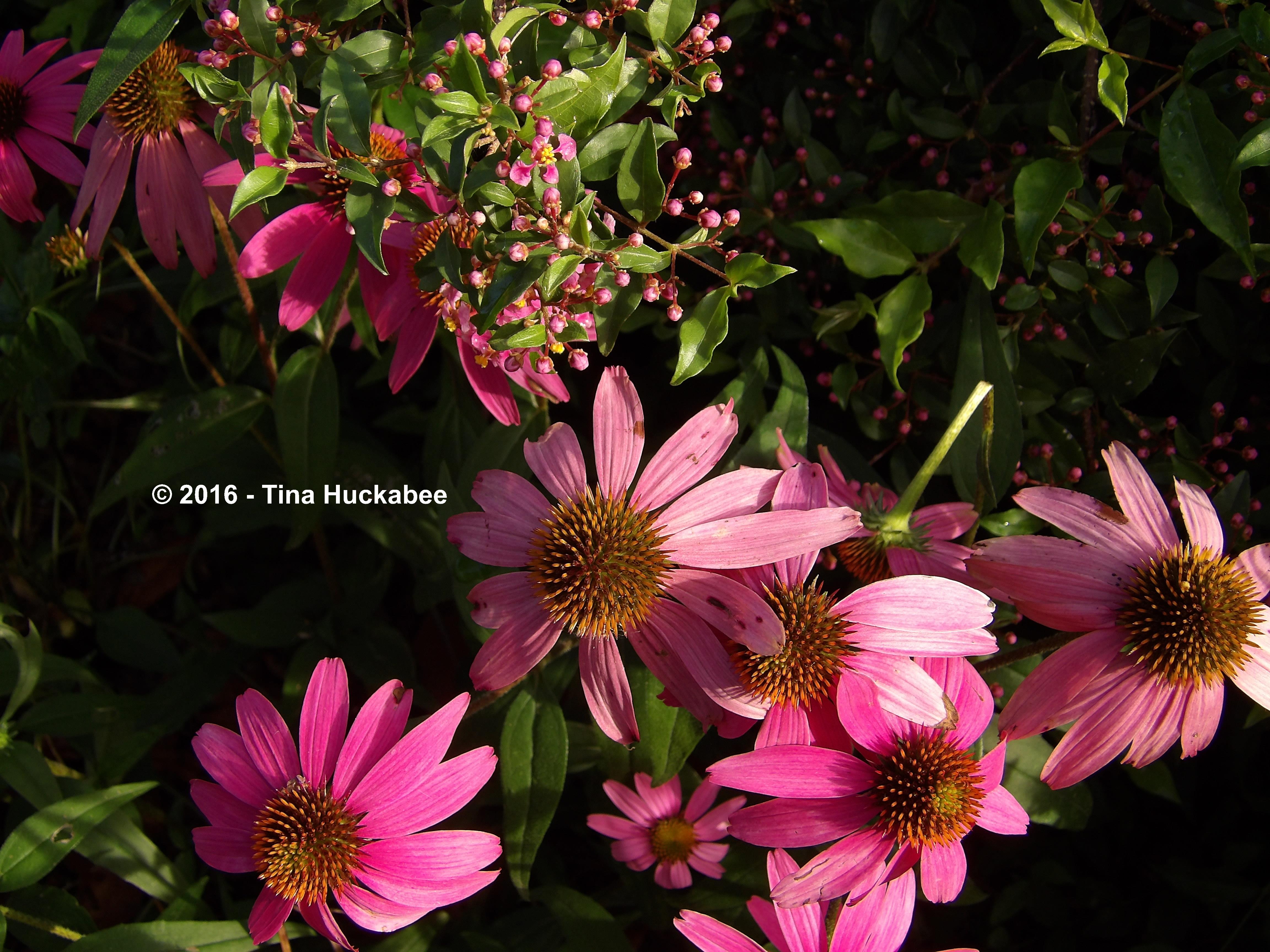
IMGP7888.new

And the large shrub, Barbados Cherry,  Malpighia glabra, is blasting the garden with its clustered version of the pink and yellow combo.
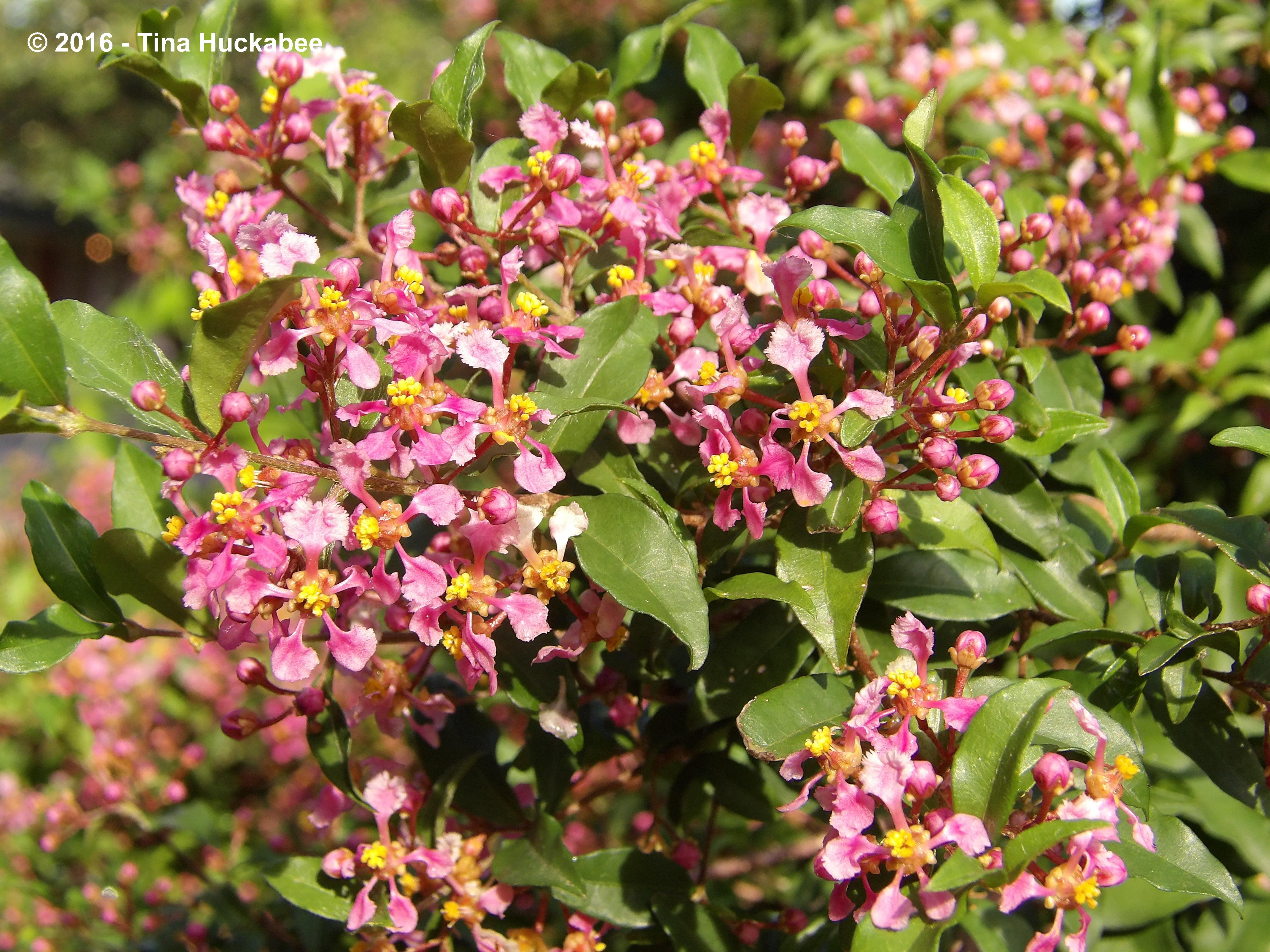
IMGP7887.new

Additionally,  the Barbados Cherry blooms fill the air with a lovely fragrance.   You can’t smell the blooms while reading this post, but the fragrance is special–a May garden delight.

Barbados Cherry and Purple coneflower are pink pals in the garden.
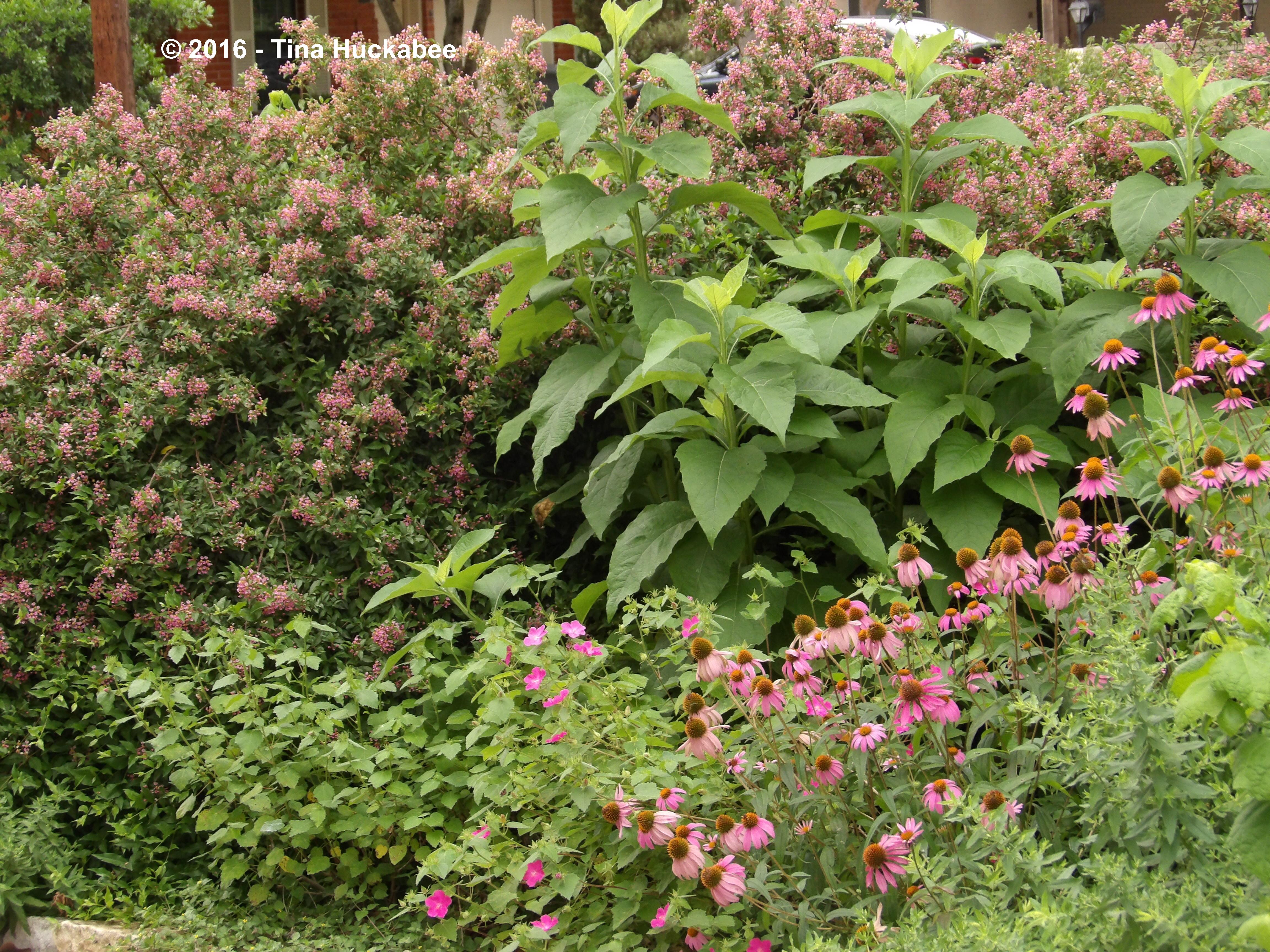
IMGP7917.new

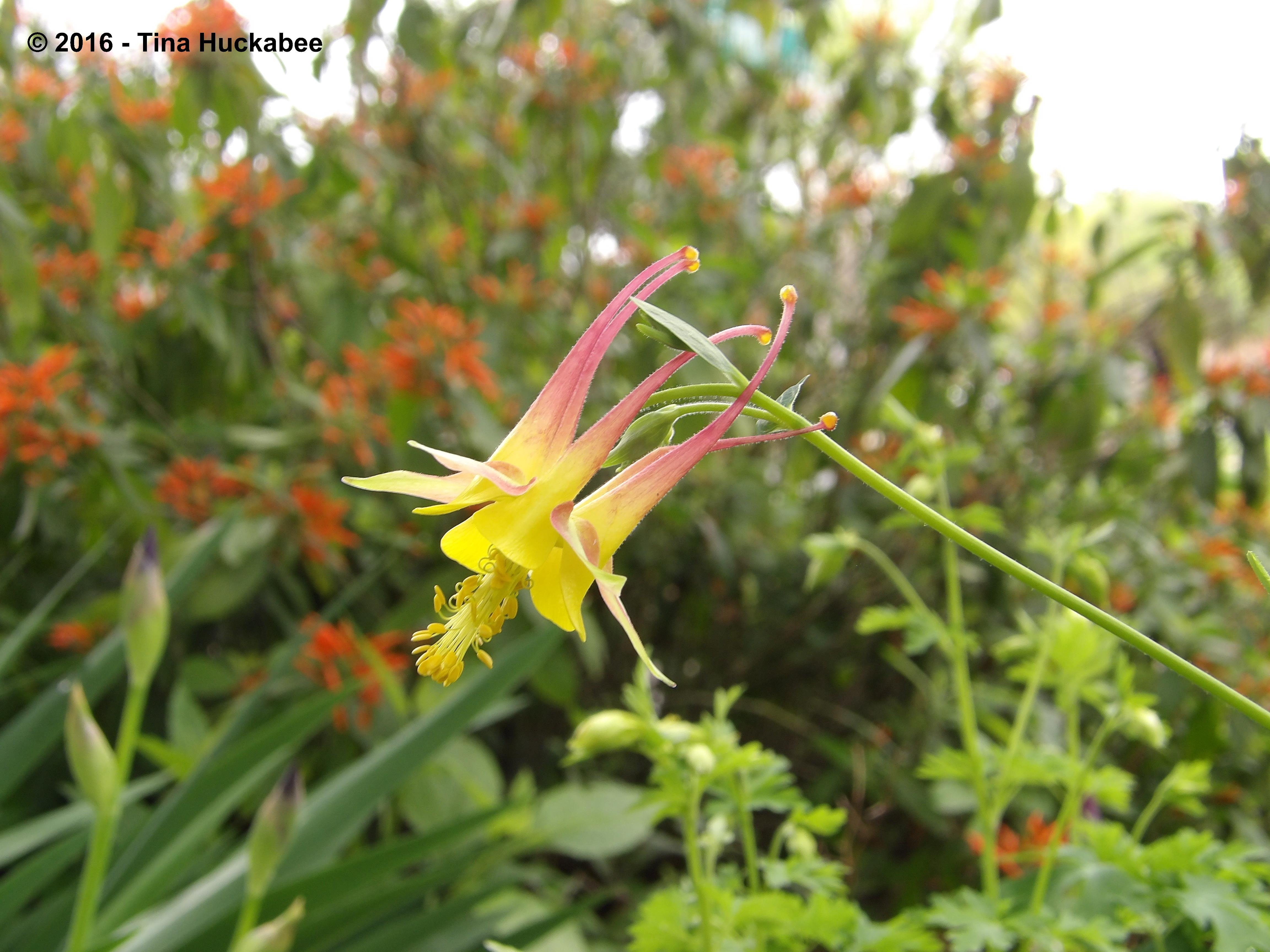
Pink does not rule all of my garden though.  The yellow (Aquilegia chrysantha) and yellow-red (Aquilegia canadensis) Columbines are on their way out, having bloomed since late February.  However, they’re still producing for the pollinators, with some energy set aside for future seed production.

IMGP7884.new

Columbines soldier on as spring wanes and the temperatures warm. A cool season plant here in zone 8b, I miss Columbines when they’re done, but always enjoy their fairy-like, shooting-star charm in the cool spring garden.

Heartleaf Skullcap,  Scutellaria ovata, is filling the back garden with drifts of grey and blue.

IMGP7864.new

IMGP7896.new

While Majestic SageSalvia guaranitica, is truly grand in the royal blue it wears.
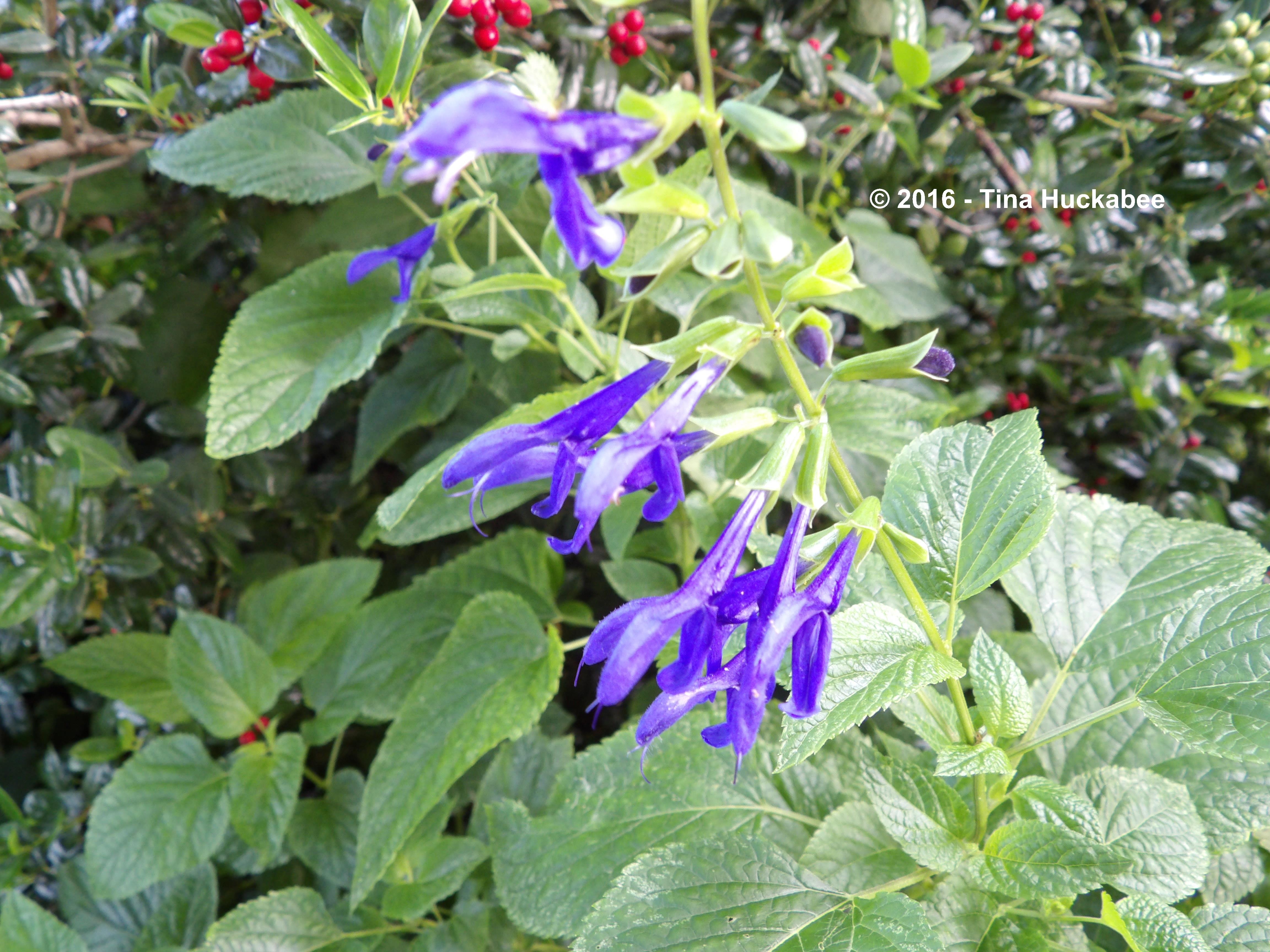
IMGP7885.new

Finally, the creamy blooms of Twistleaf yuccaYucca rupicola, have made their once-per-year appearance in the front garden.  Poised atop the tall (5 foot) stalk, they beckon to native and honeybees to sip and gather from their floral bounty.

IMGP7881.new

Once the blooms are done, I’ll trim the stalk–maybe drying it for further use as a stake for some wayward plant later in the year.   The foliage is handsome, year-round, lending structure and evergreen sturdiness to the garden.

IMGP7882_cropped_4000x3272..new

Somehow, I managed to choose photos of all these blooms with not a single pollinator in sight.  Pollinators are in the garden and in abundance–nectaring and pollinating, even if I didn’t capture that particular beauty in this round of photos!

Fortunate to live where May blooms are plentiful,  I thank Carol at May Dreams Garden for hosting this monthly bloom frenzy known as Garden Bloggers’ Bloom Day.  Join in, share your garden pretties, then click over to her lovely blog to see and learn about blooms from many places.

Bits of Blooms

Celebrating a bit of bloomin’ for April and I’m loving my back garden’s bloomin’ bits.

IMGP7014.new

The fuchsia bloom spike of Hill Country penstemon (Penstemon triflorus) is almost drowned out by the loud red of the Martha Gonzales roses.

I was attempting shots of busy native and honey bees–no joy there– but the shrubs and flowers posed beautifully and smiled winningly for the camera. The yellow Engelmann’s or Cutleaf Daisy, Engelmannia peristenia began blooming in full force during the past couple of weeks.

IMGP7021.new

It’s a good perennial  to accompany the pond path with its sparkly daisies that flower from April to July and its year-round, attractive evergreen foliage.

IMGP7326.new


Nearby, Gulf Coast Penstemon,  Penstemon tenuis are also at full-bloom speed.

IMGP7020.new

IMGP7044.new

Honeybees are particularly fond of this native penstemon and I’ve also seen a variety of native bees working the blooms as well.

IMGP7048_cropped_3692x2471..new


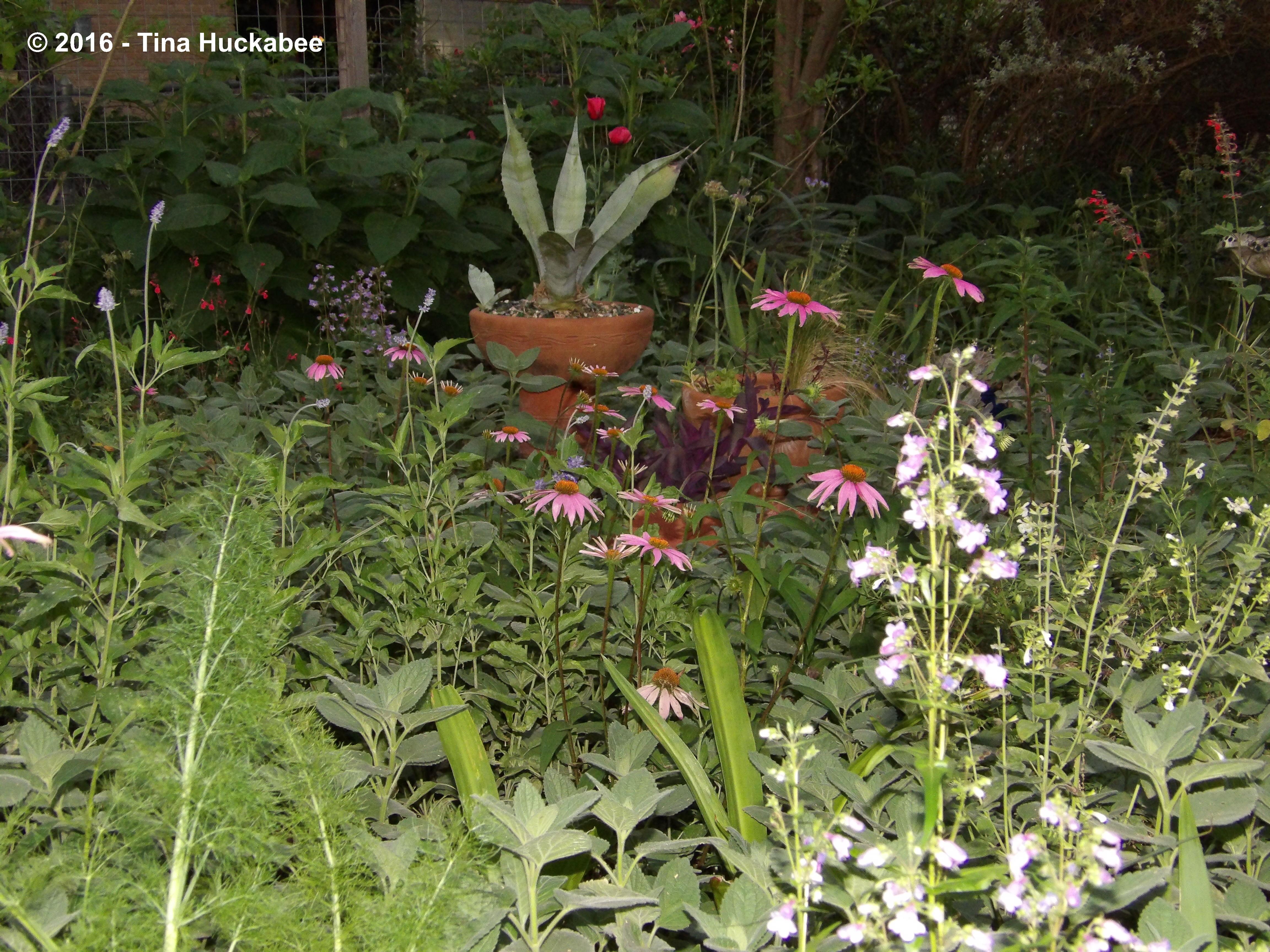
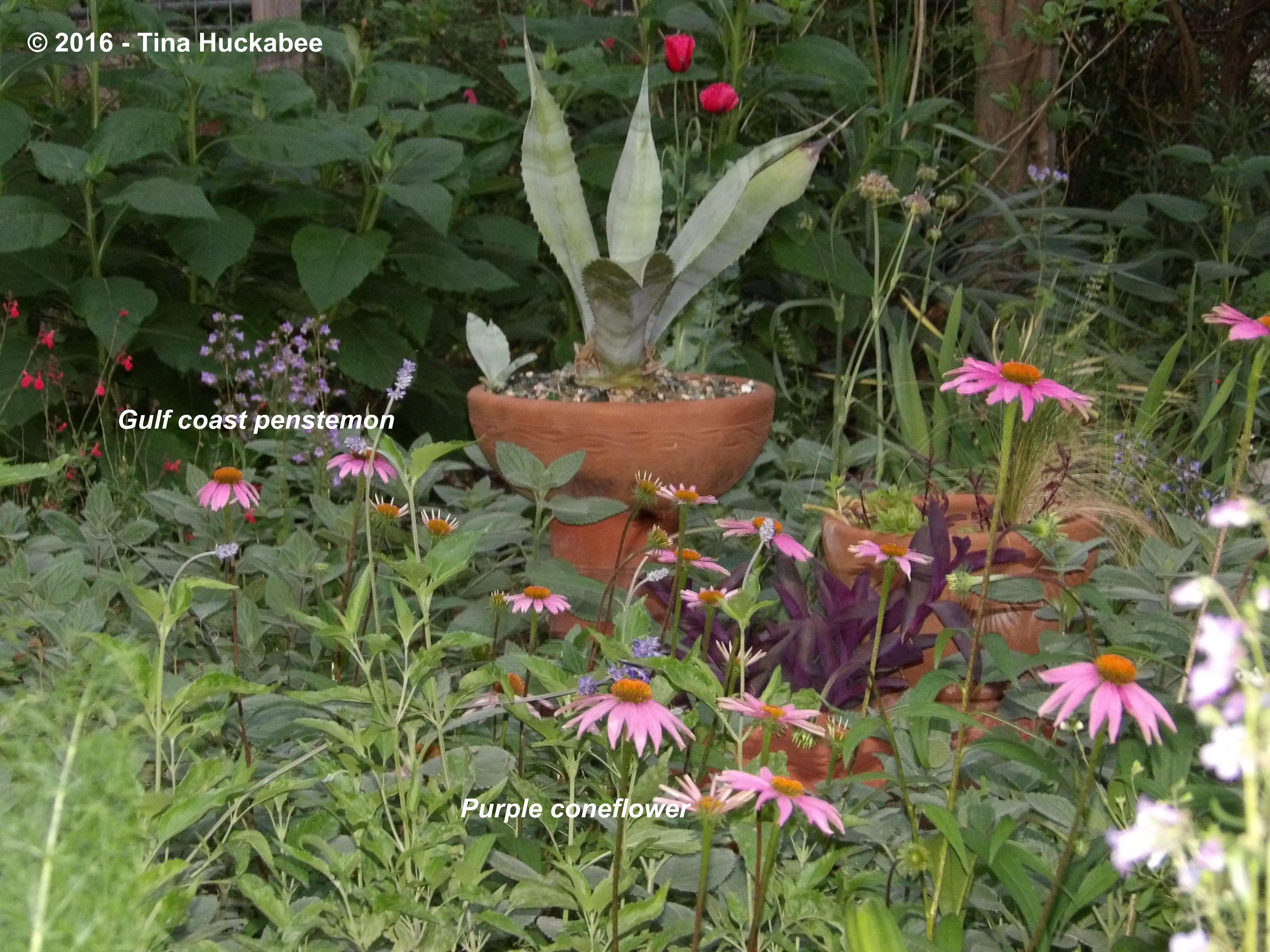
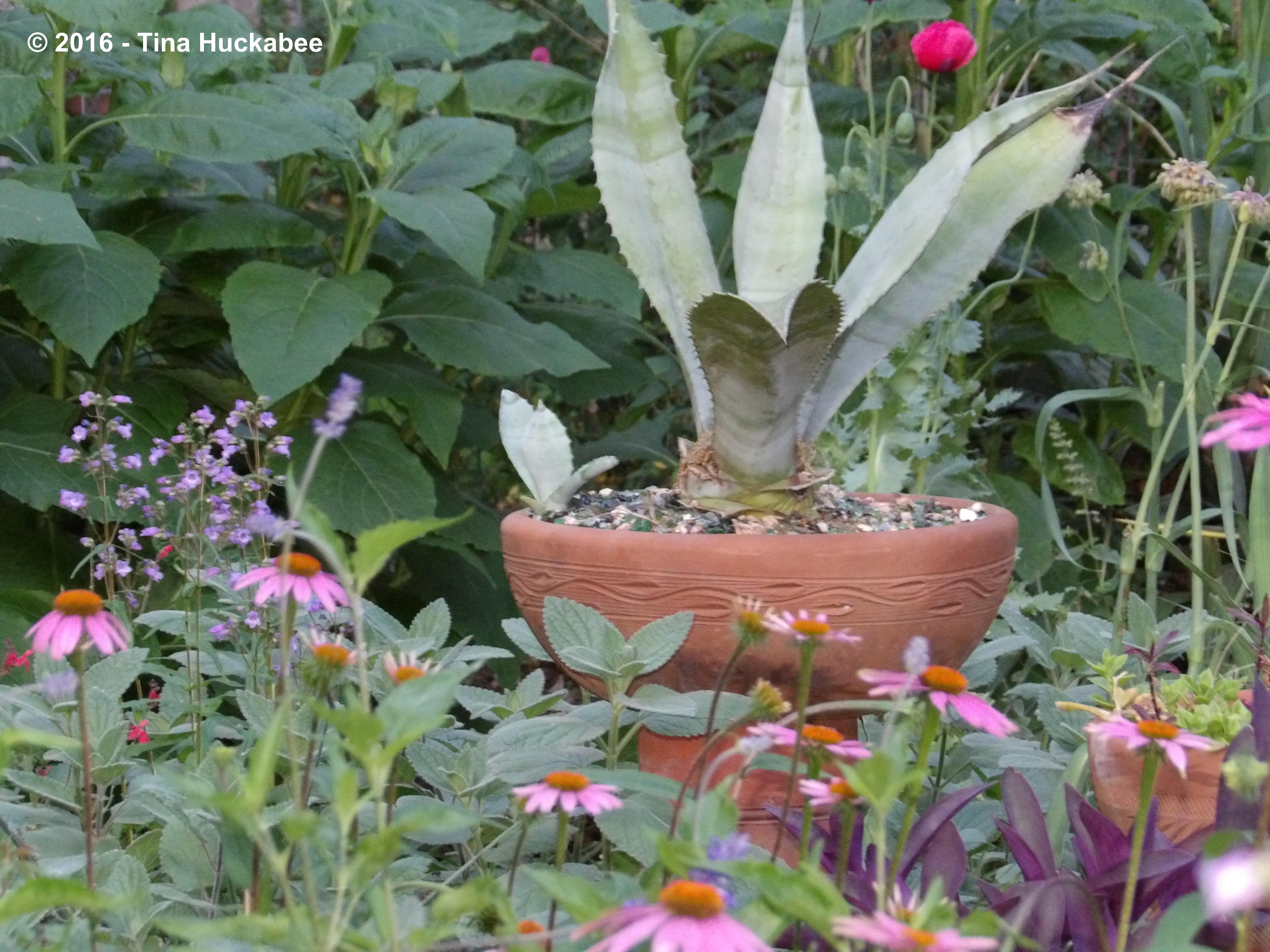
This small area of the large back garden receives decent sunshine for much of the growing season.  The potted American century plant, American agave oversees  blooming perennials and shrubs during spring, summer and fall.

IMGP7016.new

IMGP7015.new

Purple coneflower (Echinacea purpurea), grey foliaged, not-yet-in-bloom Heartleaf skullcap (Scutellaria ovata), and Gulf Coast penstemon front the potted agave, while a stand of autumn blooming Frostweed (Verbesina virginica) serve as its backdrop.


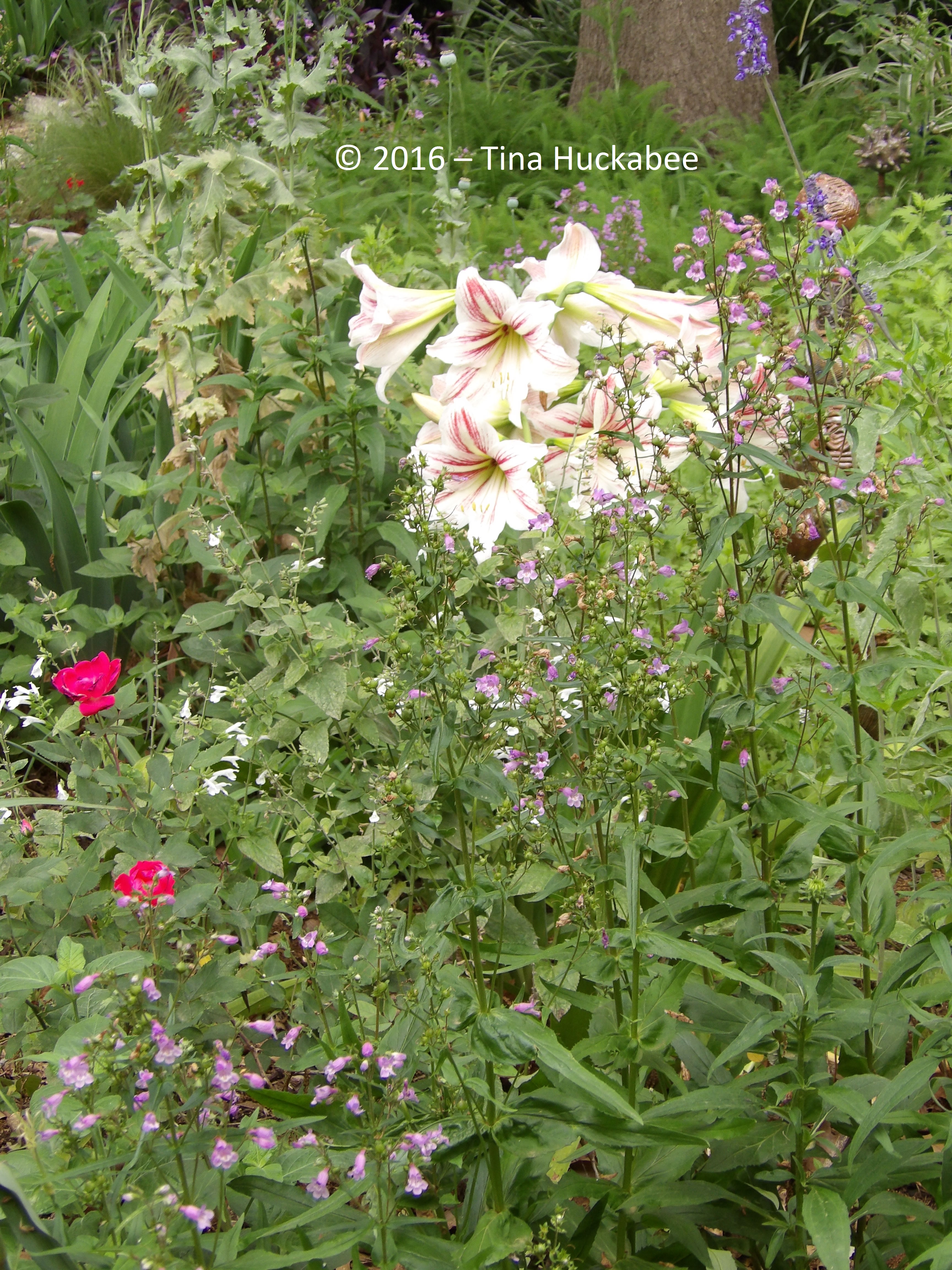
These unknown variety of Amaryllis came from my mother’s garden.

My mother’s Amaryllis grows with Gulf Coast penstemon, Knock-out roses, and poppies.

The Amaryllis don’t attract pollinators (that I’ve noticed) but they evoke fond memories of my mother, who was an avid gardener and who loved flowers of all kinds.

IMGP7026.new

IMGP7027.new

In her last garden, she mixed her amaryllis with blue-bloomed PlumbagoPlumbago auriculata  and it was a stunning combination.

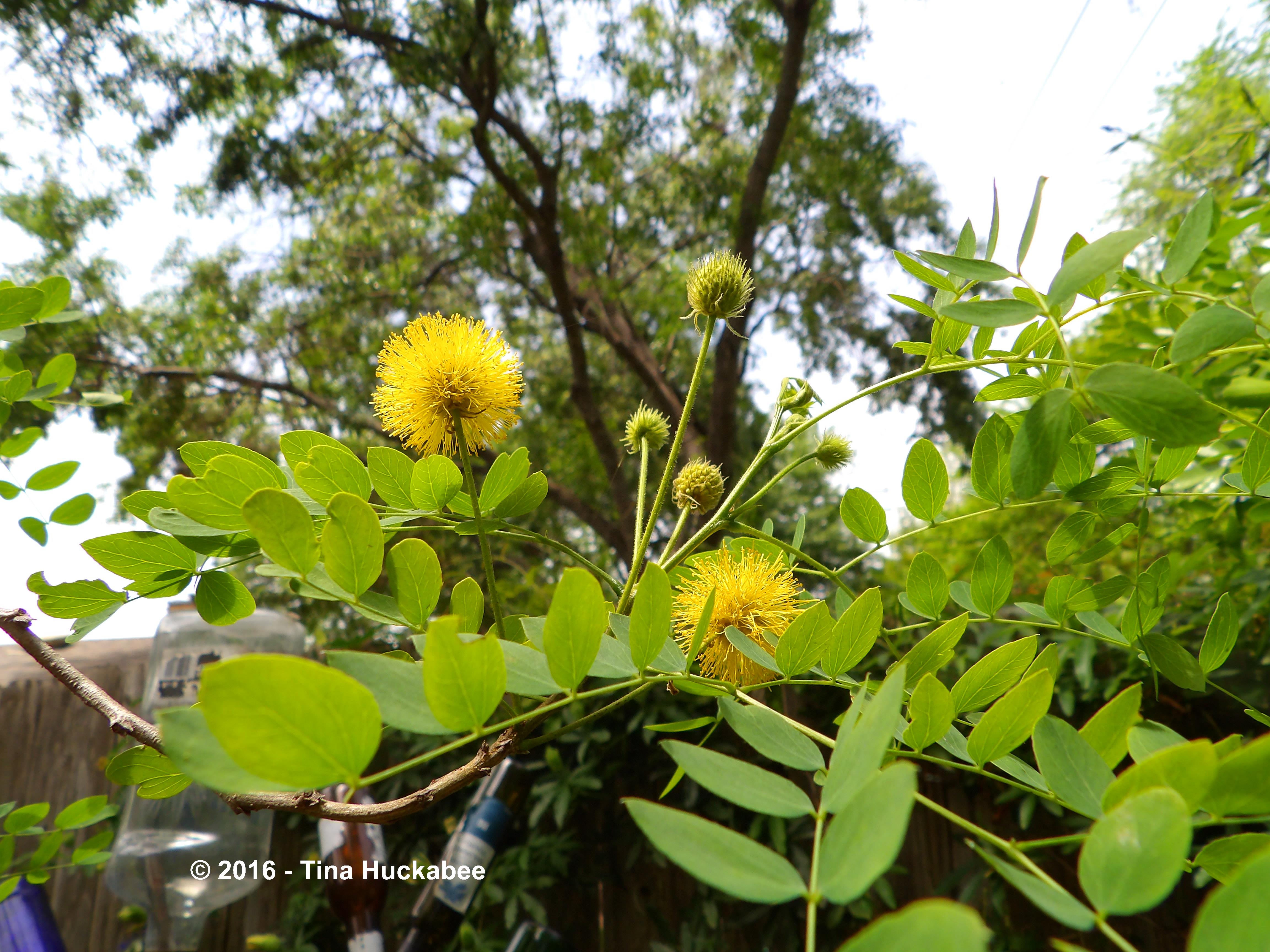
In searching for a small tree to add some height to a narrow part of my garden, I chose Goldenball leadtree,  Leucaena retusa.  I think it was a good decision!

IMGP7034.new

IMGP7035.new

The yellow-puff balls charm the gardener while feeding bees and butterflies throughout April.  Goldenball leadtree is an airy, open little tree and thrives in part-shade.

I’m pleased with my April garden and thank Carol at May Dreams Garden for hosting this monthly bloom frenzy known as Garden Bloggers’ Bloom Day.  Join in and share your garden pretties, then click over to her lovely blog to see and learn about blooms from many places.

A Parade of Pretties: Bloom Day for March

I’m not going to pretend that this post is anything more than a runway fashion show of the botanical kind.  What follows is a shameless and giddy celebration of the the bounty of blooming beauty that is early spring in my Austin, Texas, zone 8b, garden.

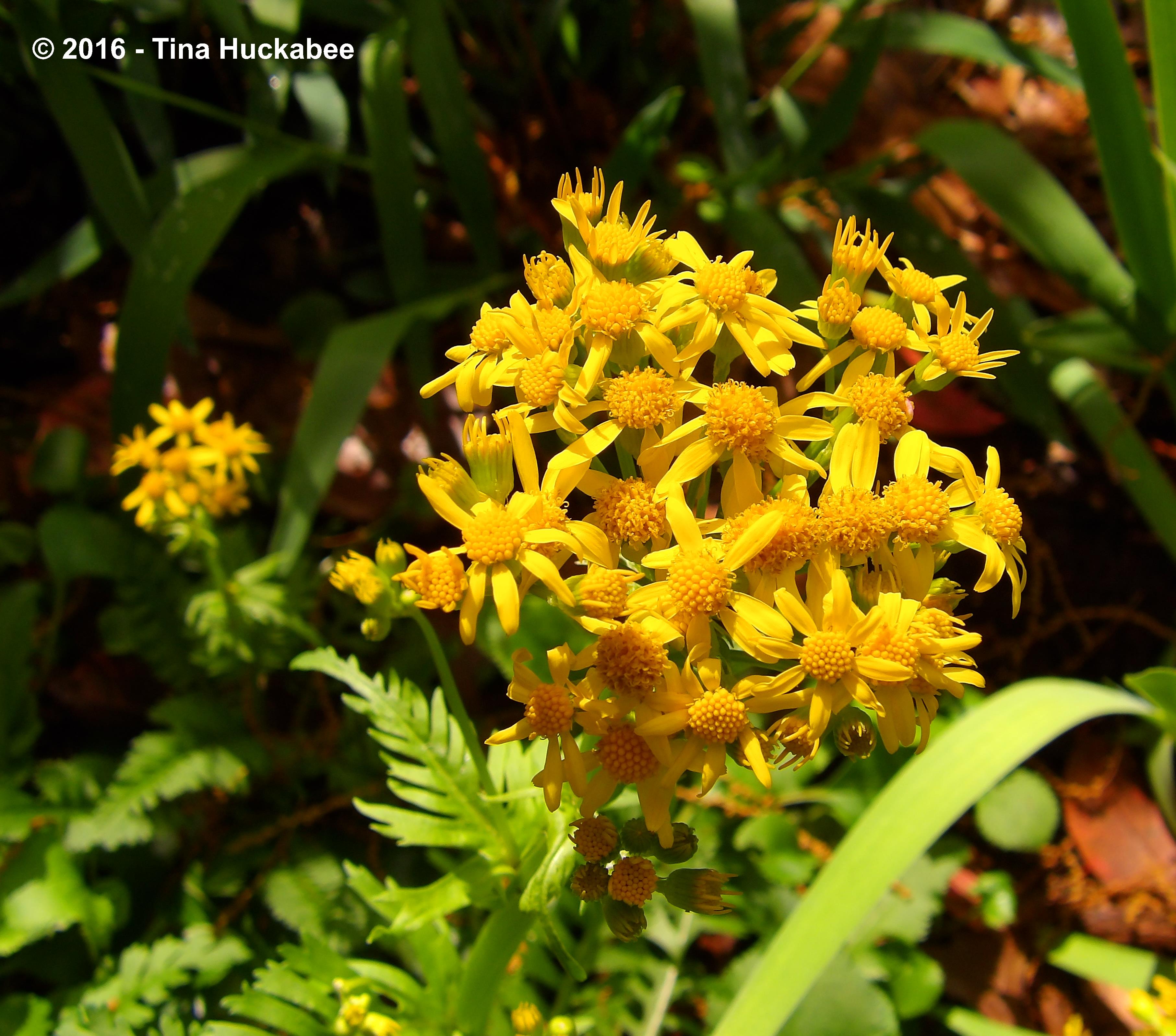
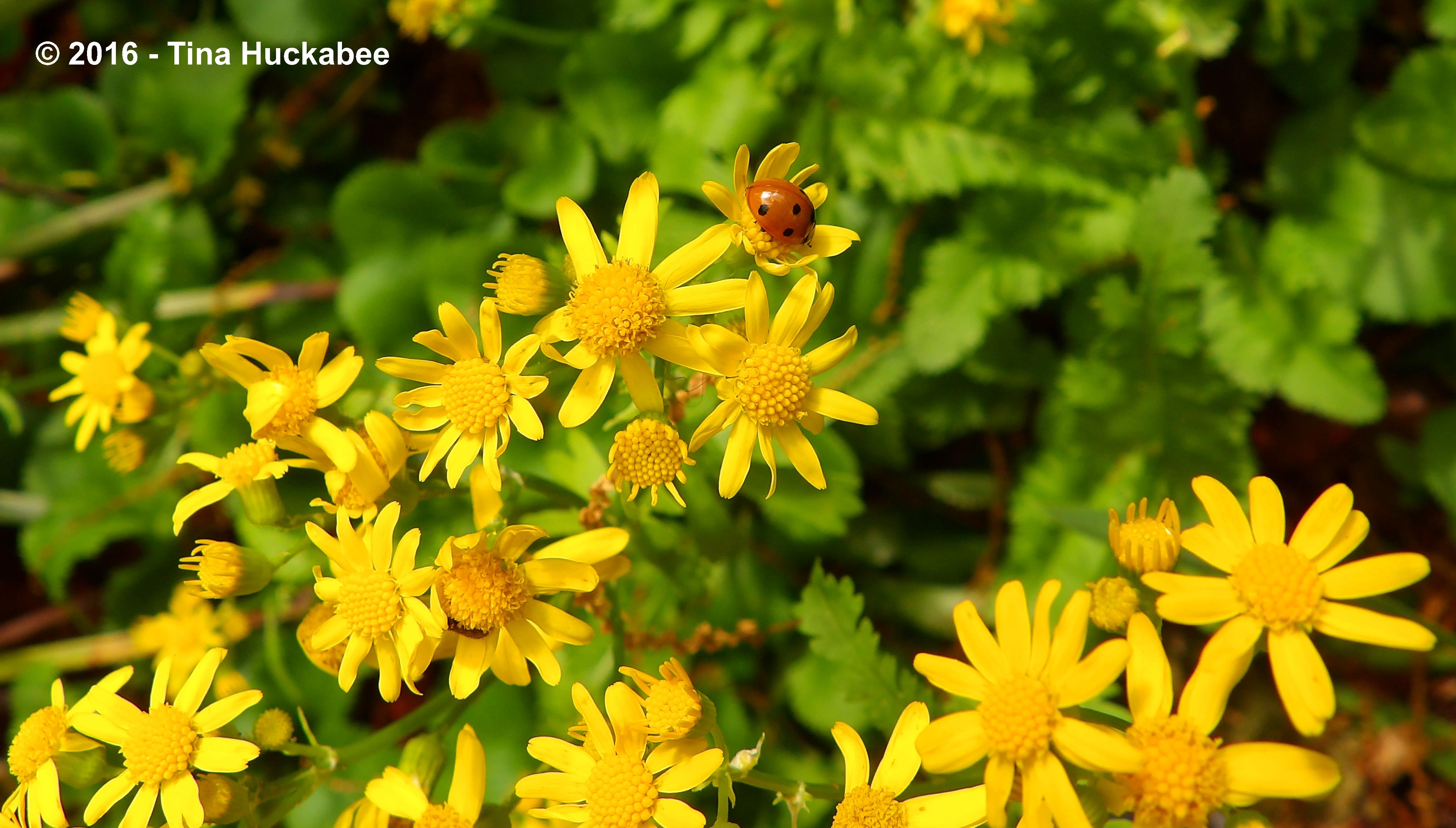
Golden Groundsel, Packera obovata, hit its flowering stride since last profiled  for its beautiful foliage a few weeks ago.

IMGP5034_cropped_3627x3194..new

Slender bloom stalks hold aloft the blasts of brilliant yellow,

IMGP5028.new

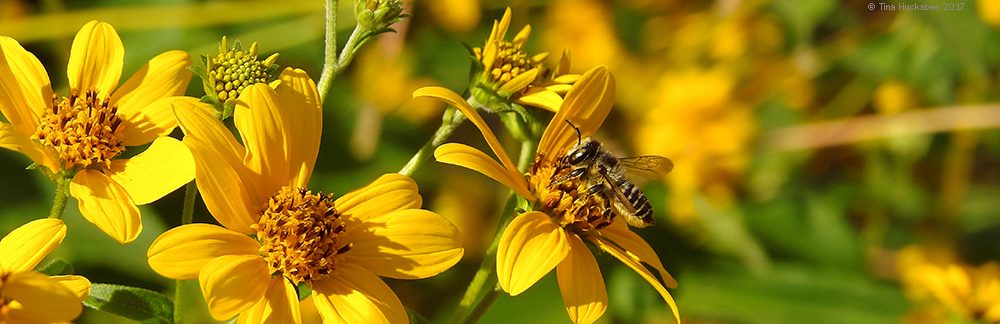
…and the gardener smiles.  Tiny critters of all sorts visit–to rest,

IMGP5031_cropped_4083x2323..new

…and pollinate.

IMGP5188_cropped_3166x3410..new

IMGP5174_cropped_3567x3414..new

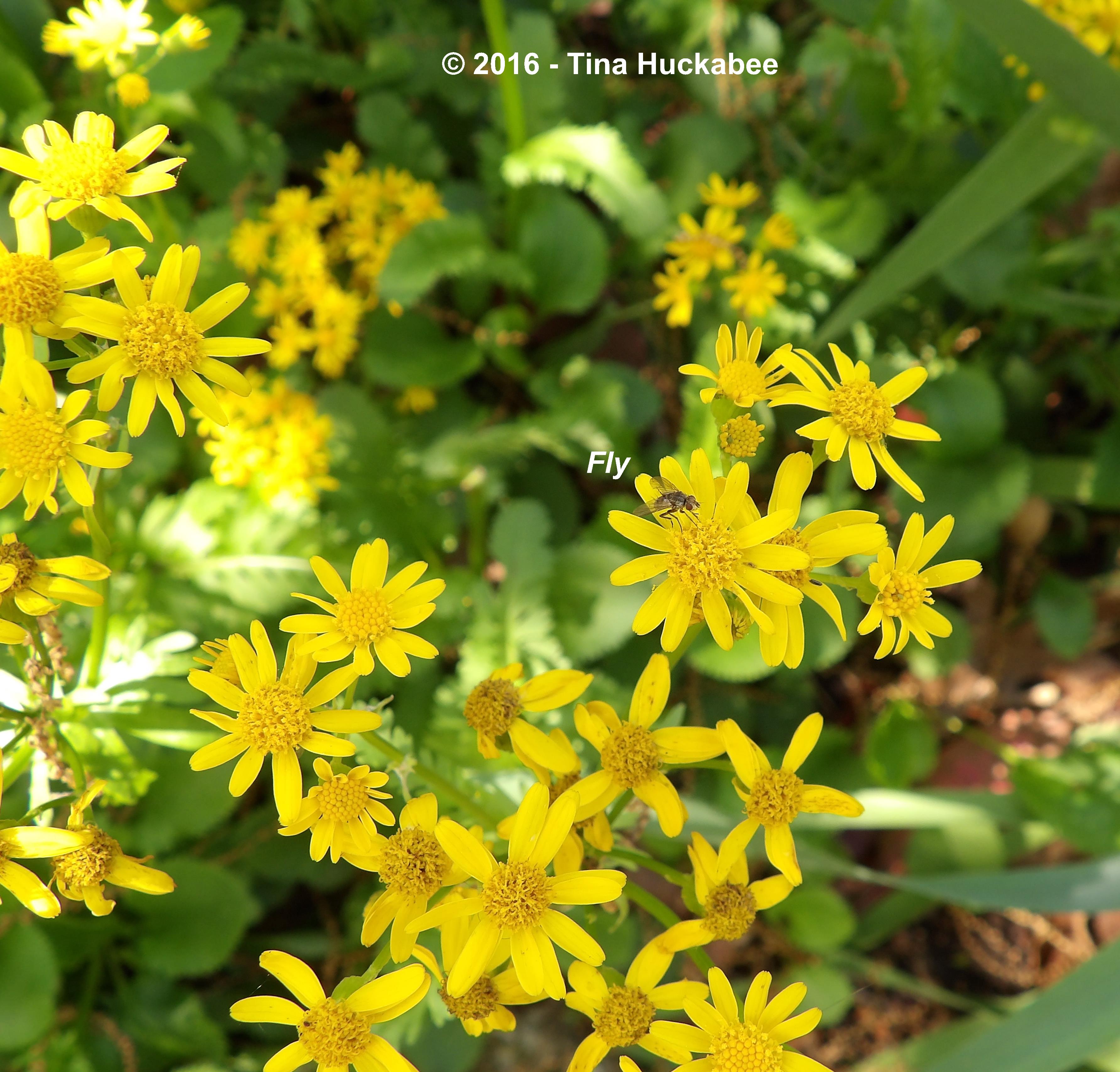
I’m not thrilled when a fly makes its way into my kitchen, but am happy to see it sipping the sweet stuff from the Golden Groundsel.

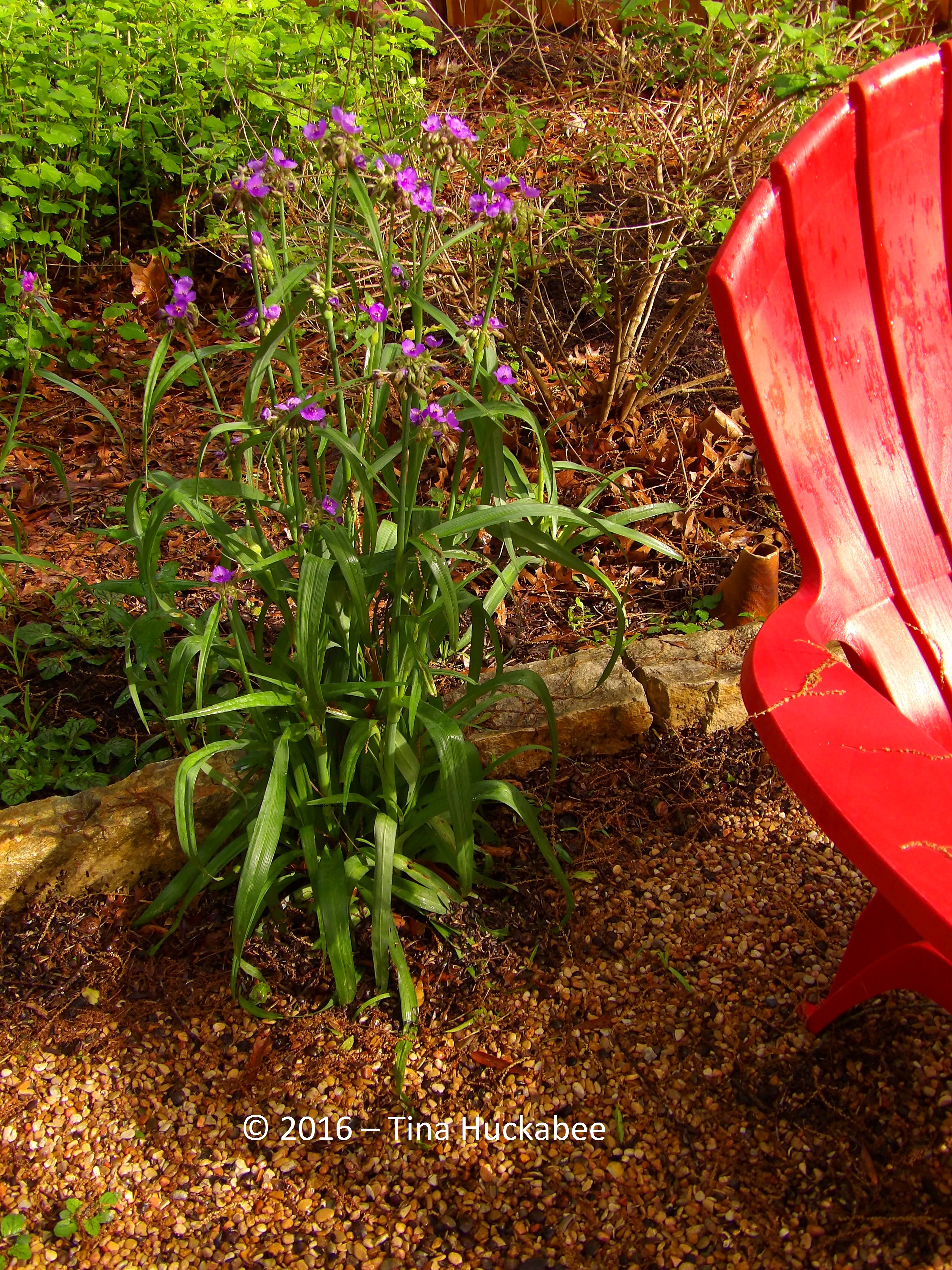
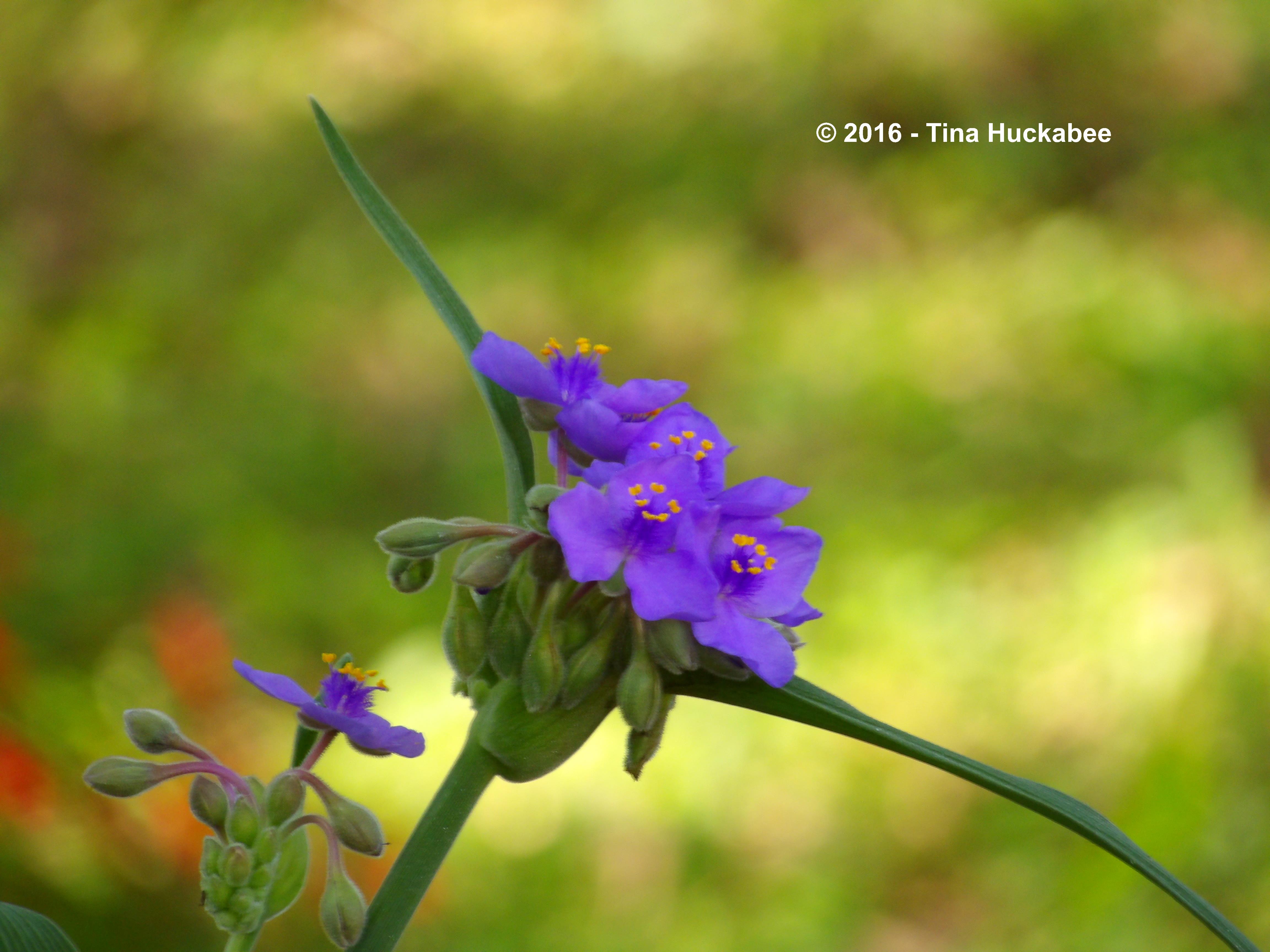
SpiderwortTradescantia, plants are strutting their flower-power and keeping the honeybees busy.

IMGP5007.new

This Giant Spiderwort  keeps company with garden furniture.

The many Spiderwort clumps my garden enjoy some variability in size and coloration and I suspect that there’s more than one species growing and cross-mingling through the seasons.

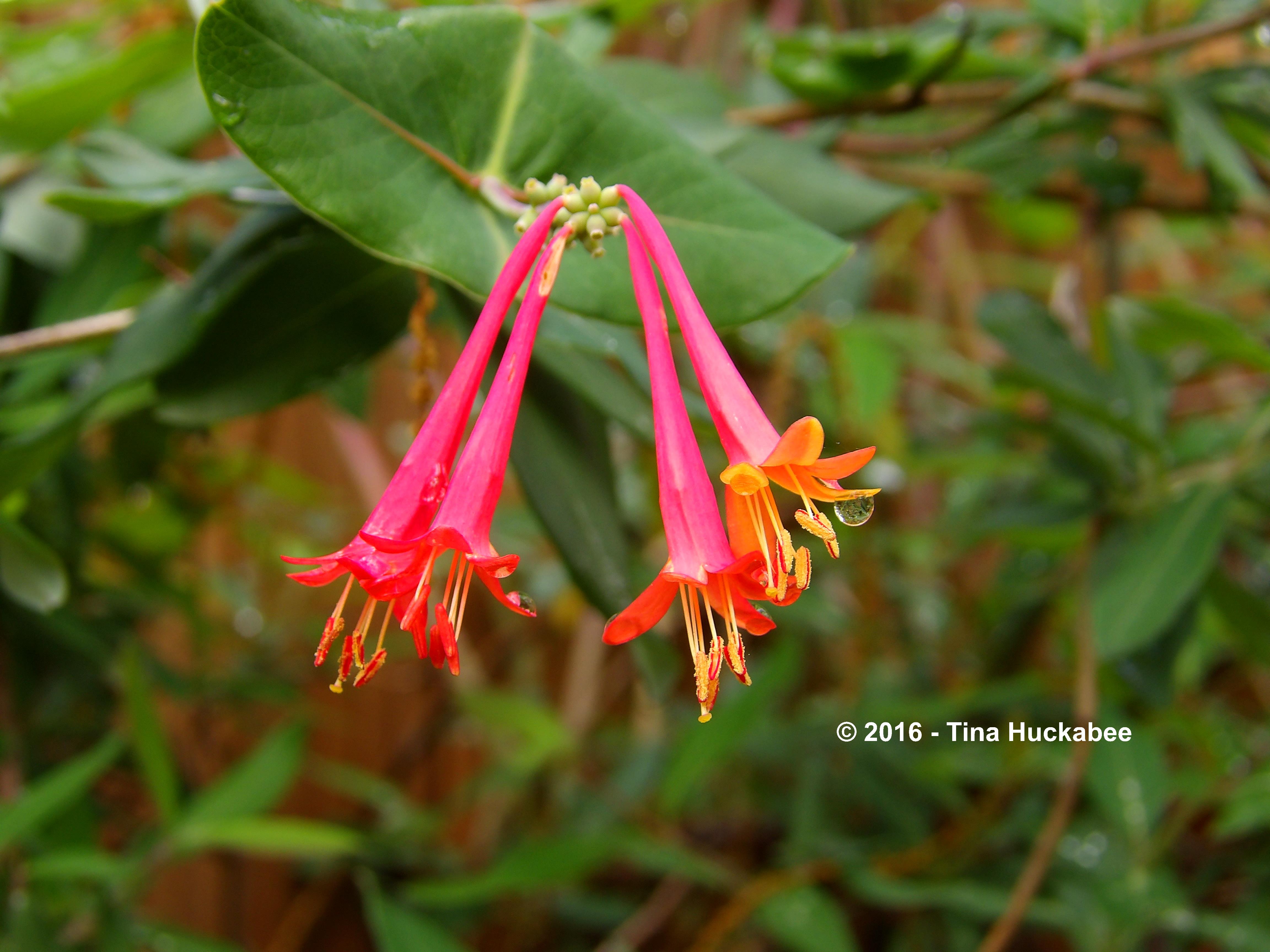
Coral Honeysuckle,  Lonicera sempervirens, a vine hosting dripping clusters of tubular beauty,

IMGP5017.new

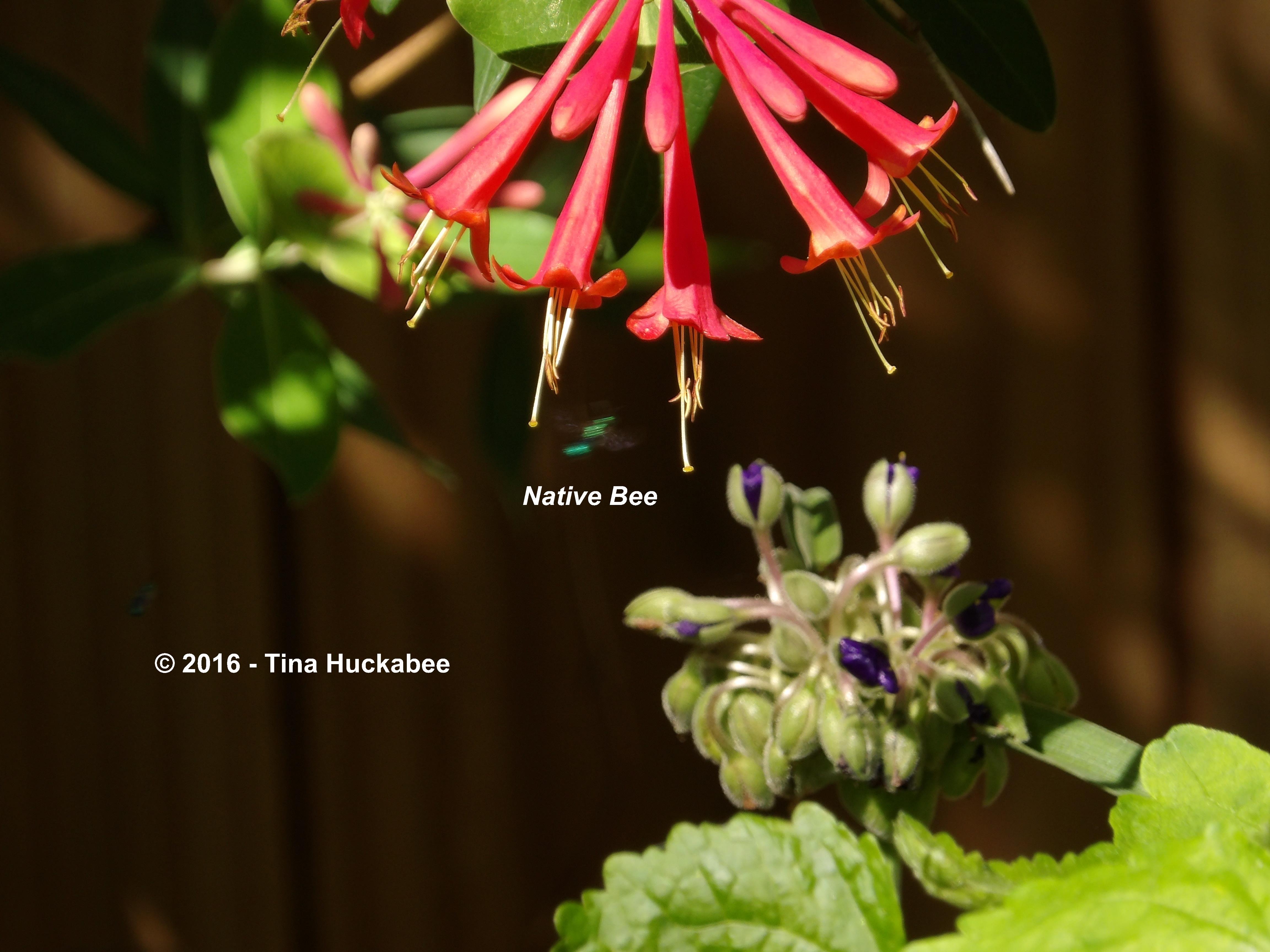
…are surrounded by tiny native metallic bees, which I can only manage a vague photograph of.

IMGP5225.new

Actually, that’s not really true, but you’ll have to wait until my own Wildlife Wednesday on April 6th to see some slightly better photos of one of the stunningly gorgeous and fast-flying metallic wild bees.

This Coral Honeysuckle bloom cluster and the not-quite-open Spiderwort look like they’re trying to reach one another for a smooch.

IMGP5237_cropped_3898x3277..new

Well, it is spring, you know–the season of love!

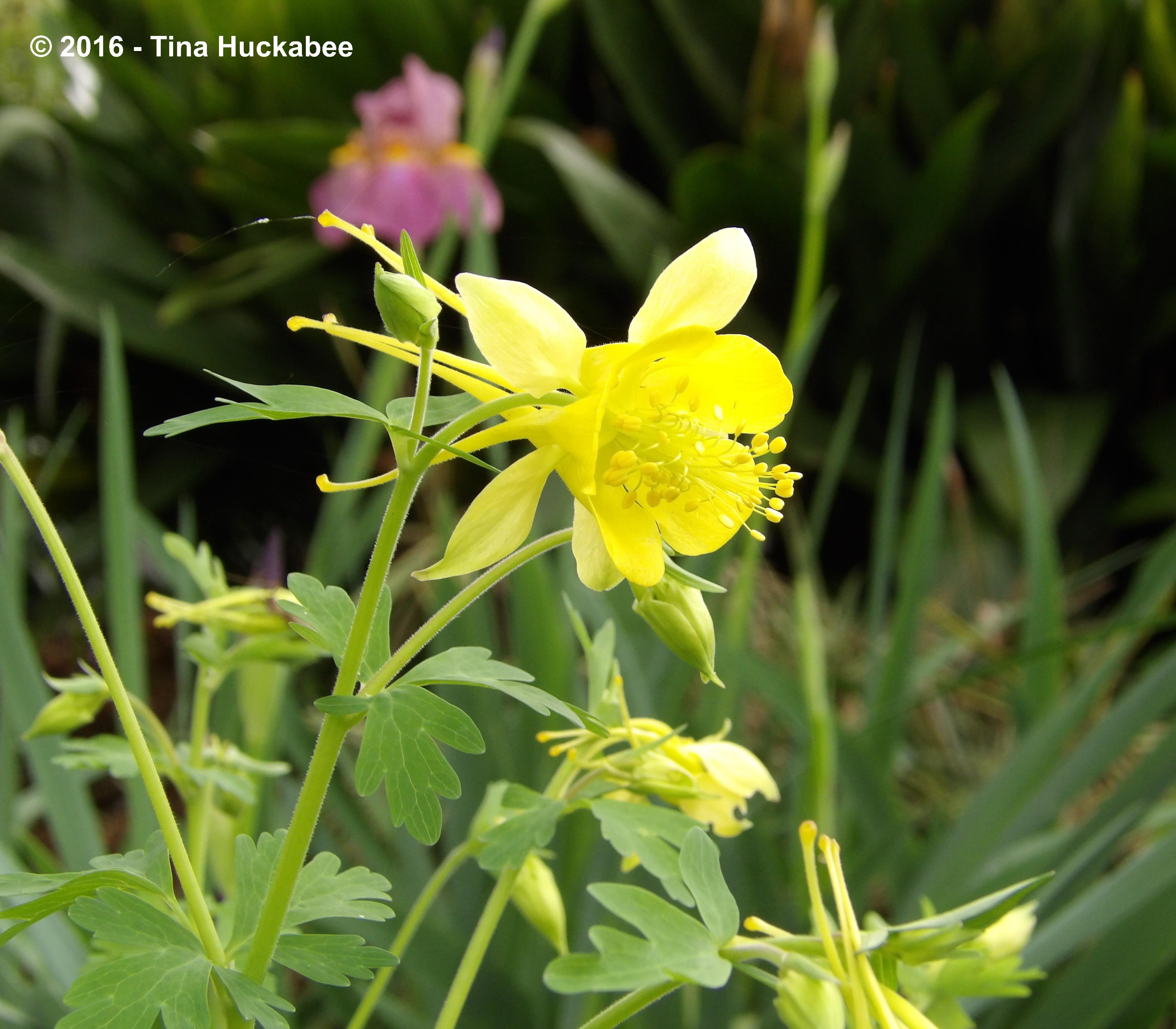
Yellow Columbine, Aquilegia chrysantha var. hinckleyana,

Yellow Columbine with blooming Iris.

Yellow Columbine with blooming Iris.

…and the hybrid between A. chrysantha and A. canadensis, pose beautifully and are available for nectaring, too–if you possess the right proboscis, that is.

Hybrid Columbine with backdrop of orange blooming Mexican Honeysuckle and unopened Iris.

Hybrid Columbine with backdrop of orange blooming Mexican Honeysuckle and unopened Iris.

Hybrid Columbine with not yet in bloom day lilies and Yarrow.

Hybrid Columbine with not yet in bloom day lilies and Yarrow.

The A. canadensis is a smaller, mostly brick-red columbine.  But when cross-pollination occurs, the flower of the hybrid is typically larger, with more yellow and a blush of red.  Over the years, the columbines in my gardens have hybridized and I’m delighted with nature’s improvisations.

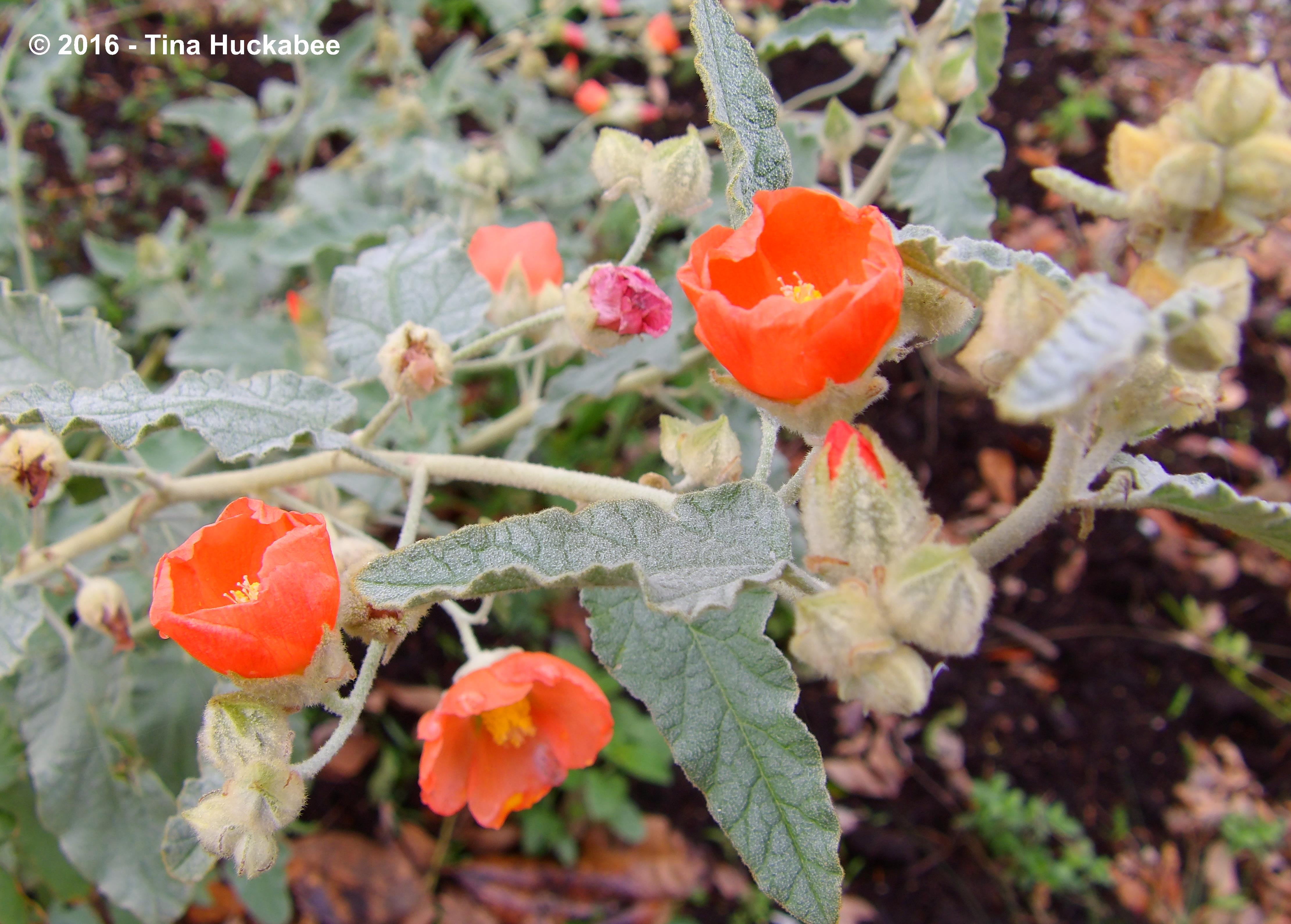
Globe Mallow, Sphaeralcea ambigua, is also open for business,  awaiting interviews from native bees.  So far, it’s been teeny, tiny bees, too fast for this photographer to capture with any competence.

IMGP5044_cropped_4443x3180..new

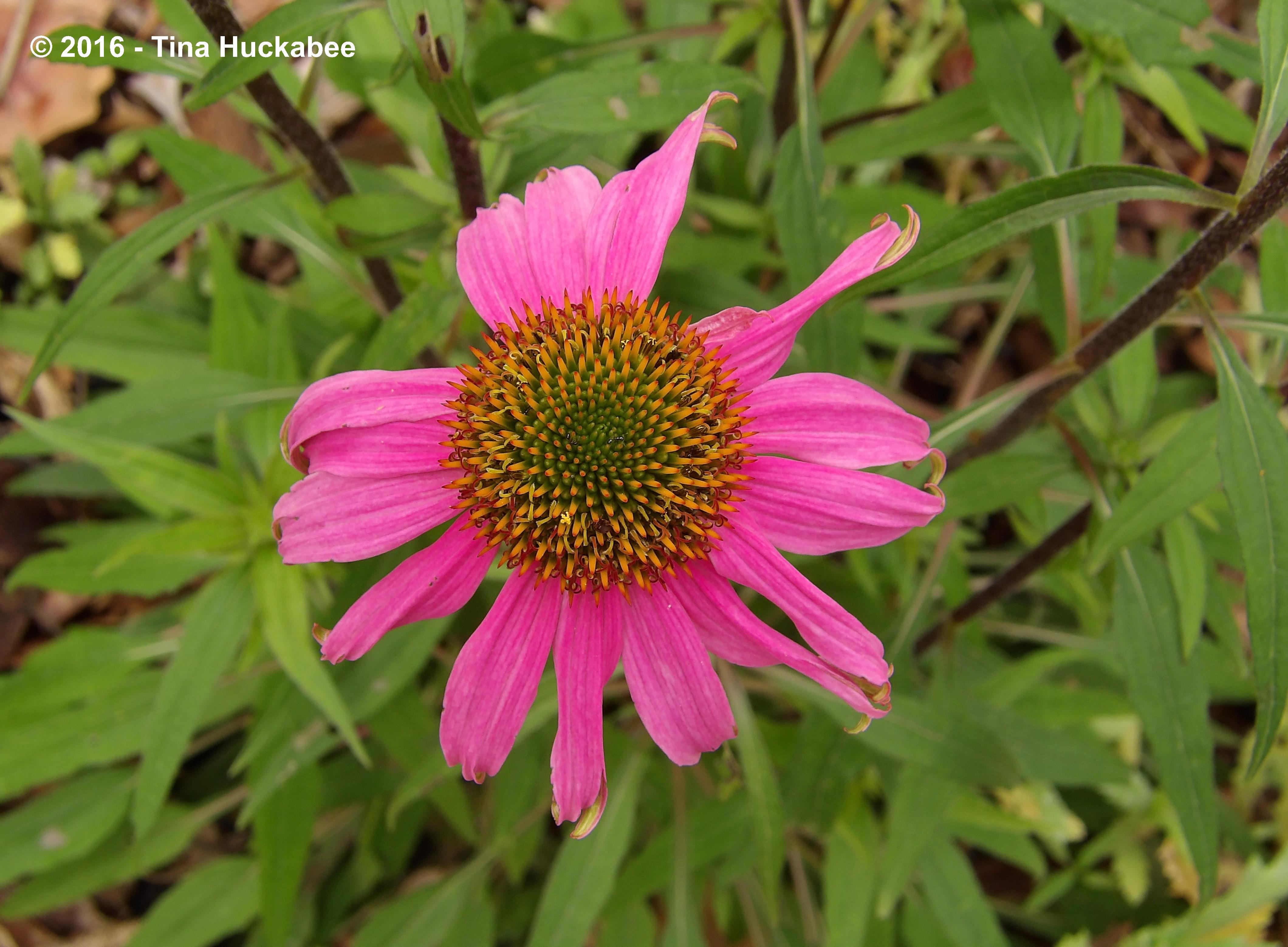
The first blooms of many-to-come Purple Coneflower, Echinacea purpurea, have unfurled their pinky-purple glory, welcoming spring and their lengthy growing season.

IMGP5050_cropped_4240x3116..new

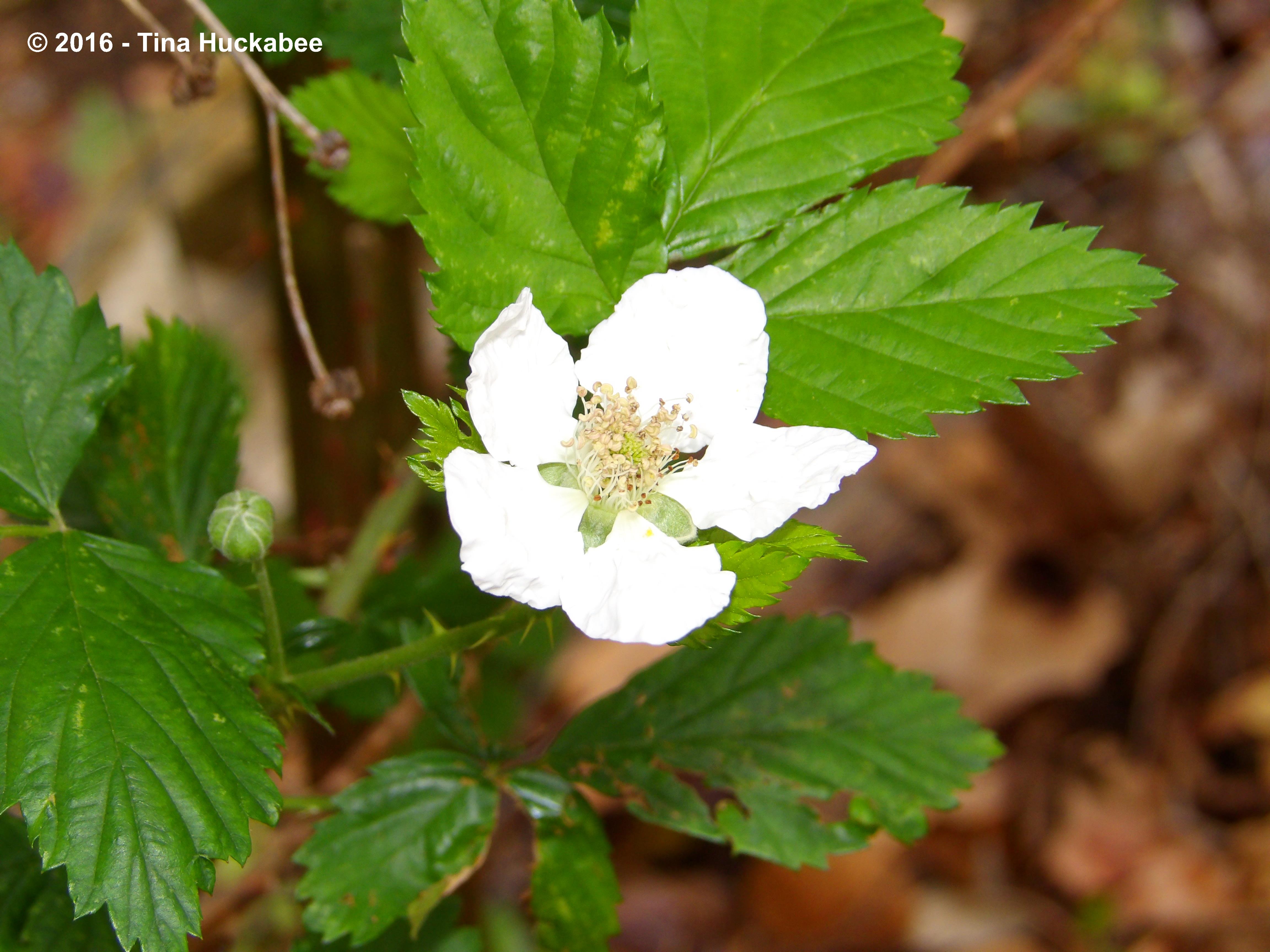
Another first is with this Brazos Blackberry bloom, which heralds more of the same.

IMGP5070.new

Once those flowers are spent, berries will not be far behind.  Yum!  I can taste the blackberries now–as well as the blackberry cobbler.  Bring’em, blooms!

Dancing at the ends of slender bloom stalks all winter and continuing their performance in the spring breezes, the cheery, bouncy Four-nerve Daisy (Hymenoxys), Tetraneuris scaposa,  flowers are nearly non-stop bloomers.

IMGP5043.new

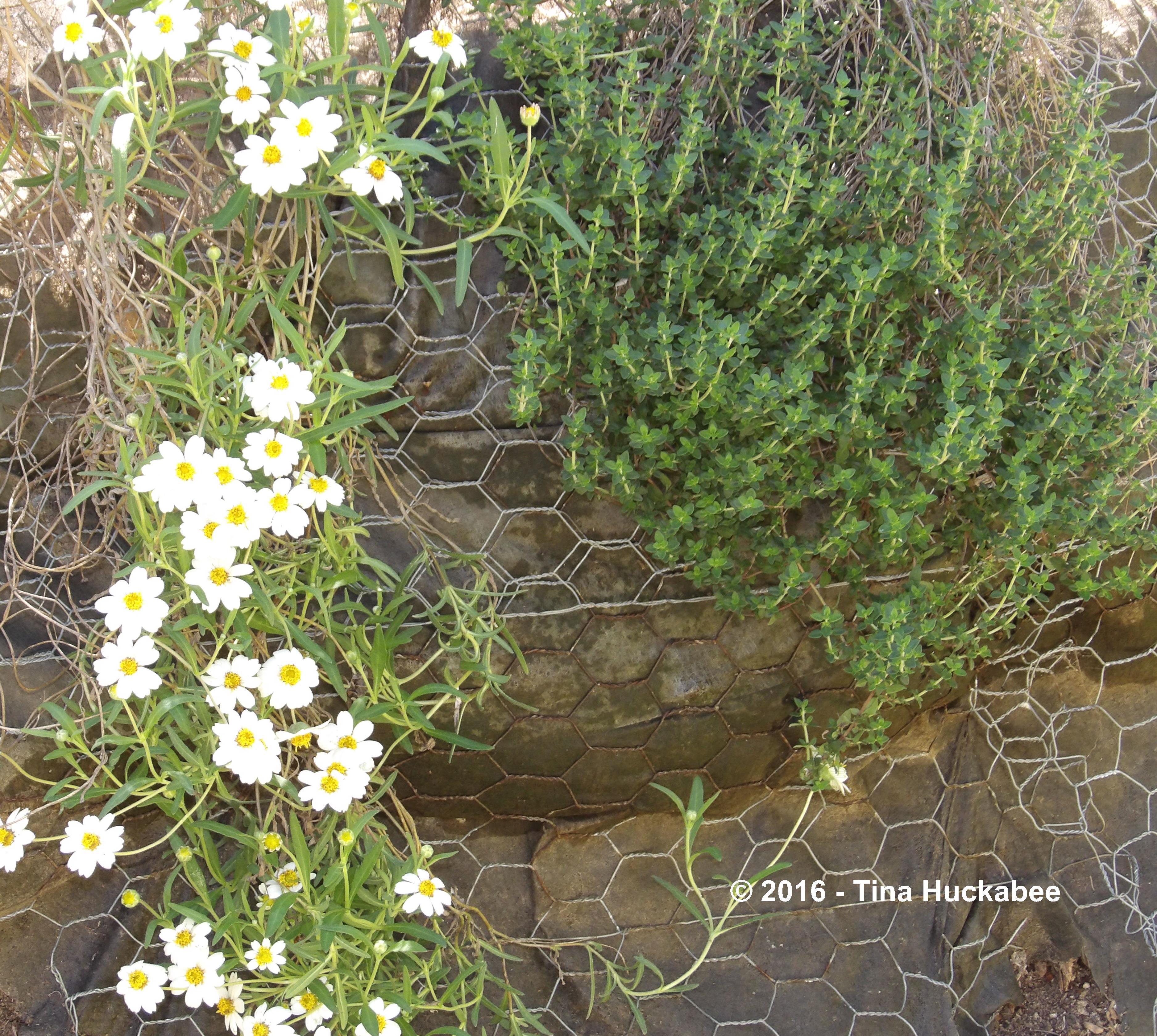
Tired of these tidy, singleton blooms?  How about this cascade of Blackfoot Daisy, Melampodium leucanthum.

IMGP5071.new

A tough Texas native that is best when growing out of poor soil or rock, this one is content and flowering in my Green Tower, which is where I grow veggies and most of my herbs.  The Blackfoot Daisy buddies-up to a thyme plant which also flourishes in the Tower.

IMGP5180_cropped_3750x3359..new

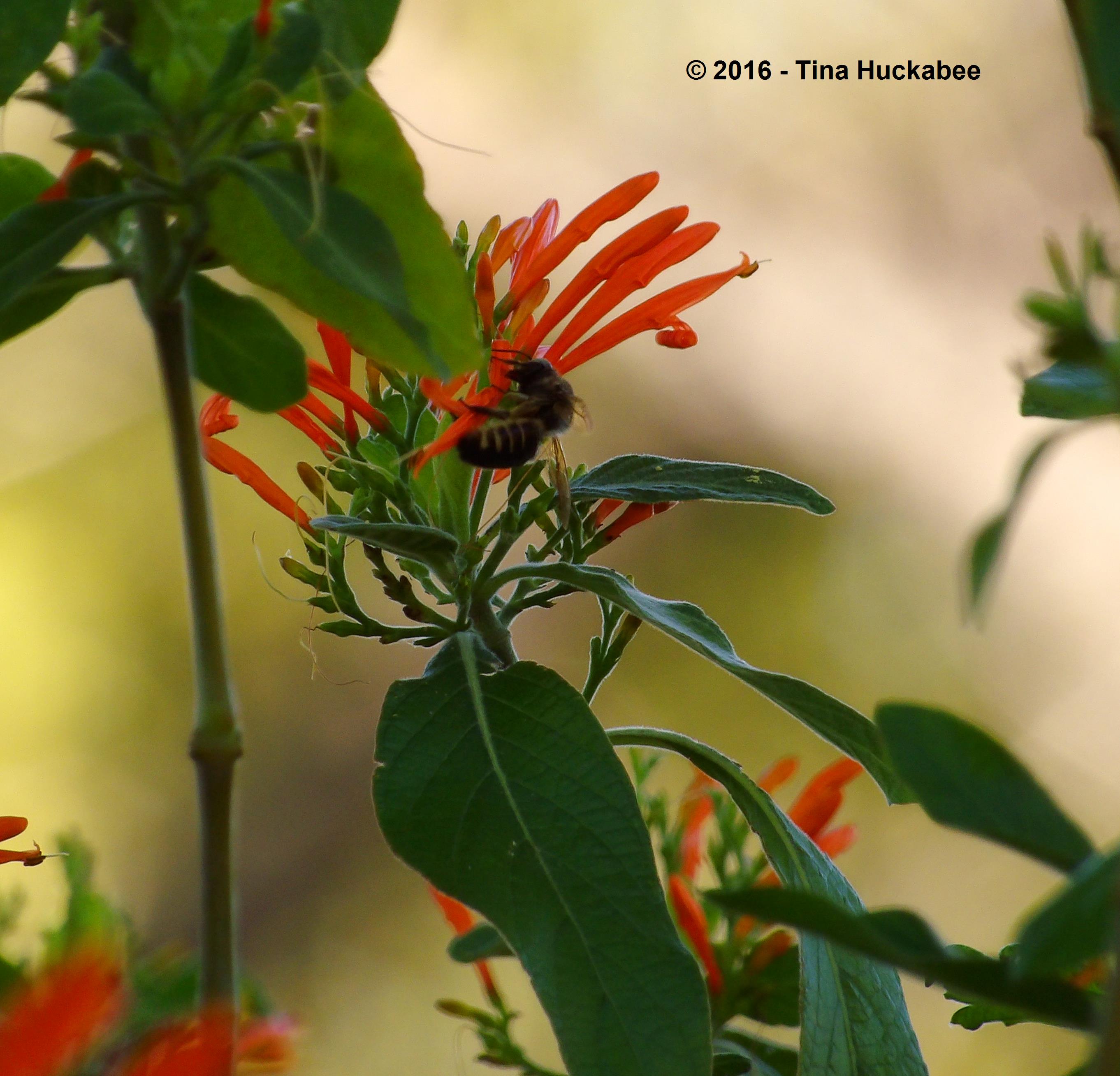
Due to the non-winter this year, Mexican Honeysuckle, Justicia spicigera, wasn’t freeze-knocked to the the ground and thus is blooming with orange abandon this early spring.

IMGP5098.new

Mexican Honeysuckle boasts constant pollinator activity, especially from a variety of bees.

Horsefly-like Carpenter Bee (Xylocopa tabaniformis) works the Mexican Honeysuckle flowers.

Horsefly-like Carpenter Bee (Xylocopa tabaniformis) works the Mexican Honeysuckle flowers.

There’s more where that came from!

IMGP5271_cropped_4552x2747..new

There are too many blooms and not enough time to showcase them all–they’ll just have to participate in another parade!

IMGP5273.new

Thanking Carol at May Dreams Garden for hosting this monthly bloom frenzy known as Garden Bloggers’ Bloom Day.  Share your garden pretties, then click over to her lovely blog to see and learn about blooms from many places.
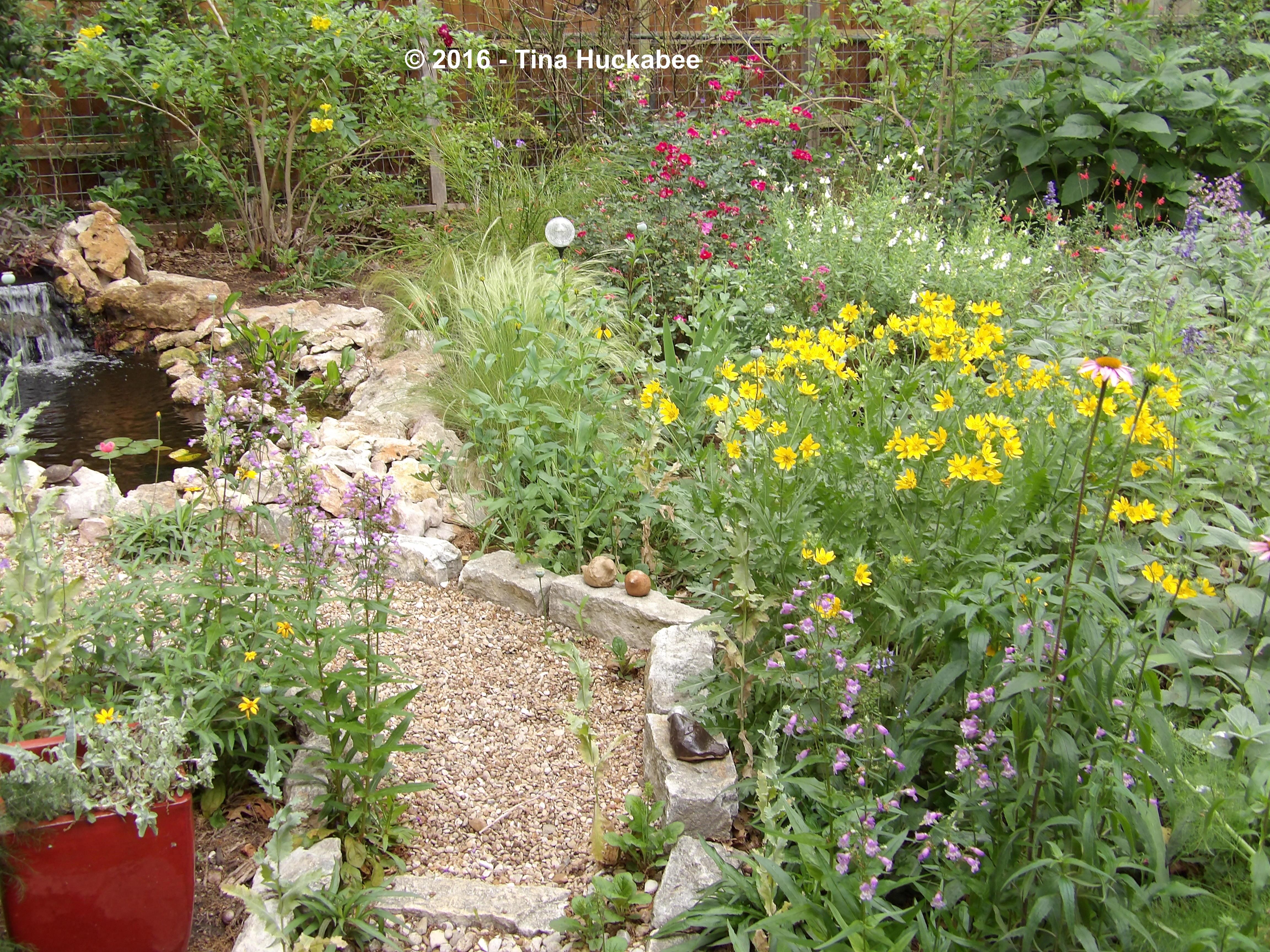
IMGP5274.new