On this gloppy, drippy, foggy morning, the late-blooming Forsythia sage, Salvia madrensis, appears hesitant in its commitment to yellow. I took several shots, frustrated that the camera lens wasn’t capturing the proper hue of this plant, even if it rocked a yellow vibe in the garden. Was the lens as fogged as the air? Was the photographer as fogged as the lens? Was more coffee needed, or perhaps, another day’s rest from a bout of flu? (Yes, I did get a flu shot in October. Alas!)
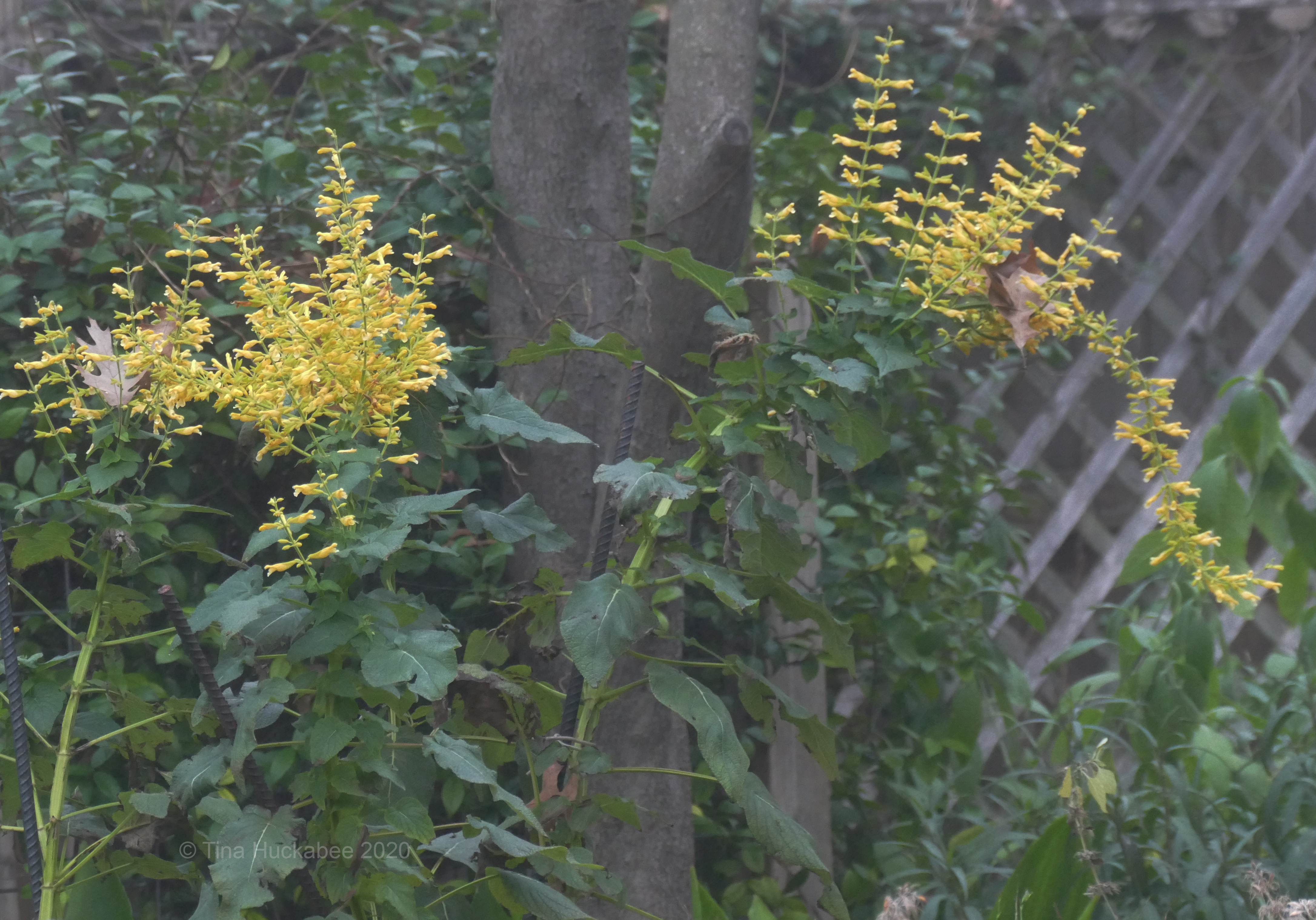
I neglected to prune the branches of the sage in mid-to-late summer, so the branches are floppy. Notice the rebar which follows the line of the tree? My lame attempt to keep the sage in some form of upright.
A ramble down the pathway and a halt at the plant delivers the answer: at close up view, the plant loses the veiled dullness that the distant shot suggested. Instead, the foliage is defined and fresh, the masses of late-season, post light-freeze blooms their normal rich butter-yellow. As long as no fog impedes, either in the atmosphere or in the flu-addled brain of the gardener, the S. madrensis retains its happy demeanor, providing a welcome counterpoint to the dark of winter.
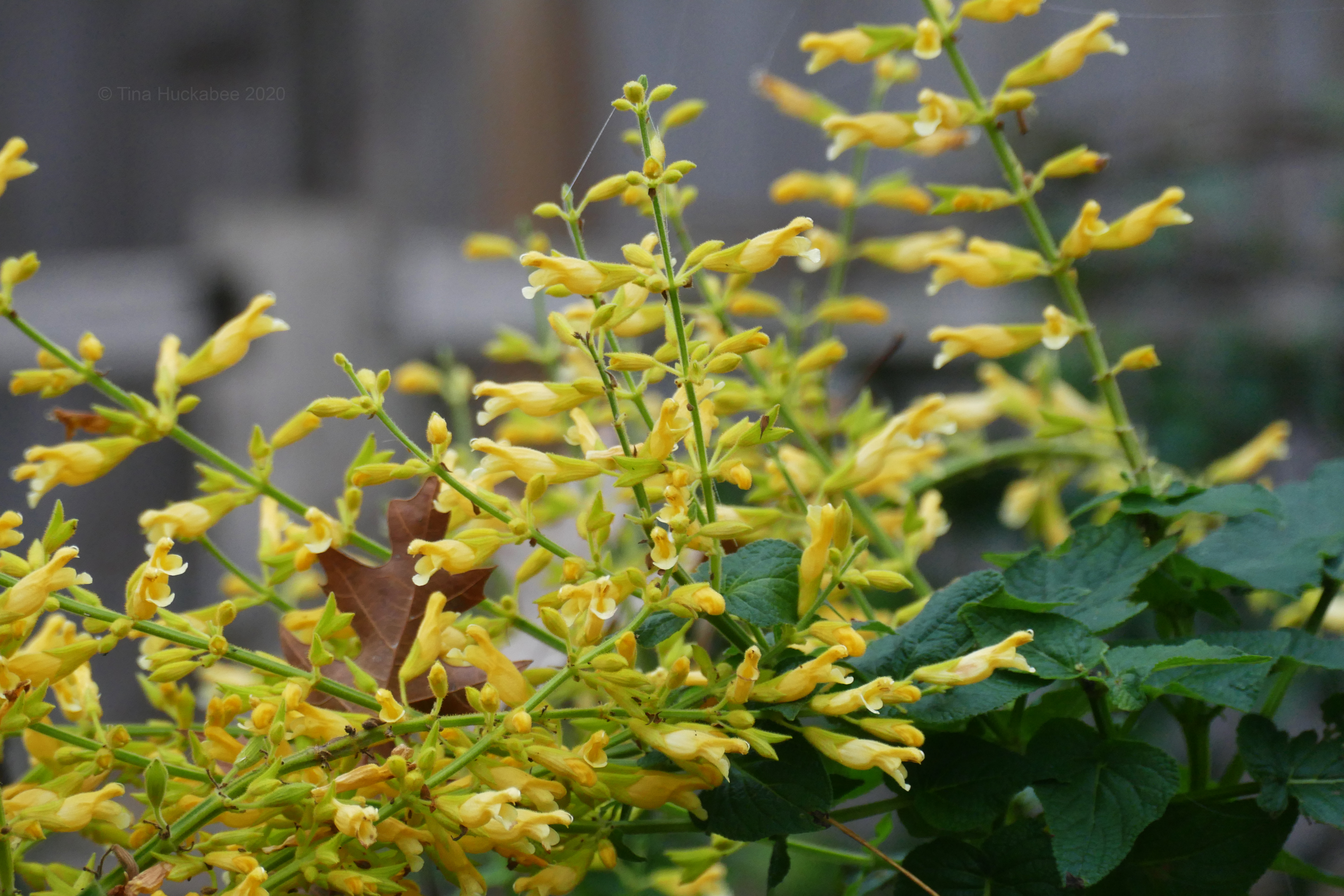
The lush salvia flowers, situated in whirls along the terminal ends of long branches, shout look at us! In mid-January, with only a few bare frosts under the garden’s belt, there are scattered blooms in my garden; nothing dramatic, just a few pops of red, yellow, and white, but enough to give the honeybees something to snack on during bee-friendly weather. S. madrensis is bloom royalty this January, granting a sunny focal point in my back garden, and appreciated for its beauty, no matter what the weather conditions.
S. madrensis hits its flowering stride starting in late October, blooming until there is a mid-20s freeze. Who knows when–or if–that will happen this year.

This cluster of blooms flops toward the pathway, almost–but not quite–impeding a walker.
My cluster of this native to the Sierra Madre Mountains of Mexico is a passalong from a friend and I’ve grown it for about 5 years. Its common name, Forsythia sage, is so applied because the clusters of yellow are reminiscent of spring blooming forsythia, a common plant grown in much of North America (and elsewhere), though as far as I’m aware, it’s only in the northern third of Texas where forsythia thrives. Until I traveled to Oregon to visit my son when he was in college, I’d never seen forsythia in real time–only in photos.
Foliage of S. madrensis is attractive in summer. Where mine is planted, its slightly blue-grey foliage stands unique among its truer green neighbors. I’ve noticed that this sage requires extra water during our hottest time of year (more than most of my plants), but that’s easily remedied because it’s planted along a pathway and situated between several bird baths, so I employ the hose in that area on a weekly basis and extra drinks of water are delivered.
In August, along with some other autumn bloomers, I prune the S. madrensis branches by one-third to one-half, but for whatever reason, this year I didn’t get around to that chore. As a result, once the blooms burst forward, the branches drooped downward. I chastised myself with the garden adage that if you have to stake, it’s too late to stake. But stake I did (which you can see in the first photo) and that’s allowed most, though not all, of the branches to remain at attention (rather than flopping along the ground, annoying other plants) and proudly displaying their sunshine blooms, thus brightening the garden.
The main pollinator of S. madrensis are now dormant for winter: the Horsefly-like Carpenter bee, Xylocopa tabaniformis. Interestingly, I don’t recall ever seeing honeybees at these blooms, but I have seen butterflies–just not recently.
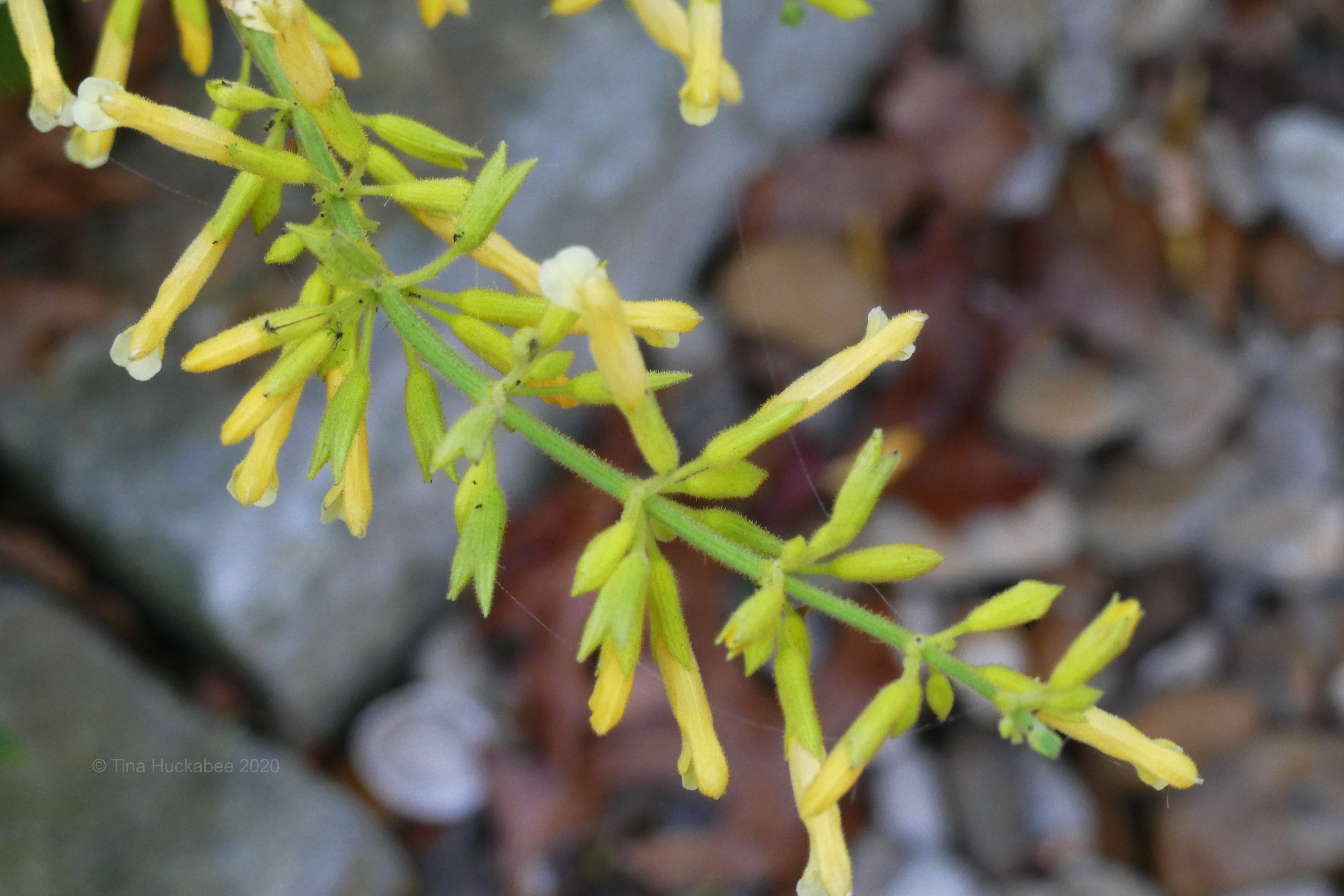
Even with our (so far) mild winter, the grey gloom and short days remind me that appreciation of good health and garden beauty are paramount–and the joyful blooms of S. madrensis go along way to make that happen.
In celebration of my Central Texas, zone 8b blooms–and all others–I’m joining in today with Carol of May Dreams Garden and her Garden Bloggers’ Bloom Day–I really need to do this more often! As well, Wednesday is always a good day for garden ditties, so I’m also joining with Anna of Flutter and Hum and her Wednesday Vignette. Check out both these beautiful blogs for gardening insights.










 My Gardener Says...