We’re Back, Baby!

In February, once the snow cleared and the ice melted from wicked winter storm, Uri, I assessed the damaged garden–and damaged it was. I guessed (correctly–yay!) that my native plants would endure. But I wondered if the plants I grow which are native to regions south of the Texas border might succumb to the way-out-of-wack deep-freeze week. Minimally, I assumed it would be autumn or even next growing season before the pollinators and gardener would once again enjoy the gorgeous blooms from Mexican and Central American plants.

I’m so glad that I was wrong!

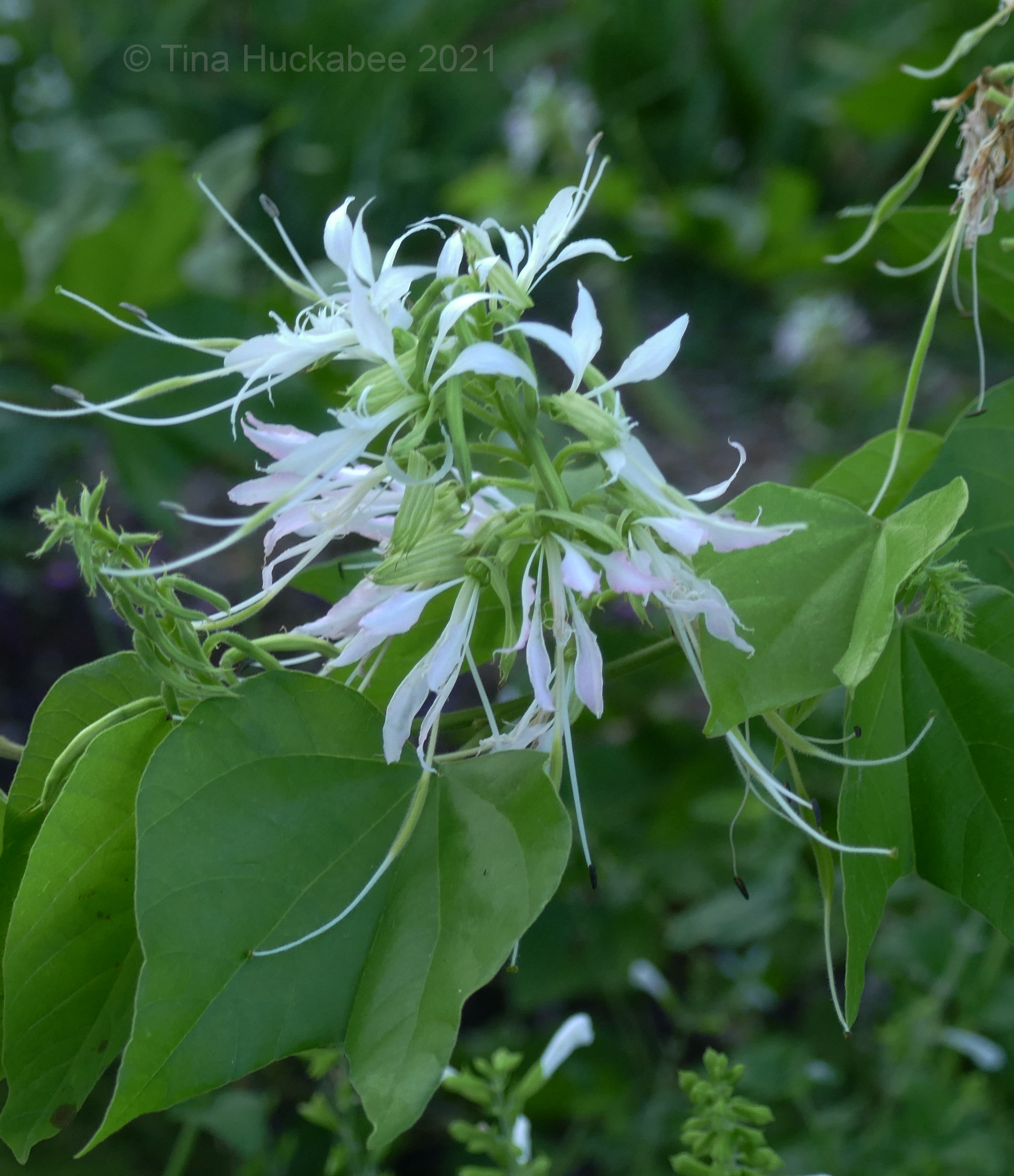
I grow two Mexican orchid trees, Bauhinia mexicana, and both emerged from the soil in late spring and there’s been no stopping their growth. This one is my oldest tree and has been blooming since June. Here in Central Texas, the “tree” is really a large shrub.
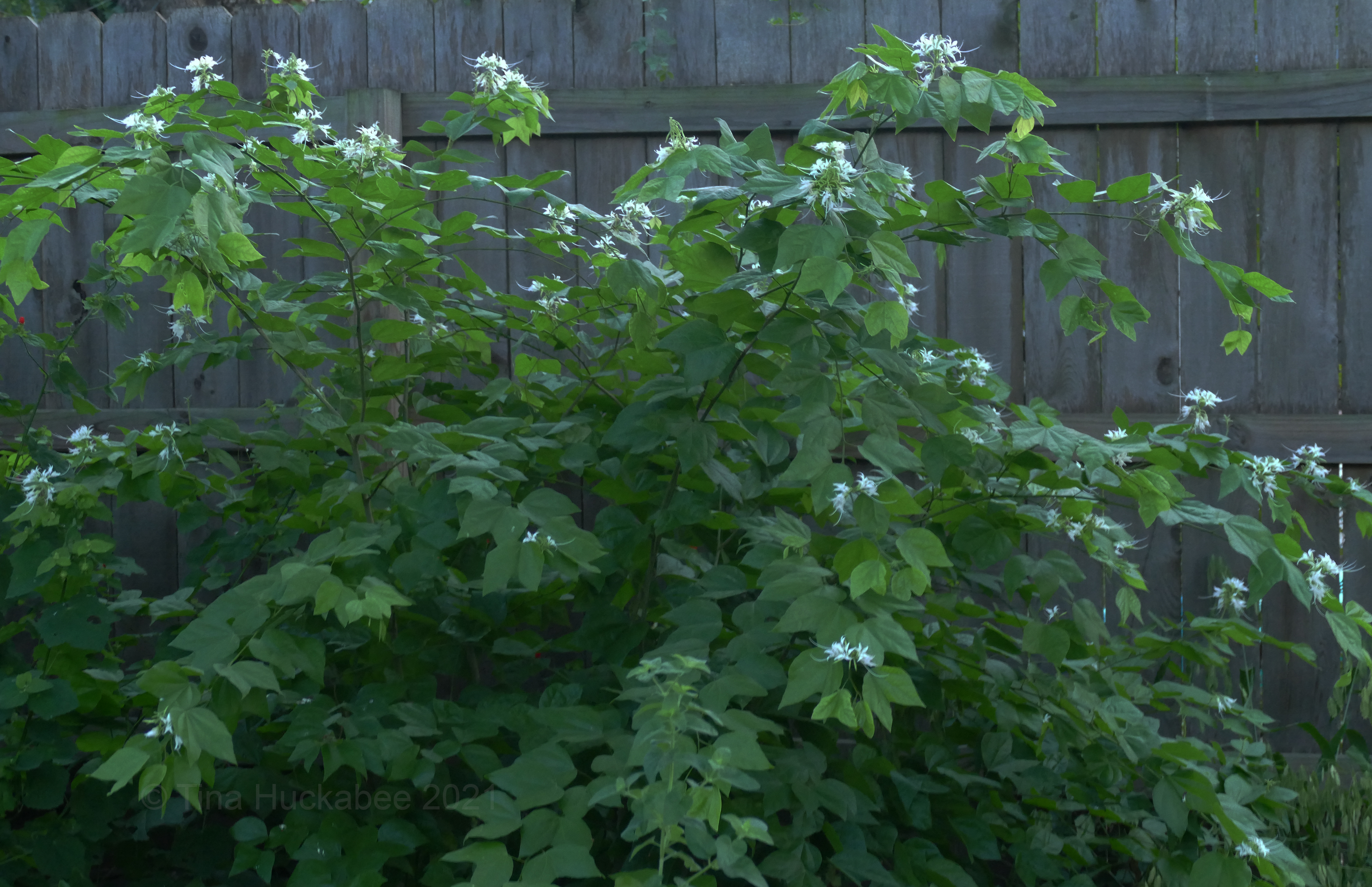
The blooms are snowy white, but the plant loves the heat.

Foliage of Turk’s cap photo-bombs the orchid tree. Do you see it?

My other mature orchid tree receives more sun, growing a little faster and flowering more. This tree is a seedling from my original tree.

The orchid tree is partnered with a cluster of native White Salvia coccinea.

Rather than the pure white of the mother tree, this tree’s flowers are white with a subtle blush of pink.
Another Mexican perennial that I thought wouldn’t bloom until fall is the Mexican honeysuckle, Justicia spicigera. In this part of my garden, it’s paired with the South American beauty, Majestic sage, Salvia guaranitica, which grows just behind it.

Majestic sage and Mexican honeysuckle are perennials that have proven themselves reliable, even after a week of sub-freezing temperatures. The rich blue of the sage blooms complements the cheery orange honeysuckle flowers. Both plants are pollinator magnets; the sage is a favorite of various butterflies, but the bees are all about the honeysuckle blooms.

When Mexican Honeysuckle blooms, it really blooms!

Honeybees have been all over the Honeysuckle flowers. Usually, I also see plenty of native carpenter bees at these blooms, but sadly, their population is decreased this year. While the plants returned with vigor, some insect species have been slower to recover.

Native to parts of the Carribean Islands and Mexico, Pride of Barbados, Caesalpinia pulcherrima, lives up to its botanical moniker, very pretty. This one is tall and truthfully, a little past its blooming prime for the year. Still, it’s topped with dramatic orange and yellow flowers that usually have pollinator attendants.

Early in the morning, only the honeybees are at work.

One more Carribean-to-South American plant that has weathered well in my garden during both hot and cold is the Firecracker fern, Russelia equisetiformis. Not only did its ferny foliage pop up from the ground after the winter storm, but its fire-engine red blooms have popped with color all hot summer.

All of these plants are tough, beautiful perennials that return after the hardest freezes and grace the hottest summers; I’m glad they’re a part of my garden palette.

I’m happy to link with Carol and her Bloom Day for August. Check it out to see lovely blooms from many gardens! Happy gardening!

Is This All?

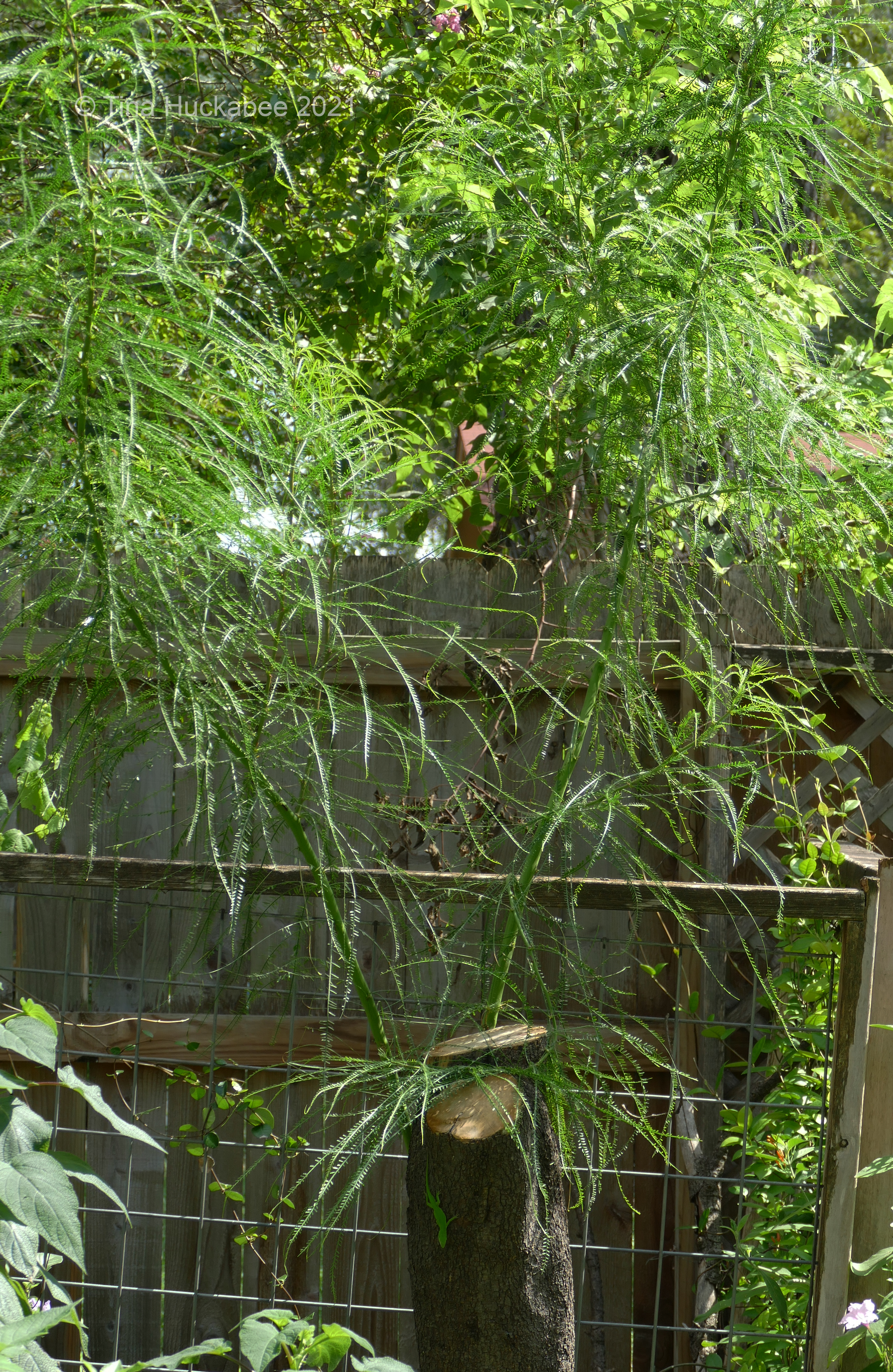
I wonder if the Green Anole, Anolis carolinensis, is baffled? It was once a larger tree, but now is only a trunk and some foliage, where is the rest of it?

This mature Retama, Parkinsonia aculeata, froze during the winter storm in February. I assumed it was a lost cause and that the dead trunk and limbs would need removing. But in late April, new growth burst upwards from the base of the plant and shot toward the sky with speed. In July, the Hub and I finally had time to remove the dead portion of the tree and I also pruned the multitude of shoots from its base, leaving a single strong one with an attached second branch which will serve as the trunk of the “new” tree and its two lead branches. The crotch of the new trunk is just a few inches below the crotch of the original trunk. The two main limbs are now about 6 feet tall and growing by the day.

There’s a lot of green in this photo, but the feathery foliage forms a V from behind the original trunk and is loving the plentiful sunshine. At some point later in autumn or winter, I’ll have the Hub don his lumberjack hat and saw the original trunk to the ground.

By next summer, the tree should be even taller, maybe with more limbs, and covered in its signature yellow blooms. Pollinators will join with anoles in enjoying its presence.

Bird Watching Buddy

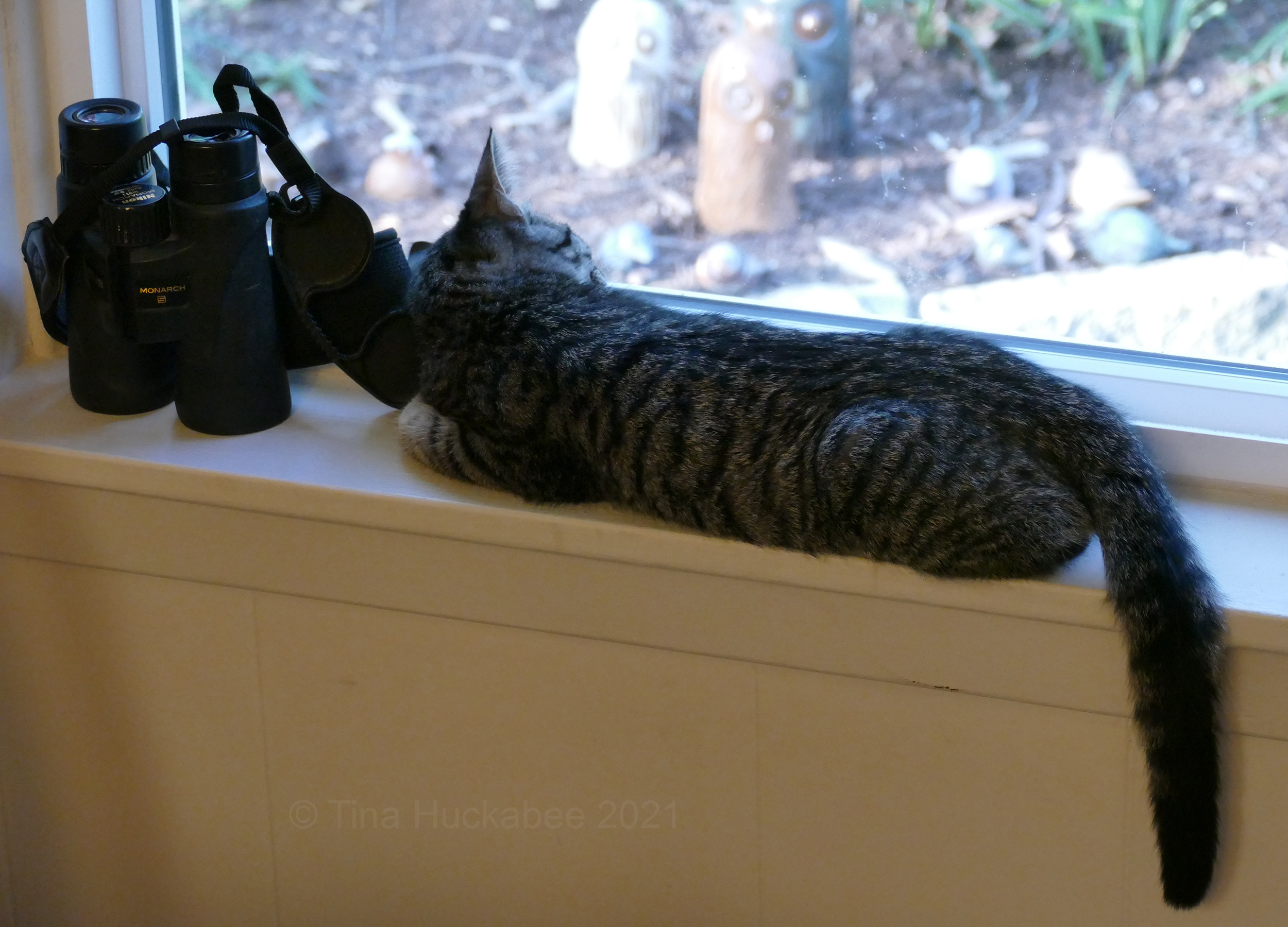
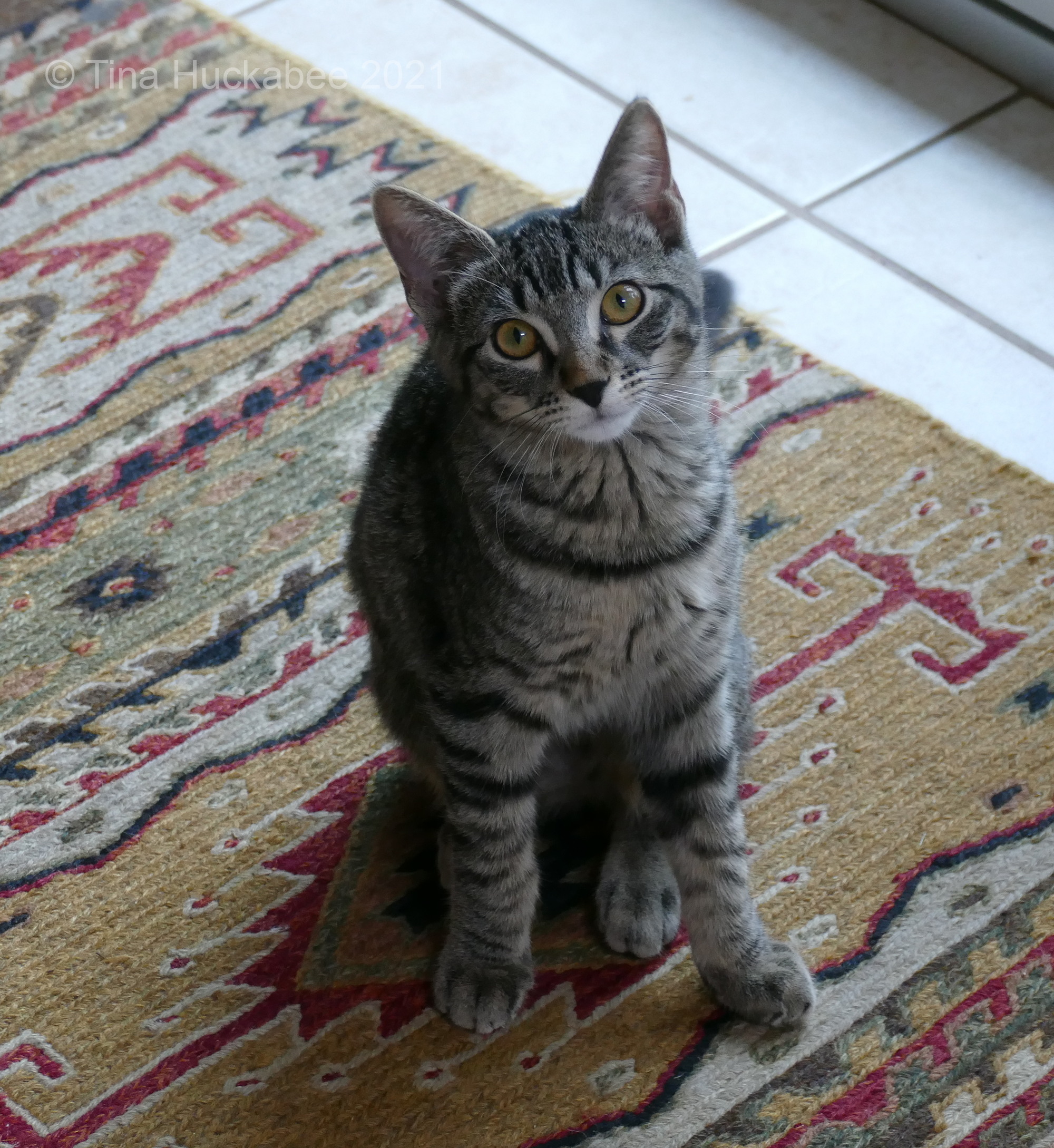
We have a new kitty and she likes to watch birds. She’s such an avid bird watcher that it tires her out!

We’ve had the new kitty, Lena, since June. We adopted her a few months after our beautiful, beloved Nuri died. He was 15 years-old, diagnosed with heart failure 2 years before his death, but he lived beyond all expectations of his prognosis, living his happy life until the end.

Our son chose Nuri in 2006 from a local shelter the same year our daughter, Shoshana, died. Truthfully, I didn’t care at all about getting a new pet at that time (we had two dogs and our older cat had died), but our son was 11, bereaved, and adopting a new life was a small and positive thing we did to ease some of the pain. Nuri came into our lives and though there was nothing that could fill the abyss of grief, he was a light in a dark time. Nuri was the smartest cat, maybe the smartest pet, we’ve ever had. Lovely, soft and affectionate, he was also quite funny. He got along well with our dogs, made us laugh, and cuddled like a champ.

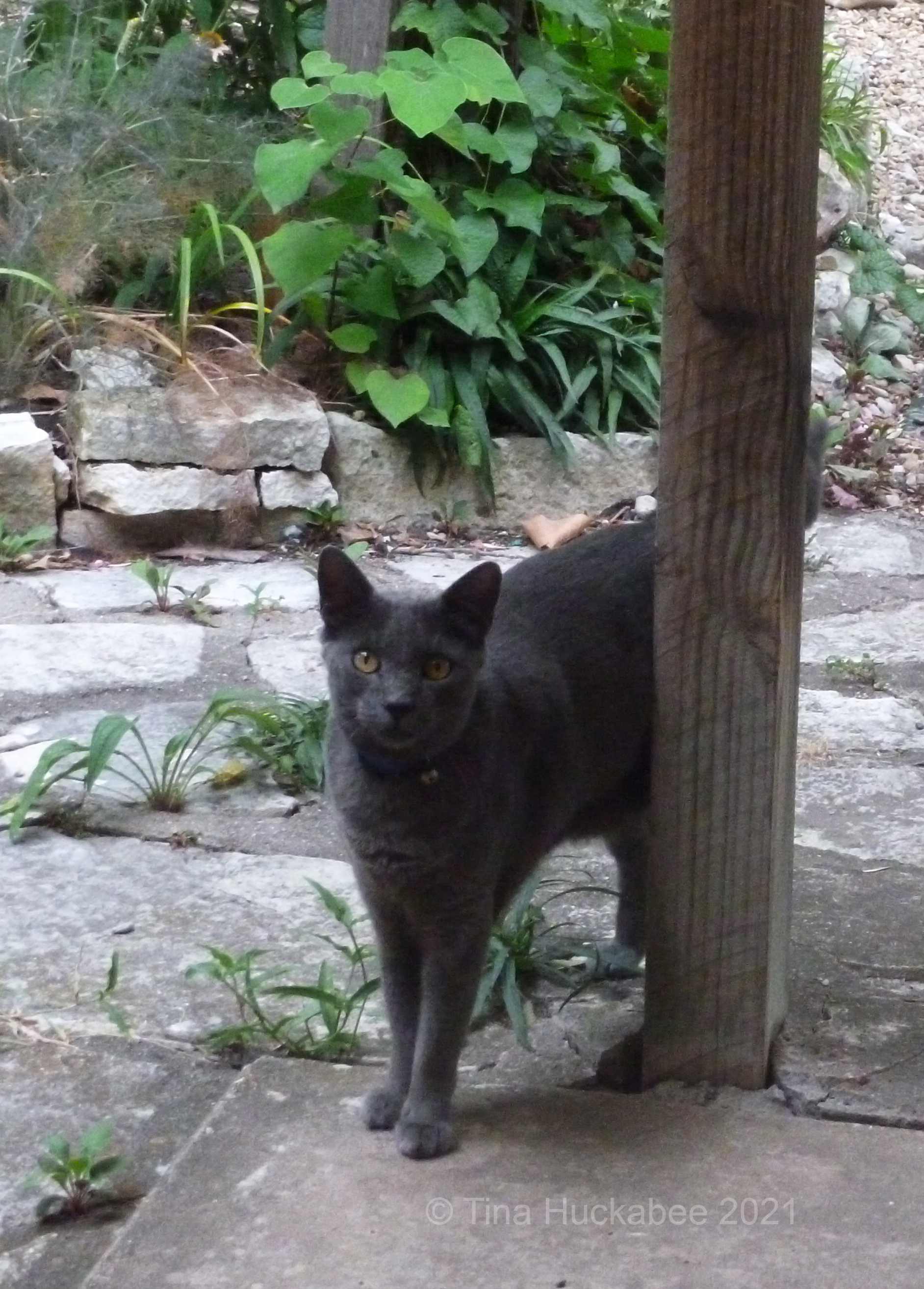
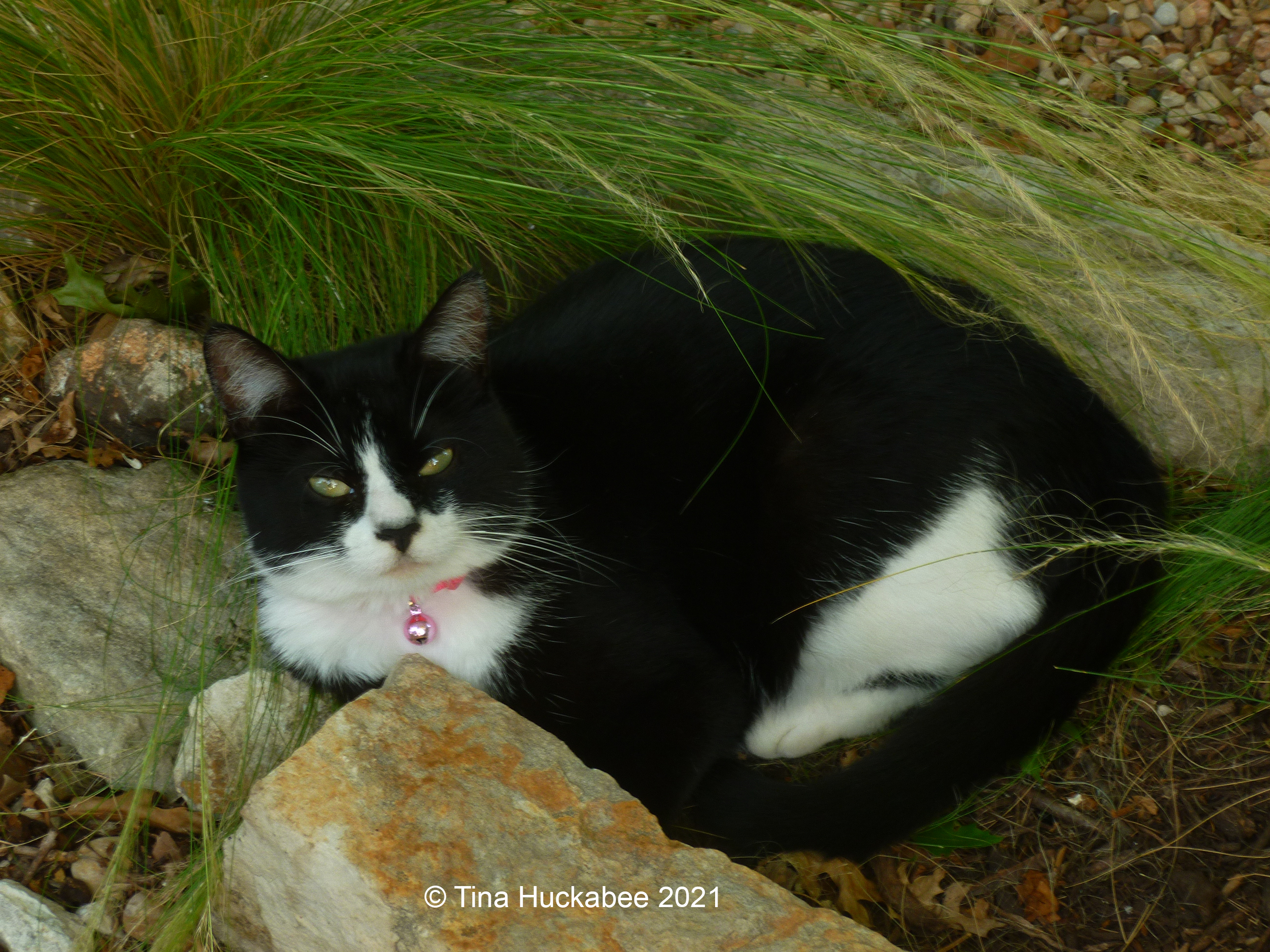
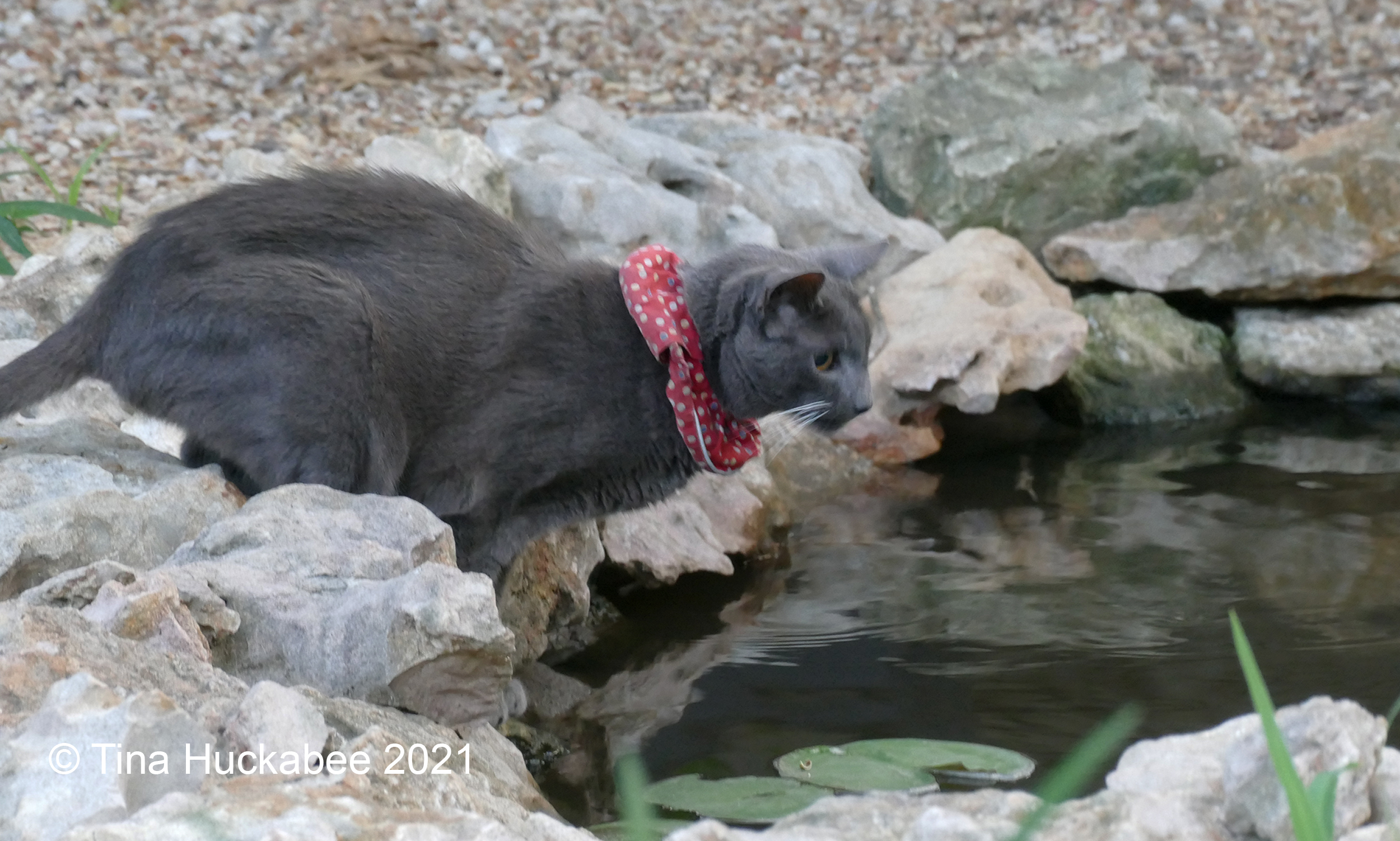
During the course of Nuri’s life we adopted another cat, a tiny foundling, our sweet Astrud. Named after the jazz singer Astrud Gilberto for her dulcet meows and chirrups, she’s now 8 years-old and has missed for Nuri since his death. Mournful mews replaced musical meows.

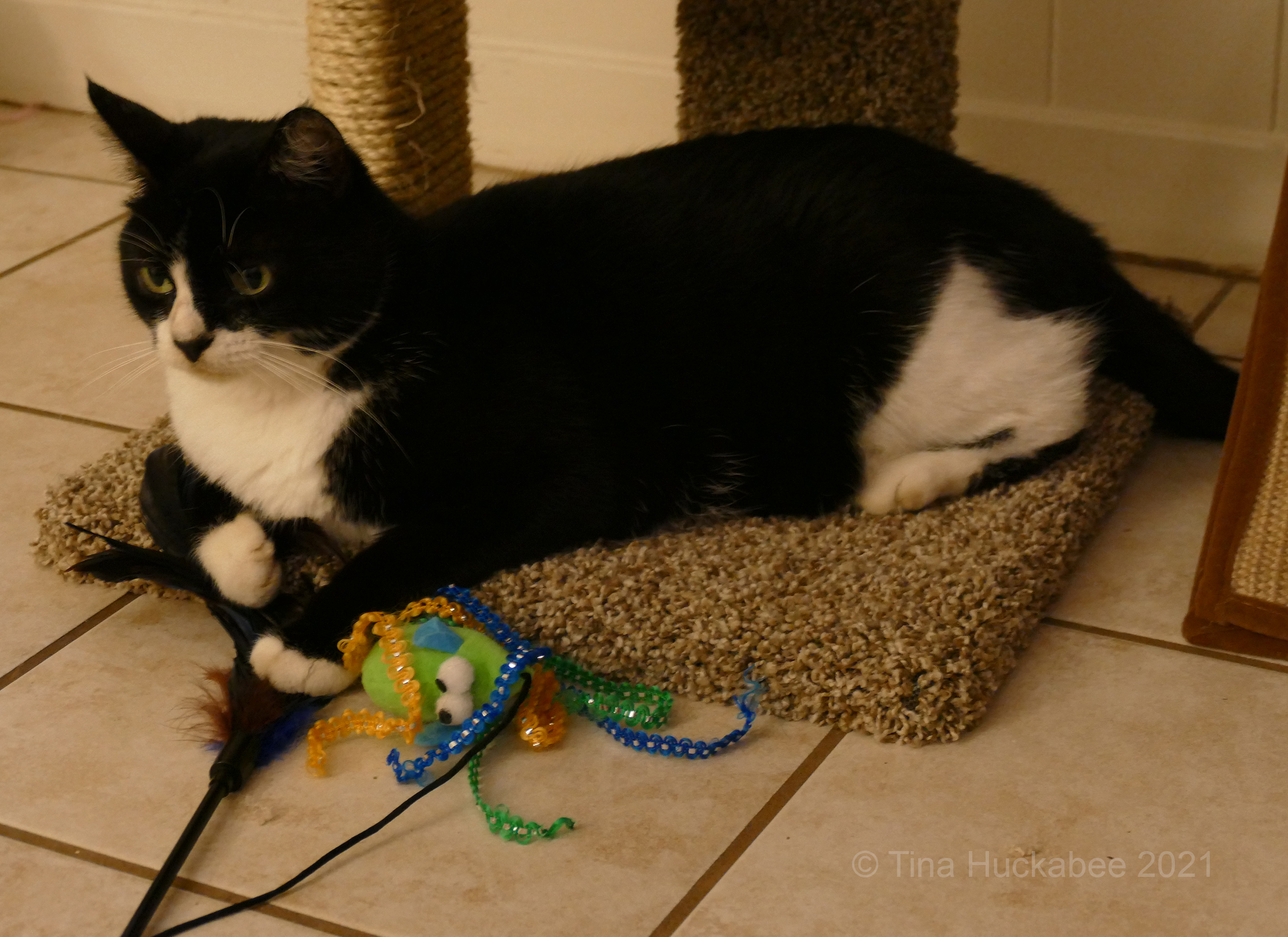
I wasn’t sure I wanted another cat, but a nice neighbor was fostering a mama and 4 kittens, and we visited them and, well, you know the ending to that story. As expected, the adjustment between mature cat and rambunctious kitten has had its challenges. Astrud will play with Lena, but the play is limited and only on her own terms. After all, she’s now alpha and she’s the boss cat. There are some growls and hisses on one side and lots of boundary pushing on the other, but they’re figuring out their relationship and generally getting along. Sort of.

Our cats have always been indoor/outdoor cats, with the emphasis on indoor. Nuri liked to tour his territory, but rarely strayed beyond, and Astrud only goes in the back garden, usually in the afternoons, snoozing under select, favorite shrubs. Neither were/are avid hunters, though Nuri was a ratter. Good Nuri! We’d already decided that if we adopted another cat, he/she would be indoors-only; our garden attracts myriad wildlife and we don’t want a feline invasive species messing with the ecosystem. As Lena has demonstrated lightening speed, tremendous jumping ability, and an interest in stalking and hunting, she will definitely reside indoors. Birds, lizards, insects, and toads will be safe from her skulking through the garden, searching for prey.

Though she is a darling, she’s probably a killer kitty.

Lena is named after another jazz singer, the fabulous Lena Horne. Like the singer, our Lena is beautiful, smart and charming, though I don’t know if she sings as well; she does have a quirky, squeaky-sweet voice. Lena is a charismatic little cat and we’re quite taken with her. She’s been a great addition to our household, though Astrud probably has a different opinion.

Like our dog, Asher, who died 3 years ago, we still miss Nuri, and mourn his loss. Accepting the relatively short duration that pets spend with us and grieving when that ends is the price we pay when we love animals and welcome them into our lives.