So, Can I Make Cookies From These?

Oats

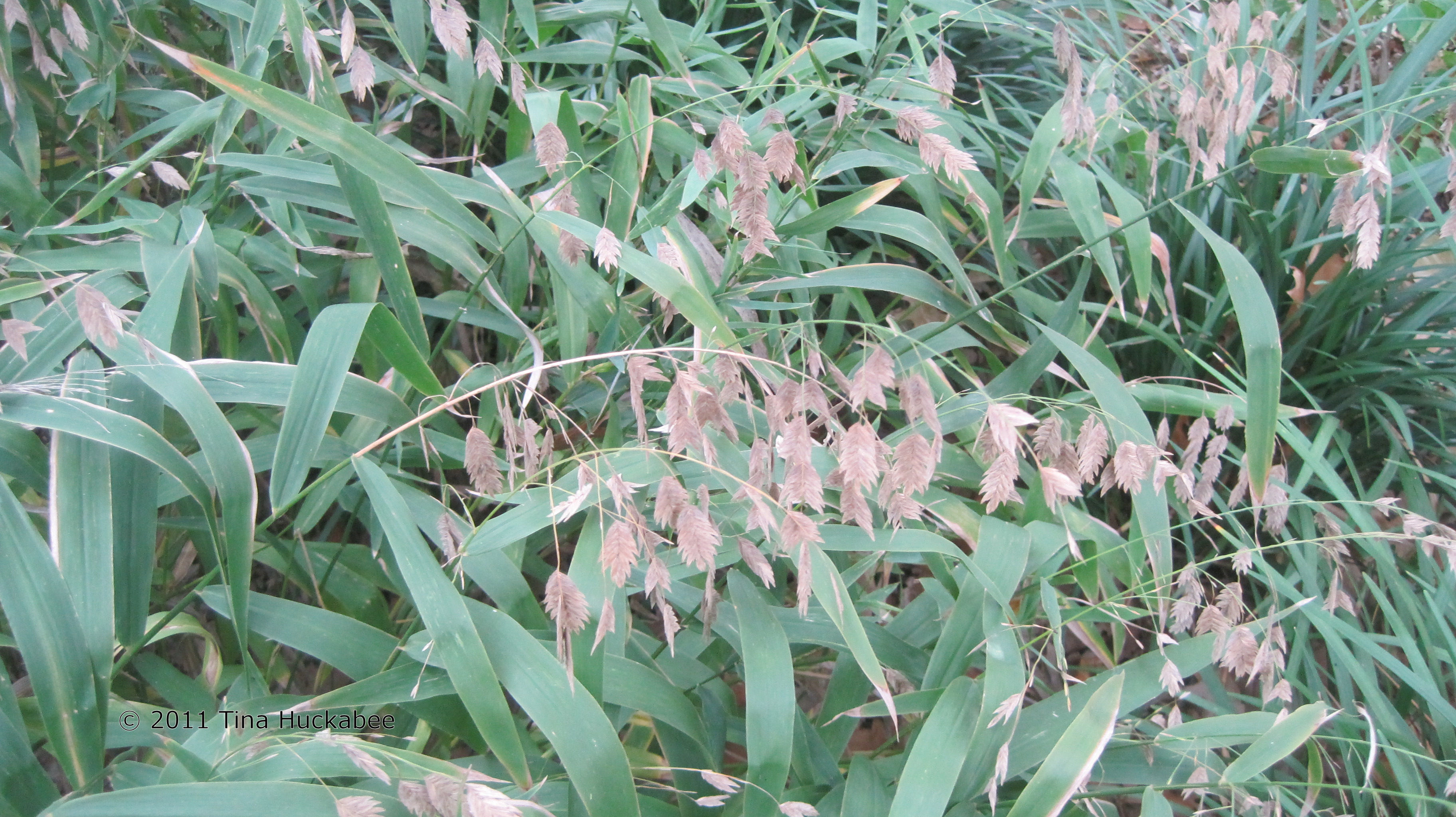
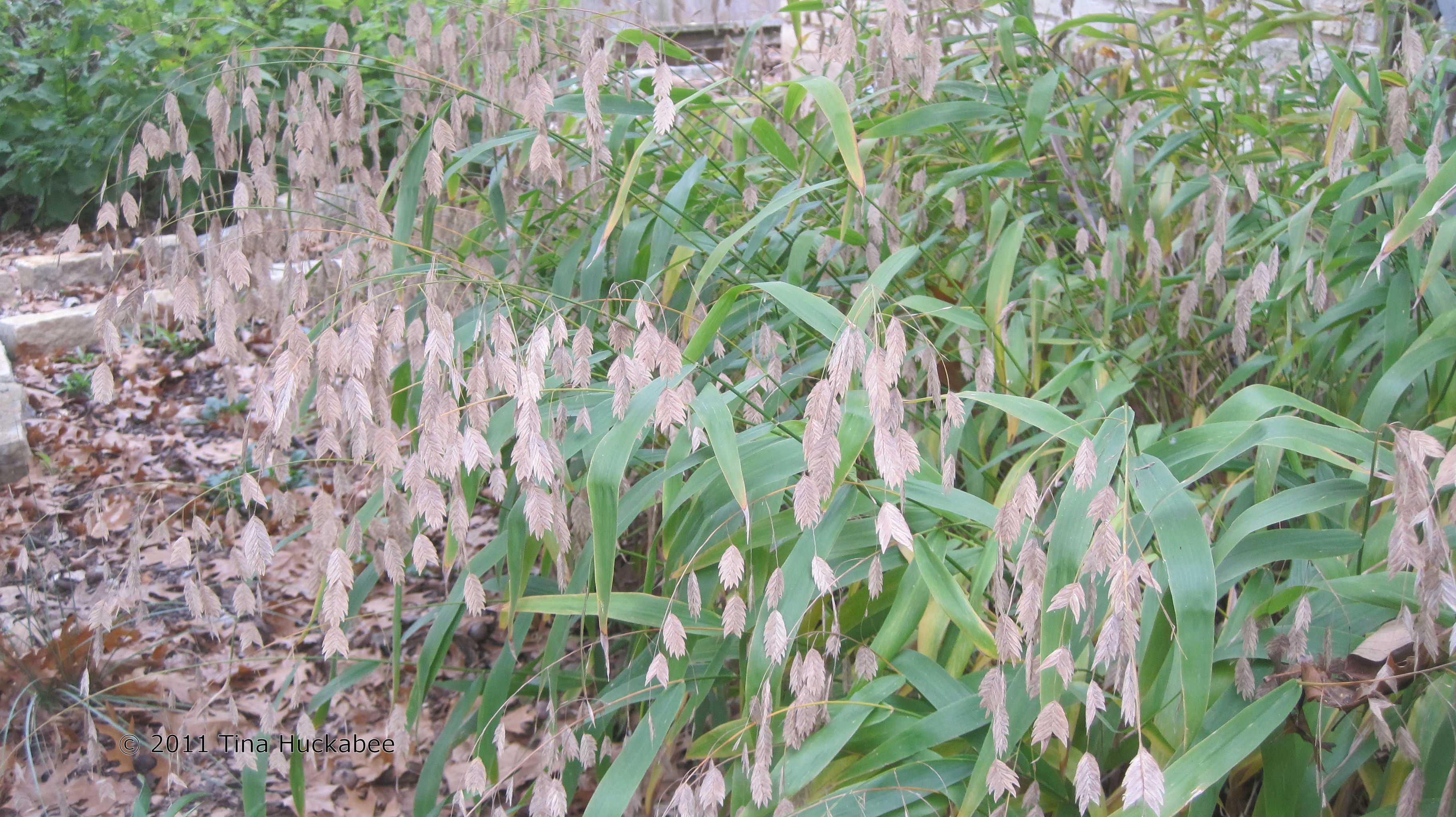
Lots of oats.

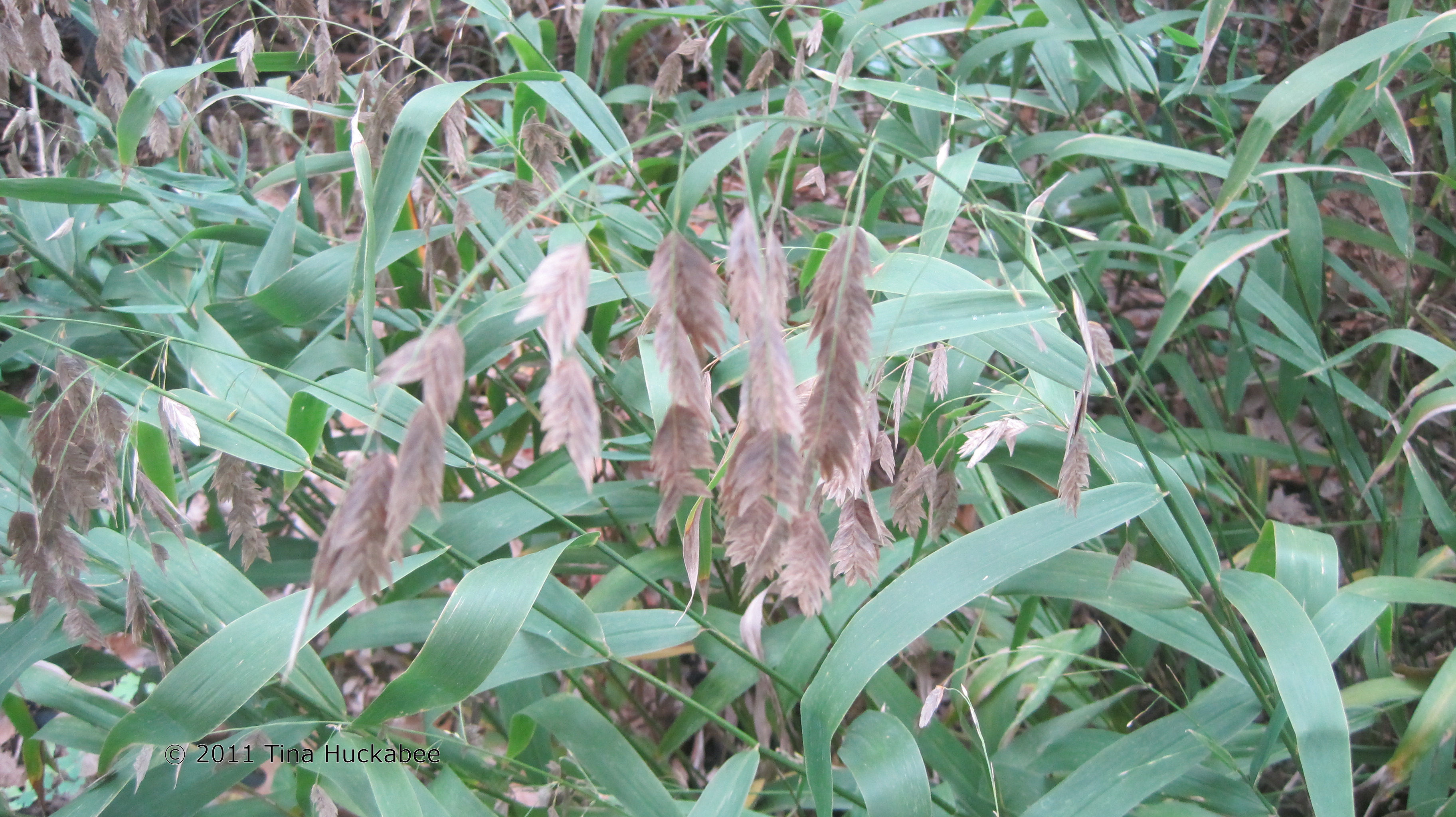
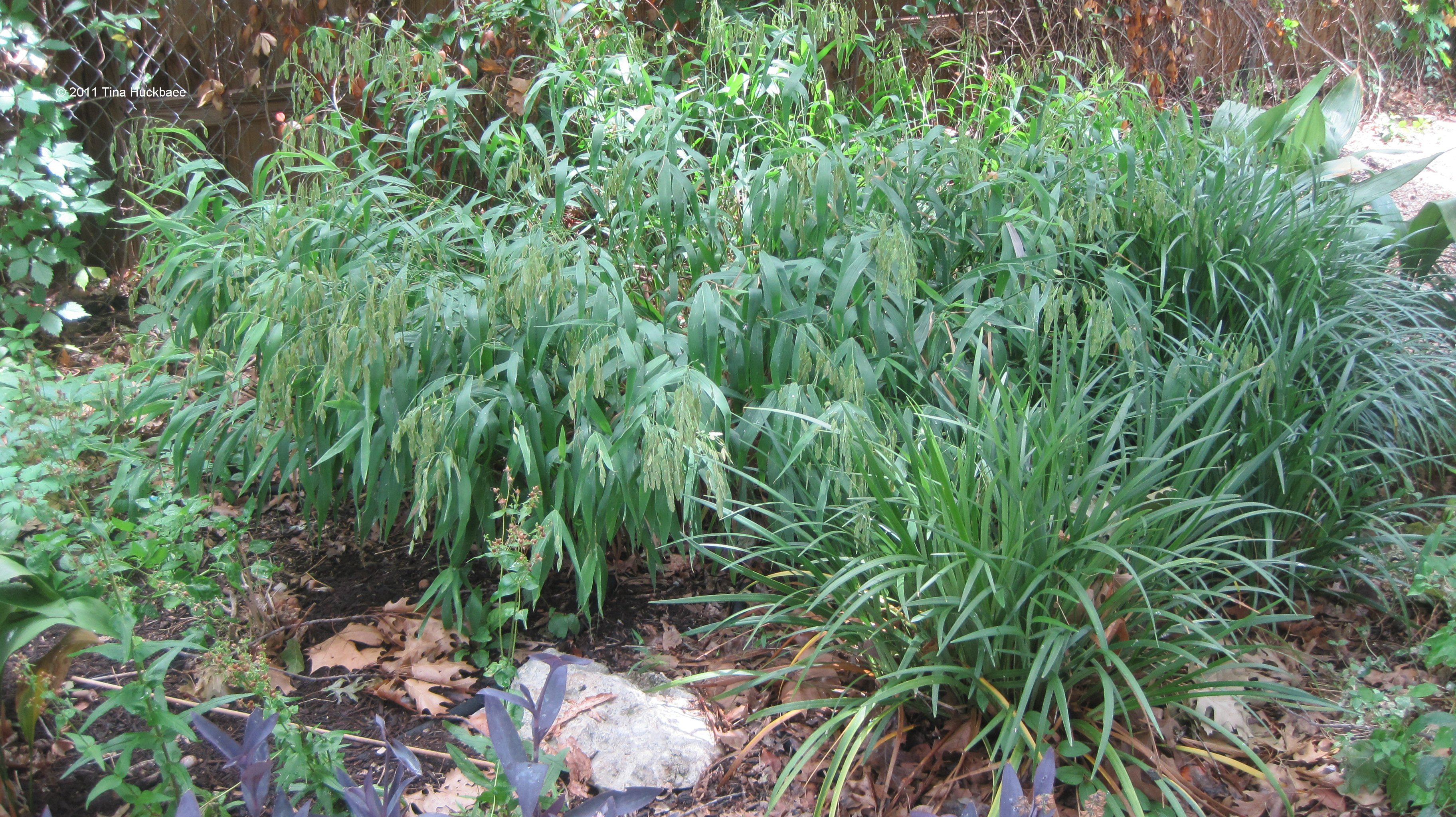
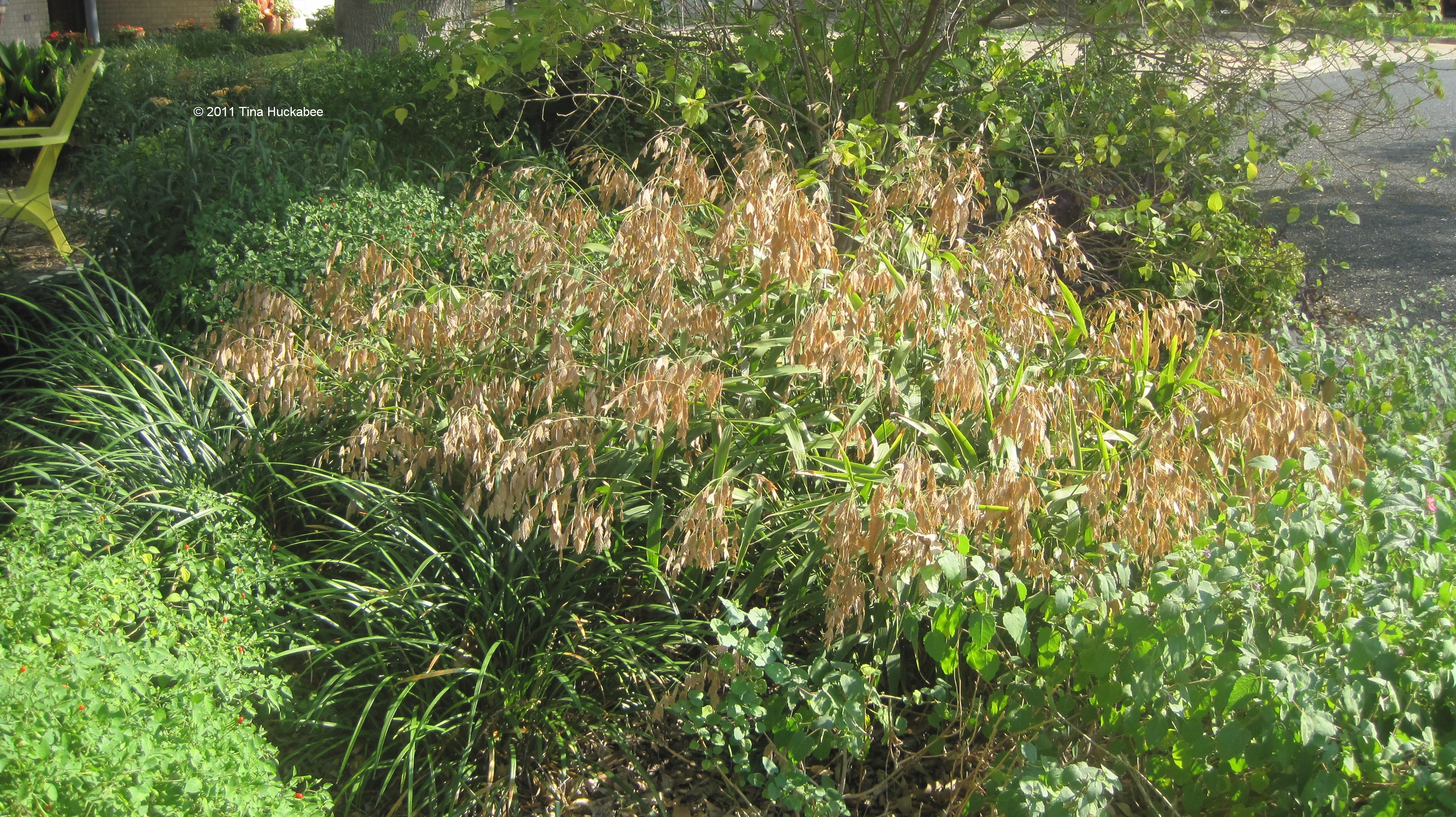
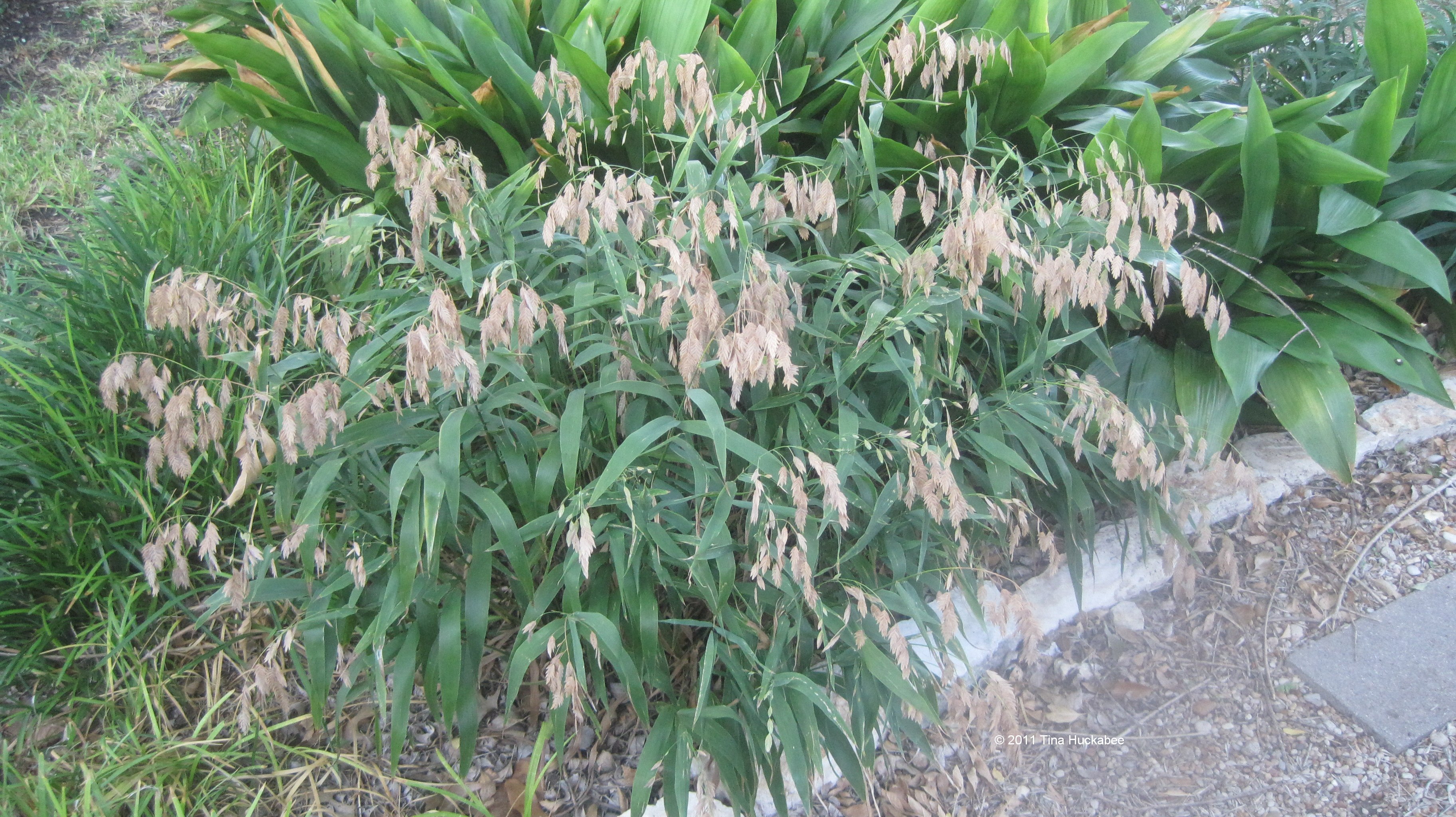
Inland Sea Oats  (Chasmanthium latifolium), to be precise. When you have one plant, you eventually will have many Inland Sea Oat plants. That said, I like this plant–it’s one of my favorites. I like the bright green shoots that appear in spring and I love the beautiful green seeds that develop in early summer atop the stems that give this plant its name.
I anticipate the change of the seeds from bright green to a warm, toasty brown in late summer and fall.
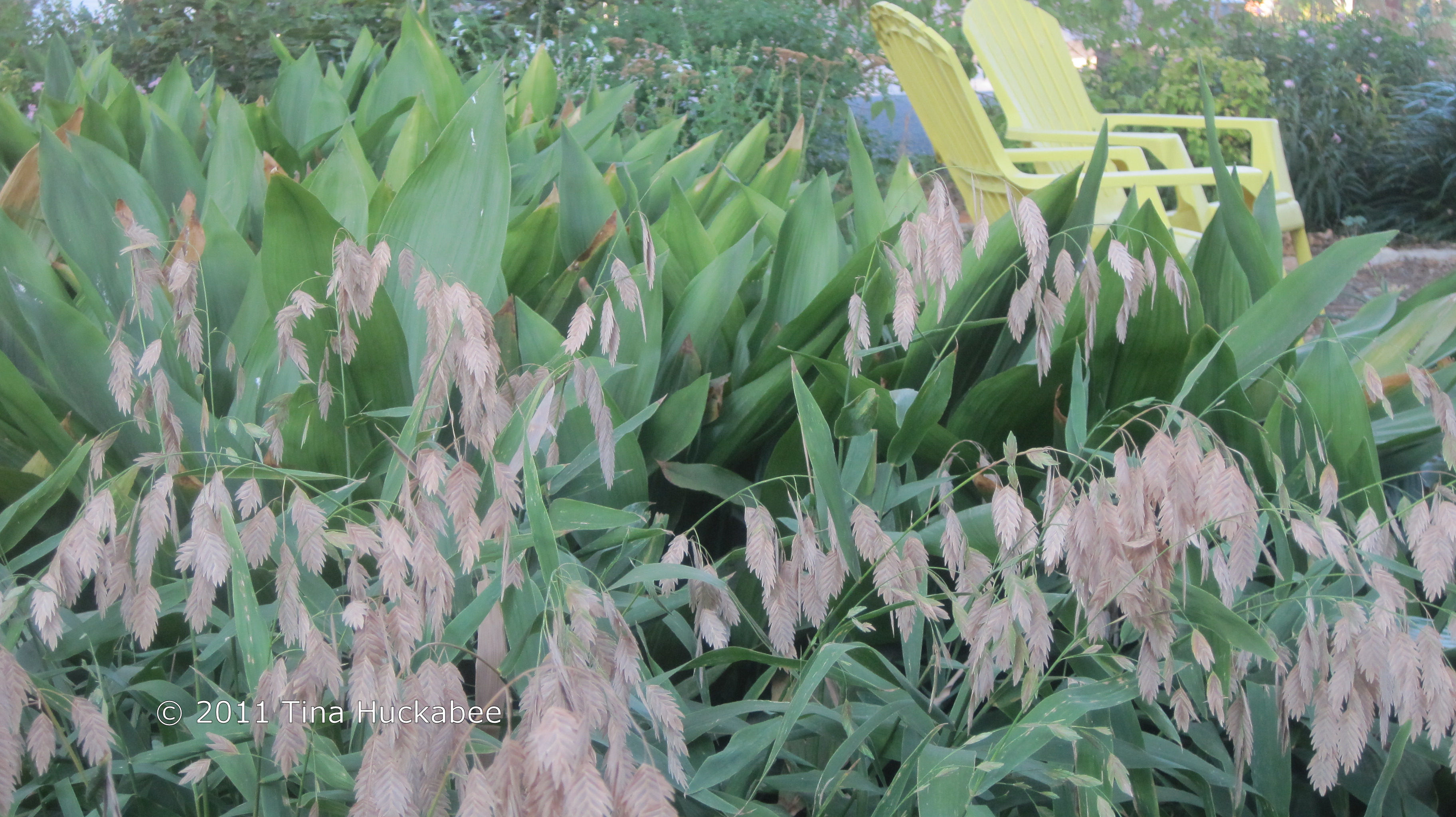
Inland Sea Oats is a graceful and elegant addition to any garden.
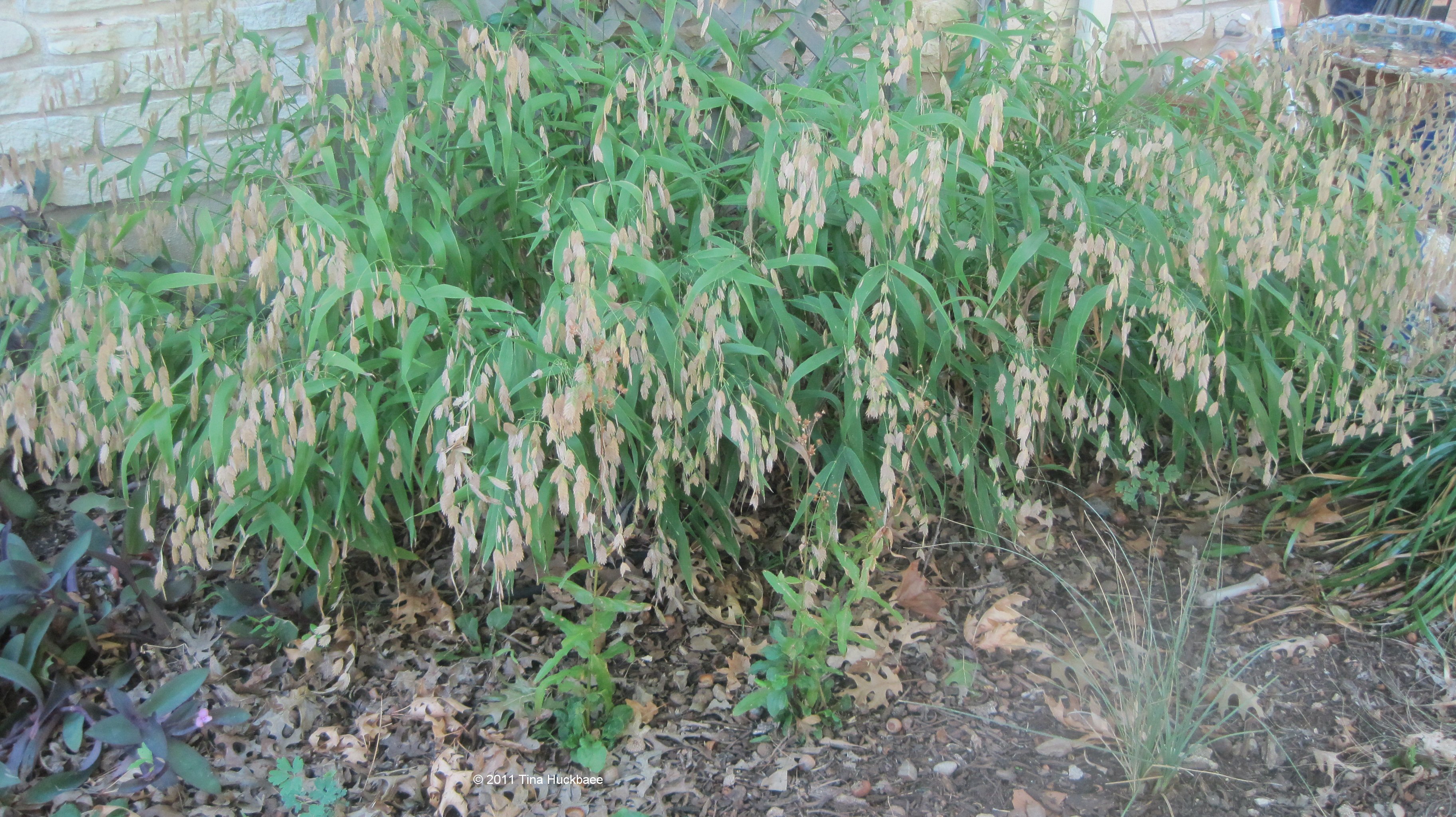
This plant is a native perennial grass, especially useful in dry, shady gardens.  It grows from a base rosette to about two feet in height.   It’s not particular about its soil requirements. It has no disease or insects problems and is deer resistant.  Inland Sea Oats is often used as an erosion control measure because of its ability to spread and its beauty when planted in masses.  Usually considered a shade appropriate plant, I’ve often seen it in full sun.  In one of my gardens, this  group gets the late afternoon west sun,
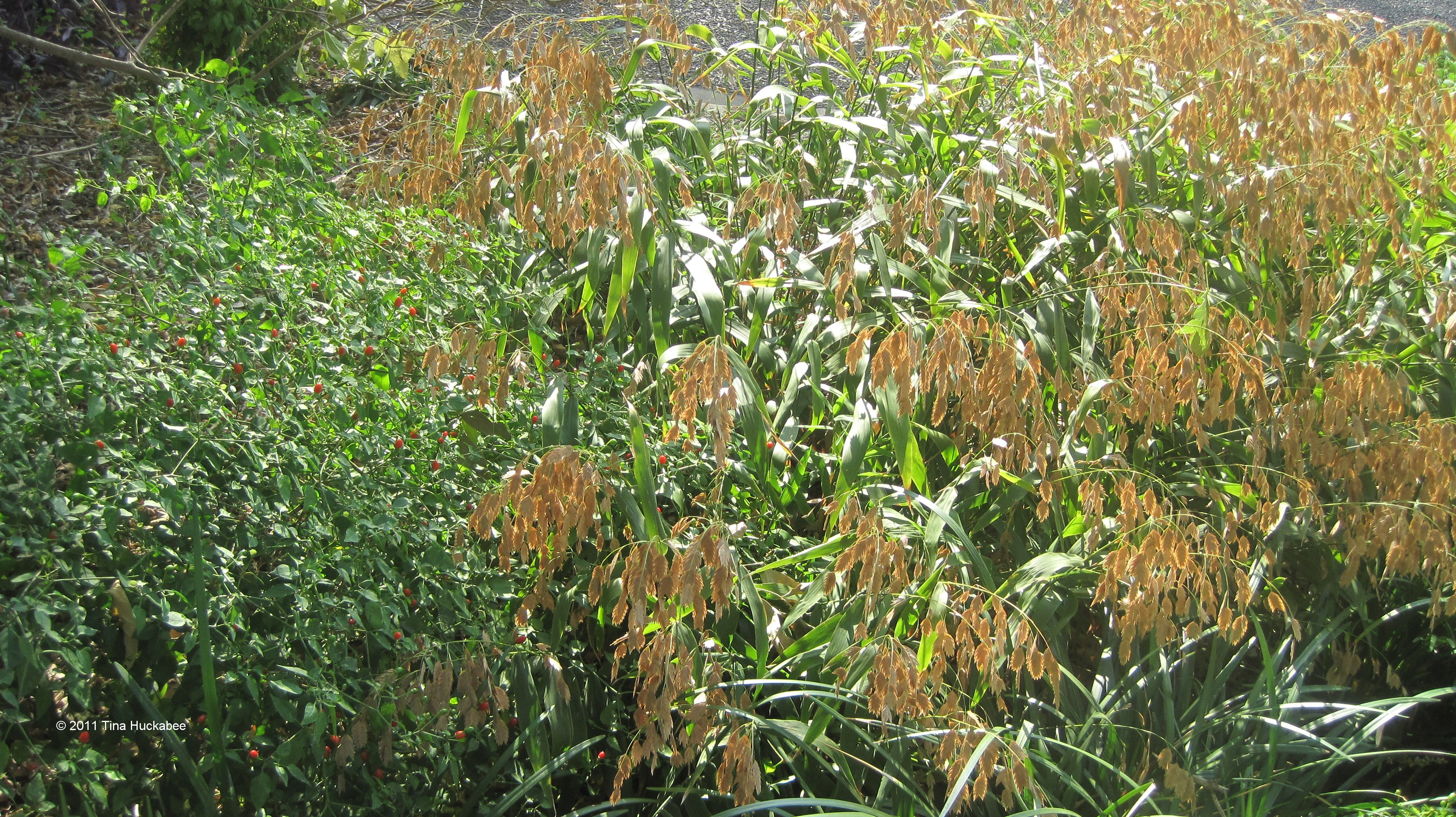
and these handle the shade-for-most-of-the-day, then blast of hot, west sun, beautifully.
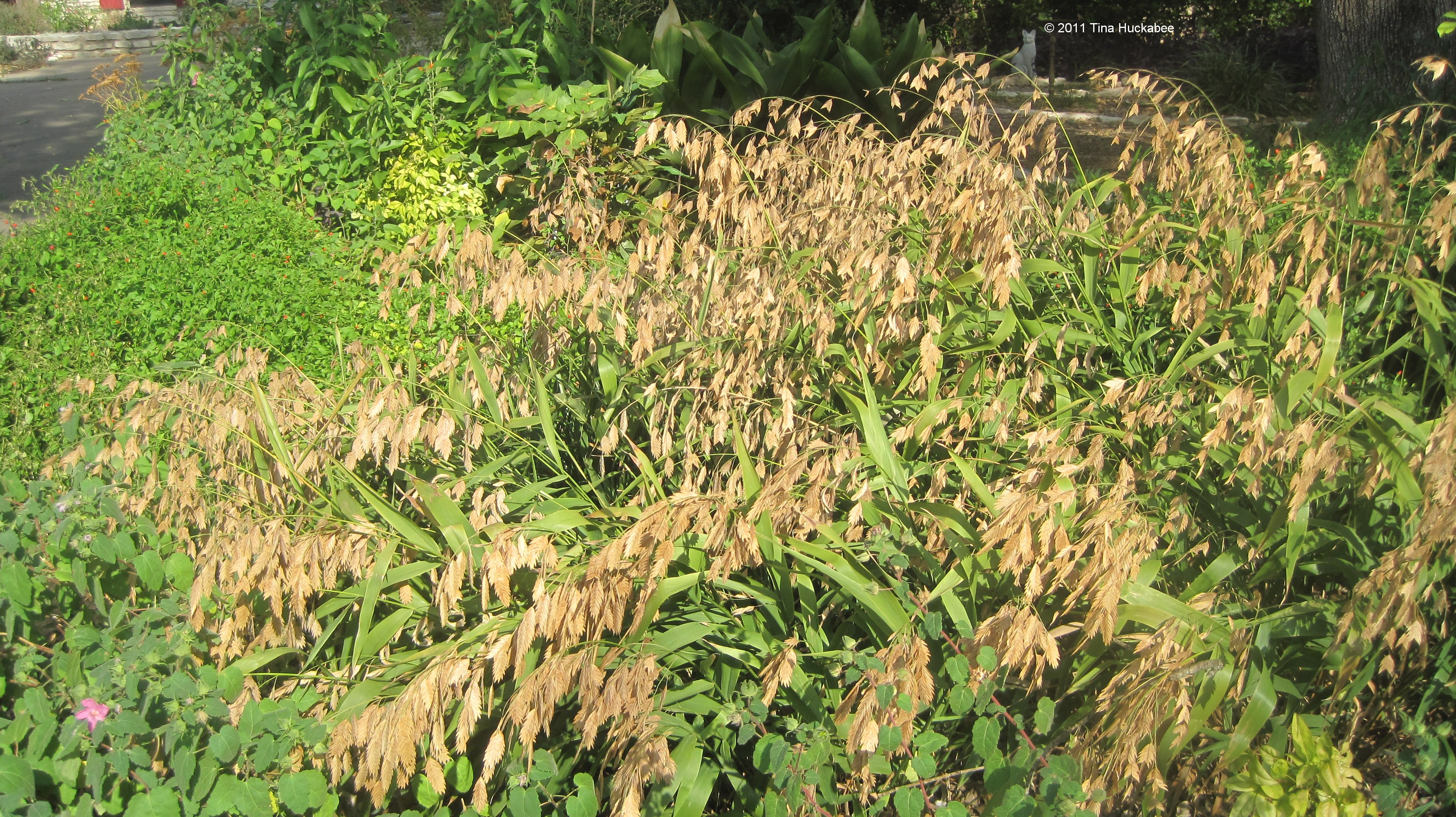
I think they’re especially lovely in the autumn, late-day sun.
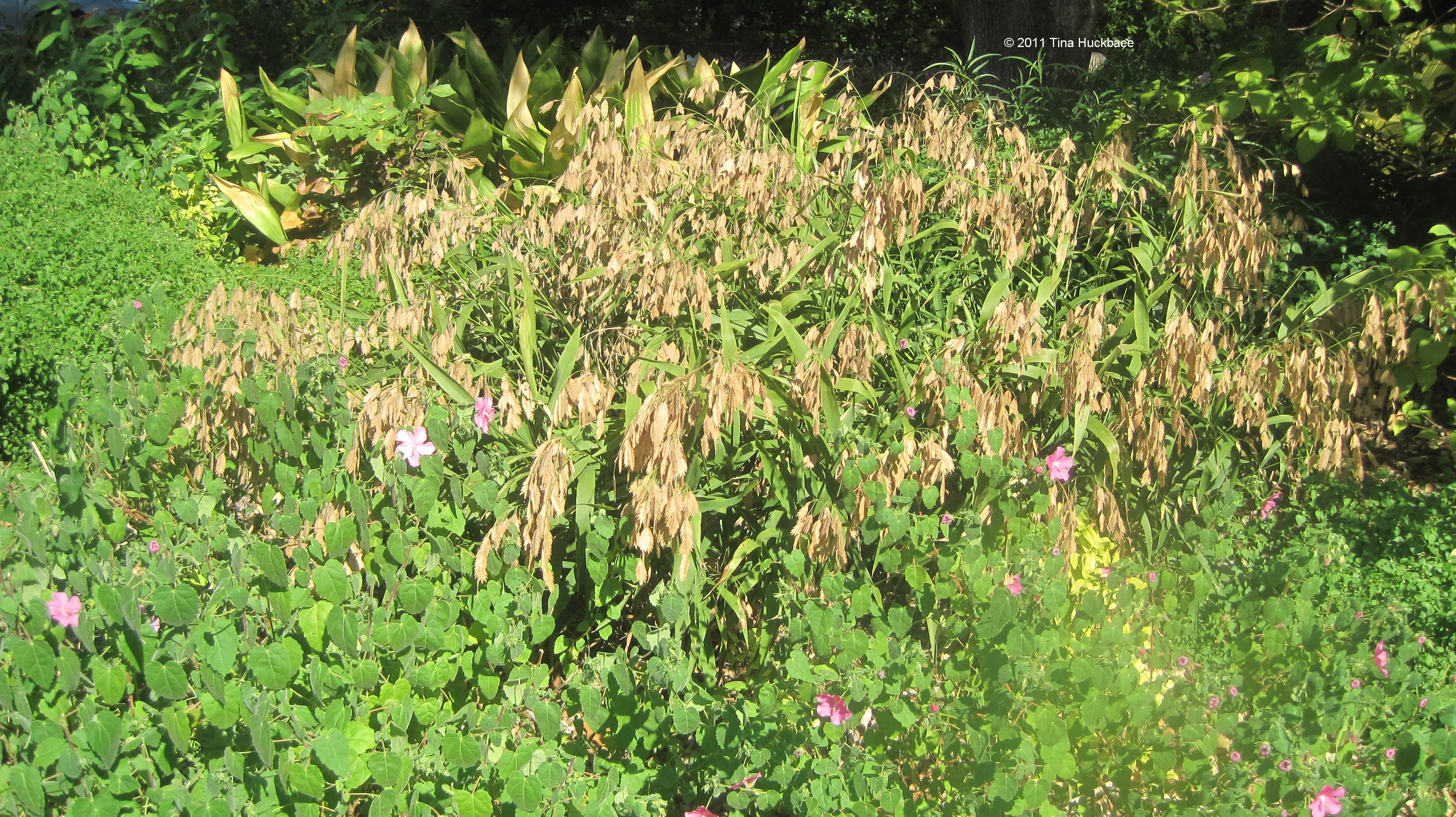
Inland Sea Oats pairs nicely with Cast Iron Plant (Aspidistra elatior),

and with Giant Lirope (Lirope muscari ‘Evergreen Giant’).
A word of caution though for this lovely, tough grass:  It can spread.  Profusely.  Especially if you have a sprinkler system and/or a moist climate.  I maintain a tight leash on the Inland Sea Oats in my gardens by yanking errant seedlings out of the ground when I see them.  Because I don’t over-water, I’ve not found this plant to be too troublesome for me to control–if you don’t let them reseed, they are manageable.  However, without management, Inland Sea Oats can be aggressive and invasive.  When I first started working as the gardener at Shay’s Green Garden at Zilker Botanical Garden, one the first goals I had for the gardens was to reduce the number of Inland Sea Oats plants.  This plant hadn’t been well-controlled for quite some time, so it was everywhere.   There are still many groups of Inland Sea Oats in the Green Garden, but fewer than before and by ridding the garden of the excess, it gave me the opportunity to plant other perennials that were not showcased in that garden.  I’m not sure I’d recommend this plant to someone who isn’t committed to weeding it thoroughly at the beginning of the growing season. 
Inland Sea Oats can be a marvelous addition to the urban landscape.  It’s a xeric, beautiful and mostly low-maintenance native grass.  It complements many plants, especially evergreens.  Its one drawback is a tendency towards aggressiveness over time and that can be remedied with good garden maintenance.
 

A Flock of Fall Fruits

There are an abundance of berries on shrubs and trees in my gardens this fall.  I choose to believe it’s because they are happy, loved and established rather than some exhibition of desperation, a last-ditch effort to reproduce, given the exceptional drought they’ve lived through this past year or so.

I didn’t expect much of a berry show this year because of the drought, so I’m glad that I was wrong.

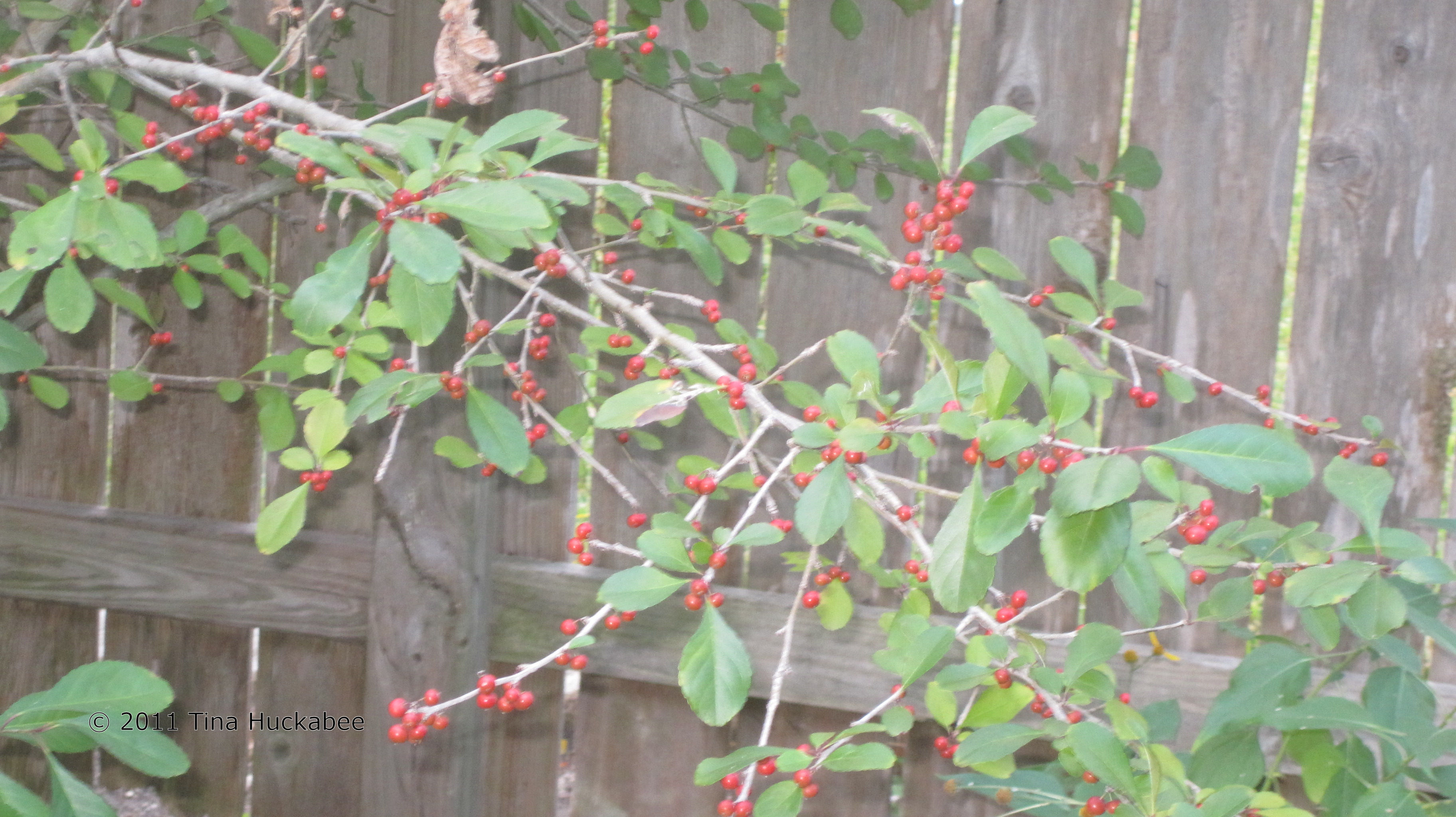
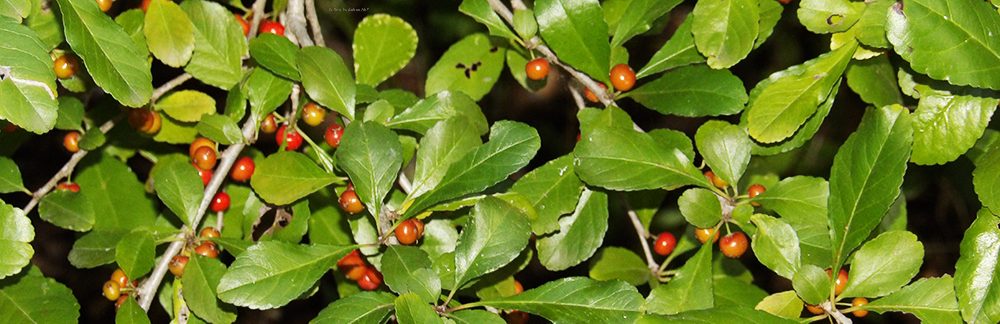
My Possumhaw Holly (Ilex decidua) has been an inveterate berry producer for some years now.

It’s about eleven years old and usually by  November, it showcases its lovely, lush red berries.

The birds (mockingbirds, bluejays and cedar wax-wings) love this berry and are very generous with me:  they don’t eat these fruits to extinction until early spring so I get to enjoy the beauty of the berries throughout winter. Interestingly,  many of the berries that developed last fall stayed on the tree well into this past summer, a surprise to me given the limitations of wildlife food available this year.

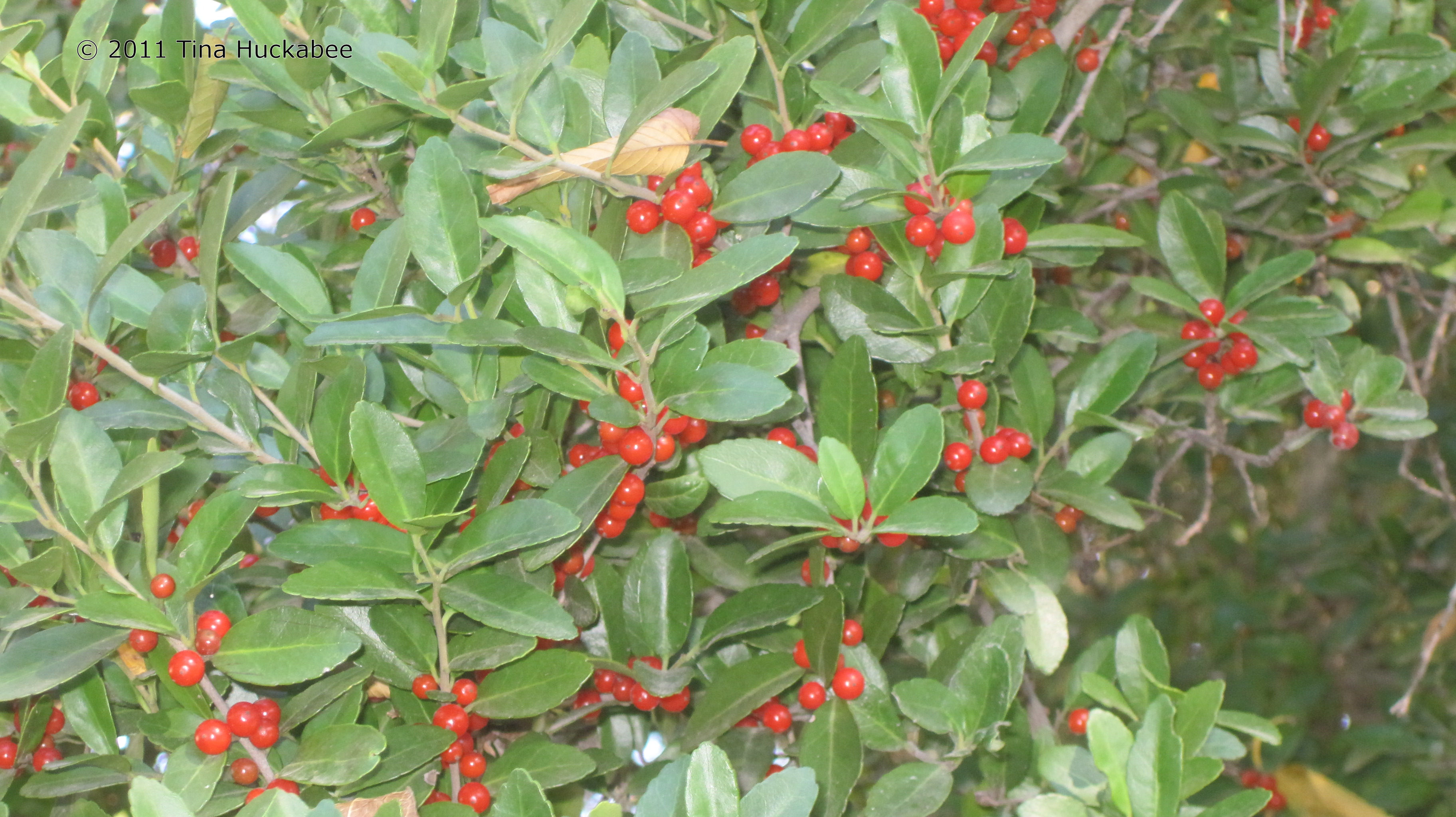
My neighbor has the related Yaupon Holly (Ilex vomitoria), just over the fence which separates our property.

I like these two small, native trees planted so closely together.

The Yaupon remains evergreen during winter and the Possumhaw is deciduous after our first hard freeze.  The berries will remain on both trees until birds and squirrels devour them.  The Possumhaw has slightly larger and darker red berries,

while the Yaupon’s fruits are smaller, scarlet red and shiny.

Both trees are excellent landscape and wildlife plants for Central Texas.

The non-native, but well-adapted Dwarf Burford Holly (Ilex cornuta ‘Dwarf Burford’ ), is also exhibiting a bumper crop of berries this year.

Typically, these berries stay on the shrubs until the cedar wax-wings swoop, en masse, and eat them all, usually in one afternoon, sometime in late February or March.  These shrubs are very slow-growing.  I planted them in 1990 and it took  many years for them to reach their mature size.  They’ve always been good berry producers though.

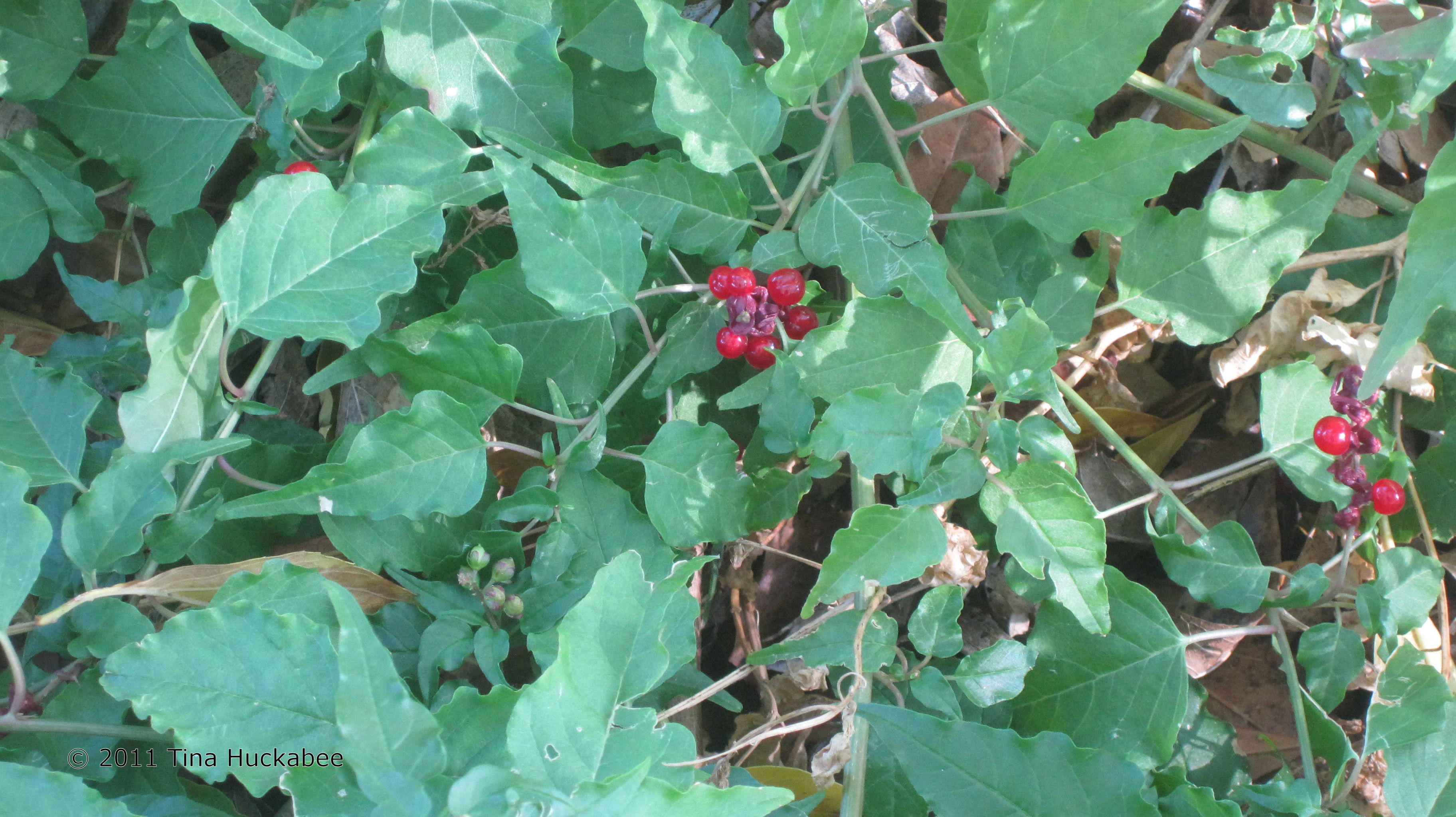
Pigeonberry (Rivina humilis) are still producing their little, brilliant red fruits this year as well.

I’m guessing that the recent rains we’ve had contributed to the slightly longer bloom ‘n berrying time for this plant.

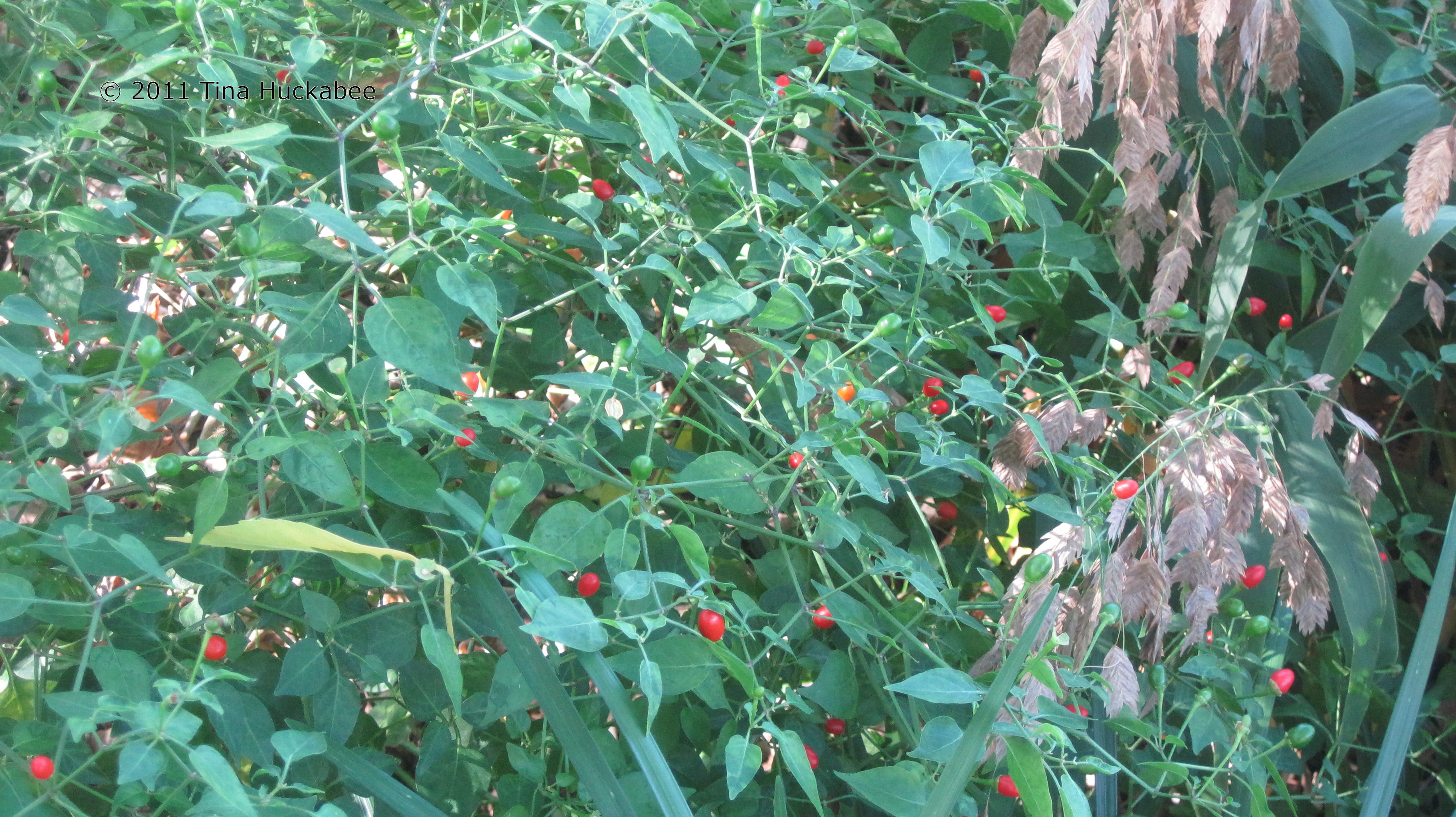
The Texas native pepper, Chile Pequin (Capsicum annuum), also is a reliable fruit producer, although this year (at least in my garden), the fruits (peppers) developed a little later than usual.

Typically, the peppers develop in the summer months, turning red by late August/September.  Aside from the later ripening time, there aren’t as many peppers on my Chile Pequin plants this year as in others.  The mockingbirds have visited these plants recently, so it’ll be interesting to observe whether the fruits remain throughout winter.  Usually they do, that is until a very hard freeze.

Conversely, some of the other fruit producers  have had their fruits gobbled up (seemingly) about three seconds after ripening.  I haven’t seen a Turk’s Cap (Malvaviscus arboreas) fruit or a Barbados Cherry (Malpighia glabra) fruit since earlier in October.  I did however, see a mockingbird flitting about those plants, often with a fruit wedged firmly in his beak.  I wonder if there’s a connection??

What berries to you and your wildlife enjoy?

I’m Glad Someone Has Butterflies

All summer, amateur and professional photographers visited Zilker Botanical Gardens, looking glum.  When they walked into the Green Garden they’d invariably ask, “Do you have any butterflies? ” “No, I’m afraid not,” I would reply, shaking my head just as glumly.  We would then spend some time lamenting the awful drought and heat.

Central Texans who enjoy the great outdoors have noticed how few pollinators, especially butterflies and moths, there has been in this past year. The drought is the obvious cause of the dearth of pollinators, especially in the butterfly population.

Recently, I visited the Texas Gulf Coast (specifically Corpus Christi) and saw more butterflies there in two days than I’ve seen all year in Austin.

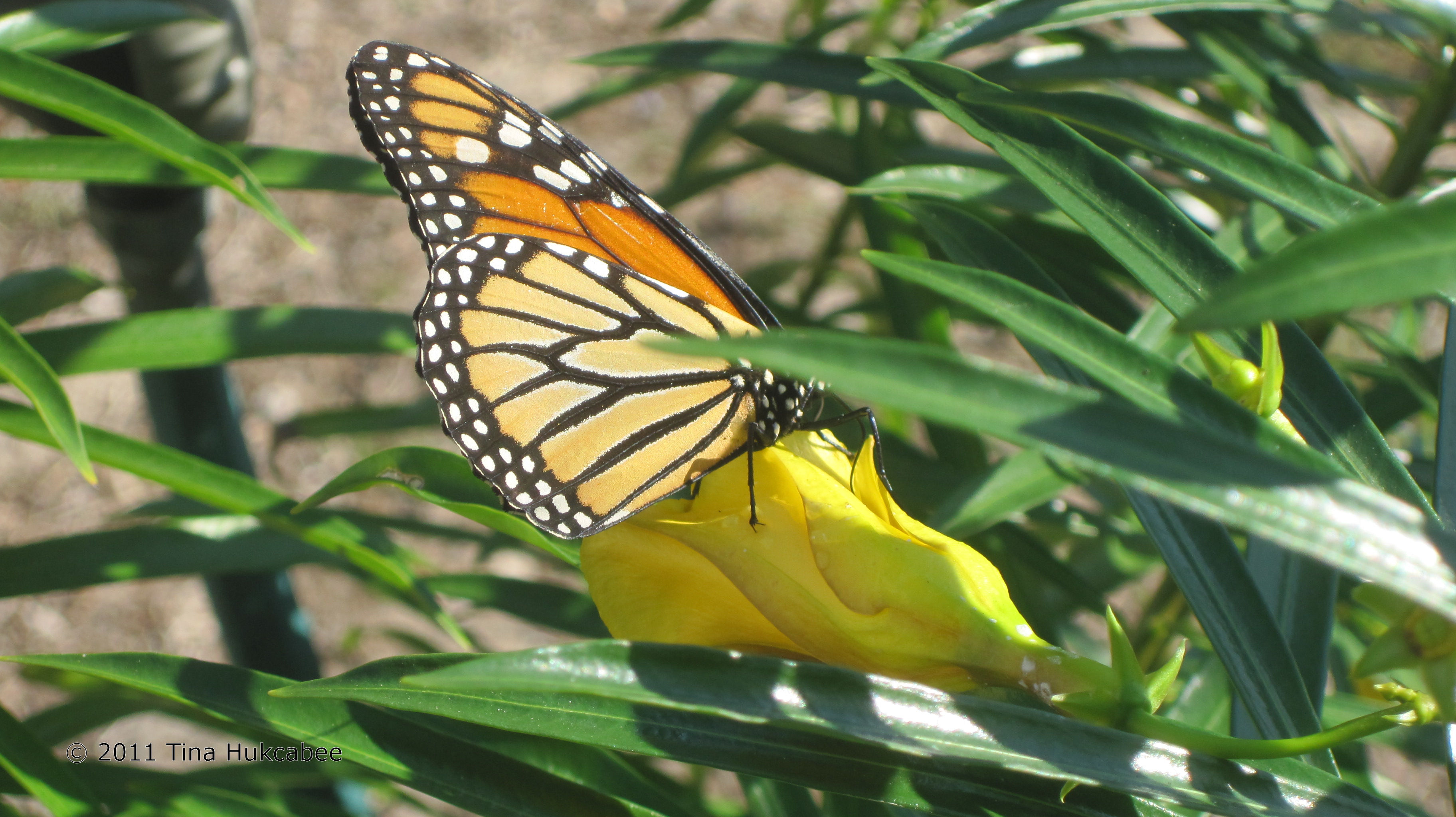
The Monarchs are still there, making a pit stop to refuel for their long trek to Mexico.

They’ve been gone from my gardens for a couple of weeks and I only had a few visit this year.

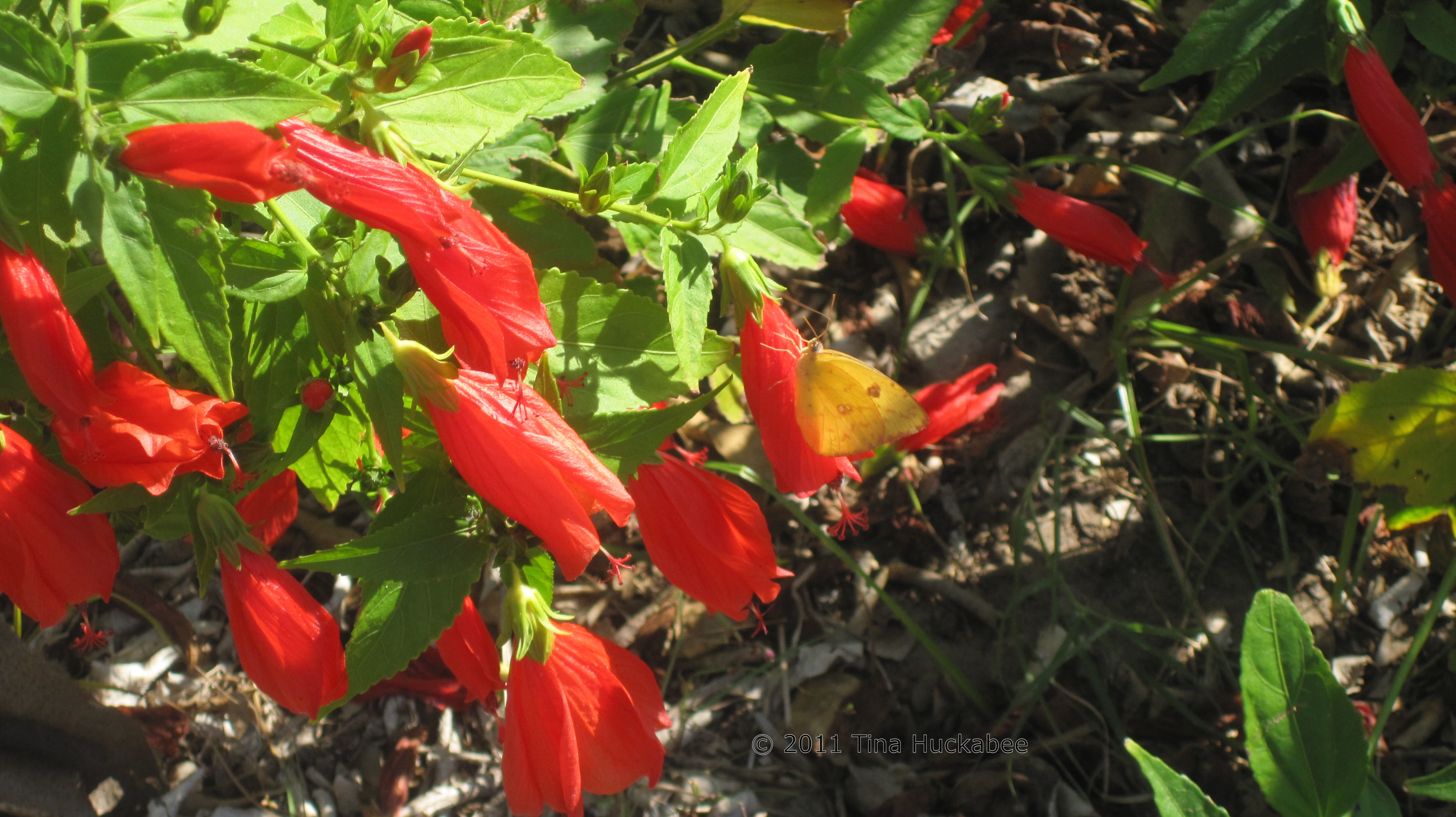
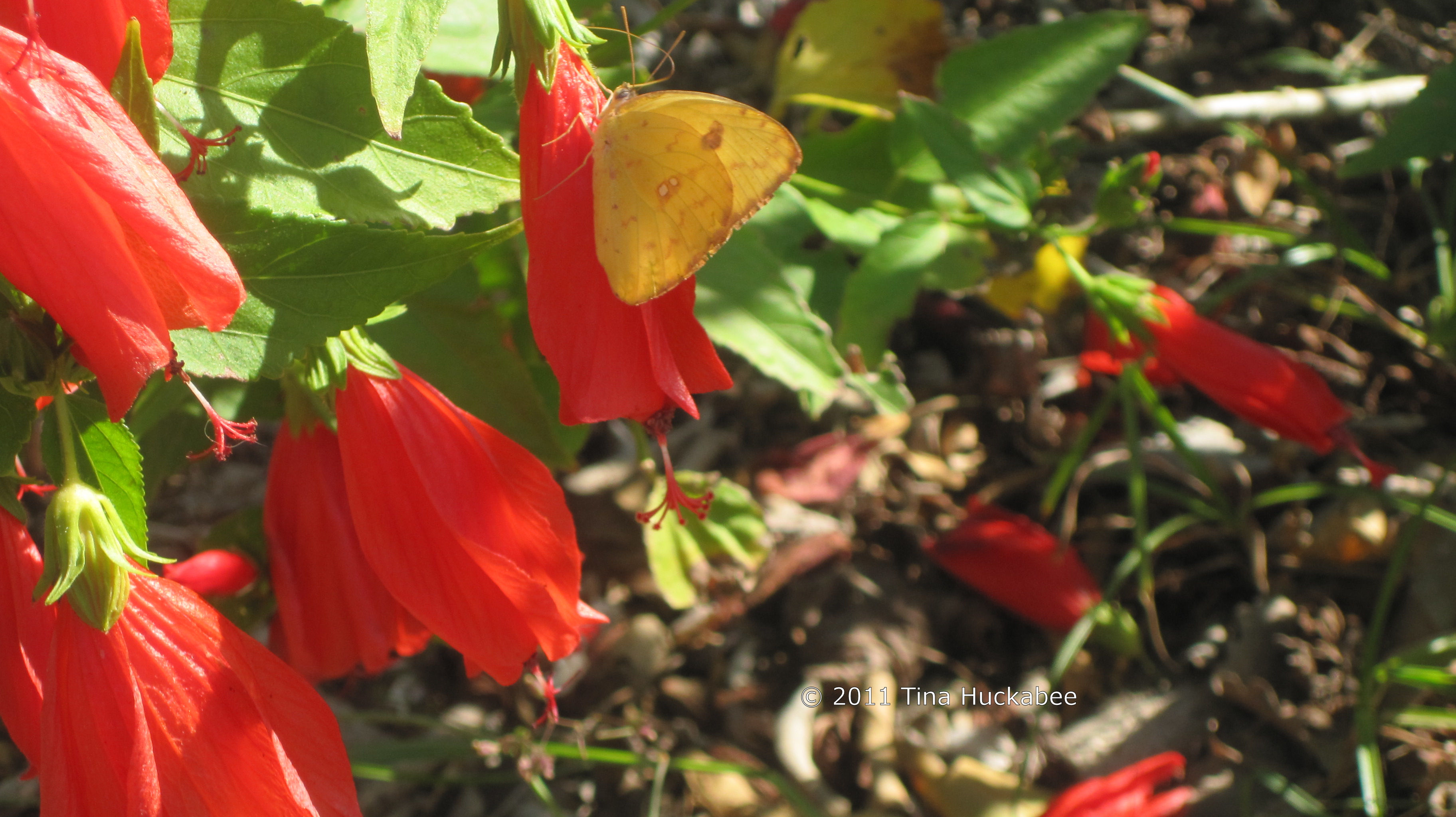
I observed numerous Sulphur Butterflies cruising blooms.

I don’t have any photographic evidence, but family members bragged about the numbers of  Gulf Fritillary they have.  Harrumph!  I haven’t seen a single Fritillary in my gardens all year.  Not one. Even though the Gulf Coast region experienced drought conditions, their conditions weren’t as severe and that region didn’t have the accompanying heat that we in Central Texas suffered.

It’s interesting to compare the difference that two hundred miles makes in what grows and how well.  At my father’s home, this is one (of several) of his Firebush Plants (Hamelia patens).
It’s about eight feet tall, six feet wide and still blooming.  This is an old plant, nearly twenty years old.  I remember when my mother planted it.
 This is my  Firebush.
Mine is about two feet tall and two feet wide. Not much of a comparison.  To be fair, I transplanted this at the beginning of June.  It transplanted beautifully, especially considering the drought and heat.  I don’t think it even wilted.  I coddled it for a couple of weeks, but  I was impressed with how tough and resilient it is.  It will never be as big or as floriferous as those in South Texas, but it’s still a good perennial to grow in Central Texas.
My dad also has a Golden Thyrallis (Galphimia glauca) in his garden.
It’s approximately ten feet tall and at least as wide.   I’ve never grown this plant, but I’ve seen it growing in Austin, although I don’t think I’ve ever seen one as large here. If you look closely, you can spy some red blooms of another large Firebush peeking over the Thyrallis at the top right of the photo.
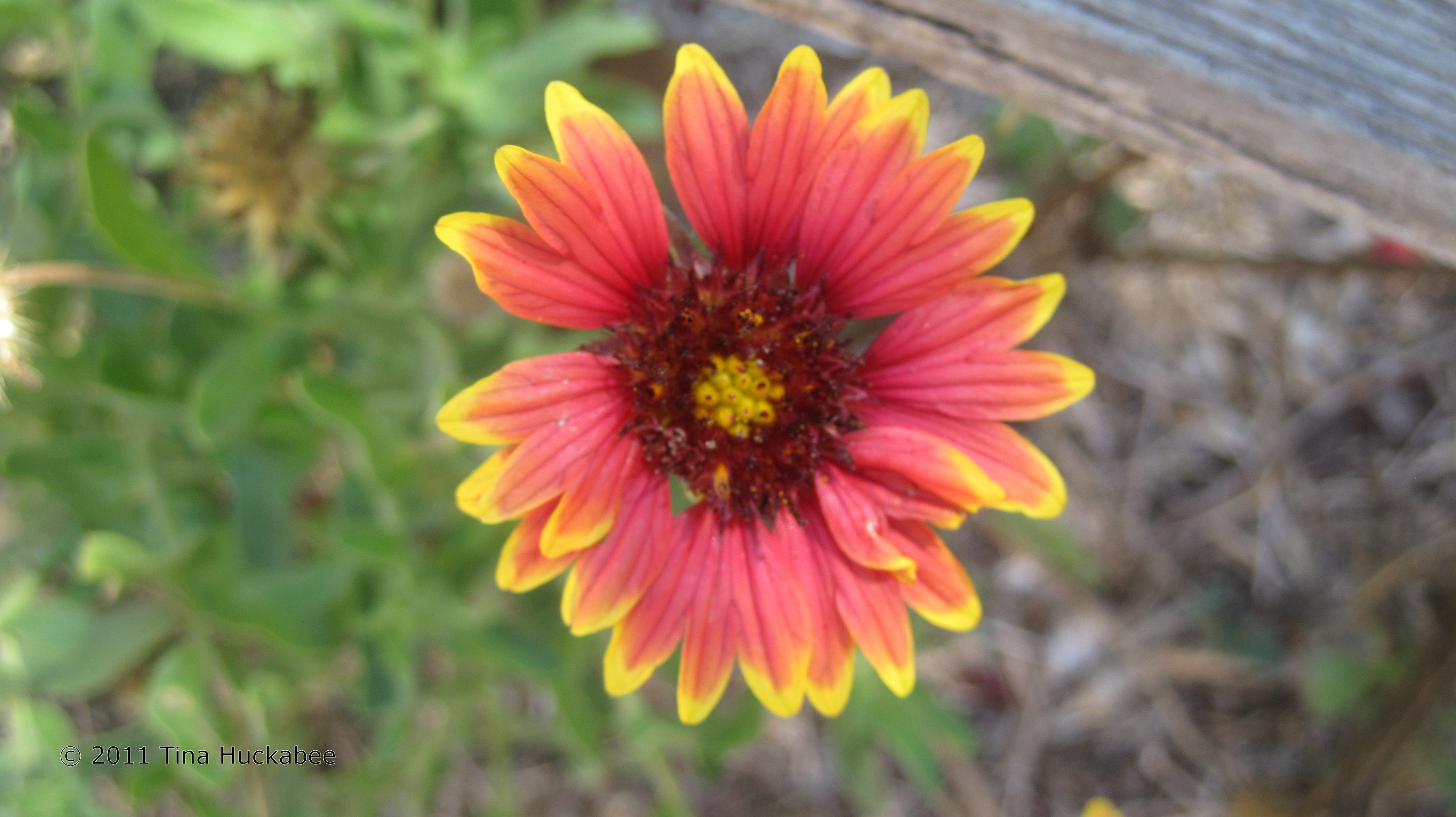
Even the Indian Blanket (Gaillardia pulchella) were still blooming in his garden. 
This was a surprise to me.  I’ve only seen this native wildflower bloom during the late spring through summer months.
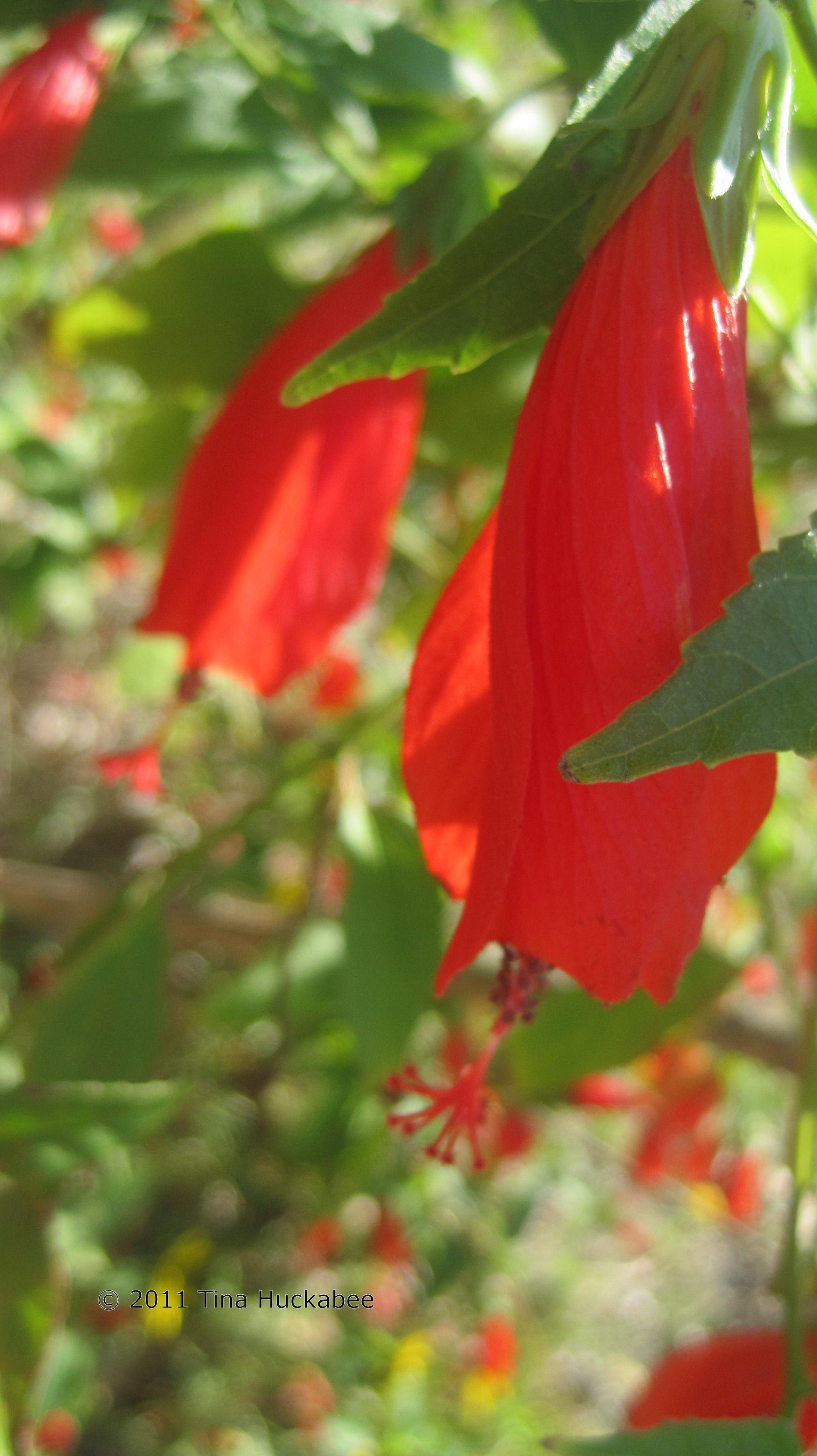
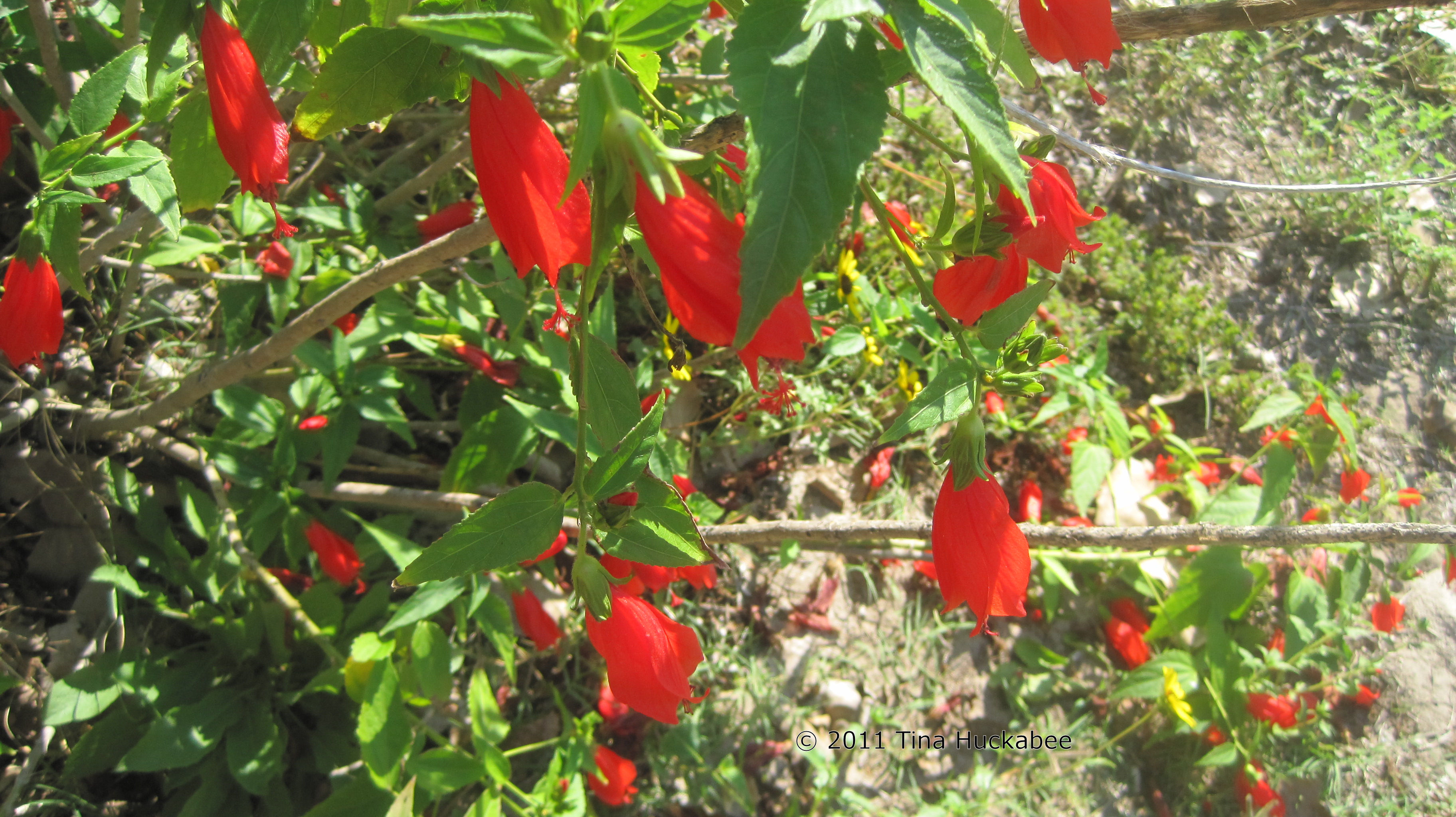
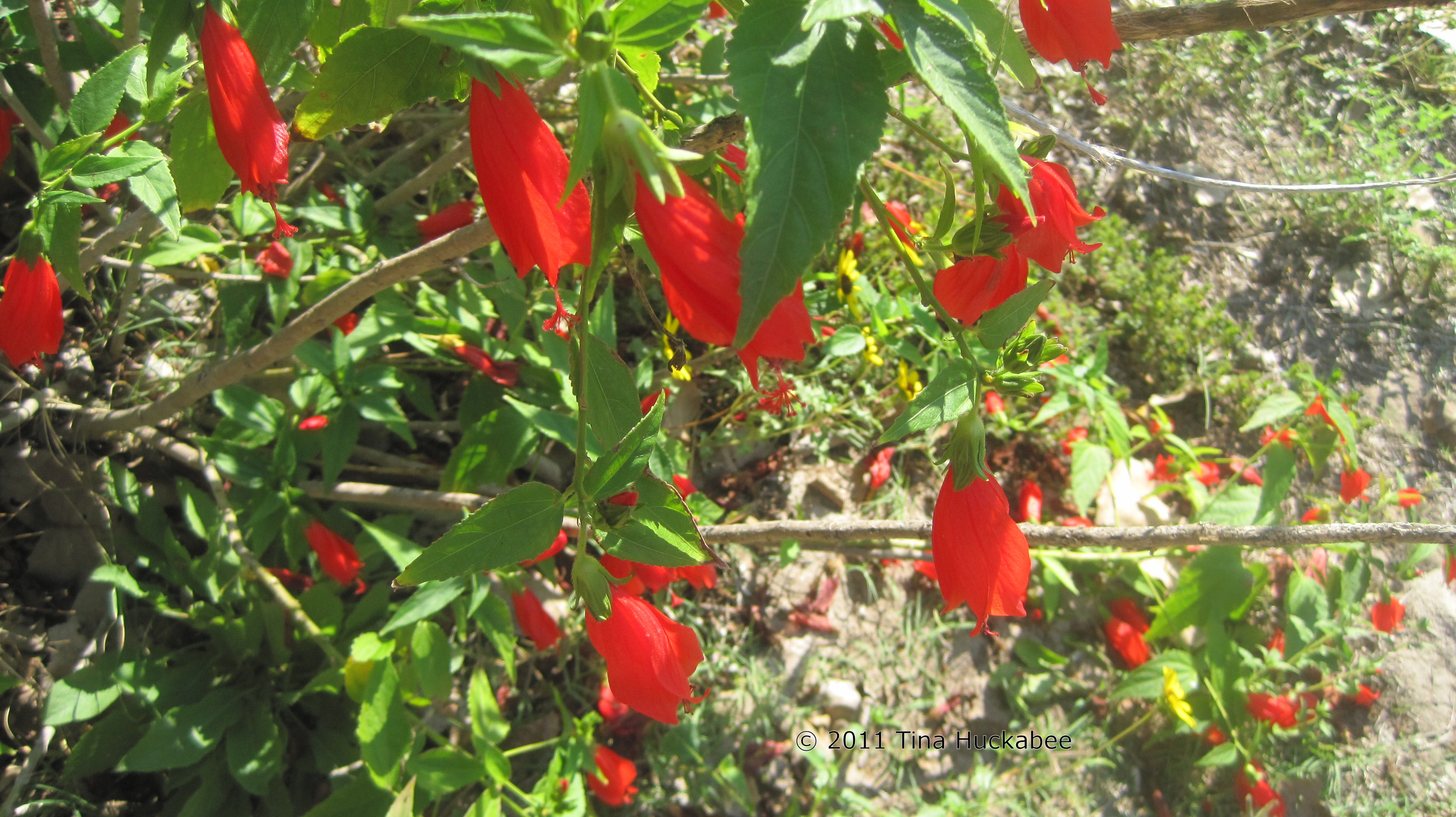
 This Giant Turk’s Cap ( Malvaviscus arboreus var. penduliflorus) was magnificent.
The Giant Turk’s Cap was one of the plants that I considered using when I removed  Cast Iron Plant and replaced it with Pam’s Pink Turk’s Cap. I chose the Pink  because I think it will be more winter hardy here in Central Texas than the Giant.   But that Giant Turk’s Cap is a beauty. With its brilliant red, three to four-inch blooms, it’s quite a show-stopper.
Central Texas has received some rain recently and it’s interesting that I’ve observed a few more butterflies flitting about. Not to our usual standards of course, but it’s heartening to see a few when they were so scarce during the Summer From Hell.
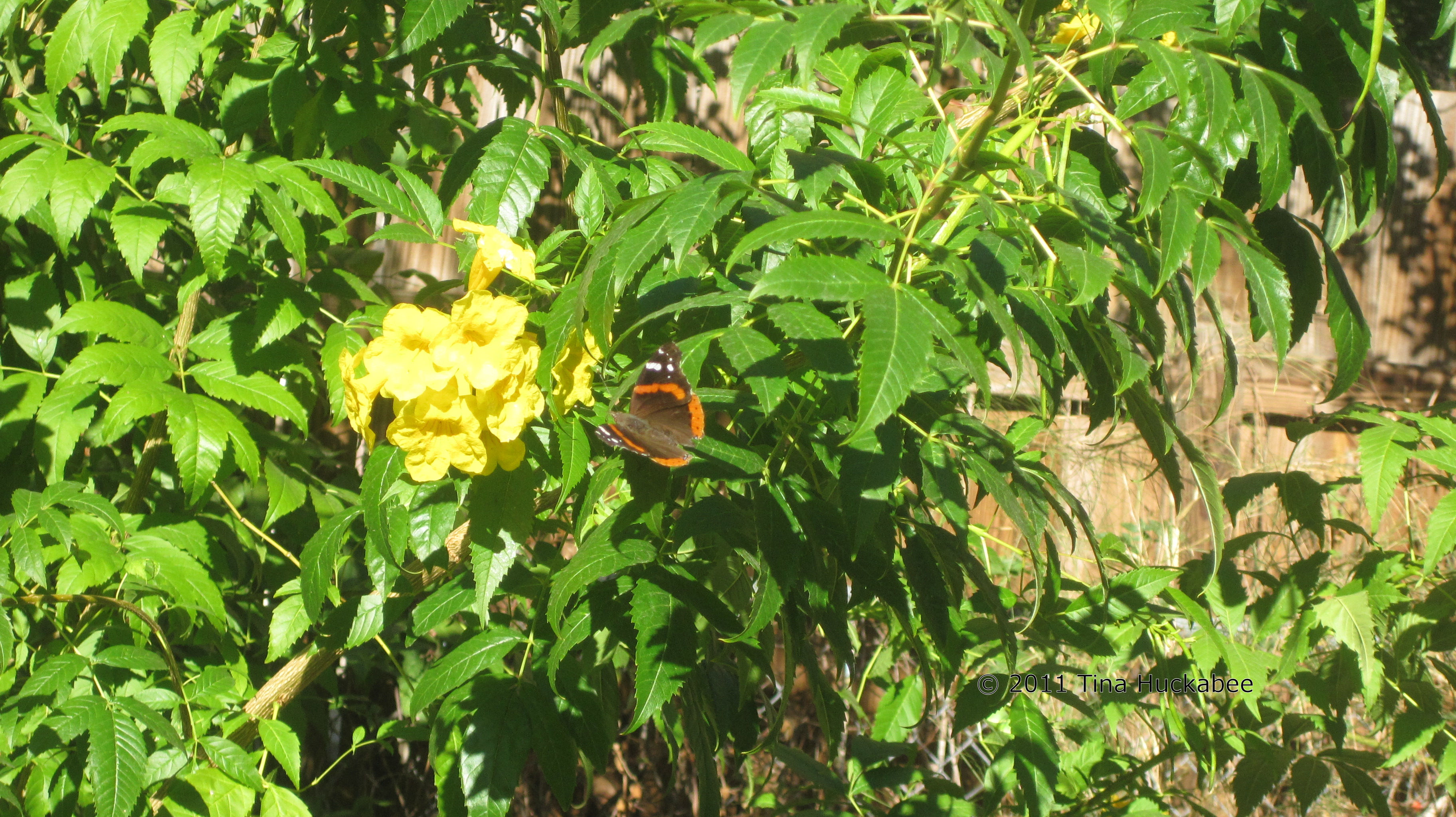
I’ve observed two Red Admirals regularly visiting my Yellow Bells (Tacoma stans) in the last few weeks.
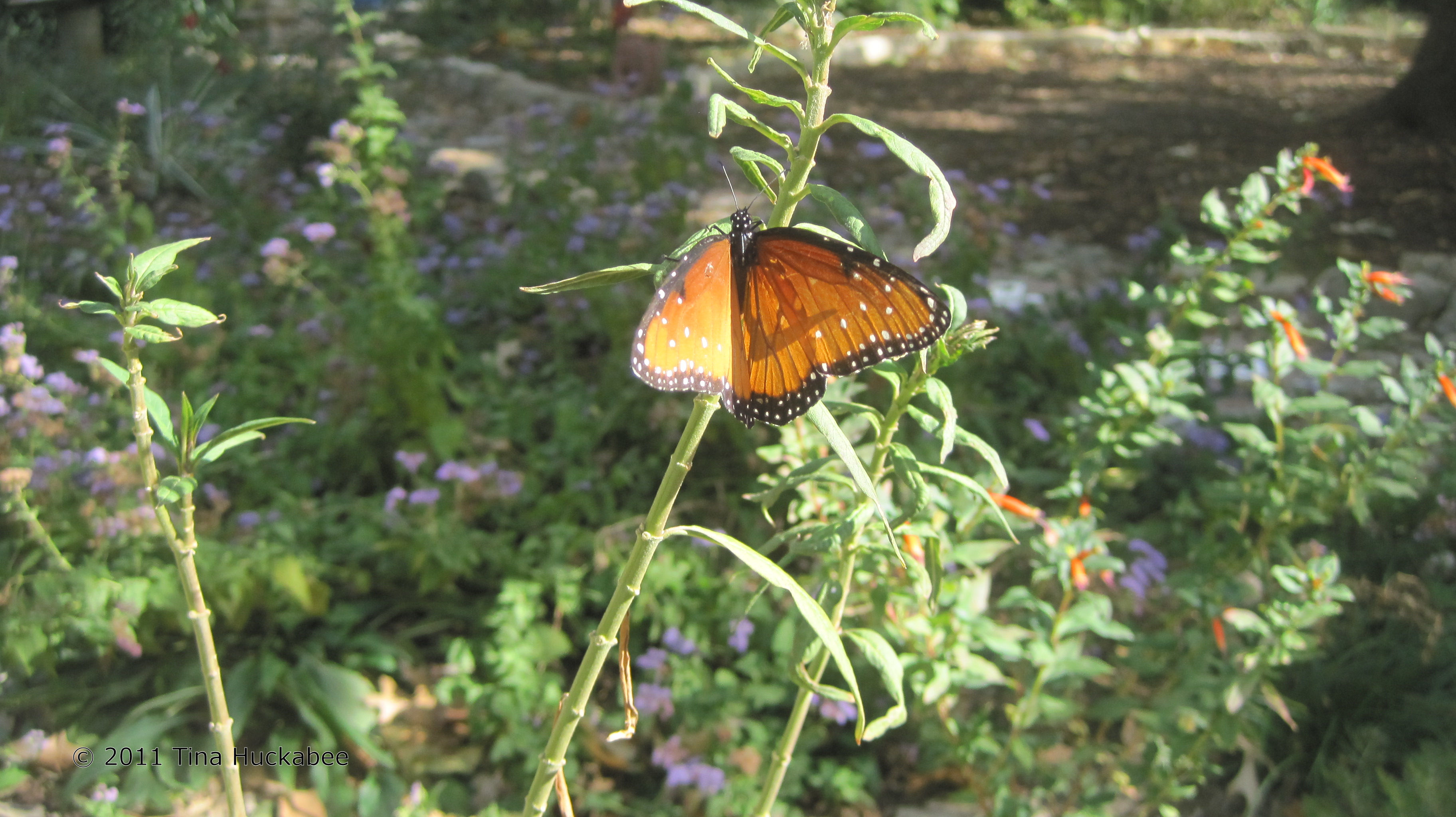
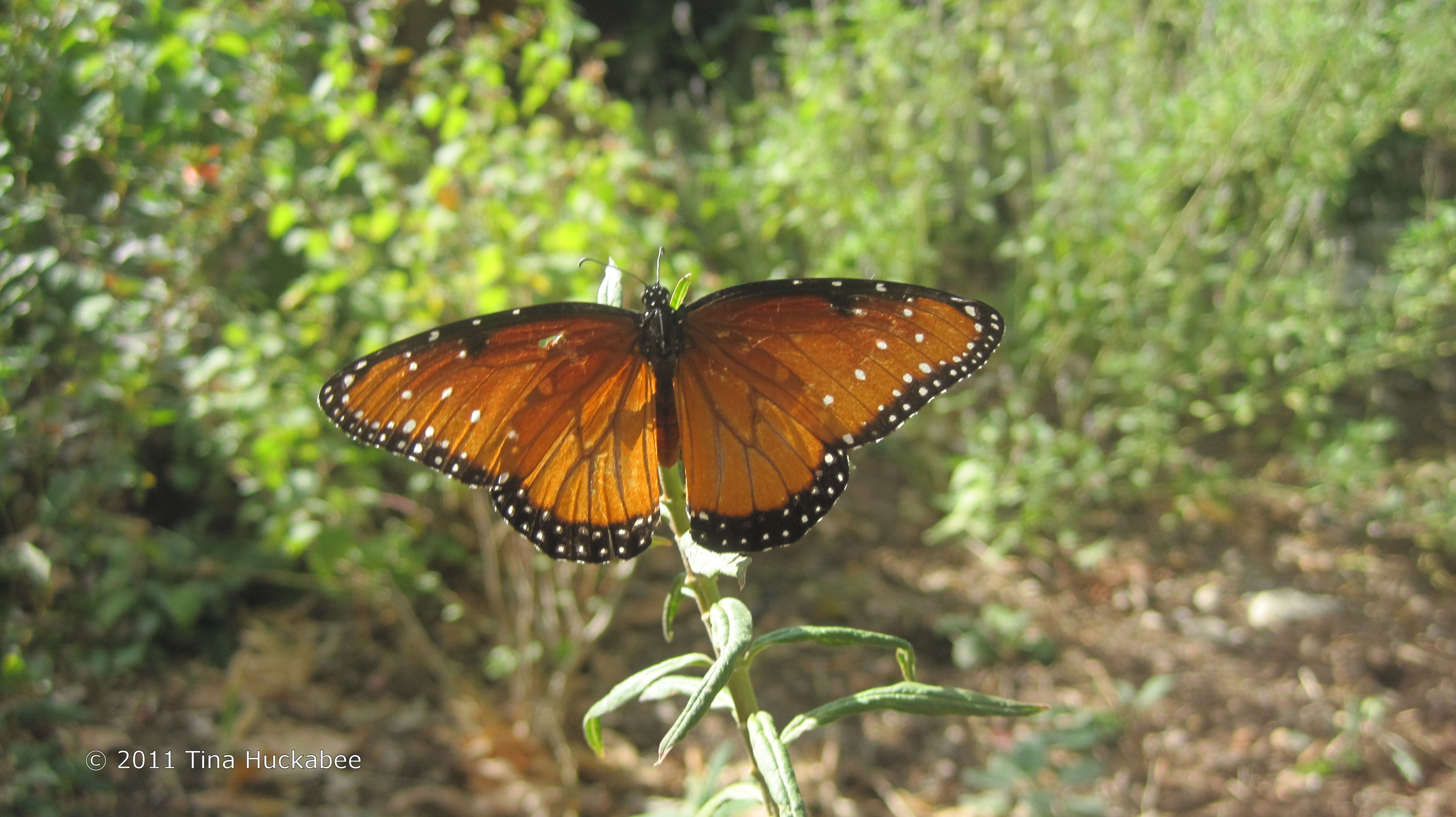
And, one Sunday afternoon, a Queen (the only Queen to visit my gardens this year), was flirting with a Butterfly Weed (Asclepias curassavica).
 
Other than these few and the Monarchs (two or three) who migrated through earlier in the fall, there hasn’t been much of a butterfly show.  Few skippers.  No swallowtails.  Hardly any butterflies.
I’m glad there are butterflies in other areas and I hope next year Central Texas will be once again graced with their presence.