Foliage Follow-Up-March 2012-So Much!!

Along with luscious blooms, spring is full of verdant and colorful foliage.  And like yesterday’s post on blooms in my garden, it was hard to choose which foliage to profile, but here are my picks.  Thanks to Pam at Digging for hosting Foliage Follow-Up.

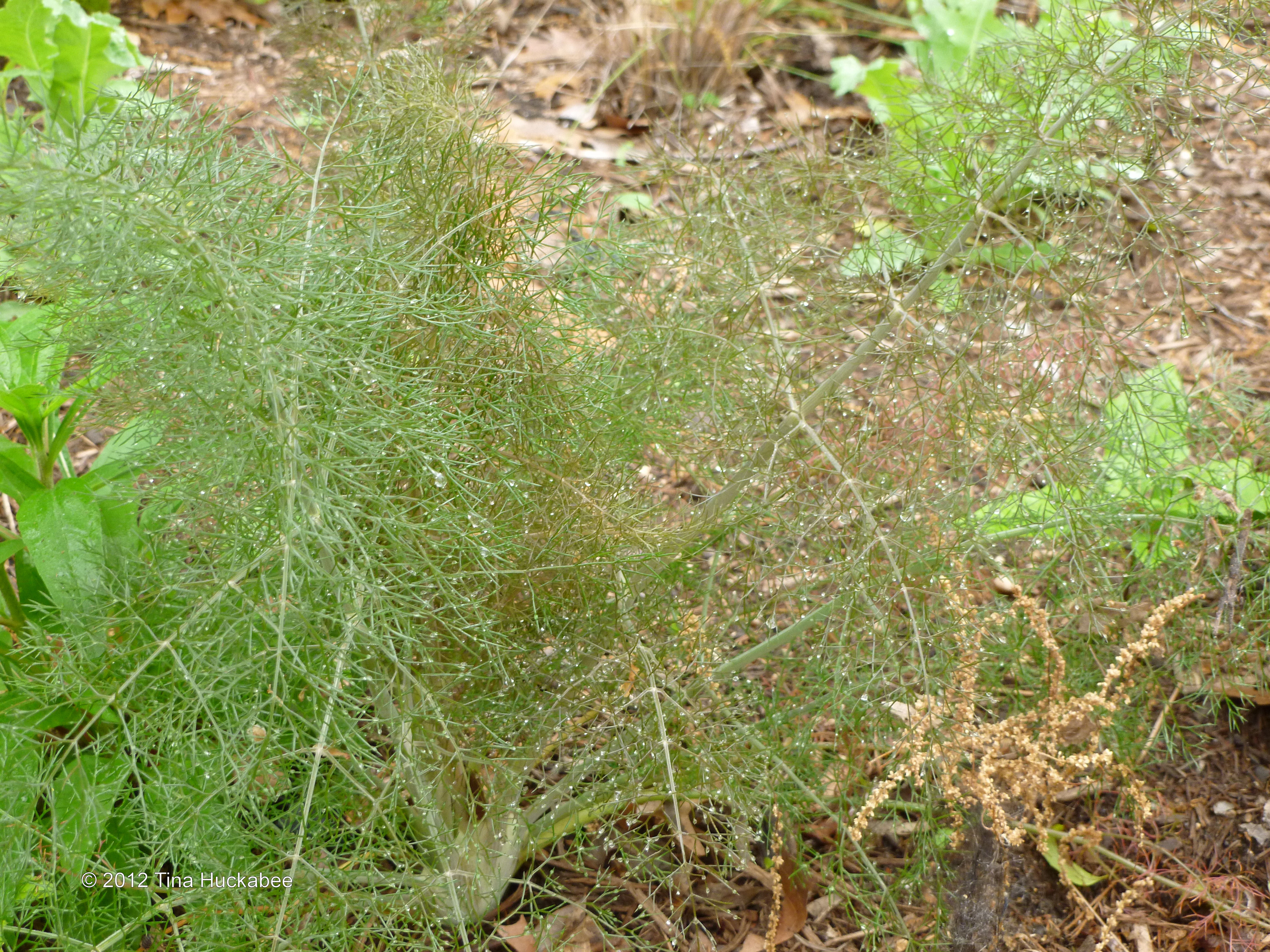
I like to plant Fennel (Foeniculum vulgare) for the Eastern Black Swallowtail butterflies, but I also love the gauzy, elegant quality it lends to the garden.  Elegant that is, until the larva eat it down to a sprig.

And that “gauzy, elegant” quality is lessened a bit with the Red Oak pollen tassels plopped all over the plant.
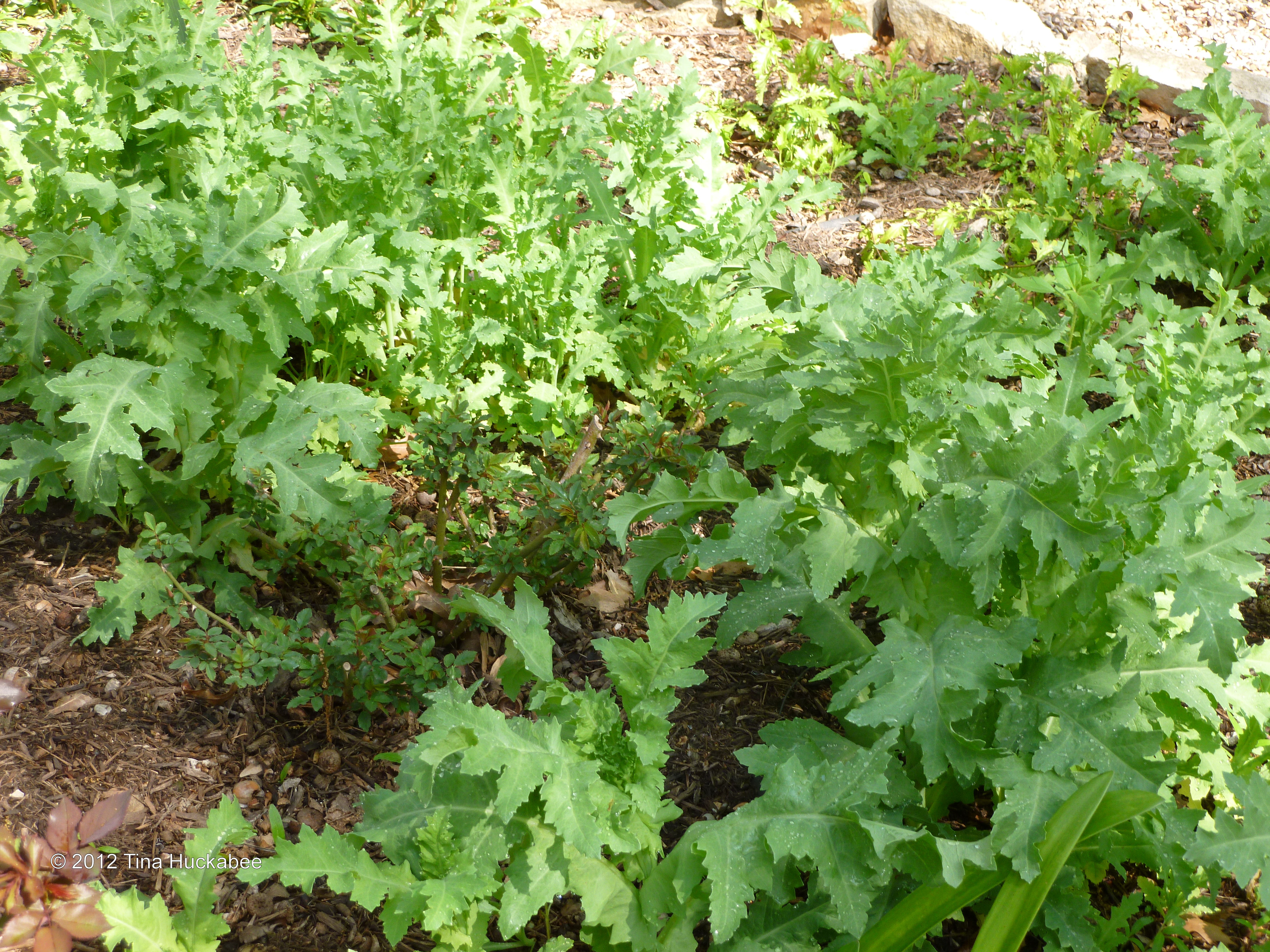
The Red Poppies that I let re-seed in my gardens not only have lovely blooms, but wavy, soft green leaves as well.
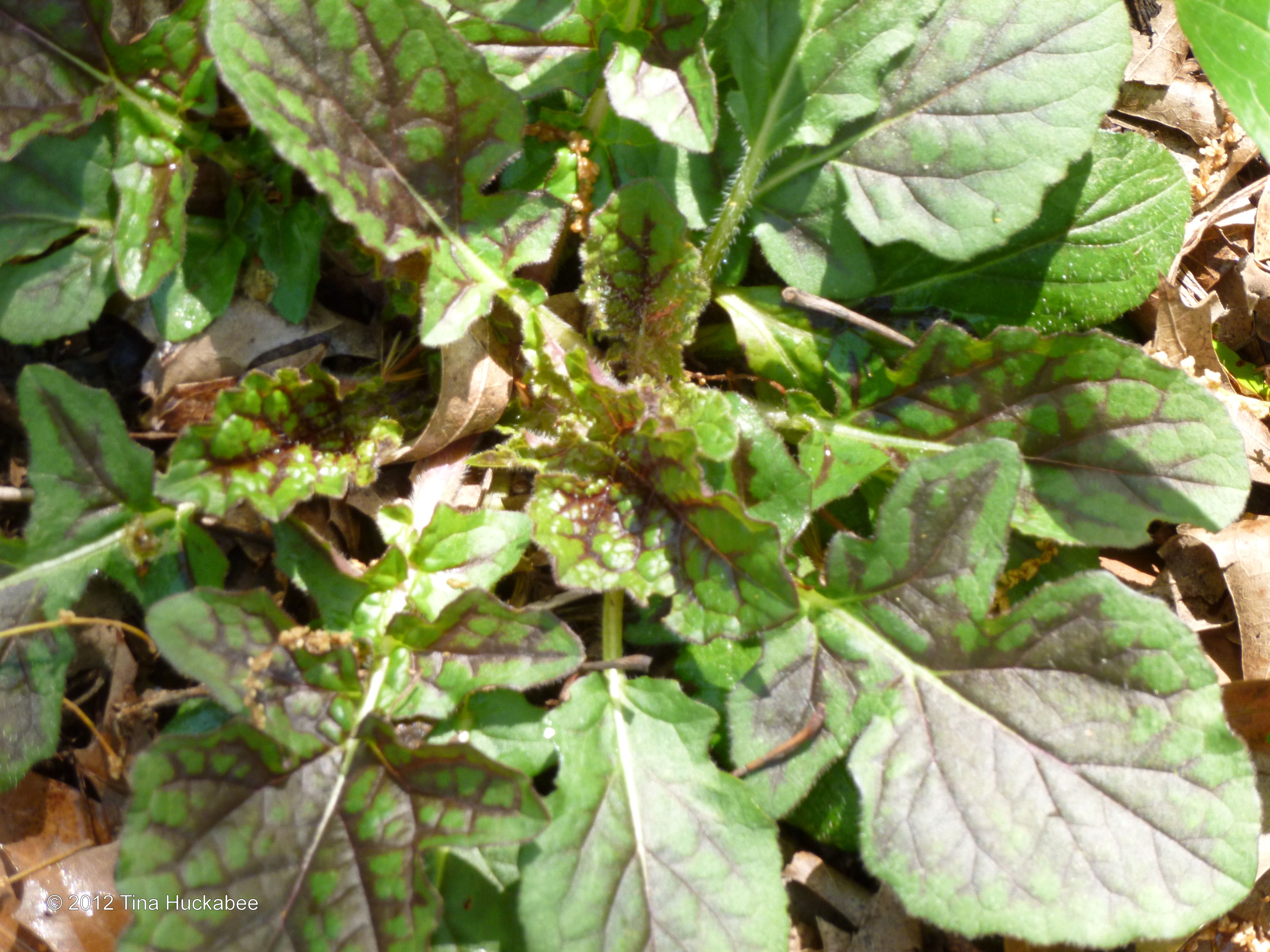
One of my favorite spring bloomers is the Lyre-leaf Sage (Salvia lyrata).  A native Texas ground cover which sends up spikes of blue flowers, it also has interesting foliage and is an excellent ground cover.  The scalloped leaves sport a deep burgundy coloring along the veins of the leaves–more prominent in the winter/early spring than at other times of the year, but very attractive year round.
Another favorite is the Mexican Feathergrass (Nassella tenuissima)–it works in so many places, but especially when the sun glints off of its slender, graceful leaves.

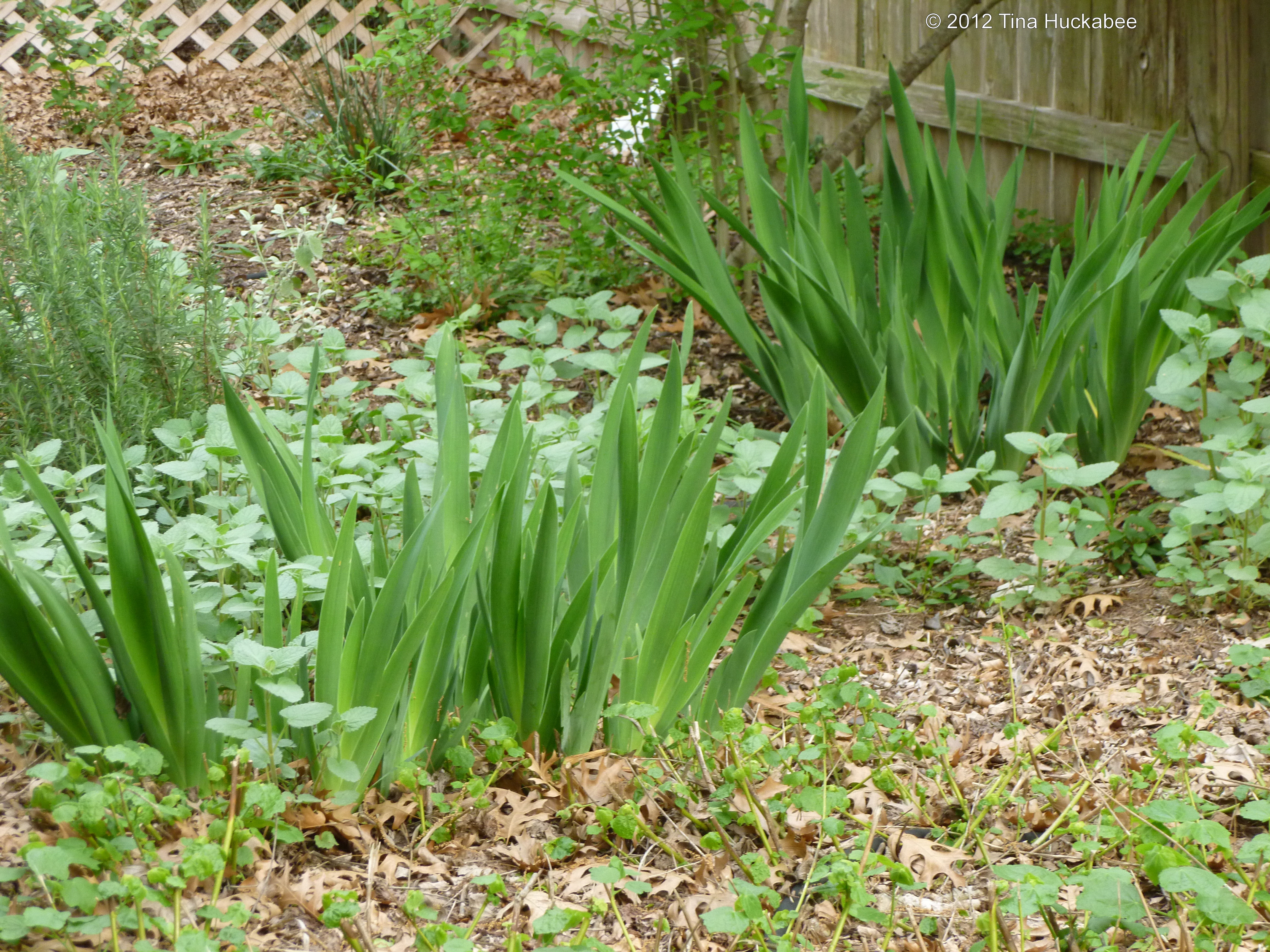
I love the look of the bright green, vertical Iris straps juxtaposed with the softer, grey-green scalloped leaves of the ground cover, Heartleaf Skullcap (Scutellaria ovata ssp. bracteata).  This particular Iris plant was nick-named ‘Shoshana’s Iris’ by Pam, after my daughter, who died suddenly in 2006.  I don’t know the “real” name for this Iris, but ‘Shoshana’s Iris’ is what I call it now.  Interestingly, both of these plants are pass-a-longs.  I gave the Iris bulbs to Pam and she gave me the Skullcap.  Nice.
I always love how new rose leaves are tinged with purple-to-burgundy leaves.  The ‘Knock Out’ Rose has especially beautiful new leaves in the spring, even before its blooms begin.

And, the smaller leaves of the ‘Martha Gonzales’ rose blends green with an outline tinge of red.  The heavy dew on the leaves (not to mention the Red Oak pollen tassels, again), add a nice touch as well.

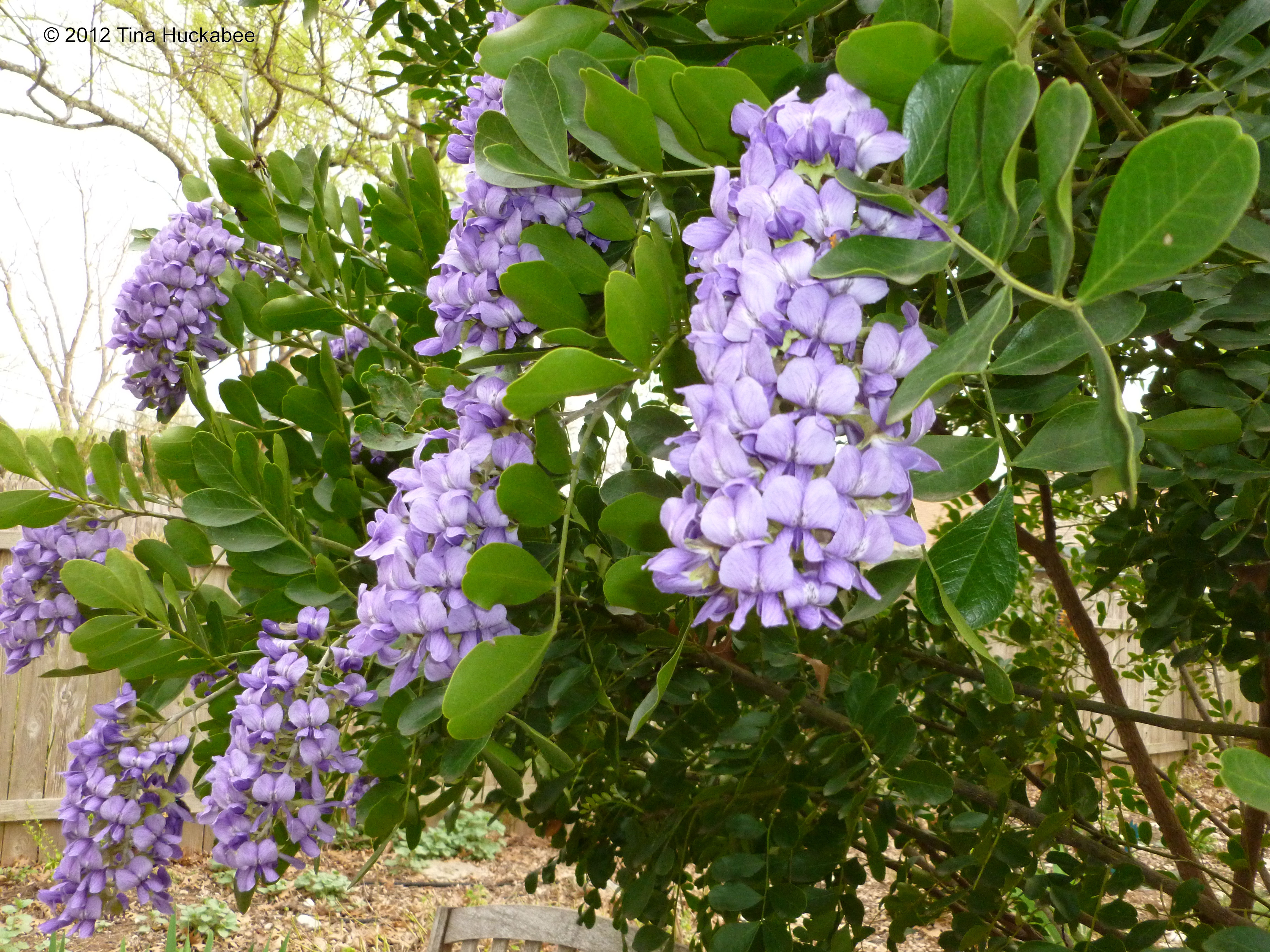
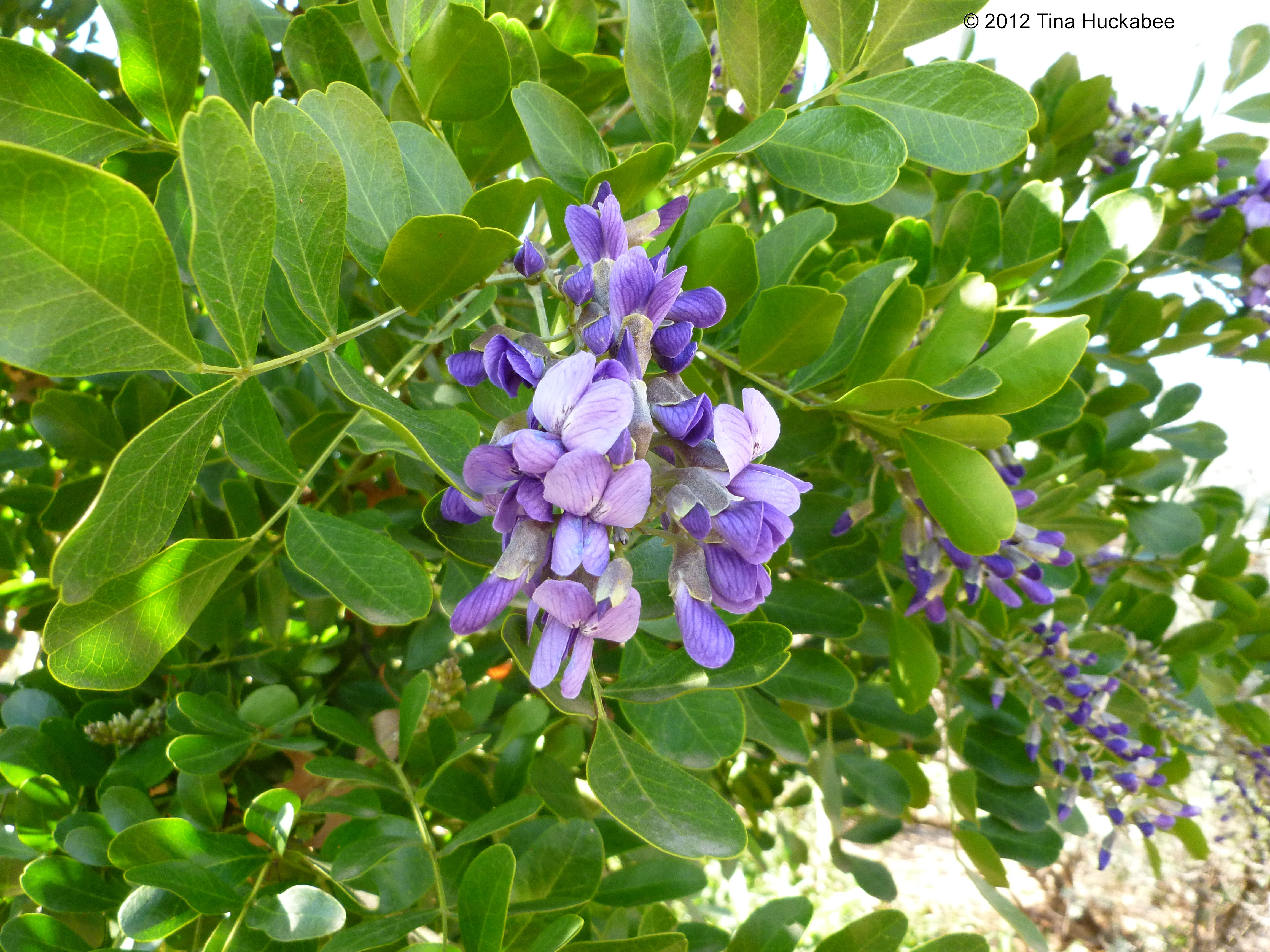
The fabulous Mt. Laurel (Sophora secundiflora) has leaves nearly as fetching as its blooms.  The dark-green, simple leaves are beautiful all year, even after the blooms become seeds for the next generation.
New leaves on the Red Oaks are tender, brilliant and fresh.  The pollen tassels have formed and mostly dropped this past week,

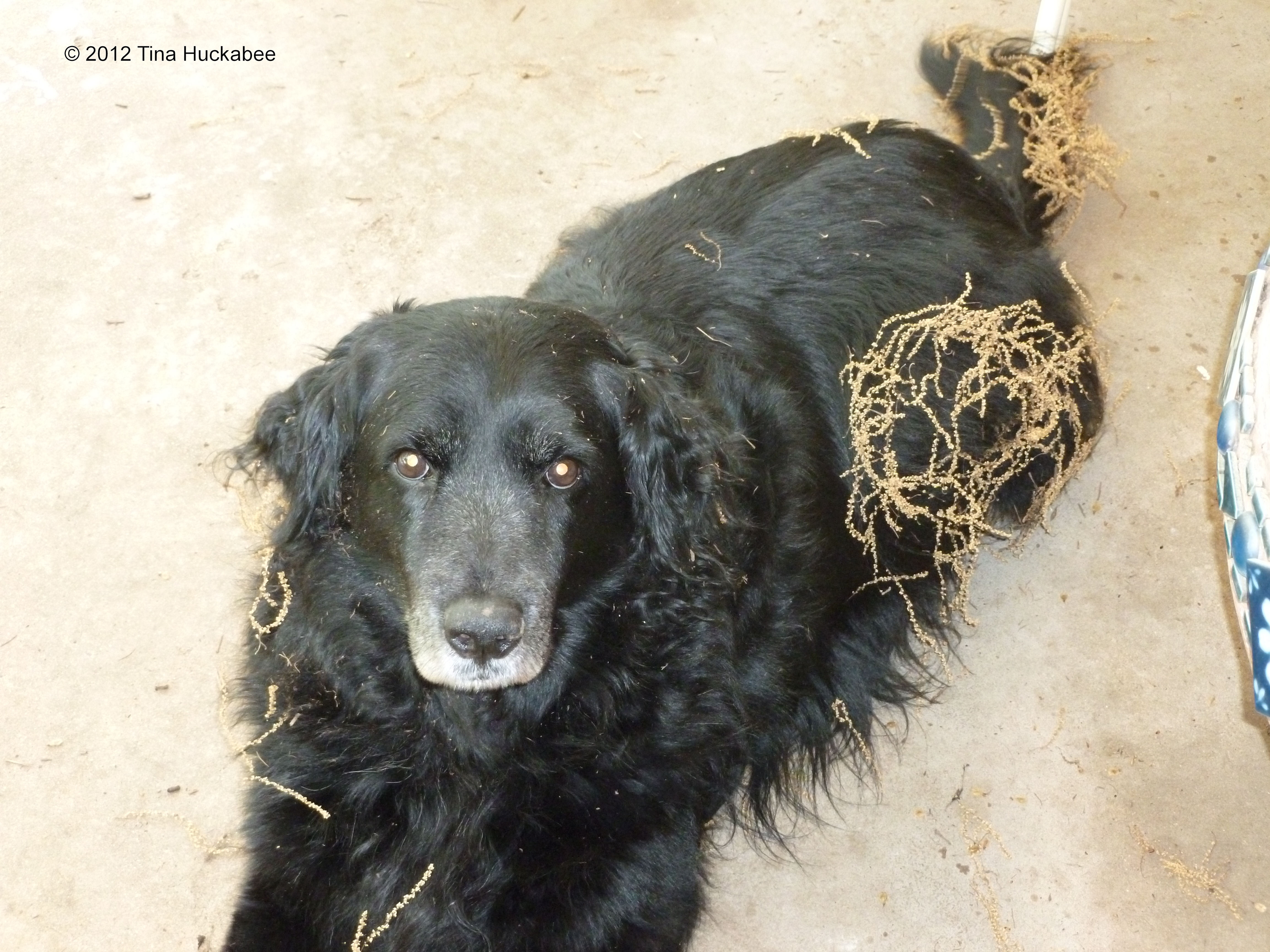
to be picked up (and deposited EVERYWHERE) by the Sweeper of the Garden.
Garden Bloggers’ Bloom Day-March 2012-So Much!!

So many blooms, so little time.  What can I say?  There are so many plants blooming in my garden during this abundant spring that I don’t have enough time to talk about all of them.  It’s a problem I’m glad to have.  After a mild, wet winter and an early, wet spring, there are loads of blooming perennials/annuals in the garden.  Thanks to Carole at May Dreams Gardens for hosting  Garden Bloggers’ Bloom Day.   Here are a few of the lovelies gracing my little garden:

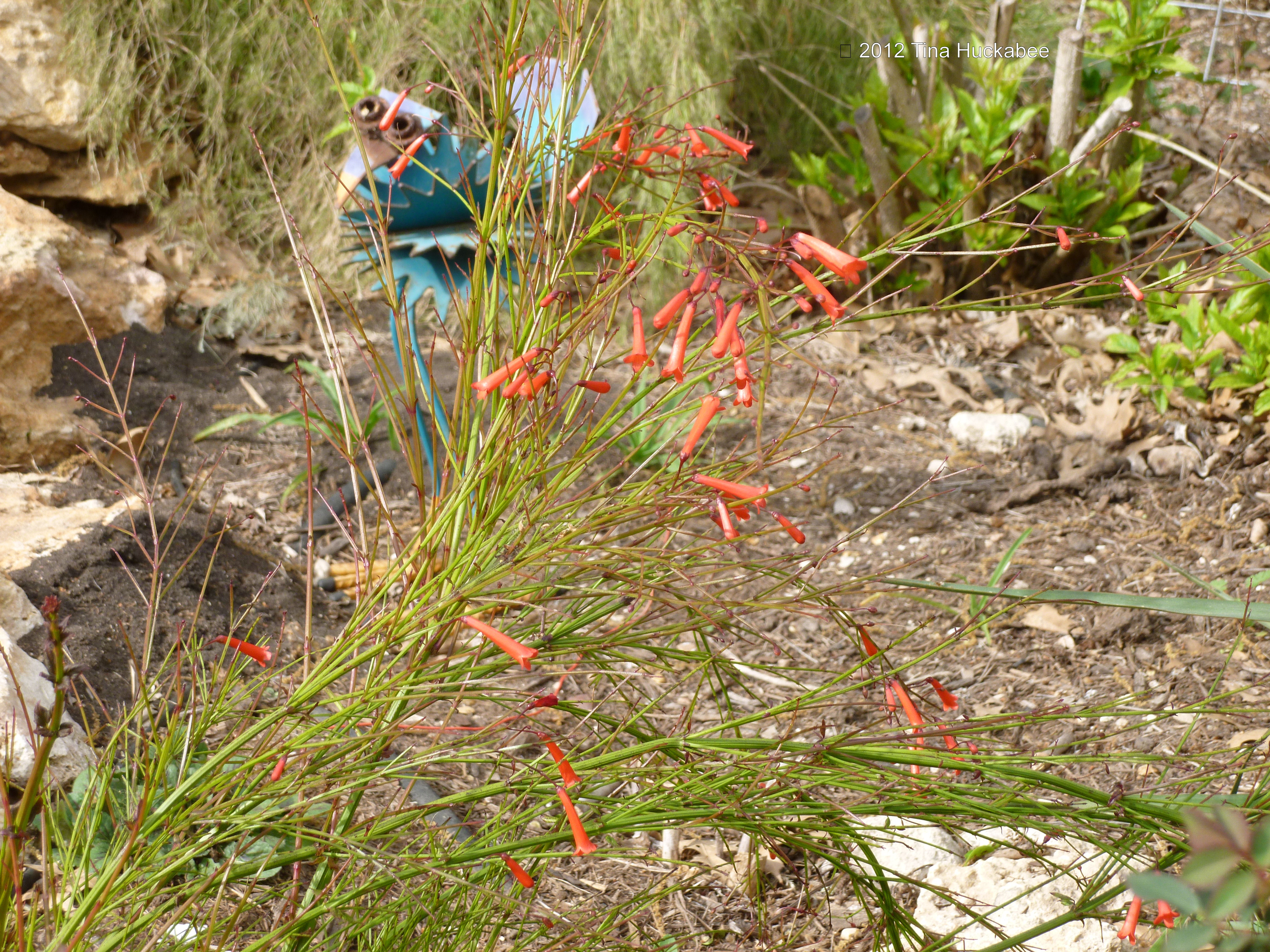
This Firecracker Plants (Russelia equisetiformis) bloomed  all winter.  Normally a herbaceous perennial in Austin, this year mine remained evergreen.

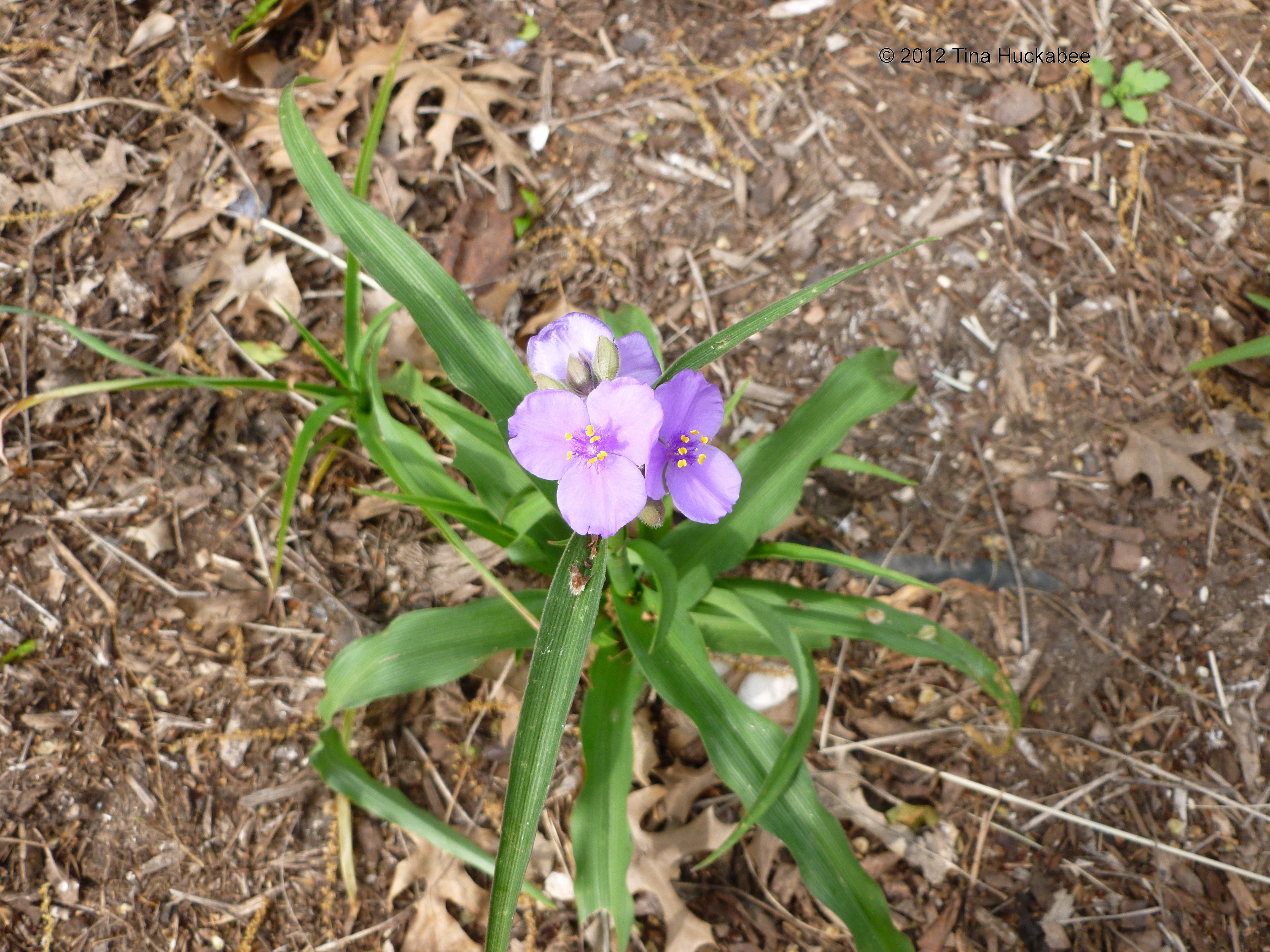
I have several Prairie Spiderwort (Tradescantia occidentalis) blooming.  A very common spring wildflower and a great pass-a-long plant.   It’s a tough plant and a great early bloomer.

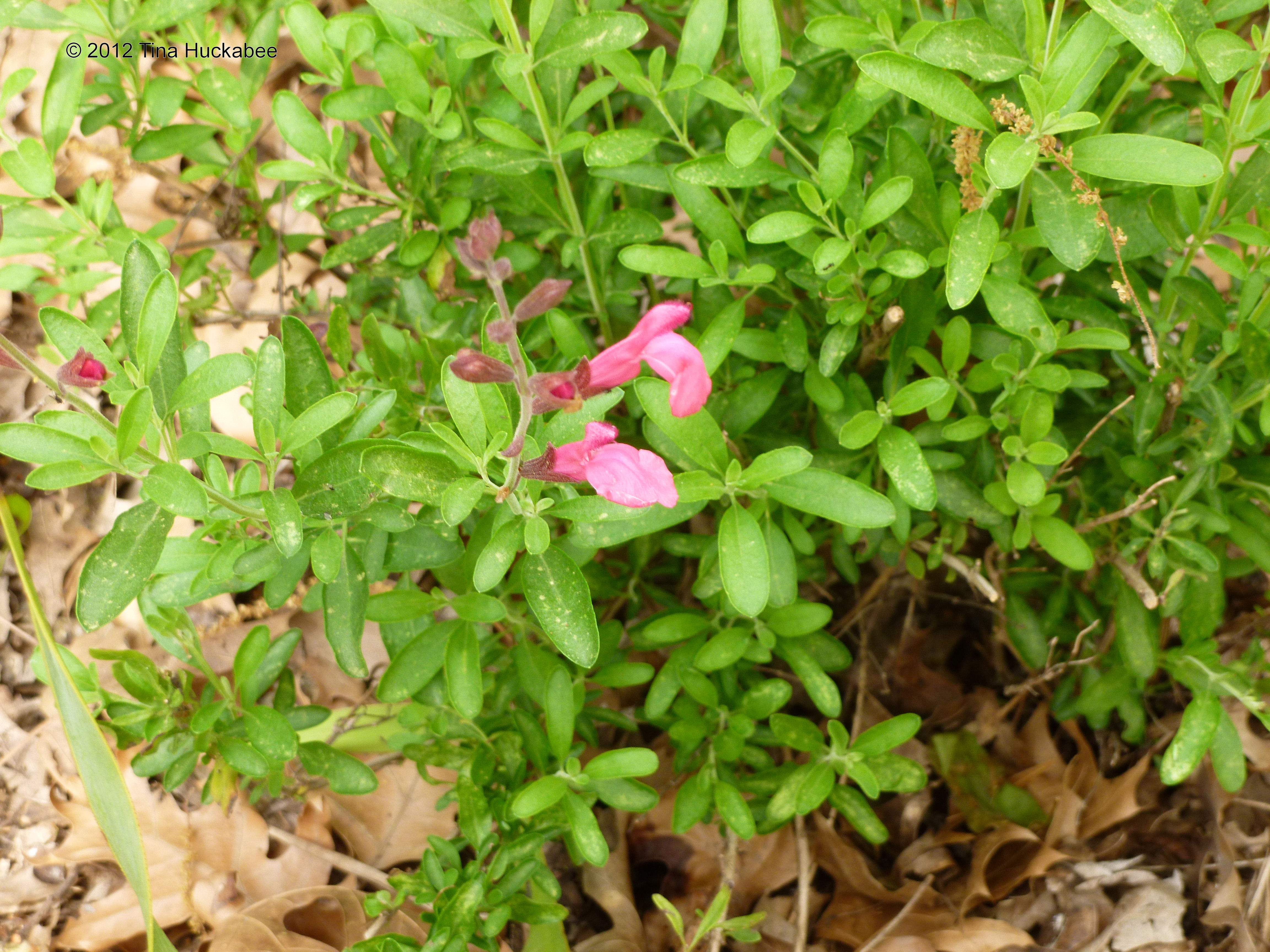
The first Pink Autumn (or Cherry) Sage (Salvia greggii) blooms.  I prune mine to about 8 to 10 inches and they grow to about 2 feet in height and width.  I also have the red and white blooming S. greggii.

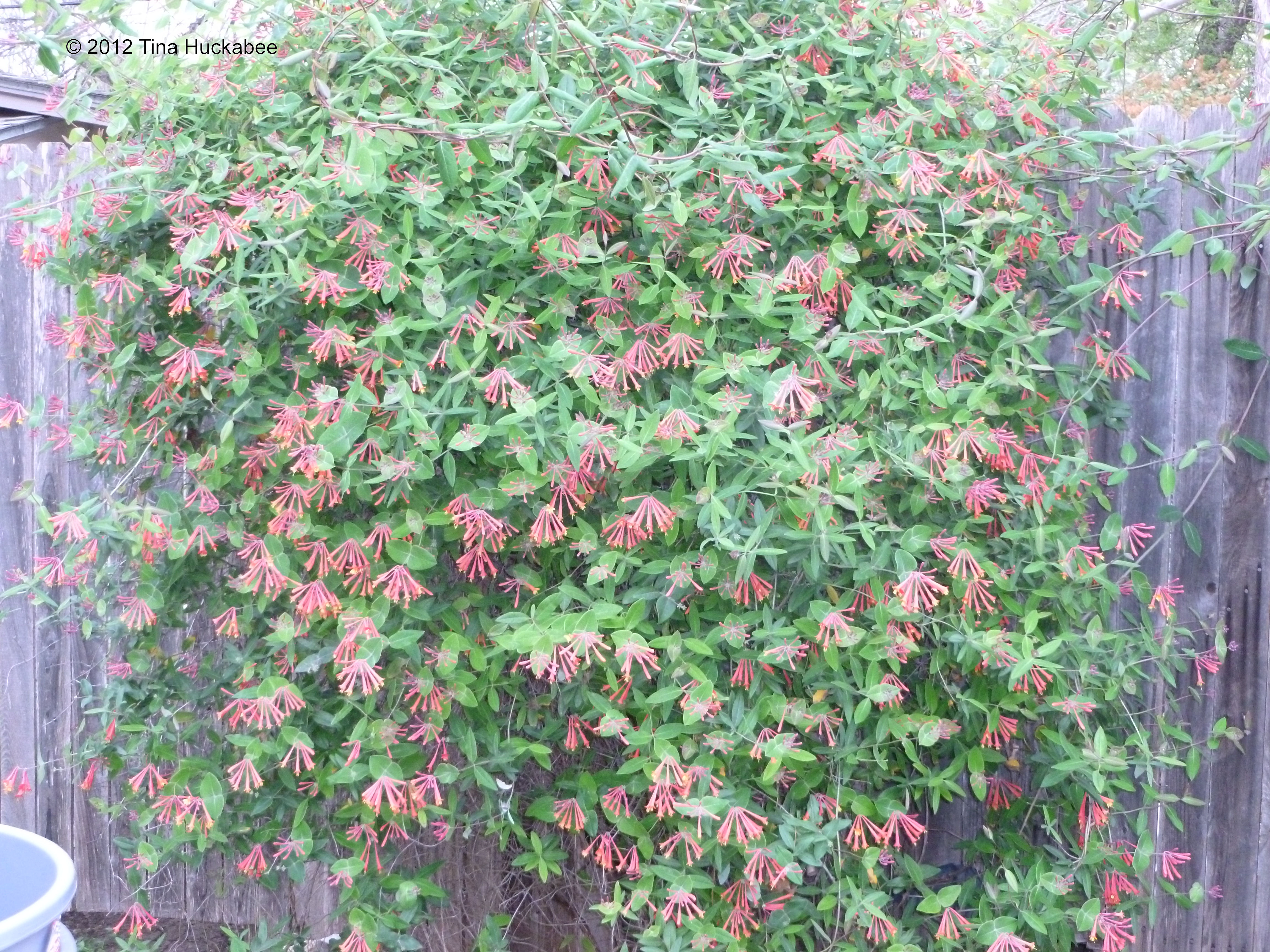
And, the still floriferous Coral Honeysuckle (Lonicera sempervirens) blooms.  It’s loaded with gorgeous red blooms, just waiting for the hummingbirds to visit.

A German friend gave poppy seeds to me years ago.  I tossed them out and reliably, every spring, these eye-catching beauties bloom.  With the rain this winter and spring, they’re especially prolific.  And HUGE!!  One group is  well over 3 feet tall.

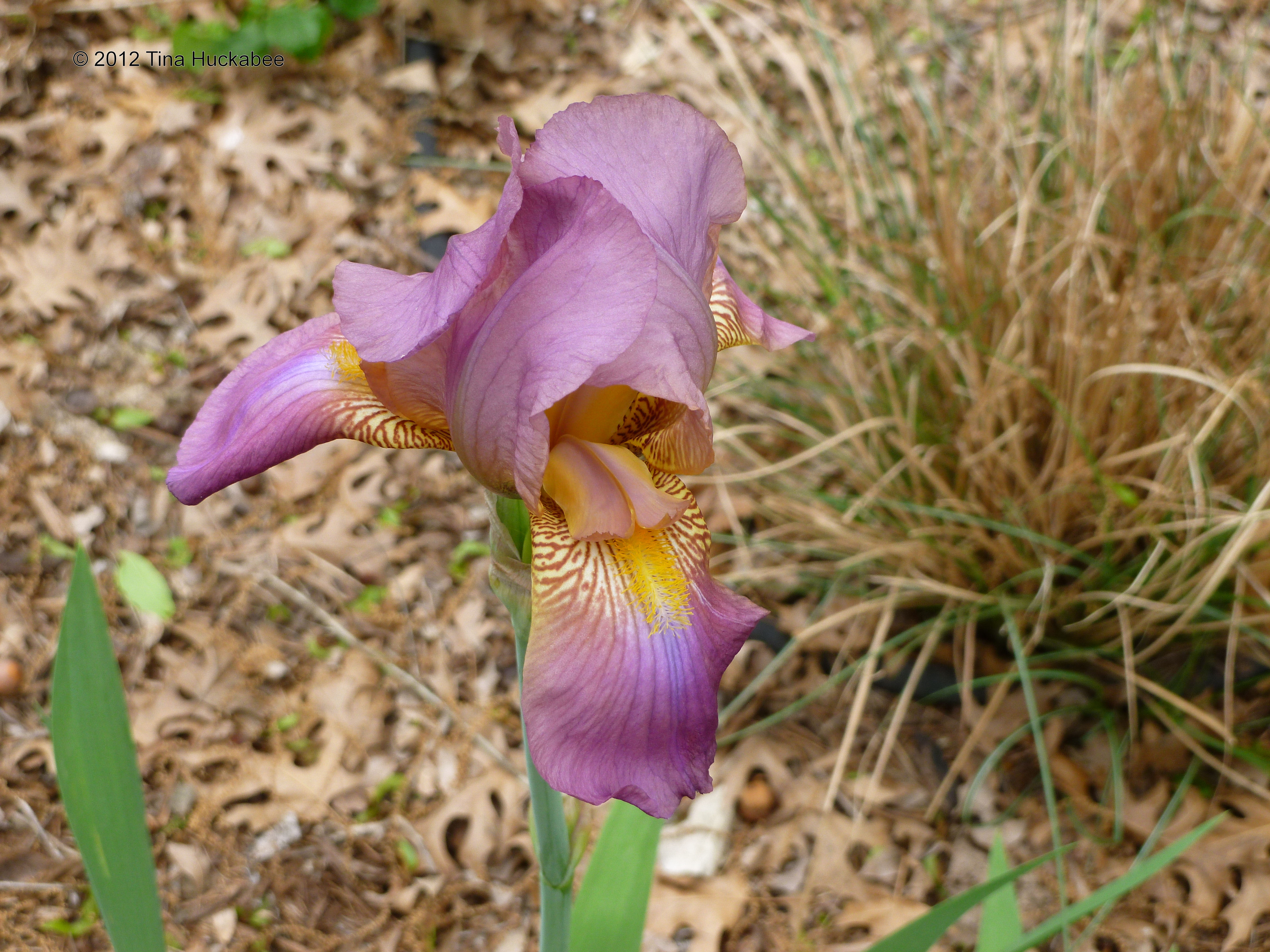
The first Iris to bloom in my gardens this spring.  This is an unknown Iris, given to me by…someone a long time ago.  Every spring, it’s a  hardy and reliable bloomer.

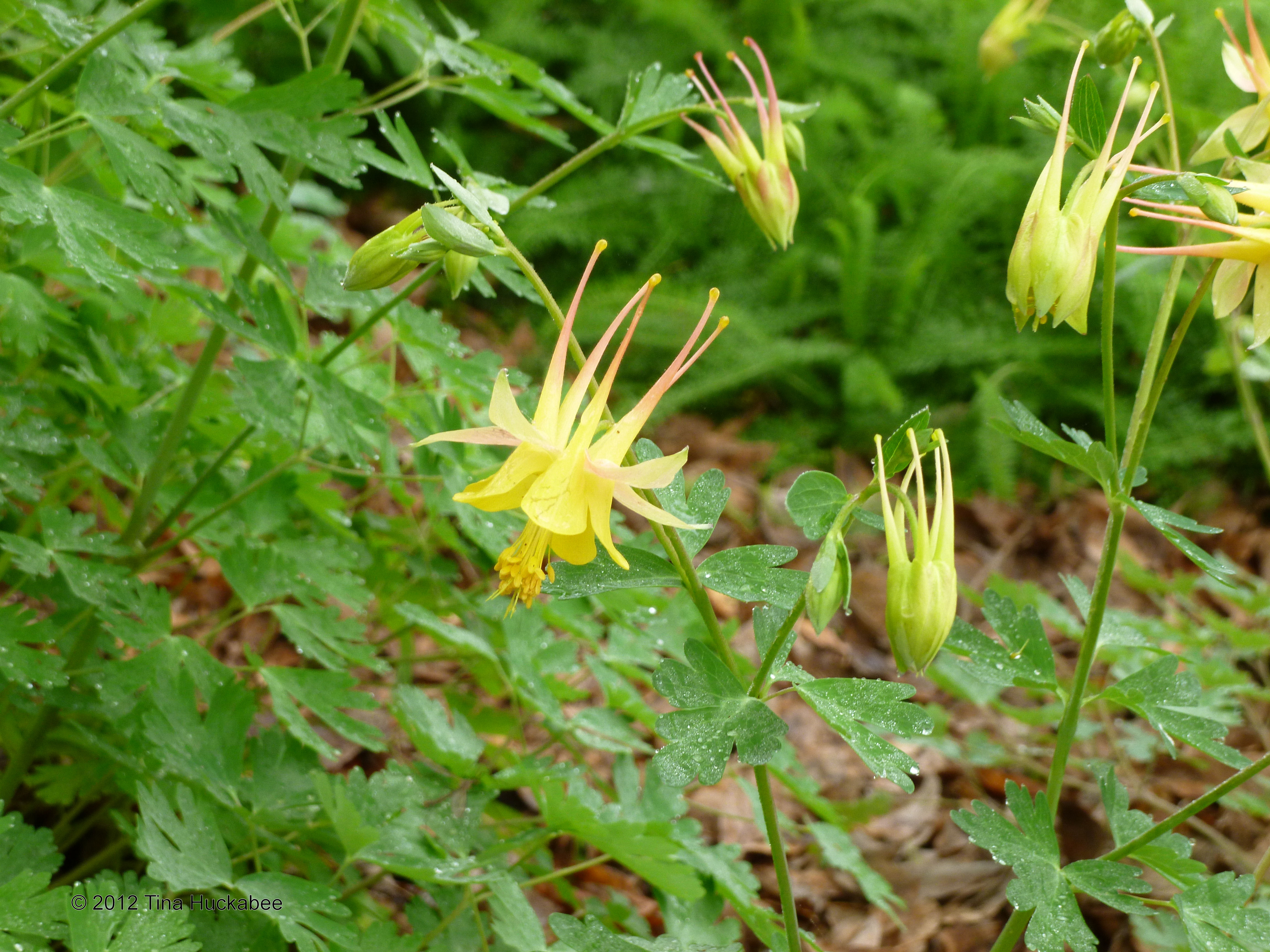
To me, the Yellow Columbine (Aquilegia chrysantha var. hinckleyana) is the harbinger of spring.   In the past, this perennial wouldn’t bloom until mid-March.  Now, it starts about two weeks earlier.

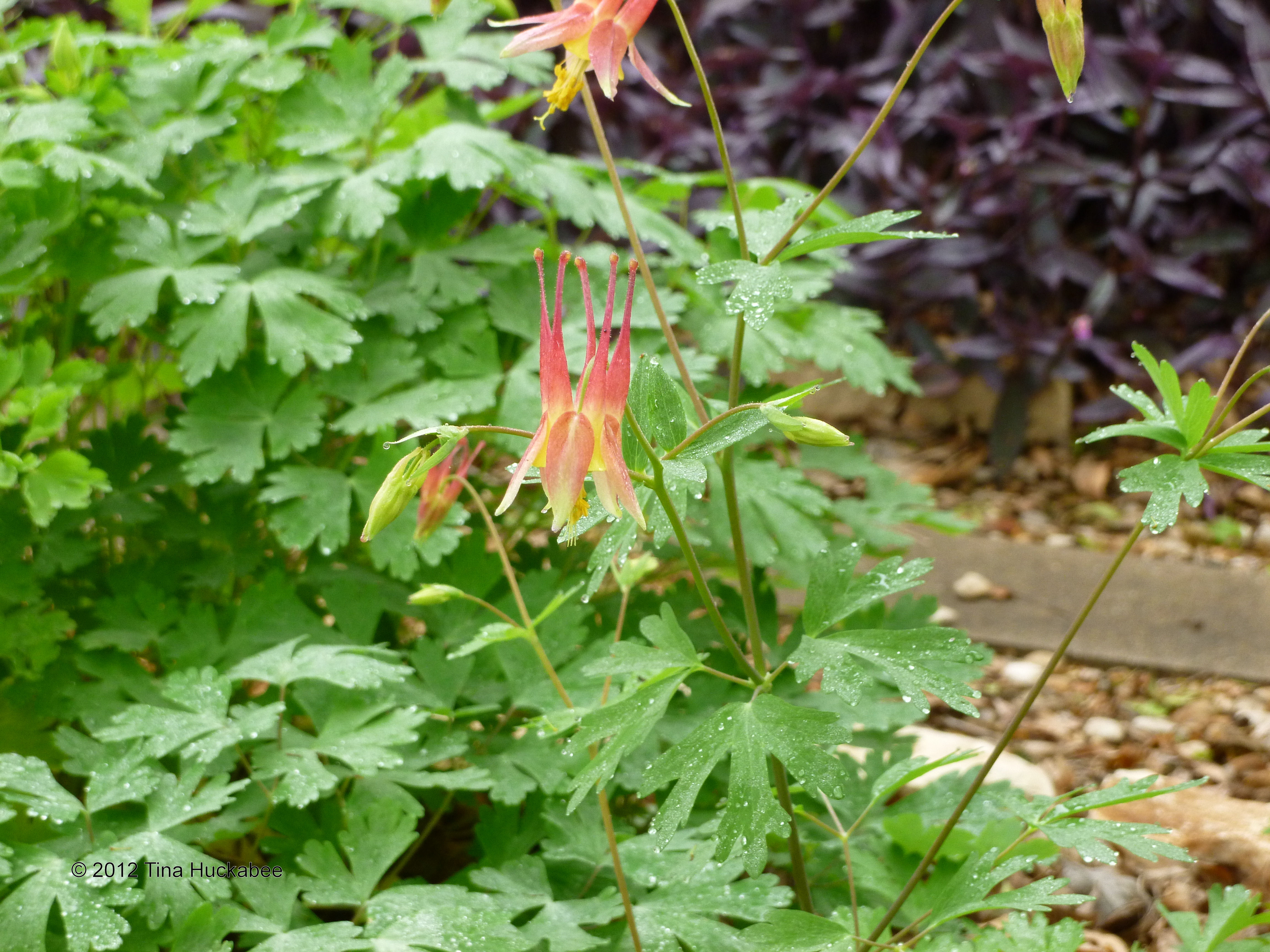
Its relative, the Red Columbine (Aquilegia canadensis), blooms in companionship with the Yellow.

And, since the two species naturally hybridize, I have a number of these perennials shrubs in which the flowers are yellow, with a blush of red.  I love that!

The Crossvine (Bignonia capreolata), is a very well-behaved vine.  I cut mine back a couple of years ago and with the drought and heat last year, it’s made a slow recovery.  But it has plenty of tangerine/yellow blooms this year.

The ubiquitous Mt. Laurel (Sophora secundiflora), has been stunning this year in Austin, including the one in my back garden.  I even saw a magnificent one in Corpus Christi, recently.

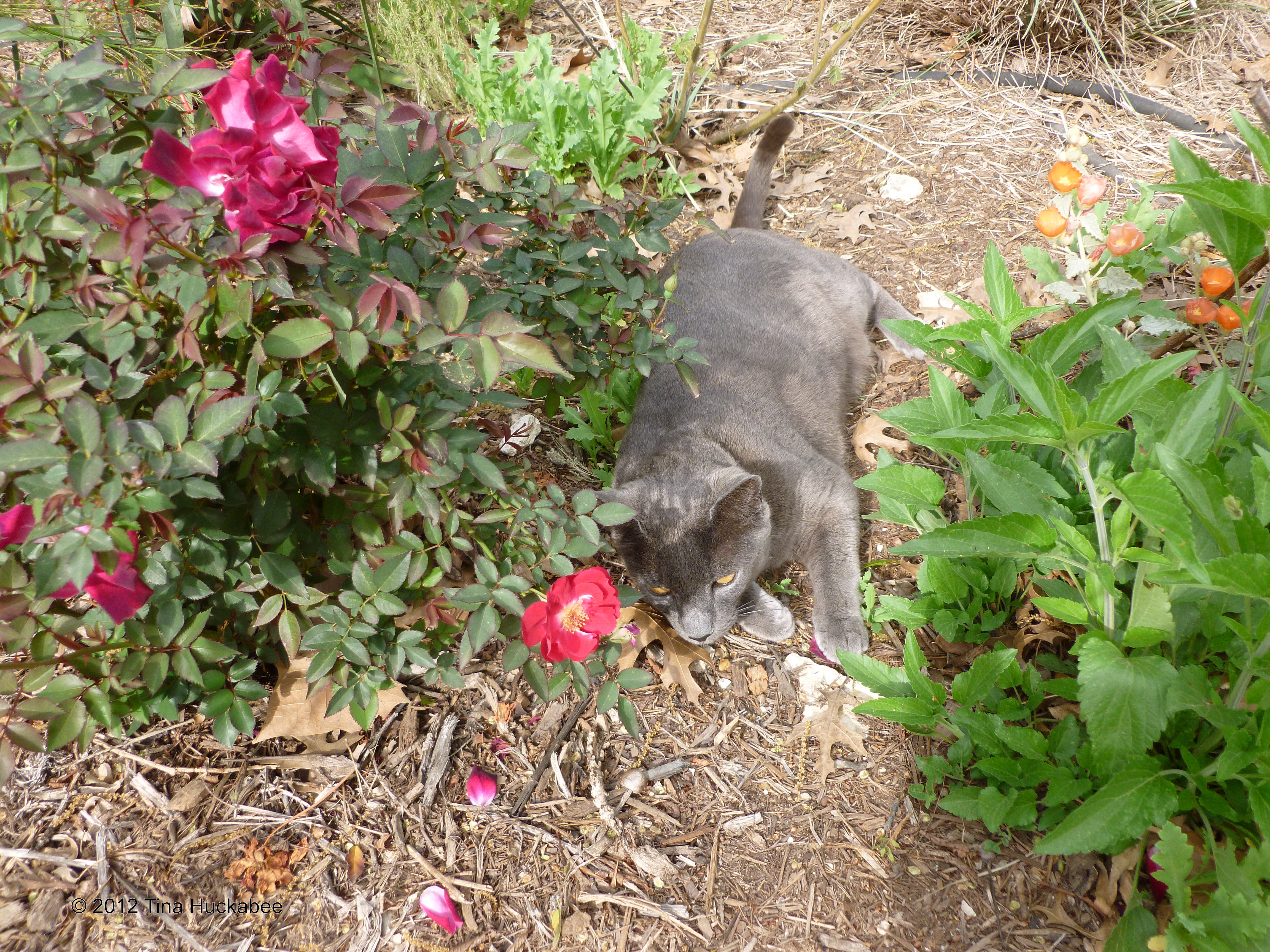
And, finally, the Guardian of the Blooms protects the Old Gay Hill Rose and the Globe Mallow (Sphaeralcea ambigua), from the invading butterflies.

Goofy cat.

Mexican Honeysuckle–Spring Show-Off

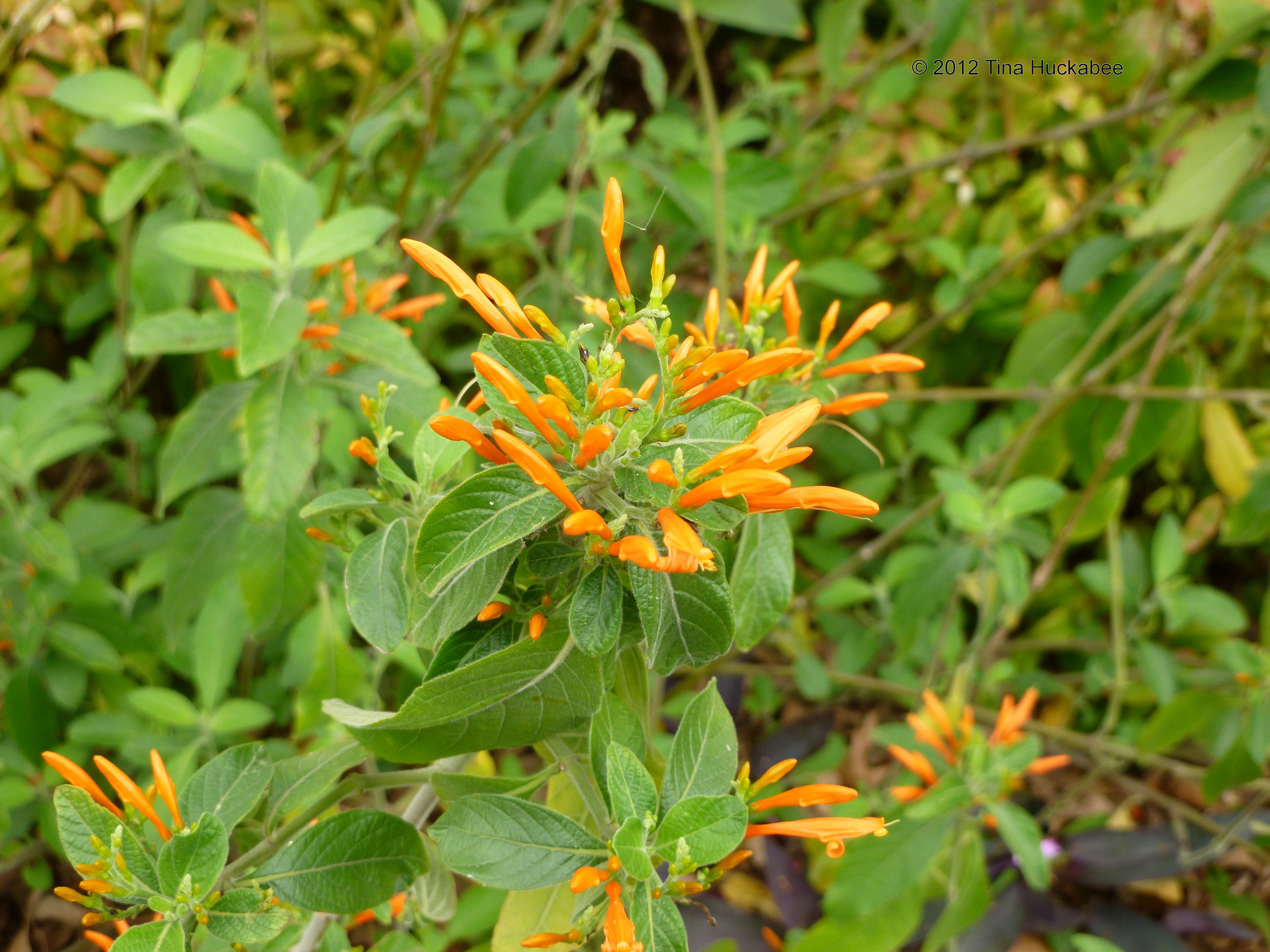
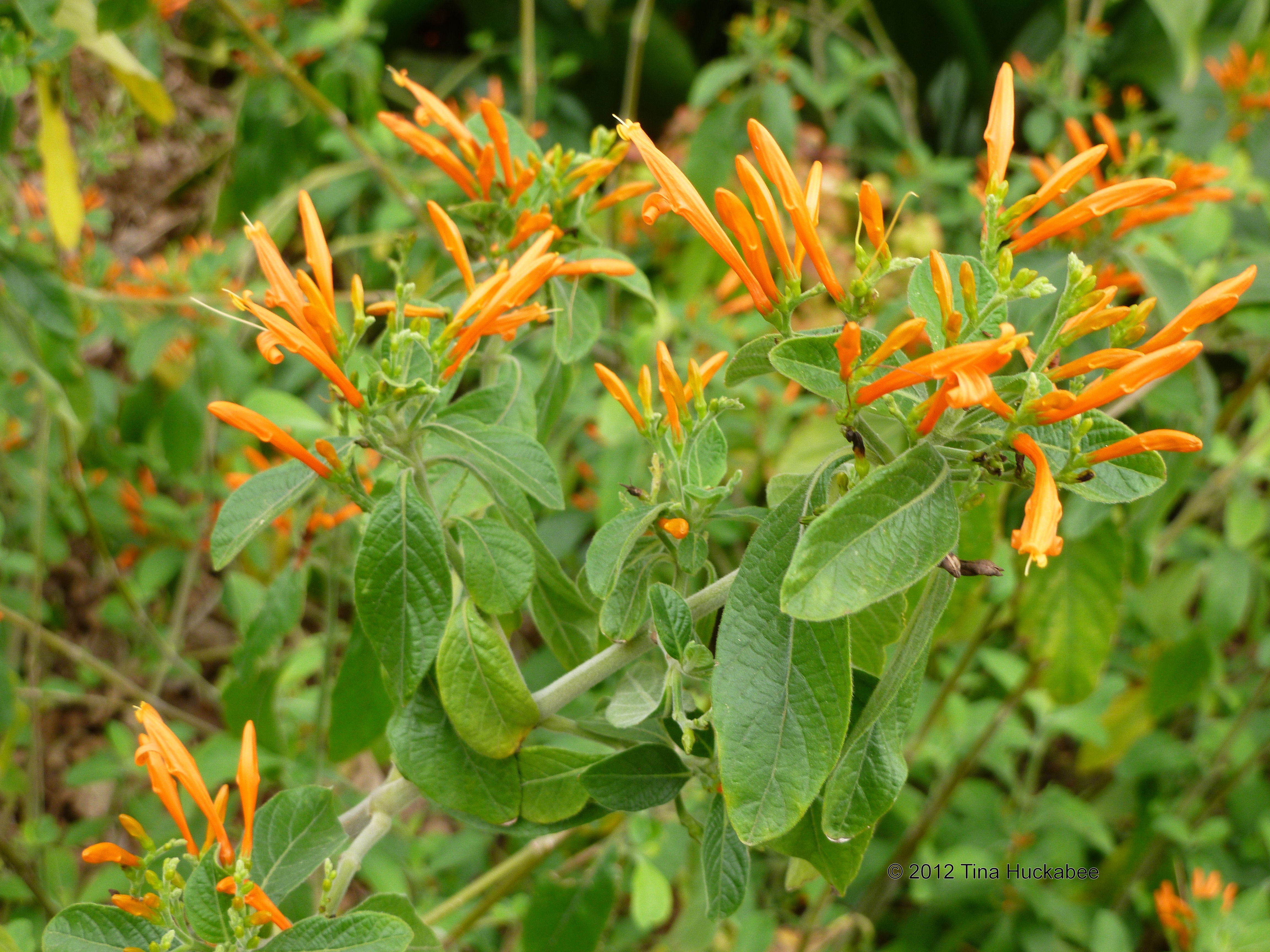
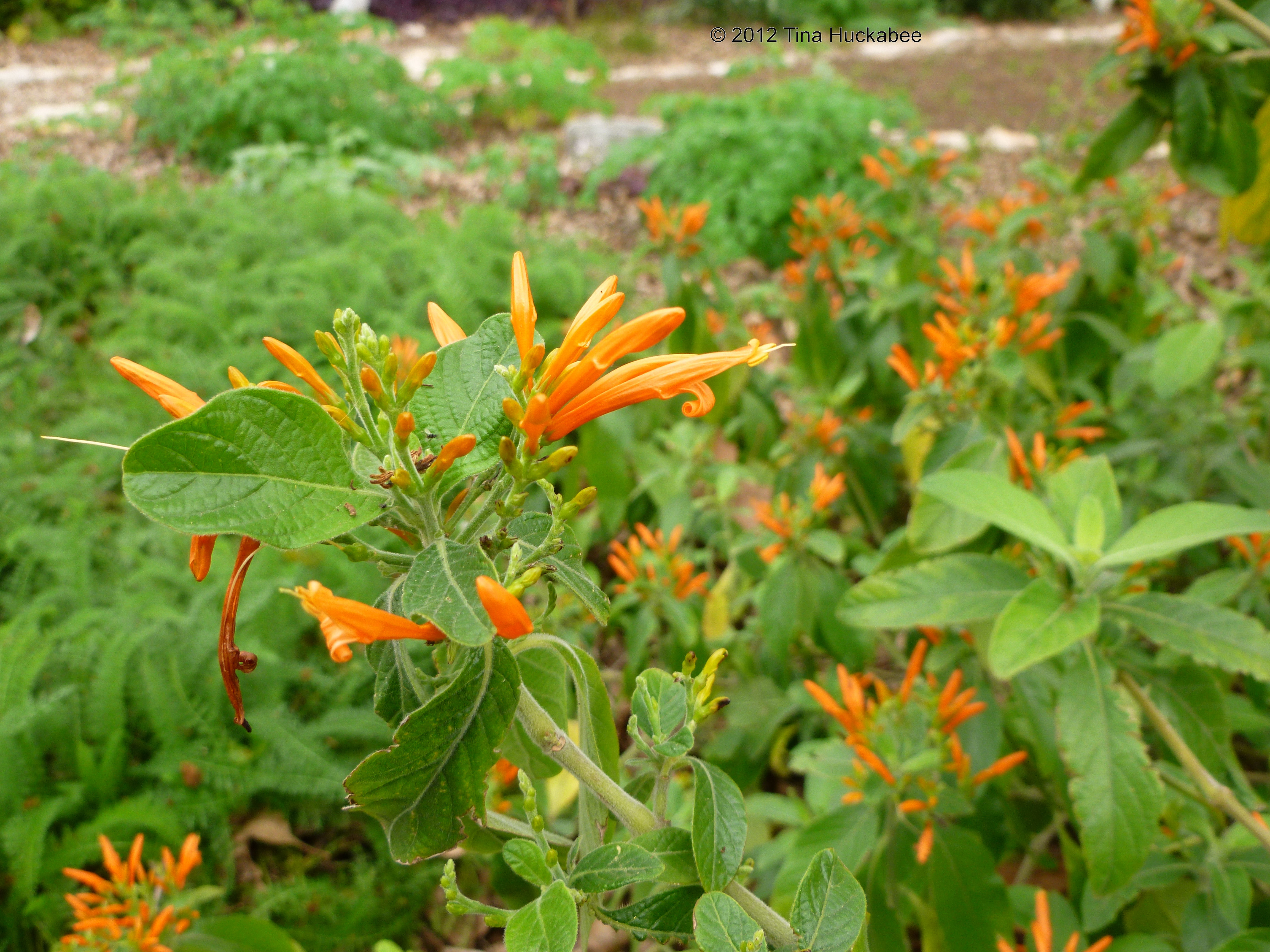
All around Austin these past few weeks,  Mexican Honeysuckle (Justicia spicigera) is strutting its stuff.  Sporting showy clusters of orange flowers, it’s quite a head-turner.

Gardeners grow it here in Austin and it’s a common plant in many parts of the southern United States. Native to Mexico and all the way south to Columbia, it’s naturalized in parts of South Texas.  I remember seeing it in Corpus Christi growing up, although I don’t think my parents grew it in their gardens.  It’s related to the Shrimp plant (Justicia brandegeana), which is also a common South to Central Texas perennial.

Most years, if there’s a deep enough freeze, this fabulous herbaceous perennial dies to the ground and returns from its roots once temperatures warm. Then in mid to late summer,  it begins its bloom cycle.  It will bloom, sporadically, until it succumbs to the next significant freeze. During this mild winter (in Austin) in which there was no  hard freeze (mid-twenties or lower), these gorgeous plants didn’t die to their roots.  Mine suffered slight freeze damage on some of the foliage, but that was all.

My Mexican Honeysuckle began its 2011 bloom cycle last August/September, rested a little during the “winter” months and then started blooming again about six weeks ago. They show no inclination to cease showing off as they brandish their clusters of tubular, orange flowers with abandon.

Mexican Honeysuckle is drought tolerant, but I usually water it once every two weeks during the summer.  During our Summer from Hell of 2011, it didn’t bloom, but it always looked good and I don’t remember it wilting often.  I’ve had no problems with insects or disease –it’s a very easy plant to grow and maintain in the garden.  It’s not too fussy about soil type and it does well in a dappled shade situation.

I saw two Mexican Honeysuckle plants recently on the Hike and Bike trail around Lady Bird Lake in Austin.  They were planted on a terraced hill, with no irrigation (that I could see) in the dappled shade of large trees.  They were blooming profusely!   I probably wouldn’t put this plant in full, blasting Texas sun, because there are better choices and because Mexican Honeysuckle works nicely in a part-shade environment.  It’s reportedly a hummingbird plant and that makes sense given the shape and color of the bloom.  I’ve never seen any hummingbirds feeding at the blooms, though.  And it may well be that the pollinators native to this plant aren’t normally in this geographic area.

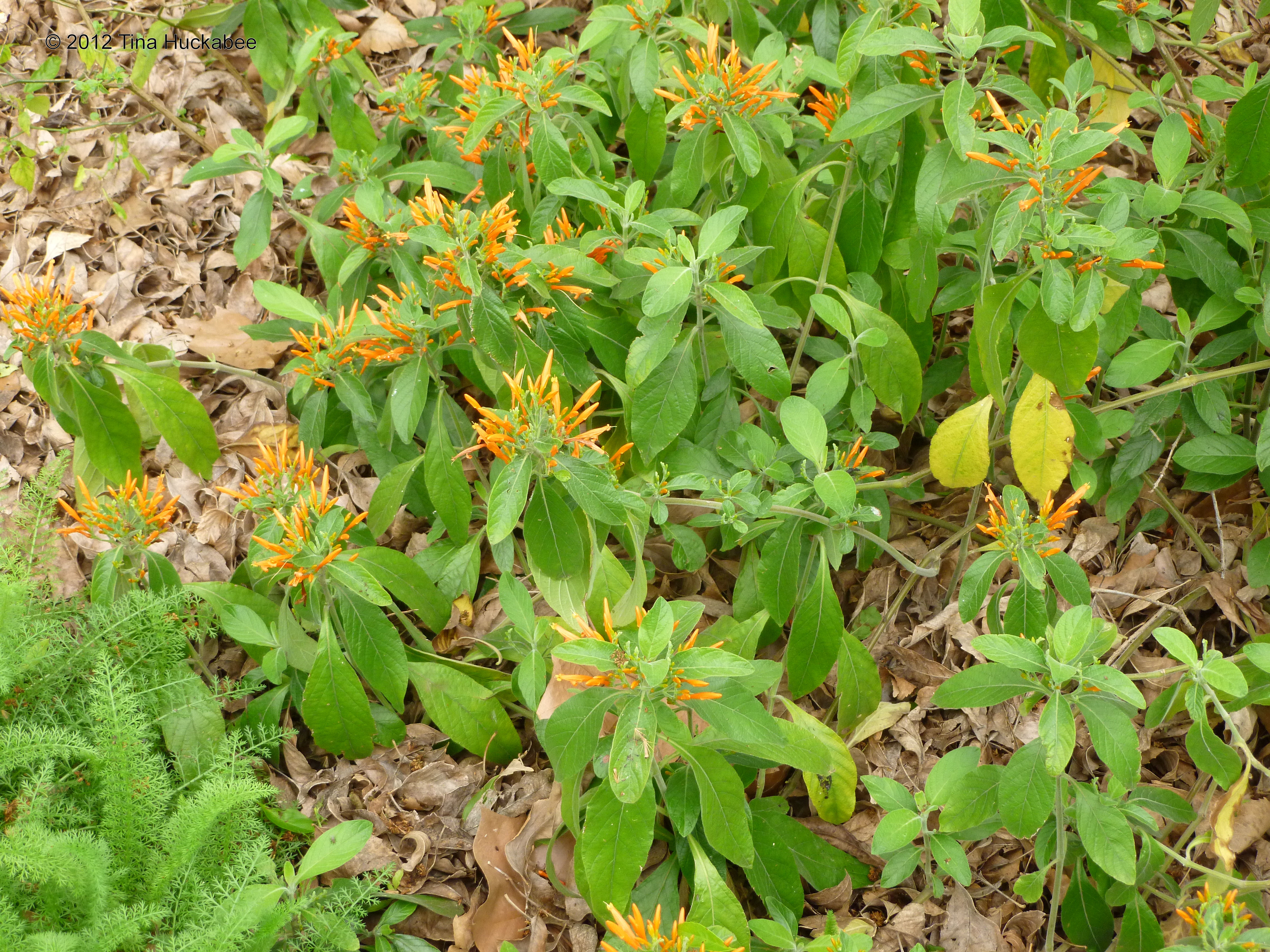
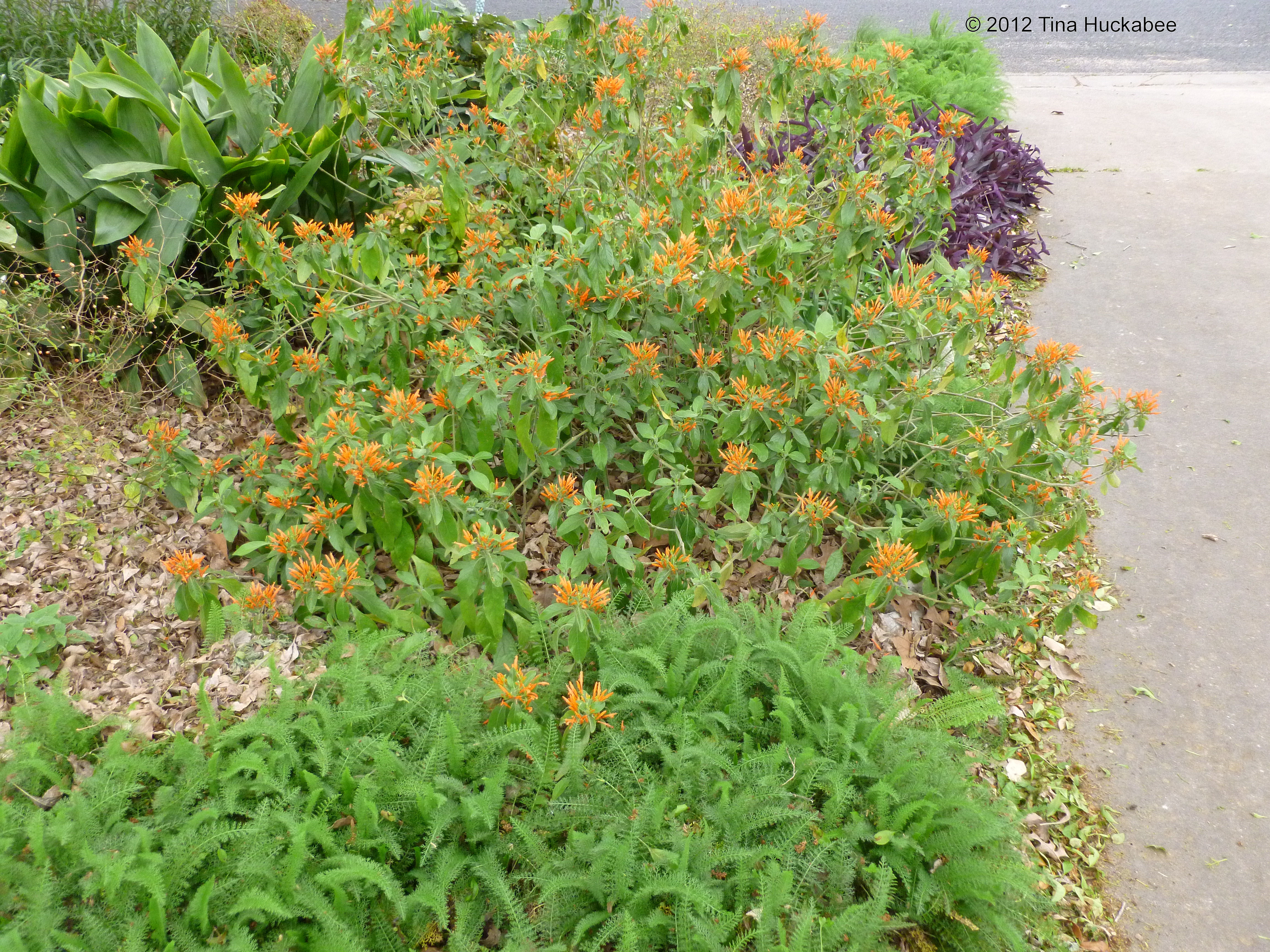
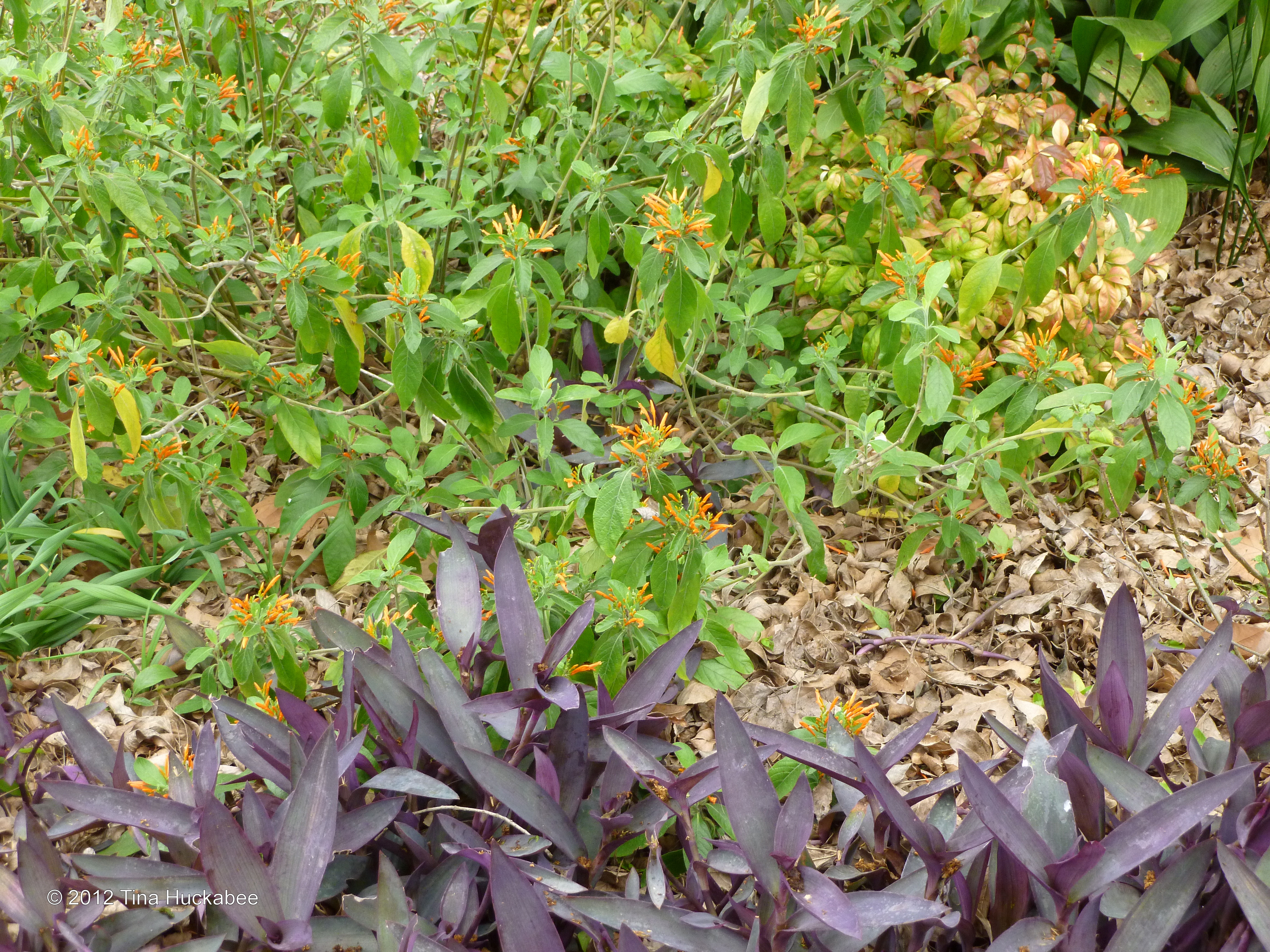
In my garden, it’s paired with Purple Heart (Setcreasea pallida) and with Yarrow (Achillea spp.)

I also have it planted with the ‘Nana’ Nandina–you can see how both plants share similar orange/yellow  coloring.  When Mexican Honeysuckle freezes to the ground, it gives the ‘Nana’ a chance to shine.  This year, the ‘Nana’ is peeking around to the right of the Mexican Honeysuckle and isn’t getting much attention.

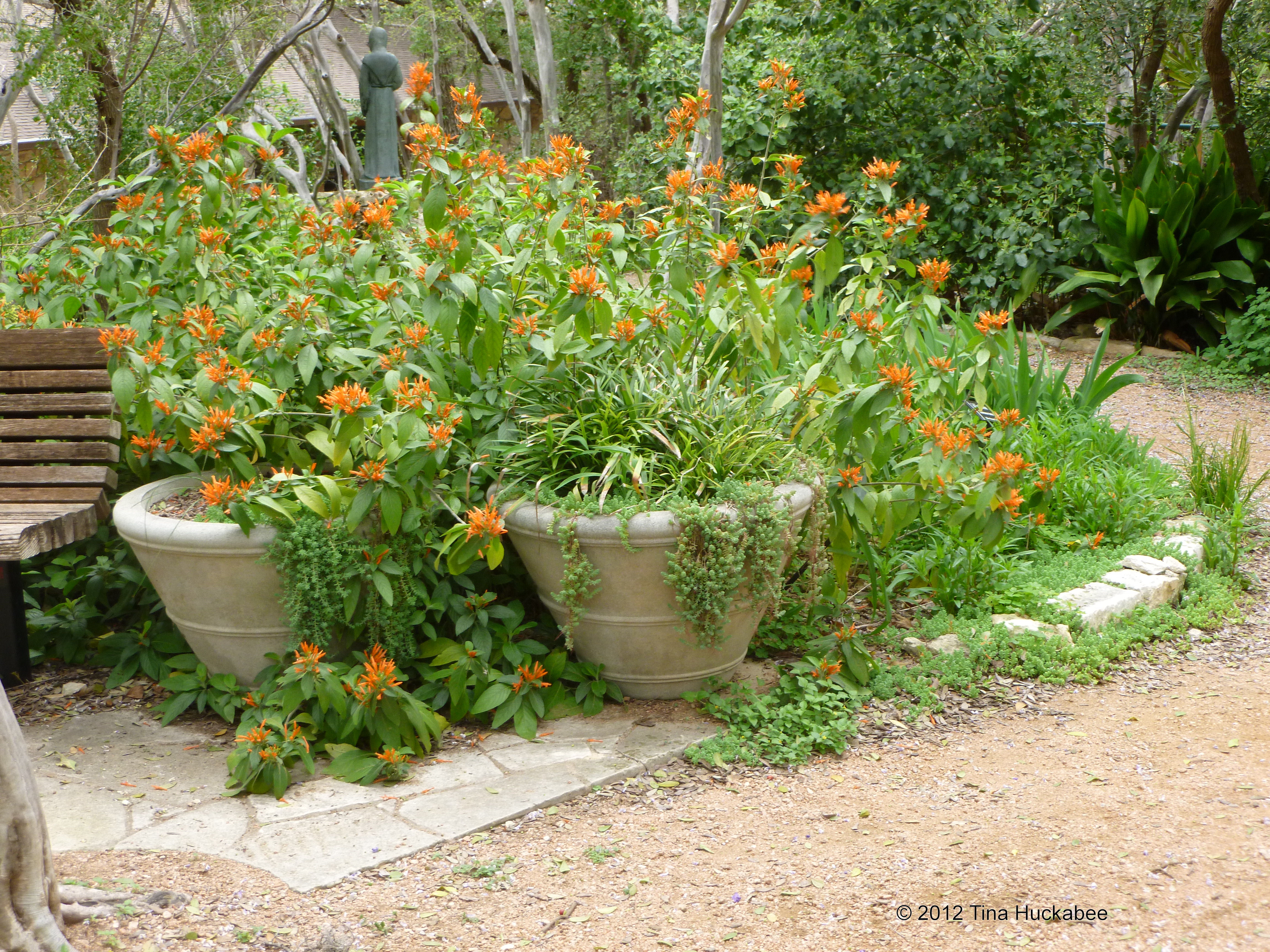
This one, in the Green Garden at Zilker Botanical Gardens,

receives some direct late morning sun, but is in dappled light for most of the day and  gets water once a week in the summer.  It has the same rangy growth that mine at home has.  I like that.  It adds a softness and casualness that is very appealing.  Mexican Honeysuckle can be pruned back, as needed, and I imagine that I’ll have to tidy both this one and mine at home during the course of this growing season.

Be patient  if you’ve planted Mexican Honeysuckle recently.  It can take a year or so before it demonstrates what a great addition to the garden it is.  Just give it a little room and let it go.  Enjoy!