Springtime For Inland Sea Oats

I’ve written about Inland Sea Oats (Chasmanthium latifolium) previously, but didn’t have photos of these plants during spring to share with readers.  Inland Sea Oats is a native grass which is elegant, easy to grow and an excellent choice for the shady garden.  You can read about this plant further in my post  at: https://mygardenersays.wordpress.com/category/inland-sea-oats/.

This is what one group looked like in March,

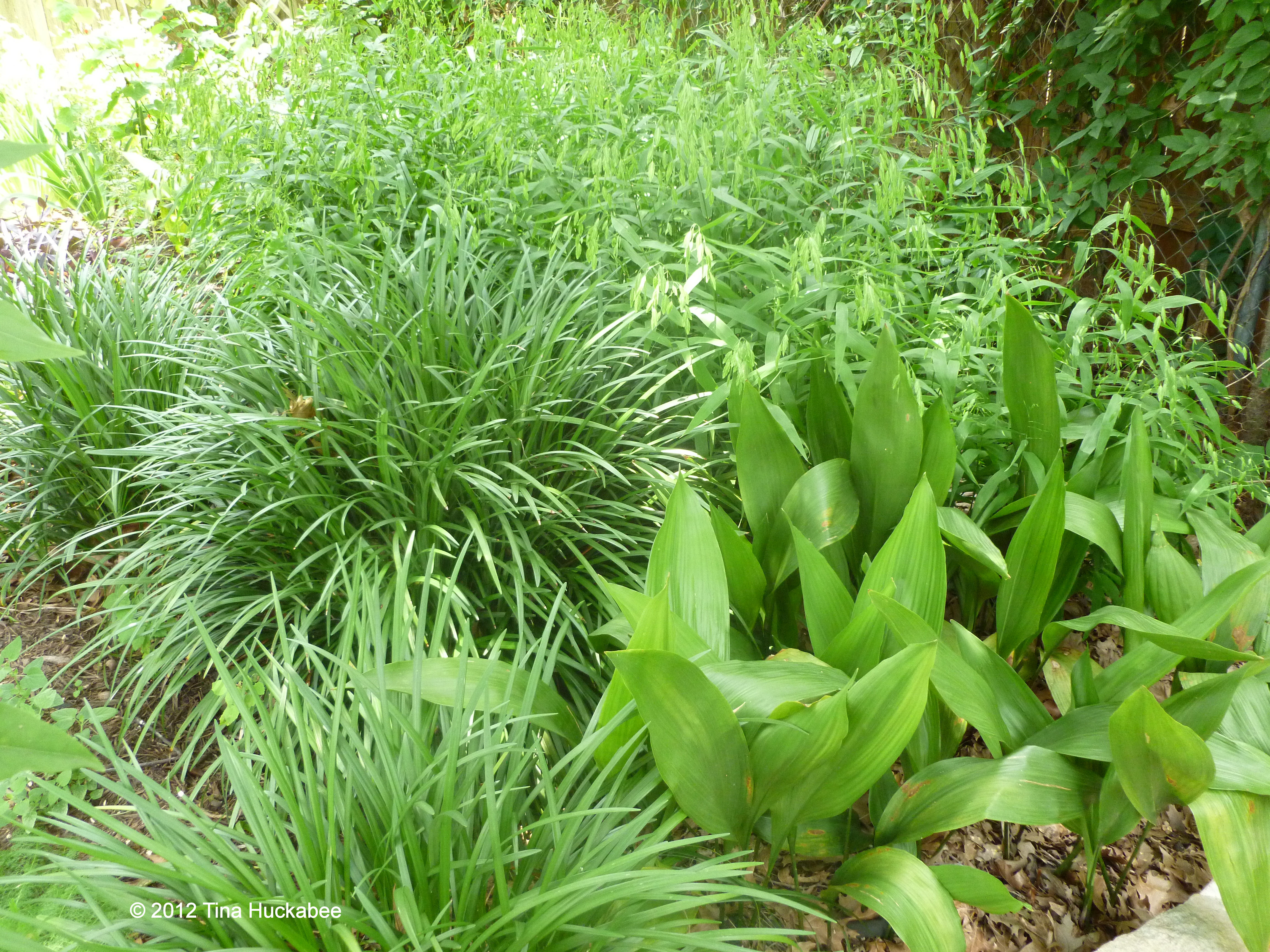
and what they look like more recently.

Inland Sea Oats die back during the winter and arise from their roots in spring .  As a general rule, once they emerge from their winter doldrums, they grow quickly.

The green of the Inland Sea Oats is brilliant and dramatic,

and pairs well with evergreens such as Giant Liriope (Liriope muscari  ‘Evergreen Giant’), Cast Iron Plant (Aspidistra elatior)                                                                                 

and Rock Rose  (Pavonia lasiopetala).

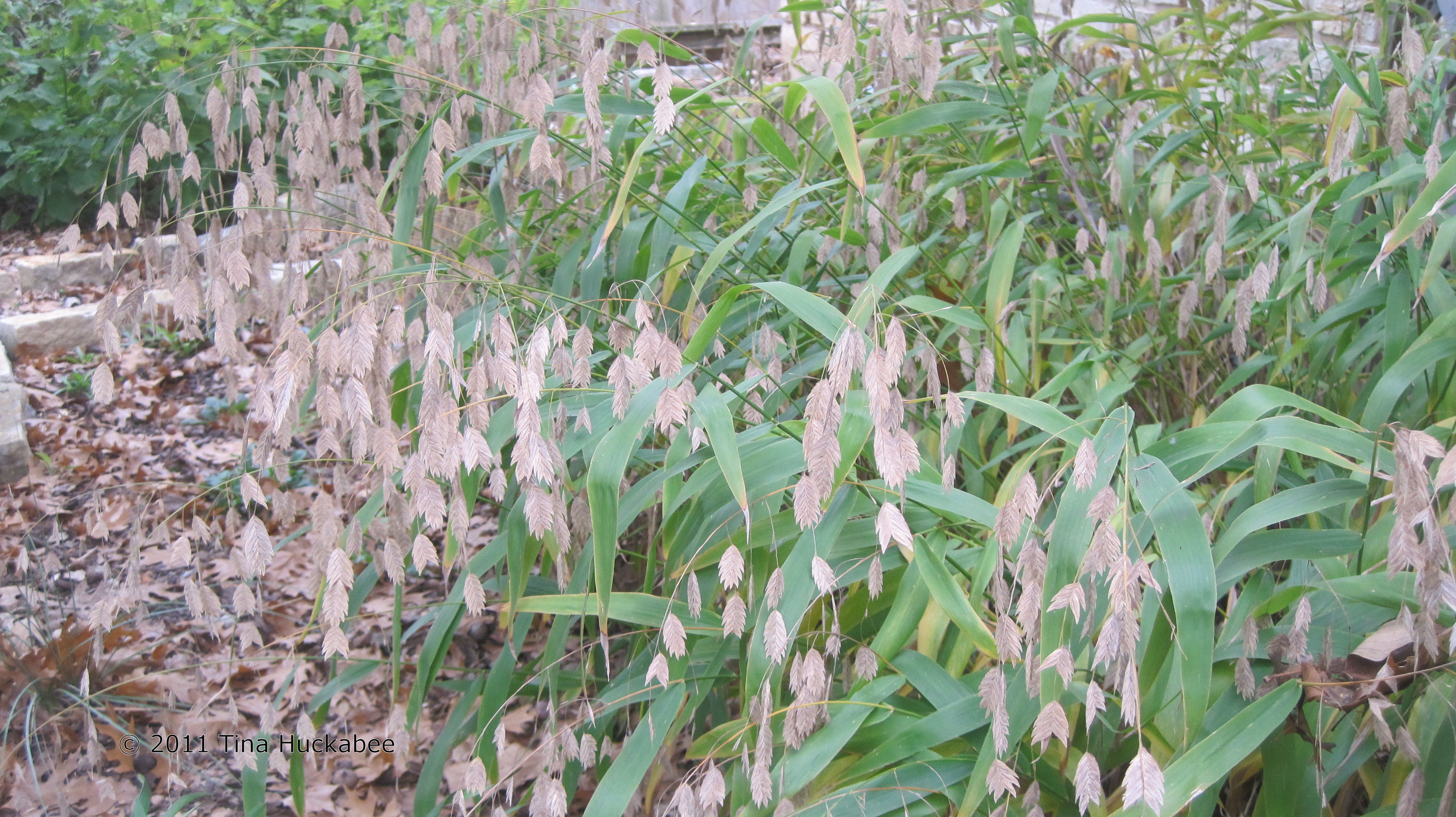
In late March-April, the graceful seedheads develop,

and remain a fetching, translucent green throughout the summer.  In the late summer, the seeds turn a soft cream color and later in the fall, a warm, toasty brown.

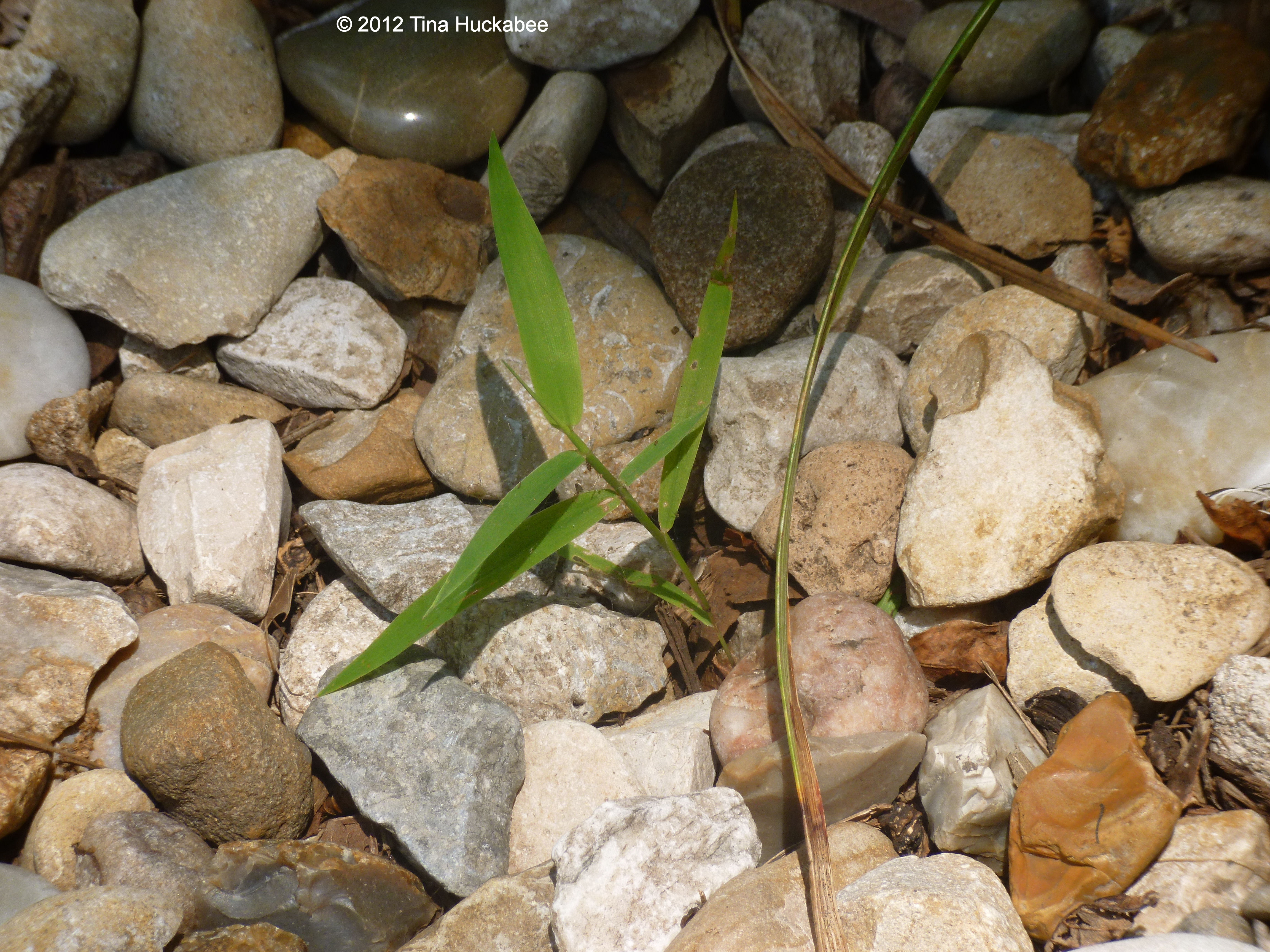
Watch out in spring though, for the proliferation of Sea Oat seedlings.

It’s a great plant for the home gardener, but with regular irrigation and/or rainfall, these seedlings can be a nuisance.  To keep them in control, I simply pull them up as I have the time and inclination.  As long as you don’t allow them to become too tall (more than a foot), they’re easy to yank out.  However, if you’re not willing to engage in some maintenance with these plants (weeding them!), I wouldn’t recommend Inland Sea Oats for your garden.

But if you’re willing to weed what you don’t want and you love the grace and beauty of this shade loving, ornamental grass,

plant and enjoy!

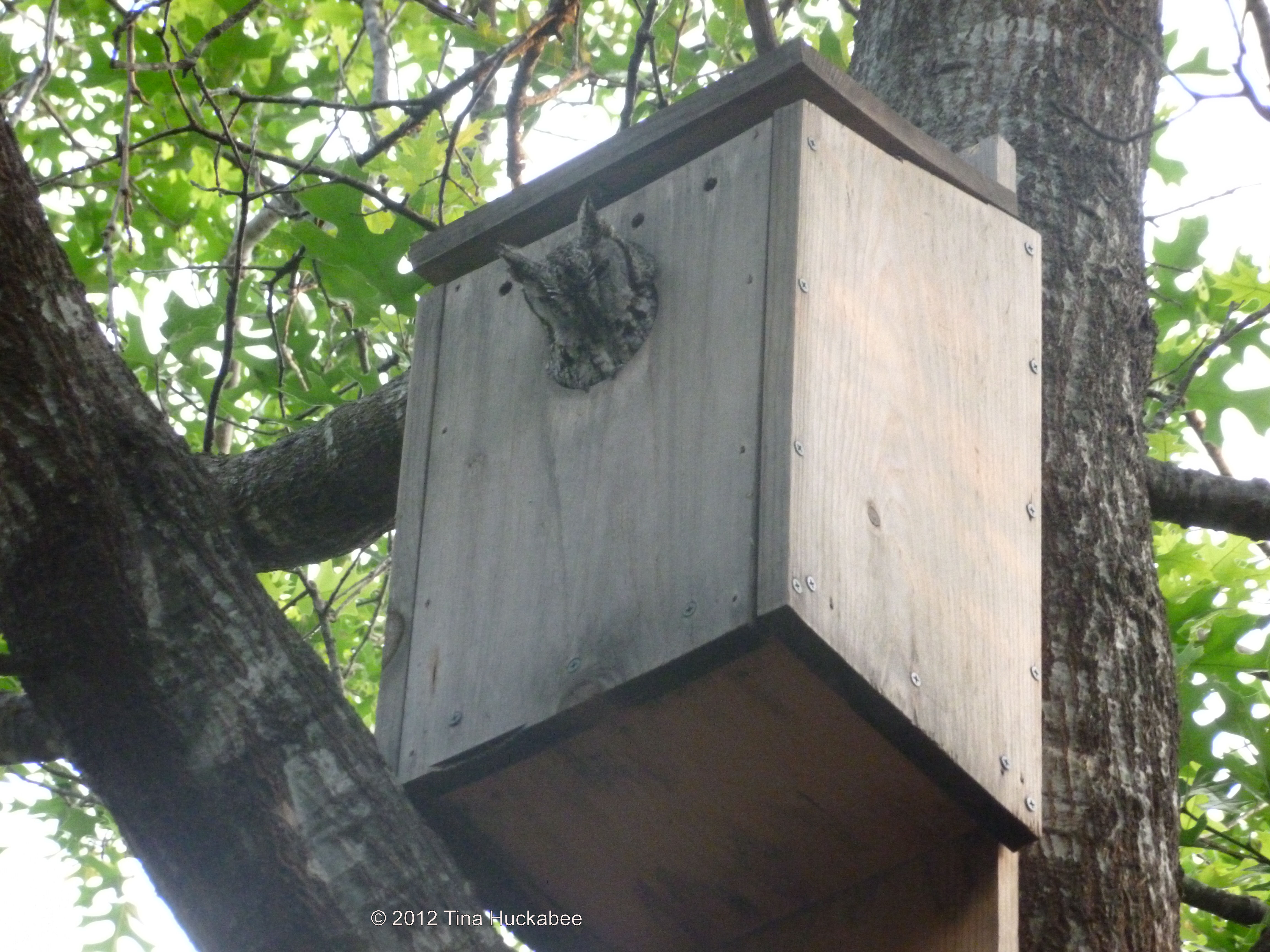
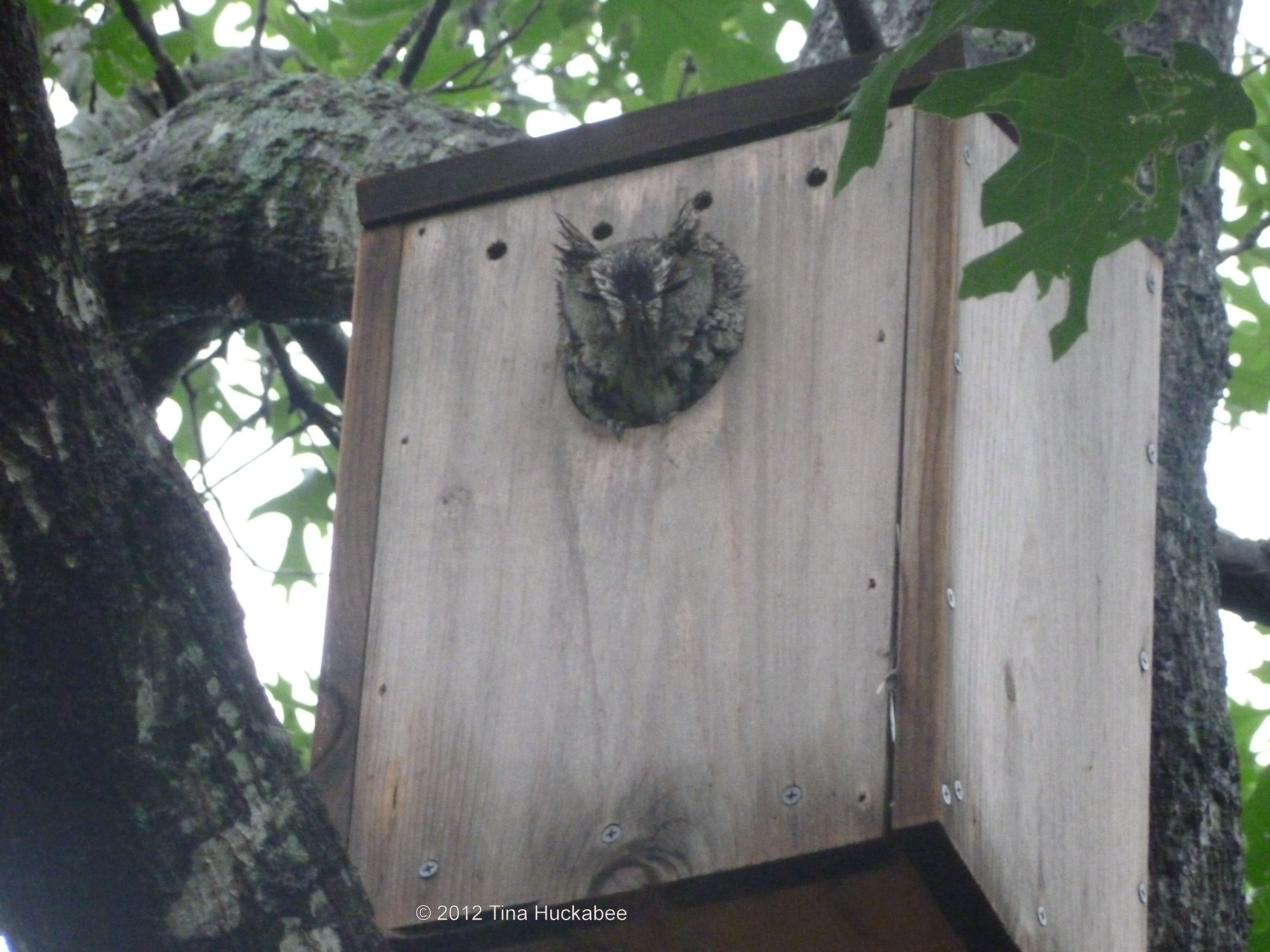
“My” Little Owl Family

Four years ago on Mother’s Day, my sweet husband and sweet son gave to me an Eastern Screech Owl-house that they jointly made.  It’s probably the best gift I’ve ever received.  Later that year we put the house about fifteen feet high in a Red Oak tree in our backyard.  We’ve had a couple raise three broods in that house (and its replacement, after the house was damaged when we had honeybees removed last year).  The first year, Mom and Dad raised four owlets and last year,  two.

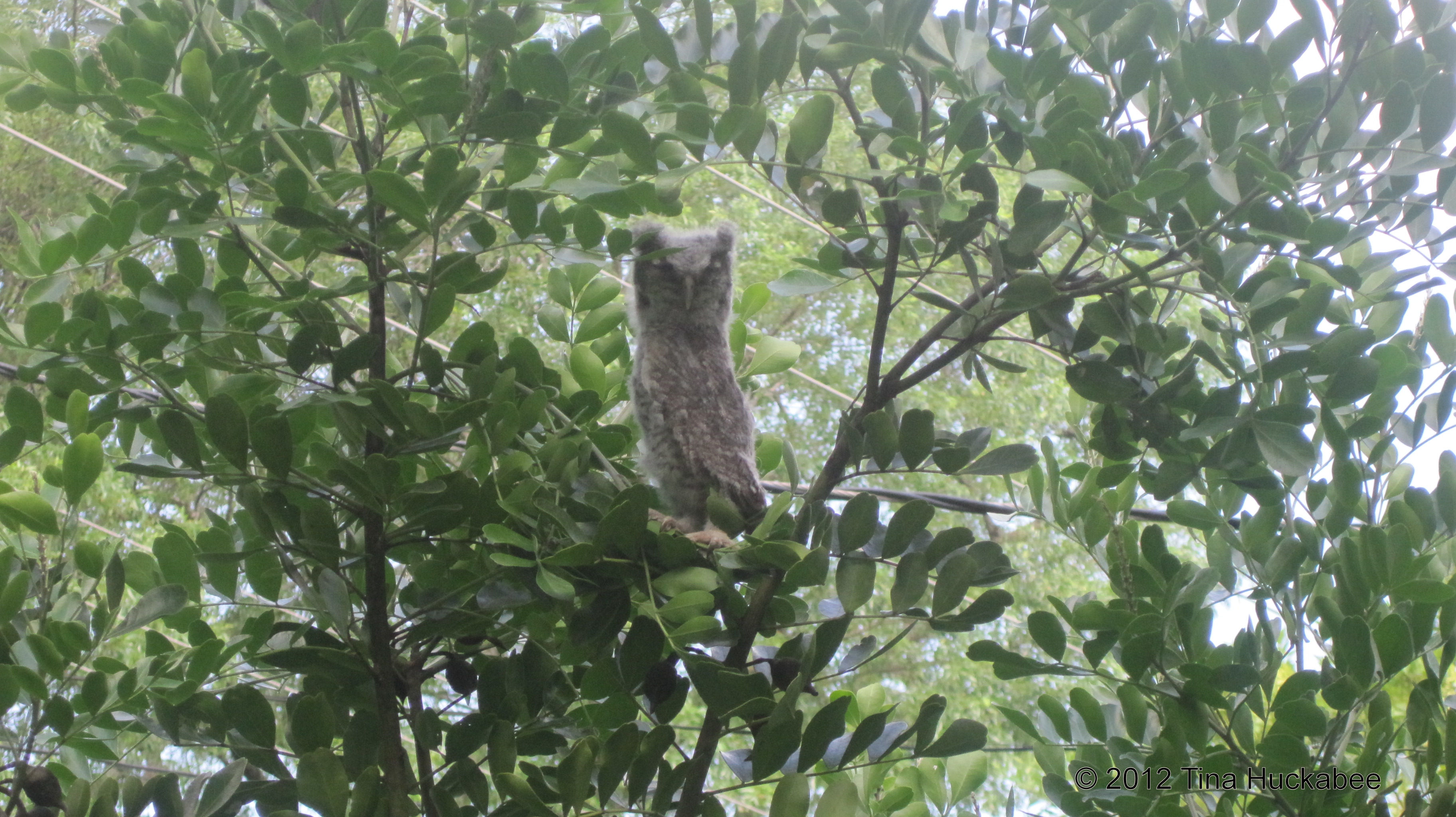
This is one of the four owlets from two years ago, just after they left the house.  All of them roosted in a Mountain Laurel for a few days.

I rescued one from the ground and was awed at the strength and grip of its talons (mice and rats, beware!), as well as the softness of its feathers.    Mom and Dad were cool with my handling their little one, though they kept their big, intelligent eyes on me all the while.

This baby is one of the two from last year.

And this cutie is one of the parents, alert during the day after its offspring left the house.
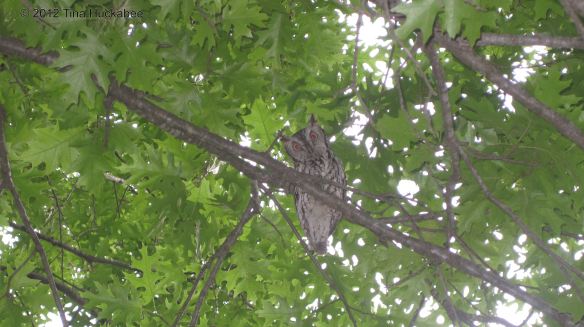
Each late fall/beginning of winter, I wait with anticipation to hear the male trill to his partner late at night and into the wee hours of the morning, indicating the beginning of  courtship and mating rituals.  Last year, I was able to witness their canoodling–it’s very quick and sometimes, on the fence.

Interesting….

I usually saw them at sundown as they met up after a long, sleepy day. One stayed in the house and the other in a thicket at the back of a neighbor’s property.  The owls were a little late (and more discreet…) this year in their courtship.  I heard Dad’s signature trill of plenty of times in January and February, but only had a few sightings of them until this past month or so.

Through most of April, Mom was in the house daily.

Mostly, she snoozed and showed concern only when a male squirrel romped too close to her and her brood.
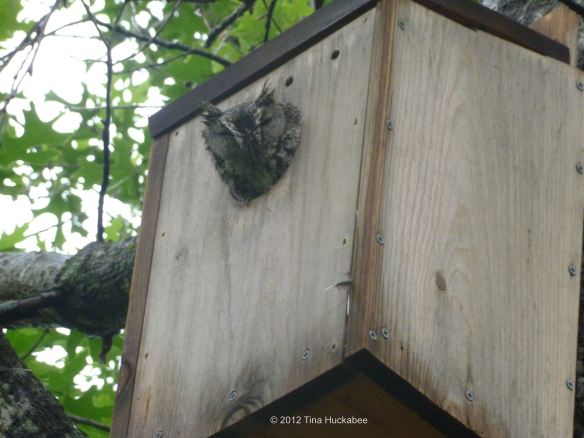
She completely ignored the Bluejays who regularly perch on the branches in front of the house and “caw” loudly and obnoxiously at her, offended at the presence of this fierce (though cute!!) predator amongst them.
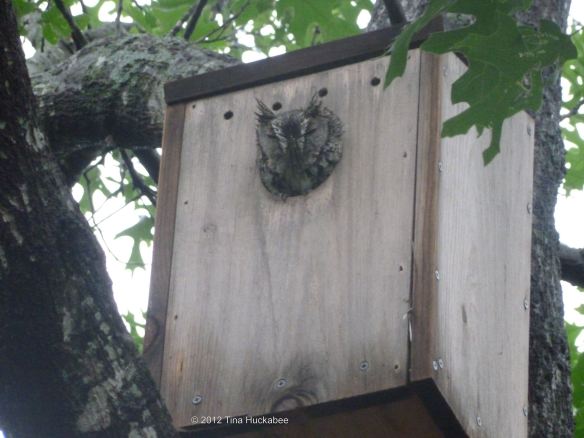
Dad roosts in my neighbor’s thicket.  This past week, both parents have flown to the house from the thicket, so things are apparently a little cramped with the growing owlets.

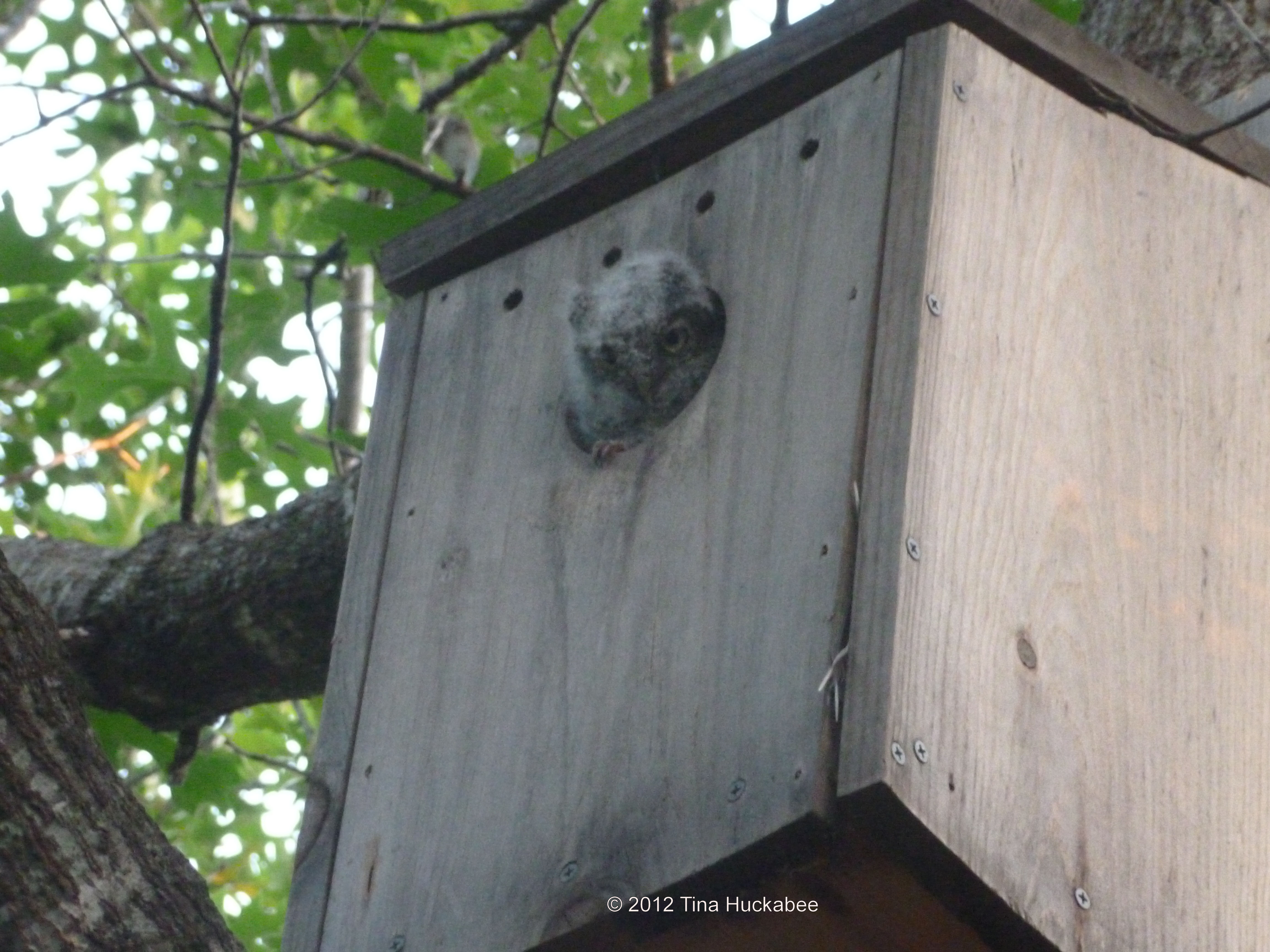
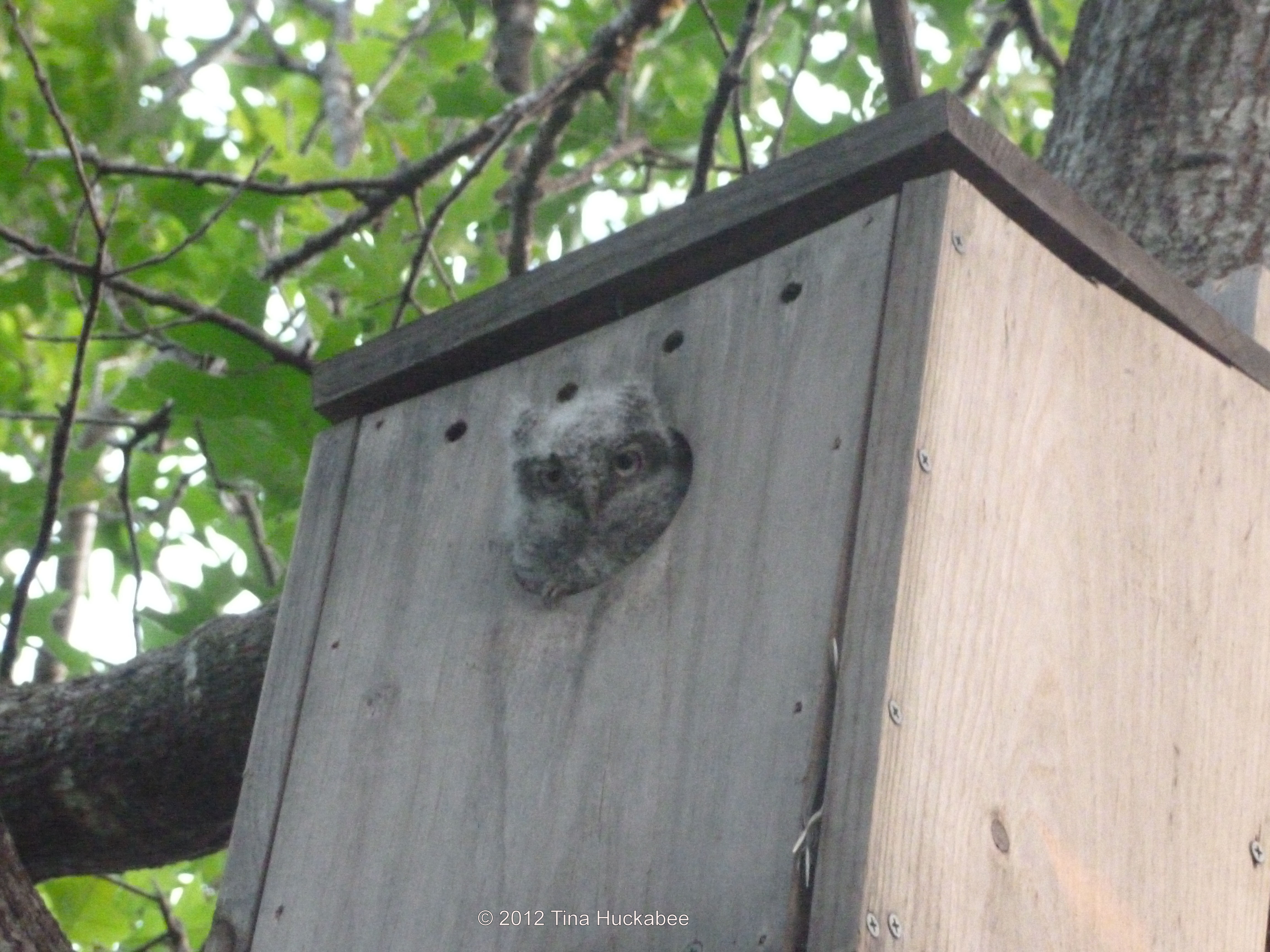
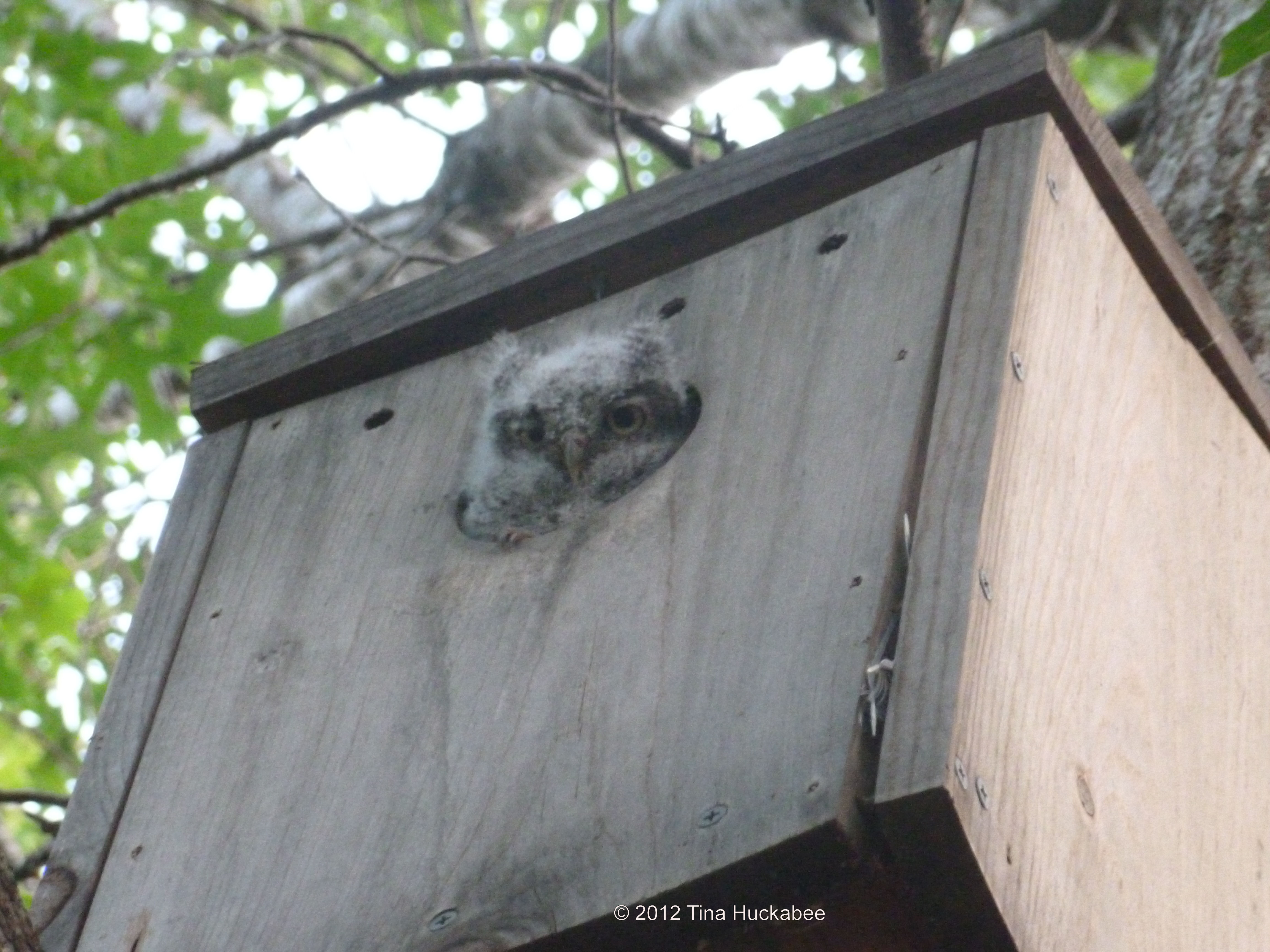
Earlier this week, I  briefly saw a little bit of fuzzy, grey head before it darted back into the hole.  Owlet!!

Finally this:

He (maybe she, I have no clue), sat looking out at the big, wide world that he is about to enter, for about 20 minutes.
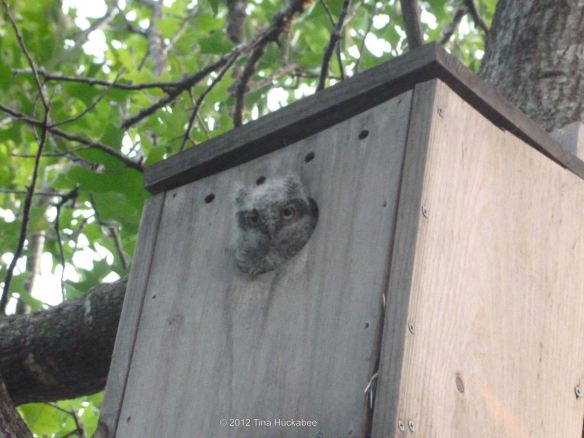
He wasn’t shy at all with the three of us gawking at him.  I’m not quite sure how I feel about that, either.  From a personal standpoint, I’m thrilled.  To be in the presence of these shy, elusive animals is such a gift.  But from a biological standpoint, I wish he was a little more skittish about these weird humans talking to him and making kissing sounds.  (Okay, it was only me doing the kissing thing.)  Maybe he wasn’t particularly nervous because owls (like the rest of us) love being told how darling they are.

Now that the owlet(s) are making regular appearances at the hole, it’s a matter of a couple of days before they leave the house for good.  They’ll roost in the tree for a few days more, then, they’ll be gone.  Hopefully, they’ll have plenty to hunt and avoid cars and the Great Horned Owls that are around.

I always mourn a little after they leave. These past two years, I’ve  occasionally seen an Eastern Screech Owl in the early summer.  But I’ll have to wait until next winter to re-engage an observational relationship with these magnificent birds.

Go forth, little owls and live happy, productive owl lives!!
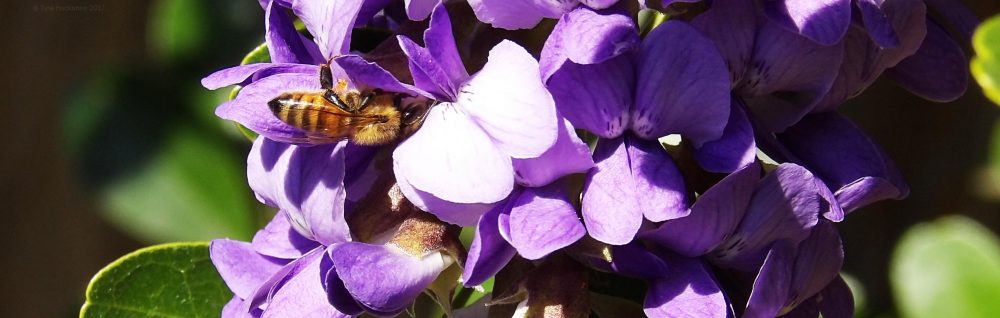
Blues In The Garden

I love blue. Blue flowers, especially.

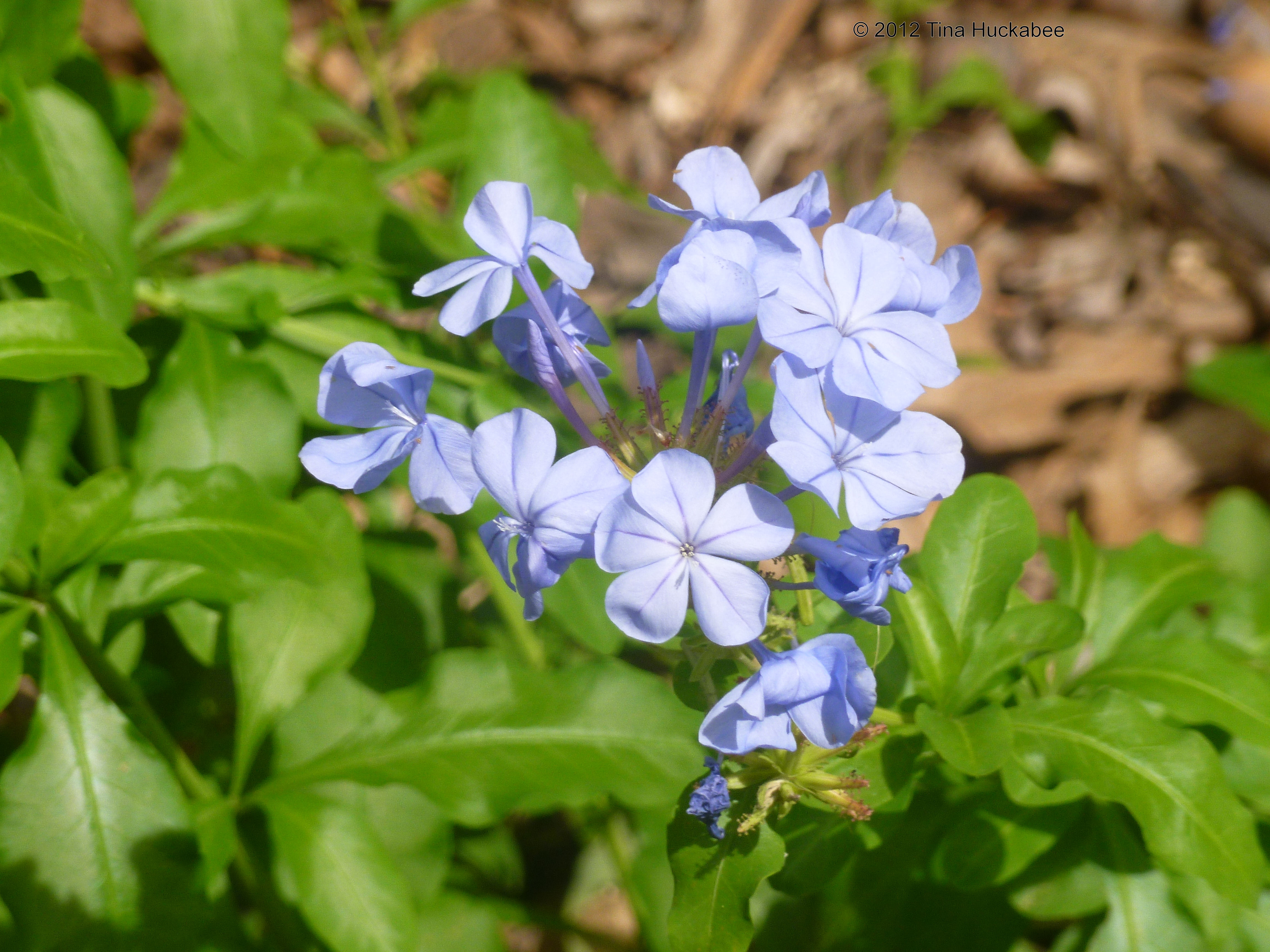
Blue–Plumbago (Plumbago auriculata),

Blue–Majestic Sage (Salvia guaranitica),

and Blue–Heartleaf Skullcap (Scutelleria ovata sp.bracteata).

In truth, most of what I consider “blue” in my gardens has a tinge of lavender or purple,  like this Heartleaf Skullcap,

which is currently at its peak of  loveliness in gardens all around Austin.

It’s difficult to capture the beauty of this plant with my little point ‘n shoot camera because of the subtlety of the blue/lilac bloom paired with the grey/green foliage.

I especially love it with my bright blue, well-used (by the birds, not me!)  bird bath.

Or combined with the cultivar Mealy Blue Sage and small, light blue bird bath situated on a bed of City of Austin recycled glass.

The  Henry Duelberg Sage is a great blue-blooming perennial for Central Texas.  This particular plant is the most purple of the Henrys in my garden,

but, it’s still mostly blue to my eyes.

I’ve noticed that the blues that I grow in my gardens are blue in real-time, but often show purple in photographs.  Conversely, the native bog plant, Pickerel Weed (Pontederia cordata), is blue to me in this photo,

but in real life, I see it as purple.

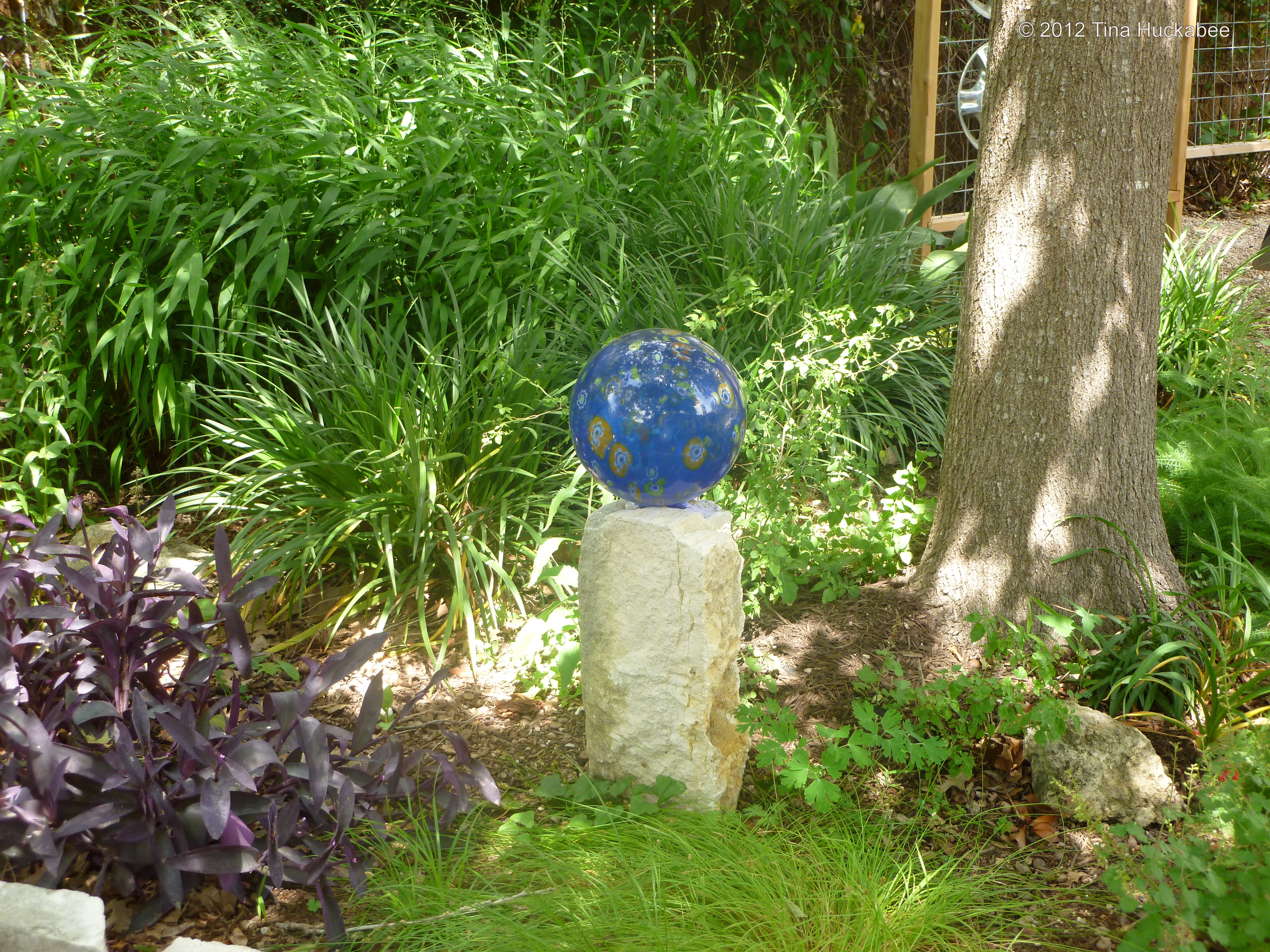
I favor blue accents in my  garden art as well.  I usually refer to accent  items as my garden ‘do-dads’.  I’m easy to buy gifts for because it’s fun to have funky or silly or interesting do-dads in the garden.  Do-dads–like my groovy gazing ball,

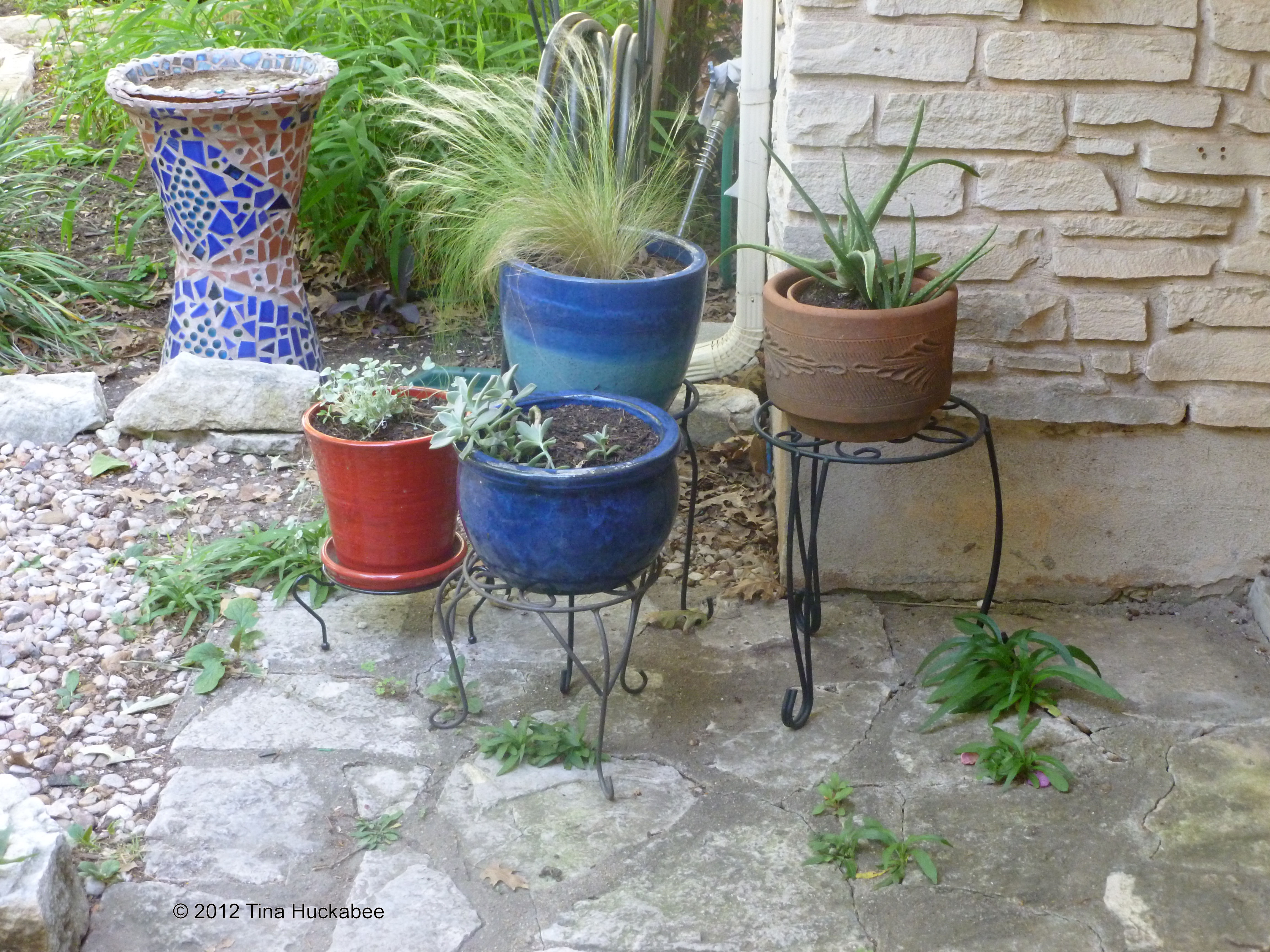
or my blue glazed pots for plants,

flanked by pots in the other colors I gravitate toward. I augment the blues in the garden with do-dads in these other colors.

But I tend to prefer garden accent pieces in hues of blues.  I chose tile and glass pieces  primarily in blues for the mosaic stepping stone under the archway,

although I could use a few more blue bottles on the bottle tree.

My tree tipped over during a heavy wind a few weeks ago and  two of the four blue bottles that were on the tree smashed–I’m still finding shards of blue glass in that bed.  Sigh.  I’ll have to buy more of this high sugar/caffeine soda for the bottle tree.  I’ll let The Boy drink those, though.

Oops.  Well, this isn’t in the garden and my favorite thing here isn’t the blue wall, either.  He’s studying hard for the SAT.  (More like hardly studying….)

Oh, and not to forget, my wonderful new, blue Sky Chairs.

My old ones finally ripped through ‘n through, requiring replacement.  I loooove these soporific chairs.  Many a snoozy (usually) weekend afternoon/evening I’ve spent lolling about in one or the other of these chairs–listening to the waterfall of the pond, watching birds/owls/bees/butterflies  and enjoying the fruits (or veggies) of my gardening labors.

What colors do you love in your gardens?