The debut for this seasonal look-see is Barbados Cherry (Malpighia glabra). I love Barbados Cherry, but even I don’t think it’s a particularly sexy, exciting plant. It’s rather a staple of sorts: the practical “nursing shoe” of plants versus its sexier “stiletto heel” exhibitionist kin. Barbados Cherry is tough, reliable and in its steady way, beautiful. Gardeners utilize it as a hedge, but it also produces a mass of blooms, at least a couple of times per year, with lush berries following. It is extremely drought tolerant, growing well in shade, part shade and full sun. Barbados Cherry is an excellent wildlife plant. It develops into a thick shrub/thicket, so birds love it for protection and is a host/nectar plant for several butterflies. For all that acclaim, Barbados Cherry is not a particularly fast grower and is not deer resistant.
Most of the year, Barbados Cherry presents as a green shrub, though individual plants can be shaped as a sphere or in tree form. I don’t care for overly pruned plants, preferring more natural growth patterns. I’ve only pruned my B. Cherry to prevent overhanging the driveway too much. I planted my original five shrubs about 20 years ago, in a shade/part shade area, primarily as a privacy hedge. Once established, B. Cherry like this most of the year.

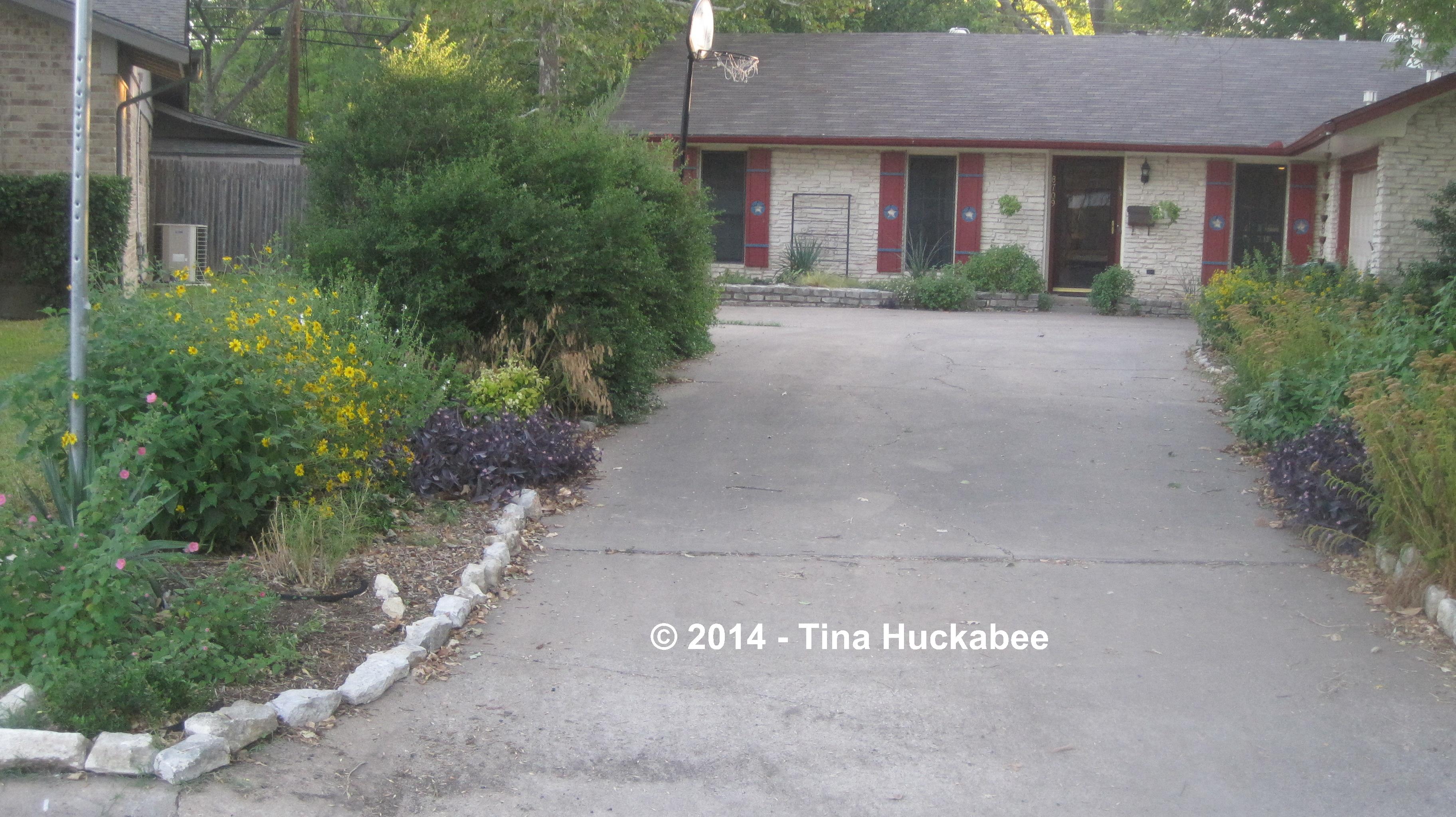
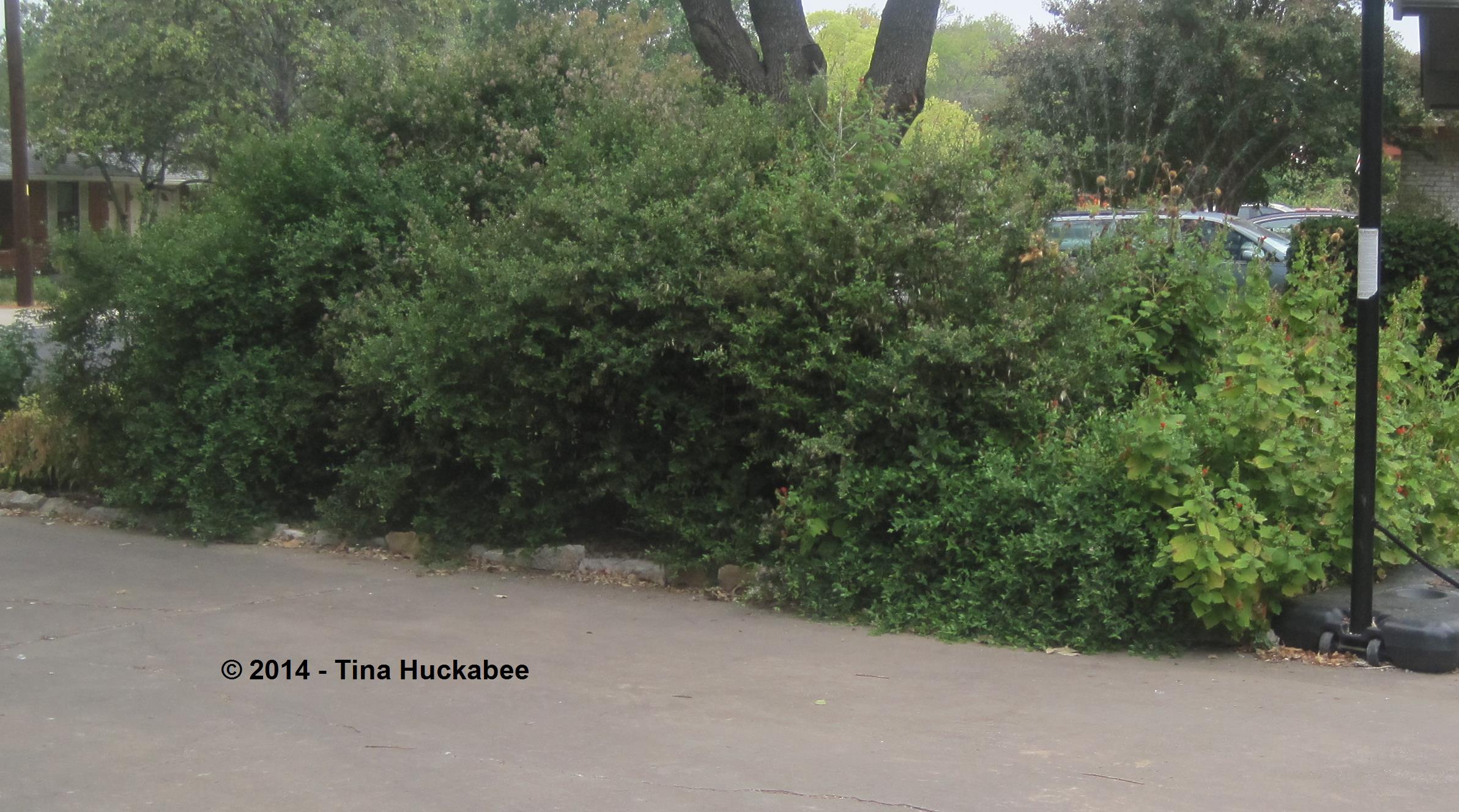
A disclaimer: these photos were taken in autumn, but Barbados Cherry are green, rear-round, with some exceptions, noted later.
The photos illustrate a plant, while not heart-stopping, is green, lush and tough. In the course of its life, my hedge of Barbados Cherry withstood bicycles, basketballs, soccer balls and all manner of kid destruction while demanding nothing from me, serving its purpose well.
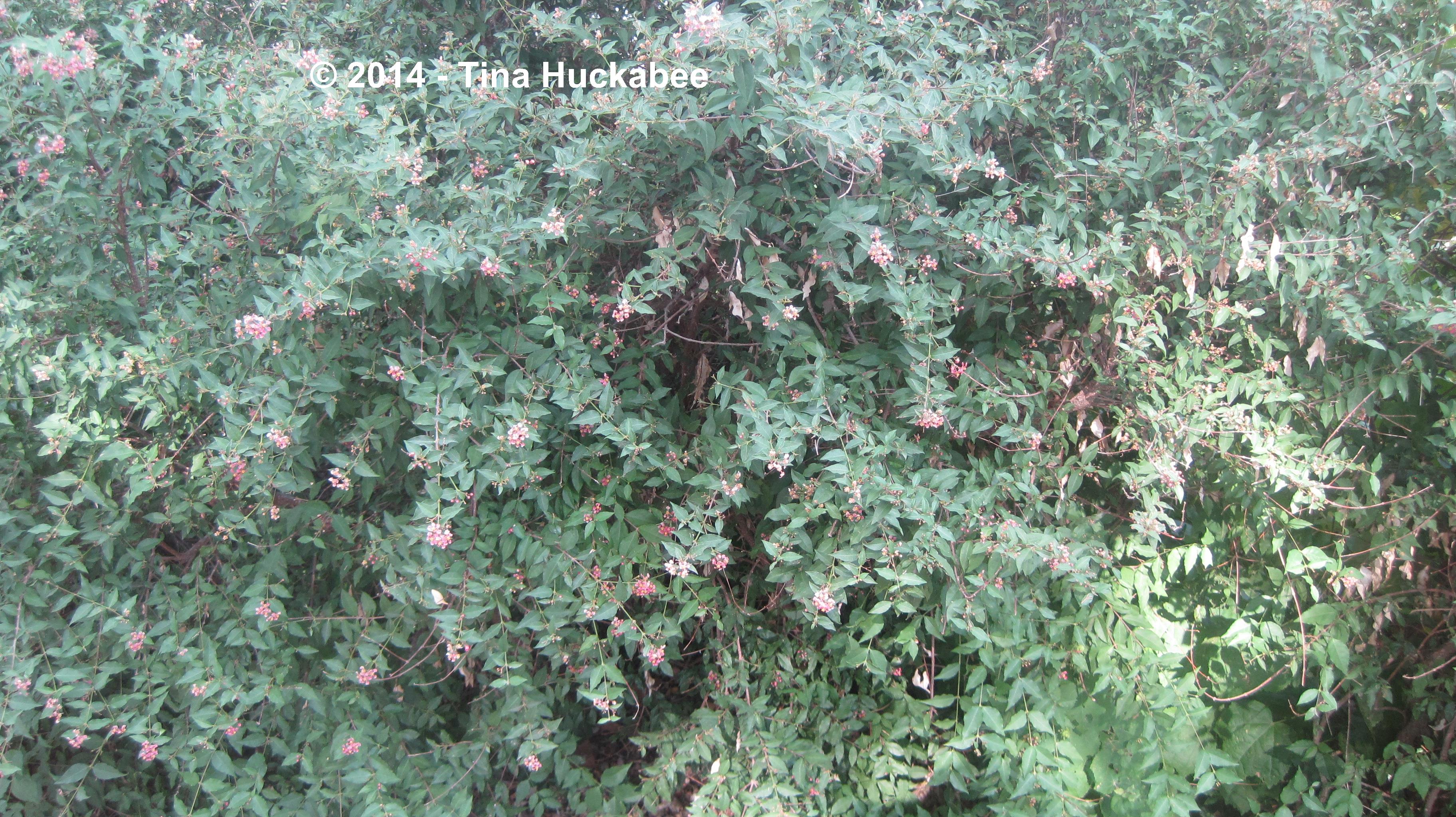
In spring and fall, reliably after rain, the Barbados Cherry will explode with ruffly clusters of pink, dainty flowers.

My experience is that the bloom cycle lasts up to about six weeks, once in the spring/early summer and then again in the fall.

During the bloom cycle, berries like this beauty develop.

Barbados Cherry is especially stunning when there are blooms and berries at the same time which typically occurs during both bloom cycles..
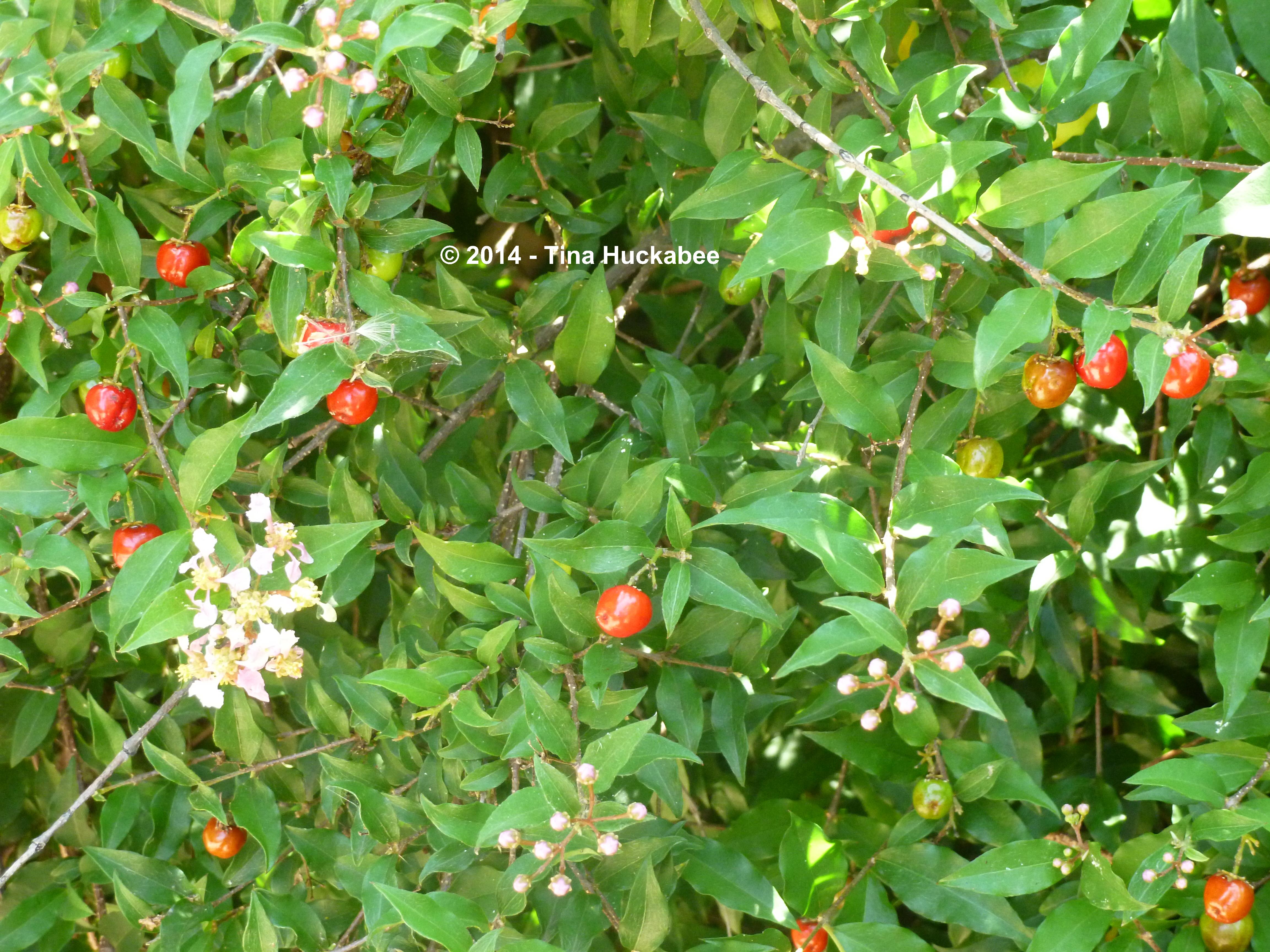

Many birds, but especially mockingbirds, favor the berries. The berries are sweet, though a little seedy for my taste.
Depending upon the winter, Barbados Cherry exhibits differing responses. To about 30 degrees for short periods of time, Barbados Cherry remains evergreen. If temperatures remain in the low 30s for long periods or dip into the 20s, for more than 12-15 hours, some of the upper limbs will defoliate, though in a thick bramble, the rest will likely stay green.
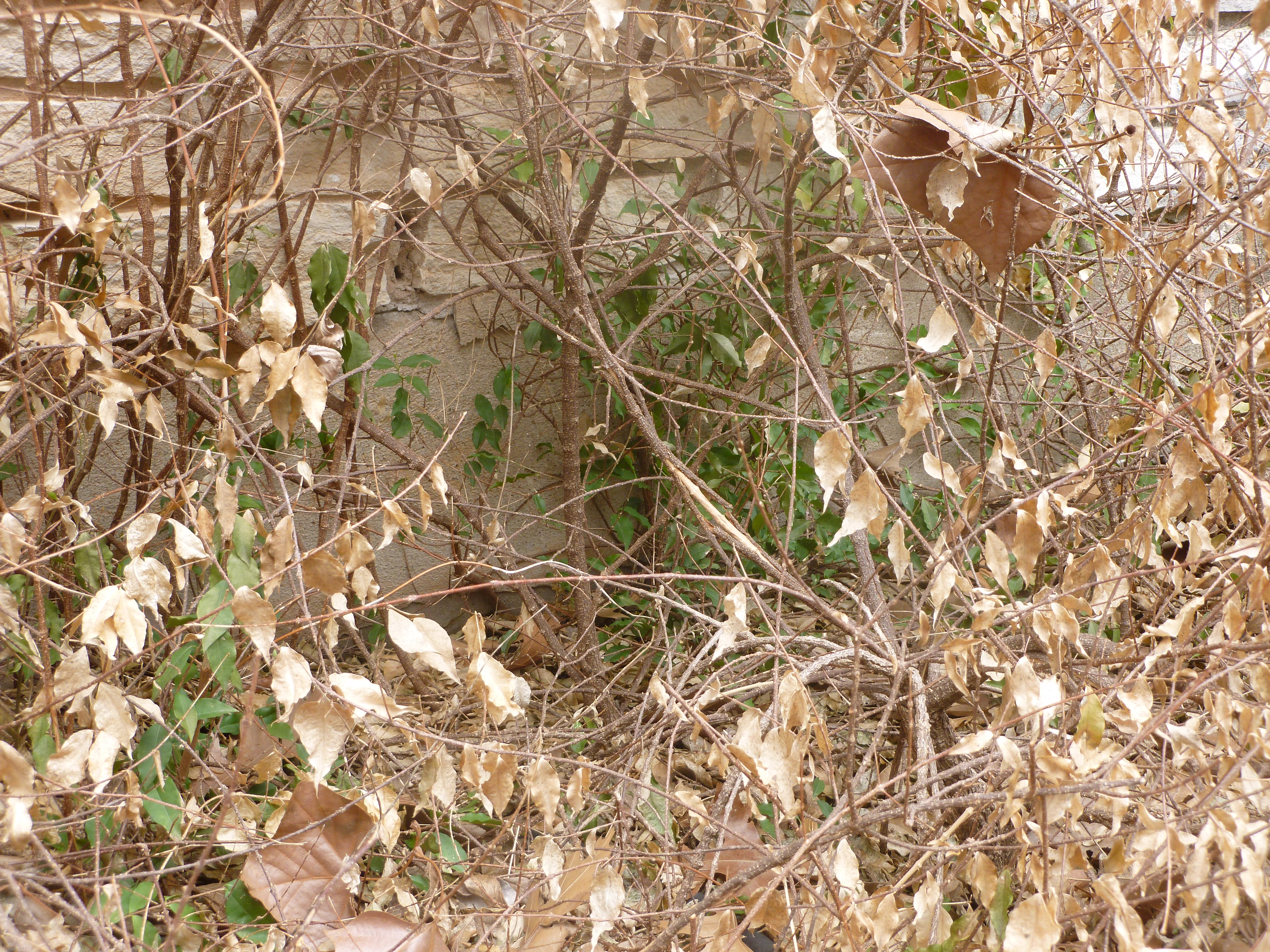
Not much green here, because of the freeze events of the 2013-14 winter. Still, this group (different from the one in the photos above) isn’t completely frozen to the ground because it’s in a protected area. The branches will flush out with new growth once temperatures warm. There’s no need to prune further than where you can scratch the surface to find some green. In this photo, it’s just below the copyright.

Because winter was colder than in the last 2 decades and the original, exposed stand of Barbados Cherry experienced a number of freezes well into the mid 20s, they froze completely to the ground.
I knew they were goners when I saw the trunks of the shrubs.


By early March, I’d cut all of the original stand of Barbados Cherry to the ground.
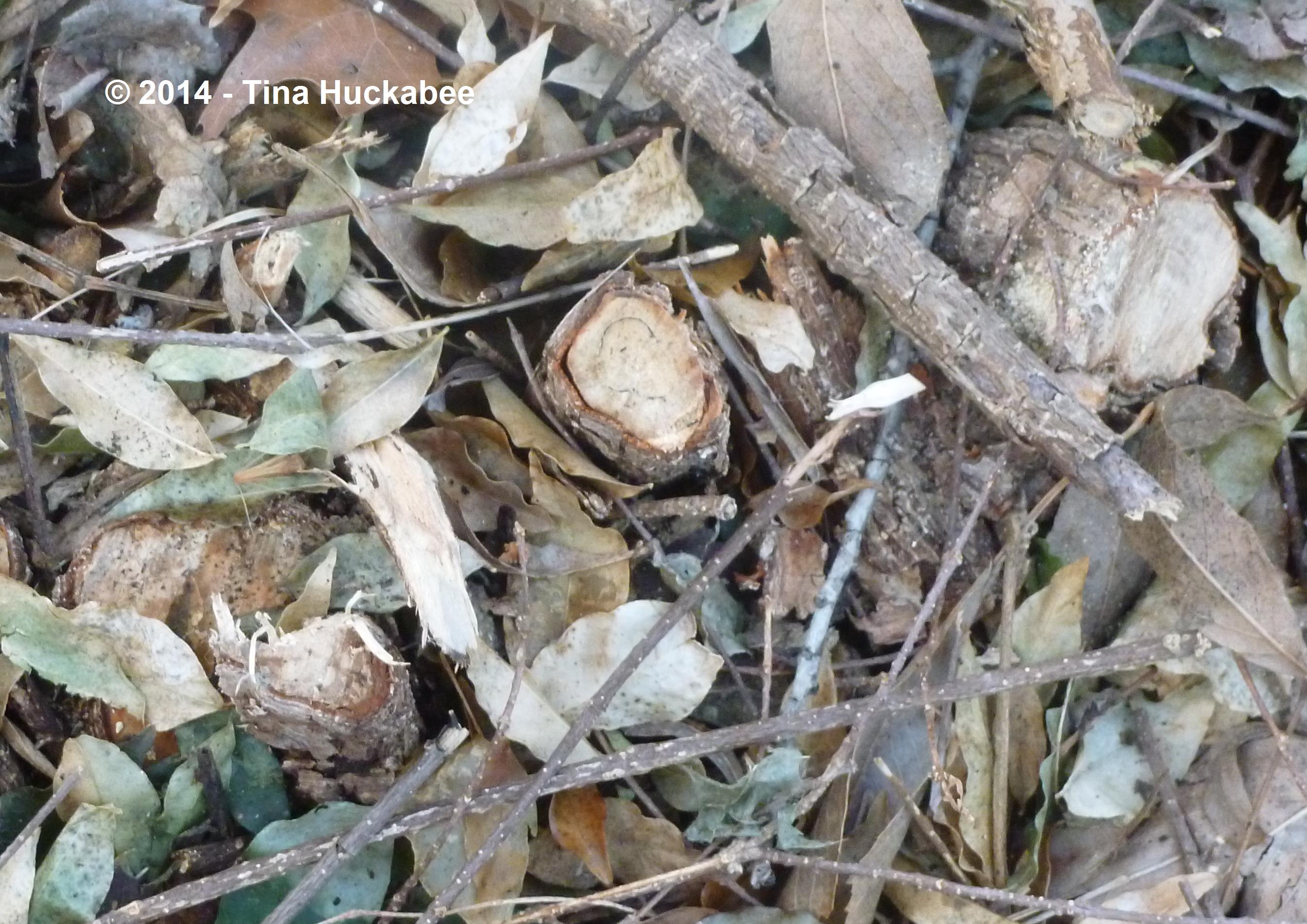
So much for my privacy hedge! Now, to wait until new growth from the roots. Finally, in late March, signs of life!!

As of the end of March 2014, these individual plants are recovering slowly from the hard freezes of this past winter.
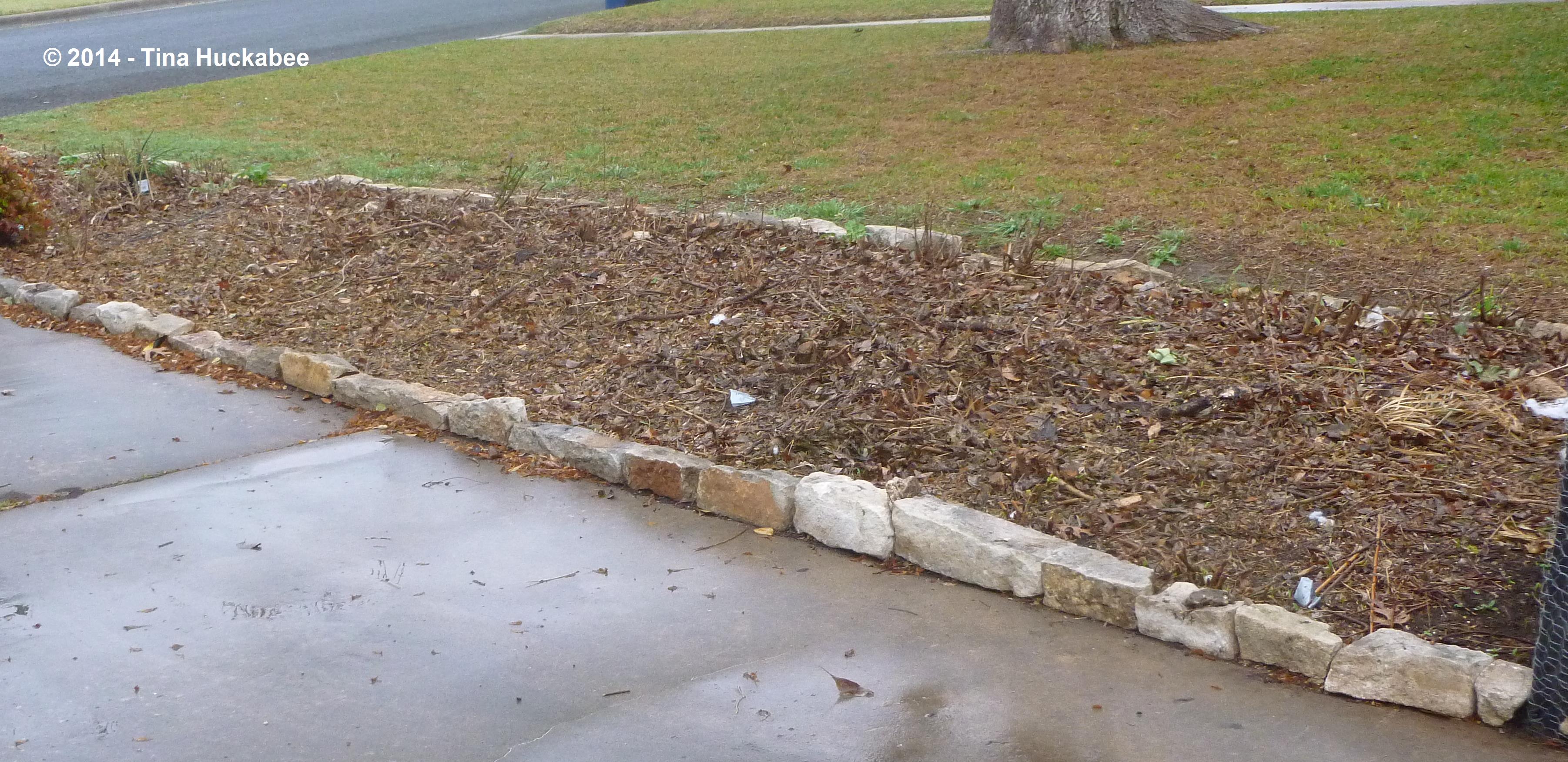
In fact, B. Cherry is at its northern range in Austin. According to the Native Plant Database of the Lady Bird Johnson National Wildflower Center, B. Cherry are native to South Texas, Mexico and into Central and South America. So it is a tropical plant and not reliably evergreen in Austin. I knew that when I planted, but was lulled to complacency by the abnormally mild winters we’ve experienced since the mid-to-late 1990s. As of March 31, 2014 all of the Barbados Cherry are sprouting green from the trunks. I’ll definitely keep them, but because the light requirements have changed for this garden, I am augmenting the garden by planting other native plants and will prune the B. Cherry more regularly. This garden will no longer be a mono-culture hedge, but a more diverse native garden.








 My Gardener Says...