Magical

It’s  been just over 15 months since my last post to this little gardening blog.  I originally planned to blog for a year, then petered out and lost interest.  Mostly I stopped because I was busy with other things.  Many other things.  Fifteen months of “magical thinking,” paraphrasing writer Joan Didion.  Busy with life and the stuff that happens.  So, to the small cadre of readers who followed “My Gardener Says…” , I disappeared.

In that fifteen months, I buried my father-in-law.

I endured a fire in my back garden and fence caused by strong, dry Texas winter winds and errant branches flaming against electric wires and an Austin Fire Department,  who, stretched too thin that evening, arrived late.

20130302_2.new

We were fortunate: no one was hurt and our damage was minimal and fixable.

I developed ligament problems in one foot and then fell and broke the other.

I left a job I enjoyed, but had fulfilled.

I graduated my surviving child from high school, gloried in his summer antics between childhood and the college road to adulthood.

©aaron in a hole

I became an Empty Nester when I moved him across the country to begin his new life.

I witnessed more water move through our property during the Halloween Flood of 2013 than anytime in our 28 years here.  The next day I saw that our dining room ceiling sustained water damage.

P1020572.new

After investigation, we realized that  four juvenile raccoons, who had briefly moved into the space between the solar panels and roof weeks before the flood, had eaten through the shingles on the roof. The heavy rain poured through the newly made raccoon hole and into the attic.  Although slowed by attic insulation, the water leaked through the ceiling.   Our damage was nothing compared to folks who live in far southeast Austin, but still, who knew that raccoons would eat shingles on a roof?  Turns out, raccoons are expensive visitors.

I ended 2013 with a diagnosis of an  invasive form of skin cancer.  Happy 2014 to me.  Nothing too bad. Nothing that a little surgery won’t fix. Just call me Scarface.  Gardeners: wear your hats and sunscreen.

Oh yeah and I adopted a new kitten.

P1020554.new

And I got a new dryer. Whoop!

P1020577.new

In all of that and the other life stuff that happened, I gardened.

I  redesigned and replanted  the fire damaged garden.

P1020548.new

I started to build (and haven’t finished) a Green Tower, for vertical veggie/herb planting.

P1020574.new

I figured out two new places for blackberry vines (so I can grow enough blackberries to bake cobbler and pie and still have plenty to eat  from the vine).

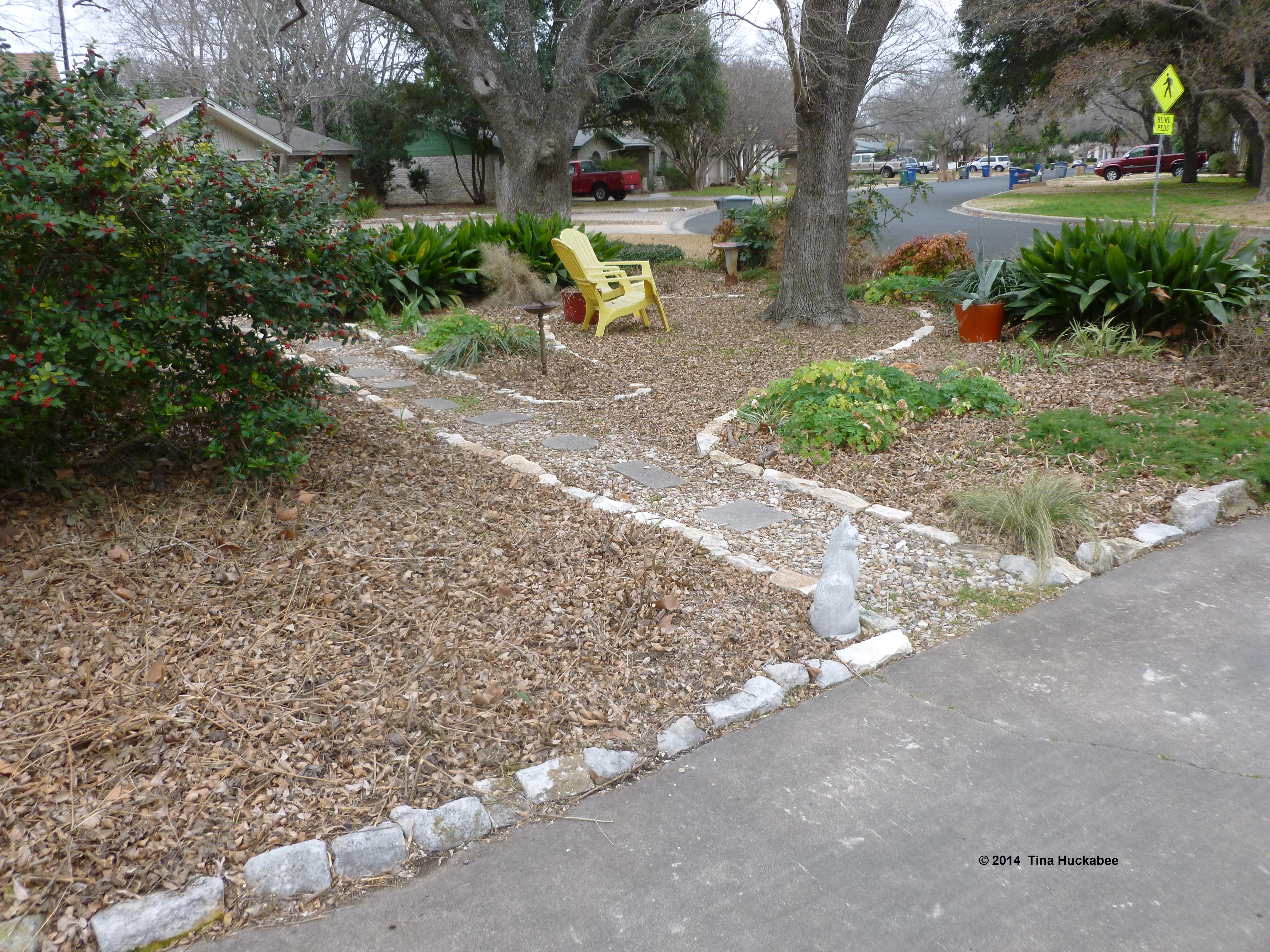
I began a new perennial garden space, with an accompanying walkway in what was formerly a storage area.

P1020571.new

It’s not finished yet.

I tweaked established gardens, always wondering: “why didn’t I think of that before??”

This winter has been a good winter for us: blasts of Arctic air, mingled with balmy days.    Plants, abnormally evergreen for most winters of the past decade or two, are dormant now, behaving like the herbaceous perennials they are. I’ve pruned more this year than in a long time and that feels good.

Minimalist gardens.

P1020567.newP1020566.new

Going forward, I plan to chronicle my garden adventures more regularly. It’s a new year.

Magical life.

P1020555.new

Native Texas Plant Week and Foliage Follow-Up–October 2012

Joining Pam at Digging for Foliage Follow-Up and celebrating Native Texas Plant Week, I’ll focus on some of the lovely Texas plants currently wowing with interesting foliage in my garden.

Or, as in the case of the Big Muhly (Muhlenbergia lindheimeri), showing off its slender foliage and its magnificent inflorescence.  Fall has arrived with the plumes of native grasses entering their full glory.  Sigh.  So beautiful.

This Silver Ponyfoot (Dichondra argentea) augments the brighter green and blooming perennials around it.

Its creeping habit is graceful as it spills over edges and rocks.

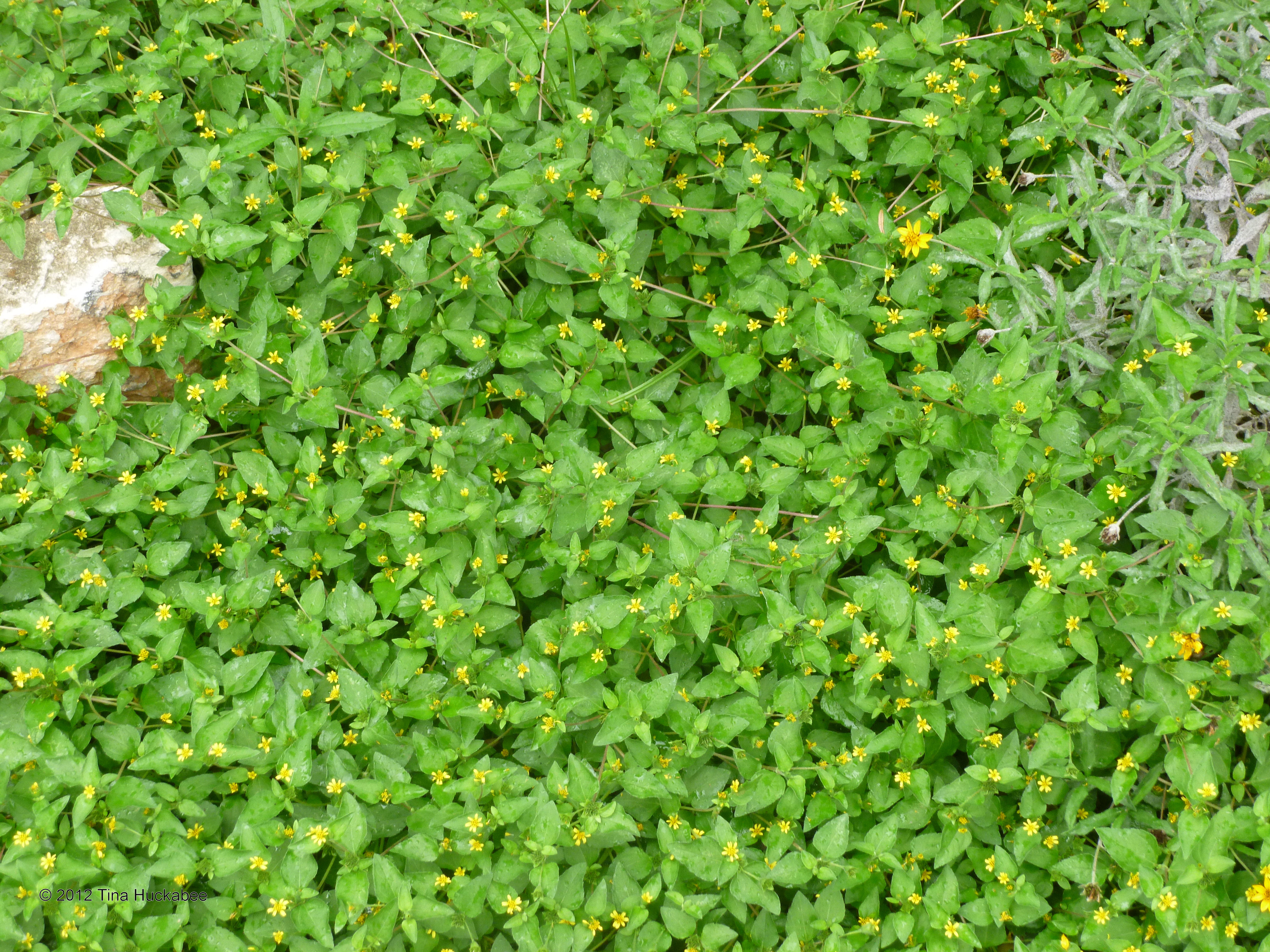
Most people in Texas would consider this plant, Horseherb (Calyptocarpus vialis),

an obnoxious weed.  I’ve found many of these hardy, drought tolerant plants insinuating themselves in cracks between stepping-stones or at the base of raised beds.  I had so many individual mats that I decided to plant as many as possible in a sitting area that was once grass, but has been a mulched area for about ten years.

I planted the left side after some heavy rains last May and the right side, after rains  during the summer. The Horseherb has filled in remarkably well.  Scarily so. I hope I don’t regret have this tough plant so close to a more formal garden.  I’ll need to keep it tidy with a line trimmer, but the area is almost completely shaded, so it won’t need extra water and Horseherb can handle moderate foot traffic.

Inland Sea Oats (Chasmanthium latifolium) is sporting its tawny seeds for fall.

Although the pretty yellow blooms of the Lindheimer’s Senna (Senna lindheimeriana) are all but gone and the seeds are ripening for the birds, I still love the beautiful soft grey-green foliage of this native perennial.

Lindheimer’s Senna is especially nice paired with the bright green, more tropical looking leaves of the ‘Esparanza’ Yellow Bells (Tacoma stans).

The always elegant Mexican Feathergrass  (Nasella tenuissima), softens gardens with its thread-like shimmery green to golden brown leaves.

Years ago, someone shared their White Yarrow (Achillea millefolium) with me.  Yarrow is a favorite of mine because of its beauty and durability.  Best in shade, it grows well in even the driest of summers; its blooms are long-lasting.  By this time of year, I’ve pruned the flower stalks, but the leaves remain lush.

This Retama is about seven years old.  It’s grown tall and has yellow flowers all summer.  The bloom cycle is toward its end, but the delicate, feathery leaves are fetching.

Be STILL my beating heart!  I love Gulf Muhly (Muhlenbergia capillaris).

I love it!  Although my little Muhly is no rival for some of the beauties of this species that I see around Austin, I’m still thrilled that I have some plumage.  Someday, little Muhly, someday!

Glory in both blooms and foliage! And if you live in Texas, happy Native Plants Week!  Wherever you live, try native plants for your garden. For more information about North American native plants, check out the Lady Bird Johnson Wildflower Center site.

Native Texas Plant Week and Garden Bloggers’ Bloom Day–October 2012

For Garden Bloggers’ Bloom Day and in celebration of Texas Native Plants week, I’m posting some pics of a few currently flowering beautiful native plants in my garden.  Thanks to Carol at May Dreams Gardens for hosting–check out her site to enjoy photos of blooms from many places.

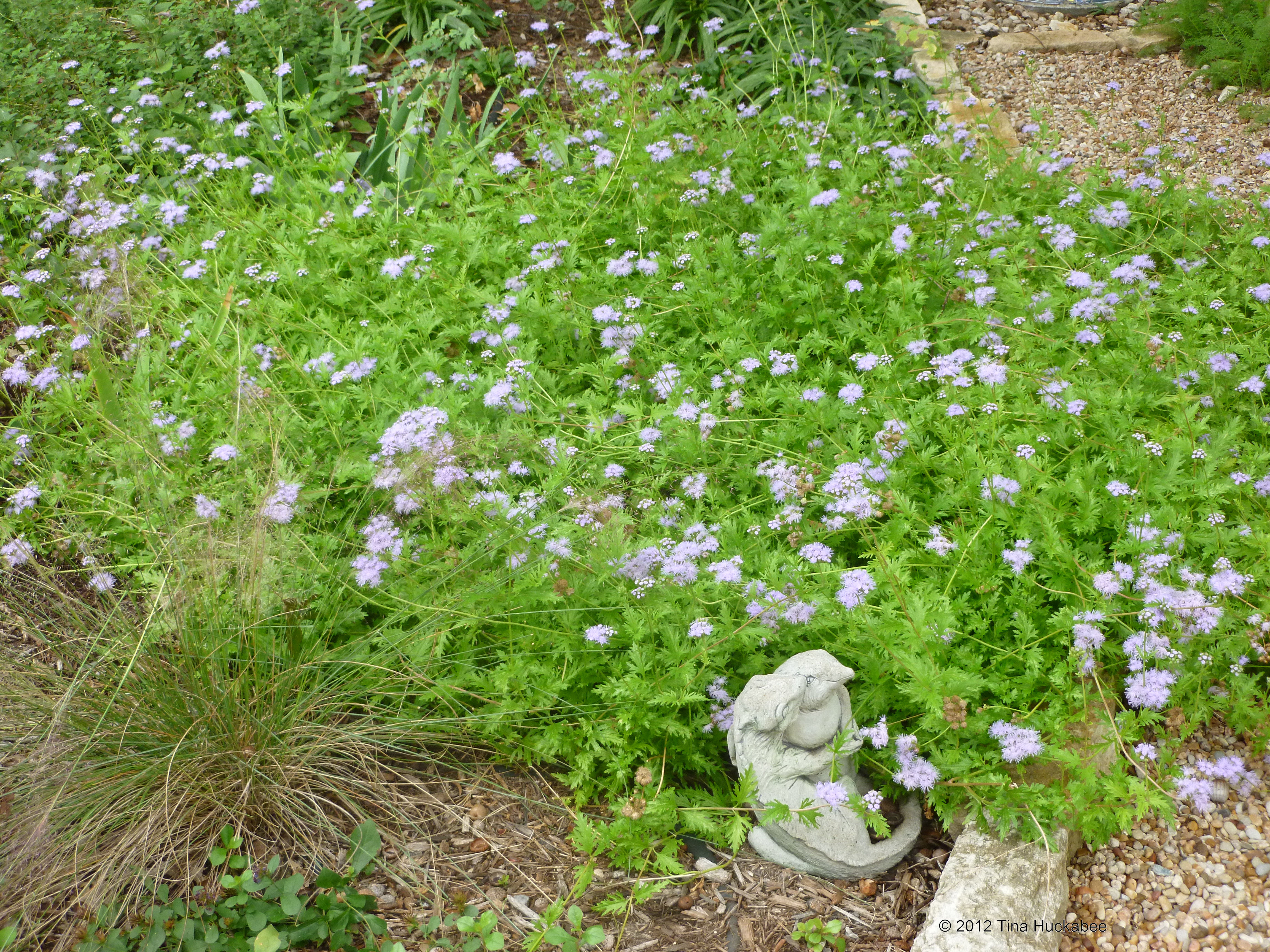
One overview look at a group of Gregg’s Mistflower (Conoclinium greggii),

and a close up of this great native perennial ground cover.  The Gregg’s Mistflower is native to Texas, New Mexico and Arizona.

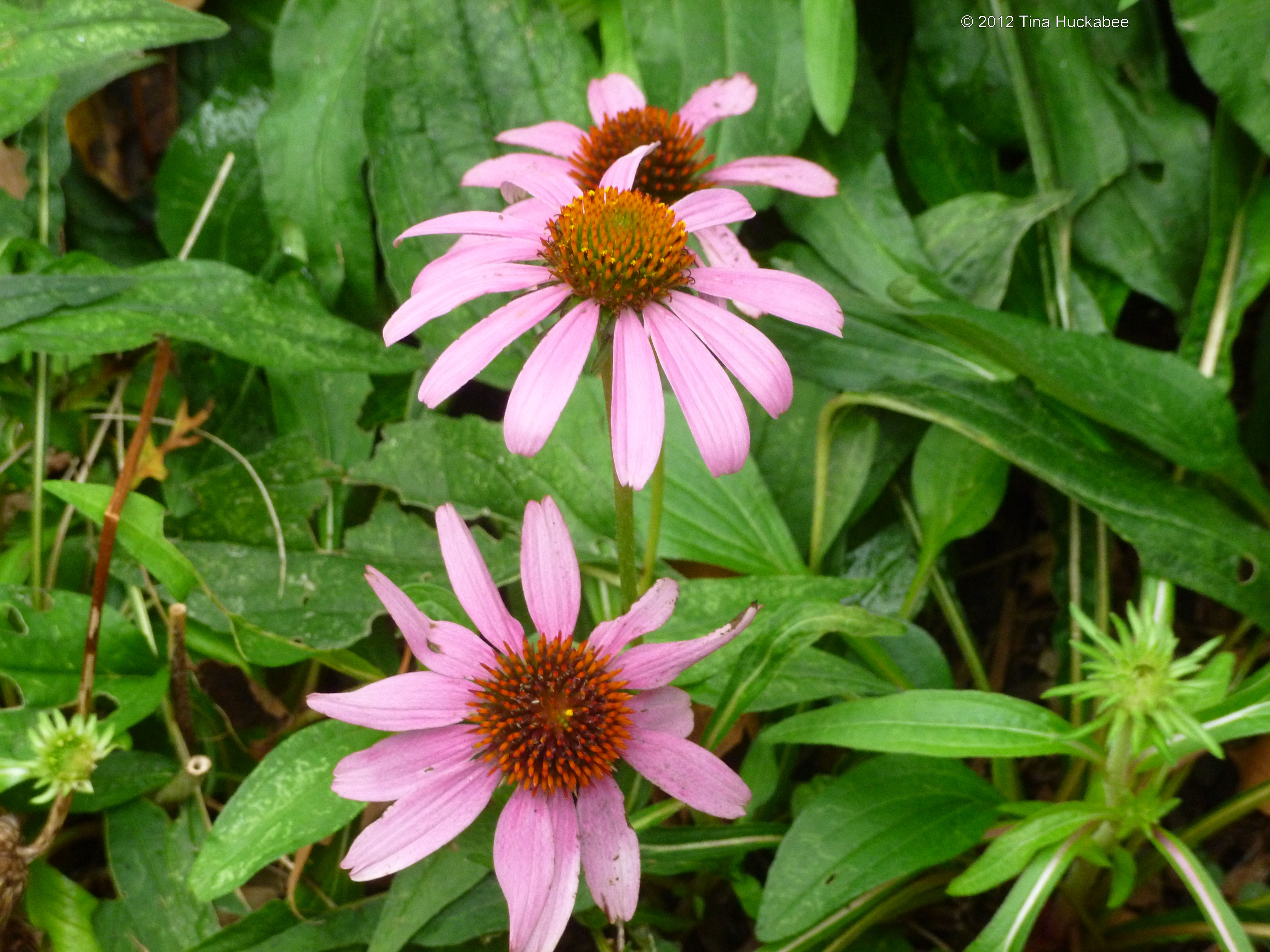
The Purple Coneflower (Echinacea purpurea), is always a winner in my gardens.  Its main bloom period is spring through mid-summer, but I always have some blooms in the fall until a hard freeze ends the glory.

A larger view of another perennial, Blue Mistflower (Conoclinium coelestinum),

and its closeup.

The two mistflower species are related, but they are a little different. It’s difficult to tell from my limited photographic abilities, but the Gregg’s Mistflower is a lighter blue, while the Blue Mistflower is much darker.  Also, the leaf characteristics are different in the two plants.  Both are perennial ground covers with the main blooming period occurring from September through November.  Both are also favorites of the butterflies and bees.

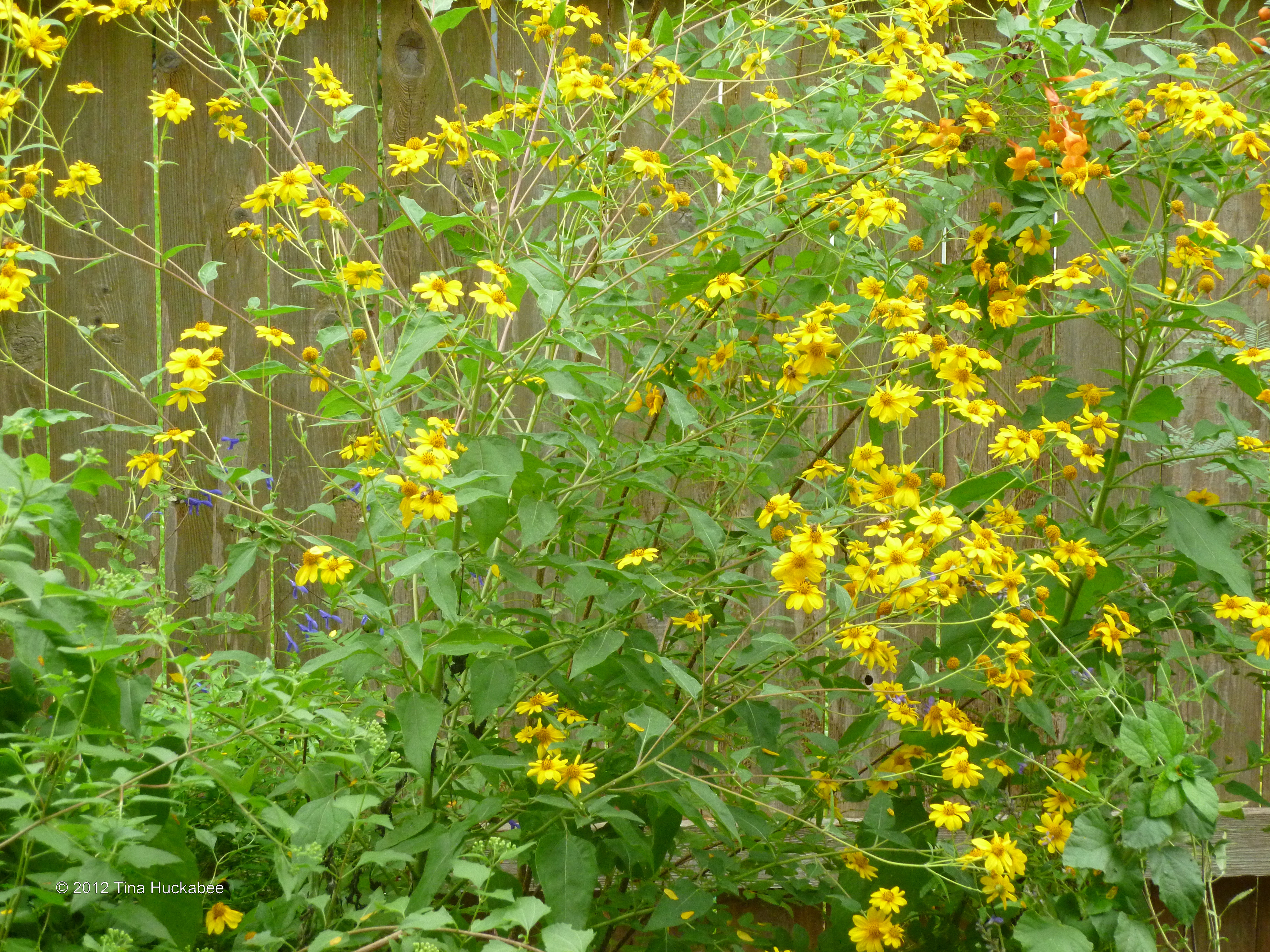
The Goldeneye (Viguiera dentata) brightens the roadsides and my gardens in October.

At its peak of beauty now, Goldeneye blooms in the spring and sporadically in the summer months and is an excellent wildlife plant.  It provides for pollinators and birds, alike and it’s pretty for people to enjoy too!

Fall Aster (Symphyotrichum oblongifolium) is a relatively new addition for me.

I’m glad I have a place for this hardy and sweet little aster.

A nice combination of plants:

From left to right in the photo above are Mealy Blue Sage (Salvia farinacea), some overhanging blooms from a Red Yucca (Herperaloe parviflora), at the back, some Turk’s Cap (Malvaviscus arboreus var. drummondii), a Pale Leaf Yucca (Yucca pallida), the yellow daisy, Zexmenia (Wedelia texana) and Red Autumn Sage (Salvia greggii).

Another nice mingling of native perennials:

more Coneflower, more Turk’s Cap, more Goldeneye.

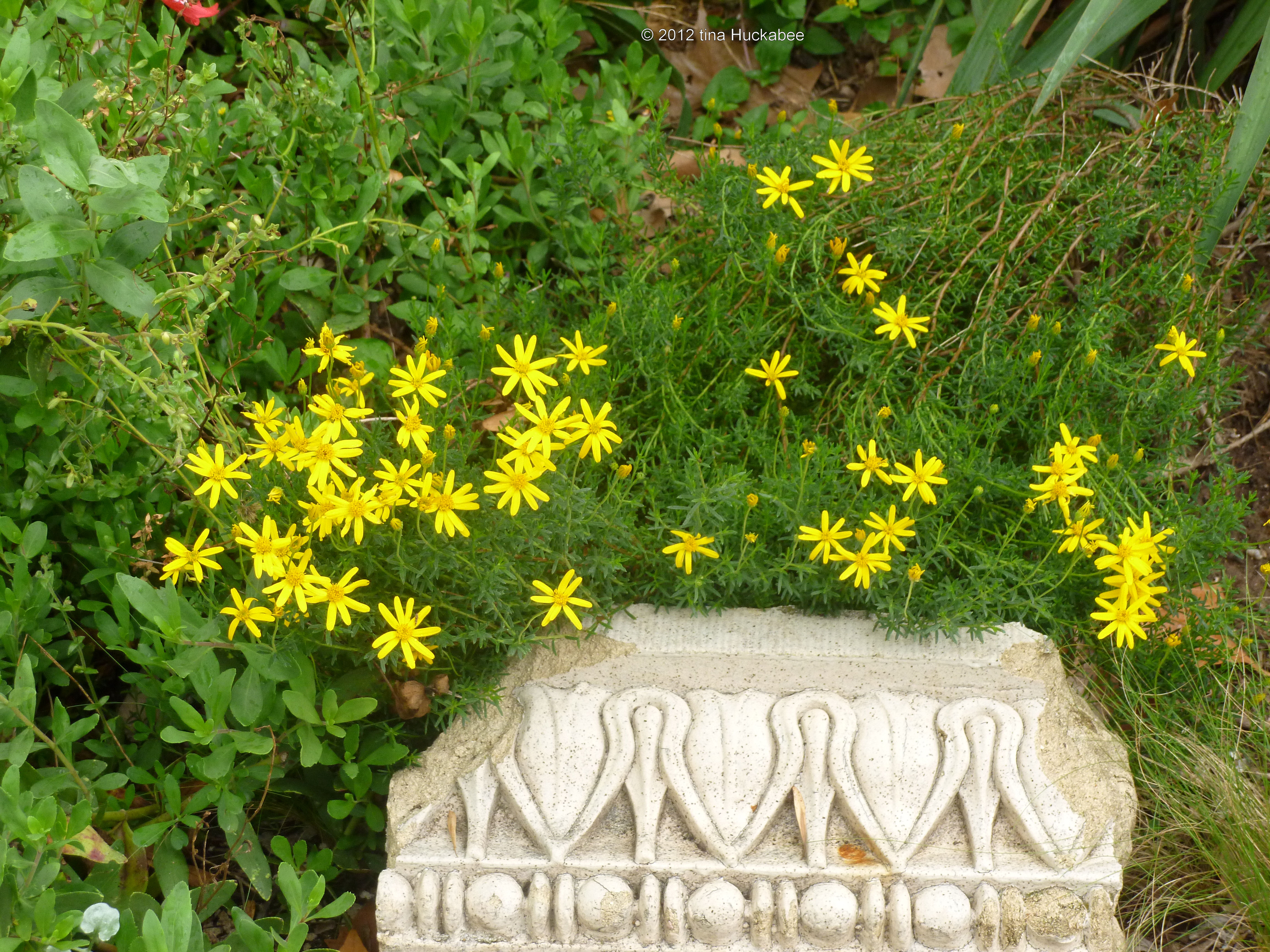
The Damianita (Chrysactinia mexicana) is a plant with shocking yellow flowers paired with striking dark, green foliage.

Damianita blooms on and off for the growing season and is native to Central/West Texas and New Mexico.

Texas native plants fit well within the palette of a large mixed perennial garden.

Natives that are blooming are White Autumn Sage (Salvia greggii), Henry Duelberg Sage (Salvia farinacea, ‘Henry Duelberg’), Yellow Bells (Tacoma stans), Big Muhly (Muhlenbergia lindheimeri).

Wherever you live, plant natives in your gardens.  They’re easy, hardy and reliable and attract wildlife to your gardens.

For more information about native plants of North America, check out the Lady Bird Johnson Wildflower Center site.

Go natives!  Go garden bloggers!