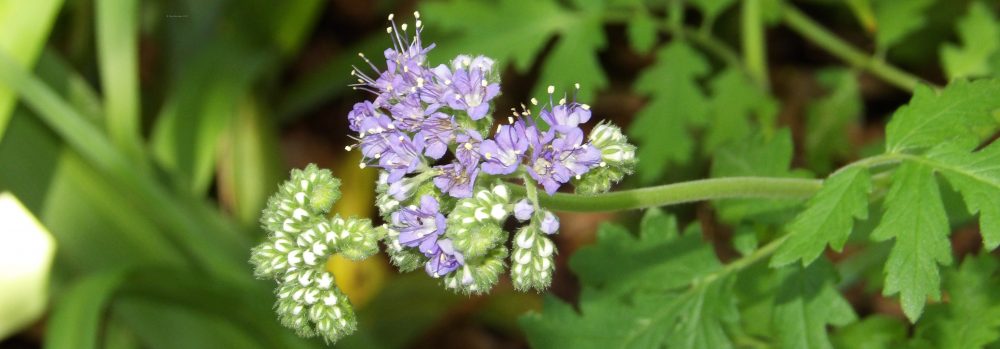
Dancing fairies?
Or shooting stars?

Neighbors have described the columbines in my gardens in both ways. Me? I think they’re simply beautiful and I anticipate and appreciate the showy and unusual blooms. Harbingers of spring, the Columbines I grow and which are commonly available in nurseries and which are native to Texas are the Golden or Yellow Columbine, Aquilegia chrysantha, and Aquilegia chrysantha var. hinckleyana,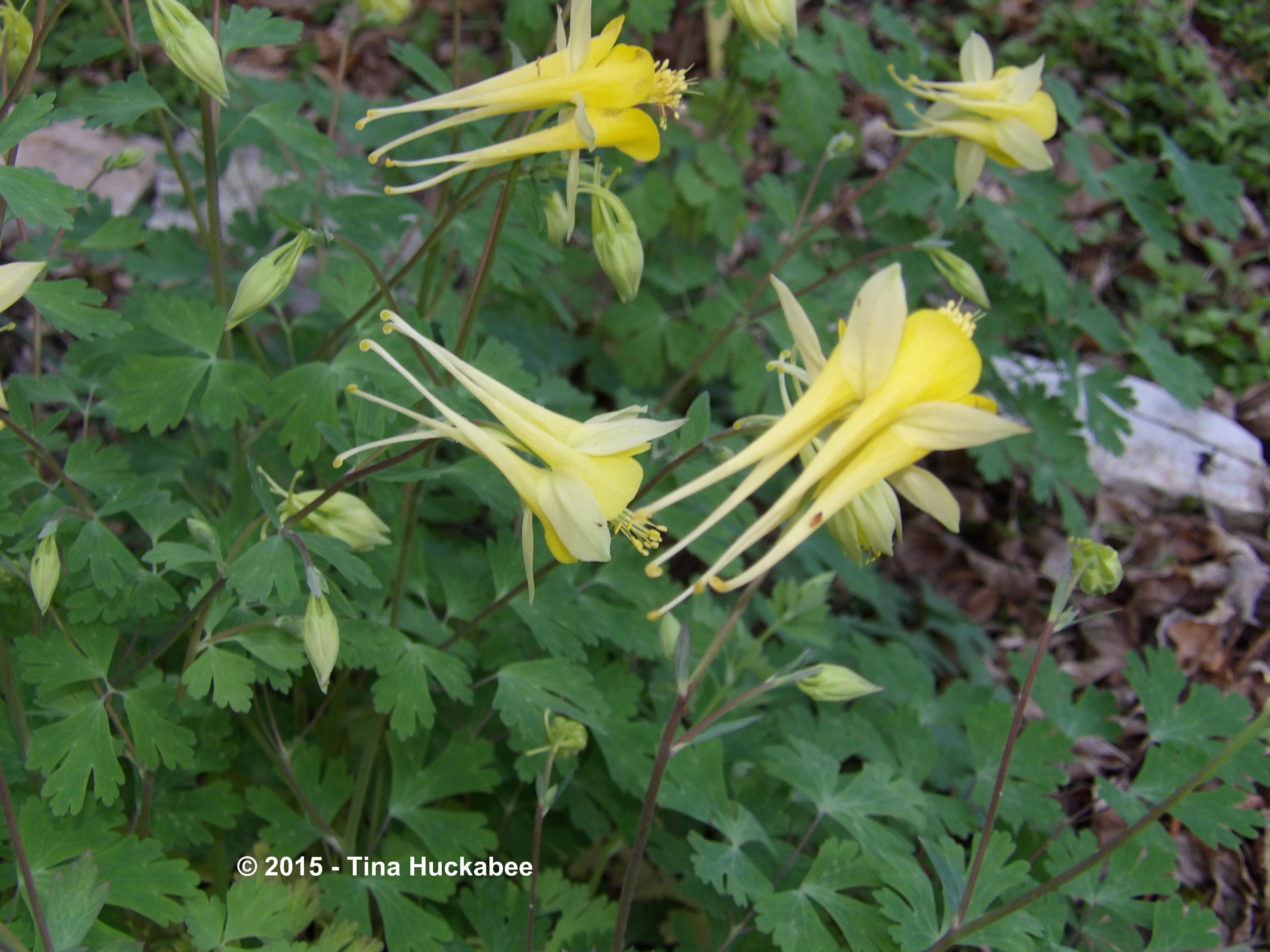
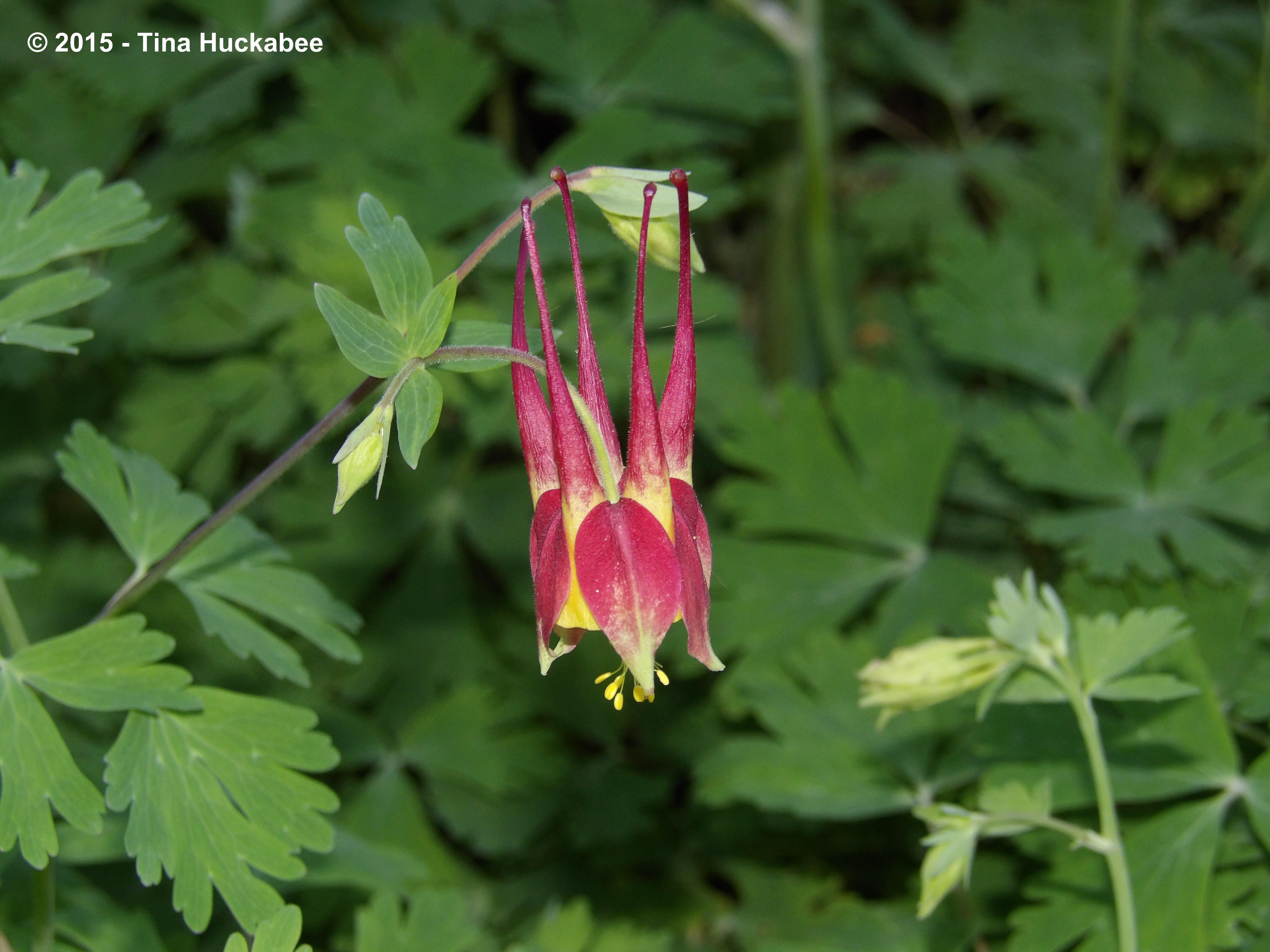
…and the smaller, grayer-leafed, Wild Red Columbine, Aquilegia canadensis.
There are actually a number of Columbine species native to Texas and you can access that information by going to the Lady Bird Johnson Wildflower Center’s plant database on Aquilegia; the database also links to information on plants of the Aquilegia genus throughout North America. This “A Seasonal Look” installment profiles my experiences with the yellow and the Wild Red columbines, both of which I purchased years ago. I actually don’t remember which of the yellow that I bought, but what grows now are likely descendants of Yellow/Golden or Hinckley’s columbine cultivars, which comprise the bulk of Columbines sold in Texas. Like many wildflowers, Columbines readily hybridize and I imagine the nursery trade has tweaked Columbine production so that the more successful yellows are produced. Over the years, the two variants (yellow and red) in my gardens have hybridized to form new combinations of red/yellow that now happily inhabit my gardens.
 For clarity, hybridize is cross breeding between two things, like plants, and cultivar is a hybrid created by selective breeding. Hybridization occurs naturally and is common in wildflowers and the nursery trade routinely cultivates plants for sale.
Columbines, Aquilegia, are generally cool season plants. There are many kinds of Columbines and even in Texas, nurseries will sell the exotic blue, purple, deep pink and red varieties, but those serve as annuals because of our blisteringly hot summers. What will survive are the natives and their hybrid/cultivars varieties–they are year-round perennials, though as a general rule, not long-lived perennials.

Here in Central Texas, the blooming begins in early March.

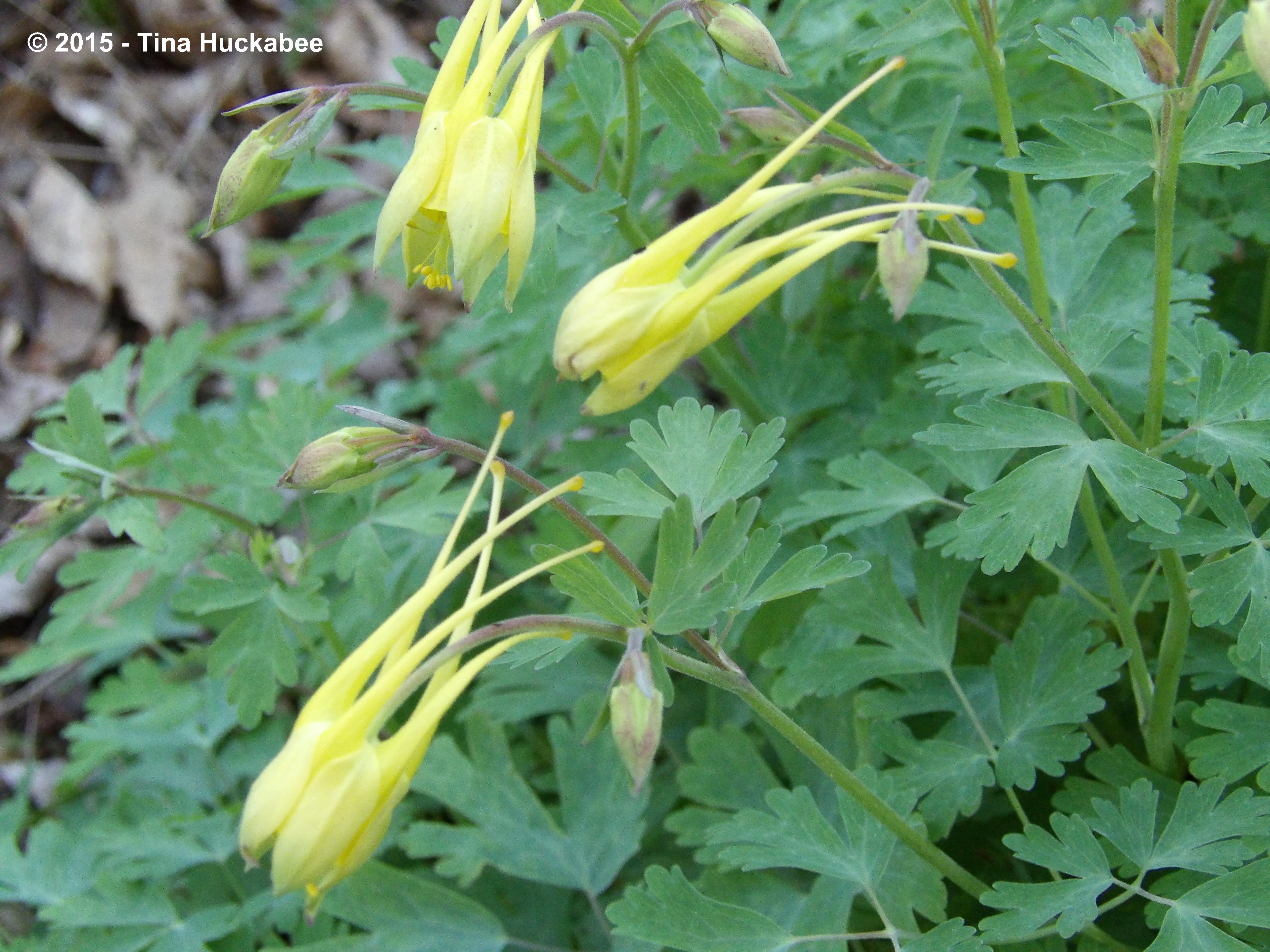
Columbines are not phased by late season freezes; I’ve witnessed ice on Columbines one day and open blooms a day or two later. The prime blooming period is March through May, but can extend into June, depending on the onset of summer heat and the amount of rainfall. In hot/dry years, Columbines peak in early April and are done by mid-May. In more normal years, with rainfall and extended spring temperatures, they bloom and set seed into the summer months. In my gardens, Columbines usually live 5 years or less, though I have a couple that are older than that.
In spring, Columbines reach the pinnacle of their beauty.


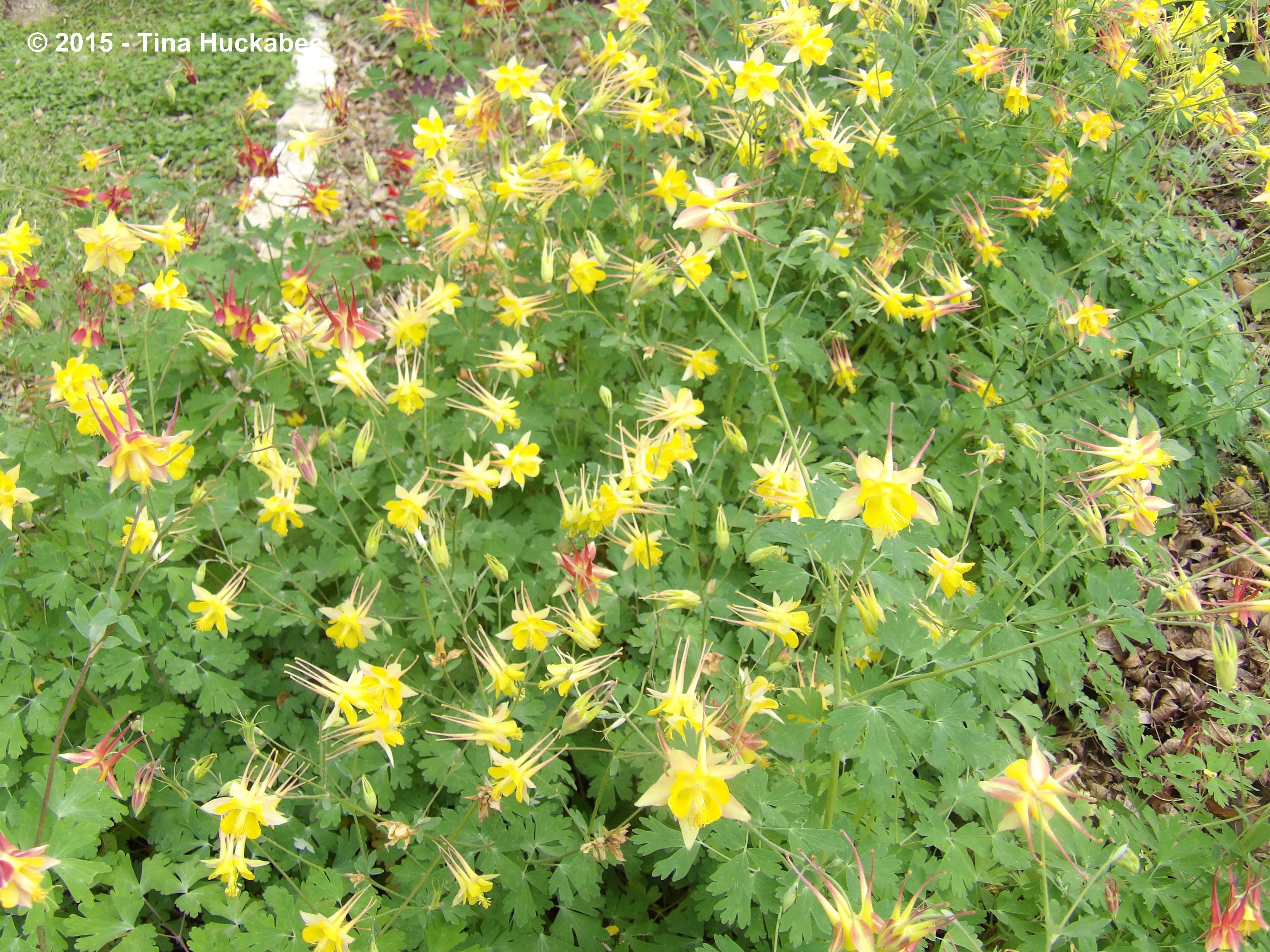
This one is a “Hinckley’s” Columbine,

..as are these beauties.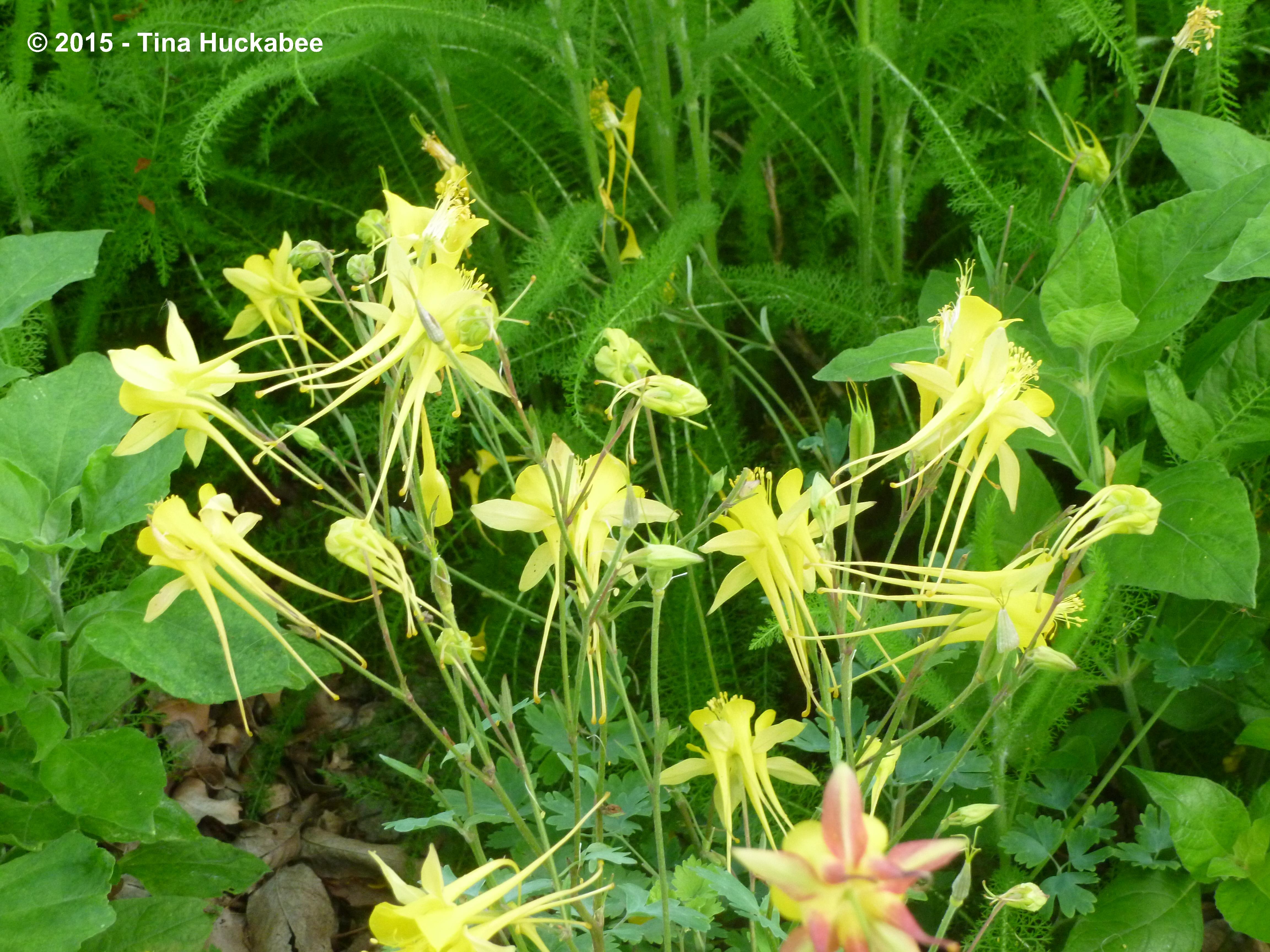
A few years back I wanted to add another yellow and purchased it from a reliable local nursery, to ensure continuation of the pure yellow in my gardens.
This one is A. canadensis–Wild Red Columbine.

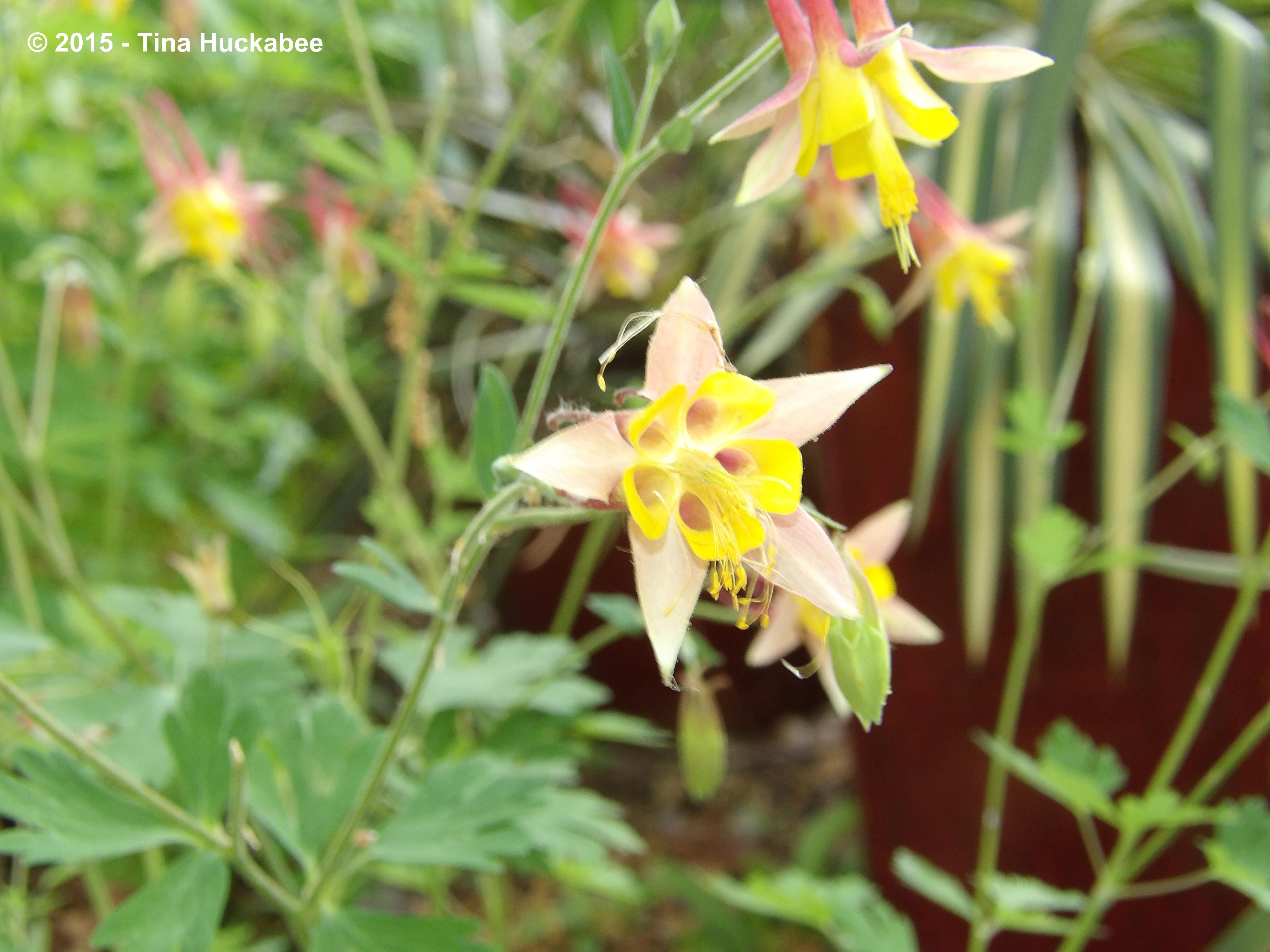
I adore the natural hybrids that have developed in my gardens which are produced from the co-mingling between A. chrysantha and the A. canadensis. Thanks pollinators! The petals on these hybrids are usually yellow with blushes of red to pink on the sepals and the spurs.


The flowers are pollinated by bees, butterflies, and moths and I’ve seen hummingbirds visit mine.The nectar spurs are a characteristic feature of all Columbine species.The long nectar spurs evolved to meet the needs of pollinators like hummingbirds and hawkmoths and probably little bees like this one, too.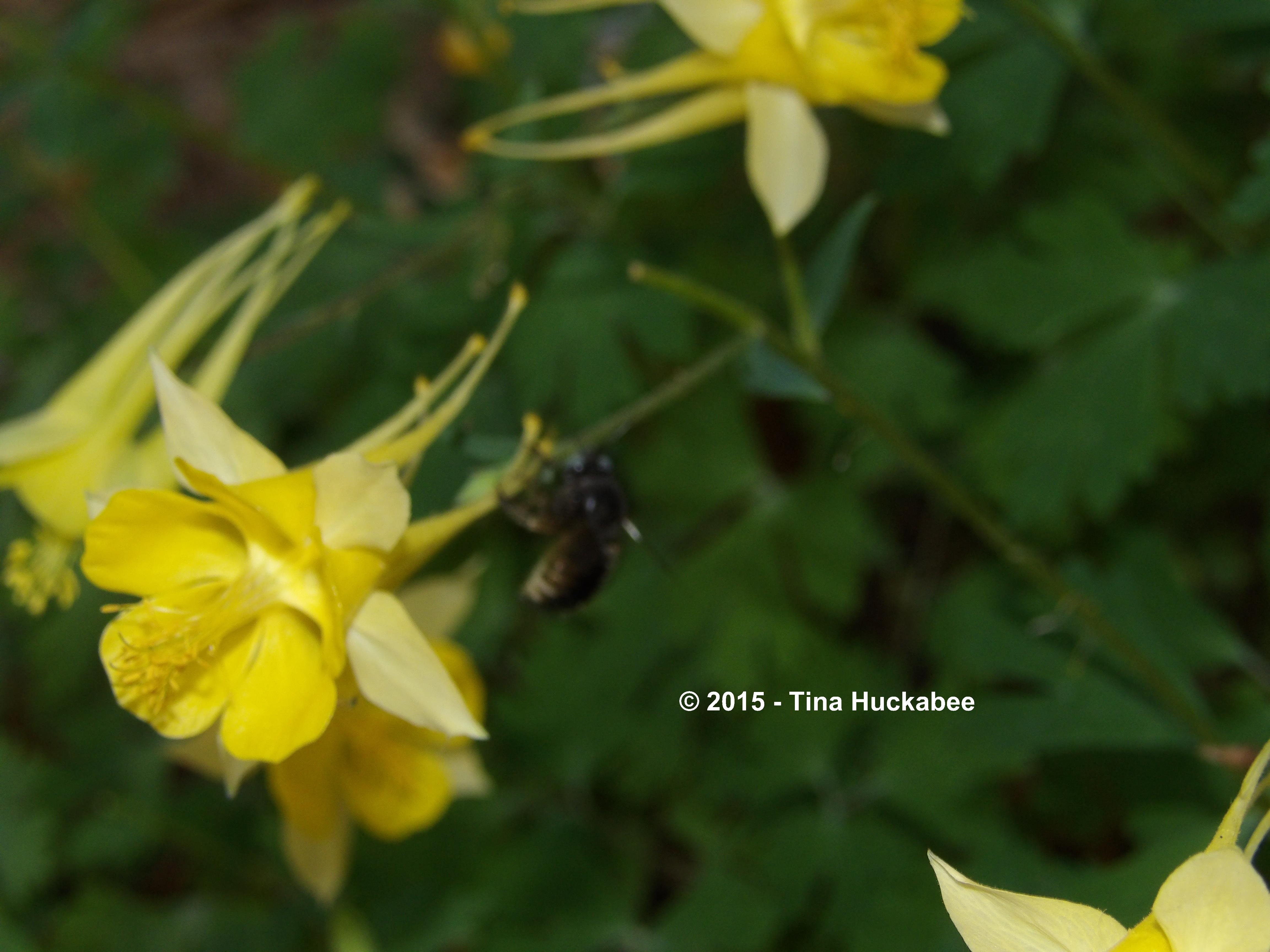
Several Texas Columbine species are the host plant for the Columbine Duskywing, Erynnis lucilius.
During the blooming bonanza, I deadhead my Columbines to prolong their flowering. I prune back the seedheads,
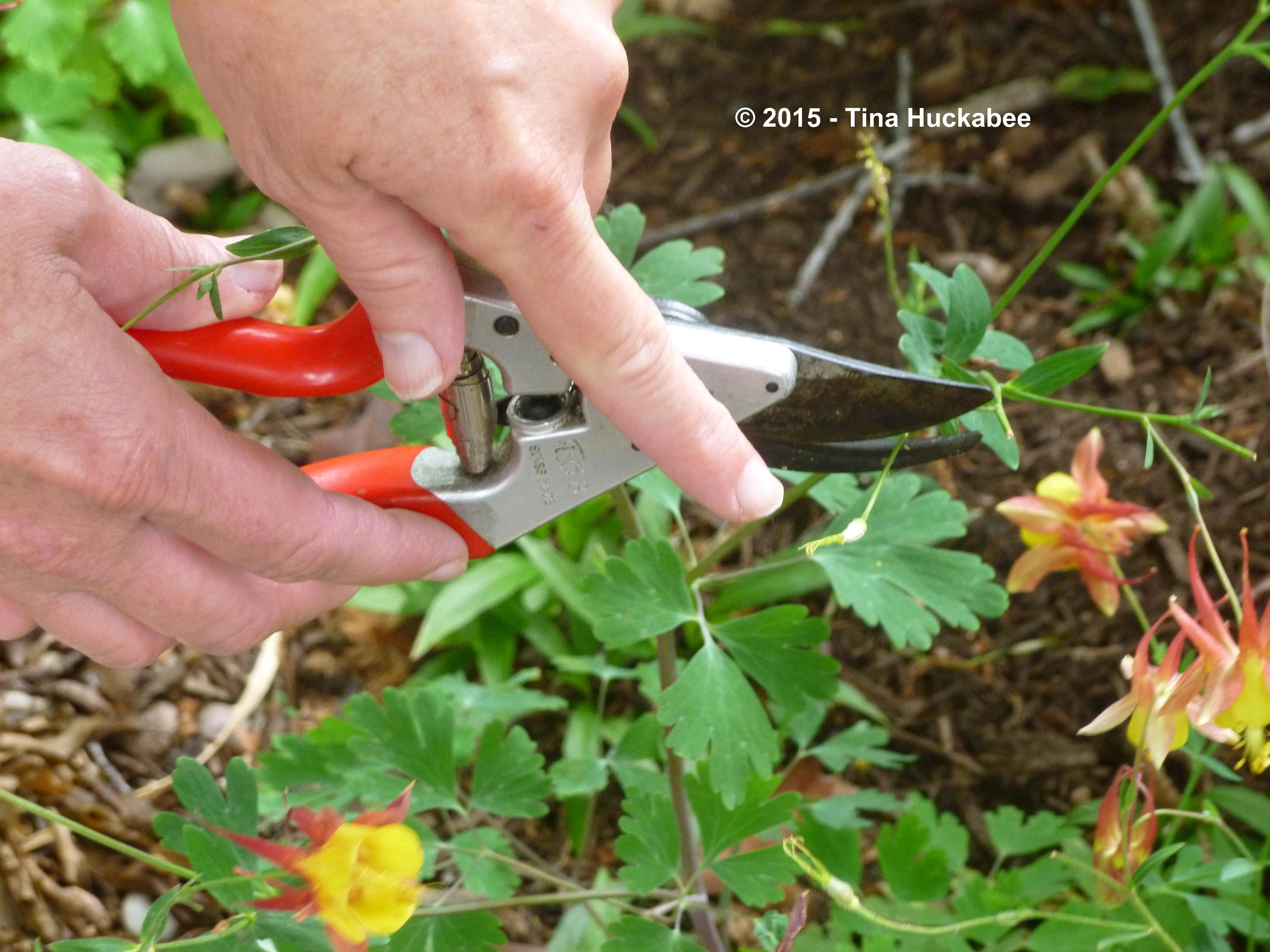

…as they appear.

As the spring Columbine show progresses, I also let some seeds develop to ensure replacement plants. Columbine seeds are black and tiny.

I pick off the mature pods and sprinkle the seeds in the garden for future germination. I’m not at all scientific about my process–as I’ve stated, I love surprise combinations, and with soil contact, moisture, and future chilly winter conditions, the seeds will eventually create replacements for the mother plants. I’m very happy to accept whatever nature provides: more of the pure yellow,
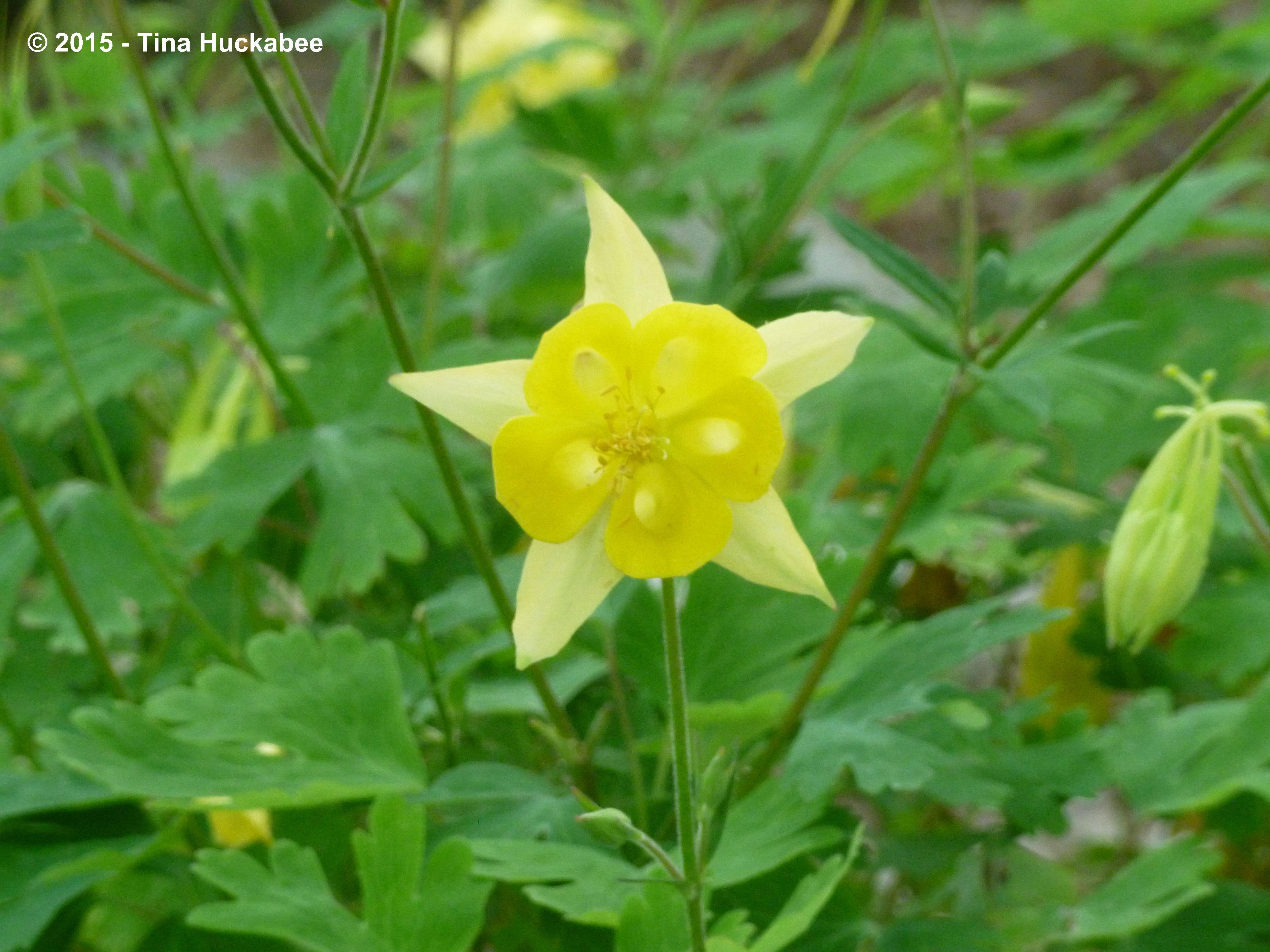

…or the smaller red/yellow,
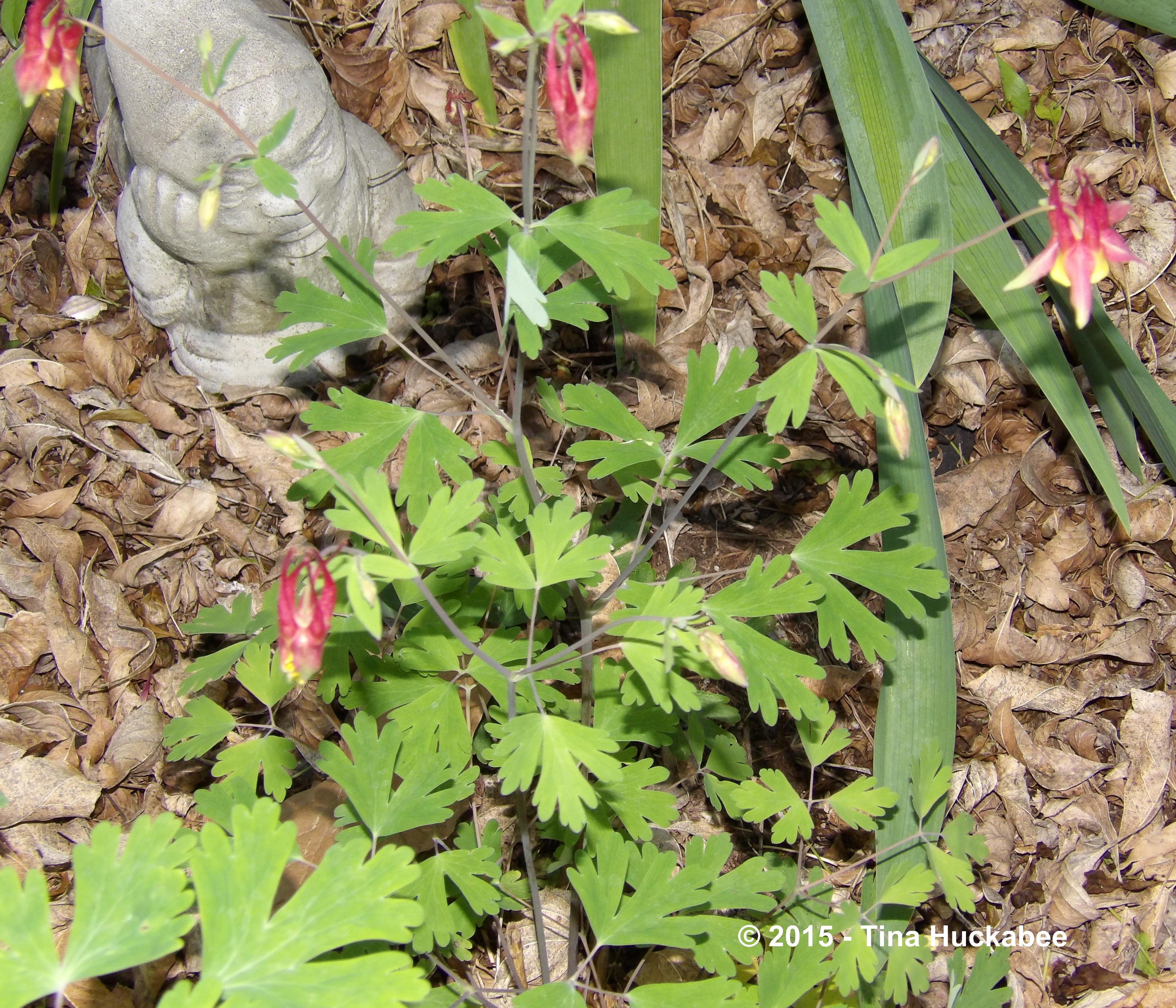 …or the blend of both.
Usually there are so many seedheads, that it’s quite a chore for me to keep up with deadheading and I have only so much patience and time for that. By early May, I’m ready to let them all seed out, at will. The mother plants begin looking leggy,


…with blooms and seed pods atop the slender stalks, lush foliage anchoring below. Even with conscientious deadheading, Columbines will cease blooming with the onslaught of summer’s heat, usually sometime in June. They begin looking a worn–and so would you, if you’d been non-stop, dead-drop gorgeous for months!

Summer is the time for Texas Columbines to rest. Columbines are at their tallest and fullest during spring–individual plants grow as much as 3 feet tall and 2 feet wide, including flower stalks. But as summer wears on and the bloom stalks dry and are pruned, the Columbines will shrink in size and more than likely, experience some foliage die-back. During the summer months, wilted and discolored foliage is not unusual.
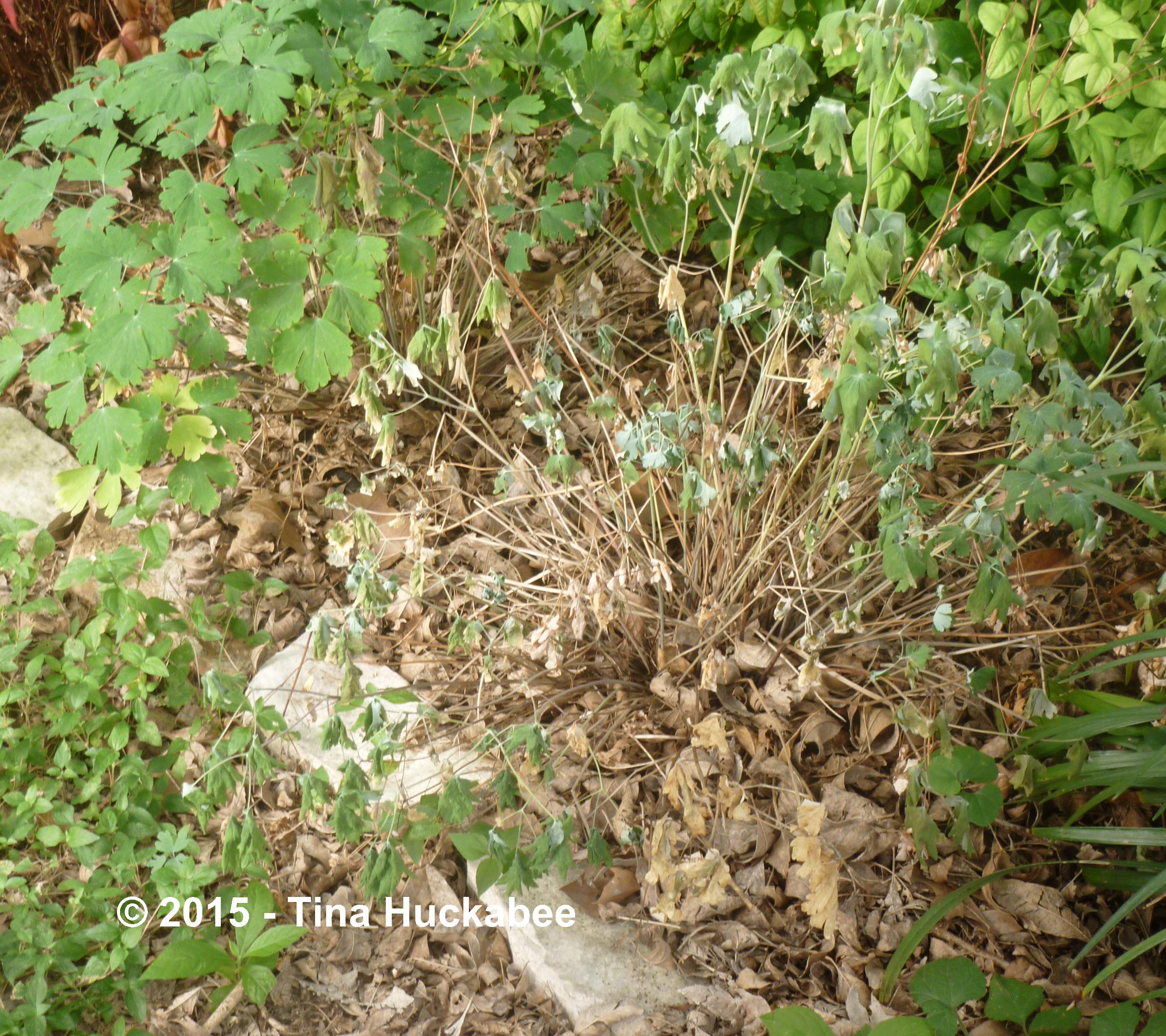
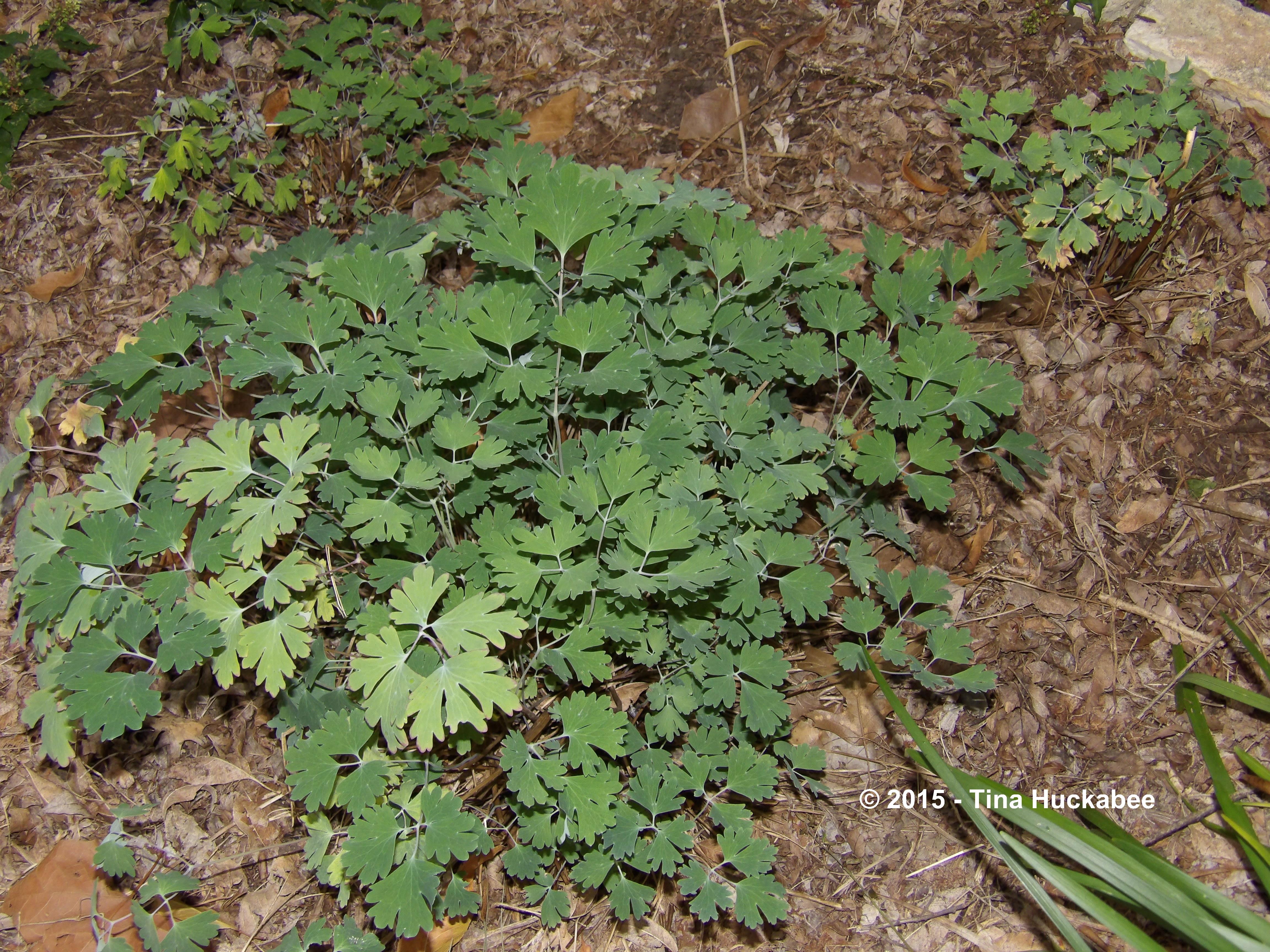
It’s no problem to prune the summer-damaged foliage at that point. Older foliage is yellow-green and by September, brown, or with brown tips.The newer leaves are fresh and blue-green and emerge from the roots. 
Don’t overwater when you see the seemingly droopy Columbine–it is a waterwise plant and doesn’t need more than once per week irrigation–at most! In fact, this is when many people kill their Columbines–by over watering during dormancy. Continue reminding yourself that Columbines are cool season plants: they are dormant during summer and regain luster in cooler seasons.
As the heat of summer subsides and you’ve tidied your little Columbine shrubs,
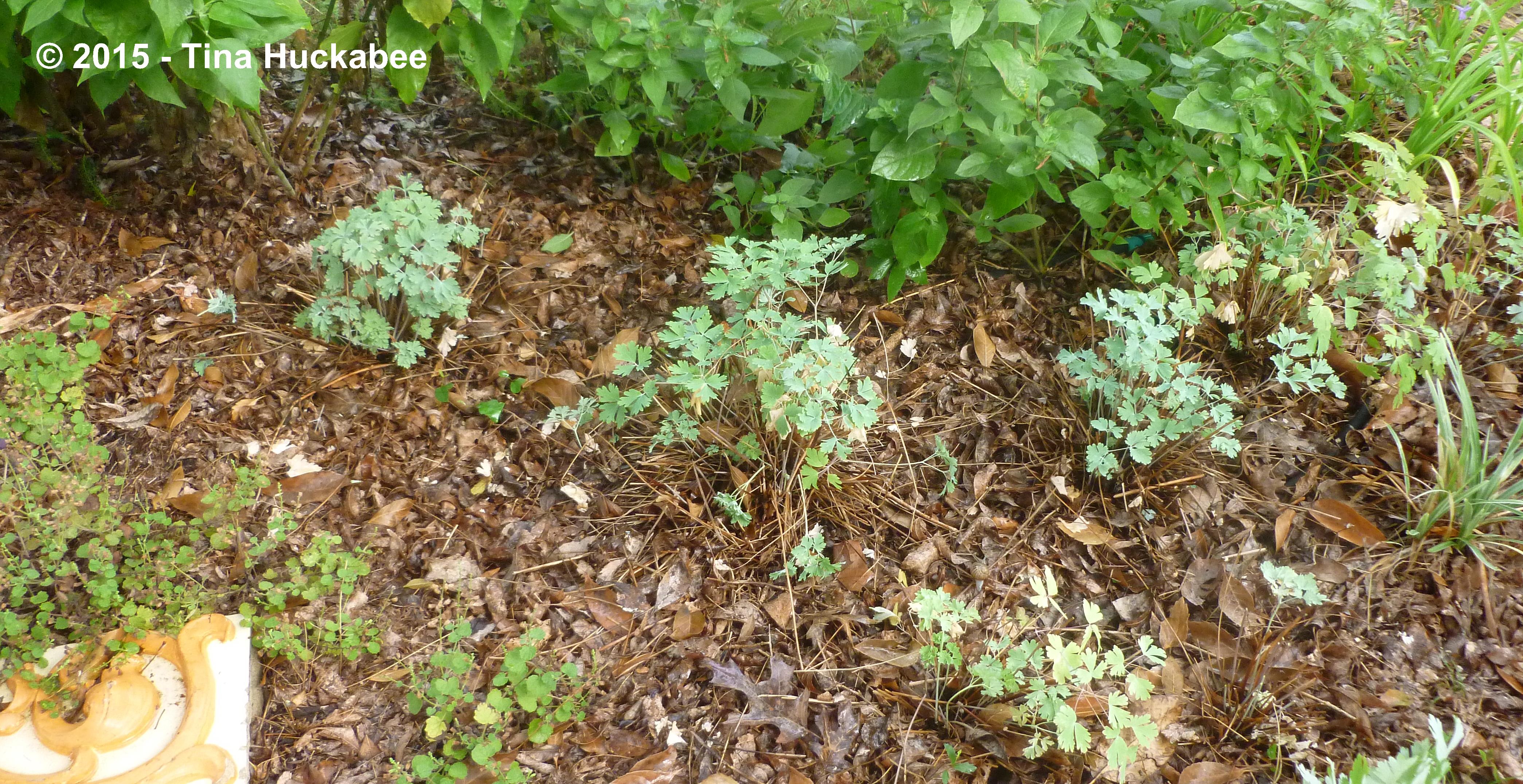
…you can sit back during the fall and winter and watch them flush out again in preparation for their magnificent blooming bust.

It’s nice to interplant Columbine with cheery, heat-loving perennials to weather summer doldrums. Turk’s Cap Malvaviscus arboreus, Pigeonberry, Rivina humilis, Tropical Sage, Salvia coccinea, Lantana, or plants like the Plateau Goldeneye, Viguiera dentata, below, are all good choices. Many perennials bloom well in late summer and early fall when the Columbines are not looking their best.
When the Columbines look peeky, other things will beautify your gardens.
Sometimes, the entire plant will die back during summer. If the plant is young, it will pop back with the cooler, shorter days and autumn rains, but with older plants, return is tricky and not guaranteed. That’s one reason to keep a few Columbine seedlings around: you never quite know when you might want to replace a deceased plant, to share with a fellow gardener, or to transplant Columbines to new spots in your garden.
Columbines also prefer shade or part shade–the blazing Texas sun is a bit too much for this perennial, but it’s an excellent choice for enlivening a dark part of the garden. Columbines survive hot Texas summers well, provided they’re planted in shade.
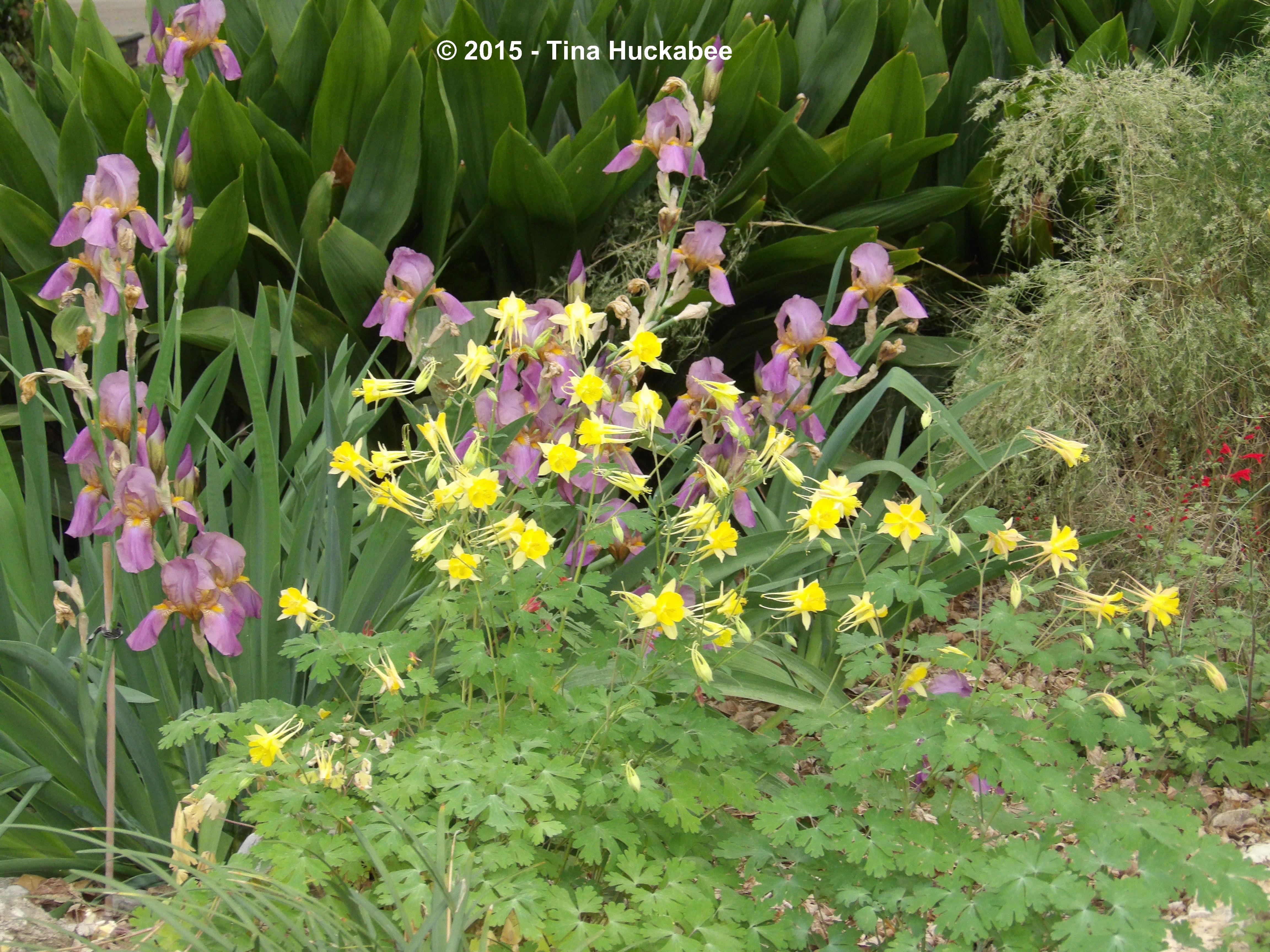
In general, Columbines aren’t too picky about soil type, though they do want good drainage. My garden soil is heavy and clayey, yet they perform well. If there is a period of heavy rain, especially in late summer/early fall when the Columbines are dormant, I pull mulch away from the base of the plants (assuming I remember to do so), otherwise they can get soggy and rot. Some Columbines are considered moderately deer resistant, though typical with so many “deer-resistant” plants, munch ability depends on location and just how hungry the deer are.
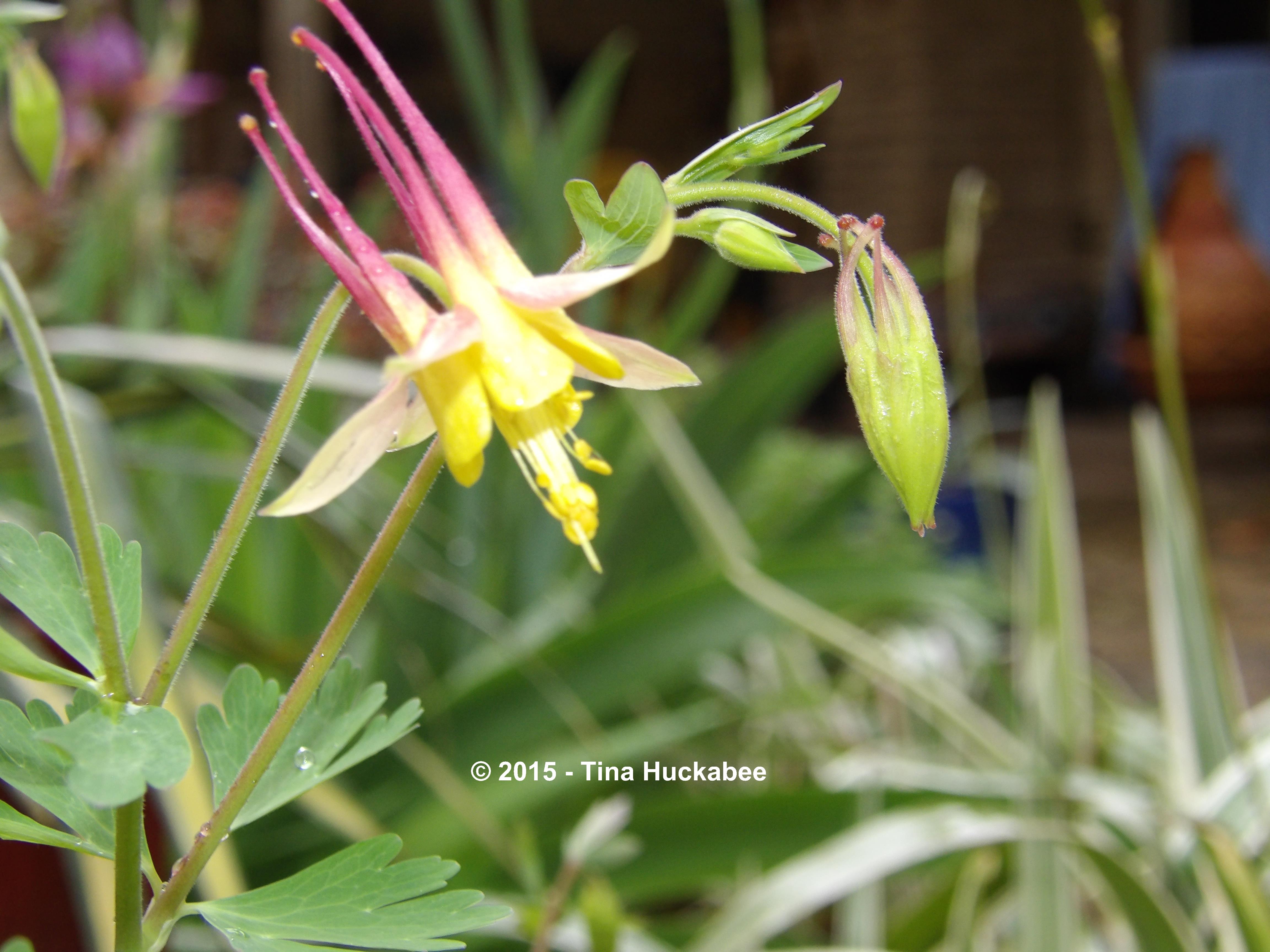
Columbines are available by seed and in most Texas nurseries in varying sized containers. They are a valuable shade-tolerant perennial in the Texas garden with stunning spring blooms and lovely evergreen fall and winter foliage. The native Columbine bloom pretty yellow and yellow/red flowers and are not only attractive to gardeners and their neighbors, but are valuable wildlife plants.
Make a place in your garden for dancing fairies and carve out a viewing spot for shooting stars–you won’t regret it!







 My Gardener Says...