Pollinators Galore: Wildlife Wednesday, November 2016

Having  traveled for half of October and with a general lack of time for critter photo-ops when I was home, there isn’t a portfolio of day-to-day proof of the masses of buzzers and flutterers who’ve been in my gardens this past month.  You’ll just have to take my word for it–this past month was epic on the pollinator front in the garden!  Not only in sheer numbers, but the variety of butterflies and native bees has been a delight.  Today is Wildlife Wednesday and I hope you’re set to celebrate the wild things in our gardens.  Whether winged, scaled, feathered, or furred, wildlife is what makes a garden a truly living space–wildlife is what makes a garden.

It’s been quite a few years since my garden has enjoyed and benefited from  the numbers of butterflies who visited in these past couple of months.  The wet year, coupled with relatively mild summer temperatures, allowed for the right breeding conditions to occur and for blooming plants to thrive.  Plenty of host and nectar plants are available for feeding this year and pollinators are taking advantage of the bounty.   There are always more butterflies in late summer and fall, but this year I notice some that I’d never seen before.

I saw many of these pretties,

imgp0383_cropped_3959x3088-new

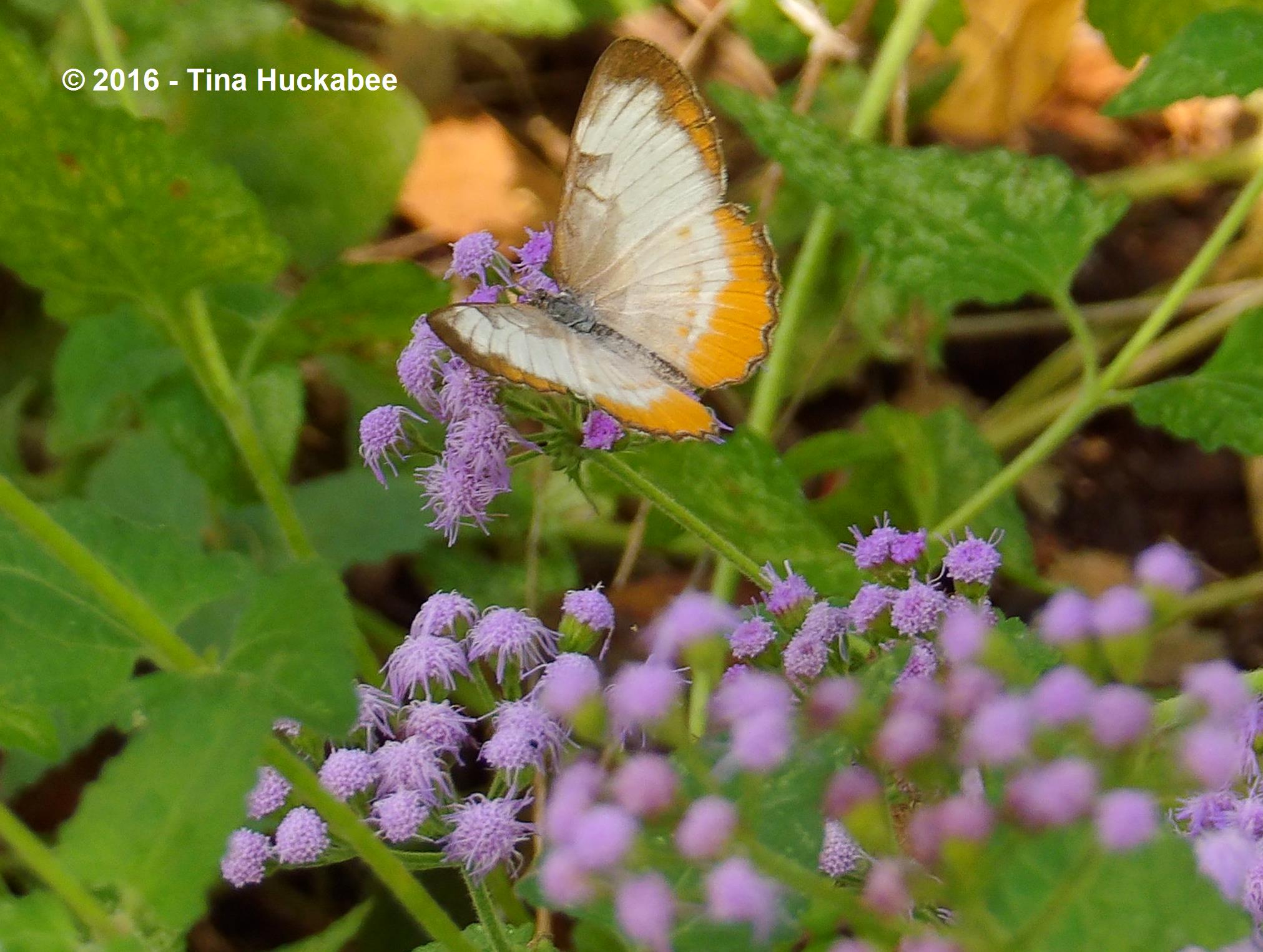
…mostly hanging out around the Blue mistflower, Conoclinium coelestinum.   I knew that I’d seen a photo of this kind of butterfly–somewhere–but couldn’t recall where. After some sleuthing, I identified this species as a Common mestra, Mestra amymone. Eventually, I remembered that I’d seen photos of the mestra on the FB page of The National Butterfly Center, which is located in Mission, Texas. Primarily a butterfly of South Texas, Mexico and  South America, they will stray northward–and so they did, right into my little garden!   They favored the Blue mistflower, but I also saw them nectaring at the Plateau goldeneye and Turk’s cap, too.
imgp0389_cropped_2023x1525-new


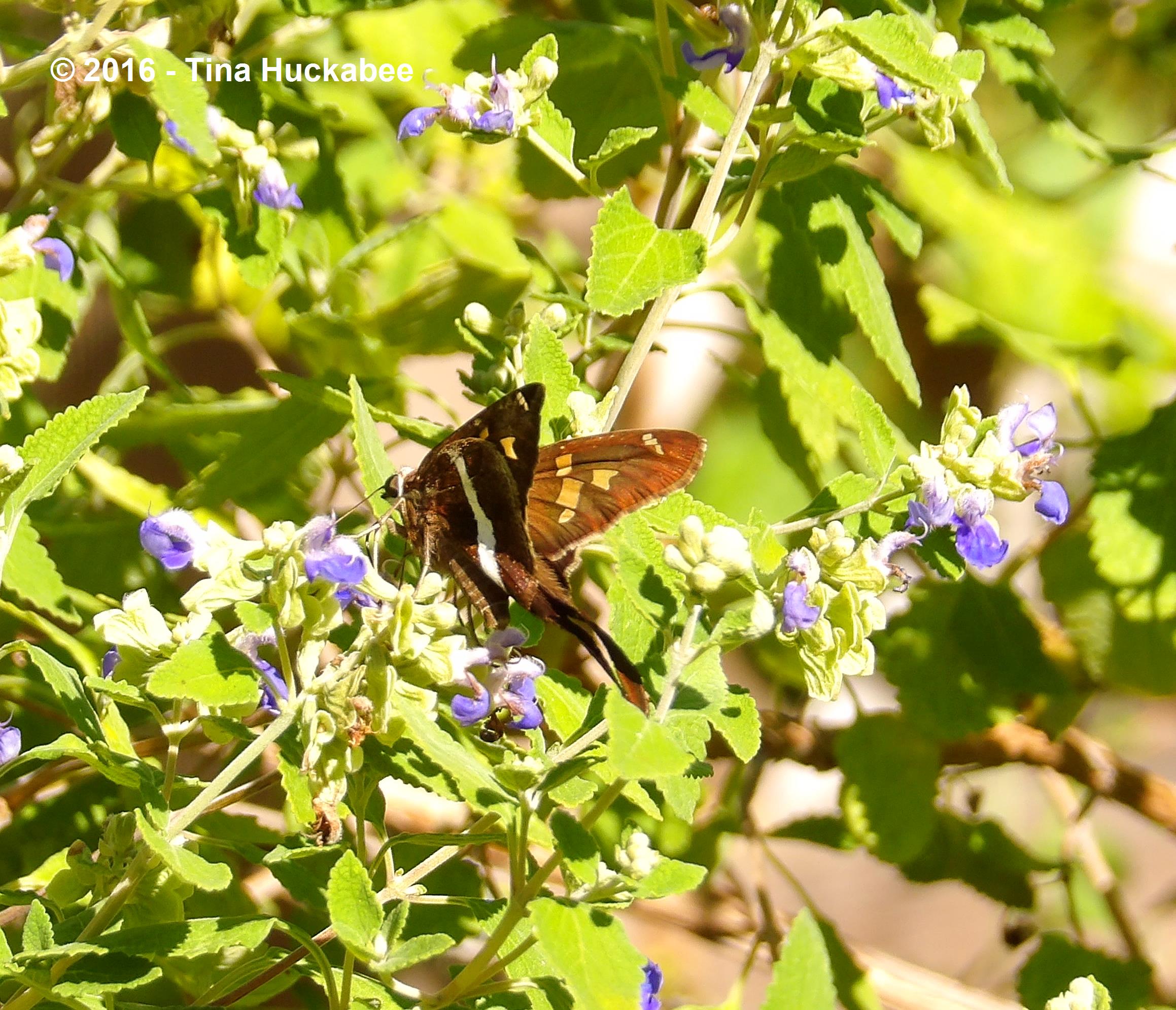
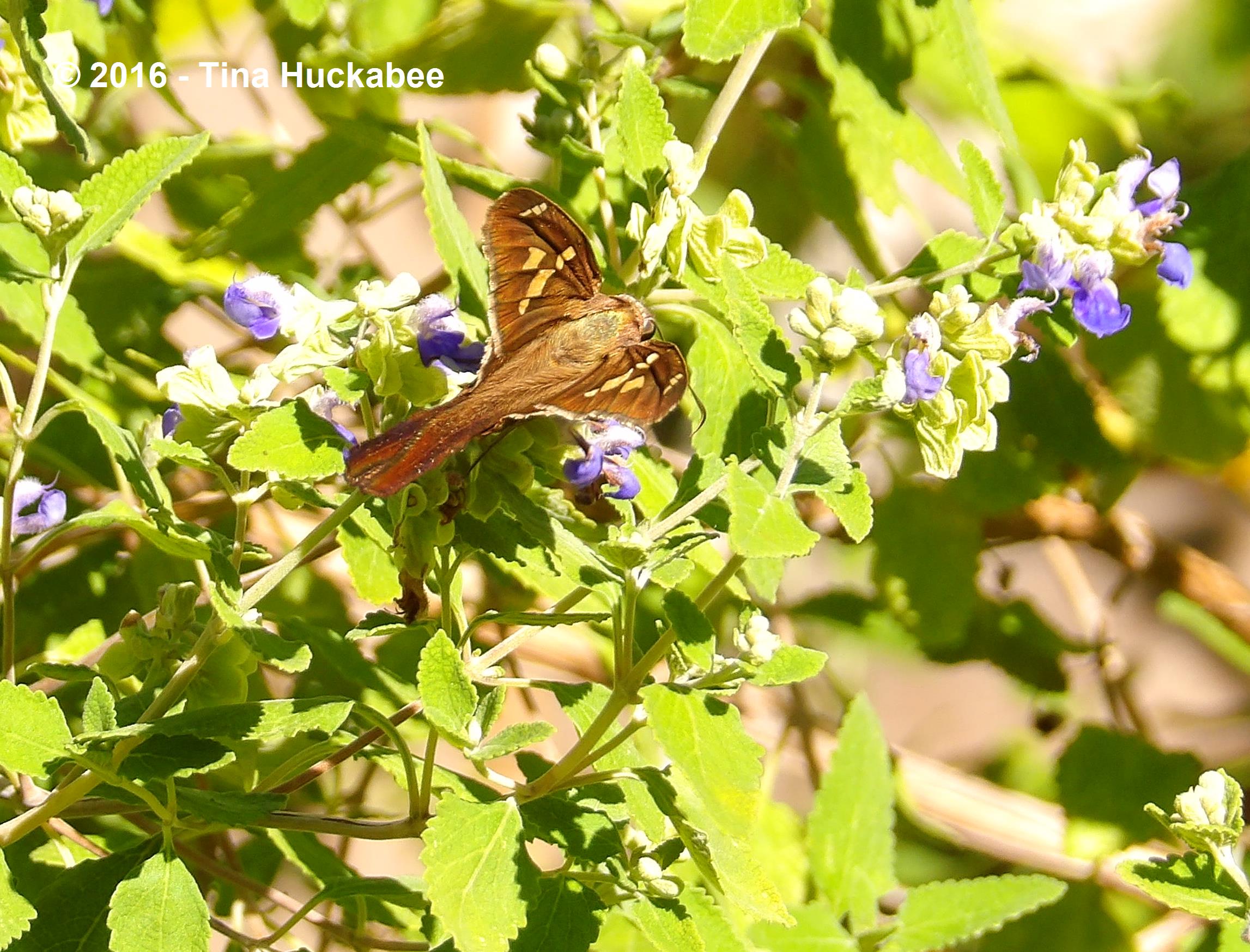
White-Striped Longtail butterfliesChioides albofasciatus,  are a new butterfly in my garden.
imgp0332_cropped_2318x1990-new

They proved difficult to get clear photos of because they nectared at Yellow bell blooms which are located high on the tall shrubs and subject to every puff or blast of breeze–not conducive to great photography,  Also, this critter doesn’t sit still for long.
imgp0328_cropped_2294x1747-new

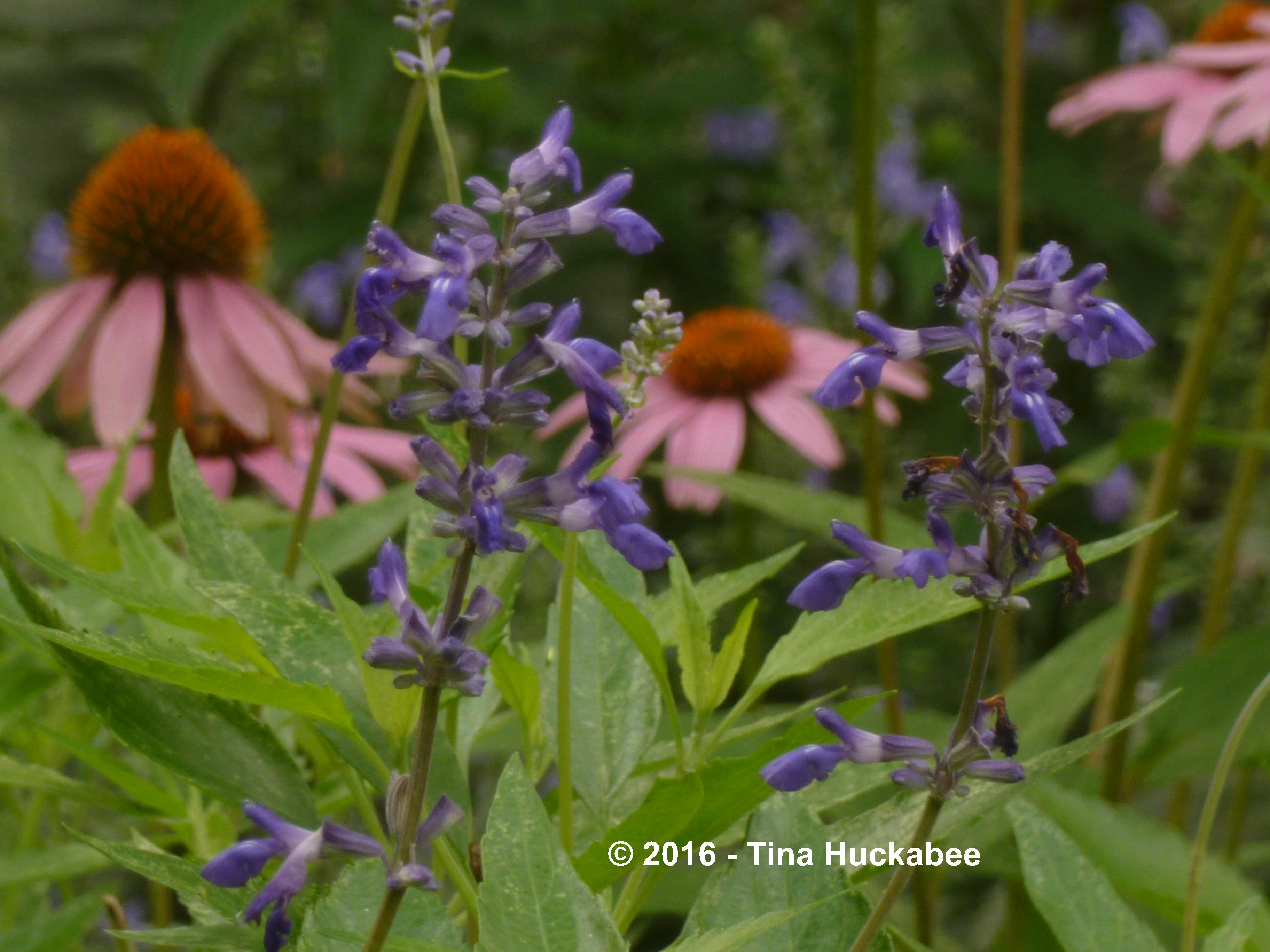
Lucky for this gardener though, one spent casual time at a lower-to-the ground West Texas native, the Shrubby blue sage, Salvia ballotiflora and I opportunistically snagged some shots.

imgp0337_cropped_2203x1654-new

Yet another butterfly more common in South Texas and regions further a-field, it’s interesting that there were “tropical” butterflies in my Central Texas garden this past month.

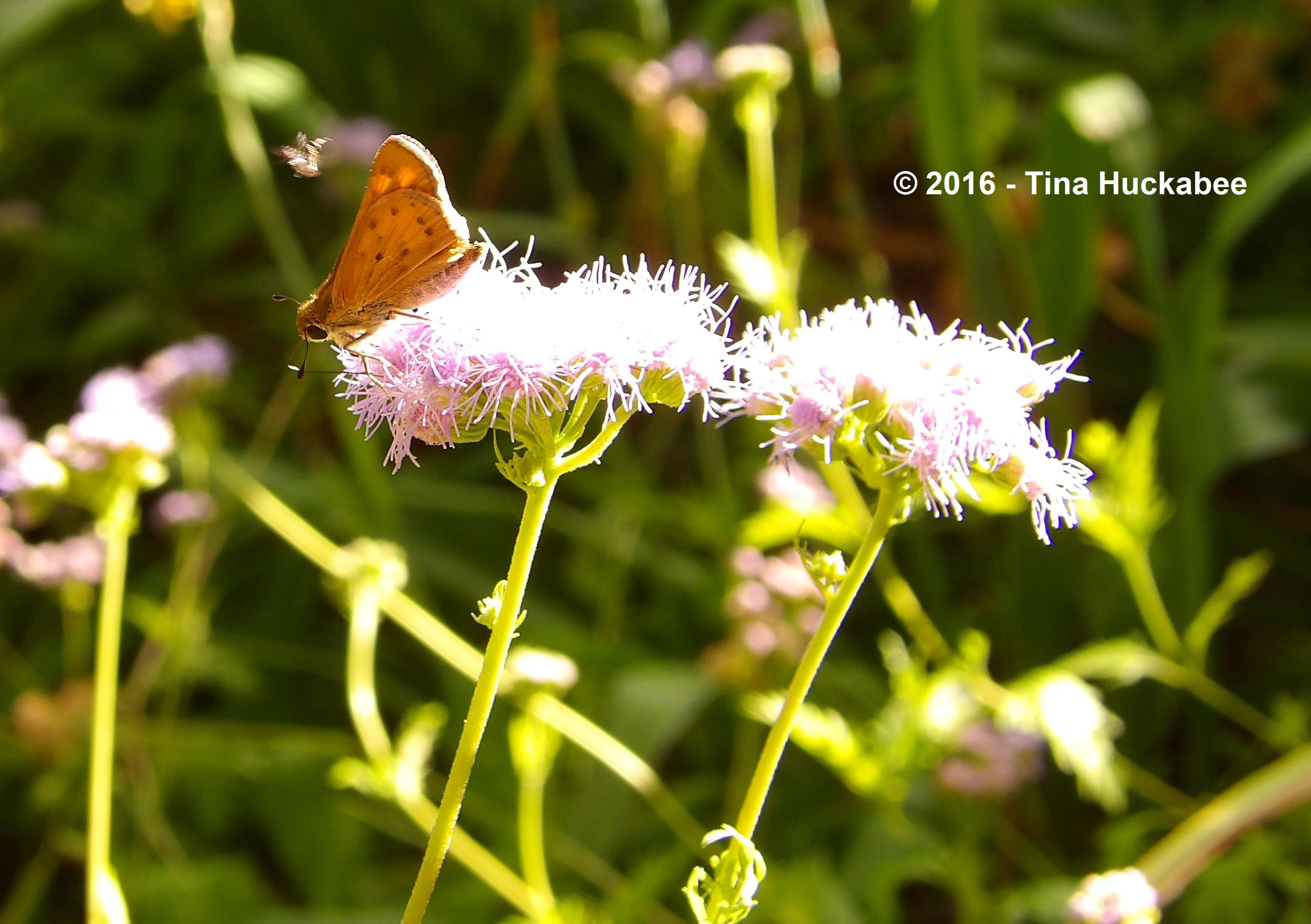
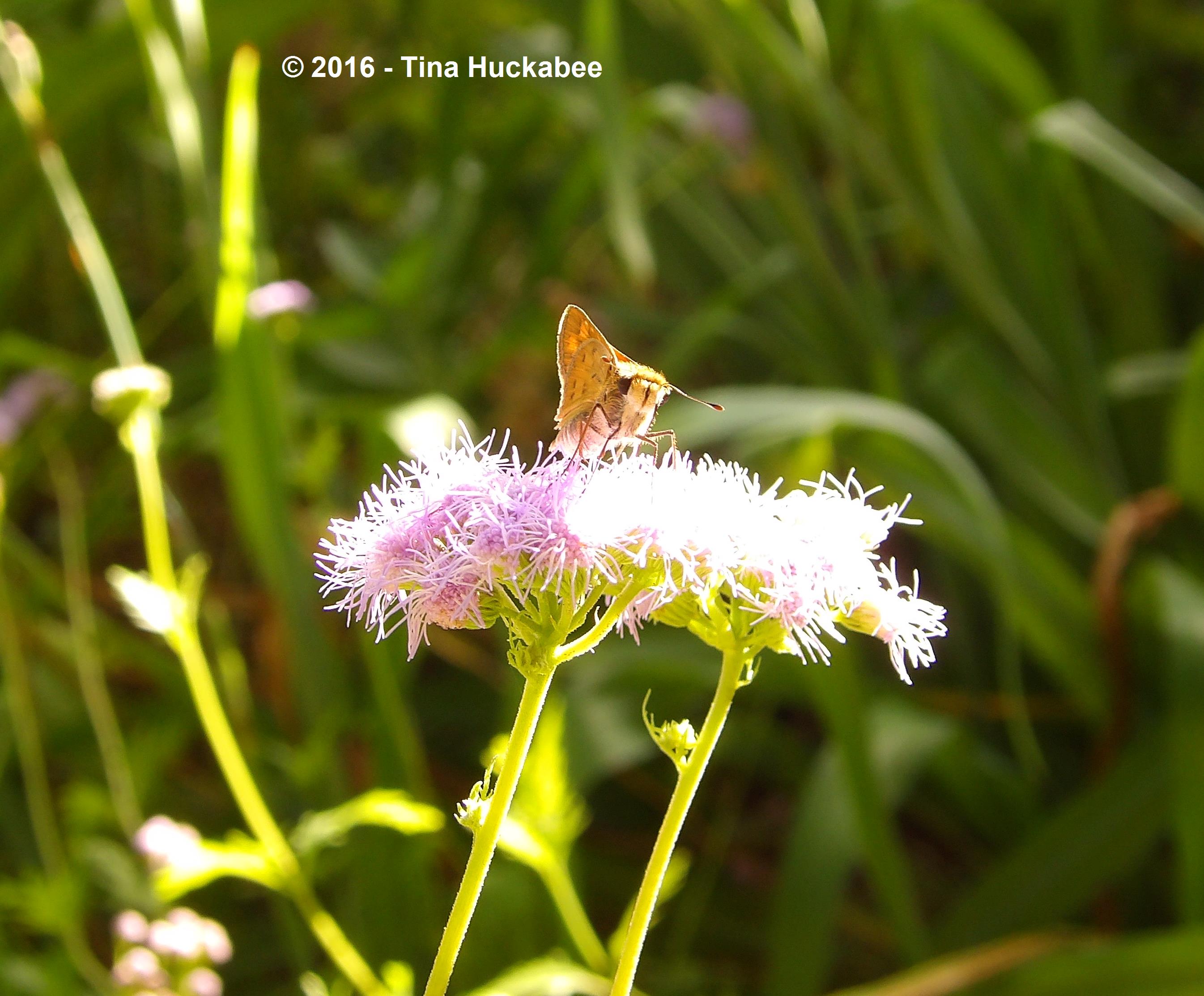
Along with the southern visitors, the usual garden suspects were active. For example,  Fiery SkippersHylephila phyleus,  decked out in autumn colors,  have been all over the Gregg’s mistflower, Conoclinium greggii, sharing nicely that pollinator favorite with many other winged things. .

imgp0436_cropped_2903x2378-new

imgp0434_cropped_3111x2193-new

A tiny native minor bee is blurry just above the Fiery Skipper.
imgp0433_cropped_2691x2225-new

Other fans of the Gregg’s mistflower are the many Clouded SkipperLerema accius butterflies  which regularly tour the garden.  These skippers have been active throughout the warm season this year.

imgp0429_cropped_3646x3033-new


Monarch butterfliesDanaus plexippus, continued their march through Texas.

imgp0369-new

imgp0368-new

Male Monarch demonstrates his  scent glands (the two black dots on the hind wings).

It was a pleasure hosting them this autumn–I hope they safely arrive in Mexico and winter well there.


Black SwallowtailPapilio polyxenes, butterflies visited daily.

imgp0242-new

Black Swallowtail on Turk’s cap.


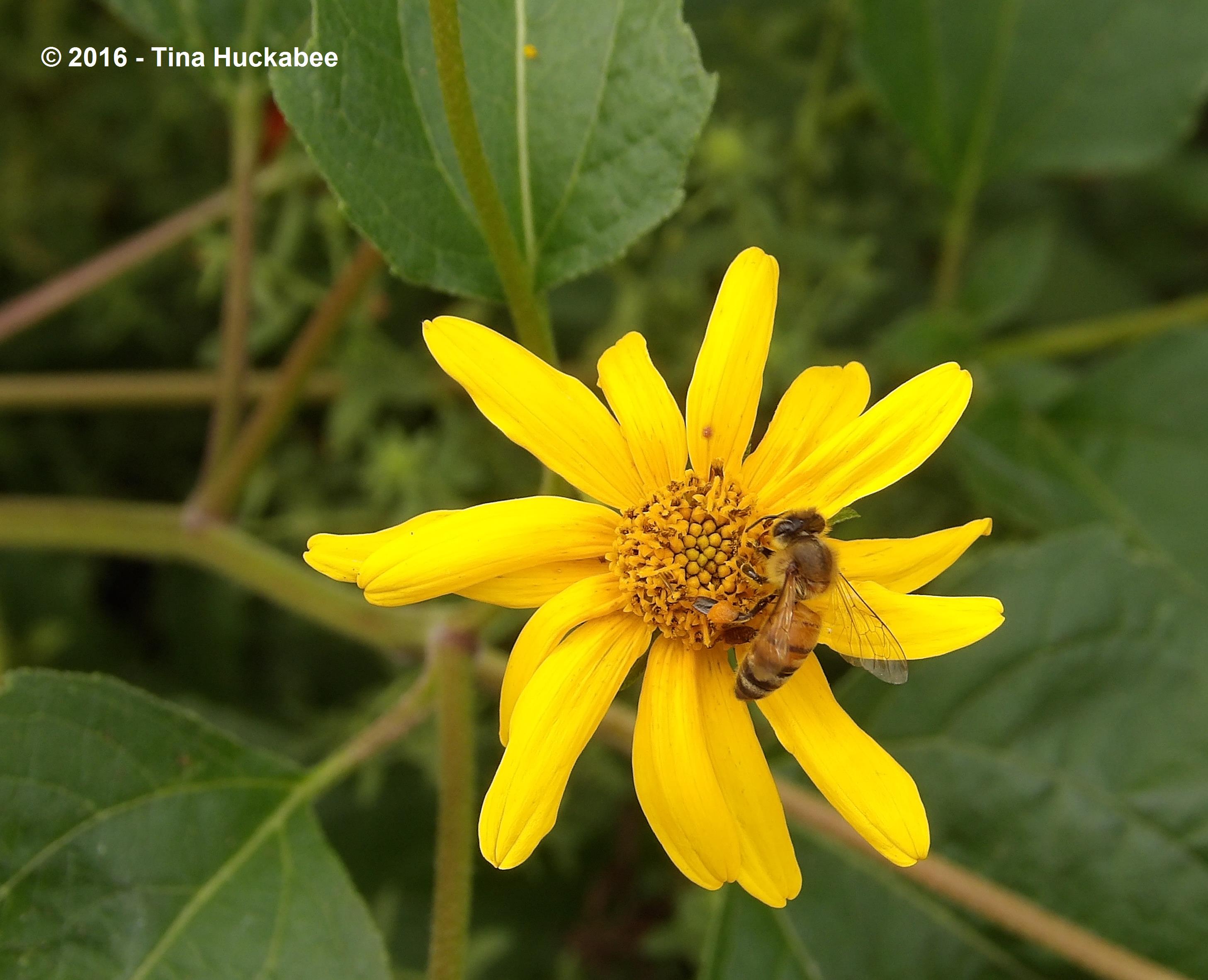
Honeybees (from my three hives) busily worked at the bloom-heavy Plateau goldeneye, Viguiera dentata, as well as everything else, preparing their honey stores for winter.
imgp0282_cropped_2913x2364-new


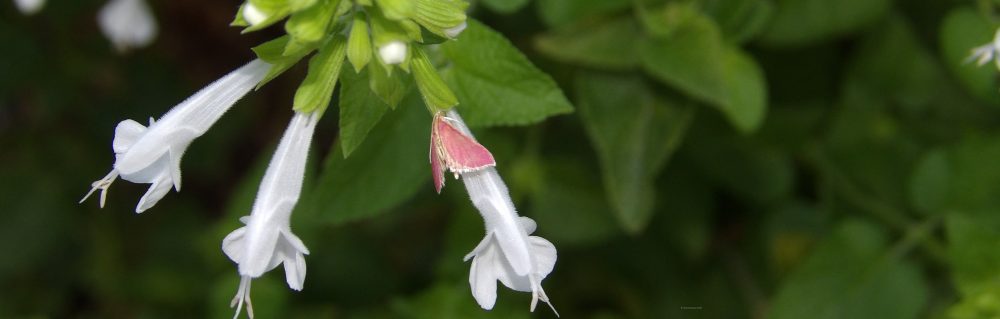
There are still scads of the charming Southern Pink MothsPyrausta inornatalis, like this one resting on a White tropical sage.  The Pinks are another species in abundance this year.

imgp0446-new


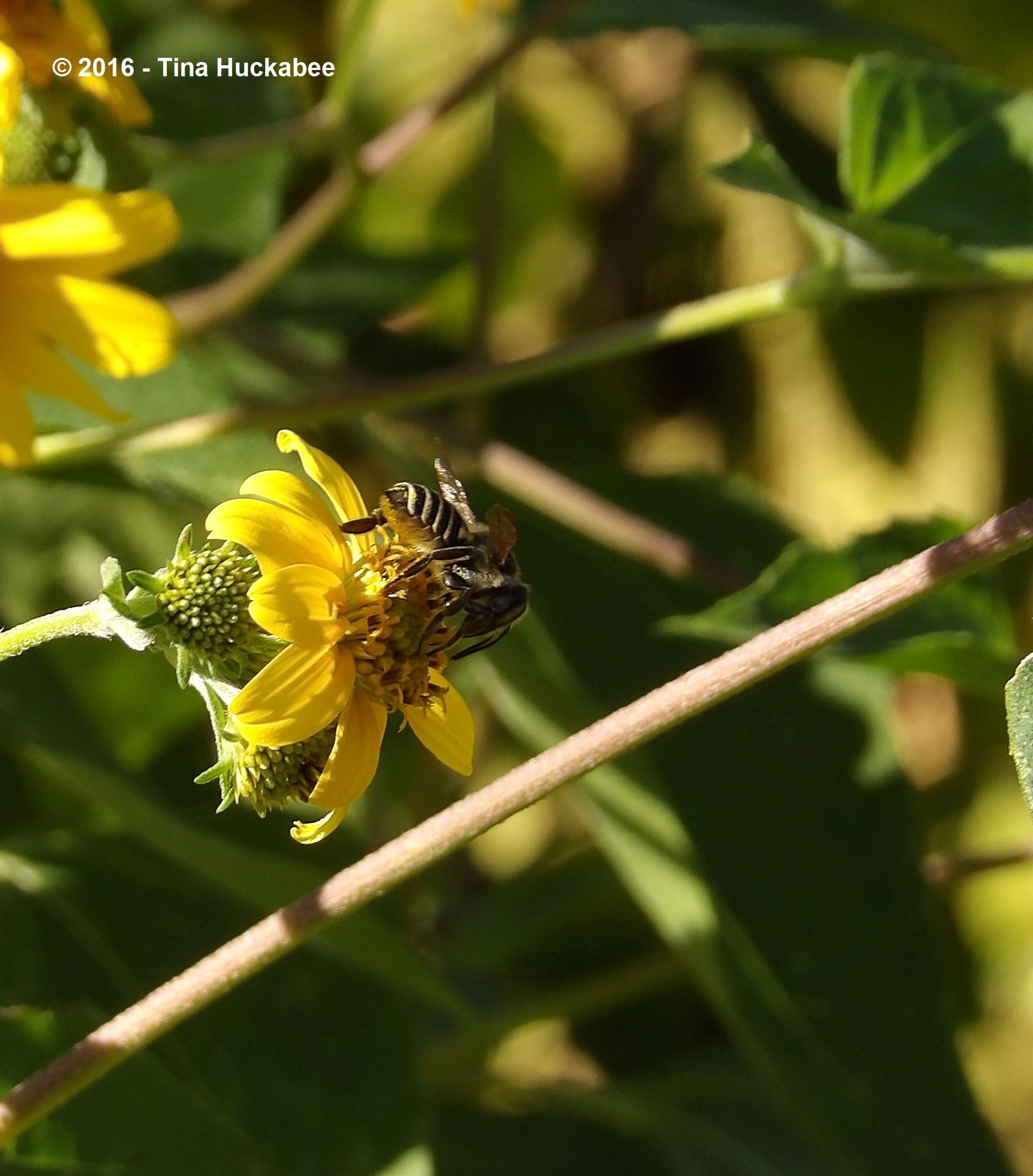
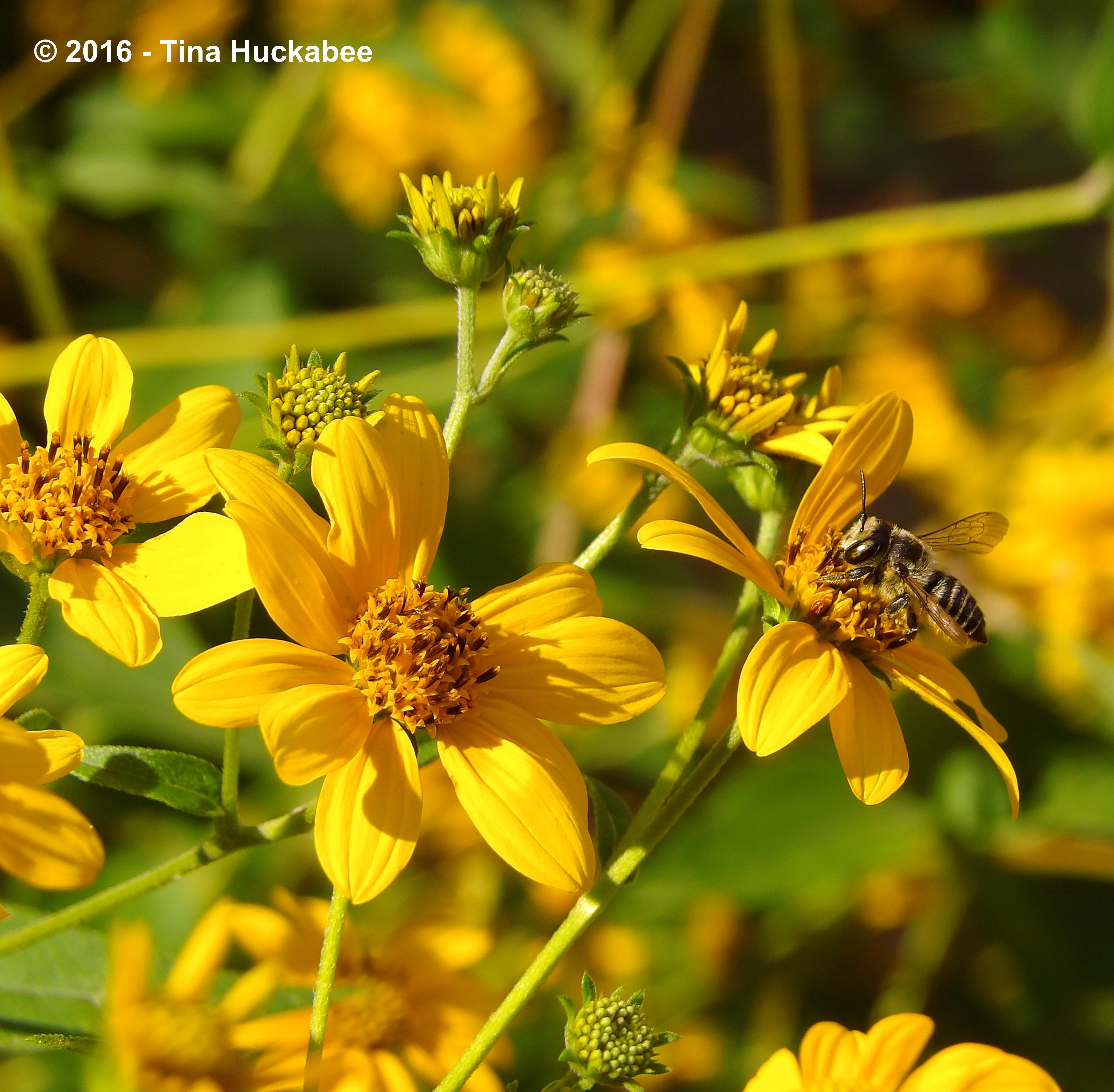
Native bees of all kinds are still working in the garden.  This leaf-cutter, Megachile, was not the only native bee around, but fun to watch as she worked Plateau goldeneye blooms.
imgp0461_cropped_3267x3202-new


Additionally, this past month saw a boon in the Gulf Fritillary, Agraulis vanillae, population.

imgp0305_cropped_3129x2557-new

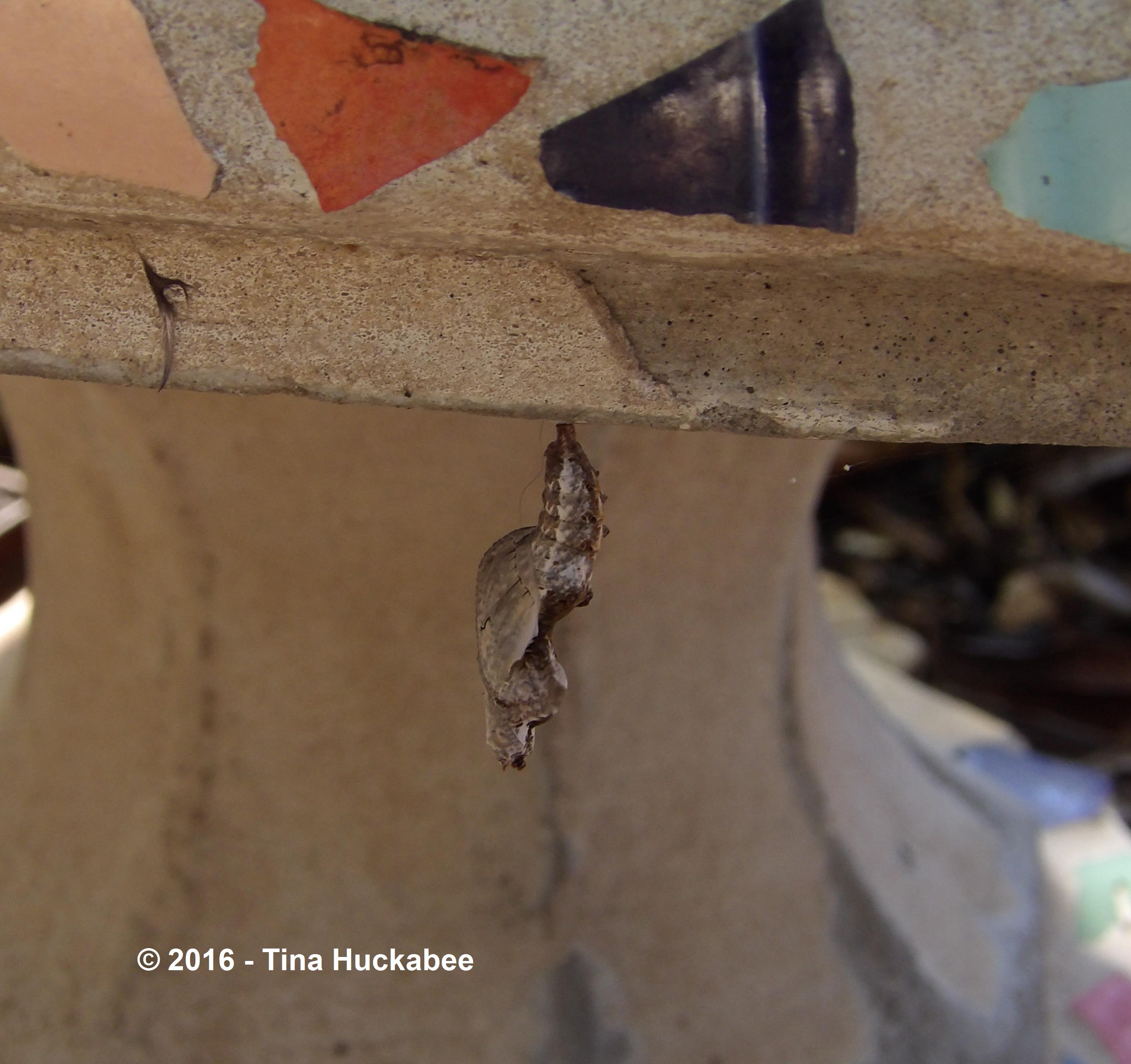
The foliage decimation wrought on my Passion vine by caterpillars eating and eating and eating,

imgp0442_cropped_3332x2678-new

imgp0454-new

…and then pupating into their adult form wherever they could,
imgp0443_cropped_2820x2654-new

…is all the proof I need to suggest that they’re quite at home in the garden.

imgp0306_cropped_2741x2106-new

I don’t fret about butterfly and moth caterpillars munching on host plants because they generally don’t kill the host, munching away only to some level of plant un-attractiveness. Usually, the plants–like the Passion vine–spring back to full-leafed health quickly and in preparation for the next generation of caterpillars.  Biology dictates that for the most part, the symbiotic relationship between a host plant and its insect is a healthy one, and a plant is rarely, if ever, eaten to death.  From an evolutionary standpoint, it wouldn’t make sense for a host plant to die every time its insect requires reproduction.

Ain’t nature grand?!

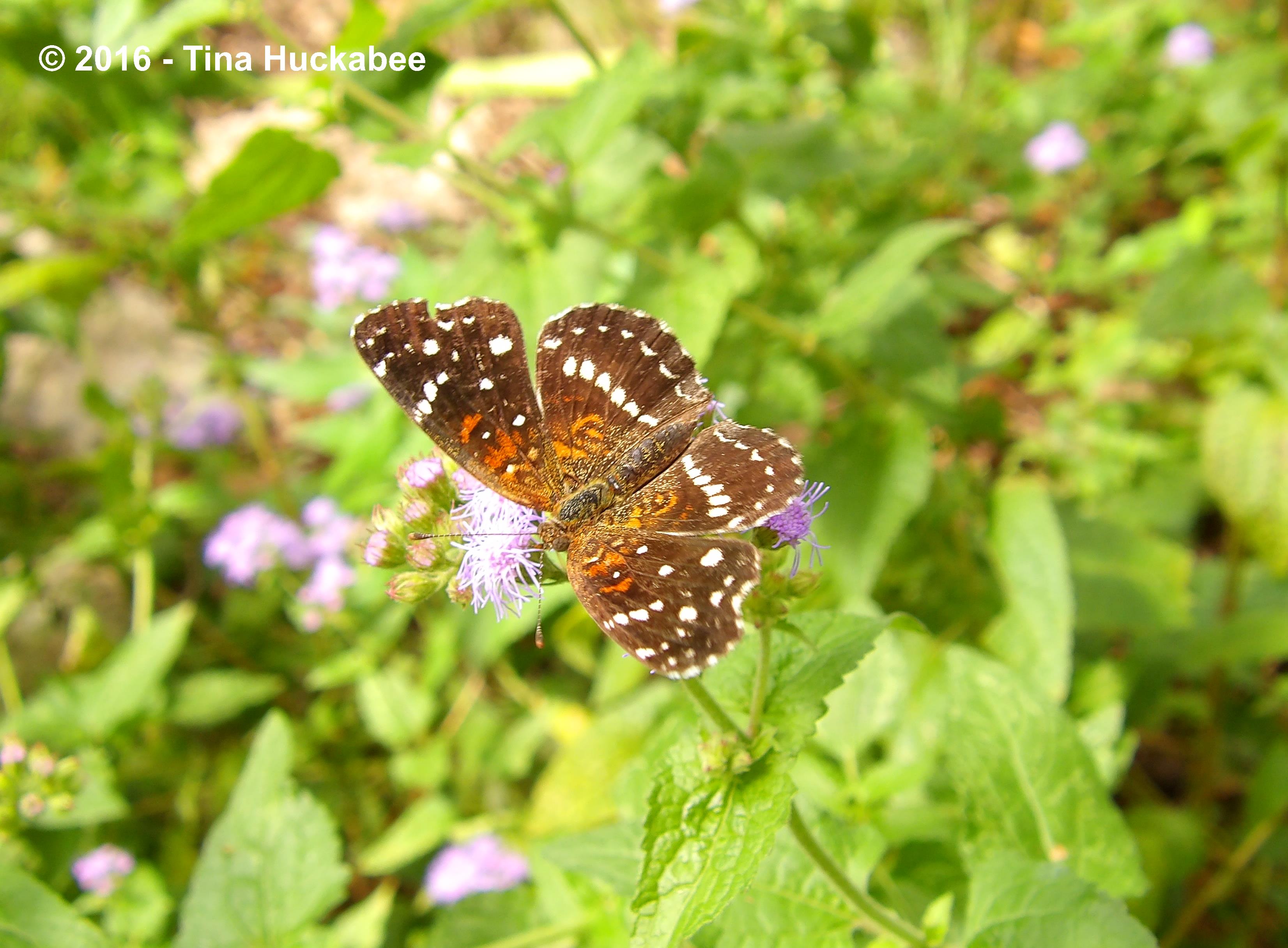
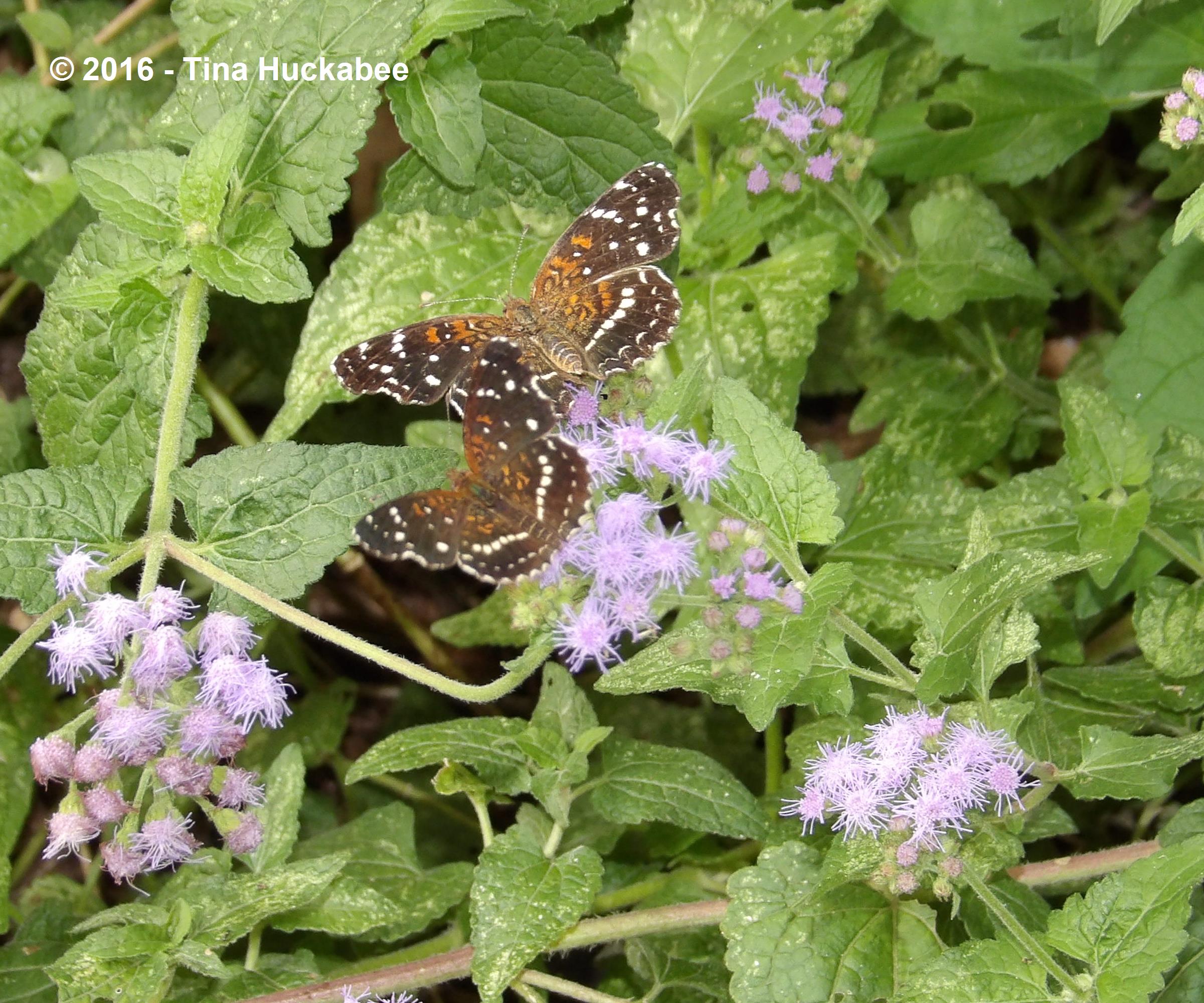
Texan CrescentsAnthanassa texana, 

imgp0276_cropped_3304x2433-new

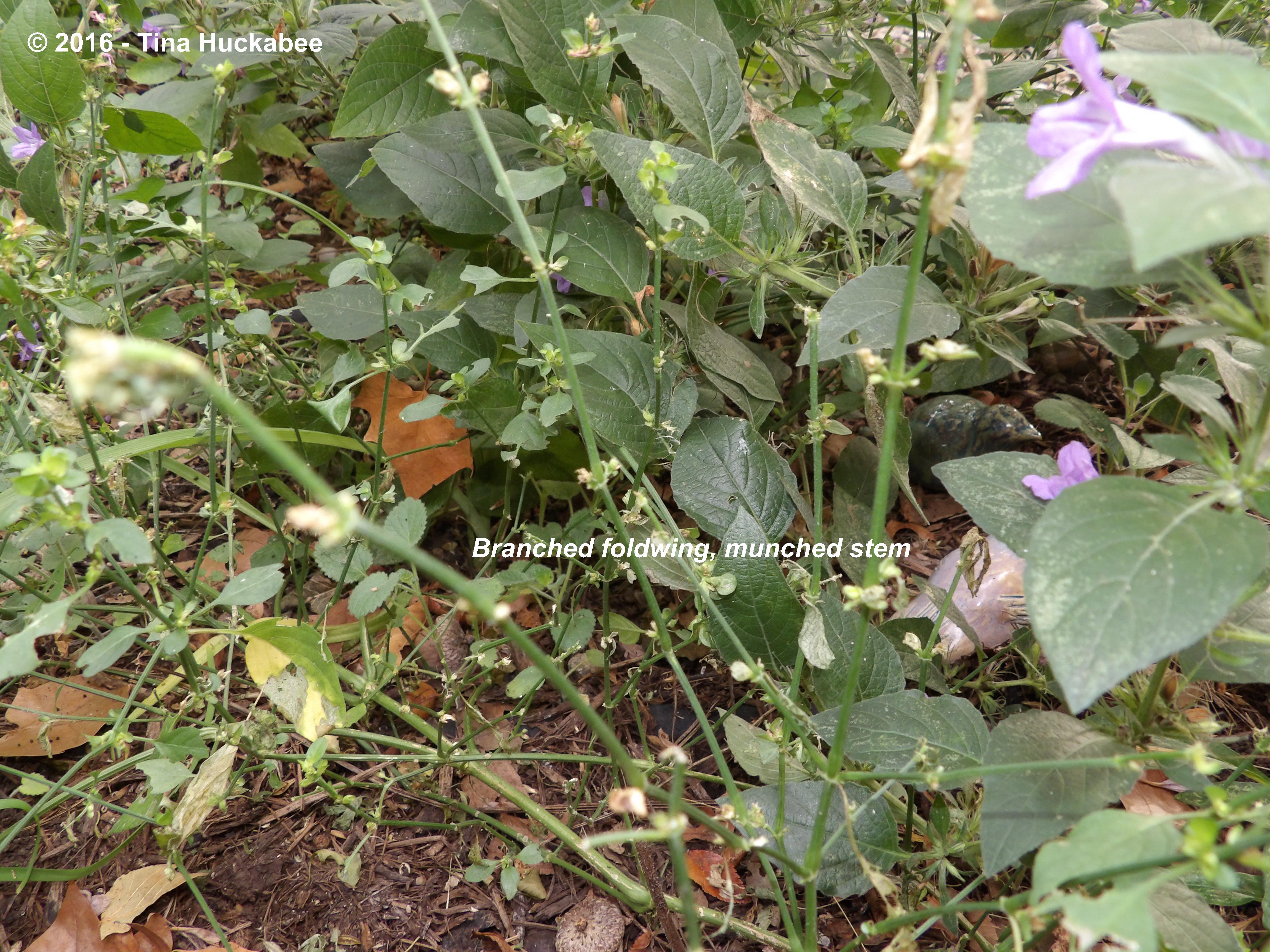
….are eating  their native host plants–the Branched foldwing, Dicliptera brachiata,
imgp0458-new-new

…as can be seen by the green sticks left from the last crop of caterpillars.  No worries about the recover of the plant though, the munched Branched foldwing is already leafing out.  For the remainder of autumn, more of the butterflies will nectar in the garden in clouds of fluttering brown and gold. I missed the opportunity to catch a photo of the nondescript caterpillars, though I’m always happy to get photos of a pretty face–and lovely set of wings.
imgp0269_cropped_2401x2000-new


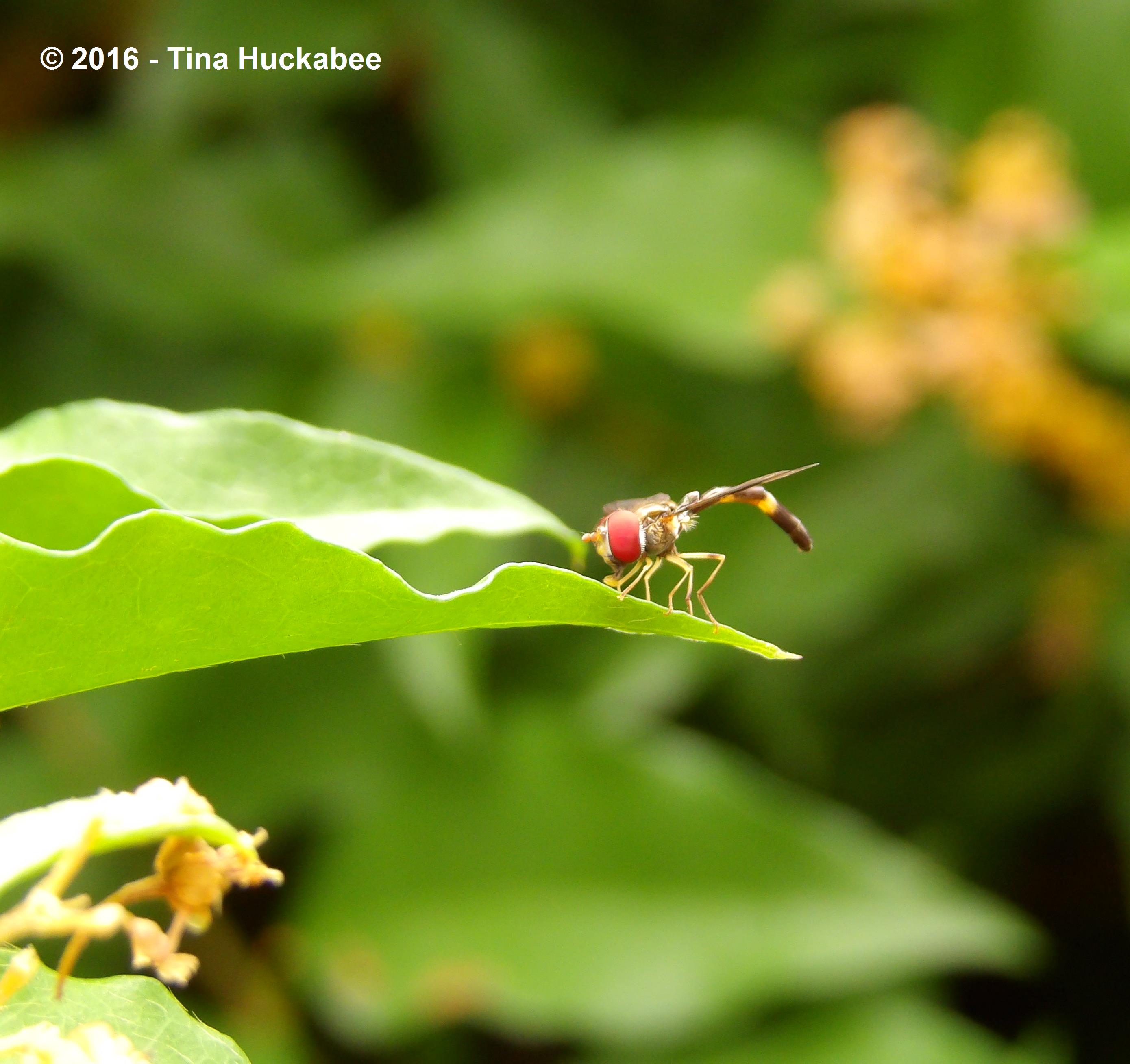
Not only did butterflies and moths grace my garden, but plenty of Syrphid, or Flower flies, appeared too.    For the most part, Syrphid flies haven’t been as numerous in the garden this year.  But recently I’ve seen many of this particular kind, the Distinctive SyrphidOcyptamus fascipennis.

imgp0246_cropped_2613x2060-new

Syrphid on the bloom clusters of the Barbados Cherry (Malpighia glabra)
imgp0253_cropped_2779x2617-new


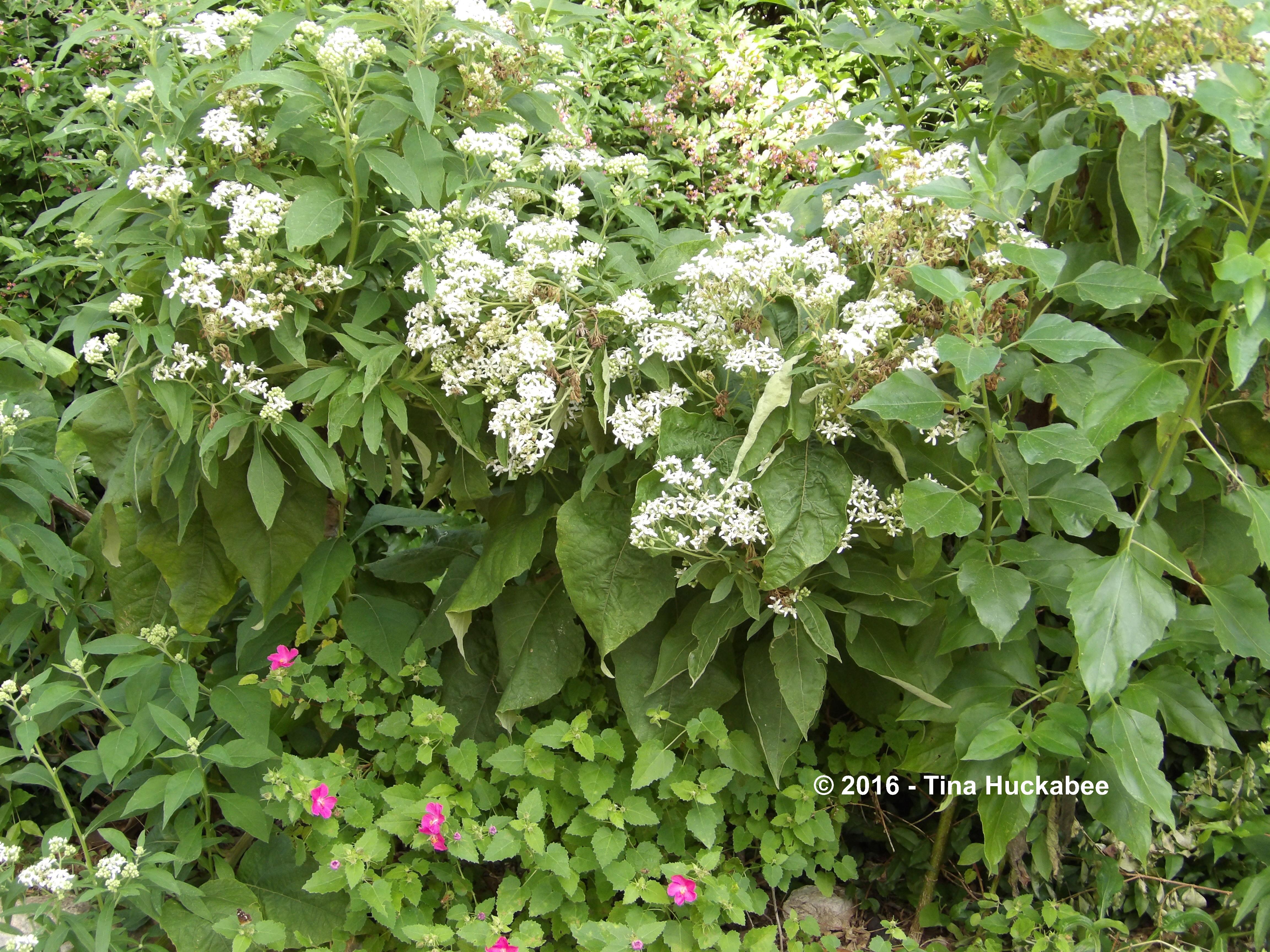
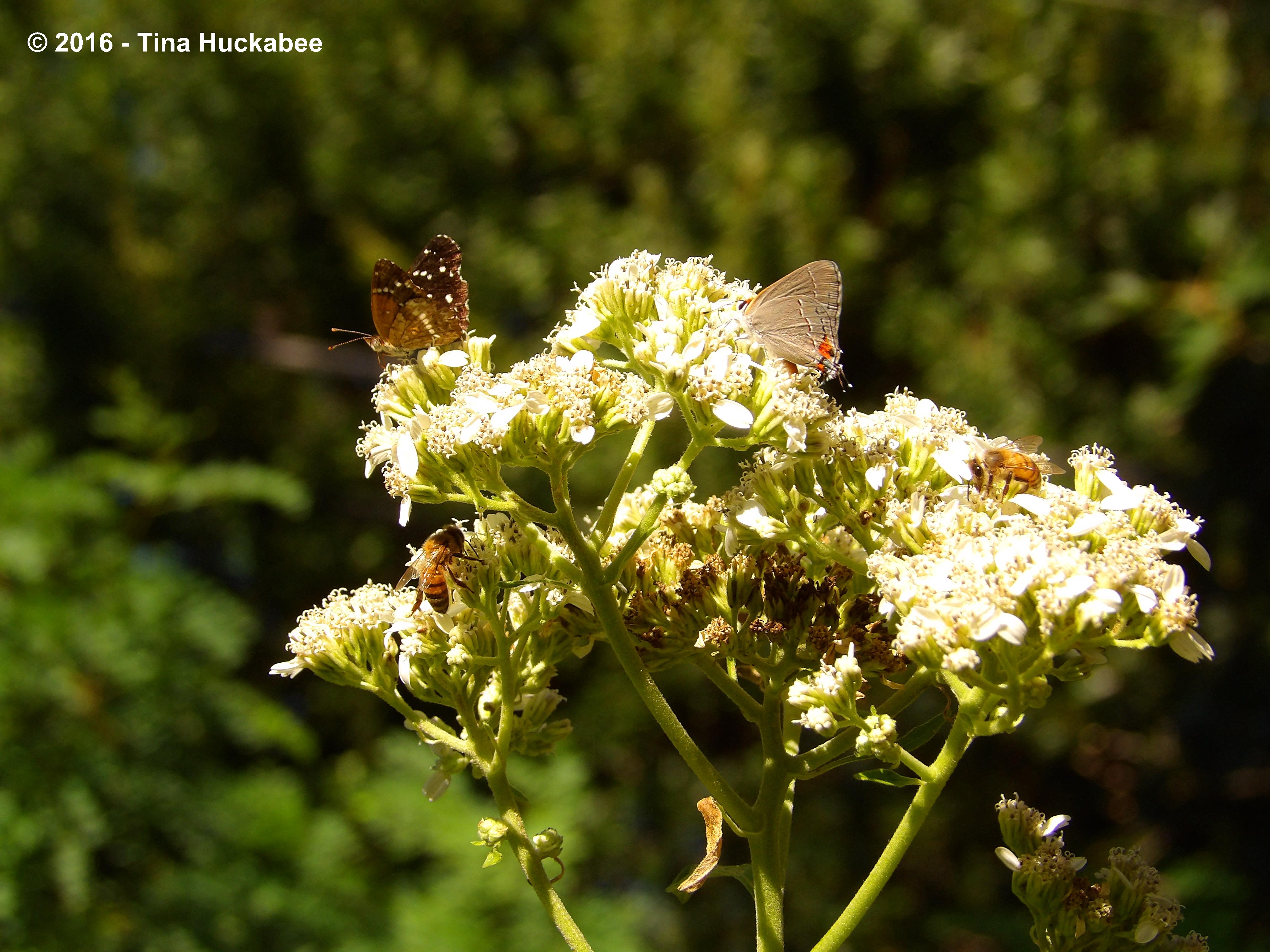
As for what attracts all of these garden gifts, If there was an award for Pollinator Plant of the Month, it would have to go to Frostweed, Verbesina virginica.
imgp0298-new

There are four individual pollinators on this particular flower cluster–and it’s not unusual to see that many pollinators simultaneously feeding on  Frostweed bloom clusters. Where Frostweed grow, insect–especially pollinator–activity is abundant.  Both small and large butterflies, honey and native bees, and eventually, after the blooms are spent,  little finches and warblers choose this plant as a favorite food source.  It, along with the Plateau goldeneye, are amazing plants for attracting and feeding wildlife.  Both plants are easy to grow (Texas natives!) and attractive; both fit especially well in a woodland garden or at the back of a perennial bed.

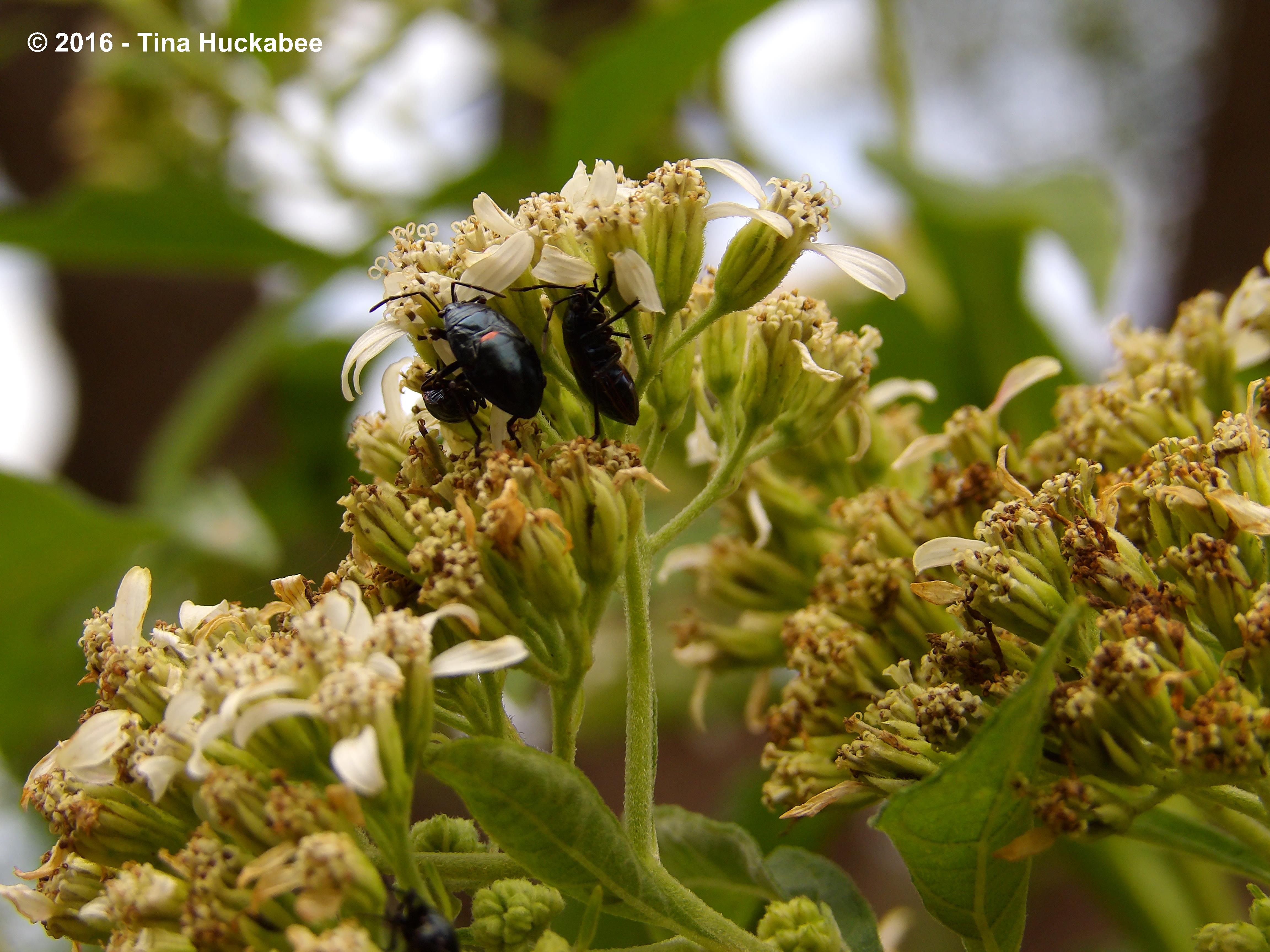
These beetles enjoyed one particular group of Frostweed.  I never quite figured out what kind of beetle they are, but I’m leaning toward an identification as some kind of blister beetle.

imgp0259-new

The adults were definitely nectaring on the flowers,
imgp0260-new

…though the nymphs congregated along fruit or foliage, just hanging out it seemed.  Typical teenagers, I guess.

imgp0263-new

At any rate, the beetles didn’t appear to damage the plants, so I left them alone.

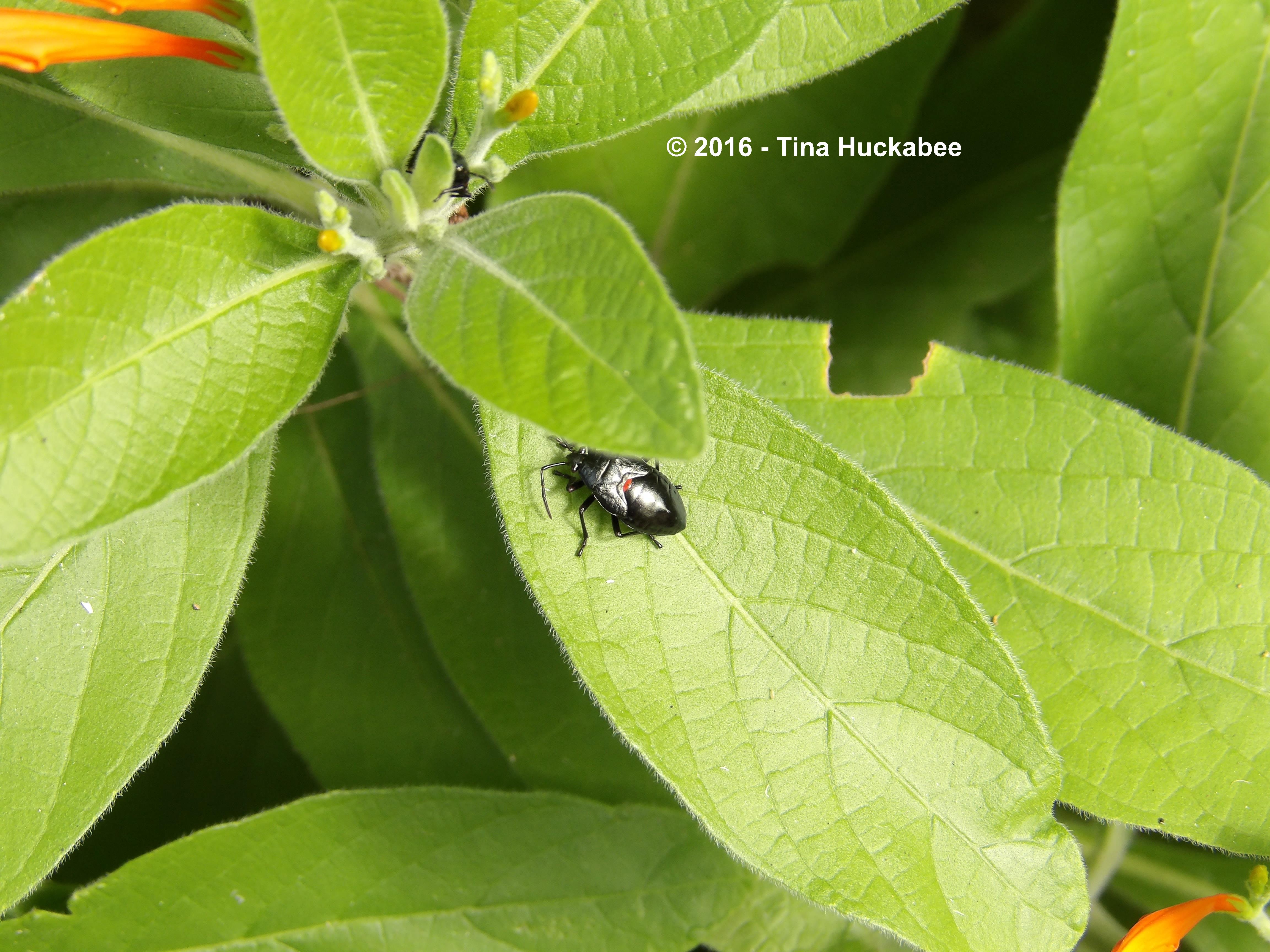
A few beetles visited the Mexican honeysuckle, Justicia spicigera.
imgp0280-new

Like the beetles on the Frostweed, these didn’t appear to harm the honeysuckle foliage or flowers.

This month wasn’t all about pollinators though–this predator Crab spider was clearly waiting to snatch something smaller than herself for a meal.

imgp0314_cropped_2806x2535-new

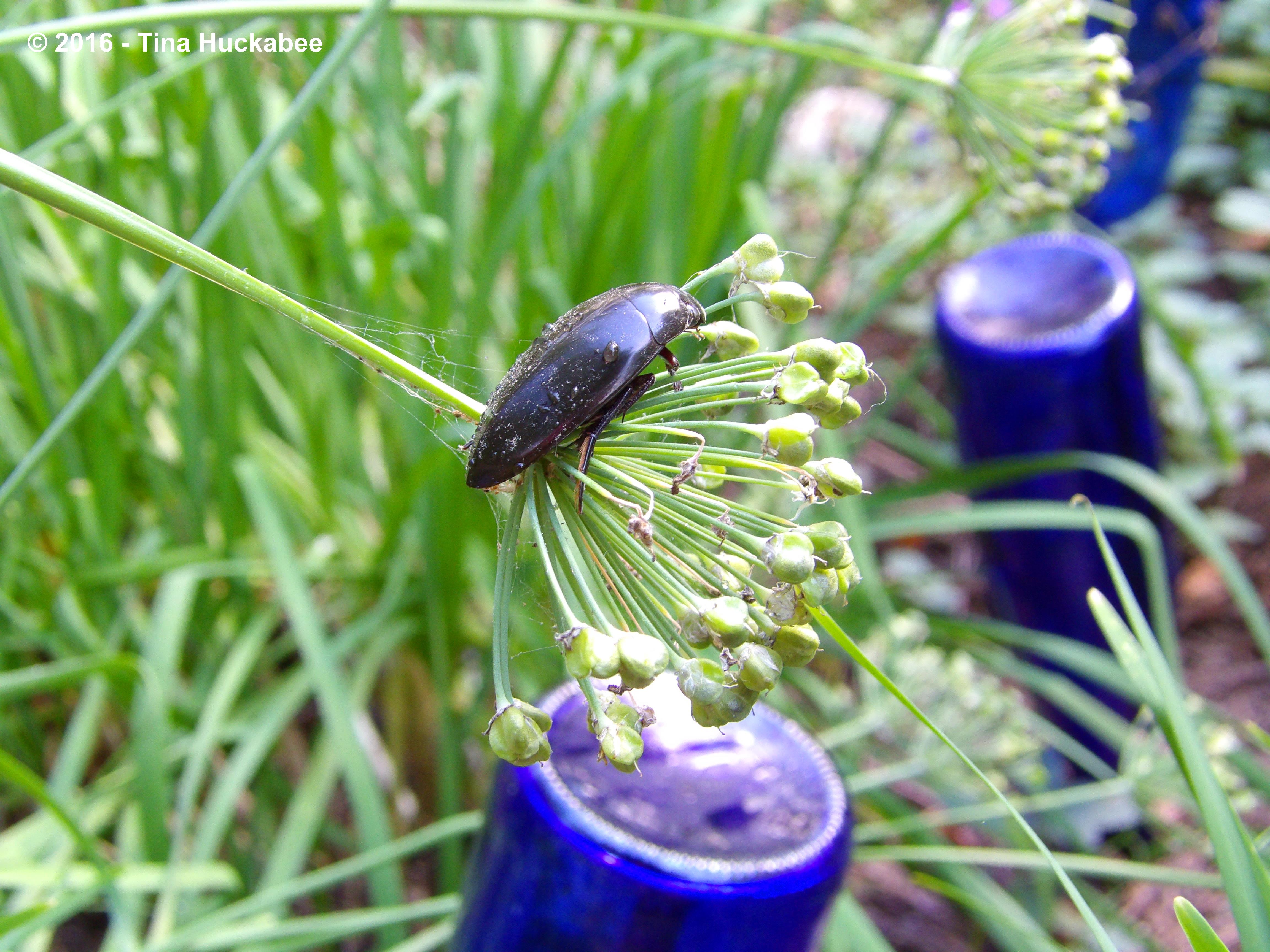
And this Hydrophilidae, a Water scavenger beetle, was loitering on a spent Garlic chives bloom.
imgp0309-new

Not quite sure what this one was up to, but I think he’s a little menacing looking.  He neither spit nor lunged at me, so I suppose he’s okay and we can be friends, or at the very least, co-workers in the garden.

Did wildlife visit your garden this past month? Please post for November Wildlife Wednesday. Share the rare or mundane, funny or fascinating, beneficial or harmful critters you encounter. When you comment on my post, please remember to leave a link to your Wildlife Wednesday post so readers can enjoy a variety of garden wildlife observations.
 

Soft-n-Spiky

Promoting Texas Native Plants Week, I’d like to put in a good word for Texas plants known for lovely or interesting foliage.  Foliage is often overlooked when planning a garden and it shouldn’t be; foliage is the bedrock of most winter gardens and sets the tone and backdrop for all blooms.  In my gardens, it seems like plants fall into three foliage categories:  scratchy, spiky, or soft.   I won’t give scratchy plants attention for now (looking at YOU, Lantana and Barbados cherry!), but I will profile a few foliage beauties from the other two categories.

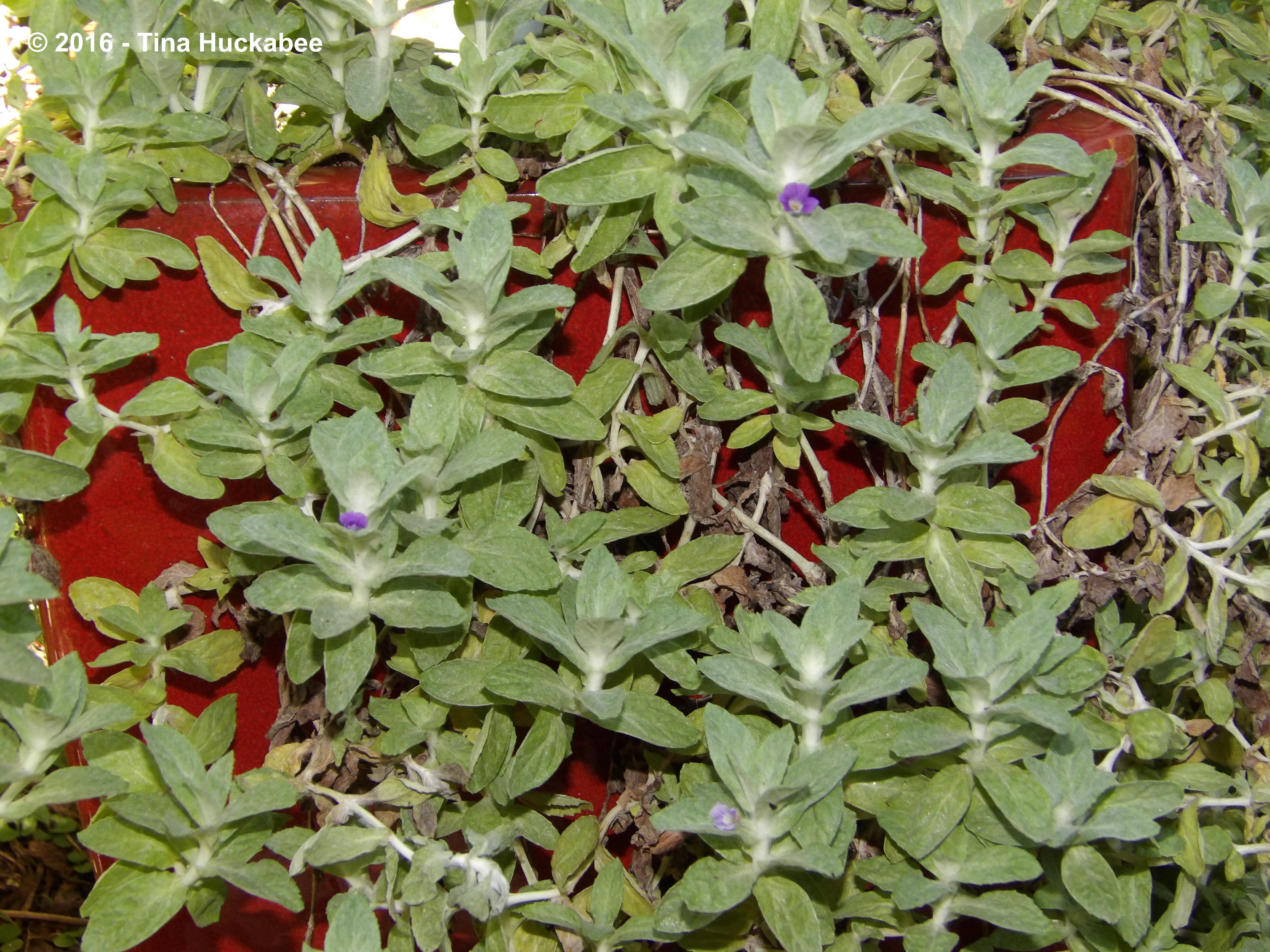
The soil in my gardens is clayey, so I haven’t had much luck with the soft-as-a-baby’s-bottom leaves of the Wooly stemodiaStemodia lanata.  This plant  requires excellent drainage and a good amount of sun.  I am successful with a couple of individuals planted in containers and they’re  thriving.

imgp0287-new

This Wooly stemodia gracefully cascades over the cherry-red pot, while its partner, an American century plantAgave americana sits firmly in the pot and the spiky category.  Both plants share a beautiful gray-green coloring, which is a characteristic of foliage of many Texas native plants.

In this photo, spiky dominates the scene with a second and larger American century plant, this time complemented by a deep blue pot that is its home.

imgp0293-new

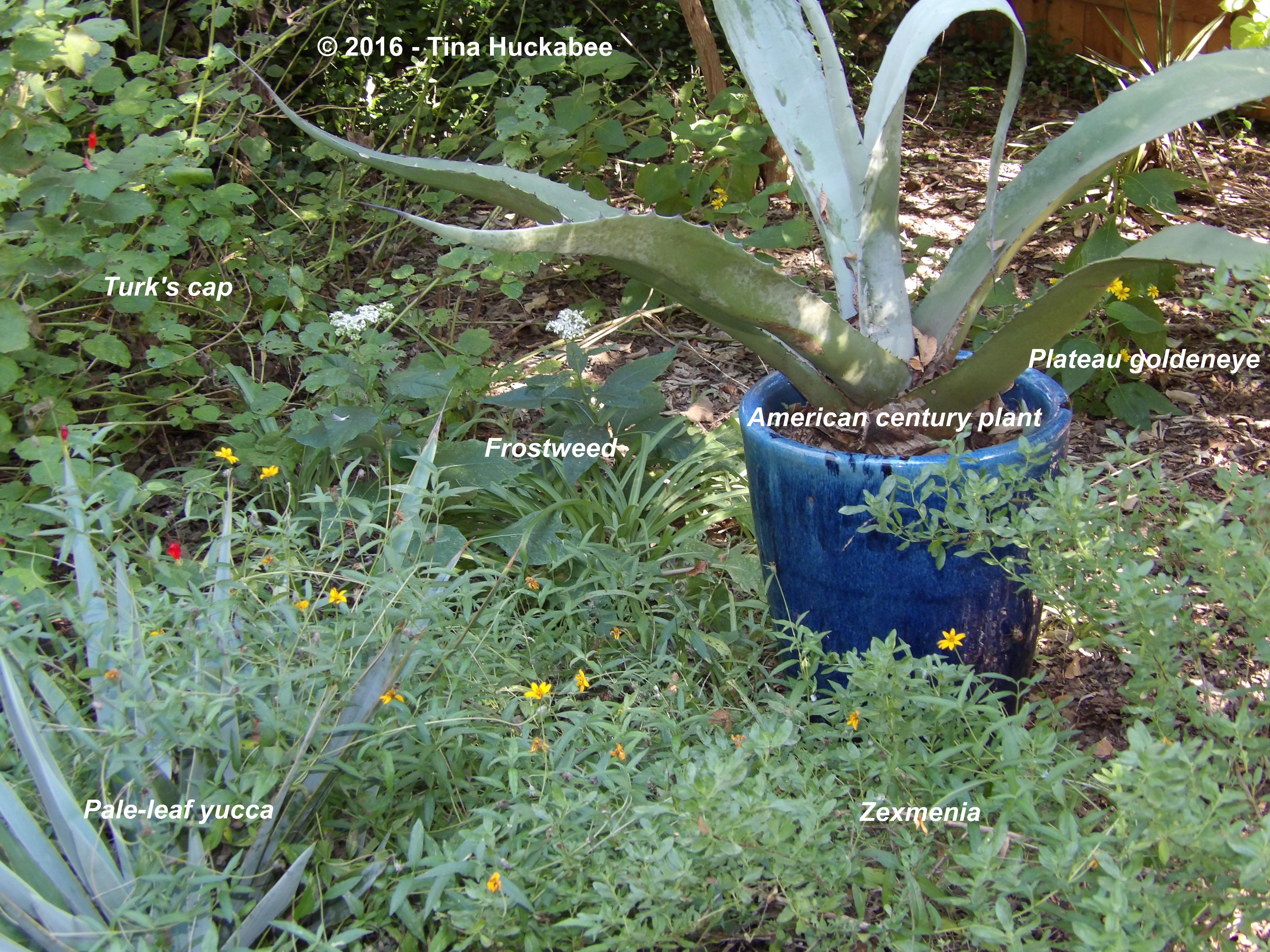
A spiky garden buddy, Pale-leaf yuccaYucca pallida, echos the gray of the agave, though I think the color suggests more blue than the gray-green agave.  The yucca also doesn’t have “teeth” like  the agave, though the ends pointedly exhibit their own danger, especially when the gardener is careless and/or forgets about the needling yucca while pruning or weeding. Ouch!  Truthfully, I’m not a member of the spiky-plant club that so many Austin gardeners belong to.  However, native yuccas and agaves provide low-maintenance beauty and structure and every Texas garden should showcase at least one.

The softer plants in the photo–Turk’s cap, Malvaviscus arboreus, Plateau goldeneye, Viguiera dentata, and Frostweed, Verbesina virginica, all exhibit larger, “tropical” leaves, and are typically considered shade-dwellers, although all three thrive in full-to-part sun.  The Zexmenia, Wedelia texana,  has small, hairy leaves, which are an adaptation with allows the leaves to absorb atmospheric moisture.  The Zexmenia is an extremely drought-tolerant perennial.

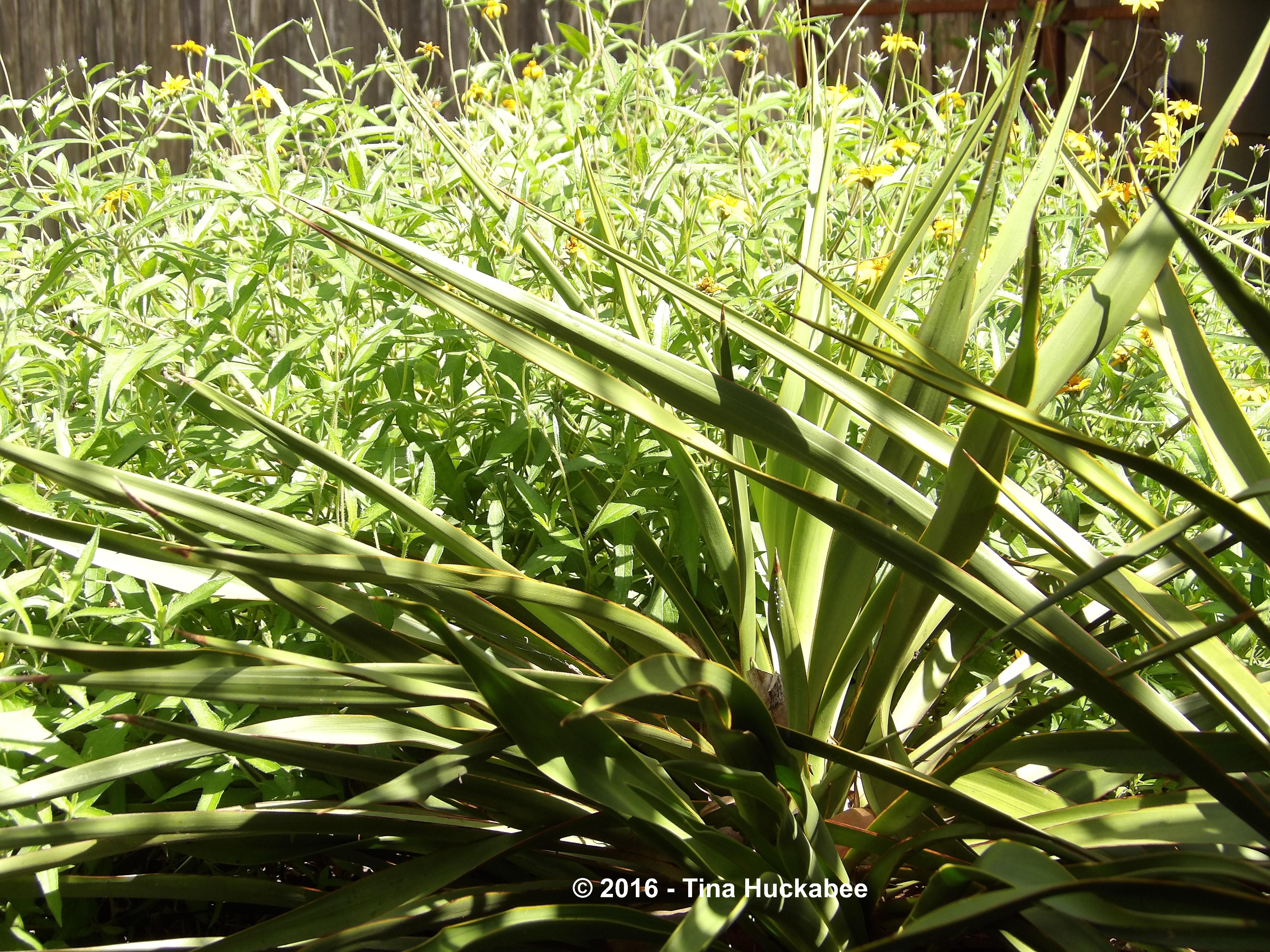
Another spiky native is this Twistleaf yuccaYucca rupicola, here haloed by blooming Zexmenia.

imgp9670-new

A true green,  the Twistleaf yucca, like its cousin,  the Pale-leaf yucca, bloom in the spring and sometimes, later in autumn.  Four foot blooms stalks  topped with clusters of fragrant, creamy flowers, provide for many interested pollinators. For the most of the year, handsome foliage dominates.

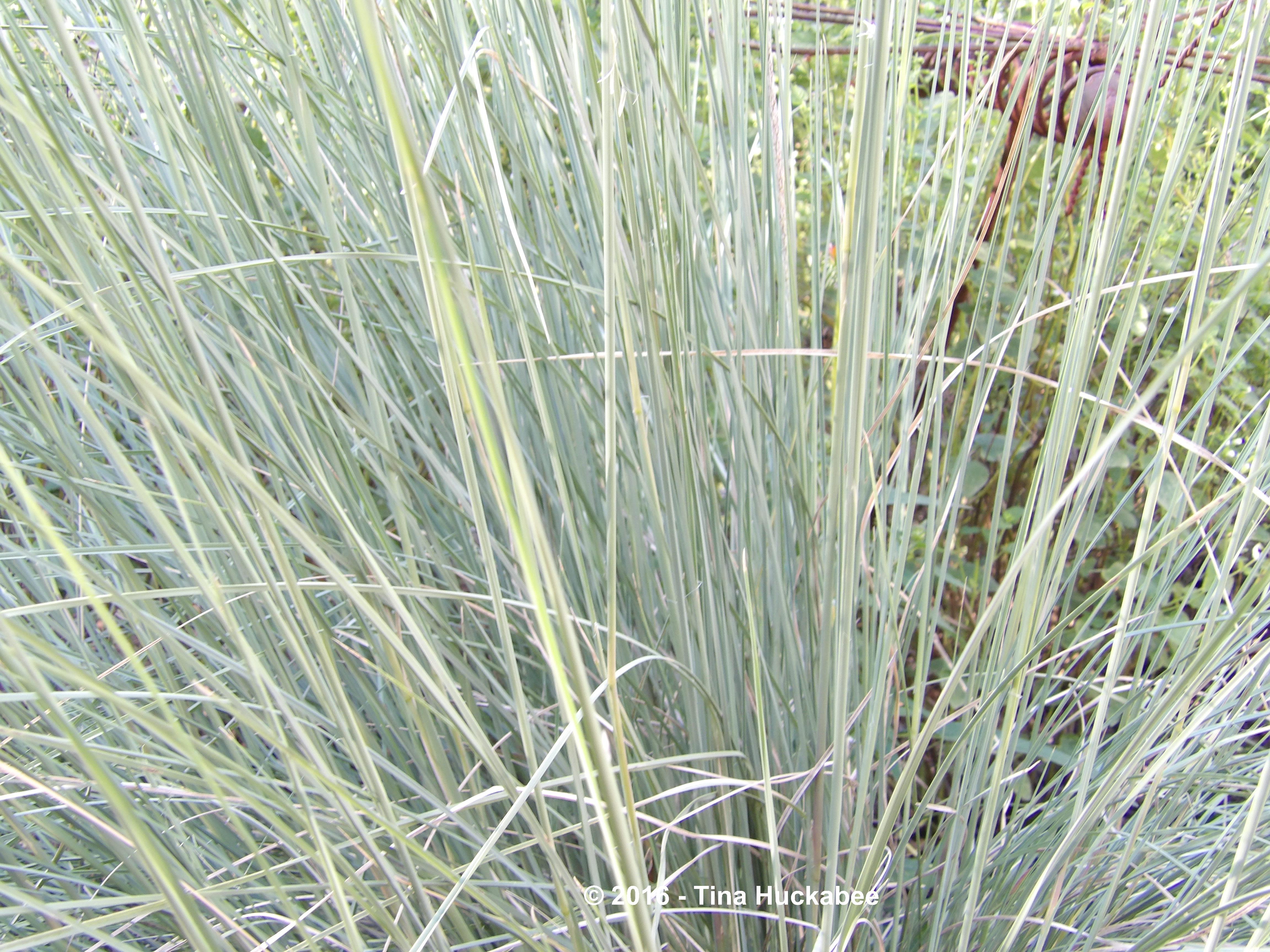
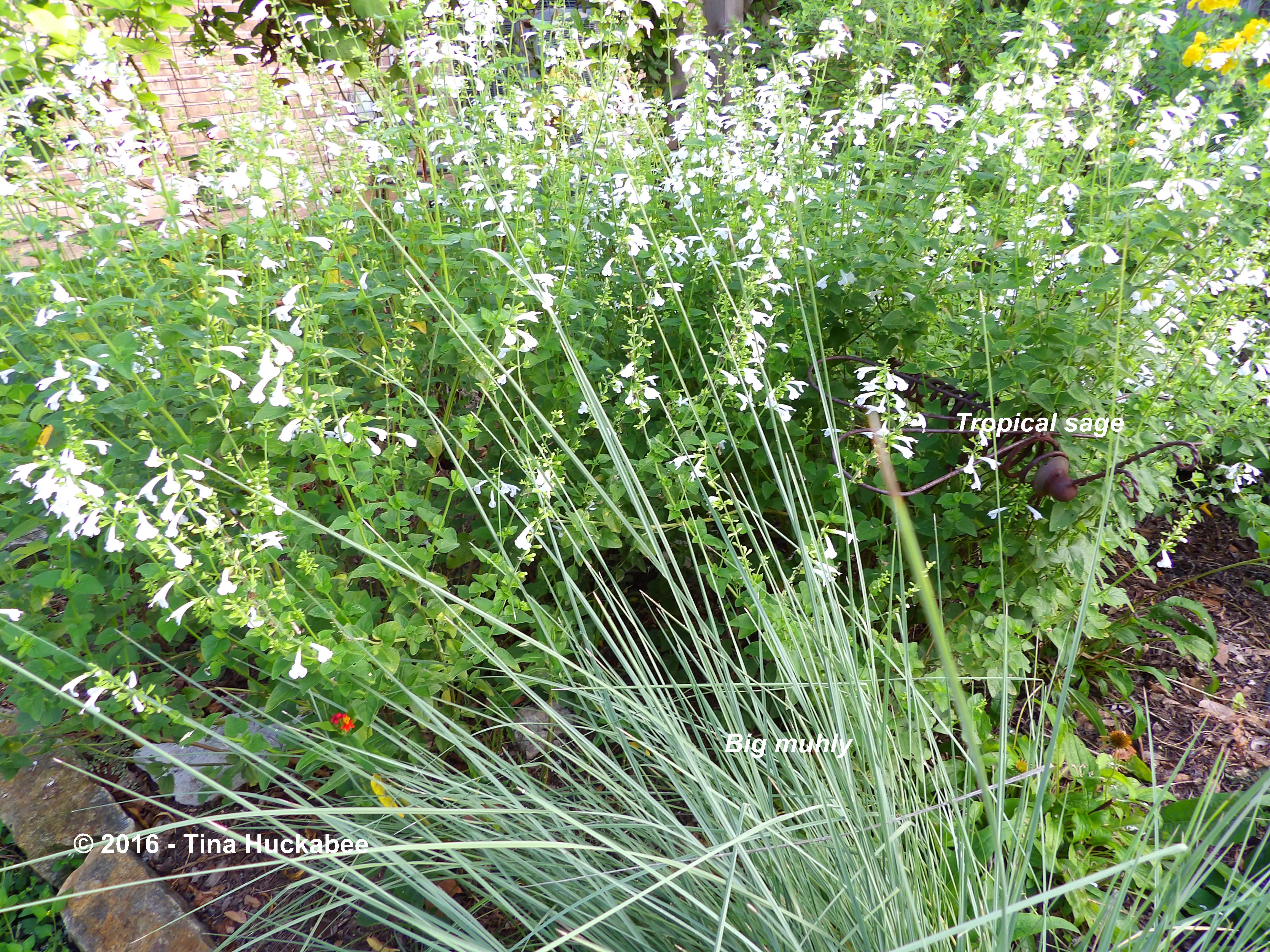
More gray-green in the landscape comes from Big muhly, Muhlenbergia lindheimeri. 

imgp0294-new

RICOH IMAGING

A yearling Big muhly fronts a crown of blooming White tropical sage (Salvia coccinea)

I’ve struggled to find a good spot for the three specimens in my garden as they love full, blasting Texas sun and my garden is hampered by shade.

Really, I’m complaining about shade?  In Texas?

Big muhly is an elegant native grass.  I’ve contented myself with appreciating those that grow in other gardens (or in open spaces).  I’m crossing-fingers that the few in my garden will prosper–I believe I finally have good spots for each.

I am successful with this far West Texas native, Mexican feathergrassNassella tenuissima.

imgp0377-new

These grasses are gorgeous in containers and planted in the ground, as well as happy in sun or shade–a win for the garden!  Stunning in the spring with  frothy, silvery-green foliage, they evolve into a toastier autumn presence as the growing season advances.

Texas beargrass, Nolina texana, is one more “grass” that is beautiful in a pot or directly in the garden.

imgp0379-new

This slow-grower is in the Liliaceae family and works well as an ornamental grass. Evergreen with a draping habit, it makes a statement, especially when planted in groups of two or three. This is another plant which flourishes when planted in containers.

Native Texas Plant Week is winding down, but the use of native plants in commercial and home gardens is on the upswing, not only in Texas but in many other places.  Now is a good time here in Texas to plant trees and perennials and to plan for next year.  Whether you live in Texas, or not–go native!  Native plants are easy and special because they belong in and to the unique place you call home.

Whatever foliage you grow, please check out Christina’s lovely Creating my own garden of the Hesperides Garden Bloggers’ Foliage Day.  See interesting foliage from many gardens and from many places, and then share your own leafy loveliness.

Texas Native Plant Week

Not that I need an excuse to extol the virtues of utilizing Texas native plants in the home garden, but this week, October 16-22, is the official week to celebrate our beautiful native plants here in Texas. So, here goes!

imgp9413-new

White tropical sage (Salvia coccinea) with Big muhly (Muhlenbergia lindheimeri)

I’ve gardened with native plants for more than 20 years.

imgp9654_cropped_1885x2608-new

Gregg’s mistflower (Conoclinium greggii)

imgp1339-new

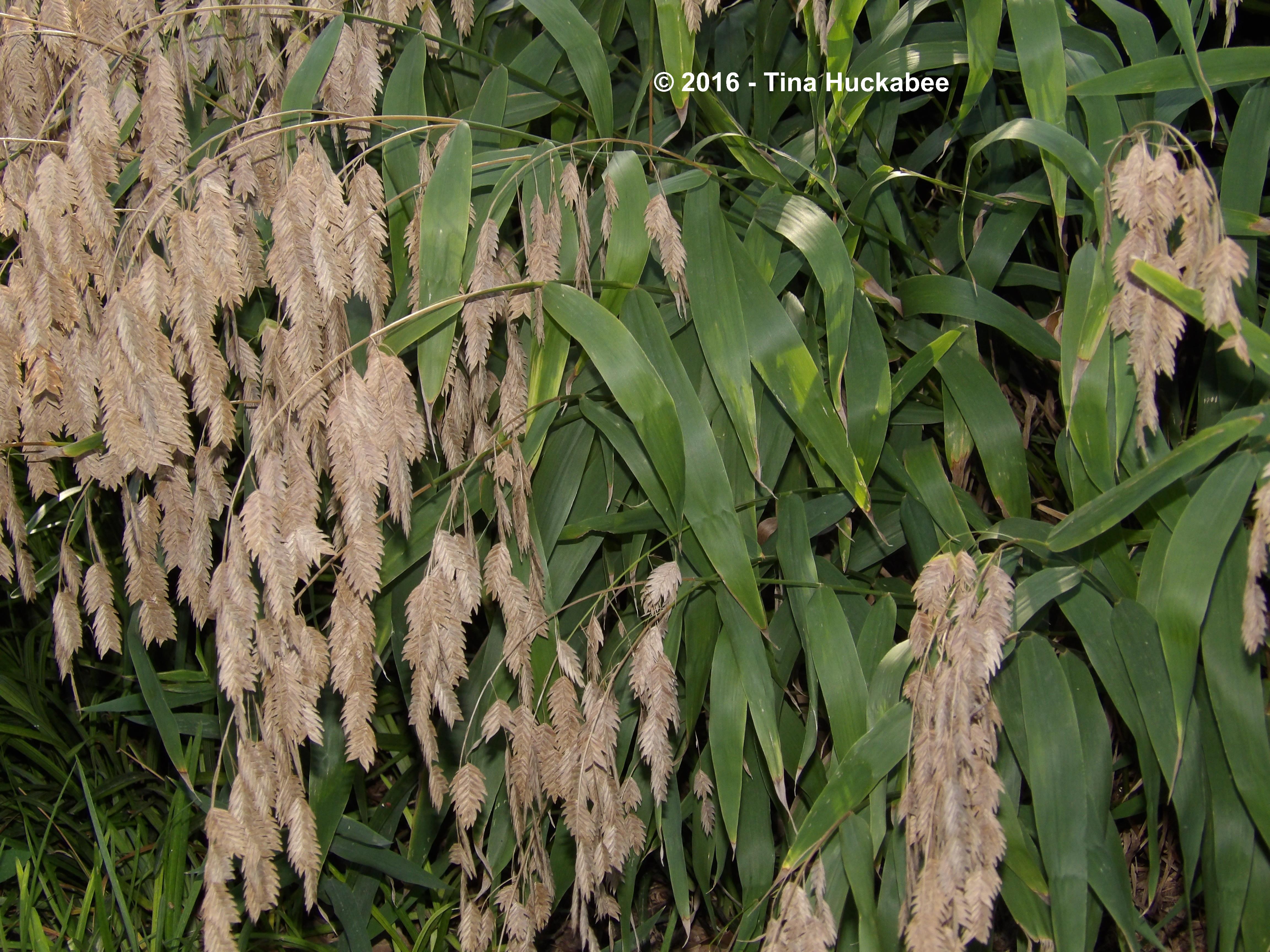
Inland sea oats (Chasmanthium latifolium), in autumn

And why not?  They’re easy to grow, with minimal effort in maintenance and watering.

imgp9672-new

Frostweed (Verbesina virginica) and Rock rose (Pavonia lasiopetala)

imgp9656_cropped_2484x2120-new

Red tropical sage (Salvia coccinea)

Plus, they’re lovely.

p1040934-new

Henry Duelberg Sage (Salvia farinacea ‘Henry Duelberg’) with Purple coneflowers (Echinacea purpurea)

imgp9661-new

American beautyberry (Callicarpa americana)

imgp9657-new

Lindheimer’s senna (Senna lindheimeriana) and Frostweed

Throughout North America (and probably, most parts of the world) native plants and the wildlife relying on them, are declining due to habitat destruction, the proliferation of invasive plants, widespread use of chemicals in industrial agriculture and urban gardens, and the changing climate.

imgp9673-new

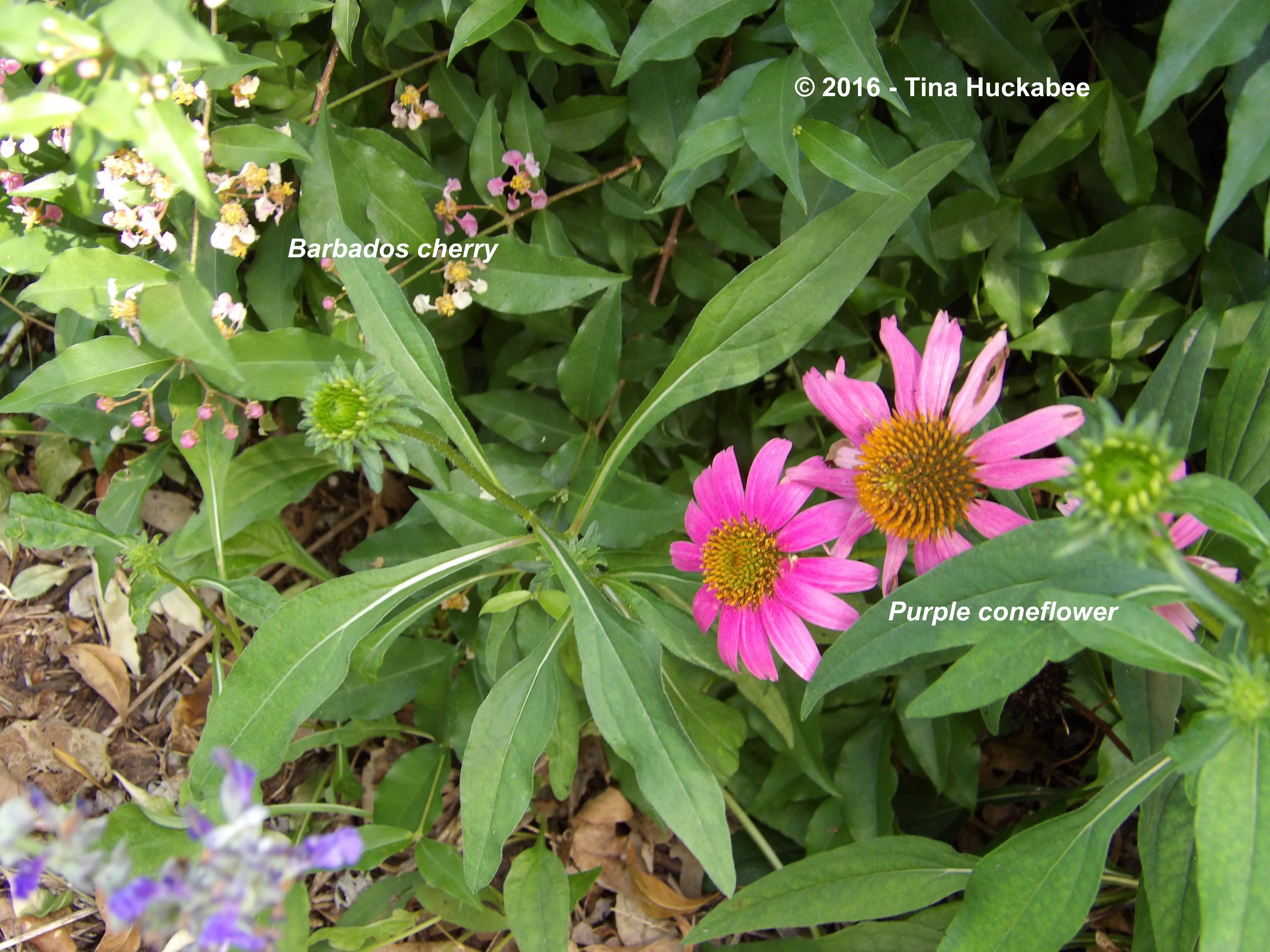
Barbados Cherry (Malpighia glabra) and Purple coneflower (Echinacea purpurea)

imgp9792-new

Pigeonberry (Rivina humilis)

The individual gardener can’t solve all of those issues, nor completely reverse the damage done by decades of inappropriate land management, but we can do our part to repair the world in our own outdoor spaces.  One real way to heal the Earth and provide for its inhabitants is by growing native plants.

imgp0297-new

Frostweed with nectaring honeybees, Texan Crescent and Grey Hairstreak butterflies

imgp0269-new

Texas Crescent butterflies on Blue mistflower (Conoclinium coelestinum)

Planting native trees, perennials, grasses, and annuals provides habitat required for wildlife to exist and beauty for the gardener to enjoy.

imgp9806_cropped_4199x2653-new

Honeybee on Rock rose (Pavonia lasiopetala)

imgp9720-new

Green anole lizard on foliage of Frostweed (Verbesina virginica)

Once native plants are in play, it’s remarkable how interesting the garden becomes.

imgp0301_cropped_1963x2235-new

Native bee (Megachile, Leafcutter ssp?) on Plateau goldeneye (Viguiera dentata)

imgp0461_cropped_3267x3202-new

Endemic wildlife–pollinators, birds, reptiles, and other critters–can’t thrive in the typical American landscape of sterile, mono-culture turf–there’s nothing for them to eat, nor refuge for raising young.  But when native plants are grown, a diversity of wildlife results because wildlife native to a specific region shares biological synchronicity with plants from that region.   Plants are certainly pretty enough, but when clouds of butterflies are in the garden, or the sweet songs of birds are a constant, you know that you’ve hit the true native plants sweet spot:  the garden is living and alive, which is what a garden should be.

imgp9695-new

Yellow bells (Tacoma stans)

imgp9677-new

Honeybee on Frostweed (Verbesina virginica)

Are native plants free of work?  No, like any worthwhile effort, self-education is a must and there will be some maintenance in a native plants garden. But eschewing the sterile lawn and needy exotic annuals and perennials in favor of regionally appropriate native plants with their full palette of color and texture, inspires life and dynamism in the  garden through seasonal change and accompanying wildlife.

imgp9667-new

Red yucca (Hesperaloe parviflora)

imgp9662-new

American beautyberry (Callicarpa americana)

In some communities, it’s challenging to find native plants for purchase, but more nurseries than ever are stocking natives because consumers are demanding them.   Utilizing online nurseries for seed purchases, involvement in local native plant societies for information and plant/seed exchanges, and perusing gardening blogs and related websites, as well as studying books on plants and design basics, are good places to begin learning about the value, beauty, and how-tos of growing and gardening with native plants.  Check out the Garden Resources section of this blog for a by-no-means comprehensive list of websites useful for learning about native plants, wildlife and water-wise gardening, and related subjects.

imgp9653-new

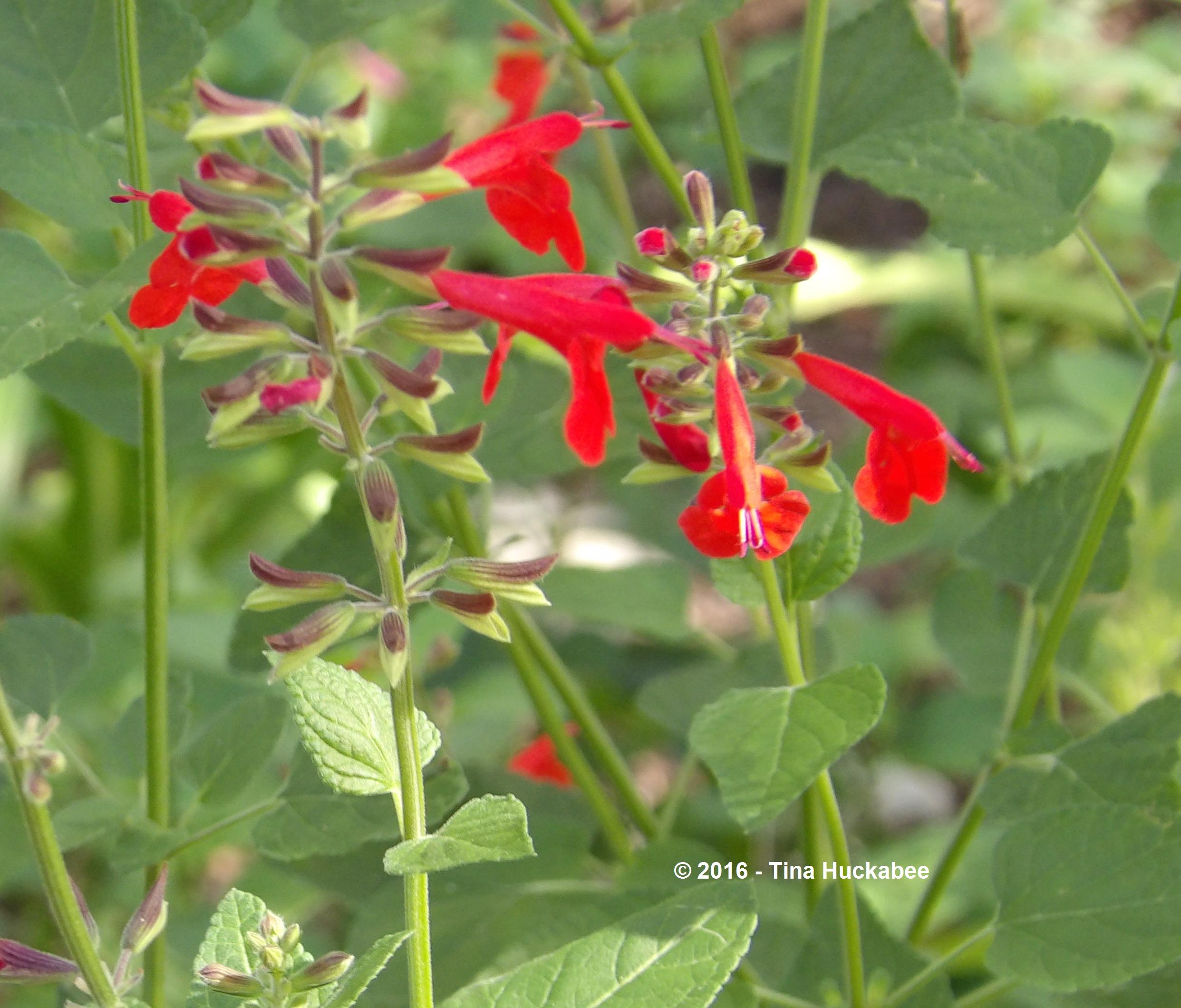
Big red sage (Salvia penstemonoides)

p1050643-new

Inland sea oats (Chasmanthium latifolium) in early summer

Autumn in Texas, at least for the southern and eastern parts of the state, is a good time to plant native trees and perennials and to sow wildflower seeds.  Winter is an excellent time to study garden design principles and plan for implementation for your new gardens, pathways, and sitting areas.  Gardening is a process–a wandering path, if you will–and transformation from a turf-centered lawn to a living, blooming, berrying garden, takes time. You will make mistakes, but that’s how you learn.  Take your time, connect with like-minded gardeners, and enjoy the native garden ride.

imgp9411-new

White tropical sage (Salvia coccinea)

imgp9666_cropped_2479x2571-new

Rock rose with Zexmenia (Wedelia texana)

It can seem daunting to completely change the garden modus operandi by switching from a “traditional” high-maintenance, turf-loving landscape to one based on native plants.  But even if you can’t convert your entire property to a native habitat, adding  a pollinator garden or two, planting native shade trees, and/or native shrubs for birds, is a good start in moving toward a native landscape. You will see a difference almost immediately as you add native plants to your property:  there will be color and life and it’s likely that you won’t spend as much time working in the garden as you do enjoying the garden.  Isn’t that what a garden should be?

imgp0276_cropped_3129x3111-new

Texas Crescent butterfly on Blue mistflower

So, go native!  Plant native!  Celebrate Texas native plants–this week, and for months and years to come!

20121013_18_cropped_4337x3096-new

Big muhly (Muhlenbergia lindheimeri) with blooming Plateau goldeneye