Spring is springing here in Austin, Texas–and how! After a mild winter, punctuated by a few days and nights of low 20sF/-6 to -16C, fresh greens are poking out and peeking through, heralding a new year of plant growth and garden possibilities. It’s only the beginning of the Central Texas season of verdancy, but notable for its altering of the tawny and gray palette that is the Texas winter landscape.
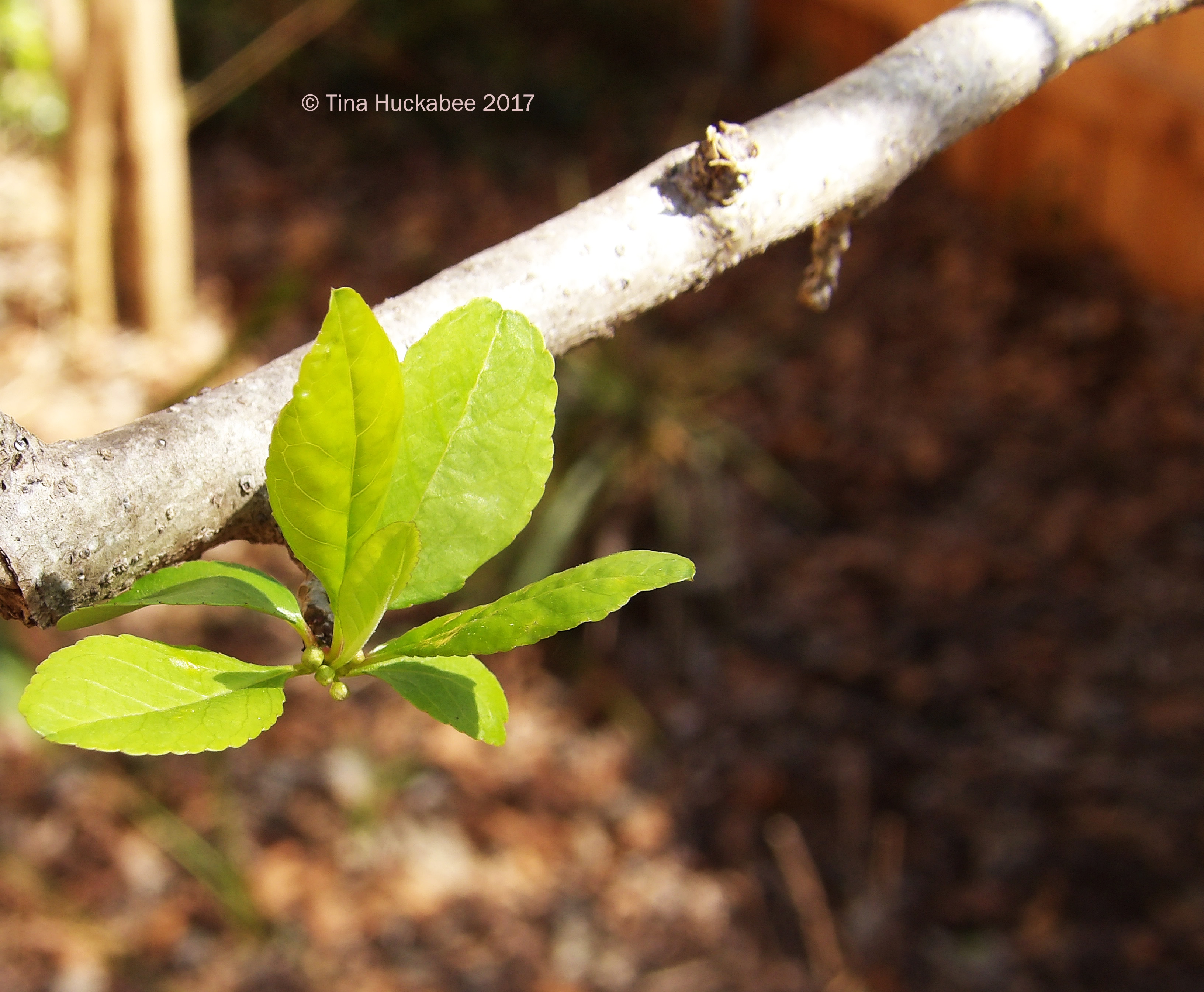
Possumhaw holly, Ilex decidua, is flushing out new yellow-green foliage growth.

Buds of the tiny white flowers are developing at the base of the leaves.
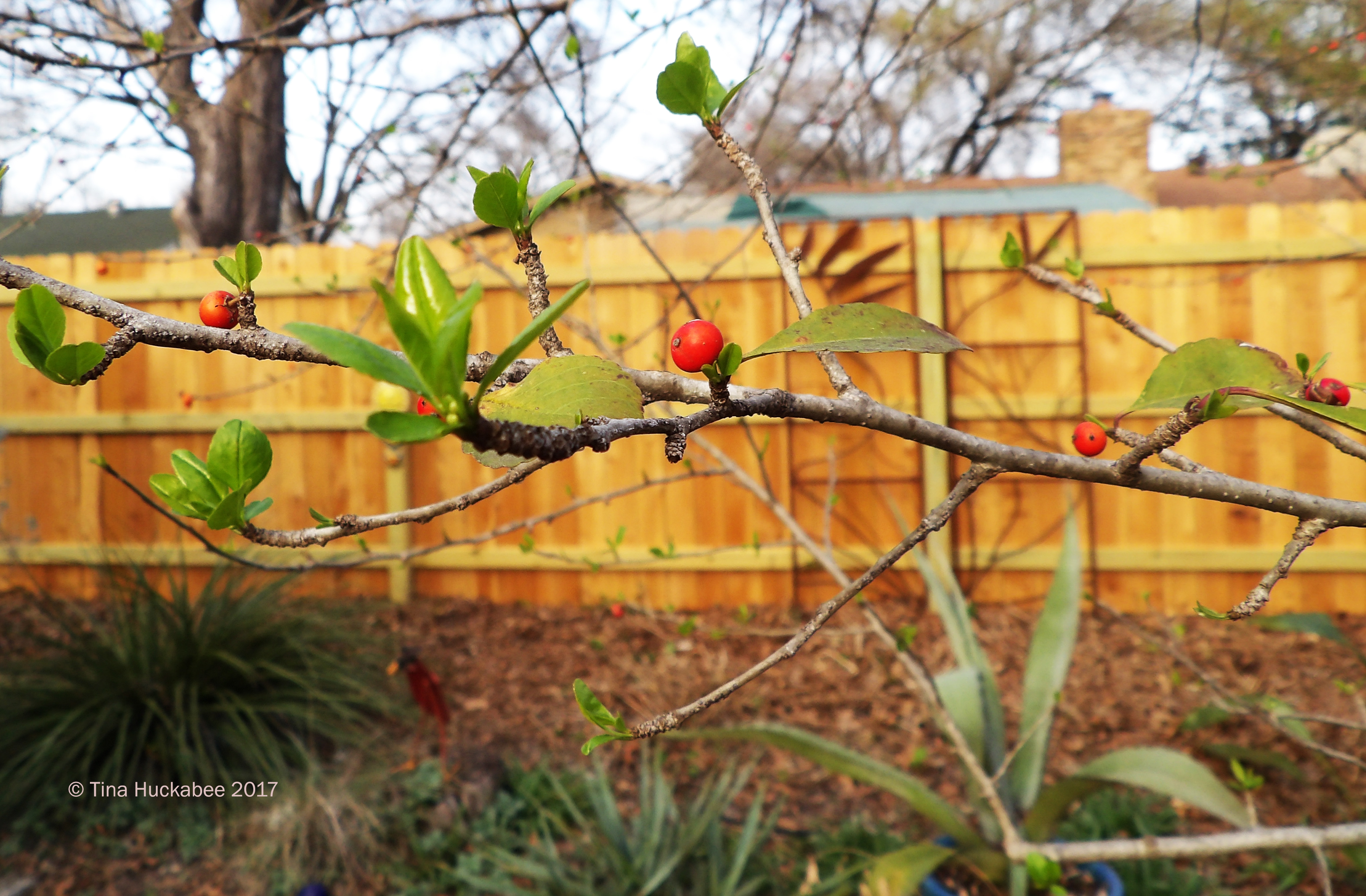
Bark of this attractive small tree serves as elegant white scaffolding in an emerging sea of green, popped here and there by luscious red berries which haven’t yet been gobbled up by various wild critters.

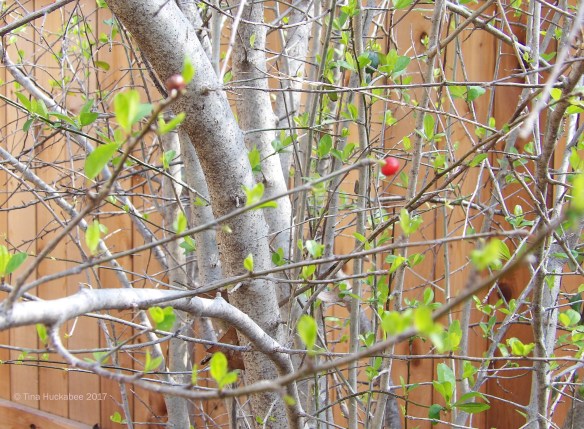
The Possumhaw’s garden neighbor, an Almond verbena, Aloysia virgata, was an impulse buy for me some years ago and one I don’t regret. No berries on this small tree, but after each rainfall during the growing season, fragrant white blooms materialize and are friends to the pollinators. For now, its foliage blushes new, transforming to solid green when ready.


Another small native tree with multicolored foliage is my Texas smoke tree, Cotinus obovatus.
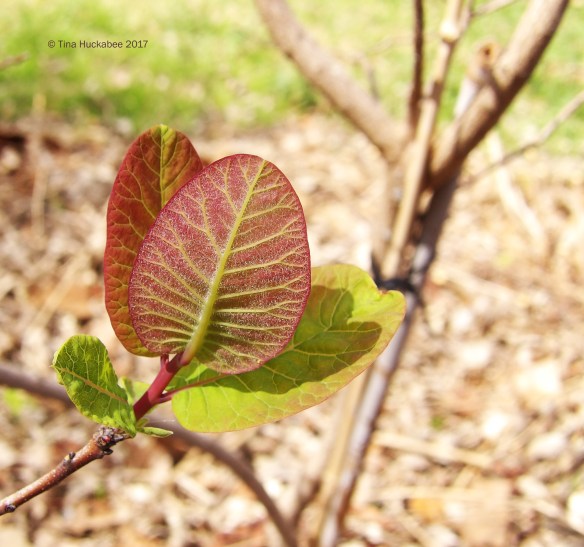
This one is a couple of years old and growing well, with foliage color year-round and sprigs of blossoms coming soon.
The Goldenball leadtree, Leucaena retusa, has sprouted its new greens against the clear blue sky.
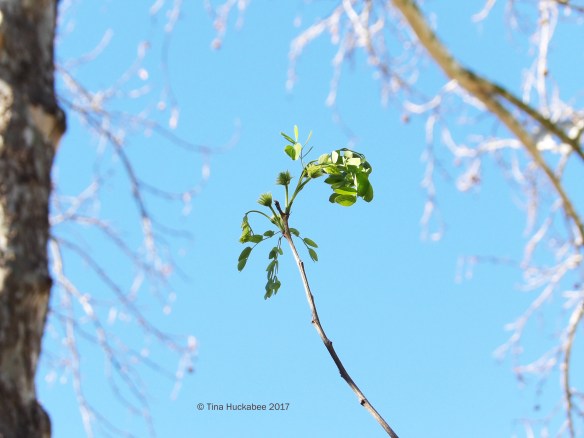
Additionally, its koosh-like blooms will be ready for interested pollinators in the next month.
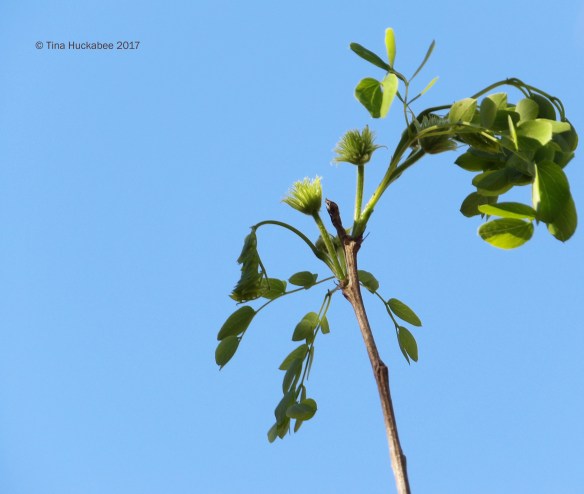
Budding blooms keep new foliage company.
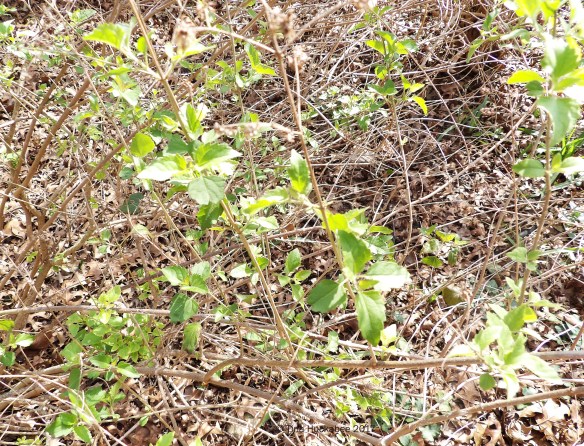
Not as tall as the aforementioned wildlife-friendly trees is the shrub White mistflower, Ageratina havanensis, a semi-evergreen, sometime spring, and always fall bloomer, whose blooms are beloved by butterflies and bees alike.
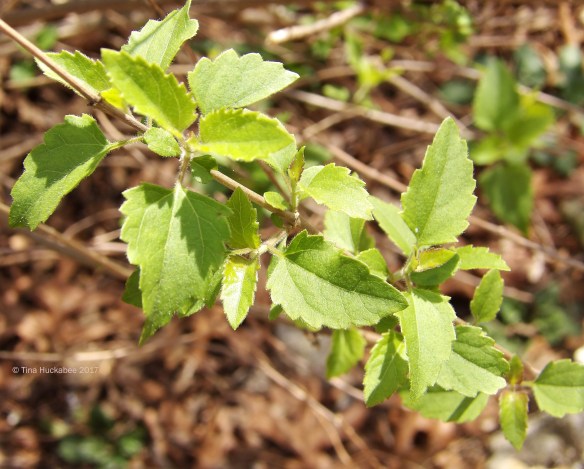
Some leaves remained on my shrub after our hard freezes, but fresh foliage is quickly appearing to fill in the bare-limbed gaps.
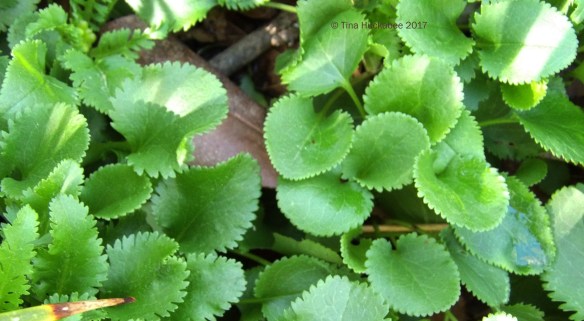
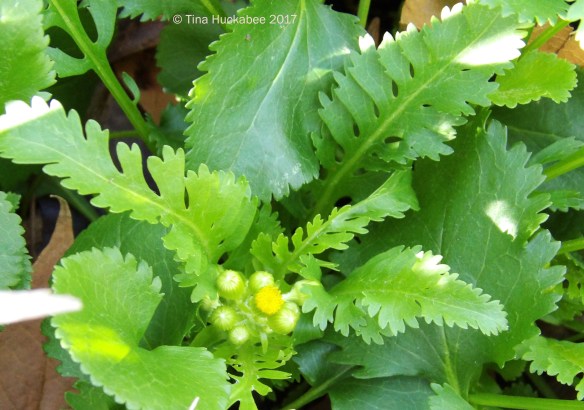
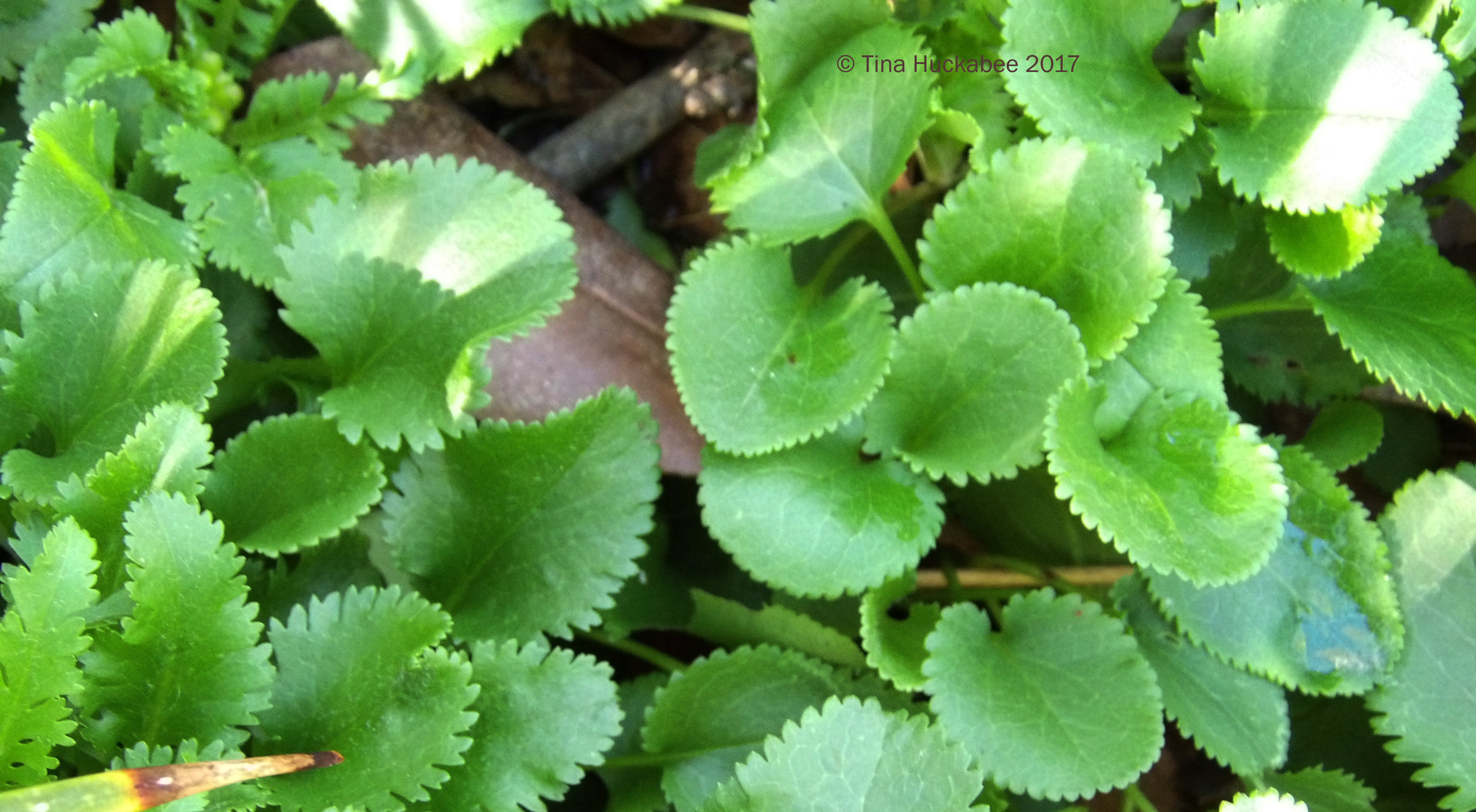
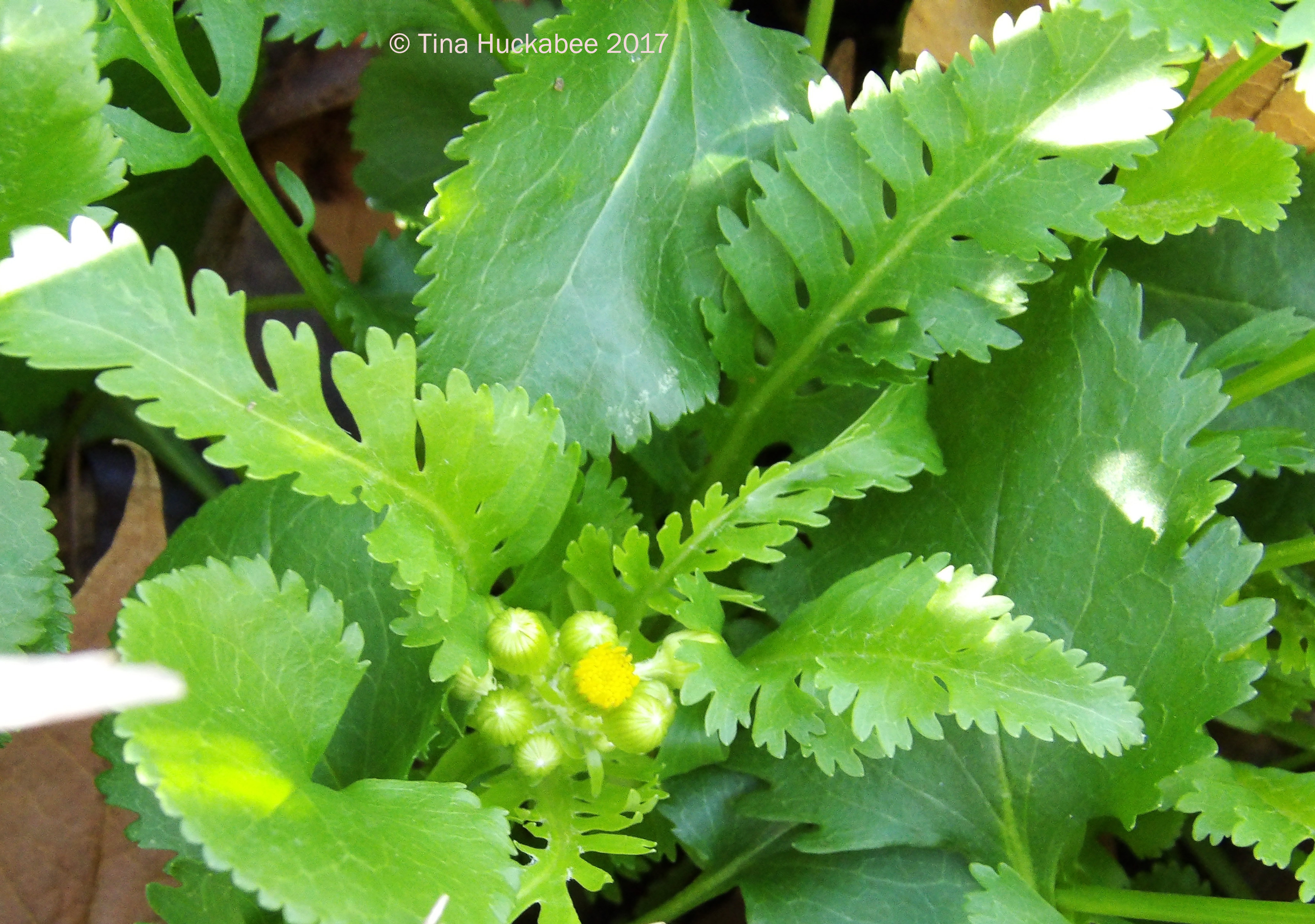
Closer to the ground are the evergreen serrated leaves of the wildflower Golden groundsel, Packera obovata.
.
The oval leaves lend year-round groundcover beauty, but the lance-like and dramatically serrated leaves announce the pedicels that host cheery yellow blooms which will mature in the next month or so.
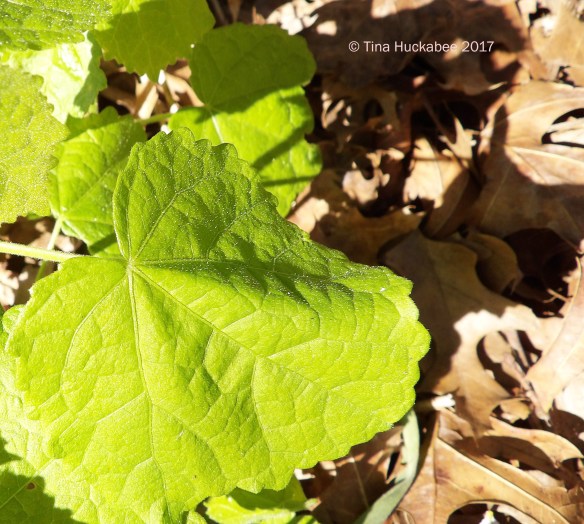
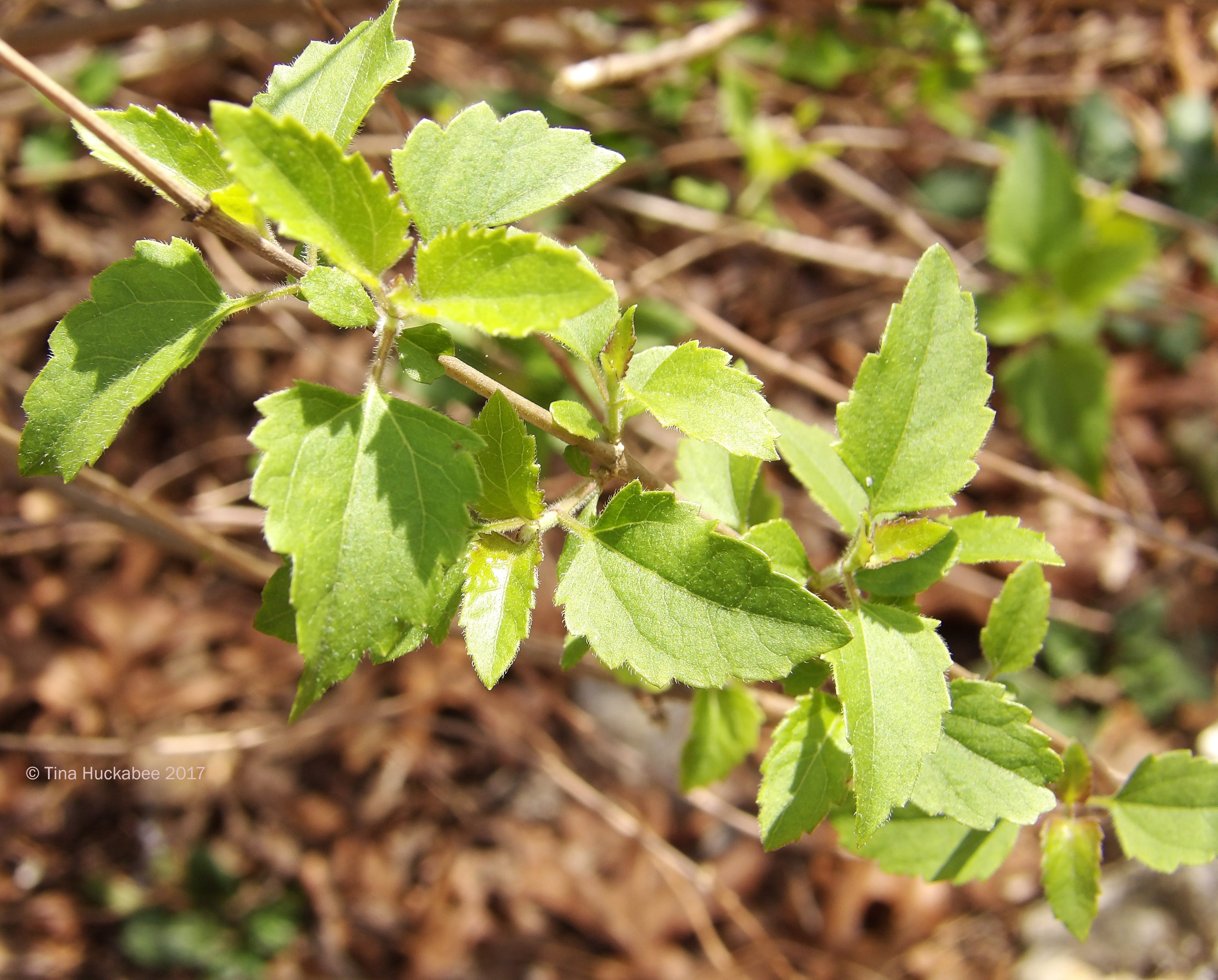
Turk’s cap, Malvaviscus arboreus, is awakening from its winter slumber, as well. It’s hard to imagine that this plant’s stems will grow to 5 or 6 feet by May.

This set of Turk’s cap leaves share space with a Giant spiderwort (Tradescantia gigantea).
A close-up shot shows a slight fuzz, which is part (only part!) of the reason that Turk’s cap is such a water-wise perennial.
I’m awaiting the vibrant blooms of the Red poppy, a reseeding annual, world-wide garden favorite and welcomed spring flower. Its foliage is beautiful,

…a gray-green, ruffly wonder in the unfolding spring garden, and in this case, hosting a green stink bug. Do you see it?
Whatever foliage you grow–bugs, or not–please check out Christina’s lovely Creating my own garden of the Hesperides Garden Bloggers’ Foliage Day. See interesting foliage from many gardens and many places, and then share your own leafy loveliness.
Additionally, many thanks to howtostartagarden.org for honoring ‘mygardenersays’ with a ‘Top Southwest Garden Blogs’ recognition. I’m honored and humbled.











 My Gardener Says...