Bird Parade: Wildlife Wednesday, June 2018

The month of May sees the peak of spring neotropical bird migration as they wing through Texas from Mexico, Central and South America, and head northward to various parts of North America.  Their destinations are the summer breeding grounds of far North America, and as they travel the long distances, they rest and feed in trees and rejuvenate in water features, both.   I was fortunate to observe some of the avian visitors in my back garden before I left Austin for a chunk of May, and once I returned, witnessed the tail-feather end of the songbird parade, replete with color and decorations, as they bathed briefly at the pond and flitted high in the trees.

Celebrating Wildlife Wednesday, here are the migratory birds of the past month, no longer in my garden, but hopefully safely raising families in their northern, summer homes.  I’m not going to pretend that this month’s WW is anything but birds.  The migratory birds are gone, but not forgotten!

A female juvenile male American RedstartSetophaga ruticilla,  eyes the pond, ready for a cooling dip.
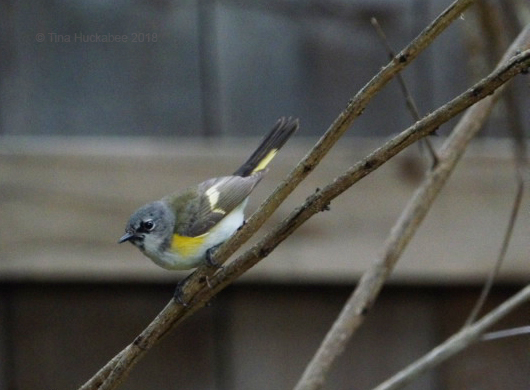
I suspect that there were more Redstarts when I was gone, as they’ve been solid visitors, even into late May.


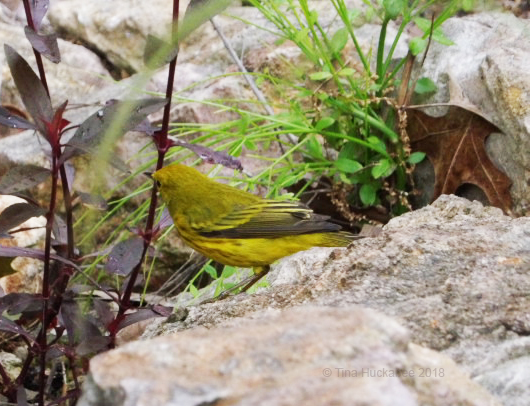
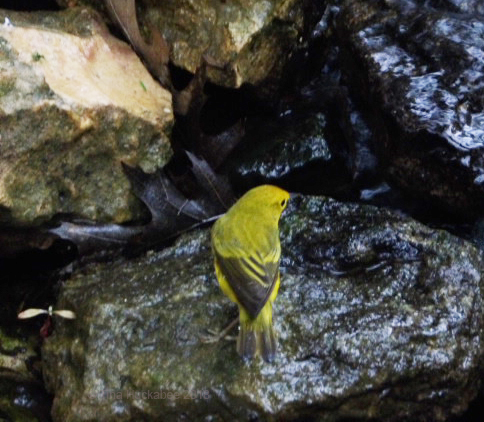
A male Yellow WarblerSetophaga petechia, hops along the rocks which border the pond,
…then chills his toesies on the the wet rocks.
 

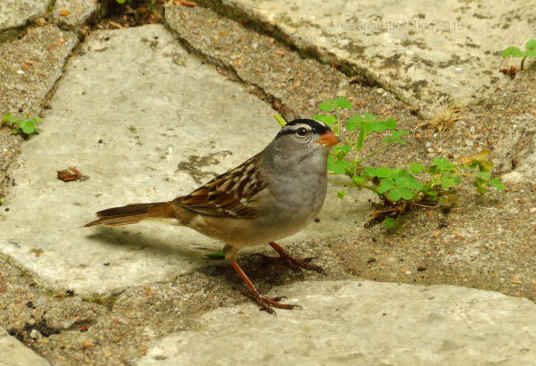
Several juvenile White-crowned Sparrows, Zonotrichia leucophrys, hung out near (you guessed it!), the pond.

Each would splash and flutter, then flit to nearby branches for drying.

Eventually, an adult White-crowned visited my backyard bird resort, though he/she preferred pecking at seeds on the back patio. I haven’t seen this bird in my garden before (that I’m aware of), I’ve only seen photos, but recognized it immediately.
 

A sunny afternoon highlights the coloring of this Russet-backed Swainson’s ThrushCatharus ustulatus.


On another day and at the pond,  a different bird, an Olive-backed Swainson’s Thrush contemplates a splash.
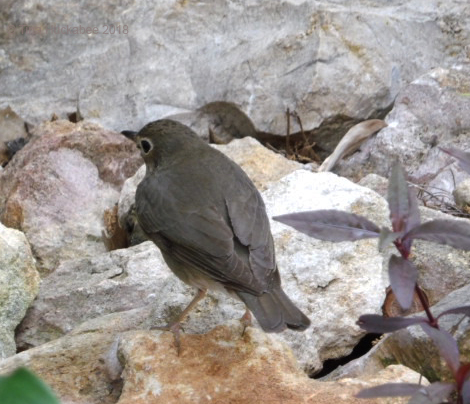
The frontal coloring is more aligned with its Russet relative.  I think these birds have the sweetest faces.


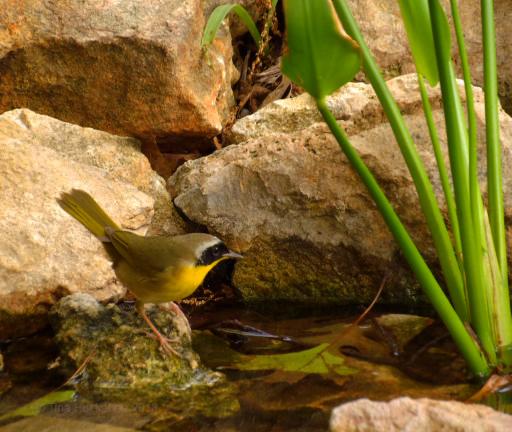
There’s nothing common to me about the Common YellowthroatGeothlypis trichas,  like this cute male.
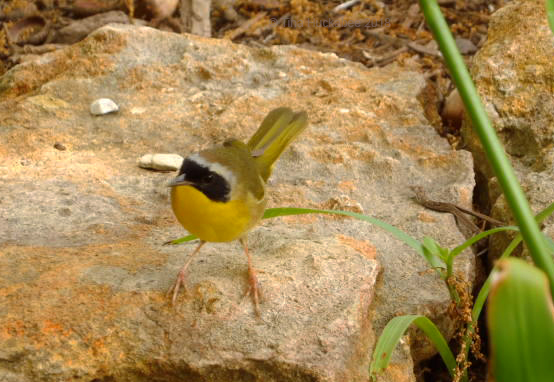
The flash of yellow darting through the garden alerts me to visits from this little warbler.  Usually, I’ve the females in past migration seasons and they’re a little blander, but still darling.  Like the Redstarts, I’ll bet there were more of the Yellowthroats in my garden while I was gone.  I’m sorry I missed them this spring, but I’ll have another chance in the fall.
 

Another new bird for me was a parade of Nashville WarblersOreothlypis ruficapilla. This isn’t a great shot (taken from indoors), but you can make out the reddish-brown cap, sported by males.  There were quite a few of these tiny birds who found their way to my back garden.

Check out the polite line-up of Nashvilles as they troop to the public bath!


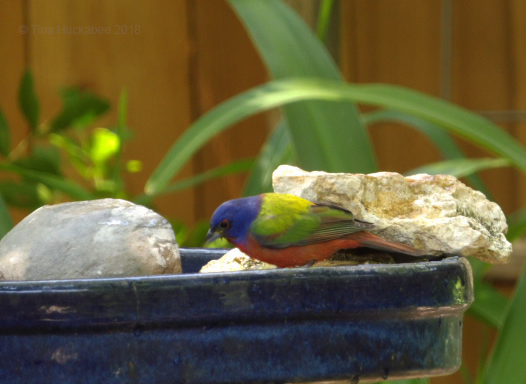
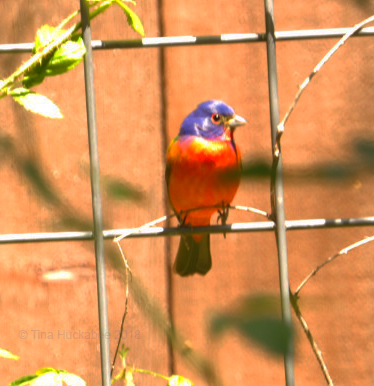
With their vivid fusion of blue, green, yellow, and red, male Painted Buntings seem to have flown straight out of a child’s coloring book.

So begins the description of (perhaps) the most beautiful of North American birds. I was fortunate to enjoy quite a few sightings of male Painted BuntingsPasserina ciris.

I also saw a female Painted Bunting, along with her seed-pecking buddy, a female Indigo Bunting, but they were just outside a window, through a screen and I didn’t have the camera handy.  Their nibbling from my native plants (they were eating seeds of the Rock rose, Pavonia lasiopetala), affirms my garden choices.  As well, I observed male Painted Bunting picking the tiny seeds from a Mexican feathergrassNassella tenuisima.  I’ve always loved this plant,

The blue, metal bird doesn’t eat the seeds of the Mexican feathergrass.

… but have never witnessed a bird eating its seeds.  Beauty, plus value for wildlife–that’s a garden win!  

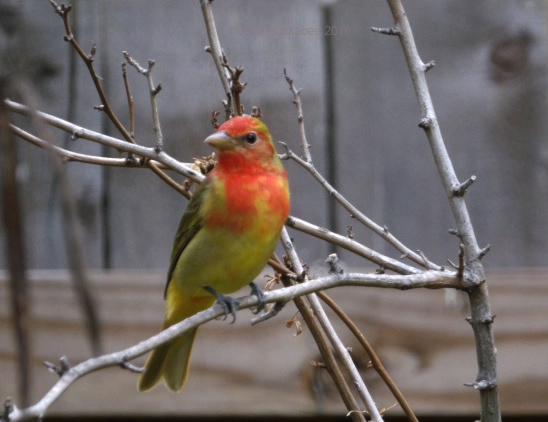
Unlike most of the birds profiled in this post who breed far north of Texas, the Painted Buntings and the Summer Tanagers, breed relatively close to Central Texas.  Both visit my gardens, but only for brief periods.  This female Summer TanagerPiranga rubra, is an insect hunter and each late April and early May, I see them, perched above my honeybee hives, snatching bees on the wing (both the birds and the bees)!
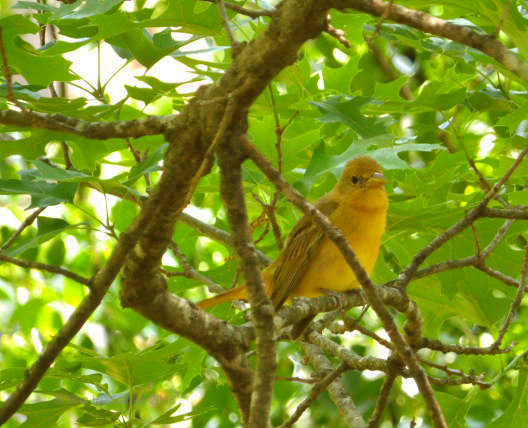
This striking, but mottled fella is a juvenile male Summer Tanager.  I didn’t see the scarlet male this year.  Too bad, but I was thrilled to host mom and her son–except for the bee-eating thing!
 

The “black-throated” part of the name is visible, but you can’t see the green sheen on the back of this Black-throated Green WarblerSetophaga virens.

It’s a bird I first saw last year and enjoyed only a brief glimpse of this spring.  It migrates and breeds in eastern North America and Canada.


My winter-visiting Orange-crowned WarblerOreothlypis celata, left some time ago, but another passed through, probably having spent the winter somewhere further south of Austin.
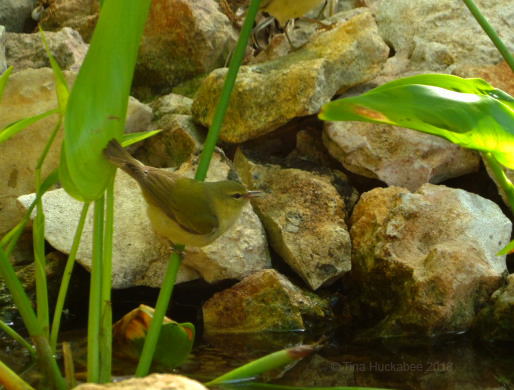
The Orange-crowned Warblers aren’t the flashiest of warblers, but I’m charmed by their chirps and welcome their company during the winter.  I was surprised at observing this one so late in the season.

And those are the birds of  migratory May.

What wildlife happenings did you share in or observe this past month?  Please post about your wild happenings and leave a link when you comment here.  Happy wildlife gardening!

Hot. Pink.

Central Texas bounced through spring, skipping over late May and June, and landed, smack dab, in July.  Or so it seems when venturing outdoors.  It’s hot here, hotter than it should be in late spring, and hotter than this perspiring gardener prefers.  Don’t get me wrong, I don’t mind the heat–in July, August, and I’ll even tolerate it for some of September.  But as the temps creep ever closer, day-by-day, toward 100F / 38C (in the forecast for the next few days), this toasty trend heralds the coming of the The Long Hot of summer here in Austin.

The heat is a little early for my taste, but as the saying goes:  Everybody talks about the weather, but nobody does anything about it.

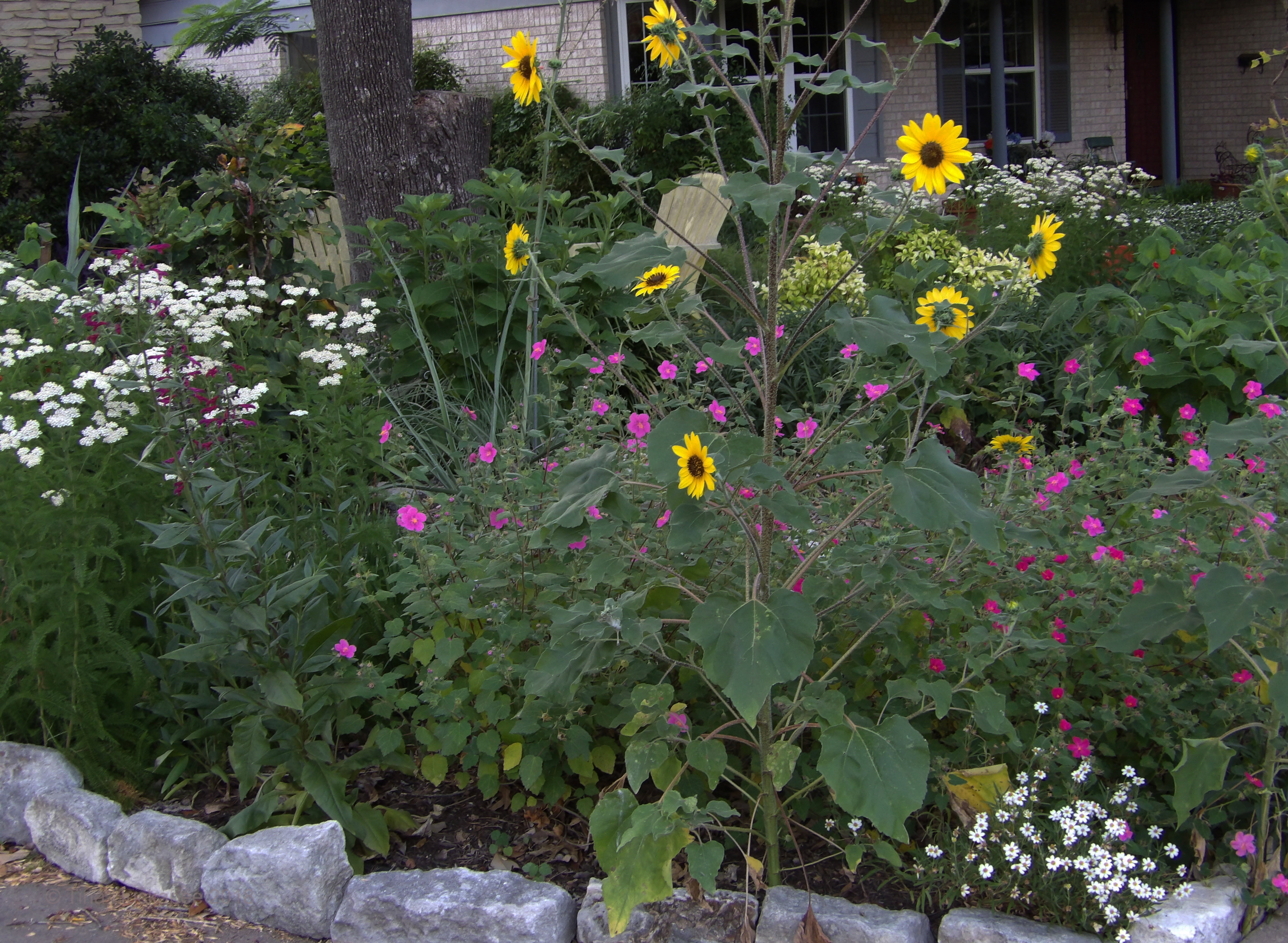
These Rock rosePavonia lasiopetala, are also hot, hot, hot, but in the pink sort of way.   I’m certainly not complaining about them.

The sunflowers nod their approval of Rock rose.

Most of my Rock rose began blooming toward the end of April and are still pinking-up the garden.  I’ll prune them in the next few weeks as they bloom best on new wood.  They’ll continue to flower in our hot weather and with minimal water, but the flowers will close in mid-afternoon to conserve moisture.

We all hunker down in the heat.

Rock rose mix nicely with other early summer bloomers, like Big red sage, Salvia penstemonoides, and YarrowAchillea millefolium.

I transplanted the Big red sage in the fall from my increasingly shady back garden. They’re much happier here.  The Yarrow is also blooming better now that the front garden receives more sun.


This little guy looks like he’s waiting for me to leave, so that he can enjoy his breakfast of petals or leaves.

Look closely at the pollen grains on his legs.

I prefer seeing this little gal.

Slurp, slurp with her little bee proboscis.


Summer has arrived: time to don hats, slather sunscreen, gulp water, enjoy (or tolerate) the heat,

…and value the flowers of summer.


Curls-n-Caterpillars

I love my curls.

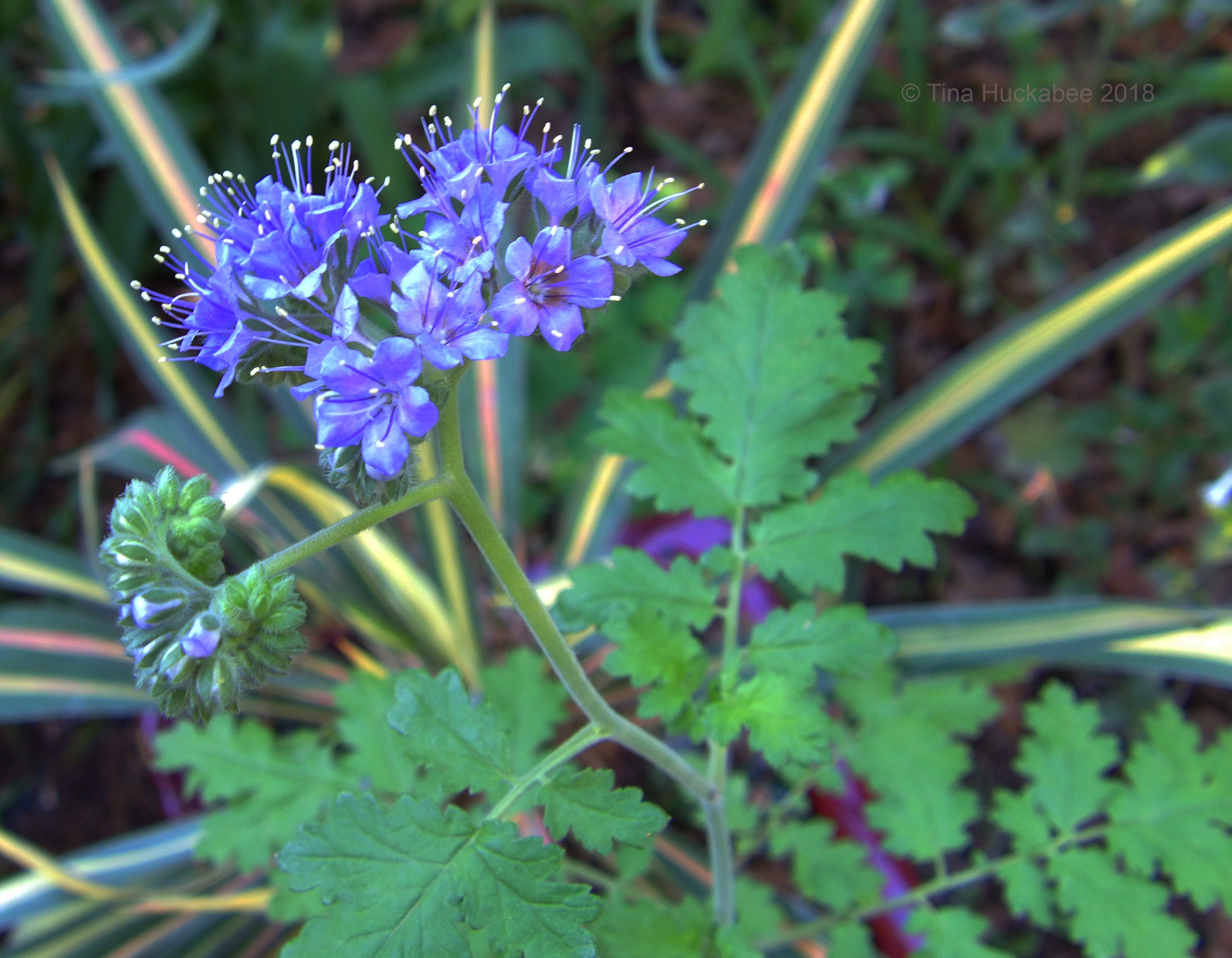
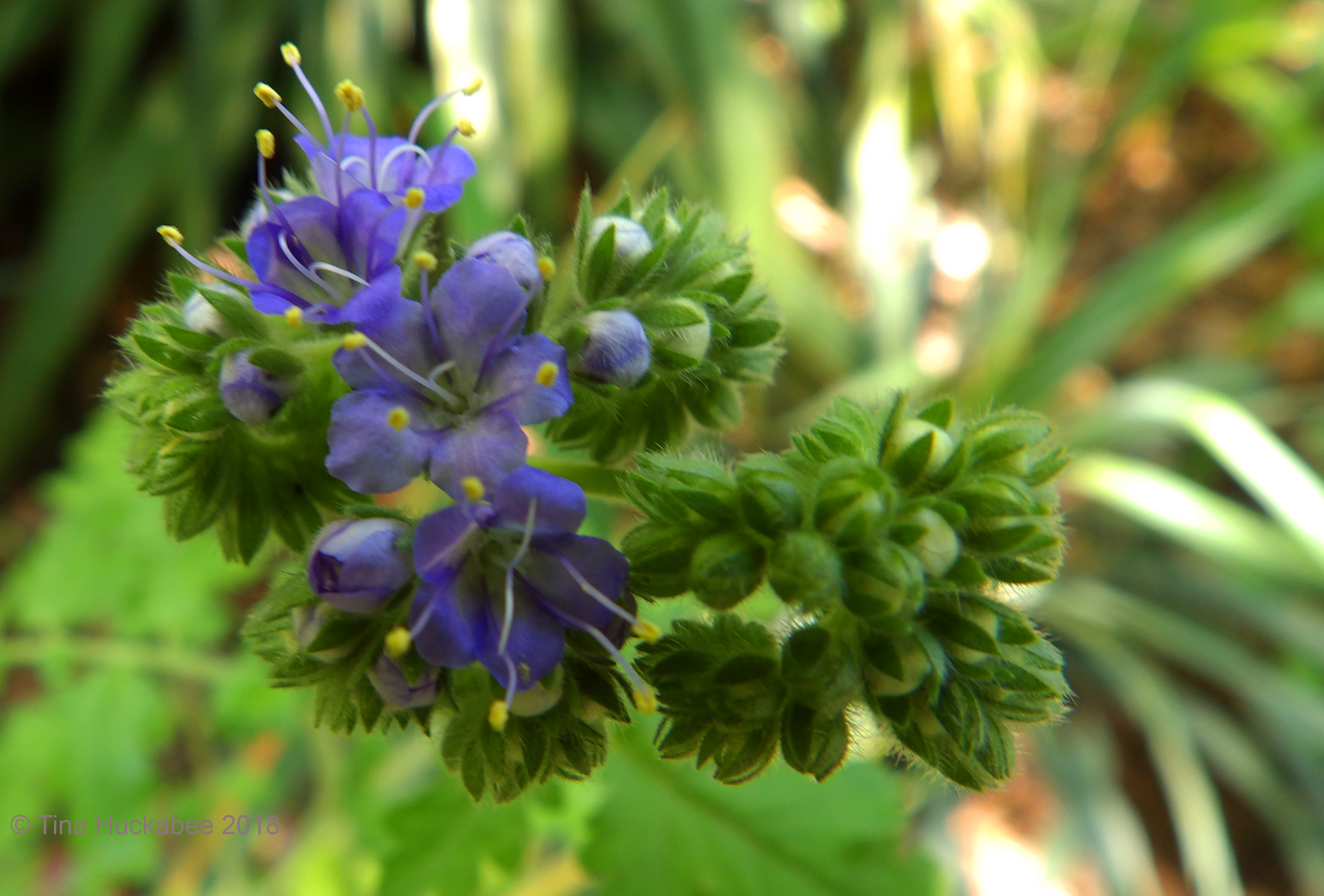
Tiny blue flowers open from the curl.

I also love my caterpillars.

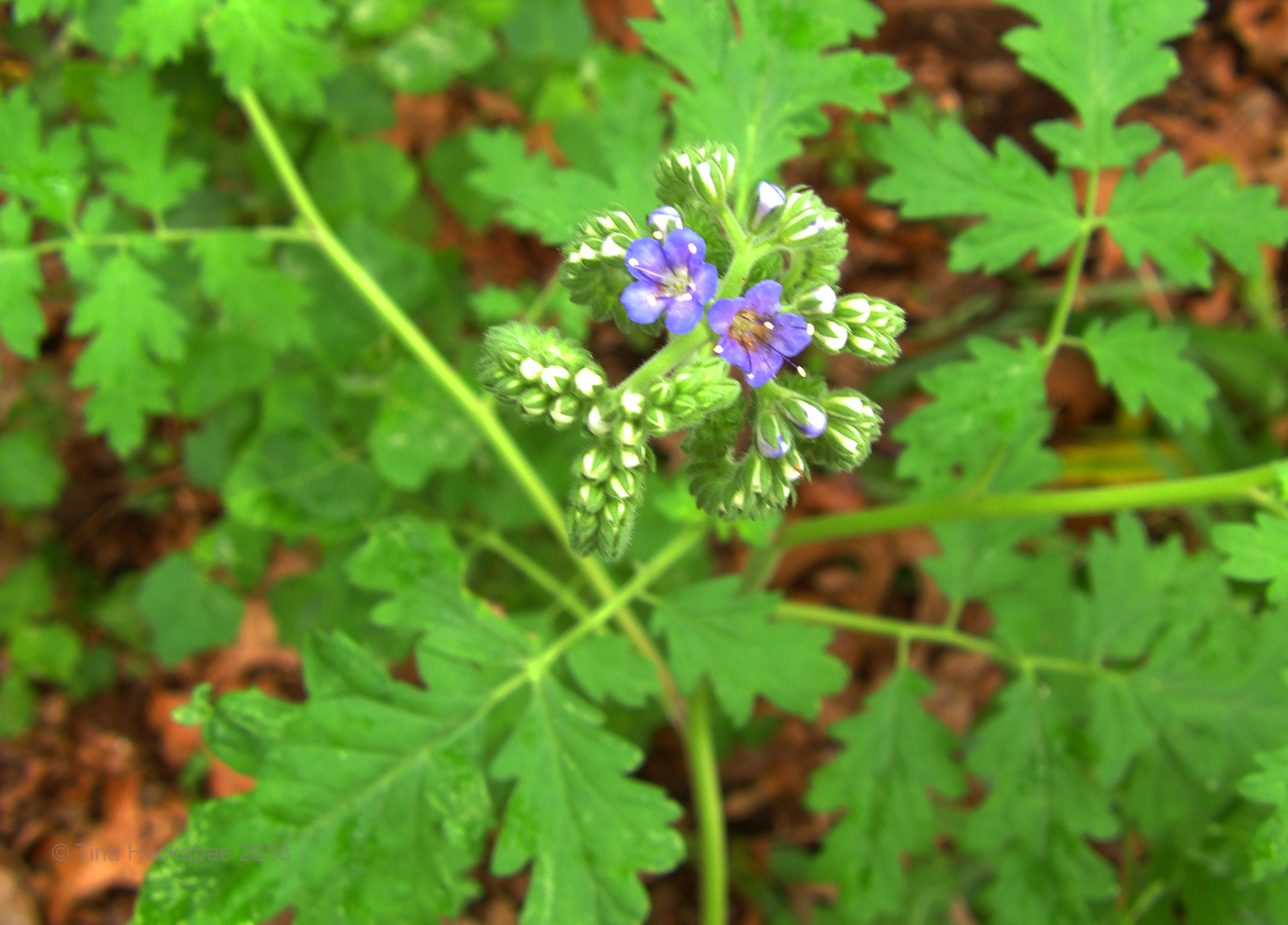
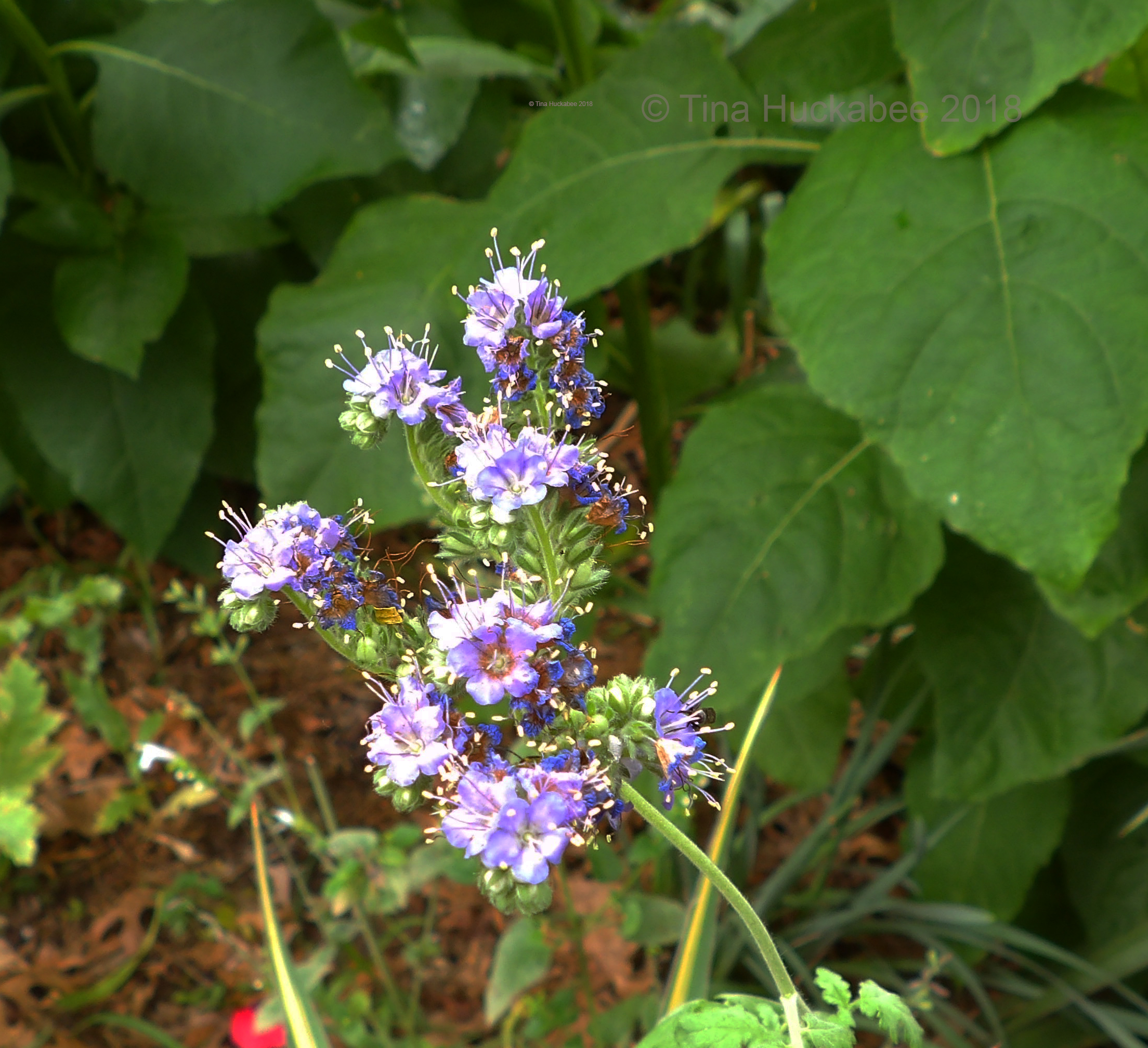
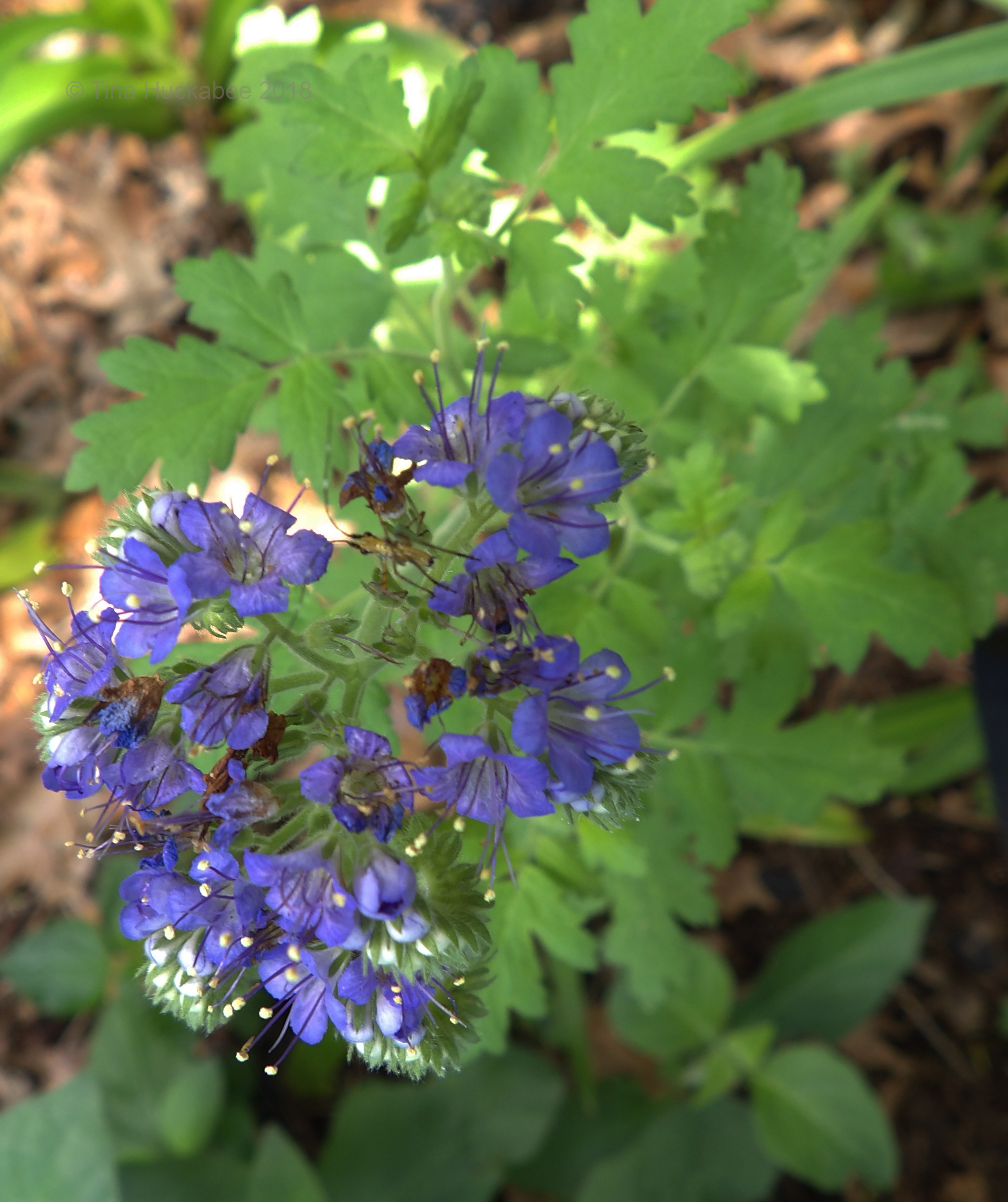
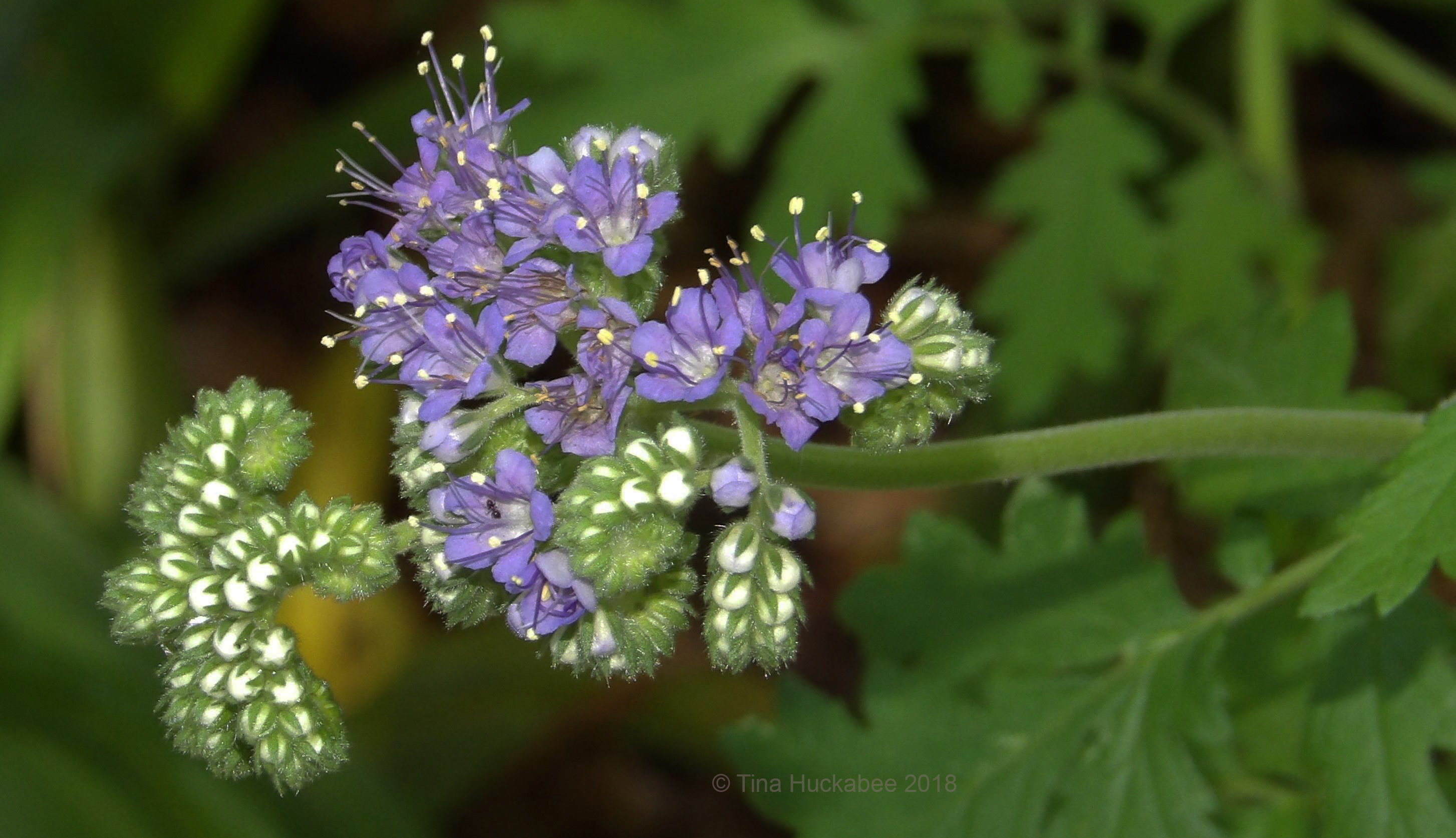
Blue curls, or Caterpillars,  Phacelia congesta, are charming spring garden additions here in Texas and neighbors, Oklahoma and New Mexico.   Native to this region, Blue curls are wildflowers worth having.  A low-growing, deer resistant herb, this springtime bloomer has performed as an annual in my garden.   The ‘curls’ part of the name is because as the diminutive flowers develop and open, they unfurl from a coiled position.  As well, the row of unopened buds evoke the curled position of caterpillars, thus the second of the common names.

Blue curl “caterpillars” flank the open flowers.

I prefer blue curls, but both names are descriptive; it’s an aptly named plant!

I’ve experienced problems with germination–sometimes they do, sometimes they don’t–but on the handful of occasions when the plant successfully seeds out and blossoms to blooming, Blue curls haven’t disappointed. Two years ago during the latter part of winter, I noticed a “weed” growing in a pot in the back garden.

I don’t yank until I’m sure an unknown is an unwanted, so I watched.  During the time that I watched and waited, a friend extolled the virtues of the Blue curls she grows in her garden, kindly offering to me some of her seedlings.  An enthusiastic “yes” was my answer to her offer, and what she gave me was exactly the thing that was growing in the pot.

Blue curls, all around!

I planted the two gifted curls near the bird or wind planted volunteer, and the three individual plants thrived and bloomed in spring.

Caterpillar stage.

Blooming stage!

Such darling flowers: unusual construction (“Compound Cyme” according the the Lady Bird Johnson Wildflower Center), and truly gorgeous in color and form.

I adore blue flowers.  I can only imagine what Blue curls look like, en masse, in a Texas Hill Country field.  For several years, during April and May, I’ve enjoyed viewing a small cluster of these blue beauties growing alongside a bike path that I regularly ride.  City mowers and street construction hasn’t yet destroyed the wildflowers along that particular street.

I also like the foliage of this wildflower;  I’m a sucker for deeply lobed, bright green leaves.

Pre-blossom foliage. The leaves look like those of a tomato plant.

The leaves become a bit tatty toward the end of their days.

Post-blossom foliage.

Two years ago, I dutifully allowed the plants to seed out, then sprinkled the seeds and chaff in various parts of my garden.  The next winter and spring, no Blue Curl seedlings appeared in my garden. Drat–no gorgeous Blue curl wave.  Nada, zilch, nothin’.

I whined to my friend, who graciously supplied me with more seeds. I spread some (not all) of  the seeds out last autumn, and voila!, this spring a grand total of four plants germinated.  One disappeared–subjected, no doubt, to someone’s late night munchies; another, I stepped on and crushed–yes, sometimes I am that careless.  But two survived; I transplanted both to better spots, and they grew to blooming beauty!  Unfortunately, the peak of flowering occurred during the first half of May when I was traveling, though I did get some enjoyment from these pretties as the first dainty blues opened shortly before I left.

In my absence, the pollinators spent a few weeks sipping from Blue curl goodness.  A good pollinator plant, I’ve observed tiny native bees feeding, though the literature suggests that Blue curls attract butterflies, too.

My two Blue curl individuals are now wrapping up their life activities and I will leave them to their own seed dispersal.

I have seeds from my friend and plan to add more to the garden next autumn for spring 2019. I’d love to have a greater number of these sweet little spring wildflowers as they are care-free once germinated, (unless stepped on–ahem), and they fit in a variety of light situations, though probably not deep shade.

But the Blue curls will do whatever they choose to do–and I’ll enjoy what they’re willing to give the garden, and the gardener.

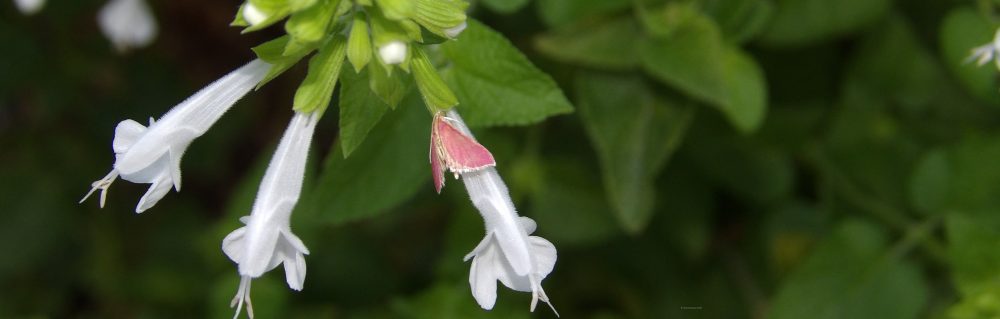
This photo is one of my blog banner photos.