In this post, there will be no philosophical musings, no preaching about pollinators or planting for wildlife. Spring is in full flush with fresh florals opening each and every day.
Spring being spring, it’s all about the flowers.
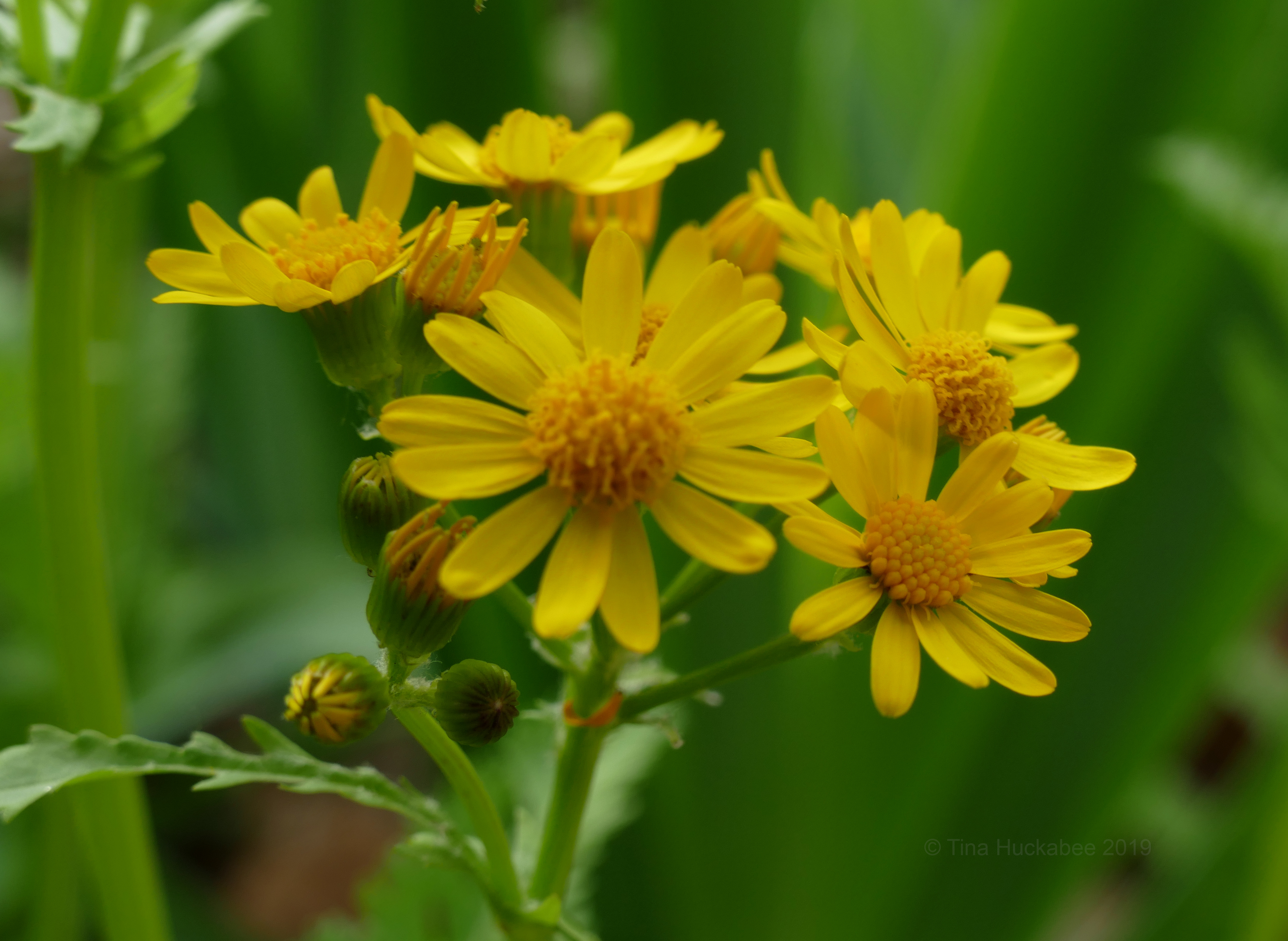
This cheery bit of yellow, Golden groundsel, produces a sprightly sprays of spring flowers and a year-round, drought-tolerant groundcover.
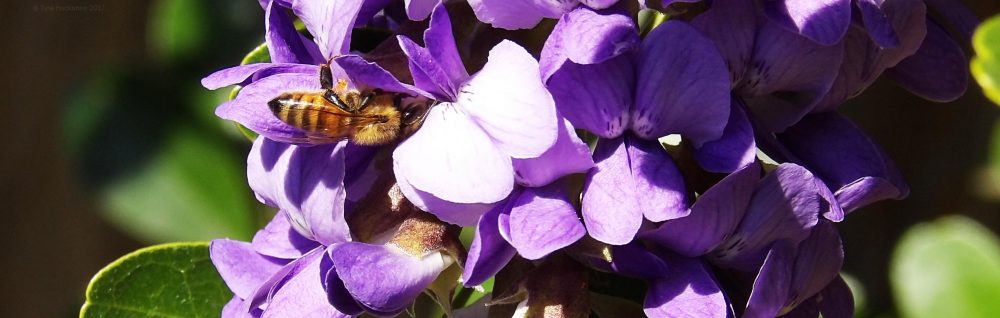
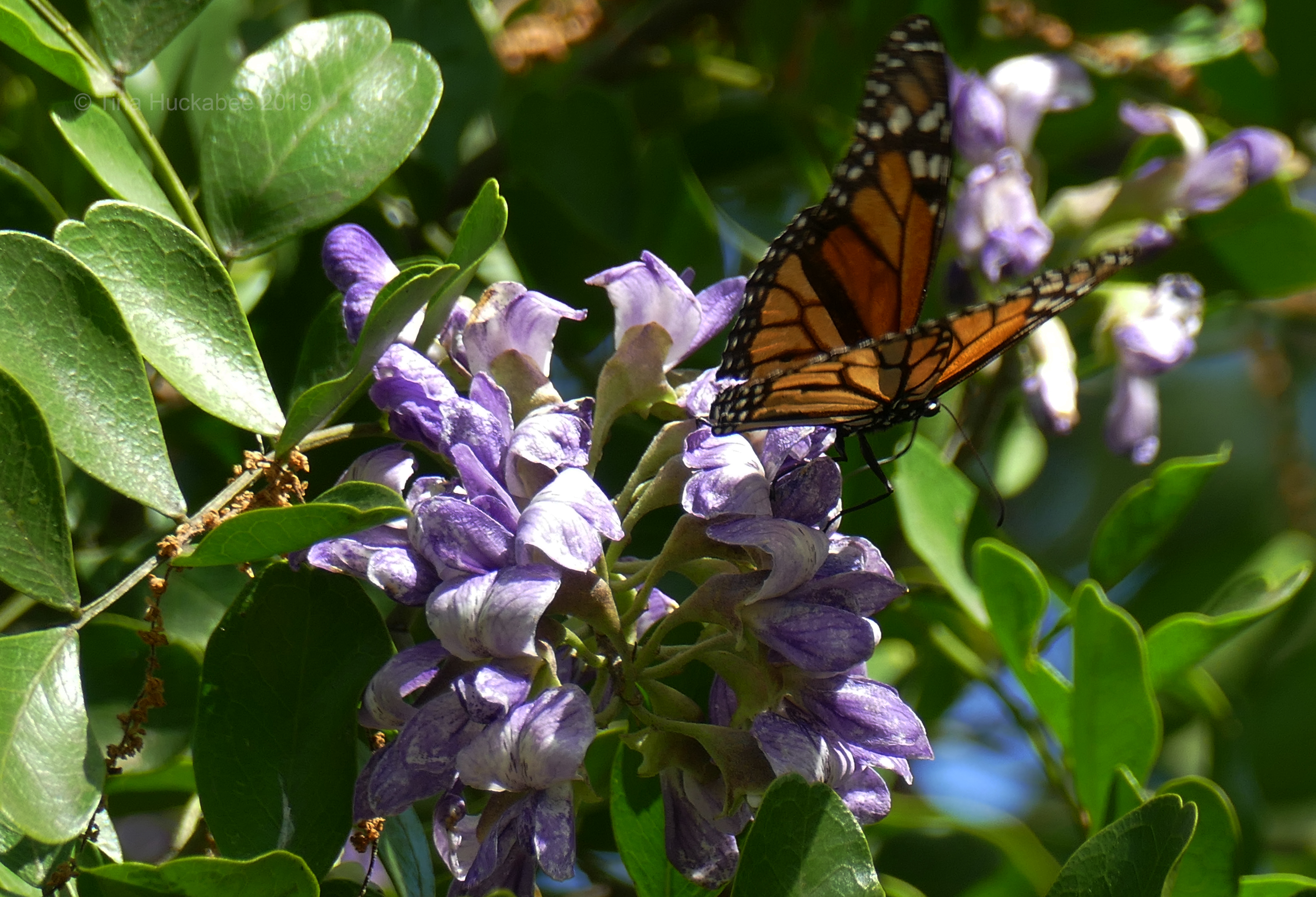
The Texas mountain laurel is famed for its beauty and fragrance. Spring breezes carry the iconic bouquet throughout Austin for weeks, though I notice the heady grape juice scent mostly after nightfall.
During daylight hours, I sigh at the stunning blooms and appreciate what it offers pollinators.

Migrating Monarch butterfly nectaring at the blooms.
The tubular flowers on Coral honeysuckle vine pop in spring, but there are always a few clusters gracing the vine throughout summer.
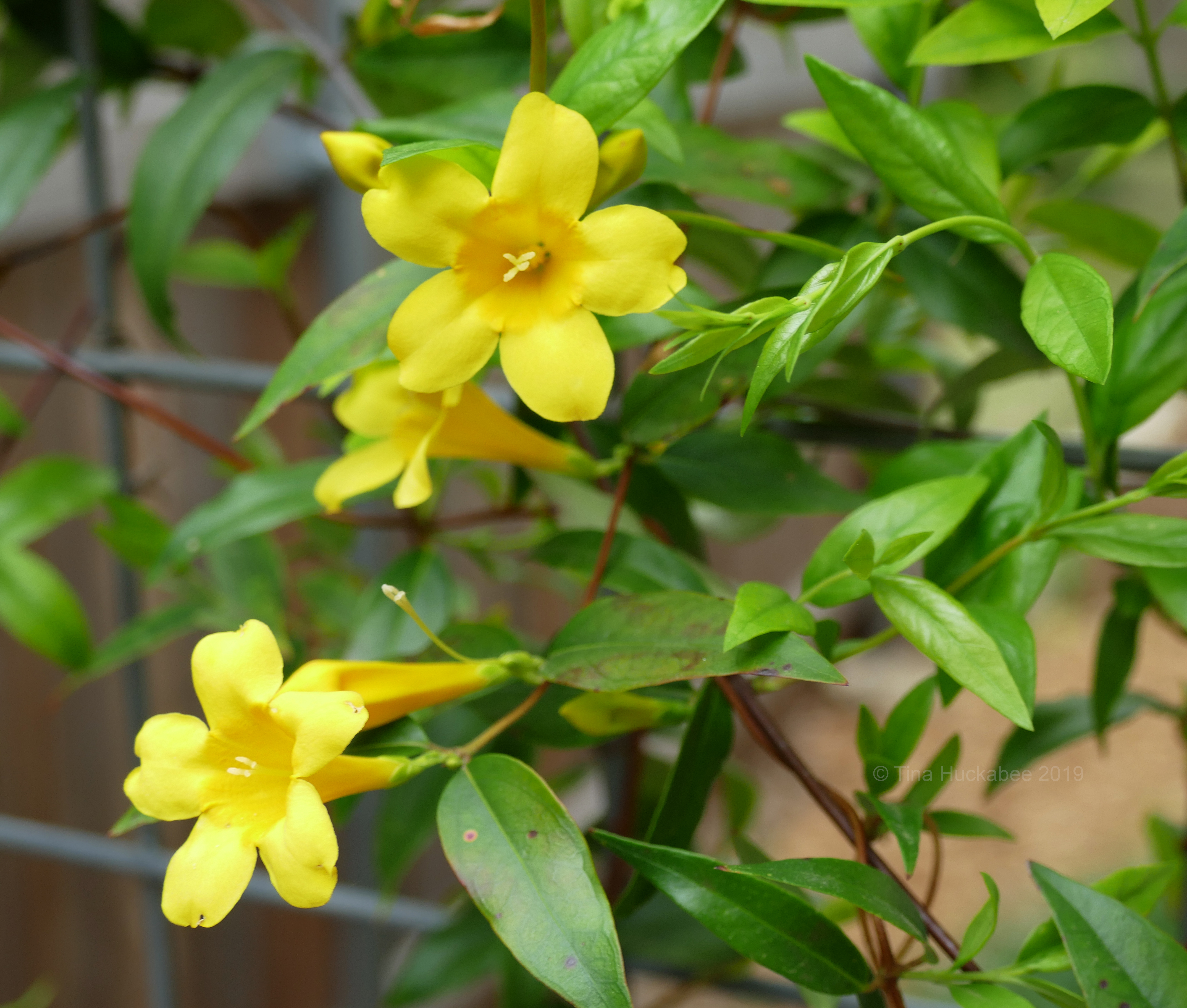
I finally found a home for Carolina jessamine in my garden. Requiring full sun, there is one spot in my garden–and one only spot–where this spring-only bloomer can grow successfully. Carolina is repaying me with a second spring set of blooms.
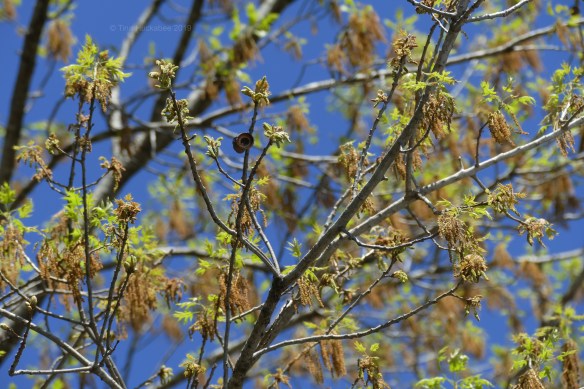
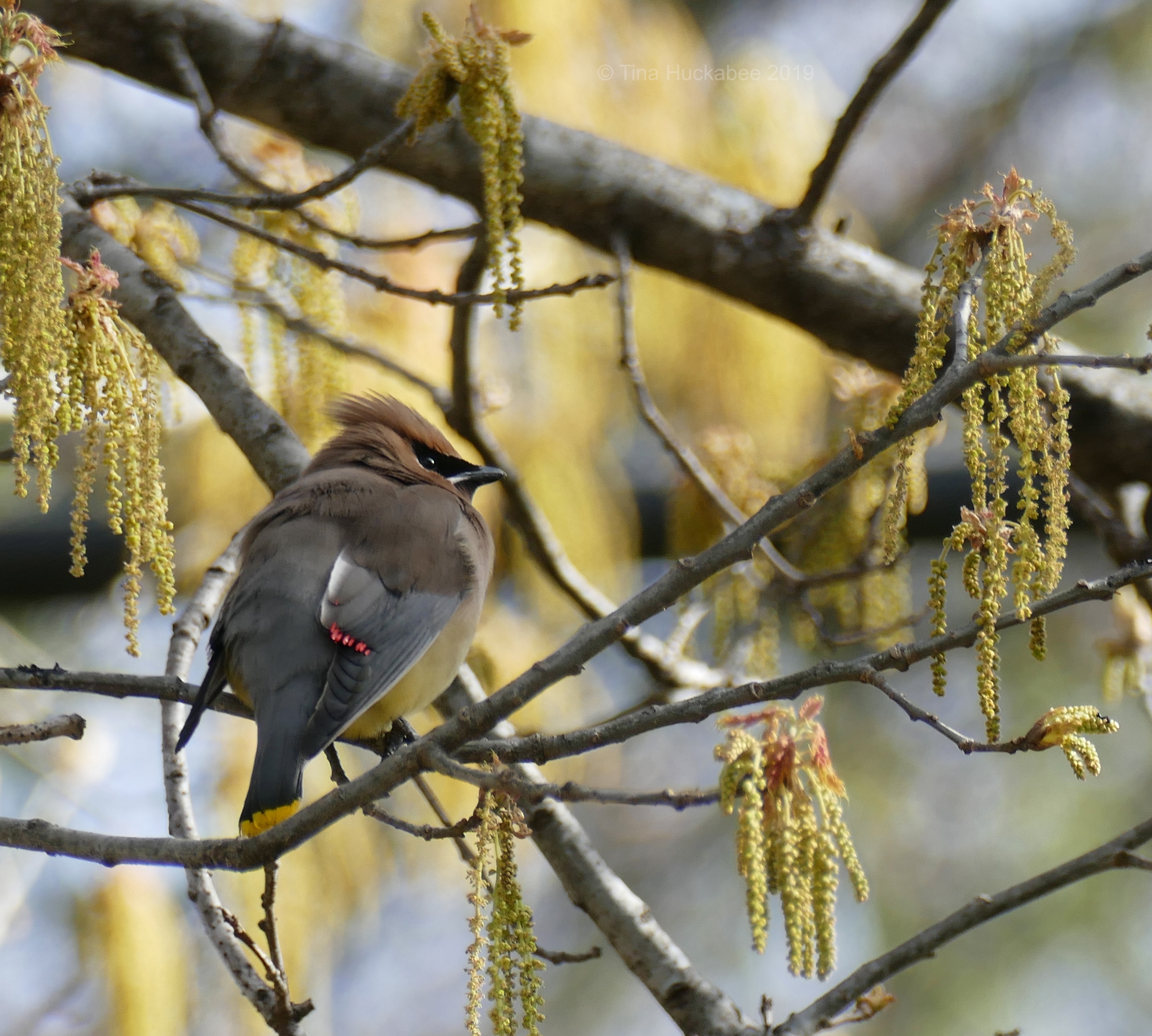
Trees bloom too! The catkins of the Texas oak tree vie for attention with new green foliage.
I like the lone double acorn cap, affixed firmly to the branch. It hung onto the branch through winter and is now keeping company with the catkins and the new leaves. I wonder if it’ll still be there in mid-summer?
It’s been easy to spot native and wintering birds as they perch in the bare-limbed trees. Going forward, those observations will become more challenging as the deciduous trees leaf out.
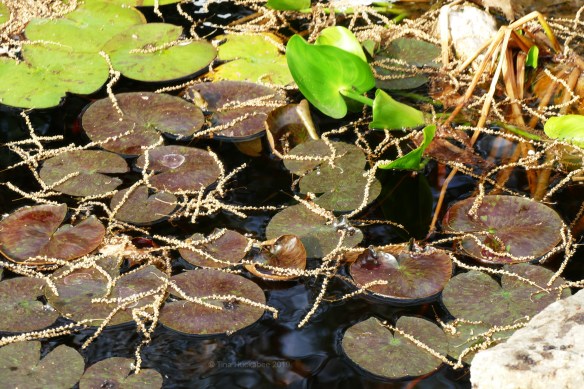
Of course, what is up must come down, and that is certainly true of the oak catkins. I’ll be cleaning the pond when all the oak catkins and powdery pollen is down and done. But walkways, patio covers, and roof gutters also need some tidying. Let the sneezing commence!
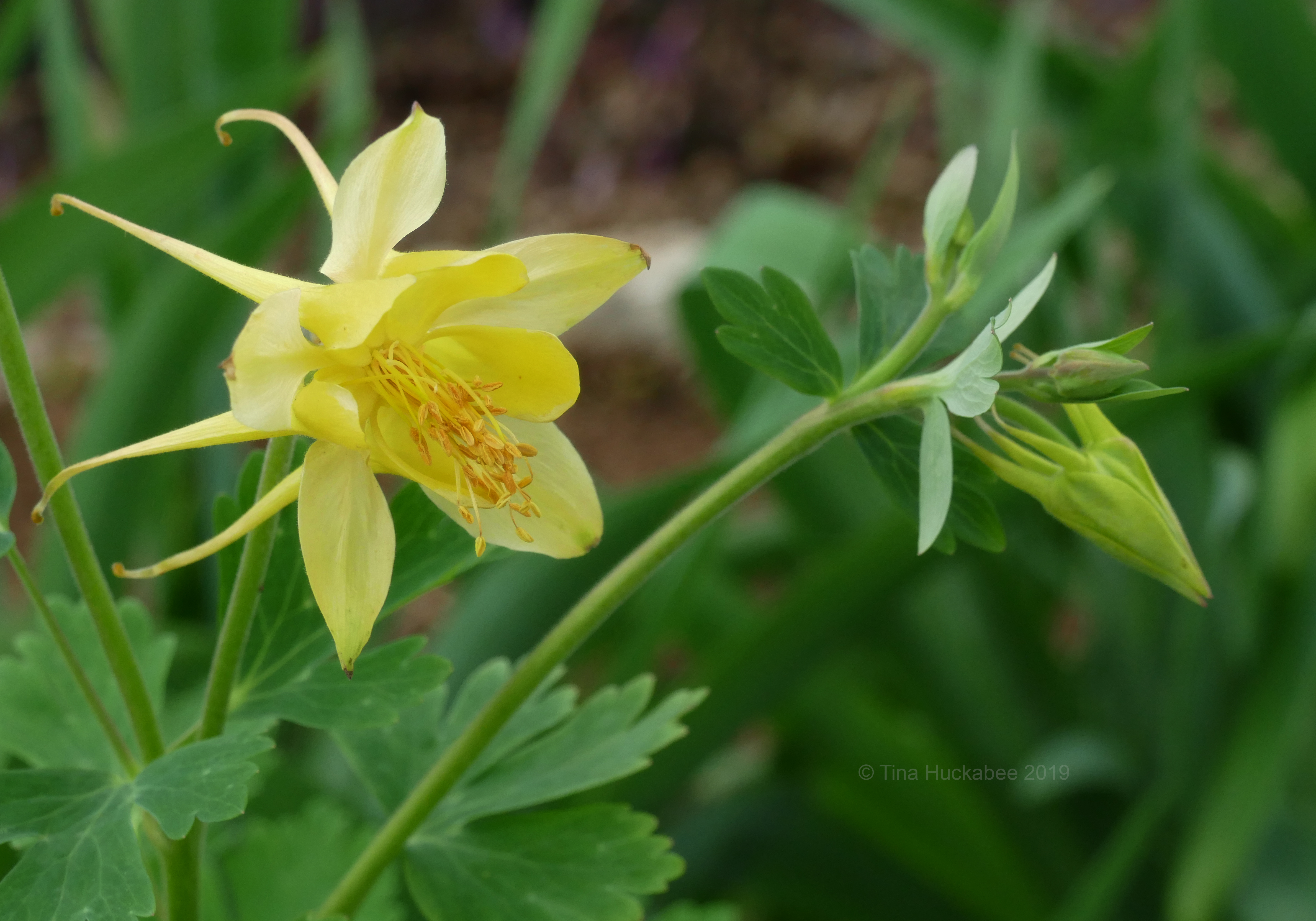
Shooting stars? Garden fairies? Nope, these darling dancers are the Yellow columbines beginning their blooming season! I’ll enjoy these charmers into late April or May, and so will their pollinators.
Pink-tinged columbines, another Texas native, also provide a month or two of pretty pollinator action alongside their yellow compadres.
Spiderworts dot roadsides, countrysides, fence lines, and my gardens with their purple-to-pink prettiness. There are many varieties of these wildflowers, but I only grow the Giant spiderwort. My specimens were on the verge of blooming when we were hit with a freeze–our only real freeze of this year–last week. Still, quite a few are open for business and more are in the process of developing. On the upside of enjoying fewer blooms this year is that there will be fewer volunteers next year requiring weeding. With gardening, it’s always good to take a positive spin.
I garden in Austin, Texas (zone 8b) with mostly, but not exclusively, native Texas plants. It’s been a while since I joined in with Carol’s fun May Dreams Gardens GBBD, but I’m happy to renew my participation. Happy blooming!









 My Gardener Says...