Bloom Day, July 2014

The sun is blazing, everyday, all day.  It’s hot and it’ll be that way for a while. This gardener may be wilting, but her blooms are fresh and lovely.  Here is a quick view of a few heat-lovers in my garden this mid-summer in Austin, Texas.  Thanks to Carol at May Dreams Gardens for promoting this monthly bloom-palooza.

These daylilies that were  pass-alongs to me many years ago are reliable June-July bloomers.

P1050337.new

Double-blooms with a shorter scape than some other daylilies, I like them because they flower well in part shade.

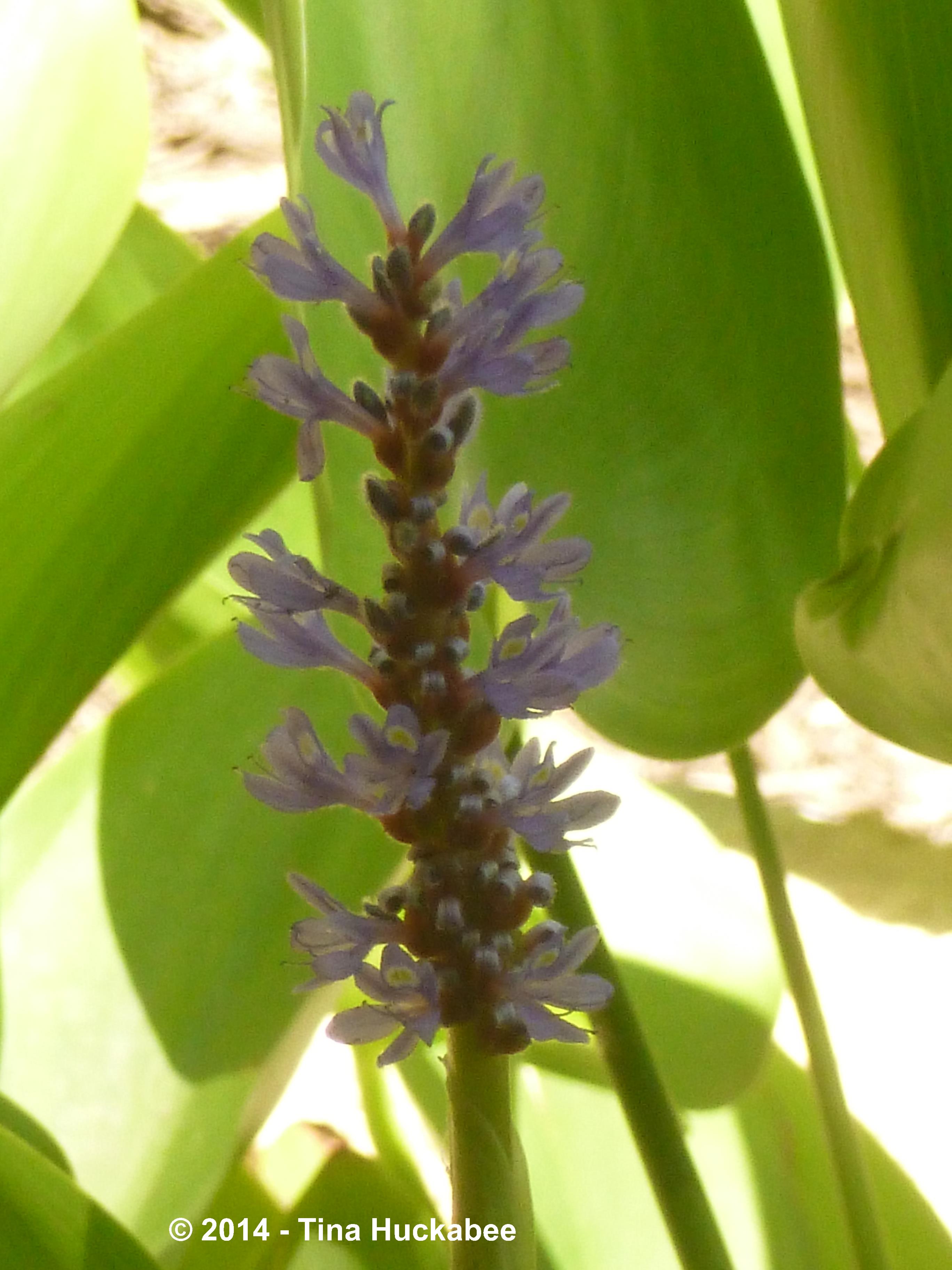
My pond plants flower well year-round, but are in full bloom-mode during the hot months of summer.  The native Pickerel Rush, Pontederia cordata, grows quickly  and produces lovely spikes of blue.

P1050534.new

P1050924.new

It’s a flower that dragonflies, butterflies and bees regularly visit.

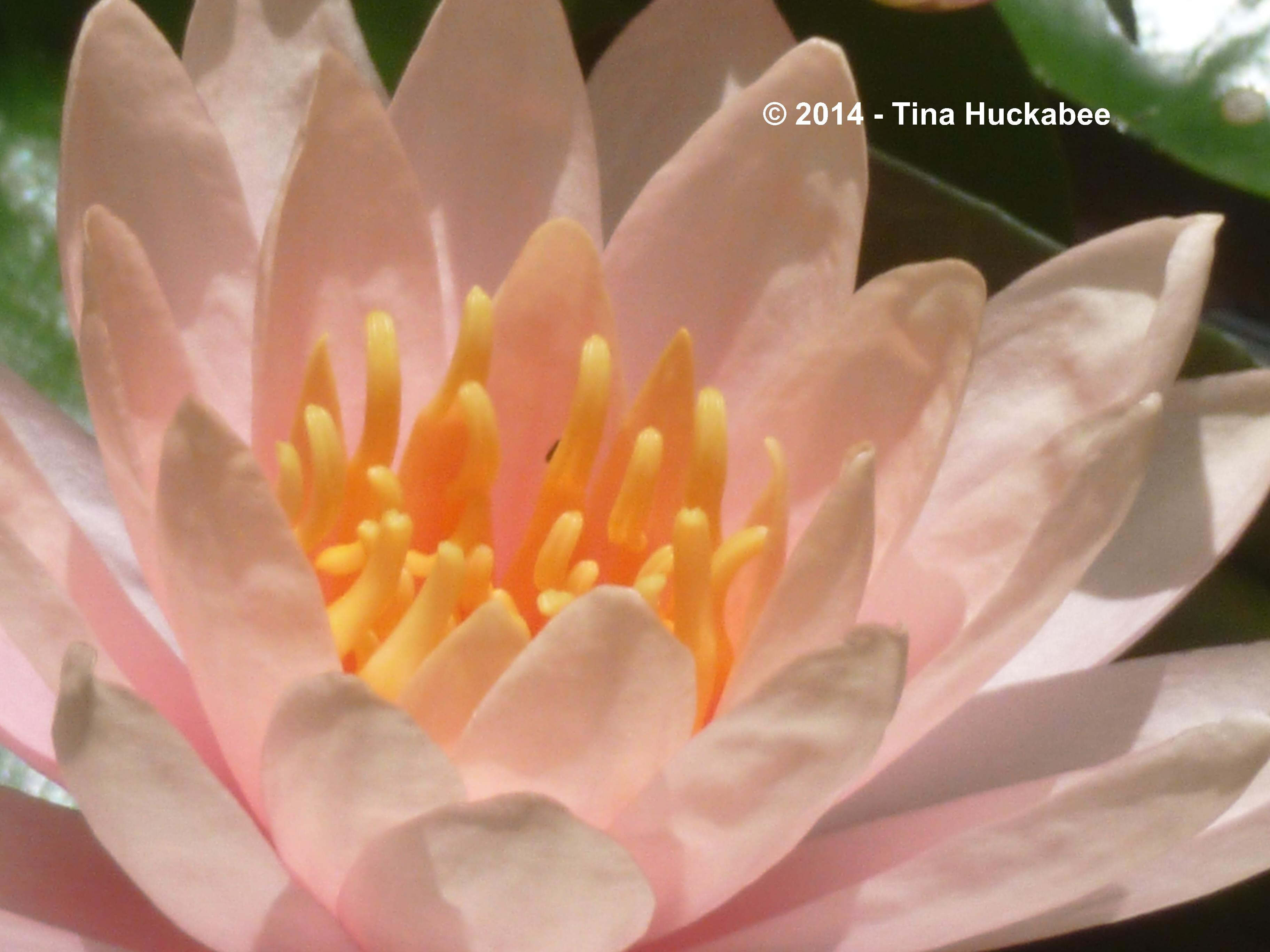
The Colorado pond lily, Waterlily Nymphaea ‘Colorado’ is a gorgeous lily for the pond garden.

P1050536.new

P1050538.new

As is another pond lily, the ‘Claude Ikins’ lily.  It blooms in tandem with the ‘Colorado’ during the long growing season.

P1050922.new

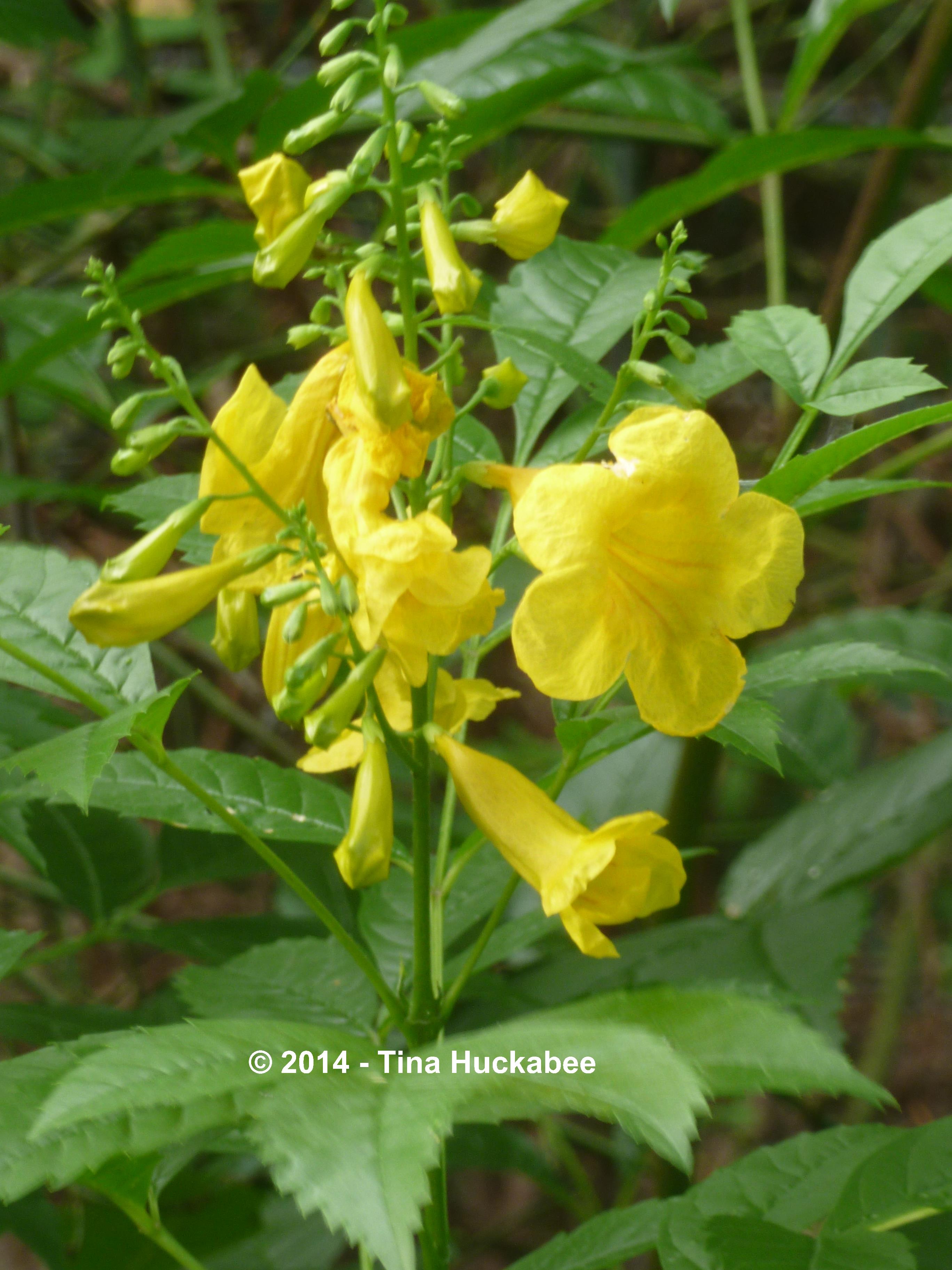
This particular specimen of Yellow Bells, Tecoma stans,  blossoms earlier in the growing season than any other of this species in my gardens.
P1050580.new

All of the Yellow Bells froze this past winter, so blossoms started a bit late this year.

A beautiful native tree, Retama, Parkinsonia aculeata, flowers throughout summer.

P1050586.new

Each bloom has four yellow petals, with one orange/red petal.  This is a very drought-tolerant small tree with few requirements from the gardener–except to enjoy.

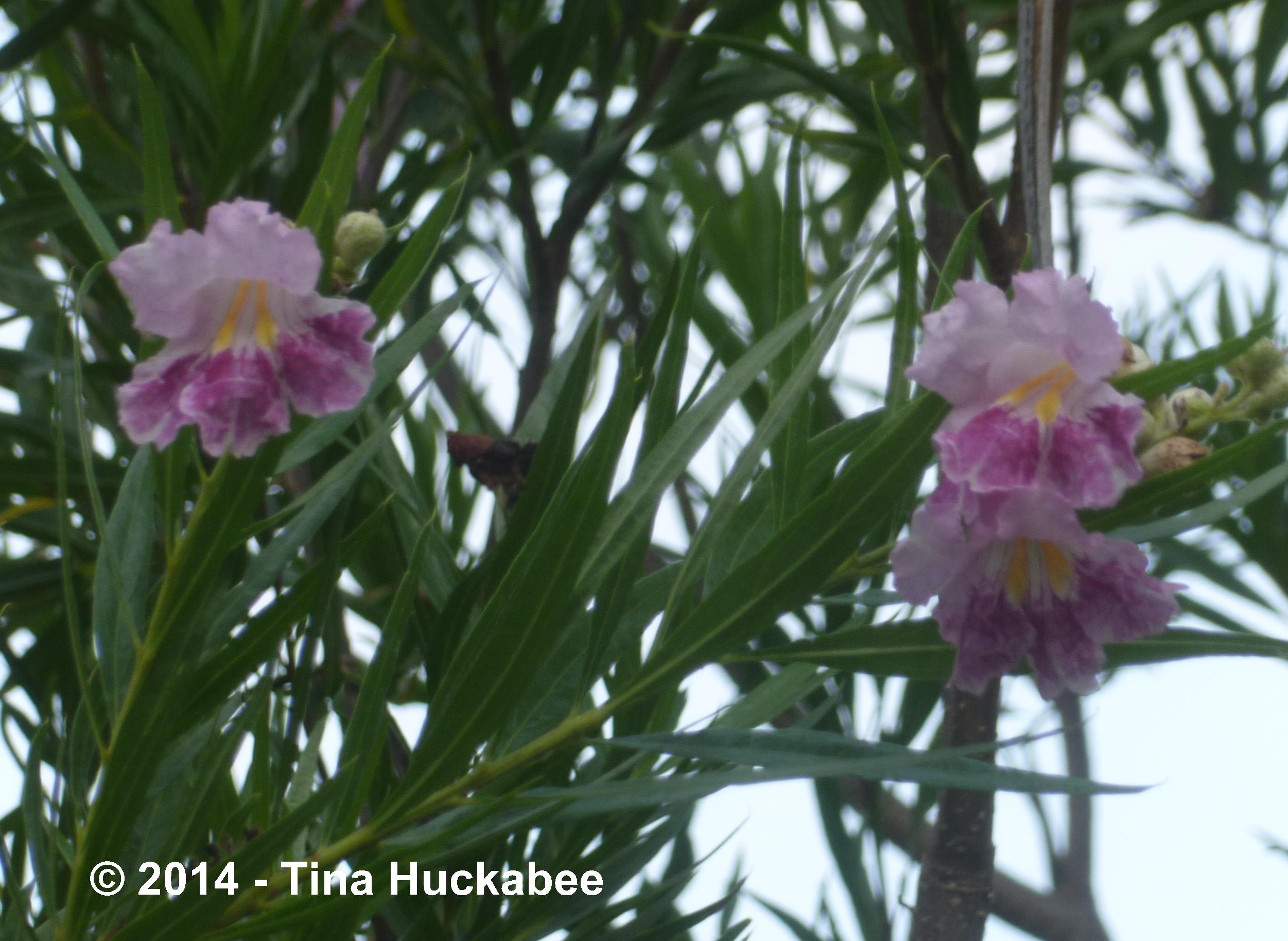
Another great small native tree is the Desert Willow, Chilopsis linearis.  Related to the Retama, it has an open, airy form with lush, trumpet-shaped flowers.
P1050606_cropped_2502x1827..new

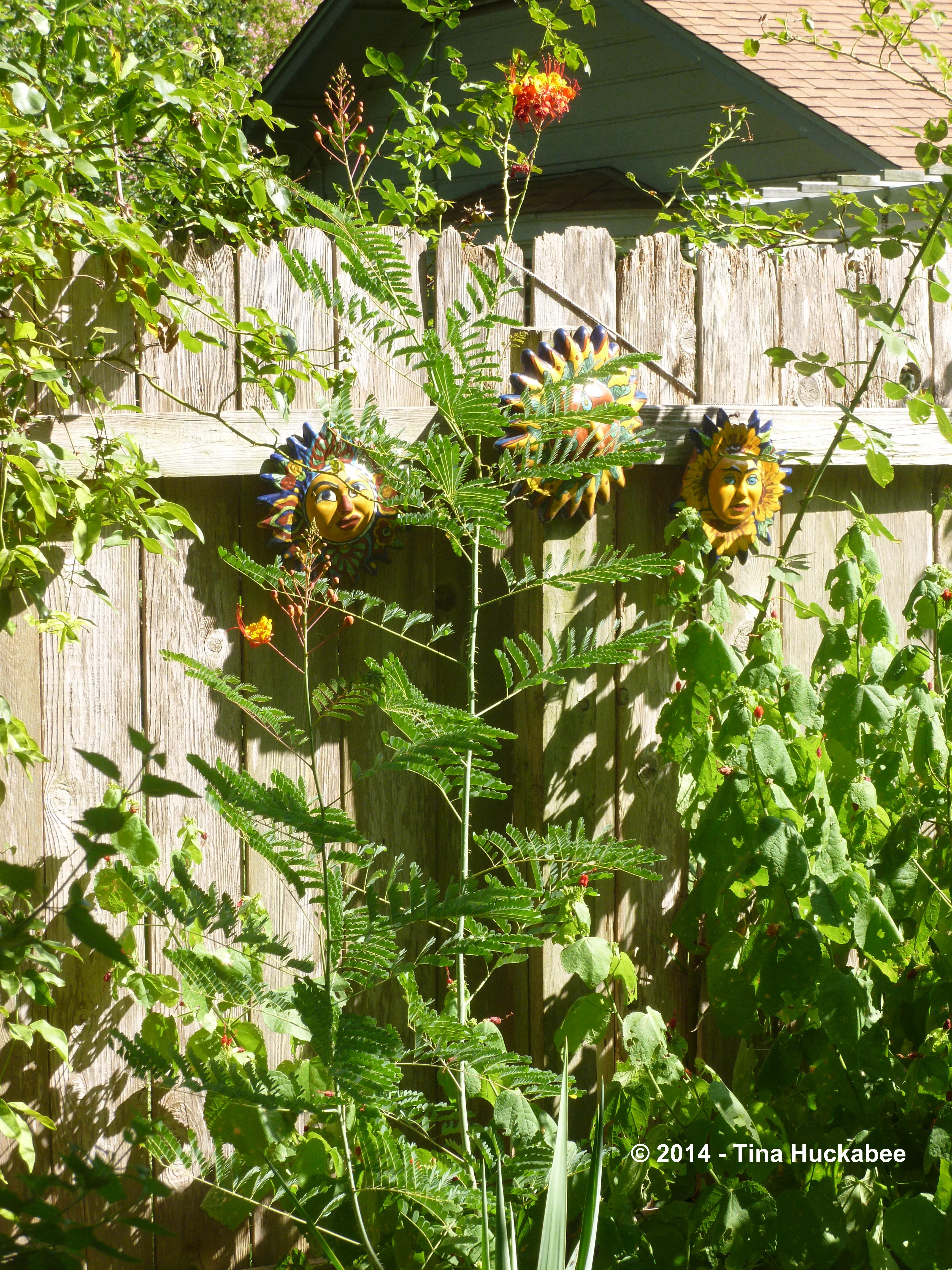
The Pride of Barbados or Dwarf Poinciana (which is what I grew up calling it), Caesalpinia pulcherrima, blooms magnificently in the hottest spots of any garden.

P1050793.new

I have two of these beauties, neither of which grows in full sun. Each one produces 2 or 3 stalks with attendant flower clusters,
P1050968.new

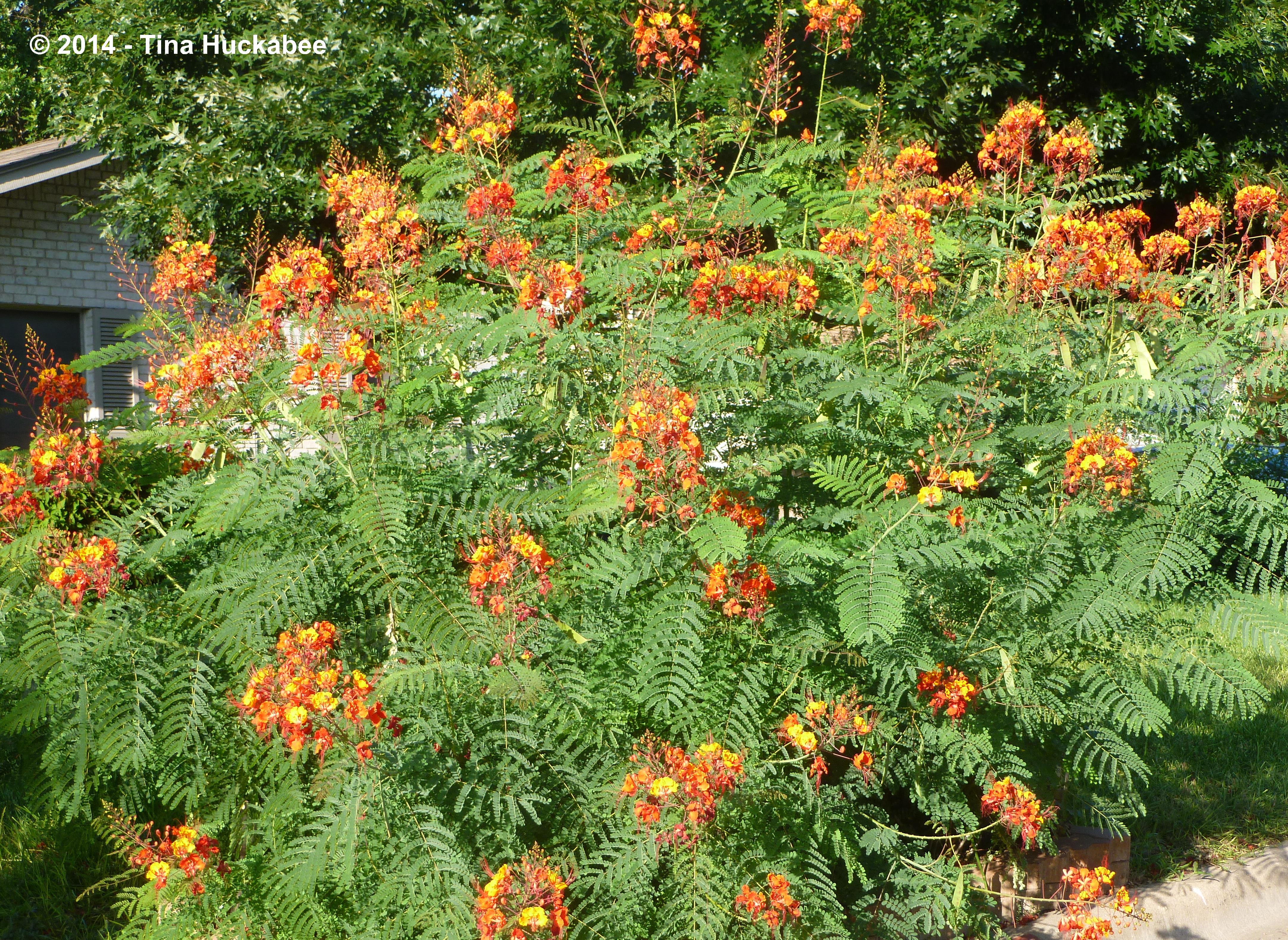
but the show is muted in comparison to Poinciana which grow in blasting sun.  Those Poinciana develop multiple branches with masses of blossoms–like this one.
P1050970_cropped_4332x3161..new

Wow!! That is an absolute showstopper!  My bit-part Poinciana are nothing compared to this diva. This one (and a partner Poinciana) star in the full-sun garden of some lovely neighbors who live down the street.

Sniff.

I have Poinciana envy.

P1050796.new

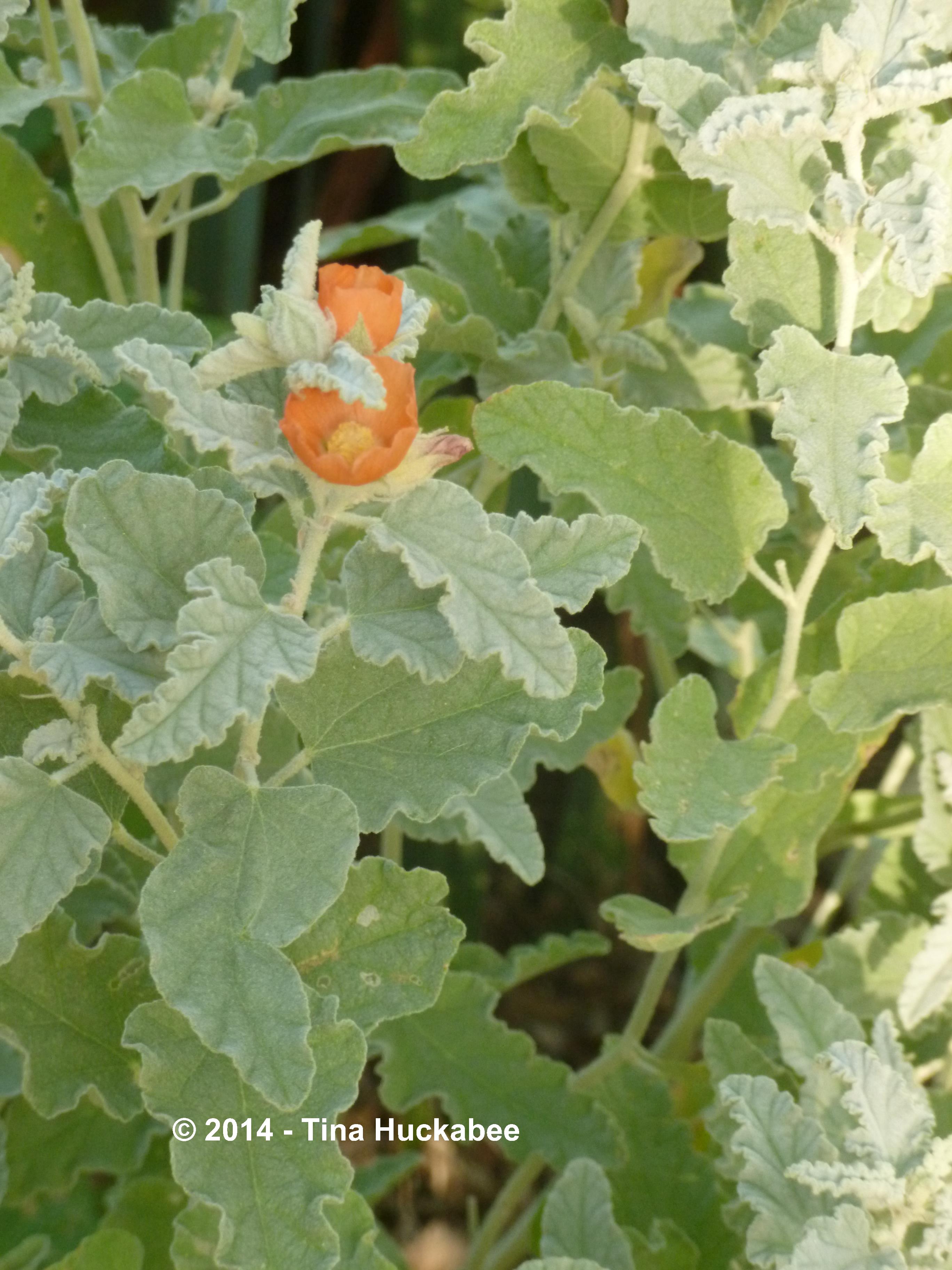
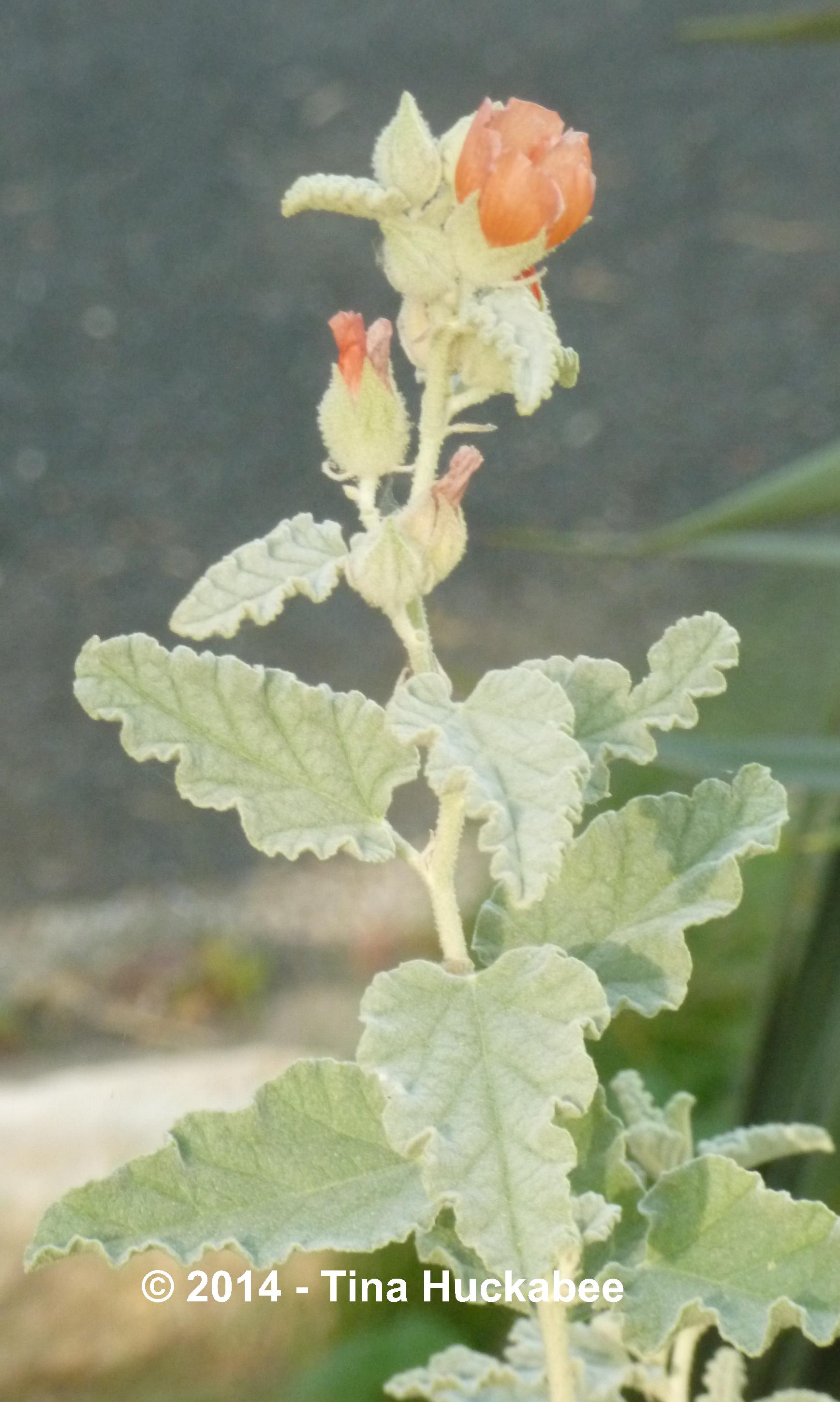
My Globe Mallow, Spaeralcea ambigua, sports blossoms this summer, which is unusual, but what a treat!
P1050870.new

Typically, this woody shrub blooms in spring and fall, taking a rest during the heat of the summer  months.  Flowers this July are likely due to our earlier summer rains.
P1050872_cropped_1737x2899..new

What’s blooming in your July garden? Share your bloom-palooza by visiting May Dreams Gardens for Bloggers’ Bloom Day!
 

Native Texas Plant Week and Garden Bloggers’ Bloom Day–October 2012

For Garden Bloggers’ Bloom Day and in celebration of Texas Native Plants week, I’m posting some pics of a few currently flowering beautiful native plants in my garden.  Thanks to Carol at May Dreams Gardens for hosting–check out her site to enjoy photos of blooms from many places.

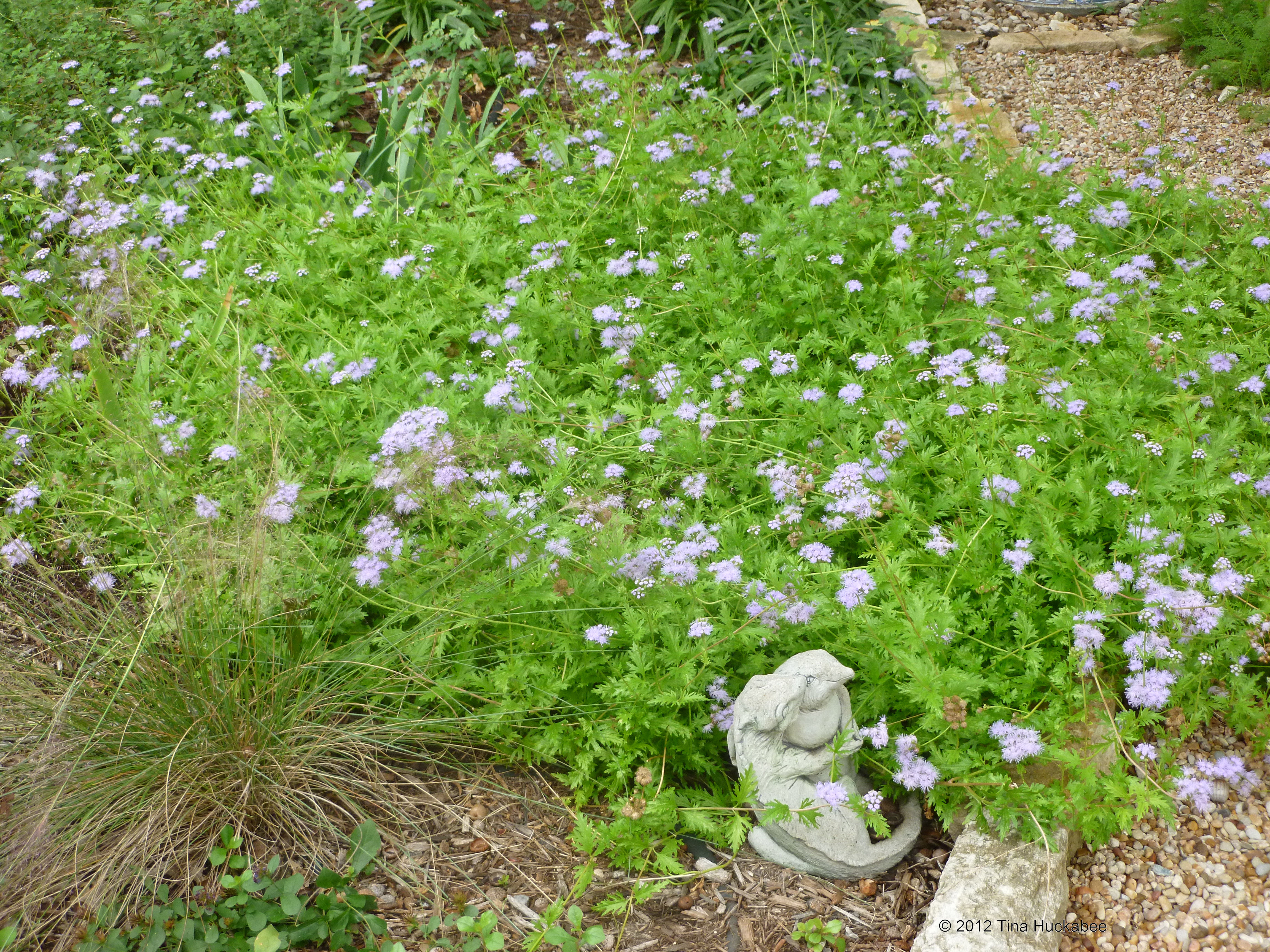
One overview look at a group of Gregg’s Mistflower (Conoclinium greggii),

and a close up of this great native perennial ground cover.  The Gregg’s Mistflower is native to Texas, New Mexico and Arizona.

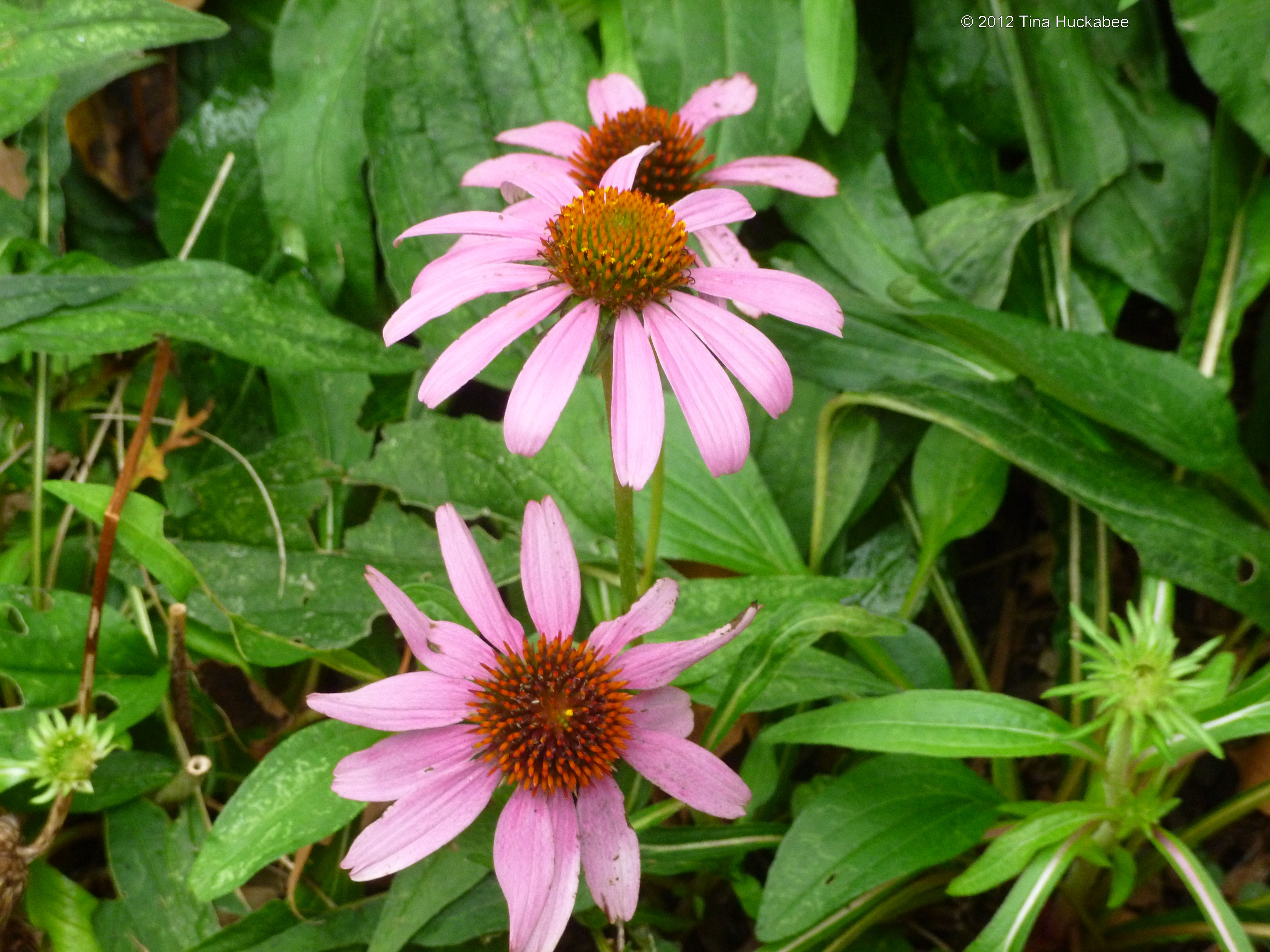
The Purple Coneflower (Echinacea purpurea), is always a winner in my gardens.  Its main bloom period is spring through mid-summer, but I always have some blooms in the fall until a hard freeze ends the glory.

A larger view of another perennial, Blue Mistflower (Conoclinium coelestinum),

and its closeup.

The two mistflower species are related, but they are a little different. It’s difficult to tell from my limited photographic abilities, but the Gregg’s Mistflower is a lighter blue, while the Blue Mistflower is much darker.  Also, the leaf characteristics are different in the two plants.  Both are perennial ground covers with the main blooming period occurring from September through November.  Both are also favorites of the butterflies and bees.

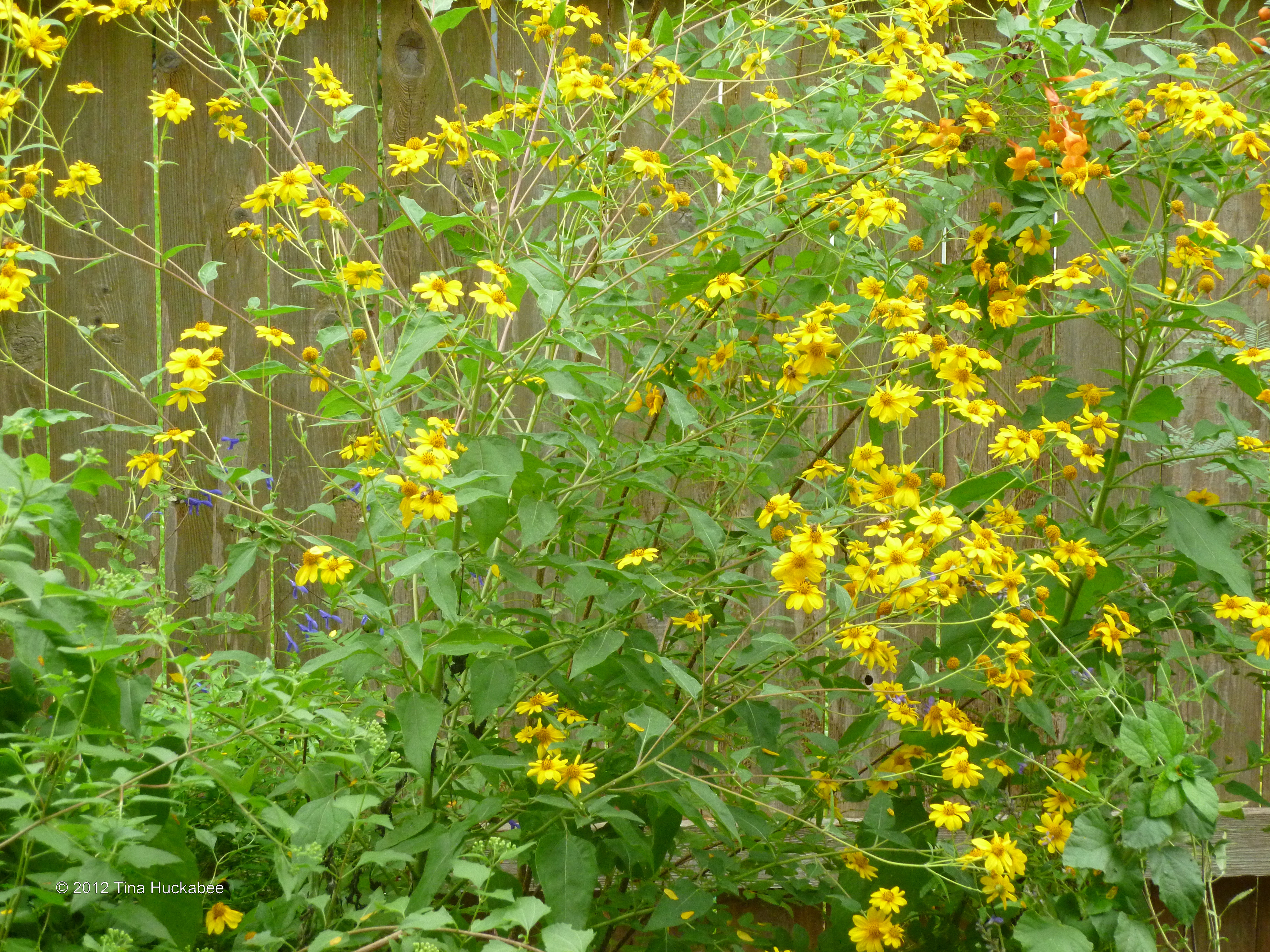
The Goldeneye (Viguiera dentata) brightens the roadsides and my gardens in October.

At its peak of beauty now, Goldeneye blooms in the spring and sporadically in the summer months and is an excellent wildlife plant.  It provides for pollinators and birds, alike and it’s pretty for people to enjoy too!

Fall Aster (Symphyotrichum oblongifolium) is a relatively new addition for me.

I’m glad I have a place for this hardy and sweet little aster.

A nice combination of plants:

From left to right in the photo above are Mealy Blue Sage (Salvia farinacea), some overhanging blooms from a Red Yucca (Herperaloe parviflora), at the back, some Turk’s Cap (Malvaviscus arboreus var. drummondii), a Pale Leaf Yucca (Yucca pallida), the yellow daisy, Zexmenia (Wedelia texana) and Red Autumn Sage (Salvia greggii).

Another nice mingling of native perennials:

more Coneflower, more Turk’s Cap, more Goldeneye.

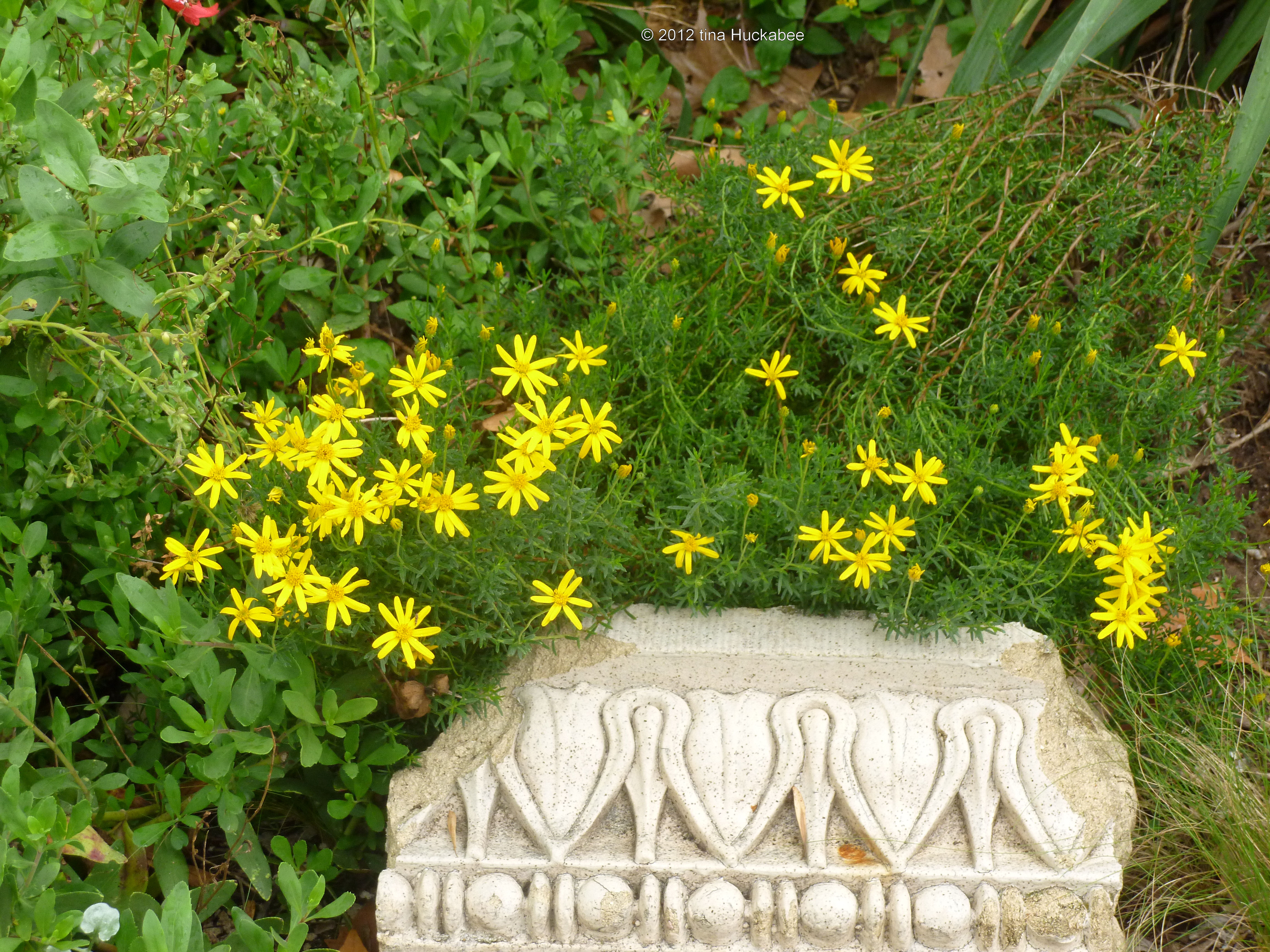
The Damianita (Chrysactinia mexicana) is a plant with shocking yellow flowers paired with striking dark, green foliage.

Damianita blooms on and off for the growing season and is native to Central/West Texas and New Mexico.

Texas native plants fit well within the palette of a large mixed perennial garden.

Natives that are blooming are White Autumn Sage (Salvia greggii), Henry Duelberg Sage (Salvia farinacea, ‘Henry Duelberg’), Yellow Bells (Tacoma stans), Big Muhly (Muhlenbergia lindheimeri).

Wherever you live, plant natives in your gardens.  They’re easy, hardy and reliable and attract wildlife to your gardens.

For more information about native plants of North America, check out the Lady Bird Johnson Wildflower Center site.

Go natives!  Go garden bloggers!

I’m Glad Someone Has Butterflies

All summer, amateur and professional photographers visited Zilker Botanical Gardens, looking glum.  When they walked into the Green Garden they’d invariably ask, “Do you have any butterflies? ” “No, I’m afraid not,” I would reply, shaking my head just as glumly.  We would then spend some time lamenting the awful drought and heat.

Central Texans who enjoy the great outdoors have noticed how few pollinators, especially butterflies and moths, there has been in this past year. The drought is the obvious cause of the dearth of pollinators, especially in the butterfly population.

Recently, I visited the Texas Gulf Coast (specifically Corpus Christi) and saw more butterflies there in two days than I’ve seen all year in Austin.

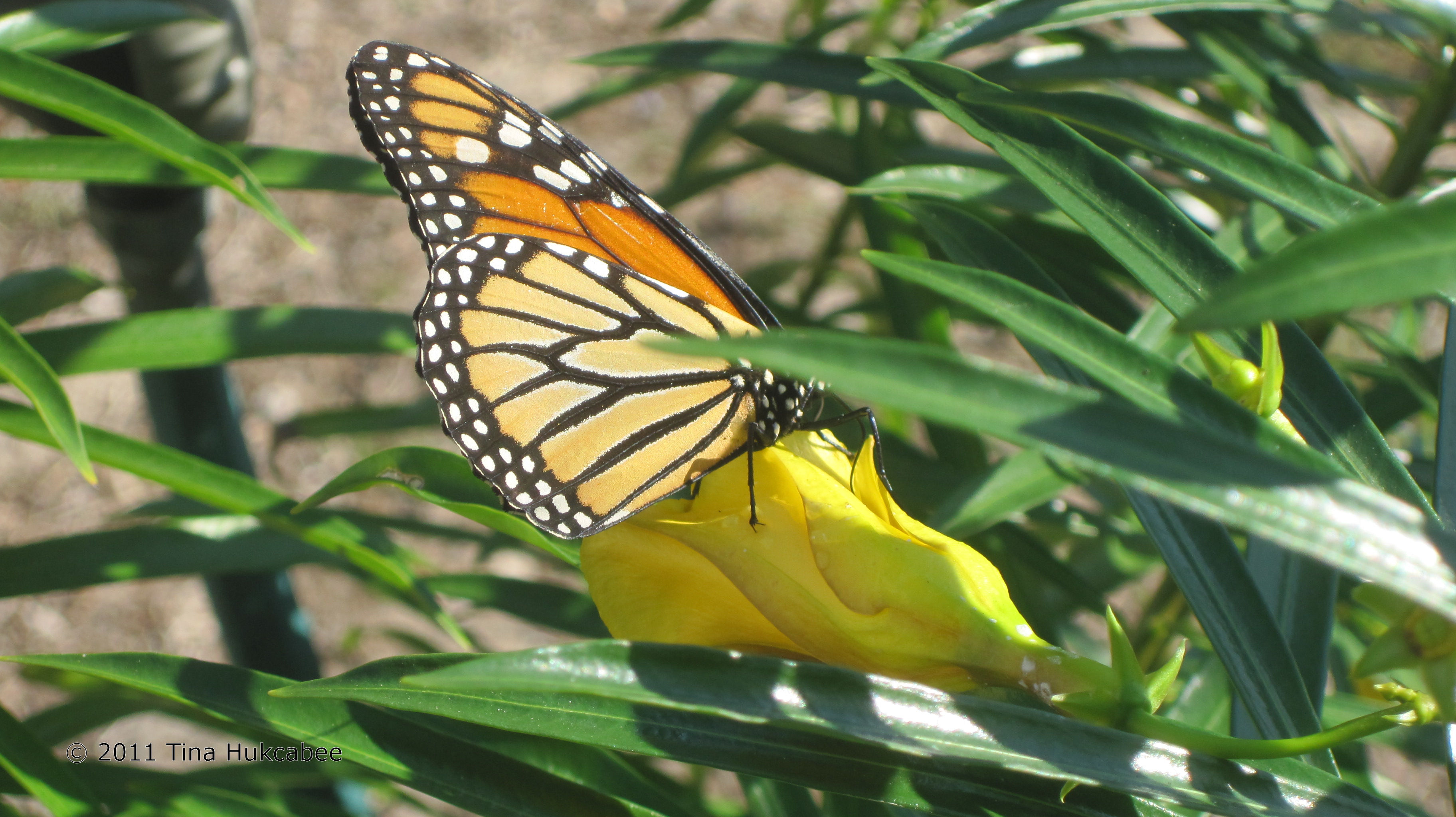
The Monarchs are still there, making a pit stop to refuel for their long trek to Mexico.

They’ve been gone from my gardens for a couple of weeks and I only had a few visit this year.

I observed numerous Sulphur Butterflies cruising blooms.

I don’t have any photographic evidence, but family members bragged about the numbers of  Gulf Fritillary they have.  Harrumph!  I haven’t seen a single Fritillary in my gardens all year.  Not one. Even though the Gulf Coast region experienced drought conditions, their conditions weren’t as severe and that region didn’t have the accompanying heat that we in Central Texas suffered.

It’s interesting to compare the difference that two hundred miles makes in what grows and how well.  At my father’s home, this is one (of several) of his Firebush Plants (Hamelia patens).
It’s about eight feet tall, six feet wide and still blooming.  This is an old plant, nearly twenty years old.  I remember when my mother planted it.
 This is my  Firebush.
Mine is about two feet tall and two feet wide. Not much of a comparison.  To be fair, I transplanted this at the beginning of June.  It transplanted beautifully, especially considering the drought and heat.  I don’t think it even wilted.  I coddled it for a couple of weeks, but  I was impressed with how tough and resilient it is.  It will never be as big or as floriferous as those in South Texas, but it’s still a good perennial to grow in Central Texas.
My dad also has a Golden Thyrallis (Galphimia glauca) in his garden.
It’s approximately ten feet tall and at least as wide.   I’ve never grown this plant, but I’ve seen it growing in Austin, although I don’t think I’ve ever seen one as large here. If you look closely, you can spy some red blooms of another large Firebush peeking over the Thyrallis at the top right of the photo.
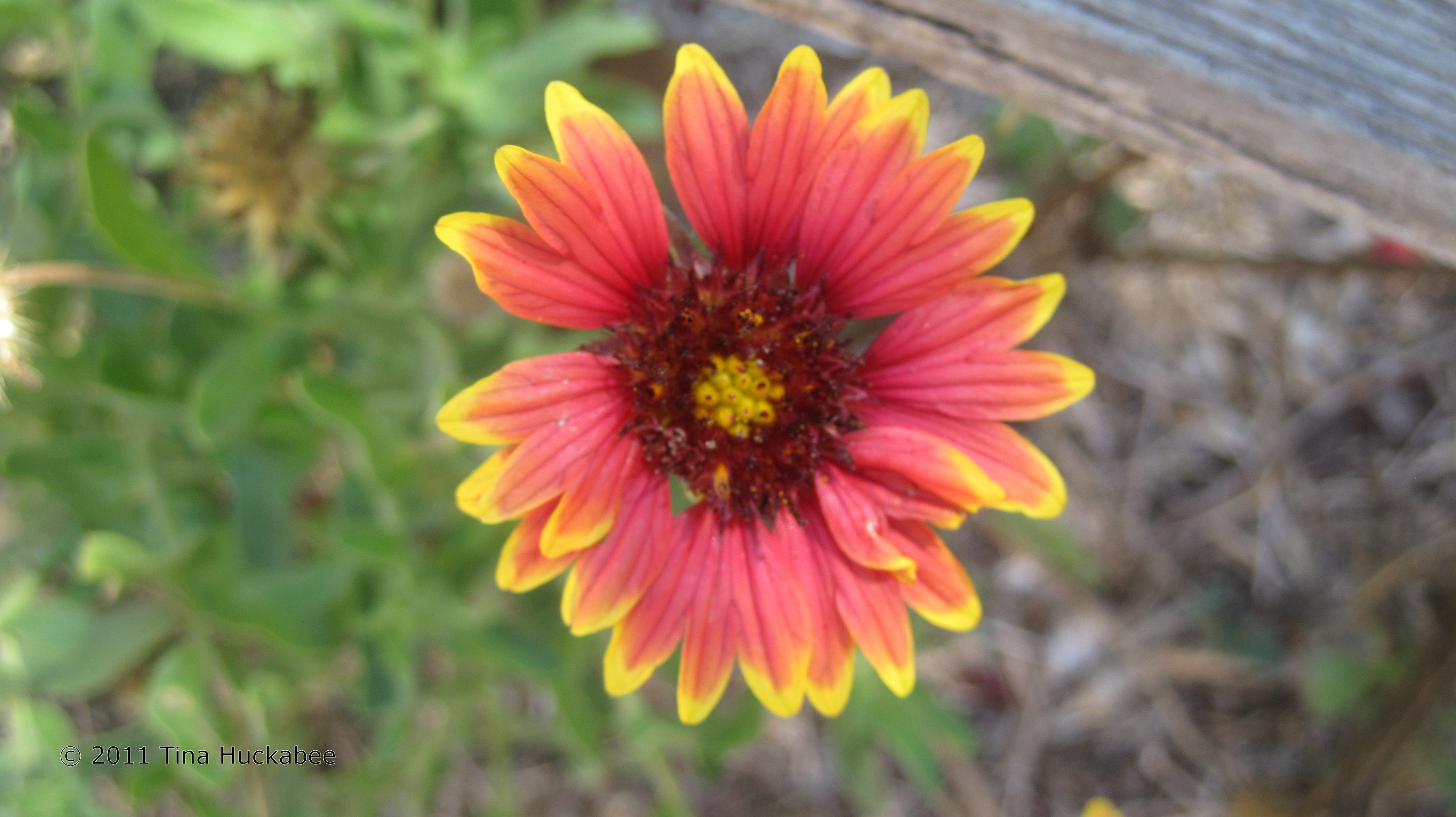
Even the Indian Blanket (Gaillardia pulchella) were still blooming in his garden. 
This was a surprise to me.  I’ve only seen this native wildflower bloom during the late spring through summer months.
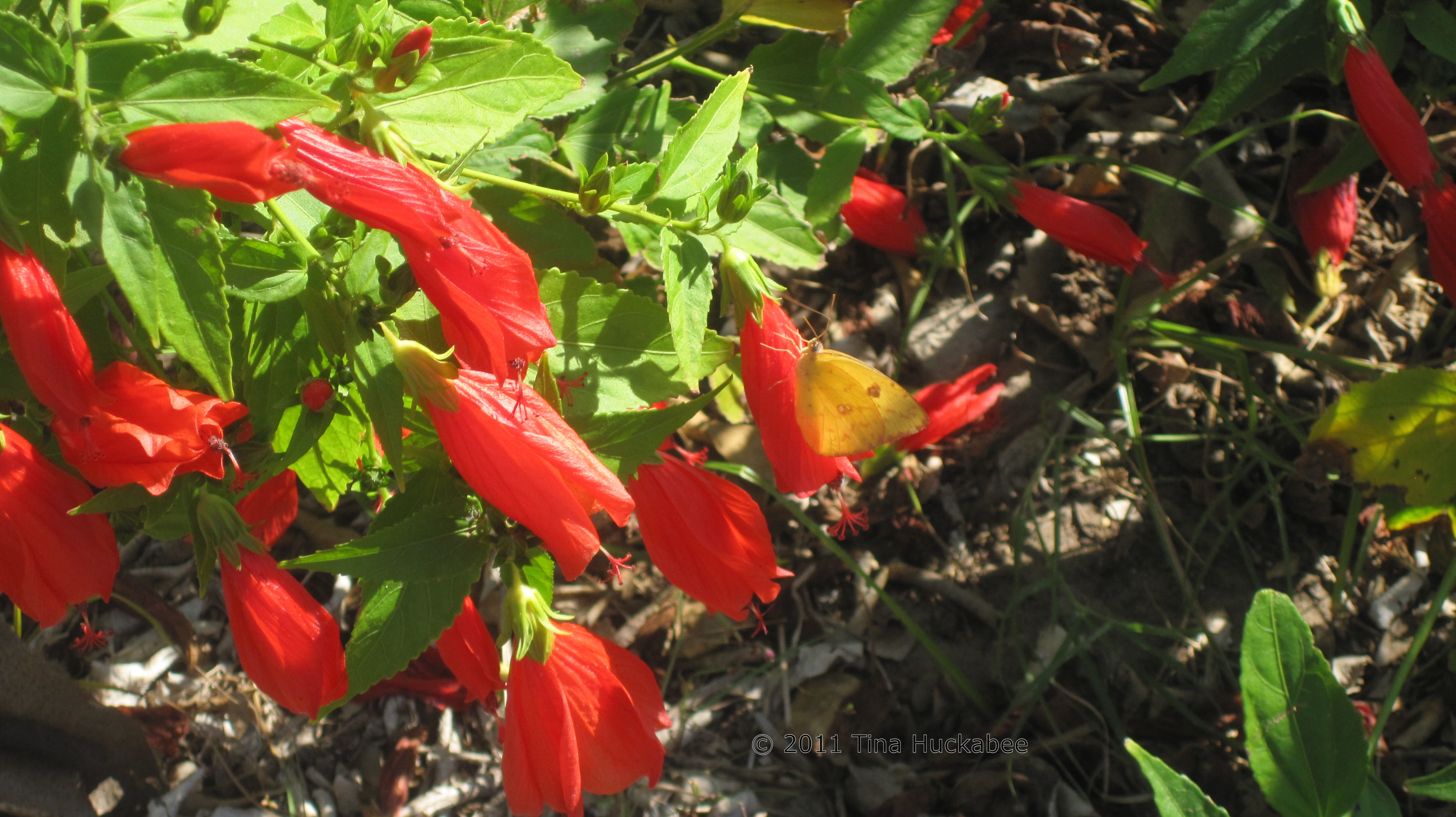
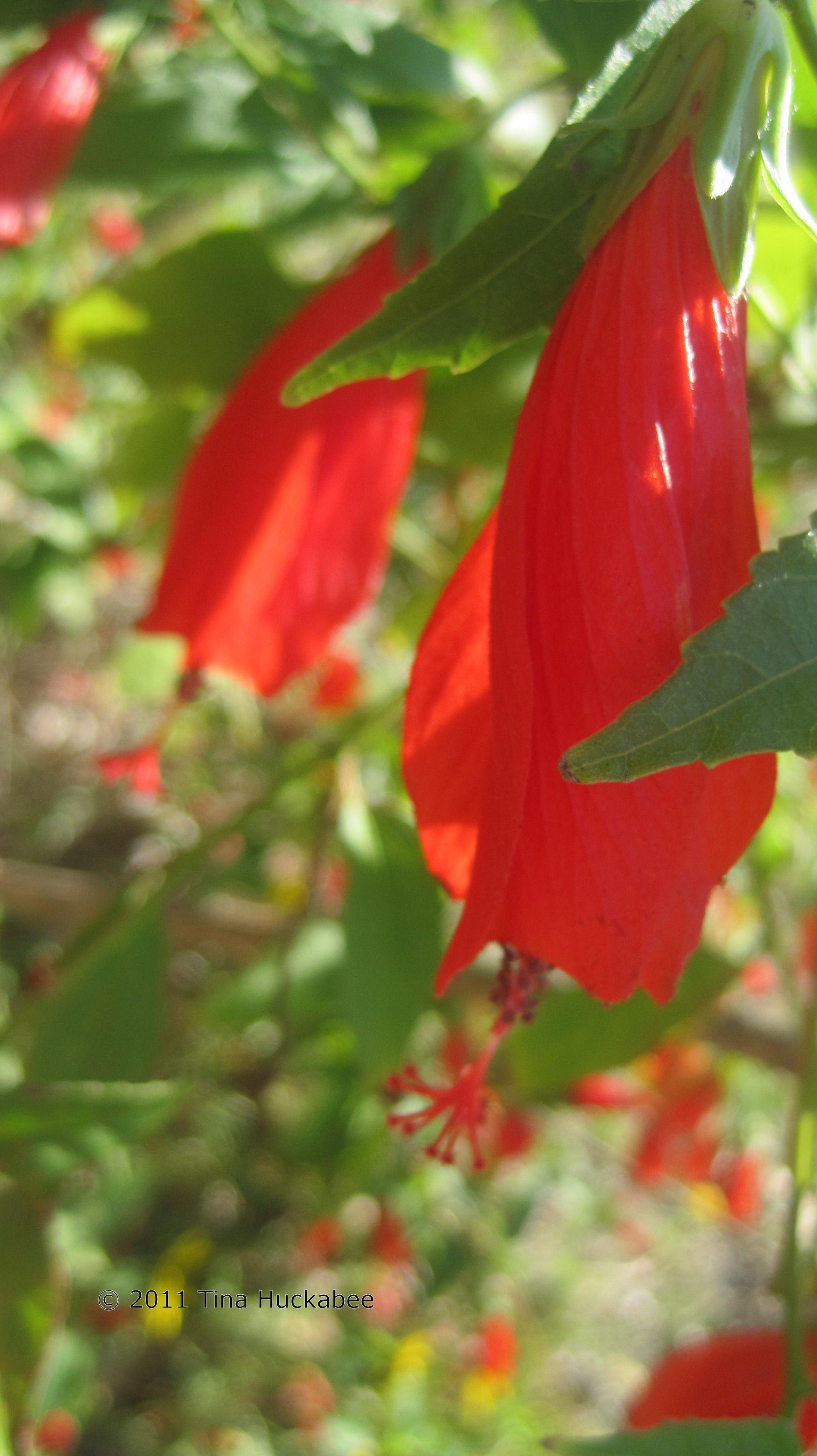
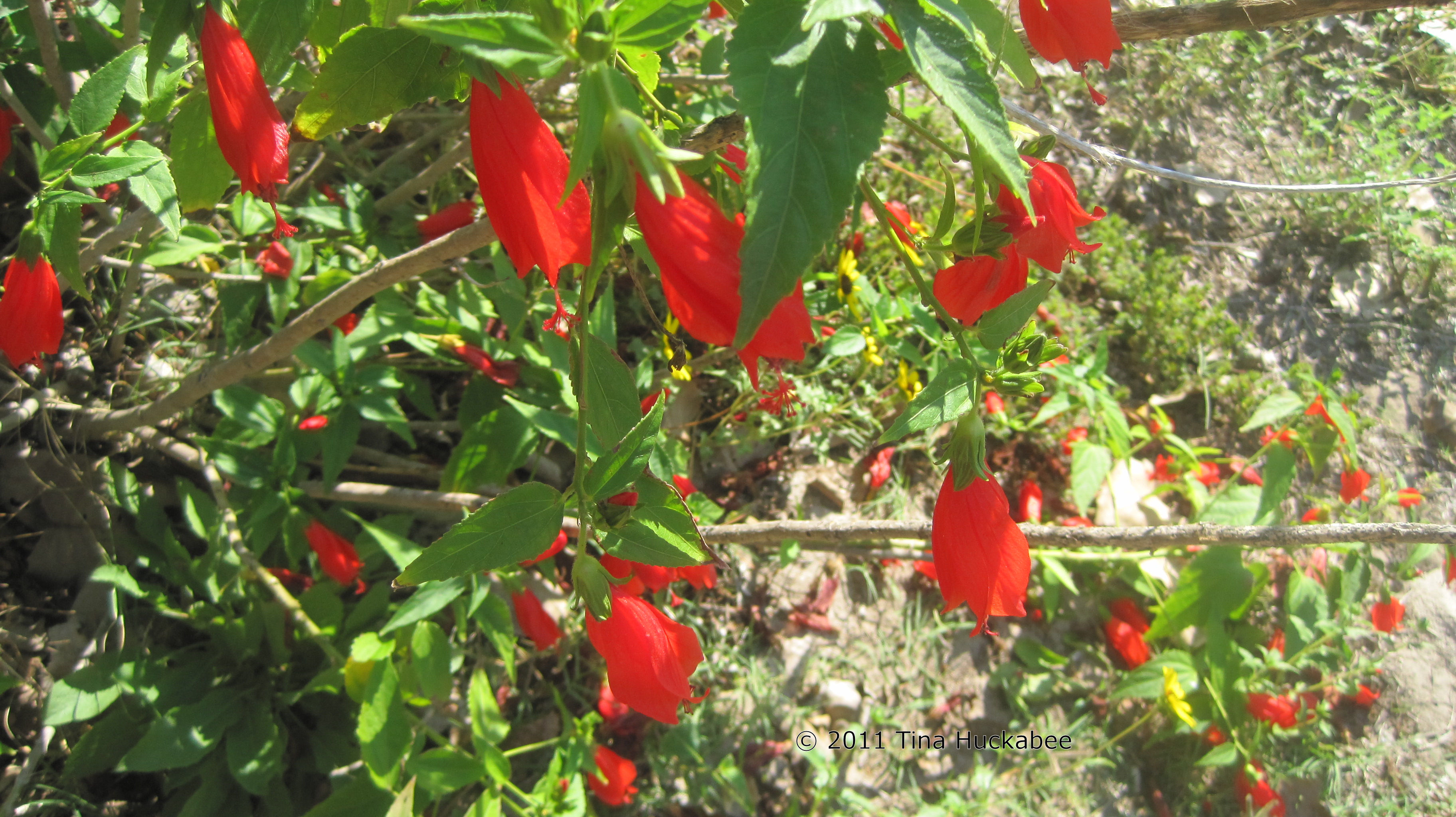
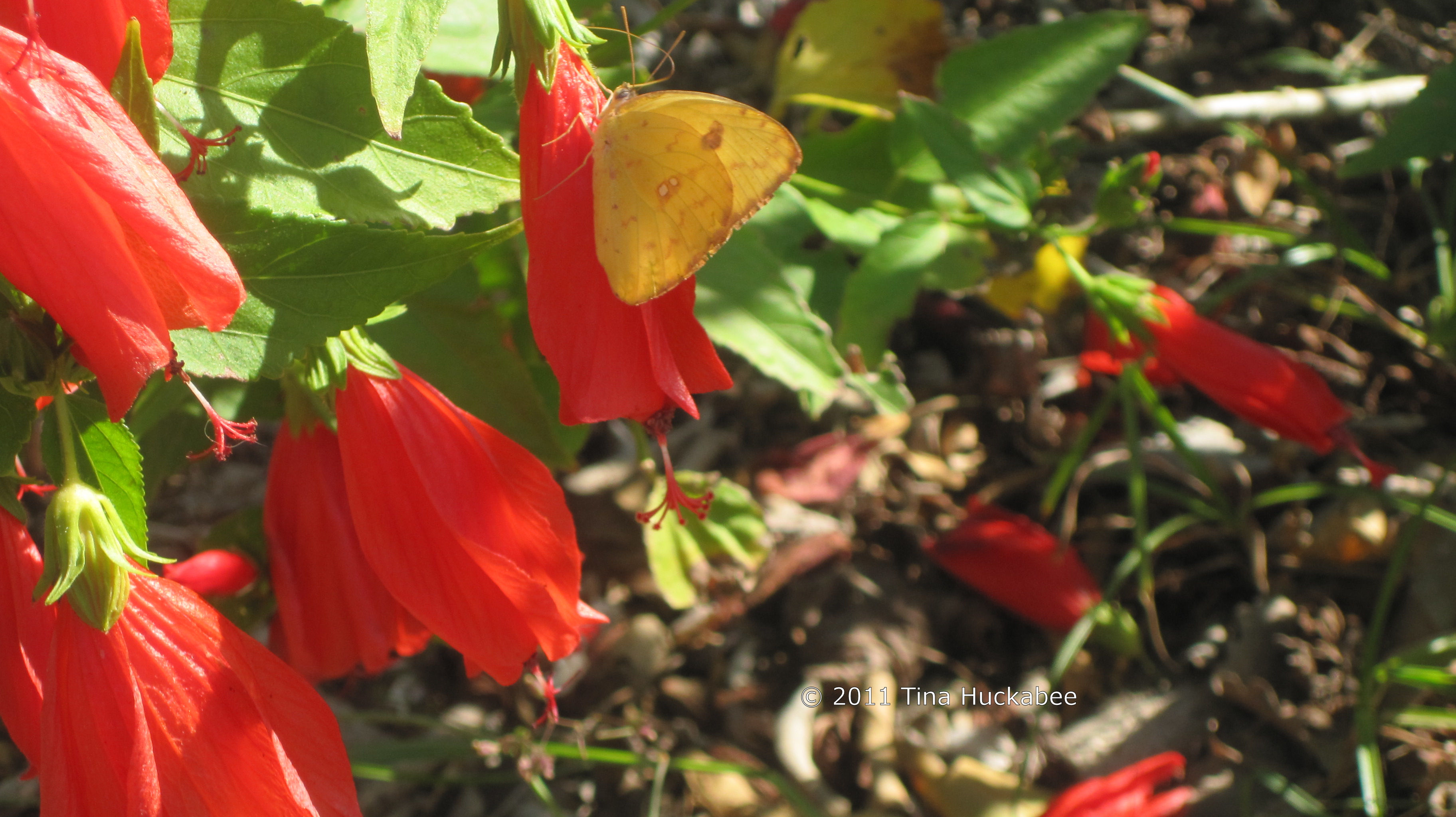
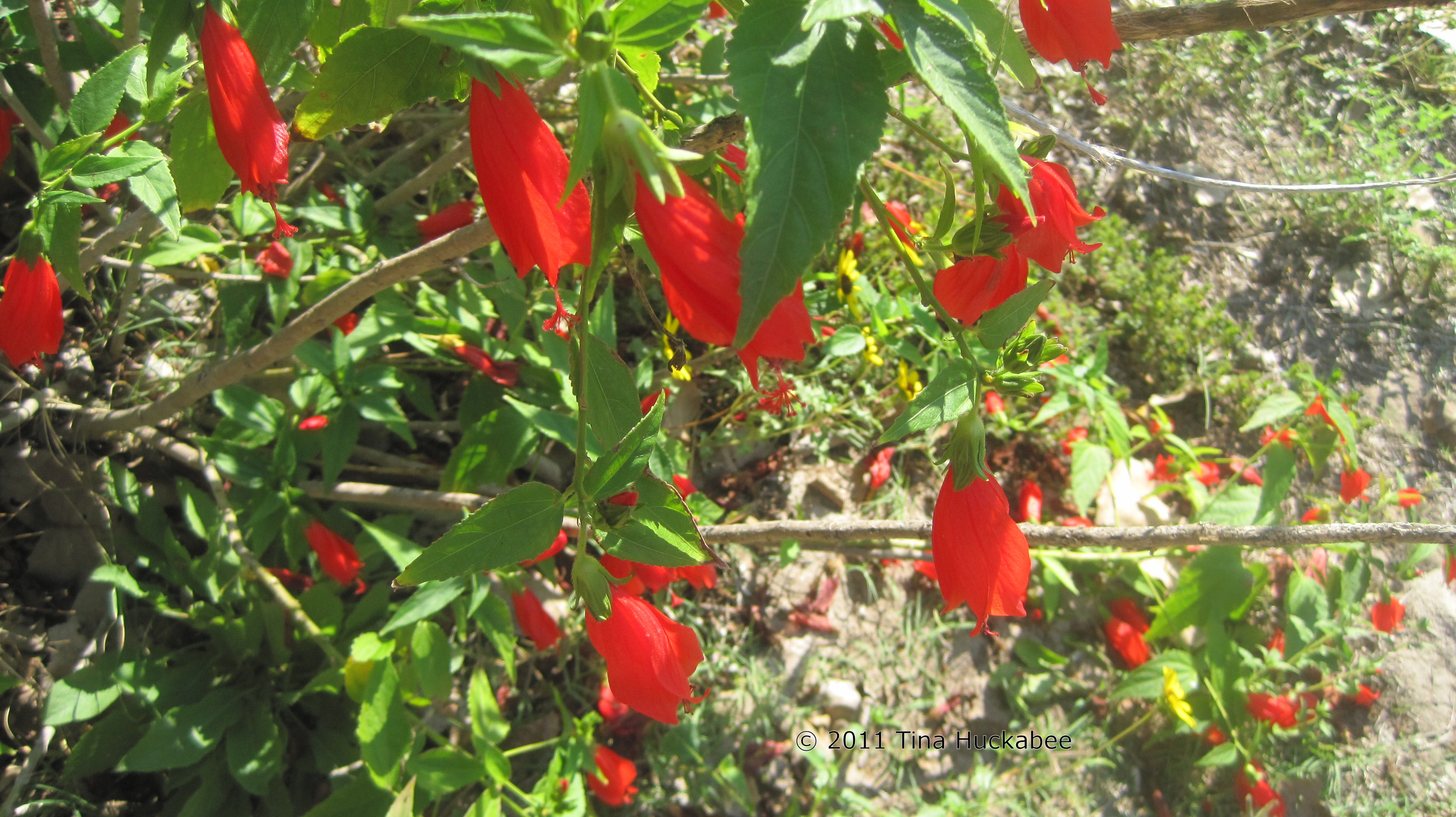
 This Giant Turk’s Cap ( Malvaviscus arboreus var. penduliflorus) was magnificent.
The Giant Turk’s Cap was one of the plants that I considered using when I removed  Cast Iron Plant and replaced it with Pam’s Pink Turk’s Cap. I chose the Pink  because I think it will be more winter hardy here in Central Texas than the Giant.   But that Giant Turk’s Cap is a beauty. With its brilliant red, three to four-inch blooms, it’s quite a show-stopper.
Central Texas has received some rain recently and it’s interesting that I’ve observed a few more butterflies flitting about. Not to our usual standards of course, but it’s heartening to see a few when they were so scarce during the Summer From Hell.
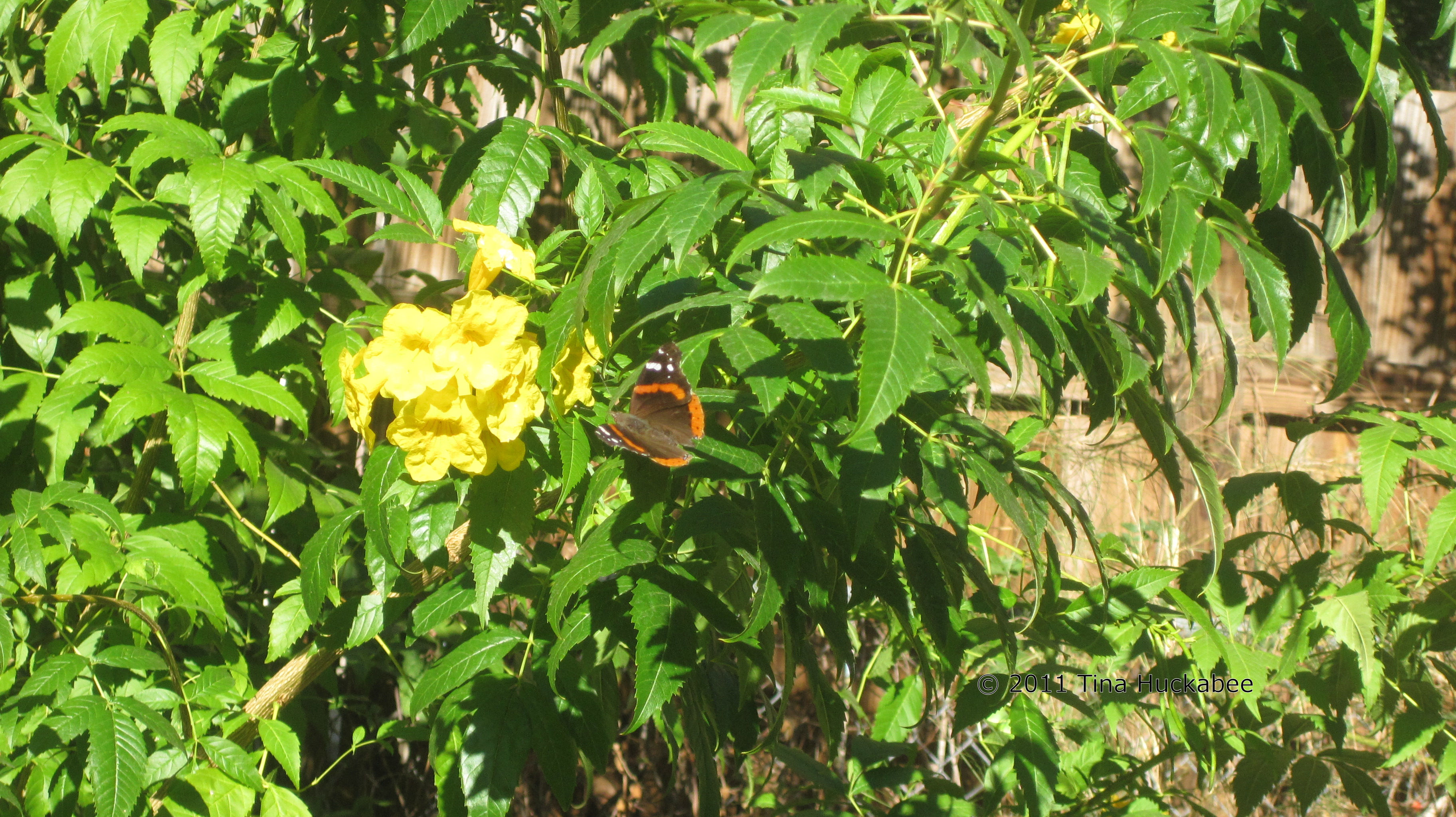
I’ve observed two Red Admirals regularly visiting my Yellow Bells (Tacoma stans) in the last few weeks.
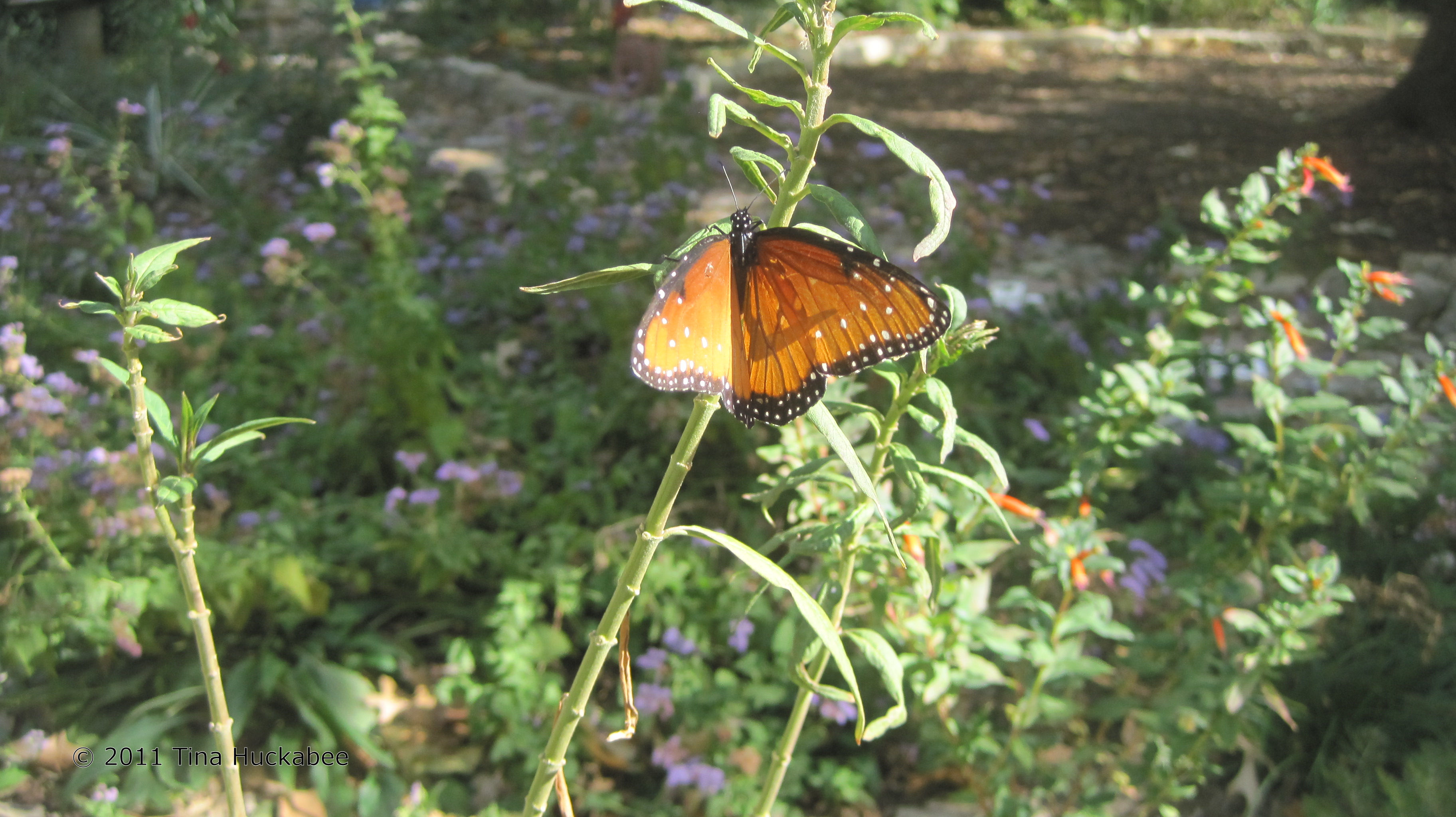
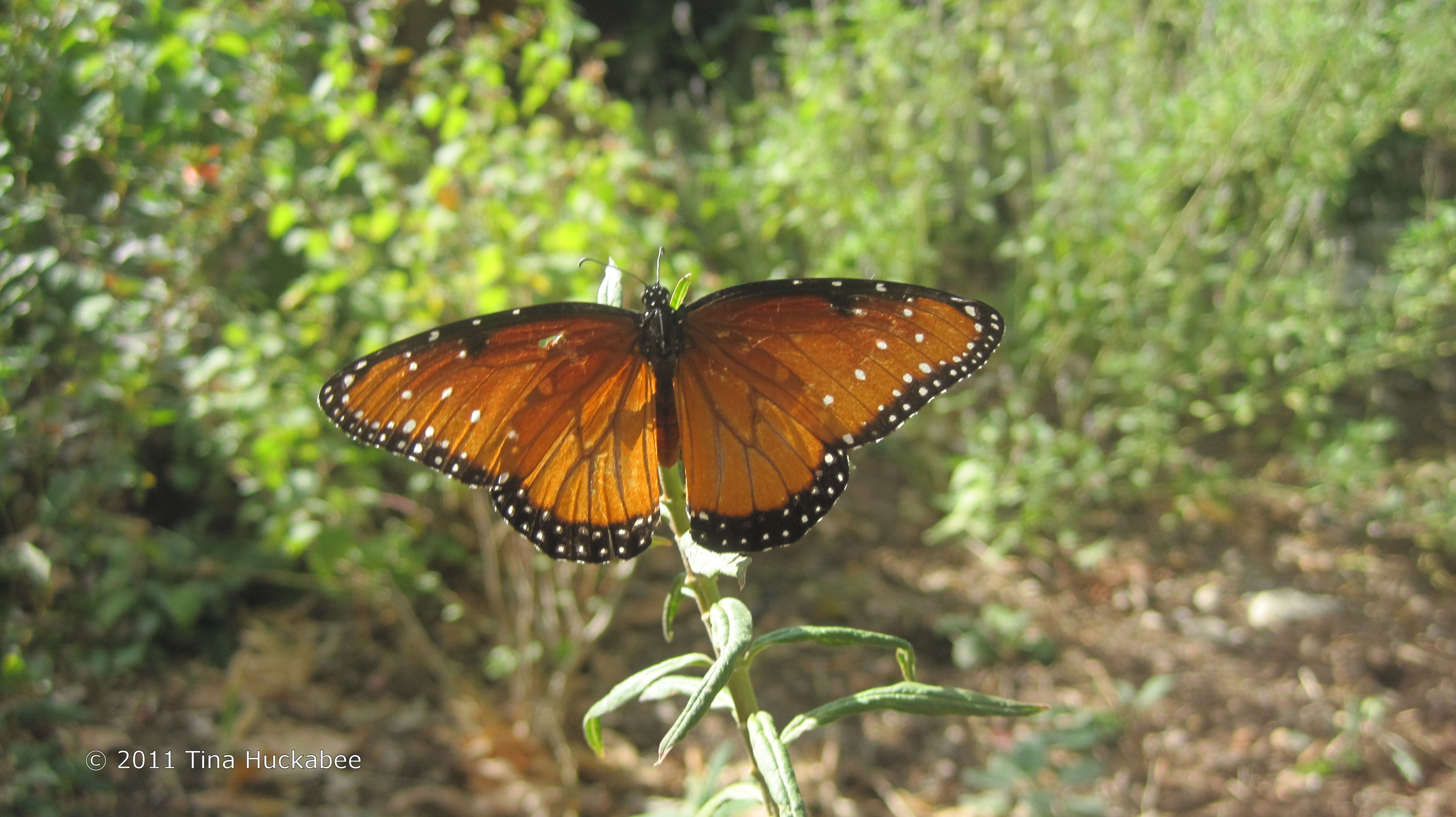
And, one Sunday afternoon, a Queen (the only Queen to visit my gardens this year), was flirting with a Butterfly Weed (Asclepias curassavica).
 
Other than these few and the Monarchs (two or three) who migrated through earlier in the fall, there hasn’t been much of a butterfly show.  Few skippers.  No swallowtails.  Hardly any butterflies.
I’m glad there are butterflies in other areas and I hope next year Central Texas will be once again graced with their presence.