Native Texas Plant Week and Garden Bloggers’ Bloom Day–October 2012

For Garden Bloggers’ Bloom Day and in celebration of Texas Native Plants week, I’m posting some pics of a few currently flowering beautiful native plants in my garden.  Thanks to Carol at May Dreams Gardens for hosting–check out her site to enjoy photos of blooms from many places.
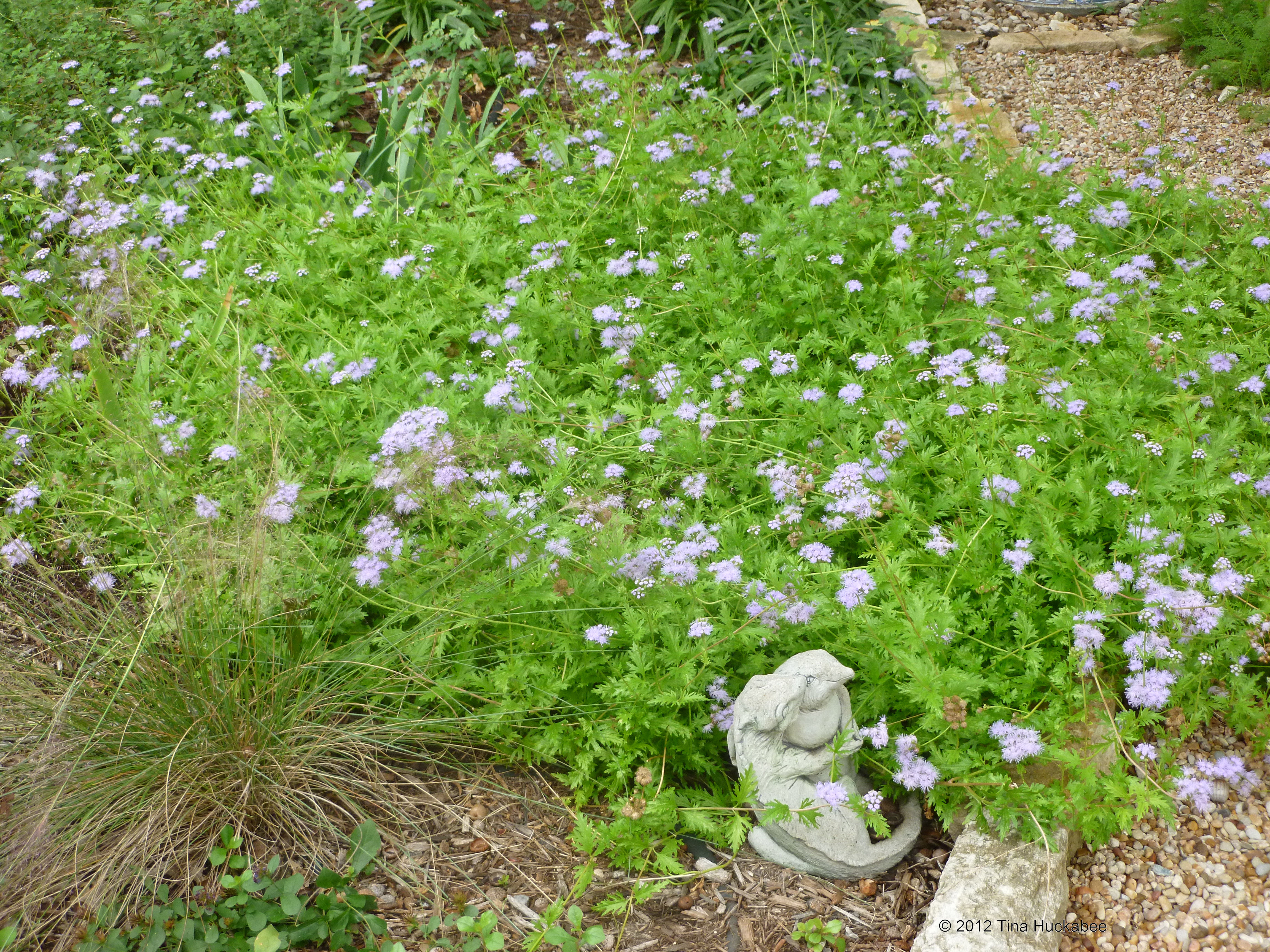
One overview look at a group of Gregg’s Mistflower (Conoclinium greggii),

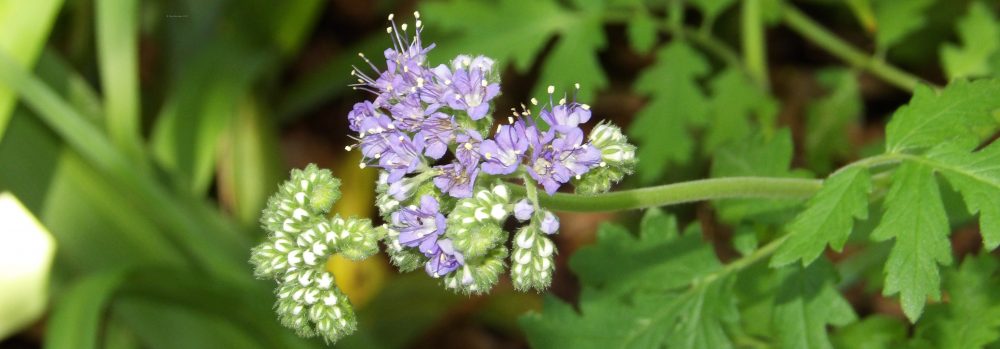
and a close up of this great native perennial ground cover.  The Gregg’s Mistflower is native to Texas, New Mexico and Arizona.

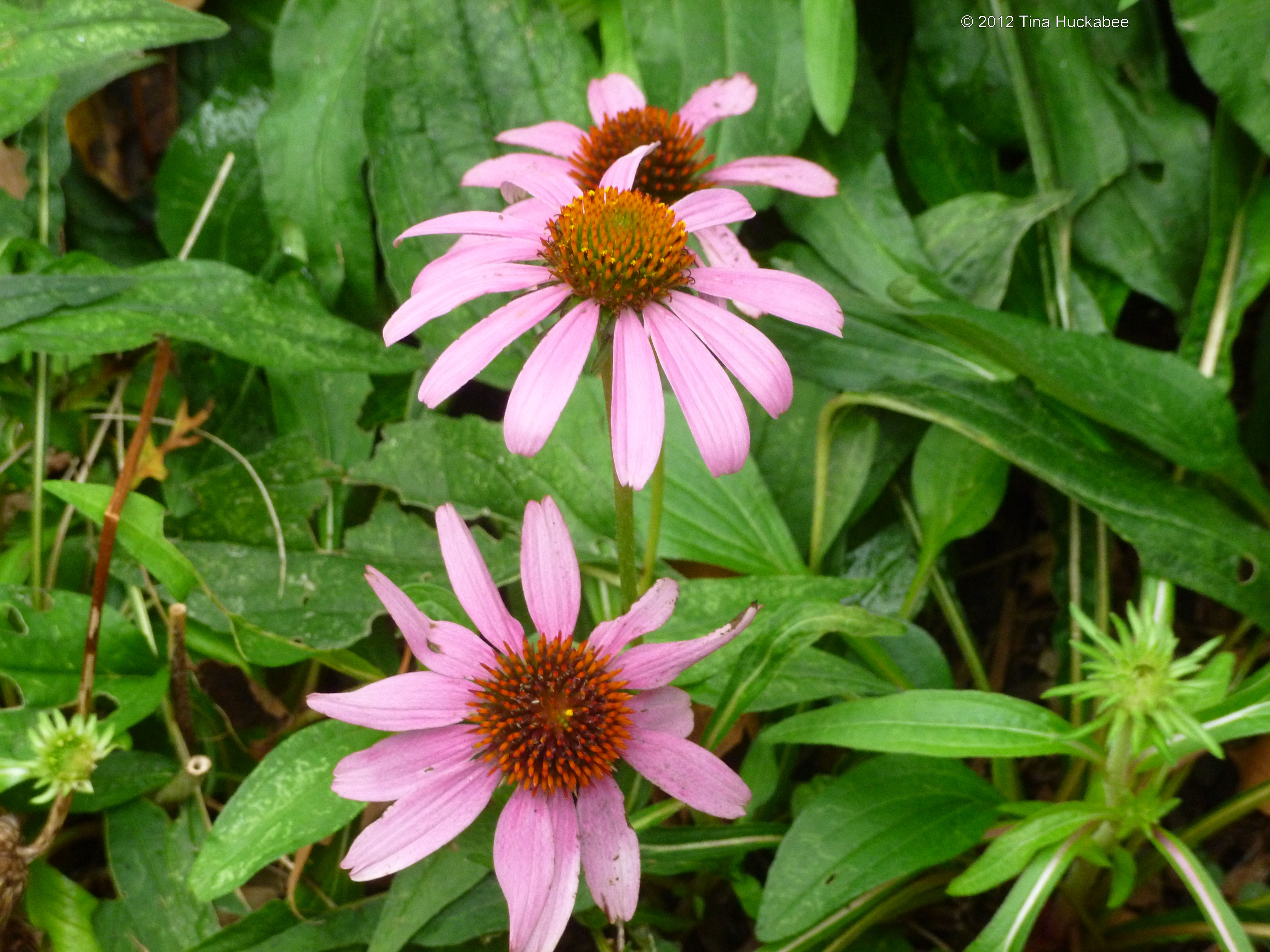
The Purple Coneflower (Echinacea purpurea), is always a winner in my gardens.  Its main bloom period is spring through mid-summer, but I always have some blooms in the fall until a hard freeze ends the glory.
A larger view of another perennial, Blue Mistflower (Conoclinium coelestinum),

and its closeup.

The two mistflower species are related, but they are a little different. It’s difficult to tell from my limited photographic abilities, but the Gregg’s Mistflower is a lighter blue, while the Blue Mistflower is much darker.  Also, the leaf characteristics are different in the two plants.  Both are perennial ground covers with the main blooming period occurring from September through November.  Both are also favorites of the butterflies and bees.

The Goldeneye (Viguiera dentata) brightens the roadsides and my gardens in October.
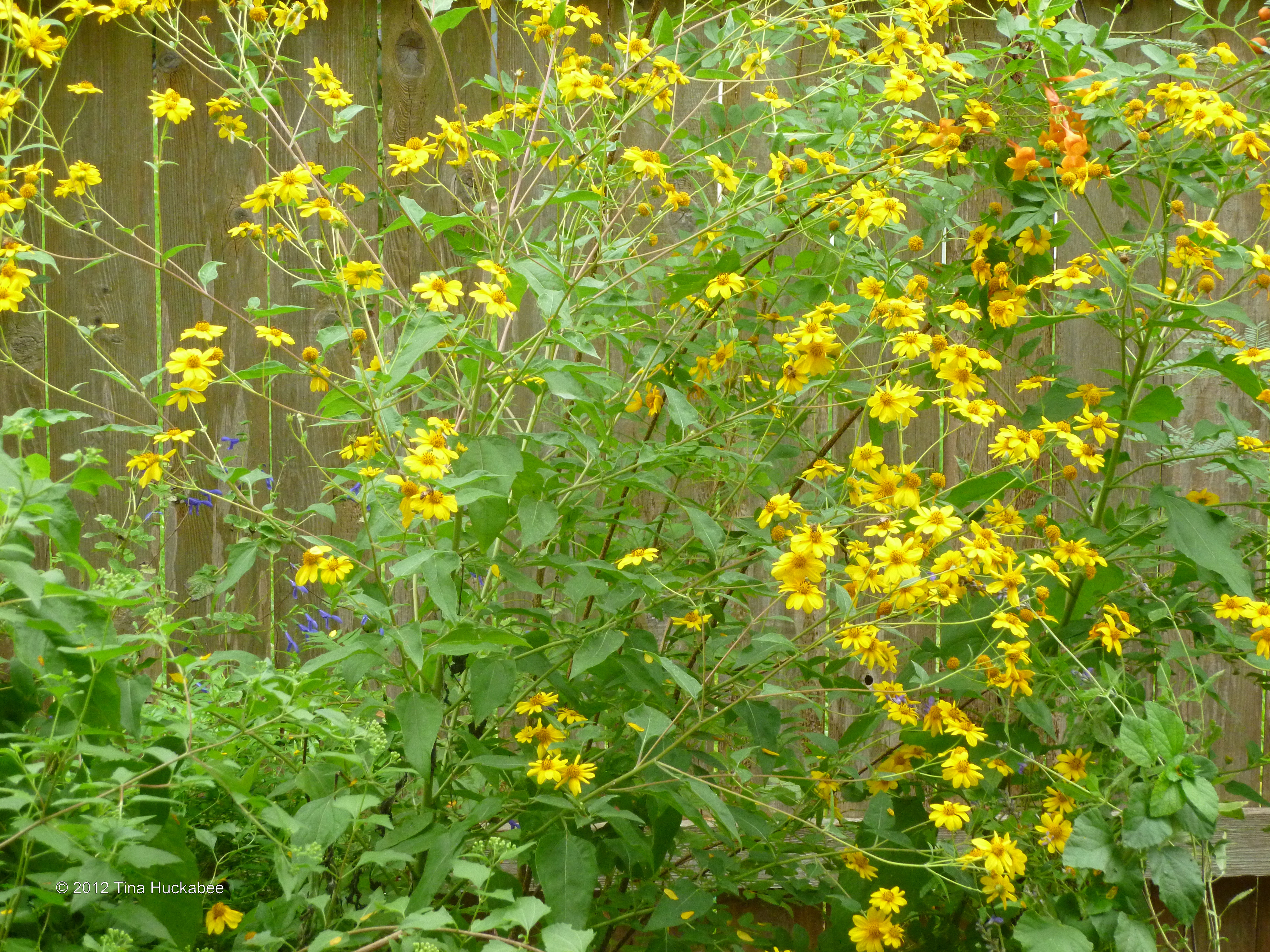
At its peak of beauty now, Goldeneye blooms in the spring and sporadically in the summer months and is an excellent wildlife plant.  It provides for pollinators and birds, alike and it’s pretty for people to enjoy too!

Fall Aster (Symphyotrichum oblongifolium) is a relatively new addition for me.

I’m glad I have a place for this hardy and sweet little aster.

A nice combination of plants:

From left to right in the photo above are Mealy Blue Sage (Salvia farinacea), some overhanging blooms from a Red Yucca (Herperaloe parviflora), at the back, some Turk’s Cap (Malvaviscus arboreus var. drummondii), a Pale Leaf Yucca (Yucca pallida), the yellow daisy, Zexmenia (Wedelia texana) and Red Autumn Sage (Salvia greggii).

Another nice mingling of native perennials:

more Coneflower, more Turk’s Cap, more Goldeneye.

The Damianita (Chrysactinia mexicana) is a plant with shocking yellow flowers paired with striking dark, green foliage.
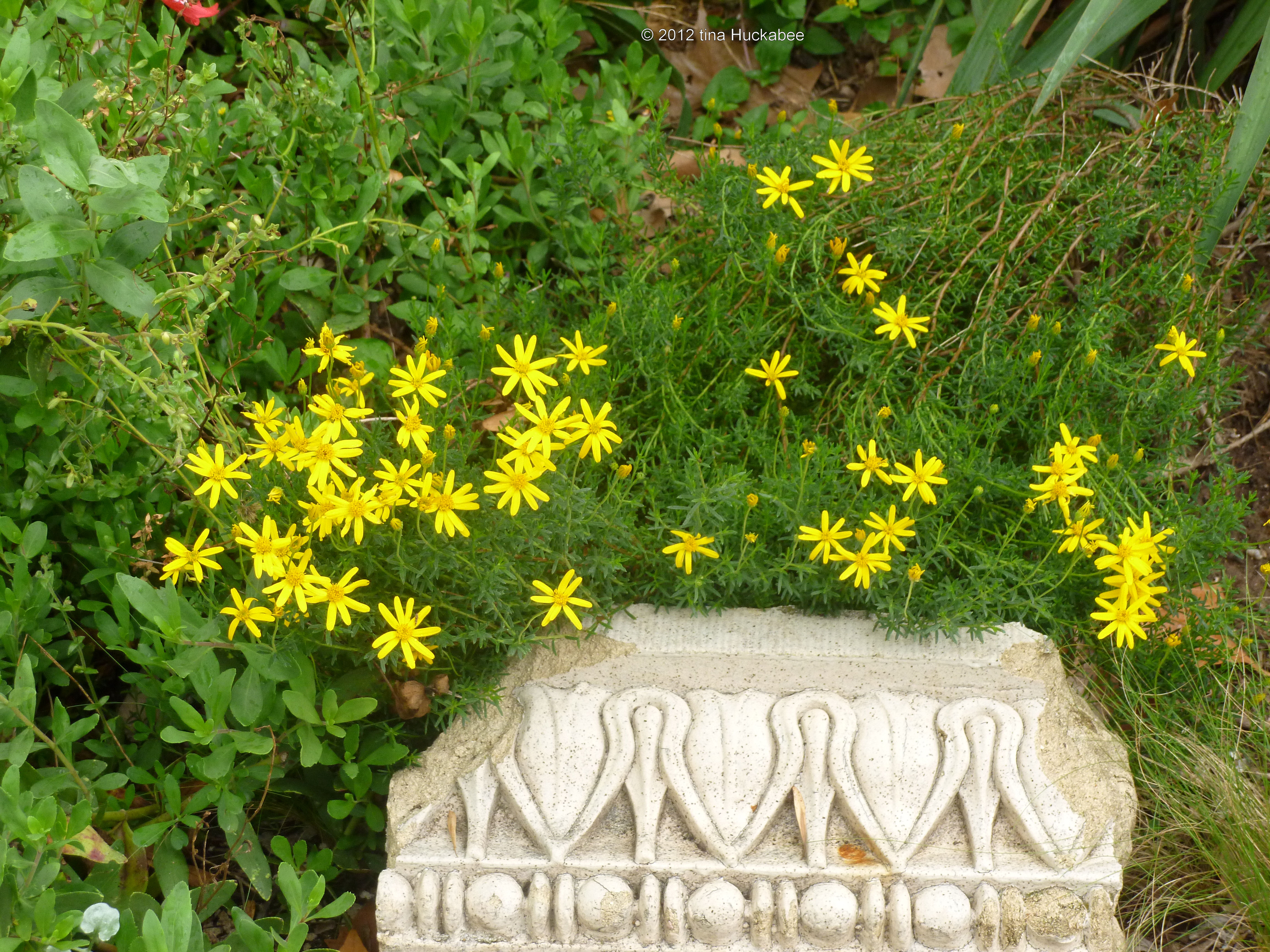
Damianita blooms on and off for the growing season and is native to Central/West Texas and New Mexico.

Texas native plants fit well within the palette of a large mixed perennial garden.

Natives that are blooming are White Autumn Sage (Salvia greggii), Henry Duelberg Sage (Salvia farinacea, ‘Henry Duelberg’), Yellow Bells (Tacoma stans), Big Muhly (Muhlenbergia lindheimeri).

Wherever you live, plant natives in your gardens.  They’re easy, hardy and reliable and attract wildlife to your gardens.

For more information about native plants of North America, check out the Lady Bird Johnson Wildflower Center site.

Go natives!  Go garden bloggers!

Mexican Orchid Tree Blooms–Finally!

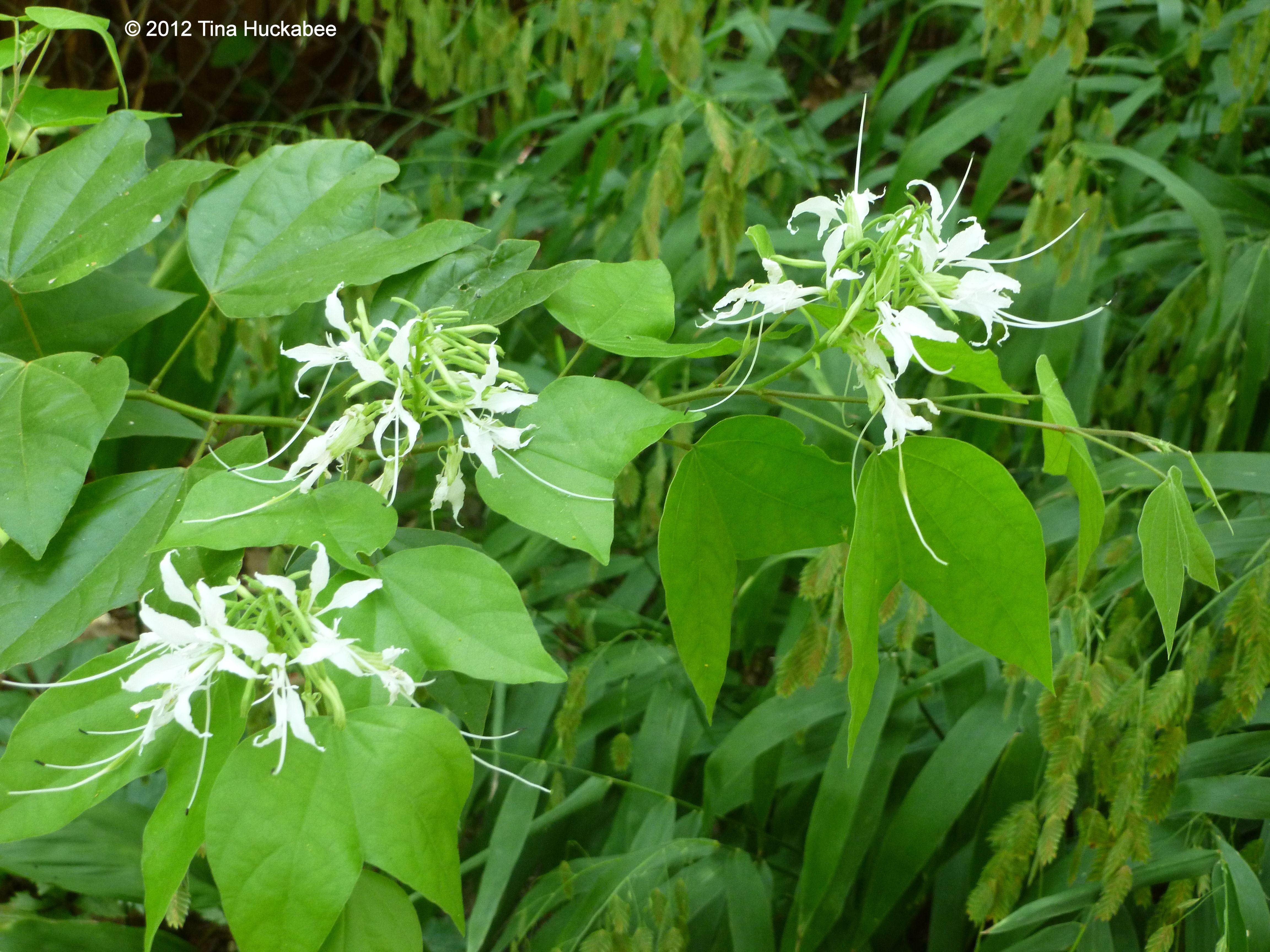
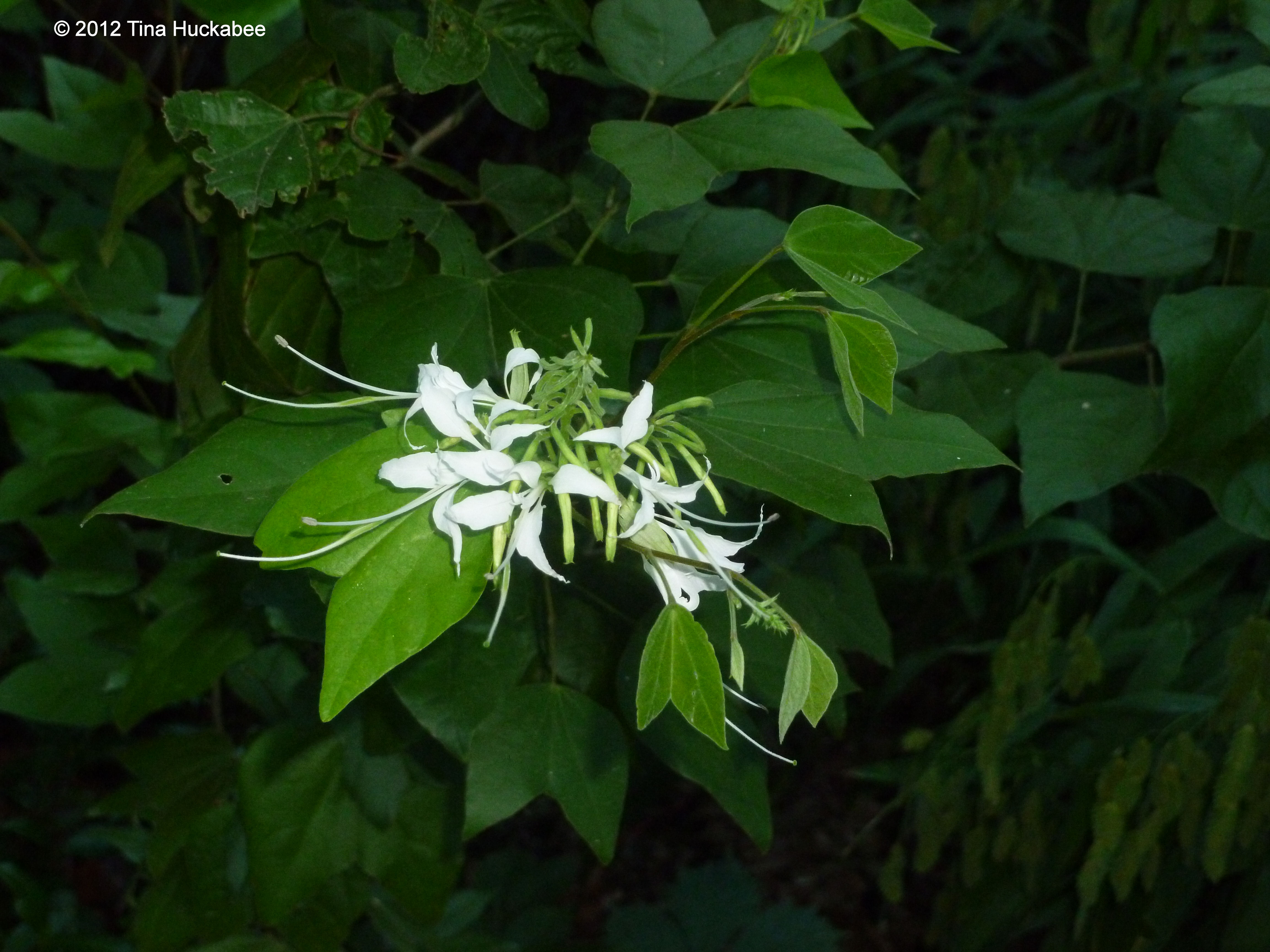
The Mexican Orchid Tree (Bauhinia mexicana),  I planted as a tiny seedling in October 2010  bloomed recently.

Yeah, I think it was worth the wait.

A friend  gave me a 4 inch seedling while I was helping with her garden.  I knew a little about the plant and that the Mexican Orchid Tree grows well in shade, though it doesn’t get as  large, nor blooms as prolifically as in full sun.  I dutifully planted the seedling in a dappled shade spot and waited.

The seedling died back during winter.  I didn’t expect it to survive because of two very hard freezes and the seedling, while well-mulched, hadn’t much time to establish.  The Mexican Orchid Tree reemerged in late spring of 2011.  It survived the Summer from Hell (2011) and grew throughout last year, only to die to the ground again during  winter, 2012.

Planted in a shady spot, my Mexican Orchid Tree will never become a “tree” for me.  It’s  an open and airy shrub, with (for now) two main branches.  Planted  in a garden with Turk’s Cap (Malvaviscus arboreus), Cast Iron Plant (Aspidistra elatior), Inland Sea Oats (Chasmanthium latifolium) and assorted shade-tolerant plants,

it adds interesting foliage,

and lovely white blooms which brighten the shady area.

If planted in full sun, the Mexican Orchid Tree grows to 8-12 feet in height with a 6-8 foot spread. Reportedly deer resistant, it’s known as a great butterfly attracting plant, although.  I haven’t observed any butterflies on my blooms. I would consider it a xeric plant.  I haven’t  given any extra water other than the two times/month that is my norm and it’s grown well.

The flowers are beautiful,

and fragrant, too.

Here in Austin, the only two nurseries which regularly carry the Mexican Orchid Tree in stock are Barton Springs Nursery and The Natural Gardener.

Patience is a virtue (so I’m told) and I’m glad that I waited for this lovely addition to my garden.

Firecracker, Firecracker, Boom, Boom, Boom!

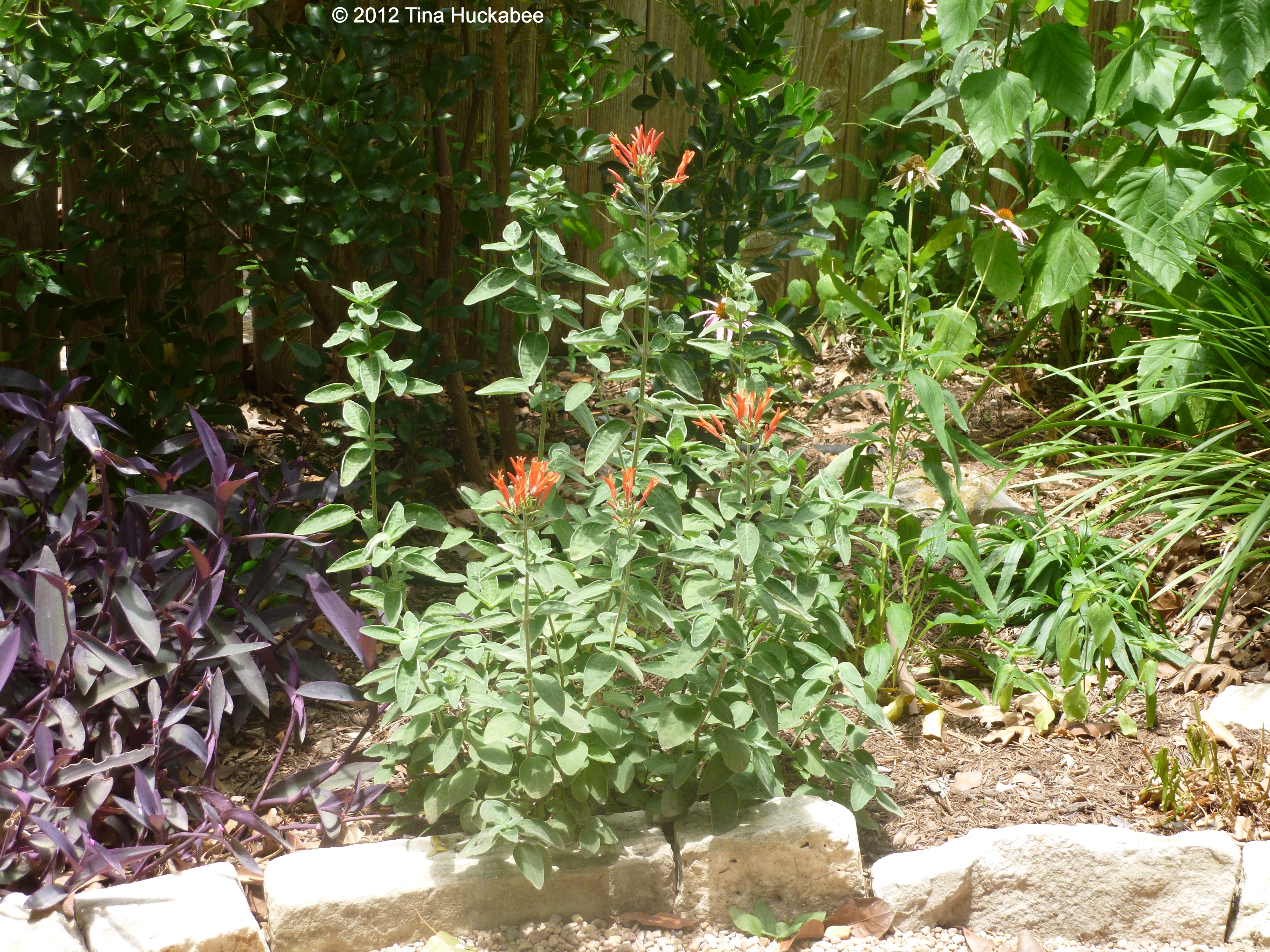
So goes a cheer from my junior high school days. I have no idea why I would remember such a thing–it’s probably one of those patterns of speech that the brain is so attracted to.  I do however know why I like the Uruguayan Firecracker Plant (Dicliptera suberecta).
It’s a tough and beautiful summer bloomer which, though not native to North America, is a great plant for the home gardener.  It works well here in Zone 8B as a herbaceous perennial but can also be found further north, though it may not be winter hardy.
I planted mine last July.  Yes, last July.  When the average temperature was about a 1000 degrees.  I bought a gallon pot and gave it a little water everyday for a few weeks, then backed off to giving it water several times per week.  By autumn, the plant had grown and the leaves weren’t curling up in pain from the extreme temperatures.  It didn’t die back this past  winter and has continued its moderate growth pattern.  My plant started blooming in May.
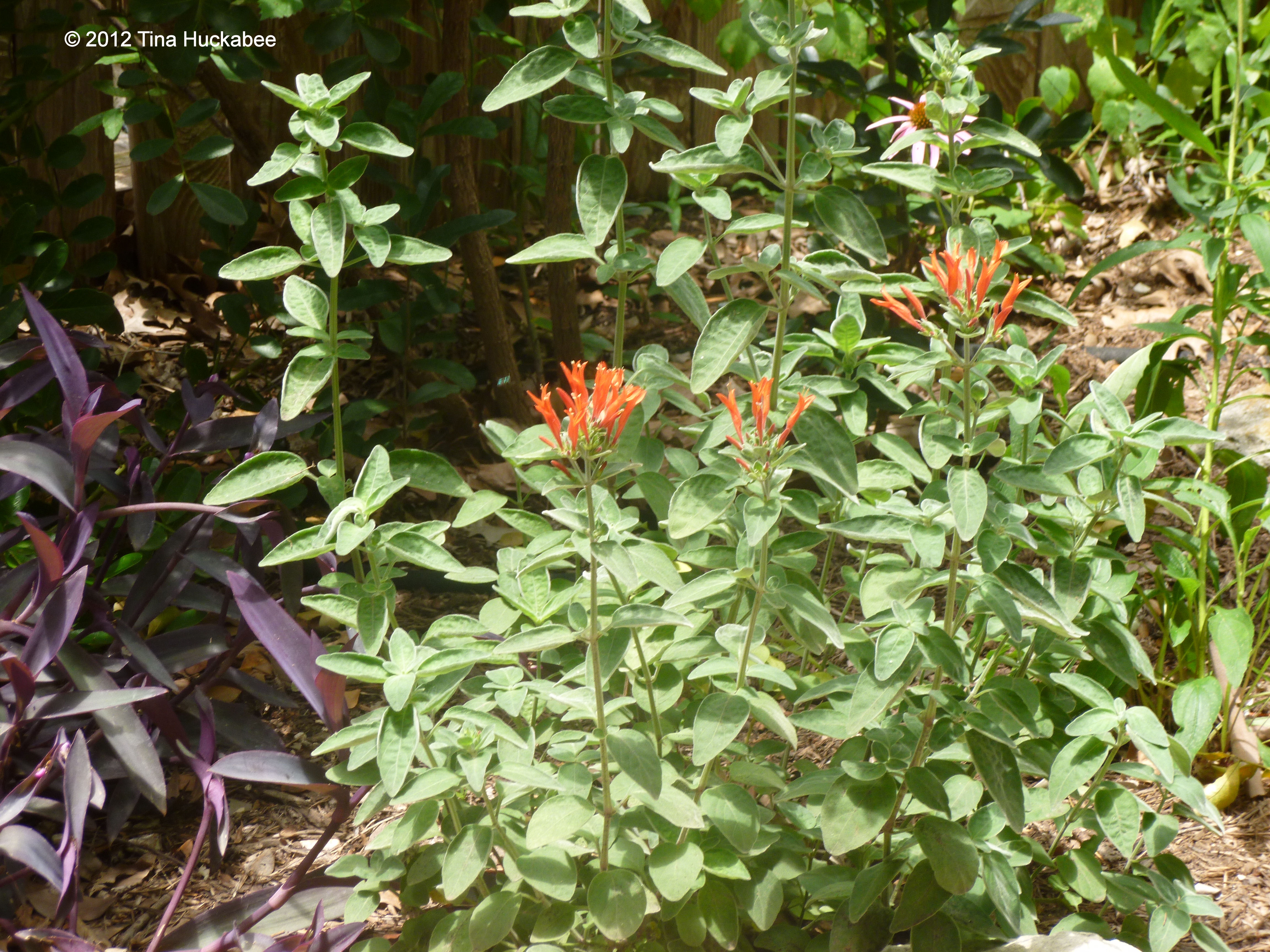
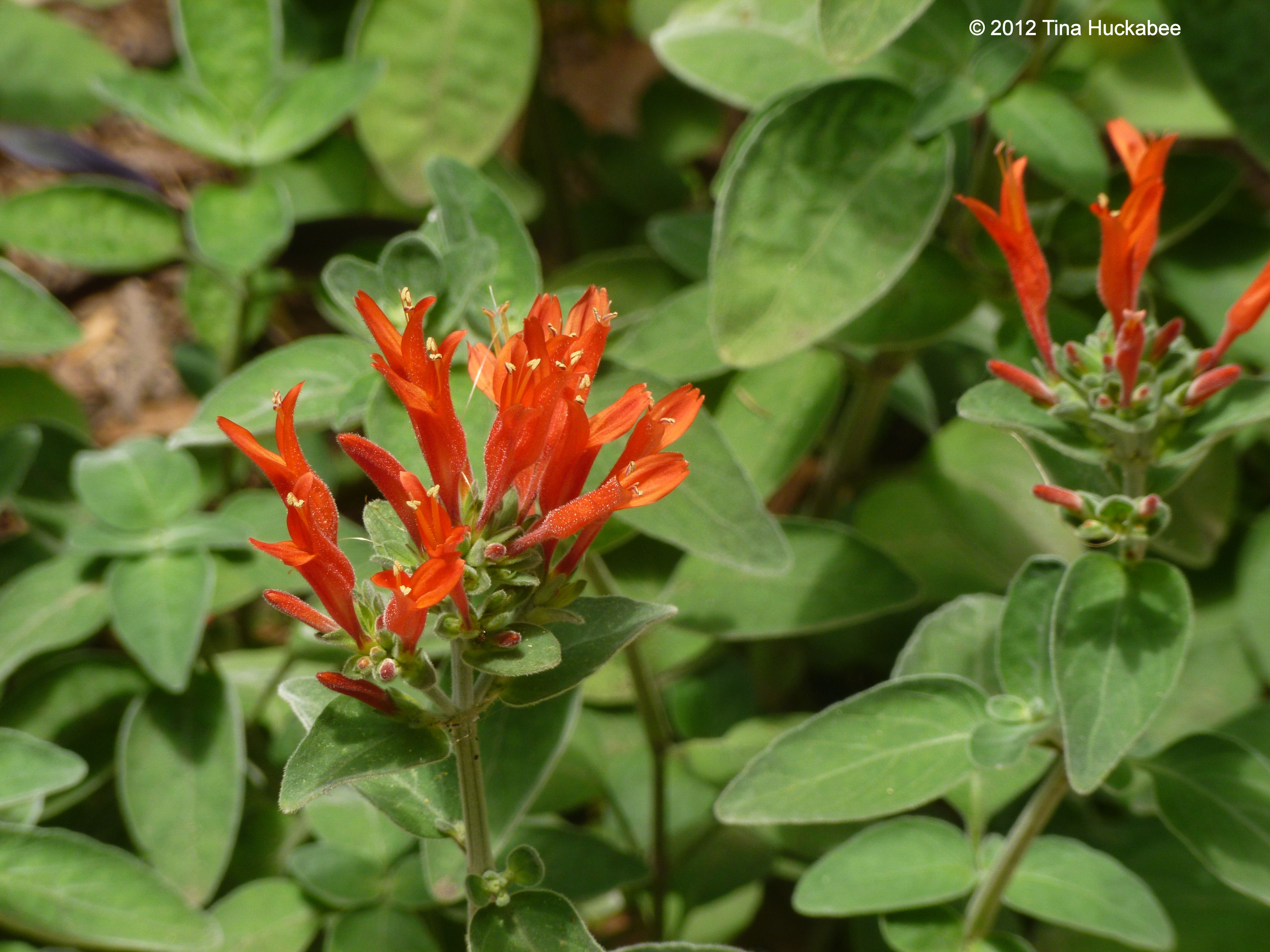
The leaves are green-grey and ovate. They are also soft and fuzzy, which tends to be a characteristic of very xeric plants. 
And the Uruguayan Firecracker Plant does seem to be xeric.  I haven’t watered but once this summer and it’s performing well.
The bloom is two-lipped and tubular, a deep orange-red and forms in clusters atop the branches.  The blooms attract hummingbirds, though so far I haven’t seen any feeding on this plant
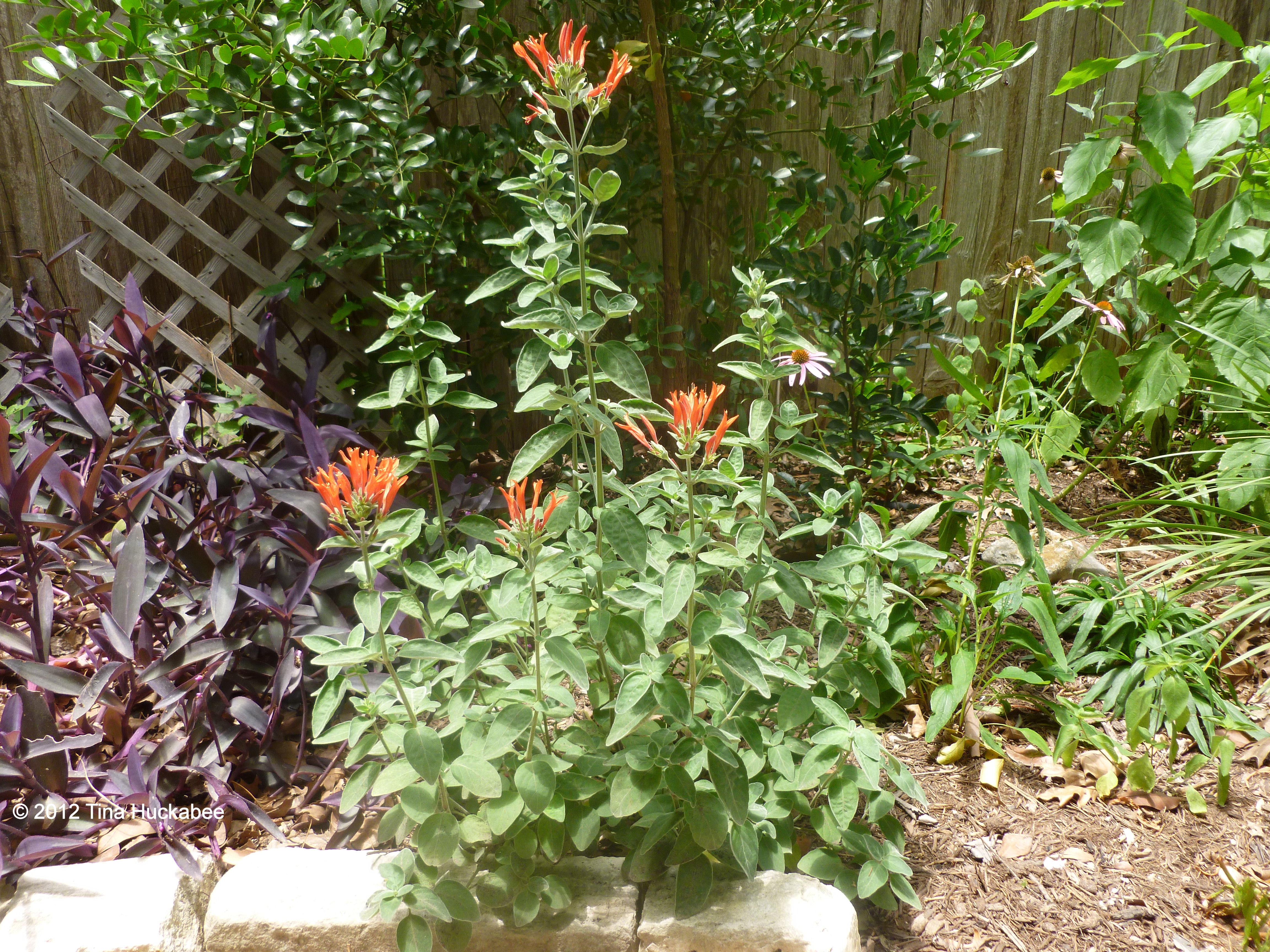
The plant only gets about two feet tall and spreads like a ground cover, so it’s something that should be planted at the  front of a garden.
Uruguayan Firecracker Plant blooms best in sun, but I chose if for its shade tolerant qualities.  Here in sunny, hot Texas, it’s a good plant for a dappled shade/part shade situation.  The leaves will curl somewhat unattractively in full sun, but in a shadier spot, the foliage is quite lush.  I was in fact researching this plant to use in the Green Garden at Zilker Botanical Garden when I realized that I had the perfect spot for it at home.
This area gets about two hours of direct summer sun (late morning to early afternoon) and is in shade or dappled light for the rest of the time.  I like it here, where it fronts this small Texas Mountain Laurel (Sophora secundiflora) and as a companion to the Purple Heart(Tradescantia pallida).
I’m happy with this new addition to my garden.  It’s rewarding to find a plant that is easy and pretty, especially in a shade/part shade situation.  It has showy blooms and lovely foliage.  There don’t seem to be any insect or disease issues and according to Pacific Horticulture and Barton Springs Nursery, this plant is deer resistant.  It doesn’t get much better than that.
 And that’s definitely something to cheer about!