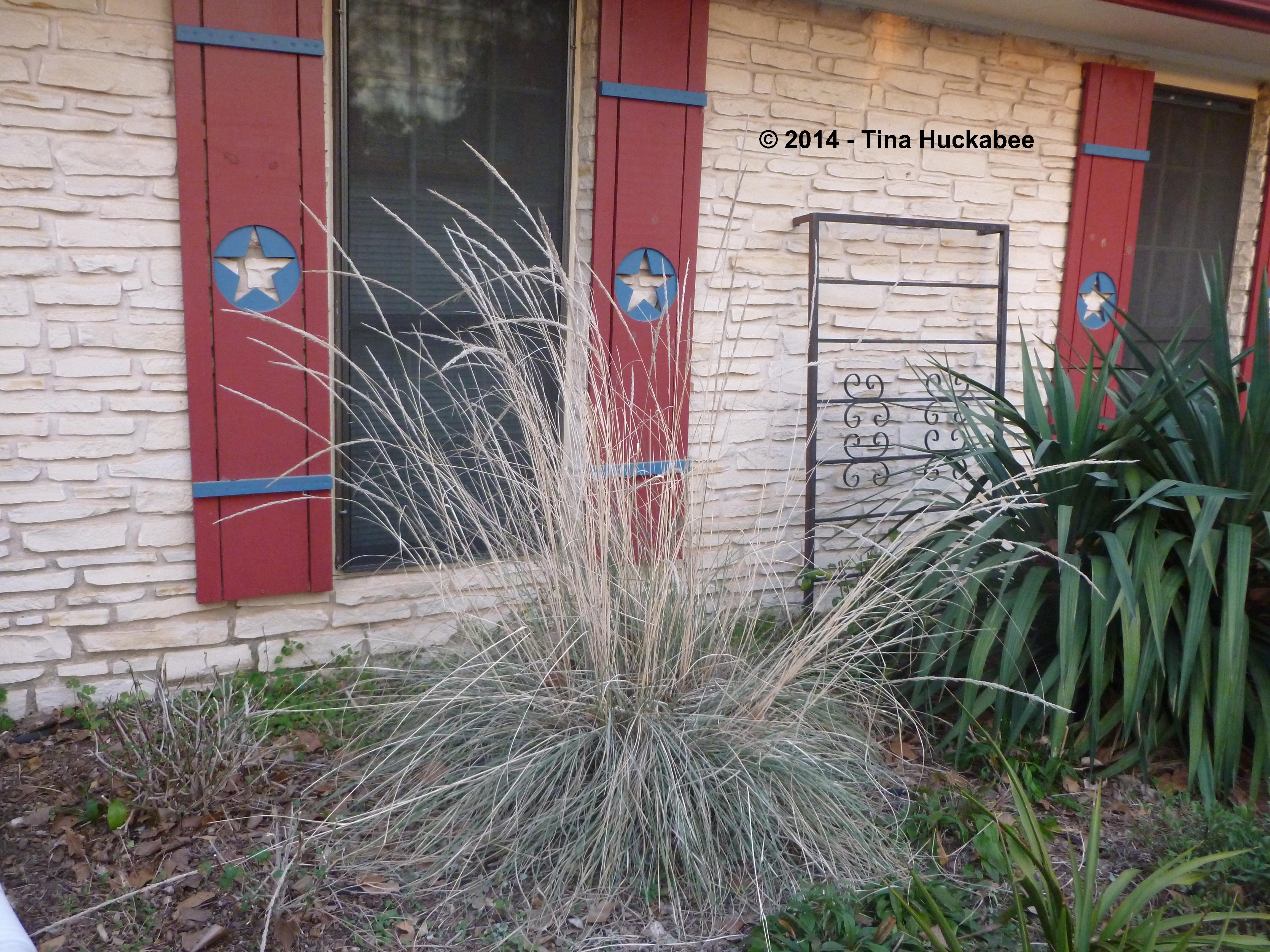
The last bastion of prunable perennials in my gardens are the ornamental grasses. I’ve noticed in Austin that many landscape companies prune ornamental grasses earlier in winter, but the little nubs of grass left are unattractive–they remind me of alien pods. (Not that I’ve seen many alien pods.) Grasses don’t flush with new growth until late February or early March and winter-tinged grasses are lovely specimens. During winter dormancy, ornamental grasses develop a toasty color and the graceful forms lend elegance and interest to any landscape.
I’m especially fond of the native Big Muhly (Muhlenbergia lindeimeri). These larger grasses move gracefully in winter winds.
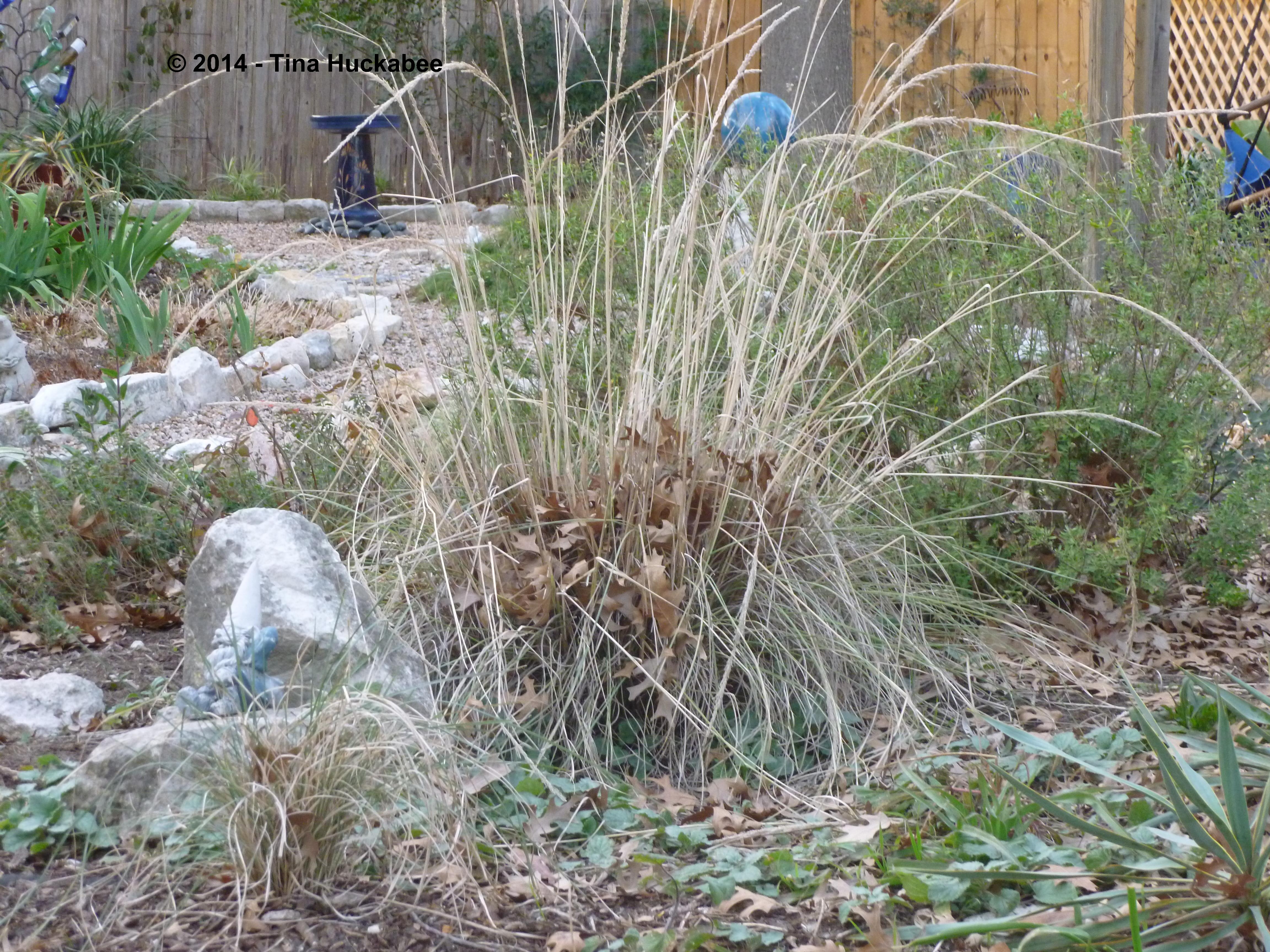
Though, I guess I could have raked the leaves from this one in the back garden.
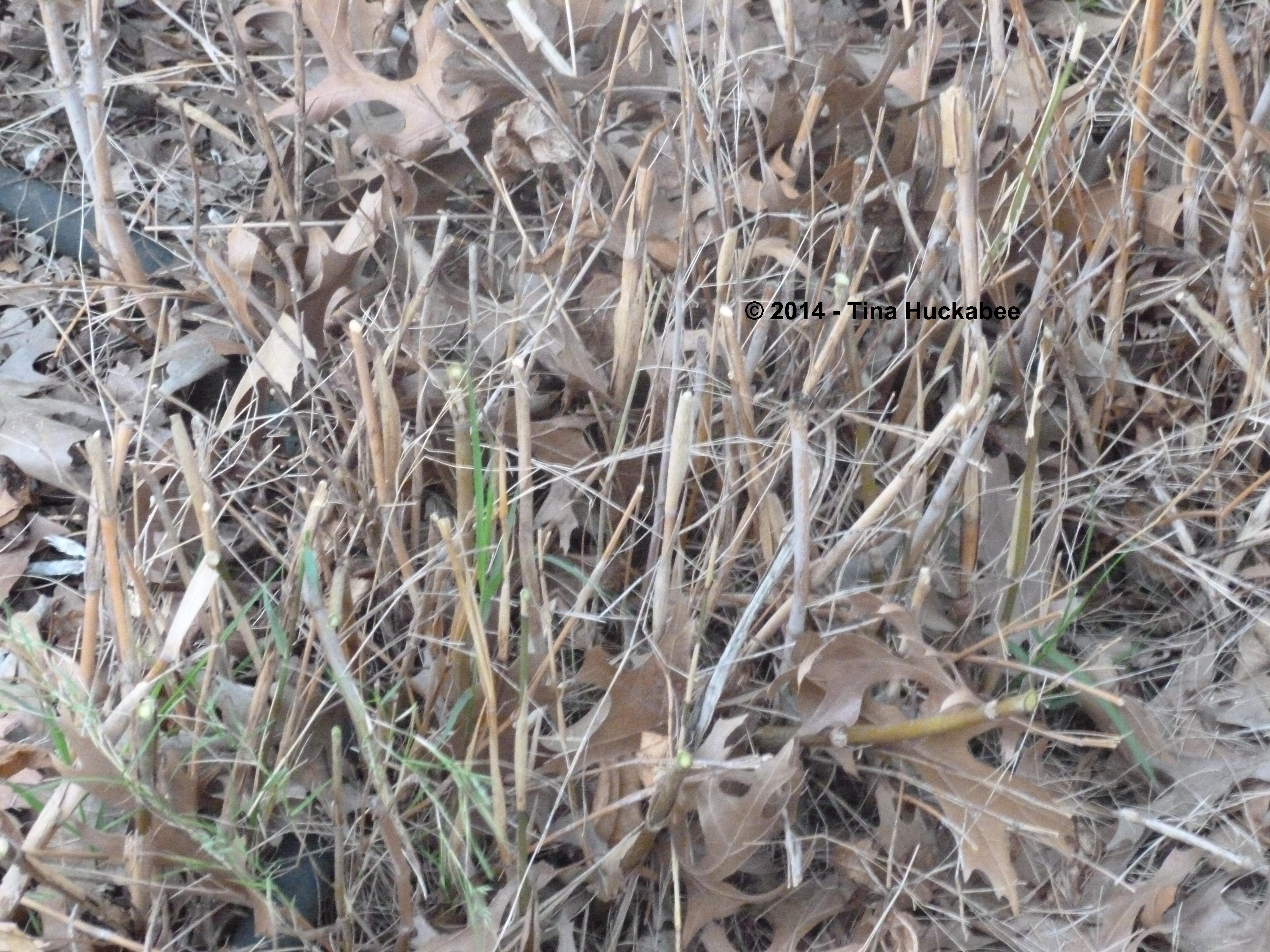
Once I detect discernible green shoots emerging, that’s when I prune.

I prune to a ball/oval shape, but I’ve also seen these grasses pruned flush to the ground. I’ve even seen them pruned as boxes, though that doesn’t appeal to me and the natural form of the mature plant is round, so pruning as a square is weird and antithetical to the form of the plant.


Ready for new growth!
This non-native (to Texas) Maiden Grass (Miscanthus sinensis),

has been a fine addition to my gardens–I wish I had space for more of them. It’s been a great performer all year, but who could prune these fabulous seed heads early in the winter?


But, it’s time for spring growth, so off with their heads!

I transplanted my three Gulf Muhly (Muhlenbergia capillaris) in November. I don’t have a great spot for these grasses because my gardens are full-sun challenged and Gulf Muhly perform best in blasting sun.

I’ve pruned for the new growth,

and have hopes that this spot will provide the correct amount of sun for these native beauties.
Bamboo Muhly (Muhlenbergia dumosa) is native to New Mexico/Arizona and is an airy, light green grass during the growing season. During winter dormancy, the foliage is tawny beige, though it holds its feathery plumage. When completely dormant, Bamboo Muhly benefits from shearing to its clump.
In my gardens, two of the Bamboo Muhly didn’t become completely dormant, so I decided to selectively prune only the cold damaged foliage.


However, one plant had no green growth, so I sheared it to the ground.

And now it’s ready for new spring growth!
Mexican Feathergrass (Nasella tenuisima) is beautiful year round as a single specimen,

or in groups.

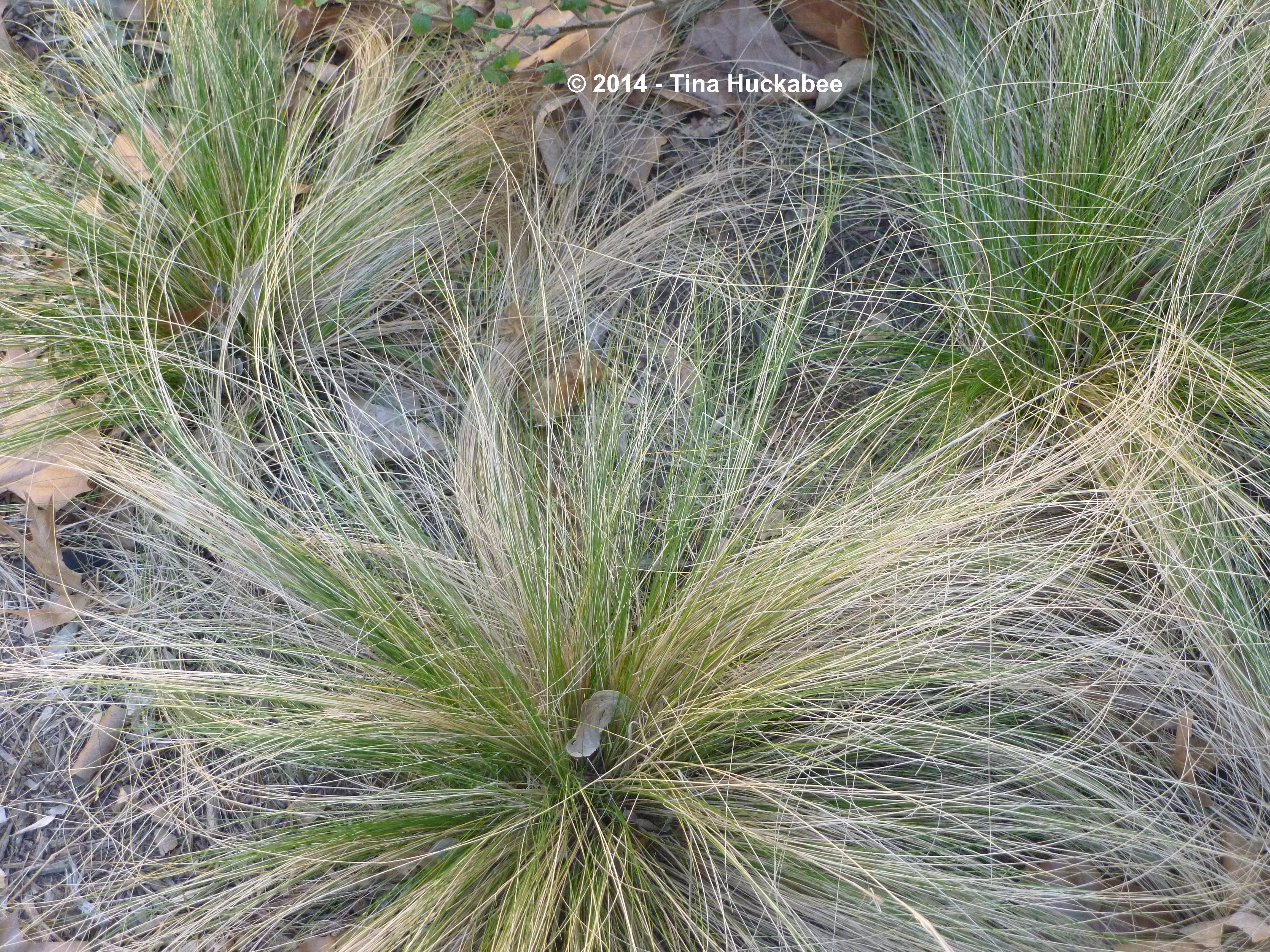
It is NOT however, a plant pruned by shearing foliage like the four discussed above. If you do this in the winter:
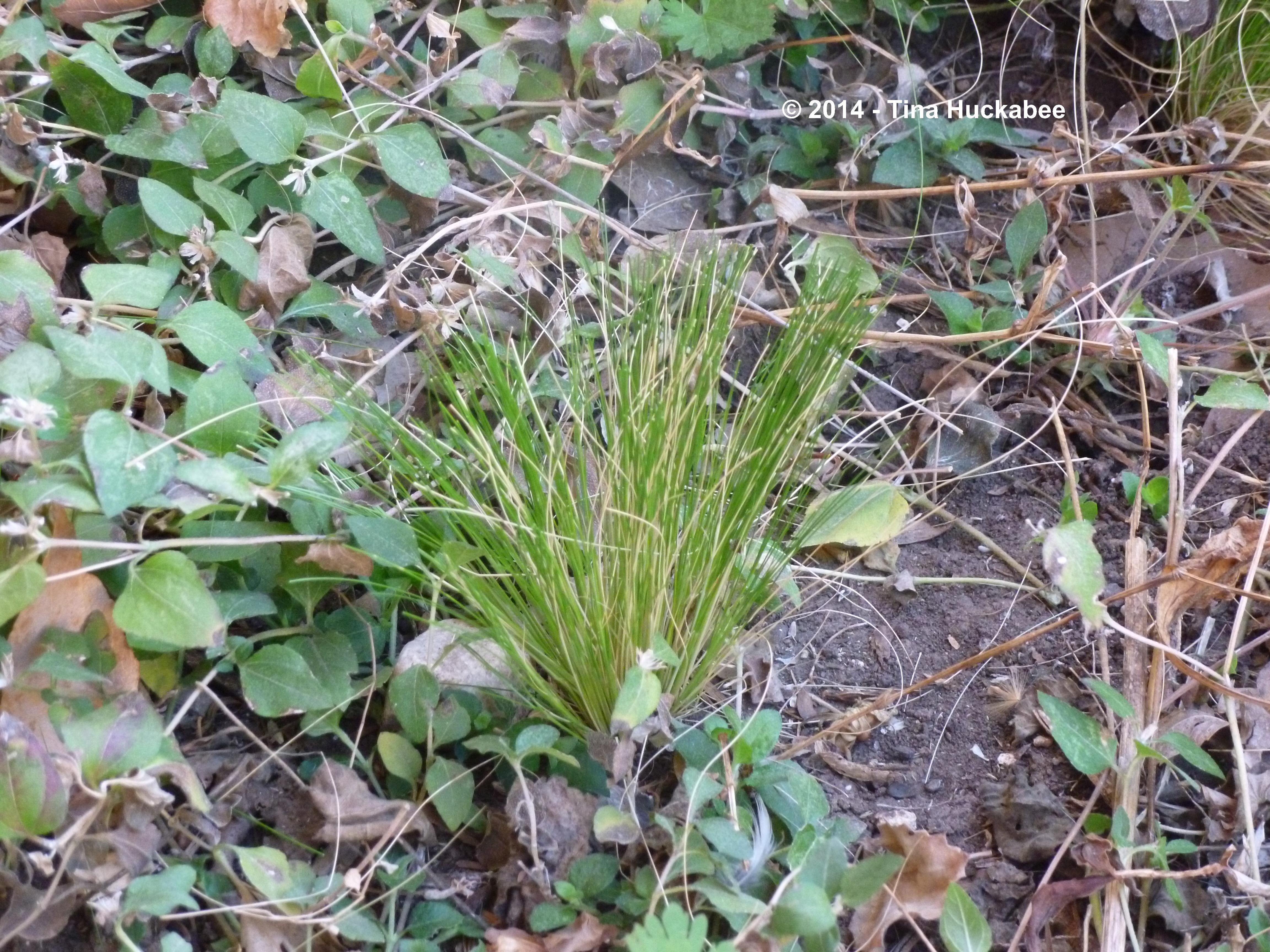
You will not get this in the spring.

NO. NO. NO. Never, ever do that!! It will take MONTHS to recover and will look stupid in the interim. I sacrificed a seedling to demonstrate this abhorrence, but I see this all over Austin.
The method for “pruning” Mexican Feathergrass is to gently pull off the dead foliage which by late winter is a light brown/tan color.

Hold down the center of the plant and gently tug the dead grass or run your fingers through the foliage, in small bits, until it pulls free of the main plant. It will come out easily and if it doesn’t, don’t force it. I’m not coordinated enough to photograph that action, but you’ll end with a handful of grass pulled out.

As you’re pulling out the dead foliage, hold the mother plant down with the other hand, otherwise, especially in older plants, you’ll pull the up the entire plant. Which I’ve done. Numerous times. If that happens, swear a little, (you’ll feel better), then re-plant a new seedling and start over again.
For me, pruning ornamental grasses means the end of winter and is the gateway to spring abundance and a long growing season.
It’s done. Happy Spring!






 My Gardener Says...