Aflutter: Wildlife Wednesday, November 2018

My heart’s aflutter as I relish the beautiful Central Texas autumn and my garden’s a flutter with late season pollinators. As is typical in autumn, there are multitudes of pollinators busily working.  Especially in the early morning hours and at sundown and afterward, there are scads of flutterings everywhere, with ghostly, diaphanous wings highlighted by whatever light is available.  Most of those active during the day are small skippers and bees, but also in the mix are a huge variety of flies, larger butterflies and moths, and other winged insects, all making the rounds of the bonanza of autumn blooms.   Welcome to Wildlife Wednesday, a monthly blogging huzzah celebrating the winged, feathered, scaled, and furred which give gardens their buzz-n-hum.

I grow plants not only because of their looks, but for what they provide for wildlife. I’m not picky about color or form–I love’em all, but I focus on plants that nourish something at some point in the growing season.

Some plants in my gardens are dynamite pollinator providers and Frostweed, Verbesina virginica, is one of them.  This Greater bee flyBombylius major, nectared with intent one cloudy afternoon throughout a patch of Frostweed.

Proboscis deep in the flowerets of Frostweed, these flies spend lots of time at the blooms.

I’ve observed a number of these fuzzy flies this fall.

The same is true for the Tachnid fly, nectaring on another pollinator powerhouse plant,  Prairie goldeneye, Viguiera dentata.
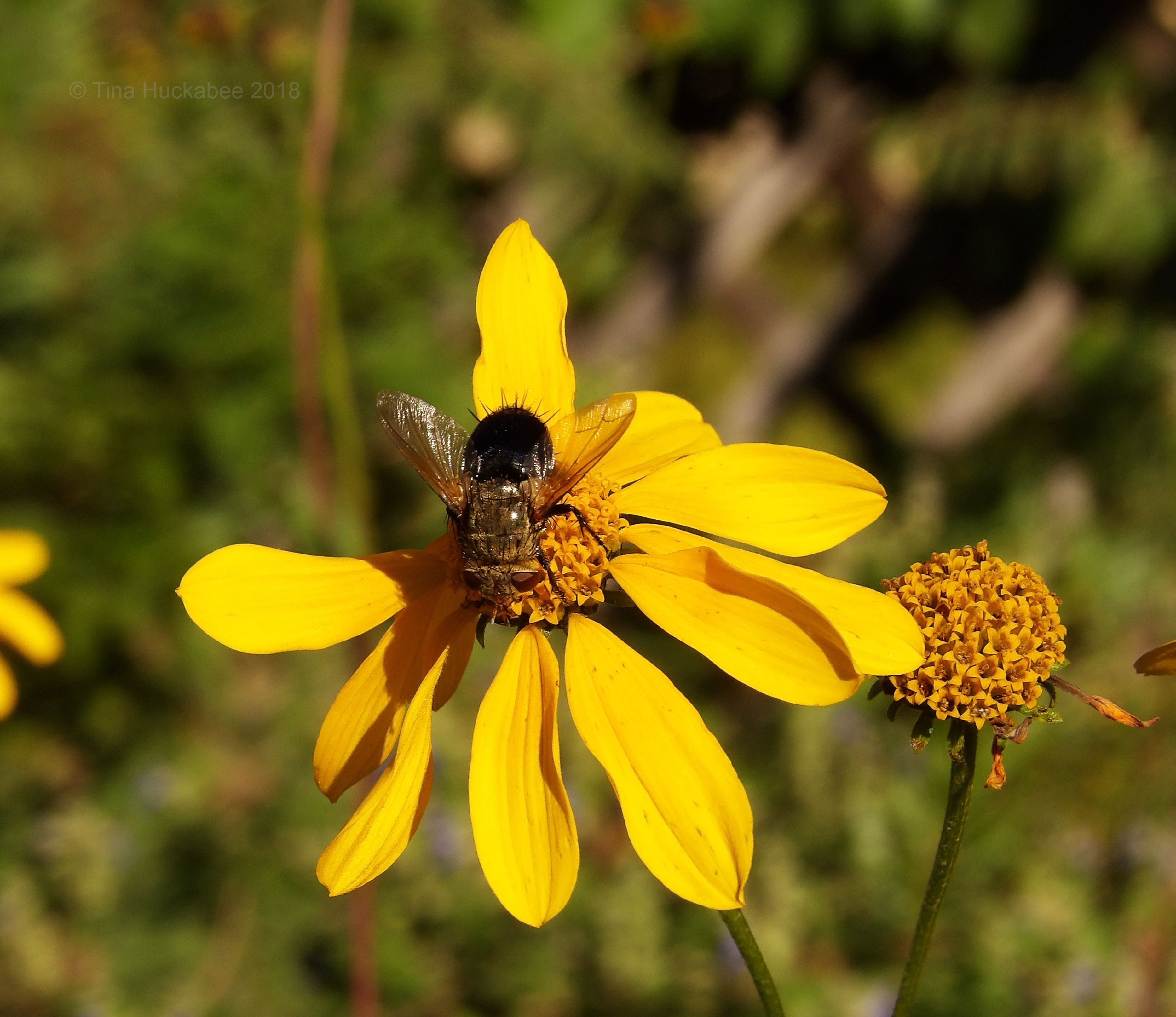
Ive  primarily seen the Tachnids in the fall on goldeneye and Frostweed. I’ve nick-named them my ‘hairy-butted buddies’.

We give lots of credit to beautiful bees, butterflies, and moths, but all kinds of insects pollinate, including the lowly fly.  As well, there’s a great variety of flies, more than just those that annoy at picnics.

Syrphid flies are ubiquitous in my gardens during the late summer and autumn months.
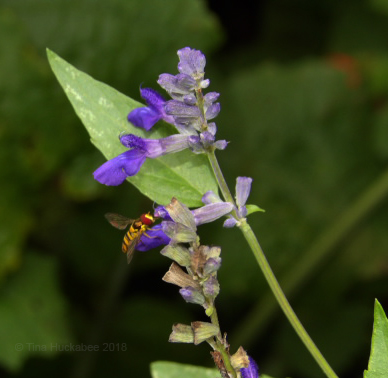
This one is a Common Oblique SyrphidAllograpta obliqua, but I’ve observed other species too, which I hope to capture in photo form for next month. The blue blooming beauty is the Henry Duelberg sage, Salvia farinacea.  It’s another plant which has a long and popular blooming cycle.  Pollinators are nuts about it.

Like the Syrphids, Fiery Skippers, Hylephila phyleus, love the Henry blossoms, and their autumnal coloring complement the vibrant blue of the Henrys.

Wings spread!
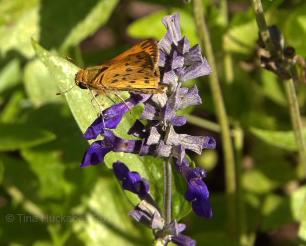
Wings closed!


It’s a huge year for the beleaguered Monarch butterfly, Danaus plexippus.  Because of good weather conditions in their northern breeding areas, their numbers are up from the last decade or so.  While I didn’t have many come through my garden as they migrated to their wintering grounds in Mexico, enough visited and fed hungrily that I’m glad that I grow plenty of nectar plants for them to choose from.
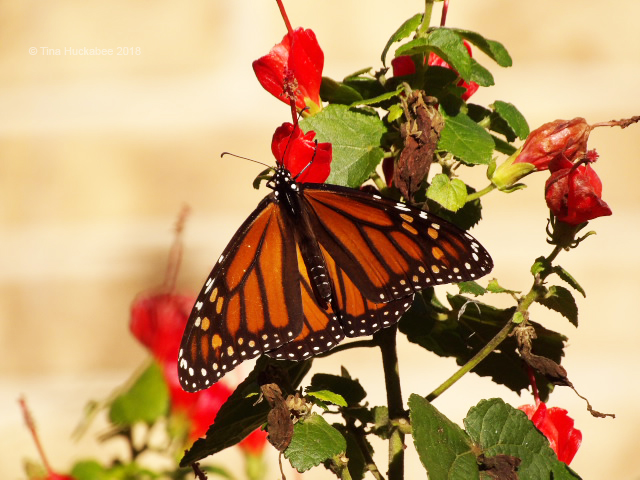
This female nectars on the excellent wildlife plant, Turk’s cap (Malvaviscus arboreus var. drummondii).

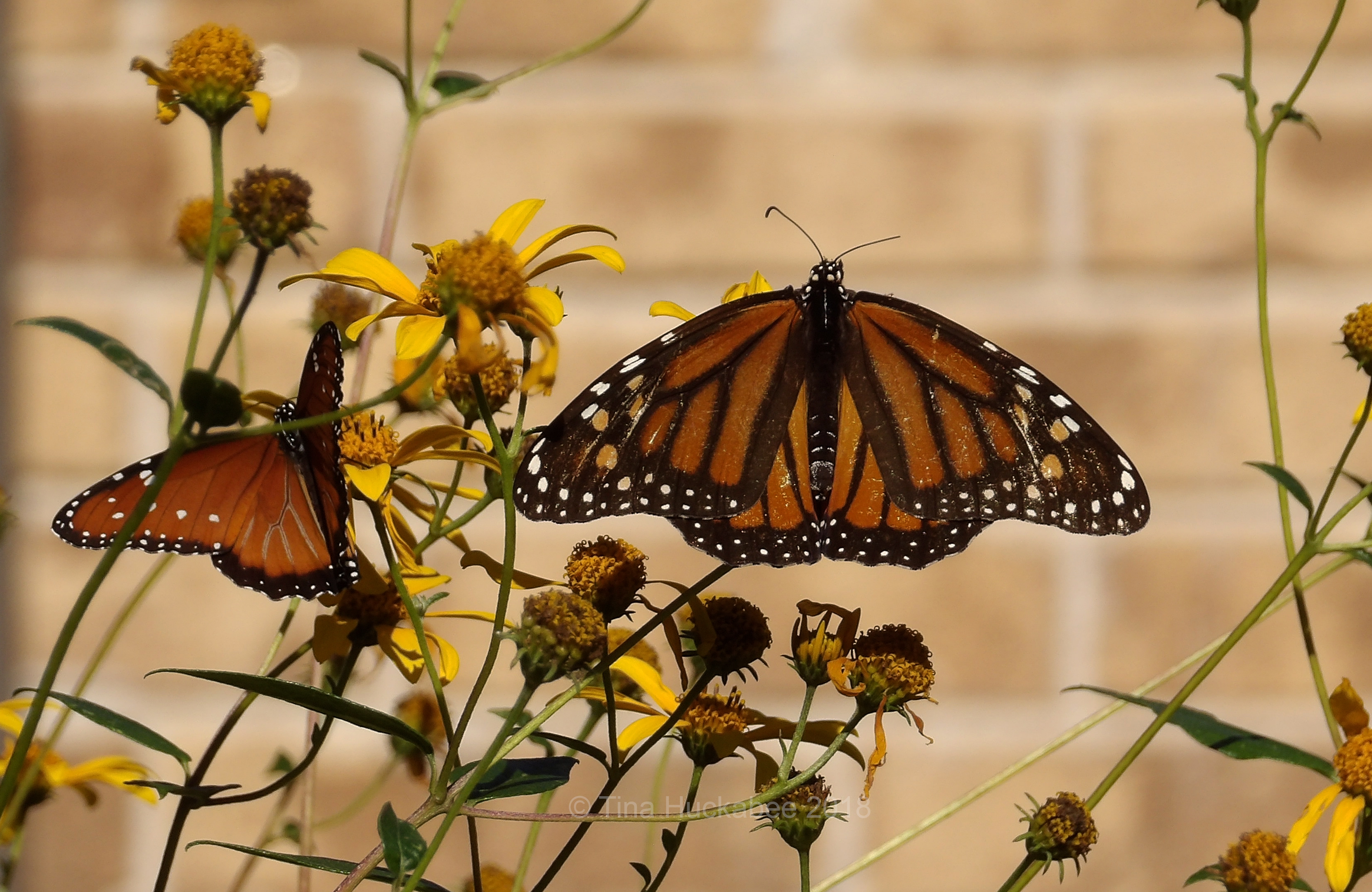
Cousin to the Monarch is the Queen butterflyDanaus gilippus.  It’s more common than the Monarch and a resident of Central Texas.

I like this shot of a family reunion:  Monarch and Queen enjoying a meal of Goldeneye together.
 

The prize for most common of the large swallowtails in my garden definitely goes to the Pipevine SwallowtailBattus philenor. I grow a host plant, the White-veined Dutchman’s pipe and have enjoyed these gorgeous butterflies all growing season as they visited.  Their life-cycle for this year is closing, but my Dutchman’s pipe has seeded out and the mother plants will overwinter, so there should be plenty of the host plant for next year’s butterfly babies.  I’ve already promised to share seedlings with gardener buddies next spring.


Dressed in fall colors are a couple of year-round visitors, a Red Admiral, Vanessa atalanta,
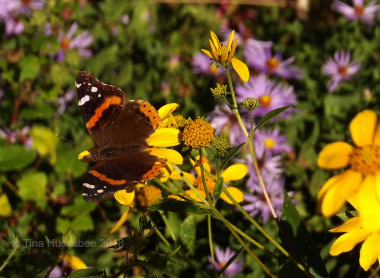
The Admiral is nectaring on a Plateau goldeneye. The purple daisies in the background are Fall Aster (Symphyotrichum oblongifolium).


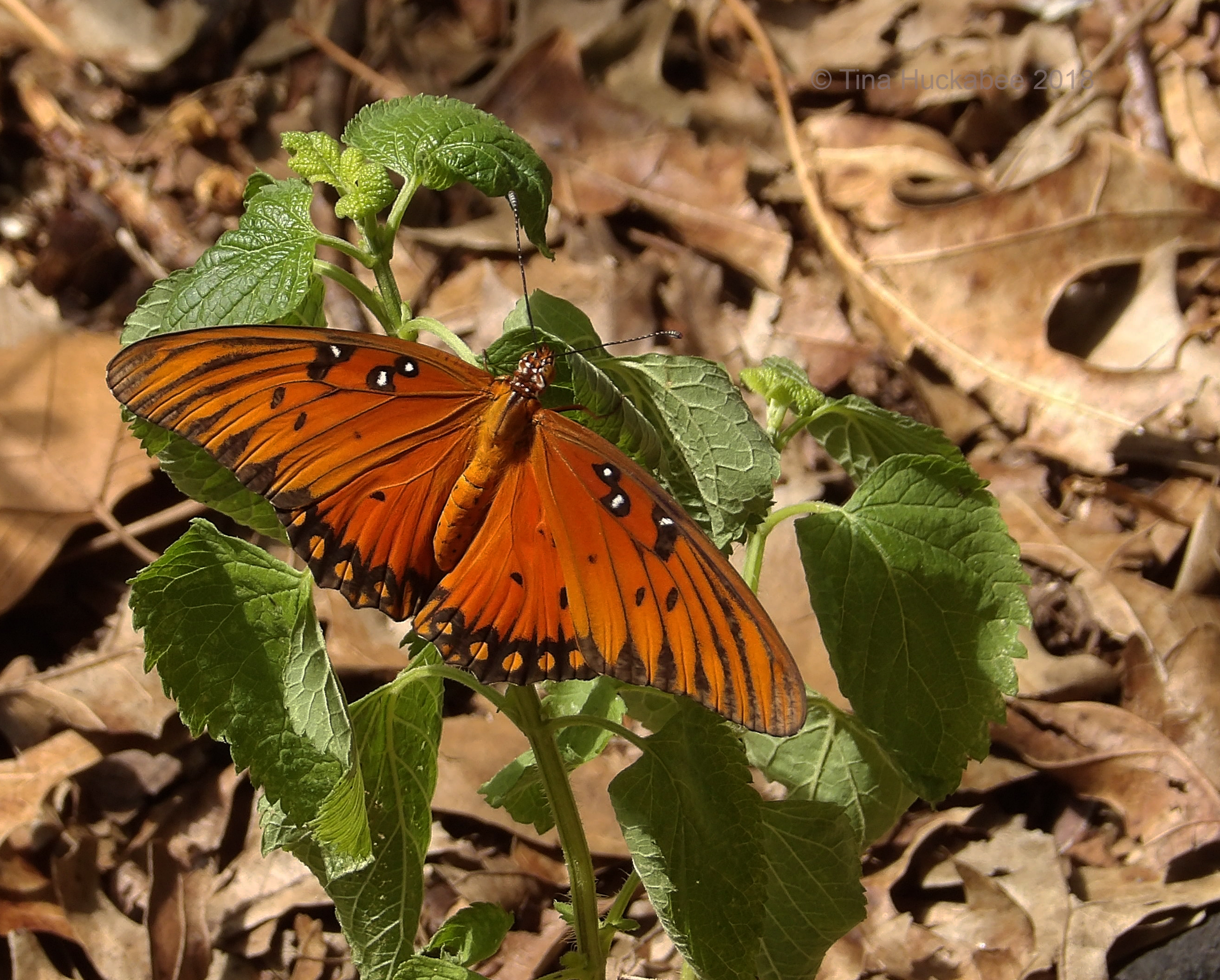
…and a Gulf FritillaryAgraulis vanillae.

The Fritillary is nectaring on a West Texas native, Shrubby blue sage (Salvia ballotiflora).


In addition to eating, insects are mating to assure a next generation.  These two Clouded skippersLerema accius, pitched woo on the foliage of a Turk’s cap.


I had a difficult time identifying this lovely critter, but  I believe it’s a Four-spotted PalpitaPalpita quadristigmalis.

It doesn’t show the four spots, but that could be the limitations of my camera or that the wings are a bit tattered and the shape of the wings and body are similar to the targeted insect. I think this is one of the multitudes of early evening/nighttime pollinators, though it’s hard to tell.

Did you think I forgot about the bees?  Nope, of course I didn’t!  My honeybees are all over the place and even with our many rainy days,  if just a bit of sunshine streams through the clouds, the bees are out-and-about.

The Green Sweat bee, Halictidae, sports a gorgeous color which complements its food source.  These pretties have been active in the past month or two.  Some nest in wood, others in the ground.
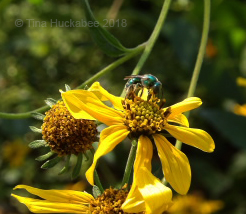
 

This fast-flying, quick-nectaring bee was hard to catch, but I think it’s a Longhorned bee, Apidae.  The individuals I’ve seen have favored the Henry Duelberg blooms as shown here.
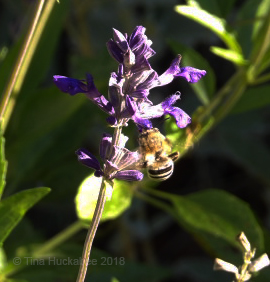
 

More common in my garden are the Eastern Carpenter bees.  This one is also a fan of the Henry Duelberg blooms.
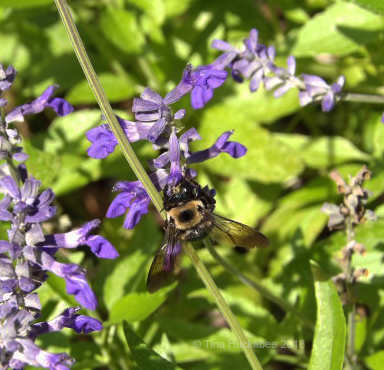
That Henry Duelberg sage–it’s a pollinator winner!


Alongside the pollinators, some hangers-on appeared.  I typically see Obscure Bird GrasshoppersSchistocerca obscura, in the fall and this year didn’t disappoint.
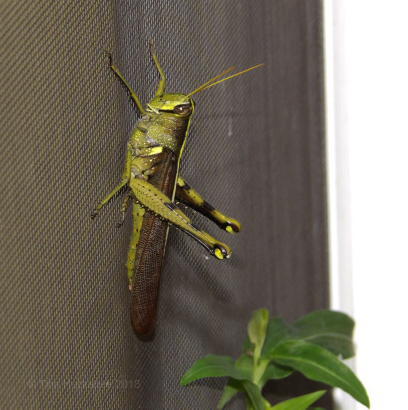
Hanging on a window screen, he/she looked warily at me as I sneaked a shot.

There’s nothing obscure about this big beauty!


Common Green DarnersAnax junius,  dart here and there in the gardens, and when they alight, are camouflaged by foliage–hard to see, but lovely to behold once observed.  This one was easy to spot and cooperative with the photographer.


There is much happening in my fall garden!  What’s in your autumn–or spring–garden?  Share you wild happenings and don’t forget to leave a link when you comment.  Happy wildlife gardening!

The Anchor of Change: Wildlife Wednesday, October 2018

One thing that Central Texas gardeners can count on during September into October is the termination of the long hot of summer with a very welcomed re-introduction of our second spring.  Compensating for our brutal summers is the reliable flush of new growth, open, exuberant blooming, and gifts of rain–sometimes too much–to gardens and the critters who rely on those gardens.

Typically, we enjoy our first cool fronts at this time, and while the cool is fleeting, it certainly takes the hot edge off of our days and nights.  You’d think wildlife would be appreciative of any small portion of relief, but this past month hasn’t necessarily been packed with wildlife happenings, at least that’s so in my garden.  Nevertheless, here are some offerings for Wildlife Wednesday.

Blooming perennials, reawakened with softening temperatures and gulps of water from the sky, have given pollinators of all stripes, scales, and feathers plenty in their search for pollen and nectar.  This honeybee worked the flowerets of Garlic chives, Allium tuberosum.  The same bee worked the neighboring bloom of Rock rose, Pavonia lasiopetala.   As well, tiny native bees also partake of both kinds of blooms.


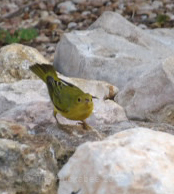
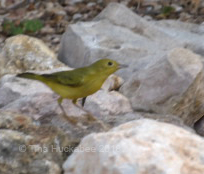
Typically, September sees the beginning of autumn migration from northern parts of North America to Mexico, Central America, and South America. Early in September, a pair of Yellow warblersSetophaga petechia, spent several days visiting my pond.  I couldn’t get a shot of them together, or a lone shot of the female, but the male sat still long enough for a couple of quick shots.

Each warbler hopped around the limestone rock which borders the pond, with nervous flutters into the oak trees.  I never actually saw any bathing in the bog, or splashing the the waterfall, but both birds were clearly interested in the water feature.

I see this species each spring as they head northward, but don’t recall ever witnessing an autumn visit before.  That said, I haven’t observed any other migratory birds through my garden this past month, which is odd. The autumn migration season spreads out over a longer period and isn’t as intense as the spring migration, but I’m surprised that I haven’t seen other passers-through at my pond or in the garden.  I hope the migrants are finding enough in rural areas to forgo urban gardens.


My pond toads, Gulf coast toadBufo valliceps, are croaking their way to the end of their breeding season.  I’ve seen itty bitty, baby toads in the garden, but this grown fella was willing to pose for me at sunup one morning.


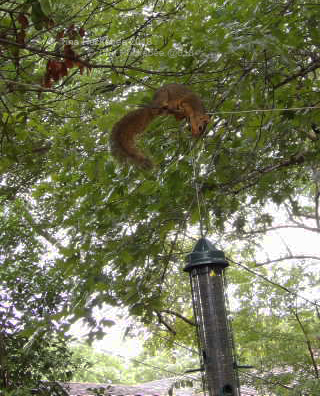
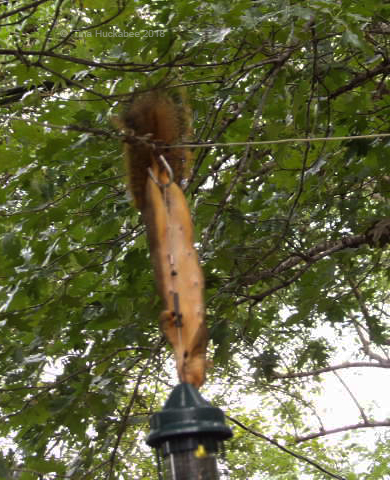
The neighborhood squirrels are up to their usual antics, like the actions of this female Eastern Fox squirrel, Sciurus niger, who was bound and determined to have the birds’ seeds for lunch.

Balancing.

Vertical tight-rope manuevers.

The big stretch.

Success! Who knew that noshing on the ground is easier?


Finally, in a nod to the end-of-October scare, is this gorgeous spider who’s been hanging out at my back patio.  I’ve identified her as a Spotted orbweaverNeoscona crucifera.

I don’t find her scary and in fact, I think she’s quite beautiful.  She’s also large; her abdomen is about an inch in diameter–a big girl!  I’ve only seen her at night and she’s shy, so she scuttles up her web into the ceiling of the patio cover when she notices me.  I was fortunate to catch this shot of her.  I wonder if she was drowsy with digestion?

What’s winging or singing in your garden during this predictable season of change?  Please post about your wildlife happenings and remember to leave a link when you comment here.  Happy wildlife gardening!

Some Like it Hot: Wildlife Wednesday, August 2018

With apologies to Billy Wilder and his silly romcom, Some Like It Hot,  I can’t think of a more appropriate title for this edition of Wildlife Wednesday.  Here in Austin, Texas we’ve sweltered through 15 consecutive days of over 100°F (37.7°C) temperatures, with 20 some-odd days over 100º in total for the summer.  On one of those days, the temperature reached 110ºF (43ºC).  Sadly, that’s not a record breaker, (it’s 112F in 2011) but it was oven-like nonetheless.  And, August is just beginning.

UGH!

These days in Austin, it’s not unusual to experience many days reaching over 100ºF and while that’s concerning, so far this summer the wild critters in my garden are weathering the blistering heat just fine–they thrive with available water sources, cover in the guise of trees and shrubs, foods in the form of seeds on perennials (and some in a bird feeder), and places to nest.

I lost my main passion vine (Passiflora caerulea) during some hard freezes this past winter, so I haven’t enjoyed viewing as many Gulf Fritillary butterfliesAgraulis vanillae,  as I usually see. Passion vines are the host plant for these orange beauties. Recently though, one or two Fritillaries have appeared and are laying eggs on a few sprigs of a second, and different, passion vine which volunteers in an open area of my back garden.  This Purple passion-flower, Passiflora incarnata, doesn’t bloom in my garden, but boasts enough foliage for the caterpillars to partake of on their way to adulthood.

This Gulf Fritillary rested on a plant near to where the passion vine grows. Had it just emerged from its chrysalis?


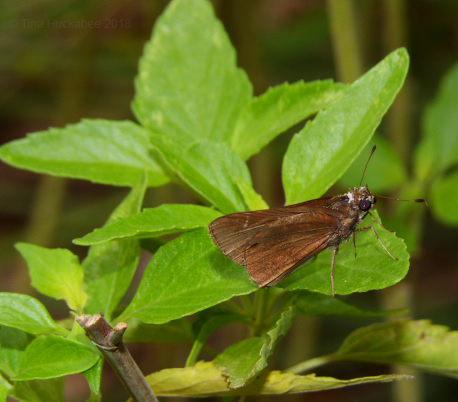
I’m fairly sure this plain little thing is a Dun skipperEuphyes vestris, but I’m not positive.

It worked the blooms of a salvia and stopped just long enough for me to snap a shot.

I don’t see American Snout butterflies, Libytheana carinenta, very often, so it was a treat to see this one on the foliage of one of my Softleaf yuccas.

I kept my distance and never successfully captured the butterfly with wings spread because it flitted away warily from the weird woman stalking it through the garden.  Snouts’ host plant is the Common hackberry, Celtis occidentalis, which is a tree that many modern Texans hate. Hackberry trees seed out everywhere and often in less-than-desirable spots, but they’re an important wildlife food source.  Along with the Snout, Hackberry trees also feed the Question Mark and Mourning Cloak butterflies, as well as providing fruit and shelter for birds.  Native Americans didn’t hate the Hackberry and used it for medicine and food.

This Funereal duskywingErynnis baptisiae, looks like it might have had a close-call  with a predator.

The bits of missing wing didn’t slow down its nectaring and pollinating mission.   It favored the sunflowers which are still in bloom.

I’ve had a difficult time identifying this petite pollinator, but I think it’s a Eufala skipper, Lerodea euflala.

Eufala skippers are considered “grass” skippers, as their host plants are grasses like Johnson grass, Bermuda grass, and sugarcane.  Both Johnson and Bermuda are common in Central Texas, but I don’t grow either in my garden.

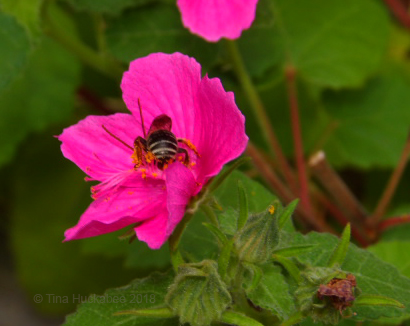
Here’s yet another I dunno what this is, but firmly in the native bee category.  I thought she was one of my ubiquitous Horsefly-like carpenter bees, but she’s not quite that big.  She buzzed around the very pink Rock rose flowers, snuggling in to the reproductive parts of the flowers and covering herself with pollen,

…and showing me her backside.

I think she’s in the Melittidae family which collect pollen on the hairs of their bodies and nest in the ground.  She was fast flyer and a busy, busy bee.

This diminutive, metallic-green sweat bee sported loaded pollen baskets, full-to-bursting with creamy white pollen.  As I watched her, I think she was resting and not collecting pollen, on the end of the Mexican Orchid bloom stamen.

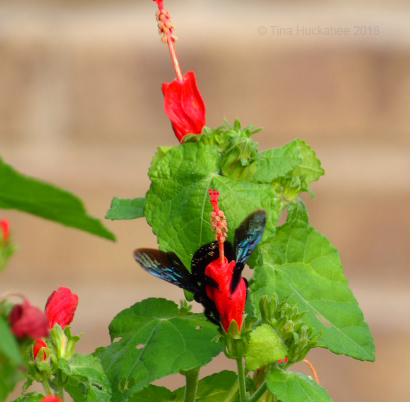
I’ve been privileged to observe a couple of big, beautiful Southern Carpenter bees, Sylocopa micans,  in the last couple of weeks.

Stunning black with a blue sheen on their wings and bodies, these bees have moved with intention through the Turk’s cap shrub, from red bloom to red bloom.  At least in my garden, the Turk’s is the clear favorite of these bees.  This bee species utilizes buzz pollination–a particularly efficient form of pollination–and as I observed the two visiting, I could see and hear that buzzing on the flower.

Hummingbirds are not bees (duh!), but they sure are buzzy as they zoom through the garden, and this summer, they’ve been in abundance.  This female, probably Black-chinned hummingbird, also worked Turk’s cap blooms.

Have I mentioned that Turk’s cap is a fabulous wildlife plant?

I don’t typically hang a sugar water feeder out for the hummers.  I have nothing against hummer feeders and they’re great for attracting and supplementing the tiny birds’ diet, but I’ve found that hummers prefer what I’ve planted in my gardens and don’t visit the feeders when I’ve placed them.  That said, the sugar water is important for hummingbirds, especially as they ramp up for their fall migration southward.

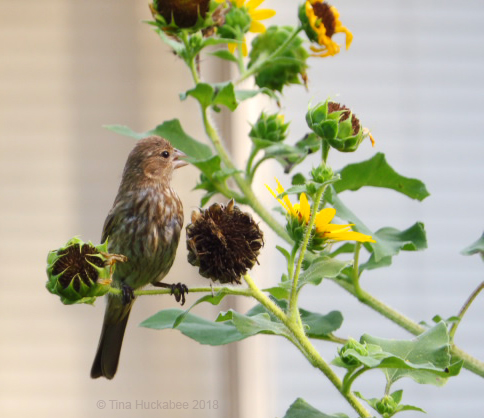
Volunteer sunflowers are still blooming, but the spent blooms are also setting seed.  A variety of birds feed on these seeds including ones like this female House FinchHaemorhous mexicanus,

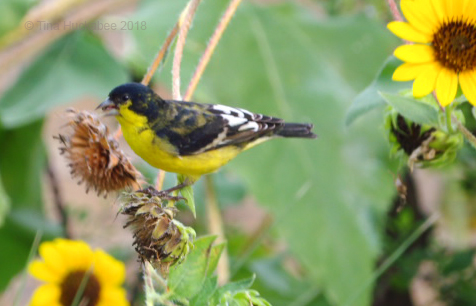
…and this handsome male Lesser GoldfinchSpinus psaltria.

I’ll leave the stalks up until all the blooms are done and the seeds eaten.  Then I’ll cut back the stalks to about 2-3 feet tall and leave some on the ground, so that insects (native bees, primarily) can utilize the hollow stems for nesting through fall, winter, and next year’s growing season.

A pair of Carolina wrensThryothorus ludovicianus, nested nearby and are teaching their 2(?) chicks how to manuever through the neighborhood.

I’m confident this cutey is junior, baring his belly in birdly pride as mom and dad wren perched close by, chchchhching at me, while I snapped this shot.

This Green anole lizardAnolis carolinensis, can’t decide whether to dress for the heat in green or brown.

I didn’t hang around long enough to observe, but I’ll bet it chose the green outfit to fit in with the surroundings.

No matter if your garden is deep in the dog days of summer or chilling in the depths of winter, what wildlife happenings did you share in or observe this past month?  Please post about your wild happenings and leave a link when you comment here–and happy wildlife gardening!