Can You Really Have Too Many Coneflowers?

I’m going to stay in the Aster family in honor of Native Plant Week (October 16-22).  I love Purple coneflower, (Echinacea purpurea).  My daughter, Shoshana, always said, “They’re such happy flowers!”

When I removed the last large portion of grass in my backyard for the large perennial garden that I installed, I decided that I wouldn’t buy many plants, but use seedlings of a variety of plants that I had from other parts of my gardens.   I always have scads of Coneflower to give away, toss in the compost, or replant.  So, except for a few other plants, initially this garden,
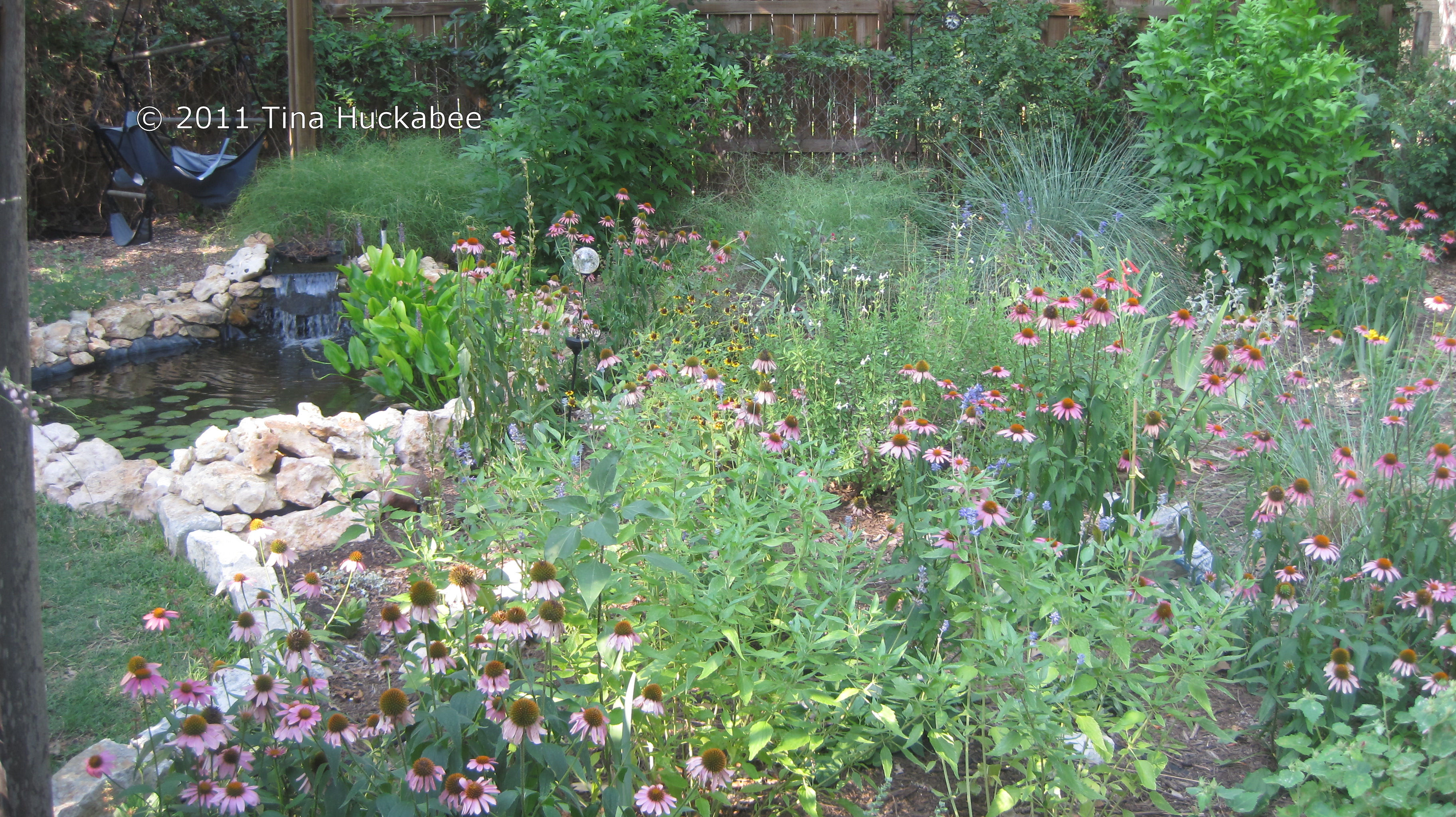
was primarily planted with Coneflowers.  I wanted to experiment and find out if it was possible to have too many Purple Coneflowers. Well, I found out, that indeed, it is possible to have too many. Not that they didn’t look wonderful when in full bloom, but after the main bloom time, the garden was a little bare. Also, I wanted the garden to be a true mixed perennial/shrub bed, so I removed some of the Coneflowers in that garden.  I still have many individuals of this lovely plant  in that garden and throughout my landscape.

The primary bloom period for Purple Coneflowers is April-July.  In full (or mostly full ) sun, they get 2-3 feet tall and are magnificent in bloom. The individual flowers last a long time and make a beautiful cut flower.
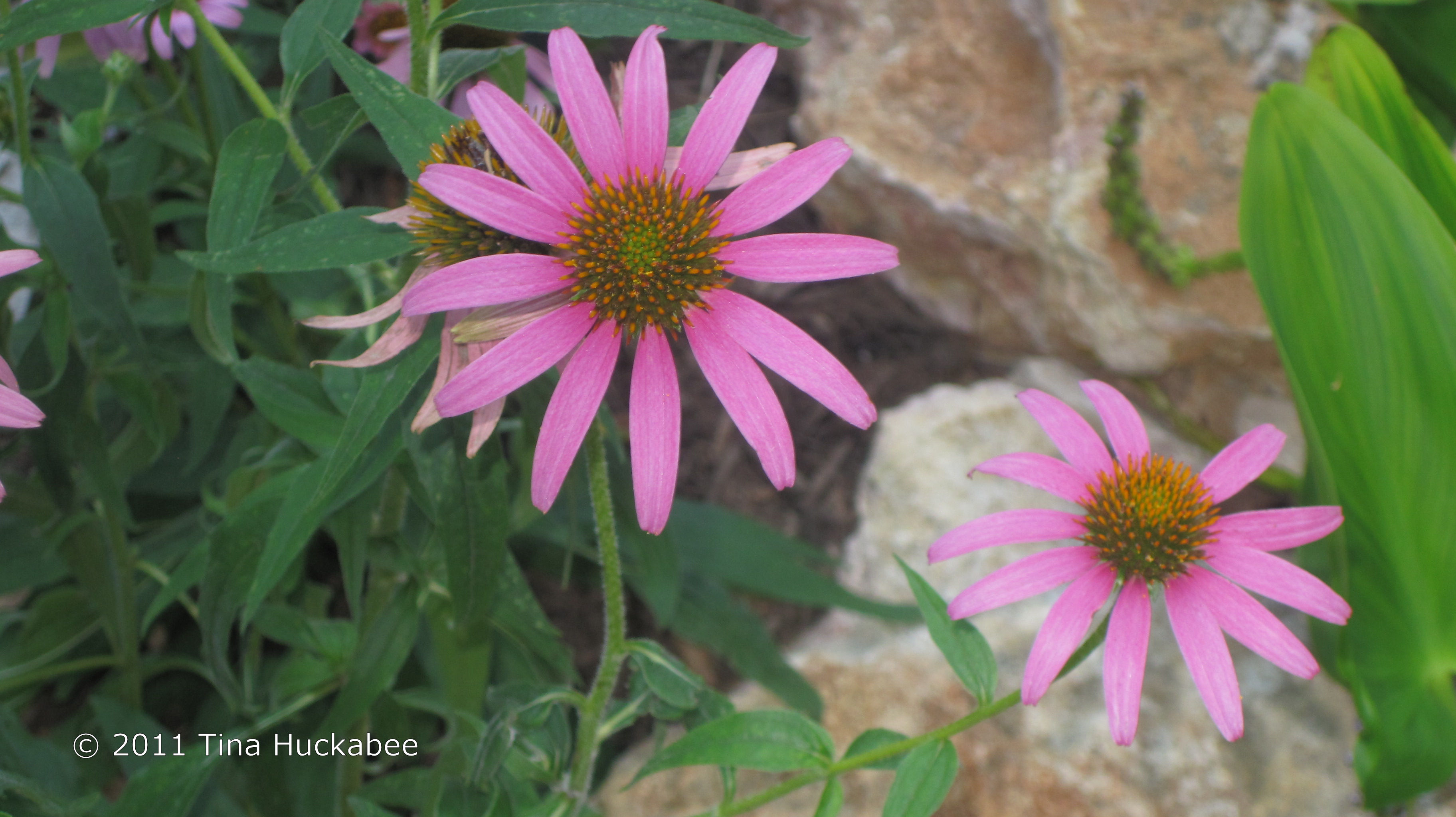
I also have a few as understory plants, in dappled shade.  What I’ve noticed about those is 1) the flowers seem to be a paler color, and 2) they only bloom once and the blooms don’t last very long.

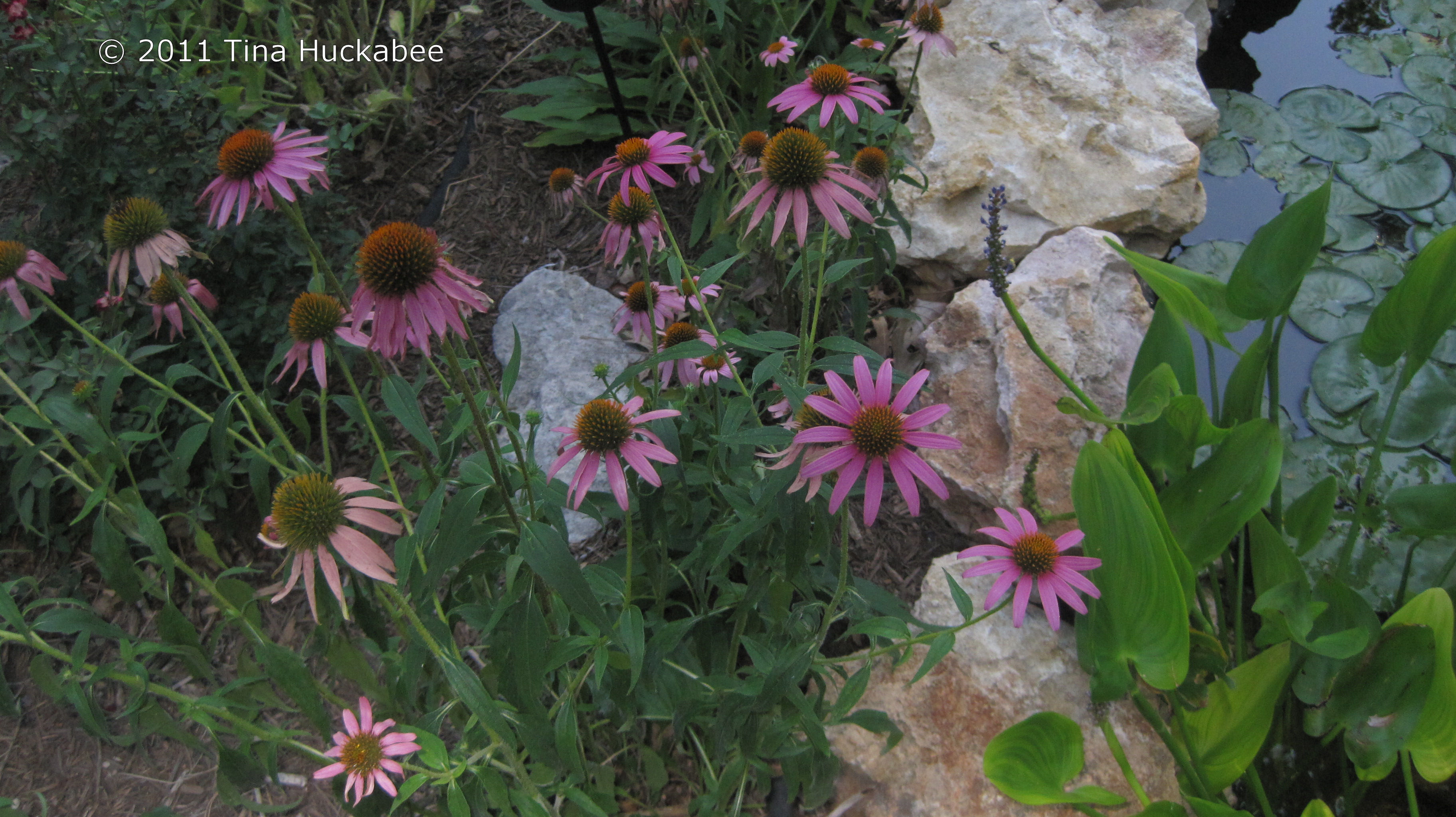
Once summer heat sets in, Coneflowers start to brown–this photo is from late June.  You can see the tips of the petals becoming a little toasty.

Eventually, depending on  heat and rainfall, Coneflowers will  go to seed in July/August.  I rather like them as they dry out, but I prune most of them down to the base plant just to prevent every seed from development and germination. Typically, some of my individual plants bloom throughout the summer, although that didn’t happen this year. Purple Coneflowers are terrific nectar plants for pollinators and I’ve often seen birds (especially finches) eat from the seed head.  I have several stands of spent blooms that I haven’t pruned because I think they’re interesting and the finches are still nibbling from them.

Just right of the spent blooms, in this photo is a Coneflower rosette that I pruned in mid-summer.  Without regular irrigation, this is what they look like from August until a fall bloom.

Usually in the fall, there is another bloom cycle, although not as dramatic as the one in spring.  It is in the fall that the butterflies really enjoy the Coneflowers.  I’m not so sure about this year, as the butterflies are scarce and the Coneflowers haven’t bloomed again.  However, with the rain this weekend (yay!!!), maybe that will change.  My plants tend to bloom until the first hard freeze of winter.  The Coneflower has a winter rosette, so it acts as an evergreen ground cover, if planted in groups.  I like to plant them in groups of three to five, but I’ll let seedlings develop and happen where they will, because each individual plant isn’t that large.  My experience is that Purple Coneflowers complement other plants.  I’m not sure I’ve ever disliked the way they look in a mixed perennial garden–with reds, blues, yellows, whites–they’re a fabulous addition to the mixed perennial garden.

A couple of my  individual Coneflowers didn’t survive this summer–some of those were in blasting sun. As a group though, my plants weren’t adversely affected by the heat and drought this year, except for a shorter bloom cycle.   I’ve heard from other gardeners with  heavy clay soil that they don’t have much luck with Coneflowers.  And years ago, I gave my mother some seedlings to plant (in Corpus Christi, on sand) and hers didn’t do well either.  Coneflowers seem to flourish in moderately rich and well-drained soil.

Purple Coneflowers are endemic to North America and a great plant for any gardener who wants a showy, long-lasting and easy addition to the garden.


Mellow Yellow–Not!

In preparation for Texas Native Plant Week which happens this year from October 16-22, I’m going to profile some of my personal favorites.  Since I have MANY personal favorites, it will be difficult to narrow the list. But, I’ll do ‘m best!

Blooming beautifully during October (even this October) is Goldeneye, (Viguiera dentata).

Goldeneye is a native Texas plant that is common in open fields or wooded areas as an understory.  You’ve probably seen it blooming along the side of a highway–you can’t miss it.  It has brilliant yellow flowers and during its peak bloom time, remarkably showy.  Actually, it blooms sporadically,  beginning in July, but the small flowers aren’t particularly noticeable until its massive bloom in the fall.

If the flowers  look similar to native sunflowers, it’s because they are in the same family of plants, the Aster family.  The leaves are probably also familiar–rather rough and similarly shaped.  Most of the Goldeneye flowers are 1 to 1 1/2 inches wide.  But like many native plants that are pollinated and naturally hybridized, there is some variability.  One of my stands of Goldeneye has tiny (1/2 inch) blooms and blooms earlier than the others.  Another stand has leaves that are about 1/3 larger than the other plants.

Goldeneye is easily grown from seed–just scatter it about either from a commercial seed source, (The Lady Bird Johnson Wildflower Center will host its Fall Plant Sale and Gardening Festival October 14-16 and is a good place to find this plant). Or maybe a nice friend will share seeds or seedlings.  Goldeneye germinates easily and will readily self-sow.  In full sun, it tends to stay a little on the short side (2-3 feet), while in part shade, it grows taller (3-5 feet).   It’s usually multi-branched and can flop onto other plants. Sometimes, a branch will be so heavy as to completely break at the ground.  It is a plant that might require staking.

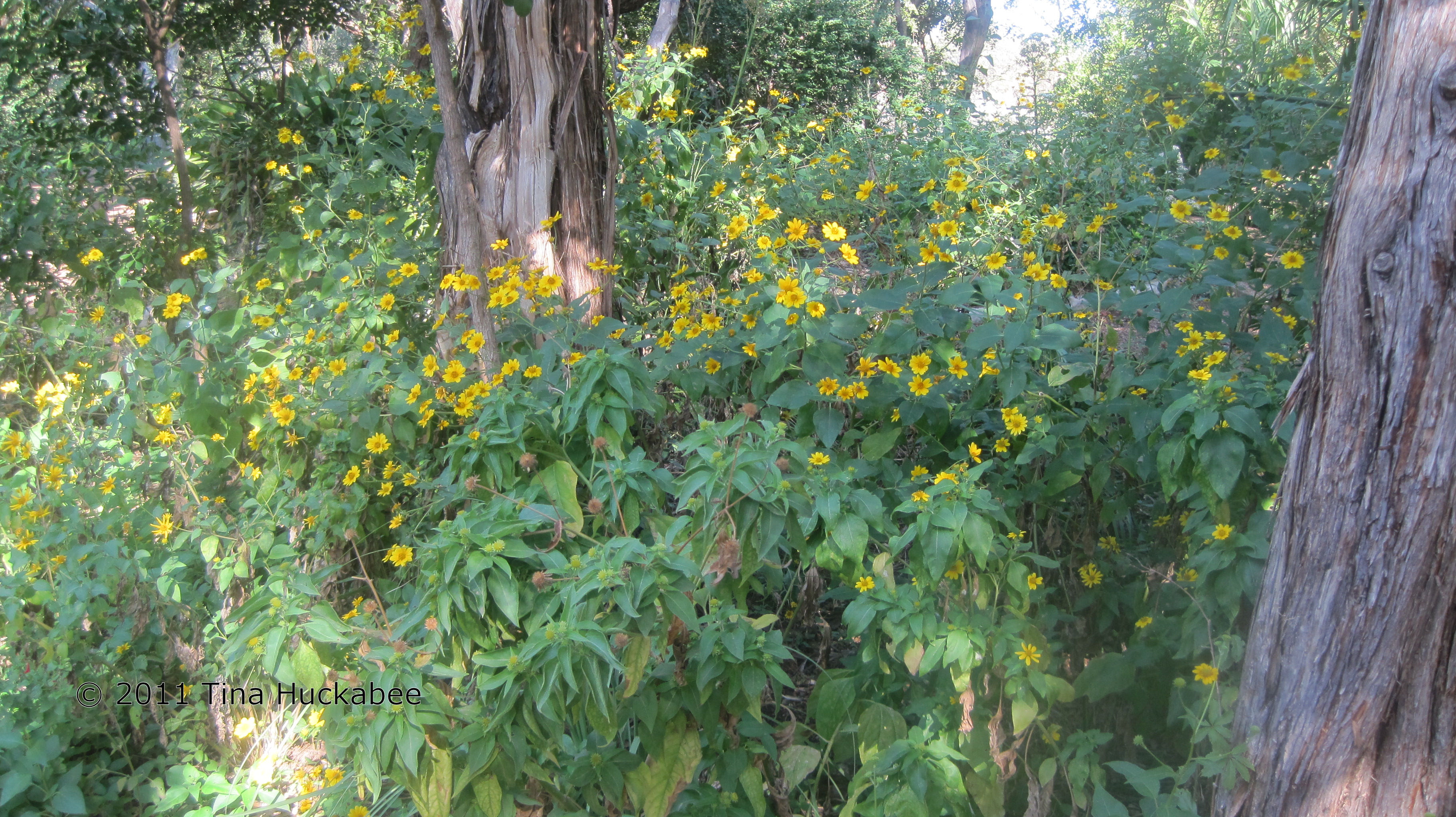
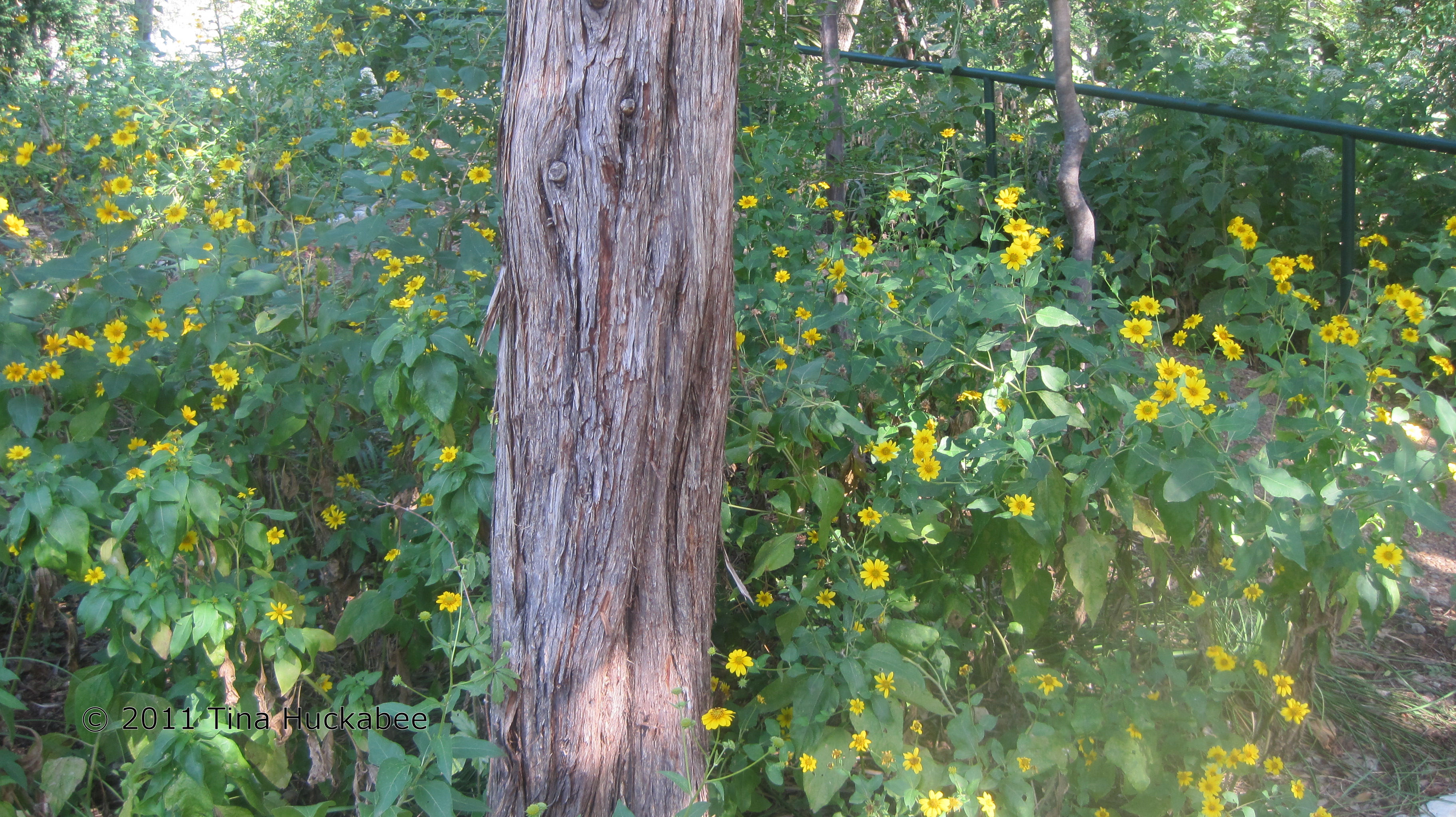
Goldeneye can be placed in the midst of a group of trees to brighten an area.  These photos are from a group in Shay’s Green Garden at Zilker Botanical Gardens.

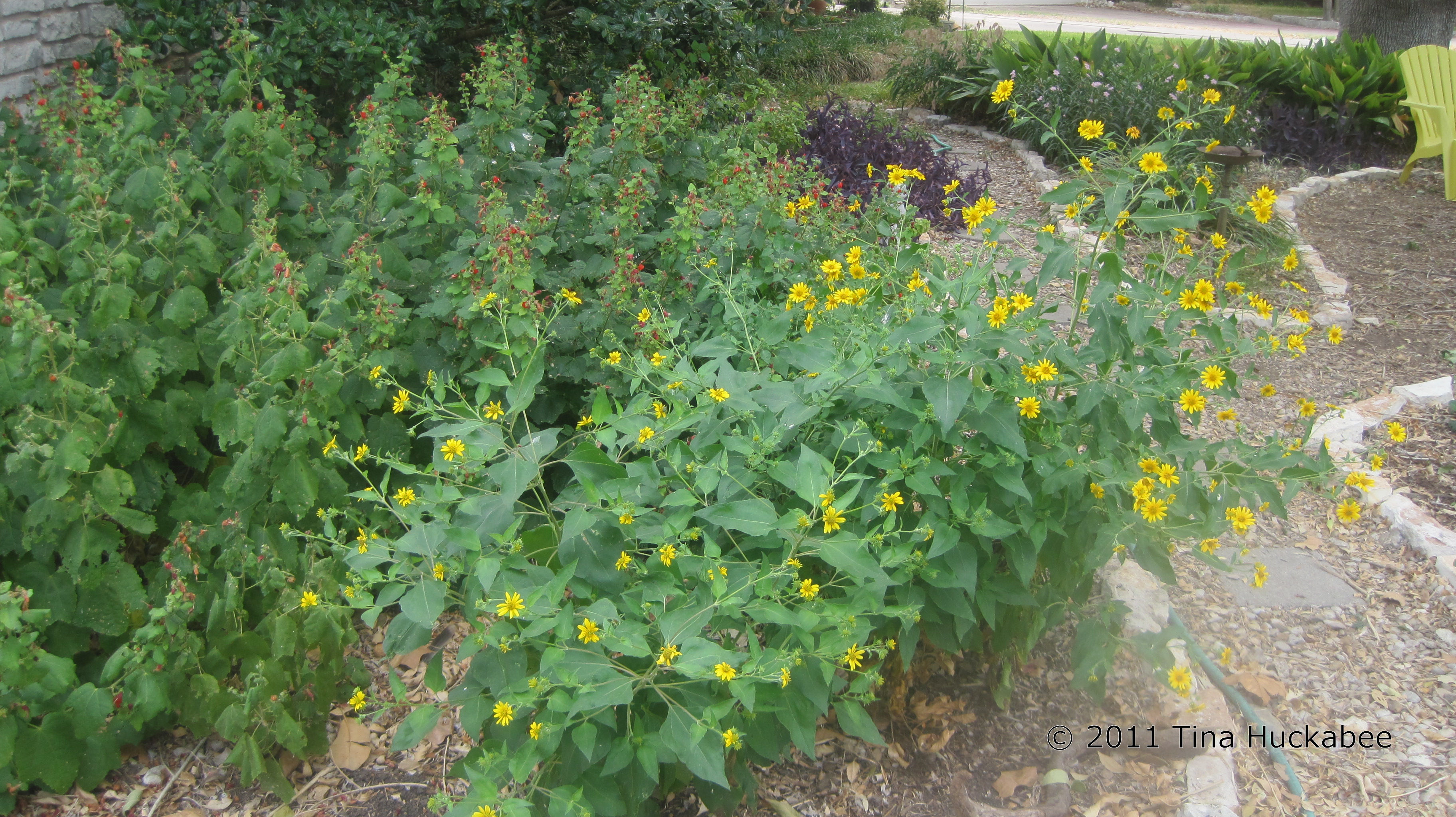
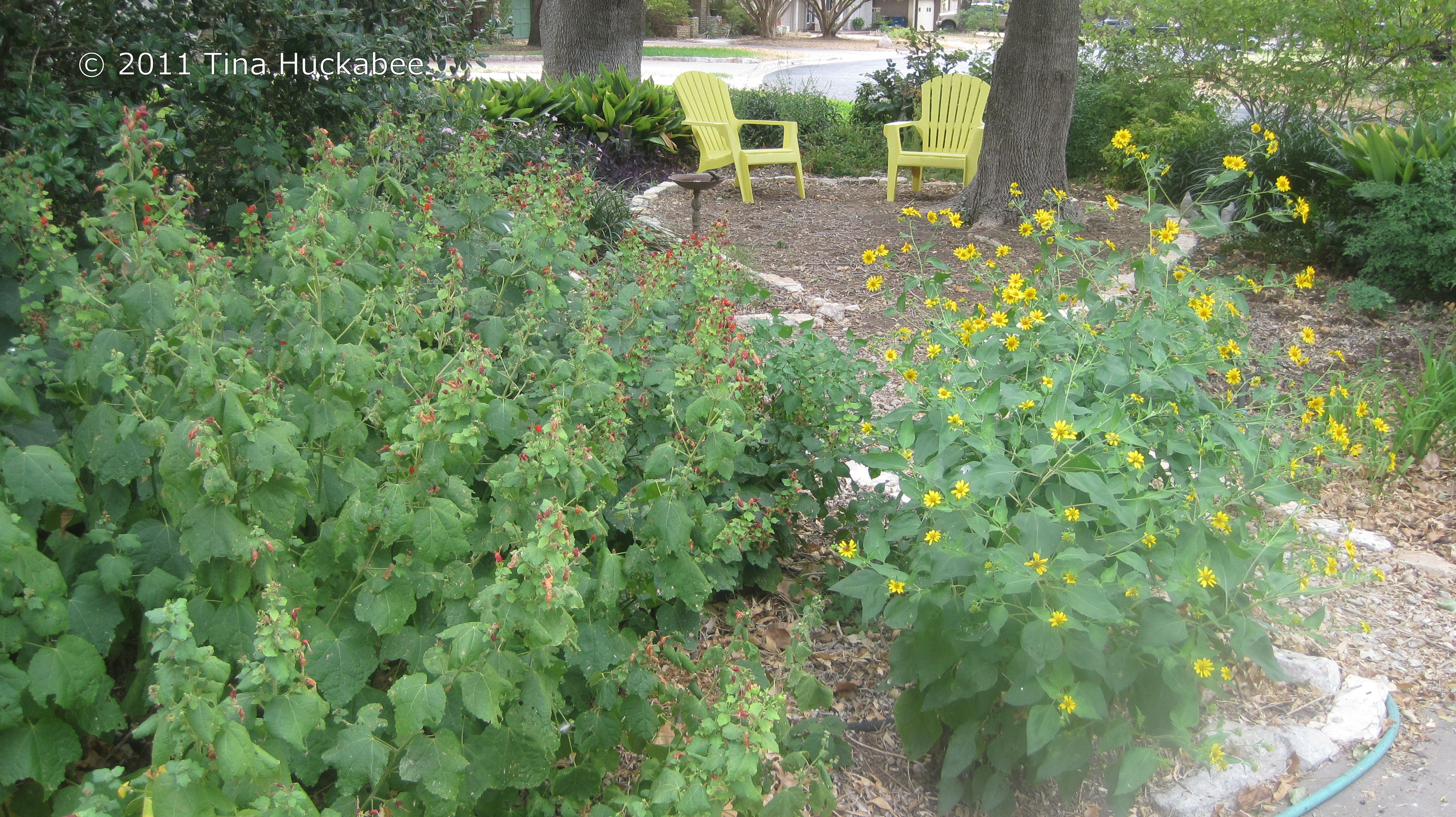
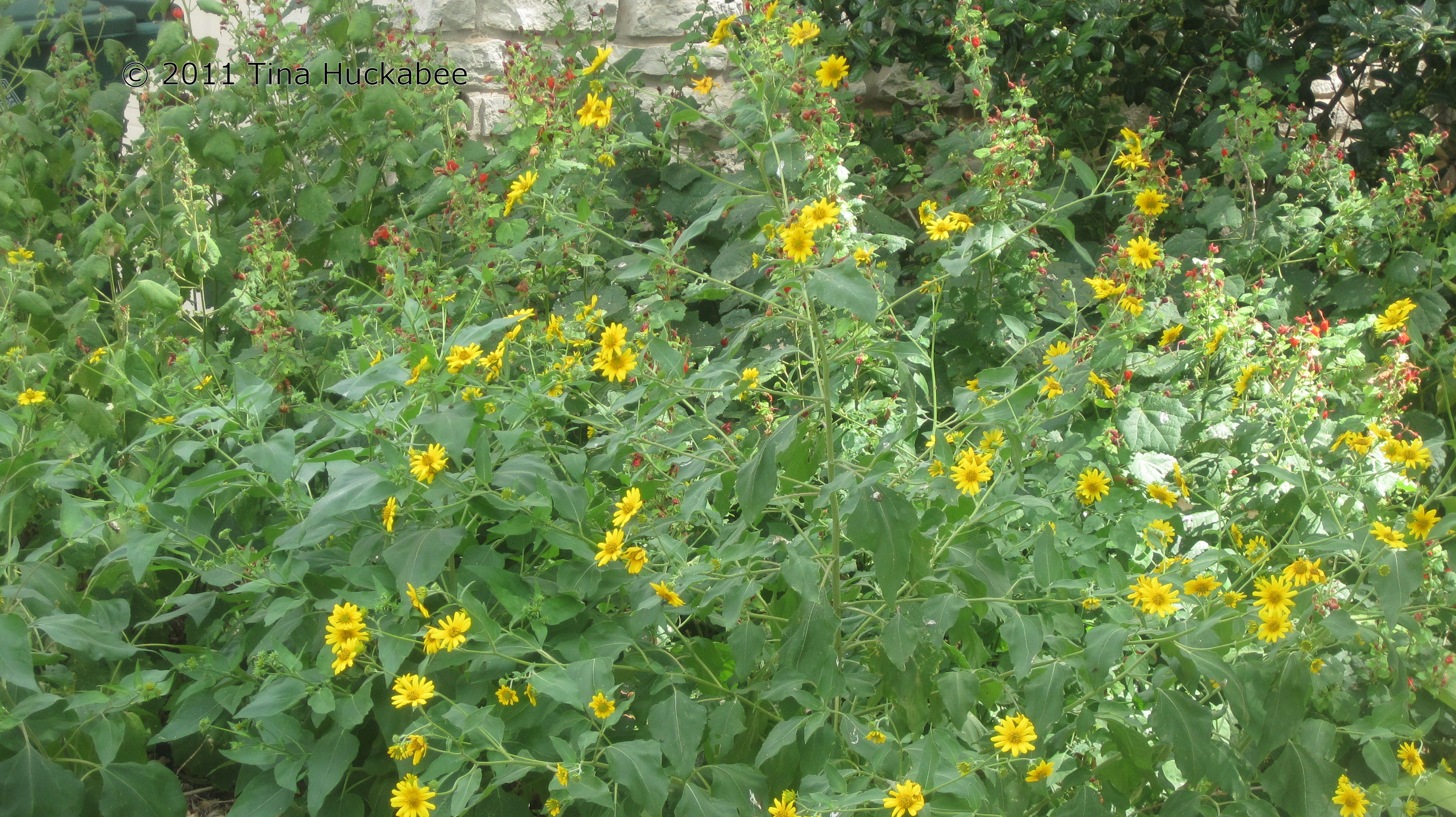
This trio of Goldeneye fronts a stand of Turk’s cap (Malvaviscus arboreus) in my front garden.  My plan was that the Goldeneye would be shorter than the Turk’s Cap.  But the drought has caused all of my Turk’s Cap to be about 1/3 shorter than usual.  I still like the combination though.

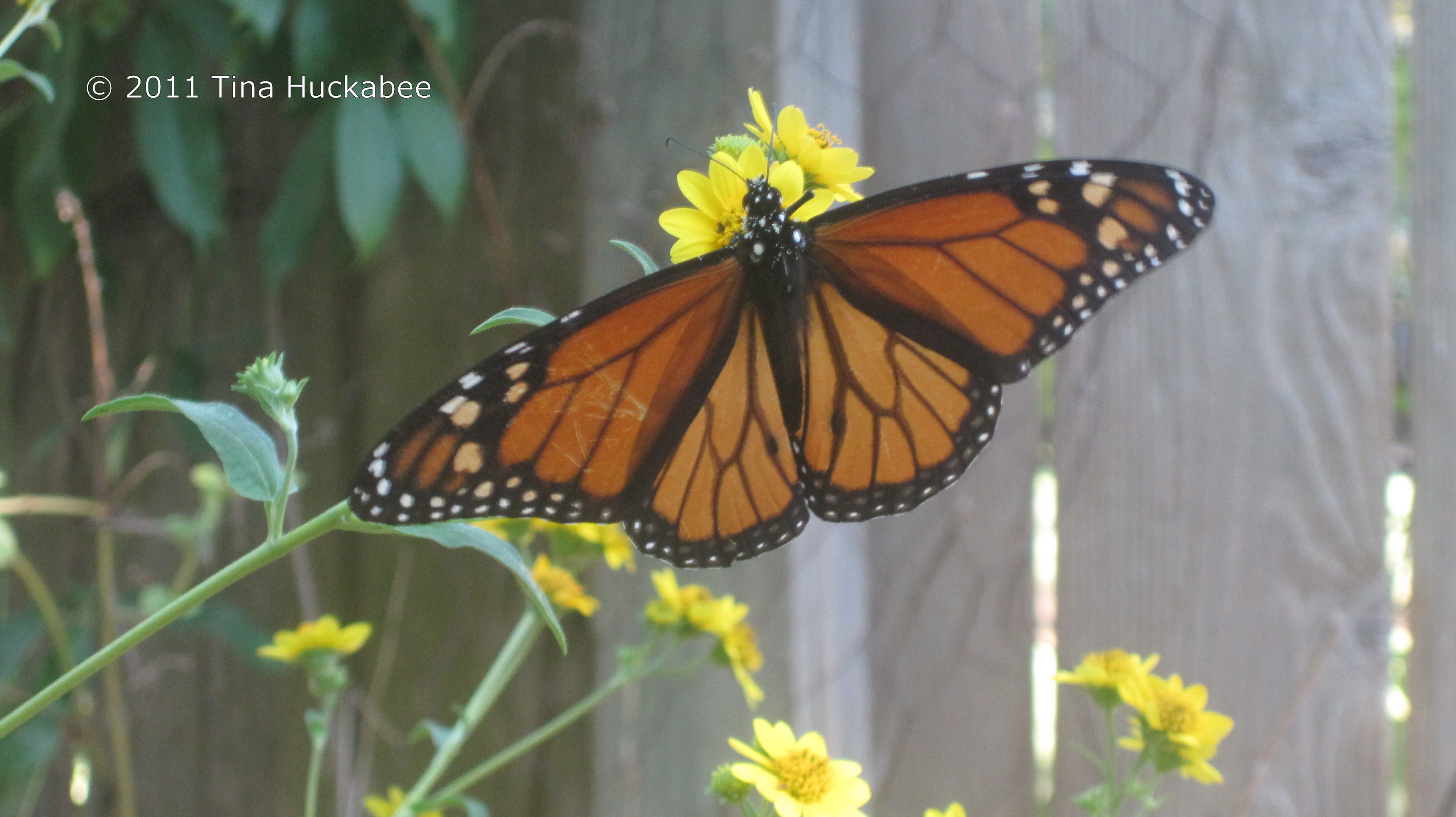
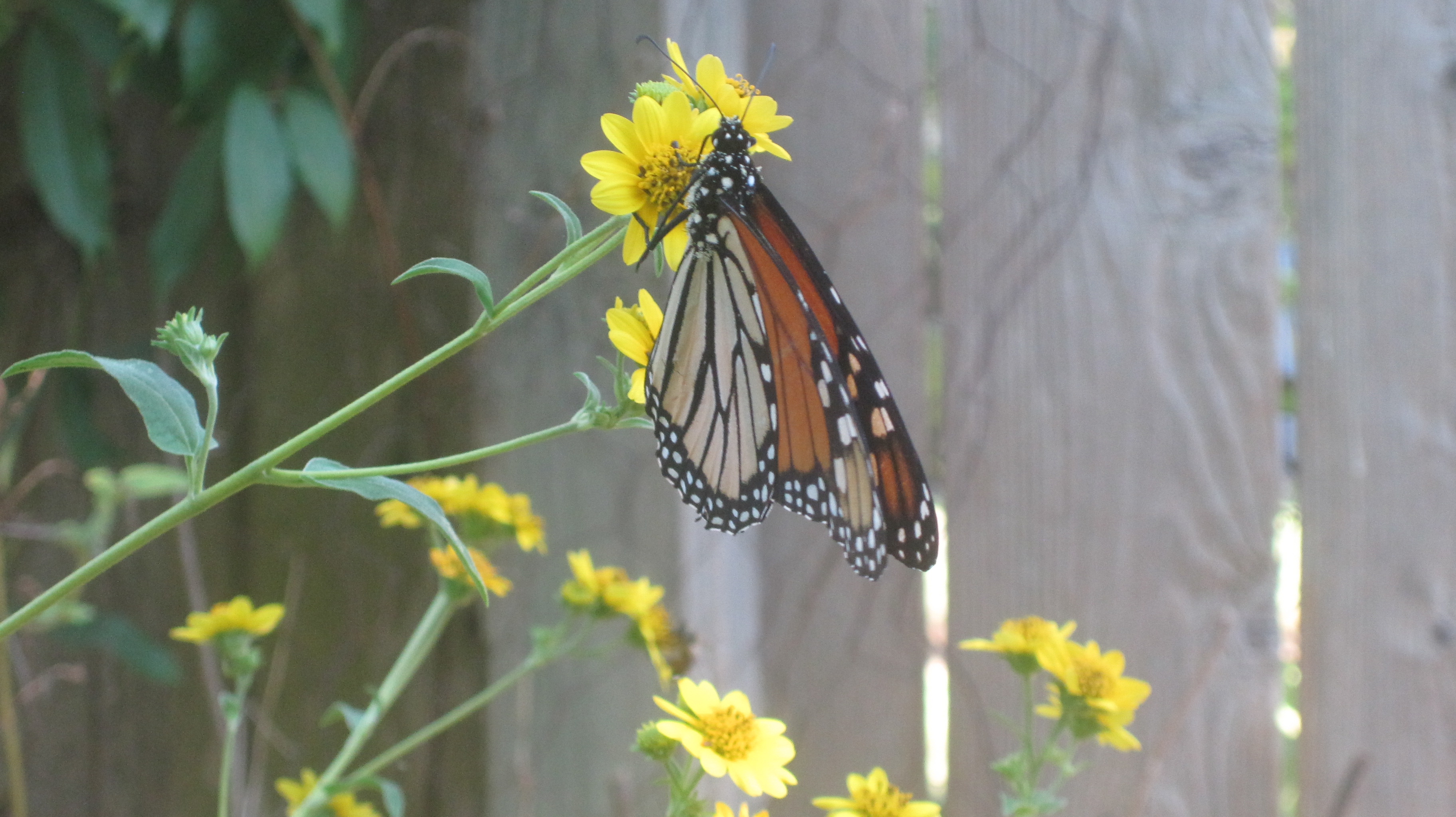
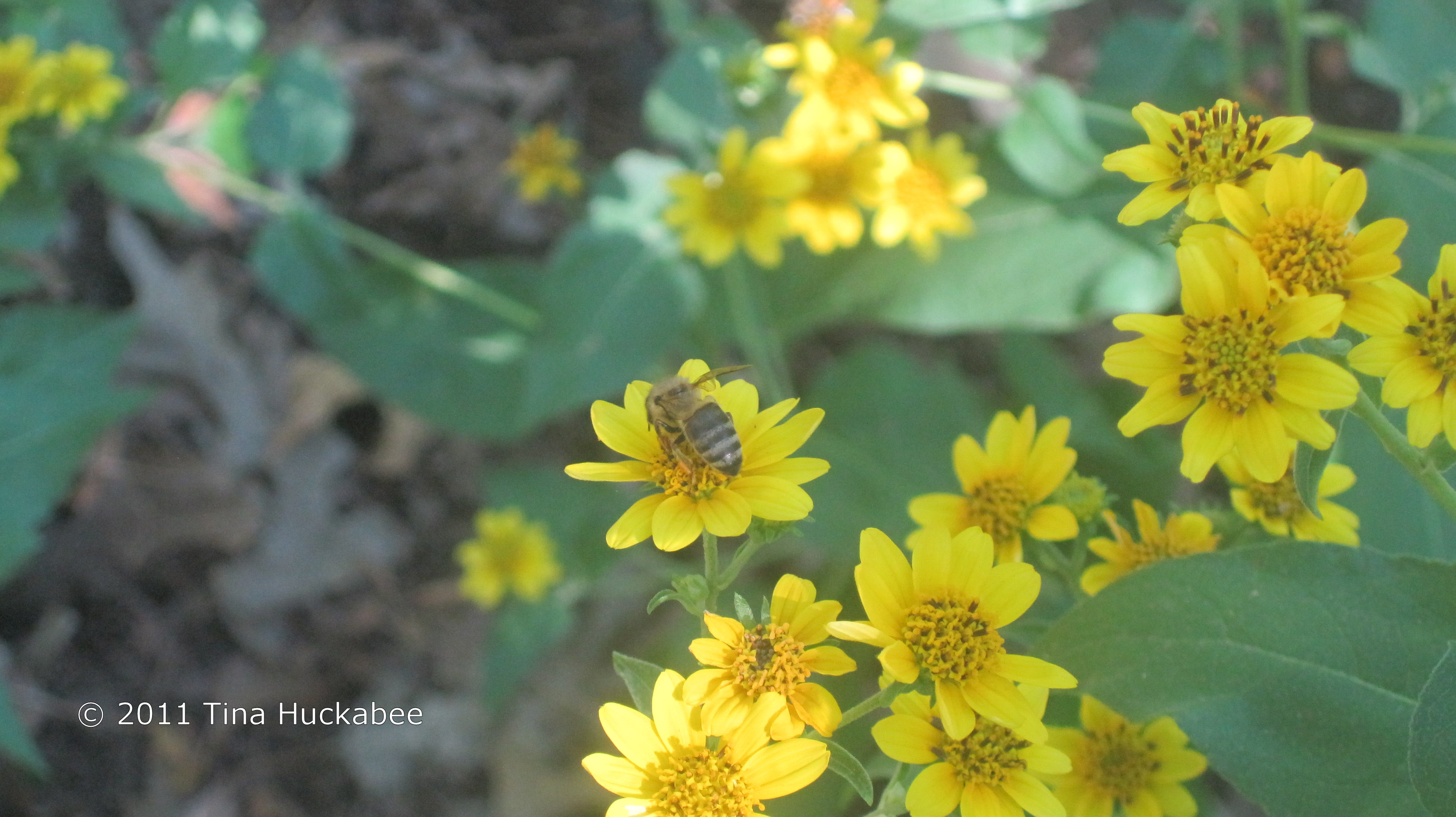
Goldeneye is a host larval plant for two butterflies, Cassius Blue (Leptotes cassius) and Bordered Patch (Closyne lacinia).  It’s also a great nectar plant for other pollinators like this Monarch ((Danaus plexippus),

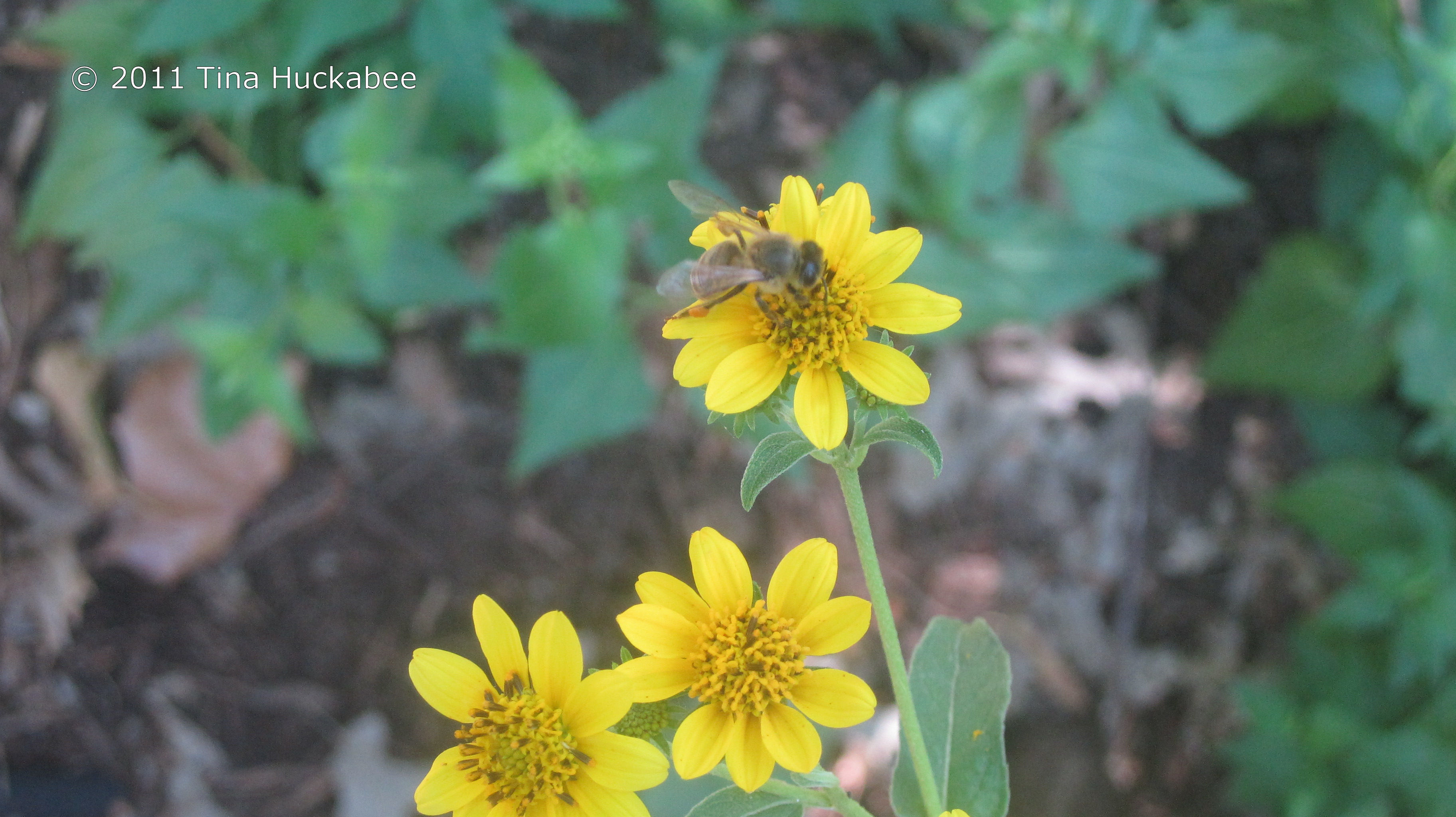
or this little honeybee.

Finches (of all sorts), as well as other birds, also love the seeds and it’s recommended that gardeners let the spent flower stalks stand during the winter for the remaining seeds.  That Goldeneye has “spent” flower stalks means that it isn’t evergreen–it is a herbaceous perennial.  Goldeneye is drought tolerant and easily transplant-able, but according to the NPIN website, not terribly deer resistant.

Goldeneye brightens the fall blooming season with its brilliant yellow flowers, is a great wildlife food source and is an easy, tough plant that every Texas gardener should have!

.

Yummy for Pigeons

Well, doves actually.  At least in my gardens.  (I think pigeons and doves belong to the same family of birds, Columbidae.)  The doves love Pigeonberry (Rivina humilis).

This summer being an exception, for years, almost every time I walk into my front garden during the summer months, the doves take flight, en masse, from the two areas where I have Pigeonberry planted.

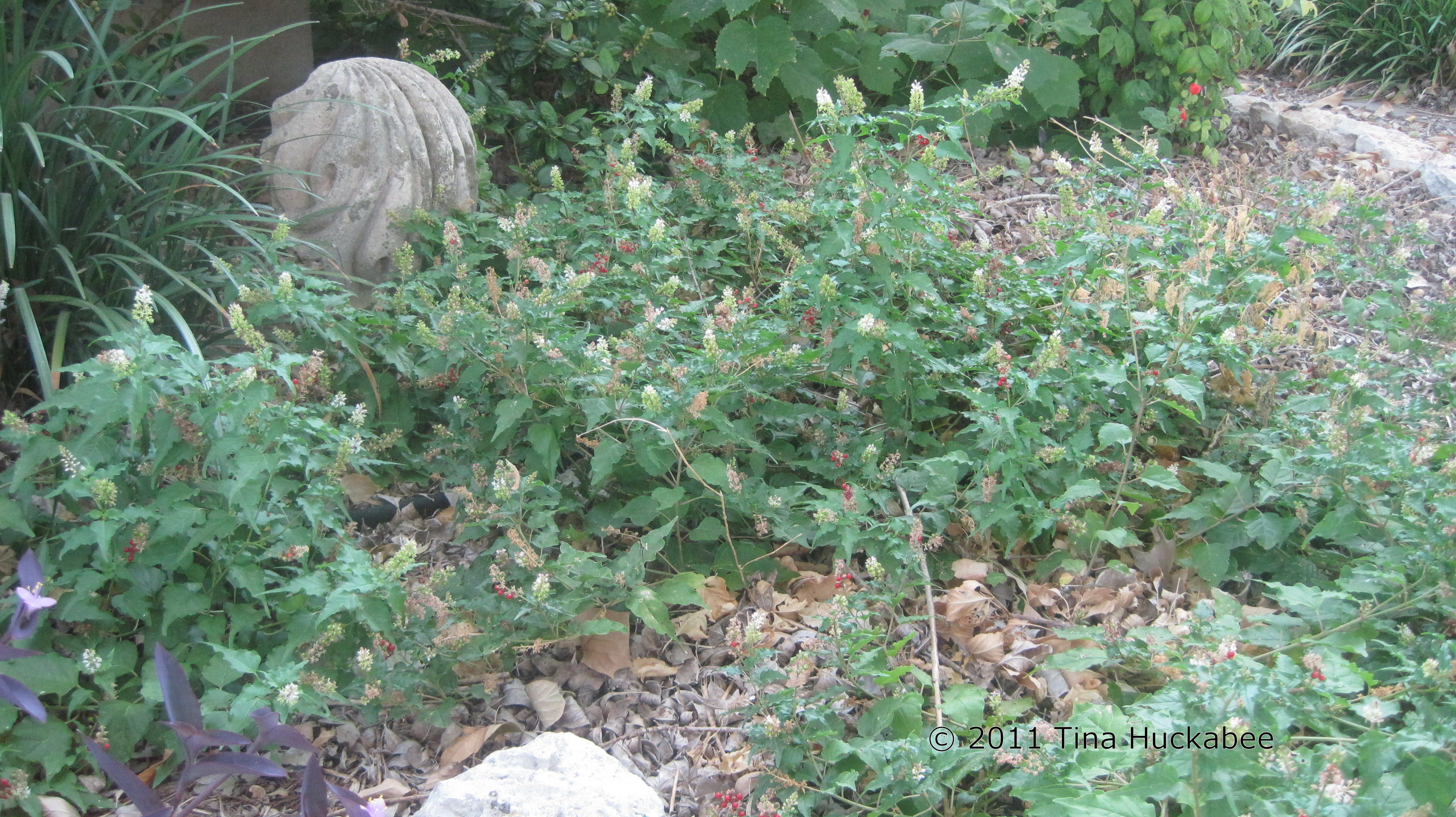
This sweet, small ground cover is native throughout Texas.  It only gets about a foot high and spreads about two feet.  Mine are planted in dappled shade–one group gets some direct morning sun, but only for an hour or so.  I have seen them planted in full sun.

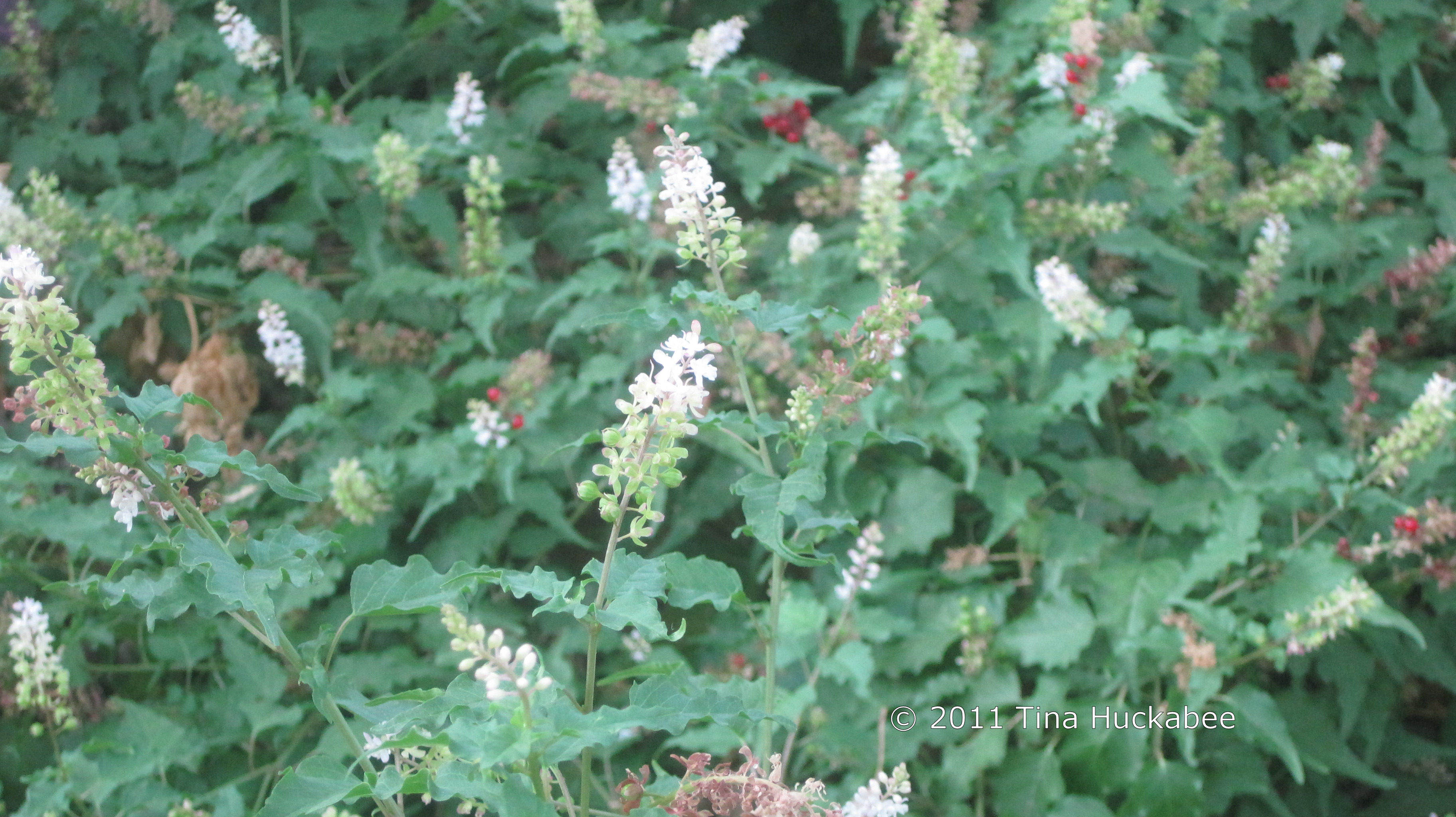
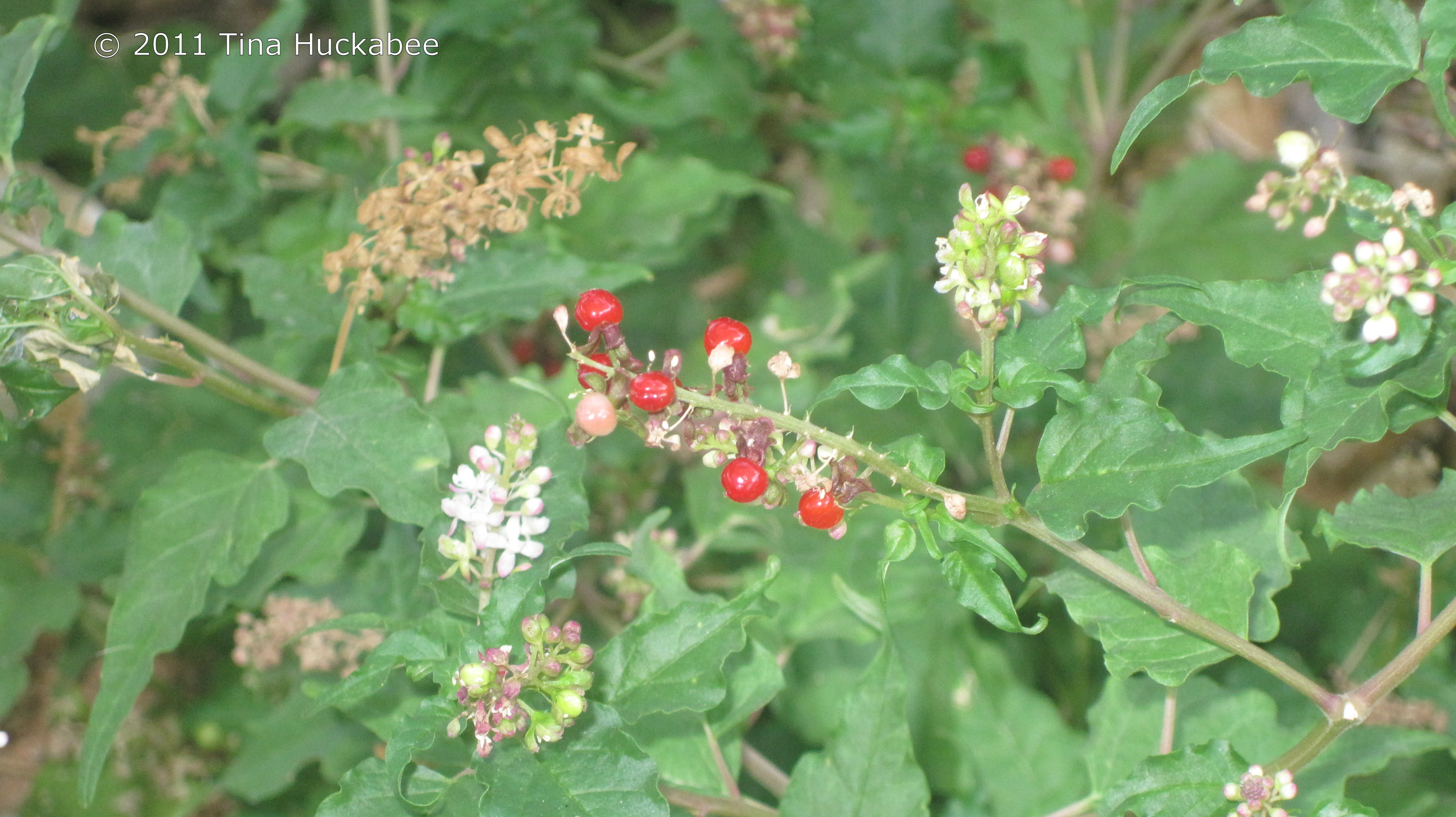
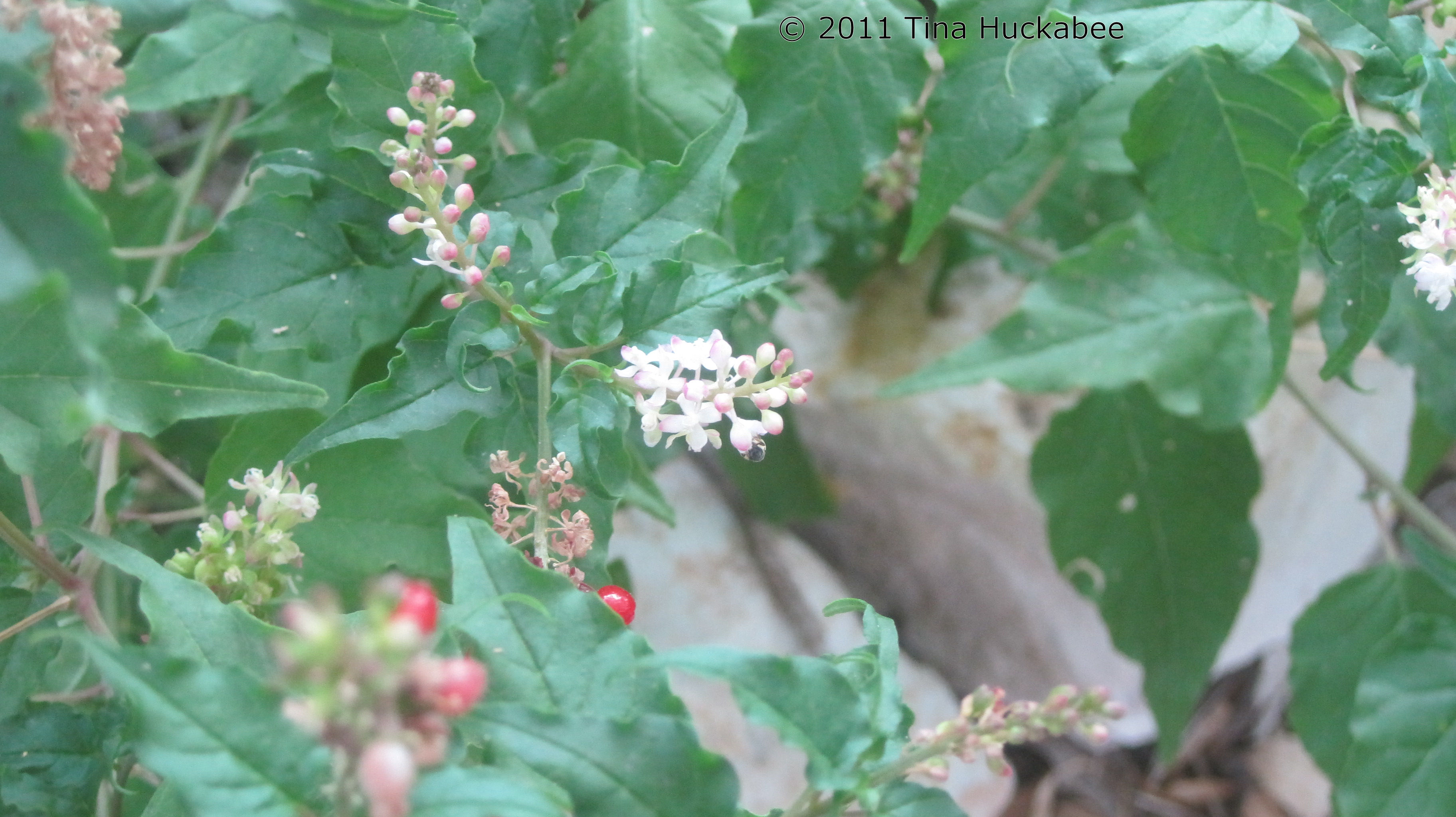
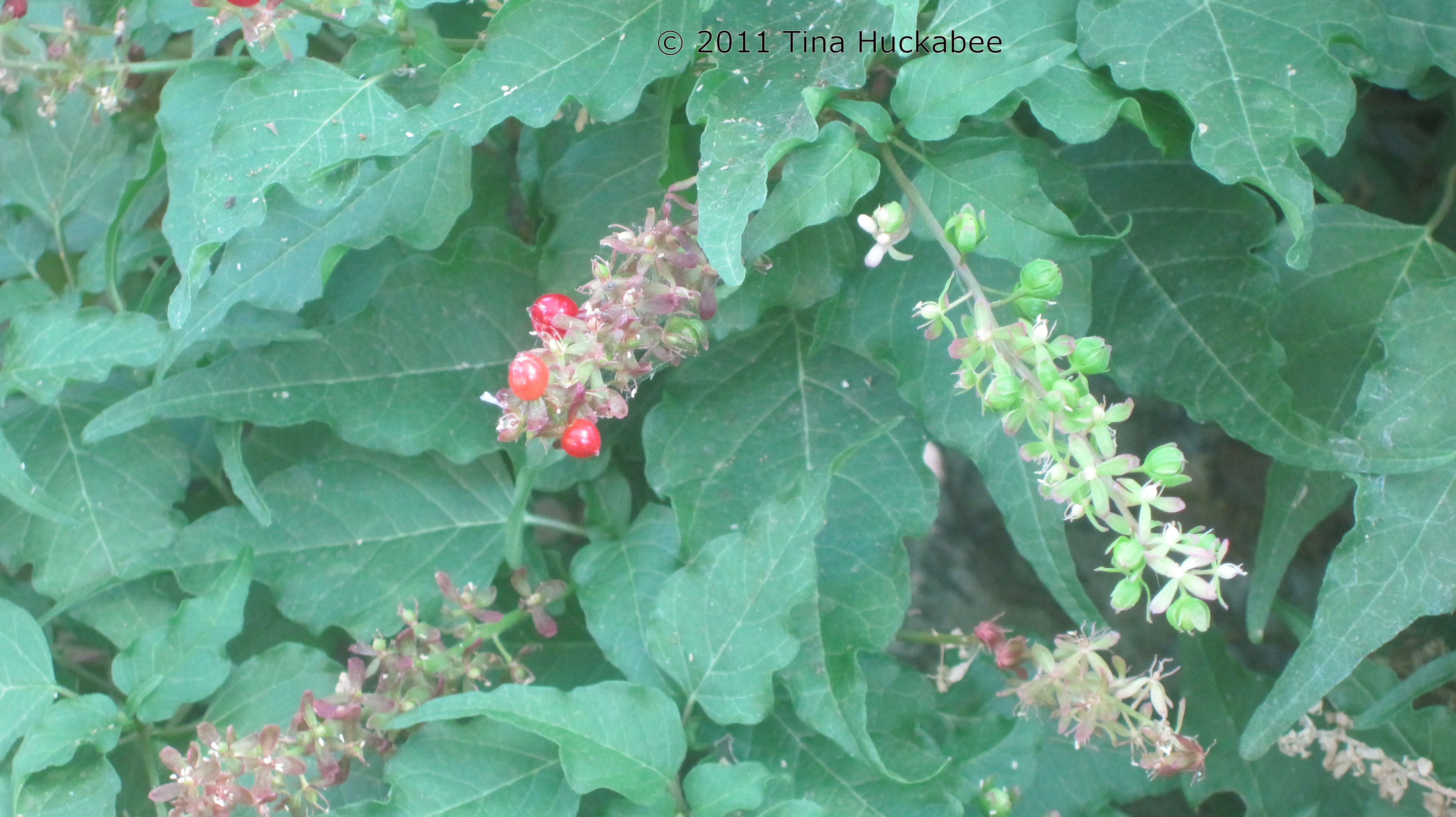
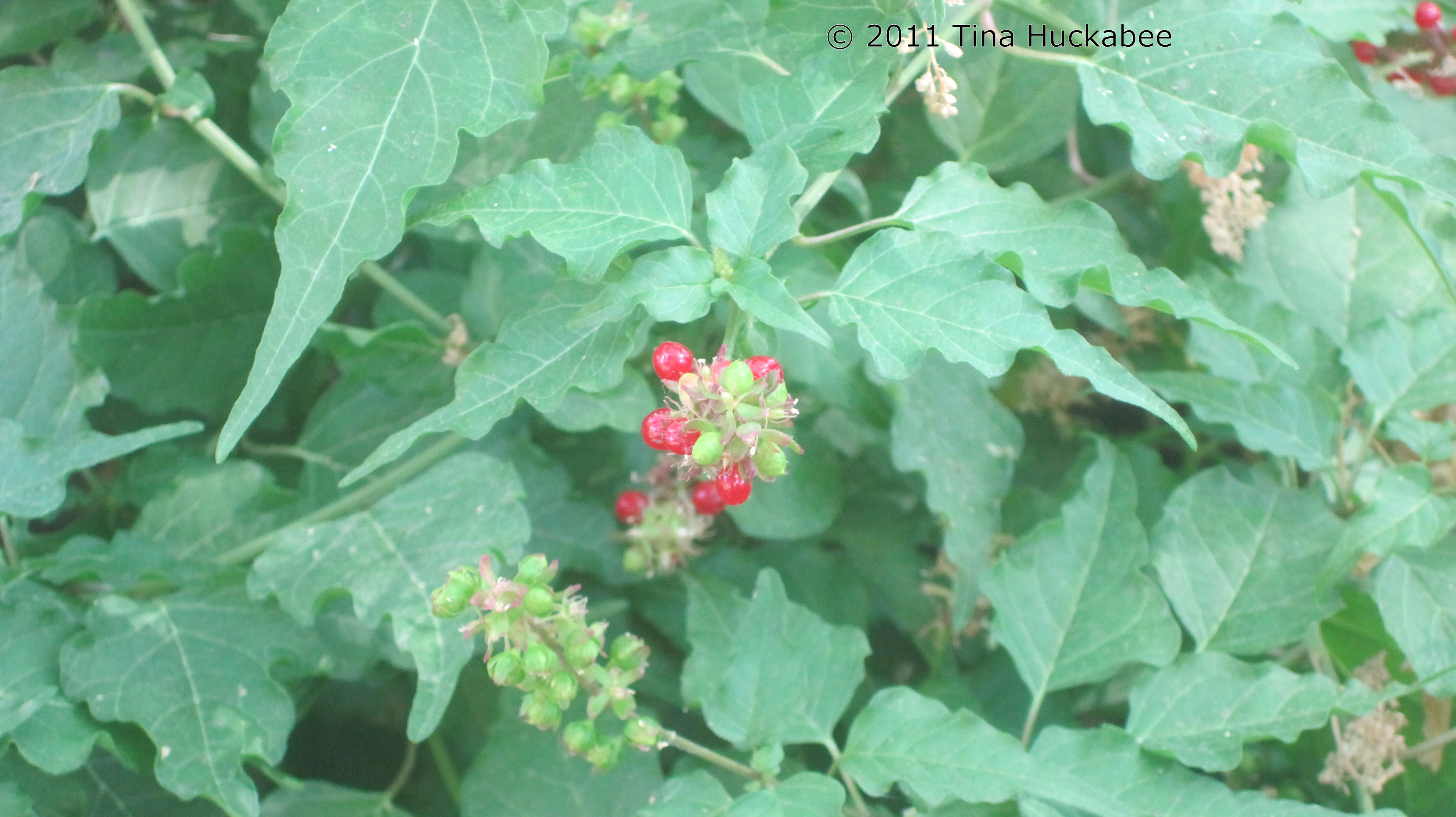
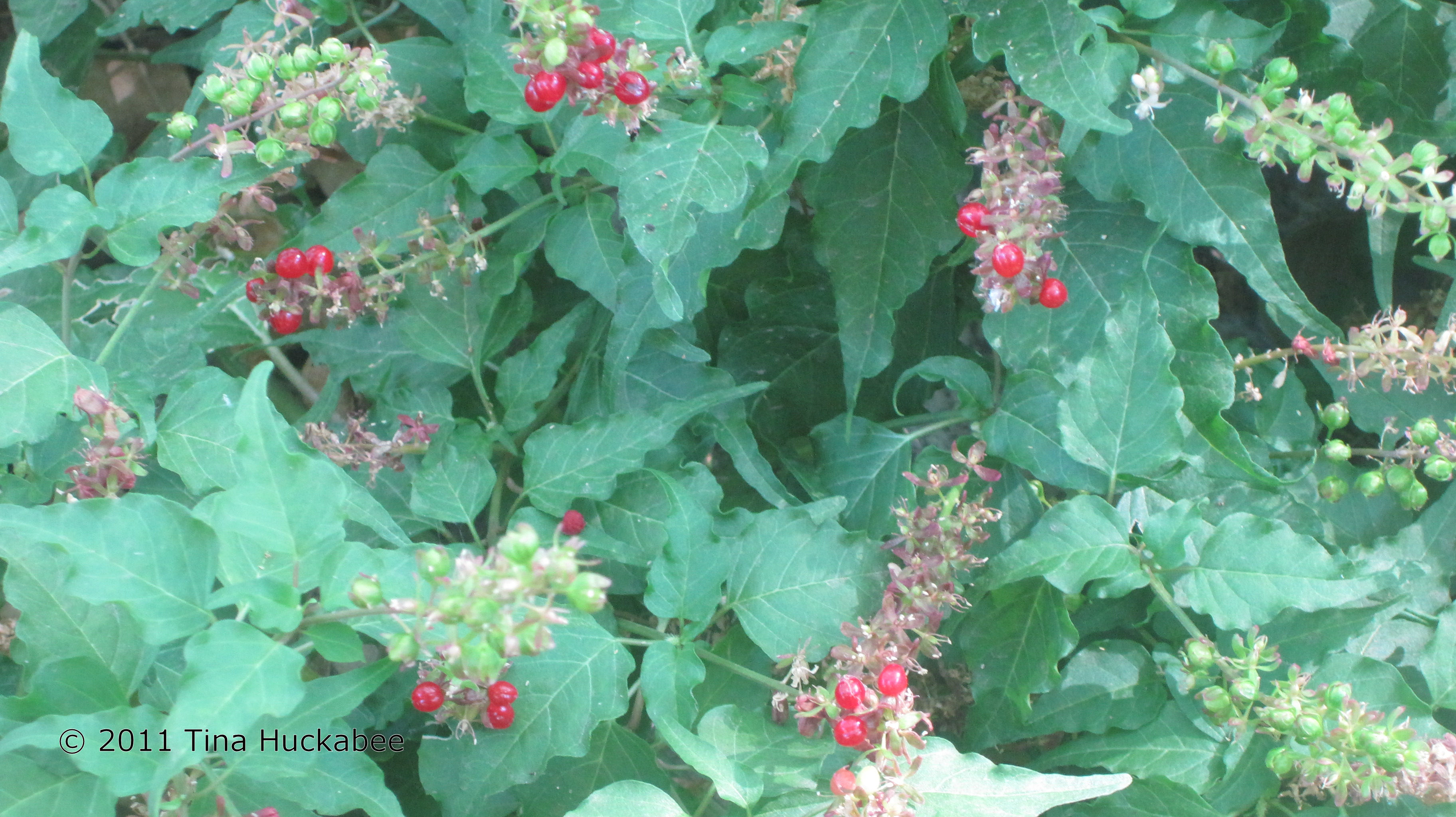
Pigeonberry freeze back during winter and return, rather late, in the spring.  By mid to late summer, when all is hot, dry and depressing, they bloom tiny, dainty, light pink flowers on the top couple of inches of the stem.  Often, the vibrant, red berries are on the stem at the same time as the flowers. The plant is fetching because of this simultaneous bloom/pink-berry/red combination.

Birds of all sorts love the berries and I’ve noticed that the berries disappear very quickly.

The leaves are thin, bright green and have a little bit of a ruffle to them.

Once we begin to get cold (yeah, it does happen), the leaves will turn crimson, at least until the first very first hard freeze of the year.  Mine get a moderate amount of water (once every 10 days or so), so Pigeonberry is a good choice for low water usage landscape plant.

I like to plant it in front of a taller evergreen plant (take your pick) and mix it with spring bloomers like Columbine (any variety),  Gulf Coast penstemon  (Penstemon tenuis) or Lyre-leaf Sage (Salvia lyrata).  It’s  also nice with other shady summer bloomers like the Tropical sage (Salvia coccinia).

Pigeonberry will seed out and I’ve transplanted seedlings to other areas, but  haven’t had great success with transplants.  Maybe 30% of my transplanted seedlings will survive–I’m not entirely sure why I don’t have better yield.  They seem to be enjoyed by some critter(s) shortly after the transplant. Often, the day following a transplant, all that remains of the little seedling is a green stick protruding from the ground.  That’s usually a bad omen for the life of the plant. So, when I want more Pigeonberry, I visit my favorite nursery to buy them in four inch pots.  They are often available in gallon pots as well.

Also, Pigeonberry has fragile branches.  If you have dogs (or  a 16 year-old who regularly steps off the path…), they easily suffer broken stems.  It’s sad to see a large branch of would-be blooms and berries, lying broken and wilted, next to the otherwise healthy and beautiful plant.

Even so, I agree with the doves and pigeons–Pigeonberry is a great plant in a well-rounded garden.