Hill Country Blues

I love blue flowers in the garden and my current favorite blue flowering perennial is the Henry Duelberg Sage (Salvia farinacea ‘Henry Duelberg’).

(As a disclaimer, many of these photos show the flowers of this post as more purple than they are in real life. I don’t know if it’s me or the camera. It’s probably me.)

It’s lovely planted with other mid-to-late spring bloomers.

I’ve grown the compact cultivar Mealy Blue Sage  for a many years in my gardens.
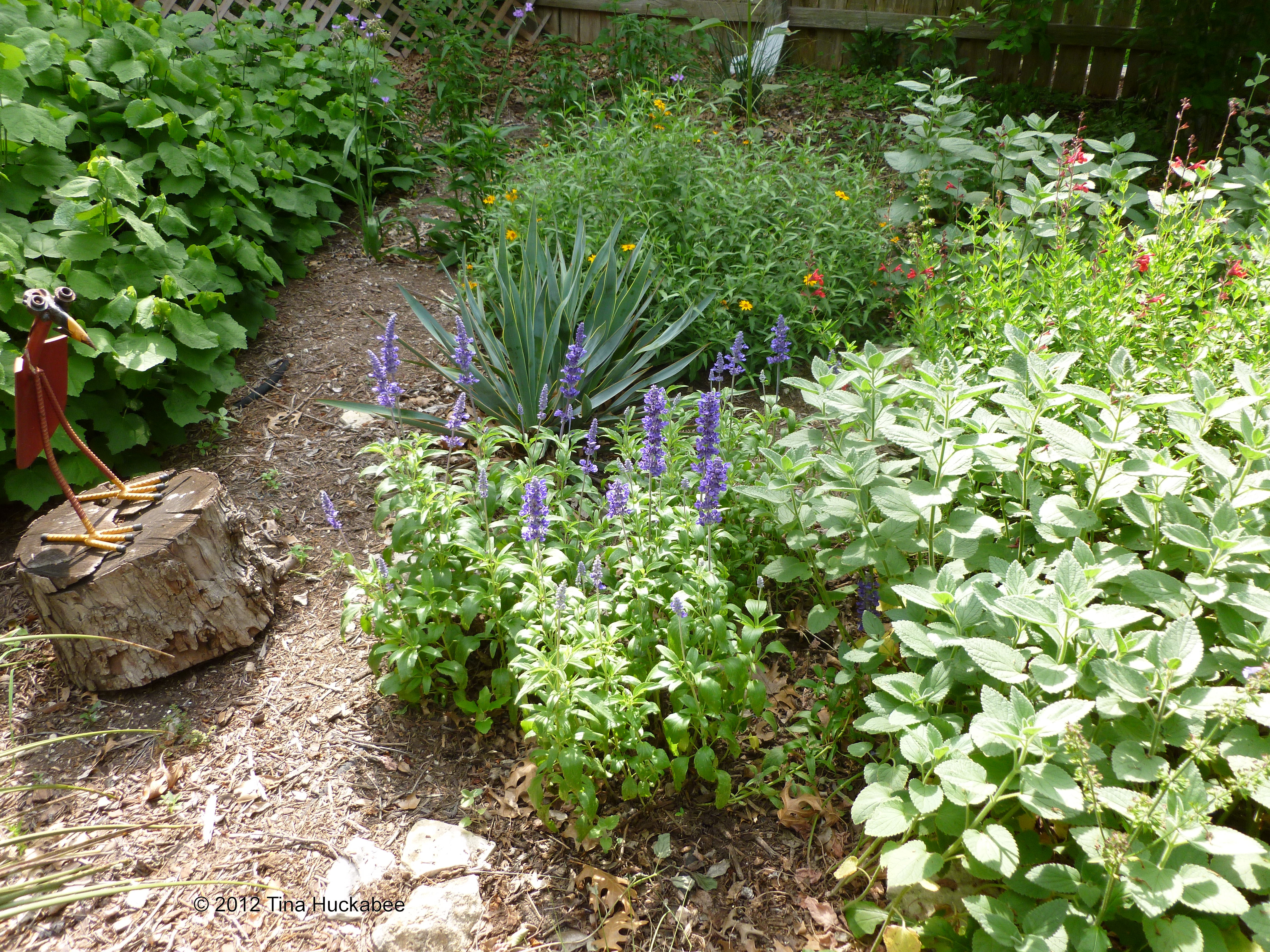
The true native Mealy Blue Sage is taller and typically a lighter blue than the cultivar Mealy Blue.  The cultivar has a darker blue bloom and is compact in form, reaching a height of about eighteen inches. It is a terrific addition to the garden.  They’re happiest and most striking when they’re blasted by the hot, Texas sun.

These three have been in this spot for several years and bloom stunningly in spring, with a second, less dramatic bloom cycle in the fall.  During the summer, the Mealy Blue Sage tend to bloom less and typically, I’ll cut them back to the ground in July or August.   The plants bloom again in the fall but once the temperatures are consistently chilly and the days are short, I prune the spent bloom stalks down to the base rosette for winter.  The rosette is evergreen for winter here in zone 8b.  This plant is so pretty when planted en masse and is excellent for the xeric garden, especially because of its compact form.

I fell in love with the  Henry Duelberg S. farinacea when I started working at Zilker Botanical Gardens a few years ago.  I manage the Grow Green Gardens as Zilker Botanical Gardens (ZBG) and these demonstration gardens are designed to showcase low maintenance, native and non-native plants.  The City of Austin’s Grow Green program provides a wealth of information for homeowners and businesses about proper landscape plant choices and irrigation techniques to enhance water conservation.  Many folks who live in and around Austin are familiar with the free Plant Guide (located in the above Grow Green link, bottom right hand side of page) where some of the more popular landscape plants for Central Texas are profiled.  The Henry Duelberg Sage is listed in the Plant Guide, but when I started working at ZBG, there wasn’t one planted in the Green Garden.

So, I fixed that.

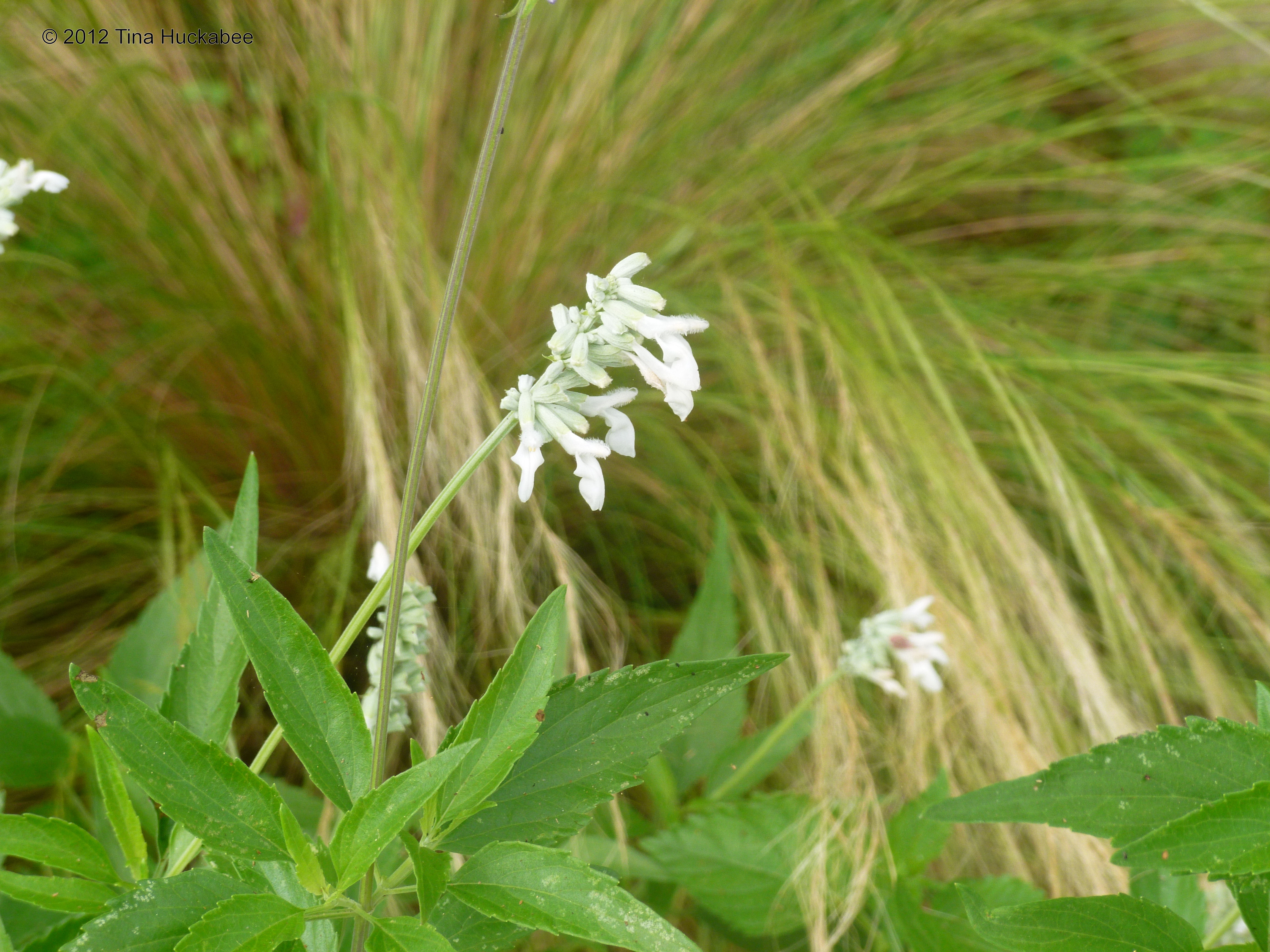
This beautiful specimen blooms three-quarters of the year and is a dramatic addition to the entry of the Green Garden.  It’s produced loads of seedlings (which will be  planted in other gardens at ZBG).  This spring, a white blooming hybrid seedling, the Augusta Duelberg, has joined the mix.

Nice!!

I was so entranced with the Henry Duelberg and its performance at ZBG, that I bought several for my gardens.

The Henry Duelberg is larger than the cultivar Mealy Blue Sage and has a graceful, open form.  The stems are two to three feet tall and the flower spikes atop the stems are three to four inches long.  This gorgeous bloomer is probably a hybrid of the native  Mealy Blue Sage (S. farinacea).

The leaves are lance shaped and are located along the length of the stem.  The Henry Duelberg will bloom from mid-spring, through early summer.  In my gardens, it experienced a dormant period during the hottest part of last summer.   I pruned mine to the ground and once the rains began again, the Henrys enjoyed a nice fall bloom cycle.  Like the cultivar Mealy Blue, the Henry Duelberg can be pruned to its evergreen winter rosette at the end of the growing season.

The Henry Duelberg at the Green Garden bloomed all of last summer, but it’s more established and receives more water than my personal plants.

Both the Mealy Blue Sage and the Henry Duelberg are favorites of bees and butterflies, as well, though I’ve noticed more pollinators visiting the Henry Duelberg than the Mealy Blue. I planted two, four-inch pots of Henry Duelberg in the fall of 2010 and they have re-seeded, so I have  six of these plants now.  Thus far, all of mine are blue–none have hybridized to the white ‘Augusta’ form.

As with most plants in the salvia family, the hybrids and cultivars of S. farinacea are generally considered deer resistant.

The Henry Duelberg Sage was discovered growing without care in a Texas cemetery by  Texas  horticulturist and garden writer, Greg Grant.  He named the blue flowering plant after Henry Duelberg and the white variety after Henry’s wife, Augusta.  If this plant can survive neglected in an old cemetery, surely it’ll perform beautifully for you in your gardens. So go ahead–plant a Salvia farinacea (‘Henry Duelberg’) in your garden.

Or, if you prefer its little cousin, plant the Mealy Blue Sage.

Or, plant both and enjoy the show!

Hill Country Beauty, Beard And All

Hill Country Penstemon (Penstemon triflorus) is one of my favorite spring bloomers and every spring I eagerly anticipate the bloom cycle of this striking plant.  This penstemon is one of the larger species and is a showy one indeed.

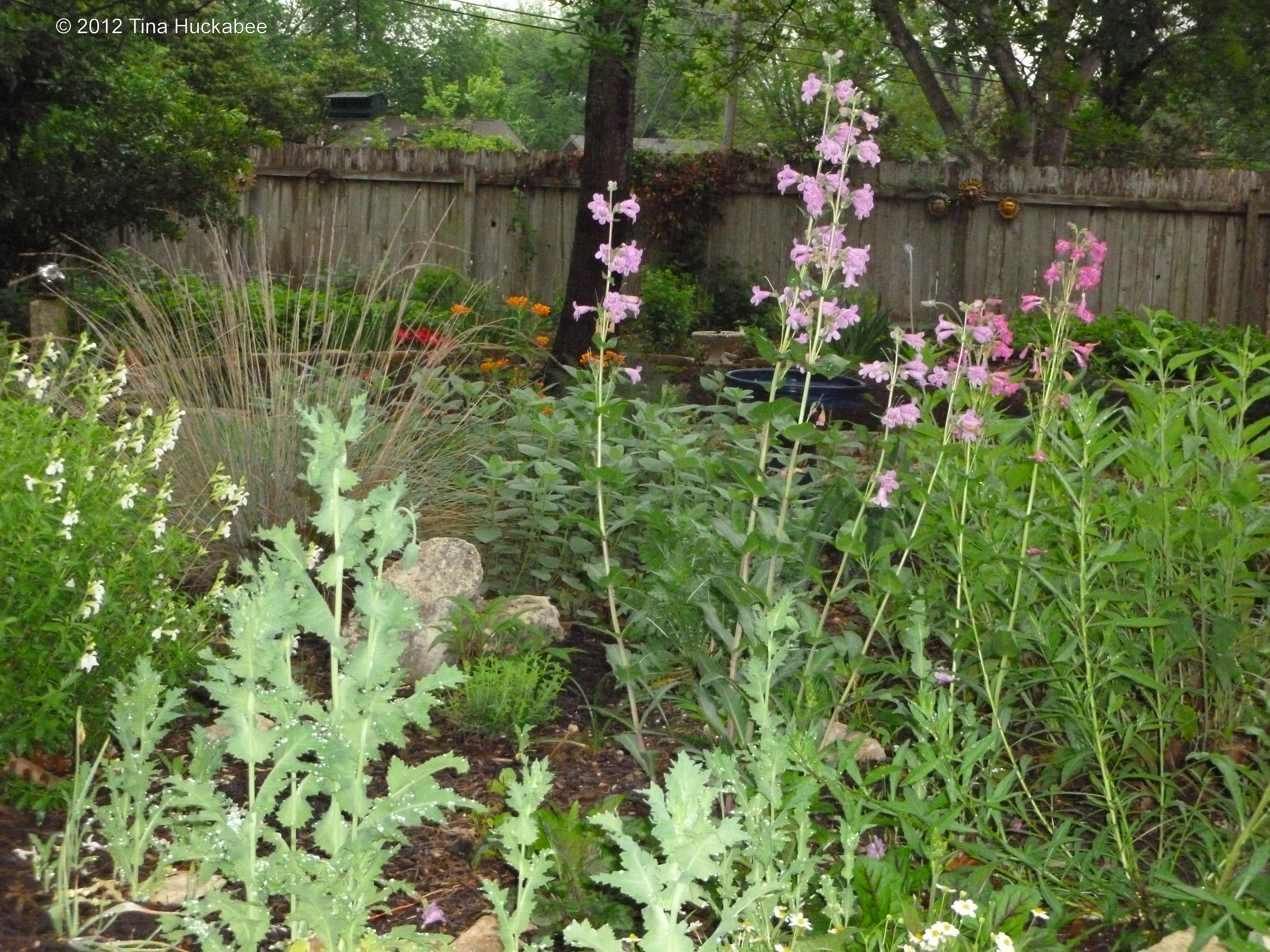
The blooms are fuchsia red and bloom in pairs and the leaves are lance-shaped and are opposite along the stem.  A slender and elegant plant at bloom time, the flowers of the Hill Country Penstemon are borne on spikes  2-3 feet  tall.  Blooming “normally” in April and May, this year, my group of four began their bloom cycle in early March, about a month earlier than the normative time period.

Endemic to the Texas Hill Country, its native distribution is throughout the Edwards Plateau.

The penstemon genus  is a large group of plants native to North America.  The term penstemon means “five stamen” because of the five stamens in each flower, one of which is long and often fuzzy or hairy.  The hairy stamen looks as if it’s a hairy tongue sticking out of an open mouth, giving rise to a common and old-fashioned name for many penstemon plants,”beardtongue.”

Another common name for Hill Country Penstemon is Heller’s Beardtongue.  Most penstemon plants have tubular shaped  flowers with lip-like petals, two at the “top” and three on the “bottom” of the flower.

A neighbor gave me my first Hill Country Penstemon years ago and it was a reliable bloomer. I’d forgotten about it because a larger shrub, Cenizo (Leucophyllum candidum), grew tall and shaded it to the point that it hadn’t bloomed in a couple of years.  When I began a re-landscape of my back garden in 2010, I moved the two I had and added two more–one from Barton Springs Nursery and one from the fall Lady Bird Johnson Wildflower Center’s plant sale.

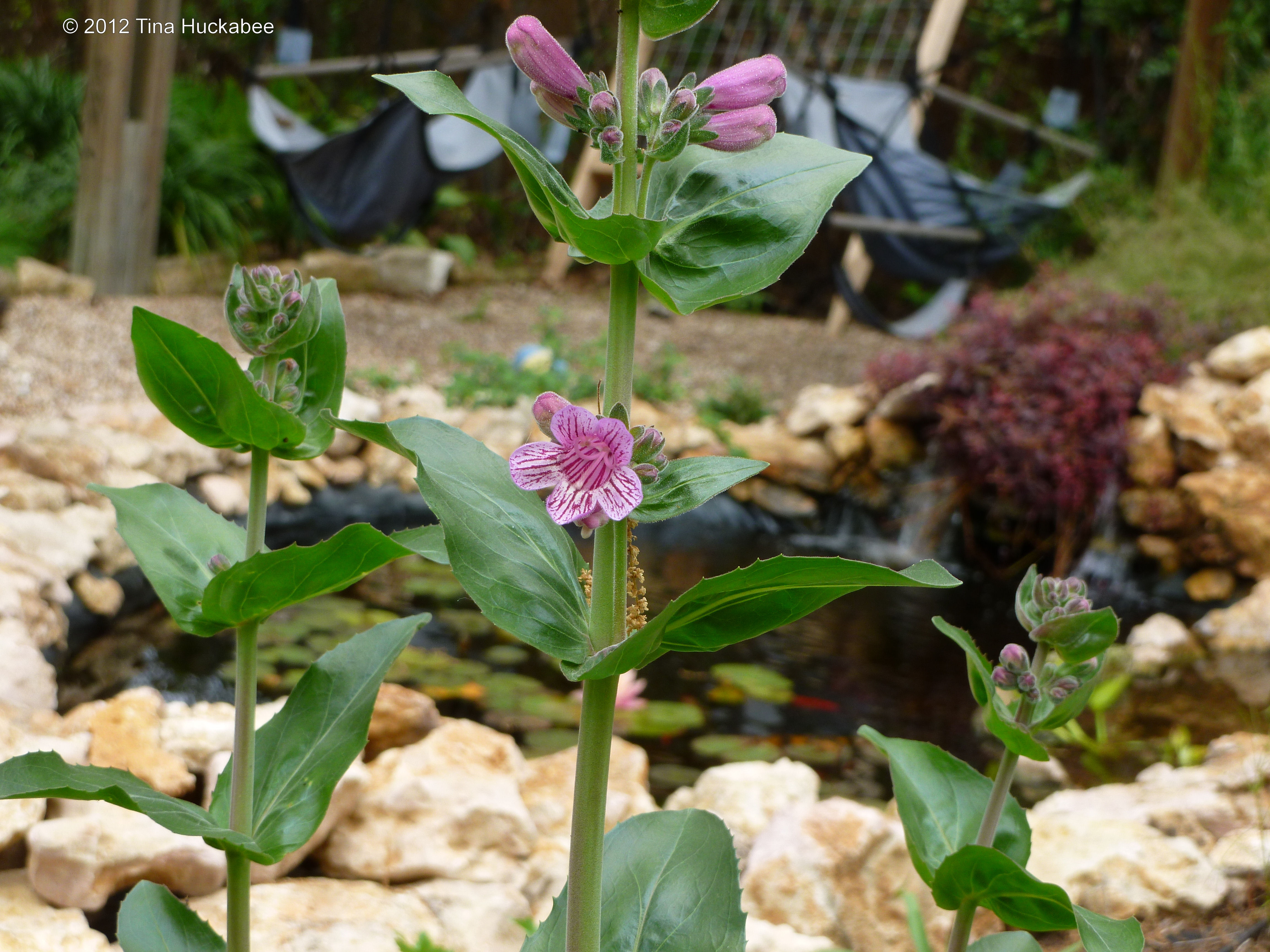
Interestingly, I noticed that the Penstemon from the Wildflower Center (left in the photo above) was generally larger and taller than the others I had. The stem was thicker and the leaves were definitely larger.  Once it bloomed, the flower was also different: larger, lighter in color and with more variegation.

Surprise!!  But a nice surprise!  I thought that it looked a little like the Wild Foxglove or Prairie Penstemon (P. cobaea).  After reading a bit, I discovered that these two penstemons commonly hybridze with one another.  I assume that is what this different looking penstemon is.

So I seem to have two similar plants: a true P. triflorus and and a hybrid thereof.

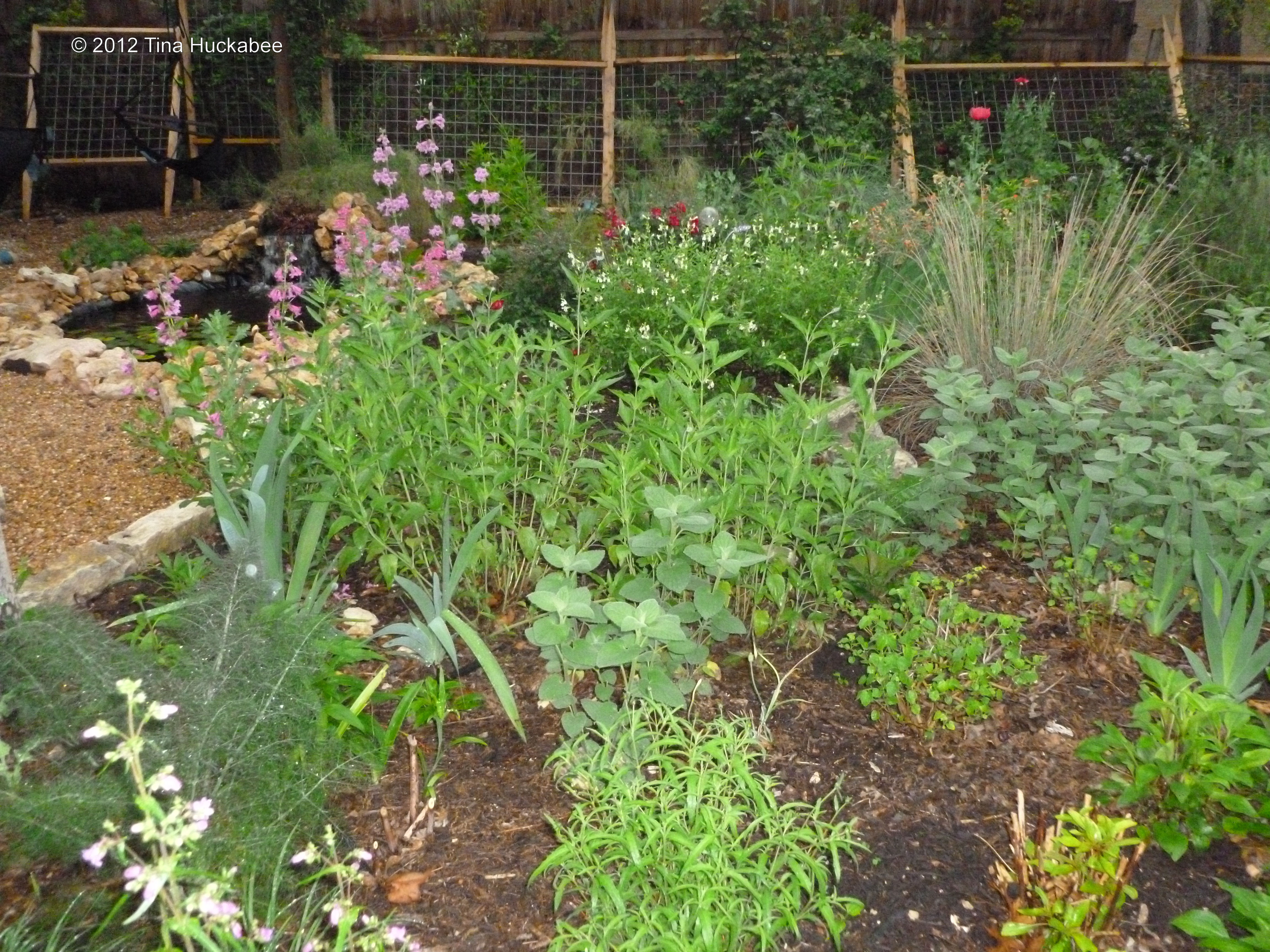
I’ve planted this  group of Hill Country Penstemon at the edge of a large mixed perennial garden beside a pathway, so that I could enjoy their beauty, up close, without traipsing into the garden itself.  I love to see pollinators at work,

and observe the penstemon blooms sticking their hairy tongues out at me as I  amble by, coffee cup in hand.

While I like where I have my Hill Country Penstemons planted, this is a plant more appropriately placed in the center or back of a large perennial bed.  In spring, the Penstemon bloom spikes grow taller than surrounding shrubs and perennials that have been pruned during winter.

Once the bloom cycle is finished, the plant develops seeds for the next generation.  Because my Penstemons are planted at the edge of the garden and the bloom stalks fade in attractiveness as the plant is developing its seeds,  I prune them back well before the seeds are ready to disperse. If I had them planted in the center or back of the garden, I could let them develop seeds because the other perennials and shrubs would partially camouflage the unattractiveness of the spent bloom spikes.  That way, I could allow the seeds to develop and disperse, thus ensuring the propagation of more Hill Country Penstemon without sacrificing attractiveness in the garden.  It was a calculated decision on my part to have them at the edge of the bed, but I haven’t had any seedlings from this plant because I prune it down for neatness sake.  Once the spent bloom stalks are pruned to the ground, there is a rosette which stays green throughout the remainder of summer and into the fall and winter.

That said, the Hill Country Penstemon can be separated at the roots,  so it’s propagated that way as well.

In a mixed perennial garden like this one,

it’s good to arrange a mix of sizes, shapes and bloom times so that there is layering effect of blooms, foliage and form interest.

I planted the four Hill Country Penstemons along with Blackfoot Daisy (Melampodium leucanthum) and  Lyre-leaf Sage ( Salvia lyrata), which bloom in concert with the Penstemon.  I’ve also planted some Iris (Shoshana’s Iris, I believe)  next to the Penstemon to echo the spiky form.  Unfortunately, the Iris didn’t bloom this year, but they are lovely with the Penstemon, blooms or not.  I also have Purple Coneflower (Echinacea purpurea) planted in the same area, which will start blooming toward the end of the Penstemons’ bloom cycle and throughout the summer.  Further behind and along either side of the Penstemon group, I’ve planted perennials with more shrub-like growth habits and (in general), longer bloom times.  For example, just behind the Hill Country Penstemon are planted two Henri Duelberg Sage (Salvia farinacea ‘Henri Duelberg’), which will get 2 to 3 feet in height and width,  several Rock Rose ( Pavonia lasiopetala), two white Autumn Sage (S. greggii) , two roses (Old Gay Hill and Martha Gonzales)  and a Lindheimer’s (or Big) Muhly (Muhlenbergia lindeimeri).

The Hill Country Penstemon requires full sun and can tolerate rocky to heavy clay soils.  It’s drought tolerant and a nectar source for bees and butterflies.  In Austin, I’ve seen them for sale at Barton Springs Nursery and at the Lady Bird Johnson Wildflower Center’s spring/fall plant sale.

Hill Country Penstemon is tough and so, so pretty.  Even with her hairy, bearded tongue.

Garden Fairies

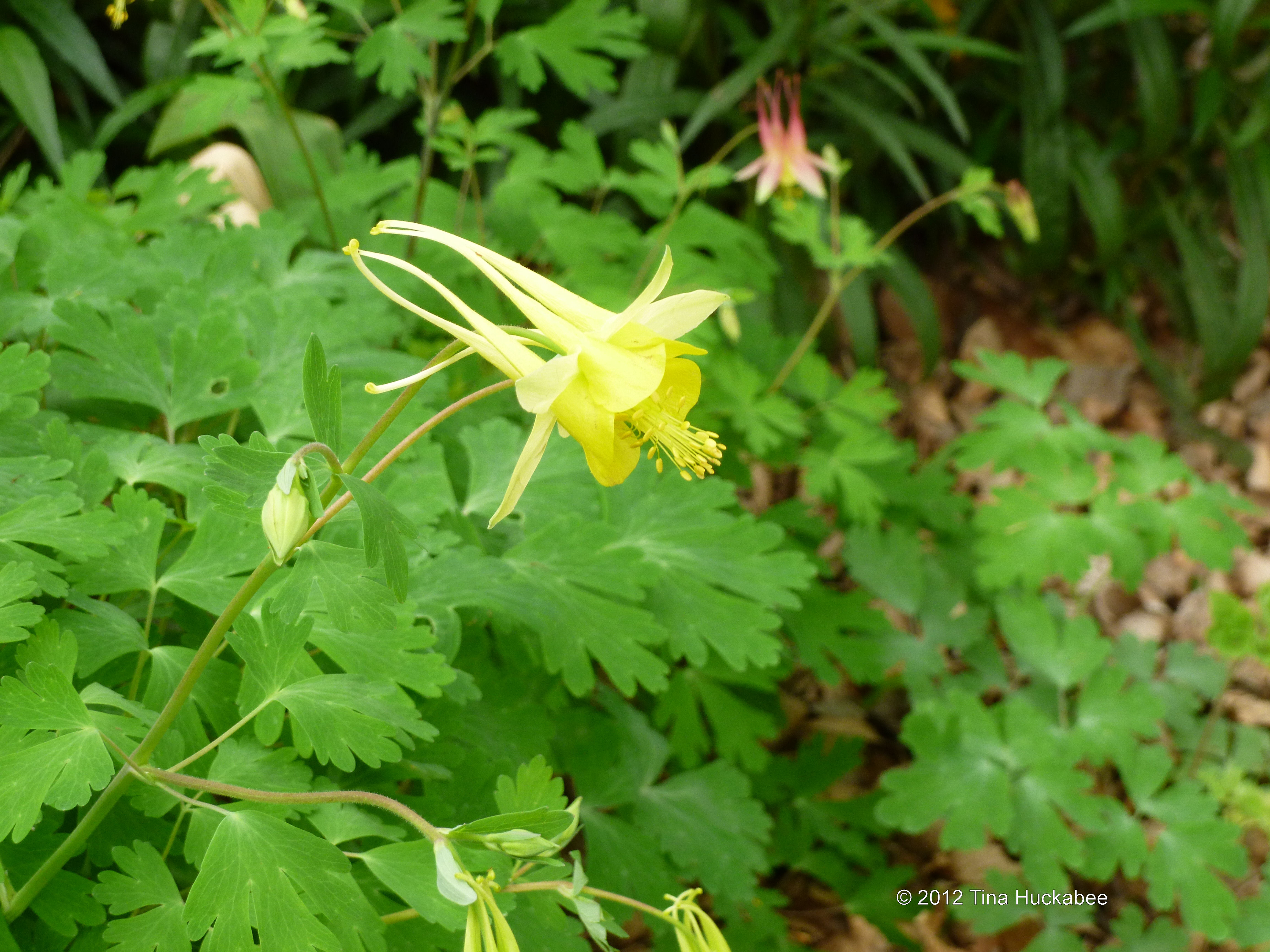
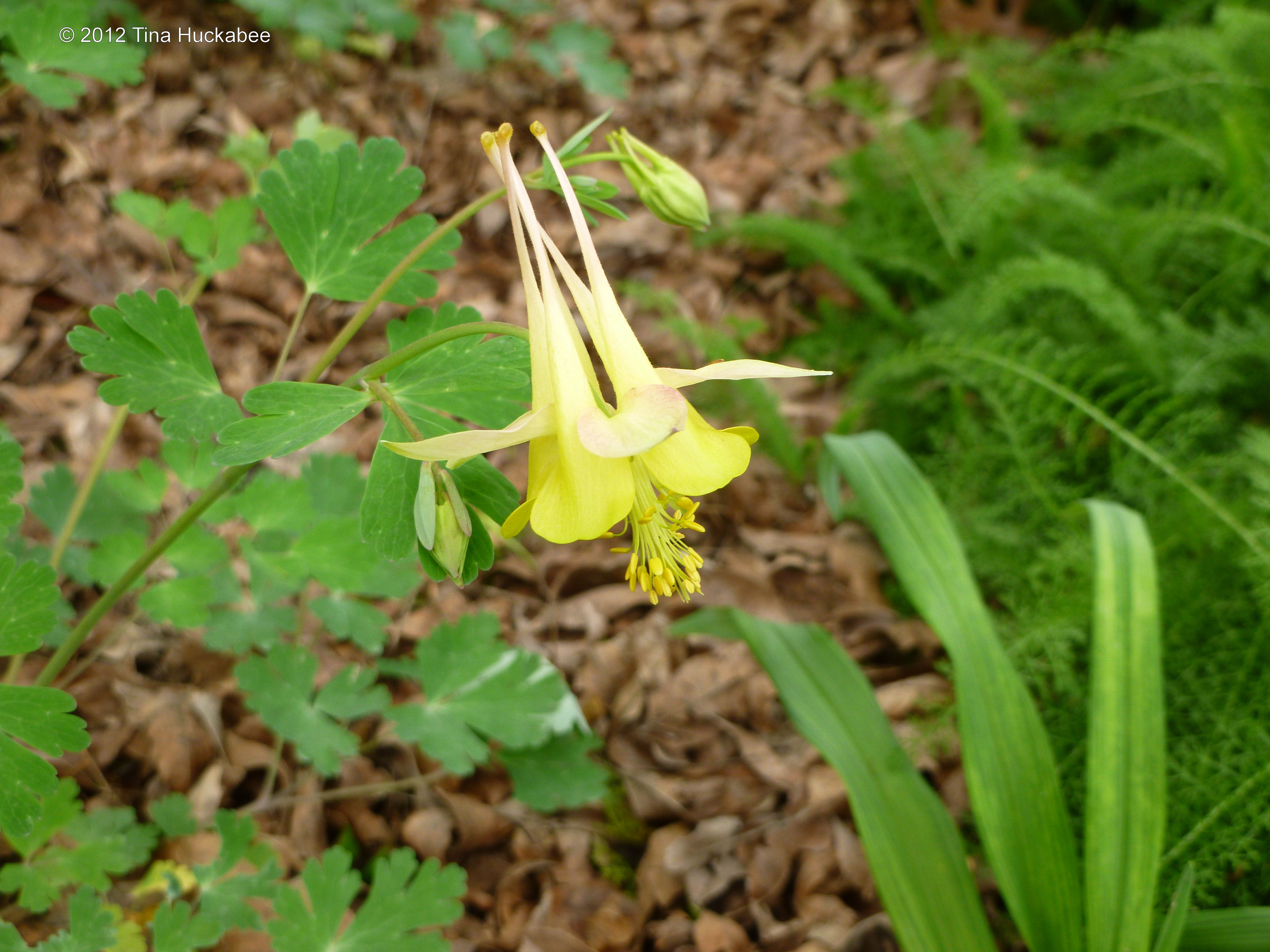
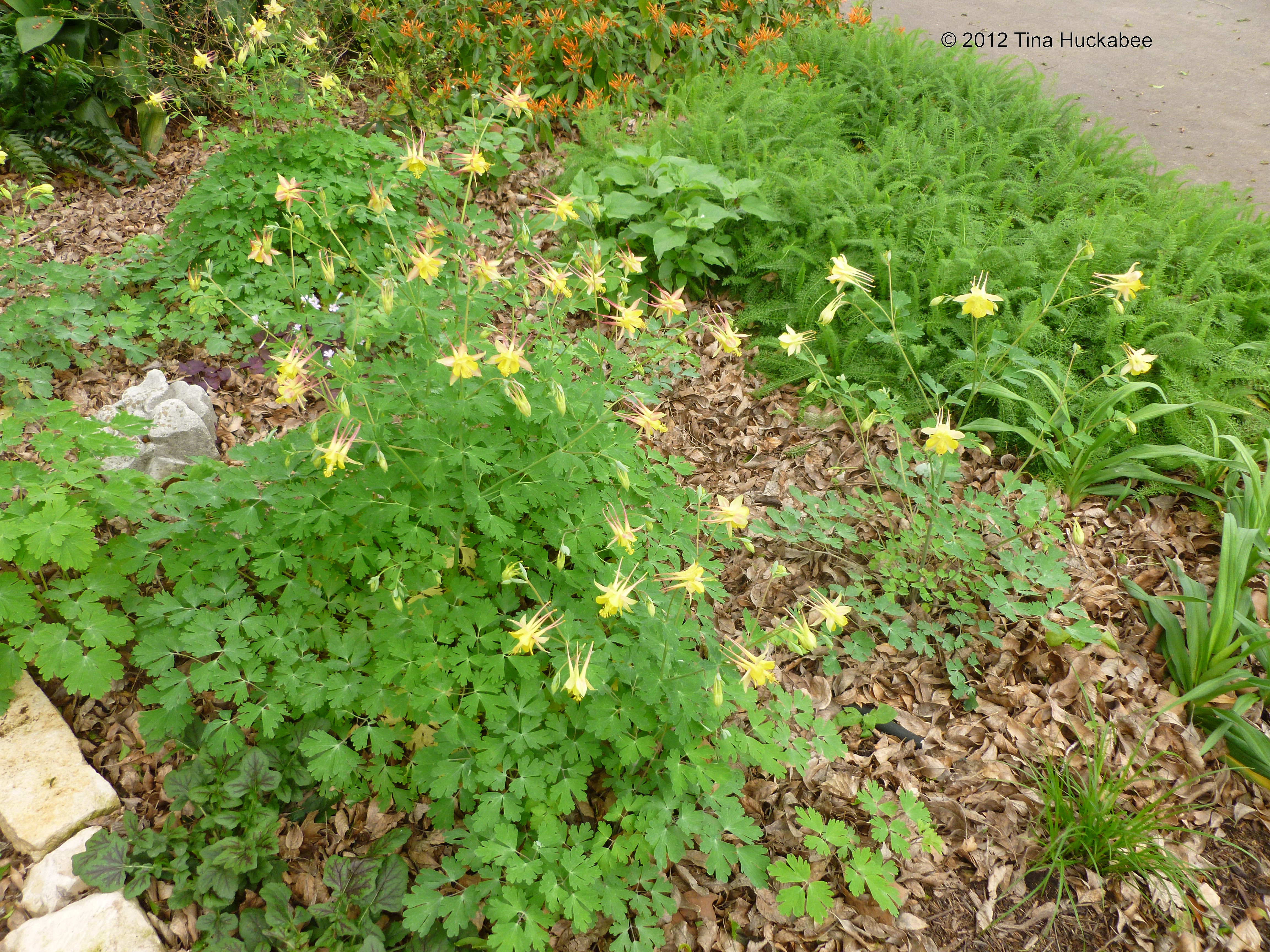
My neighbor thinks that Columbines look like fairies in flight.

Me?  I’ve always thought that Columbines look like shooting stars.

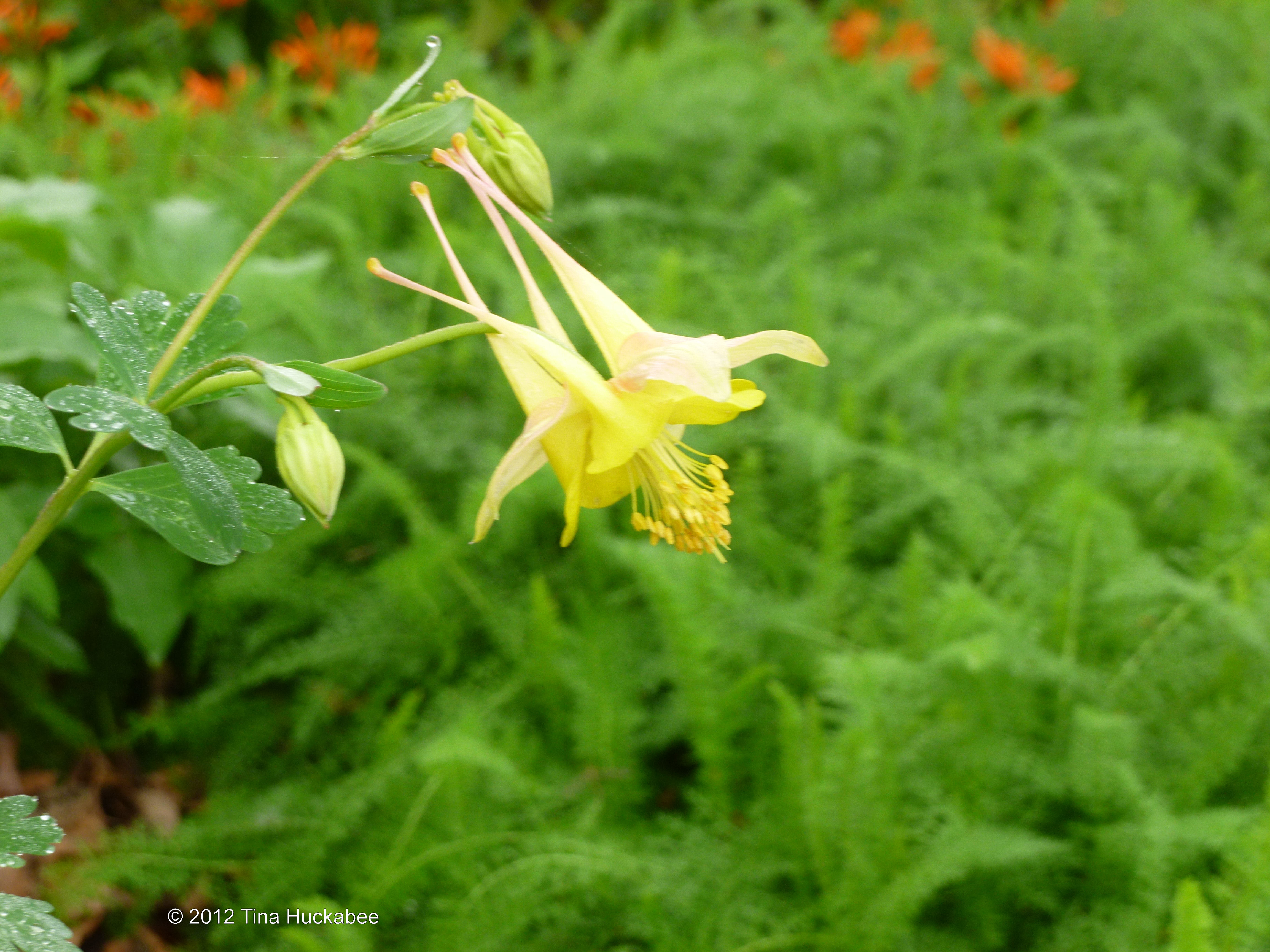
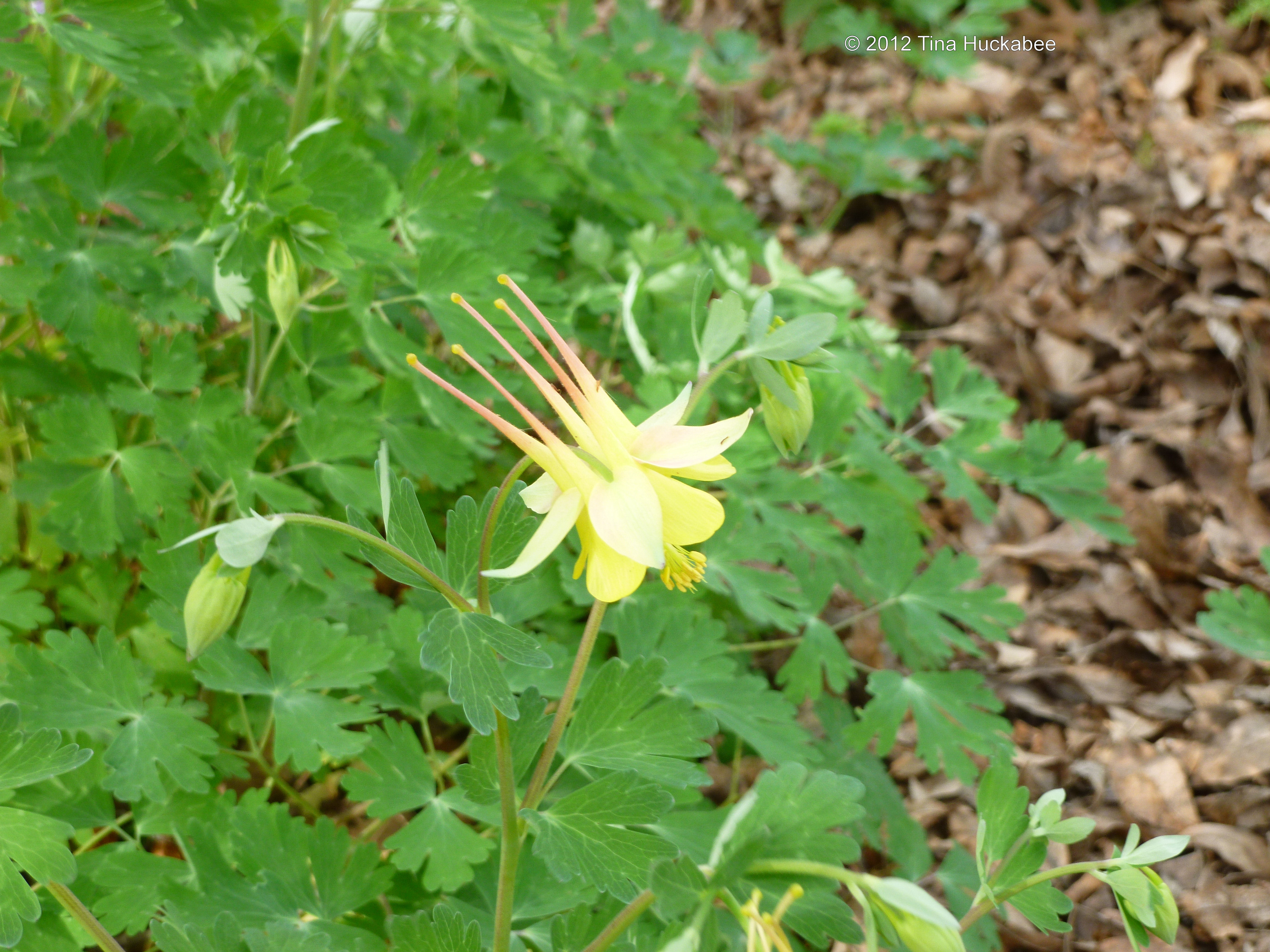
According to information about Columbines from the Lady Bird Johnson Wildflower plant database pages, the  Aquilegia (genus) name comes from the Latin aquila, which means eagle.  Apparently some people think the spurred petals look like eagle talons.  Another of the database pages describes the etymology of the word ‘columbine’ as derived from the Latin word columbinus, which means dove. The story is that the columbine resembles a group of doves.  The long spurs are the birds’ heads and shoulders, the sepals are the wings, the petals are the birds’ bodies.  I must say, I’m not quite sure I see that one.

Whatever whimsical, folksy story that gardeners choose to tell describing the Columbine, this is a must-have plant in the shady, xeric garden.

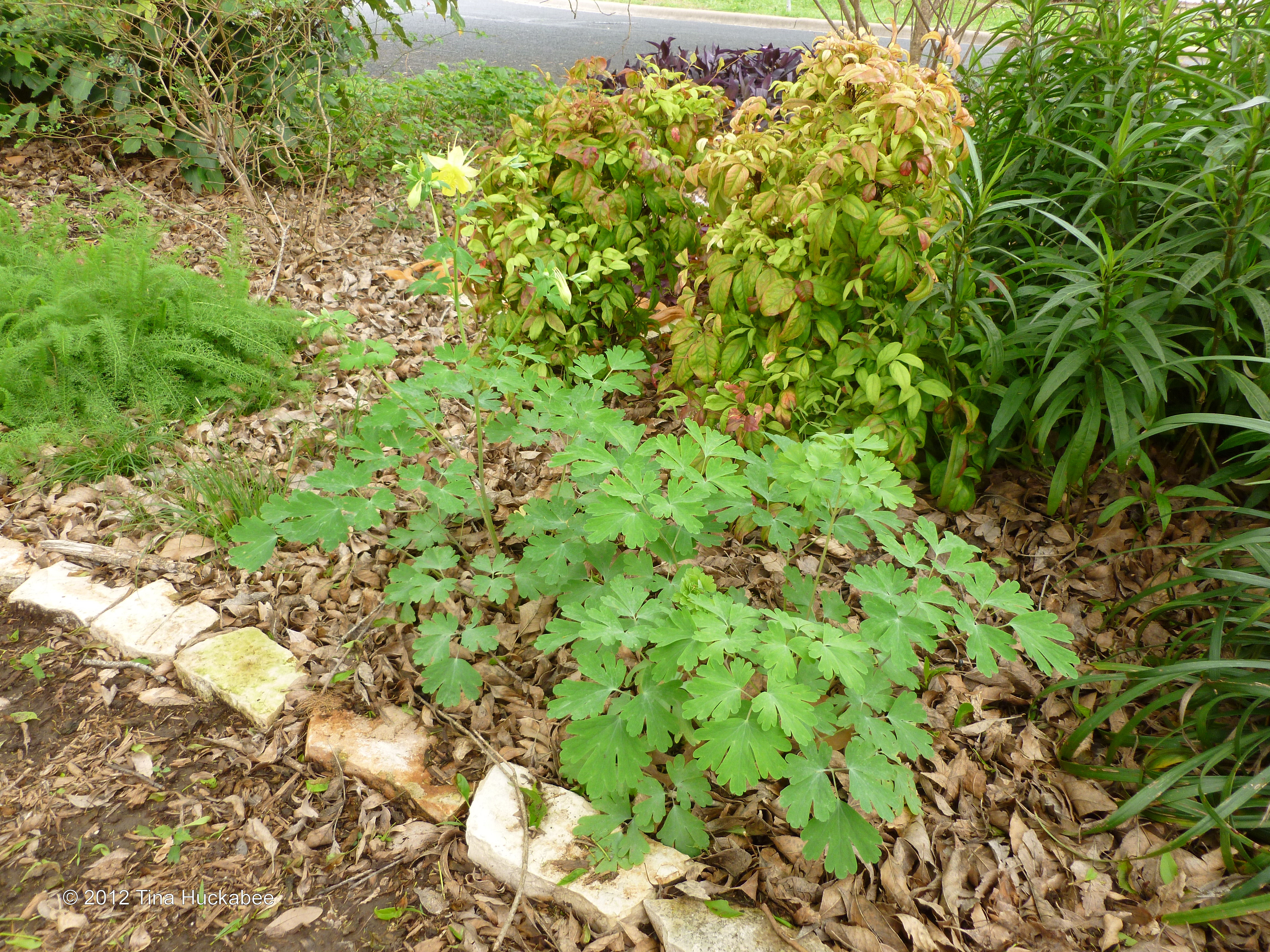
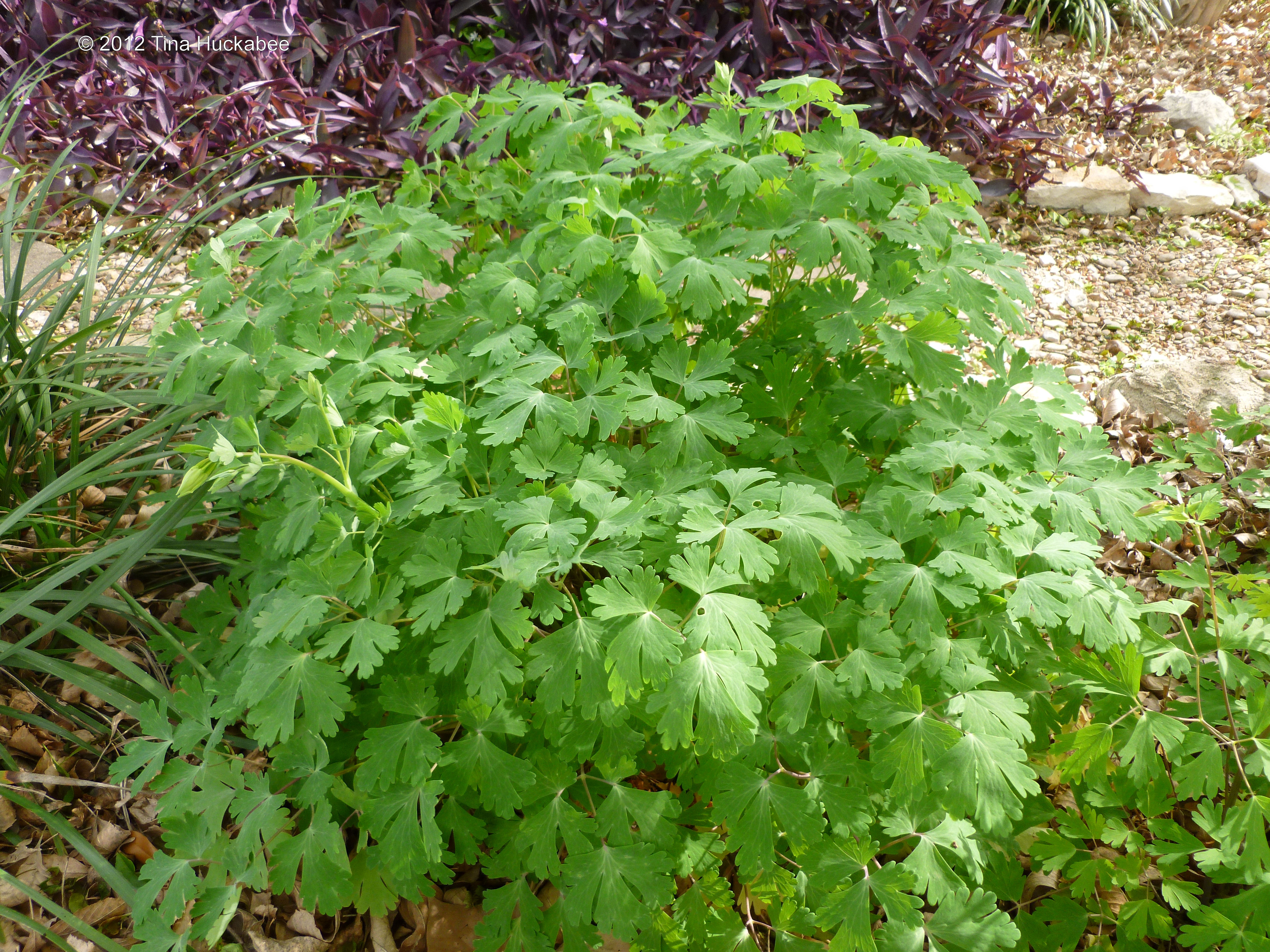
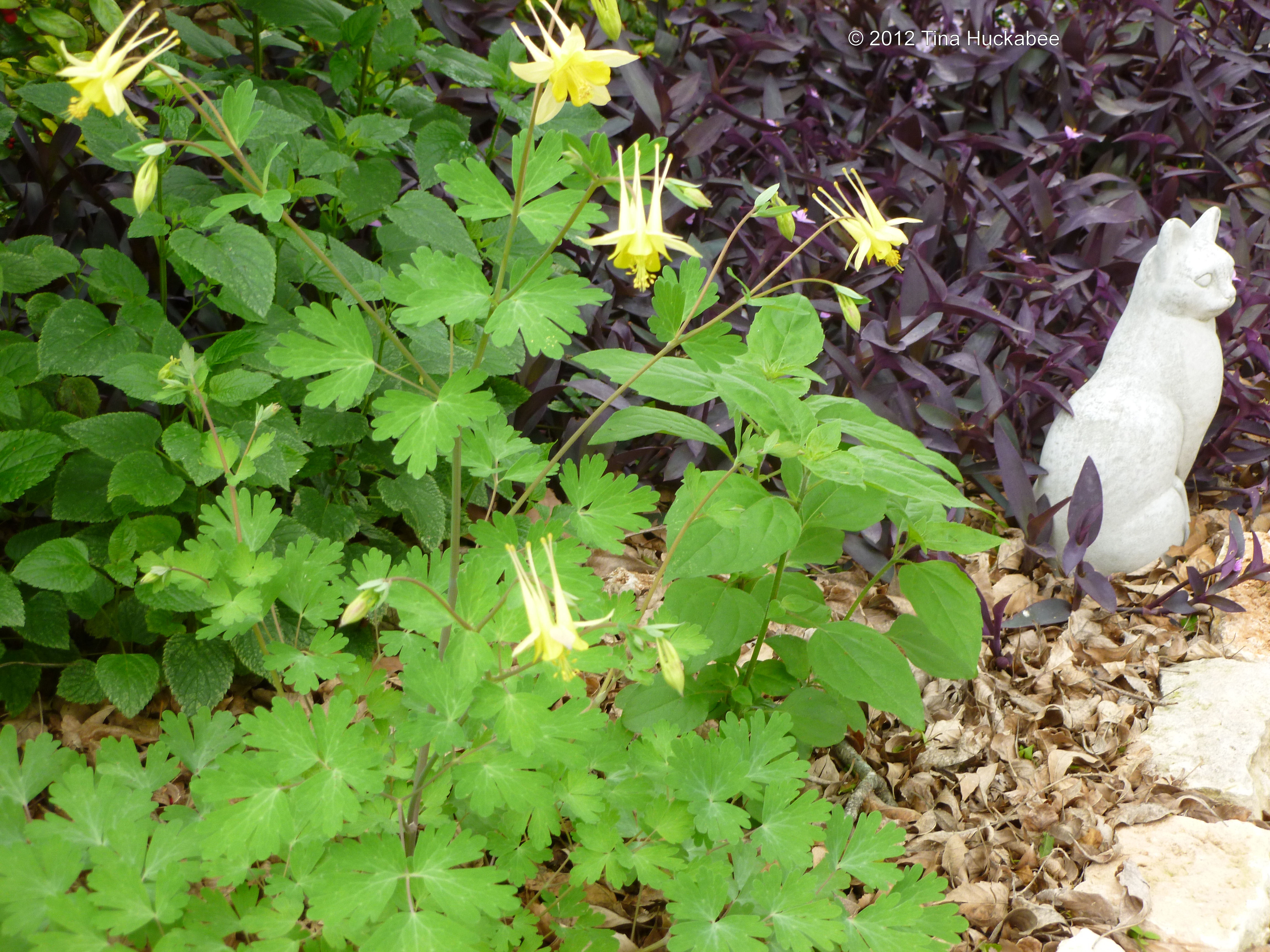
Columbines are native in many parts of the United States. In general though, Columbines are shade loving, cool season perennials. The common Texas Columbines are the yellow and red flowering plants.  These  perennials have beautiful, evergreen foliage,

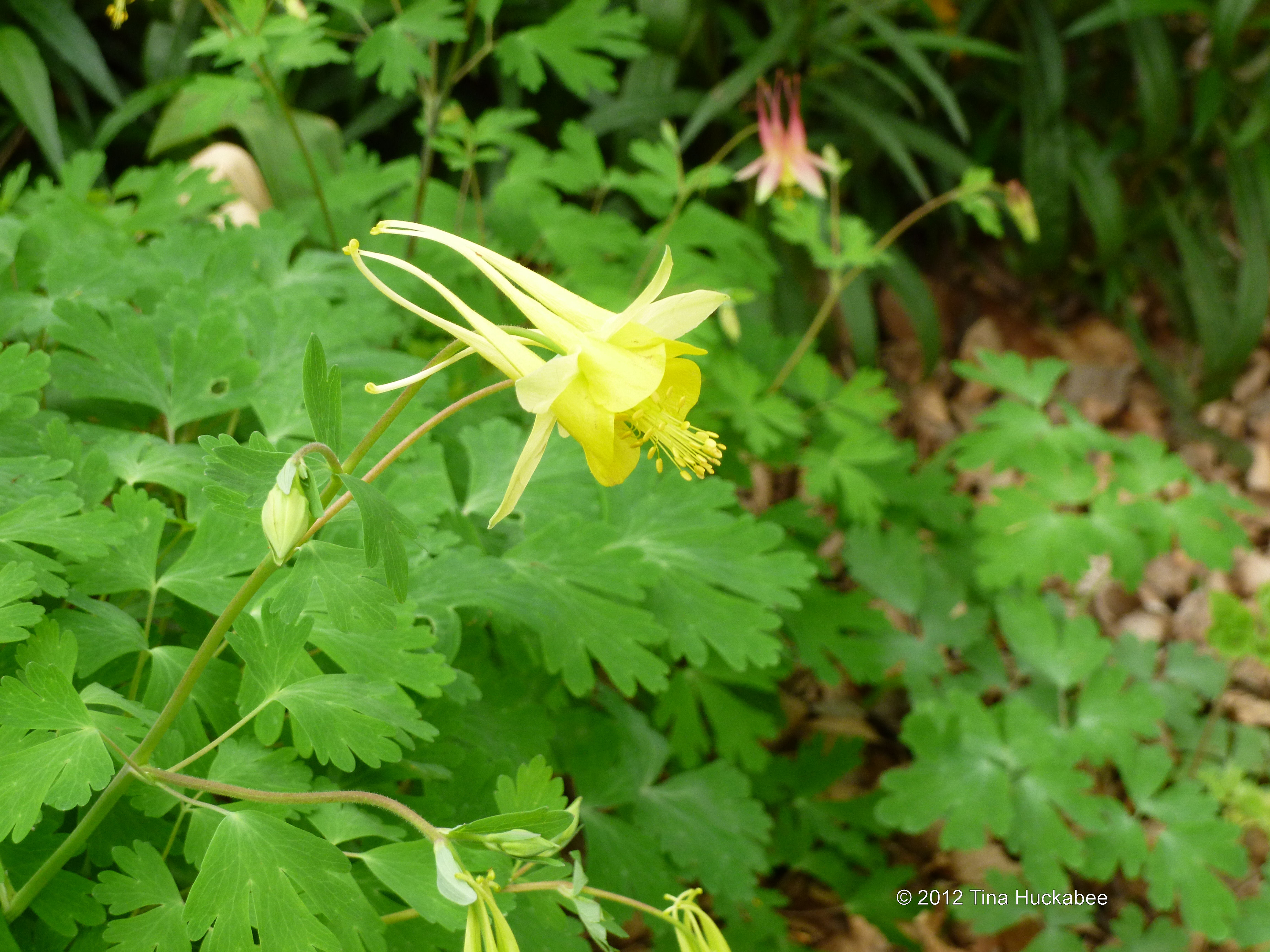
and stunning flowers in the spring.

Columbines provide (for me anyway) great joy and  have always represented the beginning of spring here in Austin.  When I first started growing Columbines in my garden, they would reliably begin their spring bloom cycle  the second week of March–roughly during Spring Break.  I usually could dead-head them (until I grew weary of that chore) and they’d bloom until early to mid-June.  During this past decade, my Columbines have started to bloom two to three weeks earlier–now usually beginning in late February.   It’s now too hot by mid-June for them to bloom.

During the summer months, they tend to shrink in size (even as small as 4-5 inches in diameter) and sometimes, individual plants will go dormant.   Then, as soon as the fall rains begin, cooler temperatures arrive and the days grow short, they perk up.  Columbines have beautiful winter foliage; the leaves are deeply lobed and bright green.

They  look so delicate, but I’ve seen them covered in ice and once the ices melts, they’re  perfectly fine and maybe even blooming within a few days.

Columbines in the wild are identified by species characteristics and often are endemic to a  specific geographic area.  But those bought in nurseries are cultivars and are bred and sold for their showy blooms and hardiness. The common Columbine that many Texas gardeners buy at nurseries is the Yellow or Hinckley Columbine, or more than likely, a hybrid of those two and perhaps others.  Columbines (even those in the wild) will hybridize easily between species.

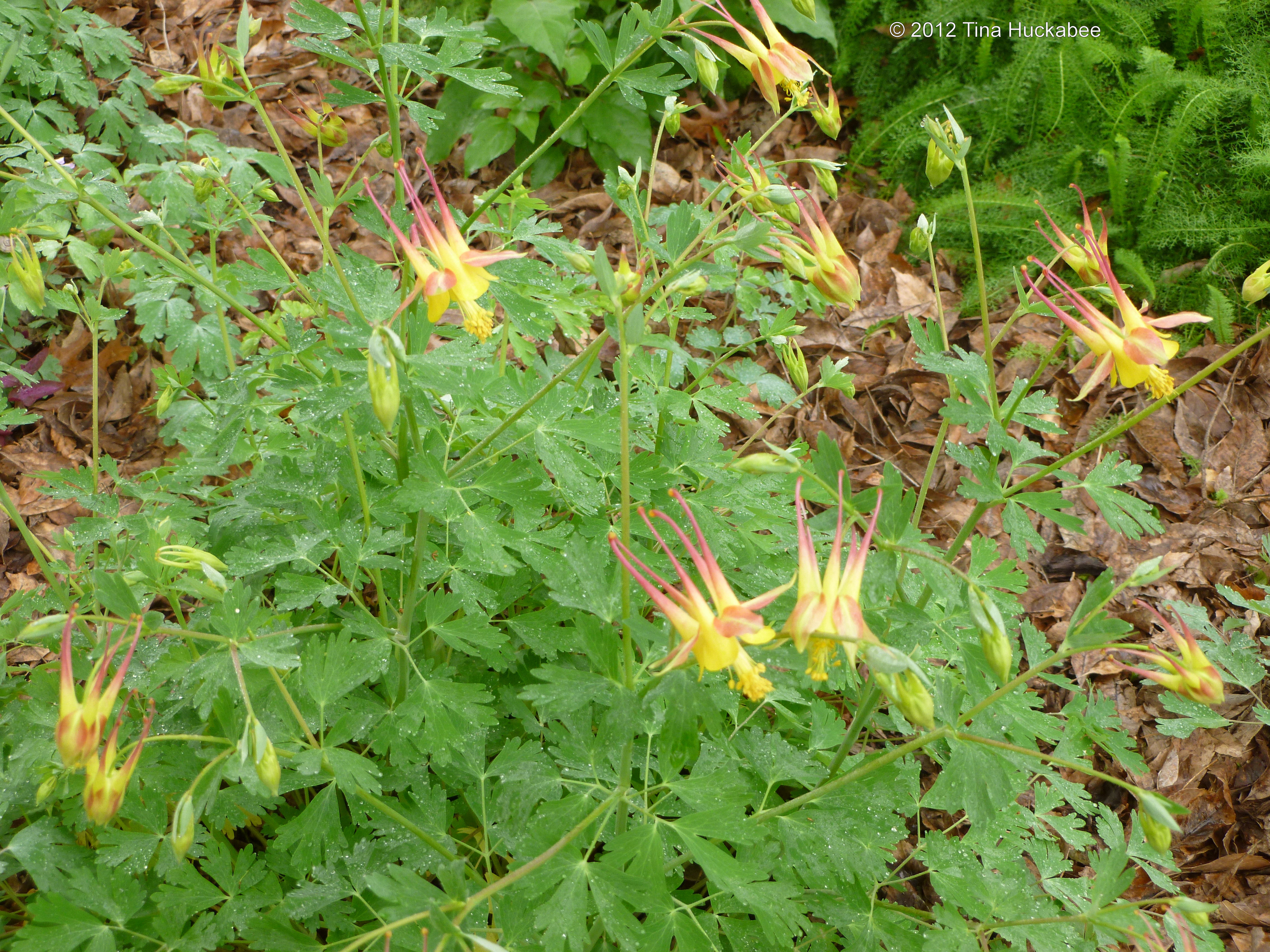
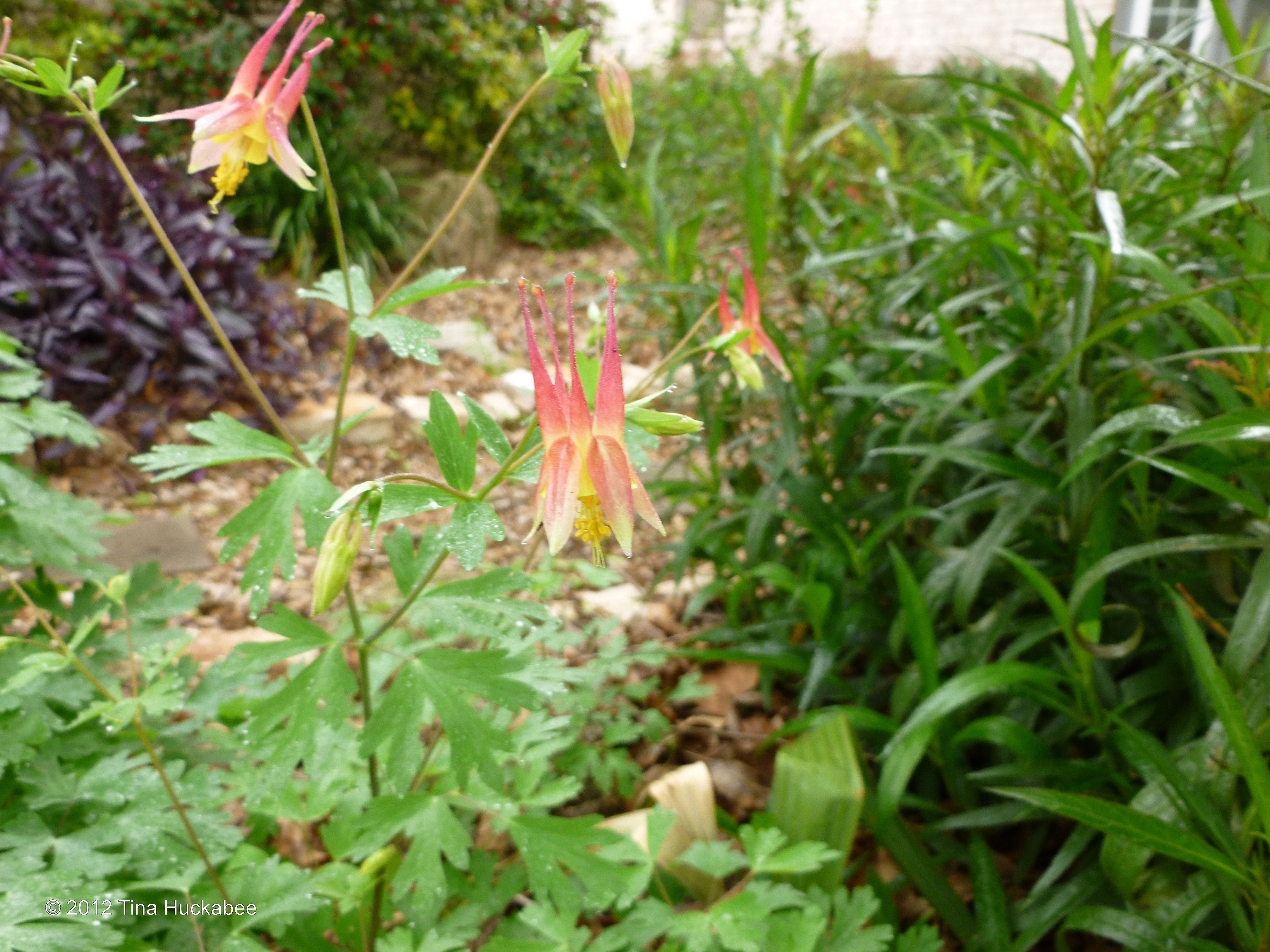
Years ago, I bought several “yellow” Columbines (I have no clue what the tag actually called it), although they were probably  A. chrysantha var. hinckleyana, or a variant thereof.  Sometime later, I added to my gardens the Red Columbine (Aquilegia canadensis), also native to Texas.

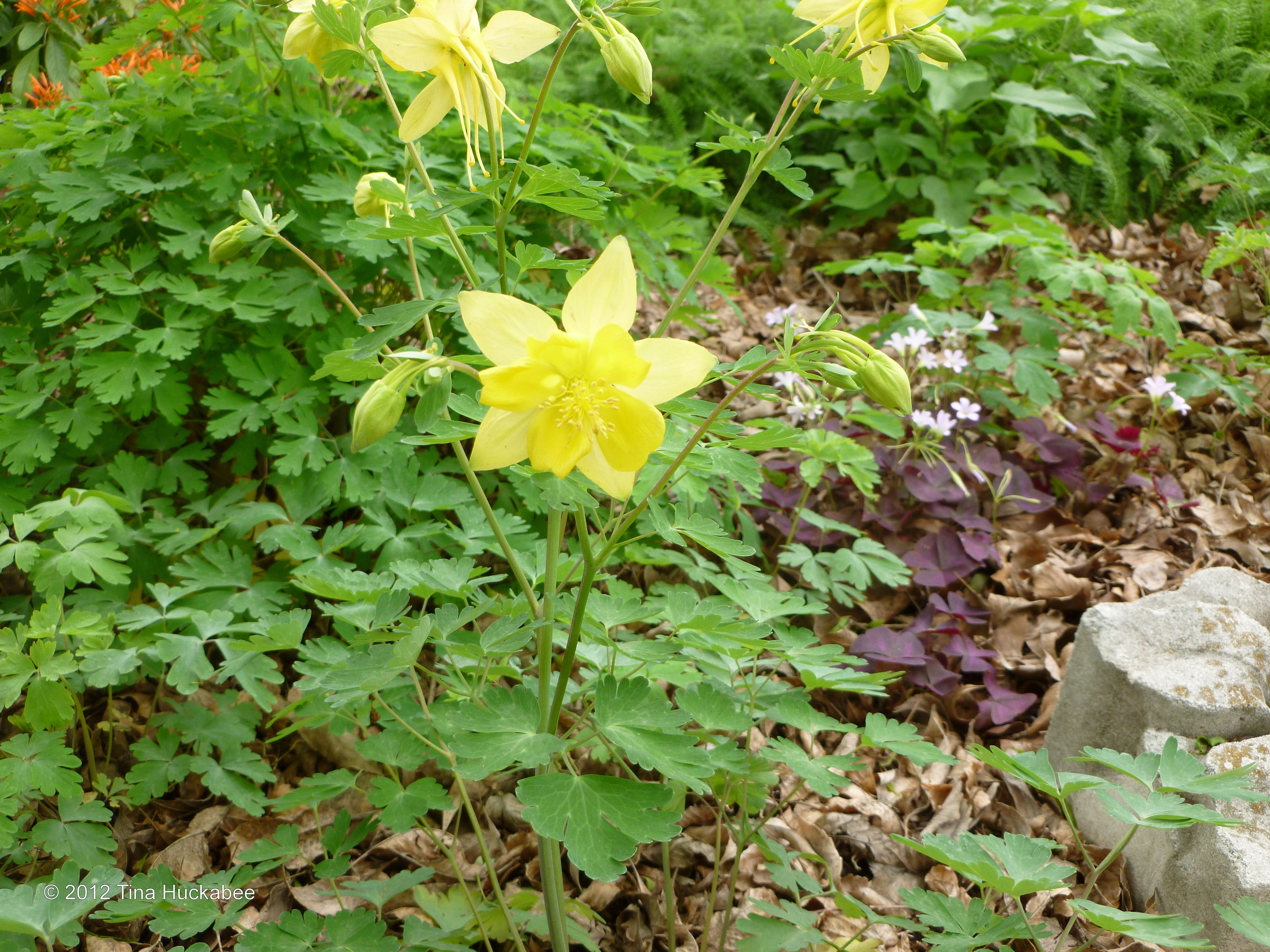
Over the years, they’ve re-seeded and I now have a variety of hybrids–yellow flowers of differing sizes with a  pink blush on the spurs, petals or sepals.

I still have a couple of pure yellow Columbines,

and a Red Columbine (A. canadensis).  The Red Columbine is the host plant for the Columbine Duskywing butterfly.

Columbines are easy to grow in Central Texas.  They are reportedly deer resistant  and are most beautiful during the cooler time of year (October-May), reaching the zenith of their beauty in March and April.  I’ve seen them grow in a variety of soil conditions, but Columbines prefer a moderately moist, well-draining soil.   Columbines are considered a drought tolerant perennial and in my personal gardens, I  don’t water these plants more than twice per month in our dry, hot summers.  During the summer of 2011, which was record-breaking hot and dry, my Columbines limped along.  I don’t believe that any died but they definitely struggled with the heat.  Most of mine also suffered leaf burn, too.  While that’s not unusual for Columbines in Texas heat, I noticed more damage after last summer.

I simply pruned the damaged leaves and by October, they began to revive and develop new foliage and begin their march toward spring beauty.

Interestingly, in October 2011, I also noticed that there were several blooms on my Columbines.  I’ve never seen that before, although I’ve read that Columbines will “rarely” bloom in the fall.  I assume the blooms were a response to the rain that began after our exceptional drought and heat of the past year.

The only problem I’ve ever experienced with Columbines is that they sometimes develop leaf mites.  The mites appear  at the end of spring and end of the bloom cycle.  An infestation can be diagnosed when the leaves begin to develop an unhealthy looking yellow, with some leaf mottling.  If you turn a leaf over, you can spot the culprits–tiny little spider-like critters.  I’ve only had to spritz mine with a blast of water from the hose (under the leaf) and generally, that takes care of the infestation.  It’s a good idea though, to prune off the damaged leaves.  The plant will generate new ones and soon, the Columbine is back to full health.  That said, it’s been a long time since I’ve had that problem with any Columbines that I grow.

Columbines are a short-lived perennial (4 or 5 years, usually), so let them re-seed from parent plants and you’ll always have some around.

If you have shade and you want a hardy and beautiful blooming perennial, try planting Columbine.  Here in Texas, stick with the Yellow or Red Columbines and you won’t be disappointed.  For a complete tutorial on Columbines, check out the NPIN Database Page on the Lady Bird Johnson Wildflower website.  Just type in “aquilegia” or “columbine” and hit go.The window will appear with a long list of this perennial, you can click on the one(s) you’re interested in and read away!

And then, invite some fairies and shooting stars and doves to your garden.