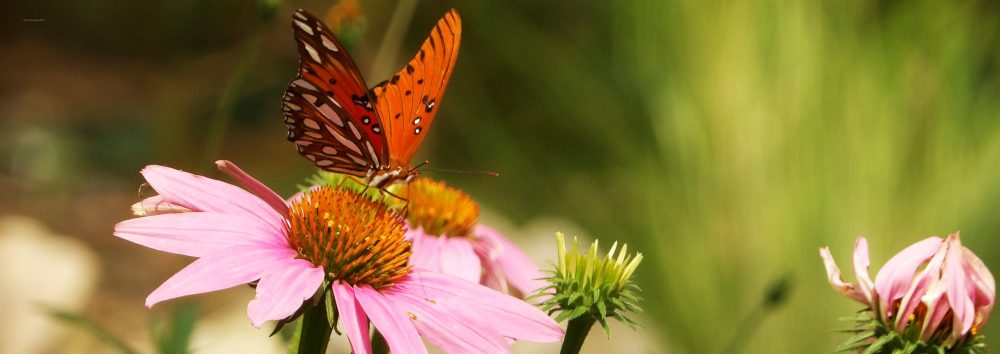
Foliage Follow-Up, November 2014: The Non-Freeze

My gardens are slowing down in preparation for winter, but haven’t experience the frosty nip that was promised earlier in the week. Thank goodness!  I’m not quite ready to give in to the dark season.  Not Just Yet.

Focusing on mid-November foliage, I’m joining with Pam at Digging for Foliage Follow-Up.

In one corner of my garden with dappled light most of the day and some direct sun off and on, are a couple of favorite foliage vignettes.  One such is of Iris straps, Blue Mistflower, Conoclinium coelestinum,  and cobalt-blue containerized succulent Ghost Plant, Graptopetalum paraguayense.

IMGP1798.new

Planted alongside that mix are several  Dianella or Variegated Flax Lily, Dianella tasmanica ‘Variegata’. IMGP1865.new
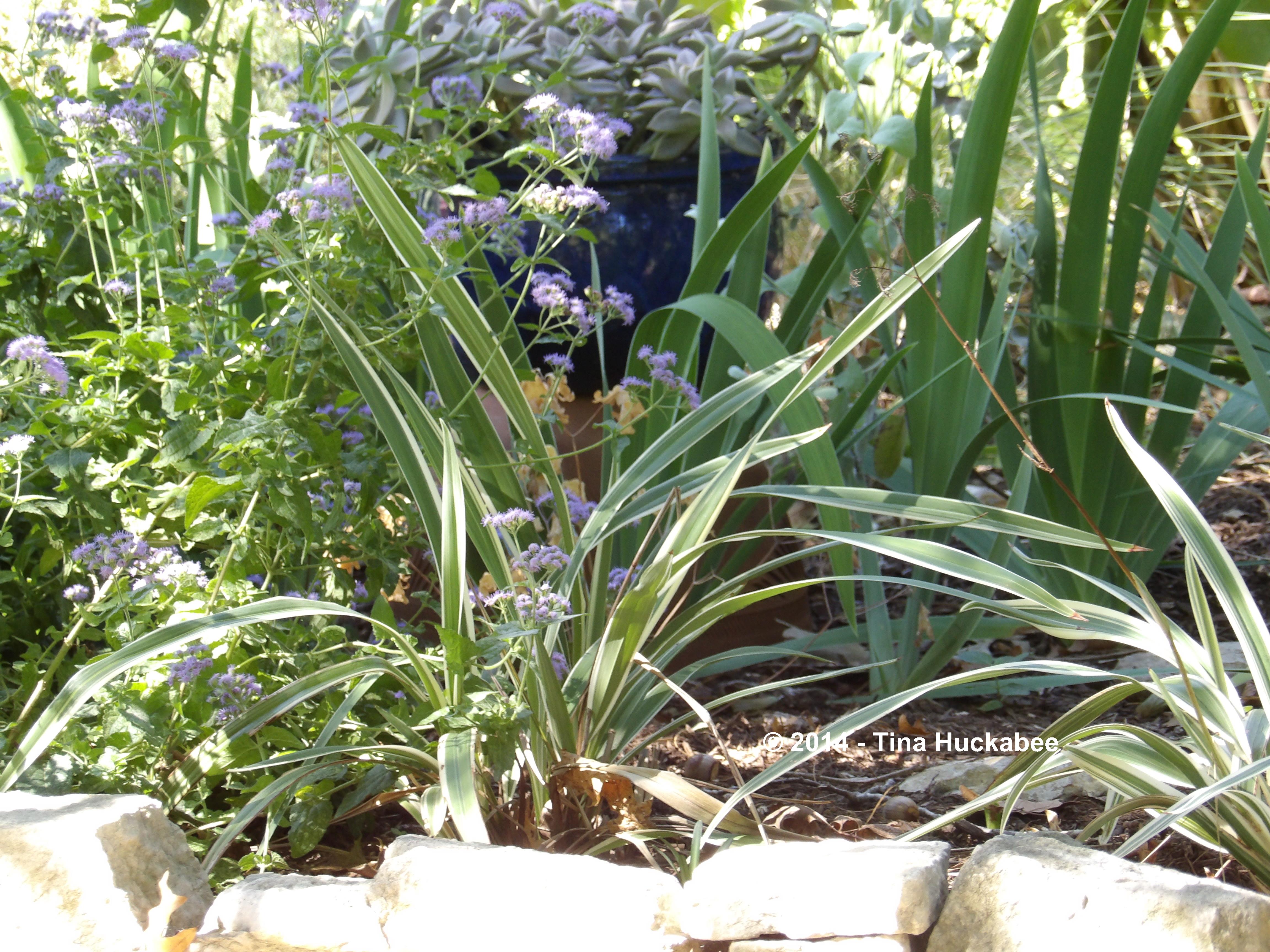
I love the wide, grass-like foliage of Dianella with its snazzy white stripes down the sides.IMGP2017.new

When a freeze was predicted this week, I covered the Dianella, though my concerns were unwarranted.  Last winter, I covered all of my Dianella each time the temperature sank into the ’20s, especially for extended periods. They soldiered through winter like the garden champs they are and thrived in our long, hot summer. Dianella nicely combine with Iris and Soft-leaf Yucca straps,IMGP1864.new

…as well as with these snuggly Love-Critters.
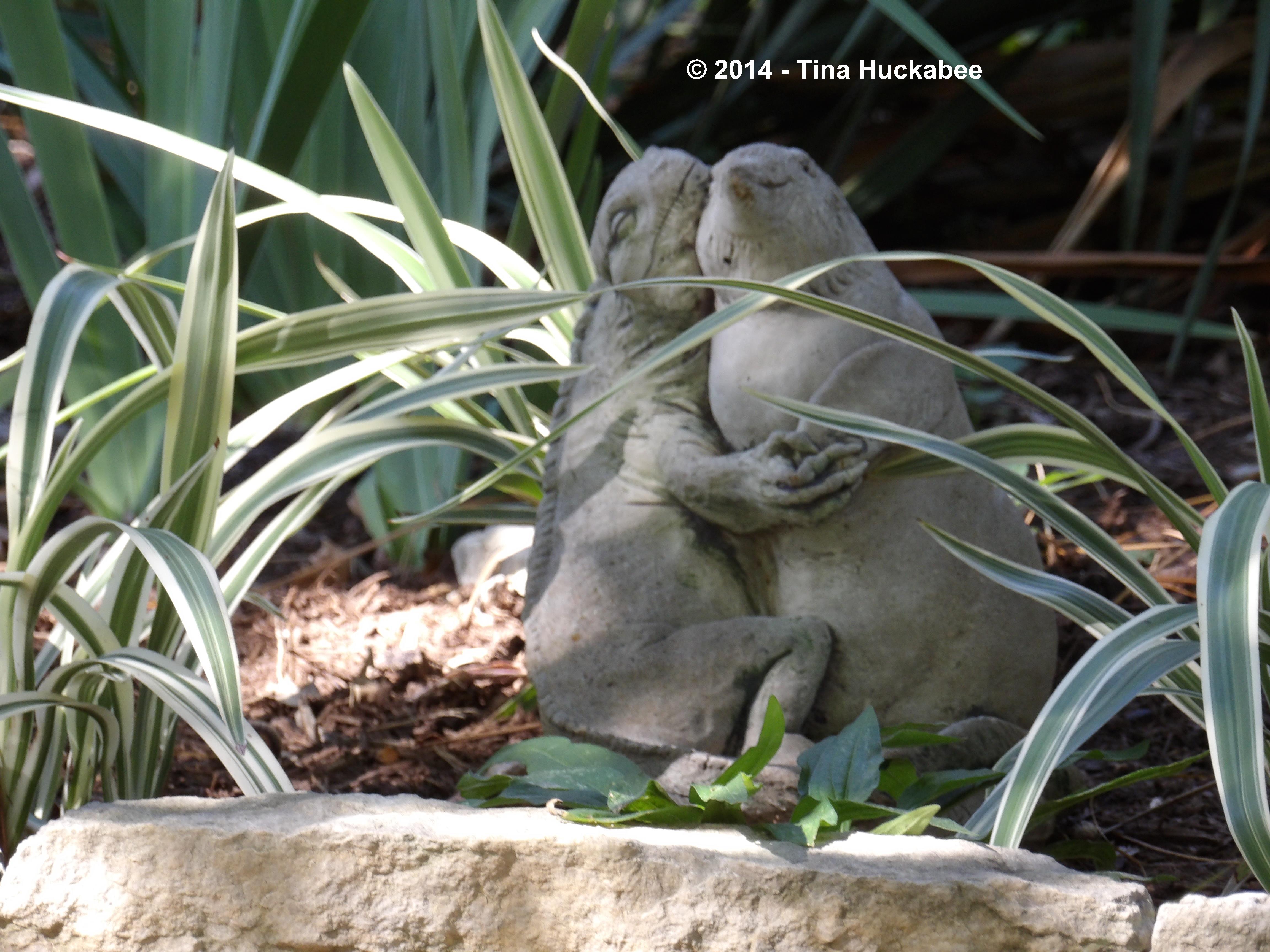
IMGP1862.new

Ghost Plant is unkillable:  it goes for months without water, isn’t fazed by freezes (or at least mine haven’t been), can re-grow if a stem is broken.

IMGP2642.new

My kinda plant.

Maiden Grass, Miscanthus sinensis ‘Adagio’ is in its glory now.IMGP1868.new

IMGP1870.new

IMGP1872.new

The beautiful seed heads reflect the sun as it briefly peeked through our mostly cloudy week.

Toasty-seeded Inland Sea Oats, Chasmanthium latifolium and the green swath of Cast Iron Plant,  Aspidistra elatior are a striking pair.

IMGP1881.new

Added to this scene is Purple Heart, Setcreasea pallida, which dramatizes that story a bit.

IMGP1882.new

Big Muhly, Muhlenbergia lindheimeri and Soft-leaf Yucca, Yucca recurvifolia  are cool weather troopers.IMGP2399.new

Graceful while also lending structure to the garden, these two are beautiful companions throughout the year, hot or cold.

IMGP2518.new

I took this photo of  evergreen Yarrow, Achillea millefolium and Chile Pequin, Capsicum annuum var. glabriusculum,  just before what was supposed to be a freezing night.  I figured the fruits wouldn’t survive the plunging temperatures and wanted to record them for posterity.IMGP2529.new

I’m happy to report that the fruits are still available for dining by interested birds.

I love the twisty-curvy foliage of Corkscrew Rush, Juncus effusus spiralis, silhouetted over a pair of Mexican Feathergrass, Nassella tenuissima.

IMGP1875.new

Finally, the leaf change is beginning on my Red Oak, Quercus coccinea.
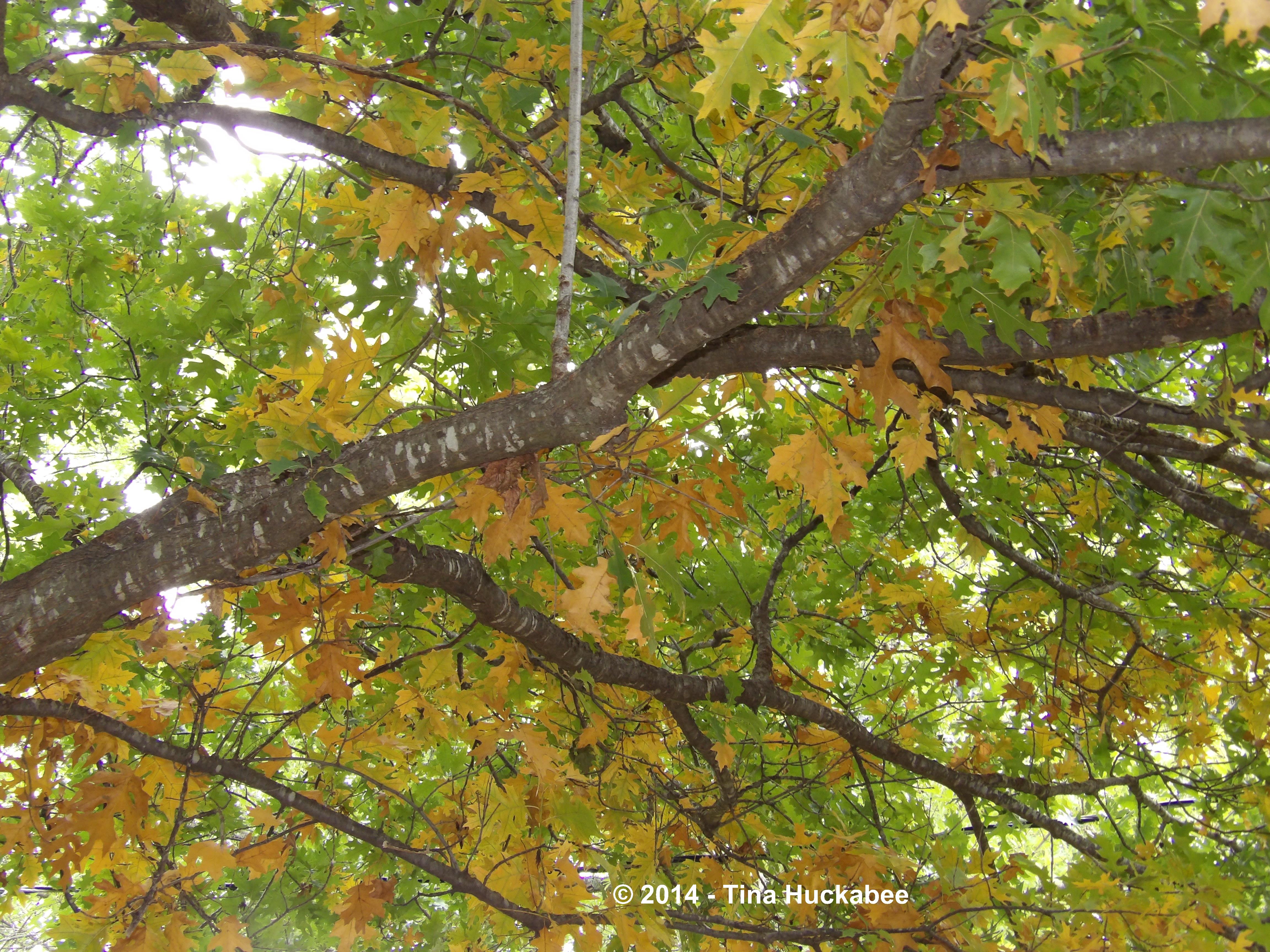
IMGP2641.new Here in Central Texas, our tree foliage color change occurs later than that of our northern kin, but beautiful and appropriate for our climate and region. There will be more of this in the weeks to come.

Digging hosts Foliage Follow-Up–drop in for a look at November foliage fanfare.

Bloom Day, November 2014–Dodged the Frozen Bullet

After a chilly week and our first real touch of winter, there are still blooms in my gardens. Lucky gardener!  Lucky pollinators!  I live in central Austin and those supposedly in the know predicted our temperature would fall to the high 20’s by early Friday morning.  Well there was no freeze for me and mine.  Outlying areas received their first freeze, but much of  Austin was spared–this time. To celebrate those lucky blooms, I’m joining with Carol at May Dreams Gardens for November Garden Blogger blooms.

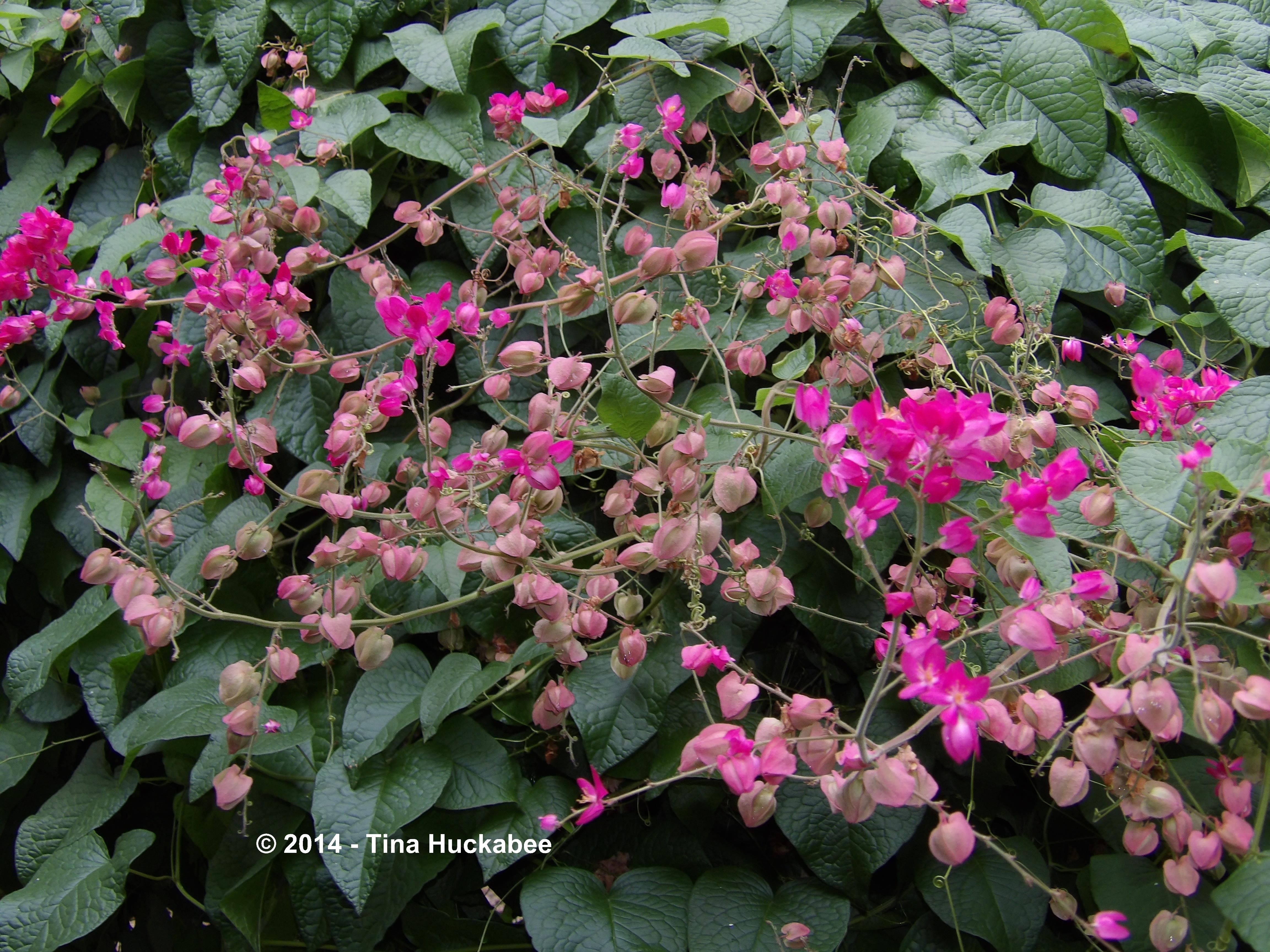
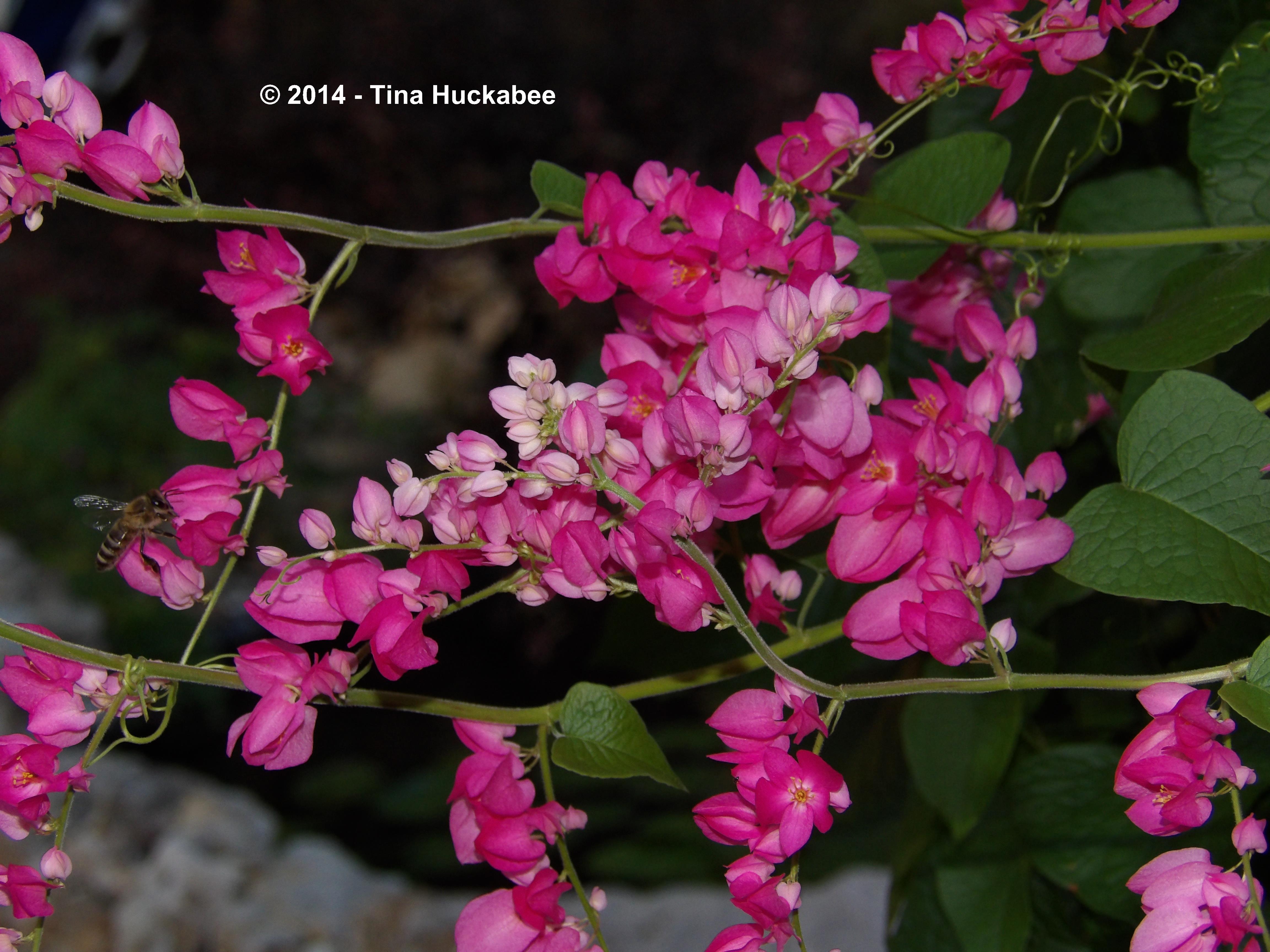
The Coral Vine, Antigonon leptopus, bloomed its signature fuchsia necklace  rather late this year.

IMGP1604.new

Now with colder temperatures and shorter days, the blossoms are fading on the vine.IMGP2341.new

I think my honeybees will miss this favorite nectar source.

The native Texas Craglily, Echeandia texensis,  still blooms, IMGP1507.new

IMGP2343.new

IMGP2344.new

…though it’s going to seed. One patch blossoms in tandem with the blue Henry Duelberg Sage, Salvia farinacea,’Henry Duelberg’.

IMGP1978.new

A freeze would have quickly ended that pretty pairing.

Rock Rose, Pavonia lasiopetala, sports flowers this November and that’s unusual–they normally stop production by late October.IMGP2383.new

IMGP2362.new

IMGP2360.new

Heavy with seed, I’ll expect more of these lovelies in seedling form next year.  Any takers?

And Goldeneye, Viguiera dentata?  It just won’t quit.  This most photogenic of flowers, has bloomed since September.

IMGP2379.new IMGP2381.new

This is one of my two last blooming Goldeneye plants.

IMGP2531.new

The Goldeneye plants in the back garden bloomed first, then set seed and were followed by others throughout my gardens, each individual plant taking turn at adding cheeriness and wildlife goodness to the world.  I’m glad these hardy natives have planted themselves all over my gardens.  Bees, butterflies, birds, as well as this gardener, enjoy and appreciate a long season with these pretties.

IMGP2387.new

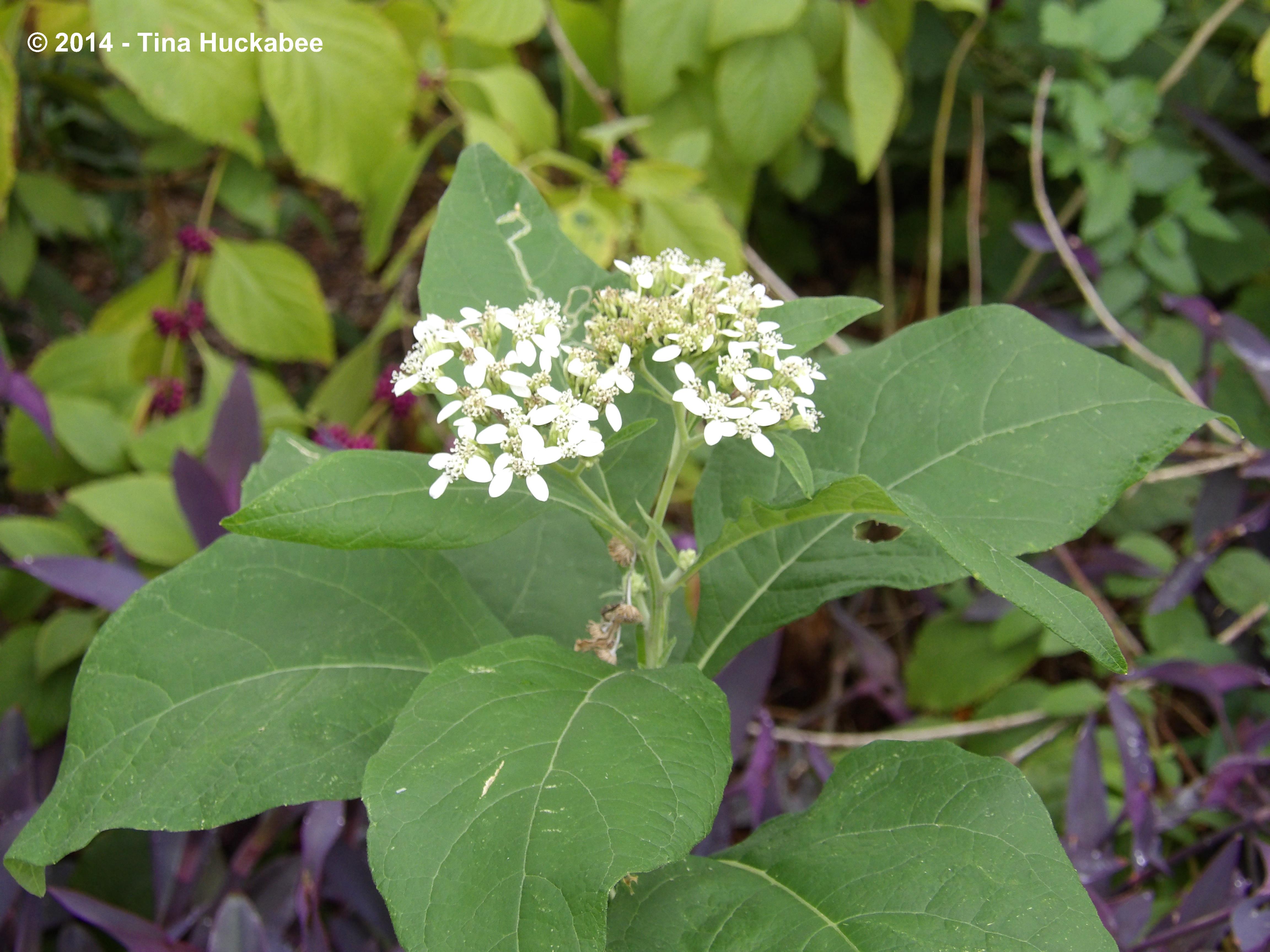
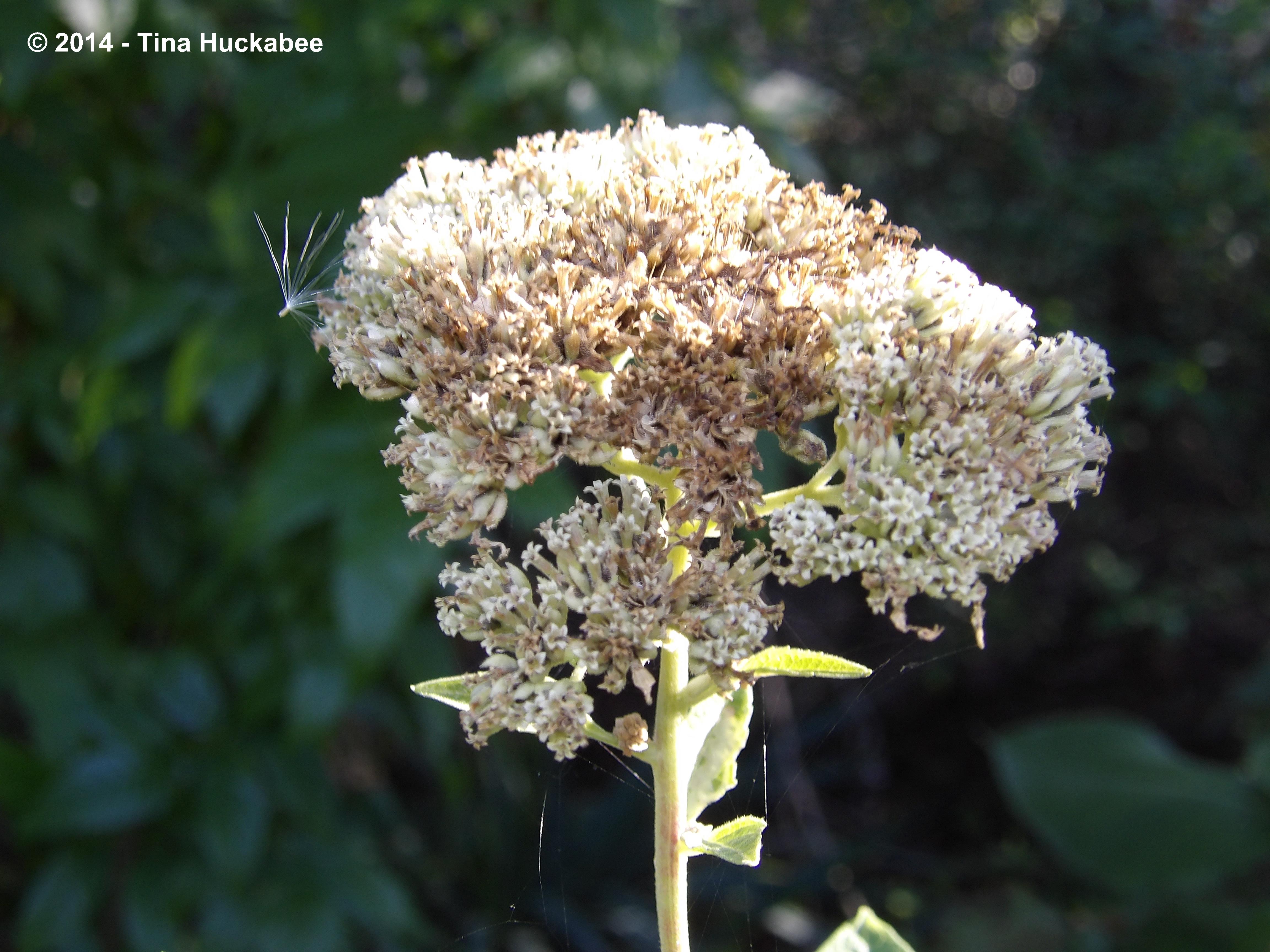
The last Frostweed, Verbesina virginica, is in flowering mode.

IMGP2384.new

While most of that species are setting seed.

IMGP2469.new

A few Turk’s Cap, Malvaviscus arboreus, still bloom.

IMGP2394.new

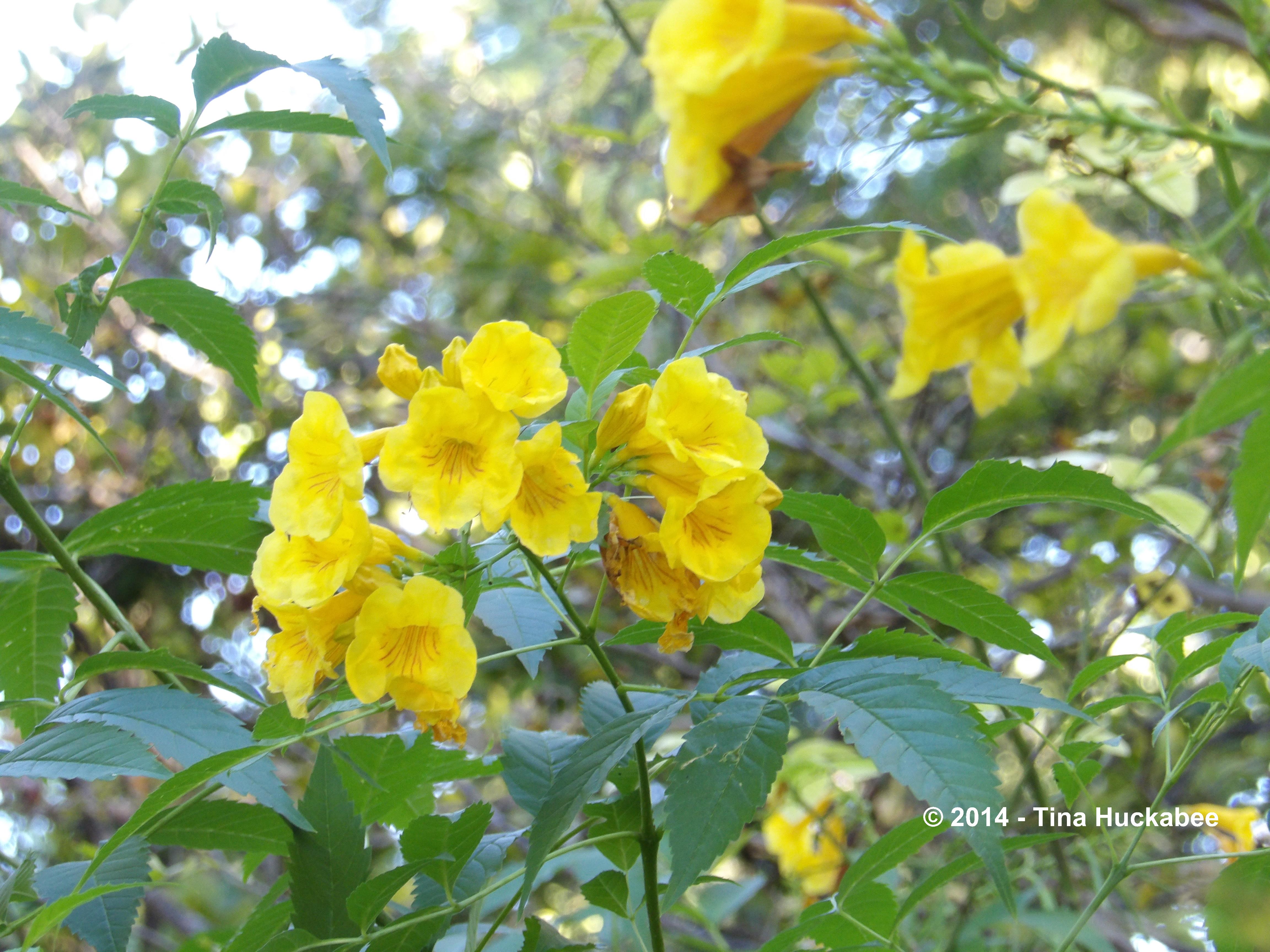
Yellow Bells, Tecoma stans, ‘Esperanza’, are available for passing bees and butterflies.

IMGP2467.new IMGP2471.new

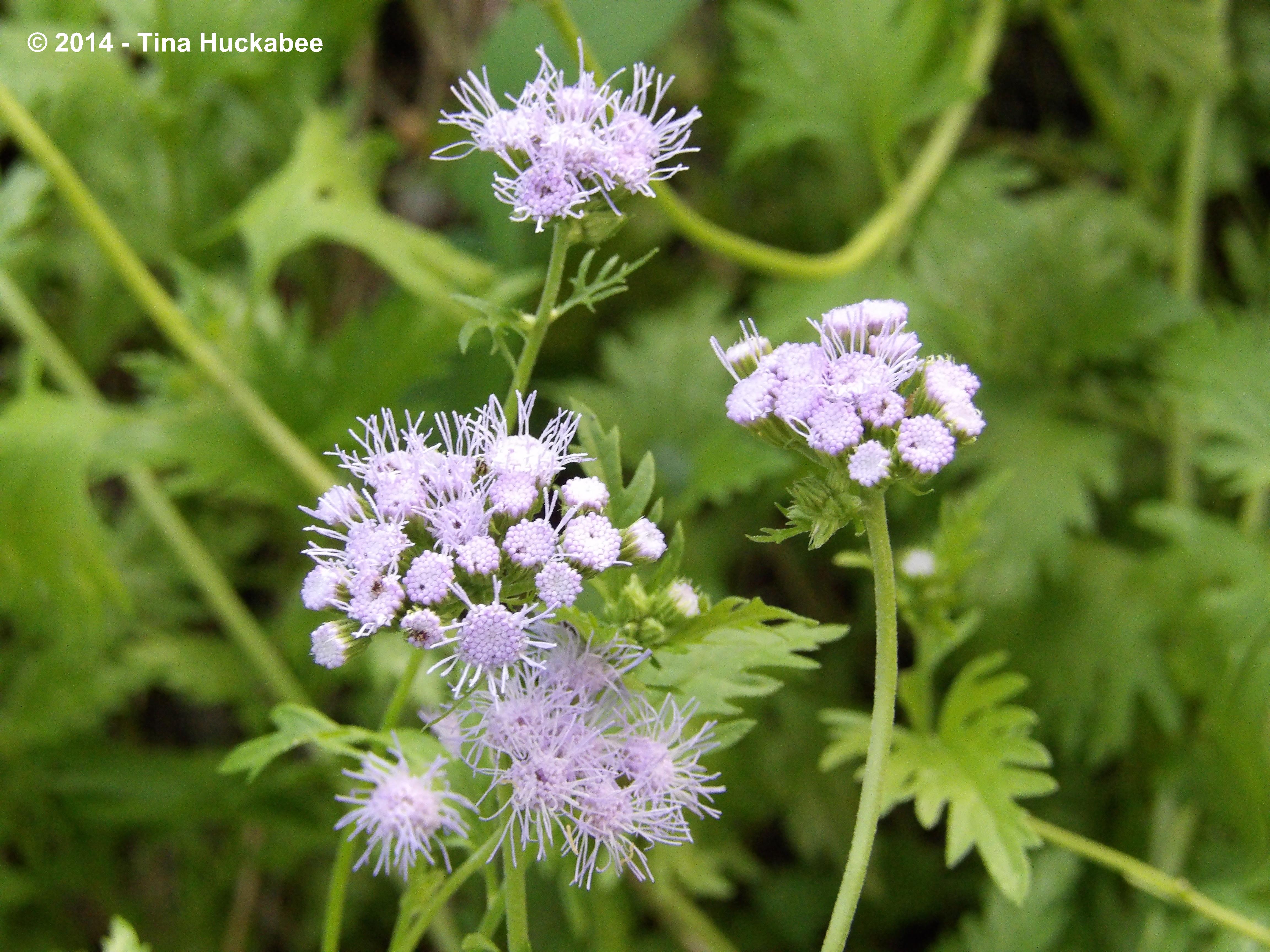
Blue Mistflower, Conoclinium coelestinum,

IMGP1475.new

and Gregg’s Mistflower, Conoclinium greggii, 

IMGP1555.new

IMGP1560.new

…are toward the end of their season.  A true freeze will force the blue blooms into a tawny fluff, ready for dormancy.

Red Yucca, Hesperaloe parviflora, blossoms on its long bloom spike until a hard freeze.

IMGP2364.new

This hasn’t been a banner year for my salvia species.  They’ve bloomed, but not regularly nor as fully as usual.  But they aren’t quite ready to close up shop, so bloom they will until it’s just too chilly and dark.  Salvia like this red Tropical Sage, Salvia coccinea,

IMGP2354.new

…and this Purple Sage, S. greggii x mycrophylla,

IMGP2560.new

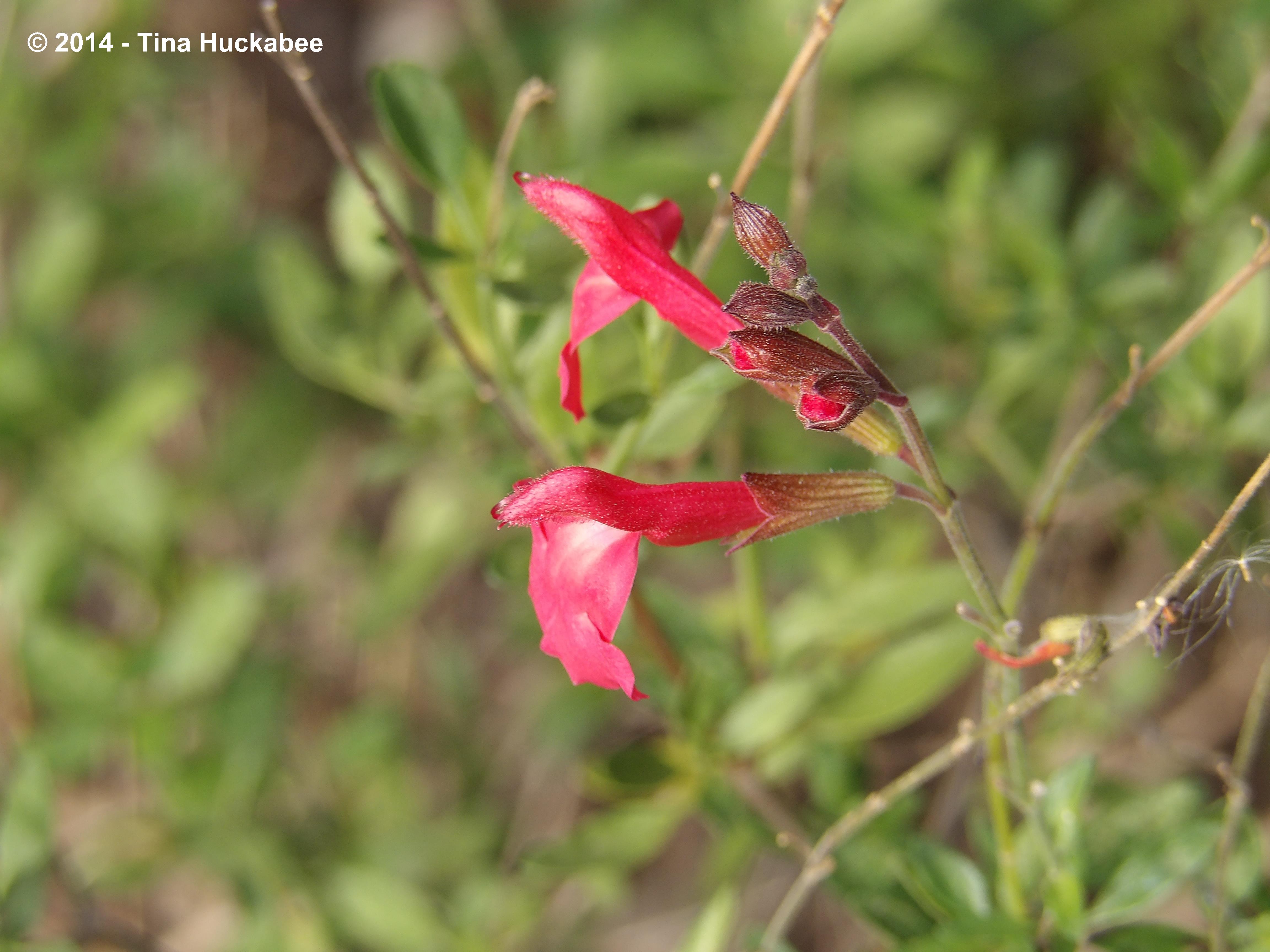
…and this red Autumn Sage, S. greggii, 

IMGP2611.new

…and another,

IMGP2614.new

…and this coral Autumn Sage.

IMGP2612.new

They’re determined, if not prolific.

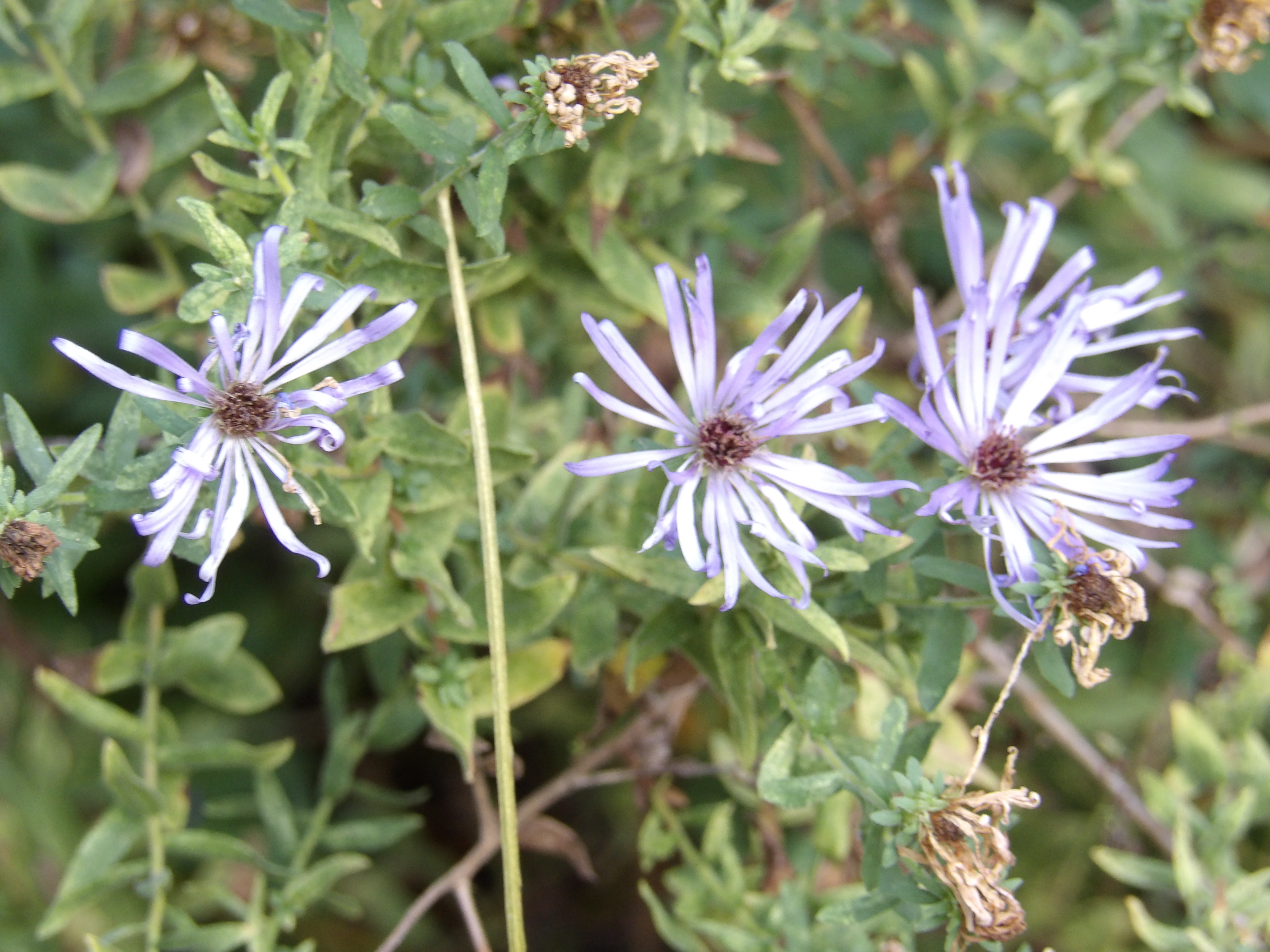
The remains of Fall Aster, Symphyotrichum oblongifolium, are tired of blooming and ready for seeding themselves.

RICOH IMAGING

When I thought there would be freezing temperatures, I cut the last of the fall blooms of Purple Coneflower, Echinacea purpurea and Tropical Sage and did this:

IMGP2616.new

As well, I cut a few Goldeneye and basil and did this:

IMGP2590.new

I’m not much for cut flowers in the house (I much prefer a garden full of blooms), but they are nice when it’s gloomy outside. I guess November in my garden and my house is not so barren after all!

Pop on over to May Dreams Garden and enjoy a show of November blooms from all over


Bee Mama Missive: Honey Flow, Honey!

My honeybees have been busy bees this autumn. They’re all over the fall blooming perennials like Goldeneye, Viguiera dentata,

IMGP1530.new

IMGP1538.new

...and Frostweed, Verbesina virginica.

IMGP0972.new

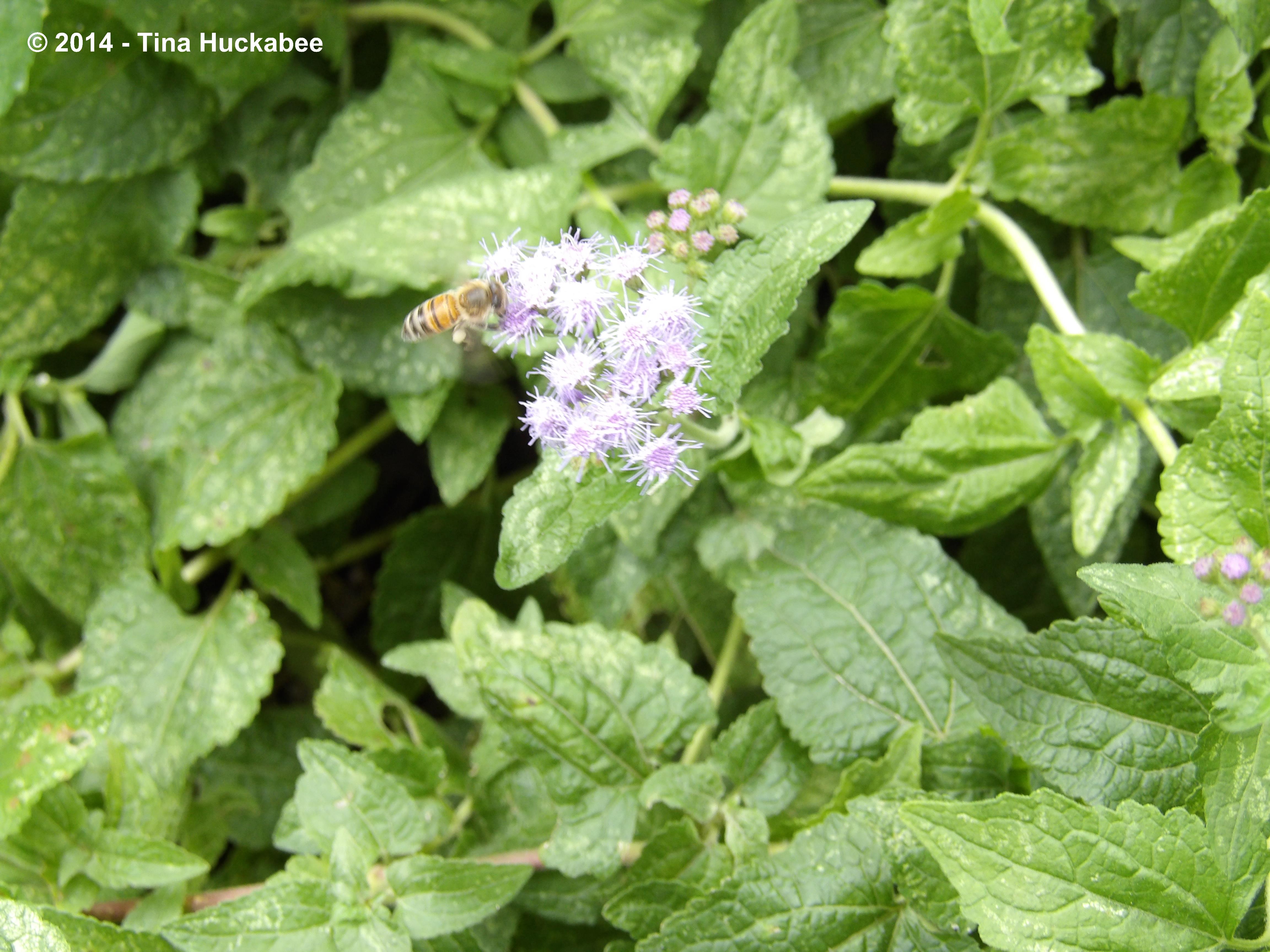
And let’s not forget how much the honeybees (and everyone else, it seems) work the Blue Mistflower, Conoclinium coelestinum.

IMGP1615.new

As well, honeybees adore the blooms of Coral Vine, Antigonon leptopus.

IMGP1413.new

When I walk into the back garden, day or night,  the fragrance of honey drifts from my hives.  Mmmm.  Breathe deep. That honey-strong fragrance indicates that there is a honey flow happening and it’s been going on for a while.  Honey flow occurs when there are blooms galore and plenty of nectar to gather and honey is busily bee-ing made.

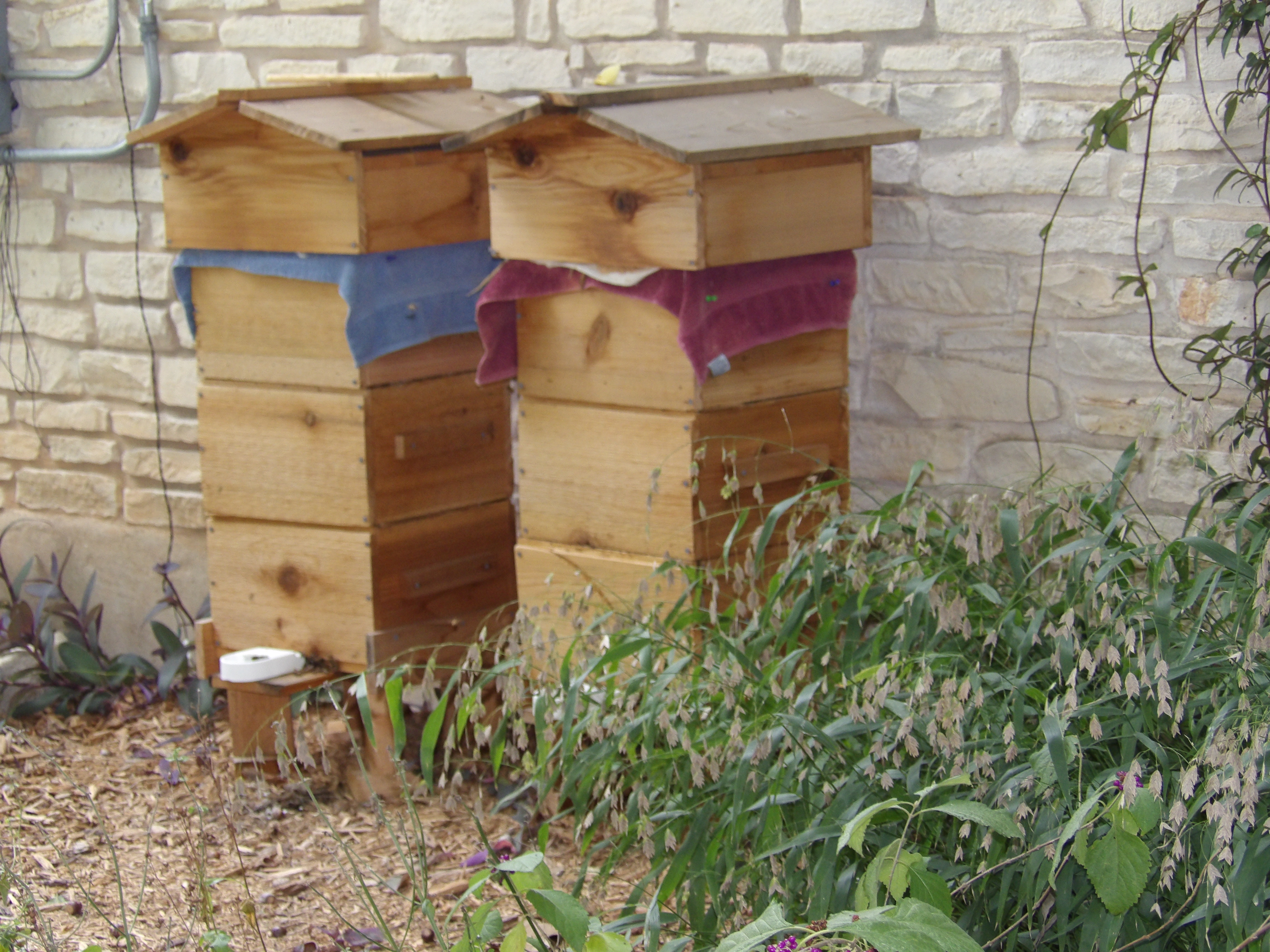
Recently, we checked both hives and Scar’s three boxes are full of comb and honey.P1060815.new

IMGP2325.new

IMGP2327.new

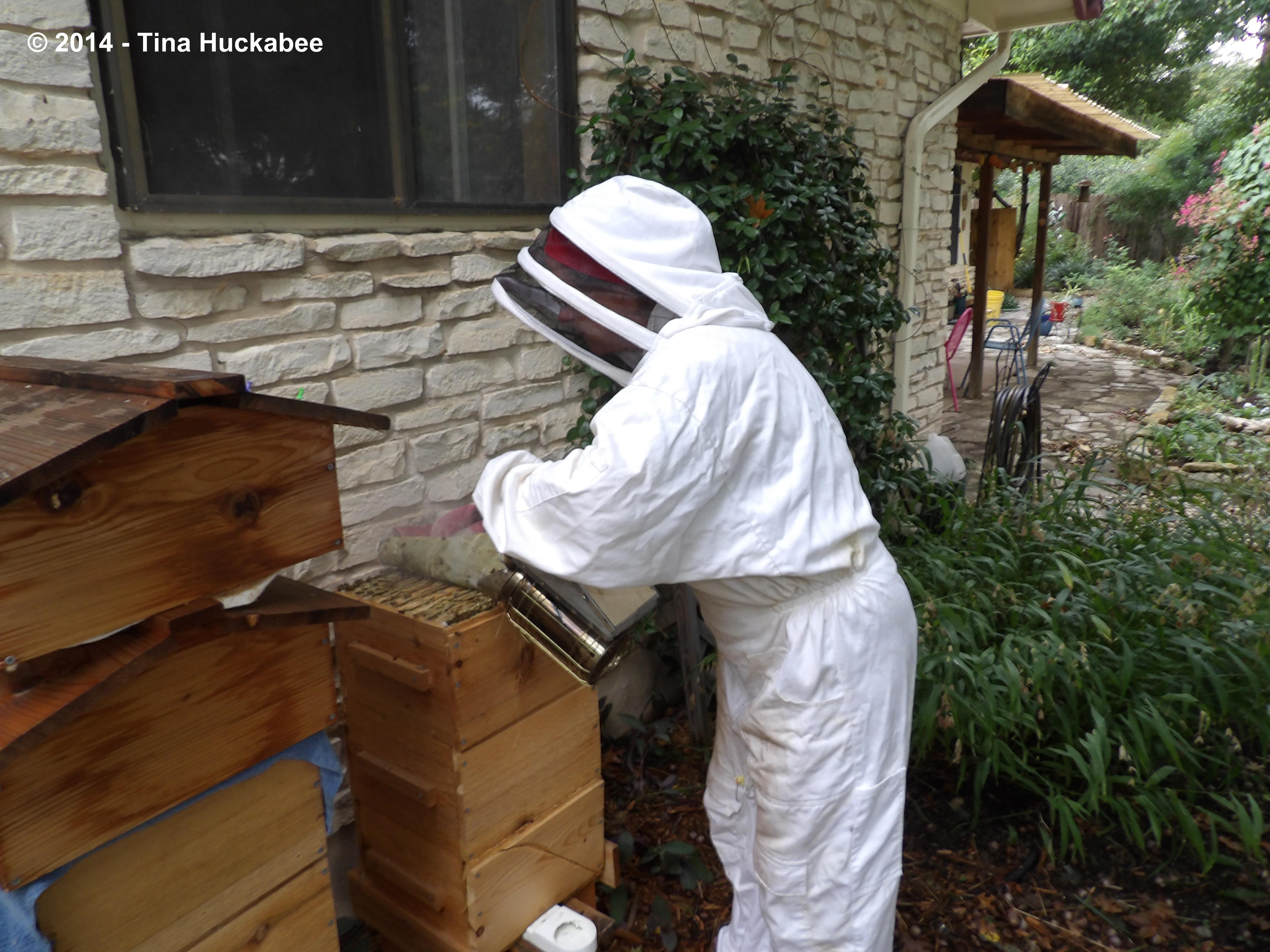
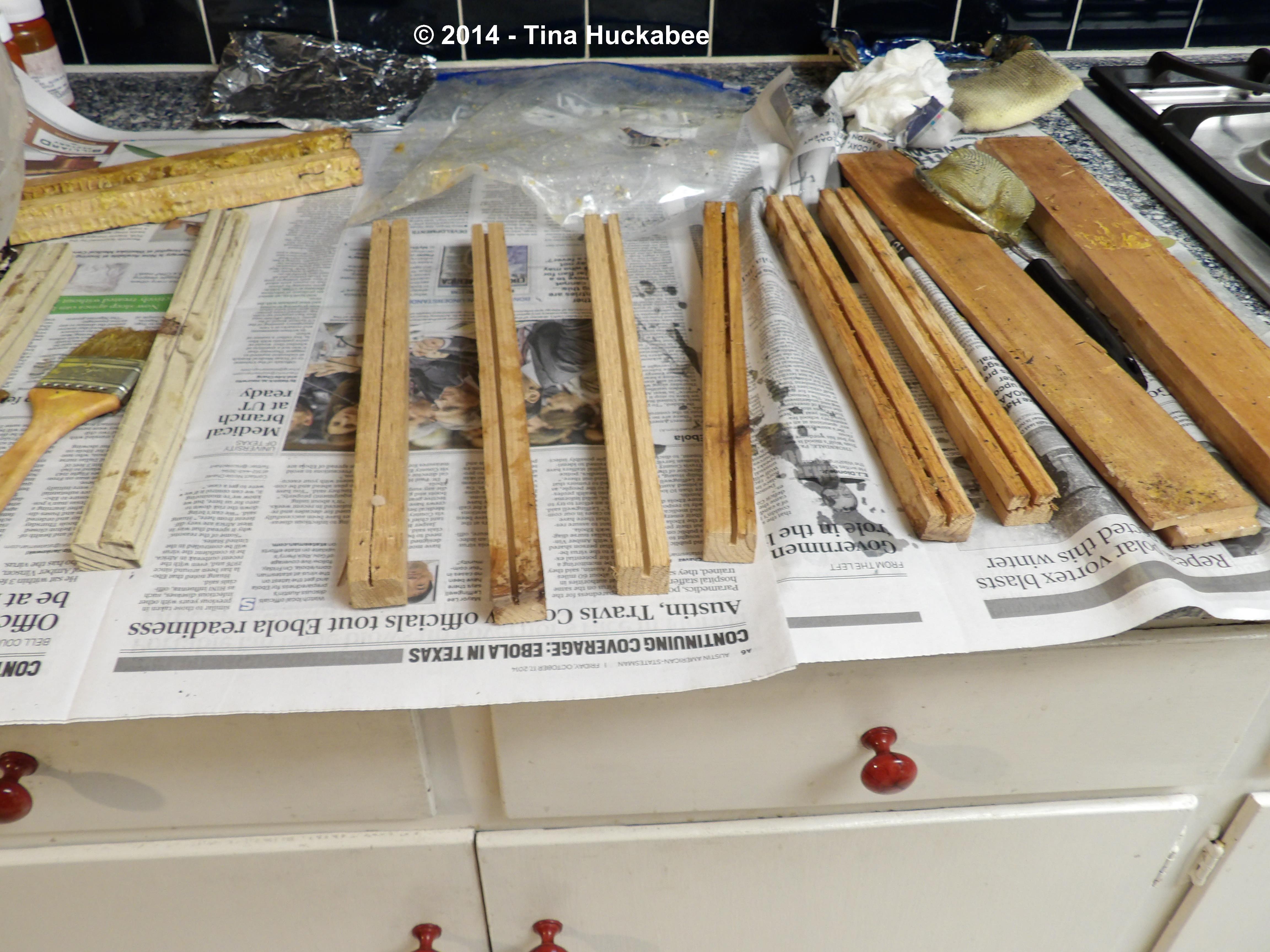
Mufasa has been the weaker of the two hives, but its two boxes were also full of comb and honey and ready for a third box.  So we prepared another set of top bars for Mufasa’s third box. We melted down some frozen comb from the July honey extraction,

IMGP2025.new IMGP2024.new

…to add to the bars. This little track of wax will help the girls start their comb-building.

IMGP2027.new

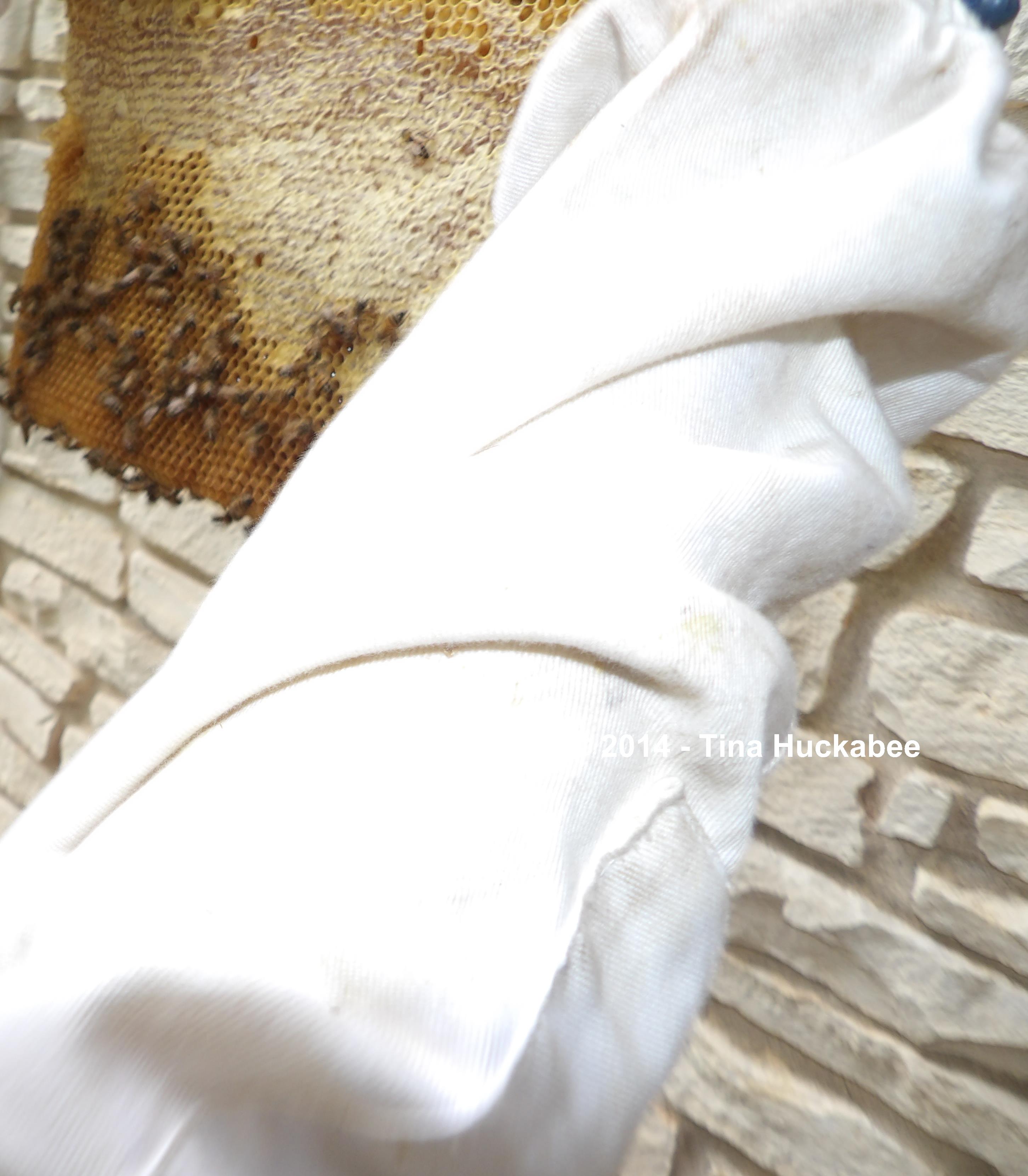
Before adding the third box to Mufasa, we sneaked a peek to assure that all is well. The comb in Mufasa’s second box is heavy with honey and larvae.

IMGP2334_cropped_2903x3322..new

However, If you look closely,IMGP2337.new

…you can see how the comb is undulated–sort of wavy-gravy kinda comb,IMGP2339.new

…not neat, tidy and vertical comb aligned with the bars as it’s supposed to be.

This, dear readers, is an example of poor beekeeping management.  In early September, while checking Mufasa, one of the combs broke off of the bar.  Unfortunately with the Warre type hives that we built, this easily happens.    I made the beekeeper’s executive decision to place the broken comb back into the box, as best I could, rather than removing the comb and the honey.  If it was earlier in the growing season, I would have removed the comb and extracted honey and the bees would simply rebuild–after all, that’s what they do. But the latest broken comb incident occurred late in our growing season and I didn’t want to take honey from the bees.  So, I dropped the comb in, knowing that they wouldn’t repair it as perfectly as it was originally built. Given that our beekeeping  goals are not so much about the production of honey for us, but for the bees themselves, it’s a reasonable decision to make.

Assuming our hives survive winter, my best amateur guess is that there will be honey left over and we’ll extract it then, along with the wonky comb. With our Warre hives, when we take honey, we have to take comb too, as there is no straightforward way to extract the honey without crushing the comb.  It’s simply how the design works. Next spring, the hive will have the whole growing season to rebuild and restock their honey stores.

We added the third floor to Mufasa a couple of weeks ago and when recently checked, the bees completed two bars with comb and honey.   That’s fine and expected; they’ll build more comb over time.

RICOH IMAGING

I’ve continued observing a few Small Hive beetles in both hives, which you can read about here, but not many and not every time I check.   When I opened Mufasa this past week, I saw and killed what looked like two Wax Moth larvae.  Well, I knew they would invade eventually.  I opened both hives and didn’t see any webbing that is indicative of a mass infestation of the Wax Comb moth. Whoop!  But I am popping Mufasa’s top off most days to check–just in case.  In one of the articles I read about the Wax Comb moth, the author suggested that if the beekeeper kills the moth larvae, then drops the dead larvae into the hive, it teaches the bees to kill the larvae as invaders.  I have my doubts about that particular management practice, but that’s what I did–not because I’d read to do that, but because I was grossed out and offended to see the two larvae crawling along Mufasa’s hive.

Bee Mama is protective of her little bees.

We’ll  thoroughly check both hives at least one more time before true winter sets in.   Both hives have plenty of honey stores (fingers crossed) for the winter and we’ll see how they fare.
The bees continue their work.  Foraging,IMGP1082.new
….pollinating,IMGP1620.new

…sipping at their local watering hole,IMGP2443.new

….and being bees.

IMGP1535_cropped_3562x3138..new