Texas Native Plant Week

Not that I need an excuse to extol the virtues of utilizing Texas native plants in the home garden, but this week, October 16-22, is the official week to celebrate our beautiful native plants here in Texas. So, here goes!
imgp9413-new

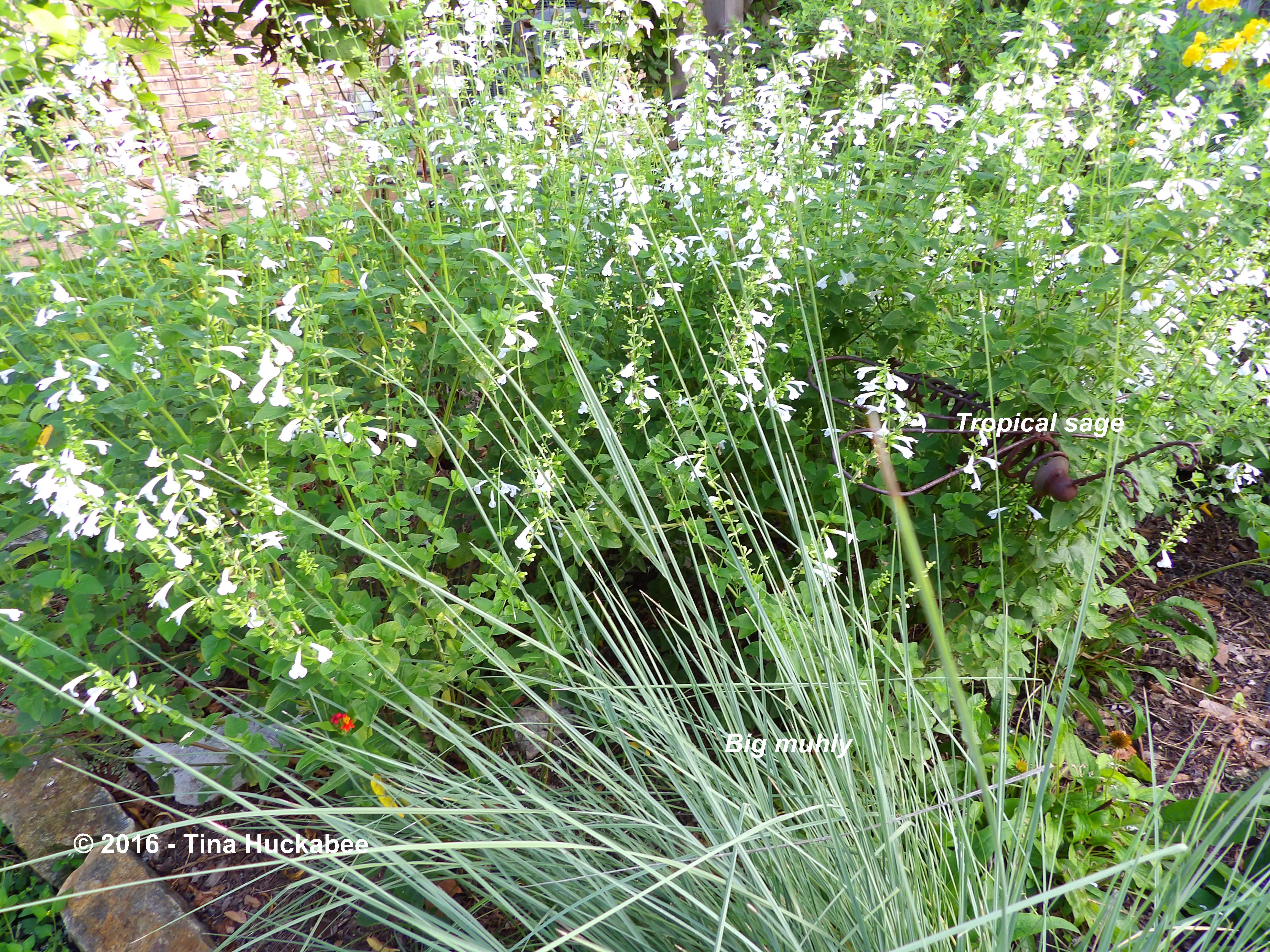
White tropical sage (Salvia coccinea) with Big muhly (Muhlenbergia lindheimeri)

I’ve gardened with native plants for more than 20 years.

imgp9654_cropped_1885x2608-new

Gregg’s mistflower (Conoclinium greggii)
imgp1339-new

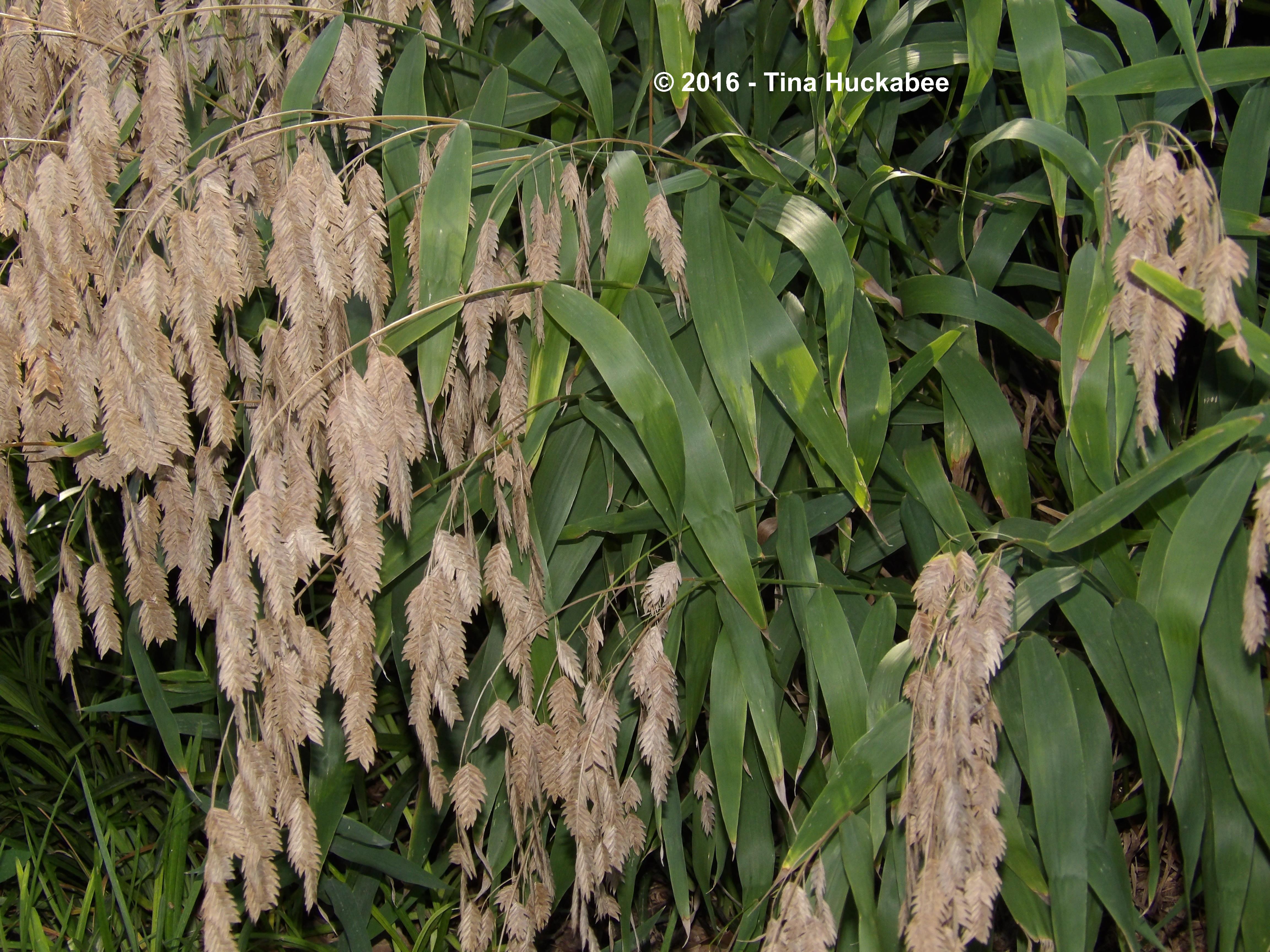
Inland sea oats (Chasmanthium latifolium), in autumn

And why not?  They’re easy to grow, with minimal effort in maintenance and watering.
imgp9672-new

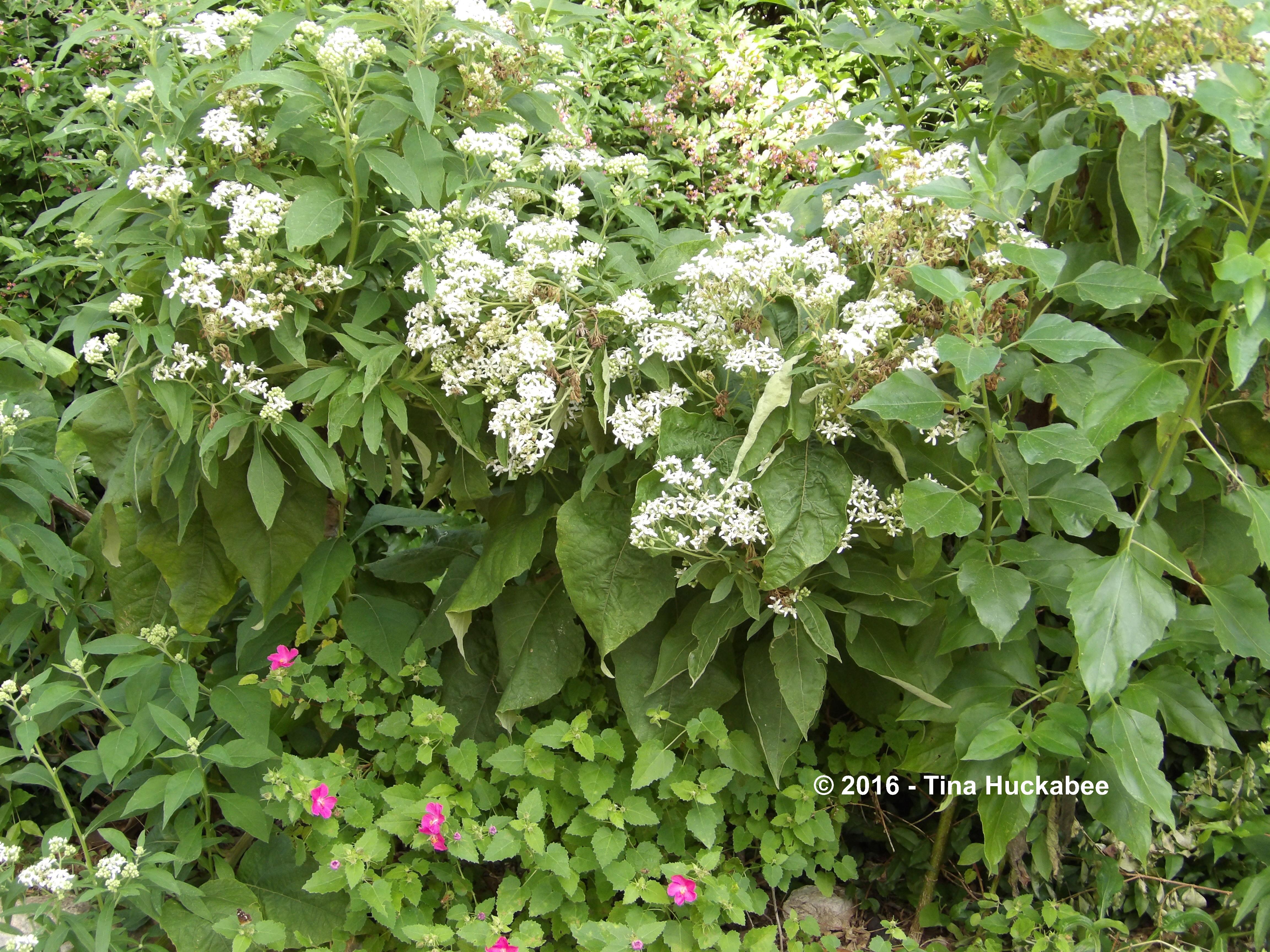
Frostweed (Verbesina virginica) and Rock rose (Pavonia lasiopetala)
imgp9656_cropped_2484x2120-new

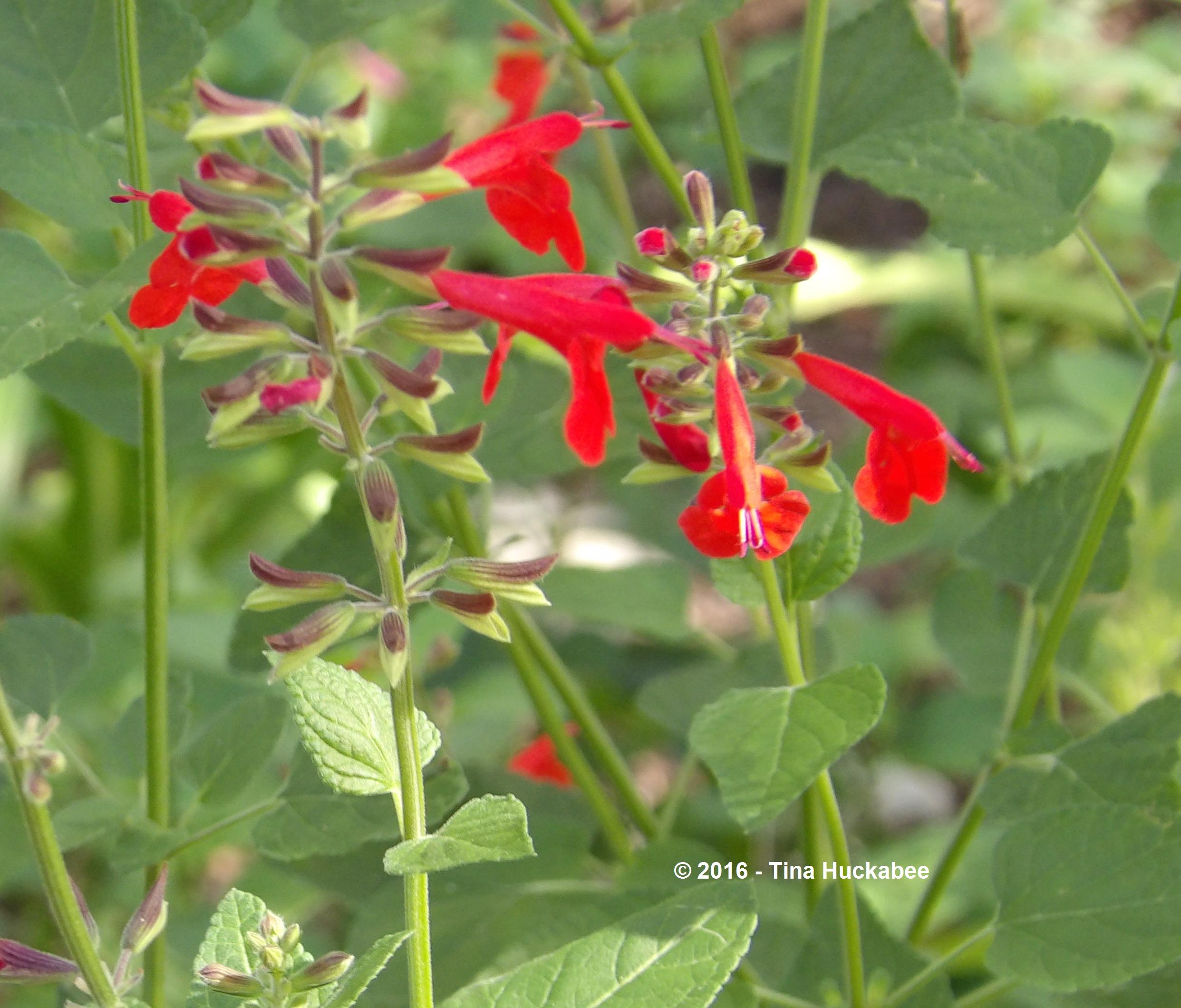
Red tropical sage (Salvia coccinea)

Plus, they’re lovely.
p1040934-new

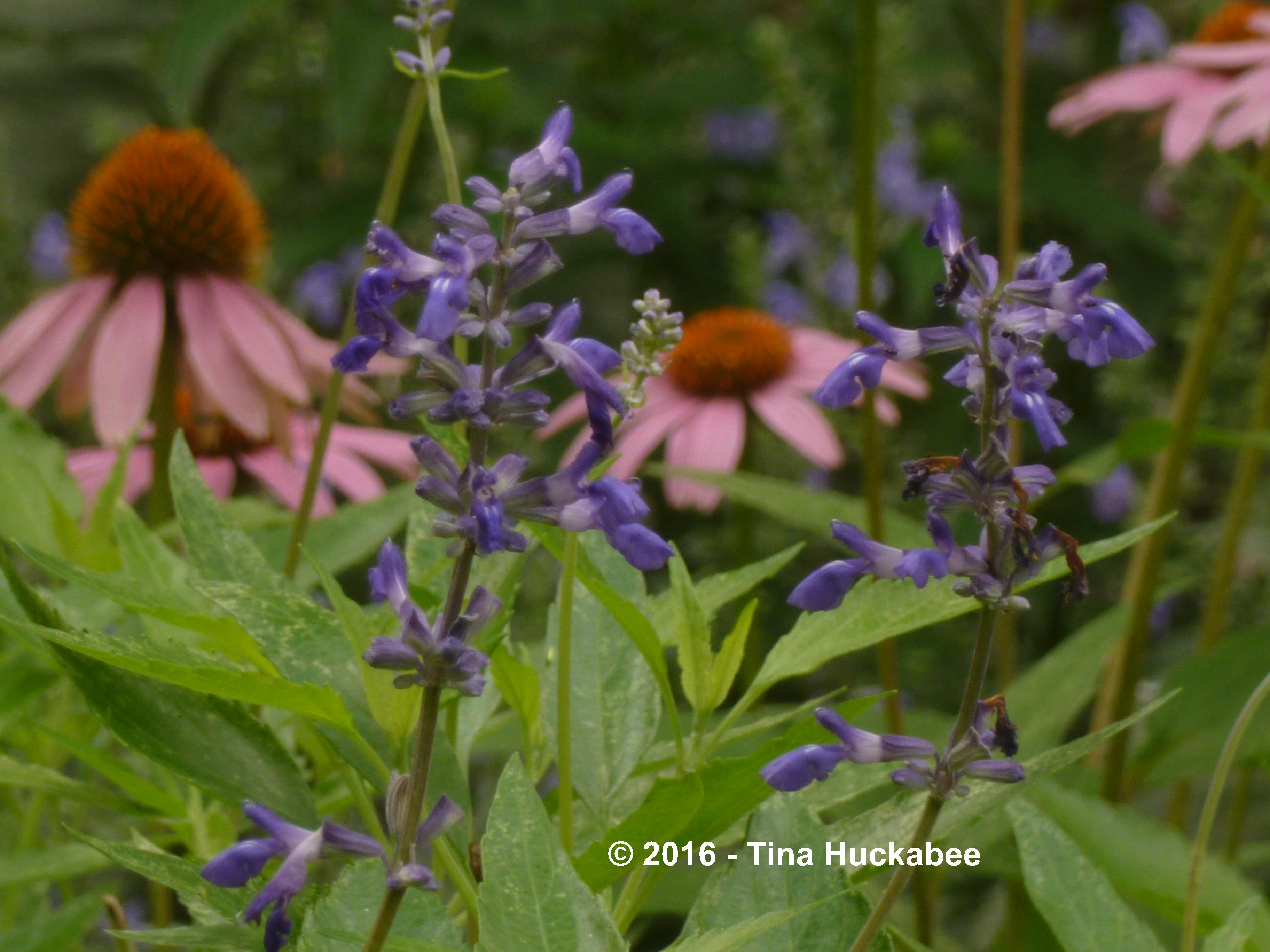
Henry Duelberg Sage (Salvia farinacea ‘Henry Duelberg’) with Purple coneflowers (Echinacea purpurea)

imgp9661-new

American beautyberry (Callicarpa americana)

imgp9657-new

Lindheimer’s senna (Senna lindheimeriana) and Frostweed

Throughout North America (and probably, most parts of the world) native plants and the wildlife relying on them, are declining due to habitat destruction, the proliferation of invasive plants, widespread use of chemicals in industrial agriculture and urban gardens, and the changing climate.
imgp9673-new

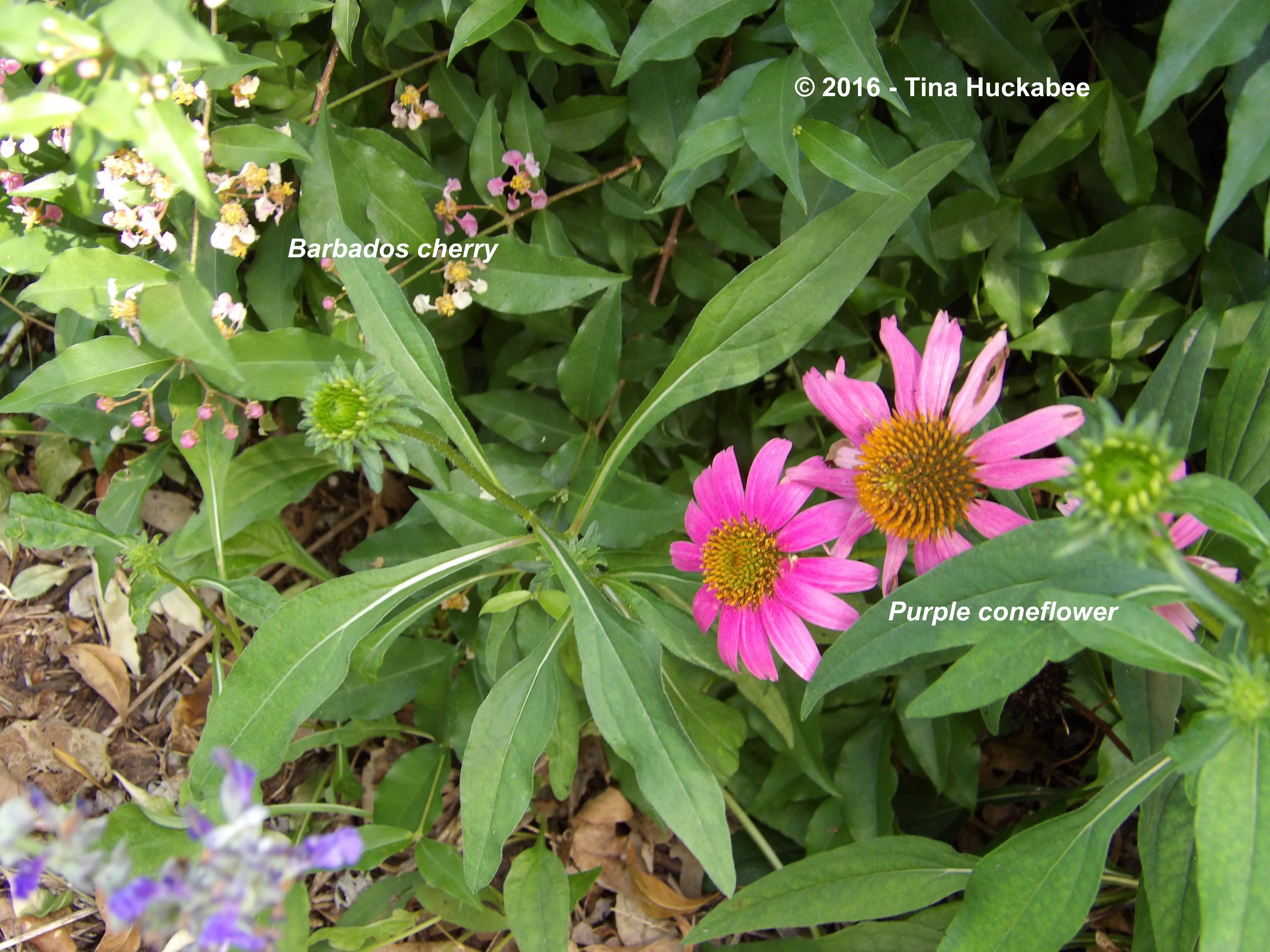
Barbados Cherry (Malpighia glabra) and Purple coneflower (Echinacea purpurea)

imgp9792-new

Pigeonberry (Rivina humilis)

The individual gardener can’t solve all of those issues, nor completely reverse the damage done by decades of inappropriate land management, but we can do our part to repair the world in our own outdoor spaces.  One real way to heal the Earth and provide for its inhabitants is by growing native plants.

imgp0297-new

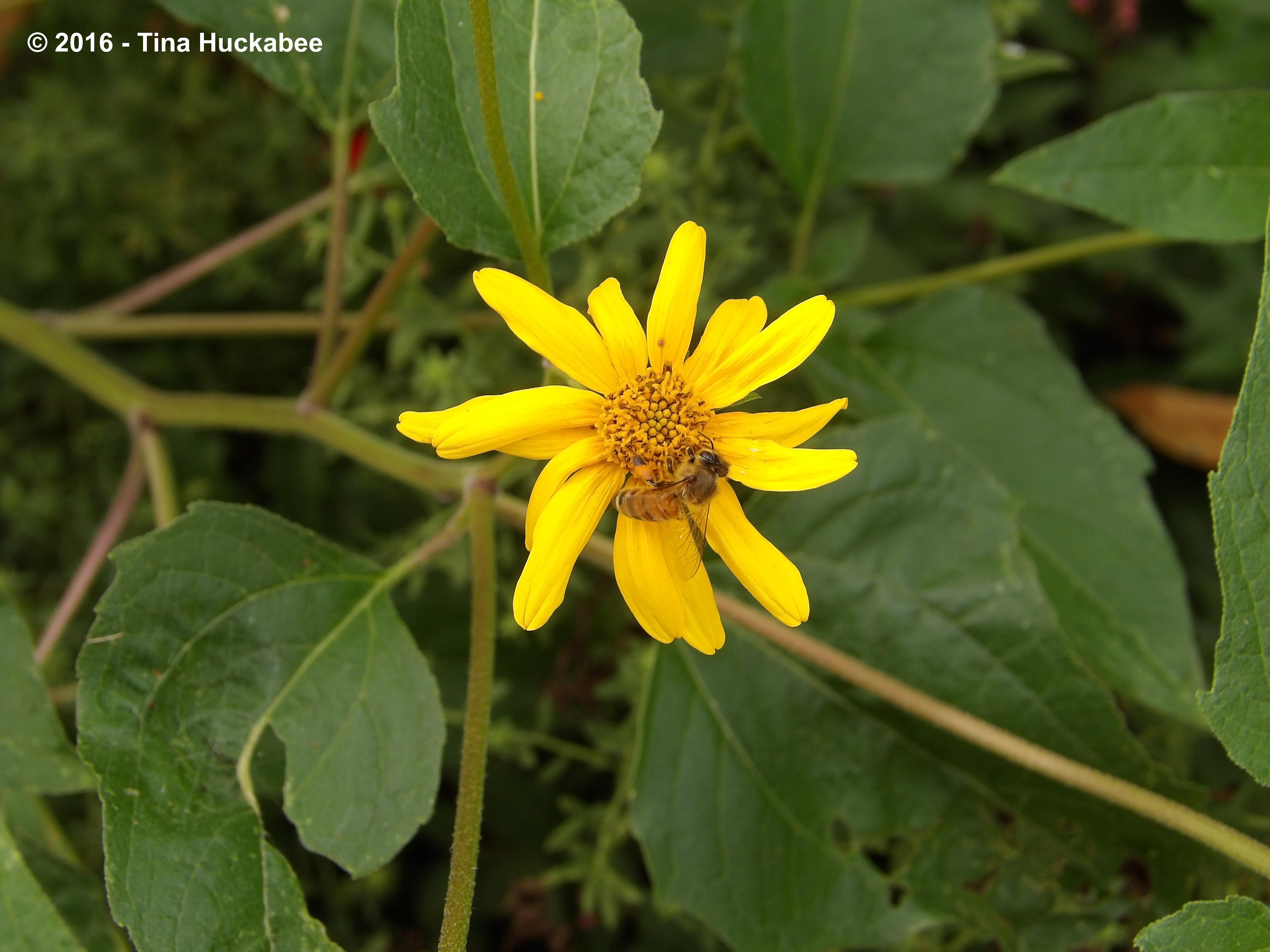
Frostweed with nectaring honeybees, Texan Crescent and Grey Hairstreak butterflies

imgp0269-new

Texas Crescent butterflies on Blue mistflower (Conoclinium coelestinum)

Planting native trees, perennials, grasses, and annuals provides habitat required for wildlife to exist and beauty for the gardener to enjoy.

imgp9806_cropped_4199x2653-new

Honeybee on Rock rose (Pavonia lasiopetala)

imgp9720-new

Green anole lizard on foliage of Frostweed (Verbesina virginica)

Once native plants are in play, it’s remarkable how interesting the garden becomes.
imgp0301_cropped_1963x2235-new

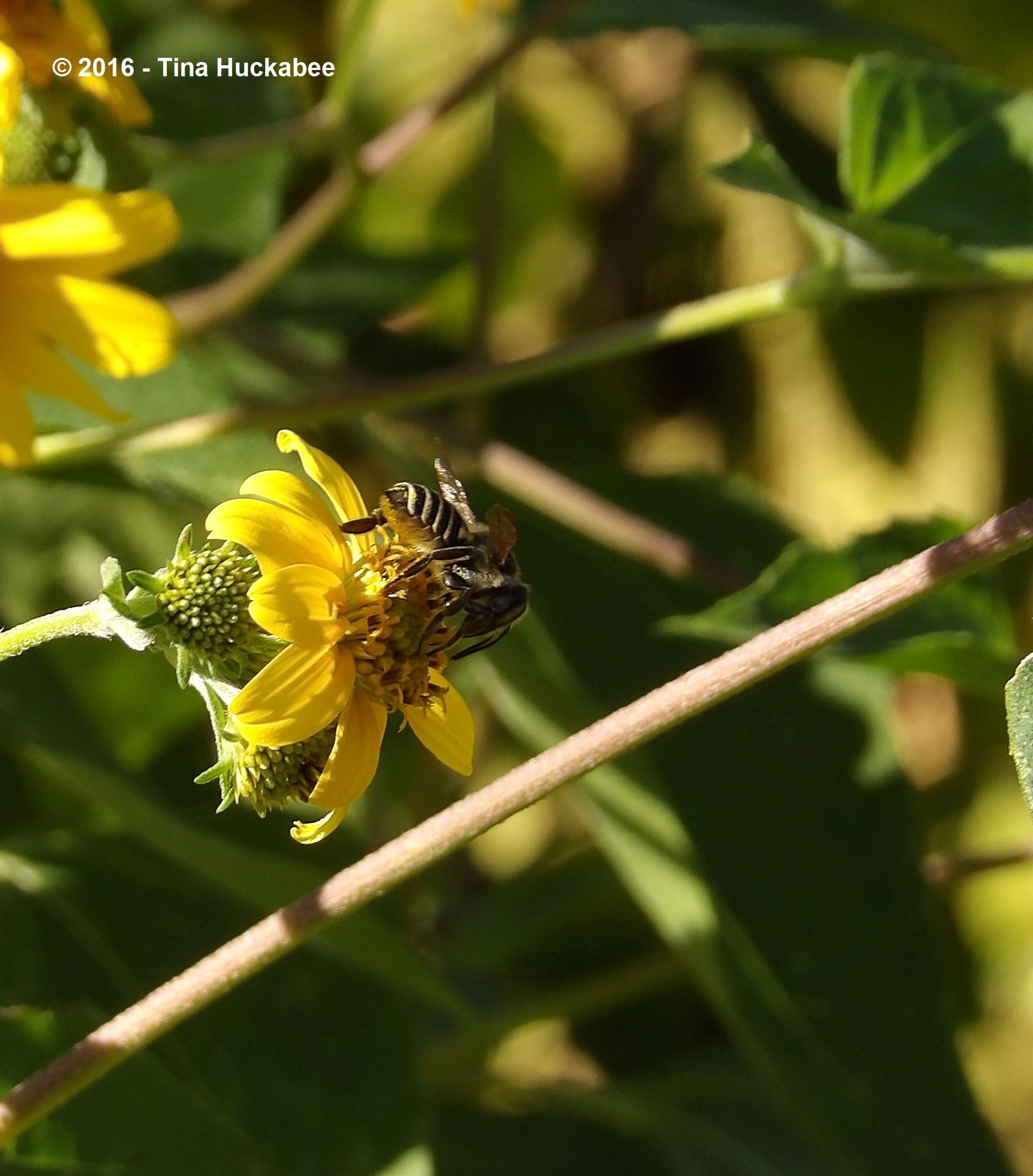
Native bee (Megachile, Leafcutter ssp?) on Plateau goldeneye (Viguiera dentata)
imgp0461_cropped_3267x3202-new

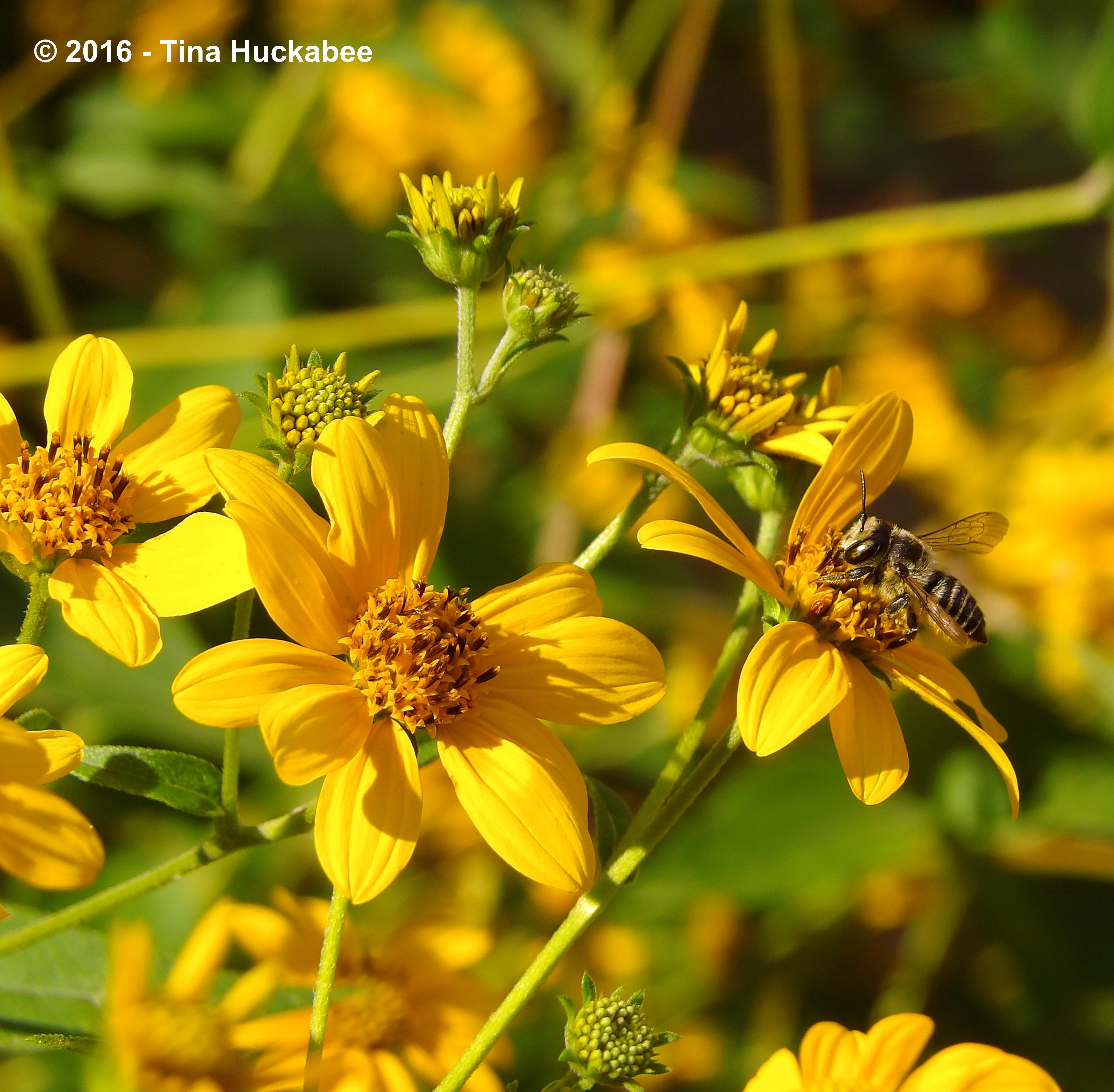
Endemic wildlife–pollinators, birds, reptiles, and other critters–can’t thrive in the typical American landscape of sterile, mono-culture turf–there’s nothing for them to eat, nor refuge for raising young.  But when native plants are grown, a diversity of wildlife results because wildlife native to a specific region shares biological synchronicity with plants from that region.   Plants are certainly pretty enough, but when clouds of butterflies are in the garden, or the sweet songs of birds are a constant, you know that you’ve hit the true native plants sweet spot:  the garden is living and alive, which is what a garden should be.

imgp9695-new

Yellow bells (Tacoma stans)

imgp9677-new

Honeybee on Frostweed (Verbesina virginica)

Are native plants free of work?  No, like any worthwhile effort, self-education is a must and there will be some maintenance in a native plants garden. But eschewing the sterile lawn and needy exotic annuals and perennials in favor of regionally appropriate native plants with their full palette of color and texture, inspires life and dynamism in the  garden through seasonal change and accompanying wildlife.

imgp9667-new

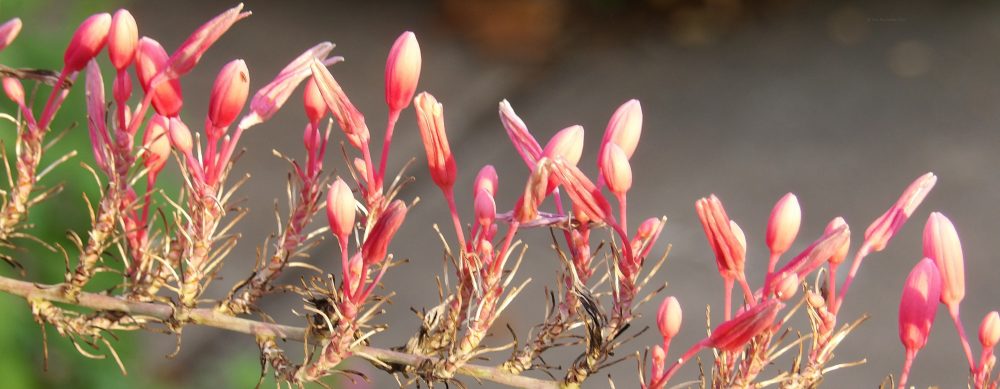
Red yucca (Hesperaloe parviflora)

imgp9662-new

American beautyberry (Callicarpa americana)

In some communities, it’s challenging to find native plants for purchase, but more nurseries than ever are stocking natives because consumers are demanding them.   Utilizing online nurseries for seed purchases, involvement in local native plant societies for information and plant/seed exchanges, and perusing gardening blogs and related websites, as well as studying books on plants and design basics, are good places to begin learning about the value, beauty, and how-tos of growing and gardening with native plants.  Check out the Garden Resources section of this blog for a by-no-means comprehensive list of websites useful for learning about native plants, wildlife and water-wise gardening, and related subjects.

imgp9653-new

Big red sage (Salvia penstemonoides)

p1050643-new

Inland sea oats (Chasmanthium latifolium) in early summer

Autumn in Texas, at least for the southern and eastern parts of the state, is a good time to plant native trees and perennials and to sow wildflower seeds.  Winter is an excellent time to study garden design principles and plan for implementation for your new gardens, pathways, and sitting areas.  Gardening is a process–a wandering path, if you will–and transformation from a turf-centered lawn to a living, blooming, berrying garden, takes time. You will make mistakes, but that’s how you learn.  Take your time, connect with like-minded gardeners, and enjoy the native garden ride.

imgp9411-new

White tropical sage (Salvia coccinea)
imgp9666_cropped_2479x2571-new

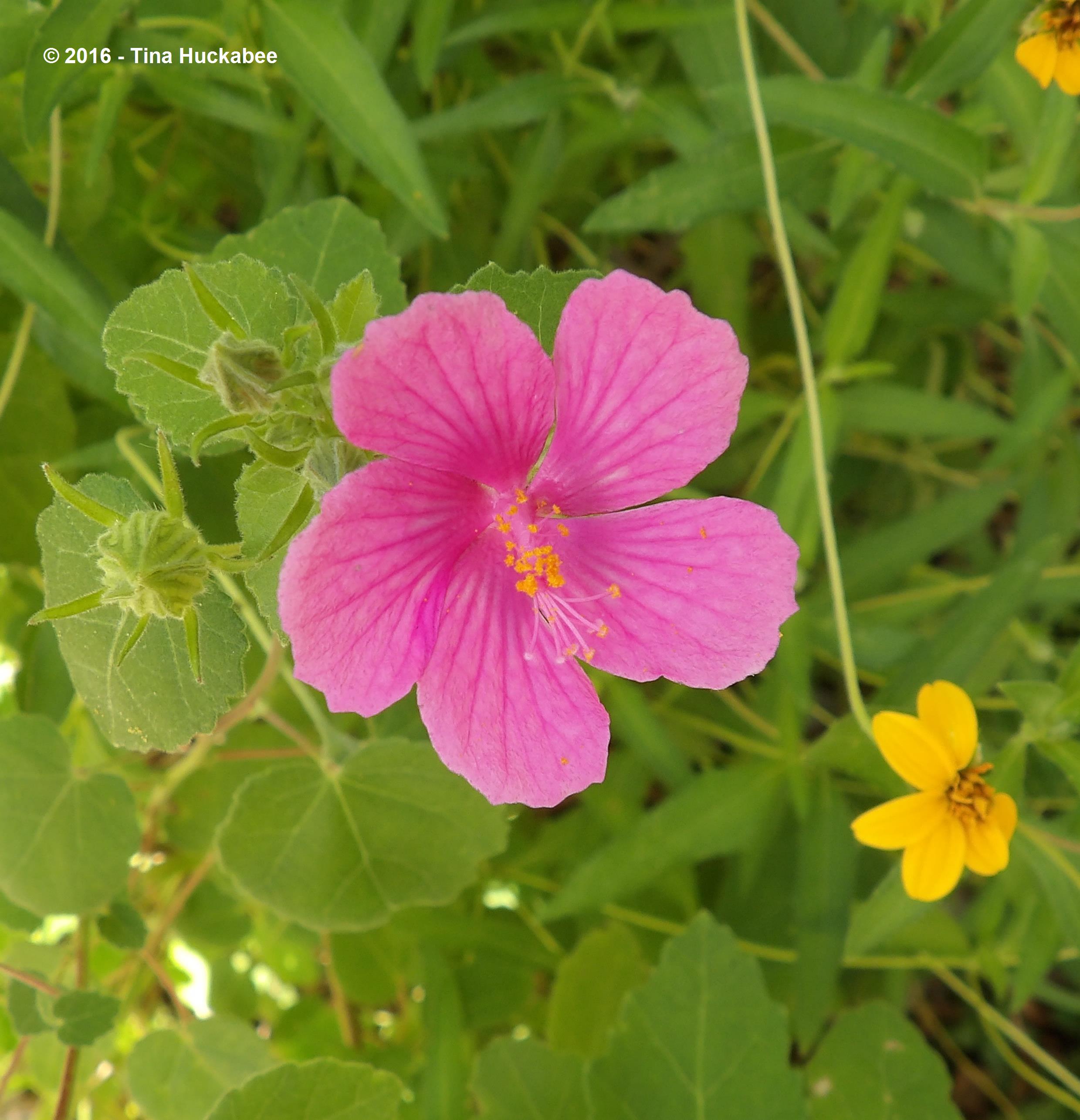
Rock rose with Zexmenia (Wedelia texana)

It can seem daunting to completely change the garden modus operandi by switching from a “traditional” high-maintenance, turf-loving landscape to one based on native plants.  But even if you can’t convert your entire property to a native habitat, adding  a pollinator garden or two, planting native shade trees, and/or native shrubs for birds, is a good start in moving toward a native landscape. You will see a difference almost immediately as you add native plants to your property:  there will be color and life and it’s likely that you won’t spend as much time working in the garden as you do enjoying the garden.  Isn’t that what a garden should be?

imgp0276_cropped_3129x3111-new

Texas Crescent butterfly on Blue mistflower

So, go native!  Plant native!  Celebrate Texas native plants–this week, and for months and years to come!

20121013_18_cropped_4337x3096-new

Big muhly (Muhlenbergia lindheimeri) with blooming Plateau goldeneye

Golden Autumn

This week marks the annual celebration of Texas Native Plant week, October 16-22.

imgp9816-new

Two Texas natives, Lindheimer’s senna peeking through an American century plant, demonstrate the soft and the prickly of plants from the Lone Star State.

Texas is well-known for its spectacular spring wildflower show and especially its star wildflower and state flower, the Bluebonnet, Lupinus texensis.  But September, October, and November display an equally stunning array of beautiful grasses, annuals and perennial bloomers, as well as colorful seed and berry-producing plants during the beautiful autumn display.  Important for pollinators, migrating birds, and other wildlife, Texas native plants are easy to grow, conserve water, and define place:  native plants make the Texas natural landscape, or your cultivated garden, special.

Yellow is an autumn thing here in Texas.  Native Yellow bellsTacoma stans shout golden goodness with masses of trumpet blooms–and the pollinators are appreciative.

imgp9694-new

The Texas craglily, Echeandia texensis,  sports sweet flowers along 2 to 3 feet bloom stalks and blooms well into November.

imgp9652-new

Zexmenia, Wedelia texensis, is a native flowering groundcover which graces any garden with loads of nectar-filled daisies from May through October.

imgp9649-new

Zexmenia paired with another native groundcover in a container, Wooly stemodia (Stemodia lanata).

imgp1314-new

Zexmenia planted with Twistleaf yucca (Yucca rupicola).

Sometimes called Puppy-dog ears because of its soft foliage, the Lindheimer’s senna, Senna lindheimeriana, rock cheery flowers which are native bee magnets.

imgp9659-new

Plateau goldeneyeViguiera dentata, brighten Texas gardens and wild spaces with a blast of fall sunshine.

imgp0296-new

Beloved by pollinators,

imgp0281-new

imgp0365-new

…once the blooms are spent, native finches and warblers gobble the seeds throughout winter.

Lauding just a few of the native bloomers from my garden, I’m also enjoying Garden Bloggers’ Bloom Day with Carol at May Dreams Garden.  Join in, share your garden pretties (native or not!), then click over to her lovely blog to see and learn about blooms from many places.

Pollinator Pow-Wow: Wildlife Wednesday, October 2016

Truthfully, it’s been a pollinator Wow! for this past month.

imgp0004_cropped_2369x2580-new

Loads of butterflies and many kinds of bees enhanced the garden and though I didn’t get as many photos as I would have liked,  I have a few favorites to share this month. It’s Wildlife Wednesday and time to appreciate the wild critters who make the garden what it is: a dynamic, living space providing refuge and sustenance for wild things.

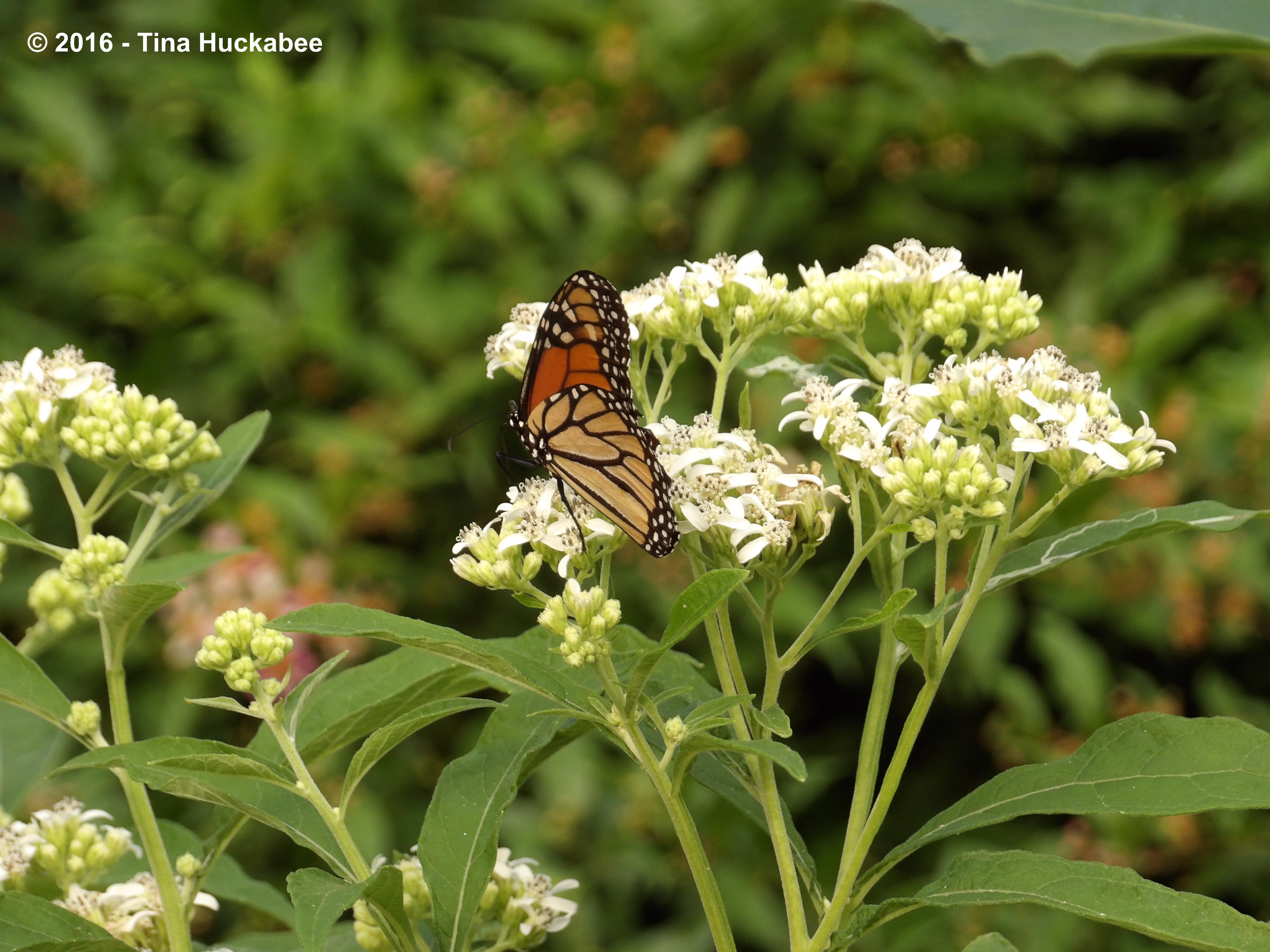
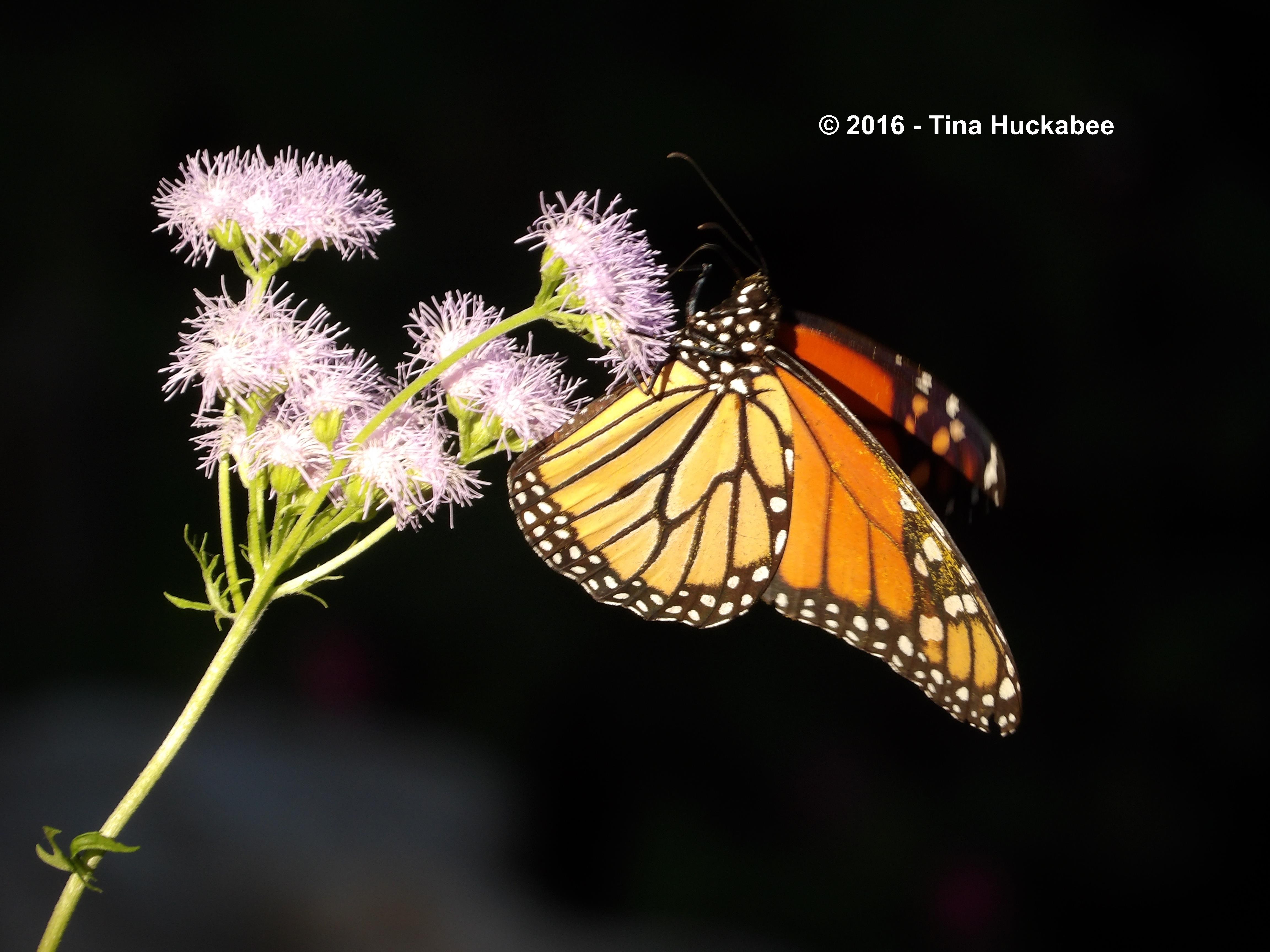
Monarch butterfliesDanaus plexippus, visited daily as they travel to Mexico for the winter.

imgp9954-new

Monarch enjoying Frostweed.

imgp0054-new

imgp0015-new

Monarch at a Gregg’s mistflower.

Most days there have been four or five fluttering from bloom to bloom.

Two cool fronts pushed through recently, ushering in pleasant  fall temperatures and providing wind for the Monarchs’ wings as they head south.  I’ve seen some Monarchs since, but only one or two in my gardens.  I’m betting more will show up in the next few weeks and am glad that I grow some of their autumn favorites like Gregg’s mistflowerConoclinium greggii, Blue mistflower, Conoclinium coelestinum, and FrostweedVerbesina virginica.

While this photo isn’t great,

imgp9993-new

…I felt compelled to include it because this lovely Monarch was a meal for my resident male Neon Skimmer  just seconds after the photo was taken.  I was attempting a better shot, when the Monarch flew into the path of the Skimmer. The two tumbled to the ground, out of my view and behind some plants, and neither arose into the air immediately.  After a few seconds, I walked to where I thought they’d landed.  The Skimmer suddenly zoomed upward, Monarch in hand, or rather, claws. An excellent predator, Mr. Skimmer had caught himself a substantial lunch!  As he flew around my garden, holding tightly to the hapless Monarch whose wings continued flapping, I yelled at him to drop that Monarch!!  My verbal gesticulation didn’t change his mind, nor reduce his grip on the Monarch, and the Skimmer eventually took his prey to a neighbor’s yard (probably because I was being obnoxious and noisy) and I didn’t see either one again that day.  Skimmers (and all dragons and damsels) are predators, usually eating mosquitoes–I certainly wish he’d  chosen a few of those biting beasts for his meal instead of the Monarch.

Though the demise of one Monarch is sad, it’s a hallmark of nature–eat, or be eaten. It is especially sorrowful because of survival pressures on Monarchs, including habitat destruction, pesticide and herbicide use in mid-western agricultural states (where wildflowers once dominated), and the changing climate, which impacts every region. These are problems caused by people, not dragonflies, and have contributed to the decimation of the remarkable Monarch butterfly.   Home gardeners and those who create school or public gardens can help mitigate Monarch decline by utilizing good wildlife management gardening practices such as refraining from chemical use and planting for pollinators with native perennials and annuals.

Relatives of the Monarchs, the Queen butterflies, Danaus gilippus, are also in full fall flight in my gardens and enjoy many of the same Monarch nectar sources.  Queens do not migrate and are common in Central Texas throughout the year.

imgp0080_cropped_4018x3024-new

Nectaring on a Gregg’s mistflower.

I didn’t take a photo of the Neon Skimmer this past month because I was pissed at him (I’m kidding.  Sort of…), but a Blue Dasher, Pachydiplax longipennis,  posed nicely on an almost-spent  bloom stalk of a Big red sage, Salvia penstemonoides;   I couldn’t resist her allure. 

imgp0091_cropped_2120x2143-new

I think this one is a female because of the brown abdomen coloring.  She  also sports big, beautiful, blue peepers common in dragonflies.

There was more murder and mayhem the garden with this lovely scene:

imgp0114_cropped_3517x3319-new

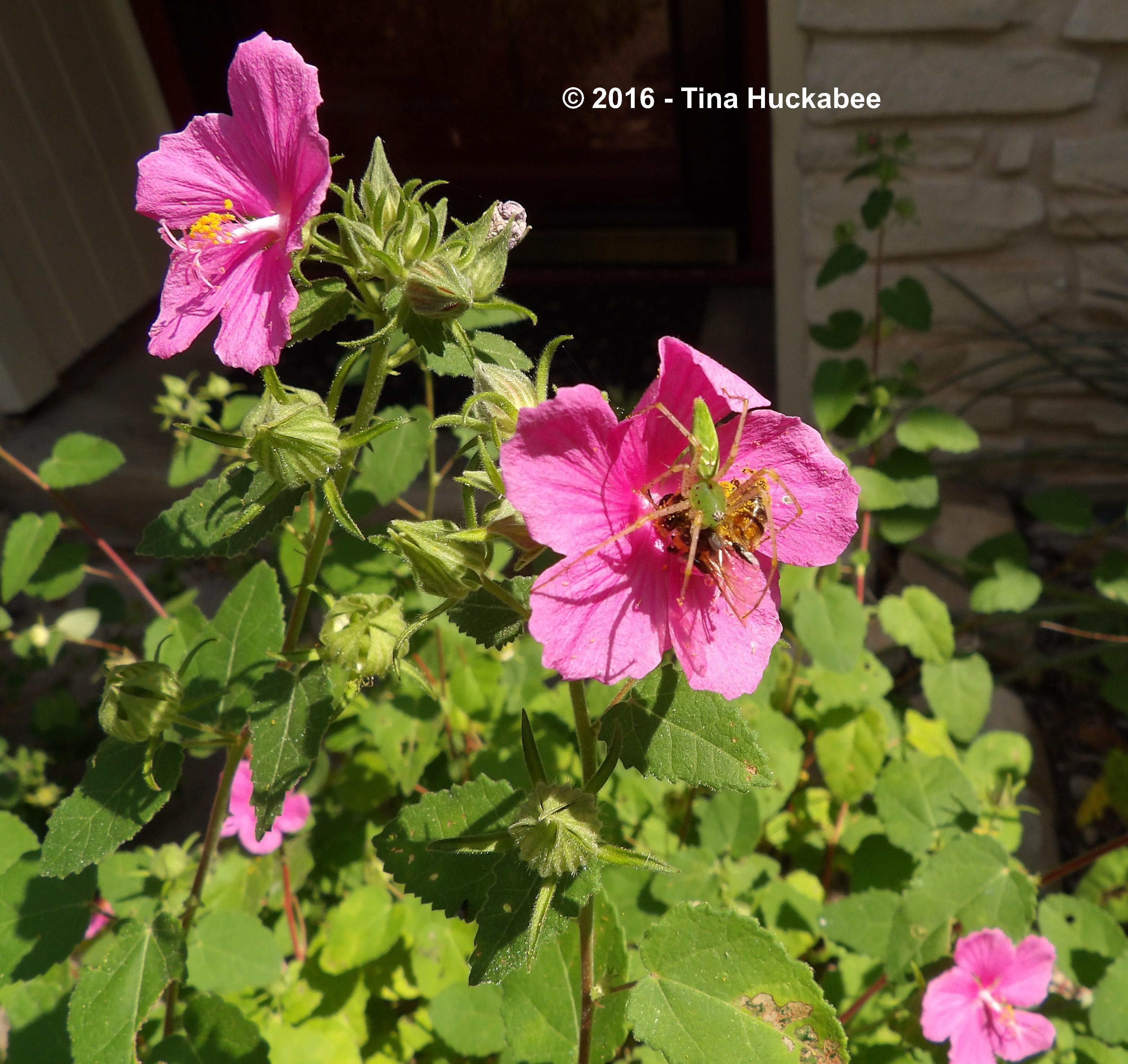
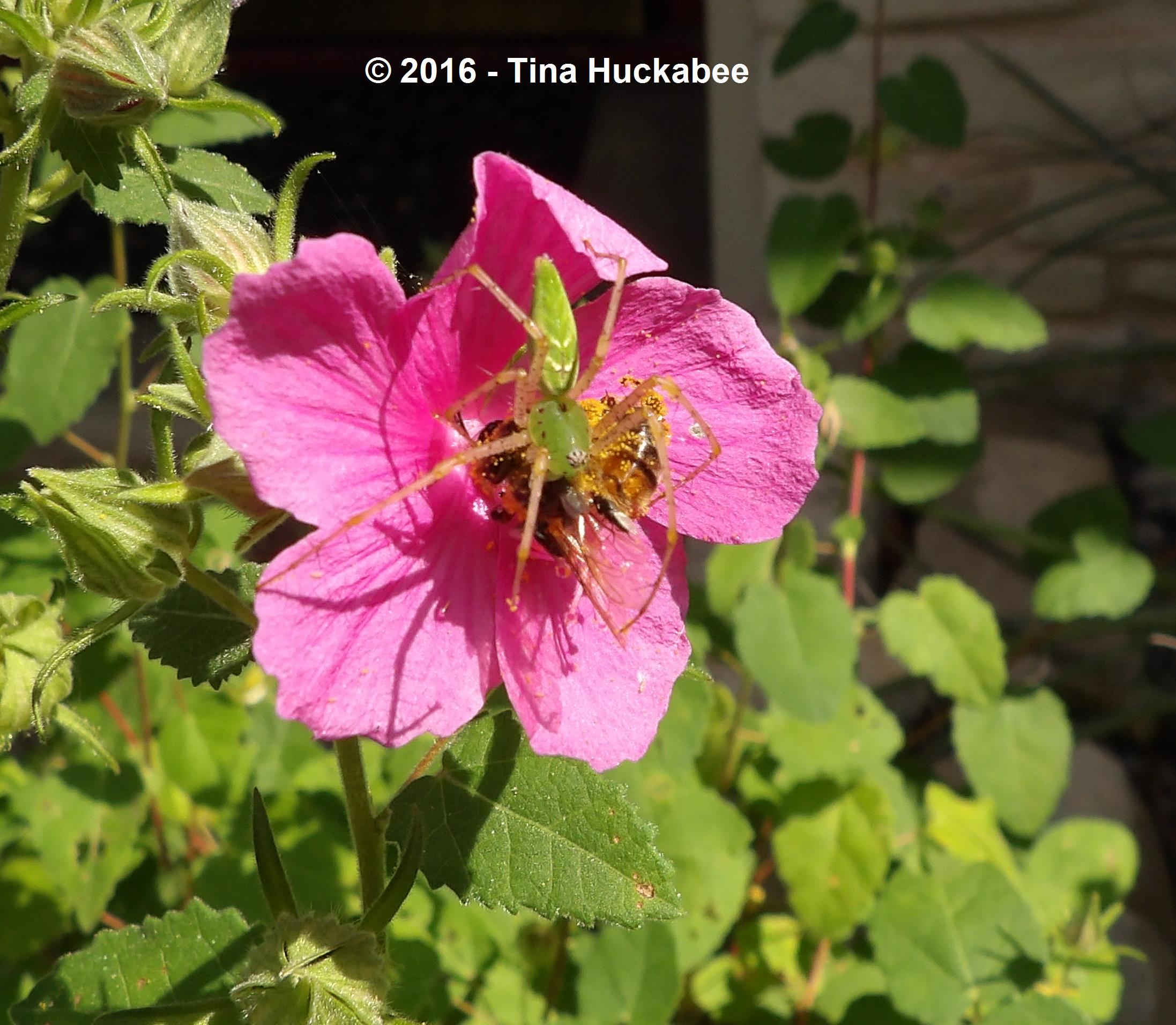
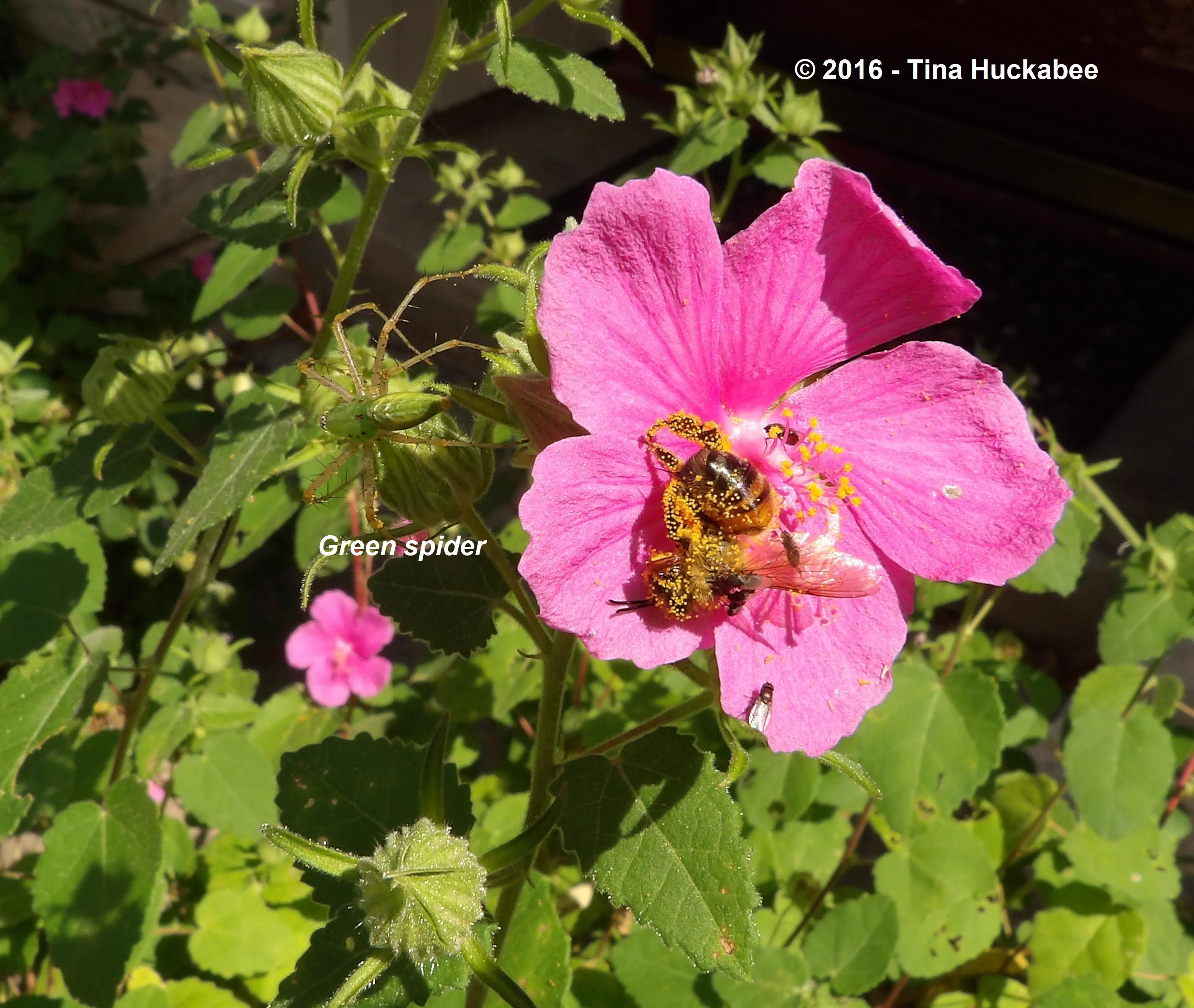
I was attempting a photo of one of the many fast flying tiny orange butterflies common this time of year (and was unsuccessful) when I spied this Green Lynx spider, Peucetia viridans,  who had one of my darling and pollen-sprinkled honeybees in pieces in the middle of a Rock rose flower.

imgp0117_cropped_2442x2783-new

imgp0115_cropped_2194x1912-new

I suppose that if the end is near, it might as well be in  the middle of a flower, doing work you love.  Again, this is another predator-prey situation and while it’s painful to witness, it’s the way nature works.  Spiders must eat, too.

imgp0118_cropped_2816x2377-new

The spider skittered out of the flower because of my photo interference, but the poor bee is…decapitated. Ugh.

It’s a bummer for the bee, though.

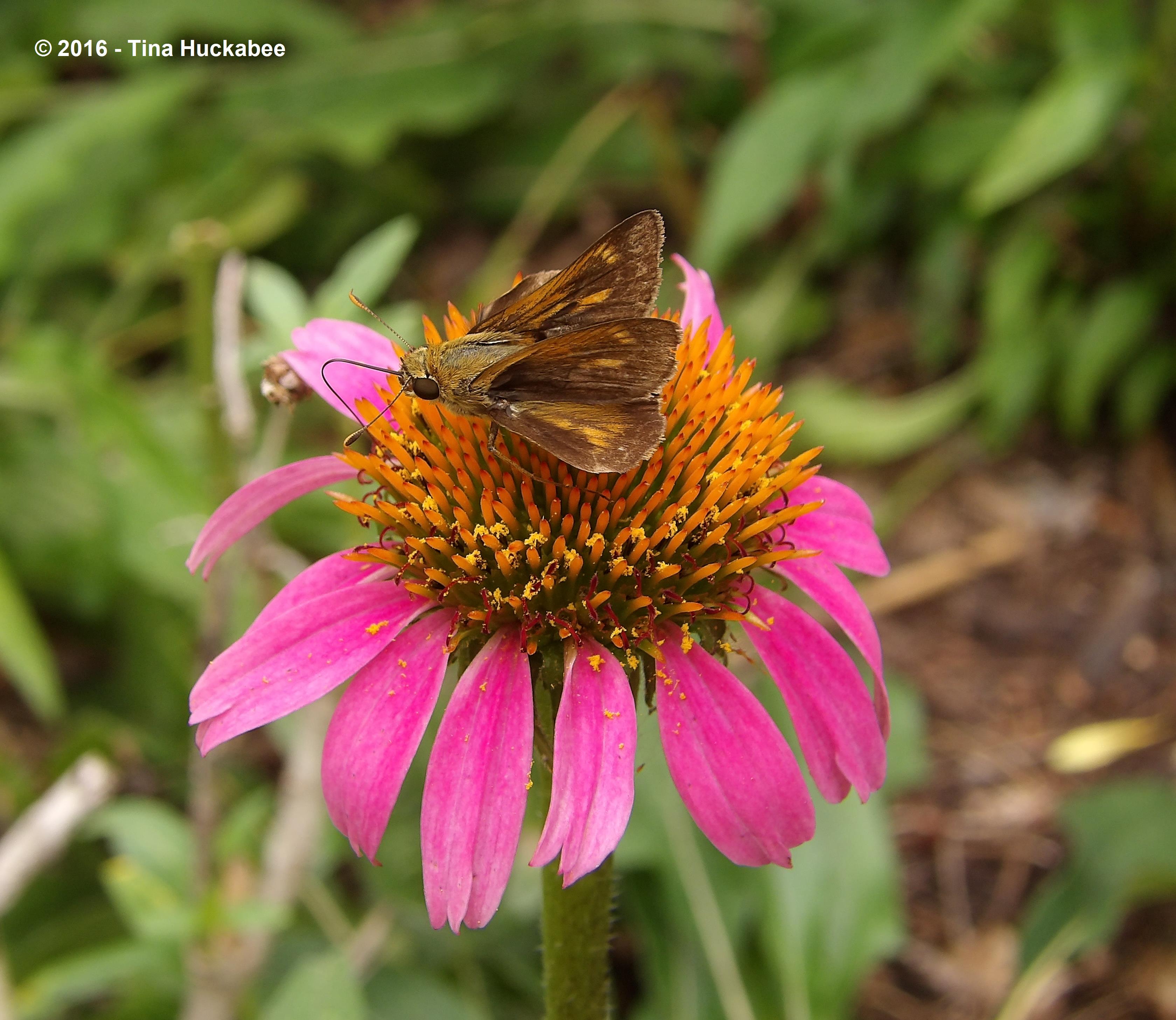
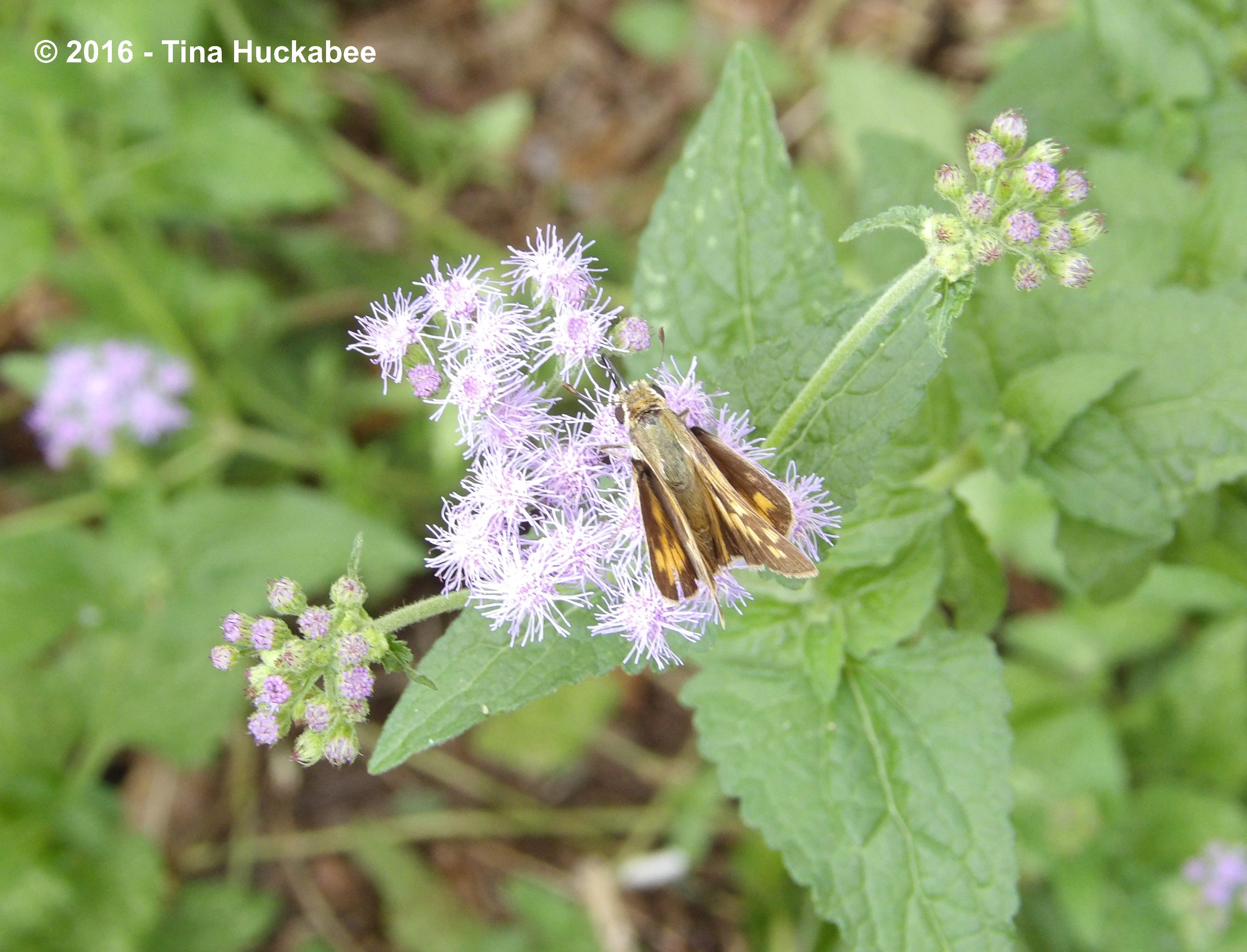
Additional sightings of the Lepidoptera sort  includes scads of Southern Broken-dashWallengrenia otho,

imgp0184_cropped_3079x3018-new

Nectaring on a Purple coneflower.

imgp0183-new

imgp0181_cropped_3359x2913-new

imgp0109_cropped_3622x2765-new

Nectaring on a Blue mistflower bloom.

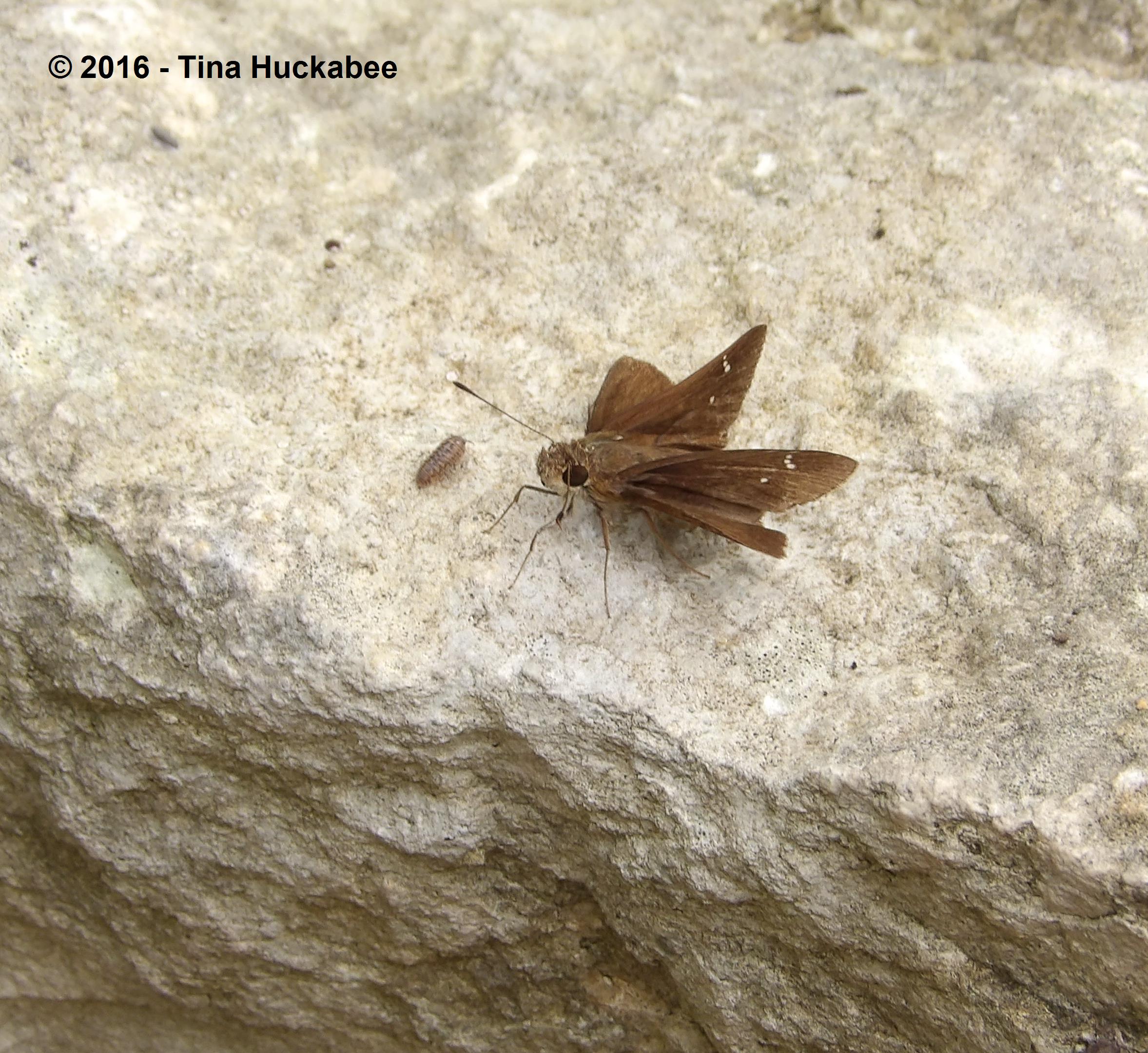
…and oodles of Clouded skippers,  Lerema accius.

imgp9975_cropped_2355x2161-new

The Clouded Skipper rests besides a buddy–a Common Pillbug (Armadillidium vulgare).


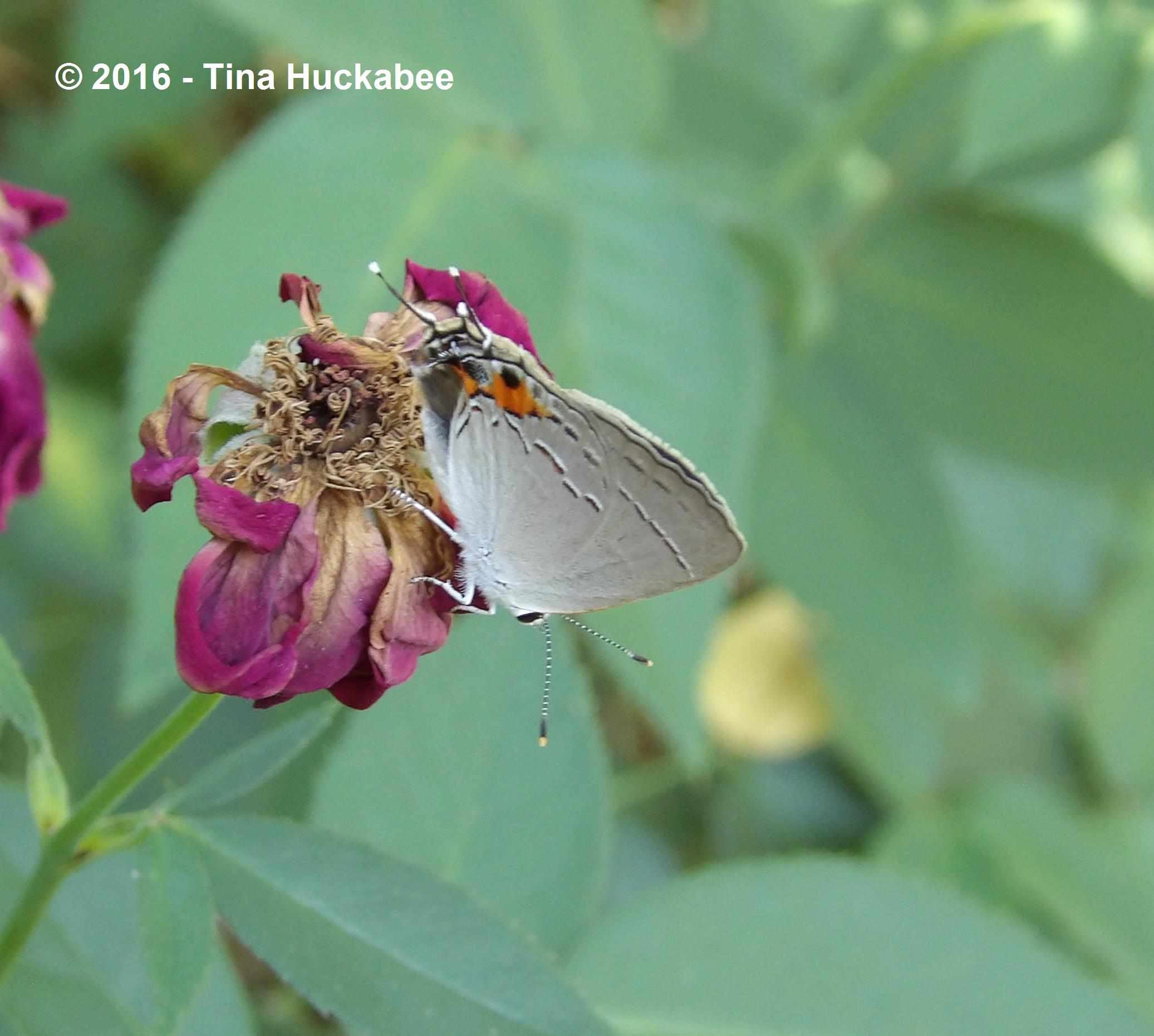
Gray Hairstreak butterfliesStrymon melinus,  are more numerous this year than I’ve ever noticed before.

imgp0005_cropped_2041x1769-new

Working a Martha Gonzales rose bloom in the sunshine.

imgp0010_cropped_2073x1861-new

Resting on a spent rose bloom in the shade.


Some of the larger, more dramatic butterflies regularly gracing the garden include Giant SwallowtailsPapilio cresphontes,

imgp0034-new

Working the blooms of the Mexican orchid.

Tiger Swallowtails, Papilio glaucus,

imgp9814-new

Nectaring on a Purple coneflower.

…and Pipevine Swallowtails, Battus philenor.

imgp0135-new

Proboscis-deep in a Yellow Bells bloom.

Flowers are pretty enough, but much more beautiful when these decorative and vital-for plant-reproduction winged jewels are pollinating the blooms.

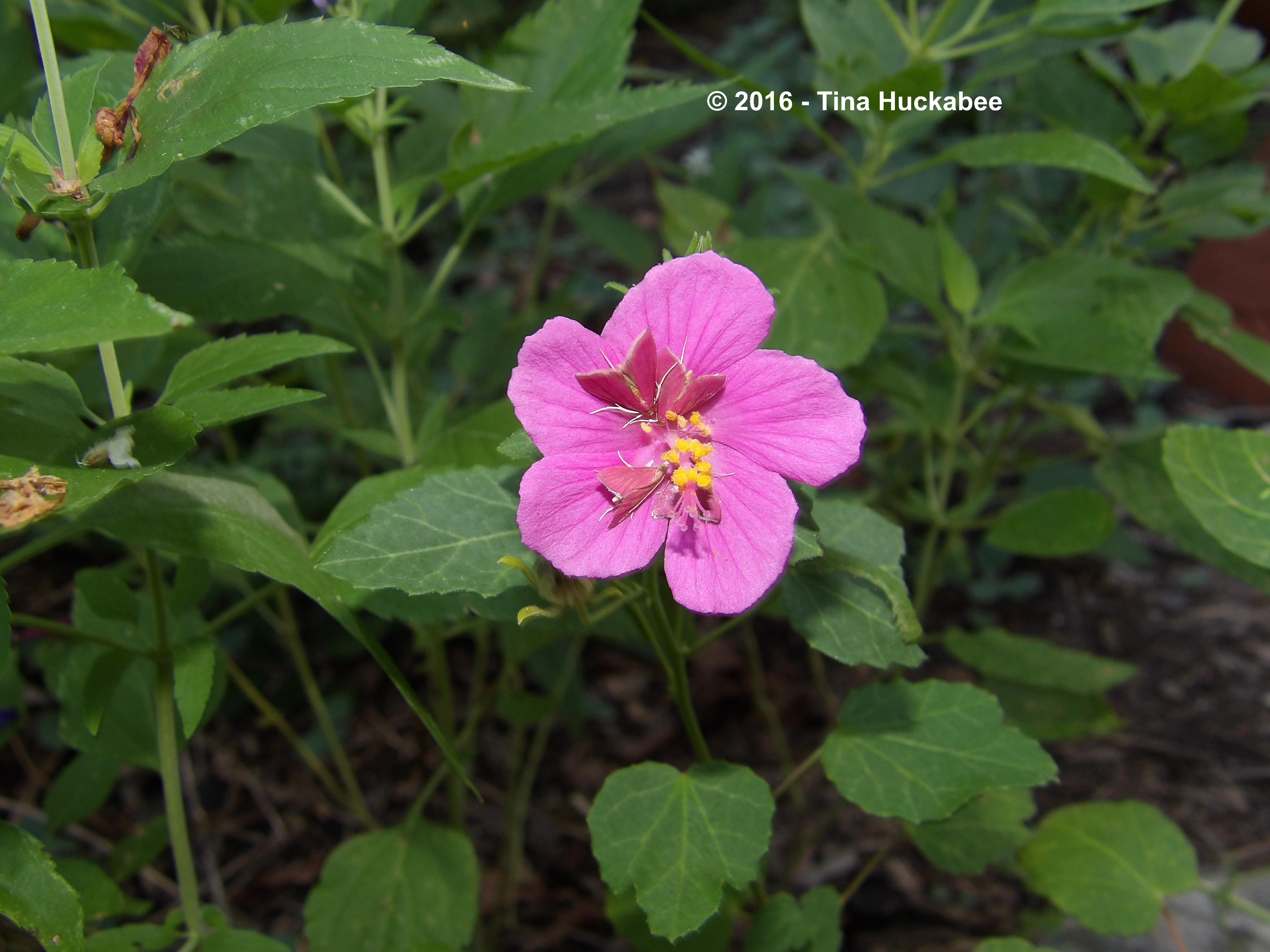
Southern pink mothsPyrausta inornatalis are sprinkling their pink selves on a variety of flowers this year, but I love this convocation of four on a Rock rose bloom.  The bloom is about an inch in diameter.

imgp0089-new

There were five moths all in a circle, but one flew off as I approached to snap the pic;  the others maintained their positions.

imgp0088_cropped_2580x1982-new

I wonder what they were talking about?  Or were they knitting?  Or, perhaps working on dance moves?

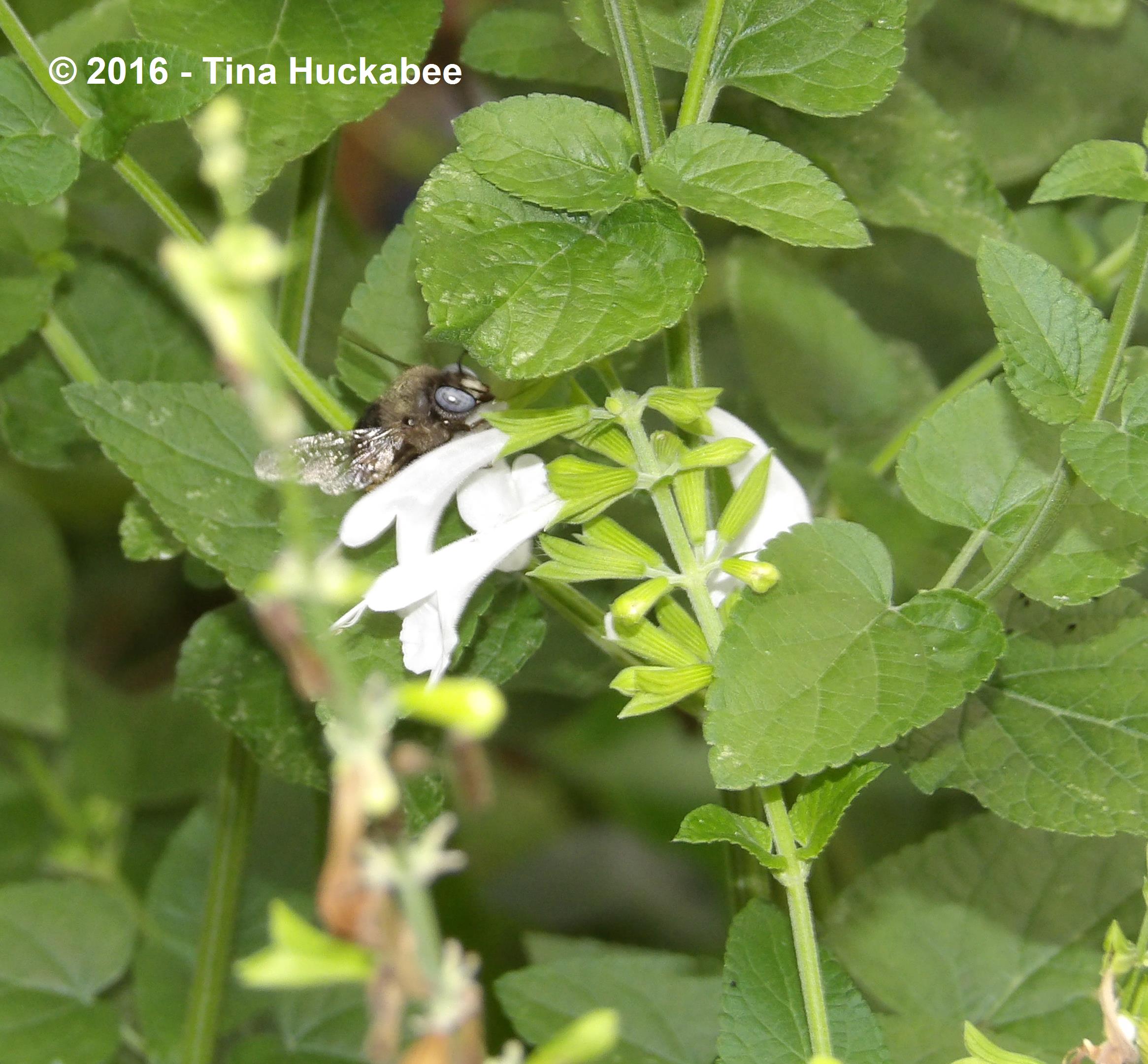
It wasn’t all butterflies and moths in the garden this past month, though.  Many individuals of my favorite native bee, the Horsefly-like Carpenter beeXylocopa tabaniformis, are still active and stealing nectar.

imgp9956_cropped_2580x2502-new

Love those snazzy stripes,

imgp9955_cropped_2331x2161-new

…and dreamy blue eyes!

I’m thrilled that American Bumble BeesBombus pensylvanicus, are in the garden this fall. I couldn’t get a good shot, but at least one bumble is in the garden on a daily basis and working hard.

imgp0154_cropped_3411x3222-new

Yellow BellsTacoma stans, is a perennial shrub which has attracted multitudes of pollinators this month, including several native bee species, honeybees, a variety of smaller skippers and moths, all of the large swallowtail butterfly species, and hummingbirds.  It’s a pollinator plant for the win!!

Other charming critters honoring my garden are the ubiquitous Green Anole lizards, Anolis carolinensis.

imgp0093_cropped_3027x2295-new

This one had just caught and gobbled down something–I wasn’t quick enough to see what the prey was or to configure my camera into action, but I suspect the snack was a small bee or moth.  Mr. or Ms. Anole  was smacking its pleasure after the treat and looking smug.

imgp0092_cropped_3041x2299-new

Most of the Anoles I see in the garden now are juveniles and darn cute for teenagers. They’re dormant once our chilly weather arrives and I miss them during the winter months.

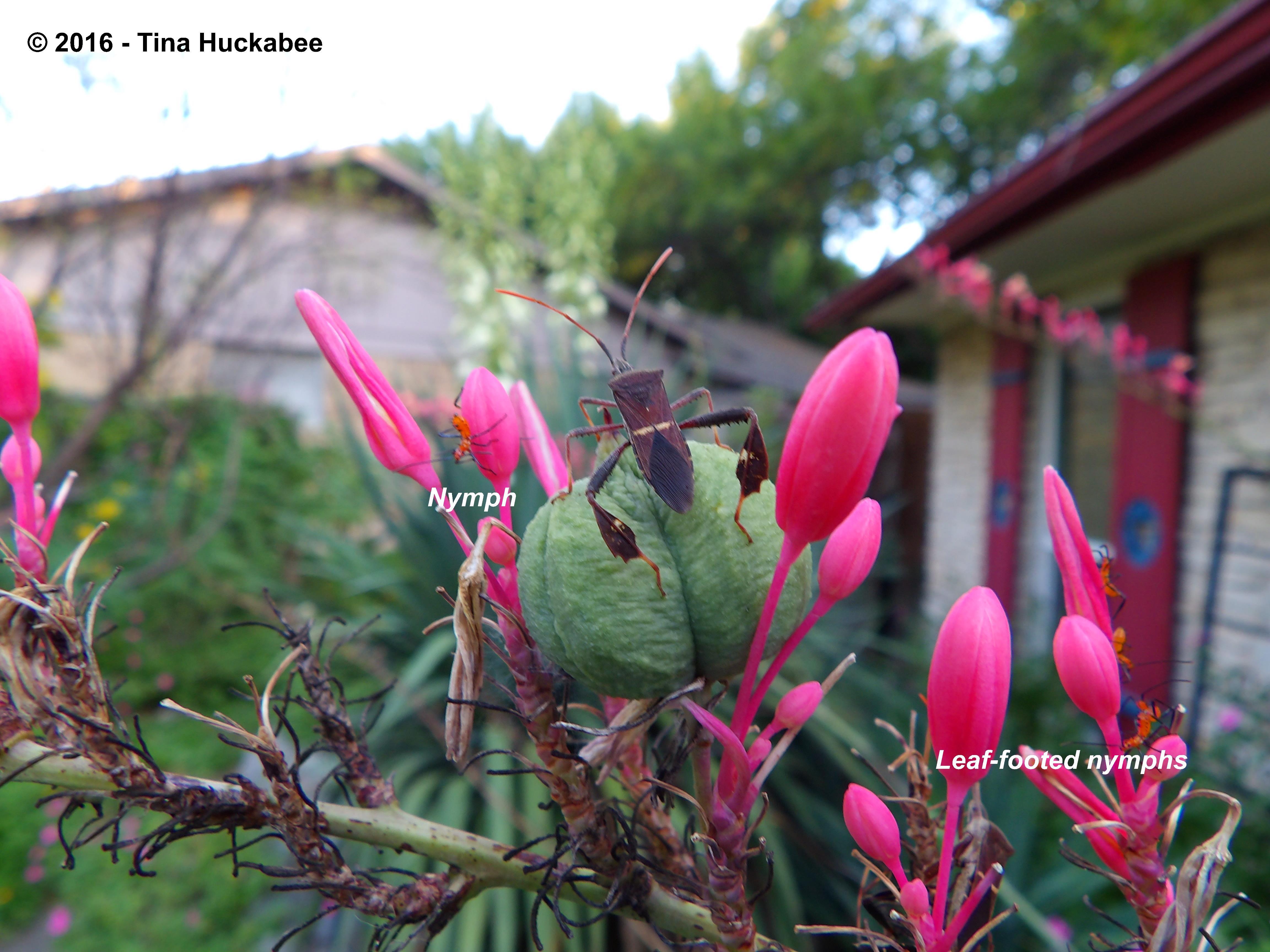
This Leaf-footed bug, Leptoglossus phyllopus, owns this space atop a Red Yucca seed pod (which they like to munch), and is serving as a mentor to some offspring.

imgp9795-new-new-new

Perhaps not as pretty as some insects, these have a certain panache and I don’t mind seeing them occasionally in the garden.  They can be destructive (they’re sucking insects and damage foliage), but they’ve never proved a problem for my plants.

Pretty–or not, did wildlife visit your garden this past month? Please post for October Wildlife Wednesday. Share the rare or mundane, funny or fascinating, beneficial or harmful critters you encounter. When you comment on my post, please remember to leave a link to your Wildlife Wednesday post so readers can enjoy a variety of garden wildlife observations.