Texas Native Plant Week-Turk’s Cap, Malvaviscus arboreus

In keeping with my native plants manifesto, which you can read here, I’m celebrating Texas Native Plant Week by profiling some of the native plants in my own gardens.  The information reflects what I’ve learned from the transformation of my traditional maintenance heavy “yard” to a no-lawn, water-wise garden, featuring beautiful Texas native plants– which were the drivers and are the stars of that metamorphosis.

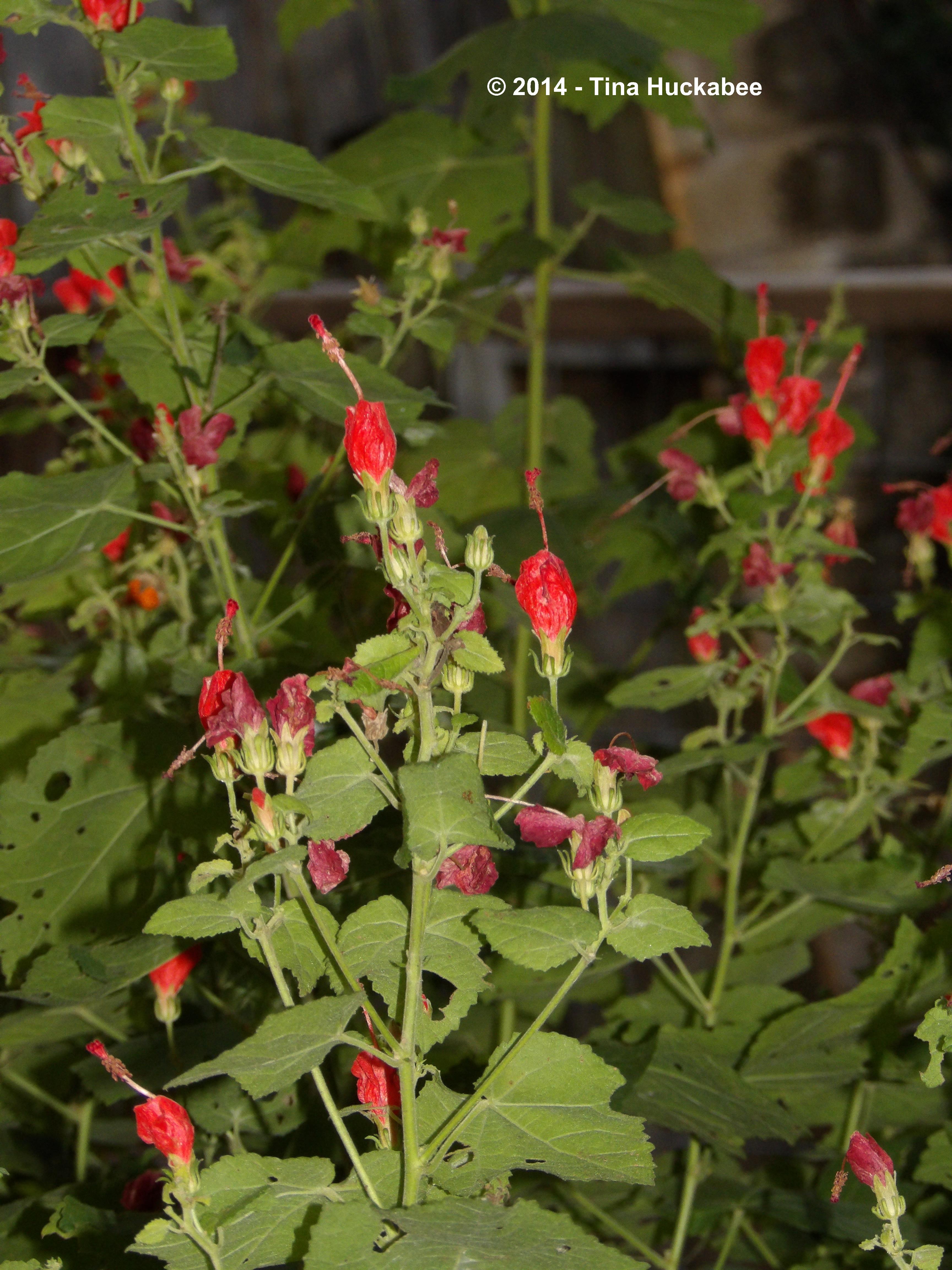
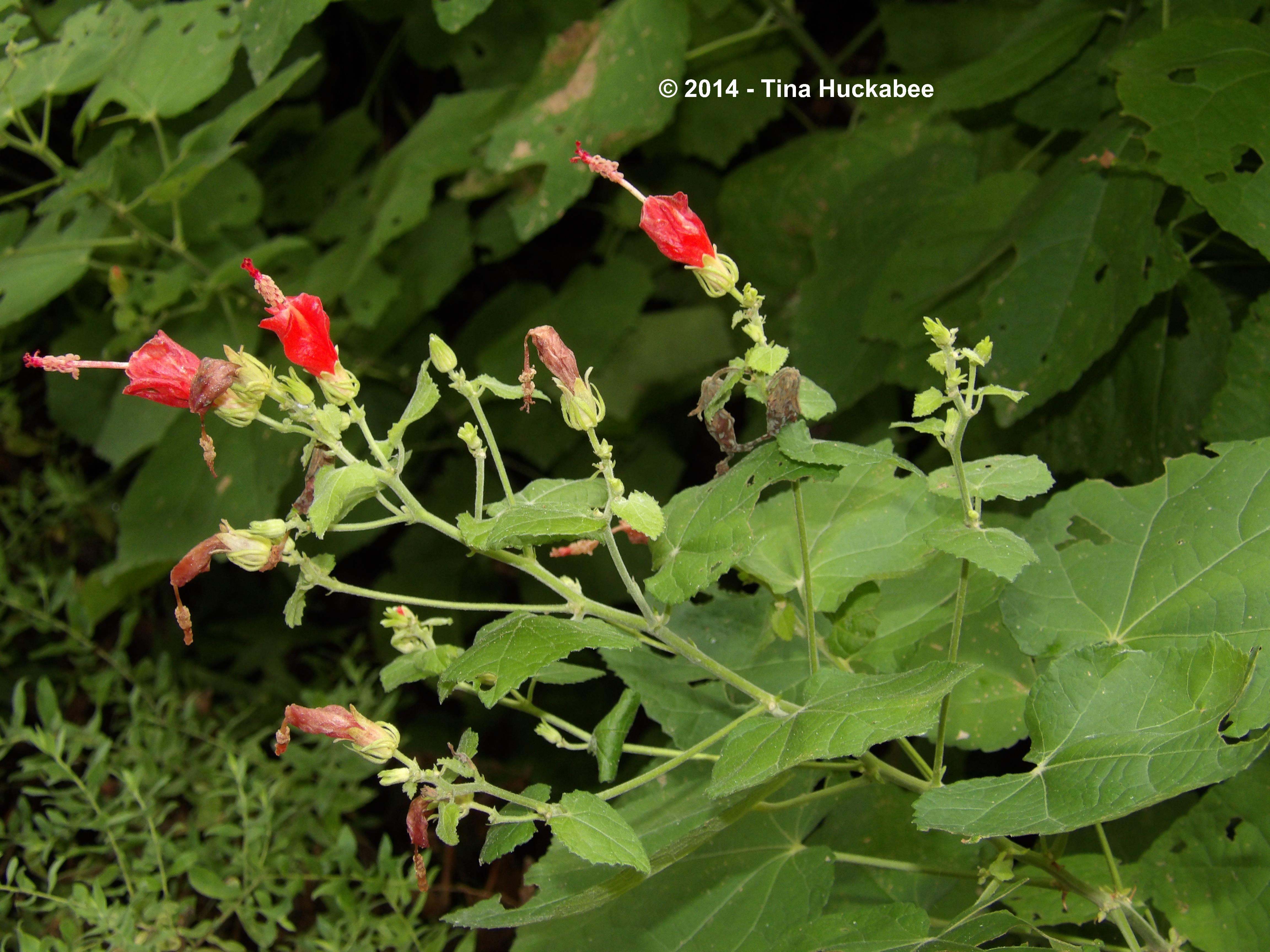
Turk’s Cap, Malvaviscus arboreus, is another perennial in my gardens that I consider a “staple” plant.
IMGP0174.new

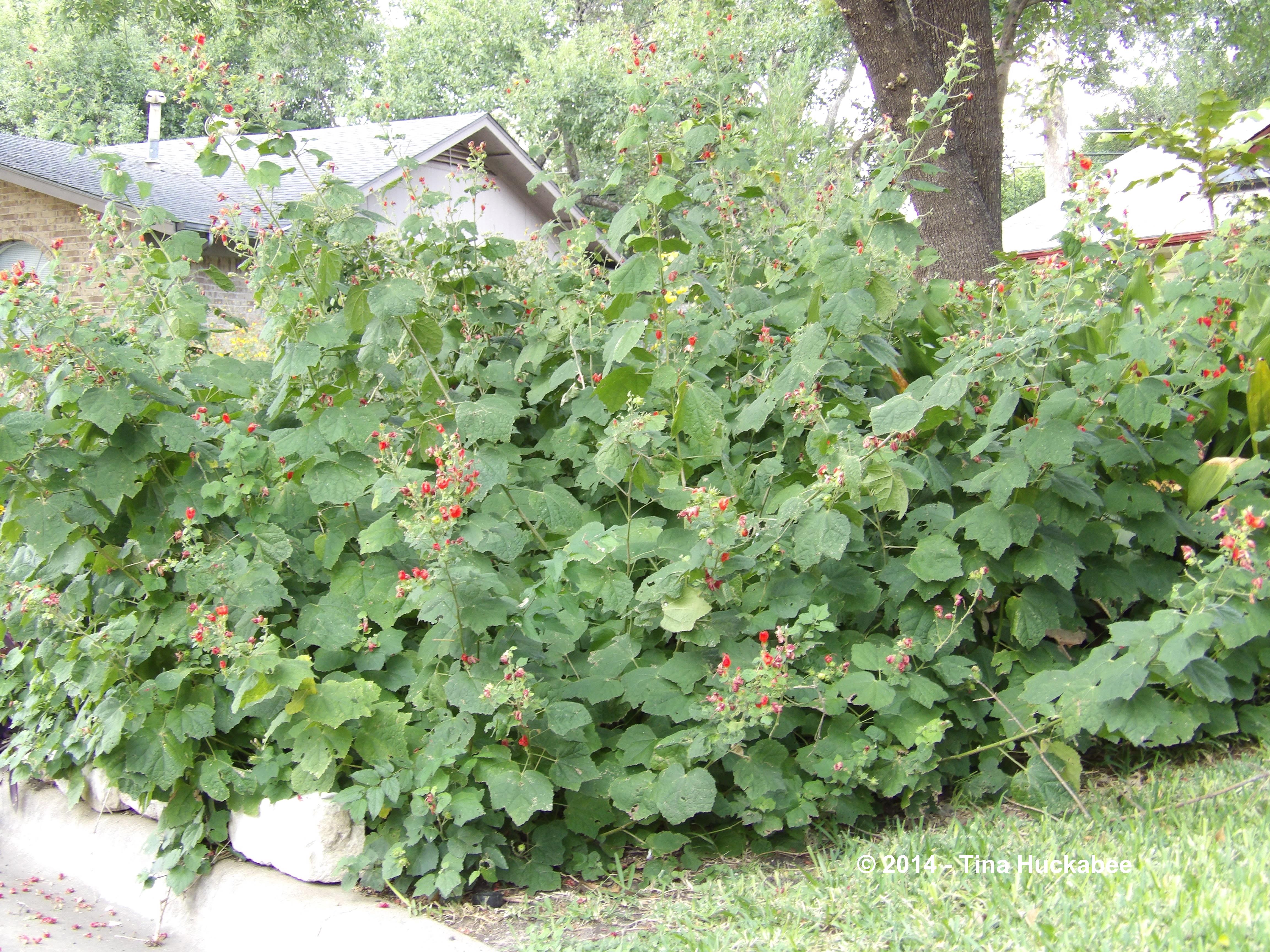
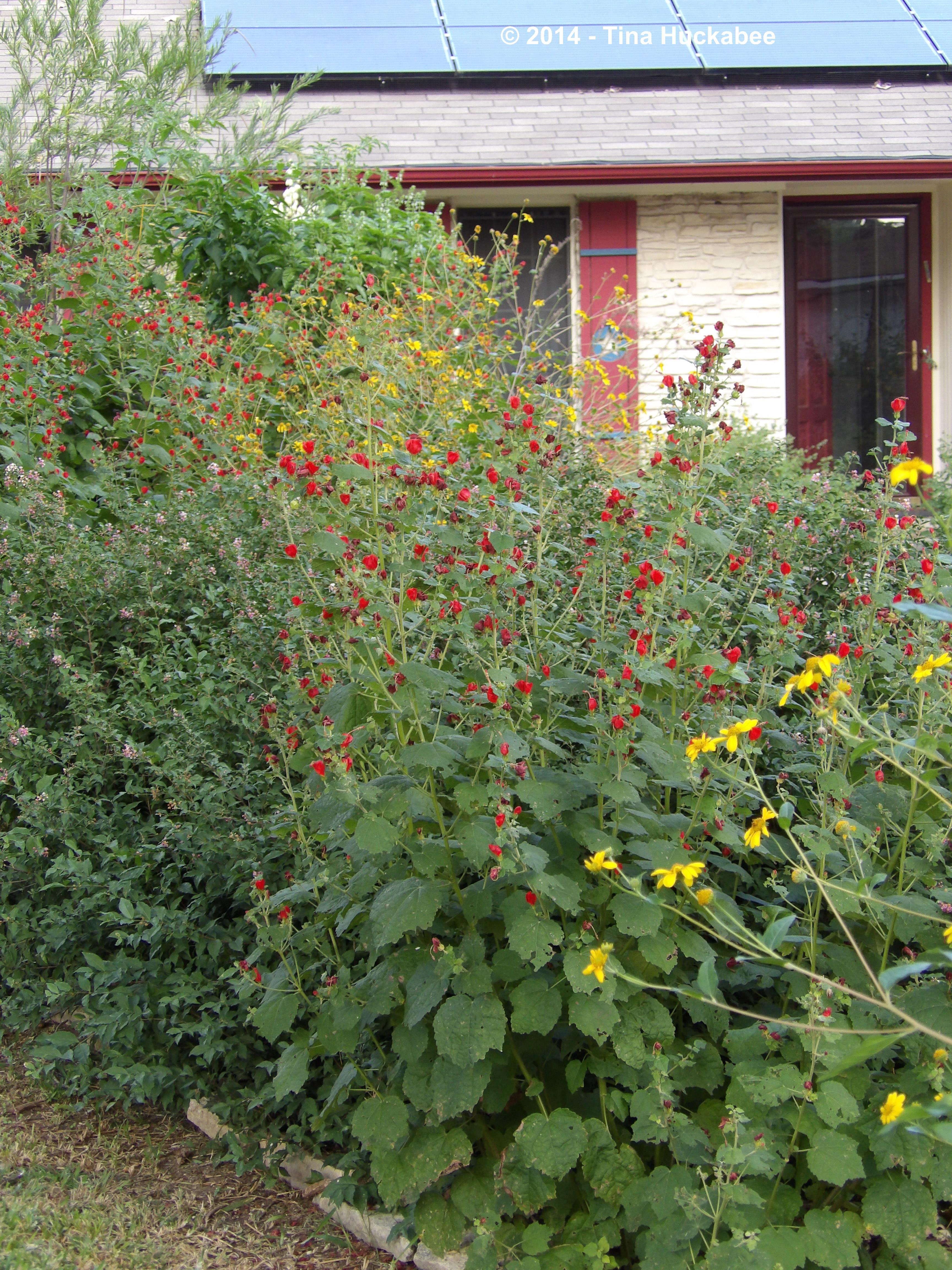
Turk’s Cap was one of the first Texas natives that I loved and planted and I have it growing throughout my property–it serves an anchor perennial for most of my gardens.

IMGP0328.new

The petite, scarlet and swirled hibiscus-like flowers, blooming May through October,

IMGP1294.new

…herald the beginning of our long growing season here in Texas.  Turk’s Cap is native to Texas and other parts of the Southeast, all the way to Mexico.

IMGP1447.new

An excellent wildlife plant, it feeds bees (native and honey),
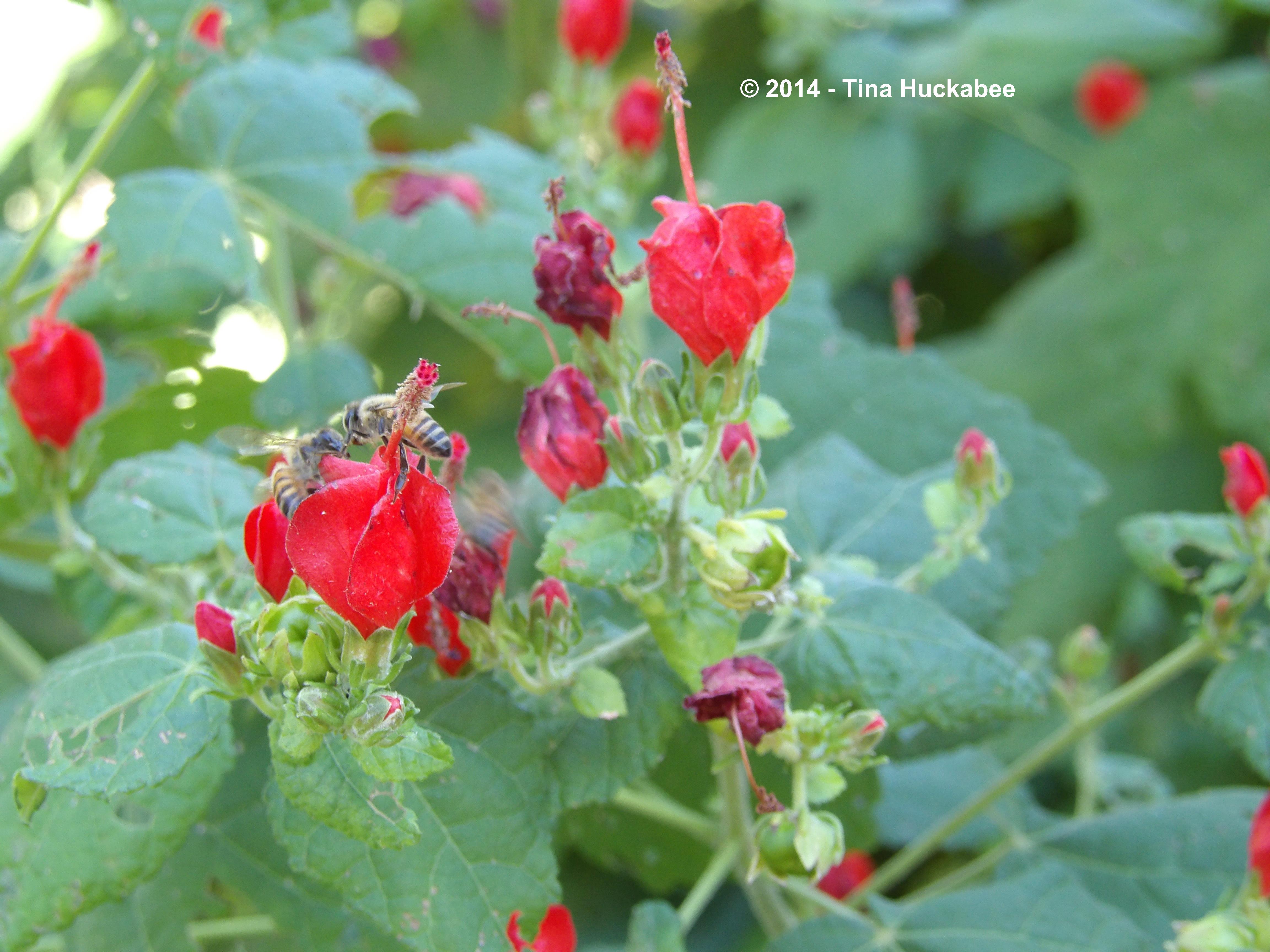
IMGP1788.new

…hummingbirds, butterflies of all sorts, and birds favor the fruits in summer, fall and early winter.

IMGP2118.new

The leaves are wide and tropical looking, giving plenty of room for bird poop to land on,

P1040410.new

…and the flowers are showy and prolific.

IMGP1347.new

IMGP2043.new

Gosh, I love the look of this plant.  But it’s huge.  It can get so, so large, you’ll want to make room for it–so don’t squeeze it in. All of my established stands of Turk’s Cap are 8-10 feet across.  Big ole thangs.

IMGP2102.new

IMGP2104.new

IMGP2109.new

If you plant Turk’s Cap, you’d better like where you put it because after a few years, once it’s established, it’s hellacious (and back-breaking) to transplant.  The bulbous and massive root (system) is the reason why Turk’s Cap  is so hardy and drought tolerant. I don’t water several of my established groups of Turk’s Cap.

Turk’s Cap is best in shade, dappled shade, and part-shade.  Yay!  A beautiful perennial that is great in shade!  It’s adaptable though and works in full sun–in fact, it blooms beautifully. However, the leaves flatten and darken in a way that I find unattractive, so I generally don’t plant mine in full sun–there are much better choices for planting in the blasting Texas sun.  However, as a shade perennial? I just love it!

P1040406.new

Turk’s Cap is a herbaceous perennial, meaning that it dies to the ground with a hard freeze.  It will disappear in a cold winter after you’ve pruned it to the ground, so it’s a good idea to pair Turk’s Cap with evergreen growing companions.  Some examples might be Columbine, Iris, holly shrubs (for example, the native Yaupon), Rock Rose, or even some of the more shade tolerant yucca plants, like this Paleleaf Yucca.

IMGP1397.new

(Disclaimer: this particular part of my garden receives late morning to early afternoon summer sun, but is shaded for the remainder of the day.)

Don’t be dissuaded by Turk’s Cap going AWOL in winter.  It will return quickly in early spring; tough, hardy and beautiful, Turk’s Cap will bloom and bloom during the long Texas growing season.

IMGP1293.new


Bloom Day, October 2014

Summer has been reluctant to release its toasty grip on us in Texas, but the cool of autumn has mostly arrived. We’ve enjoyed a couple of refreshing cold fronts, dropping our temperatures into the ’50’s, with highs in the 70’s and ’80’s. The lingering warmth of September and early October didn’t damper blooms in my gardens, though. Joining Carol at May Dreams Gardens, I’m celebrating blooming stuff on this 15th of October.

There is no shortage of blooming native Texas plants in my gardens. Let’s take a tour, shall we?

Barbados Cherry, Malpighia glabra, has blossomed its dainty, pink clusters for a month or so now.

IMGP0216_cropped_3829x2521..new

Soon, cherry red fruits will replace blooms, feeding a whole different crop of critters. Barbados Cherry is lovely in tandem with Turk’s CapMalvaviscus arboreus.

IMGP0218.new

A cultivar of the native red Turk’s Cap, the Pam’s Pink Turk’s CapMalvaviscus ‘Pam Puryear’, blooms as heartily as the red,

IMGP0235_cropped_3548x3355..new

…but with softer pink swirls perched atop the long branches.   In my gardens, the Pam’s Pink is planted with FrostweedVerbesina virginica,

IMGP1283.new

….and it’s a successful pairing.   Frostweed is an excellent wildlife plant.   Attracting butterflies, like this migrating Monarch,

IMGP1166.new

IMGP1149.new

…and bees,

IMGP1077.new

…and this guy, a Tachinid fly,

IMGP1072.new

…who you can see again on Wildlife Wednesday, a fun little wildlife gardening meme I host.  The next Wildlife Wednesday is November 5th.  Frostweed a stalwart native perennial; it’s drought hardy and works well in either shade or sun.

IMGP1031_cropped_3429x3208..new

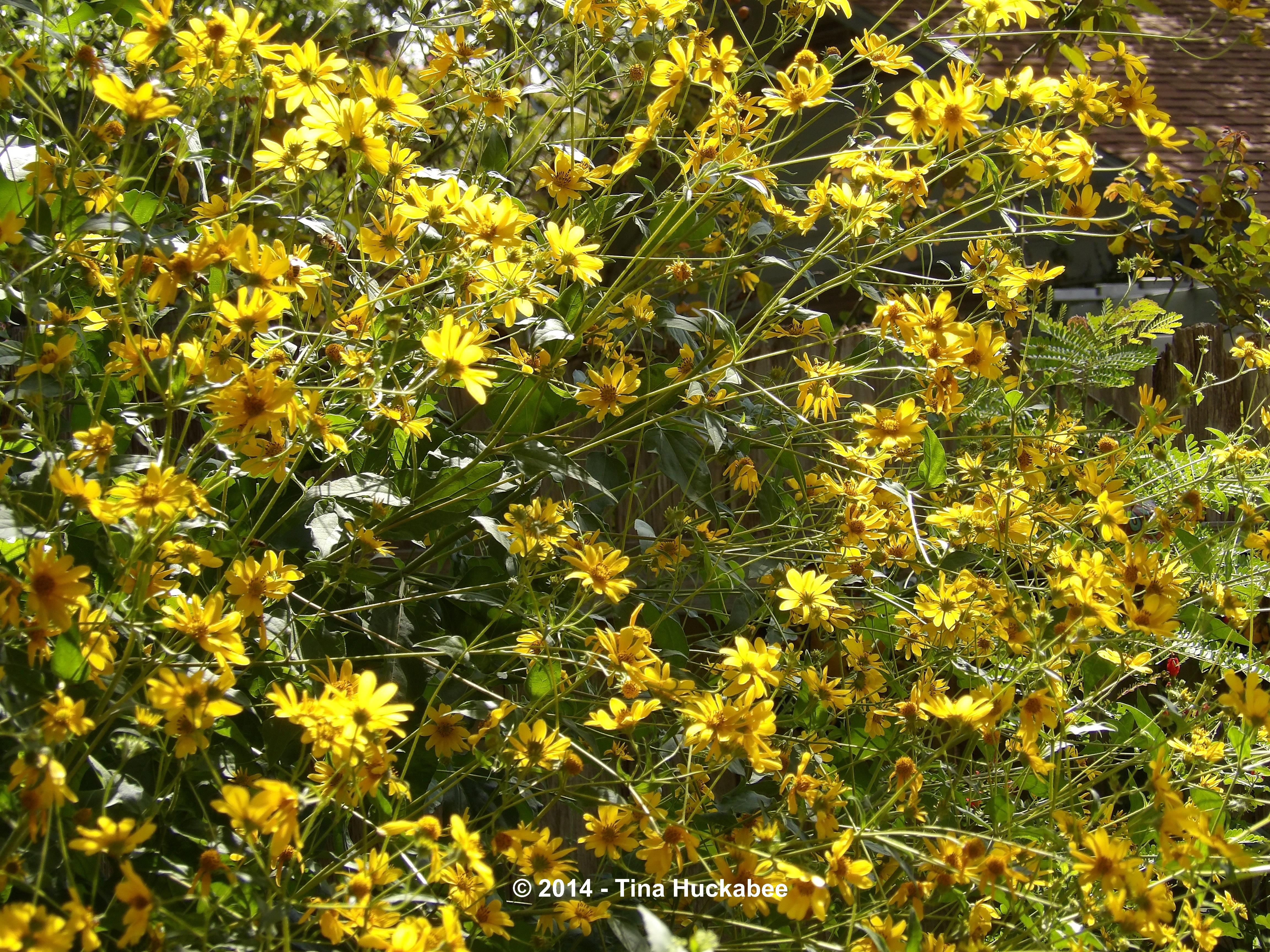
The GoldeneyeViguiera dentata, is photogenic in the fall garden.

IMGP1236.new

Another perennial which attracts its share of pollinators,

IMGP1241.new

…these pretty yellow flowers evoke glorious autumn sunshine.

IMGP1008_cropped_4129x3078..new

IMGP1342.new

They work and play well with other natives in my gardens,

IMGP1185.new

…like the Rock RosePavonia lasiopetala and Barbados Cherry. And who doesn’t love the tried and true combination of yellow and blue?

IMGP1277_cropped_3129x3382..new

This Goldeneye’s companion is the non-native Blue Anise Sage, Salvia guaranitica.  

The roses in my gardens are awake again after the heat of summer. I grow only water–wise antique or cultivar roses in my gardens.  If a rose can’t shrug off the heat and dry of the Texas summer, it’s out!  The Martha Gonzales Rose is one such beast.

IMGP1208.new

Named after a Navasota, Texas gardener, Martha Gonzales,

IMGP1204.new

…this rose is beautiful, fragrant, and tough. Martha grows in USDA zones 7a to 10b so it it’s appropriate in a wide range of situations.  If you only grow one rose, make it the Martha!

The Belinda’s Dream Rose, which is appropriate for USDA zones 5a to 10b,

IMGP1612.new

is the quintessential elegant pink rose. Fragrant and downright luscious, Belinda isn’t quite as hardy as the Martha, but still performs well for me.  Belinda gets a little peeky in summer, but picks up again with rain and softer temperatures.  Caldwell Pink Rose,

IMGP0975.new

looks dainty, but it’s no wilting beauty.  This poor thing, I’ve moved it four times–I think I’ve finally found its forever home.

IMGP1014.new

A migrating Monarch finds this Old Gay Hill Rose delightful,

IMGP1724.new

…and so do I.  Similar to the Martha Gonzales, the shrub is larger and the petals slightly (but only slightly) more pink than the Martha’s fire engine red petals.

I’m not a grow-only-native purest and host a number of non-native perennials in my gardens, like these Four O’Clocks, Mirabilis jalapa.  Considered a staple of the Southern garden, these are new to my gardens and were gifted to me by a gardening friend, TexasDeb at austin agrodolce.

IMGP1180.new

IMGP0856.new

IMGP0858_cropped_3419x3414..new

These lovely trumpets open late in the day, bloom all night, and close in the morning. Four O’clocks are fragrant and are such lovelies–I’m tickled to make room for them in my gardens.

Jewels of OparTalinum paniculatum, are another new-to-my-gardens perennial from TexasDeb.  Jewels are also an old-fashioned flower of the Southern garden.

IMGP1369.new

IMGP1380.new

I love the teesny flowers, the “jewels” seeds, and chartreuse foliage. Both Four O’Clocks and Jewels of Opar are potentially invasive, so I’ll keep them in check–ripping out uninvited extras who crash my garden party!

It’s now that my Coral Vine, Antigonon leptopus, shines,

IMGP1413.new

IMGP1415.new

…or is that a sparkle?  Whatever it is, the bees love this bloomer.

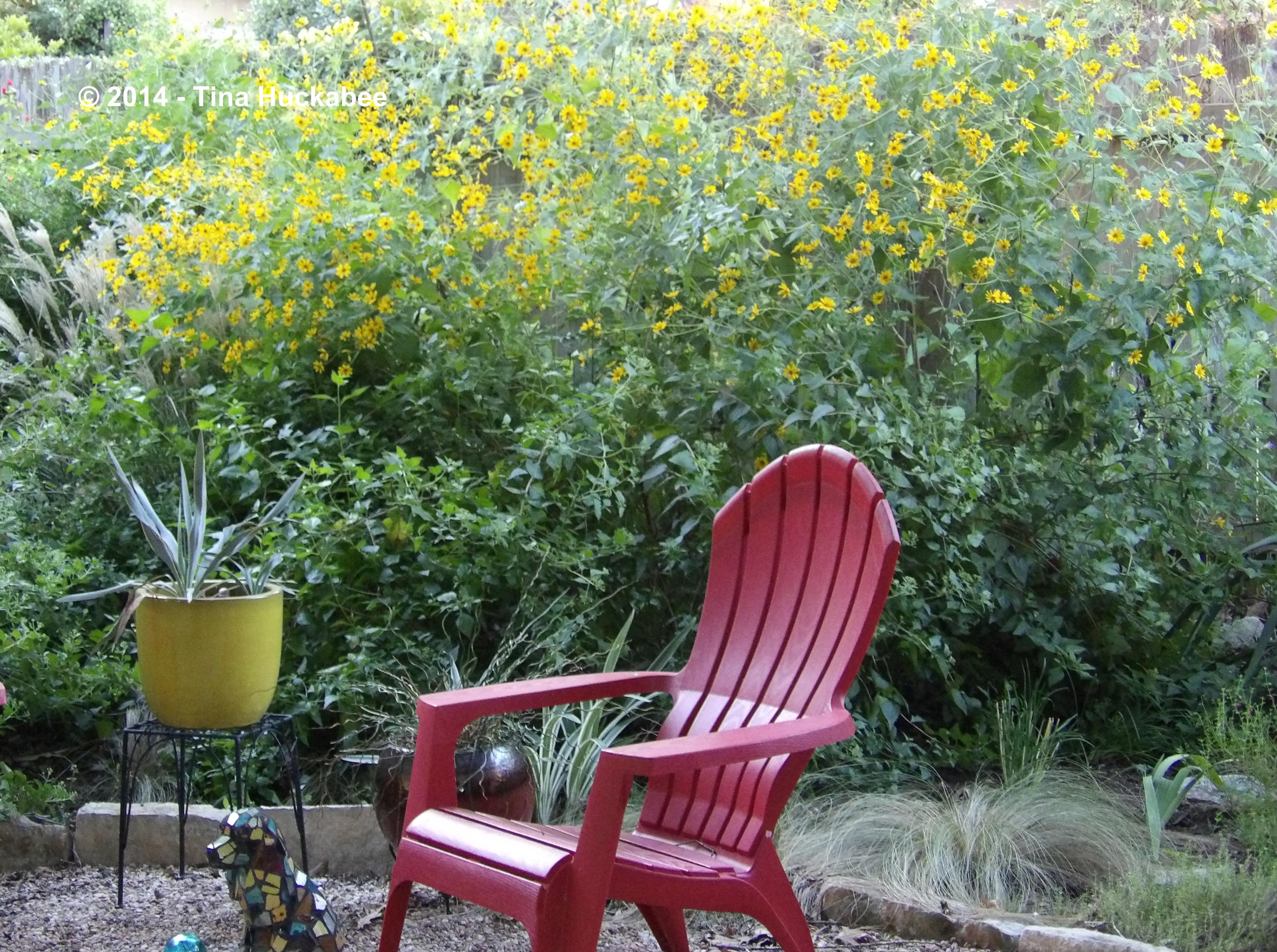
After each rain, the Almond Verbena, Aloysia virgata, flowers and its fragrance graces my garden.  Shown here in partnership with Turk’s Cap blooms, the Almond Verbena is favored by honeybees.

IMGP0918.new

My Almond Verbena is the anchor plant in a group of native shrubs and perennials.

IMGP0910.new

It fits quite well, I think.

Quoting another garden blogging buddy, Debra of Under the Pecan Trees,  we enjoy a “second spring” in Texas–a  lush blooming autumn gift, after the heat, when all, including gardeners, perk up anew.

What’s blooming in your gardens this October Bloom Day?  Check out May Dreams Gardens for blooms from everywhere.


Foliage Follow-up, September 2014

As with our blooms, the Central Texas foliage perks up with September rains, shorter days, and the suggestion of cooler temperature ahead.  I join with Pam at Digging to celebrate the end of summer, new beginnings for autumn, and all things leafy.

The pond garden is a riot of fascinating foliage.  Just take a look! P1070046.new

Lots of foliage action in this shot!  Clockwise from the bottom, the actual water plants include the lily pads of the two lilies I grow (Colorado and Claude Ikins), the Ruby Red Runner, and the showy leaves of the Pickerel RushPontederia cordata.   All three pond plants contribute to the biological filtration of my pond, though I also have a mechanical filter.

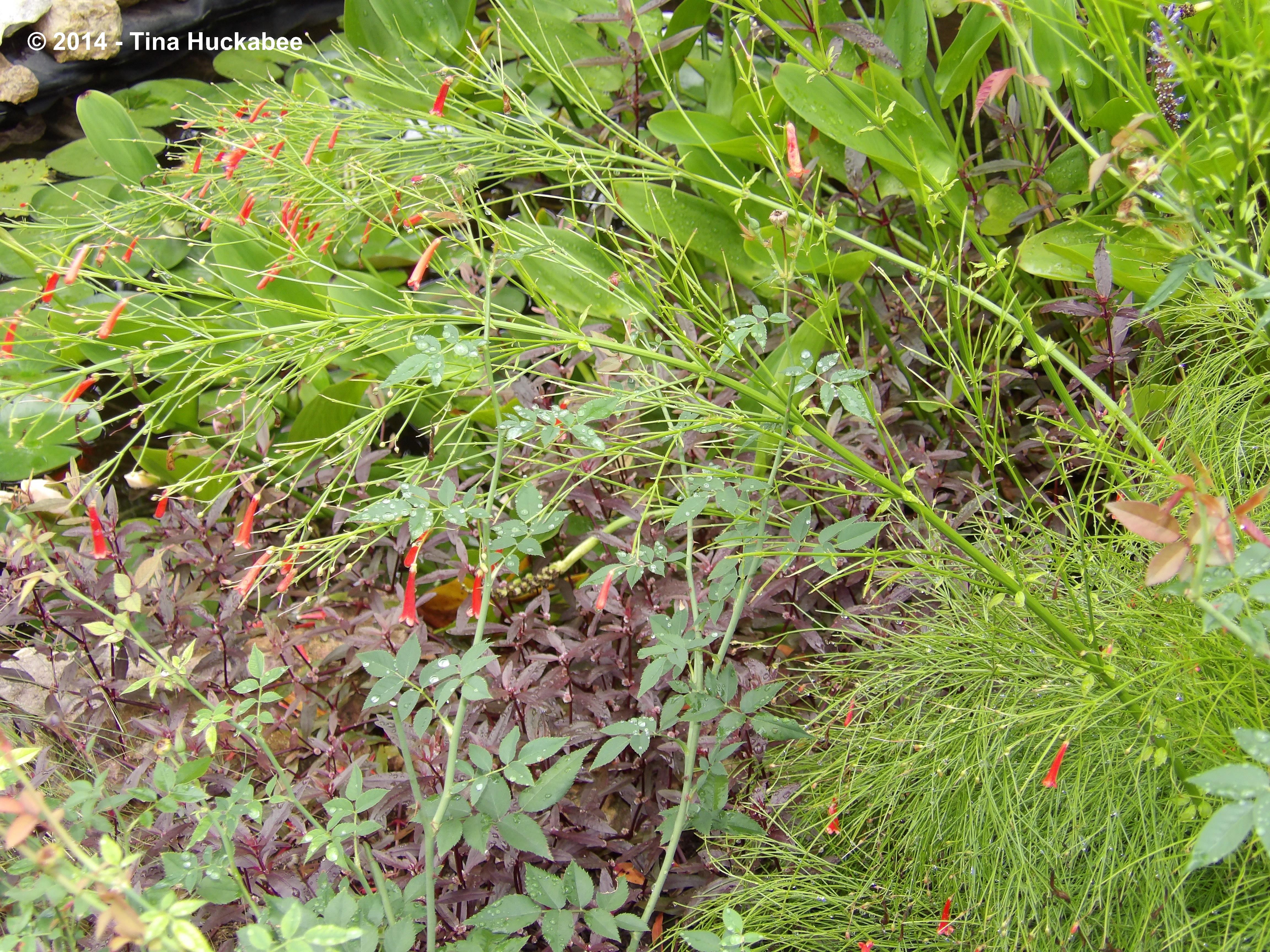
Continuing with the tour d’ foliage, the plants adjacent to the pond include tropical Yellow Bells, Tecoma stans, Soft-leaf Yucca, Yucca recurvifolia, Firecracker Plant, Russelia equisetiformis, Martha Gonzales Roses, Iris, Autumn Sage, Salvia greggii, and Mexican Feathergrass, Nassella tenuissima.  All of these perennials sport differing widths, textures, and colors of leaves.

P1070034.new

Ruby Red Runner dies back in the winter, but by late summer into fall it’s full-on lovely and spreading.

P1070042.new


P1070035.new

It’s seeded out in several places around the pond. This plant, usually used as a waterfall biological filter and prized for its attractive foliage, produces teensy puff-ball flowers,

IMGP0402_cropped_3073x3308..new

…which go to seed, thus, the spread.

Another view of the plants near the pond…

20140914_19.new

Not much blooming in those photos, but a variety of leaf beauty.

I particularly like these water shots with the creeping roots of the Ruby Red Runner, spreading its spidery fingers toward the lily pads,

P1070057.new

P1070056.new

…as if the roots are creeping outward to grab the pads.  Or maybe they’re just reaching out for a watery hug!

The soft, elegant foliage of Lindheimer’s Senna, Senna lindheimeriana,

20140914_11.new

lends structure to, but also softens the back of my garden.  Combined with the bright green leaves of the Yellow Bells and spiky, but matching-in-color American Century Plant, Agave americana,

P1070358.new

20140914_14.new

…the Senna fits well in this spot.

The morning after a recent rain,  the foliage of the Purple Heart, Setcreasea pallida, retained droplets along its edges.

20140914_54.new

With “traditional” autumn coloring, (which doesn’t happen for Central Texas on a large-scale until late November/December), the plumes of the Maiden Grass, Miscanthus sinensis ‘Adagio’, beautifully complement the flowers of Turk’s CapMalvaviscus arboreus, and the orange blossoms of Flame Acanthus, Anisacanthus quadrifidus var. wrightii.

P1070133.new

Here’s a closer look at the inflorescence of the Maiden Grass.IMGP0268.new

Along with the orange-y and autumn-y color theme, this new ceramic container is planted with the ‘Color Guard’ YuccaYucca filamentosa ‘Color Guard’, accompanied by Woolly Stemodia, Stemodia lanata.

P1070197.new

The container sits amidst a nest of blooming and berrying Pigeonberry, Rivina humilis.

What interesting foliage is gracing your garden space now?  Celebrate foliage in your gardens and learn about other foliage by visiting Digging for September Foliage Follow-up.