Surprise Lilies

Each gardening season, after the first drenching rain in August or September, I’m always surprised to see the Oxblood Lily, Rhodophiala bifida, pop up in varying spots. An introduced plant, the Oxblood Lilies have naturalized in parts of Texas and are common dots of crimson in lawns and gardens here in Austin and other parts of Central Texas. Its stalks, or scapes, rise up from the Earth (overnight as best I can tell!), buds developing atop and flowers opening with a brilliant flourish within a day or so. I have groups of these delights and they will bloom, not all at once, but with a continuing presence, for a month or so. Foliage arrives after the blooms fade, elegant in form and rich in color, remaining green throughout the winter months.

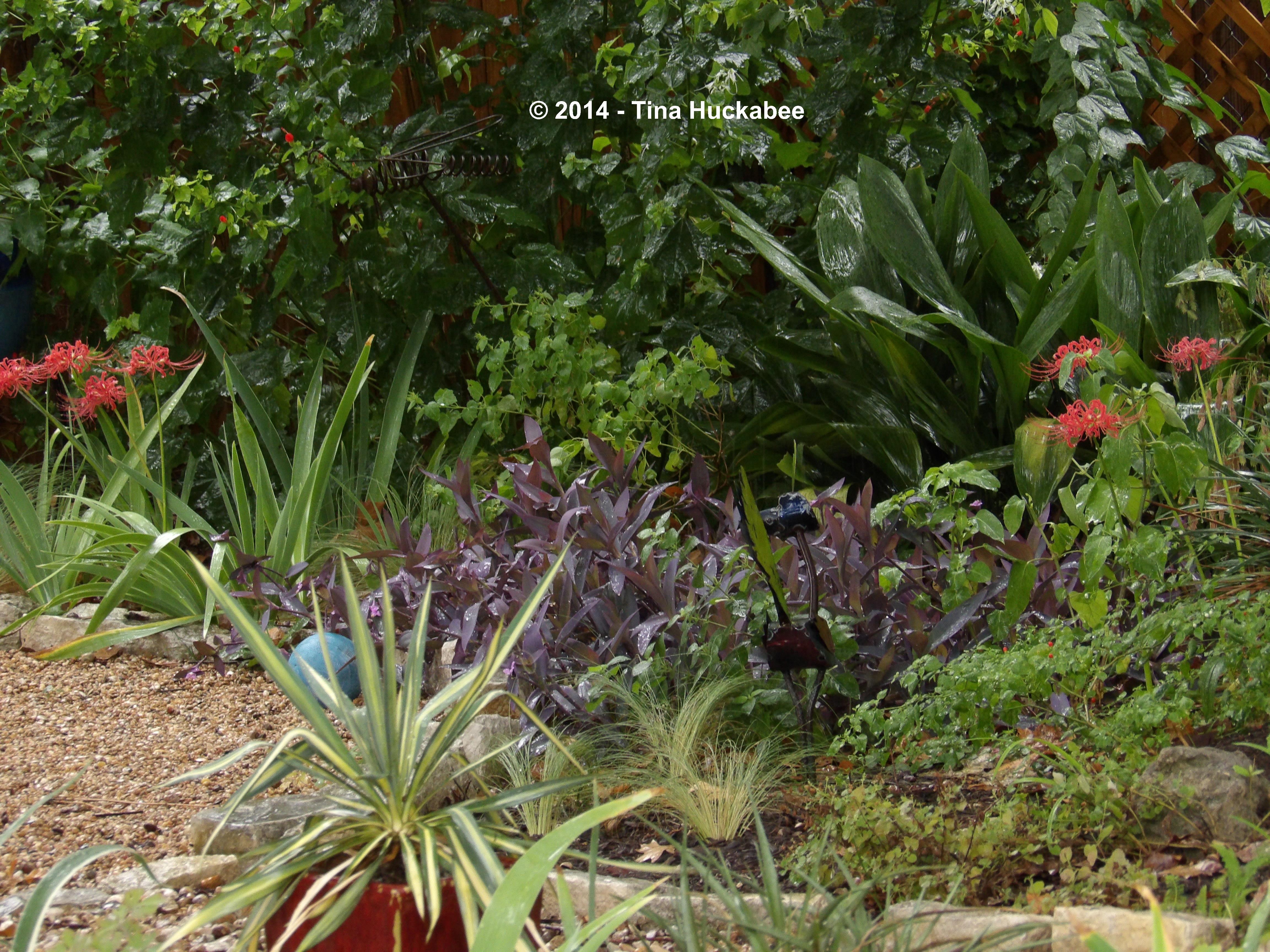
A complementary and competing red beauty is the Red Spider Lily, Lycoris radiata. Not quite as prolific or common as the Oxbloods, these stunning blooms are head-turners just the same. A native of the Far East, Red Spider Lilies have been a traditional fall bulb in southern gardens for generations. Their petals are slightly ruffled and curl charmingly; spidery stamens reach out and up, well beyond the petals. The stalks upon which these red spider flowers rest grows to about twelve inches in height. Leaves of red spider lilies are slender gray-green with a stripe down the middle and the foliage clump provides a grassy accent during the winter months.
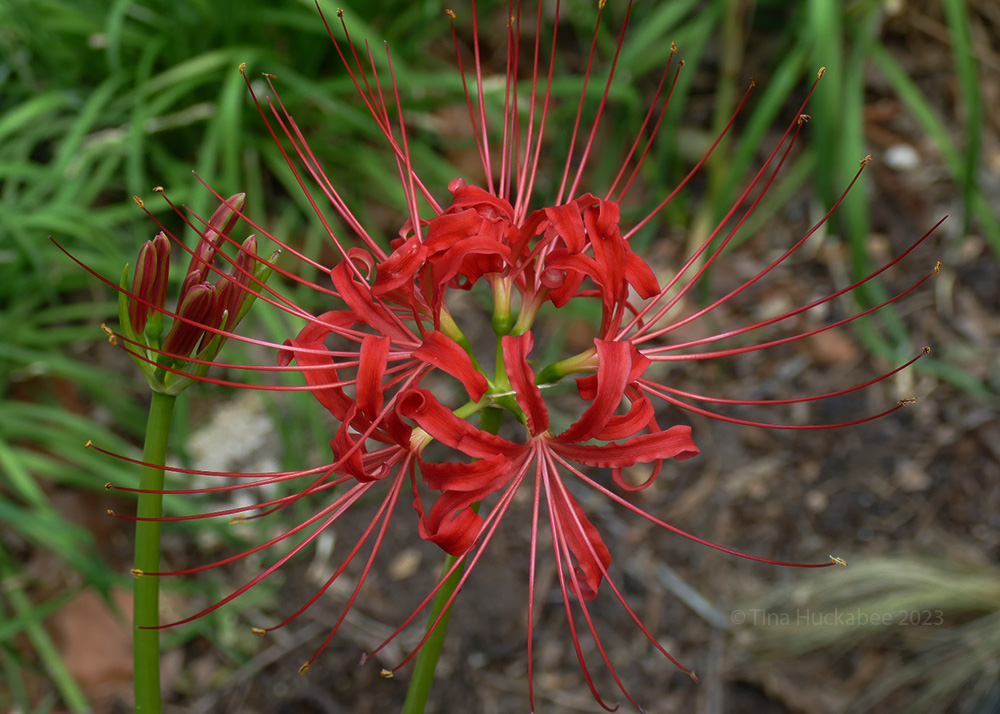
I say that I’m surprised when these lilies show up, but of course, I’m not, not really. I planted the bulbs and even in the most droughty of years, I always enjoy the sight of few Oxbloods and Spiders when they show up, popping with vibrancy. In wet years, the show is spectacular. That red!

What has surprised me this week is the appearance of this Hill Country Rain Lily, Cooperia pedunculata.

I’m fairly sure that this is the native rain lily, as I remember buying bulbs for my back garden at least 10 years ago. The lilies never did much; only a few blooms graced the garden and those were in the year after I planted the bulbs. After that, they were no-shows. My back garden was shady (still is in areas) and I’ve always assumed that’s why the lilies didn’t thrive. These lilies respond to rain, but they require full sun. In full sun places the lilies grow, bloom, and spread with abandon. Flourishing along roadsides, they create a white blanket in the days after rain, gently moving with breezes.

Parts of my back garden are now sunnier and at least one Rain Lily bulb is rewarding that newly found light by emerging and flowering after last week’s luscious rain.

Such a pretty thing! Creamy and simple, the lily has three petals and three sepals. A veil of yellow draws admirers to its center. The scape is fleshy like those of its lily cousins. I wonder if the original lily bulbs that I planted seeded out, as I don’t recall planting in the particular spot this lily has chosen. I’m not complaining, any lily is more than welcome, wherever it might turn up. I’ll let this specimen seed out and spread the seeds in other areas of my garden. As well, a trip to a local nursery to purchase some bulbs wouldn’t be amiss!

Not all surprises in the garden are welcome, but when lilies are the surprise, they are well worth waiting for.

Reds After the Rain

As happens every August and September, flower stalks of the perennial bulb Oxblood or Schoolhouse Lily, Rhodophiala bifida, have emerged. These bright pops of color appear, seemingly overnight, after the first few soaking late summer rains. This particular group lives among some Mexican Feathergrass, Nassella tenuissima. The still green, but turning autumn-toasty feathery grass, contrasts with the deep red, dainty lilies, creating a charming scene.

So far, this is the only Schoolhouse Lily group that has awakened from its underground bed, but I’m confident that in coming weeks, other red surprises will reach up for a share of sunshine and a howdy! from pollinators. The individual blooms don’t last long, only a few days, but I’ve planted various bulbs around my garden and they appear, as they choose, at different times, allowing for a longer period in which to enjoy the pretties. Once the blooms fade, strappy foliage will stay green, disappearing in late spring as the temperatures rise. This Amaryllid was most likely introduced in Texas by a German colonist and botanist, Peter Heinrich Oberwetter (1830-1915). He imported R. bifida bulbs from Argentina and it has naturalized successfully in many parts of the state, especially here in Central Texas.

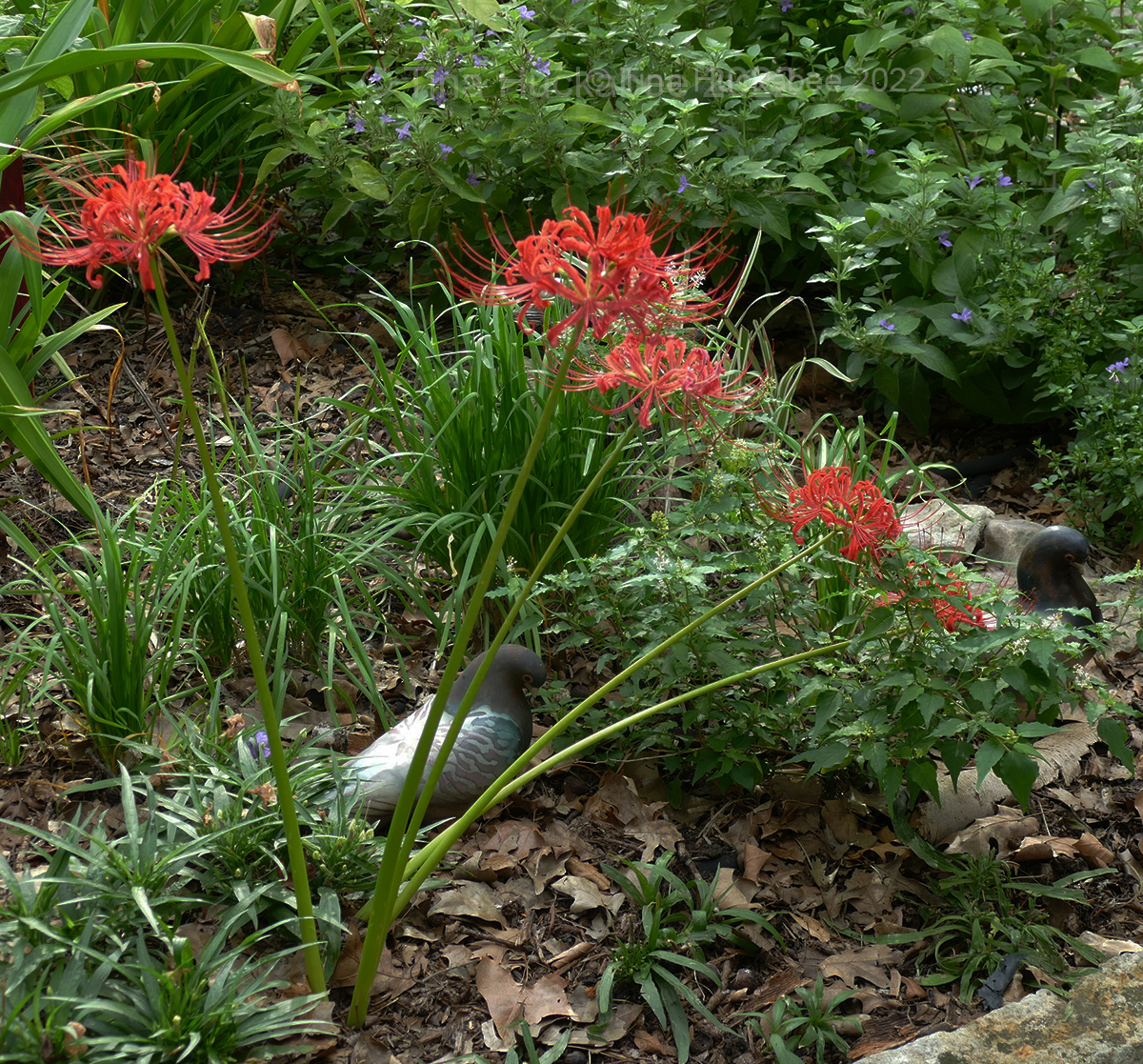
Another Amaryllis bulb making its flowery appearance after late summer rains is the Red Spider Lily, also called Guernsey Lily–Lycoris radiata. These stunning flowers, with their curled petals and spidery stamens, are showstoppers.

Like the Schoolhouse Lily, Red Spider Lily flowers emerge from buried bulbs after an August or September rain and sit atop fleshy stems . The stems of L. radiata are taller and the flower is larger than those of R. bifida. Both rock stunningly rich red accents in the garden.

This group of Red Spider Lilies produced five stems with flowers. The stems are single, with no foliage emerging until the flower has faded. Like the Schoolhouse Lily, the foliage will be evergreen through winter and spring, disappearing with warmer temperatures. The bulbs stay safe from summer’s heat in deep soil, needling little water through the summer months.

The foliage you see in both photos comes from a Pigeonberry, Rivina humilis. The Pigeonberry and Spider Lily are accompanied by a couple of Glo Coalson’s raku pigeons. I thought the Pigeonberry needed some pigeon friends. Also, these pigeons don’t poop.

Our blisteringly hot summer has somewhat abated and we’ve recently received 4-5 inches of rain. We’re still in an official drought, but the slightly cooler temperatures and the rain are most welcome by the garden and this gardener. Along with these reliable late summer bulb bloomers, everything in the garden is breathing a sigh of relief–greening up and flowering out–demonstrating their appreciating for the rain.

Luscious Lycoris

It’s fall!!

RICOH IMAGING

I can always tell, especially when these beauties surprise me.  Even if I wanted to, there’s no way to ignore this!

IMGP0029_cropped_3161x2401..new

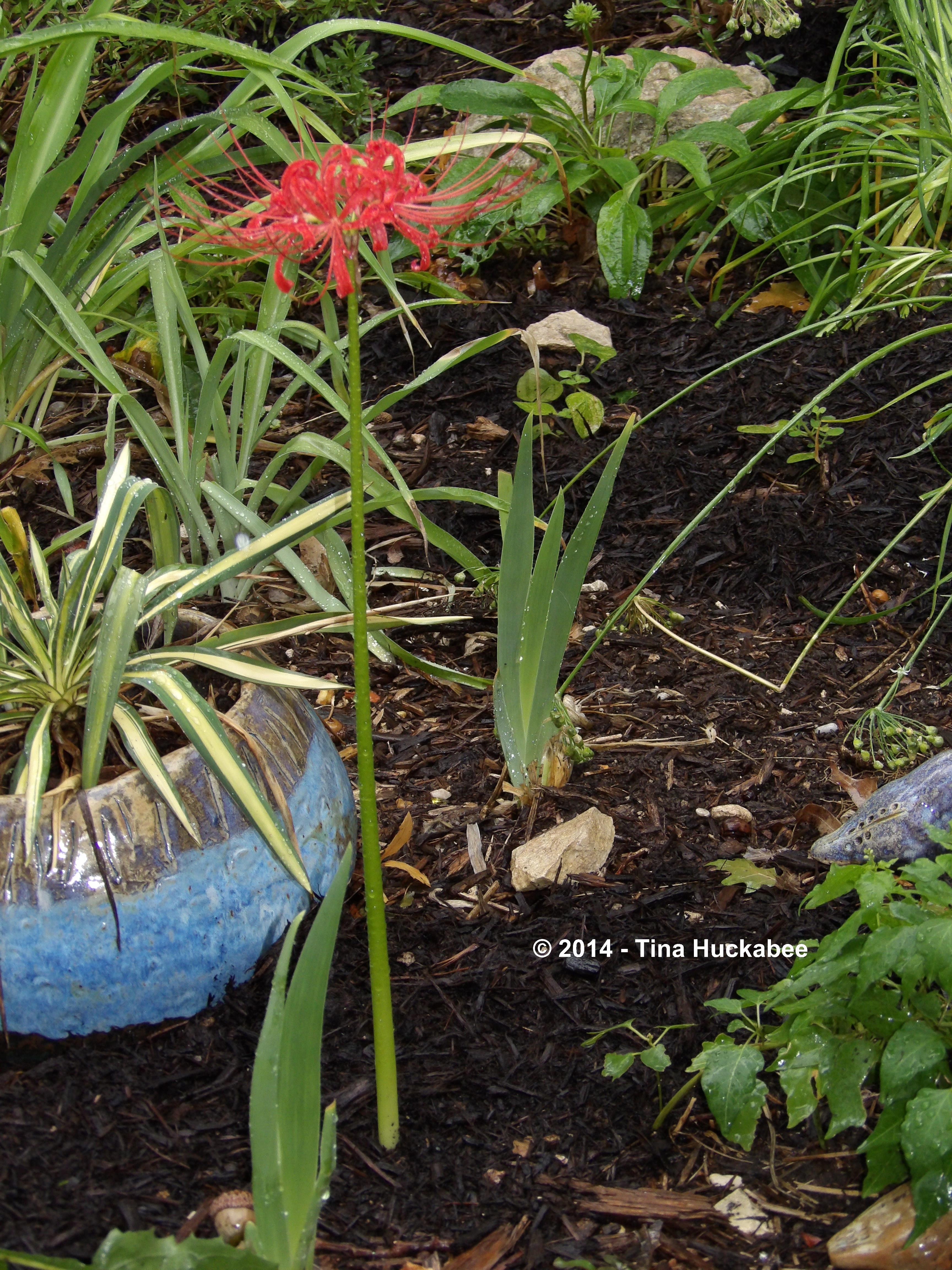
After our first decent rain in early September, the Red Spider Lily, Lycoris radiata, sends up its bloom stalk and in the following days, stunning blooms unfold.

IMGP0030.new

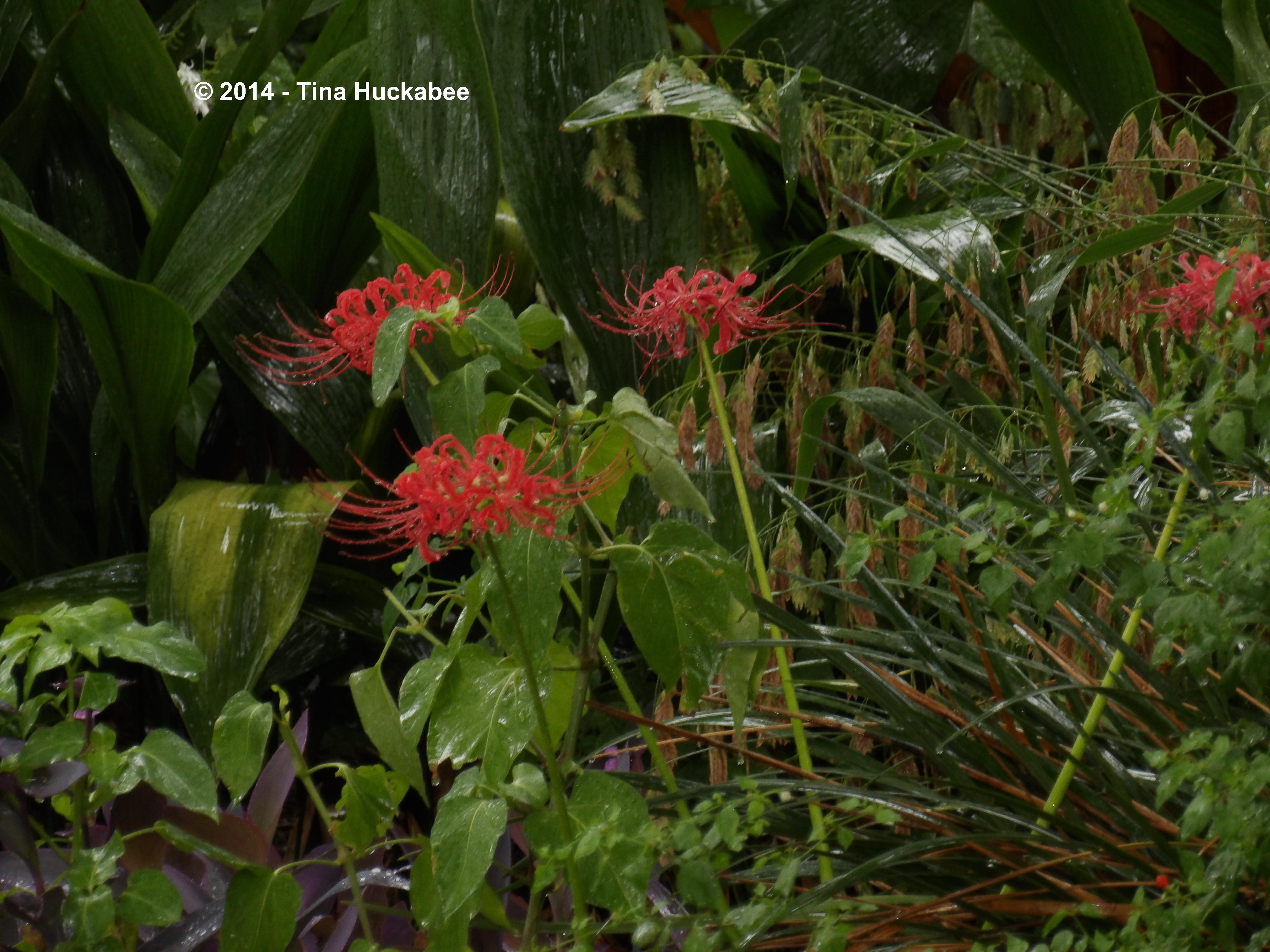
The long stamens give rise the the common name, spider.

IMGP0075.new

These petals and those extravagant stamens still sported rain drops on a recent morning after overnight rain.

In the Amaryllis family and native to the Far East, this bulb has naturalized in the southern part of the United States. Here in Austin, they’re easy to grow.  Plant now (in the early fall), in a part shade to shady spot and wait.  And if you’re like me, forget about them, go on with your life, your stuff, and your gardening.  Then be happily surprised each September–I never remember that I’ve planted them.  They pop out of the ground and do this:

P1070254.new

…and then they do this.

IMGP0130.new

IMGP0028.new

Usually there are several blooms, one atop each scape, rising from the dormant-since-last winter bulbs.

After the flowers fade, the foliage will emerge–it looks similar to liriope foliage, except with a pale-yellow stripe up the middle.  The foliage will stick around until sometime in late winter–I don’t really know because I never realize that they’ve gone.

I only have three groups of L. radiata.  In this area I planted two bulbs in two different spots,

IMGP0132.new

IMGP0128.new

…while here resides a single bulb.

IMGP0136.new

I planted my bulbs three years ago and this is the second year they’ve bloomed. They seem happy here.

IMGP0129.new

So you know how I’m always preaching about planting for pollinators–bees, butterflies, and other assorted wildlife?  Well, forget all that for this one post:  you plant Red Spider Lily for yourself.  Go ahead, be completely selfish and shoot for style over substance. I’m sure in its native range, there’s something that feeds on Lycoris radiata–but not here.  No sir, I haven’t seen anything so much as hover around the Spider Lily, wondering whether this is something worth sipping from or chewing on.  This plant is for looks only–it’s a total fluff plant, indulging the pretty-plant-person resident in every gardener.

IMGP0134.new

And that’s okay.

P1070349.new

Plant, wait. enjoy!!

IMGP0450.new