Native Texas Plant Week and Garden Bloggers’ Bloom Day–October 2012

For Garden Bloggers’ Bloom Day and in celebration of Texas Native Plants week, I’m posting some pics of a few currently flowering beautiful native plants in my garden.  Thanks to Carol at May Dreams Gardens for hosting–check out her site to enjoy photos of blooms from many places.
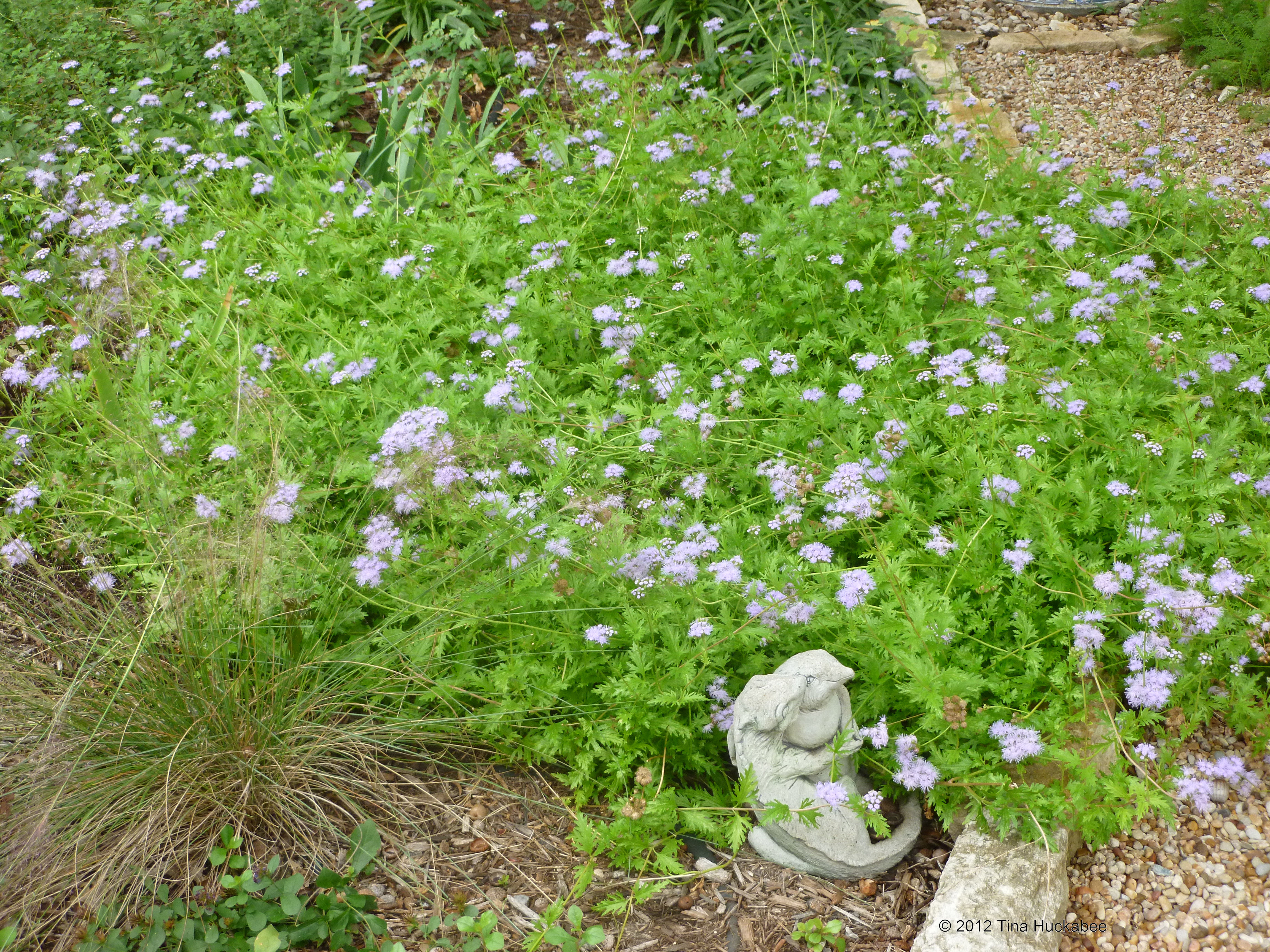
One overview look at a group of Gregg’s Mistflower (Conoclinium greggii),

and a close up of this great native perennial ground cover.  The Gregg’s Mistflower is native to Texas, New Mexico and Arizona.

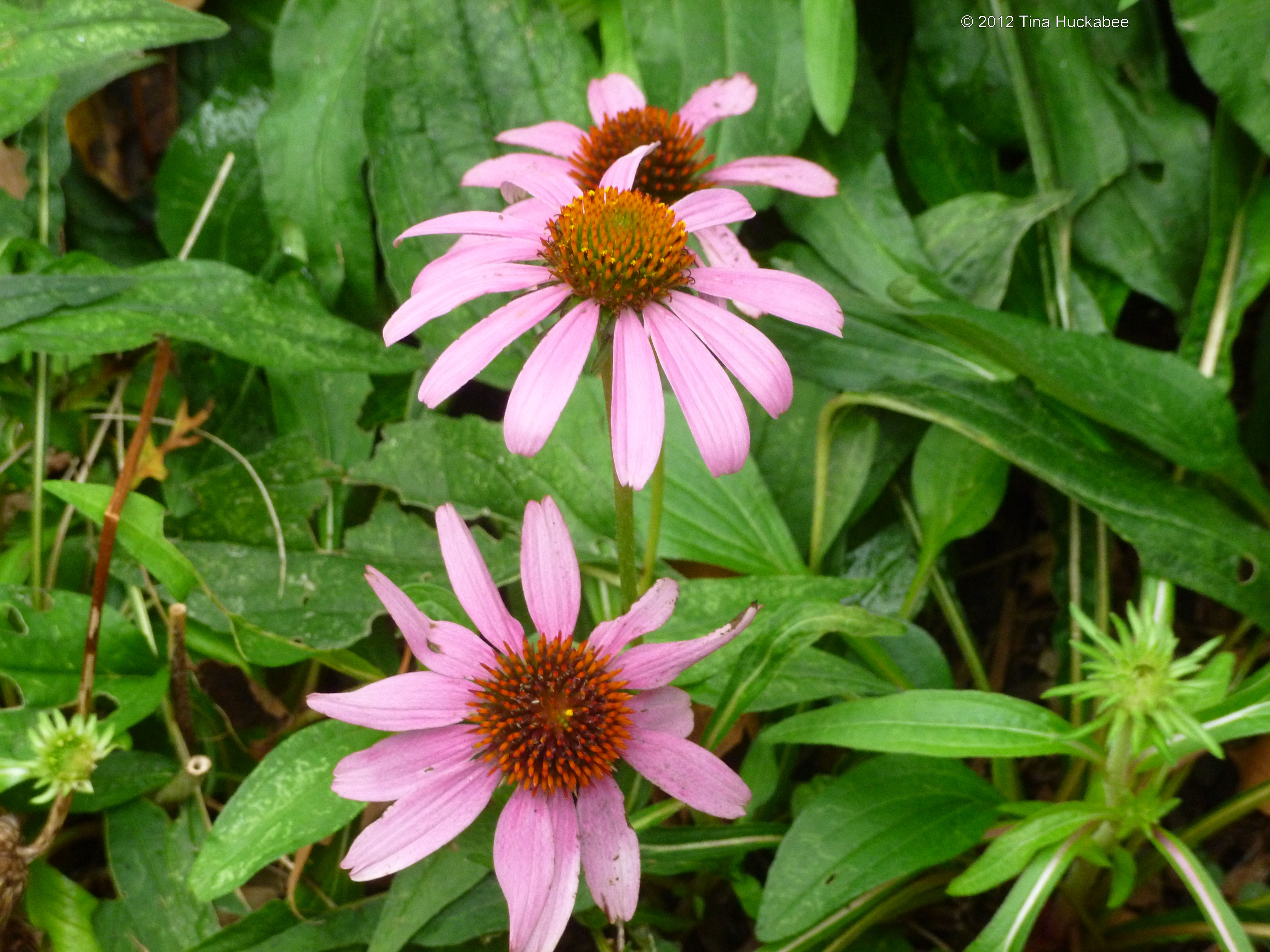
The Purple Coneflower (Echinacea purpurea), is always a winner in my gardens.  Its main bloom period is spring through mid-summer, but I always have some blooms in the fall until a hard freeze ends the glory.
A larger view of another perennial, Blue Mistflower (Conoclinium coelestinum),

and its closeup.

The two mistflower species are related, but they are a little different. It’s difficult to tell from my limited photographic abilities, but the Gregg’s Mistflower is a lighter blue, while the Blue Mistflower is much darker.  Also, the leaf characteristics are different in the two plants.  Both are perennial ground covers with the main blooming period occurring from September through November.  Both are also favorites of the butterflies and bees.

The Goldeneye (Viguiera dentata) brightens the roadsides and my gardens in October.
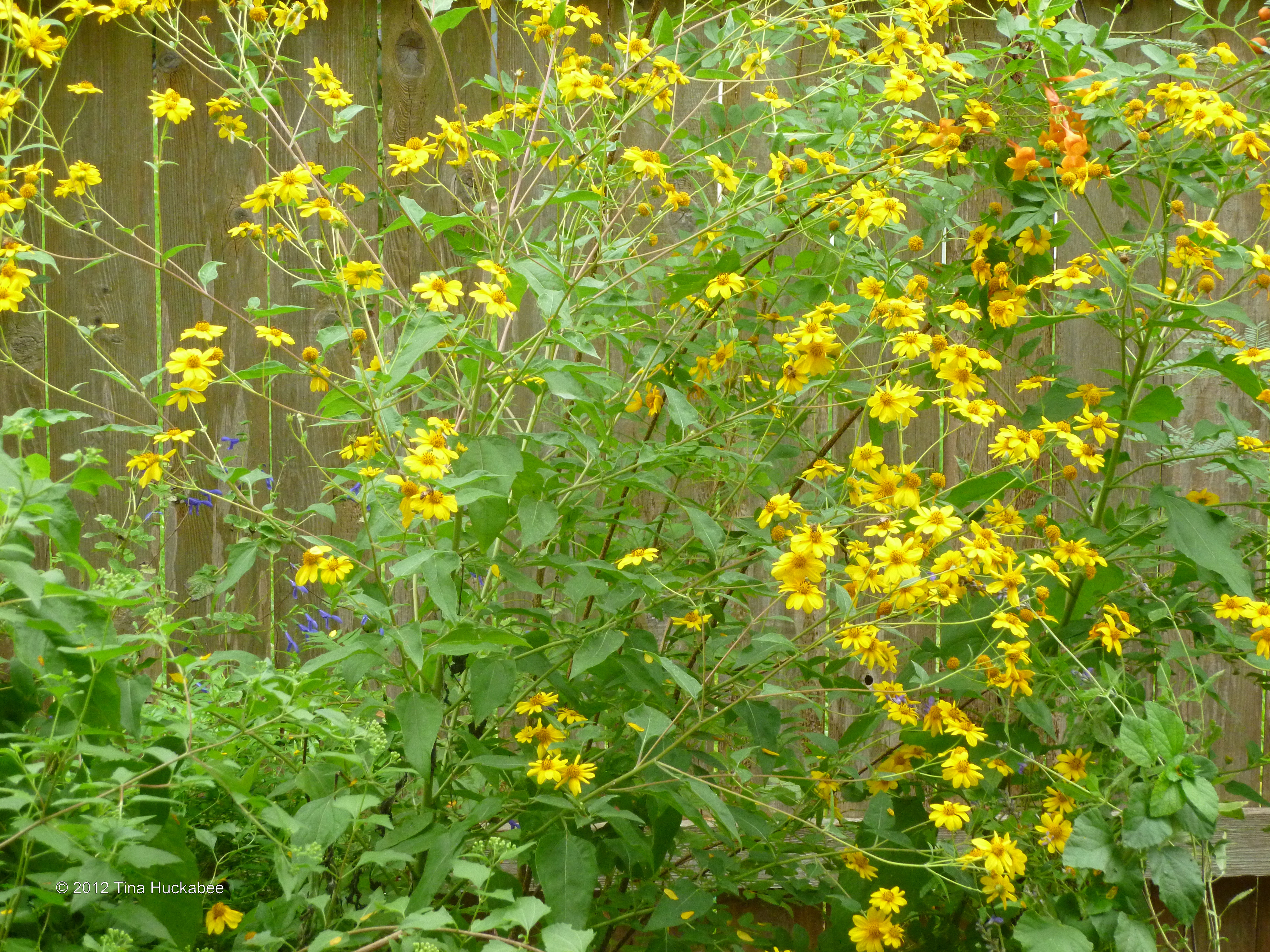
At its peak of beauty now, Goldeneye blooms in the spring and sporadically in the summer months and is an excellent wildlife plant.  It provides for pollinators and birds, alike and it’s pretty for people to enjoy too!

Fall Aster (Symphyotrichum oblongifolium) is a relatively new addition for me.

I’m glad I have a place for this hardy and sweet little aster.

A nice combination of plants:

From left to right in the photo above are Mealy Blue Sage (Salvia farinacea), some overhanging blooms from a Red Yucca (Herperaloe parviflora), at the back, some Turk’s Cap (Malvaviscus arboreus var. drummondii), a Pale Leaf Yucca (Yucca pallida), the yellow daisy, Zexmenia (Wedelia texana) and Red Autumn Sage (Salvia greggii).

Another nice mingling of native perennials:

more Coneflower, more Turk’s Cap, more Goldeneye.

The Damianita (Chrysactinia mexicana) is a plant with shocking yellow flowers paired with striking dark, green foliage.
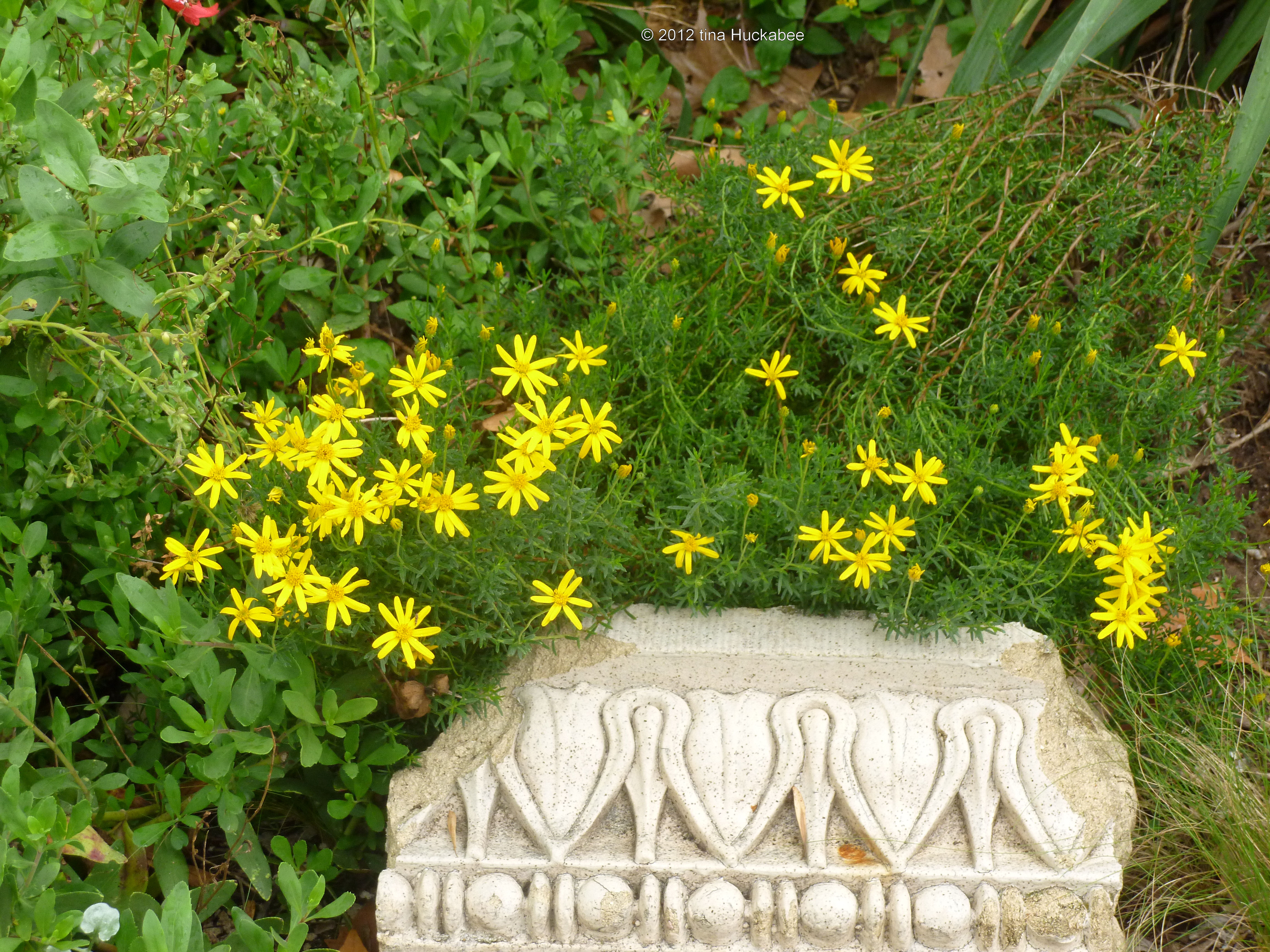
Damianita blooms on and off for the growing season and is native to Central/West Texas and New Mexico.

Texas native plants fit well within the palette of a large mixed perennial garden.

Natives that are blooming are White Autumn Sage (Salvia greggii), Henry Duelberg Sage (Salvia farinacea, ‘Henry Duelberg’), Yellow Bells (Tacoma stans), Big Muhly (Muhlenbergia lindheimeri).

Wherever you live, plant natives in your gardens.  They’re easy, hardy and reliable and attract wildlife to your gardens.

For more information about native plants of North America, check out the Lady Bird Johnson Wildflower Center site.

Go natives!  Go garden bloggers!

Can You Really Have Too Many Coneflowers?

I’m going to stay in the Aster family in honor of Native Plant Week (October 16-22).  I love Purple coneflower, (Echinacea purpurea).  My daughter, Shoshana, always said, “They’re such happy flowers!”

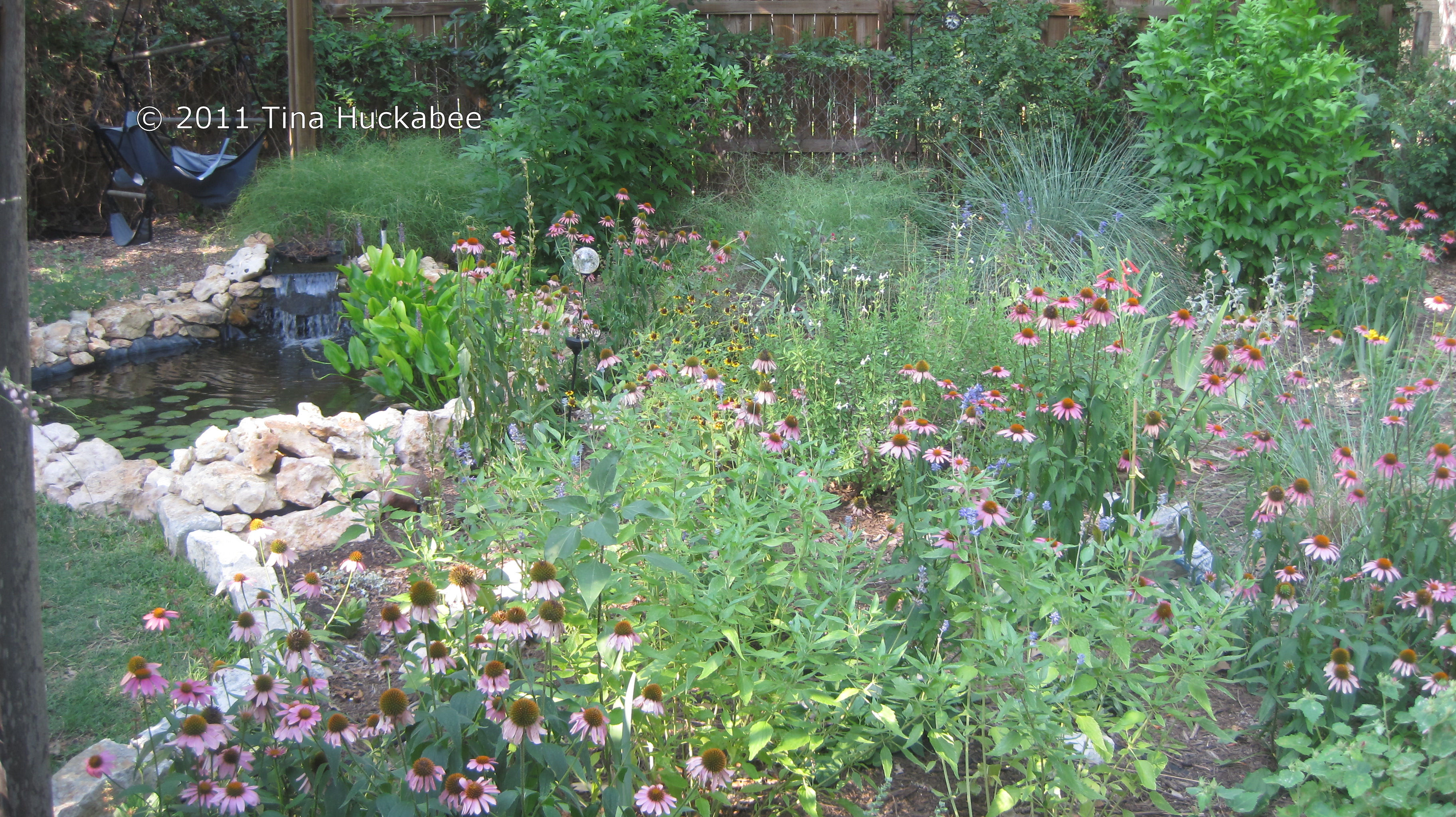
When I removed the last large portion of grass in my backyard for the large perennial garden that I installed, I decided that I wouldn’t buy many plants, but use seedlings of a variety of plants that I had from other parts of my gardens.   I always have scads of Coneflower to give away, toss in the compost, or replant.  So, except for a few other plants, initially this garden,

was primarily planted with Coneflowers.  I wanted to experiment and find out if it was possible to have too many Purple Coneflowers. Well, I found out, that indeed, it is possible to have too many. Not that they didn’t look wonderful when in full bloom, but after the main bloom time, the garden was a little bare. Also, I wanted the garden to be a true mixed perennial/shrub bed, so I removed some of the Coneflowers in that garden.  I still have many individuals of this lovely plant  in that garden and throughout my landscape.

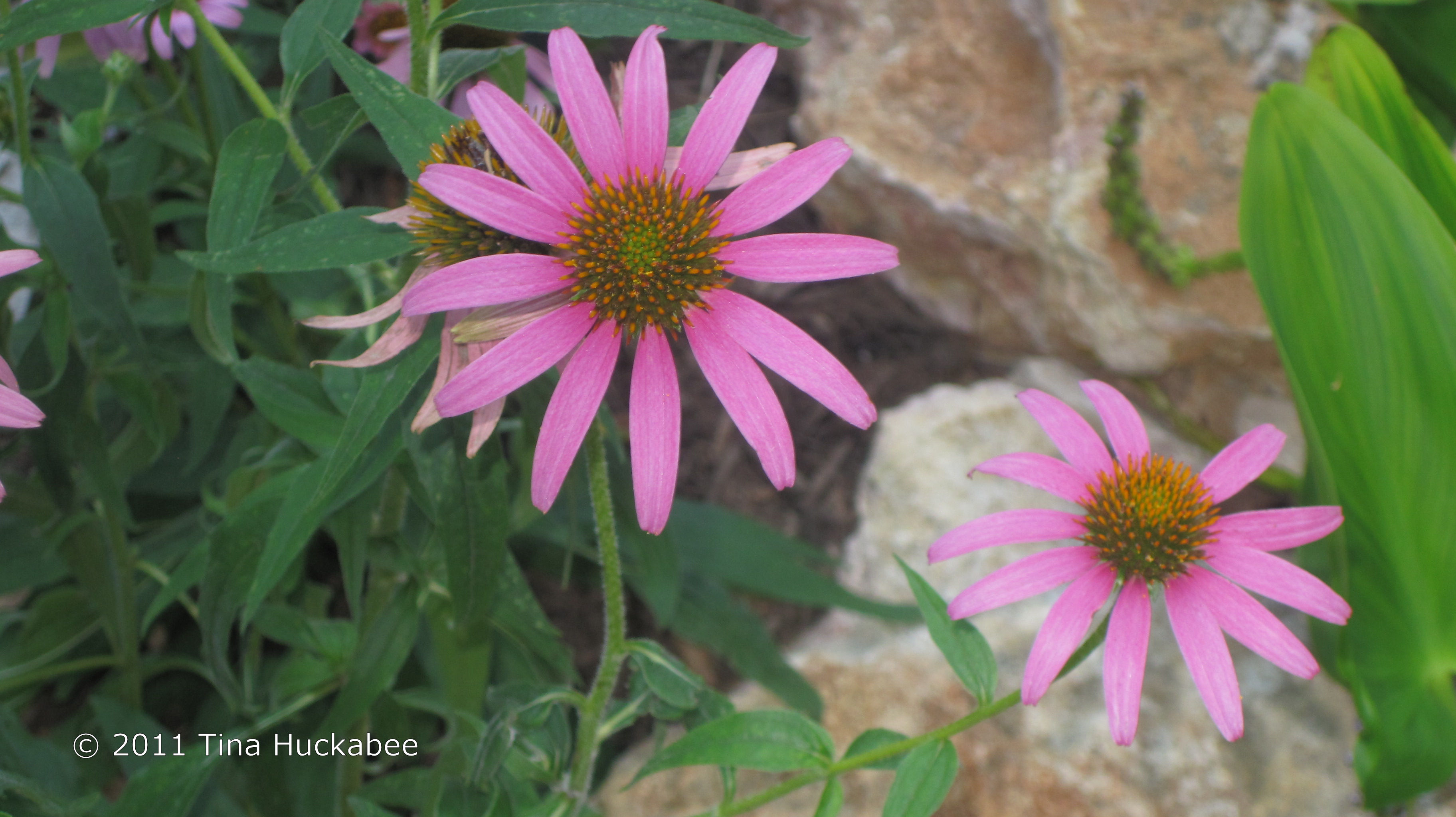
The primary bloom period for Purple Coneflowers is April-July.  In full (or mostly full ) sun, they get 2-3 feet tall and are magnificent in bloom. The individual flowers last a long time and make a beautiful cut flower.

I also have a few as understory plants, in dappled shade.  What I’ve noticed about those is 1) the flowers seem to be a paler color, and 2) they only bloom once and the blooms don’t last very long.

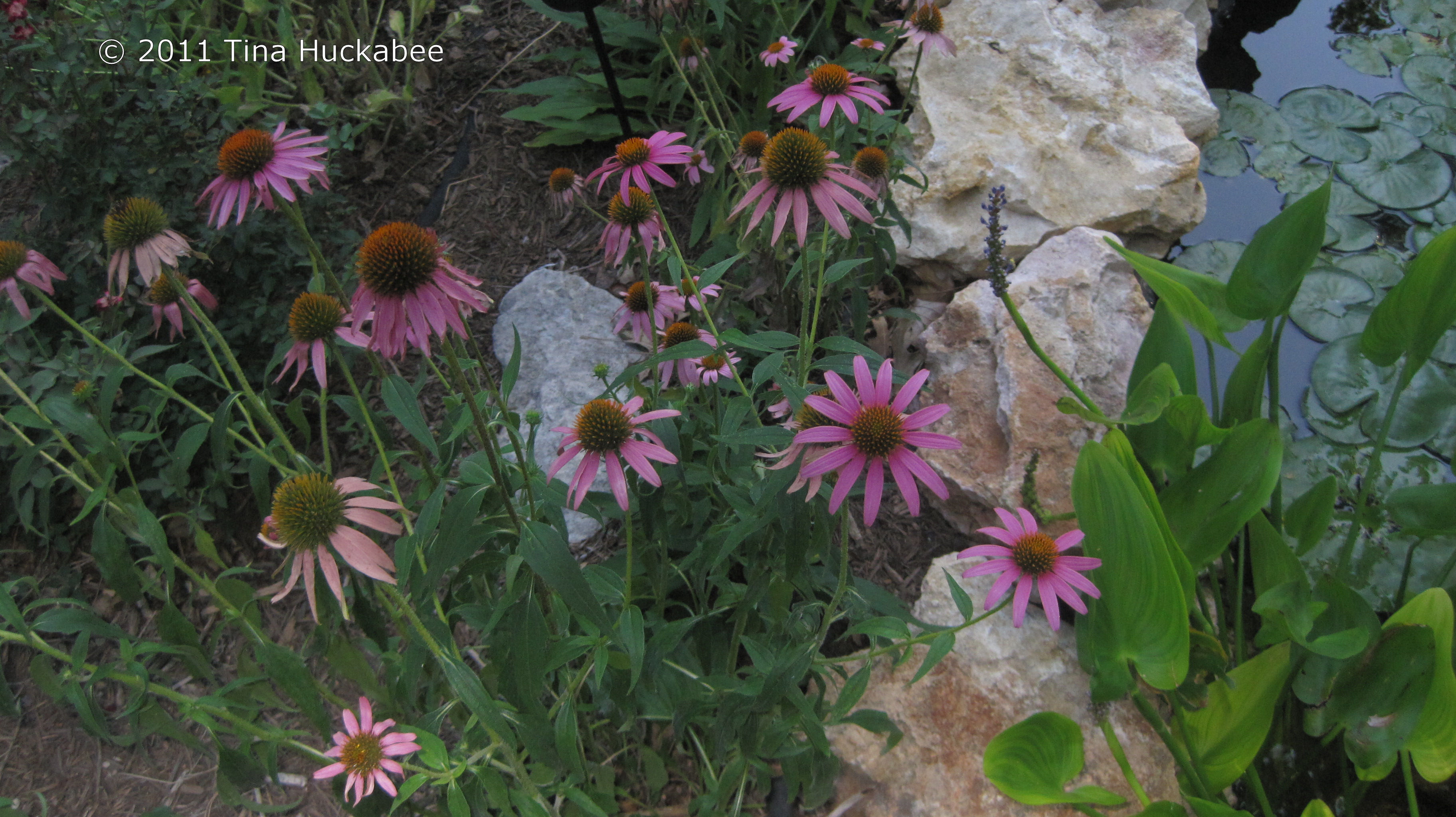
Once summer heat sets in, Coneflowers start to brown–this photo is from late June.  You can see the tips of the petals becoming a little toasty.

Eventually, depending on  heat and rainfall, Coneflowers will  go to seed in July/August.  I rather like them as they dry out, but I prune most of them down to the base plant just to prevent every seed from development and germination. Typically, some of my individual plants bloom throughout the summer, although that didn’t happen this year. Purple Coneflowers are terrific nectar plants for pollinators and I’ve often seen birds (especially finches) eat from the seed head.  I have several stands of spent blooms that I haven’t pruned because I think they’re interesting and the finches are still nibbling from them.

Just right of the spent blooms, in this photo is a Coneflower rosette that I pruned in mid-summer.  Without regular irrigation, this is what they look like from August until a fall bloom.

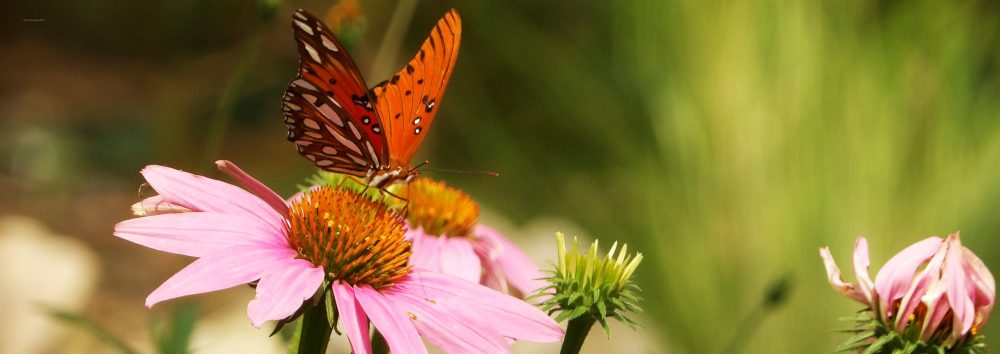
Usually in the fall, there is another bloom cycle, although not as dramatic as the one in spring.  It is in the fall that the butterflies really enjoy the Coneflowers.  I’m not so sure about this year, as the butterflies are scarce and the Coneflowers haven’t bloomed again.  However, with the rain this weekend (yay!!!), maybe that will change.  My plants tend to bloom until the first hard freeze of winter.  The Coneflower has a winter rosette, so it acts as an evergreen ground cover, if planted in groups.  I like to plant them in groups of three to five, but I’ll let seedlings develop and happen where they will, because each individual plant isn’t that large.  My experience is that Purple Coneflowers complement other plants.  I’m not sure I’ve ever disliked the way they look in a mixed perennial garden–with reds, blues, yellows, whites–they’re a fabulous addition to the mixed perennial garden.

A couple of my  individual Coneflowers didn’t survive this summer–some of those were in blasting sun. As a group though, my plants weren’t adversely affected by the heat and drought this year, except for a shorter bloom cycle.   I’ve heard from other gardeners with  heavy clay soil that they don’t have much luck with Coneflowers.  And years ago, I gave my mother some seedlings to plant (in Corpus Christi, on sand) and hers didn’t do well either.  Coneflowers seem to flourish in moderately rich and well-drained soil.

Purple Coneflowers are endemic to North America and a great plant for any gardener who wants a showy, long-lasting and easy addition to the garden.